
- Home
- »
- Clothing, Footwear & Accessories
- »
-
U.S. Lingerie Market Size, Share & Trends Report 2026-2033GVR Report cover

U.S. Lingerie Market (2026 - 2033)
Size, Share & Trends Analysis Report By Product Type (Briefs, Shapewear, Bras), By Distribution Channel (Online, Offline), Key Companies, Competitive Analysis, And Segment Forecasts
Market Size, 2025
$24.1BMarket Estimate, 2026
$25.3BMarket Forecast, 2033
$40.8BCAGR, 2026–2033
7.1%U.S. Lingerie Market Summary
The U.S. lingerie market size was valued at USD 24.1 billion in 2025 and is projected to grow from USD 25.3 billion in 2026 to USD 40.8 billion in 2033, at a CAGR of 7.1% from 2026 to 2033. The rising demand for comfort-driven, inclusive, and fashion-forward lingerie and the expanding reach of both offline stores and e-commerce platforms catering to diverse consumer preferences drive the market growth.
Key Market Trends & Insights
- By product type: Briefs segment held the largest market share of 57.9% in 2025
- By distribution channel: Offline channels sales held the largest market share of 62.6% in 2025
Market Size & Forecast
- Market Size in 2025: USD 24.1 Billion
- Estimated Market Size in 2026: USD 25.3 Billion
- Projected Market Size by 2033: USD 40.8 Billion
- CAGR (2025-2033): 7.1%
Three ways to get this report
Buy it, customize it, or ask a question.Ask an Analyst
Analyst response in 1 business day
- AccessReport author, directly
- Reply timeWithin 1 working day
- No sales callDirect answer only
- FormatEmail reply
- CostFree, no cost
Get the Full Report
What the study covers
- FormatsPDF · Excel · Dashboard
- Timeline2026–2033 annual, 2025 base
- Coverage20+ countries, 5 regions
- Companies10+ key players profiled
Customize the Report
20% free customization
- IncludeCountries, segments, points
- TailorTo your product definition
- ExtendDeeper competitor detail
- OrA fully bespoke study
- Turnaround5–10 working days
The growth of the U.S. lingerie industry is driven by rising consumer preference for comfort-focused, size-inclusive, and premium intimate apparel, supported by increasing awareness of body positivity and evolving fashion trends. Consumers are increasingly prioritizing products that combine comfort, functionality, and aesthetics, fueling demand for wireless bras, seamless underwear, shapewear, bralettes, and sleepwear & loungewear. Additionally, the rapid expansion of e-commerce, direct-to-consumer (DTC) brands, and omnichannel retail strategies has improved product accessibility and strengthened consumer engagement across diverse demographics.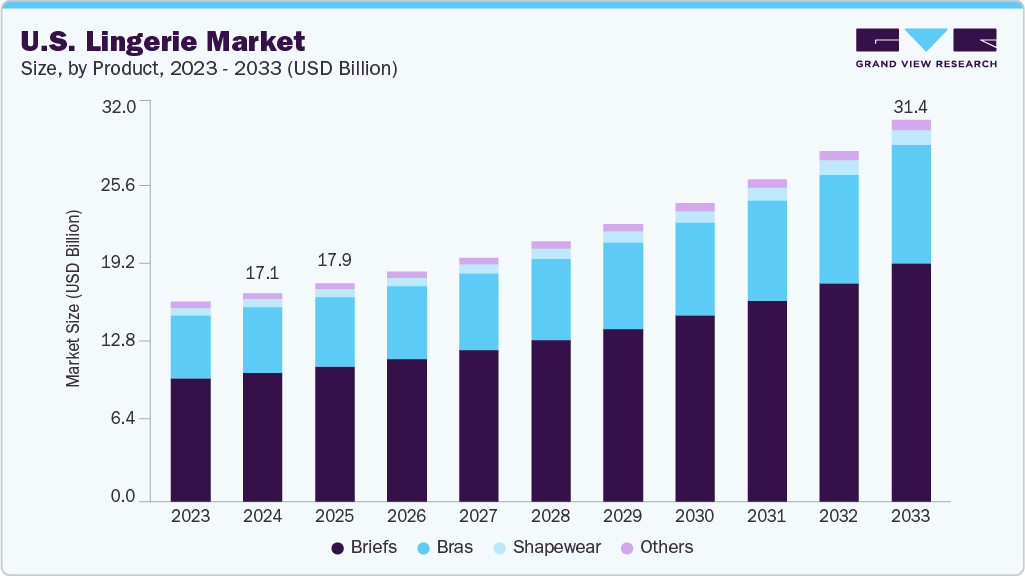 Source: Grand View Research, IR Documents, Primary Interviews, Paid DatabasesTo learn more about this report,
 Download Free Sample Report
The U.S. lingerie market is also witnessing a significant shift toward innovative and comfort-driven lingerie solutions. Brands are increasingly incorporating advanced fabrics, seamless construction, adaptive support technologies, and inclusive sizing to enhance fit and everyday wearability. In July 2026, Victoria's Secret PINK launched the Marshmallow Bra Collection, introducing a new range of wireless bras designed for all-day comfort and expanding its portfolio of comfort-focused intimate apparel. The collection reflects the industry's growing emphasis on product innovation, premiumization, and performance-oriented design, where enhanced comfort, modern materials, and personalized fit continue to influence consumer purchasing decisions.
A notable trend is the rise of inclusive lingerie for maternity and post-pregnancy wear. Brands such as Bravado and Kindred Bravely are expanding their offerings to provide comfortable, supportive bras and shapewear for new and expecting mothers, reflecting real consumer demand for functional, stylish products during life stages that mainstream lines often overlook.
The growing emphasis on body positivity is significantly reshaping the U.S. lingerie industry, with inclusivity in sizing and styles becoming a central driver of consumer demand. Modern consumers are increasingly looking for lingerie that not only delivers aesthetic appeal but also offers comfort and support across a wide range of body types. The availability of extended size ranges and adaptive fits allows more women to feel represented and catered to, strengthening trust and loyalty toward brands that prioritize inclusivity. At the same time, marketing strategies that showcase diverse models of size, age, and ethnicity are reinforcing this cultural shift and broadening market appeal.
For instance, in August 2023, Macy’s and Gap announced their first-ever collaboration with the launch of an exclusive collection of men's and women's sleepwear, underwear, and intimates. The range, which includes pajama sets, loungewear, bras, briefs, boxers, and undershirts, is designed with comfort in mind and made from fabrics such as organic stretch cotton and Gap’s breathable “Breathe” jersey knit. Available in sizes XS through XL, the collection is sold only through Macy’s channels-including Macys.com, the Macy’s mobile app, and select stores across the U.S.
Another major driver is the rise of size inclusivity and body realism, which are expanding the global customer base. Instead of limited “S-M-L” options, brands now offer inclusive fits across band and cup combinations, including plus-size and petite segments. Retailers such as Savage X Fenty, Marks & Spencer, and H&M have scaled their sizing ranges based on demand analytics, while AI-powered virtual fitting tech from companies like TrueFit and Fit Finder has reduced return rates by solving size-mismatch issues-converting more shoppers online and boosting lingerie revenue.
Innovation in fabric design and technology has become one of the strongest drivers of growth in the U.S. lingerie market. The introduction of breathable microfibers, lightweight power mesh, seamless knitting, and bonded finishes has improved both comfort and support, making lingerie suitable not just for special occasions but for everyday wear. Advances in shapewear materials, such as stretch textiles with targeted compression, are creating new categories that blend lingerie with wellness and activewear.
Market Dynamics
The U.S. lingerie market is being driven by growing consumer preference for comfort-oriented, functional, and size-inclusive intimate apparel. Consumers are increasingly shifting away from heavily structured lingerie toward wireless bras, seamless underwear, bralettes, shapewear, and sleepwear & loungewear that offer enhanced comfort for everyday wear. The growing influence of body positivity and inclusive fashion has encouraged brands to expand their size ranges and introduce products that cater to diverse body types, strengthening consumer confidence and brand loyalty. Additionally, rising participation of women in the workforce, increasing disposable income, and greater emphasis on self-care and personal wellness continue to support demand for premium and everyday lingerie products.
Furthermore, manufacturers are investing in product innovation through moisture-wicking fabrics, seamless knitting technologies, recycled materials, adaptive support systems, and AI-powered fit recommendation tools to improve comfort and personalization. The rapid expansion of e-commerce platforms and direct-to-consumer (DTC) brands has also enhanced product accessibility by offering virtual fitting solutions, personalized recommendations, and convenient shopping experiences. These factors are driving recurring purchases across bras, panties, shapewear, and sleepwear & loungewear, contributing significantly to the market growth.
Intense competition among established brands, private-label manufacturers, and digitally native lingerie companies remains a key restraint for the U.S. lingerie market. Consumers have access to a wide variety of products across multiple price points, making purchasing decisions increasingly influenced by promotional discounts, seasonal sales, and value-driven offerings. This highly competitive environment pressures manufacturers to continually invest in product innovation, marketing campaigns, celebrity collaborations, and omnichannel retail strategies while maintaining competitive pricing.
In addition, rising raw material and labor costs, along with supply chain fluctuations, have increased production costs for premium lingerie products, limiting affordability for price-sensitive consumers. Brands also face challenges related to inventory management due to rapidly changing fashion preferences and fluctuating demand across product categories. The combination of pricing pressure, high customer acquisition costs, and the need for continuous innovation continues to challenge profit margins and restrain the long-term growth potential of the U.S. lingerie industry.
Analyst Perspective
The U.S. lingerie market is evolving toward a comfort-, functionality-, and inclusivity-focused category, driven by changing preferences for versatile, well-fitting intimate apparel. Demand for wireless bras, seamless underwear, shapewear, and sleepwear & loungewear is increasing as consumers prioritize comfort, style, and everyday wearability. Brands are expanding size-inclusive collections, adopting sustainable fabrics, and integrating innovative textile technologies to enhance product offerings. Digital-first and direct-to-consumer brands are gaining momentum through personalized shopping experiences, virtual fitting solutions, and omnichannel strategies. Established players are focusing on product innovation, brand loyalty programs, and differentiated collections to strengthen their competitive position. The growing influence of body positivity, sustainability, and personalized retail experiences is reshaping the market landscape. Ongoing advancements in comfort-driven design and digital capabilities are expected to remain key growth drivers for the market.
Brand Share Analysis
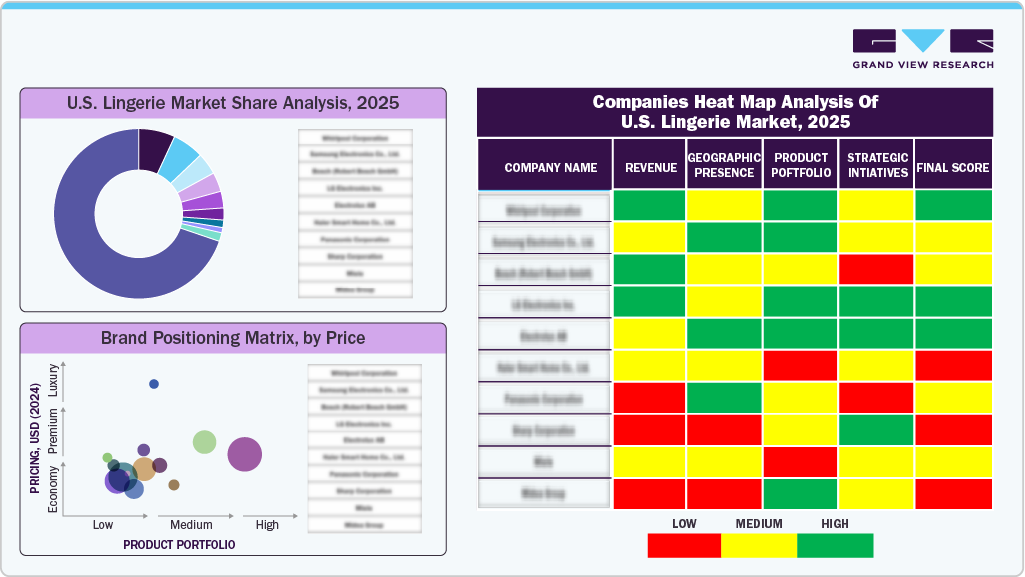
The U.S. lingerie market is shaped by a combination of established national players, premium innovators, and digitally native challengers, each influencing different consumer segments. Brands like Victoria’s Secret, Hanes, and Calvin Klein dominate the mid-range segment, leveraging strong brand loyalty, widespread retail presence, and consistent fit for everyday wear. Premium and fashion-forward lingerie from Savage X Fenty and ThirdLove attracts consumers seeking inclusive sizing, high-quality materials, and modern designs, often promoted via social media and influencer campaigns.
 To learn more about this report, Download Free Sample Report
Meanwhile, online-first challengers and regional specialists focus on younger, tech-savvy shoppers seeking convenience, subscription models, and personalized fit solutions, helping to expand penetration and engagement across diverse U.S. consumer groups.
Consumer Insights
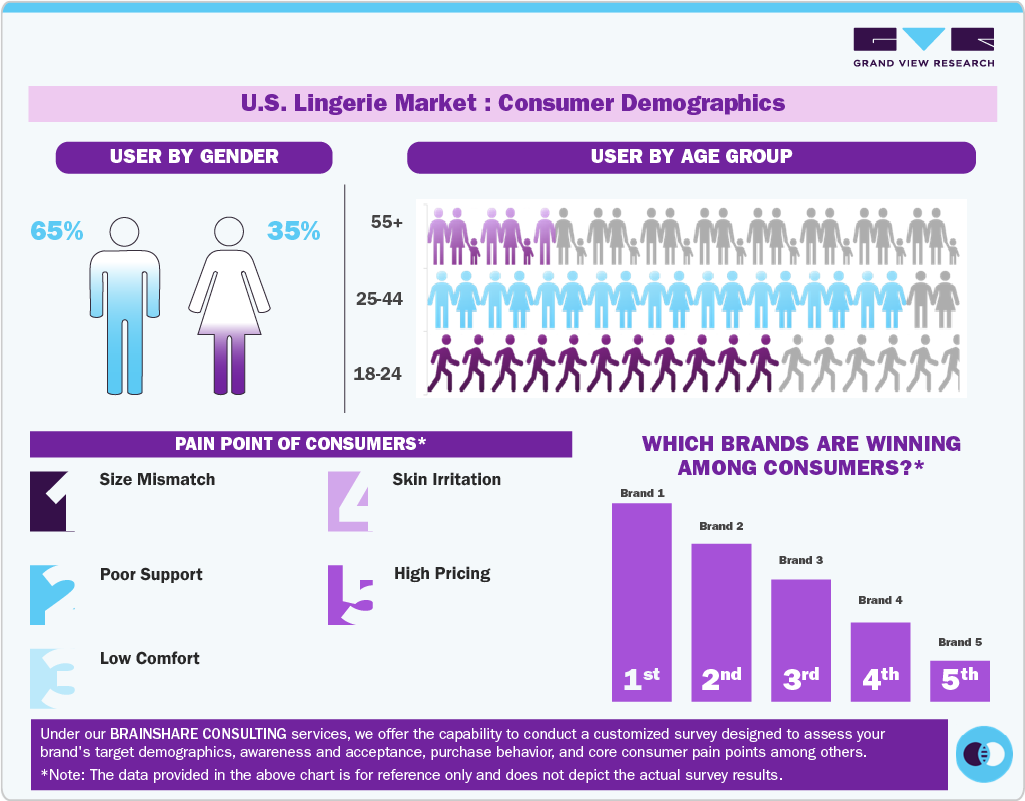
The U.S. lingerie industry is divided by purchase tier. About 65% of consumers choose value or essentials-focused products that emphasize everyday comfort and affordability. The other 35% lean toward premium or aspirational lingerie, looking for quality fabrics, designer appeal, and trendy designs. This division shows a market where practicality drives sales, yet premium products still significantly boost revenue growth.
 To learn more about this report, Download Free Sample Report
Age demographics are key in shaping buying habits. The largest group, those aged 25 to 44, make up 53% of consumers. This group includes working professionals and young parents who value comfort and style. The 18 to 24 age group represents 22%. They are trend-conscious and tend to prefer fashionable purchases influenced by social media. Consumers aged 45 and older account for 25% and focus mainly on fit, support, and practical designs.
Consumers in the U.S. face several challenges when buying lingerie. Common problems include size mismatches, poor support, low comfort, limited style options, and high prices. Brands that tackle these issues with inclusive sizing, ergonomic designs, and a variety of styles tend to create stronger loyalty, reduce returns, and attract repeat buyers in a market where fit and comfort matter greatly.
In terms of brand preference, Victoria’s Secret, Calvin Klein, ThirdLove, Savage X Fenty, and Hanes lead the U.S. market. These brands successfully combine comfort, style, and inclusivity while using both offline and digital marketing. Social media campaigns, influencer partnerships, and targeted product innovation help these brands reach younger, tech-savvy consumers. This strategy reinforces their leadership and influences buying trends across the country.
Product Type Insights
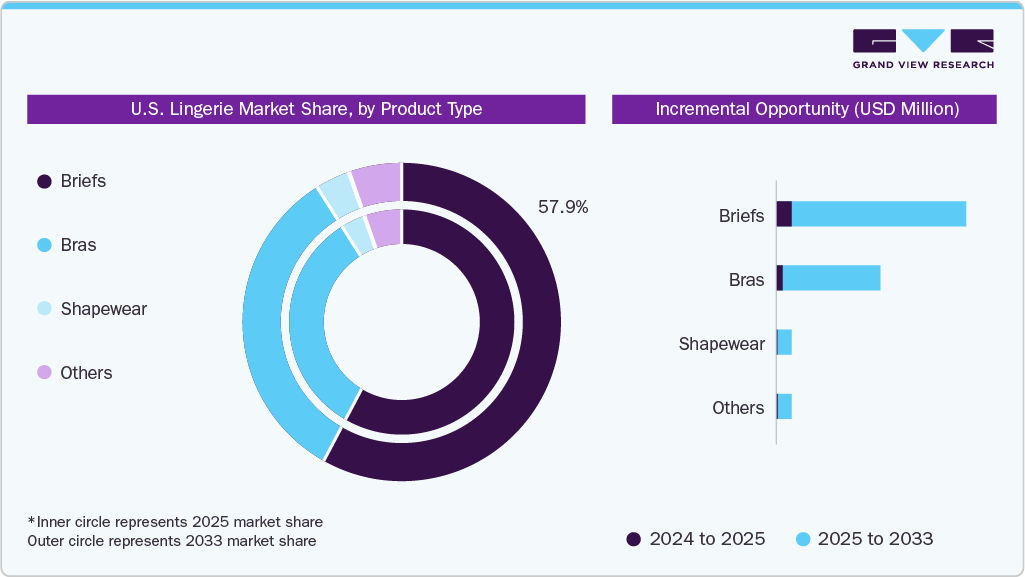
The briefs segment dominated the U.S. lingerie market, accounting for the largest revenue share of 57.9% in 2025. The segment continues to benefit from the growing consumer preference for comfortable, breathable, everyday intimate apparel that supports active and hybrid lifestyles. Consumers are prioritizing soft fabrics, seamless construction, and inclusive sizing, driving sustained demand for briefs designed for all-day wear. Growing awareness of body positivity and the expansion of premium essentials, alongside the rising popularity of the luxury lingerie market, have further strengthened the segment's position within the lingerie industry.
 To learn more about this report, Download Free Sample Report
For instance, in July 2026, Victoria's Secret PINK launched the Marshmallow Bra Collection while expanding its portfolio of comfort-focused intimate apparel, reinforcing the industry's broader emphasis on innovative everyday essentials, premium fabrics, and enhanced comfort across core lingerie categories, including briefs and bras.
The shapewear segment is anticipated to grow at a CAGR of 7.6% from 2026 to 2033. Growth is driven by increasing demand for multifunctional garments that combine shaping benefits with everyday comfort. Manufacturers are introducing lightweight compression fabrics, seamless knitting technologies, breathable materials, and adaptive support features that enhance wearability for daily use. Rising consumer spending on premium intimate apparel and the continued expansion of the luxury lingerie market are encouraging brands across the lingerie industry to invest in innovative, high-performance shapewear solutions. In February 2026, SPANX launched the SPANXsculpt™ GoFigure collection, featuring LYCRA® FitSense™ print technology that delivers targeted sculpting, lightweight compression, and enhanced flexibility for all-day wear. The launch highlights the industry's increasing focus on premium shapewear that combines performance, comfort, and advanced fabric engineering, reinforcing innovation within the lingerie industry.
Distribution Channel Insights
The sale of lingerie through offline channels accounted for 62.6% revenue share of the U.S. lingerie market in 2025, as consumers continue to value in-store fitting services, personalized assistance, and immediate product availability, particularly for intimate apparel where comfort, sizing, and support are key purchasing factors. Physical retail stores enable consumers to assess fabric quality, compare styles, and receive expert recommendations, thereby enhancing confidence in purchase decisions. Retailers such as Victoria’s Secret, Macy’s, Nordstrom, Kohl’s, and Target offer extensive product assortments, including bras, briefs, shapewear, and sleepwear & loungewear, supported by fitting services and loyalty programs. Despite increasing digital adoption, brick-and-mortar stores remain an important distribution channel within the lingerie industry, particularly for premium and personalized shopping experiences in the luxury lingerie market.
 To learn more about this report, Download Free Sample Report
The sale of lingerie through the online channel is expected to grow at a CAGR of 7.4% from 2026 to 2033, driven by increasing consumer preference for convenience, wider product availability, personalized recommendations, and digital-first shopping experiences. E-commerce platforms and direct-to-consumer (DTC) brands are leveraging virtual fitting tools, AI-based size recommendations, flexible return policies, and subscription-based models to improve customer engagement and reduce purchase barriers. Brands such as ThirdLove, Savage X Fenty, SKIMS, and Amazon provide extensive size inclusivity, customized product recommendations, and seamless digital shopping experiences, attracting younger, technology-oriented consumers. The rapid expansion of online retail is further supporting the growth of the Lingerie Market, enabling brands to reach broader consumer segments and strengthen their presence in the evolving lingerie industry.
Key U.S. Lingerie Companies:
-
Jockey International Inc.
-
Victoria’s Secret
-
Gap Inc.
-
HanesBrands Inc.
-
Calvin Klein
-
ThirdLove
-
AEO Inc.
-
Wacoal America (Global)
-
FULLBEUATY Brands (Cuup)
-
Bare Necessities
Competitive Benchmarking
Category
Operating Strategies
Competitive Edge
Weakness
Established Players
(Jockey International Inc.; Victoria’s Secret; Gap Inc.; Hanesbrands Inc.; Triumph International Ltd.; Calvin Klein)Focus on expanding product portfolios across bras, briefs, shapewear, sleepwear, and everyday innerwear categories. These companies leverage strong retail networks, brand websites, and omnichannel distribution strategies while investing in comfort-focused designs, inclusive sizing, and fabric innovation to address evolving preferences in the U.S. lingerie market.
Strong brand recognition, extensive distribution presence, established customer base, and broad product offerings across value, mid-range, and fashion-oriented segments. These players benefit from significant marketing capabilities, retail partnerships, and manufacturing expertise.
High competition from digitally native brands, rising demand for personalized fits, and changing preferences toward comfort-driven and inclusive lingerie. Large-scale operations can also result in higher product development and inventory management costs.
Emerging Players
(Hunkemöller; Bare Necessities; MAS Holdings)Concentrate on niche segments through specialized lingerie collections, digital-first retail strategies, and partnerships with global brands. These companies focus on expanding online presence, offering curated product selections, and developing innovative manufacturing solutions for evolving lingerie trends.
Ability to target specific consumer segments through specialized offerings, flexible product development, strong e-commerce capabilities, and expertise in lingerie manufacturing and supply chain solutions.
Limited brand visibility compared with major U.S. players, lower retail penetration, and challenges in competing against established companies with stronger marketing budgets and wider distribution networks.
Recent Developments
-
In April 2026, Victoria's Secret expanded its lingerie portfolio with the launch of the Invisible by Victoria Strapless Collection as part of its "Season of Strapless" campaign. The collection features no-slip grip technology and enhanced support designed to improve comfort, fit, and versatility for everyday wear. This launch reflects the growing consumer preference for comfort-focused, multifunctional lingerie and continued innovation in seamless intimate apparel.
-
In April 2026, Victoria's Secret Beauty expanded its lifestyle offerings with the launch of Bombshell Bronze Eau de Parfum alongside its Summer 2026 lingerie and swimwear collections. The coordinated launch strengthened the brand's integrated fashion and beauty portfolio and enhanced the appeal of seasonal products across multiple categories. This development highlights the increasing trend of lingerie brands expanding into complementary lifestyle products to strengthen consumer engagement and brand loyalty.
-
In July 2026, Victoria's Secret PINK expanded its comfort-focused lingerie portfolio with the launch of the Marshmallow Bra Collection, featuring four wireless bra styles made with four-way stretch fabric for enhanced softness, flexibility, and everyday support. The collection also offers inclusive sizing and lightweight construction to improve all-day comfort. This launch reflects the rising demand for wire-free, comfort-driven lingerie and the growing emphasis on inclusive product innovation in the U.S. lingerie industry.
U.S. Lingerie Market Report Scope
Report Attribute
Details
Market size in 2025
USD 24.1 billion
Estimated market size in 2026
USD 25.3 billion
Projected market size by 2033
USD 40.8 billion
Growth rate
CAGR of 7.1% from 2026 to 2033
Actuals
2021 - 2025
Forecast period
2026 - 2033
Quantitative units
Revenue in USD Million and CAGR from 2026 to 2033
Report coverage
Revenue forecast, company ranking, competitive landscape, growth factors, and trends
Segments covered
Product type, distribution channel
Key companies profiled
Jockey International Inc.; Victoria’s Secret; Gap Inc.; HanesBrands Inc.; Calvin Klein; ThirdLove; AEO Inc.; Wacoal America (Global); FULLBEAUTY Brands (CUUP); Bare Necessities
Customization scope
Free report customization (equivalent up to 8 analysts working days) with purchase. Addition or alteration to country, regional & segment scope.
Pricing and purchase options
Avail customized purchase options to meet your exact research needs. Explore purchase options
U.S. Lingerie Market Report Segmentation
This report forecasts revenue growth at the country level and provides an analysis of the latest industry trends and opportunities in each of the sub-segments from 2021 to 2033. For this study, Grand View Research has segmented the U.S. lingerie market report based on product type and distribution channel:
-
Product Type Outlook (Revenue, USD Million, 2021 - 2033)
-
Briefs
-
Bras
-
Shapewear
-
Others
-
-
Distribution Channel (Revenue, USD Million, 2021 - 2033)
-
Online
-
Offline
-
Research Methodology
The U.S. lingerie market figures in this report are based on a proven research process that combines executive interviews with secondary research from proprietary databases, company filings, and recognized regulatory and institutional sources. Market size is built through value-chain sizing-reconciling supply-side and demand-side estimates-and triangulated with bottom-up and top-down approaches. Every estimate passes multiple levels of expert validation before publication, with each U.S. lingerie segment quantified using the revenue-capture definitions in the table below.
Segment Definition
Segment - Distribution Channel
Revenue capture definition
Offline
This segment covers the revenues generated through the sales of lingerie products via physical retail outlets where consumers can browse, compare, and purchase products in person. The channel includes brand-exclusive stores, department stores, specialty lingerie retailers, supermarkets & hypermarkets, and factory outlets, allowing customers to evaluate product quality, receive professional fitting assistance, and make immediate purchases. Real-life examples include Victoria's Secret stores, Soma boutiques, Macy's, Nordstrom, Dillard's, Kohl's, Walmart, and Target.
Online
This segment covers the revenues generated through the sales of lingerie products via digital platforms, enabling consumers to purchase intimate apparel through websites and mobile applications. The online channel offers a wide product assortment, personalized recommendations, virtual fit tools, subscription services, home delivery, and convenient return policies. It includes brand-owned e-commerce websites, online marketplaces, and direct-to-consumer (DTC) platforms. Real-life examples include Victoria's Secret's online store, SKIMS.com, ThirdLove.com, Aerie.com, Amazon, Walmart.com, and Macy's online store.
Estimation Model
Layer
Key Question
Description
Consumer Base Layer
Who purchases lingerie?
Identify the addressable consumer base by evaluating the adult female population, disposable income, body positivity trends, fashion awareness, and demand for premium, inclusive, and comfort-focused lingerie products across the U.S.
Retail Access Layer
Who can be reached through retail channels?
Assess consumers with access to department stores, specialty lingerie retailers, supermarkets, brand-owned stores, and well-established e-commerce platforms to determine the reachable market.
Purchase Behavior Layer
Who actively buys branded lingerie?
Apply adoption rates for branded and premium lingerie based on consumer preference for comfort, fit, sustainable materials, functional designs, and increasing omnichannel shopping behavior.
Revenue Generation Layer
How much revenue is generated?
Estimate revenue by multiplying active lingerie buyers with average annual spending, considering purchase frequency, product mix, premiumization, and online/offline sales channels.
Customization Table
This report has been delivered with the following In-depth customizations
CLIENT REQUEST
CUSTOMIZATION DELIVERED
VALUE ADDS
Consumer Preferences, Premiumization & Inclusive Lingerie Trends
Conducted a focused analysis of U.S. lingerie purchasing trends covering demand for comfort-focused, size-inclusive, shapewear, seamless, and premium lingerie, along with sustainability, body positivity, and fashion-driven product innovation.
Helps stakeholders identify high-growth product categories, evaluate evolving consumer preferences, and assess opportunities in premium, inclusive, and sustainable lingerie segments.
Omnichannel Retail & Direct-to-Consumer (DTC) Market Assessment
Evaluated the growth of e-commerce, omnichannel retail strategies, direct-to-consumer brands, subscription models, social commerce, and the performance of specialty retailers, department stores, and brand-owned stores across the U.S.
Provides insights into consumer purchasing behavior, digital engagement strategies, and the most effective distribution channels to support customer acquisition and retail expansion.
Competitive Landscape & Product Innovation Opportunity Assessment
Assessed leading domestic and international lingerie brands, product innovation, pricing strategies, fabric and fit advancements, sustainability initiatives, and market expansion opportunities across the U.S. lingerie industry.
Supports strategic decision-making by identifying competitive positioning, emerging innovation trends, investment opportunities, and long-term growth potential within the U.S. lingerie market.
Frequently Asked Questions About This Report
Some key players operating in the U.S. lingerie market include Jockey International Inc.; Victoria Secret; Gap Inc.; HanesBrands Inc.; Calvin Klein; ThirdLove; AEO Inc.; Wacoal America, FULLBEUATY Brands (Cuup); Bare Necessities
Key factors that are driving the U.S. lingerie market growth include the increasing disposable income of women in the country, growing awareness about the best fit of the products, rising population of millennials are some of the growth driving factors for this market
Offline channels sales held the largest market share of 62.6% in 2025, while online channel segment is fastest growing distribution channel.
The U.S. lingerie market size was estimated at USD 24.1 billion in 2025 and is expected to reach USD 25.3 billion in 2026.
The U.S. lingerie market is expected to grow at a compound annual growth rate of 7.1% from 2025 to 2033 to reach USD 40.8 billion by 2033.
Briefs segment held the largest market share of 57.9% in 2025, while shapewear segment is fastest growing product type.
About the Author(s)
Clothing, Footwear & Accessories Research Team
Consumer Goods · Clothing, Footwear & AccessoriesThis report was authored by the clothing, footwear & accessories research team at Grand View Research - comprising two research analysts, one senior research analyst, and one industry expert - with specialized expertise in the clothing, footwear & accessories segment of the consumer goods industry. All findings are based on proprietary consumer goods databases, executive interviews, and regulatory analysis, subject to internal peer review prior to publication.
Last Updated:
Speak to Analyst

Customize this report to your needs - add regions, segments, or data points, with 20% free customization.
Or view our licence options:


ISO 9001:2015 & 27001:2022 Certified
We are GDPR and CCPA compliant! Your transaction & personal information is safe and secure. For more details, please read our privacy policy.


