
- Home
- »
- Medical Devices
- »
-
U.S. Pharmaceutical Contract Development And Manufacturing Organization Market 2033GVR Report cover

U.S. Pharmaceutical Contract Development And Manufacturing Organization Market (2026 - 2033) Size, Share & Trends Analysis Report By Type (Small Molecule, Large Molecule), By Product, By Services, By Workflow (Clinical, Commercial), By Therapeutic Area, By End-use, And Segment Forecasts
Market Size, 2025
$38.8BMarket Estimate, 2026
$41.2BMarket Forecast, 2033
$63.3BCAGR, 2026–2033
6.8%U.S. Pharmaceutical CDMO Market Summary
The U.S. pharmaceutical CDMO market size was valued at USD 38.8 billion in 2025 and is projected to grow from USD 41.2 billion 2026 to USD 65.3 billion by 2033, at a CAGR of 6.8% from 2026 to 2033. The U.S. pharmaceutical CDMO is advancing, driven by the growth of biologics, biosimilars, and advanced therapies, rising demand for outsourcing in drug development, and increasing clinical trial activity and pipeline expansion. The U.S. market is witnessing significant growth in biologics, biosimilars, and advanced therapies such as cell and gene therapies, fueling demand for specialized CDMO services.
Key Market Trends & Insights
- The pharmaceutical CDMO market in the U.S. is expected to grow significantly over the forecast period.
- Based on workflow, the commercial segment held the highest market share in 2025.
- On the basis of type, the small molecules segment accounted for the largest revenue share in 2025, at 72.9%.
- By product, the active pharmaceutical ingredient (API) segment led the market with the largest revenue share in 2025.
- On the basis of service, the contract manufacturing segment led the market with the largest revenue share in 2025.
Market Size & Forecast
- 2025 Market Size: USD 38.8 Billion
- 2033 Projected Market Size: USD 65.3 Billion
- CAGR (2026-2033): 6.8%
Three ways to get this report
Buy it, customize it, or ask a question.Ask an Analyst
Analyst response in 1 business day
- AccessReport author, directly
- Reply timeWithin 1 working day
- No sales callDirect answer only
- FormatEmail reply
- CostFree, no cost
Get the Full Report
What the study covers
- FormatsPDF · Excel · Dashboard
- Timeline2026–2033 annual, 2025 base
- Coverage20+ countries, 5 regions
- Companies10+ key players profiled
Customize the Report
20% free customization
- IncludeCountries, segments, points
- TailorTo your product definition
- ExtendDeeper competitor detail
- OrA fully bespoke study
- Turnaround5–10 working days
Developing and manufacturing these therapies requires advanced capabilities like single-use bioprocessing systems, viral vector production, and personalized medicine expertise, which many pharma companies lack in-house. The U.S. market is witnessing significant growth in biologics, biosimilars, and advanced cell and gene therapies, fueling demand for specialized CDMO services. Developing and manufacturing these therapies requires advanced capabilities like single-use bioprocessing systems, viral vector production, and personalized medicine expertise, which many pharma companies lack in-house. CDMOs provide infrastructure, regulatory knowledge, and innovation platforms to accelerate development while meeting FDA standards. With rising approvals of biologics and biosimilars in the U.S., CDMOs are becoming indispensable partners in scaling production, ensuring supply chain resilience, and enabling faster time-to-market for complex, high-value therapeutics.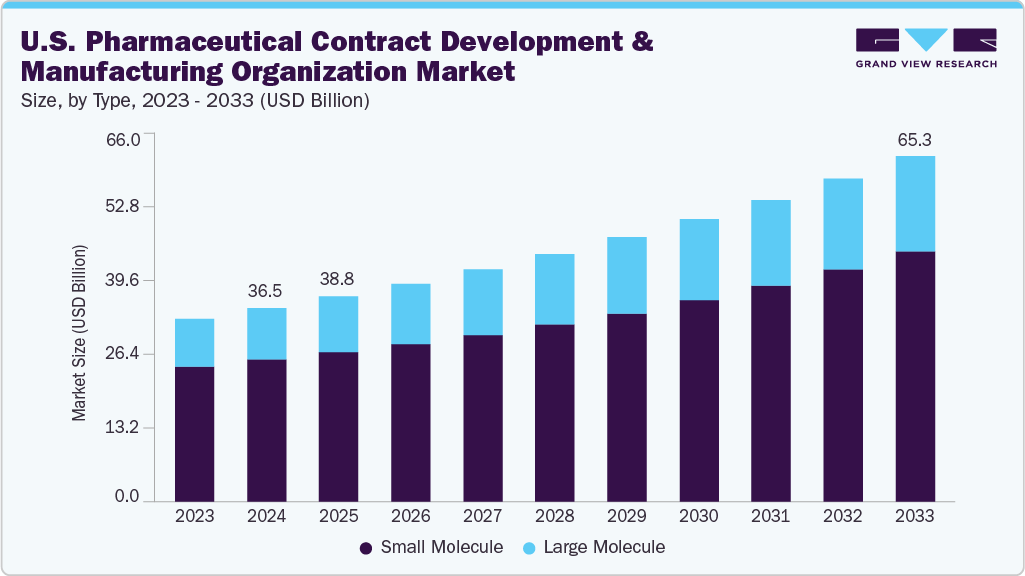 Source: Grand View Research, IR Documents, Primary Interviews, Paid DatabasesTo learn more about this report,
 Download Free Sample Report
 In addition, to cut expenses, shorten turnaround times, and concentrate on core skills like research and development and marketing, pharmaceutical corporations in the U.S. are increasingly contracting with CDMOs to handle drug development and manufacture. Small and mid-sized biotech companies, which make up the majority of the U.S. innovation scene, can obtain specialized knowledge, innovative technologies, and regulatory support through outsourcing without making significant infrastructure investments. CDMOs are essential partners in the changing pharmaceutical value chain because they provide flexible capacity, scalability, and compliance with strict FDA standards. As biologics, cell and gene therapies, and specialty medication formulations become more sophisticated, this trend is expected to speed up. U.S. leads globally in clinical research, with thousands of active clinical trials supported by a robust biotech and pharmaceutical ecosystem.
The growing number of innovative drugs in the pipeline, particularly in oncology, rare diseases, and immunotherapies, drives demand for CDMO services across preclinical, clinical, and commercial stages. CDMOs provide essential expertise in formulation development, manufacturing clinical trial material, analytical testing, and regulatory submissions. As small biotech firms dominate innovation but lack in-house production facilities, they increasingly rely on CDMOs to accelerate time-to-market, reduce risks, and ensure compliance with evolving FDA guidelines, reinforcing their critical role in the pharmaceutical landscape.
Market Dynamics
There is considerable growth in the U.S. pharmaceutical CDMO market, driven by the expanding pipeline of biologics, biosimilars, cell therapies, and gene-based therapies that require specialized manufacturing capabilities. Furthermore, the growing approvals of drugs, especially biologics, are anticipated to propel market growth in the country. For instance, according to data published by the U.S. FDA in May 2026, in the first quarter of this year, the U.S. FDA approved three biological license applications. Due to such a growing number of developments and approvals, the pharmaceutical and biotech companies in the country have increasingly turned to CDMOs for biologic drug development and manufacturing, owing to the substantial capital investment and expertise required. There has been a rising approval rate for monoclonal antibodies and an increase in late-stage biologics clinical trials in the country, leading to robust demand for advanced bioprocessing, mammalian cell culture, and sterile fill-finish services. In addition, the commercialization of cellular and gene therapies is driving increased investment in viral vector production, cryopreservation systems, and small-batch, personalized manufacturing processes. CDMOs that combine biological drug development and manufacturing capabilities are establishing partnerships with start-up biotech companies seeking faster drug development cycles and greater flexibility.
One of the major constraints that continues to hamper the growth of the pharmaceutical contract development and manufacturing organization market in the U.S. is the complex nature of the regulatory requirements, especially for the production of biologics and sterile drugs. The U.S. Food and Drug Administration requires strict compliance with good manufacturing practices, process validation, contamination control, and data integrity, thereby complicating business operations. Thus, the continuous regulatory inspections and associated obligations have forced many pharmaceutical manufacturers to spend significant sums to ensure compliance, thereby impacting the market growth in the U.S.
The market offers numerous growth opportunities in the U.S. as more mid-sized and emerging biotech companies outsource their complex biological, cellular therapy, antibody-drug conjugate, and potent API manufacturing needs to CDMOs. Larger pharmaceutical organizations are increasingly adopting an asset-light business model, resulting in consistent demand for comprehensive services, including integrated development, analytical testing, clinical manufacturing, and large-scale production. The rapid growth in the pipeline of orphan drugs and personalized medicines is creating opportunities for CDMOs skilled in producing small batches, performing sterile fill-finish processes, and managing cold-chain logistics. In addition, the rise in investigational new drug applications in oncology, rare disease treatments, and immunology will drive demand for specialized formulation and process optimization solutions. Continuous manufacturing, single-use bioreactors, and aseptic filling and finishing are among the advanced manufacturing technologies that witness increased adoption.
Contract manufacturers with a good track record of regulatory inspections and U.S. FDA-approved facilities have been able to secure long-term contracts from drug manufacturers due to an increasing level of quality requirements. In addition, various government incentives in the U.S. for manufacturing drugs domestically and for the localization of the drug supply chain are providing new opportunities for CDMOs in the region to invest in API and essential drug manufacturing. Artificial intelligence-based process development and digital manufacturing technologies are improving the efficiency of production processes, thereby speeding up the transition of drugs from clinical trials to commercialization. Also, increasing venture capital investments in the U.S. biotechnology industry continue to increase the number of virtual biotechnology firms that rely heavily on CDMOs for manufacturing services.
Impact of U.S. Tariffs on the U.S. Pharmaceutical CDMO Market
The imposition of U.S. tariffs on raw materials, intermediates, laboratory tools, and APIs has led to an increase in operating costs among pharmaceutical contract development and manufacturing organizations in the U.S. Numerous pharmaceutical sponsors who source chemical intermediates and excipients from China and other Asian countries have experienced procurement price changes that are impacting their generics and small molecules manufacturing capabilities. The pricing issue associated with tariffs has driven pharmaceutical sponsors to diversify their supplier base by outsourcing manufacturing processes to their own countries. In addition, pharmaceutical sponsors are looking at CDMOs based in the U.S. with advanced manufacturing capabilities for API and finished dosage formulations. Furthermore, increased import taxes on advanced manufacturing equipment and bioprocessing materials have raised the capital costs of expanding manufacturing facilities, especially those involved in biologics and sterile drugs. In addition, the current tariff environment is driving more strategic partnerships, regional investments in manufacturing capacity, and long-term purchase agreements in the U.S. pharmaceutical CDMO industry.
Technological Advancements
 To learn more about this report, Download Free Sample Report
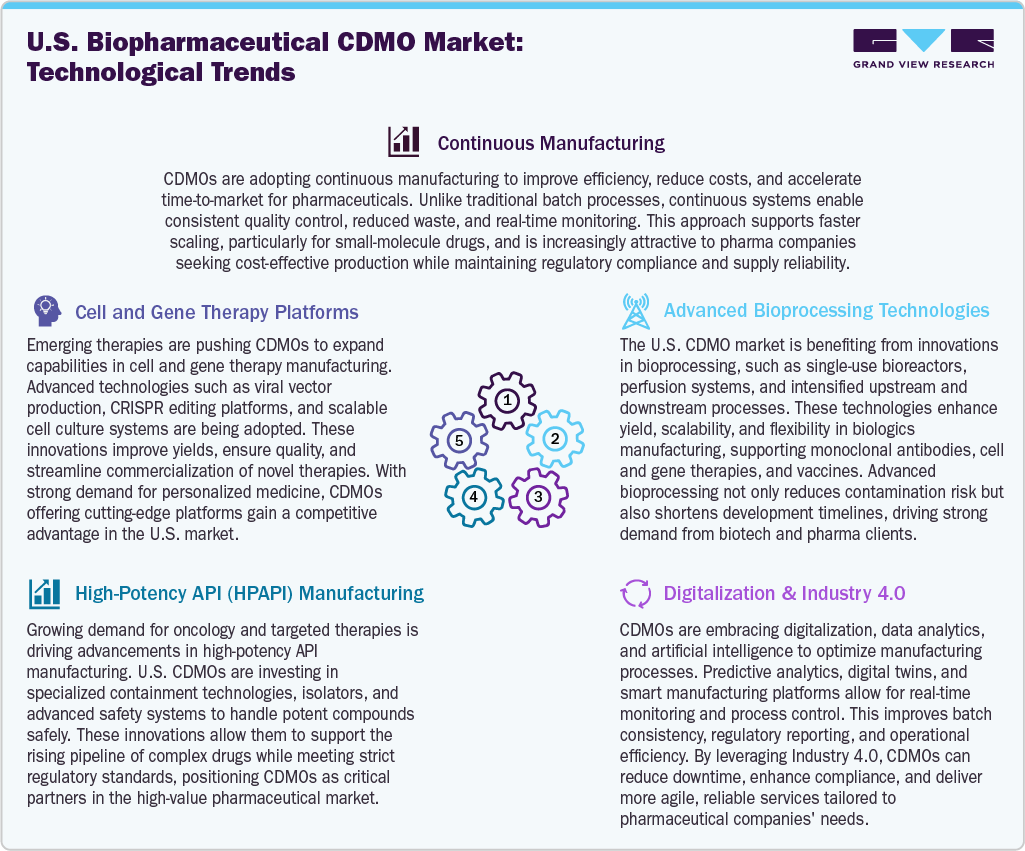
 The U.S. pharmaceutical CDMO market is undergoing a drastic shift towards continuous manufacturing to increase production efficiency, reduce waste, and accelerate the commercial production of advanced therapeutic drugs. Innovative biopharmaceutical technologies are gaining momentum due to the increasing number of monoclonal antibodies, recombinant proteins, and novel biopharmaceuticals being developed. Digitalization and the implementation of Industry 4.0 technologies are changing the manufacturing processes with real-time tracking, predictive maintenance, automation of quality control, and process optimization based on data analysis. The growing interest in the production of high-potency APIs is driving demand for containment manufacturing facilities for oncology and targeted treatments. The cell and gene therapy platform is proving to be a major growth factor for the industry, fueled by investments in viral vector production, personalized medicines, and regenerative medicines.
There is an increase in the adoption of modular manufacturing capabilities that accommodate batch-size flexibility and enable rapid scale-up for innovative biotech companies. In addition, there is a growing trend among pharmaceutical sponsors to opt for service providers that offer integrated analytical testing, formulation development, and sterile fill-finish capabilities to speed up the drug development process. Advances in automation technologies are ensuring better operational consistency and reducing manual intervention during critical manufacturing processes, especially in biologics manufacturing plants. Advanced manufacturing capabilities for complex drug modalities have become critical with the focus on precision medicine in the pharmaceutical pipeline.
Pricing Model Analysis
 To learn more about this report, Download Free Sample Report
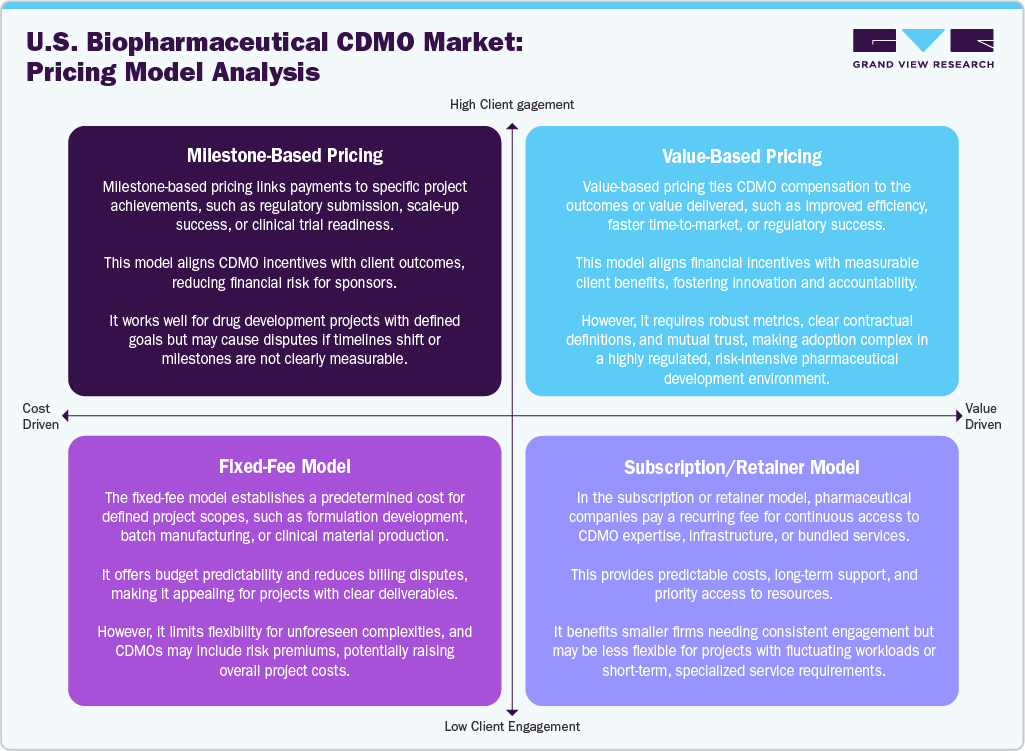
 There is an increasing trend towards diversification in the pricing strategies of U.S. pharmaceutical CDMOs, as companies leverage flexible business models based on project complexity, sponsor involvement, and the need for long-term partnerships. Milestone-based pricing is popular in drug development projects, in which fees are set for regulatory filing, clinical trial readiness, and manufacturing scale-up milestones. This is done to allow the sponsor to control the financial risk associated with drug development phases. Value-based pricing has become prevalent in complex biologics and advanced therapies projects where fees are tied to specific performance metrics like accelerated product commercialization and improved process efficiency. Fixed fees are typical of well-defined projects such as formulation development, analytical services, and batch manufacturing.
The subscription model is becoming increasingly popular among new biotech companies that need consistent access to manufacturing facilities, regulatory support, and expertise in product development. The complexity of pharmaceutical pipelines is causing pharmaceutical companies to adopt hybrid pricing models that combine operational costs with performance-based incentives to enhance their commercial flexibility. Moreover, contract development and manufacturing organizations that can offer integrated services and specialize in manufacturing are witnessing premium pricing opportunities due to high demand for their services.
Market Concentration & Characteristics
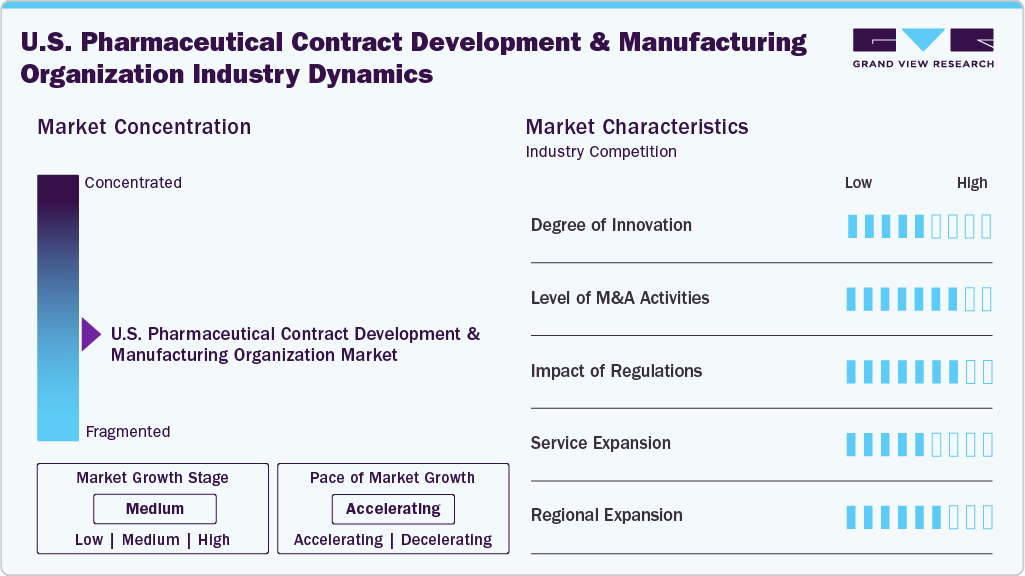
The U.S. pharmaceutical CDMO market growth stage is moderate, and growth is accelerating. The market is characterized by the degree of innovation, level of M&A activities, regulatory impact, service expansion, and regional expansion.
The U.S. pharmaceutical CDMO market is structured by continuous innovation in biologics, cell and gene therapies, and advanced drug delivery systems. Adoption of AI, automation, and continuous manufacturing boosts efficiency and quality. For instance, in April 2025, Regeneron expands U.S. biologics manufacturing with FUJIFILM Diosynth, investing over USD 3 billion to double capacity and drive innovation.
Mergers and acquisitions remain high in the U.S. pharmaceutical CDMO market, driven by the need to expand biologics capacity, advanced technologies, and geographic reach. For instance, in August 2025, ESTEVE acquired Regis Technologies, expanding U.S. CDMO presence and strengthening small-molecule API development and manufacturing capabilities across global facilities. Strategic deals allow CDMOs to integrate end-to-end services, strengthen supply chain resilience, and broaden expertise
 To learn more about this report, Download Free Sample Report
 The U.S.'s changing regulatory landscape and stringent FDA regulations have a big impact on CDMO operations. Although compliance guarantees product efficacy, safety, and market acceptance, it also lengthens turnaround times and increases operating expenses. While smaller businesses could find it difficult to meet strict criteria, CDMOs with strong regulatory knowledge gain a competitive edge by helping sponsors navigate complicated approval processes.
Service expansion in the U.S. pharmaceutical CDMO market is driven by demand for integrated offerings covering preclinical development, clinical trials, commercial-scale production, and packaging. CDMOs are increasingly offering customized formulations, high-potency APIs, and biologics production. In long-term pharmaceutical pipelines, increasing capabilities guarantees client retention, lessens outsourced fragmentation, and establishes CDMOs as strategic partners as opposed to transactional vendors.
End-user concentration affects U.S. CDMOs because large pharmaceutical companies dominate contract quantities while biotech startups generate demand driven by innovation. A strong reliance on a small number of large clients ensures consistent, high-value projects, despite raising revenue risks. Since diversifying clients among small biotechs and mid-sized pharmaceutical businesses enhances stability, CDMO success depends on flexibility, scalability, and tailored services.
Type Insights
On the basis of type, the small molecules segment accounted for the largest revenue share in 2025, at 72.9%, and is also the fastest-growing segment over the forecast period. The market is driven by high demand for generic drugs, oral solid dosages, and active pharmaceutical ingredients (APIs). Pharmaceutical businesses are drawn to contract development and manufacturing services for small molecules because they provide streamlined production, cost-effective solutions, and assistance with regulatory compliance. The segment benefits from extensive outsourcing trends, patent expirations, and rising R&D in specialty and generic small-molecule drugs. This segment is further strengthened by CDMOs' proficiency with complicated and high-potency formulations, which firmly establishes its dominance in revenue creation within the pharmaceutical contract development and manufacturing industry in the U.S.
The large molecules segment is expected to witness the second fastest growth rate over the forecast period, driven by increasing demand for biologics, monoclonal antibodies, and complex protein-based therapies. Rising prevalence of chronic diseases, cancer, and autoimmune disorders fuels the need for innovative biologic treatments, prompting pharmaceutical companies to outsource development and manufacturing to specialized CDMOs. Advanced capabilities in cell culture, purification, and formulation enable efficient production of high-value biologics while ensuring regulatory compliance and quality standards. Expanding investment in biopharmaceutical infrastructure, technological advancements, and expertise in handling large molecules further accelerates growth, positioning this segment as a key driver in the U.S. pharmaceutical CDMO market.
Product Insights
On the basis of product, the active pharmaceutical ingredients (APIs) accounted for the largest revenue in 2025, driven by the growing demand for biologics and complicated compounds. In an effort to cut expenses, boost productivity, and guarantee regulatory compliance, pharmaceutical companies are increasingly contracting with CDMOs to design and produce APIs. The need for premium APIs is developing quickly because of the rising incidence of uncommon and chronic diseases. Advanced capabilities, including continuous processing, green chemical solutions, and high-potency API production, are offered by CDMOs. Outsourcing is also fueled by the FDA's strict requirements, which demand infrastructure and knowledge. Because of this high demand, APIs are the leading source of income in the U.S. pharmaceutical CDMO market.
The drug product segment is projected to grow at the second-fastest growth rate duringthe forecast period. The segment is driven by the need for sterile injectables, biologics, and sophisticated formulations. Pharmaceutical firms are increasingly contracting out the creation of new drugs in order to save costs, gain access to specialist knowledge, and maintain regulatory compliance. For instance, a strategic acquisition made by Simtra BioPharma Solutions in July 2025 to increase the U.S.' capacity for injectable medications, such as antibody-drug conjugates (ADCs). Simtra demonstrates the growing potential of the industry by establishing itself as the first CDMO in the U.S. to provide commercial-scale ADC medicinal product manufacturing. The need for outsourced drug product services is increasing because of rising innovation, the expansion of oncology pipelines, and domestic supply chain requirements.
Service Insights
On the basis of service, the contract manufacturing segment held the largest revenue segment in 2025, supported by strong demand for large-scale biologics and advanced drug production. Companies increasingly outsource to CDMOs to access specialized facilities, expertise, and cost-efficient scalability. In June 2025, developments, such as UCB's USD 5 billion investment in a U.S. biologics facility and its expansion of partnerships with CMOs, highlight the vital role contract manufacturing plays in supporting growth drivers and future pipelines. By enabling pharmaceutical firms to focus on innovation while ensuring reliable, high-quality output, contract manufacturing continues to be the backbone of the U.S. pharmaceutical CDMO market's revenue leadership.
The contract development segment is projected to grow at a significant CAGR duringthe forecast period. The segment is driven by rising demand for advanced R&D, drug formulation, and specialized development capabilities. Pharmaceutical firms increasingly seek CDMO partnerships to accelerate pipelines and address complex therapies. A strong development is Hikma Pharmaceuticals USA's USD 1 billion investment by 2030 to expand U.S. manufacturing and development capacity. With over USD 4 billion invested in the past 15 years and proven FDA collaboration, Hikma demonstrates how contract development drives innovation, supports affordable access to medicines, and positions CDMOs as critical partners in shaping the U.S. pharmaceutical landscape.
Workflow Insights
On the basis of workflow, the commercial segment was the largest revenue contributor in the U.S. pharmaceutical CDMO market in 2025, fueled by the rising demand for large-scale manufacturing of biologics, generics, and specialty medicines. As pharmaceutical pipelines mature, CDMOs provide the expertise, compliance, and capacity needed to transition from clinical to full-scale production. This includes advanced biologics, oncology therapies, and complex injectables. The commercial stage generates consistent revenue streams through long-term supply agreements and scalability advantages. Additionally, increasing FDA approvals and expanding biologics portfolios create opportunities for CDMOs to support lifecycle management and global supply continuity, making commercial manufacturing the dominant and most stable revenue segment.
The clinical segment is projected to grow at the fastest CAGR duringthe forecast period. The segment growth is driven by rising demand for specialized manufacturing to support advanced therapies and complex trial requirements. Partnerships such as in September 2025, Hemogenyx Pharmaceuticals' collaboration with Made Scientific for CAR-T therapy HG-CT-1 highlight the growing reliance on CDMOs with expertise in cell and gene therapies, biologics, and oncology drugs. These partnerships accelerate Phase I and II trials, ensure regulatory compliance, and enable flexible manufacturing for smaller batch sizes. Increasing clinical trial activity, particularly in rare diseases and immunotherapies, combined with robust FDA approvals, positions the clinical segment as the most dynamic growth driver.
Therapeutic Area Insights
On the basis of therapeutic area, the oncology segment accounted for the largest revenue in 2025 and is the fastest-growing segment, driven by the growing global cancer burden. Rising demand for innovative oncology therapies-including targeted treatments, immunotherapies, and personalized medicines-fuels CDMO engagement. Increasing R&D investments, patent expirations, and the need for biologic innovations further boost growth. For instance, in January 2024, Theragent Inc secured U.S. FDA clearance of CellVax Therapeutics' IND for FK-PC101, a personalized prostate cancer immunotherapy, with Phase II patient recruitment starting in March 2024.
The autoimmune diseases segment is anticipated to grow at the second-fastest growth rate over the analysis period. The growing incidence of autoimmune diseases and the need for novel treatments are driving the advancement of the autoimmune diseases segment in the U.S. pharmaceutical CDMO market. CDMOs are increasingly focusing on developing best-in-class products and supporting rare autoimmune disease treatments. Such factors play a critical role in speeding up CDMO-driven drug development and commercialization for autoimmune disease therapies.
End-use Insights
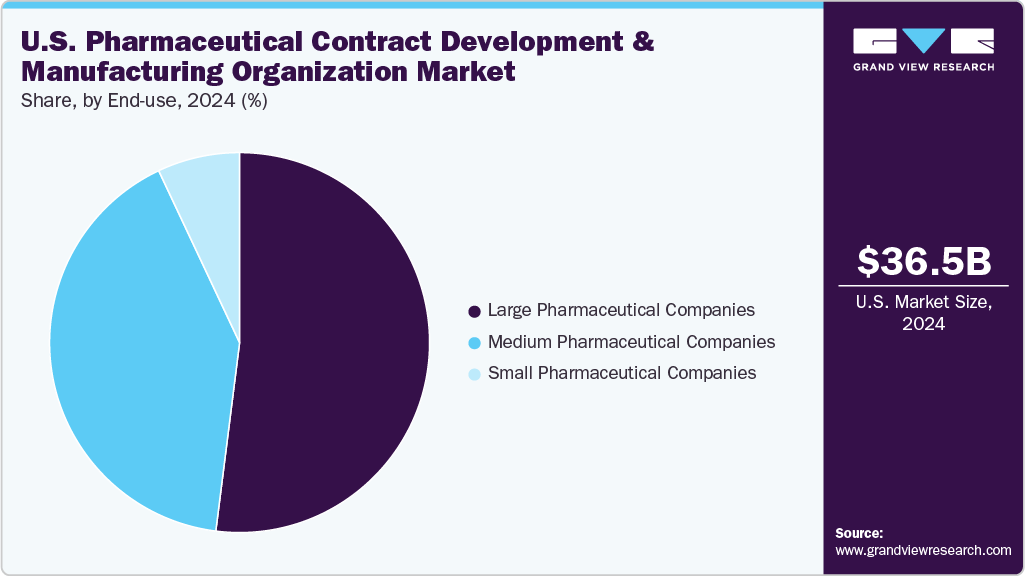
On the basis of end use, the large pharmaceutical companies accounted for the largest revenue segment in the U.S. pharmaceutical CDMO market in 2025, due to their widespread outsourcing of drug development and manufacture to satisfy rising demand. These businesses use CDMOs for cost effectiveness, scalability, and specialist knowledge, especially in the fields of difficult small-molecule medicines, oncology, and biologics. Long-term agreements and strategic alliances guarantee CDMOs consistent revenue streams. Large pharmaceutical companies also make investments in customized medicine and novel therapeutics, necessitating the enhanced manufacturing capabilities that CDMOs offer. The partnership enables faster time-to-market, regulatory compliance, and risk mitigation, firmly establishing this market segment as the main driver of revenue growth for the U.S. pharmaceutical CDMO market.
 To learn more about this report, Download Free Sample Report
 The small pharmaceutical companies segment is anticipated to witness the fastest growth in the U.S. pharmaceutical CDMO market, owing to the growing number of emerging biotechnology and virtual pharmaceutical firms with inadequate manufacturing capabilities. Small pharmaceutical companies rely heavily on CDMOs for services such as drug development, testing, clinical trials, regulatory assistance, and commercial manufacturing, which help in faster commercialization timelines. The increased interest among small pharmaceutical firms in developing biologics, orphan drugs, personalized medicines, and specialty therapeutics is driving the need for more outsourcing services in the country. In addition, increased venture capital investments and investigational new drug applications from small pharmaceutical firms are driving higher outsourcing expenditures in the U.S.
Key U.S. Pharmaceutical CDMO Company Insights
The key players operating across the market are adopting strategic initiatives such as service launches, mergers & acquisitions, partnerships & agreements, and expansions to gain a competitive edge in the market. For instance, in June 2025, Agenus Inc. partners with Zydus Lifesciences, exchanging its U.S. biologics CMC facilities for USD 75M plus contingent payments. The collaboration establishes Zydus’ BioCDMO operations, with Agenus as its first customer, supporting global manufacturing, clinical development, and commercialization of botensilimab and balstilimab (BOT/BAL), unlocking asset value and regulatory readiness.
Key U.S. Pharmaceutical CDMO Companies
-
Thermo Fisher Scientific, Inc
-
Lonza
-
Recipharm AB
-
Catalent, Inc
-
WuXi AppTec, Inc
-
Samsung Biologics
-
Piramal Pharma Solutions
-
Siegfried Holding AG
-
Corden Pharma International
-
Cambrex Corporation
-
Vetter Pharma
-
Delpharm
-
Jubilant Pharmova / HollisterStier
-
Eurofins CDMO
-
Almac Pharma Services
Competitive Benchmarking
Operating Strategies
Competitive Edge
Weaknesses
Mature Players: Thermo Fisher; Scientific, Inc.
- The major pharmaceutical CDMOs operating in the U.S. strive to enhance their service integration capabilities in drug discovery support, process development, API and biologics manufacturing, sterile fill finish, and commercial manufacturing operations.
- These companies achieve competitive advantage through strategic acquisitions, long-term collaborations with big pharmaceutical companies, technology adoption, and capacity expansion initiatives within major U.S. biopharmaceutical hubs.
- The mature market players have a significant competitive advantage owing to their regulatory expertise, U.S. FDA-compliant manufacturing facilities, diversified service offerings, and established relationships with leading international pharmaceutical and biotechnology companies.
- The ability to offer comprehensive development and manufacturing services, coupled with specialized biologics, high-potency, and commercial manufacturing capabilities, helps these companies retain clients and secure high-value projects.
- The high cost of operations due to compliance issues, need for skilled labor, biologics manufacturing capabilities, and continuous upgrades to technology can create financial strain on established CDMOs in the U.S.
- Operations conducted on a large scale may also encounter problems pertaining to capacity utilization, long validation periods, and competition from low-cost outsourcing countries in Asia and Europe.
Emerging Players: Eurofins CDMO
- Emerging players in the U.S. pharmaceutical CDMO market focus primarily on specialized fields such as cell and gene therapy, antibody-drug conjugate development, personalized medicine manufacturing, and advanced analytical testing services.
- Many small companies opt for flexible engagement models, competitive pricing, fast project delivery, and customized drug development solutions to attract venture capital-backed biotech organizations.
- The competitive strengths of the new CDMOs in the U.S. are their operational flexibility, scientific capabilities, and capacity to deliver highly specific development projects faster.
- Some emerging organizations are adopting digital manufacturing, modular manufacturing facilities, continuous manufacturing techniques, and automated manufacturing technology to increase efficiency.
- The limitations faced by the emerging firms are a lack of commercial-scale manufacturing capability, regulatory experience, and investment capacity for large-scale infrastructure and biologic manufacturing.
- Moreover, a lack of long-term contracts with big pharma companies and limited international operations may impact their income streams and ability to attract large projects.
Recent Developments
-
In September 2025, Hemogenyx Pharmaceuticals partners with Made Scientific CDMO to advance HG-CT-1 CAR-T therapy for relapsed/refractory AML, leveraging GMP facilities in New Jersey to accelerate Phase I clinical trials and pediatric cohorts.
-
In June 2025, Hikma Pharmaceuticals USA announces USD 1 billion investment by 2030 to expand U.S. manufacturing and R&D, enhancing domestic capabilities, producing over 12 billion doses annually, and supporting affordable access to essential medicines.
-
In June 2025, UCB plans major U.S. investment in a biologics manufacturing facility, generating USD 5 billion economic impact, expanding workforce, and strengthening CMO partnerships to support pipeline growth, innovation, and sustainable healthcare delivery.
U.S. Pharmaceutical CDMO Market Report Scope
Report Attribute
Details
Market size value in 2026
USD 41.2 billion
Revenue forecast in 2033
USD 65.3 billion
Growth rate
CAGR of 6.8% from 2026 to 2033
Actual data
2021 - 2024
Forecast period
2026 - 2033
Quantitative units
Revenue in USD million/billion and CAGR from 2026 to 2033
Report coverage
Revenue forecast, company ranking, competitive landscape, growth factors, and trends
Segments covered
Type, product, service, workflow, therapeutic area, end-use
Country scope
U.S.
Key companies profiled
Thermo Fisher Scientific, Inc; Lonza; Recipharm AB; Catalent, Inc; WuXi AppTec, Inc; Samsung Biologics; Piramal Pharma Solutions; Siegfried Holding AG; Corden Pharma International; Cambrex Corporation; Vetter Pharma; Delpharm; Jubilant Pharmova / HollisterStier; Eurofins CDMO; Almac Pharma Services
Customization scope
Free report customization (equivalent up to 8 analysts working days) with purchase. Addition or alteration to country, regional & segment scope.
Pricing and purchase options
Avail customized purchase options to meet your exact research needs. Explore purchase options
U.S. Pharmaceutical CDMO Market Report Segmentation
This report forecasts revenue growth at the country level and provides an analysis of the latest industry trends in each of the sub-segments from 2021 to 2033. For this study, Grand View Research has segmented the U.S. Pharmaceutical Contract Development and Manufacturing Organization market report based on type, product, service, workflow, therapeutic area, and end-use.
-
Type Outlook (Revenue, USD Million, 2021 - 2033)
-
Small Molecule
-
Branded
-
Generic
-
-
Large Molecule
-
Biologics
-
Biosimilar
-
-
-
Product Outlook (Revenue, USD Million, 2021 - 2033)
-
API
-
Traditional Active Pharmaceutical Ingredient (Traditional API)
-
Highly Potent Active Pharmaceutical Ingredient (HP-API)
-
Biologics
-
Others
-
-
Drug Product
-
Oral solid dose
-
Semi-solid dose
-
Liquid dose
-
Others
-
-
-
Service Outlook (Revenue, USD Million, 2021 - 2033)
-
Contract Development
-
Pre-formulation & Formulation Development Services
-
Process Development & Optimization
-
Analytical Testing & Method Validation
-
Scale-up & Tech Transfer
-
-
Contract Manufacturing
-
API Manufacturing
-
Finished Drug Products Manufacturing
-
-
Packaging and Labelling
-
Regulatory Affairs
-
Others
-
-
Workflow Outlook (Revenue, USD Million, 2021 - 2033)
-
Clinical
-
Commercial
-
-
Therapeutic Area Outlook (Revenue, USD Million, 2021 - 2033)
-
Oncology
-
Infectious Diseases
-
Neurological Disorders
-
Cardiovascular Disease
-
Metabolic Disorders
-
Autoimmune Diseases
-
Respiratory Diseases
-
Ophthalmology
-
Gastrointestinal Disorders
-
Orthopedic Diseases
-
Dental Diseases
-
Others
-
-
End-use Outlook (Revenue, USD Million, 2021 - 2033)
-
Small Pharmaceutical Companies
-
Medium Pharmaceutical Companies
-
Large Pharmaceutical Companies
-
Delivered Customizations
This report has been delivered with the following In-depth customizations
Client Request
Customization Delivered
Value Adds
U.S. Pharmaceutical CDMO Capacity Expansion & Regulatory Environment Assessment
A detailed study was prepared on the U.S. pharmaceutical CDMO industry with particular focus on the expansion of biologics manufacturing, sterile fill finish capabilities, advanced therapy production networks, and changing U.S. FDA regulatory expectations. The study reviewed developments in domestic pharmaceutical manufacturing investments, local supply chain strengthening efforts, quality assurance standards, and operational barriers linked with complex drug development and large-scale commercial manufacturing activities across the U.S.
The findings help stakeholders gain a clearer understanding of evolving outsourcing patterns in the U.S. pharmaceutical industry, identify rapidly expanding manufacturing segments, evaluate regulatory and operational concerns, and assess long term market positioning associated with domestic production growth and advanced therapeutic manufacturing capabilities.
Biologics Outsourcing Demand & Advanced Therapy Manufacturing Analysis
An extensive review of outsourcing demand patterns was prepared across biologics, biosimilars, monoclonal antibodies, antibody drug conjugates, and cell and gene therapy manufacturing services within the U.S. pharmaceutical CDMO sector. The analysis covered biotechnology financing trends, growth in clinical stage pipelines, specialized production requirements, and rising preference for integrated development and commercial manufacturing partnerships.
The assessment offers valuable insights into developing outsourcing prospects, increasing demand for niche therapeutic manufacturing, and key expansion areas for pharmaceutical CDMOs supporting biologics and precision medicine commercialization across the U.S.
Advanced Manufacturing Infrastructure & Digital Bioprocessing Opportunity Assessment
Assessed the adoption of advanced manufacturing technologies within the U.S. pharmaceutical CDMO market. The study examined ongoing investments in high potency active pharmaceutical ingredient facilities, biologics manufacturing infrastructure, temperature-controlled logistics systems, and smart manufacturing solutions designed to improve operational productivity and accelerate manufacturing scale up.
The study assists in strategic investment planning for advanced pharmaceutical manufacturing technologies through identification of underserved production areas, modernization opportunities, specialized capability gaps, and revenue generation potential linked with next generation drug manufacturing and commercial supply chain development.
Frequently Asked Questions About This Report
The small molecule segment led with a 72.9% revenue share in 2025.
The contract manufacturing segment held the largest revenue share of 59.8% in 2025.
Key players include Thermo Fisher Scientific, Inc, Lonza, Recipharm AB, Catalent, Inc, WuXi AppTec, Inc, Samsung Biologics, Piramal Pharma Solutions, Siegfried Holding AG, Corden Pharma International, Cambrex Corporation, Vetter Pharma, Delpharm, Jubilant Pharmova / HollisterStier, Eurofins CDMO, and Almac Pharma Services, among others.
The global U.S. pharmaceutical contract development and manufacturing organization market size was valued at USD 38.8 billion in 2025 and is estimated at USD 41.2 billion in 2026.
The global U.S. pharmaceutical contract development & manufacturing organization market is expected to grow at a CAGR of 6.8% from 2026 to 2033, reaching USD 65.3 billion.
The API product segment led with a 81.5% revenue share in 2025.
Key factors include growth in biologics, biosimilars, and advanced therapies such as cell and gene therapies, fueling demand for specialized CDMO services. Developing and manufacturing these therapies requires advanced capabilities like single-use bioprocessing systems, viral vector production, and personalized medicine expertise, which many pharma companies lack in-house. CDMOs provide infrastructure, regulatory knowledge, and innovation platforms to accelerate development while meeting FDA standards, driving the market growth.
About the Author(s)
Medical Devices Research Team
Healthcare · Medical DevicesThis report was authored by the medical devices research team at Grand View Research - comprising two research analysts, one senior research analyst, and one industry expert - with specialized expertise in the medical devices segment of the healthcare industry. All findings are based on proprietary healthcare databases, executive interviews, and regulatory analysis, subject to internal peer review prior to publication.
Last Updated:
Speak to Analyst

Customize this report to your needs - add regions, segments, or data points, with 20% free customization.
Or view our licence options:


ISO 9001:2015 & 27001:2022 Certified
We are GDPR and CCPA compliant! Your transaction & personal information is safe and secure. For more details, please read our privacy policy.


