
- Home
- »
- Medical Devices
- »
-
U.S. Pressure Ulcer Treatment Market Size Report, 2033GVR Report cover

U.S. Pressure Ulcer Treatment Market (2026 - 2033)
Size, Share & Trends Analysis Report By Product (Wound Care Dressings, Active & Bio-Therapies, Wound Care Devices & Systems, Topical & Pharmacological Agents), By Clinical Severity, By End Use, And Segment Forecasts
Market Size, 2025
$2.3BMarket Estimate, 2026
$2.4BMarket Forecast, 2033
$3.4BCAGR, 2026–2033
5.4%U.S. Pressure Ulcer Treatment Market Summary
The U.S. pressure ulcer treatment market size was valued at USD 2.3 billion in 2025 and is projected to grow from USD 2.4 billion in 2026 to USD 3.4 billion by 2033, at a CAGR of 5.4% from 2026 to 2033. The growth of the U.S. pressure ulcer treatment market is driven by the persistent burden of pressure injuries among hospitalized and long-term-care patients, increasing focus on pressure injury prevention and quality outcomes, rising adoption of advanced wound-care technologies, and growing demand for specialized treatment across hospitals, skilled nursing facilities, and home healthcare settings.
Key Market Trends & Insights
- By product: Wound care dressings segment led the market with the largest revenue share of 37.6% in 2025.
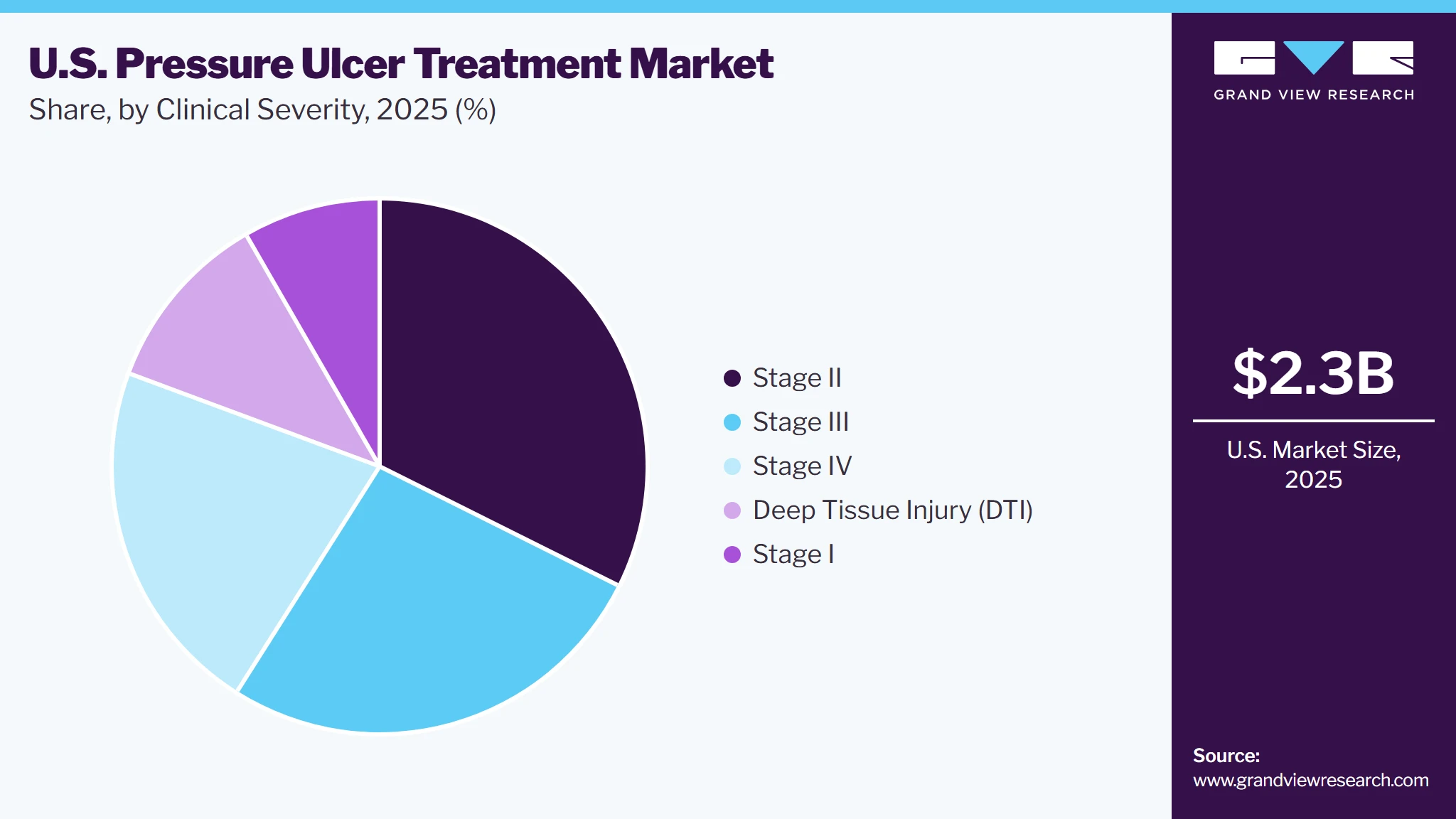
- By clinical severity: Stage II segment led the market with the largest revenue share of 32.4% in 2025.
- By end use: Acute care hospital segment led the market with the largest revenue share of 41.2% in 2025.
Market Size & Forecast
- Market Size in 2025: USD 2.3 Billion
- Estimated Market Size in 2026: USD 2.4 Billion
- Projected Market Size by 2033: USD 3.4 Billion
- CAGR (2026-2033): 5.4%
Three ways to get this report
Buy it, customize it, or ask a question.Ask an Analyst
A direct answer, usually in 1 working day
- AccessReport author, directly
- Reply timeWithin 1 working day
- No sales callDirect answer only
- FormatEmail reply
- CostFree, no cost
Get the Full Report
What the study covers
- FormatsPDF · Excel · Dashboard
- Timeline2026–2033 annual, 2025 base
- Coverage20+ countries, 5 regions
- Companies10+ key players profiled
Customize the Report
20% free customization
- IncludeCountries, segments, points
- TailorTo your product definition
- ExtendDeeper competitor detail
- OrA fully bespoke study
- Turnaround5–10 working days
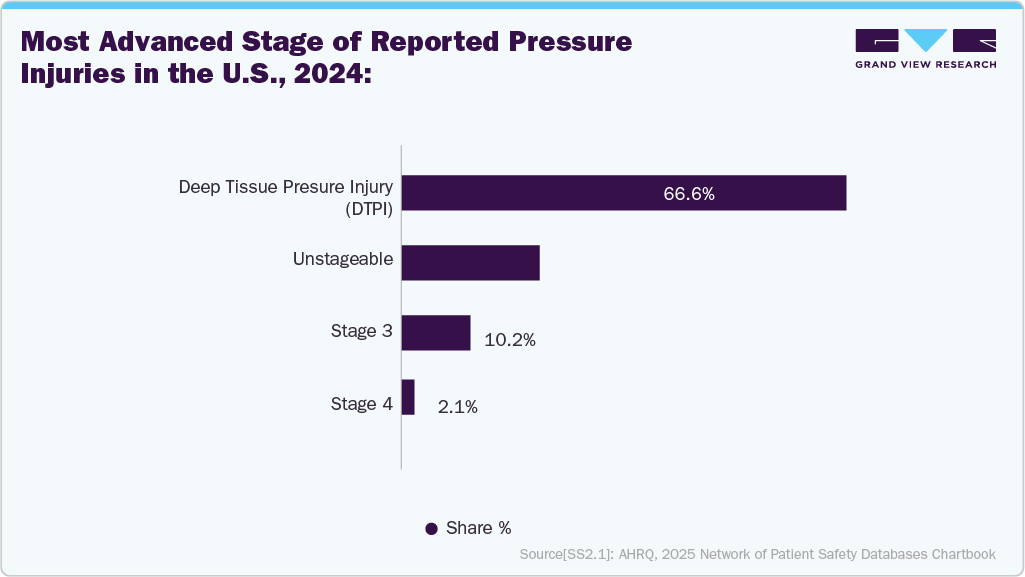
The continuing burden of pressure injuries is increasing demand for effective wound-care and treatment solutions across U.S. healthcare settings. For instance, AHRQ Network of Patient Safety Databases Chartbook, 93,807 pressure injury events were reported through December 2024. Among the 17,077 events with valid information on the most advanced stage, 66.6% (11,377 cases) were deep tissue pressure injuries, 10.2% (1,748 cases) were Stage 3, and approximately 21.1% (3,600 cases) were unstageable.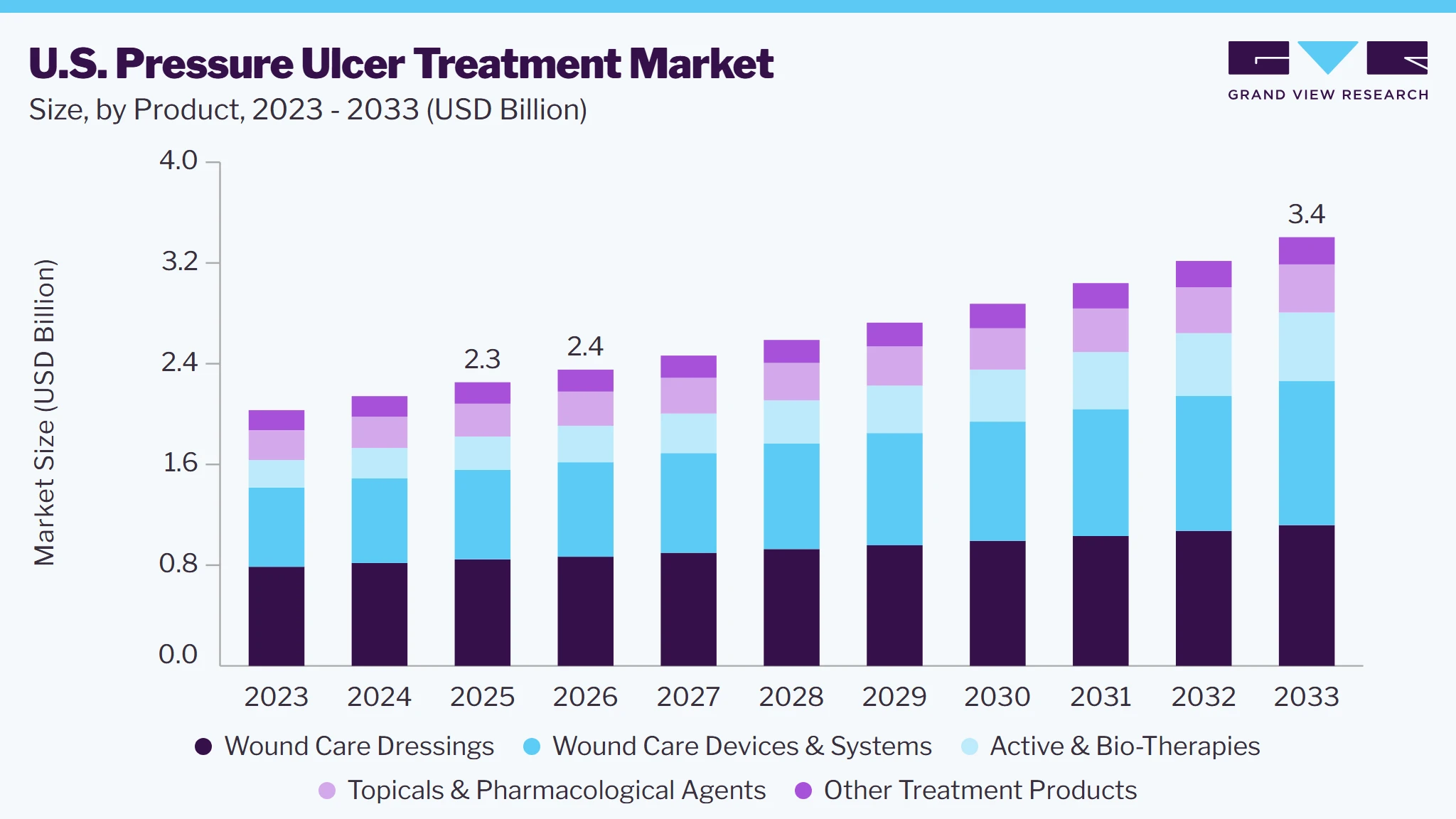 Source: Grand View Research, IR Documents, Primary Interviews, Paid DatabasesTo learn more about this report,
 Download Free Sample Report
 The report also found that 77.1% of 17,936 reported events involved patients who had received a preventive intervention, indicating that pressure injuries continue to occur despite preventive measures. Furthermore, 63.8% of reported cases developed a secondary morbidity or had an unknown outcome, while Stage 4 injuries showed the highest reported harm rate at 82%. The substantial number of advanced and potentially harmful pressure injuries supports continued demand for advanced dressings, negative pressure wound therapy, pressure-relieving systems, and other treatment solutions.
 To learn more about this report, Download Free Sample Report
 Clinical Trials Landscape
Clinical trials are supporting innovation in the U.S. pressure ulcer treatment market by generating clinical evidence on advanced biological therapies for severe and nonhealing wounds. Research is focused on cellular, acellular, and matrix-like products that can accelerate wound closure and improve outcomes in patients with difficult-to-heal Stage III and Stage IV pressure ulcers. For instance, in May 2025, Tiger Biosciences, LLC initiated the Phase 4 NCT06999590 clinical trial in the U.S. to evaluate several cellular, acellular, and matrix-like products (CAMPs), including ACApatch and caregraFT, in combination with standard wound care for nonhealing pressure ulcers. The multicenter, prospective, randomized controlled modified platform trial plans to enroll approximately 500 adult patients with chronic Stage III or Stage IV pressure ulcers. The study will compare weekly applications of these biological products plus standard care with matched standard-of-care controls, with complete wound closure serving as the primary outcome. The trial is expected to be completed in May 2027. The study highlights the growing development of advanced biological and regenerative wound-care therapies and is expected to strengthen clinical evidence supporting the adoption of active & bio-therapies, particularly cellular, acellular, and matrix-based products, in the U.S. pressure ulcer treatment market.
Market Dynamics
The market is experiencing steady growth due to the persistent burden of pressure ulcers among elderly, immobile, hospitalized, and long-term-care patients, along with increasing emphasis on effective wound management and prevention. Pressure ulcer treatment includes advanced wound dressings, negative pressure wound therapy, pressure redistribution and support surfaces, biological skin substitutes, topical agents, and other treatment products that support wound healing and reduce complications. The market is further supported by the growing adoption of standardized wound assessment, hospital-acquired pressure injury prevention protocols, and early intervention practices. In addition, technological advancements such as AI-enabled wound assessment, digital wound monitoring, advanced biomaterials, smart pressure-sensing systems, and portable treatment solutions are improving wound assessment, treatment planning, and patient monitoring across U.S. healthcare settings.
The U.S. healthcare system is placing increasing emphasis on preventing pressure ulcers as part of patient safety, quality improvement, and hospital performance initiatives. Hospitals are strengthening pressure injury risk assessment, routine skin inspection, repositioning protocols, nutritional management, and use of pressure-redistribution surfaces to reduce preventable injuries. Greater attention to hospital-acquired pressure injuries also encourages healthcare providers to adopt advanced dressings, support surfaces, monitoring technologies, and other preventive and treatment solutions. This focus on improving clinical outcomes and reducing complications supports continued demand for pressure ulcer management products across U.S. healthcare facilities.
Improved pressure ulcer prevention practices can reduce the incidence and progression of pressure injuries, limiting the number of patients requiring advanced treatment. Hospitals and long-term care facilities are implementing early risk identification, regular repositioning, pressure-relieving surfaces, nutritional support, and standardized wound assessment protocols. Effective prevention can prevent Stage I and Stage II injuries from progressing to more severe wounds requiring advanced dressings, NPWT, biological therapies, or other intensive interventions. Consequently, although preventive measures create demand for pressure redistribution and monitoring products, they can reduce overall treatment volumes and constrain growth in certain treatment categories.
The expansion of home-based healthcare in the U.S. is creating opportunities for pressure ulcer treatment products that can be used outside hospitals and institutional care settings. Patients with chronic wounds, limited mobility, or long-term care requirements can increasingly receive wound assessment and treatment through home healthcare providers and visiting clinicians. This trend supports demand for advanced dressings, portable NPWT systems, wound cleansing products, offloading and positioning devices, and digital wound monitoring solutions. Manufacturers can benefit by developing products that are portable, easy to administer, cost-effective, and suitable for continued wound management in home settings while enabling healthcare professionals to monitor patient progress remotely.
Market Concentration & Characteristics
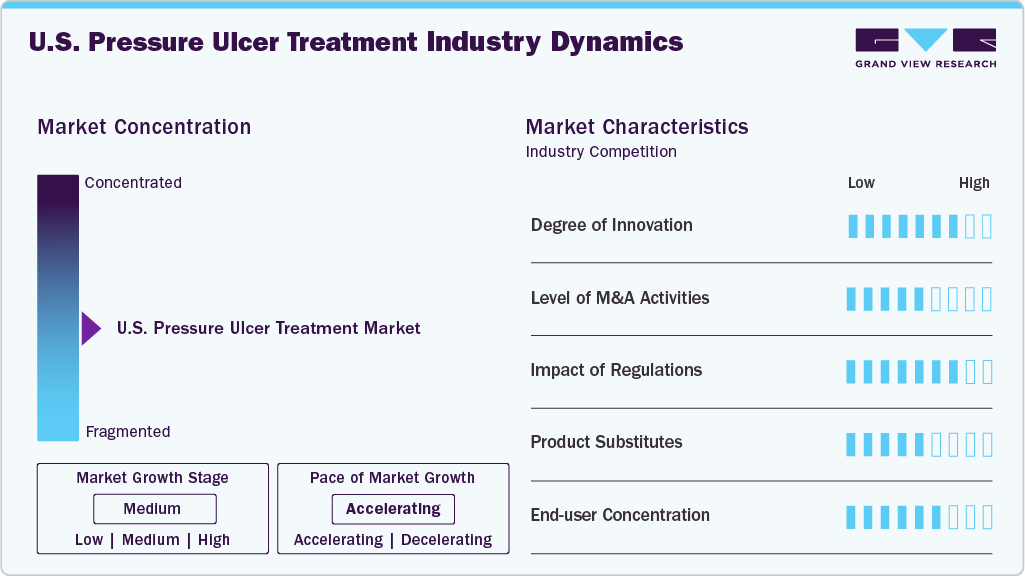
The U.S. pressure ulcer treatment market has a moderate to high degree of innovation, supported by advances in wound-care products, pressure-relieving technologies, biological skin substitutes, and digital wound assessment. Manufacturers are developing advanced dressings, negative pressure wound therapy systems, smart pressure-monitoring surfaces, antimicrobial products, and AI-enabled wound assessment tools. These technologies aim to improve wound healing, reduce infection risk, support early detection, and provide more accurate monitoring of treatment progress. Innovation is also focused on portable and home-use treatment systems, which can improve access to wound care for patients requiring long-term management.
The U.S. pressure ulcer treatment market has experienced moderate M&A and strategic partnership activity, as companies seek to expand advanced wound-care portfolios, strengthen post-acute care capabilities, and access complementary technologies and distribution channels. For instance, in October 2025, RestorixHealth's acquisition of CūtisCare, which expanded its hospital-based outpatient wound-care and hyperbaric management capabilities and increased its network to nearly 300 hospital, academic medical center, and hospital-system partners across 41 states.
 To learn more about this report, Download Free Sample Report
 “Integrating CūtisCare and RestorixHealth’s hospital-based services positions us as the leading solution for partners of all sizes across all communities with our expertise spanning from rural hospitals to healthcare systems and teaching hospitals,” said RestorixHealth Chief Executive Officer Ben Dunford. “We are excited to grow with each of our centers and hospital partners and further expand our reach to get more patients the care they need for their hard-to-heal wounds.”
Regulations have a significant impact on the U.S. pressure ulcer treatment market because wound-care products and medical devices must comply with FDA requirements before commercialization, depending on their classification and intended use. FDA regulates applicable wound-care devices, drugs, and biological products, with requirements varying according to product type and risk profile. For instance, FDA classifies certain NPWT devices as Class II medical devices and requires applicable manufacturers to meet premarket notification and other regulatory requirements.
The U.S. pressure ulcer treatment market faces moderate competition from substitute treatment approaches, particularly preventive and conventional wound-management practices. Basic dressings, gauze, repositioning, nutritional support, moisture management, pressure-redistribution mattresses, cushions, and other preventive measures may reduce the need for advanced treatment products, particularly for early-stage pressure injuries. Standardized prevention protocols can also reduce progression to more severe ulcers requiring NPWT, biological therapies, or advanced dressings.
Demand for pressure ulcer treatment products in the U.S. is concentrated across acute care hospitals, long-term acute care hospitals, skilled nursing facilities, long-term care settings, rehabilitation facilities, wound-care clinics, physician offices, and home healthcare. Hospitals are an important end-use setting because pressure injuries are closely associated with immobility, prolonged hospitalization, and complex patient conditions. The importance of hospital-based prevention is reinforced by Centers for Medicare and Medicaid Services’ (CMS's) HAC (Hospital-Acquired Condition) Reduction Program, which links hospital performance on hospital-acquired conditions with Medicare reimbursement.
Analyst Perspective
The market is expected to witness steady growth, driven by the persistent burden of pressure injuries among older, immobile, and medically complex patients, increasing focus on hospital-acquired pressure injury prevention, and rising demand for advanced wound-care solutions. The market is further supported by advancements in advanced dressings, negative pressure wound therapy, pressure-redistribution systems, digital wound assessment, and AI-enabled risk prediction. From an analyst's perspective, companies that focus on developing clinically effective products, improving wound-healing outcomes, supporting home-based care, and demonstrating cost effectiveness will be better positioned to strengthen their competitive advantage. Future market leadership is expected to depend on continuous innovation, expansion into long-term care and home healthcare settings, integration of digital technologies, strong healthcare-provider partnerships, and the ability to deliver cost-effective, outcome-focused pressure ulcer management solutions across the U.S. healthcare system.
Product Insights
The wound care dressings segment dominated the U.S. pressure ulcer treatment market, accounting for 37.6% of the market in 2025. This dominance is supported by the widespread use of advanced dressings for exudate management, moisture balance, wound protection, infection control, and support for tissue healing across different pressure ulcer stages. The segment is also benefiting from continuous product innovation aimed at improving absorption capacity, wear time, patient comfort, and ease of use for healthcare providers. For instance, in September 2024, Solventum launched the V.A.C. Peel and Place Dressing, an all-in-one extended-wear dressing for V.A.C. Therapy. The dressing simplified negative pressure wound therapy application, reduced dressing-change frequency, and supported treatment across various wound types, including pressure ulcers.
"Being able to quickly and safely apply the dressing to deeper and more varied types of wounds, and for it to stay in place for a longer period of time means a reduction in dressing changes, home care visits, and trips to the clinic," said Dot Weir, RN, CWON, CWS, a practicing wound and ostomy care nurse with over four decades of experience. "Because wound care often extends beyond a hospital stay, making the treatment less burdensome and less painful allows patients to get back to their lives more quickly and enables clinicians to ensure consistency of care throughout the healing journey."
The active & bio-therapies segment in the pressure ulcer treatment market is expected to grow at the fastest rate during the forecast period due to increasing interest in advanced therapies for complex, non-healing, and severe pressure ulcers. The segment includes active biomaterials, bioengineered skin substitutes, and growth factors designed to support tissue regeneration, wound closure, and healing. The U.S. regulatory environment also supports continued development of advanced wound-healing technologies, with the FDA overseeing biological and cellular therapies and providing guidance for products intended to treat chronic cutaneous ulcers. Growing clinical interest in regenerative wound care, combined with the limitations of conventional treatment for difficult-to-heal wounds, is supporting greater adoption of these advanced therapies.
Clinical Severity Insights
The stage II segment dominated the pressure ulcer treatment market, accounting for 32.4% of the market in 2025. This dominance is supported by the need for timely diagnosis and treatment to prevent pressure injuries from progressing to deeper tissue damage. Stage II pressure ulcers involve partial-thickness skin loss and commonly require wound protection, moisture management, pressure redistribution, repositioning, and appropriate wound dressings. The U.S. pressure injury burden also remains significant across hospital settings. In the U.S., the 2025 AHRQ Patient Safety Indicator data recorded 34,304 pressure-ulcer cases across 45.7 million hospital discharges, corresponding to an observed rate of 0.75 per 1,000 discharges. The rate was higher among males at 0.92 per 1,000 discharges and among patients aged 65-74 years at 0.88 per 1,000 discharges.
Pressure Ulcer Rate Benchmark Data in the U.S., 2025
Group
Numerator
Denominator
Observed Rate per 1,000 Discharges
Overall
34,304
45,704,751
0.75
Females
13,071
22,615,814
0.58
Males
21,233
23,088,937
0.92
18 to 39 years
2,847
5,414,935
0.53
40 to 64 years
13,198
15,846,056
0.83
65 to 74 years
9,128
10,400,492
0.88
75+ years
9,131
14,043,268
0.65
Private
6,766
9,446,480
0.72
Medicare
19,006
25,768,810
0.74
Medicaid
6,135
7,176,690
0.85
Other
1,389
1,458,819
0.95
Uninsured (self-pay/no charge)
1,008
1,853,952
0.54
Source: The Agency for Healthcare Research and Quality (AHRQ), 2025
 To learn more about this report, Download Free Sample Report
 The stage IV segment in the pressure ulcer treatment market is expected to grow at the fastest rate during the forecast period driven by the increasing need for advanced and intensive treatment of severe pressure injuries involving extensive tissue damage. Stage IV ulcers may expose muscle, tendon, cartilage, or bone and often require complex wound management, infection control, debridement, surgical intervention, and prolonged clinical care. Growing adoption of negative pressure wound therapy, advanced wound dressings, bioengineered skin substitutes, active biomaterials, and other advanced therapies is supporting treatment demand for severe pressure injuries in U.S. hospitals, long-term care facilities, rehabilitation centers, and specialized wound-care settings.
End Use Insights
The acute care hospital segment dominated the pressure ulcer treatment market, accounting for 41.2% in 2025. This dominance is supported by the large and expanding U.S. hospital infrastructure, high patient volumes, and the concentration of medically complex and mobility-limited patients requiring continuous monitoring and wound management. According to the American Hospital Association, the U.S. had 6,100 hospitals, 907,216 staffed beds, and more than 35.6 million hospital admissions in FY2024. The expanding hospital infrastructure and high patient volumes are expected to sustain demand for pressure ulcer prevention, monitoring, and treatment products across U.S. acute care settings.
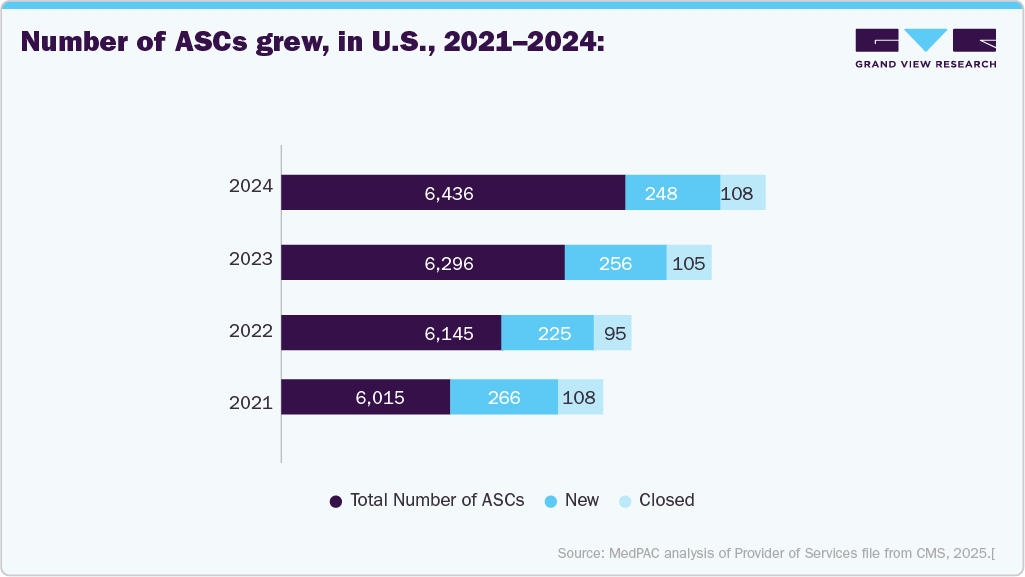
The ambulatory surgery center segment of the pressure ulcer treatment market is expected to grow at the fastest rate during the forecast period. Growth is driven by the continued expansion of outpatient surgical infrastructure and the shift of procedures toward ambulatory settings. According to MedPAC, the number of Medicare-certified ASCs increased from 6,015 in 2021 to 6,436 in 2024, reflecting continued expansion of the U.S. ASC network. This expansion can support greater adoption of convenient wound-management solutions, including advanced dressings, pressure-redistribution products, wound cleansing products, and portable treatment systems.
 To learn more about this report, Download Free Sample Report
 Key U.S. Pressure Ulcer Treatment Company Insights
Some of the key companies in the U.S. pressure ulcer treatment market include SYST'AM, Ulcer Solutions, LLC., Stryker, Baxter (Hillrom), Arjo, LINET, Invacare Corporation, 3M, Smith+Nephew, Mölnlycke AB, Savaria, and Joerns Healthcare. Organizations are focusing on increasing customer base to gain a competitive edge in the industry. Therefore, key players are taking several strategic initiatives, such as product launch, and partnerships with other major companies.
Key U.S. Pressure Ulcer Treatment Companies
-
SYST'AM
-
Ulcer Solutions, LLC.
-
Stryker
-
Baxter (Hillrom)
-
Arjo
-
LINET
-
Invacare Corporation
-
3M
-
Smith+Nephew
-
Mölnlycke AB
-
Savaria
-
Joerns Healthcare
-
B. Braun SE
-
Medline
-
Convatec
-
BioLab Holdings, Inc.
Competitive Benchmarking
Category
Operating Strategies
Competitive Edge
Weakness
Established Players (Stryker, Baxter, Arjo, Smith+Nephew, Mölnlycke AB)
- Focus on advanced wound-care products, pressure-redistribution systems, NPWT, advanced dressings, and digital wound assessment solutions
- Expand through hospitals, long-term care facilities, home healthcare providers, and specialized wound-care centers
- Strong brand recognition, broad product portfolios, established U.S. distribution networks, and extensive clinical expertise
- Established relationships with healthcare providers support product adoption
- Higher product costs can limit adoption among cost-conscious providers
- Large organizations may face complex regulatory requirements and longer product development cycles
Emerging Players (SYST'AM, Ulcer Solutions, LINET, Savaria,
- Focus on specialized pressure-relieving equipment, support surfaces, wound-management solutions, and home-care products
- Expand through regional distributors, healthcare partnerships, and targeted product development
- Greater flexibility, specialized solutions, competitive pricing, and faster response to niche customer requirements
- Ability to target long-term care, rehabilitation, and home healthcare settings
- Lower brand recognition, smaller distribution and service networks, and limited resources for large-scale R&D
- Greater dependence on distributors and regional healthcare partnerships
Recent Developments
-
In August 2026, BioLab Holdings published a peer-reviewed real-world evidence study evaluating Membrane Wrap for complex pressure ulcers. The study found that 63.7% of patients receiving Membrane Wrap plus standard care were healing or healed, compared with 48.4% receiving standard care alone.
"Clinical studies are essential to understanding how advanced wound care technologies perform in real-world settings and to demonstrating efficacy across diverse patient populations," said Marshall Medley, DO, chief medical officer of BioLab Holdings and co-author of the study. "The more evidence we can generate, the better equipped providers are to evaluate treatment options."
-
In June 2026, Smith+Nephew launched the next-generation LEAF Patient Monitoring System in the U.S., a data-driven platform designed to prevent hospital-acquired pressure injuries. The system provided real-time mobility monitoring, turn-status updates, EMR integration, and reporting to improve protocol adherence and patient care.
-
In June 2026, Dimora Medical launched MegaSorb, a silicone foam dressing technology designed to provide high absorption efficiency, effective exudate management, and improved patient comfort.
U.S. Pressure Ulcer Treatment Market Report Scope
Report Attribute
Details
Market size in 2025
USD 2.3 billion
Estimated market size in 2026
USD 2.4 billion
Projected market size by 2033
USD 3.4 billion
Growth rate
CAGR of 5.4% from 2026 to 2033
Base year for estimation
2025
Actual estimates/Historical data
2021 - 2024
Forecast period
2026 - 2033
Quantitative units
Revenue in USD billion and CAGR from 2026 to 2033
Report coverage
Revenue forecast, company ranking, competitive landscape, growth factors, and trends
Segments covered
Product, clinical severity, end use
Key companies profiled
SYST'AM; Ulcer Solutions, LLC.; Stryker; Baxter (Hillrom); Arjo; LINET; Invacare Corporation; 3M; Smith+Nephew; Mölnlycke AB; Savaria; Joerns Healthcare; B. Braun SE; Medline; Convatec; BioLab Holdings, Inc.
Customization scope
Free report customization (equivalent up to 8 analyst’s working days) with purchase. Addition or alteration to country & segment scope
Pricing and purchase options
Avail customized purchase options to meet your exact research needs. Explore purchase options
U.S. Pressure Ulcer Treatment Market Report Segmentation
This report forecasts revenue growth at country levels and provides an analysis of the latest industry trends in each of the sub-segments from 2021 to 2033. For this study, Grand View Research has segmented the U.S. pressure ulcer treatment market report based on product, clinical severity, and end use:
-
Product Outlook (Revenue, USD Million, 2021 - 2033)
-
Wound Care Dressings
-
Moist
-
Foam Dressings
-
Hydrocolloid Dressings
-
Film Dressings
-
Alginate Dressings
-
Hydrogel Dressings
-
Collagen Dressings
-
Other Advanced Dressing
-
-
Antimicrobials
-
Silver
-
Non-silver
-
-
-
Active & Bio-Therapies
-
Active Biomaterials
-
Bioengineered Skin Substitutes
-
Growth Factors
-
-
Wound Care Devices & Systems
-
Negative Pressure Wound Therapy (NPWT)
-
Pressure Redistribution & Support Surfaces
-
Hyperbaric Oxygen Equipment
-
Electrical Stimulation Devices
-
-
Topical & Pharmacological Agents
-
Debriding Agents
-
Topical Antimicrobials & Antiseptics
-
-
Other Treatment Products
-
Offloading & Positioning Devices
-
Wound Cleansing & Irrigation Products
-
-
-
Clinical Severity Outlook (Revenue, USD Million, 2021 - 2033)
-
Stage I
-
Stage II
-
Stage III
-
Stage IV
-
Deep Tissue Injury (DTI)
-
-
End Use Outlook (Revenue, USD Million, 2021 - 2033)
-
Acute Care Hospital
-
Long-term Acute Care Hospital
-
Burn Center
-
Ambulatory Surgery Center
-
Hospital Outpatient Department Wound Care Clinic
-
Inpatient Rehabilitation Facility
-
Skilled Nursing Facility
-
Long-term Care (living setting)
-
Physician Office
-
Home Healthcare
-
Research Methodology
The U.S. pressure ulcer treatment market figures in this report are based on a proven research process that combines executive interviews with secondary research from proprietary databases, company filings, and recognized regulatory and institutional sources. Market size is built through value-chain sizing-reconciling supply-side and demand-side estimates-and triangulated with bottom-up and top-down approaches. Every estimate passes multiple levels of expert validation before publication, with each U.S. pressure ulcer treatment segment quantified using the revenue-capture definitions in the table below.
Segment Definition
Segment - Product
Revenue capture definition
Wound Care Dressings
Revenue generated from dressings used to protect pressure ulcers, manage exudate, maintain moisture balance, and support wound healing
Active & Bio-Therapies
Revenue generated from active biomaterials, bioengineered skin substitutes, and growth factors used to promote tissue regeneration and wound healing
Wound Care Devices & Systems
Revenue generated from NPWT systems, pressure redistribution and support surfaces, hyperbaric oxygen equipment, and electrical stimulation devices used for pressure ulcer prevention and treatment
Topicals & Pharmacological Agents
Revenue generated from debriding agents, topical antimicrobials, and antiseptics used to remove necrotic tissue and manage wound infection
Other Treatment Products
Revenue generated from offloading and positioning devices and wound cleansing and irrigation products used to prevent pressure, maintain wound hygiene, and support treatment
Estimation Model
Approach
Description
Bottom‑Up Estimation
The market is estimated by assessing the number of pressure ulcer cases treated across acute care hospitals, long‑term acute care hospitals, skilled nursing facilities, long‑term care settings, rehabilitation facilities, wound care clinics, physician offices, and home healthcare providers. The analysis incorporates pressure ulcer severity, treatment utilization, product adoption, treatment frequency, and average selling prices across wound care dressings, active and bio‑therapies.
Top‑Down Approach
The market estimation begins with an assessment of the broader U.S. wound care and advanced wound management market, followed by determining the share attributable to pressure ulcer treatment through secondary research and industry validation. The analysis considers key indicators such as pressure ulcer prevalence and incidence, aging and immobility trends, hospital‑acquired pressure injury burden, healthcare facility admissions, clinical severity distribution, and treatment adoption.
Supply‑Side Analysis
The analysis considers manufacturers’ revenues, production capacity, product shipments, portfolio composition, average selling prices, regulatory approvals, and distribution networks across major pressure ulcer treatment categories. The assessment covers advanced dressings, bioengineered skin substitutes, growth factors, NPWT systems, pressure redistribution surfaces, hyperbaric oxygen equipment, and electrical stimulation devices.
Delivered Customizations
This report has been delivered with the following In-depth customizations
Client Request
Customization Delivered
Value Adds
Pressure Ulcer Treatment Product Portfolio & Clinical Severity Analysis
Conducted a comprehensive assessment of the pressure ulcer treatment product landscape, covering wound care dressings, active and bio-therapies, wound care devices and systems, topical and pharmacological agents, and other treatment products. Evaluated product utilization across Stage I, Stage II, Stage III, Stage IV, and deep tissue injury (DTI) cases
Helps stakeholders identify high-demand treatment categories, understand product utilization by clinical severity, assess treatment preferences, and optimize product portfolios according to wound characteristics and clinical requirements
End-use Adoption & Procurement Landscape Analysis
Analyzed pressure ulcer treatment adoption across acute care hospitals, long-term acute care hospitals, burn centers, ambulatory surgery centers, hospital outpatient wound care clinics, inpatient rehabilitation facilities, skilled nursing facilities, long-term care settings, physician offices, and home healthcare. Assessed procurement considerations, treatment protocols, product replacement patterns, reimbursement influences, and institutional purchasing preferences
Enables manufacturers to identify high-potential end-use segments, strengthen procurement and distribution strategies, optimize product availability, and expand market penetration across institutional and home-based care settings
Product Positioning & Manufacturer Competitiveness Assessment
Evaluated leading pressure ulcer treatment manufacturers based on portfolio breadth, advanced dressing technologies, NPWT capabilities, pressure redistribution systems, bioengineered therapies, digital wound-care technologies, clinical evidence, manufacturing capabilities, geographic presence, regulatory compliance, pricing strategies, and distribution strength. The assessment also examined product innovation, portfolio expansion, and competitive differentiation
Supports competitive benchmarking, identifies product development and innovation opportunities, enables portfolio differentiation, strengthens go-to-market strategies, and helps companies improve competitive positioning through clinical innovation, cost effectiveness, and expansion across high-growth care settings
Frequently Asked Questions About This Report
Key players include SYST'AM, Ulcer Solutions, LLC., Stryker, Baxter (Hillrom), Arjo, LINET, Invacare Corporation, 3M, Smith+Nephew, Mölnlycke AB, Savaria, Joerns Healthcare, B. Braun SE, Medline, Convatec, and BioLab Holdings, Inc.
The U.S. pressure ulcer treatment market size was valued at USD 2.3 billion in 2025 and is estimated at USD 2.4 billion for 2026.
The U.S. pressure ulcer treatment market is expected to grow at a CAGR of 5.4% from 2026 to 2033, reaching USD 3.4 billion by 2033
Key factors include the persistent burden of pressure injuries among hospitalized and long-term-care patients, increasing focus on pressure injury prevention and quality outcomes, rising adoption of advanced wound-care technologies, and growing demand for specialized treatment across hospitals, skilled nursing facilities, and home healthcare settings.
The wound care dressings segment held the largest share of 37.6% in 2025, while active & bio-therapies is the fastest-growing segment over the forecast period.
The stage II held the largest share of 32.4% in 2025 while stage IV is the fastest-growing segment over the forecast period.
The acute care hospital held the largest share of 41.2% in 2025, while ambulatory surgery center is the fastest-growing segment over the forecast period.
About the Author(s)
Medical Devices Research Team
Healthcare · Medical DevicesThis report was authored by the medical devices research team at Grand View Research - comprising two research analysts, one senior research analyst, and one industry expert - with specialized expertise in the medical devices segment of the healthcare industry. All findings are based on proprietary healthcare databases, executive interviews, and regulatory analysis, subject to internal peer review prior to publication.
Last Updated:
Speak to Analyst

Customize this report to your needs - add regions, segments, or data points, with 20% free customization.
Or view our licence options:


ISO 9001:2015 & 27001:2022 Certified
We are GDPR and CCPA compliant! Your transaction & personal information is safe and secure. For more details, please read our privacy policy.


