
- Home
- »
- Animal Health
- »
-
U.S. Small Animal Endoscopes & Endoscopic Instruments Market Report, 2033GVR Report cover
![U.S. Small Animal Endoscopes & Endoscopic Instruments Market (2026 - 2033)Report]()
U.S. Small Animal Endoscopes & Endoscopic Instruments Market (2026 - 2033)
Size, Share & Trends Analysis Report By Product (Equipment, Instruments & Accessories, & Consumables), Type, Animal (Dogs, Cats), Procedure (Gastrointestinal Procedures, Respiratory Procedures ), Application, End Use, And Segment Forecasts
Market Size, 2025
$59.2MMarket Estimate, 2026
$62.2MMarket Forecast, 2033
$94.2MCAGR, 2026–2033
6.1%U.S. Small Animal Endoscopes & Endoscopic Instruments Market Summary
The U.S. small animal endoscopes & endoscopic instruments market size was valued at USD 59.2 million in 2025 and is projected to grow from USD 62.2 million in 2026 to USD 94.2 million by 2033, at a CAGR of 6.1% from 2026 to 2033. The market is growing due to factors such as rising foreign body ingestion, enteropathy cases, growing chronic GI, respiratory, and urogenital disorders, increasing adoption of minimally invasive procedures, and expanding specialty and referral care infrastructure.
Key Market Trends & Insights
- Based on product: Instruments & accessories held the largest share of 45.1% in 2025.
- Based on animal: Dogs segment held the largest share of 69.3% in 2025.
- Based on application: Diagnostic segment held the highest market share of 63.7% in 2025.
- Based on end use: Specialty & referral centers held the largest market share of 39.0 % in 2025.
Market Size & Forecast
- Market size in 2025: USD 59.2 Million
- Estimated market size in 2026: USD 62.2 Million
- Projected market size by 2033: USD 94.2 Million
- CAGR (2026-2033): 6.1%
The growth is further supported by technological advancements in imaging systems, expanding specialty veterinary hospitals, increasing prevalence of gastrointestinal and respiratory disorders, and growing awareness of early disease diagnosis, although high equipment costs and reprocessing requirements remain key challenges.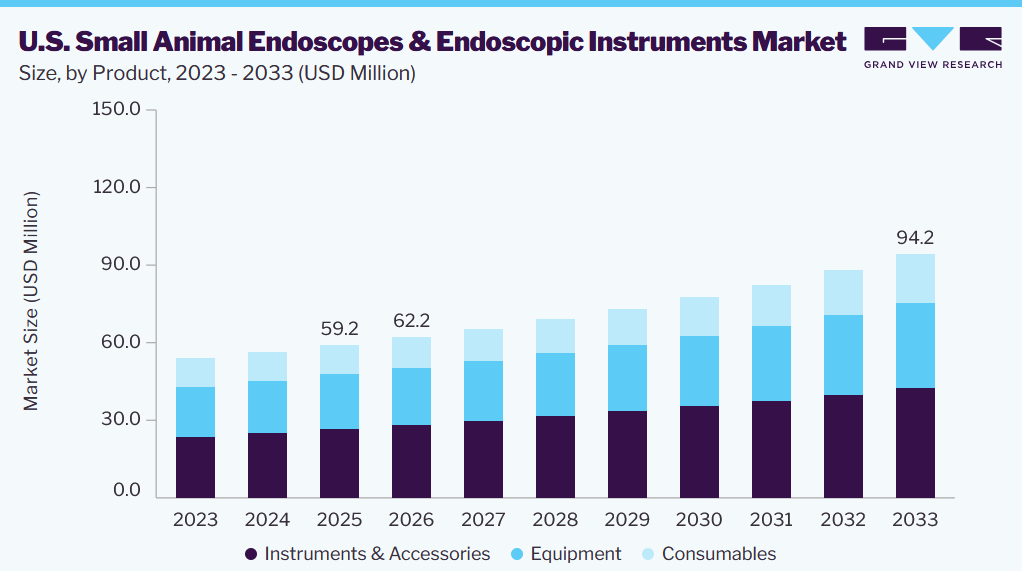
Market Dynamics
Gastrointestinal foreign body ingestion remains one of the most common emergency presentations in U.S. small animal practice, generating consistent demand for flexible endoscopes, retrieval forceps, grasping instruments, and biopsy accessories. Dogs, particularly young large-breed dogs, experience the highest incidence of foreign body ingestion, while young cats also present elevated risk, maintaining procedural volume across general and emergency veterinary settings. Veterinary institutions, including Cornell University College of Veterinary Medicine, recommend endoscopic retrieval as the preferred first-line approach for accessible gastric and esophageal foreign bodies, reducing the need for exploratory surgery.
Furthermore, acute foreign body cases frequently extend into broader diagnostic evaluations. For instance, in August 2025, a retrospective study published in the Journal of the American Veterinary Medical Association reported that 66% of animals with available clinical data, and all animals undergoing biopsy, exhibited findings consistent with chronic enteropathy. Consequently, foreign body retrieval is commonly accompanied by biopsy sampling and gastrointestinal assessment, increasing instrument utilization per procedure and sustaining gastrointestinal endoscopy as the largest procedural application.
High capital investment and limited reimbursement remain key barriers to the adoption of veterinary endoscopy systems, particularly among independent general practices in the U.S. A complete flexible endoscopy platform, including endoscopes, video processors, light sources, monitors, instrument sets, and reprocessing accessories, typically requires an initial investment of approximately USD 17,000 to more than USD 50,000, depending on system configuration. Furthermore, recurring expenses associated with maintenance, repairs, sterilization, and accessory replacement increase the total cost of ownership over the equipment lifecycle.
Most veterinary endoscopic procedures are financed through out-of-pocket spending, as companion animal insurance penetration and reimbursement coverage remain relatively limited. Consequently, equipment acquisition is closely linked to procedural volume and expected return on investment. Practices with lower caseloads frequently continue referring advanced cases to specialty hospitals instead of investing in dedicated endoscopy platforms. In addition, budget limitations often postpone equipment modernization despite increasing demand for minimally invasive diagnostic and therapeutic procedures.
Feline patients present anatomical characteristics that frequently limit the use of conventional endoscopy systems developed primarily for canine applications, creating demand for ultra-thin endoscopes designed for smaller gastrointestinal, respiratory, and urogenital structures. Reduced insertion diameters, improved flexibility, and enhanced maneuverability enable clinicians to access narrow anatomical pathways while minimizing tissue trauma and improving procedural safety. Furthermore, increasing diagnoses of chronic gastrointestinal disorders, inflammatory bowel disease, chronic vomiting, and respiratory conditions in cats are expanding the clinical requirement for minimally invasive visualization and biopsy procedures.
Species-specific endoscopy systems also support examinations in exotic companion animals, broadening their application beyond feline medicine. Manufacturers developing dedicated small-diameter endoscopes, compatible biopsy forceps, retrieval devices, and visualization systems are well-positioned to address an underserved segment of the U.S. veterinary market while supporting higher procedural success and improved diagnostic capabilities across small companion animal practice.
Market Concentration & Characteristics
The industry represents a moderately mature, technology-driven medical device market characterized by steady replacement demand, continuous procedural growth, and gradual technology advancement. Market expansion is supported by increasing adoption of minimally invasive veterinary procedures, a well-developed specialty referral network, and growing investment in advanced diagnostic capabilities. Although equipment penetration remains highest among specialty hospitals, ongoing upgrades to digital imaging platforms and expansion of companion animal specialty care continue to create opportunities for manufacturers across both capital equipment and recurring endoscopic instrument segments.
The market demonstrates a high degree of innovation, with manufacturers continuously introducing improvements in imaging quality, instrument design, and workflow integration. Development efforts are centered on HD and 4K visualization, ultra-thin endoscopes, AI-assisted image analysis, portable platforms, and enhanced digital connectivity. Product innovation is primarily incremental, improving diagnostic precision, clinician usability, and procedural efficiency while expanding minimally invasive applications across gastrointestinal, respiratory, urogenital, and ENT procedures in companion animals.
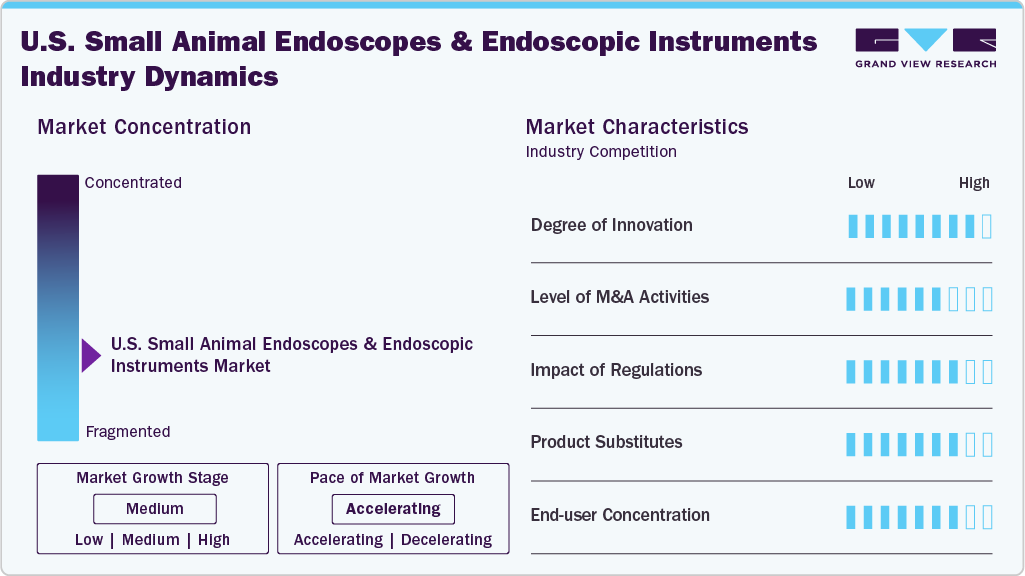
The market exhibits a moderate level of merger and acquisition activity, largely driven by portfolio expansion and broader access to veterinary distribution networks. Strategic acquisitions primarily involve medical device manufacturers and veterinary technology companies seeking to strengthen endoscopy capabilities, imaging technologies, or complementary product offerings. Furthermore, corporate consolidation across veterinary hospital networks indirectly supports commercial expansion by increasing standardized procurement and creating larger opportunities for long-term supplier partnerships.
The regulatory impact is moderate, as veterinary endoscopy products are subject to medical device quality, manufacturing, and commercialization requirements while facing comparatively fewer regulatory barriers than human healthcare devices. Market adoption is influenced more by clinical acceptance, capital investment decisions, and technology performance than by regulatory approvals alone. Product quality standards, sterilization requirements, and manufacturing compliance remain important factors supporting product commercialization and long-term market participation.
The market experiences a moderate threat from substitute technologies, as diagnostic imaging modalities, exploratory surgery, and laboratory testing remain available for evaluating many companion animal conditions. However, endoscopy offers the advantage of direct visualization, tissue sampling, and minimally invasive therapeutic intervention within a single procedure. These clinical capabilities continue to support its use across gastrointestinal, respiratory, and urogenital applications, where alternative diagnostic approaches may provide limited procedural flexibility.
The market displays moderate end-user concentration, with demand distributed across specialty referral centers, veterinary hospitals, and larger companion animal clinics. Specialty hospitals account for a substantial share of advanced endoscopy system purchases due to higher procedural volumes and specialized clinical expertise. At the same time, independent veterinary practices continue to contribute to instrument demand while referring complex procedures to referral centers. Expansion of corporate veterinary hospital networks is gradually increasing procurement centralization across the U.S. market.
Analyst Perspective
The market is evolving into a technology-intensive segment characterized by steady procedural growth, recurring accessory demand, and continuous equipment modernization. Increasing adoption of minimally invasive diagnostics and therapeutic interventions, coupled with expanding specialty referral infrastructure, is supporting sustained demand for advanced endoscopy platforms and compatible instruments. Furthermore, replacement of legacy systems with HD and 4K visualization technologies, portable platforms, and digitally integrated workflows is increasing average equipment value and driving upgrade cycles. Companies capable of combining product innovation, comprehensive service support, clinician education, and broad distribution capabilities are expected to strengthen market penetration and achieve sustainable competitive differentiation.
Technology Landscape Analysis
The industry is experiencing continuous technological advancement focused on improving diagnostic accuracy, procedural efficiency, and clinical versatility across companion animal care. Flexible endoscopes remain the primary technology due to their broad application in gastrointestinal, respiratory, and urogenital procedures, while rigid endoscopes continue to support minimally invasive surgical interventions requiring superior optical clarity. Furthermore, veterinary practices are increasingly transitioning toward HD and 4K video endoscopy platforms that integrate advanced imaging, digital documentation, and workflow management within a single system.
Product/ Technology
Current Technology Perspective
Future Directions
Flexible Endoscopes
- HD video endoscopes are replacing fiber-optic systems.
- Advanced articulation and larger working channels improve procedural capability.
- Digital processors enable image enhancement and recording.
- AI-assisted image enhancement.
- Smaller sensors and more durable insertion tubes.
- Improved compatibility with portable platforms.
Rigid Endoscopes
- HD rod-lens optics provide superior visualization.
- Smaller telescopes improve suitability for companion animals.
- Enhanced materials improve durability and sterilization resistance.
- Higher optical resolution.
- Greater integration with digital imaging systems.
- Improved durability and service life.
Video Endoscopy Platforms
- HD and 4K imaging improve diagnostic accuracy.
- Integrated systems simplify workflow and documentation.
- Compact platforms improve portability.
- AI-assisted lesion detection.
- Cloud-based image storage and sharing.
- Greater workflow automation.
Ultra-Thin / Small-Diameter Endoscopes
- Designed for feline and small companion animals.
- Miniaturized CMOS sensors deliver high-resolution imaging.
- Improved flexibility enhances navigation.
- Larger working channels.
- Expanded therapeutic capability.
- Higher image quality in smaller scopes.
Single-Use Endoscopy Technologies
- Disposable accessories are gaining adoption.
- Reduced reprocessing and contamination risk.
- Hybrid reusable-disposable systems are emerging.
- Lower manufacturing costs.
- Sustainable disposable materials.
- Wider commercialization across veterinary practices.
Growing demand for feline and exotic animal care is accelerating the development of ultra-thin endoscopes with improved maneuverability and miniaturized imaging components for smaller anatomical structures. In addition, single-use endoscopic accessories are gaining adoption as veterinary hospitals seek to simplify instrument reprocessing and improve procedural efficiency. Future innovation is expected to focus on AI-assisted image analysis, portable integrated platforms, enhanced digital connectivity, and specialized instruments that support a broader range of minimally invasive diagnostic and therapeutic procedures.
Product Insights
Based on product, the instruments & accessories segment led the market with the largest revenue share of 45.1% in 2025. The segment generates recurring revenue as biopsy forceps, retrieval forceps, grasping forceps, cytology brushes, snares, and baskets require periodic replacement due to wear and repeated sterilization. Higher endoscopic procedure volumes further increase accessory utilization per case, particularly during gastrointestinal interventions where multiple instruments are frequently used. This recurring purchasing pattern supports sustained demand across veterinary hospitals and specialty referral centers.
On the other hand, the consumables segment is expected to grow at the fastest CAGR over the forecast period. Growth is supported by increasing procedural volumes, greater focus on infection prevention, and wider adoption of single-use accessories that reduce reprocessing requirements. Expansion of minimally invasive procedures and increasing utilization of disposable procedural components are expected to increase recurring consumable purchases across specialty hospitals and high-volume veterinary practices.
Type Insights
Based on type, the reusable segment led the market with the largest revenue share of 70.4% in 2025. Reusable endoscopes and accessories remain the preferred option due to their long operational life, lower cost per procedure, and compatibility with a broad range of diagnostic and therapeutic applications. Their widespread use across specialty hospitals and established veterinary practices continues to support segment dominance despite ongoing advancements in disposable technologies.
On the other hand, the disposable segment is expected to grow at the fastest CAGR over the forecast period. Growth is supported by increasing preference for single-use biopsy forceps, retrieval devices, brushes, and snares that simplify workflow and eliminate instrument reprocessing. Rising awareness of infection control and expanding availability of cost-effective disposable accessories are expected to accelerate adoption across veterinary facilities.
Procedure Insights
Based on procedure, the gastrointestinal procedures segment led the market with the largest revenue share of 53.3% in 2025. The segment is supported by the high prevalence of chronic vomiting, diarrhea, gastrointestinal foreign body ingestion, inflammatory bowel disease, chronic enteropathies, and gastrointestinal bleeding in companion animals. Endoscopy remains the preferred minimally invasive approach for direct visualization, biopsy collection, and foreign body retrieval, generating consistent utilization of both capital equipment and procedural accessories.
On the other hand, the respiratory procedures segment is expected to witness the fastest growth over the forecast period. The growth is supported by increasing diagnoses of chronic bronchitis, airway disorders, tracheal disease, and nasal conditions in companion animals. Broader adoption of bronchoscopy for minimally invasive airway evaluation, biopsy collection, and therapeutic intervention is expected to increase demand for specialized respiratory endoscopy systems.
Application Insights
Based on application, the diagnostic segment led the market with the largest revenue share of 63.7% in 2025. The segment is supported by widespread utilization of endoscopy for visualization, biopsy sampling, lesion assessment, and disease diagnosis across gastrointestinal, respiratory, urogenital, and ENT applications. Increasing preference for minimally invasive diagnostic procedures and growing clinical awareness of chronic companion animal diseases continue to sustain procedural demand.
On the other hand, the surgical/interventional segment is expected to witness the fastest growth over the forecast period. The growth is supported by increasing adoption of minimally invasive therapeutic procedures, including foreign body retrieval, polyp removal, stent placement, and endoscopic-guided interventions. Continued advancements in endoscopic instruments and clinician expertise are expected to expand therapeutic applications across veterinary practice.
End use Insights
Based on end use, the specialty & referral centers segment led the market with the largest revenue share of 39.0% in 2025 and is also expected to exhibit the fastest growth over the forecast period. The segment benefits from higher procedural volumes, availability of board-certified specialists, greater capital investment capacity, and broader adoption of advanced endoscopy systems. These facilities manage complex referral cases requiring specialized diagnostic and therapeutic endoscopic procedures across multiple clinical disciplines.
On the other hand, the veterinary hospitals segment is expected to witness the second-fastest growth over the forecast period. The growth is supported by increasing investment in minimally invasive diagnostic capabilities, expanding companion animal caseloads, and gradual adoption of advanced imaging platforms. The rising availability of trained clinicians and growing demand for in-house endoscopic procedures are expected to increase equipment procurement across larger veterinary hospitals.
Animal Insights
Based on animal, the dogs segment led the market with the largest revenue share of over 69.3% in 2025. Dogs account for the majority of endoscopic procedures due to their larger companion animal population, higher incidence of gastrointestinal foreign body ingestion, chronic enteropathies, respiratory disorders, and urogenital diseases requiring endoscopic diagnosis or intervention. Larger body size also supports the use of a wider range of endoscopic instruments across multiple clinical applications.
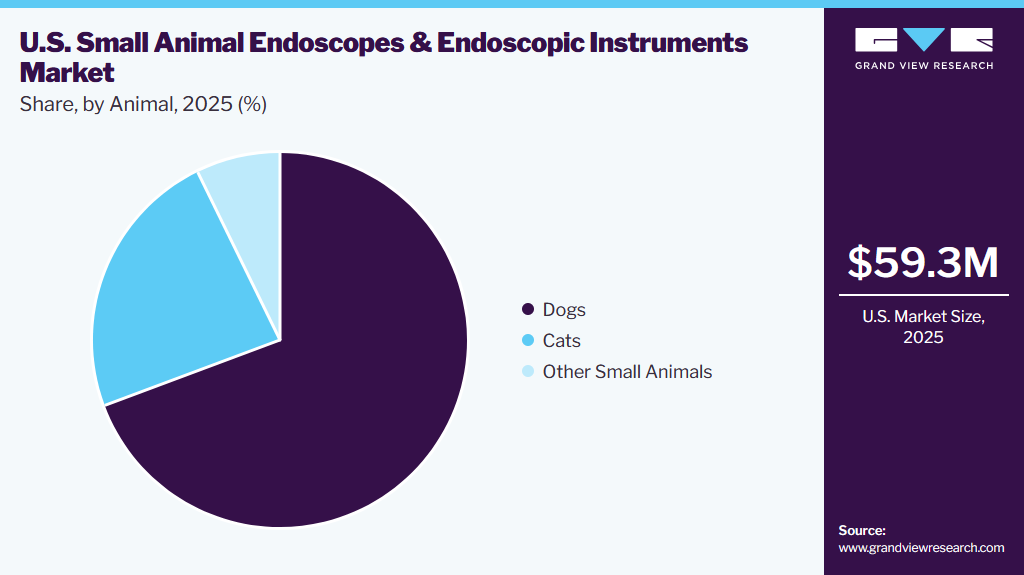
Whereas, the cats segment is expected to grow at the fastest CAGR over the forecast period, driven by increasing diagnosis of chronic gastrointestinal disorders, inflammatory bowel disease, respiratory conditions, and urogenital diseases. Growing clinical focus on feline medicine, together with improved availability of ultra-thin endoscopes designed for smaller anatomical structures, is expected to increase procedure adoption within this segment.
Key U.S. Small Animal Endoscopes & Endoscopic Instruments Companies Insights
Companies operating in the market are focusing on expanding their veterinary endoscopy portfolios through continuous product innovation, advanced imaging technologies, and specialized procedural accessories. Furthermore, market participants are investing in HD and 4K visualization systems, portable endoscopy platforms, ultra-thin endoscopes, and workflow-integrated imaging solutions to improve diagnostic accuracy and procedural efficiency. Strategic initiatives, including product launches, distribution network expansion, clinician training programs, and partnerships with specialty referral hospitals and veterinary institutions, are strengthening market presence across the U.S. In Addition, manufacturers are increasing emphasis on disposable endoscopic accessories, digital workflow integration, and after-sales service capabilities to address growing demand for minimally invasive diagnostic and therapeutic procedures in companion animal practice.
Key U.S. Small Animal Endoscopes & Endoscopic Instruments Companies
-
STERIS
-
SonoScape Medical Corp
-
Shenzhen Mindray Animal Medical Technology Co., LTD.
-
Firefly Global
-
KARL STORZ
-
Biovision Veterinary Endoscopy, LLC
-
MDS Vet
-
VetVu (Swiss Precision Products, Inc,)
-
Eickemeyer KG
-
Dr. Fritz Endoscopes GmbH
Competitive Benchmarking
Operating Strategies
Competitive Edge
Weaknesses
Established Players (STERIS; KARL STORZ; Eickemeyer KG; Dr. Fritz Endoscopes GmbH; Shenzhen Mindray Animal Medical Technology Co., LTD.)
- Established players focus on supplying comprehensive veterinary endoscopy portfolios, including flexible and rigid endoscopes, video processors, imaging systems, and endoscopic instruments.
- Their strategies include expanding HD/4K visualization technologies, strengthening distributor and service networks, introducing integrated digital imaging platforms, and collaborating with specialty referral hospitals, veterinary universities, and corporate veterinary groups to increase technology adoption.
- Established players benefit from broad product portfolios, strong global brand recognition, advanced imaging technologies, established distribution channels, and comprehensive after-sales service capabilities.
- Their ability to provide complete endoscopy solutions, clinician training, and long-term technical support strengthens their position among specialty hospitals and high-volume veterinary practices.
- Established players may encounter slower adoption among smaller veterinary clinics due to high capital equipment costs and premium pricing.
- Furthermore, dependence on capital equipment replacement cycles, extensive service requirements, and competition from lower-cost manufacturers may influence purchasing decisions within price-sensitive market segments.
Emerging Players (SonoScape Medical Corp; Firefly Global; Biovision Veterinary Endoscopy, LLC; MDS Vet; VetVu (Swiss Precision Products, Inc.))
- Emerging players focus on cost-effective endoscopy systems, portable imaging platforms, specialized veterinary instruments, and niche product offerings for companion animal practice.
- Their strategies include expanding distributor partnerships, developing portable and compact systems, strengthening online sales channels, and targeting independent veterinary hospitals and growing specialty practices with competitively priced solutions.
- Emerging players benefit from flexible product development, competitive pricing, specialized veterinary-focused portfolios, and the ability to respond rapidly to changing clinical requirements.
- Their emphasis on portable platforms, customized instruments, and customer-focused support enables them to address underserved market segments and expand access to minimally invasive veterinary diagnostics.
- Emerging players generally have smaller commercial footprints, narrower product portfolios, and lower brand recognition than established global manufacturers.
- Limited nationwide service infrastructure, fewer long-term customer relationships, and lower investment capacity for large-scale product development may restrict expansion within major specialty referral networks and consolidated veterinary hospital groups.
Recent Developments
-
In June 2026, Morehead State University’s (MSU) Veterinary Technology program secured a USD 150,000 NIFA-USDA grant to procure advanced veterinary training equipment, including endoscopic systems, laser units, and PRP centrifuges. Such an initiative strengthens hands-on education, enhances workforce competency, supports AVMA accreditation standards, and prepares graduates to meet the growing demand for skilled veterinary professionals using modern diagnostic technologies.
-
In April 2026, KARL STORZ Veterinary Endoscopy America collaborated with board-certified veterinary specialists to provide immersive diagnostic and interventional endoscopy education across the U.S. These partnerships accelerate the adoption of minimally invasive endoscopy techniques in companion animal practice through structured training programs.
-
In August 2025, MDS Vets launched the OR-160 veterinary endoscopy system featuring integrated Full HD imaging, touchscreen controls, video processing, light source, monitor, and air pump in a compact platform. Such an initiative has made advanced veterinary endoscopy more accessible by reducing equipment complexity, cost, and installation space while improving clinical workflow efficiency.
U.S. Small Animal Endoscopes & Endoscopic Instruments Market Report Scope
Report Attribute
Details
Market size in 2025
USD 59.2 million
Estimated market size in 2026
USD 62.2 million
Projected market size by 2033
USD 94.2 million
Growth rate
CAGR of 6.1% from 2026 to 2033
Historical data
2021 - 2025
Forecast period
2026 - 2033
Quantitative units
Revenue in USD million/billion and CAGR from 2026 to 2033
Report coverage
Revenue forecast, company ranking, competitive landscape, growth factors, and trends
Segments covered
Product, type, animal, procedure, application, end use
Country scope
U.S.
Key companies profiled
STERIS; SonoScape Medical Corp; Shenzhen Mindray Animal Medical Technology Co., LTD.; Firefly Global; KARL STORZ; Biovision Veterinary Endoscopy, LLC; MDS Vet; VetVu (Swiss Precision Products, Inc,); Eickemeyer KG; Dr. Fritz Endoscopes GmbH
Customization scope
Free report customization (equivalent up to 8 analysts' working days) with purchase. Addition or alteration to country, regional & segment scope.
Pricing and purchase options
Avail customized purchase options to meet your exact research needs. Explore purchase options
U.S. Small Animal Endoscopes & Endoscopic Instruments Market Report Segmentation
This report forecasts revenue growth at a country level and provides an analysis of the latest industry trends in each of the sub-segments from 2021 to 2033. For this study, Grand View Research has segmented the U.S. small animal endoscopes & endoscopic instruments market report based on product, type, animal, procedure, application, and end use:
-
Product Outlook (Revenue, USD Million, 2021 - 2033)
-
Equipment
-
Flexible Endoscopes
-
Rigid Endoscopes
-
Video Processors & Imaging Systems
-
-
Instruments & Accessories
-
Biopsy Forceps
-
Grasping Forceps
-
Retrieval Forceps
-
Retrieval Baskets
-
Snares
-
Cytology Brushes
-
Other Endoscopic Instruments
-
-
Consumables
-
-
Type Outlook (Revenue, USD Million, 2021 - 2033)
-
Disposable
-
Reusable
-
-
Animal Outlook (Revenue, USD Million, 2021 - 2033)
-
Dogs
-
Cats
-
Other Small Animals
-
-
Procedure Outlook (Revenue, USD Million, 2021 - 2033)
-
Gastrointestinal Procedures
-
Respiratory Procedures
-
Urogenital Procedures
-
ENT Procedures
-
Other Endoscopic Procedures
-
-
Application Outlook (Revenue, USD Million, 2021 - 2033)
-
Diagnostic
-
Surgical/Interventional
-
-
End Use Outlook (Revenue, USD Million, 2021 - 2033)
-
Veterinary Clinics
-
Veterinary Hospitals
-
Specialty & Referral Centers
-
Veterinary Universities & Research Institutes
-
Research Methodology
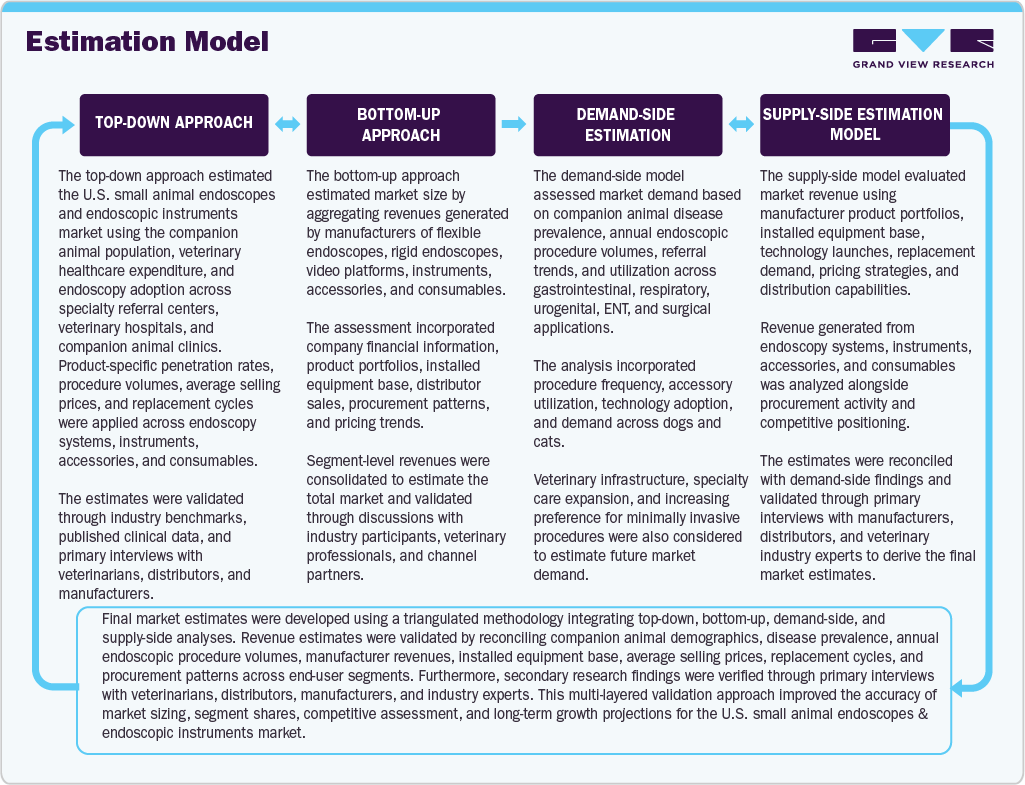
The U.S. small animal endoscopes & endoscopic instruments market figures in this report are based on a proven research process that combines executive interviews with secondary research from proprietary databases, company filings, and recognized regulatory and institutional sources. Market size is built through value-chain sizing-reconciling supply-side and demand-side estimates-and triangulated with bottom-up and top-down approaches. Every estimate passes multiple levels of expert validation before publication, with each U.S. small animal endoscopes & endoscopic instruments segment quantified using the revenue-capture definitions in the table below.
Segment Definition
Product
Definition
Equipment
The segment represents the revenue generated from sales of endoscopy equipment to end users for small animal applications in the U.S. The segment includes flexible endoscopes, rigid endoscopes, video processors, imaging systems, light sources, cameras, monitors, and related visualization platforms used in veterinary endoscopic procedures.
Flexible Endoscopes
The segment represents the revenue generated from sales of flexible endoscopes to end users for small animal applications in the U.S. The segment includes flexible video endoscopes, fiberoptic endoscopes, bronchoscopes, gastroscopes, cystoscopes, and other flexible scopes used for diagnostic and therapeutic procedures.
Rigid Endoscopes
The segment represents the revenue generated from sales of rigid endoscopes to end users for small animal applications in the U.S. The segment includes rigid telescopes, arthroscopes, laparoscopes, rhinoscopes, otoscopes, and other rigid endoscopic systems used for visualization and minimally invasive procedures.
Video Processors & Imaging Systems
The segment represents the revenue generated from sales of video processors and imaging systems to end users for small animal applications in the U.S. The segment includes video processors, camera control units, endoscopy cameras, light sources, image capture systems, monitors, and visualization platforms used during endoscopic procedures.
Instruments & Accessories
The segment represents the revenue generated from sales of endoscopic instruments and accessories to end users for small animal applications in the U.S. The segment includes biopsy forceps, grasping forceps, retrieval forceps, retrieval baskets, snares, cytology brushes, and other procedure-specific instruments used through endoscopes.
Biopsy Forceps
The segment represents the revenue generated from sales of biopsy forceps to end users for small animal applications in the U.S. The segment includes reusable and disposable forceps used for tissue sampling and histopathological specimen collection during endoscopic procedures.
Grasping Forceps
The segment represents the revenue generated from sales of grasping forceps to end users for small animal applications in the U.S. The segment includes endoscopic graspers used for handling, manipulating, and removing tissue, foreign bodies, and other materials during procedures.
Retrieval Forceps
The segment represents the revenue generated from sales of retrieval forceps to end users for small animal applications in the U.S. The segment includes specialized forceps designed for the retrieval of foreign objects, tissue fragments, and procedural materials from body cavities and lumens.
Retrieval Baskets
The segment represents the revenue generated from sales of retrieval baskets to end users for small animal applications in the U.S. The segment includes wire baskets and retrieval devices used for capturing and extracting foreign bodies, calculi, and other materials during endoscopic procedures.
Snares
The segment represents the revenue generated from sales of snares to end users for small animal applications in the U.S. The segment includes endoscopic polypectomy snares and tissue resection devices used for lesion removal and therapeutic interventions.
Cytology Brushes
The segment represents the revenue generated from sales of cytology brushes to end users for small animal applications in the U.S. The segment includes endoscopic brushes used for cell collection, cytological sampling, and diagnostic specimen acquisition from internal tissues and organs.
Other Endoscopic Instruments
The segment represents the revenue generated from sales of other endoscopic instruments to end users for small animal applications in the U.S. The segment includes guidewires, dilators, injection needles, cleaning devices, sheaths, and other procedure-specific endoscopic accessories not classified elsewhere.
Consumables
The segment represents the revenue generated from sales of consumables to end users for small animal applications in the U.S. The segment includes single-use accessories, procedure kits, protective components, cleaning and maintenance products, and other disposable items utilized during veterinary endoscopic procedures.
Type
Definition
Disposable
The segment represents the revenue generated from sales of disposable endoscopic equipment and instruments to end users for small animal applications in the U.S. The segment includes single-use endoscopes, disposable biopsy forceps, grasping forceps, retrieval devices, baskets, snares, cytology brushes, procedure kits, protective accessories, and other single-use endoscopic products designed to eliminate reprocessing requirements and reduce cross-contamination risks.
Reusable
The segment represents the revenue generated from sales of reusable endoscopic equipment and instruments to end users for small animal applications in the U.S. The segment includes reusable flexible and rigid endoscopes, video processors, imaging systems, biopsy forceps, grasping forceps, retrieval forceps, retrieval baskets, snares, cytology brushes, and other endoscopic instruments designed for repeated use following cleaning, disinfection, and sterilization procedures.
Animal
Definition
Dogs
The segment represents the revenue generated from sales of endoscopic equipment and instruments to end users for dog applications in the U.S. The segment includes flexible and rigid endoscopes, video processors, imaging systems, biopsy forceps, retrieval devices, snares, cytology brushes, and other accessories used for diagnostic and therapeutic procedures in canine patients.
Cats
The segment represents the revenue generated from sales of endoscopic equipment and instruments to end users for cat applications in the U.S. The segment includes flexible and rigid endoscopes, video processors, imaging systems, biopsy forceps, retrieval devices, snares, cytology brushes, and other accessories used for gastrointestinal, respiratory, urogenital, ENT, and other endoscopic procedures in feline patients.
Other Small Animals
The segment represents the revenue generated from sales of endoscopic equipment and instruments to end users for other small animal applications in the U.S. The segment includes endoscopy systems, imaging platforms, biopsy and retrieval instruments, and related accessories used in rabbits, ferrets, birds, reptiles, guinea pigs, hamsters, and other exotic or companion small animals undergoing endoscopic procedures.
Procedure
Definition
Gastrointestinal Procedures
The segment represents the revenue generated from sales of endoscopic equipment and instruments to end users for small animal gastrointestinal procedures in the U.S. The segment includes endoscopy systems and accessories used for upper and lower gastrointestinal examinations, foreign body retrieval, biopsy collection, polyp removal, and other diagnostic and therapeutic GI interventions.
Respiratory Procedures
The segment represents the revenue generated from sales of endoscopic equipment and instruments to end users for small animal respiratory procedures in the U.S. The segment includes bronchoscopes, tracheoscopes, imaging systems, biopsy forceps, cytology brushes, and related accessories used for airway visualization, tissue sampling, foreign body retrieval, and respiratory disease diagnosis.
Urogenital Procedures
The segment represents the revenue generated from sales of endoscopic equipment and instruments to end users for small animal urogenital procedures in the U.S. The segment includes cystoscopes, urethroscopes, video imaging systems, retrieval devices, biopsy instruments, and related accessories used for diagnostic and therapeutic evaluation of the urinary and reproductive systems.
ENT Procedures
The segment represents the revenue generated from sales of endoscopic equipment and instruments to end users for small animal ENT (ear, nose, and throat) procedures in the U.S. The segment includes rhinoscopes, otoscopes, endoscopic imaging systems, biopsy forceps, retrieval devices, and other accessories used for diagnosis and treatment of conditions affecting the nasal passages, ears, pharynx, and upper airways.
Other Endoscopic Procedures
The segment represents the revenue generated from sales of endoscopic equipment and instruments to end users for other small animal endoscopic procedures in the U.S. The segment includes endoscopy systems and accessories used in arthroscopy, laparoscopy, thoracoscopy, reproductive procedures, and other diagnostic or minimally invasive therapeutic applications not classified under gastrointestinal, respiratory, urogenital, or ENT procedures.
Application
Definition
Diagnostic
The segment represents the revenue generated from sales of endoscopic equipment and instruments to end users for diagnostic applications in small animals in the U.S. The segment includes flexible and rigid endoscopes, video processors, imaging systems, biopsy forceps, cytology brushes, and other accessories used for visualization, examination, tissue sampling, disease detection, and diagnostic evaluation of internal organs and body cavities.
Surgical/Interventional
The segment represents the revenue generated from sales of endoscopic equipment and instruments to end users for surgical/interventional applications in small animals in the U.S. The segment includes endoscopy systems, retrieval devices, grasping forceps, snares, baskets, and other therapeutic instruments used for minimally invasive procedures such as foreign body removal, polypectomy, tissue resection, stone retrieval, and other endoscopic interventions.
End Use
Definition
Veterinary Clinics
The segment represents the revenue generated from sales of endoscopic equipment and instruments to veterinary clinics for small animal applications in the U.S. The segment includes flexible and rigid endoscopes, video processors, imaging systems, biopsy forceps, retrieval devices, and related accessories used for routine diagnostic and therapeutic endoscopic procedures in outpatient settings.
Veterinary Hospitals
The segment represents the revenue generated from sales of endoscopic equipment and instruments to veterinary hospitals for small animal applications in the U.S. The segment includes advanced endoscopy systems, imaging platforms, endoscopic instruments, and consumables used for comprehensive diagnostic, surgical, and interventional procedures across multiple veterinary specialties.
Specialty & Referral Centers
The segment represents the revenue generated from sales of endoscopic equipment and instruments to specialty and referral centers for small animal applications in the U.S. The segment includes high-performance flexible and rigid endoscopes, small-diameter endoscopes, advanced imaging systems, and specialized endoscopic instruments used for complex diagnostic and minimally invasive therapeutic procedures.
Veterinary Universities & Research Institutes
The segment represents the revenue generated from sales of endoscopic equipment and instruments to veterinary universities and research institutes for small animal applications in the U.S. The segment includes endoscopy systems, imaging platforms, endoscopic instruments, and related accessories used for clinical training, academic research, teaching activities, and translational veterinary studies.
Delivered Customizations
This report has been delivered with the following In-depth customizations
Client Request
Customization Delivered
Value Adds
Estimated U.S. Procedure Volume Analysis
The study was customized to estimate annual endoscopic procedure volumes across gastrointestinal, respiratory, urogenital, ENT, and minimally invasive surgical applications in companion animals. The assessment included procedure distribution by animal type, end-user, clinical indication, and utilization of endoscopic instruments and accessories across veterinary care settings.
Enabled accurate demand forecasting for capital equipment and recurring accessories, identified high-volume clinical applications, and supported production planning, inventory optimization, and market prioritization based on procedural demand.
U.S. Small-Diameter Endoscope Opportunity Assessment
The report was expanded to evaluate the commercial potential for ultra-thin and small-diameter endoscopes across feline medicine, toy breeds, and exotic companion animals. The analysis assessed disease prevalence, procedural suitability, current technology availability, adoption barriers, and opportunities for species-specific endoscopy solutions.
Identified underserved market segments, supported product development prioritization, quantified growth opportunities for specialized endoscopy systems, and guided commercialization strategies targeting feline and small companion animal practice.
Purchasing Dynamics Analysis
The study was customized to evaluate purchasing behavior across specialty referral centers, veterinary hospitals, and companion animal clinics, including capital expenditure priorities, equipment replacement cycles, procurement criteria, service expectations, and accessory purchasing trends. The assessment also examined the influence of corporate veterinary networks on equipment standardization and supplier selection.
Enabled manufacturers to optimize pricing strategies, strengthen sales positioning, prioritize target accounts, develop customer-specific value propositions, and improve go-to-market strategies based on evolving procurement and purchasing patterns across the U.S. veterinary market.
Installed Base & Replacement Cycle Assessment
The study was customized to evaluate the installed base of veterinary endoscopy systems across specialty referral centers, veterinary hospitals, and companion animal clinics. The assessment analyzed equipment age profiles, replacement timelines, upgrade trends from legacy fiber-optic systems to HD/4K platforms, and demand for compatible instruments and accessories.
Enabled estimation of replacement-driven revenue opportunities, prioritized target accounts based on upgrade readiness, optimized sales planning around equipment lifecycle, and supported long-term forecasting of capital equipment demand across the U.S. veterinary endoscopy market.
Frequently Asked Questions About This Report
The U.S. small animal endoscopes & endoscopic instruments market size was valued at USD 59.2 million in 2025 and is estimated at USD 62.2 million for 2026.
The U.S. small animal endoscopes & endoscopic instruments market is expected to grow at a CAGR of 6.1% from 2026 to 2033, reaching USD 94.2 million.
Based on product, the instruments & accessories segment led the market with the largest revenue share of 45.1% in 2025.The segment generates recurring revenue as biopsy forceps, retrieval forceps, grasping forceps, cytology brushes, snares, and baskets require periodic replacement due to wear and repeated sterilization. Higher endoscopic procedure volumes further increase accessory utilization per case, particularly during gastrointestinal interventions where multiple instruments are frequently used.
Based on type, the reusable segment led the market with the largest revenue share of 70.4% in 2025.
Key factors include rising foreign body ingestion, enteropathy cases, growing chronic GI, respiratory, urogenital disorders, increasing adoption of minimally invasive procedures, and expanding specialty and referral care infrastructure.
Based on animal, the dogs segment led the market with the largest revenue shar of over 69.3% in 2025. Whereas, the cats segment is expected to grow at the fastest CAGR over the forecast period.
Based on procedure, the gastrointestinal procedures segment led the market with the largest revenue share of 53.3% in 2025, while the respiratory procedures segment is expected to witness the fastest growth over the forecast period.
Based on end use, the specialty & referral centers segment led the market with the largest revenue share of 39.0% in 2025 and are also expected to exhibit the fastest growth over the forecast period.
Key players include STERIS; SonoScape Medical Corp; Shenzhen Mindray Animal Medical Technology Co., LTD.; Firefly Global; KARL STORZ; Biovision Veterinary Endoscopy, LLC; MDS Vet; VetVu (Swiss Precision Products, Inc,); Eickemeyer KG; and Dr. Fritz Endoscopes GmbH
About the Author(s)
Animal Health Research Team
Healthcare · Animal HealthThis report was authored by the animal health research team at Grand View Research - comprising two research analysts, one senior research analyst, and one industry expert - with specialized expertise in the animal health segment of the healthcare industry. All findings are based on proprietary healthcare databases, executive interviews, and regulatory analysis, subject to internal peer review prior to publication.
Last Updated:
Speak to Analyst


Customize this report to your needs — add regions, segments, or data points, with 20% free customization.
Or view our licence options:


ISO 9001:2015 & 27001:2022 Certified
We are GDPR and CCPA compliant! Your transaction & personal information is safe and secure. For more details, please read our privacy policy.


