
- Home
- »
- Water & Sludge Treatment
- »
-
Water Testing Equipment Market Size Report, 2026-2033GVR Report cover

Water Testing Equipment Market (2026 - 2033)
Size, Share & Trends Analysis Report By Instrument (TOC Meter, pH Meter, Dissolved Oxygen Meter, Turbidity Meter), By Product, By End Use, By Test Type, By Technique, By Region, And Segment Forecasts
Market Size, 2025
$5.2BMarket Estimate, 2026
$5.6BMarket Forecast, 2033
$8.8BCAGR, 2026–2033
6.8%Water Testing Equipment Market Summary
The global water testing equipment market size was valued at USD 5.2 billion in 2025 and is projected to grow from USD 5.6 billion in 2026 to USD 8.8 billion by 2033, at a CAGR of 6.8% from 2026 to 2033. North America dominated the market, accounting for a revenue share of 33.9% in 2025. The industry is driven by increasing contamination levels in municipal and industrial water sources.
 Source: Grand View Research, IR Documents, Primary Interviews, Paid DatabasesTo learn more about this report,
 Download Free Sample Report
 Key Market Trends & Insights
- By instrument: Spectrometer segment led the market with the largest revenue share of 35.4% in 2025.
- By product type: Benchtop segment led the market with the largest revenue share of 70.6% in 2025.
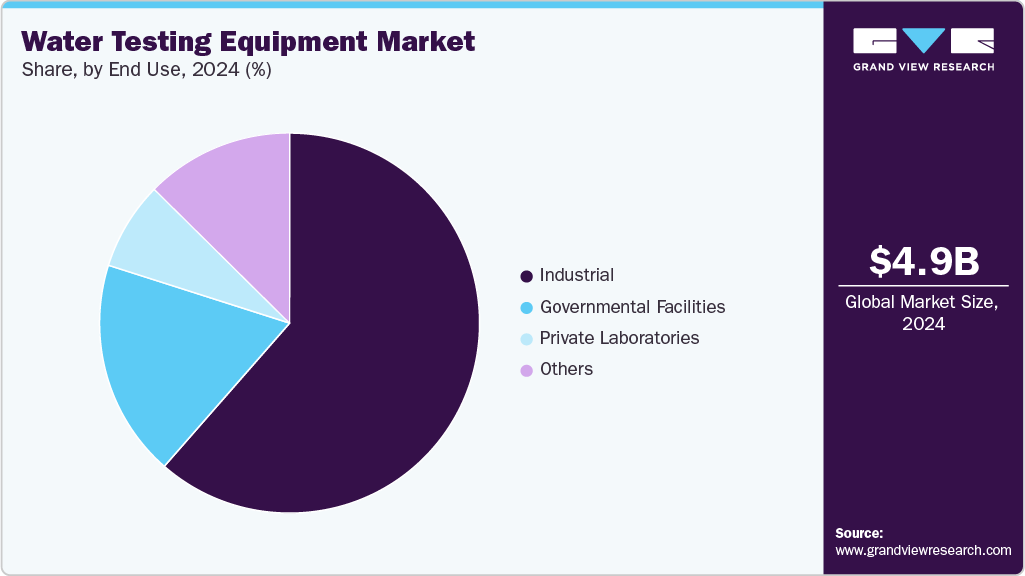
- By end use: Industrial segment led the market with the largest revenue share of 61.3% in 2025.
- By test type: physical test led the market with the largest revenue share of 56.2% in 2025.
- By technique: Electrochemistry segment led the market with the largest revenue share of 42.8% in 2025.
Regional Highlights
- Largest regional market: North America (33.9% revenue share, 2025)
- By country: The U.S. held the largest market share in 2025.
Market Size & Forecast
- Market size in 2025: USD 5.2 Billion
- Estimated market size in 2026: USD 5.6 Billion
- Projected market size by 2033: USD 8.8 Billion
- CAGR (2026-2033): 6.8%
Three ways to get this report
Buy it, customize it, or ask a question.Ask an Analyst
A direct answer, usually in 1 working day
- AccessReport author, directly
- Reply timeWithin 1 working day
- No sales callDirect answer only
- FormatEmail reply
- CostFree, no cost
Get the Full Report
What the study covers
- FormatsPDF · Excel · Dashboard
- Timeline2026–2033 annual, 2025 base
- Coverage20+ countries, 5 regions
- Companies10+ key players profiled
Customize the Report
20% free customization
- IncludeCountries, segments, points
- TailorTo your product definition
- ExtendDeeper competitor detail
- OrA fully bespoke study
- Turnaround5–10 working days
Governments worldwide are enforcing stricter water quality regulations, boosting demand for advanced testing solutions. Rising public awareness about the importance of safe drinking water further accelerates the adoption of equipment.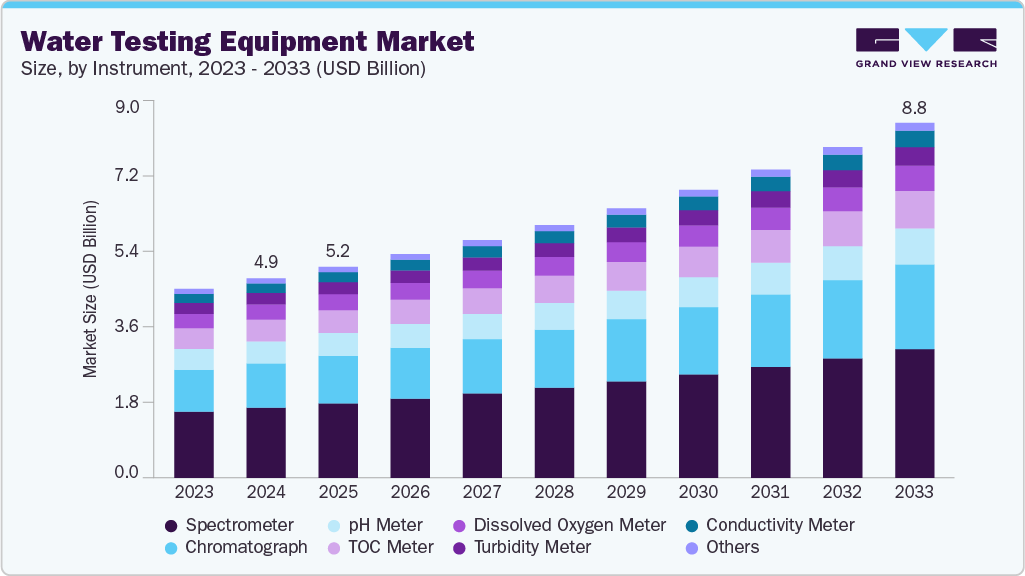 To learn more about this report, Download Free Sample Report
 Industrial sectors, such as pharmaceuticals, food & beverage, and chemicals, require reliable water testing systems to maintain compliance and ensure product safety. The expansion of wastewater treatment facilities is pushing investments in high-precision monitoring tools. Technological advancements, such as IoT-enabled sensors and automated analyzers, enhance testing efficiency. These innovations are prompting industries to upgrade legacy systems, driving consistent market growth.
Market Dynamics
The water testing equipment market is shaped by a combination of regulatory requirements, end-use industry demand, technological progress, and broader environmental and economic conditions. Stringent water quality and safety regulations across municipal, industrial, and environmental monitoring applications significantly drive the adoption of testing solutions to ensure compliance and risk mitigation. Demand patterns are further influenced by water usage intensity and contamination profiles across sectors such as pharmaceuticals, food and beverages, chemicals, power generation, and wastewater treatment. Growing concerns around water scarcity, pollution control, and public health are accelerating the need for accurate and continuous monitoring systems.
Advancements in sensor technologies, digital analytics, automation, and real-time monitoring capabilities are enhancing testing precision and operational efficiency, strengthening market competitiveness. Additionally, infrastructure investments in water treatment, rising operational costs, raw material pricing trends, and evolving sustainability mandates collectively influence procurement decisions, while increasing emphasis on environmental responsibility and safe water management continues to support long-term market expansion.
The expansion of municipal water infrastructure and growth in water-dependent industries is a key driver for the water testing equipment market. Increasing activity across sectors such as pharmaceuticals, food and beverages, chemicals, power generation, and wastewater treatment is amplifying the need for reliable water quality monitoring to ensure regulatory compliance and process safety. As new treatment facilities are developed and existing systems are upgraded, water testing solutions are becoming essential for maintaining consistent quality standards and safeguarding public and environmental health.
The water testing equipment market is constrained by the relatively high cost of advanced analytical instruments and their ongoing operational requirements. Sophisticated testing systems often involve significant investment in sensors, calibration tools, reagents, and skilled personnel for accurate operation and maintenance. For small and mid-sized laboratories or utilities, these cost burdens can limit adoption or delay modernization, leading some users to rely on less advanced or periodic testing methods.
The increasing integration of digital technologies, automation, and real-time monitoring solutions presents a strong growth opportunity for the water testing equipment market. The adoption of IoT-enabled sensors, cloud-based data platforms, and predictive analytics is enabling continuous water quality assessment with higher accuracy and faster response times. As industries and utilities transition toward smart water management systems, demand for connected, automated, and data-driven testing solutions is expected to expand significantly.
Market Concentration & Characteristics
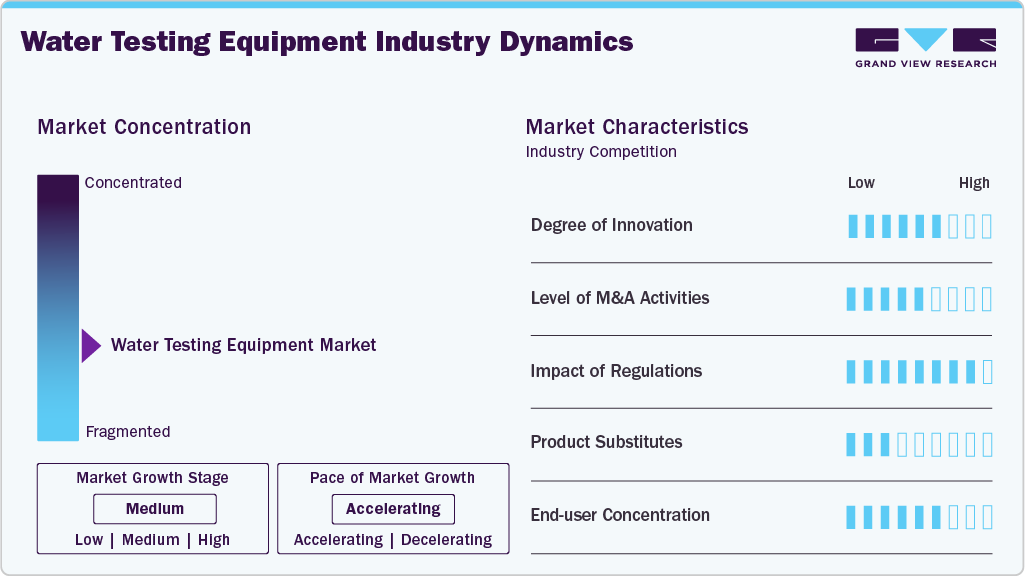
The water testing equipment industry remains moderately fragmented, with numerous regional manufacturers competing alongside established international brands. While leading companies maintain strong positions through advanced technologies and broad distribution networks, smaller players differentiate themselves through niche solutions and localized services. Continuous innovation in portable analyzers and digital monitoring tools further encourages new entrants. As a result, competition remains robust, ensuring ongoing market dynamism and preventing high consolidation.
The market shows a high degree of innovation, driven by demand for faster, more accurate, and real-time testing solutions. Companies are integrating IoT sensors, cloud dashboards, and AI-enabled analytics to enhance data reliability. Portable, multi-parameter devices are becoming increasingly sophisticated, reducing dependency on laboratory testing. This steady technological advancement keeps the market competitive and forward-leaning.
 To learn more about this report, Download Free Sample Report
 Strict water quality laws and environmental compliance standards significantly shape market behavior. Governments mandate routine testing across municipal, industrial, and commercial facilities, boosting equipment adoption. Regulatory bodies increasingly emphasize transparency in reporting, encouraging digitalized testing solutions. These evolving rules act as a strong catalyst for continuous upgrades and new product development.
End-user concentration is diverse, covering municipal utilities, industrial processors, laboratories, and environmental agencies. No single group dominates, but industrial users generate notable demand due to continuous monitoring requirements. The rise of decentralized water treatment facilities adds new customer clusters to the landscape. This broad distribution of end users cushions the market against dependency on any one segment.
Analyst Perspective
The water testing equipment market is shaped by stringent regulatory frameworks for drinking water safety, wastewater discharge, and environmental protection, along with rising concerns over public health, industrial contamination, and water scarcity. Demand is further driven by increasing monitoring requirements across municipal utilities, industrial facilities, and environmental agencies, where accurate and timely water quality assessment is critical for compliance and risk management. Technological advancements in spectroscopy, chromatography, electrochemical sensing, and real-time monitoring systems are enhancing analytical precision, enabling faster detection, automation, and integration with digital data platforms. Market growth is also supported by infrastructure modernization, expanding industrial activities, and sustainability-focused investments in both developed and emerging regions. However, high equipment costs, calibration complexity, and the need for skilled operation continue to pose challenges, while the ongoing shift toward portable, IoT-enabled, and multi-parameter testing solutions is expected to further strengthen adoption across diverse end-use sectors.
Drivers, Opportunities & Restraints
The market is driven by rising global concerns over water contamination and the increasing need for reliable, rapid-quality assessment tools. Regulatory pressure on industries and municipalities boosts the adoption of advanced testing systems. Growth in wastewater treatment infrastructure further drives demand for equipment. Technological innovations, such as smart sensors and automated analyzers, also accelerate market expansion.
There is a strong opportunity in the rapid shift toward digital and remote water monitoring solutions. Emerging economies are investing heavily in water quality infrastructure, creating new demand for affordable, portable testing devices. Industrial automation is opening space for integrated, real-time testing platforms. Additionally, rising interest in sustainable water management supports the adoption of next-generation equipment.
The high initial costs of advanced testing systems remain a significant barrier for smaller facilities and developing regions. Limited technical expertise in handling specialized instruments slows widespread adoption. Variability in water testing standards across countries adds complexity for global manufacturers. Furthermore, long replacement cycles for durable equipment can restrain recurring revenue growth.
Instrument Insights
Based on the instrument, the spectrometer segment led the market with the largest revenue share of 35.4% in 2025, due to their high accuracy in detecting trace contaminants and complex chemical compositions. They are widely used in municipal laboratories and industrial facilities for comprehensive analysis. Strong demand for precise measurement of heavy metals and organic pollutants supports their widespread adoption. Continuous technological enhancements further reinforce their leading market position.
Chromatographs are the fastest-growing segment as demand rises for detailed separation and identification of emerging contaminants. Their ability to detect PFAS, pesticides, and micro-pollutants drives increased usage in advanced testing applications. Growing regulatory focus on detailed chemical profiling supports rapid adoption. Improved automation and compact designs also accelerate market penetration.
Product Type Insights
Based on product type, the benchtop segment led the market with the largest revenue share of 70.6% in 2025, due to its high precision, stability, and suitability for comprehensive laboratory analysis. These systems are widely used in research centers, industrial labs, and municipal facilities for detailed testing. Their ability to handle multi-parameter analysis supports consistent demand. Advanced calibration features and long-term reliability further strengthen their leading position.
Portable and handheld equipment is the fastest-growing segment, driven by the rising demand for on-site and real-time water testing. These devices enable quick decision-making in field applications and remote locations. The increasing adoption of environmental monitoring and emergency response systems drives growth. Lightweight design and improved battery efficiency further accelerate market expansion.
Test Type Insights
Based on test type, the physical test led the market with the largest revenue share of 56.2% in 2025, due to their widespread use in routine quality assessment. Parameters such as turbidity, temperature, color, and total suspended solids are essential for baseline monitoring. These tests are cost-effective and quick, making them standard across municipal and industrial facilities. Consistent regulatory requirements sustain their strong market presence.
Chemical tests are the fastest-growing segment as demand rises for precise detection of contaminants and trace compounds. Increasing focus on pesticides, heavy metals, and emerging pollutants is driving higher adoption. Advanced analytical techniques are improving accuracy and detection limits. Stricter environmental standards further accelerate growth in this segment.
Technique Insights
Based on technique, the electrochemistry segment led the market with the largest revenue share of 42.8% in 2025 in terms of revenue. Electrochemistry technique dominated with a share of 42.7% in 2024, due to its reliability and precision in measuring key parameters such as pH, dissolved oxygen, and conductivity. It is widely used in both laboratory and field applications for continuous monitoring. The technique offers fast response time and cost-effective operation for routine analysis. Its broad applicability across municipal and industrial sectors sustains strong demand.
Separation techniques are the fastest-growing segment as advanced testing requires detailed identification of complex contaminants. These technologies are increasingly used to isolate micro-pollutants, PFAS, and organic compounds from water samples. Rising regulatory emphasis on trace-level detection boosts adoption. Improvements in efficiency and automation further accelerate market growth.
End Use Insights
Based on end use, the industrial segment led the market with the largest revenue share of 61.3% in 2025, due to continuous monitoring requirements across manufacturing, power generation, and chemical processing facilities. Industries rely heavily on precise testing to ensure compliance with environmental and safety regulations. High water consumption and discharge volumes increase the need for advanced testing systems. Ongoing process optimization further sustains strong demand from this segment.
 To learn more about this report, Download Free Sample Report
 Private laboratories are the fastest-growing end-use segment as the outsourcing of water testing services continues to rise. Increased demand for certified and specialized analysis supports the rapid expansion of these facilities. A growing focus on quality assurance and independent testing strengthens their market position. Investment in modern equipment and automation further accelerates this segment’s growth.
Regional Insights
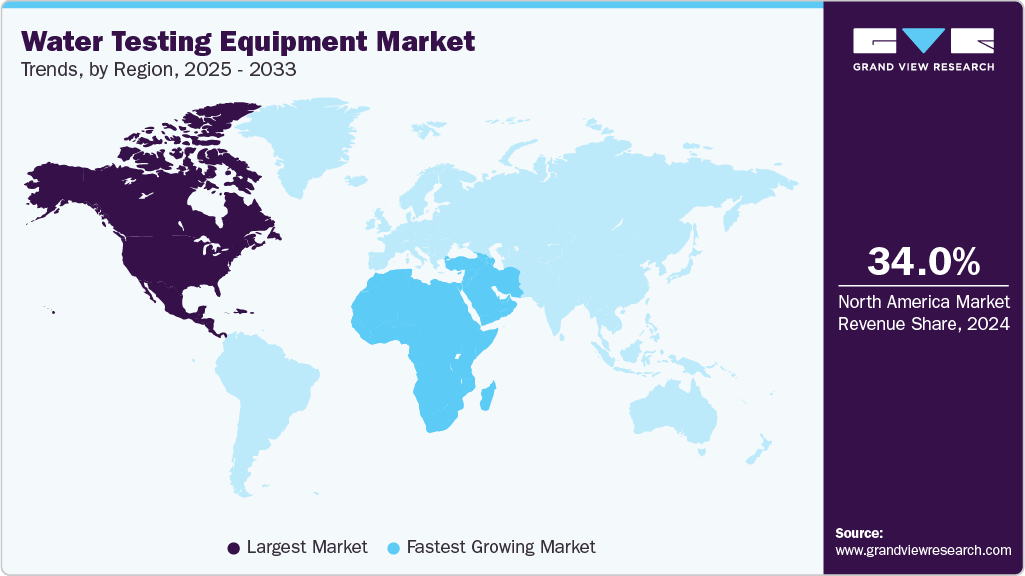
North America dominated the water testing equipment market with the largest revenue share of 33.9% in 2025, due to its stringent water quality regulations and mature testing infrastructure. Industrial facilities and utilities invest heavily in advanced monitoring systems to meet compliance standards. Strong presence of major technique providers further boosts regional capability. Ongoing upgrades in water treatment plants also sustain steady equipment demand.
 To learn more about this report, Download Free Sample Report
 U.S. Water Testing Equipment Market Trends
The water testing equipment market in U.S. held the largest share in the North America region in 2025. Municipal utilities and industries continuously invest in high-precision testing technologies to meet compliance requirements. Strong R&D capabilities support rapid adoption of smart digital monitoring tools. Large-scale infrastructure upgrades further reinforce the country’s leading position.
The water testing equipment industry in Canada is growing steadily as provinces enhance water safety standards and increase funding for testing infrastructure. The expansion of industrial activities, particularly in mining and energy, requires advanced monitoring solutions. Rising focus on environmental protection encourages the adoption of automated and portable testing systems. Ongoing modernization of municipal treatment facilities continues to create new market opportunities.
Europe Water Testing Equipment Market Trends
The water testing equipment industry in Europe is supported by strict environmental policies and commitments to sustainable water management. Industries across the region are modernizing laboratories with advanced digital testing solutions. The push for PFAS monitoring and the detection of emerging contaminants strengthens equipment demand. Increasing focus on circular water use further accelerates market adoption.
The Germany water testing equipment industry dominates the European market due to its strict environmental regulations and advanced industrial quality-control requirements. The country’s strong manufacturing base drives continuous demand for precise monitoring instruments. Investments in wastewater treatment upgrades further support the adoption of new equipment. Germany’s leadership in laboratory technique also strengthens its regional position.
The water testing equipment industry in the UK is growing as water utilities and industries adopt modern testing solutions to meet increasingly stringent regulatory requirements. Increased focus on detecting emerging contaminants is driving demand for digital and automated systems. Infrastructure renewal programs across water networks boost equipment procurement. Enhanced sustainability goals are also pushing organizations to upgrade to more efficient testing technologies.
Asia Pacific Water Testing Equipment Market Trends
The Asia Pacific water testing equipment industry is growing as industrial expansion and urbanization intensify pressure on water resources. Governments are increasing investments in water safety programs, driving the adoption of modern testing tools. Rising environmental awareness supports demand for portable and automated systems. Expanding wastewater treatment projects also create strong market opportunities.
The water testing equipment industry in China dominates the regional market due to its large-scale industrial base and stringent national water quality initiatives. Massive investments in wastewater treatment and river restoration drive strong demand for advanced testing tools. The country’s rapid urbanization further increases the need for municipal water monitoring. Growing adoption of digital and automated systems also strengthens China’s leading position.
The India water testing equipment industry is growing quickly as the government expands programs focused on clean drinking water and wastewater management. Rising industrial activity increases the need for reliable, on-site testing solutions. Investments in smart city projects and upgraded treatment facilities support wider equipment adoption. Rising awareness of waterborne risks is also driving demand for portable and affordable testing technologies.
Central & South America Water Testing Equipment Market Trends
The water testing equipment industry in Central & South America is experiencing growth as countries invest in improving water treatment and quality-control infrastructure. Industrial sectors, particularly mining and food processing, are increasing their testing requirements. Governments are implementing tighter safety standards, encouraging modernization of equipment. Expanding environmental monitoring initiatives also support market expansion.
The Brazil water testing equipment industry is experiencing strong growth in the market as the country expands its water treatment and pollution-control programs. Industrial sectors such as mining, food processing, and chemicals are increasing their testing requirements to meet tighter regulations. Investments in improving municipal water infrastructure are further boosting demand. Rising environmental concerns are also driving the adoption of modern, portable, and automated testing solutions.
Middle East & Africa Water Testing Equipment Market Trends
The water testing equipment industry in the Middle East & Africa is the fastest-growing region at a projected CAGR of 7.7% over the forecast period, due to rising water scarcity concerns and the need for efficient quality monitoring. Desalination plants and industrial facilities are adopting advanced testing technologies to ensure compliance. Government-led water security programs are increasing investment in analytic tools. Urban development and infrastructure upgrades further boost market demand.
The South Africa water testing equipment industry is experiencing steady growth due to rising concerns over water quality and resource management. Increased investment in wastewater treatment and monitoring infrastructure is driving higher demand for equipment. Industrial sectors such as mining and energy require continuous water quality assessment for compliance. Government-led sustainability initiatives further encourage the adoption of modern testing technologies.
Key Water Testing Equipment Company Insights
Some of the key players operating in the market include Thermo Fisher Scientific, Inc., SGS SA, and Emerson Electric Co.
-
Thermo Fisher Scientific, Inc. stands at the forefront of the global scientific instrumentation industry, particularly in water analysis and testing solutions. The company’s portfolio includes sophisticated laboratory and portable devices such as spectrophotometers, chromatographs, and digital sensors widely used in environmental, municipal, and industrial applications. Emphasizing digital innovation, Thermo Fisher incorporates IoT connectivity and advanced data analytics into its equipment, allowing users to enhance productivity and ensure regulatory compliance across diverse testing scenarios. Its solutions play a critical role in monitoring contaminants and supporting water safety in a rapidly changing regulatory and public health environment.
-
SGS SA is a global powerhouse in inspection, verification, testing, and certification services, with a robust presence in the water quality sector. Its laboratories and field teams deliver comprehensive chemical, microbiological, and physical water testing services that address the regulatory and compliance needs of governments, utilities, and industry players worldwide. SGS is renowned for its impartial analysis and the implementation of consistent, recognized testing methodologies tailored to client requirements and legal frameworks. Utilizing a vast international network, SGS ensures timely, actionable results through advanced facilities and digital tools.
Key Water Testing Equipment Companies:
The following key companies have been profiled for this study on the in the water testing equipment market.
- Thermo Fisher Scientific, Inc.
- SGS SA
- Emerson Electric Co.
- Honeywell International, Inc.
- Veralto
- Veolia
- Horiba Ltd.
- 3M Company
- METTLER TOLEDO
- PerkinElmer
- Tintometer GmbH
- Eurofins Scientific
- IDEXX
- Agilent Technologies, Inc.
- Shimadzu Corporation
Competitive Benchmarking
Category
Operating Strategies
Competitive Edge
Weakness
Established Players (e.gThermo Fisher Scientific, Inc., Emerson Electric Co., Honeywell International, Inc., Agilent Technologies, Inc., Shimadzu Corporation, PerkinElmer)
- Focus on advanced analytical instrumentation, laboratory-based testing platforms, and integrated real-time water quality monitoring systems for industrial, municipal, and environmental applications. Strong emphasis on R&D in spectroscopy, chromatography, and sensor technologies, along with digitalization and IoT-enabled monitoring solutions.
- Strong global brand recognition, highly diversified analytical portfolios, advanced measurement accuracy, and strong presence across regulated industries with robust service and compliance support.
- High capital and product costs, complex system integration requirements, and relatively lower penetration in small-scale or cost-sensitive markets.
Emerging & Regional Players (e.g., SGS SA, Eurofins Scientific, Veolia, IDEXX, 3M Company, Horiba Ltd., Tintometer GmbH, METTLER TOLEDO, regional players)
- Focus on laboratory testing services, portable water testing kits, field-deployable instruments, and application-specific water quality diagnostic solutions for drinking water, wastewater, and industrial effluent monitoring. Strong emphasis on regulatory compliance testing and outsourced laboratory services.
- Strong domain expertise in environmental testing, extensive laboratory networks, flexible service offerings, and strong capability in rapid field-based diagnostics and compliance-driven testing.
- Limited end-to-end integration across advanced digital water monitoring ecosystems, fragmented product/service portfolios, and dependency on regional regulatory and outsourcing demand cycles.
Recent Developments
-
In February 2025,Thermo Fisher Scientific introduced a new electrochemistry bench-meter series designed to offer more accurate pH, conductivity, and dissolved-oxygen measurements. The meters feature a touchscreen interface, simplified calibration, and built-in data recording for smoother lab workflows. They cater to applications in environmental testing, industrial labs, and quality control settings. Enhanced reporting and connectivity options also support compliance needs in regulated environments.
-
In November 2024, Veralto made a strategic minority investment in Axine Water Technologies to strengthen its position in advanced wastewater treatment. The partnership leverages Axine’s electrochemical process designed to eliminate tough contaminants, including PFAS and complex organics. Through Trojan Technologies, Veralto will help expand Axine’s reach across municipal and industrial markets. The move aligns with Veralto’s focus on scalable, next-generation water-quality solutions.
Water Testing Equipment Market Report Scope
Report Attribute
Details
Market size in 2025
USD 5.2 billion
Estimated market size in 2026
USD 5.6 billion
Projected market size by 2033
USD 8.8 billion
Growth rate
CAGR of 6.8% from 2026 to 2033
Base year for estimation
2025
Historical data
2021 - 2024
Forecast period
2026 - 2033
Quantitative units
Revenue in USD billion and CAGR from 2026 to 2033
Report coverage
Revenue forecast, company ranking, competitive landscape, growth factors, and trends
Segments covered
Instrument, product, test type, technique, end use, region
Regional scope
North America; Europe Asia Pacific; Latin America; Middle East & Africa
Country scope
U.S.; Canada; Mexico; UK; Germany; France; Spain; Italy; China; Japan; India; Australia; South Korea; Brazil; Argentina; South Africa; UAE
Key companies profiled
Thermo Fisher Scientific, Inc.; SGS SA; Emerson Electric Co.; Honeywell International, Inc.; Veralto; Veolia; Horiba Ltd.; 3M Company; METTLER TOLEDO; PerkinElmer; Tintometer GmbH; Eurofins Scientific; IDEXX; Agilent Technologies, Inc.; Shimadzu Corporation.
Customization scope
Free report customization (equivalent up to 8 analysts' working days) with purchase. Addition or alteration to country, regional & segment scope.
Pricing and purchase options
Avail customized purchase options to meet your exact research needs. Explore purchase options
Global Water Testing Equipment Market Report Segmentation
This report forecasts revenue growth at global, regional, and country levels and provides an analysis of the latest industry trends in each of the sub-segments from 2021 to 2033. For this study, Grand View Research has segmented the global water testing equipment market report based on instrument, product, test type, technique, end use and region.
-
Instrument Outlook (Revenue, USD Million, 2021 - 2033)
-
TOC Meter
-
pH Meter
-
Dissolved Oxygen Meter
-
Conductivity Meter
-
Turbidity Meter
-
Spectrometer
-
Chromatograph
-
Others
-
-
Product Outlook (Revenue, USD Million, 2021 - 2033)
-
Portable & Handheld
-
Benchtop
-
-
Test Type Outlook (Revenue, USD Million, 2021 - 2033)
-
Physical Test
-
Chemical Test
-
Biological Test
-
-
Technique Outlook (Revenue, USD Million, 2021 - 2033)
-
Electrochemistry
-
Separation Technique
-
Atomic & Molecular Spectroscopy
-
-
End Use Outlook (Revenue, USD Million, 2021 - 2033)
-
Industrial
-
Governmental Facilities
-
Private Laboratories
-
Others
-
-
Regional Outlook (Revenue, USD Million, 2021 - 2033)
-
North America
-
U.S.
-
Canada
-
Mexico
-
-
Europe
-
Germany
-
France
-
Italy
-
Spain
-
UK
-
-
Asia Pacific
-
China
-
India
-
Japan
-
South Korea
-
Australia
-
-
Central & South America
-
Brazil
-
Argentina
-
-
Middle East and Africa
-
UAE
-
South Africa
-
-
Research Methodology
The Water Testing Equipment market figures in this report are based on a proven research process that combines executive interviews with secondary research from proprietary databases, company filings, and recognized regulatory and institutional sources. Market size is built through value-chain sizing - reconciling supply-side and demand-side estimates - and triangulated with bottom-up and top-down approaches. Every estimate passes multiple levels of expert validation before publication, with each Water Testing Equipment segment quantified using the revenue-capture definitions in the table below.
Segment Definition
Segment - Instrument
Revenue Capture Definition
TOC Meter
Revenue is generated from analytical instruments used to quantify organic carbon content in water, supporting regulatory compliance in environmental monitoring, industrial discharge control, and water quality assessment applications.
pH Meter
This segment captures revenue from devices used to measure hydrogen ion concentration in aqueous solutions, widely deployed across laboratories, utilities, and industrial process monitoring for maintaining water quality standards.
Conductivity Meter
Revenue stems from instruments that assess ionic content and water purity heavily utilized in power plants, pharmaceuticals, and industrial process water monitoring.
Dissolved Oxygen Meter
This segment reflects revenue generated from equipment used to evaluate ionic strength and purity levels in water, extensively applied in industrial process control, power generation systems, and pharmaceutical water validation.
Turbidity Meter
Revenue is generated through instruments that assess water clarity by detecting suspended particles, supporting drinking water treatment facilities, environmental testing agencies, and regulatory compliance programs.
Spectrometer
This segment captures revenue from advanced analytical systems used for detailed molecular and elemental analysis of water samples, enabling high-precision detection of contaminants in laboratory and research environments.
Chromatograph
Revenue is derived from separation-based analytical instruments used to identify and quantify complex chemical constituents in water, particularly in environmental testing, industrial analysis, and quality assurance laboratories.
Others
This segment includes revenue from emerging and specialized water testing devices such as multi-parameter probes, rapid test kits, and portable analytical systems designed for field-based and niche applications.
Segment - Product Type
Revenue Capture Definition
Portable & Handheld
Revenue is generated from compact, mobile testing devices designed for on-site water quality measurement, widely used in field inspections, environmental surveys, and decentralized monitoring applications.
Benchtop
This segment captures revenue from high-precision laboratory instruments used for detailed and standardized water analysis, primarily deployed in research institutions, certified laboratories, and industrial quality control units.
Segment - Test Type
Revenue Capture Definition
Physical Test
Revenue is derived from testing systems that evaluate observable water properties such as clarity, temperature, and suspended solids, commonly used in routine monitoring and preliminary quality assessment.
Chemical Test
This segment generates revenue from analytical processes focused on identifying chemical parameters including acidity, dissolved solids, nutrients, and trace contaminants in water samples.
Biological Test
Revenue is captured from testing solutions used to detect microbial contamination and biological impurities, ensuring water safety for drinking, industrial, and environmental applications.
Segment - End Use
Revenue Capture Definition
Industrial
Revenue is generated from water testing solutions used across manufacturing, energy, chemical, and process industries to ensure water quality compliance, operational efficiency, and process safety.
Governmental Facilities
This segment captures revenue from public laboratories and regulatory bodies engaged in monitoring drinking water standards, environmental water quality, and compliance enforcement programs.
Private Laboratories
Revenue is derived from commercial testing service providers offering water quality analysis to industrial clients, utilities, and environmental consultancy firms.
Others
This segment includes revenue from academic institutions, research organizations, and specialized monitoring agencies engaged in scientific studies, innovation, and localized water quality assessment programs.
Segment - Technique
Revenue Capture Definition
Electrochemistry
This segment generates revenue from sensor-based techniques used to measure ionic and electrochemical properties such as pH, conductivity, and dissolved oxygen levels.
Separation Technique
Revenue is derived from analytical methods like chromatography that isolate and identify complex contaminants in water samples with high precision.
Atomic & Molecular Spectroscopy
This segment captures revenue from advanced optical and spectral analysis techniques used for trace-level detection of chemical and elemental contaminants.
Estimation Model
Layer Name
Key Question
Description
Water Quality Demand Base Layer
Which water systems and facilities represent the addressable market?
Quantify water testing demand across municipal water treatment plants, industrial process water systems, environmental monitoring stations, laboratories, and wastewater treatment facilities. Model installed testing infrastructure across sectors such as pharmaceuticals, food & beverages, chemicals, power generation, and environmental agencies requiring continuous or periodic water quality assessment.
Regulatory & Compliance Applicability Layer
Which facilities and applications require mandatory water quality testing?
Assess the proportion of end-use facilities governed by drinking water standards, industrial effluent discharge limits, environmental protection norms, and public health regulations. Incorporate regional compliance frameworks, monitoring frequency requirements, and laboratory certification mandates driving structured water testing adoption.
Technology Adoption Layer
What share of facilities utilizes advanced water testing instrumentation?
Estimate penetration of analytical technologies such as electrochemical sensors, spectrometric analysis, chromatography, and digital multi-parameter systems across industries and laboratories. Account for substitution between manual testing kits, semi-automated devices, and fully integrated smart water monitoring platforms with IoT-enabled capabilities.
Revenue Conversion Layer
How is installed and consumable demand translated into market revenue?
Convert installed base of water testing instruments into revenue using pricing benchmarks by instrument type, product format (portable vs benchtop), testing complexity, calibration cycles, consumables (reagents, sensors), software integration, and maintenance/service contracts across industrial, governmental, and private laboratory users.
Delivered Customizations
This report has been delivered with the following In-depth customizations
Client Request
Customization Delivered
Value Adds
Competitive Benchmarking
Benchmarked leading water testing equipment manufacturers based on product portfolio strength, technological capabilities, regulatory compliance alignment, application coverage (laboratory, portable, and online monitoring systems), and geographic presence, while differentiating established global players and emerging regional participants
Provided a clear view of the competitive landscape, enabling the client to assess positioning, identify differentiation opportunities, and monitor competitive threats more effectively.
Regional Segmentation
Refined regional analysis by evaluating water quality regulations, industrial wastewater generation intensity, municipal and industrial testing infrastructure development, environmental monitoring mandates, and investments across North America, Europe, Asia Pacific, Middle East & Africa, and Latin America
Enabled identification of high-growth regional markets, regulatory-driven demand zones, and investment priorities, supporting targeted market entry and expansion strategies.
Opportunity assessment
Assessed emerging growth opportunities across industrial process water monitoring, municipal water quality surveillance, wastewater treatment plants, smart/IoT-enabled water testing systems, and decentralized testing applications in pharmaceuticals, food & beverage, and chemicals industries
Helped prioritize the most attractive revenue pockets and investment areas by identifying segments with strong long-term demand, regulatory support, and technology-driven adoption trends.
Frequently Asked Questions About This Report
The spectrometer segment dominated the market in 2025, accounting for 35.4% of the global revenue share. Its leadership is attributed to its high accuracy, sensitivity, and broad application in detecting contaminants and analyzing water quality parameters across industrial, municipal, and environmental applications.
The benchtop segment led the market in 2025, accounting for 70.6% of the global revenue share. Benchtop water testing equipment is widely adopted due to its superior analytical capabilities, precision, and suitability for laboratory and industrial testing environments.
The industrial segment dominated the market in 2025, accounting for 61.3% of the global revenue share. Growing demand for water quality monitoring in industries such as pharmaceuticals, chemicals, food & beverage, and power generation continues to drive segment growth.
The physical test segment held the largest market share in 2025, accounting for 56.2% of global revenue. The segment's growth is driven by the increasing need to monitor parameters such as turbidity, conductivity, temperature, and total dissolved solids to ensure water safety and regulatory compliance.
The electrochemistry segment dominated the market in 2025, accounting for 42.8% of the global revenue share. Electrochemical techniques are extensively used due to their cost-effectiveness, rapid response, and ability to provide accurate measurements of pH, dissolved oxygen, conductivity, and other critical water quality indicators.
The global water testing equipment market size was estimated at USD 5.2 billion in 2025 and is expected to reach USD 5.6 billion in 2026.
The water testing equipment market, in terms of revenue, is expected to grow at a compound annual growth rate (CAGR) of 6.8% from 2026 to 2033 to reach USD 8.8 billion by 2033.
North America dominated the water testing equipment market in 2025, accounting for 33.9% of the global revenue share. The market growth is driven by stringent water quality regulations, advanced testing infrastructure, and increasing investments in environmental monitoring and industrial water treatment. The U.S. held the largest share within the North American market in 2025.
Some of the key players operating in the global water testing equipment market include Thermo Fisher Scientific, Inc.; SGS SA; Emerson Electric Co.; Honeywell International, Inc.; Veralto; Veolia; Horiba Ltd.; 3M Company; METTLER TOLEDO; PerkinElmer; Tintometer GmbH; Eurofins Scientific; IDEXX; Agilent Technologies, Inc.; Shimadzu Corporation.
About the Author(s)
Water & Sludge Treatment Research Team
Bulk Chemicals · Water & Sludge TreatmentThis report was authored by the water & sludge treatment research team at Grand View Research - comprising two research analysts, one senior research analyst, and one industry expert - with specialized expertise in the water & sludge treatment segment of the bulk chemicals industry. All findings are based on proprietary bulk chemicals databases, executive interviews, and regulatory analysis, subject to internal peer review prior to publication.
Last Updated:
Speak to Analyst

Customize this report to your needs - add regions, segments, or data points, with 20% free customization.
Or view our licence options:


ISO 9001:2015 & 27001:2022 Certified
We are GDPR and CCPA compliant! Your transaction & personal information is safe and secure. For more details, please read our privacy policy.


