
- Home
- »
- Medical Devices
- »
-
Wound Cleanser Products Market Size, Share Report, 2033GVR Report cover

Wound Cleanser Products Market (2026 - 2033)
Size, Share & Trends Analysis Report By Product (Wetting Agents, Antiseptic), By Form (Sprays, Solutions), By Application, By End-use (Hospitals, Homecare), By Region, And Segment Forecasts
Market Size, 2025
$1.8BMarket Estimate, 2026
$1.9BMarket Forecast, 2033
$2.4BCAGR, 2026–2033
4.0%Wound Cleanser Products Market Summary
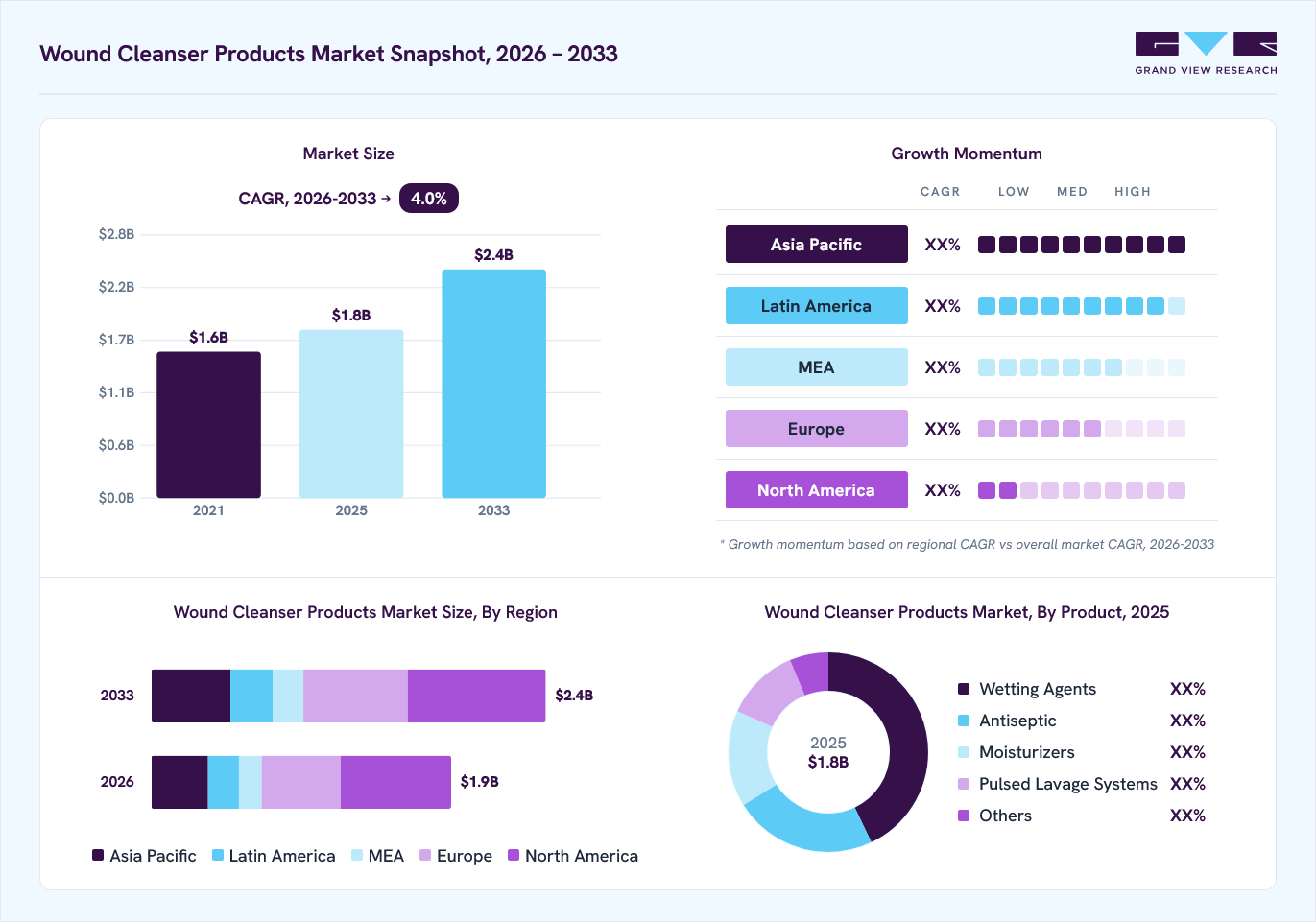
The global wound cleanser products market size was valued at USD 1.8 billion in 2025 and is projected to grow from USD 1.9 billion in 2026 to USD 2.4 billion by 2033, at a CAGR of 4.0% from 2026 to 2033. North America dominated the market, accounting for a revenue share of 37.1% in 2025. The market growth is driven by numerous factors such as increasing prevalence of chronic diseases, technological advancements coupled with increasing number of ambulatory surgical centers.
 Source: Grand View Research, IR Documents, Primary Interviews, Paid DatabasesTo learn more about this report,
 Download Free Sample Report
Key Market Trends & Insights
- By product: Wetting agents segment led the market with the largest revenue share of 42.9% in 2025
- By form: Sprays form segment led the market with the largest revenue share of 44.9% in 2025.
- By application: Acute wounds segment led the market with the largest revenue share of 50.9% in 2025.
- By end use: Hospitals segment led the market with the largest revenue share of 54.6% in 2025.
Regional Highlights
- Largest regional market: North America (37.1% revenue share, 2025)
- By country: The U.S. held the largest market share in 2025.
Market Size & Forecast
- Market size in 2025: USD 1.8 Billion
- Estimated market size in 2026: USD 1.9 Billion
- Projected market size by 2033: USD 2.4 Billion
- CAGR (2026-2033): 4.0%
Three ways to get this report
Buy it, customize it, or ask a question.Ask an Analyst
Analyst response in 1 business day
- AccessReport author, directly
- Reply timeWithin 1 working day
- No sales callDirect answer only
- FormatEmail reply
- CostFree, no cost
Get the Full Report
What the study covers
- FormatsPDF · Excel · Dashboard
- Timeline2026–2033 annual, 2025 base
- Coverage20+ countries, 5 regions
- Companies10+ key players profiled
Customize the Report
20% free customization
- IncludeCountries, segments, points
- TailorTo your product definition
- ExtendDeeper competitor detail
- OrA fully bespoke study
- Turnaround5–10 working days
Moreover, the increasing the number of clinical trials is also anticipated to boost market growth over the forecast period. Chronic conditions such as diabetes, vascular diseases, obesity, and autoimmune diseases can impede the body's natural healing process, leading to the development of chronic, nonhealing wounds or ulcers. This creates a substantial demand for effective wound management solutions, including wound cleansers. For instance, according to the WHO, in September 2023, Noncommunicable diseases (NCDs) are responsible for 41 million deaths annually, accounting for 74% of all global fatalities. In addition, as per data published by the Institute for Health Metrics and Evaluation in June 2023, global diabetes cases are expected to grow to 1.3 billion by 2050 from 529 million. Thus, the increasing prevalence of chronic diseases globally is a key factor driving the market growth.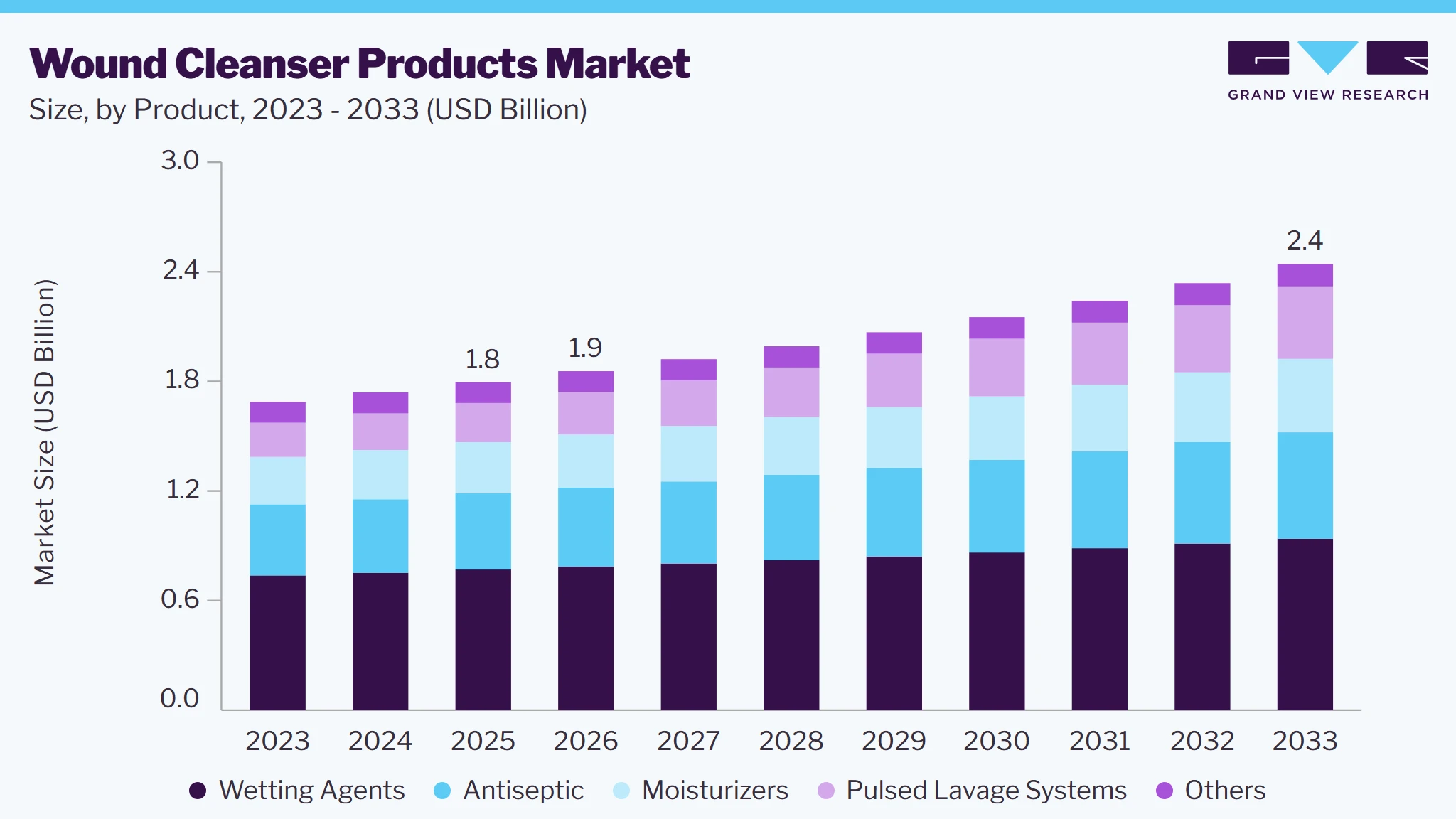 To learn more about this report, Download Free Sample Report
Ambulatory Surgery Centers (ASCs) offer a variety of services, such as surgical care, diagnostics, and preventive procedures. Surgeries for pain management, urology, orthopedics, restorative, reconstructive, or alternative plastic surgeries, and gastrointestinal surgeries are also performed in ASCs. Earlier, ASCs were only capable of performing GI-related minor surgeries; however, with an increase in the number of minimally invasive surgical procedures, services offered by ASCs have expanded and grown exponentially. According to the Definitive Healthcare Surgery Center View product, in August 2024, there are approximately 9,600 operational ambulatory surgery centers (ASCs) across the U.S. The rising number of ambulatory surgery centers (ASCs) and the growing volume of surgeries performed in these facilities are fueling the increasing demand for advanced wound cleanser products. These factors are significant drivers of market growth.
Authorities and organizations in Canada are actively conducting research to evaluate wound cleansing products, aiming to enhance their application and effectiveness. For instance, in June 2023, the Canadian Journal of Health Technologies published the CADTH Health Technology Review on antimicrobial or antiseptic cleansers for wounds. This study compared antimicrobial or antiseptic wound cleansers with saline solutions for wound management. Such publications help to expand knowledge and awareness of wound cleansers among Canadian healthcare decision-makers, health system leaders, clinicians, and policymakers. As a result, the growing awareness and understanding of wound cleansing products among industry stakeholders are expected to drive market growth during the forecast period.
Market Dynamics
The wound cleanser products market is experiencing steady growth due to the increasing prevalence of chronic wounds, surgical wounds, burns, and traumatic injuries worldwide. The rising incidence of diabetes, obesity, and an aging population has significantly increased the number of patients suffering from diabetic foot ulcers, pressure ulcers, and venous leg ulcers, driving demand for effective wound cleansing solutions. Growing awareness among healthcare professionals regarding infection prevention and the importance of proper wound bed preparation is further encouraging the adoption of advanced wound cleansers over traditional saline and antiseptic solutions. The market is also benefiting from an increase in surgical procedures, the expansion of home healthcare services, and the growing preference for products that promote faster healing while minimizing tissue damage. Technological advancements, including pH-balanced, hypochlorous acid-based, and antimicrobial wound cleansers, are improving product efficacy and patient safety.
Technological advancements are a major driver of the wound cleanser products market, as manufacturers continue to develop safer and more effective wound-cleansing solutions. Modern wound cleansers are formulated to remove debris, bacteria, and biofilm without damaging healthy tissue, thereby accelerating the healing process. The introduction of hypochlorous acid-based cleansers, surfactant-containing solutions, pH-balanced formulations, and preservative-free products has improved wound care outcomes while reducing the risk of infection. Companies are also developing easy-to-use spray bottles, single-use ampoules, and no-rinse formulations that enhance convenience for both healthcare professionals and home care patients. These innovations improve patient comfort, reduce treatment time, and support better infection control, leading to increased adoption across hospitals, clinics, and home healthcare settings.
Stringent manufacturing policies act as a restraint on the wound cleanser products market because manufacturers must comply with strict quality, safety, and regulatory requirements before launching new products. Regulatory authorities require extensive product testing, validation, sterilization processes, and compliance with international quality standards to ensure patient safety. These requirements increase production costs, lengthen product development timelines, and create barriers for small and medium-sized manufacturers. In addition, maintaining consistent product quality, packaging standards, and manufacturing practices require continuous investment in advanced production facilities and quality management systems. Delays in regulatory approvals and evolving compliance requirements can also slow the introduction of innovative wound cleanser products to market.
Increasing healthcare expenditure presents a significant opportunity for the wound cleanser products market as governments and private healthcare organizations continue to invest in improving wound management services. Higher healthcare spending supports the adoption of advanced wound care products in hospitals, outpatient facilities, and home healthcare settings. Investments in healthcare infrastructure, expanding access to medical services, and growing reimbursement coverage for wound care are encouraging healthcare providers to use specialized wound cleansers instead of conventional cleaning methods. In emerging economies, increased healthcare budgets are improving the availability of modern wound care products and strengthening healthcare delivery systems. As healthcare systems continue to prioritize infection prevention, faster wound healing, and reduced hospitalization costs, demand for advanced wound cleanser products is expected to grow steadily during the forecast period.
Market Concentration & Characteristics
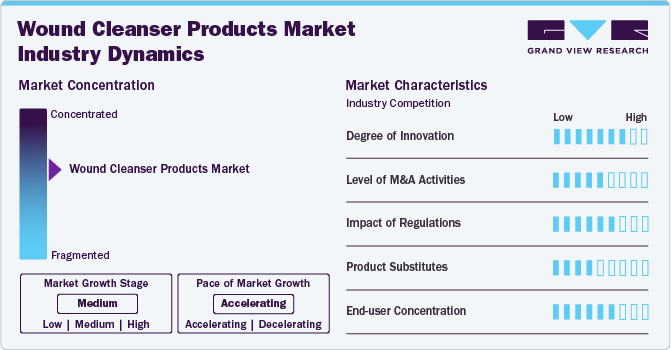
The industry growth stage is medium, and the pace is accelerating. The wound cleanser products industry is characterized by increasing cases of chronic diseases, a rising number of ambulatory surgery centers (ASCs) coupled with increasing regulatory approval for novel product launches.
The industry is experiencing a moderate degree of innovation. While traditional antiseptic solutions like povidone-iodine and chlorhexidine remain widely used, there is a growing trend towards advanced wound cleansing solutions with enhanced efficacy and reduced side effects. Key areas of innovation include novel antimicrobials, and advanced wound irrigation systems.
 To learn more about this report, Download Free Sample Report
Regulatory bodies play a significant role in shaping the industry. Stringent regulations governing the safety, efficacy, and labeling of these products can impact market dynamics. Compliance with regulatory standards, such as those set by the FDA and EMA, is crucial for product approval and market entry. While these regulations ensure product quality and patient safety, they can also increase development costs and time-to-market.
The level of M&A activities in the industry is moderate. While strategic acquisitions and mergers can drive innovation and market consolidation, the frequency of such deals is relatively lower compared to other healthcare sectors. In April 2024, Mölnlycke, MedTech company specializing in wound care and management, announced that it has entered into an agreement to acquire P.G.F. Industry Solutions GmbH, an Austrian manufacturer known for its Granudacyn wound cleansing and moisturizing solutions.
In the industry, several substitutes can serve similar purposes in wound management. These include saline solutions, which are widely used for their affordability and compatibility with most wound types. Hydrogel-based products can also serve as alternatives, offering moisturizing properties that support wound healing.
The industry is characterized by a moderate level of end-user concentration. While large healthcare institutions like hospitals and clinics constitute a significant portion of the market, a diverse range of end-users, including home healthcare providers, long-term care facilities, and individual consumers, also contribute to the overall demand.
Analyst Perspective
The global wound cleanser products market is experiencing steady growth, driven by the rising prevalence of chronic wounds, including diabetic foot ulcers, pressure ulcers, and venous leg ulcers, as well as increasing surgical procedures and trauma cases worldwide. Growing awareness regarding infection prevention and the importance of proper wound bed preparation is supporting the adoption of advanced wound cleansing solutions across healthcare settings. Wetting agents continue to dominate the market due to their widespread use in routine wound management, while pulsed lavage systems are witnessing the fastest growth owing to their effectiveness in removing debris, bacteria, and necrotic tissue from complex wounds. In addition, the shift toward outpatient care and home healthcare settings is driving demand for user-friendly, clinically effective wound-cleansing products. Continuous product innovations, coupled with the growing focus on reducing healthcare-associated infections and improving wound-healing outcomes, are expected to further drive market expansion over the forecast period.
Product Insights
Based on product, the wetting agents segment led the market with the largest revenue share of 42.9% in 2025, while pulsed lavage systems is expected to grow at the fastest CAGR over the forecast period. Wetting agents play a crucial role in wound cleanser solutions due to their ability to help the cleanser penetrate wounds more efficiently by dissolving and removing debris. Sprays, foams, and gels are the various wound cleanser products available. Many of these solutions have wetting agents as an essential component, which enhances their effectiveness and ensures that wounds are completely washed & disinfected. The increasing prevalence of chronic wounds and advancements in wetting agents are expected to drive the segment’s growth.
The pulsed lavage systems segment is expected to register the fastest CAGR from 2025 to 2030. Pulsed lavage systems are advanced wound-cleaning devices that use suction and mechanical irrigation to completely clean wounds. These techniques are especially helpful for complex wounds, where traditional approaches, such as severe injuries, surgical wounds, and persistent ulcers, might not be sufficient for proper washing.
There is increasing demand for pulsed lavage systems due to their ability to effectively remove bacteria and debris from wounds, lower the risk of infection, and speed up the healing process. The development of portable and user-friendly systems is anticipated to propel market expansion. In addition to hospitals and specialty clinics, the demand for pulsed lavage systems is rising in home care settings as patients seek convenient and efficient wound injury solutions.
Form Insights
Based on form, the sprays form segment led the market with the largest revenue share of 44.9% in 2025. Saline solutions, antiseptic solutions (such as povidone-iodine and chlorhexidine), hypochlorous acid solutions, and enzymatic solutions are some types of wound cleansing solutions. Various medical facilities use wound cleanser solutions, such as clinics, hospitals, long-term care homes, and home care settings. The market for wound cleansing solutions is anticipated to develop due to innovation, an increase in applications, and rising awareness of advanced wound treatment methods due to changing healthcare demands and technological advancements.
Industry key players are involved in novel product launches, further boosting the segment. For instance, in September 2023, to help physicians with all stages of wound healing, HR Pharmaceuticals, Inc. developed Renovar, an advanced skin & wound solution that is readily available and non-sensitizing. Using a super oxidized solution called HOClean Technology, Renovar speeds the healing process by 33% by increasing the oxygen flow to the wound bed. It cleans the wound, reduces inflammation, and lowers the risk of infection.
The wipes segment is expected to register the fastest CAGR from 2025 to 2030. Premoistened and individually packaged wound cleansing wipes are suitable for various applications in clinics, hospitals, & home care facilities. Antiseptic solutions, such as benzalkonium chloride or povidone-iodine, are used in wound cleaning wipes to clean the wound site and reduce the risk of infection.
Since they come in separate packaging, wound cleansing wipes are suitable for one-time usage. They eliminate the need for additional supplies, such as cotton balls, water, or soap. Certain wound cleansing wipes include moisturizing ingredients such as glycerin or aloe vera, which can keep the wound area moisturized & enhance healing. Moreover, the increasing prevalence of surgical & chronic wounds and demand for wound cleanser products is expected to drive the segment in the near future.
Application Insights
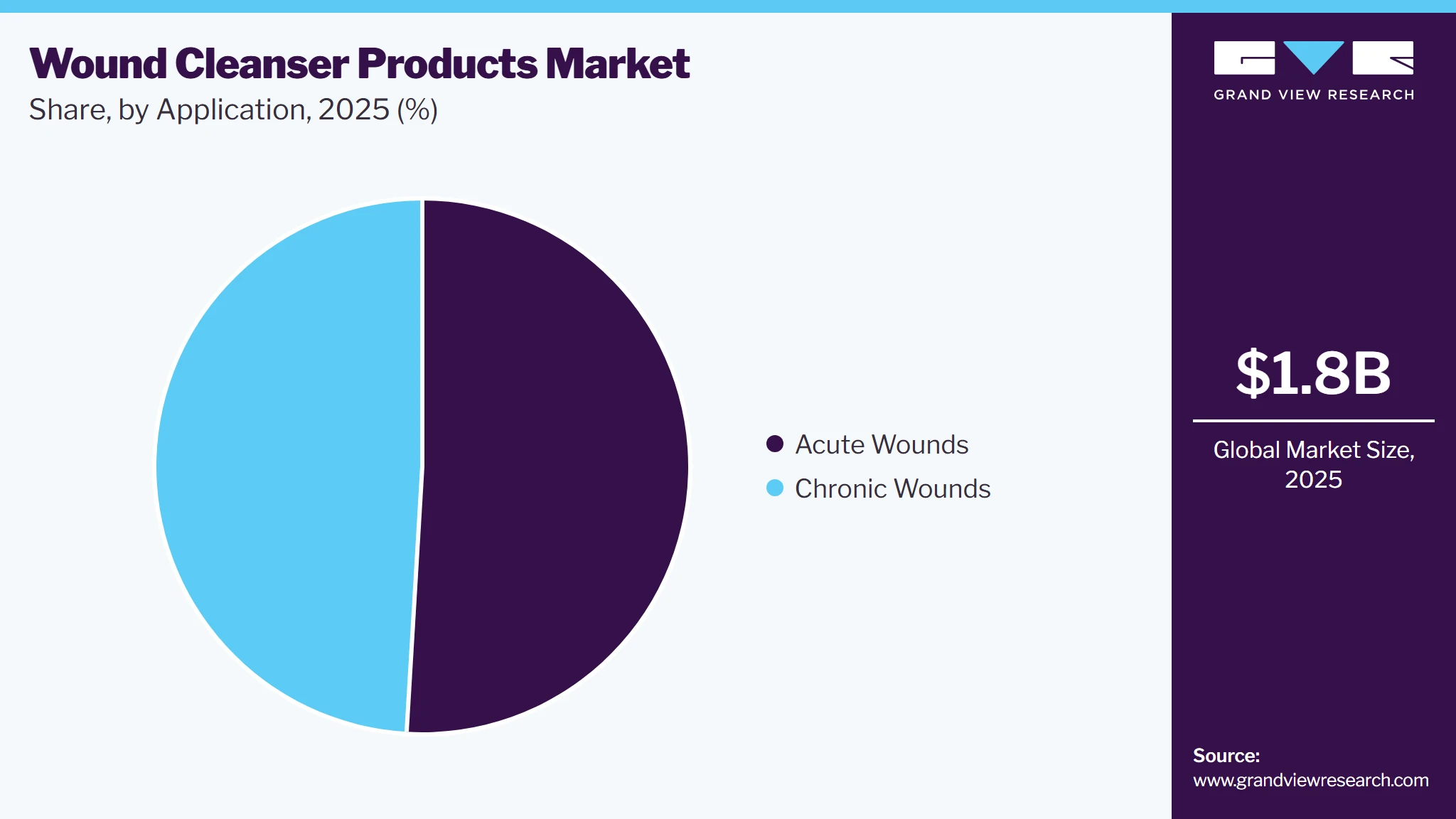
Based on application, the acute wounds segment led the market with the largest revenue share of 50.9% in 2025. Acute wounds include abrasions, burns, and cuts, as well as surgical & traumatic wounds. These wounds should be properly cleaned to promote healing and prevent infection. During the early phases of healing, acute wounds are especially prone to infection. By effectively cleaning the wound surface with antimicrobial wound cleansers, the microbial infection within the wound is reduced, thus decreasing the risk of infection and complications.
 To learn more about this report, Download Free Sample Report
For instance, as per reports published by WHO in October 2023, approximately 180,000 fatalities occur from burn injuries every year. The majority of these deaths occur in low- and middle-income nations. Every year, over 1 million individuals in India suffer from moderate to severe burns. The demand for advanced wound cleansing solutions that efficiently clean and disinfect wounds while reducing patient discomfort has increased due to the rising prevalence of acute wounds.
The chronic wounds segment is expected to register the fastest CAGR from 2025 to 2030 due to the increasing prevalence of chronic wounds, including pressure ulcers, venous leg ulcers, and diabetic foot ulcers. The prevalence of diabetic foot ulcers is anticipated to increase due to the rise in the prevalence of diabetes. According to a WHO report, 422 million people worldwide had diabetes in 2023; most of these people lived in low- and middle-income countries. Diabetes is the primary cause of 1.5 million deaths per year. Hence, with the increasing prevalence of diabetes, the risk of diabetic foot ulcers is predicted to surge, propelling segment’s growth.
End-use Insights
Based on end-use, the hospitals segment led the market with the largest revenue share of 54.6% in 2025. Hospitals serve as the primary centers for diagnosing, managing, and treating various types of wound injuries. Hospitals are crucial in the healthcare sector due to their advanced technologies, specialist medical knowledge, and extensive infrastructure for managing this condition. Moreover, hospitals focus on delivering brief medical interventions for severe injuries or illnesses, urgent medical needs, or postsurgical recovery. They provide various services, including emergency care, surgical procedures, intensive care, and specialized medical treatments.
For instance, Definitive Healthcare, LLC’s assessment estimated 3,888 acute care hospitals in the U.S. in 2024 In an inpatient setting, patients receive nonurgent or short-term emergency medical care for a disease, injury, or other conditions. Moreover, as per the same report, there were about 384 long-term acute care hospitals in the U.S. in 2024. These hospitals serve individuals with severe medical challenges that surpass the capabilities of regular acute care hospitals or skilled nursing facilities.
The home care segment is anticipated to experience a significant growth, driven by several factors. The increasing prevalence of chronic wounds, coupled with the rising preference for home-based care, is driving the segment’s growth. Advancements in wound care technologies have led to the development of easy-to-use home care products, making it convenient for patients to manage their wounds at home. In addition, government initiatives promoting home healthcare and rising healthcare costs are further propelling the growth of this segment.
Regional Insights
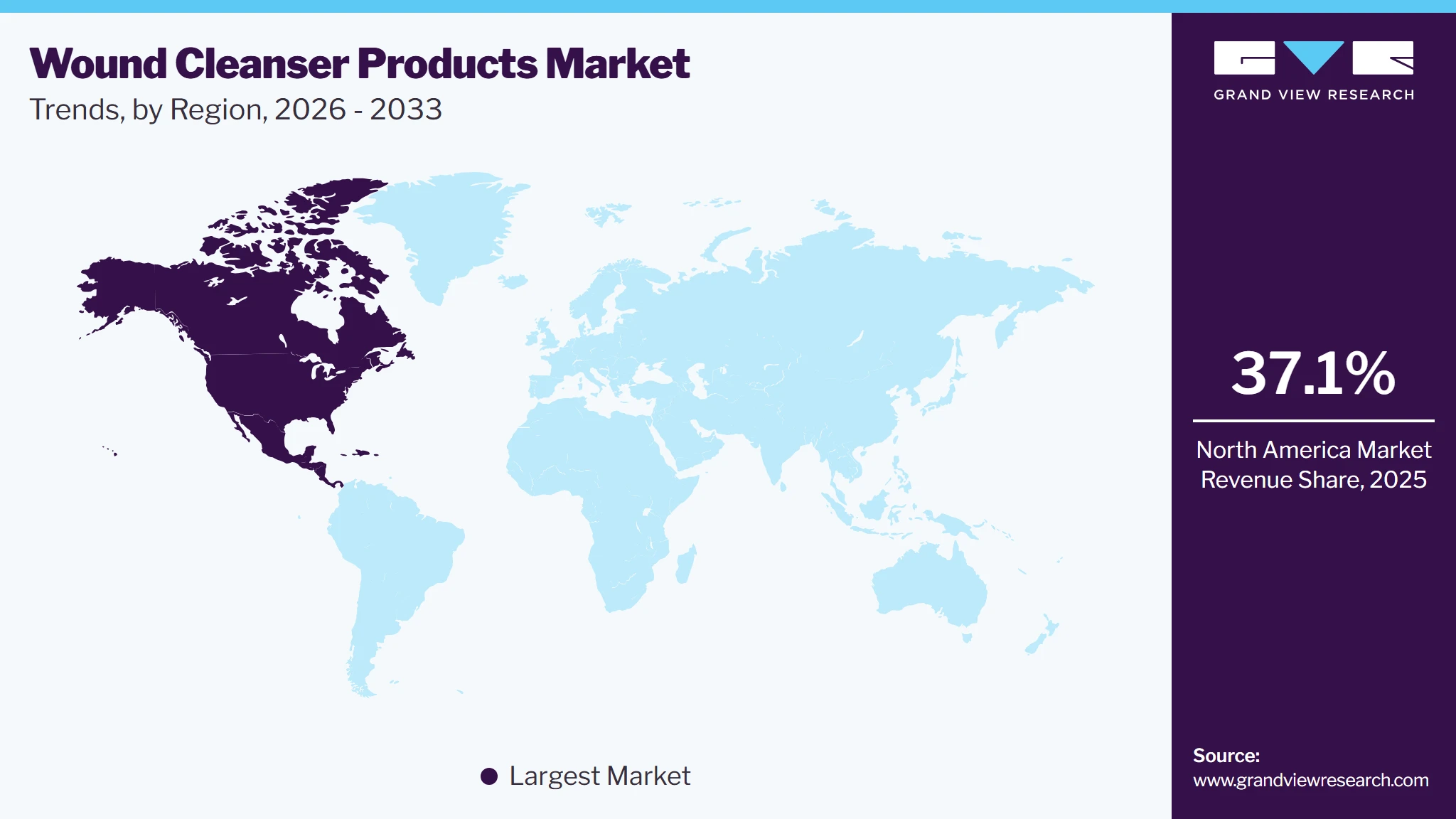
North America dominated the wound cleanser products market with the largest revenue share of 37.1% in 2025. The demand for wound cleanser products across the region is anticipated to be driven by the rising prevalence of diabetes, increasing number of surgeries, and growing approvals for wound cleanser products from numerous regulatory authorities such as the FDA. In addition, supportive policies and increasing funding from government authorities for wound care & surgeries are expected to propel the regional market growth over the forecast period.
 To learn more about this report, Download Free Sample Report
U.S. Wound Cleanser Products Market Trends
The wound cleanser products market in the U.S. held the largest share in the North America region in 2025. The main factors propelling the expansion of the market in the U.S. are the rising prevalence of diabetes, novel product launches, and the presence of industry key players in this country. The companies operating in the market are undertaking several strategies such as collaborations, partnerships, and product launches & approvals to strengthen their presence in the U.S. market. For instance, in May 2023, VeriCyn Wound Wash from Armis Biopharma obtained 510(k) clearance from the FDA for removing debris from wounds. This product is useful for diabetic ulcers, pressure ulcers, burns, surgical wounds, and grafted/donor sites. Thus, such approvals for wound cleansing products are anticipated to fuel the competition in the market.
Canada wound cleanser products market is experiencing steady growth, driven by an increasing prevalence of chronic wounds, rising awareness about advanced wound care, and an aging population. Innovations in wound care solutions, including products with antimicrobial and healing-accelerating properties, are fueling market expansion.
Europe Wound Cleanser Products Market Trends
The wound cleanser products market in Europe is experiencing significant growth, driven by factors such as an aging population, increasing incidence of chronic diseases, and a rising preference for advanced wound care solutions. Key trends shaping the market include the development of innovative wound cleanser formulations with enhanced antimicrobial properties and the growing adoption of minimally invasive surgical procedures, which contribute to an increased demand for effective wound care products.
The UK wound cleanser products market is expected to grow over the forecast period due to the presence of major market players such as Coloplast Corp, Smith + Nephew, 3M, and ConvaTec. These players offer several innovative wound-cleaning products in the market.
The wound cleanser products market in Germany is witnessing significant growth due to the increasing prevalence of diabetes, venous ulcers, and other chronic wounds among an aging population. A strong focus on quality healthcare and advanced medical technologies drives demand for innovative wound care solutions, including antiseptic and bioactive wound cleansers. The market benefits from Germany's well-established healthcare infrastructure and reimbursement policies, encouraging the adoption of premium wound care products.
Asia Pacific Wound Cleanser Products Market Trends
Asia Pacific wound cleanser products market is anticipated to grow at the fastest CAGR over the forecast period. Several factors, including the increasing prevalence of chronic disorders and rising medical tourism, are driving market growth in this region. The rising healthcare expenditure in the Asia Pacific region can be attributed to rapid economic development & urbanization and rising healthcare awareness are driving the demand for advanced wound care products, such as wound cleansers. Continuous advancements in technology in wound care products, such as the creation of novel compositions of wound cleansers & delivery methods, are expected to propel the market expansion in the near future.
The wound cleanser products market in China is expected to grow over the forecast period due to industry key players focusing on expanding their market presence by enhancing their product portfolios and widening their distribution channels nationwide. In addition, collaborations and partnerships with healthcare providers & hospitals are helping players strengthen their market position.
Latin America Wound Cleanser Products Market Trends
The Latin America Wound Cleanser Products Market is experiencing significant growth, driven by an aging population, increasing prevalence of chronic diseases like diabetes and obesity, and a rising preference for advanced wound care solutions. Moreover, the rising awareness among healthcare professionals and patients regarding the importance of proper wound care is further propelling market growth.
Middle East And Africa Wound Cleanser Products Market Trends
The wound cleanser products market in MEA is experiencing growth driven by the increasing focus on healthcare infrastructure development and rising healthcare expenditure. Advancements in the healthcare system are expected to boost the development of wound care products in these countries. Growing health insurance penetration, increasing privatization, and rising regional disease burden are among the factors expected to drive regional market growth.
Saudi Arabia wound cleanser products market is expanding due to a rising incidence of chronic diseases such as diabetes, which is prevalent in the region. Increasing healthcare investments and the government's commitment to improving healthcare access under initiatives like Vision 2030 are driving the adoption of advanced wound care solutions. The growing awareness about hygiene and wound management among healthcare professionals and patients is boosting demand for effective wound cleansers, particularly in hospitals and clinics.
Key Wound Cleanser Products Company Insights
Key industry players are focusing on the launch of innovative types of wound cleanser products, growth strategies, and technological advancements. For instance, in September 2023, to help physicians with all stages of wound healing, HR Pharmaceuticals, Inc. developed Renovar, an advanced skin & wound solution that is readily available and non-sensitizing. Using a super oxidized solution called HOClean Technology, Renovar speeds the healing process by 33% by increasing the oxygen flow to the wound bed. It cleans the wound, reduces inflammation, and lowers the risk of infection. These advancements in wound cleanser products market are anticipated to boost the growth in industry over the forecast period.
AROA BIOSURGERY LIMITED, and NovaBay Pharmaceuticals, Inc. are some emerging players in the industry. There are significant trends in the wound cleanser product industry that are altering the landscape of wound care. One notable development is the rise of chronic wounds, including pressure ulcers and diabetic ulcers, which is driving up the demand for advanced wound washing products. Consequently, emerging market players are intensifying their efforts to benefit from this development.
These emerging companies are using technology developments to create innovative wound cleaner solutions that have better antibacterial qualities and are more effective in accelerating wound healing. They are providing innovative formulations and delivery systems that cater to the changing needs of patients and healthcare professionals by concentrating on research and development. Moreover, the growing emphasis on sustainability and eco-friendliness is influencing the development of biodegradable wound cleanser products, aligning with the broader environmental concerns across industries. Emerging players are integrating sustainability principles into their product design and manufacturing processes to appeal to environmentally conscious consumers and healthcare facilities.
Competitive Insights: Smith+Nephew Implemented Sustainability Strategy With “Less Waste, More Care”
The company optimized the size of ALLEVYN Dressing packaging, starting with the bordered dressings, through the "Less waste + more care" campaign. This eliminated unnecessary air and resulted in a 20% reduction in the size of their cartons, pouches, and cases.
The initiative includes
-
Every year, save 2.7 million square meters of packing material.
-
Reducing 92 tons of CO2 is approximately the same as driving a car 13 times around the globe.
Increasing number of Clinical Studies for the treatment of Acute Wound
For instance, in December 2023, ClinicalTrials.gov revealed the proposed study held by Rochal Industries LLC in collaboration with Brooke Army Medical Center, University of Texas Health Science Center at San Antonio and MicroGenDXthat. The study will be a prospective trial of management of acute traumatic wounds (less than 24 hours from injury and without previous intervention aside from a dressing for coverage).
BIAKOS Antimicrobial Wound Cleanser and BIAKOS Antimicrobial Wound Gel: Providing Biofilm Prevention and Treatment Through Continuum of Care - The study design involves a prospective single arm, 35 subject study that analyzes the effect of the subsequent application of a novel wound cleanser and wound gel on subjects' acute traumatic wounds and the respective microbial loads over a 28-day study duration.
The market for wound cleanser products may benefit from the growing number of clinical research in the field of wound treatment with a greater focus on innovation, market expansion, regulatory compliance, competitive advantages, and training programs.
Advances In Wound Care Management Industry Insights
 To learn more about this report, Download Free Sample Report
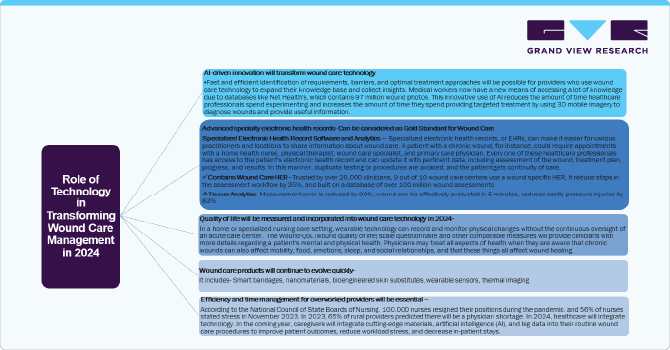
Advanced wound healing techniques are becoming increasingly important since the population ages and the number of people with chronic illnesses rises steadily. Companies that advance in medical technology can introduce artificial intelligence and large amounts of data into waiting rooms, thereby enhancing patient outcomes for millions.
Key Wound Cleanser Products Companies
The following key companies have been profiled for this study on the wound cleanser products market.
-
Stryker
-
Coloplast Corp
-
Smith + Nephew
-
B. Braun SE
-
Johnson & Johnson Services Inc.
-
3M
-
Medline Industries, Inc.
-
ConvaTec
-
Cardinal Health
-
Integra LifeSciences
-
Mölnlycke Health Care AB.
-
Zimmer Biomet
Competitive Benchmarking
Category
Operating Strategies
Competitive Edge
Weakness
Established Players (Johnson & Johnson, 3M, Smith + Nephew, B. Braun SE, Coloplast Corp., Cardinal Health, Medline)
- Focus on expanding wound cleanser product portfolios through continuous innovation in antimicrobial wound cleansers, hypochlorous acid-based solutions, and saline cleansers.
- Strengthening market presence through strategic collaborations with hospitals, wound care centers, long-term care facilities, distributors, and healthcare providers while expanding regulatory approvals, geographic reach, and integrated wound care product offerings.
- Strong global brand recognition, extensive distribution networks, established relationships with hospitals and healthcare professionals, and comprehensive wound care portfolios.
- Significant R&D investments, manufacturing capabilities, regulatory expertise, and financial strength support continuous product innovation and expansion across developed and emerging markets.
- Intense competition requires continuous innovation and product differentiation to maintain market leadership.
- High costs related to product development, regulatory compliance, manufacturing quality standards, and clinical validation.
Emerging Players (Stryker, URGO MEDICAL)
- Focus on developing advanced wound cleansing solutions with improved antimicrobial effectiveness, tissue-friendly formulations, and easy-to-use delivery systems for acute, chronic, surgical, and traumatic wound management.
- Expand market presence through partnerships with specialty wound care clinics, hospitals, regional distributors, and healthcare providers while strengthening presence in high-growth and emerging healthcare markets.
- Strong focus on specialized wound care solutions, product innovation, clinical evidence generation, and the ability to respond quickly to evolving clinician requirements.
- Greater operational flexibility enables faster product development, targeted commercialization strategies, and expansion within niche wound care segments.
- Limited global distribution networks and lower brand recognition than multinational wound care companies.
- Smaller product portfolios, relatively lower financial resources, and dependence on selected regional markets slow international expansion.
Recent Developments
-
In June 2023, HR HealthCare launched CliniClean Chlorhexidine Gluconate (CHG) 4%, a potent antiseptic solution designed to offer extensive protection for the skin against a variety of microorganisms by minimizing the risk of contracting healthcare-associated infections or Surgical Site Infections (SSI). This antiseptic/antimicrobial compound is effective for preoperative patient preparation, surgical hand cleansing, healthcare personnel hand hygiene, and general skin & wound sanitation.
-
In May 2023, VeriCyn Wound Wash from Armis Biopharma obtained 510(k) clearance from the FDA for removing debris from wounds. This product is useful for diabetic ulcers, pressure ulcers, burns, surgical wounds, and grafted/donor sites.
-
In April 2023, Gunze Medical, a full-service medical device manufacturer that oversees all aspects from sales to research of the company, expanded its wound care sales network in Japan. Furthermore, Gunze Medical has begun selling its products through a robust distribution network in China, the U.S., and Japan. Such initiatives are expected to propel industry growth.
Wound Cleanser Products Market Report Scope
Report Attribute
Details
Market size in 2025
USD 1.8 billion
Estimated market size in 2026
USD 1.9 billion
Projected market size by 2033
USD 2.4 billion
Growth rate
CAGR of 4.0% from 2026 to 2033
Base year for estimation
2025
Historical data
2021 - 2024
Forecast period
2026 - 2033
Quantitative units
Revenue in USD million/billion and CAGR from 2026 to 2033
Report coverage
Revenue forecast, company ranking, competitive landscape, growth factors, and trends
Segments covered
Product, form, application, end use, region
Regional scope
North America; Europe; Asia Pacific; Latin America; MEA
Country scope
U.S.; Canada; Mexico; Germany; UK; France; Italy; Spain; Denmark, Sweden, Norway, China; Japan; India; Australia; Thailand; South Korea, Brazil; Argentina; South Africa; Saudi Arabia; UAE; Kuwait
Key companies profiled
Stryker, Coloplast Corp, Smith + Nephew, B. Braun SE, Johnson & Johnson, 3M, Medline, ConvaTec, Cardinal Health, Integra LifeSciences Corporation, Mölnlycke Health Care AB., Zimmer Biomet.
Customization scope
Free report customization (equivalent up to 8 analysts' working days) with purchase. Addition or alteration to country, regional & segment scope.
Pricing and purchase options
Avail customized purchase options to meet your exact research needs. Explore purchase options
Global Wound Cleanser Products Market Report Segmentation
This report forecasts revenue growth at global, regional, and country levels and provides an analysis on the latest trends in each of the sub-segments from 2021 to 2033. For this study, Grand View Research has segmented the global wound cleanser products market report based on the product, form, application, end-use and region:
-
Product Outlook (Revenue, USD Million, 2021 - 2033)
-
Wetting Agents
-
Antiseptic
-
Moisturizers
-
Pulsed Lavage Systems
-
Disposable
-
Reusable
-
Semi Disposable
-
Others
-
-
-
Form Outlook (Revenue, USD Million, 2021 - 2033)
-
Sprays
-
Solutions
-
Wipes
-
Others
-
-
Application Outlook (Revenue, USD Million, 2021 - 2033)
-
Acute Wounds
-
Surgical & Traumatic Wounds
-
Burns
-
-
Chronic Wounds
-
Diabetic Foot Ulcers
-
Pressure Ulcers
-
Venous Leg Ulcers
-
Other Chronic Wounds
-
-
-
End-use Outlook (Revenue, USD Million, 2021 - 2033)
-
Hospitals
-
Specialty Clinics
-
Home Care
-
Ambulatory Surgery Centers
-
Others
-
-
Regional Outlook (Revenue, USD Million; 2021 - 2033)
-
North America
-
U.S.
-
Canada
-
Mexico
-
-
Europe
-
UK
-
Germany
-
France
-
Italy
-
Spain
-
Denmark
-
Sweden
-
Norway
-
-
Asia Pacific
-
Japan
-
China
-
India
-
Thailand
-
South Korea
-
Australia
-
-
Latin America
-
Brazil
-
Argentina
-
-
Middle East & Africa
-
South Africa
-
Saudi Arabia
-
UAE
-
Kuwait
-
-
Research Methodology
The wound cleanser products market figures in this report are based on a proven research process that combines executive interviews with secondary research from proprietary databases, company filings, and recognized regulatory and institutional sources. Market size is built through value-chain sizing - reconciling supply-side and demand-side estimates - and triangulated with bottom-up and top-down approaches. Every estimate passes multiple levels of expert validation before publication, with each wound cleanser products segment quantified using the revenue-capture definitions in the table below.
Segment Definition
Segment - Product
Revenue capture definition
Wetting Agents
Revenue is generated from the sale of wound cleansers formulated with wetting or surfactant agents that help loosen, soften, and remove debris, dried exudate, necrotic tissue, and contaminants from acute and chronic wounds without damaging healthy tissue. These products are widely used before dressing application and during routine wound cleansing.
Antiseptic
Revenue is generated from the sale of wound cleanser products containing antiseptic ingredients, such as hypochlorous acid, polyhexamethylene biguanide (PHMB), povidone-iodine, or chlorhexidine, designed to reduce microbial load, prevent wound infections, and support healing in acute, chronic, surgical, traumatic, and burn wounds.
Moisturizers
Revenue is generated from the sale of wound cleansing products enriched with moisturizing or skin-conditioning ingredients that cleanse the wound while maintaining skin hydration, protecting the periwound area, and minimizing dryness or irritation. These products are commonly used for chronic wounds, fragile skin, and frequent wound care.
Pulsed Lavage Systems
Revenue is generated from the sale of pulsed lavage systems used to irrigate and cleanse acute, chronic, surgical, and traumatic wounds by delivering pressurized pulses of sterile cleansing solution to remove debris, bacteria, and necrotic tissue.
Others
Revenue is generated from the sale of other wound cleanser products, including normal saline solutions, sterile wound irrigation solutions, pH-balanced cleansers, enzymatic cleansing solutions, and specialty formulations designed for specific wound types or clinical applications that are not classified under wetting agents, antiseptics, or moisturizers.
Estimation Model
Approach
Description
Bottom‑Up Epidemiological Modeling
Wound prevalence and incidence rates for wound cleanser patients derived from country‑level variables-including diabetic population size, aging demographics, surgical site infection rates, and healthcare access indices-combined with average wound cleanser product utilization per patient across five global regions.
Top‑Down Revenue Triangulation
Analyzing the wound cleanser segment’s share within the broader advanced wound management ecosystem by tracking OEM revenues (3M, Smith & Nephew, Mölnlycke, Coloplast, ConvaTec, Integra LifeSciences) through annual reports, investor filings, and distributor channel data.
Demand‑Side Care‑Setting Modeling
Procedure and treatment volume analysis of wound cleanser usage segmented by wound type (DFU, pressure ulcers, venous leg ulcers, surgical wounds, burns) and care setting (hospitals, long‑term care, home care) combined with reimbursement coverage and treatment frequency data.
Delivered Customizations
This report has been delivered with the following In-depth customizations
Client Request
Customization Delivered
Value Adds
Disease epidemiology and patient population analysis
Detailed epidemiological data covering prevalence, incidence, and patient segmentation of wound cleanser-treated patients (diabetic foot ulcers, pressure ulcers, venous leg ulcers, surgical wounds, and burns) across key geographies.
Enables accurate demand forecasting, supports healthcare burden quantification, aids reimbursement strategy, and strengthens go-to-market planning for wound cleanser products.
Product share analysis by manufacturer and product type
Revenue and volume-based market share estimation at product level - including saline-based cleansers, surfactant-based solutions, antimicrobial wound cleansers, irrigation devices, and sprays - segmented by manufacturer.
Provides insights into market leadership, competitive intensity, growth opportunities, and strategic investment priorities within the wound cleanser products market.
R&D Analysis
Pipeline tracking of novel wound cleanser formulations, patented antimicrobial compounds, and next-generation delivery systems across preclinical, clinical, and regulatory stages - sourced from patent databases, clinical trial registries, and company disclosures.
Identifies innovation hotspots, potential disruptive technologies, licensing/M&A targets, and investment opportunities in the wound cleanser product pipeline.
Frequently Asked Questions About This Report
The acute wounds held the largest share of 50.9% in 2025 while chronic wounds is the fastest-growing segment over the forecast period.
The sprays form held the largest share of 44.9% in 2025 and is the fastest-growing segment over the forecast period.
The hospitals held the largest share of 54.6% in 2025, while home healthcare is the fastest-growing segment over the forecast period.
Key players include Stryker, Coloplast Corp, Smith + Nephew, B. Braun SE, Johnson & Johnson, 3M, Medline, ConvaTec, Cardinal Health, Integra LifeSciences Corporation, Mölnlycke Health Care AB., Zimmer Biomet, and URGO MEDICAL.
Key factors include increasing prevalence of chronic diseases, technological advancements coupled with increasing number of ambulatory surgical centers. Also, the increasing number of clinical trials is also anticipated to boost market growth over the forecast period.
The wetting agents segment held the largest share of 42.9% in 2025, while pulsed lavage systems is the fastest-growing segment over the forecast period.
The global wound cleanser products market size was valued at USD 1.8 billion in 2025 and is estimated at USD 1.9 billion in 2026.
The global wound cleanser products market is expected to grow at a CAGR of 4.0% from 2026 to 2033, reaching USD 2.4 billion by 2033.
North America dominated with a 37.1% revenue share in 2025.
About the Author(s)
Medical Devices Research Team
Healthcare · Medical DevicesThis report was authored by the medical devices research team at Grand View Research - comprising two research analysts, one senior research analyst, and one industry expert - with specialized expertise in the medical devices segment of the healthcare industry. All findings are based on proprietary healthcare databases, executive interviews, and regulatory analysis, subject to internal peer review prior to publication.
Last Updated:
Speak to Analyst

Customize this report to your needs - add regions, segments, or data points, with 20% free customization.
Or view our licence options:


ISO 9001:2015 & 27001:2022 Certified
We are GDPR and CCPA compliant! Your transaction & personal information is safe and secure. For more details, please read our privacy policy.


