
- Home
- »
- Biotechnology
- »
-
Zinc Finger Nucleases Market Size And Share Report, 2033GVR Report cover

Zinc Finger Nucleases (ZFNs) Market (2026 - 2033)
Size, Share & Trends Analysis Report By Product & Services (ZFN Products, ZFN Kits & Reagents), By Technology, By Application (Research & Development, Drug Discovery & Screening), By Therapeutic Area, By Region, And Segment Forecasts
Market Size, 2025
$2.3BMarket Estimate, 2026
$2.6BMarket Forecast, 2033
$7.7BCAGR, 2026–2033
16.6%Zinc Finger Nucleases (ZFNs) Market Summary
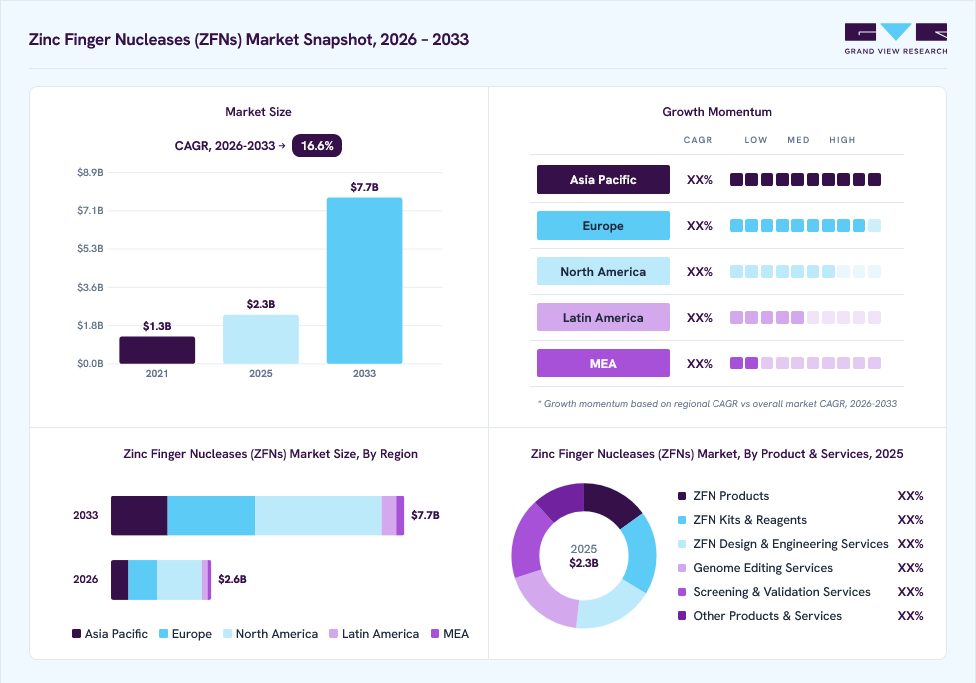
The global zinc finger nucleases (ZFNs) market size was valued at USD 2.3 billion in 2025 and is projected to grow from USD 2.6 billion in 2026 to USD 7.7 billion by 2033, at a CAGR of 16.6% from 2026 to 2033. North America dominated the market, accounting for the largest revenue share of 44.5% in 2025. Market growth is driven by the increasing adoption of ZFN technology for precise genome editing across research, drug discovery, gene therapy, and agricultural biotechnology, as well as advancements in targeted gene modification, engineered nuclease design, and the development of scalable, efficient genome-editing platforms.
 Source: Grand View Research, IR Documents, Primary Interviews, Paid DatabasesTo learn more about this report,
 Download Free Sample Report
Key Market Trends & Insights
- By product & services: ZFN kits & reagents segment held the highest market share of 18.7% in 2025.
- By technology: Targeting & recognition mechanism segment held the highest market share of 18.6% in 2025.
- By application: Therapeutic development segment held the highest market revenue share of 20.5% in 2025.
- By therapeutic area: Oncology segment held the highest market share of 19.3% in 2025.
Regional Highlights
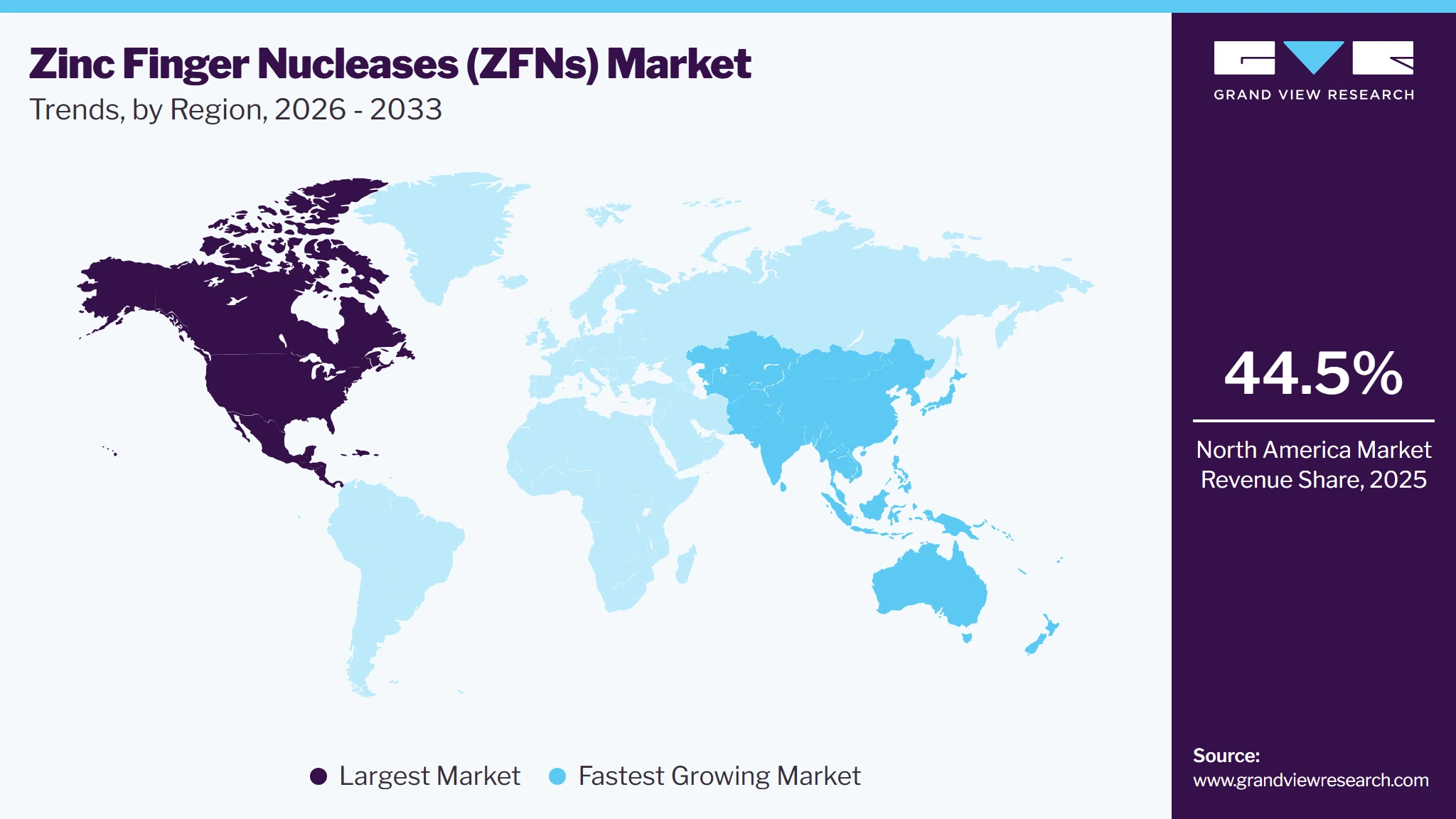
- Largest regional market: North America (44.5% revenue share, 2025)
- Fastest-growing regional market: Asia Pacific (highest CAGR, 2026-2033)
- By country: The U.S. held the largest market share in 2025.
Market Size & Forecast
- Market size in 2025: USD 2.3 Billion
- Estimated market size in 2026: USD 2.6 Billion
- Projected market size by 2033: USD 7.7 Billion
- CAGR (2026-2033): 16.6%
Prism AI by Grand View Research Free to tryAsk a question about the zinc finger nucleases (ZFNs) marketTry asking✓Every figure cited from GVR research Prefer the report? Download free sample →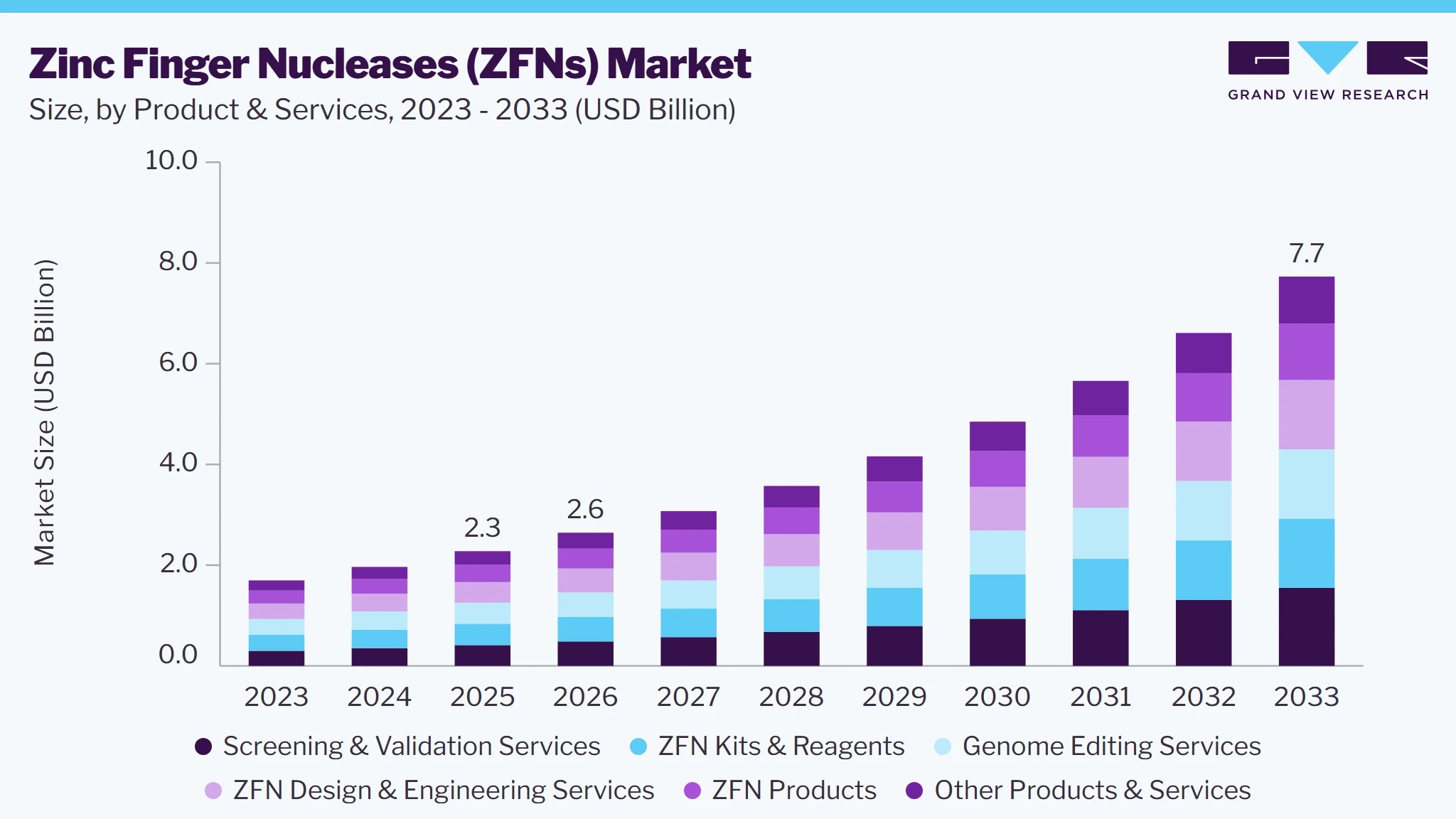 To learn more about this report, Download Free Sample Report
Market Dynamics
The zinc finger nucleases (ZFNs) market is witnessing strong growth, driven by expanding applications in gene therapy, functional genomics, disease modeling, and drug discovery. Advancements in ZFN engineering are improving editing precision, efficiency, and target specificity. The market is further supported by advancements in ZFN delivery technologies and growing clinical research for genetic disorders. Increasing development of ZFN-based therapeutic approaches is expected to create new opportunities for market growth.
The growing adoption of precision genome editing is driving the zinc finger nucleases (ZFNs) market as researchers increasingly seek targeted technologies for precise genetic modification. ZFNs enable site-specific DNA cleavage and support gene knockout, correction, and targeted insertion, making them valuable across gene therapy, functional genomics, disease modeling, and drug discovery. Increasing research into targeted and controlled genome modification is further supporting the adoption of ZFN-based technologies.
According to an article published in Scientific Reports in October 2024, researchers evaluated BIVV003, a ZFN-edited autologous cell therapy for sickle cell disease. The therapy uses ZFNs to disrupt the BCL11A erythroid enhancer, thereby increasing fetal hemoglobin levels. Results from the Phase 1/2 PRECIZN-1 study showed increased total hemoglobin and fetal hemoglobin in five of six participants with more than three months of follow-up, demonstrating the potential of ZFN-mediated precision genome editing for therapeutic applications.
The risk of off-target gene editing is a key restraint for the zinc finger nucleases (ZFNs) market, particularly in therapeutic applications. ZFNs can recognize DNA sequences that are similar to the intended target and cause unintended DNA cleavage, potentially resulting in mutations or genomic rearrangements. These risks increase the need for extensive safety testing and validation, raising the complexity and cost of ZFN development.
However, the potential for unintended DNA cleavage remains a concern, requiring rigorous evaluation of off-target sites before ZFN-based applications can be widely adopted. Although advances in ZFN engineering and modified FokI domains have improved target specificity, comprehensive genome-wide assessment is still necessary, particularly for clinical applications where genomic safety is critical.
The growing development of ZFN-edited cell therapies presents an opportunity for the zinc finger nucleases (ZFNs) market, particularly as researchers explore targeted modification of hematopoietic stem cells to treat genetic and acquired disorders. ZFNs enable ex vivo modification of patient-derived cells, creating opportunities for developing personalized therapies with potentially durable effects. Continued advances in editing efficiency, cell manufacturing, and delivery technologies are expected to support the expansion of ZFN-based cell therapy applications.
According to a clinical trial registry update in October 2025, a Phase 1 study at City of Hope continued evaluating SB-728mR-HSPC, an autologous hematopoietic stem/progenitor cell therapy in which ZFNs are used to disrupt the CCR5 gene in patients with HIV-1. The study is assessing the safety, feasibility, and engraftment of ZFN-modified cells following busulfan conditioning. The ongoing clinical evaluation of this approach demonstrates the potential of ZFN-edited stem cells to develop cell-based therapies beyond inherited blood disorders, creating opportunities for further ZFN market expansion.
Market Concentration & Characteristics
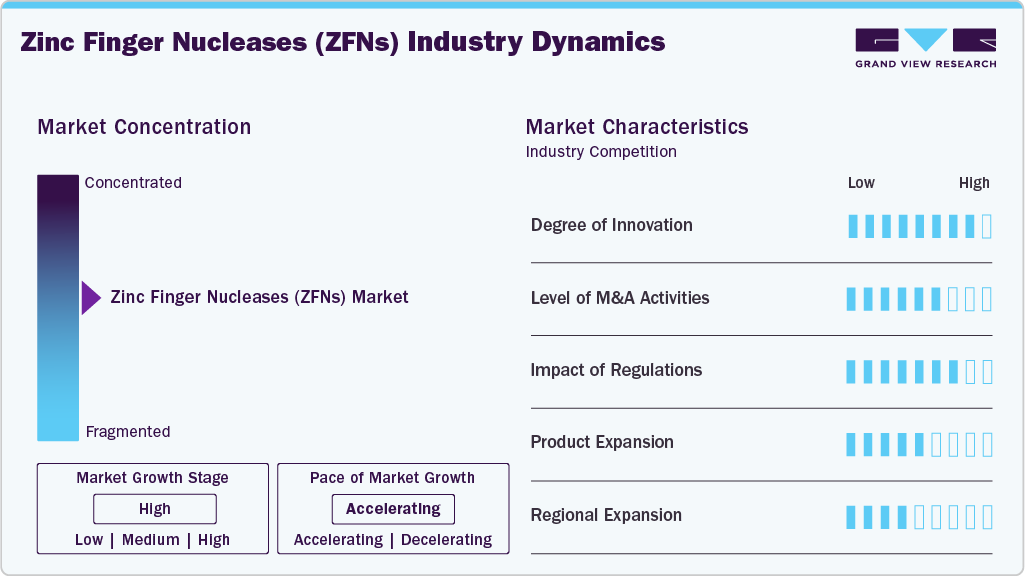
The zinc finger nucleases (ZFNs) industry is characterized by a high degree of innovation, driven by improvements in ZFN design, target-site specificity, delivery methods, and genome-editing efficiency. According to a review article published by Wiley in February 2026, ZFNs continue to be evaluated in clinical development, with approximately 10 clinical trials identified among programmable nuclease-based studies, demonstrating continued technological relevance despite competition from newer editing platforms.
The zinc finger nucleases (ZFNs) industry is experiencing moderate M&A activity, with strategic transactions focused on acquiring proprietary genome-editing platforms and strengthening therapeutic capabilities. For instance, in June 2026, Eli Lilly entered into an asset purchase agreement with Sangamo Therapeutics to acquire its zinc finger, MINT, and capsid delivery platforms, along with a prion disease program. The transaction highlights growing strategic interest in proprietary zinc finger technologies and their potential applications in next-generation genomic medicine.
 To learn more about this report, Download Free Sample Report
Regulatory requirements have a significant impact on ZFN-based therapeutic development, particularly regarding genome-editing specificity, off-target effects, long-term safety, and clinical monitoring. These requirements increase validation and development timelines, particularly for ZFN-edited cell and gene therapies intended for clinical use. Recent clinical research continues to emphasize assessment of editing efficiency and safety before broader therapeutic adoption.
The zinc finger nucleases (ZFNs) industry is witnessing moderate product expansion, supported by the development of ZFN-based therapies for a broader range of genetic disorders and therapeutic applications. Manufacturers and biotechnology companies are expanding ZFN platforms to support gene insertion, gene disruption, and targeted genetic modification, while improvements in editing precision and delivery technologies are further broadening the potential applications of ZFN-based products.
The zinc finger nucleases (ZFNs) industry is witnessing a moderate regional expansion, supported by the increasing global clinical investigation of genome-editing technologies and development of gene and cell therapy capabilities. The continued evaluation of ZFN-based therapies across genetic and hematological disorders is expanding the technology's clinical footprint and creating opportunities for market development across major biotechnology and healthcare markets.
Analyst Perspective
The zinc finger nucleases (ZFNs) market is expected to grow strongly, driven by the increasing use of targeted genome editing in gene therapy development, biomedical research, and cell engineering. Growing demand for precise gene modification, coupled with advancements in programmable nuclease technologies and rising investments in genetic medicine, is supporting market expansion. Increasing research into rare diseases and therapeutic gene editing is further creating opportunities for ZFN-based solutions.
Product & Services Insights
The ZFN kits & reagents segment accounted for the largest revenue share, over 18.7% in 2025, driven by the increasing adoption of ready-to-use gene-editing components for targeted genome modification across academic, pharmaceutical, and biotechnology research. The availability of customizable reagents and optimized kits supports efficient ZFN design, validation, and experimental workflows, thereby increasing their utilization in gene function studies, disease modeling, and therapeutic research.
The screening & validation services segment is expected to register the fastest CAGR over the forecast period, driven by the growing need for specialized expertise to assess ZFN-mediated genome modifications, verify editing accuracy, and evaluate off-target effects. Increasing outsourcing of complex validation workflows by biotechnology and pharmaceutical companies is further supporting segment growth by reducing the need for in-house sequencing, screening, and analytical capabilities.
Technology Insights
The targeting & recognition mechanism segment dominated the market with a 18.6% share in 2025, driven by the high specificity of zinc finger proteins in recognizing and binding to predefined DNA sequences, enabling precise targeting of genomic regions. Their programmable DNA-binding capability supports controlled gene modification across diverse research and therapeutic applications, strengthening adoption of ZFN-based technologies.
The ZFN engineering & optimization segment is expected to register the fastest CAGR over the forecast period, driven by the growing demand for highly precise and efficient ZFN constructs with improved DNA-binding specificity and editing performance. Advances in protein engineering and computational design are enabling researchers to optimize zinc finger arrays for complex genomic targets, supporting broader applications in functional genomics and therapeutic development.
Application Insights
The therapeutic development segment dominated the market with a 20.5% share in 2025, driven by the growing use of ZFNs to develop targeted gene therapies and investigate disease-associated genetic pathways. Their ability to enable site-specific genome modifications supports the development and validation of therapeutic candidates for genetic disorders, oncology, and other complex diseases, thereby increasing adoption in preclinical research.
The animal biotechnology segment is expected to register the fastest CAGR over the forecast period, driven by the increasing use of ZFNs for precise genetic modification in livestock and research animals. Growing applications in disease modeling, trait improvement, and functional genomics are encouraging the adoption of targeted genome-editing approaches, while advances in animal genetic engineering are expanding the use of ZFN technologies across agricultural and biomedical research.
Therapeutic Area Insights
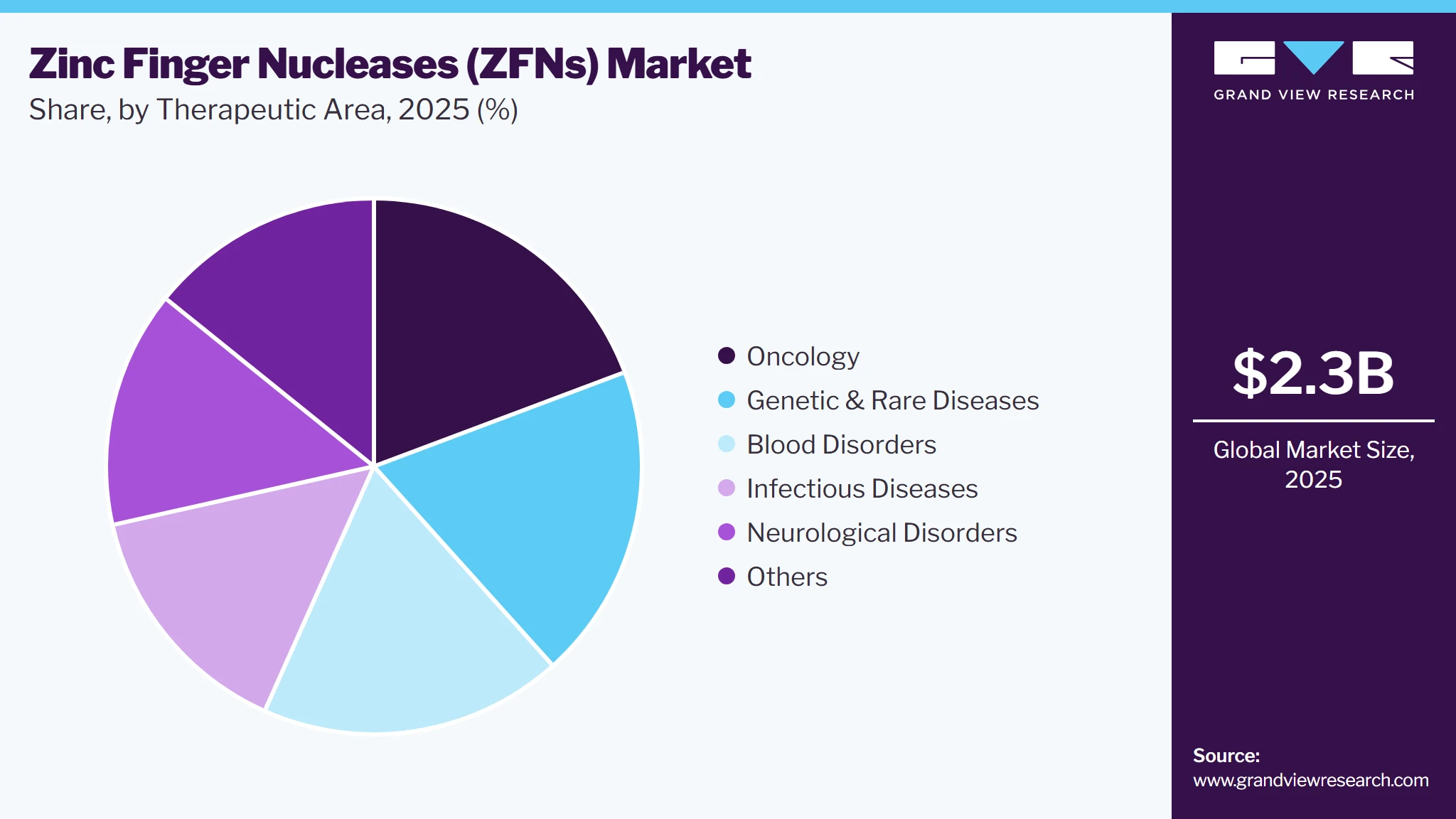
The oncology segment dominated the market with a share of 19.3% in 2025, driven by the increasing application of ZFNs in cancer research to investigate tumor-associated genes, validate therapeutic targets, and develop targeted gene-editing approaches. The growing focus on precision oncology and genetically engineered disease models is further supporting the use of ZFN technologies in preclinical cancer research and therapeutic development.
 To learn more about this report, Download Free Sample Report
The infectious diseases segment is projected to witness the fastest CAGR, driven by the increasing application of ZFNs in host-pathogen research, viral genome studies, and the development of genetically modified models for infectious disease research. Growing emphasis on targeted gene manipulation to understand disease mechanisms and identify potential therapeutic targets is further supporting the adoption of ZFN-based approaches in this area.
Regional Insights
North America dominated the zinc finger nucleases (ZFNs) industry, accounting for the largest revenue share of 44.5% in 2025, supported by established gene-editing research, clinical infrastructure, and biotechnology investment. According to an article published by the American Chemical Society, in October 2025, researchers published findings on a seven-finger ZFN architecture that improved genome-editing efficiency, highlighting continued innovation in the region’s ZFN research ecosystem.
 To learn more about this report, Download Free Sample Report
U.S. Zinc Finger Nucleases (ZFNs) Market Trends
Zinc Finger Nucleases (ZFNs) industry in the U.S. is expected to grow over the forecast period, supported by an established clinical-development ecosystem and active research in therapeutic genome editing. ClinicalTrials.gov documents ZFN-based programs targeting genetic disorders, including MPS I and MPS II, demonstrating the country’s role in advancing ZFN therapeutics.
Europe Zinc Finger Nucleases (ZFNs) Market Trends
The zinc finger nucleases (ZFNs) market in Europe was identified as a lucrative region in this industry, supported by established genome-editing research and structured regulatory oversight. The European Medicines Agency has evaluated ZFNs as an important genome-editing technology and highlighted considerations regarding targeting accuracy and off-target effects, thereby supporting continued regulatory and scientific development.
The UK zinc finger nucleases (ZFNs) market is supported by clinical research capabilities and advanced cell and gene therapy infrastructure. A UK Health Research Authority record documents a Phase 1 study of SB-FIX, a ZFN-mediated targeted gene-integration therapy for severe hemophilia B, demonstrating clinical investigation of ZFN technology in the country.
The zinc finger nucleases (ZFNs) market in Germany is anticipated to grow significantly over the forecast period, through its advanced biotechnology and cell and gene therapy research base. The European Commission has highlighted the University of Freiburg’s Institute for Cell and Gene Therapy as an active center in genome-engineering research, supporting the broader German ecosystem for advanced gene-editing technologies.
Asia Pacific Zinc Finger Nucleases (ZFNs) Market Trends
Asia Pacific is expected to grow at the fastest CAGR of 18.3% during the forecast period, supported by expanding genome-editing research and increasing biotechnology investments. According to an article published by NIH in May 2025, highlighted continued advancements in ZFN-based genome-editing technologies and their applications in therapeutic research, reflecting the region’s growing research activity and potential for market development.
The China zinc finger nucleases (ZFNs) market in is strengthening its genome-editing ecosystem through research infrastructure and regulatory development. For instance, in July 2024, China’s Ministry of Science and Technology issued ethical guidelines for human genome-editing research, emphasizing scientific assessment, risk management, and responsible clinical research.
The zinc finger nucleases (ZFNs) market in Japan is expected to grow steadily, supported by advanced regenerative medicine research and regulatory expertise in genome editing. Japan’s PMDA has specifically addressed ZFNs in its regulatory framework for genome-editing products, including considerations of ZFN design and target specificity.
Latin America Zinc Finger Nucleases (ZFNs) Market Trends
Latin America is expected to witness gradual growth in the zinc finger nucleases (ZFNs) market, supported by expanding genome-editing research and evolving regulatory frameworks. According to a study published by NIH in April 2025, Brazil’s regulatory framework for edited organisms has supported the development and commercialization of genome-editing technologies, including ZFNs, particularly in agricultural biotechnology. By November 2024, approximately 63 requests for commercial release of edited organisms had been submitted to Brazil’s CTNBio, indicating increasing adoption of genome-editing technologies in the country.
MEA Zinc Finger Nucleases (ZFNs) Market Trends
The MEA zinc finger nucleases (ZFNs) market is expected to develop steadily, supported by increasing interest in advanced biotechnology and genome-based therapies. Regulatory development for advanced genetic technologies and growing investment in biotechnology research are expected to create a foundation for the future adoption of precision genome-editing platforms, including ZFNs.
Key Zinc Finger Nucleases (ZFNs) Company Insights
Several established companies operate in the zinc finger nucleases (ZFNs) market, supported by their genome-editing technologies, ZFN platforms, research tools, and therapeutic development capabilities. Key players such as Sangamo Therapeutics, Thermo Fisher Scientific Inc., Merck KGaA, Revvity (Horizon Discovery), Cellectis SA, GenScript, Lonza, Creative Enzymes, Neoncorte Bio, and CD BioSustainable are strengthening their market presence through technology development, product portfolio expansion, strategic collaborations, and advancements in precision genome-editing applications.
Key Zinc Finger Nucleases (ZFNs) Companies:
The following key companies have been profiled for this study on the zinc finger nucleases (ZFNs) market.
-
Sangamo Therapeutics
-
Thermo Fisher Scientific Inc.
-
Merck KGaA
-
Revvity (Horizon Discovery)
-
Cellectis SA
-
GenScript
-
Lonza
-
Creative Enzymes
-
Neoncorte Bio
-
CD BioSustainable
Competitive Benchmarking
Category
Operating Strategies
Competitive Edge
Weakness
Established Players (Sangamo Therapeutics, Thermo Fisher Scientific Inc., Merck KGaA, Revvity (Horizon Discovery), Cellectis SA, GenScript, Lonza, etc.)
Target applications across gene therapy, cell engineering, drug discovery, and biopharmaceutical research, while integrating ZFN technologies with broader genomic workflows.
Strong gene-editing expertise, R&D capabilities, and established customer networks across pharmaceutical, biotechnology, and academic research sectors.
Strong competition from CRISPR and other gene-editing technologies, which may limit ZFN adoption in certain applications.
Emerging Players (Creative Enzymes, Neoncorte Bio, CD BioSustainable)
Focus on specialized ZFN development, custom gene-editing services, and research-grade molecular biology solutions.
Greater flexibility and customization for specific gene-editing and research requirements.
Limited financial resources, global reach, and commercial scale compared with established gene-editing companies.
Recent Developments
-
In April 2025, Sangamo Therapeutics announced that nine abstracts had been accepted for presentation at the ASGCT Annual Meeting in the U.S., highlighting advances in zinc finger epigenetic regulation, capsid engineering, neurological applications, and next-generation genomic medicine technologies.
-
In July 2023, Sangamo Therapeutics and Chroma Medicine entered an option and license agreement to evaluate zinc finger proteins for epigenetic editing, supporting the development of sequence-specific genomic medicines and potential therapeutic applications of zinc finger technologies.
"Sangamo is the world leader in zinc finger protein genomic engineering, and we are very proud of the range and depth of our capabilities in this area."
- Jason Fontenot, Ph.D., Chief Scientific Officer at Sangamo
Zinc Finger Nucleases (ZFNs) Market Report Scope
Report Attribute
Details
Market size in 2025
USD 2.3 billion
Estimated market size in 2026
USD 2.6 billion
Projected market size by 2033
USD 7.7 billion
Growth rate
CAGR of 16.6% from 2026 to 2033
Historical data
2021 - 2025
Forecast period
2026 - 2033
Quantitative units
Revenue in USD million, and CAGR from 2026 to 2033
Report coverage
Revenue forecast, company ranking, competitive landscape, growth factors, and trends
Segments covered
Product & services, technology, application, therapeutic area, and region
Regional scope
North America; Europe; Asia Pacific; Latin America; MEA
Country scope
U.S.; Canada; Mexico; UK; Germany; France; Italy; Spain; Norway; Denmark; Sweden; China; Japan; India; South Korea; Australia; Thailand; Brazil; Argentina; Saudi Arabia; South Africa; UAE; Kuwait
Key companies profiled
Sangamo Therapeutics; Thermo Fisher Scientific Inc.; Merck KGaA; Revvity (Horizon Discovery); Cellectis SA; GenScript; Lonza; Creative Enzymes; Neoncorte Bio; CD BioSustainable
Customization scope
Free report customization (equivalent up to 8 analysts' working days) with purchase. Addition or alteration to country, regional & segment scope.
Pricing and purchase options
Avail customized purchase options to meet your exact research needs. Explore purchase options
Global Zinc Finger Nucleases (ZFNs) Market Report Segmentation
This report forecasts revenue growth and provides an analysis on the latest trends in each of the sub-segments from 2021 to 2033. For the purpose of this report, Grand View Research has segmented the global zinc finger nucleases (ZFNs) market on the basis of product & services, technology, application, therapeutic area, and region
-
Product & Services Outlook (Revenue, USD Million, 2021 - 2033)
-
ZFN Products
-
ZFN Kits & Reagents
-
ZFN Design & Engineering Services
-
Genome Editing Services
-
Screening & Validation Services
-
Other Products & Services
-
-
Technology Outlook (Revenue, USD Million, 2021 - 2033)
-
ZFN Architecture
-
Zinc Finger Type
-
Nuclease Domain
-
Targeting & Recognition Mechanism
-
ZFN Engineering & Optimization
-
Other ZFN Technologies
-
-
Application Outlook (Revenue, USD Million, 2021 - 2033)
-
Research & Development
-
Drug Discovery & Screening
-
Therapeutic Development
-
Agricultural Biotechnology
-
Animal Biotechnology
-
Other Applications
-
-
Therapeutic Area Outlook (Revenue, USD Million, 2021 - 2033)
-
Blood Disorders
-
Infectious Diseases
-
Oncology
-
Neurological Disorders
-
Genetic & Rare Diseases
- Others
-
-
Regional Outlook (Revenue, USD Million, 2021 - 2033)
-
North America
-
U.S.
-
Canada
-
Mexico
-
-
Europe
-
UK
-
Germany
-
France
-
Italy
-
Spain
-
Denmark
-
Sweden
-
Norway
-
-
Asia Pacific
-
Japan
-
China
-
India
-
Australia
-
Thailand
-
South Korea
-
-
Latin America
-
Brazil
-
Argentina
-
-
Middle East and Africa (MEA)
-
South Africa
-
Saudi Arabia
-
UAE
-
Kuwait
-
-
Research Methodology
The zinc finger nucleases (ZFNs) market figures in this report are based on a proven research process that combines executive interviews with secondary research from proprietary databases, company filings, and recognized regulatory and institutional sources. Market size is built through value-chain sizing—reconciling supply-side and demand-side estimates—and triangulated with bottom-up and top-down approaches. Every estimate passes multiple levels of expert validation before publication, with each zinc finger nucleases (ZFNs) segment quantified using the revenue-capture definitions in the table below.
Segment Definition
Segment - Product & Services
Revenue Capture Definition
ZFN Products
Revenue generated from commercially available zinc finger nuclease products used for targeted genome modification, gene knockout, gene insertion, and other precision gene-editing applications. These products include engineered ZFN components and ready-to-use solutions for research and therapeutic development workflows.
ZFN Kits & Reagents
This segment captures income from kits, enzymes, reagents, nucleic acid components, and other consumables required for designing, delivering, and executing ZFN-mediated genome editing experiments. These products support research, screening, validation, and gene-editing workflow development.
ZFN Design & Engineering Services
Market value in this category stems from specialized services for designing and engineering ZFNs with target-specific DNA recognition and nuclease activity. Such services support customization, optimization, and development of ZFN constructs for research and therapeutic applications.
Genome Editing Services
Revenue originates from outsourced services that employ ZFN technology to perform targeted genome modifications in cells or biological models. These services support gene knockout, gene insertion, correction, and functional genomics studies for research and therapeutic development.
Screening & Validation Services
This segment reflects earnings from services used to evaluate ZFN editing efficiency, specificity, genomic modifications, and potential off-target effects. These solutions help verify successful genome editing and characterize edited cells or biological systems.
Other Products & Services
Includes revenue from additional ZFN-related products and specialized services that support genome editing workflows but do not fall within the primary product, engineering, editing, or validation categories.
Segment - Technology
Revenue Capture Definition
ZFN Architecture
Revenue generated from ZFN technologies differentiated by the structural organization of zinc finger arrays and nuclease components used to achieve targeted DNA cleavage. These architectures are designed to provide appropriate target recognition, cleavage efficiency, and editing specificity.
Zinc Finger Type
This segment captures income associated with ZFN technologies based on different zinc finger configurations and DNA-binding characteristics. These technologies enable recognition of specific DNA sequences and are engineered to improve targeting performance across genome-editing applications.
Nuclease Domain
Market value in this category stems from ZFN technologies incorporating nuclease domains responsible for generating targeted DNA strand breaks. Innovations in nuclease components contribute to editing efficiency, specificity, and suitability for different genome-engineering applications.
Targeting & Recognition Mechanism
Revenue reflects technologies governing how ZFNs identify and bind specific genomic sequences before inducing targeted DNA cleavage. These mechanisms are central to achieving sequence-specific genome modification and minimizing unintended editing.
ZFN Engineering & Optimization
This segment represents income from technologies and approaches used to improve ZFN design, DNA-binding affinity, cleavage efficiency, specificity, stability, and overall editing performance. Optimization supports the development of more effective research and therapeutic-grade ZFN systems.
Other ZFN Technologies
Includes revenue from emerging or specialized ZFN technologies that fall outside the primary architectural, zinc finger, nuclease, targeting, and engineering categories.
Segment - Application
Revenue Capture Definition
Research & Development
Revenue generated from ZFN technologies used in basic and applied research, functional genomics, gene-function studies, cell engineering, and development of experimental genome-editing approaches.
Drug Discovery & Screening
This segment captures income from ZFN-based genome modification used for target validation, disease modeling, screening assays, pathway investigation, and evaluation of potential therapeutic targets during drug discovery programs.
Therapeutic Development
Market value stems from the application of ZFNs in developing gene-editing-based therapies, including targeted gene disruption, correction, insertion, and modification of disease-associated genomic sequences.
Agricultural Biotechnology
Revenue originates from ZFN applications in crop and livestock biotechnology, including targeted genetic modification, trait development, disease resistance, yield improvement, and development of agriculturally relevant genetic characteristics.
Animal Biotechnology
This category reflects earnings from ZFN-based genome editing in animal models for functional genomics, disease modeling, livestock improvement, biomedical research, and development of genetically modified organisms.
Other Applications
Includes revenue from ZFN applications outside the primary categories, such as specialized industrial biotechnology, environmental research, and other emerging genome-editing use cases.
Segment - Therapeutic Area
Revenue Capture Definition
Blood Disorders
Revenue generated from ZFN applications focused on genetic and acquired blood disorders, including research and therapeutic development involving targeted modification of genes associated with hematological diseases.
Infectious Diseases
This segment captures income from ZFN-based research and therapeutic development targeting infectious diseases through disruption or modification of host or pathogen-associated genetic targets.
Oncology
Market value in this category stems from ZFN applications in cancer research and therapeutic development, including targeted gene modification, cancer cell engineering, tumor biology studies, and development of genome-editing approaches for oncology.
Neurological Disorders
Revenue originates from ZFN technologies applied to the investigation and treatment development of neurological conditions through targeted modification of disease-associated genes and pathways.
Genetic & Rare Diseases
This segment reflects earnings from ZFN-based approaches designed to investigate, correct, disrupt, or replace genetic abnormalities associated with inherited and rare diseases, supporting development of precision gene-editing therapies.
Others
Includes revenue from ZFN applications targeting therapeutic areas outside the primary categories, including autoimmune, metabolic, ophthalmic, and other disease indications.
Customization Table
Client Request
Customization Delivered
Value Adds
ZFN Therapeutic Development & Clinical Pipeline Analysis
Assessment of ZFN-based therapeutic programs across gene therapy and cell therapy applications, including development stage, target genes, therapeutic indications, clinical status, and technology developers.
Enables clients to identify promising ZFN candidates, assess clinical maturity, track competitive pipelines, and identify potential investment opportunities.
ZFN Off-Target & Editing Efficiency Assessment
Comparative evaluation of ZFN platforms based on on-target activity, off-target effects, DNA-binding specificity, editing efficiency, validation requirements, and approaches used to improve genomic precision.
Supports technology benchmarking, identifies key technical limitations, and helps clients assess platforms with improved safety and editing performance.
ZFN Platform & Architecture Assessment
Comparative assessment of ZFN architectures, including zinc-finger arrays, nuclease configurations, DNA-binding specificity, cleavage mechanisms, and design approaches across research and therapeutic applications.
Helps clients identify suitable ZFN architectures, evaluate technical performance, and prioritize platforms with higher specificity and editing efficiency.
Frequently Asked Questions About This Report
The global zinc finger nucleases (ZFNs) market size was valued at USD 2.3 billion in 2025 and is estimated at USD 2.6 billion for 2026.
The global zinc finger nucleases (ZFNs) market is expected to grow at a CAGR of 16.6% from 2026 to 2033, reaching USD 7.7 billion by 2033.
The ZFN kits & reagents segment led with a 18.7% revenue share in 2025.
North America dominated with a 44.5% revenue share in 2025.
Market growth is driven by the increasing adoption of ZFN technology for precise genome editing across research, drug discovery, gene therapy, and agricultural biotechnology, along with advancements in targeted gene modification, engineered nuclease design, and the development of scalable and efficient genome-editing platforms.
Key players includes Sangamo Therapeutics, Thermo Fisher Scientific Inc., Merck KGaA, Revvity (Horizon Discovery), Cellectis SA, GenScript, Lonza, Creative Enzymes, Neoncorte Bio, and CD BioSustainable
Asia Pacific is the fastest-growing region over the forecast period.
The targeting & recognition mechanism segment led with a 18.6% revenue share in 2025.
The therapeutic development segment led with a 20.5% revenue share in 2025.
About the Author(s)
Biotechnology Research Team
Healthcare · BiotechnologyThis report was authored by the biotechnology research team at Grand View Research - comprising two research analysts, one senior research analyst, and one industry expert - with specialized expertise in the biotechnology segment of the healthcare industry. All findings are based on proprietary healthcare databases, executive interviews, and regulatory analysis, subject to internal peer review prior to publication.
Last Updated:
Speak to Analyst

Customize this report to your needs - add regions, segments, or data points, with 20% free customization.
Or view our licence options:


ISO 9001:2015 & 27001:2022 Certified
We are GDPR and CCPA compliant! Your transaction & personal information is safe and secure. For more details, please read our privacy policy.


