
- Home
- »
- Pharmaceuticals
- »
-
Amyotrophic Lateral Sclerosis Drug Market Intelligence & Forecast, 2033GVR Report cover
![Amyotrophic Lateral Sclerosis Drug-Level Market Intelligence, Commercial Forecasting, Estimations & Portfolio Report]()
Amyotrophic Lateral Sclerosis Drug-Level Market Intelligence, Commercial Forecasting, Estimations & Portfolio Analysis, 2021 - 2033
Overview
The global amyotrophic lateral sclerosis (ALS) drugs market was valued at USD 900.0M in 2025 and is projected to expand at a CAGR of 7.6% from 2026 to 2033. ALS remains one of the most underserved markets in neurology, characterized by high unmet clinical need, rapid disease progression, and limited therapeutic options. Most patients die within two to five years of symptom onset, and riluzole remained the primary disease-modifying therapy for nearly three decades. The market entered a new growth phase in 2023 with the approval of Biogen's Qalsody (tofersen), the first precision therapy targeting SOD1-mutated ALS, which accounts for approximately 2% of patients. Qalsody also became the first ALS therapy to secure regulatory approval based on reductions in plasma neurofilament light chain (NfL), establishing a biomarker-driven regulatory pathway for future disease-modifying therapies. Since its launch, therapy has expanded into more than 40 countries, accelerating the adoption of precision medicine in ALS. This regulatory precedent is now supporting the development of additional genetically targeted therapies, particularly Ionis Pharmaceutical’s ulefnersen (formerly jacifusen) for FUS-ALS, with Phase III results anticipated in 2026.
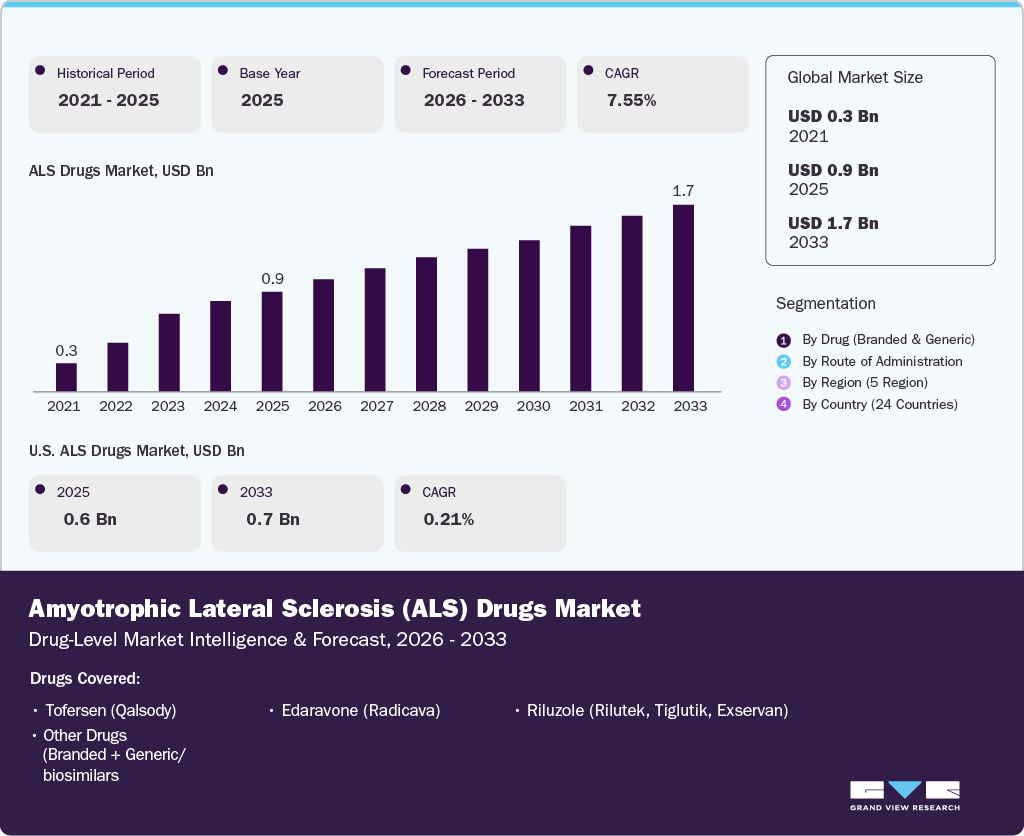
GVR's ALS drug intelligence database provides comprehensive coverage of approved therapies and late-stage investigational candidates across the evolving treatment landscape. The database tracks the established treatment backbone comprising riluzole (Rilutek, Tiglutik, Exservan) and edaravone (Radicava, Radicava ORS), which continue to serve as the standard of care for disease management. It also covers genetically targeted therapies, led by Biogen's Qalsody (tofersen), the first approved antisense oligonucleotide for patients with SOD1-mutated ALS. In addition, the database monitors a robust pipeline of investigational therapies targeting both familial and sporadic ALS, including antisense oligonucleotides directed against ATXN2 and C9orf72 repeat expansions, the most common genetic cause of ALS. The commercial opportunity remains niche due to the disease's low prevalence.
According to the CDC's National ALS Registry, approximately 30,000 to 33,000 people are living with ALS in the U.S., while an additional 5,000 to 10,000 patients are estimated across the UK, Germany, and France combined. Despite affecting hundreds of thousands of individuals globally, ALS continues to qualify as a rare disease, making innovation in precision therapies and orphan drug development the primary growth drivers.
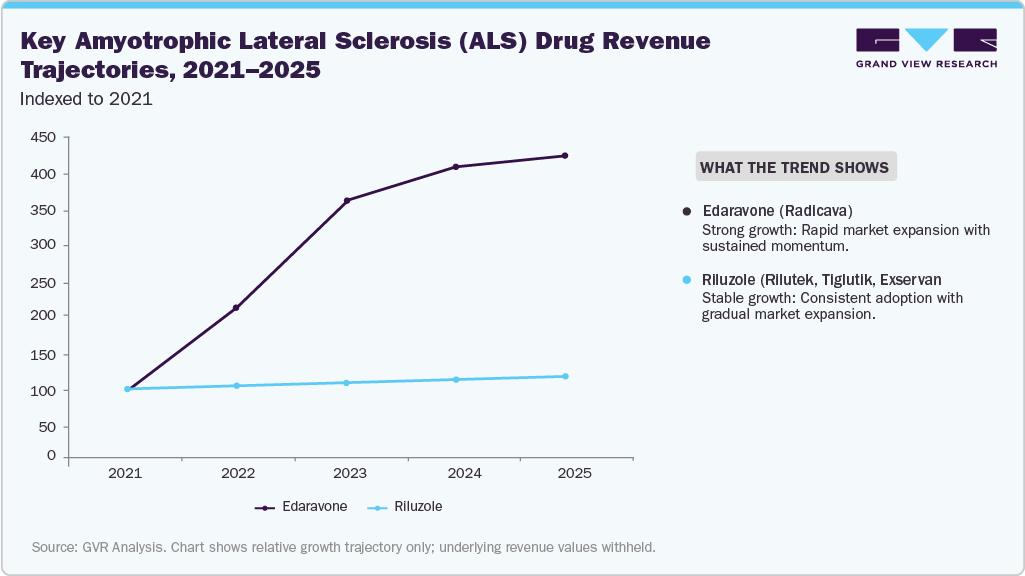
The ALS market has undergone significant restructuring following the withdrawal of Amylyx Pharmaceuticals' Relyvrio (Albrioza) in 2024 after its Phase III PHOENIX trial failed to demonstrate clinical benefit. The withdrawal strengthened regulatory expectations for robust confirmatory evidence and increased industry focus on genetically targeted therapies supported by validated biomarkers. As a result, the commercial landscape in major markets is currently centered on riluzole, edaravone, and Biogen's Qalsody (tofersen).
Future expansion will depend on the successful commercialization of precision therapies targeting genetically defined ALS subtypes. Ionis Pharmaceuticals' ulefnersen for FUS-ALS represents the most advanced pipeline candidate, with Phase III data expected in 2026. Beyond rare genetic variants, developers are also evaluating biomarker-driven regulatory pathways to expand disease-modifying therapies into broader ALS populations. While riluzole and edaravone will continue to account for most of the treatment volume in the near term, premium-priced orphan therapies targeting specific genetic mutations are expected to drive market value and reshape the competitive landscape over the forecast period.
Current Market Scenario
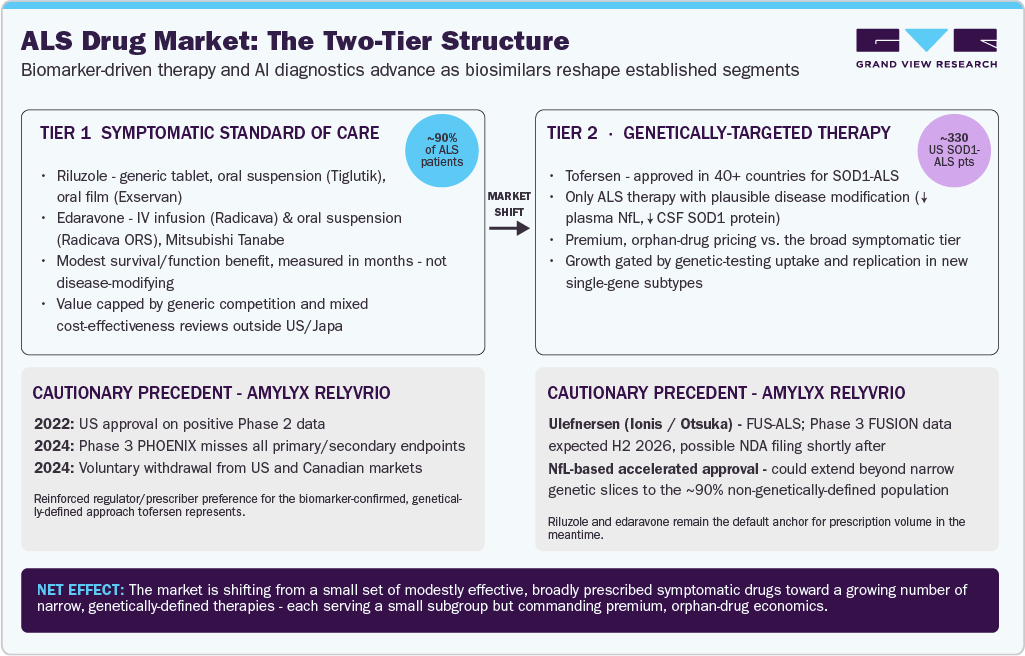
The ALS drug market consists of two distinct segments. The first comprises standard-of-care therapies, including riluzole and edaravone, which remain the primary treatment options for most ALS patients irrespective of genetic status. Riluzole continues to experience pricing pressure due to widespread generic availability, while edaravone faces reimbursement and cost-effectiveness challenges in several markets outside the U.S. and Japan. Although these therapies modestly slow disease progression, they offer limited disease-modifying benefit, constraining long-term market value.
The second segment is driven by genetically targeted therapies, led by Biogen's Qalsody (tofersen) for SOD1-associated ALS. Despite serving a small patient population, this segment represents the highest-value opportunity due to orphan drug pricing, the adoption of precision medicine, and favorable regulatory support. Market expansion will depend on broader uptake of genetic testing, earlier patient identification, and successful commercialization of pipeline therapies targeting additional genetic mutations such as FUS-ALS. As precision therapies continue to enter the market, genetically defined treatments are expected to account for an increasing share of the ALS market value despite their limited patient population.
Table: Drug Estimations & Forecast 2025 & 2033, By Country (USD Mn)
Country
2025
2033
Analyst Perspective
Tofersen
U.S.
30.1
50.2
Growth is expected to continue as diagnostic testing for SOD1 mutations expands and as earlier, presymptomatic initiation becomes more common following the ATLAS trial's biomarker-driven approach.
Germany
-
21.7
Uptake is projected to increase gradually as genetic testing for SOD1-ALS becomes more embedded in specialist neuromuscular referral pathways.
UK
-
18.5
Adoption is expected to rise following 2025 MHRA approval, as ALS centers build out genetic testing and intrathecal administration capacity.
France
-
9.7
Utilization is anticipated to grow steadily as reference centers for rare motor neuron diseases expand access to genetically confirmed SOD1-ALS patients.
Riluzole
U.S.
47.5
57.6
Growth is expected to remain flat to modestly decline, as this fully genericized first-line therapy is prescribed to nearly all patients but generates limited incremental revenue.
Germany
6.9
8.3
Demand is projected to hold steady in volume terms while per-patient value continues to erode under long-standing generic competition.
UK
6
7.1
Uptake is expected to remain broad-based as the default first-line standard of care, with value continuing to compress.
France
3.9
3.6
Sales are likely to stay essentially flat, reflecting riluzole's role as a near-universal, low-cost baseline therapy rather than a growth driver.
Source: GVR Analysis
Competitive Landscape
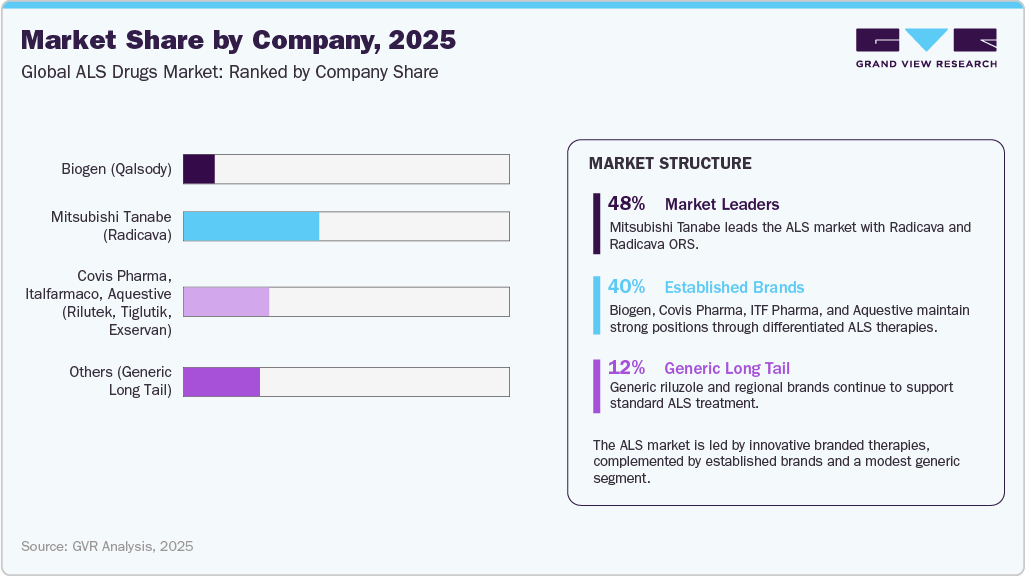
The ALS drug market remains highly consolidated, with only a few approved therapies and limited commercial competition. Mitsubishi Tanabe Pharma leads with the edaravone franchise (Radicava and Radicava ORS), while riluzole continues to generate prescription volume through multiple generic manufacturers and differentiated formulations. Biogen has established a leadership position in precision medicine with Qalsody (tofersen), the first approved genetically targeted therapy for SOD1-associated ALS, creating a premium orphan drug segment within the market.
The withdrawal of Amylyx Pharmaceuticals' Relyvrio in 2024 further consolidated the competitive landscape, leaving three major marketed therapeutic options across most developed markets. Future competition will be driven by late-stage pipeline candidates, particularly Ionis Pharmaceuticals' ulefnersen for FUS-associated ALS, along with emerging gene-targeted therapies addressing mutations such as C9orf72 and ATXN2. Over the forecast period, successful commercialization of genetically targeted therapies is expected to increase market concentration around precision medicines, while riluzole and edaravone will continue to account for the majority of treatment volume in the broader ALS population.
Market Dynamics
The approval of Qalsody (tofersen) established a new regulatory pathway by demonstrating that biomarker endpoints, such as plasma neurofilament light chain (NfL), can support accelerated approval for genetically defined ALS therapies. This approach reduces clinical development timelines for rare patient populations and is expected to accelerate the development of additional precision therapies, including Ionis Pharmaceuticals' ulefnersen for FUS-associated ALS.
The withdrawal of Relyvrio in 2024, following its unsuccessful Phase III trial, increased regulatory scrutiny of new ALS therapies. Developers are now focusing on genetically targeted treatments supported by validated biomarkers and robust clinical evidence, reinforcing the industry's transition toward precision medicine.
Key Market Trends
“Genetically Targeted ASOs Are Redefining What an ALS Drug Approval Looks Like”
Genetically targeted therapies are transforming the ALS treatment landscape. Tofersen (Qalsody) has demonstrated the commercial viability of precision therapies for small patient populations, while late-stage pipeline candidates such as ulefnersen are expected to expand this segment over the forecast period. Orphan drug pricing and favorable regulatory incentives continue to support value growth.
“Genetic Testing Is Becoming a Commercial Gatekeeper for ALS Treatment Access”
The growing adoption of mutation-specific therapies is increasing demand for routine genetic testing at diagnosis. Earlier identification of SOD1, FUS, and other ALS-associated mutations is expected to improve patient access to targeted therapies while supporting the commercialization of future precision medicines.
“The Symptomatic Therapy Segment Has Contracted Following Relyvrio's Withdrawal”
Despite advances in precision medicine, riluzole and edaravone remain the primary treatment options for most ALS patients without identifiable genetic mutations. The availability of oral edaravone has improved treatment convenience, while the limited number of approved disease-modifying therapies continues to create opportunities for innovative pipeline products with differentiated clinical benefits.
ROA Analysis
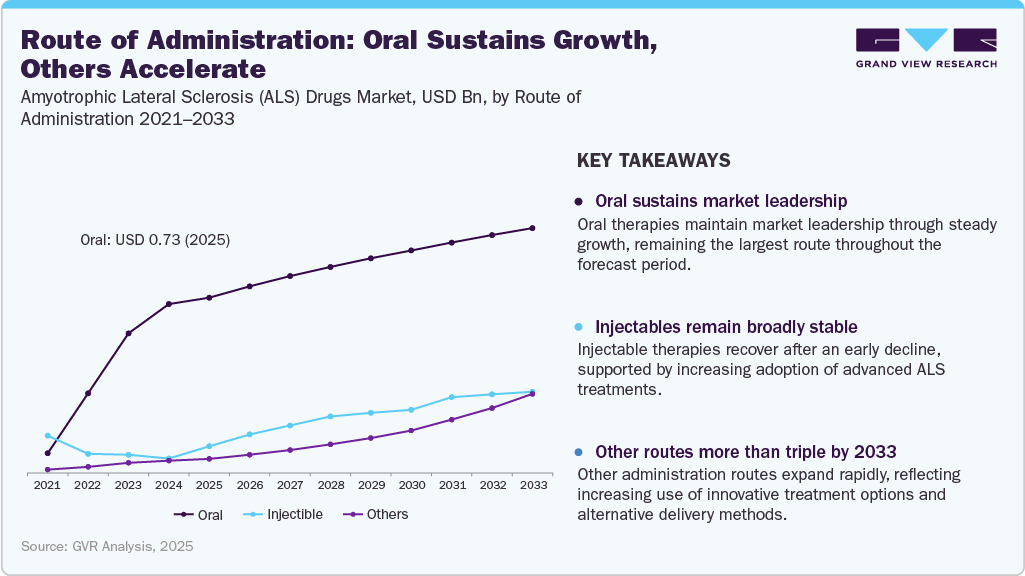
Route of administration plays a critical role in the ALS market, as progressive loss of swallowing and motor function directly influences treatment adherence and patient convenience. Riluzole is available in tablet, oral suspension, and oral film formulations to accommodate patients with dysphagia, while edaravone is offered as both intravenous (Radicava) and oral suspension (Radicava ORS), improving treatment accessibility through at-home administration. In contrast, Qalsody (tofersen) is administered via intrathecal injection to achieve direct delivery to the central nervous system, and this route is expected to remain the standard for emerging antisense oligonucleotide (ASO) therapies targeting ALS.
Regional Analysis
U.S. Amyotrophic Lateral Sclerosis Drugs Market
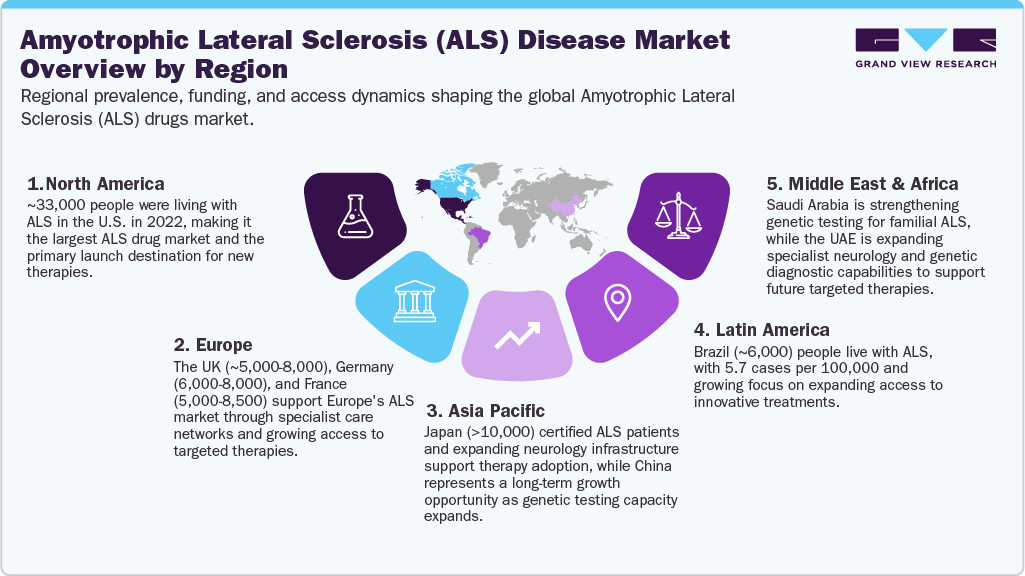
The U.S. represents the largest global market for ALS therapeutics, supported by the highest adoption of approved therapies, advanced diagnostic infrastructure, and strong clinical research activity. According to the CDC National ALS Registry, approximately 33,200-34,000 people were living with ALS in the U.S. in 2025, with prevalence expected to exceed 36,000 patients by 2030 due to an aging population and improved survival. The U.S. remains the primary launch market for innovative therapies, with broad availability of riluzole, edaravone, and Qalsody (tofersen), supported by widespread access to genetic testing and active participation in global ALS clinical trials.
UK Amyotrophic Lateral Sclerosis Drugs Market
The UK accounts for one of Europe's leading ALS markets, supported by an established specialist care network and early adoption of innovative therapies. The MND Association estimates that around 5,000 people are living with motor neuron disease, while recent registry-based studies suggest the prevalence may approach 8,000 patients across the UK. The MHRA approval of Qalsody in 2025 strengthened the country's precision medicine landscape, while NHS-supported multidisciplinary ALS centers continue to improve diagnosis and treatment access.
Germany Amyotrophic Lateral Sclerosis Drugs Market
Germany represents one of the largest ALS markets in Europe, with an estimated 6,000-8,000 prevalent cases and 1,200-1,600 new diagnoses annually. Strong epidemiological registries, including ALS Registry Swabia, and active participation in multinational clinical trials position Germany among the early adopters of gene-targeted and disease-modifying ALS therapies.
France Amyotrophic Lateral Sclerosis Drugs Market
France is estimated to have 5,000-8,500 ALS patients, with 800-1,600 new cases diagnosed annually. National epidemiological studies report an incidence of approximately 3.5 per 100,000 population and a prevalence of 11.0 per 100,000 population. Government initiatives to improve care pathways for neurodegenerative diseases, combined with expanding access to innovative therapies, are expected to support market growth.
Japan Amyotrophic Lateral Sclerosis Drugs Market
Japan remains a strategically important ALS market as the birthplace of edaravone and one of the earliest adopters of disease-modifying therapies. More than 10,000 ALS patients have received financial assistance under Japan's Specified Disease Treatment Research Program, highlighting strong government support for rare diseases. Favorable reimbursement policies and a well-established neurology referral network continue to facilitate the adoption of novel ALS treatments.
China Amyotrophic Lateral Sclerosis Drugs Market
China represents a significant long-term growth opportunity due to its large population, despite comparatively lower reported ALS prevalence. Low diagnostic rates and limited access to genetic testing continue to constrain the adoption of precision therapies. However, expanding neurology services, improving rare disease awareness, and increasing investment in genetic diagnostics are expected to drive future demand for both symptomatic and genetically targeted ALS therapies.
Brazil Amyotrophic Lateral Sclerosis Drugs Market
Brazil is estimated to have approximately 6,000 ALS patients, with a reported prevalence of around 5.7 cases per 100,000 population. According to the public healthcare system (SUS), more than 97,000 ALS-related healthcare procedures were performed in 2022, reflecting a substantial clinical burden. Improving access to innovative therapies and expanding rare disease initiatives are expected to support market development over the forecast period.
Saudi Arabia Amyotrophic Lateral Sclerosis Drugs Market
Although epidemiological data remain limited, recent multicenter studies indicate a relatively higher proportion of familial ALS and mutation-positive patients, including SOD1 mutations, compared with Western populations. Ongoing investments under Vision 2030, coupled with expanding genetic testing and specialized neurology services, are expected to improve diagnosis and support future adoption of precision ALS therapies.
UAE Amyotrophic Lateral Sclerosis Drugs Market
The UAE represents a small but emerging ALS market supported by advanced healthcare infrastructure and growing capabilities in neuromuscular disease diagnosis and genetic testing. While patient numbers remain limited due to the rarity of ALS, increasing access to precision medicine and continued investment in specialized neurological care are expected to support gradual market expansion.
Analyst Perspective
Market value is shifting from broad, modestly effective symptomatic drugs to narrow, genetically defined therapies: While riluzole and edaravone continue to dominate treatment volume, Qalsody (tofersen) has demonstrated that genetically targeted therapies can generate significant commercial value despite serving small patient populations, reinforcing the shift toward precision medicine and orphan drug economics.
The biomarker-based regulatory pathway tofersen established is now the model the rest of the pipeline is being built around: The regulatory success of Qalsody has established plasma neurofilament light chain (NfL) as an important surrogate endpoint for genetically targeted therapies. Ionis Pharmaceuticals' ulefnersen is the next key pipeline catalyst, with Phase III data expected to validate this development pathway for additional ALS subtypes.
Relyvrio's withdrawal has raised the evidentiary bar for future symptomatic ALS therapies: The withdrawal of Relyvrio following its Phase III failure has increased the evidence required for new ALS therapies. Developers are increasingly prioritizing genetically targeted therapies supported by robust biomarkers and strong clinical outcomes.
Genetic testing is becoming a critical commercial enabler: As mutation-specific therapies expand, timely genetic diagnosis is becoming essential for patient identification and treatment access. Markets with advanced genetic testing infrastructure are expected to achieve faster adoption of precision ALS therapies, creating a competitive advantage in commercialization and market penetration.


Customize this report to your needs - add regions, segments, or data points, with 20% free customization.
Or view our licence options:


ISO 9001:2015 & 27001:2022 Certified
We are GDPR and CCPA compliant! Your transaction & personal information is safe and secure. For more details, please read our privacy policy.


