
- Home
- »
- Pharmaceuticals
- »
-
Colorectal Cancer Drug-Level Market Intelligence & Forecast, 2021-2033GVR Report cover
![Colorectal Cancer Drug-Level Market Intelligence, Commercial Forecasting, Estimations & Portfolio Report]()
Colorectal Cancer Drug-Level Market Intelligence, Commercial Forecasting, Estimations & Portfolio Analysis, 2021 - 2033
Overview
GVR's database covers 17 commercially marketed colorectal cancer drugs, which generated an estimated USD 10.1B in 2025 and are projected to generate USD 15.3B in 2033, growing at a CAGR of 5.6% from 2026 to 2033. Recent regulatory approvals continue to expand treatment options in the colorectal cancer. In January 2025, the FDA approved Lumakras (sotorasib) in combination with Vectibix (panitumumab) for adults with chemotherapy-refractory KRAS G12C-mutated metastatic colorectal cancer, providing an additional targeted treatment option for this biomarker-defined subgroup. The Phase III STELLAR-303 trial showed that zanzalintinib plus atezolizumab improved overall survival in previously treated microsatellite-stable metastatic colorectal cancer, making it the first immunotherapy regimen to demonstrate this benefit.
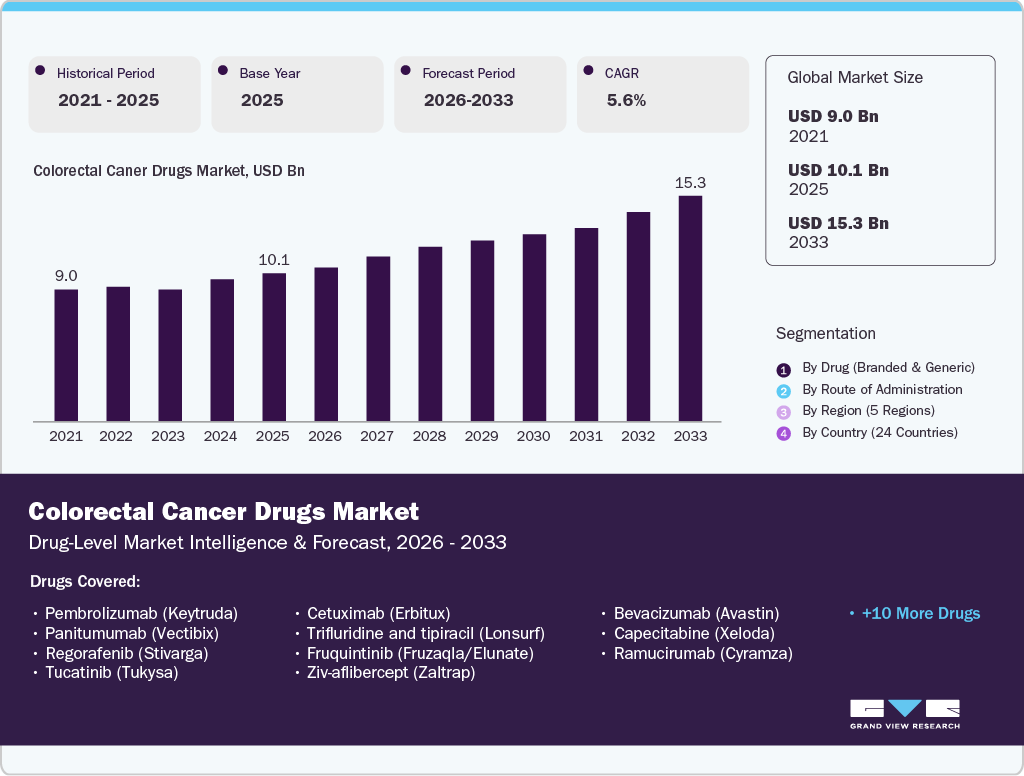
GVR's analysis includes Avastin, Mvasi, Zirabev, Lumakras, Krazati, Yervoy, Xeloda, Lonsurf, Erbitux, Zaltrap, Fruzaqla, Tukysa, and other branded drugs, reflecting the evolving treatment landscape across targeted therapy, immunotherapy, anti-angiogenic therapy, and chemotherapy. The market is also benefiting from strategic collaborations to advance precision oncology. In 2026, the Colorectal Cancer Alliance and GCAR launched the KLEOS adaptive clinical trial platform, while Natera partnered with CytoDyn to integrate ctDNA-guided response monitoring into metastatic colorectal cancer trials. Additionally, Symeres and Ambagon Therapeutics initiated a collaboration to develop molecular glue therapies for colorectal cancer, expanding the pipeline of next-generation targeted treatments.
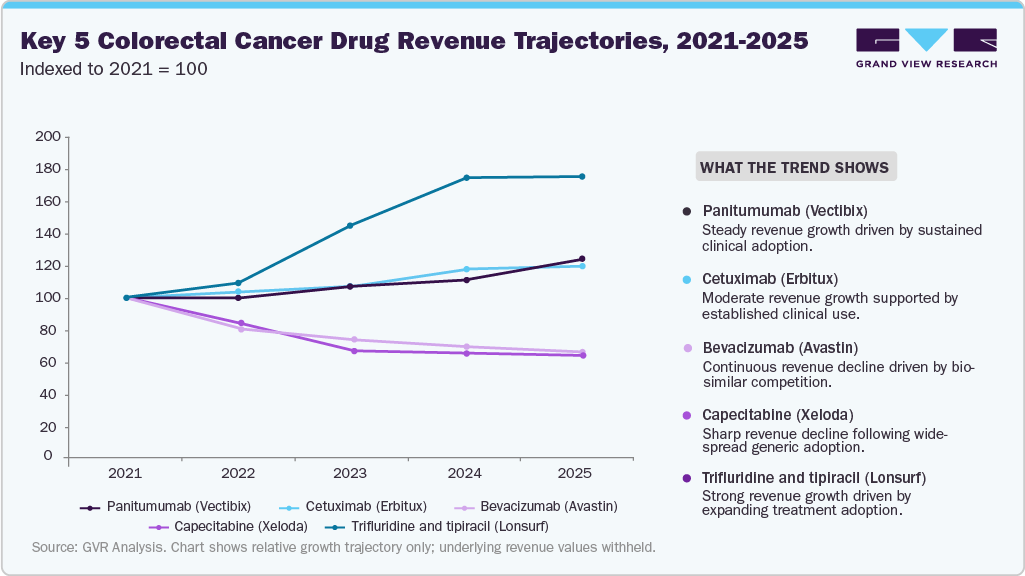
Advances in diagnostic technologies are supporting earlier disease detection, with recent research demonstrating that microbiome signatures combined with fecal immunochemical test (FIT) results can improve the detection of premalignant colorectal lesions, highlighting the potential of next-generation diagnostics to enhance screening and patient stratification. Future market growth will be driven by precision oncology, next-generation immunotherapies, targeted therapies, and antibody-drug conjugates (ADCs). Companies continue to invest in novel therapies, combination regimens, and expanded treatment indications to address unmet clinical needs. Advancements in genomic profiling, circulating tumor DNA (ctDNA) testing, and minimal residual disease (MRD) monitoring are expected to improve treatment selection, disease monitoring, and personalized patient care.
Net effect: The market is expected to witness sustained growth, driven by innovation in precision medicine, expanding targeted treatment options, and increasing adoption of personalized oncology approaches.
Current Market Scenario
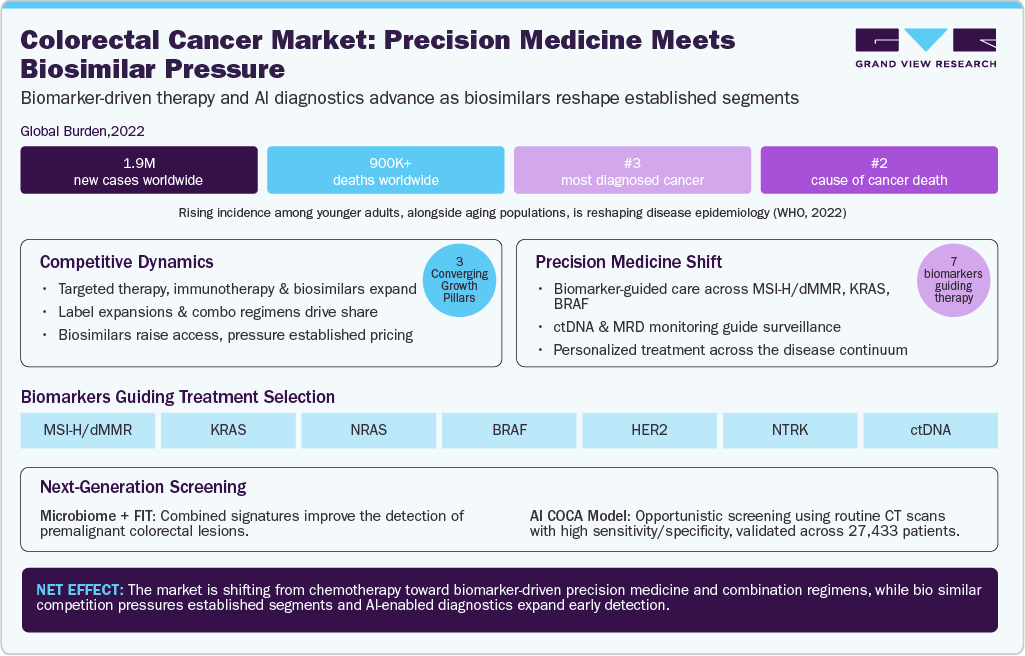
According to the World Health Organization (WHO), colorectal cancer accounted for approximately 1.9 million new cases and over 900,000 deaths globally in 2022, making it the third most diagnosed cancer and the second leading cause of cancer-related mortality. The increasing incidence among younger adults, coupled with aging populations and lifestyle-related risk factors, is reshaping disease epidemiology and accelerating demand for earlier diagnosis and more effective treatment strategies.
The current market landscape is undergoing a paradigm shift from conventional chemotherapy to precision medicine, in which treatment decisions are increasingly guided by molecular biomarkers such as MSI-H/dMMR, KRAS, NRAS, BRAF, HER2, NTRK, and emerging circulating tumor DNA (ctDNA)-based assays. The integration of comprehensive genomic profiling and minimal residual disease (MRD) monitoring is enabling personalized treatment selection, improving recurrence surveillance, and expanding opportunities for targeted interventions across the disease continuum.
Recent advancements in colorectal cancer diagnostics are exemplified by the AI-based COCA model, which demonstrated robust performance for opportunistic screening using routine non-contrast CT scans. In real-world validation across 27,433 consecutive patients, the model achieved high sensitivity and specificity, underscoring AI's potential to enhance early detection and expand population-level screening.
Pipeline Landscape
The pipeline is dominated by Phase III trials focused on precision medicine, immunotherapy, and optimized chemotherapy strategies. Biomarker-driven approaches, particularly for MSI-H/dMMR disease, continue to expand with checkpoint inhibitors, while personalized vaccines, ctDNA-guided treatment selection, and targeted anti-angiogenic therapies are emerging as key areas of innovation. The pipeline also reflects ongoing efforts to improve outcomes through biosimilars, perioperative interventions, and personalized treatment approaches, highlighting a shift toward more individualized, biomarker-driven disease management.
Trial
Phase
Indication
Why it Matters
KEYNOTE-177 (Pembrolizumab vs Standard Therapy)
Phase III
MSI-H/dMMR Metastatic CRC
Established pembrolizumab as the first-line standard of care for MSI-H/dMMR mCRC.
LEAP-017 (Lenvatinib + Pembrolizumab)
Phase III
Previously treated metastatic CRC
Evaluates whether VEGF inhibition plus immunotherapy can improve outcomes in refractory mCRC.
Gritstone Neoantigen Vaccine + Atezolizumab/Ipilimumab
Phase III
Metastatic CRC
Investigates personalized cancer vaccines combined with checkpoint inhibitors to enhance anti-tumor immunity.
Arfolitixorin + FOLFOX + Bevacizumab
Phase III
Advanced CRC
Assesses a next-generation folate therapy designed to improve chemotherapy efficacy over leucovorin.
BI 695502 (Bevacizumab Biosimilar)
Phase III
Untreated Metastatic CRC
Supports broader access to anti-VEGF therapy through a biosimilar with comparable efficacy and safety.
Regorafenib After Standard Therapy
Phase III
Refractory Metastatic CRC
Confirms the role of multikinase inhibition in later-line mCRC.
LUME-Colon 1 (Nintedanib vs Placebo)
Phase III
Refractory Metastatic CRC
Evaluates angiogenesis inhibition as a treatment strategy following standard therapies.
KEYNOTE-C66 (Pembrolizumab in Chinese Patients)
Phase III
Stage IV MSI-H/dMMR CRC
Expands evidence for first-line pembrolizumab across Asian patient populations.
Blood Test-Guided Adjuvant Chemotherapy Selection
Phase III
Stage III CRC
Uses ctDNA-guided treatment selection to personalize adjuvant chemotherapy after surgery.
Adjuvant HIPEC in High-Risk Colon Cancer
Phase III
High-risk Resected Colon Cancer
Evaluates whether HIPEC reduces recurrence in patients at high-risk following surgery.
Regulatory milestone
Year
Drug
Regulatory Milestone
2026
Braftovi (encorafenib)
FDA traditional approval expanded to first-line treatment, in combination with cetuximab and mFOLFOX6, for adults with BRAF V600E-mutated metastatic colorectal cancer (mCRC).
2025
Lumakras (sotorasib) + Vectibix (panitumumab)
FDA approval for the treatment of adults with KRAS G12C-mutated mCRC who have received prior fluoropyrimidine-, oxaliplatin-, and irinotecan-based chemotherapy.
2024
Braftovi (encorafenib)
FDA accelerated approval in combination with cetuximab and mFOLFOX6 for adults with BRAF V600E-mutated mCRC in the first-line setting.
2024
Krazati (adagrasib) + Erbitux (cetuximab)
FDA accelerated approval for adults with KRAS G12C-mutated locally advanced or mCRC following prior fluoropyrimidine-, oxaliplatin-, and irinotecan-based chemotherapy.
Competitive Landscape
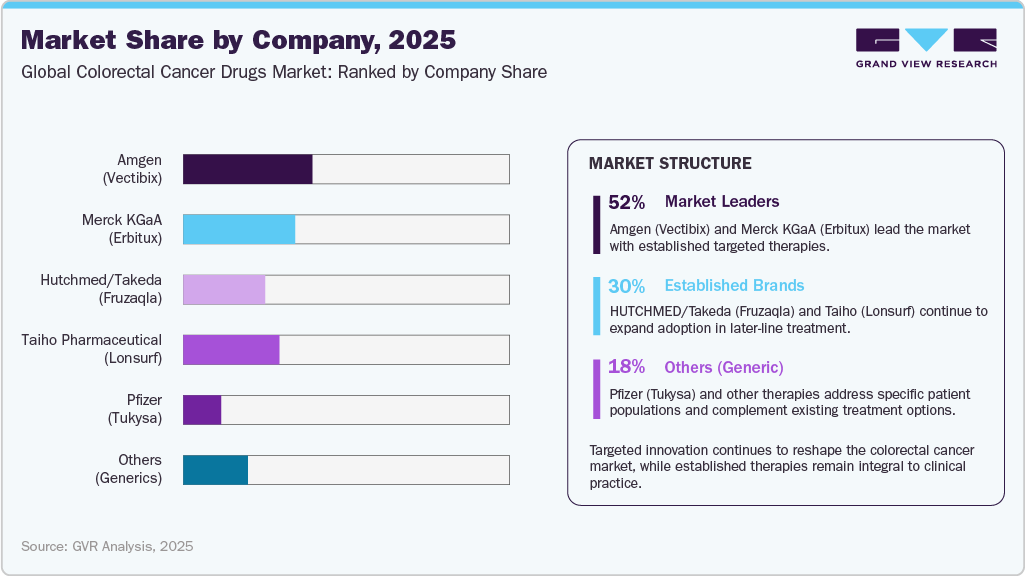
The Colorectal Cancer (CRC) drugs market in 2025-2026 remains highly competitive, driven by established immunotherapies, anti-angiogenic therapies, EGFR-targeted therapies, and biomarker-driven precision medicines. Key marketed drugs include Keytruda (Merck & Co.), Opdivo (Bristol Myers Squibb), Yervoy (Bristol Myers Squibb), Avastin (Roche), Erbitux (Eli Lilly), Vectibix (Amgen), Fruzaqla (Takeda/HUTCHMED), Stivarga (Bayer), Lonsurf (Taiho Oncology/Servier), Braftovi (Pfizer), Krazati (Bristol Myers Squibb), and Lumakras (Amgen). The competitive landscape is increasingly shifting toward precision medicine, with companies expanding their portfolios through biomarker-driven therapies targeting MSI-H/dMMR, KRAS G12C, BRAF V600E, and HER2, as well as next-generation targeted therapies, rational combination regimens, and emerging antibody-drug conjugates (ADCs).
Company
Key Marketed Drugs
Drug Position
Merck & Co.
Keytruda (pembrolizumab)
Market leader in PD-1 immunotherapy for MSI-H/dMMR metastatic CRC
Bristol Myers Squibb
Opdivo (nivolumab), Yervoy (ipilimumab), Krazati (adagrasib)
Strong competitor in immunotherapy and KRAS G12C-targeted precision oncology
Roche
Avastin (bevacizumab)
Leading VEGF-targeted therapy across multiple metastatic CRC treatment settings
Eli Lilly
Erbitux (cetuximab), Cyramza (ramucirumab)
Established leader in EGFR-targeted therapy and anti-angiogenic treatment
Amgen
Vectibix (panitumumab), Lumakras (sotorasib)
Leader in EGFR-targeted therapy and KRAS G12C-targeted combination therapy
Pfizer
Braftovi (encorafenib)
Leading BRAF V600E-targeted therapy for metastatic CRC in combination regimens
Takeda / HUTCHMED
Fruzaqla (fruquintinib)
Fast-growing VEGFR inhibitor for previously treated metastatic CRC
Taiho Oncology / Servier
Lonsurf (trifluridine/tipiracil)
Established later-line treatment backbone for refractory metastatic CRC
Bayer
Stivarga (regorafenib)
Standard multikinase inhibitor for previously treated metastatic CRC
Sanofi
Zaltrap (ziv-aflibercept)
Established anti-VEGF therapy in second-line metastatic CRC
AstraZeneca / Daiichi Sankyo
Enhertu (trastuzumab deruxtecan)
Emerging HER2-targeted ADC competitor with expanding presence in HER2-positive metastatic CRC
Johnson & Johnson
Oncology pipeline
Expanding gastrointestinal oncology portfolio through precision oncology pipeline assets
Market Dynamics
The growing burden of CRC continues to drive market growth by increasing the number of patients requiring diagnosis and treatment. According to the American Cancer Society's Statistics 2026, an estimated 158,850 new cases and 55,230 deaths are expected in the United States in 2026. The increasing disease burden, particularly among younger adults, is expected to boost demand for screening, molecular diagnostics, targeted therapies, and long-term disease management.
The market is growing due to the expansion of biomarker-based targeted therapies. These therapies improve outcomes in patients with specific genetic mutations. In 2024, the U.S. FDA approved adagrasib (Krazati) plus cetuximab for previously treated KRAS G12C-mutated mCRC. It also expanded the use of encorafenib plus cetuximab and mFOLFOX6 as a first-line treatment for BRAF V600E-mutated mCRC. These approvals are increasing genomic testing, boosting the use of companion diagnostics, expanding treatment options, and supporting the growth of the precision oncology market.
Key Market Trends
“Expansion of ctDNA-Guided Treatment in Colorectal Cancer”
The clinical use of circulating tumor DNA (ctDNA) testing is expanding as new evidence supports its role in guiding treatment decisions for colorectal cancer. Data presented at ASCO 2026 demonstrated that ctDNA testing can identify patients most likely to benefit from adjuvant chemotherapy and help optimize treatment duration after surgery. The growing clinical evidence is accelerating the integration of liquid biopsy into routine care and advancing precision oncology across the colorectal neoplasm treatment pathway.
“ATOMIC Phase III Trial Supports Expansion of Immunotherapy into Early-Stage Colorectal Cancer”
The Phase III ATOMIC trial showed that adding atezolizumab to standard mFOLFOX6 chemotherapy significantly improved outcomes in patients with resected stage III dMMR colon cancer. The combination reduced the risk of disease recurrence or death by 50% and increased the 3-year disease-free survival rate to 86.3%, compared with 76.2% for chemotherapy alone. These results support the expansion of immunotherapy into the adjuvant setting, creating a larger commercial opportunity beyond mCRC.
Regional Analysis
U.S. Colorectal Cancer Drugs Market
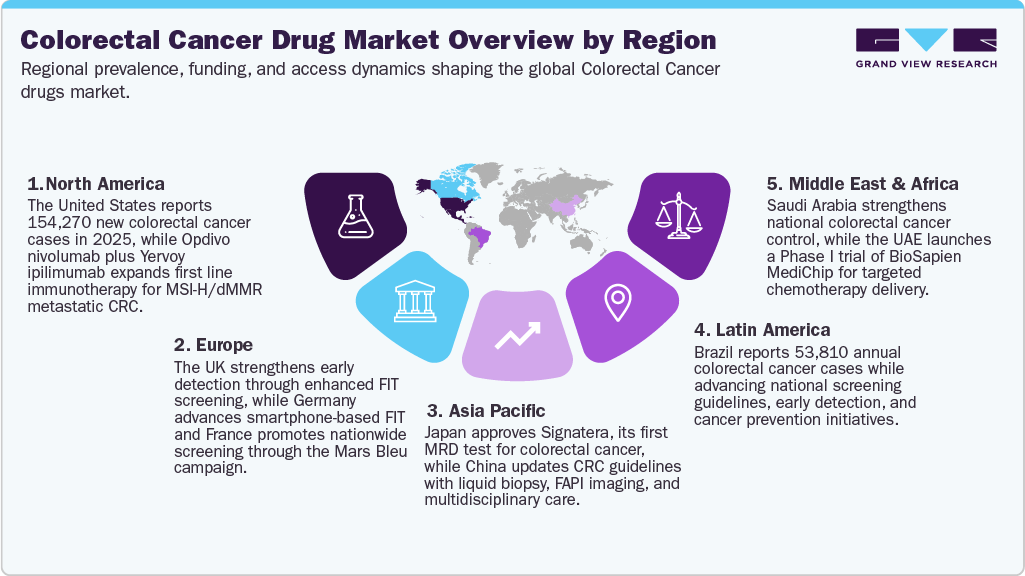
Colorectal cancer (CRC) is a major public health burden in the United States. The American Cancer Society estimates 154,270 new CRC cases and 52,900 deaths in 2025, making it the second-leading cause of cancer-related deaths in men and women combined. Incidence has decreased among adults aged 65 years and older, but continues to rise in people younger than 50 years. In April 2025, the U.S. FDA approved nivolumab (Opdivo) with ipilimumab (Yervoy) as a first-line treatment for unresectable or metastatic MSI-H/dMM CRC, expanding immunotherapy options for eligible patients.
UK Colorectal Cancer Drugs Market
Colorectal cancer is a common cancer in the United Kingdom. According to the IARC GLOBOCAN 2024 estimates, 47,318 new cases, 22,239 deaths, and 158,021 five-year prevalent cases were reported in the country. It is the fourth most common cancer, accounting for 10.3% of all new cancer cases in 2024. In January 2026, NHS England introduced a more sensitive fecal immunochemical test (FIT) by lowering the referral threshold for bowel cancer screening. The NHS estimates this change will help detect around 600 more bowel cancers early each year (an 11% increase) and identify 2,000 more people with high-risk polyps, supporting earlier diagnosis and cancer prevention.
Germany Colorectal Cancer Drugs Market
Colorectal cancer remains a major health burden in Germany. GLOBOCAN 2024 estimates 62,640 new cases and 28,146 deaths, making it Germany's second most common cancer and second leading cause of cancer death. The five-year prevalence is 212,059 people (250.8 per 100,000), highlighting substantial survivorship and care needs. Germany-specific screening innovation is also advancing. In 2025, DKFZ researchers evaluated a smartphone-based fecal immunochemical test (FIT) in a population-based study. Its performance was comparable to laboratory testing, suggesting a practical way to increase participation in colorectal neoplasm screening, which remains underused. This approach could strengthen early detection and prevention, particularly among people reluctant to use conventional screening pathways.
France Colorectal Cancer Drugs Market
Colorectal cancer is a significant health problem in France, with thousands of people diagnosed every year. The French National Cancer Institute (INCa) estimates that 47,582 people were diagnosed with colorectal cancer in 2023, and 16,930 people died from the disease, making it the third most common cancer and the second leading cause of cancer-related death in France. In 2025, the French National Cancer Institute (INCa) continued its Mars Bleu campaign to raise awareness and encourage more eligible adults to participate in the national screening program, helping to improve early detection and reduce deaths.
Japan Colorectal Cancer Drugs Market
Colorectal cancer is one of the most common cancers in Japan and remains a major public health concern. According to the National Cancer Center Japan, an estimated 160,000 new cases of colon and rectal cancer were expected in 2025, making it the most diagnosed cancer in the country. Approximately 56,000 deaths from colorectal neoplasm were also projected in 2025, making it the second leading cause of cancer-related death. In 2026, Japan's Pharmaceuticals and Medical Devices Agency (PMDA) approved Signatera, the country's first molecular residual disease (MRD) test for colorectal cancer. The test helps clinicians guide adjuvant treatment decisions and monitor patients for disease recurrence after surgery.
China Colorectal Cancer Drugs Market
China continues to experience a significant burden of colorectal cancer. According to the National Health Commission of China, approximately 520,000 new cases and 240,000 deaths occurred in 2022, making colorectal cancer the second most common cancer and the fourth leading cause of cancer-related death in the country. In 2025, the National Health Commission updated its CRC guidelines, introducing recommendations on liquid biopsy, fluorescence-guided laparoscopy, fibroblast activation protein inhibitor (FAPI) imaging, and strengthening the use of multidisciplinary team (MDT) care to improve diagnosis and treatment.
Brazil Colorectal Cancer Drugs Market
Brazil continues to experience a substantial burden of colorectal cancer. According to the Brazilian National Cancer Institute (INCA), an estimated 53,810 new colon and rectal cancer cases are expected annually during 2026-2028, with the incidence rate of 25.11 cases per 100,000 population. Excluding non-melanoma skin cancer, colorectal neoplasm is the third most common cancer in Brazil, with the highest incidence observed in the South and Southeast regions. In 2023, 23,953 deaths were attributed to colorectal cancer. To strengthen cancer control, Brazil established a national Working Group in 2023 to advance prevention, early detection, treatment, and the development of national CRC screening guidelines.
Saudi Arabia Colorectal Cancer Drugs Market
Colorectal cancer is one of the most common cancers in Saudi Arabia. According to the Saudi Cancer Registry, 2,948 new cases were diagnosed among Saudi nationals in 2024, accounting for 13.1% of all cancers, making it the second most common cancer after breast cancer. It was the most common cancer in men, representing 17.5% of all male cancers (1,626 cases), and the third most common cancer in women, accounting for 10.0% of female cancers (1,322 cases). The 2024 Saudi Cancer Incidence Report also supports national cancer control efforts by providing updated data to guide prevention, screening, early diagnosis, and treatment planning across the Kingdom.
UAE Colorectal Cancer Drugs Market
Colorectal cancer is one of the leading cancers in the United Arab Emirates. According to GLOBOCAN 2024, an estimated 1,005 new cases and 444 deaths occurred in 2024, with 3,195 people living with the disease within five years of diagnosis. CRC is the second most common cancer overall, accounting for 11.4% of all new cancer cases. It is the most common cancer in men (640 cases; 15.0% of male cancers) and the third most common cancer in women (365 cases; 8.0% of female cancers). In 2026, Abu Dhabi launched a Phase I clinical trial of BioSapien's MediChip, a 3D-printed biodegradable mesh designed to deliver chemotherapy directly to colorectal tumors, marking a significant step toward advancing precision oncology and targeted treatment of the disease in the UAE.
Analyst Perspective
Biomarker-driven indications are reshaping competitive dynamics.
Recent regulatory approvals for KRAS G12C- and BRAF V600E-targeted therapies are expanding precision treatment options and increasing the strategic importance of genomic testing in colorectal cancer management.
Biosimilars are improving market access while intensifying competition.
The growing adoption of bevacizumab biosimilars is improving treatment affordability and exerting pressure on established anti-VEGF segments, prompting manufacturers to focus on product differentiation.
Clinical development is moving beyond metastatic disease.
Late-stage trials are increasingly evaluating immunotherapies, ctDNA-guided treatment strategies, and perioperative interventions in earlier disease stages, reflecting a broader shift toward personalized and preventive care.
Companion diagnostics are becoming a key competitive enabler.
Growing adoption of ctDNA testing, genomic profiling, and AI-enabled screening is strengthening patient stratification and supporting the integration of precision medicine across the treatment pathway.


Customize this report to your needs - add regions, segments, or data points, with 20% free customization.
Or view our licence options:


ISO 9001:2015 & 27001:2022 Certified
We are GDPR and CCPA compliant! Your transaction & personal information is safe and secure. For more details, please read our privacy policy.


