
- Home
- »
- Pharmaceuticals
- »
-
Migraine Drug Market Intelligence & Forecast Analysis, 2033GVR Report cover
![Migraine Drug-Level Market Intelligence, Commercial Forecasting, Estimations & Portfolio Report]()
Migraine Drug-Level Market Intelligence, Commercial Forecasting, Estimations & Portfolio Analysis, 2021 - 2033
Overview
The global migraine drugs market was valued at USD 8.3B in 2025 and is projected to reach USD 16.0B by 2033, expanding at a CAGR of 8.5%. The market is transitioning from conventional acute therapies, including triptans and nonsteroidal anti-inflammatory drugs (NSAIDs), toward targeted CGRP monoclonal antibodies and oral gepants for both acute and preventive migraine management. Premium biologics and next-generation oral therapies such as Aimovig (Amgen), Ajovy (Teva Pharmaceutical Industries), Emgality (Eli Lilly and Company), Vyepti (Lundbeck), Nurtec ODT (Pfizer), Ubrelvy (AbbVie), and Qulipta (AbbVie) are increasing market value through superior efficacy, preventive use, and premium pricing. Innovation in drug delivery has also expanded treatment options, with Pfizer's Zavzpret (zavegepant) becoming the first intranasal CGRP receptor antagonist for acute migraine, providing a rapid, non-injectable alternative. In addition, Health Canada expanded the label for Qulipta (atogepant), approving it as the first oral CGRP antagonist for the prevention of both episodic and chronic migraine, significantly broadening the eligible patient population. These regulatory guidelines and delivery innovations are shifting market value from high-volume, low-cost triptans and NSAIDs toward premium CGRP monoclonal antibodies and oral gepants.
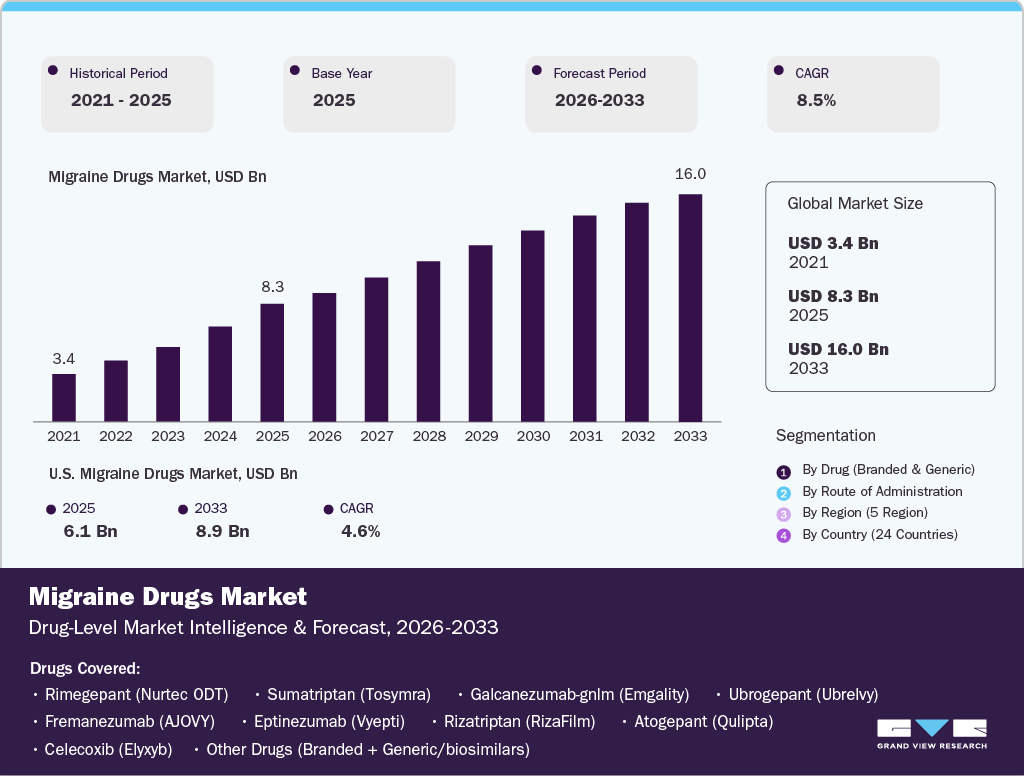
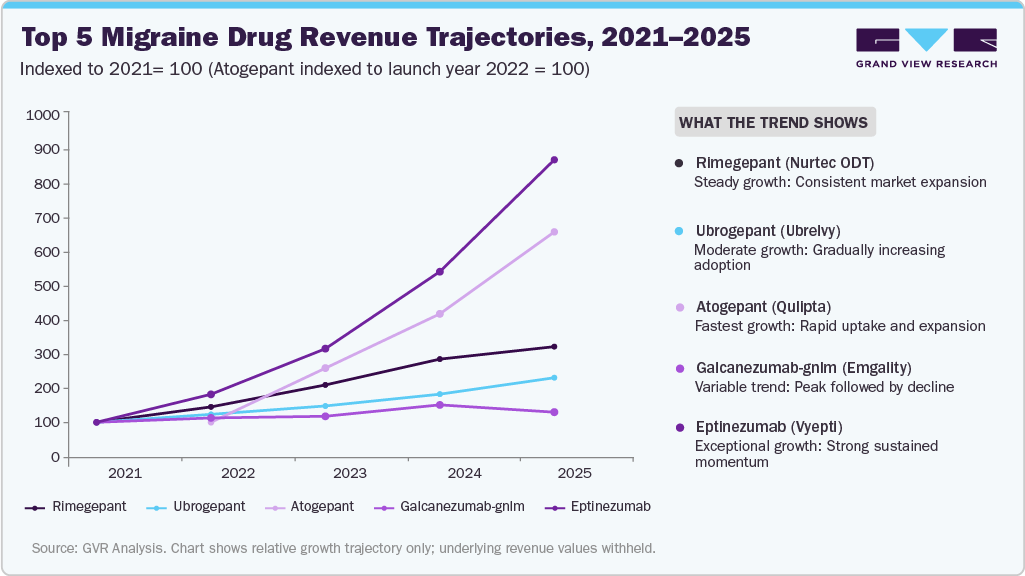
GVR's migraine drugs intelligence database tracks 20+ branded and generic formulations across 30+ molecules used for acute and preventive migraine management. The database covers targeted therapies such as Aimovig (erenumab), Ajovy (fremanezumab), Emgality (galcanezumab), Vyepti (eptinezumab), Nurtec ODT (rimegepant), Ubrelvy (ubrogepant), Qulipta (atogepant), Zavzpret (zavegepant), and Reyvow (lasmiditan). Conventional therapies continue to account for the highest treatment volume globally, while CGRP-targeted therapies are driving value growth in the U.S., Europe, and Japan, supported by expanding reimbursement, updated treatment guidelines, and increasing adoption of preventive therapies.
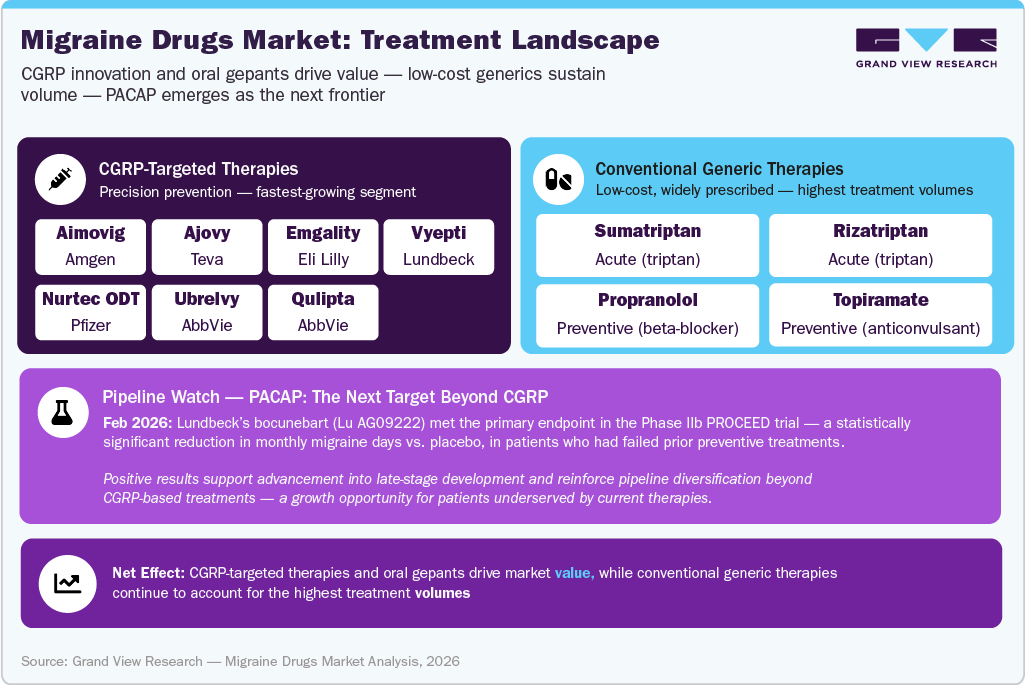
The migraine drugs market is expanding across both preventive and acute treatment segments. CGRP-targeted therapies, including Aimovig (Amgen), Ajovy (Teva Pharmaceutical Industries), Emgality (Eli Lilly and Company), Vyepti (Lundbeck), Nurtec ODT (Pfizer), Ubrelvy (AbbVie), and Qulipta (AbbVie), are driving market growth due to their targeted efficacy and increasing adoption in migraine prevention. At the same time, conventional treatments such as sumatriptan, rizatriptan, propranolol, and topiramate remain widely prescribed because of their established use and low-cost generic availability. Future growth is expected to be supported by wider adoption of oral gepants and new therapies currently in clinical development.
Investment in PACAP-targeted therapies is creating new growth opportunities. PACAP has emerged as a promising target for patients who do not respond adequately to existing CGRP therapies. In February 2026, Lundbeck's bocunebart (Lu AG09222) met the primary endpoint in the Phase IIb PROCEED trial by significantly reducing monthly migraine days compared with placebo in patients with prior preventive treatment failure. These positive results support the continued development of PACAP-targeted therapies and expand the pipeline beyond CGRP-based treatments.
Net effect:CGRP-targeted therapies and oral gepants are driving market value, while conventional generic therapies continue to account for the highest treatment volumes.
Current Market Scenario
The migraine drugs market is shifting from conventional symptomatic treatments toward targeted therapies for both acute and preventive care. While triptans and NSAIDs continue to account for a significant share of treatment volume because of their generic availability, CGRP monoclonal antibodies and oral gepants are driving market value through improved efficacy and expanded preventive use. Updated treatment guidelines and broader product availability are supporting the gradual adoption of branded migraine therapies.
Current market expansion is supported by continued investment in next-generation migraine therapies. In April 2026, Evommune announced plans to advance its oral MRGPRX2 antagonist, EVO756, into a Phase IIb clinical trial for migraine prophylaxis in the third quarter of 2026. The program reflects increasing industry investment in novel mechanisms of action beyond CGRP to address patients with an inadequate response to existing therapies and expand future treatment options.
Table: Drug Estimations & Forecast 2025 & 2033, By Key Country (USD Mn)
Drug
Country
2025
2033
Analyst Perspective
Eptinezumab
U.S.
591.7
635.6
The U.S. remains the key revenue driver, reflecting strong physician adoption, broad reimbursement, and continued expansion in preventive migraine treatment.
Germany
12.8
31.9
Growth is supported by reimbursement and specialist prescribing, although uptake remains modest compared with the U.S. market.
UK
10.3
26.5
Adoption is gradually increasing within NHS-approved patient populations, with market growth constrained by cost-effectiveness criteria.
France
9.1
23.2
Steady market expansion is expected, supported by reimbursement but moderated by conservative prescribing practices.
Fremanezumab
U.S.
295.0
321.2
The U.S. continues to be the largest market, benefiting from established brand recognition and sustained utilization despite increasing CGRP competition.
Germany
42.0
45.2
Germany is the leading European market, reflecting favorable reimbursement and strong uptake of CGRP monoclonal antibodies.
France
34.8
36.6
Healthy market growth is expected as physician confidence and access to CGRP therapies continue to improve.
UK
33.2
34.7
The UK market shows steady growth, supported by NICE-guided adoption while remaining constrained by NHS budget and eligibility criteria.
Source: GVR Analysis
Competitive Landscape
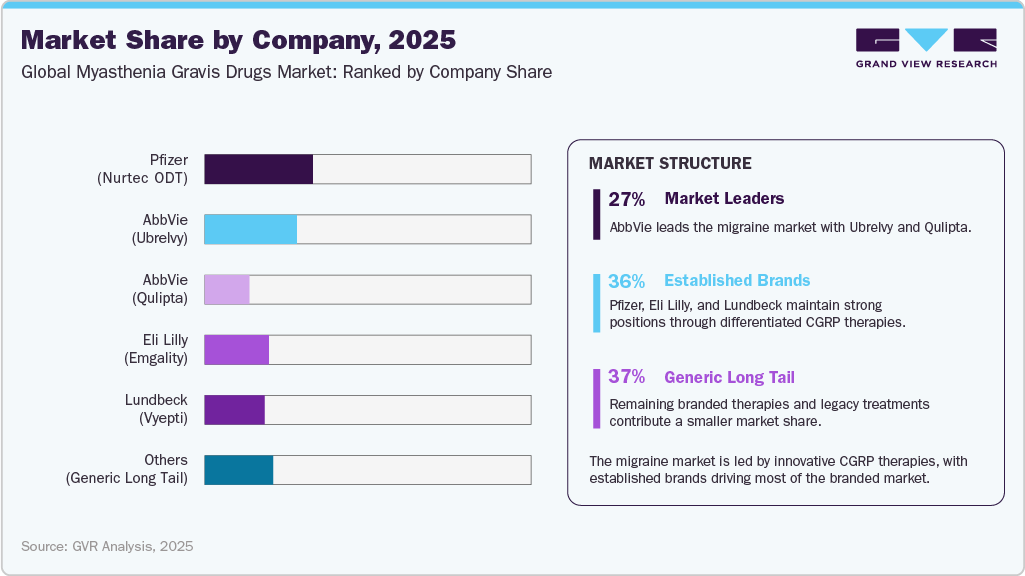
Competition in the migraine drugs market is driven by product differentiation through mechanism of action, route of administration, dosing frequency, and treatment setting. CGRP monoclonal antibodies, including Aimovig (Amgen), Ajovy (Teva Pharmaceutical Industries), Emgality (Eli Lilly and Company), and Vyepti (Lundbeck), compete in the preventive segment, while oral gepants such as Nurtec ODT (Pfizer), Ubrelvy (AbbVie), and Qulipta (AbbVie) are expanding treatment options for both acute and preventive migraine. Oral therapies are gaining wider adoption due to their convenience, while biologics continue to serve patients requiring long-term preventive treatment.
Market competition is increasingly influenced by reimbursement policies, real-world evidence, and lifecycle management strategies. Manufacturers are expanding product labels, generating long-term clinical data, and strengthening patient access programs to improve product positioning. Updated treatment guidelines recommending CGRP-targeted therapies as first-line preventive options are further increasing competition among branded migraine therapies.
The pipeline is also becoming more diversified. Companies are advancing therapies with novel mechanisms beyond CGRP. PACAP-targeted candidates, including Lundbeck (Vyepti) and Vedana Therapeuticsprograms, are progressing through clinical development to address unmet patient needs. These pipeline assets are expected to broaden future treatment options and increase competition in the migraine drugs market.
Market Dynamics
The growing number of people living with migraine and better diagnosis are increasing the demand for migraine treatments. Migraine affects around 15% of the global population and is one of the leading causes of disability. Better awareness among healthcare professionals, updated treatment guidelines, and improved access to newer therapies such as CGRP-targeted drugs are helping more patients receive treatment at an earlier stage. This is supporting a steady demand for both acute and preventive migraine drugs.
Continued clinical research is supporting the growth of the migraine drugs market by generating new evidence for both approved and pipeline therapies. Recent Phase IV studies have shown that rimegepant provides clinical benefits in patients who had an inadequate response to conventional preventive treatments or were unsuitable for triptans. At the same time, pharmaceutical companies are evaluating next-generation CGRP-targeted therapies and novel treatment approaches to improve long-term outcomes, patient adherence, and treatment options, supporting future commercialization opportunities.
Key Market Trends
“Expansion of oral gepants is reshaping the migraine treatment market”
The migraine treatment market is shifting toward oral CGRP receptor antagonists (gepants) as healthcare systems expand patient access to these therapies. In February 2026, the UK's National Institute for Health and Care Excellence (NICE) reported that prescriptions for atogepant and rimegepant more than tripled in 2025 compared with 2024. The growing availability of oral preventive therapies is providing an alternative to injectable CGRP monoclonal antibodies, improving patient access and treatment choices while intensifying competition in the global migraine drugs market.
“Investment in PACAP-targeted therapies is expanding migraine drug innovation”
Pharmaceutical companies and biotechnology firms are increasing investment in pituitary adenylate cyclase-activating peptide (PACAP) inhibitors as a next-generation approach for migraine prevention. In 2026, Vedana Therapeutics launched US$46 million in Series A financing to advance PACAP-targeted antibody therapies, while Lundbeck continues the clinical development of bocunebart. These investments indicate growing industry interest in differentiated therapeutic targets for patients who do not achieve adequate benefit from existing CGRP therapies.
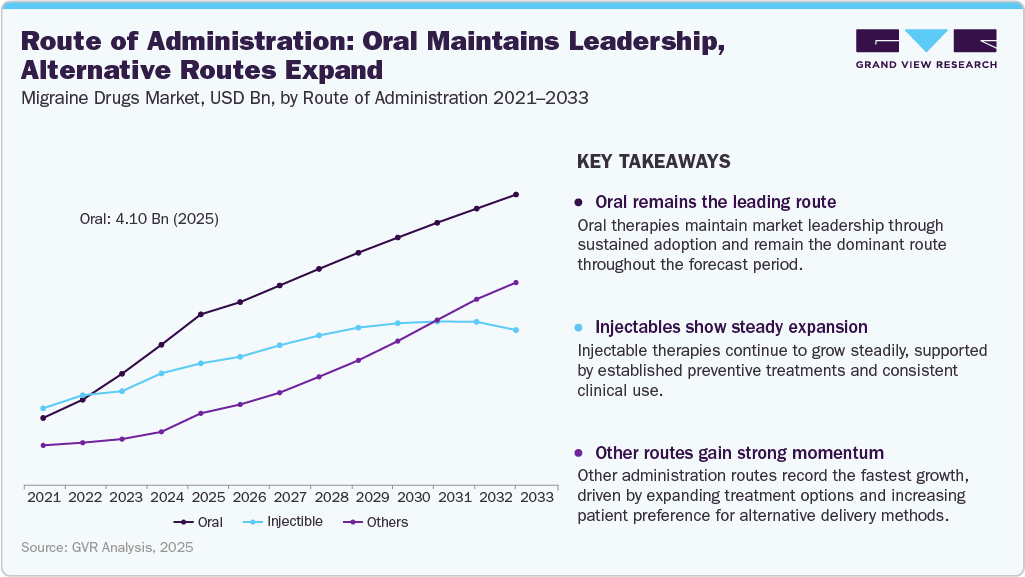
ROA Analysis
Regional Analysis
U.S. Migraine Drugs Market
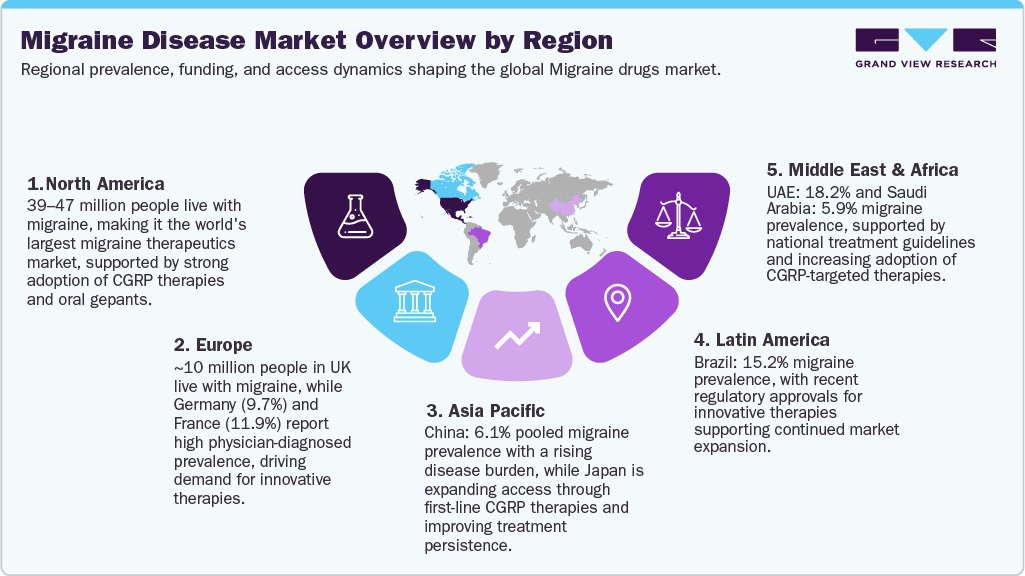
Migraine affects approximately 11.7–14.7% of the U.S. population (around 39–47 million people), while chronic migraine affects about 0.91% of adults. Women are nearly three times more likely to experience migraine than men, making them the largest treatment population. Increasing diagnosis rates, expanding access to preventive therapies, and continued FDA approvals of novel migraine treatments are driving market growth. However, access to specialized headache care remains uneven due to the limited number of headache specialists nationwide, highlighting opportunities for further market expansion.
UK Migraine Drugs Market
The United Kingdom migraine therapeutics market is expanding due to the high prevalence of migraine and increasing access to innovative treatments through the National Health Service (NHS). Migraine affects around 1 in 7 people in the UK, equivalent to approximately 10 million individuals, making it one of the most common neurological disorders in the country. More than 190,000 migraine attacks occur every day, and over one million people live with chronic migraine, experiencing headaches on at least 15 days each month. Women are affected more frequently than men, with the highest prevalence observed among adults aged 30–50 years. Growing recognition of migraine as a disabling neurological condition, coupled with the adoption of CGRP-targeted therapies and updated NICE treatment recommendations, is expected to continue driving demand for effective acute and preventive migraine therapies across the UK.
Germany Migraine Drugs Market
A 2025 European epidemiological study reported that 9.7% of adults in Germany have physician-diagnosed migraine, while 66% of patients experience migraine-related disability, highlighting the substantial unmet clinical need. Women are affected nearly twice as often as men, and 79.7% of diagnosed patients receive treatment, including analgesics, triptans, and preventive therapies. The growing availability of CGRP-targeted therapies, gepants, and ditans is expanding treatment options for patients who do not respond to or cannot tolerate conventional therapies, support improved migraine management and contributing to the continued growth of the migraine therapeutics market in Germany.
France Migraine Drugs Market
According to a 2025 European epidemiology study, 11.9% of adults in France have physician-diagnosed migraine, making it one of the highest prevalence rates among the five largest European countries. Migraine is more common in women, with female prevalence nearly twice that of men, and the highest prevalence (16.3%) is observed among adults aged 18–29 years. The study also reported that 24.0% of respondents with migraine were not receiving any treatment, highlighting a substantial unmet need and opportunities for expanding access to effective acute and preventive therapies in France.
Japan Migraine Drugs Market
A 2025 real-world claims analysis involving 16,030 patients with migraine reported 12-month treatment persistence of 22% for oral preventive therapies and 37% for injectable treatments, highlighting better persistence with newer targeted treatments. Another nationwide real-world study found that 72.7% of patients with migraine used over-the-counter medications, while only 14.6% discussed their OTC use with physicians, indicating substantial gaps in disease management and patient education. In 2026, the Japanese Headache Society recommended CGRP-targeting monoclonal antibodies and CGRP receptor antagonists as first-line preventive treatment options for adults with migraine, supporting wider adoption of targeted therapies in Japan.
China Migraine Drugs Market
China represents one of the largest growth opportunities for the migraine therapeutics market, driven by its large patient population and increasing investment in innovative therapies. A 2025 systematic review and meta-analysis that included 18 epidemiological studies reported a pooled migraine prevalence of 6.1% (95% CI: 4.1–8.6%) in China, with prevalence increasing from 1.3% during 1988–1999 to 7.0% during 2000–2023, indicating a rising disease burden. The study also found that migraine prevalence was consistently higher among females than among males. On the innovation front, Slate Medicines launched with USD 130 million in Series A financing in 2026 to advance SLTE-1009, an anti-PACAP monoclonal antibody licensed from China's Darts Bio Pharmaceutical, highlighting China's growing role in next-generation migraine drug development.
Brazil Migraine Drugs Market
According to the Brazil Migraine Real-World Evidence (BREM) Study presented at ISPOR 2025, migraine affects 15.2% of the Brazilian population, underscoring its significant public health impact. The study analyzed healthcare claims from 7.38 million individuals between 2019 and 2024, identifying 22,417 adults with migraine. In May 2026, Brazil's National Health Surveillance Agency (ANVISA) approved Nurtec ODT (rimegepant) for the acute and preventive treatment of episodic migraine. These developments are helping improve access to effective migraine treatments and are expected to support the continued growth of the migraine therapeutics market in Brazil.
Saudi Arabia Migraine Drugs Market
A 2025 cross-sectional study conducted across 48 primary healthcare centers in the Riyadh region included 14,239 participants and reported a migraine prevalence of 5.9%, highlighting the continued burden of migraine in the country. In 2025, Saudi Arabia published its first national clinical practice guidelines for migraine, providing 26 evidence-based recommendations, including 14 for acute treatment and 12 for preventive therapy. In the same year, a national expert consensus recommended calcitonin gene-related peptide (CGRP) monoclonal antibodies as first-line preventive therapy for eligible patients, reflecting the country's commitment to expanding access to targeted migraine treatments and improving long-term patient outcomes.
UAE Migraine Drugs Market
The United Arab Emirates (UAE) is an emerging market for migraine treatments, supported by growing awareness of the disease and better access to advanced therapies. A 2025 cross-sectional study among healthcare professionals in the UAE reported a migraine prevalence of 18.2%, with a higher prevalence in women (21.3%) than in men (14.5%), highlighting the significant burden of migraine. To improve patient care, UAE experts have developed national consensus recommendations that encourage early diagnosis, personalized treatment, and the appropriate use of triptans, gepants, and CGRP-targeted therapies for acute migraine. The recommendations also support the use of CGRP-based therapies for migraine prevention in eligible patients, helping expand access to newer treatment options and improve long-term outcomes across the country.
Analyst Perspective
- CGRP-targeted therapies are driving market value
Premium CGRP monoclonal antibodies and oral gepants are accelerating revenue growth, while generic triptans and conventional therapies continue to account for the highest treatment volumes.
- Oral preventive therapies are changing treatment patterns
Growing adoption of oral gepants is improving patient convenience, supporting earlier preventive treatment, and increasing competition with injectable biologics.
- Pipeline innovation is expanding beyond CGRP
Investment in PACAP-targeted therapies and other novel mechanisms is broadening future treatment options for patients with inadequate response to existing therapies.
- Market access will determine future commercial success
Reimbursement expansion, updated treatment guidelines, and real-world evidence will remain the primary drivers of adoption for premium migraine therapies across major markets.


Customize this report to your needs - add regions, segments, or data points, with 20% free customization.
Or view our licence options:


ISO 9001:2015 & 27001:2022 Certified
We are GDPR and CCPA compliant! Your transaction & personal information is safe and secure. For more details, please read our privacy policy.


