
- Home
- »
- Pharmaceuticals
- »
-
Neurological Stroke Drug Market Intelligence & Forecast Analysis, 2033GVR Report cover
![Neurological Stroke Drug-Level Market Intelligence, Commercial Forecasting, Estimations & Portfolio Report]()
Neurological Stroke Drug-Level Market Intelligence, Commercial Forecasting, Estimations & Portfolio Analysis, 2021 - 2033
Overview
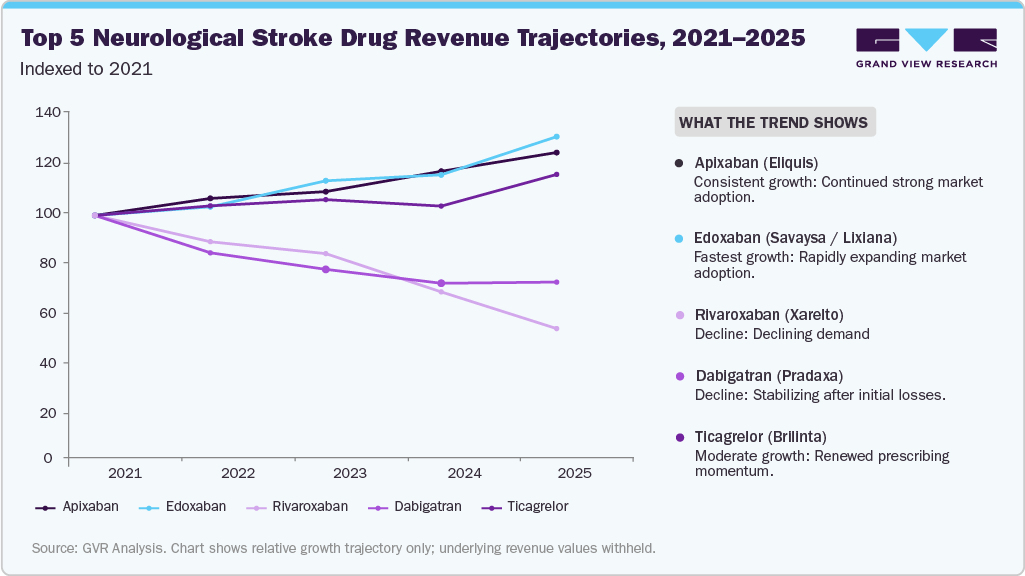
The global neurological stroke drugs market was valued at USD 9.5B in 2025 and is expected to expand at a CAGR of 3.6% during the forecast period. The market is driven by increasing adoption of intravenous thrombolytic therapies, direct oral anticoagulants (DOACs), and antiplatelet agents for acute ischemic stroke treatment and secondary brain stroke prevention. Alteplase remains the standard thrombolytic therapy, while tenecteplase is gaining clinical adoption across stroke centers. Branded therapies, including Eliquis (apixaban), Xarelto (rivaroxaban), Brilinta (ticagrelor), Pradaxa (dabigatran), and Savaysa/Lixiana (edoxaban), continue to support market revenue, whereas generic antiplatelet and anticoagulant drugs account for most treatment volume. The U.S. remains the largest revenue contributor due to advanced stroke care infrastructure and favorable reimbursement, while Europe and Japan maintain stable demand through established treatment pathways. China represents the fastest-growing opportunities owing to its large patient population, expanding stroke centers, and improving access to diagnosis and evidence-based pharmacological treatment.
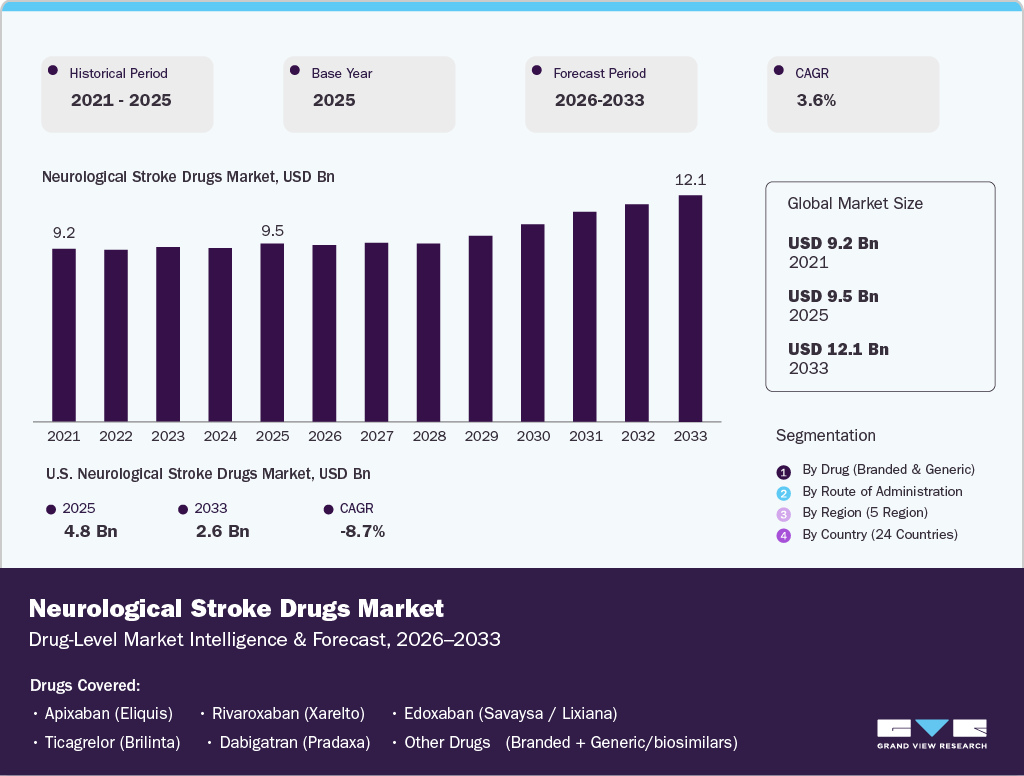
GVR's neurological stroke drugs intelligence database tracks 5+ branded and generic products across 10+ molecules, covering intravenous thrombolytics, tissue plasminogen activators, direct oral anticoagulants (DOACs), vitamin K antagonists, antiplatelet agents, low-molecular-weight heparins, and neuroprotective pipeline candidates. While generic antiplatelet and anticoagulant therapies continue to dominate prescription volumes, branded DOACs and thrombolytic therapies generate a significant share of market revenue across the U.S., Europe, Japan, and China, supported by expanding stroke care networks, guideline-directed treatment pathways, increasing adoption of reperfusion therapies, and improving reimbursement for innovative pharmacological interventions.
The single largest event reshaping this market is tenecteplase's March 2025 FDA approval for acute ischemic stroke, the first new thrombolytic approved for stroke in decades. Tenecteplase's single-bolus dosing versus alteplase's one-hour infusion is driving a rapid, guideline-endorsed switch across stroke centers, already exceeding a quarter of U.S. thrombolysis volume before formal approval. At the same time, the DOAC segment, the largest revenue pool in stroke prevention, is entering a repricing phase: rivaroxaban's core U.S. patent expired in May 2025 with generics already approved, while apixaban, still the top-selling DOAC globally, faces generic entry under settled timelines later this decade.
Future market expansion will be driven by next-generation thrombolytic therapies, neuroprotective agents, and innovative approaches for secondary stroke prevention beyond conventional antiplatelet and anticoagulant therapies. Pharmaceutical companies are advancing therapies to improve functional recovery and expand treatment eligibility. The clinical pipeline includes neuroprotective candidates, stem cell therapies, regenerative medicine, RNA-based therapeutics, and combination treatment strategies, reflecting continued investment in ischemic stroke innovation. Advances in biomarker-guided patient selection, artificial intelligence, and neuroimaging support improved diagnosis, clinical trial efficiency, and therapeutic development. Consequently, future growth is expected to shift toward differentiated specialty therapies and innovative acute stroke interventions.
Net effect: Market growth is shifting from conventional thrombolytics and branded DOACs toward differentiated acute therapies, neuroprotective pipeline candidates, and innovative secondary prevention strategies, while generic therapies continue to dominate treatment volume.
Current Market Scenario
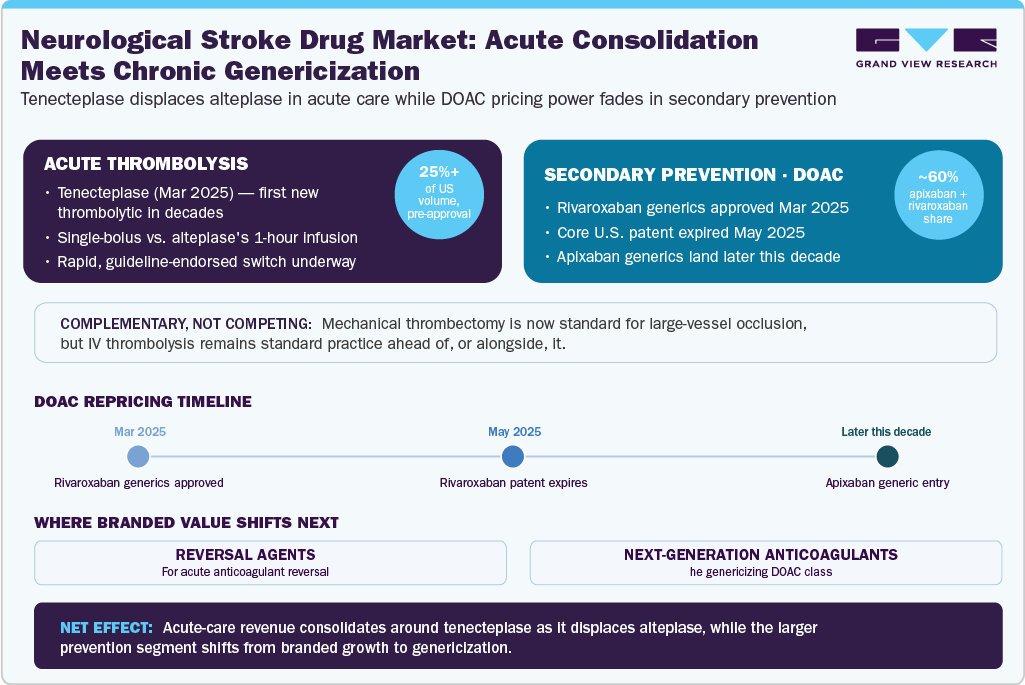
The brain stroke drugs market is increasingly segmented between acute thrombolytic therapies and secondary stroke prevention treatments. Alteplase and tenecteplase currently define the acute thrombolysis segment, with tenecteplase gaining clinical adoption due to its higher fibrin specificity, longer half-life, and single-bolus administration, enabling simplified delivery in emergency and pre-hospital settings. Stroke networks are increasingly updating treatment protocols to incorporate tenecteplase for eligible patients. In secondary prevention, Eliquis (apixaban), Xarelto (rivaroxaban), Brilinta (ticagrelor), Pradaxa (dabigatran), and Savaysa/Lixiana (edoxaban) continue to support revenue, while generic alternatives account for most prescription volumes. Mechanical thrombectomy complements, rather than replaces, intravenous thrombolytic therapy in eligible patients, sustaining demand for pharmacological intervention across acute stroke care.
Secondary stroke prevention remains the largest commercial segment of the brain stroke drugs market. Antiplatelet agents and direct oral anticoagulants (DOACs) continue to represent the standard pharmacological approach for reducing the risk of recurrent ischemic stroke. Branded therapies, including Eliquis (apixaban), Xarelto (rivaroxaban), Pradaxa (dabigatran), and Savaysa/Lixiana (edoxaban), continue to generate significant revenue, although increasing generic competition is creating pricing pressure. As a result, future growth is expected to depend on treatment adoption, lifecycle management, and pipeline innovation rather than premium pricing alone.
Table: Drug Estimations & Forecast 2025 & 2033 By Country (USD Mn)
Country
2025
2033
Analyst Perspective
Apixaban
U.S.
2,451.3
821.9
Revenue is expected to decline due to patent expiry and generic competition, although the U.S. will remain the largest market.
Germany
89.1
62.3
Generic uptake and cost-containment policies are expected to reduce branded Apixaban sales.
UK
67.0
54.3
NHS-driven generic prescribing is expected to accelerate the decline in branded revenue.
France
68.7
45.4
Pricing reforms and increasing generic adoption are likely to continue reducing branded sales.
Ticagrelor
U.S.
82.2
21.9
Revenue is expected to decline as generic competition and evolving treatment strategies limit branded growth.
Germany
6.1
7.8
Modest growth is expected, supported by continued use among selected patients with secondary stroke prevention.
UK
4.6
6.4
Steady uptake in guideline-based therapy is expected to support gradual market growth.
France
4.7
6.1
Continued clinical adoption is expected to drive moderate revenue growth despite pricing controls.
Source: GVR Analysis
Competitive Landscape
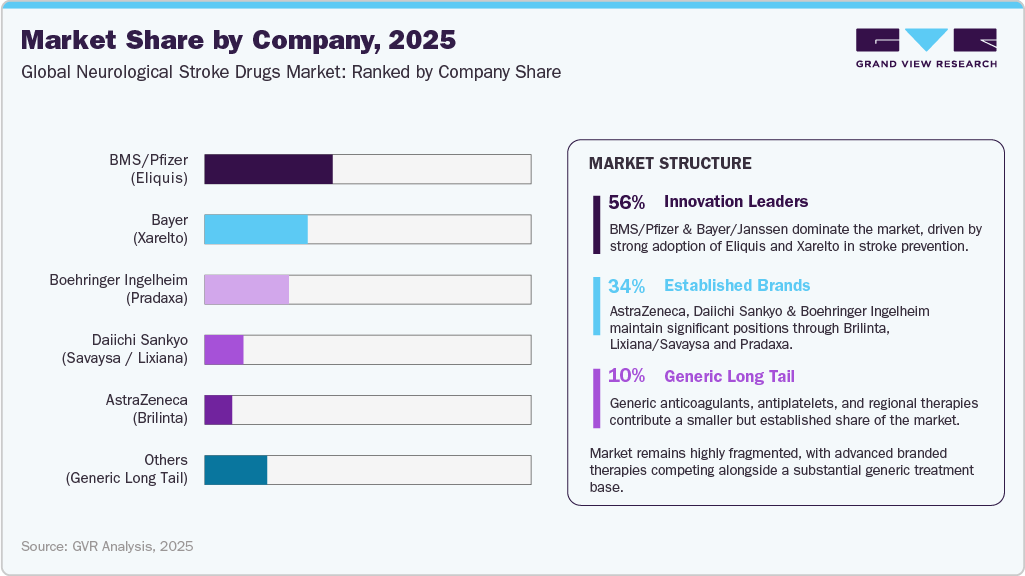
The neurological stroke drugs market is led by established pharmaceutical companies across thrombolytic, anticoagulant, and antiplatelet therapies. Roche markets alteplase and tenecteplase, while Bristol Myers Squibb/Pfizer, Johnson & Johnson/Bayer, Boehringer Ingelheim, Daiichi Sankyo, and AstraZeneca strengthen competition through Eliquis, Xarelto, Pradaxa, Savaysa/Lixiana, and Brilinta, respectively. Competition is increasingly driven by lifecycle management, label expansion, and generic competition.
Competitive intensity is concentrated at two points: the thrombolytic switch, where Genentech faces no external competitor but is racing its own alteplase franchise against generic erosion risk once tenecteplase's exclusivity eventually lapses; and the DOAC segment, where rivaroxaban's 2025 generic entry and apixaban's pending erosion are shifting the competitive question from branded share to which company can extend franchise value through combination indications, reversal-agent bundling, and new patient populations (e.g., cancer-associated thrombosis, extended post-stroke prevention).
Market Dynamics
In March 2025, the U.S. FDA approved Genentech's TNKase (tenecteplase) for the treatment of acute ischemic stroke in adults. The approval, the first for a new stroke thrombolytic in nearly 30 years, is expected to accelerate the transition from alteplase due to tenecteplase's single-bolus administration and simplified treatment workflow.
The secondary stroke prevention segment is undergoing a shift as generic rivaroxaban enters the U.S. market and apixaban approaches loss of exclusivity. Increasing generic availability is creating pricing pressure on branded direct oral anticoagulants (DOACs), prompting pharmaceutical companies to focus on lifecycle management, label expansion, and next-generation anticoagulant development. As a result, future market growth is expected to be driven more by treatment adoption and product differentiation than by premium pricing.
Key Market Trends
“Factor XIa Inhibitors Are Emerging as a New Class for Secondary Stroke Prevention”
Factor XIa inhibitors are emerging as a promising therapeutic class. Bayer's asundexian demonstrated positive Phase 3 OCEANIC-STROKE results, while Bristol Myers Squibb and Johnson & Johnson's milvexian is currently being evaluated in the Phase 3 LIBREXIA-STROKE trial. If approved, these agents could become the first new anticoagulant class for secondary stroke prevention beyond antiplatelets and DOACs.
“Ultra-Early Neuroprotection Is Reshaping Drug Development”
Neuroprotective drug development is increasingly focused on ultra-early intervention, as emerging clinical evidence suggests greater therapeutic benefit when treatment is initiated shortly after stroke onset. While NoNO Inc.'s nerinetide did not meet the primary endpoint in the Phase III ESCAPE-NEXT trial, positive findings from the FRONTIER trial and a pooled meta-analysis have supported continued interest in pre-hospital administration. This trend is driving research toward ambulance-based treatment strategies and next-generation neuroprotective therapies for acute ischemic stroke.
Regional Analysis
U.S. Neurological Stroke Drugs Market
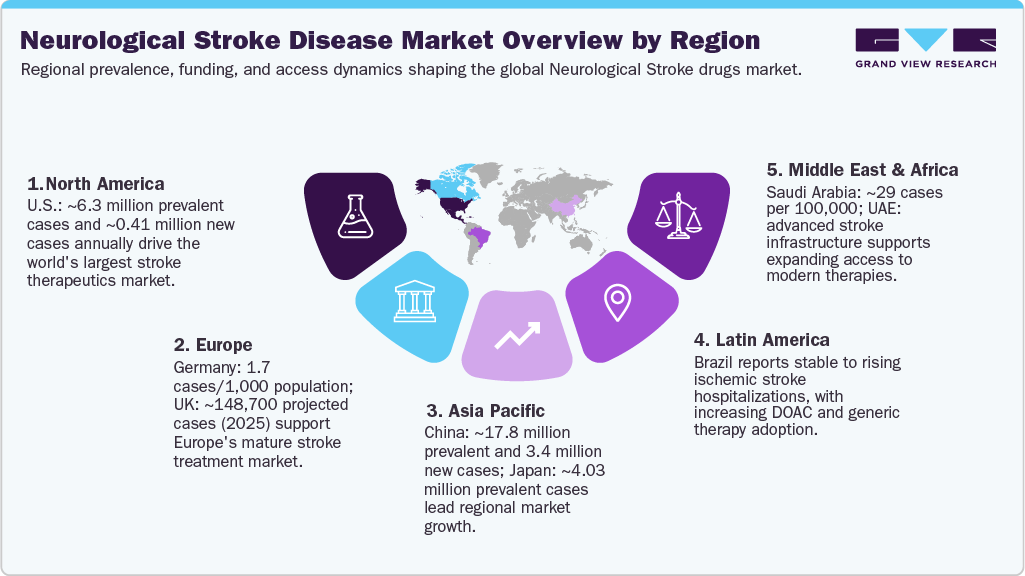
Brain stroke remains a major neurological health burden in the United States. In 2021, about 6.3 million people were living with Stroke, and approximately 0.41 million new cases were reported, with ischemic neurological stroke accounting for nearly 75.6% of incident cases. While age-standardized incidence and mortality rates have declined since 1990, the number of brain stroke cases continues to rise because of an aging population and changing lifestyle. Recent studies have reported an increasing prevalence of brain stroke among younger adults. These findings indicate the need for effective Stroke prevention, timely diagnosis, acute management, and rehabilitation to reduce the growing disease burden.
UK Neurological Stroke Drugs Market
UK stroke incidence is projected to rise from roughly 117,600 cases in 2015 to approximately 148,700 in 2025 and 186,900 by 2035, with prevalent cases from 950,200 to a projected 1.4 million over the same period. NICE recommends tenecteplase as a treatment option for eligible patients with acute ischemic stroke after brain imaging has confirmed that there is no bleeding in the brain.
Germany Neurological Stroke Drugs Market
Germany's annual stroke incidence is 1.7 per 1,000 population in community-based registries, consistent with EU-53's approximately 1.8 million annual incident strokes across the European region as of 2019. Germany has a well-developed network of certified stroke units, which supports timely treatment and the use of tenecteplase in eligible patients.
France Neurological Stroke Drugs Market
France records around 110,000 stroke-related hospitalizations each year. Population studies from Dijon have reported a 30-day case fatality rate of about 10%, one of the lowest globally. These outcomes reflect France's well-developed stroke unit network, which also supports the use of tenecteplase and DOACs.
Japan Neurological Stroke Drugs Market
According to the Global Burden of Disease (GBD) 2019 study, Japan reported 405,022 incident neurological stroke cases, 4,027,066 prevalent cases, 144,662 stroke-related deaths, and 2,465,284 disability-adjusted life years (DALYs) in 2019. The study also showed that the age-standardized stroke incidence decreased by 12.0% and mortality declined by 65.3% between 1990 and 2019, reflecting improvements in stroke prevention and management.
China Neurological Stroke Drugs Market
China records approximately 3.4 million new stroke cases and 17.8 million prevalent cases among adults 40 and older each year, with stroke the leading cause of death nationally; the standardized stroke prevalence rate of 2.6% reflects a 106% rise in prevalence between 1990 and 2019. This scale makes China one of the largest long-term opportunities for both acute thrombolytic adoption and DOAC secondary prevention, even as access and protocol standardization lag the U.S., Europe, and Japan.
Brazil Neurological Stroke Drugs Market
Stroke remains a major cause of death and disability in Brazil. Hospital data show that hemorrhagic stroke cases have declined, while ischemic stroke hospitalizations have remained stable or increased slightly in recent years, especially among younger adults. DOACs and generic antiplatelet drugs are widely used for secondary stroke prevention, while access to newer thrombolytic therapies and reversal agents is still limited compared with high-income countries.
Saudi Arabia Neurological Stroke Drugs Market
Saudi Arabia's annual stroke incidence is estimated at approximately 29 per 100,000 people, lower than most high-income countries, though regional hospital-based studies show wide variation, from roughly 15 per 100,000 in Jizan to more than 43 per 100,000 in Riyadh. Continued investment in stroke unit infrastructure under Vision 2030 is expected to expand access to thrombolytic therapy and DOAC-based secondary prevention domestically.
UAE Neurological Stroke Drugs Market
The UAE was among the first countries in the Gulf region to report national stroke mortality data to international bodies, reflecting a relatively advanced stroke surveillance infrastructure. The country's developed hospital network and specialist neurology capacity support early adoption of current thrombolytic and DOAC standards of care, positioning it as one of the more advanced regional markets for stroke therapy within the GCC.
Analyst Perspective
Tenecteplase's 2025 approval is the single most consequential event in acute stroke care in over a decade: Its single-bolus dosing advantage over alteplase is driving a rapid, guideline-backed switch that will concentrate acute thrombolytic revenue behind one product, even though both are marketed by the same company.
DOAC genericization is the defining commercial event in secondary prevention through the rest of this decade: Rivaroxaban's 2025 U.S. generic entry and apixaban's settled erosion timeline mean branded DOAC growth is now a declining share of a still-growing prescription base.
Reversal agents are the clearest remaining branded growth pocket in secondary prevention: Andexanet alfa and idarucizumab scale with overall anticoagulant use regardless of which DOAC or generic a patient takes, insulating this segment from the pricing pressure affecting the anticoagulants themselves.
Emerging markets, led by China, represent the largest untapped volume opportunity in the category: China's stroke incidence and prevalence continue to rise even as Western rates plateau or decline, making protocol standardization and thrombolytic/DOAC access expansion in China the single largest structural growth lever for the category through 2033.


Customize this report to your needs - add regions, segments, or data points, with 20% free customization.
Or view our licence options:


ISO 9001:2015 & 27001:2022 Certified
We are GDPR and CCPA compliant! Your transaction & personal information is safe and secure. For more details, please read our privacy policy.


