
- Home
- »
- Pharmaceuticals
- »
-
Neuropathic Pain Drug Market Intelligence & Forecast, 2033GVR Report cover
![Neuropathic Pain Drug-Level Market Intelligence, Commercial Forecasting, Estimations & Portfolio Report]()
Neuropathic Pain Drug-Level Market Intelligence, Commercial Forecasting, Estimations & Portfolio Analysis, 2021 - 2033
Overview
The global neuropathic pain drugs market was valued at USD 6.8B in 2025 and is projected to expand at a CAGR of 7.3% from 2026 to 2033. The market is evolving from a mature, generic-driven landscape toward the adoption of novel non-opioid therapies. Suzetrigine (Vertex Pharmaceuticals) is leading this transition as the first new non-opioid pain mechanism approved for acute pain in the U.S. and is currently in Phase III clinical trials for painful diabetic neuropathy, reflecting growing demand for safer alternatives to opioids and gabapentinoids. Japan remains an important regional market with Tarlige (mirogabalin), developed by Daiichi Sankyo, gaining broader clinical use. However, gabapentin, pregabalin, duloxetine, and amitriptyline continue to dominate treatment volumes due to their established clinical use, widespread generic availability, and low treatment cost.
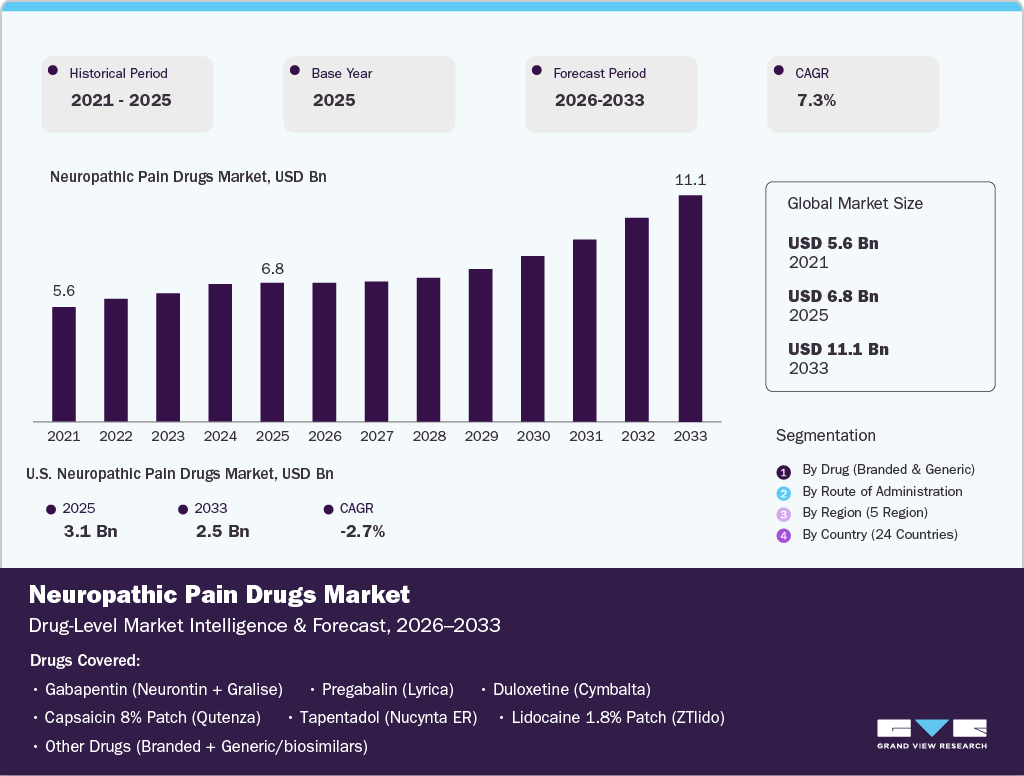
GVR's neuropathic pain drug intelligence database tracks 6+ branded and generic formulations across 12+ molecules, spanning long-established oral therapies (Gabapentin/Neurontin, Pregabalin/Lyrica, Duloxetine/Cymbalta, Amitriptyline, Carbamazepine/Tegretol, Oxcarbazepine/Trileptal) to the emerging non-opioid class led by suzetrigine. Chronic pain with neuropathic features affects an estimated 6.9% to 10% of the general population worldwide, with diabetic peripheral neuropathy accounting for the largest share of this total, given the size of the global diabetic population. Gabapentinoids and antidepressants still anchor volume in price-sensitive, fully genericized markets, while newer non-opioid mechanisms are beginning to capture attention in the U.S., gated by ongoing clinical trial progress rather than reimbursement or diagnostic barriers.
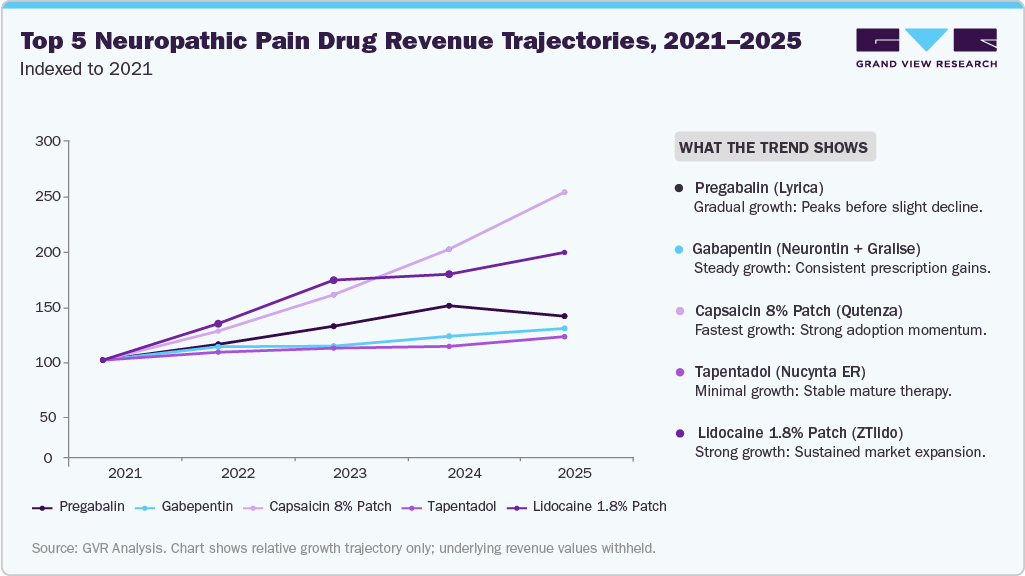
The market is witnessing two distinct growth patterns. Mature oral therapies continue to experience steady pricing pressure from generic competition, even as prescription volumes remain high across most regions. Qutenza has sustained a differentiated position by offering localized, non-oral treatment through certified pain clinics, allowing it to hold branded pricing power despite operating within an otherwise fully genericized category. In contrast, gabapentin, pregabalin, duloxetine, and amitriptyline have long reached mature lifecycle stages, with widespread generic manufacturing keeping per-unit revenue low despite consistent first-choice status in treatment guidelines.
Looking ahead, market expansion will depend less on new product launches and more on whether Suetzrigine's ongoing Phase 3 program in diabetic neuropathy succeeds and earns a place in treatment guidelines. Companies are also exploring lifecycle improvements to existing branded products. Suzetrigine itself is being developed as an oral tablet rather than an infused or injected therapy, which would allow it to compete directly with existing pills rather than requiring new treatment infrastructure such as infusion centers or specialist administration. As a result, the revenue mix in this market is expected to shift only gradually, with any meaningful movement toward higher-value, differentiated treatment dependent on trial outcomes still several years away.
Net effect: Revenue in this market remains concentrated in low-cost generics for now, with any shift toward mechanism-differentiated, higher-value treatment contingent on suzetrigine's trial success rather than already underway.
Current Market Scenario
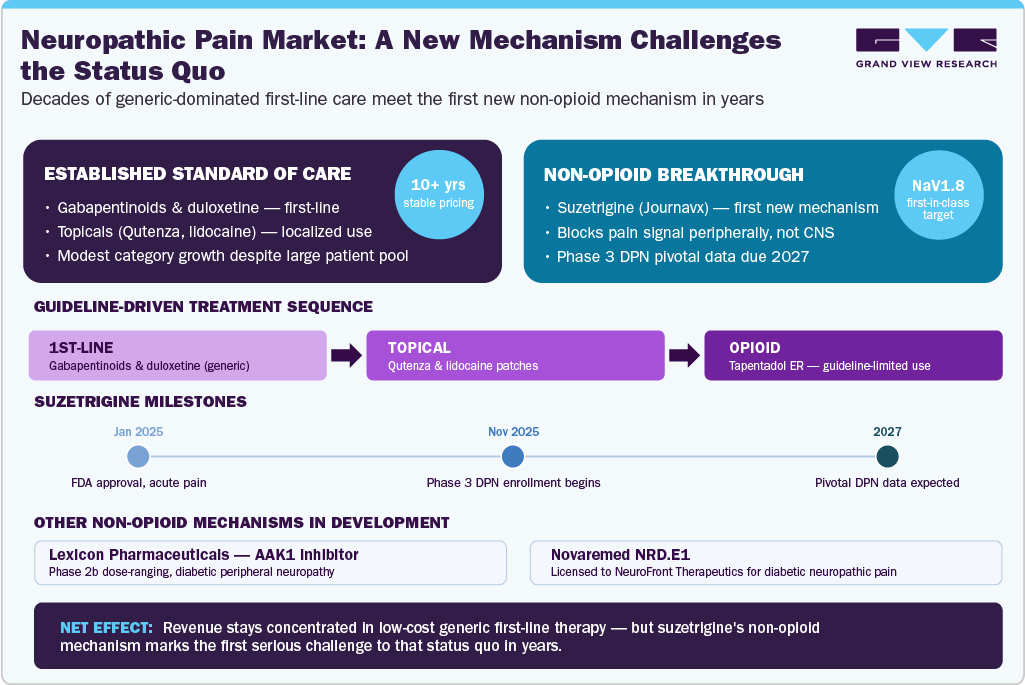
The market is increasingly segmented between high-volume generic therapies and innovative branded treatments. Generic gabapentinoids and antidepressants (gabapentin, pregabalin, duloxetine, amitriptyline) continue to dominate patient volume but face limited revenue growth because of intense price competition. In contrast, suzetrigine represents the next major growth opportunity with its novel mechanism that selectively blocks pain signals at peripheral nerves without affecting the central nervous system. Its commercial expansion into chronic neuropathic pain will depend primarily on the successful completion of ongoing Phase III clinical trials, with study results expected around 2027. As an oral therapy, suzetrigine avoids the administration challenges associated with injectable or infused treatments, allowing for faster market adoption following regulatory approval. Consequently, future market growth will be driven by clinical success, regulatory approvals, and physician adoption of novel non-opioid therapies rather than healthcare infrastructure or treatment accessibility.
Table: Drug Estimations & Forecast 2025 & 2033 by Country (USD Mn)
Drug
Country
2025
2033
Analyst Perspective
Gabapentin
U.S.
672.7
763.8
Stable growth is driven by broad generic use and sustained prescribing across major healthcare settings.
Germany
50.5
59.1
Consistent demand is supported by established treatment guidelines and widespread generic availability.
UK
38.0
51.5
Steady uptake backed by routine first-line prescribing and favorable reimbursement policies.
France
39.0
43.0
Moderate growth is supported by stable clinical adoption and continued use in chronic pain management.
Pregabalin
U.S.
814.5
419.1
Sharp revenue declines expected as generic competition continues to intensify across the market.
Germany
58.9
32.4
Revenue contracts due to sustained generic substitution and declining branded product demand.
UK
44.3
28.3
Declining sales reflect mature market dynamics and increasing generic uptake across healthcare providers.
France
45.4
23.6
Continued revenue erosion driven by widespread generic adoption and reduced branded market share.
Source: GVR Analysis
Competitive Landscape
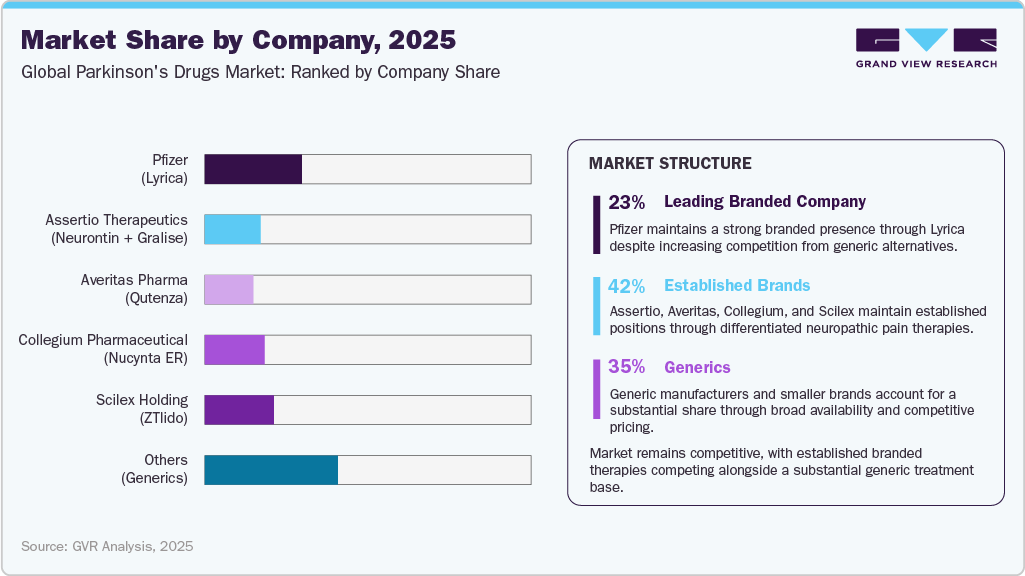
The neuropathic pain drugs market is highly fragmented, with the majority of revenue generated by generic oral therapies. Gabapentin, pregabalin, duloxetine, carbamazepine, and oxcarbazepine are marketed by numerous manufacturers, making price competition the primary differentiating factor. As a result, most companies have limited pricing power in this mature segment. Qutenza (Grünenthal/Averitas Pharma) remains one of the few branded products with differentiated positioning, supported by its unique topical formulation and patent protection.
A separate competitive segment is emerging around novel non-opioid pain therapies. Vertex Pharmaceuticals currently leads this space with suzetrigine, which is approved for acute pain and is in late-stage clinical development for painful diabetic neuropathy. Other companies, including Lexicon Pharmaceuticals and Novaremed (in partnership with NeuroFront Therapeutics), are also advancing non-opioid candidates, although these programs remain in earlier stages of development.
Competition in the established generic market is driven primarily by pricing, manufacturing scale, and product availability, whereas the emerging branded segment is expected to compete on clinical efficacy, safety profile, regulatory approvals, and physician adoption. Successful late-stage clinical outcomes and inclusion in treatment guidelines are likely to be the key factors shaping future market leadership in the non-opioid segment.
Market Dynamics
Diabetic neuropathy remains the single largest cause of neuropathic pain, so overall market size tracks closely with global diabetes trends. According to the International Diabetes Federation, about 1 in 9 adults worldwide, or roughly 11% of people aged 20 to 79, currently live with diabetes, and more than 40% of these cases remain undiagnosed. As countries invest in wider diabetes screening, a growing share of this undiagnosed population is expected to eventually be identified with nerve damage and pain, expanding the treated patient pool well beyond current levels over the forecast period.
A substantial share of neuropathic pain cases originates from damage to the brain or spinal cord rather than peripheral nerves, and this group responds poorly to existing first-choice drugs. A systematic review found that central pain following a stroke affects about 11% of stroke patients overall, rising to more than half of patients with certain stroke locations, while neuropathic pain following spinal cord injury shows a pooled prevalence of around 53% in published studies. Because current treatment guidelines are built primarily around peripheral nerve pain, this population remains a large, largely unaddressed opportunity for future drug development.
Key Market Trends
"Suzetrigine's Diabetic Neuropathy Trial Could Define the Next Decade of Pain Treatment"
Suzetrigine works by blocking a specific channel involved in pain signaling at the level of the peripheral nerve, without acting on the brain the way opioids or older analgesics do. Having already secured FDA approval for acute pain, it is now being tested in a large Phase 3 study for painful diabetic neuropathy that began enrolling patients in November 2025, with results expected around 2027. A positive outcome would mark the first new drug class built specifically for chronic nerve pain in decades, with the potential to reshape first-choice treatment guidelines for diabetic neuropathy specifically.
"Local, Non-Oral Treatment Is Helping Qutenza Hold a Differentiated Position in a Fully Generic Market"
While gabapentin, pregabalin, and duloxetine remain generic and low-cost across nearly every major market, Qutenza has retained a distinct, branded position by delivering treatment directly to the skin rather than through the whole body. This route avoids systemic side effects such as drowsiness and confusion that often limit oral treatment, particularly in older patients managing multiple medications. It remains one of the few products in this category that can still generate meaningful branded revenue for its manufacturer, even as the broader oral drug class continues to face generic pricing pressure.
Regional Analysis
U.S. Neuropathic Pain Drugs Market
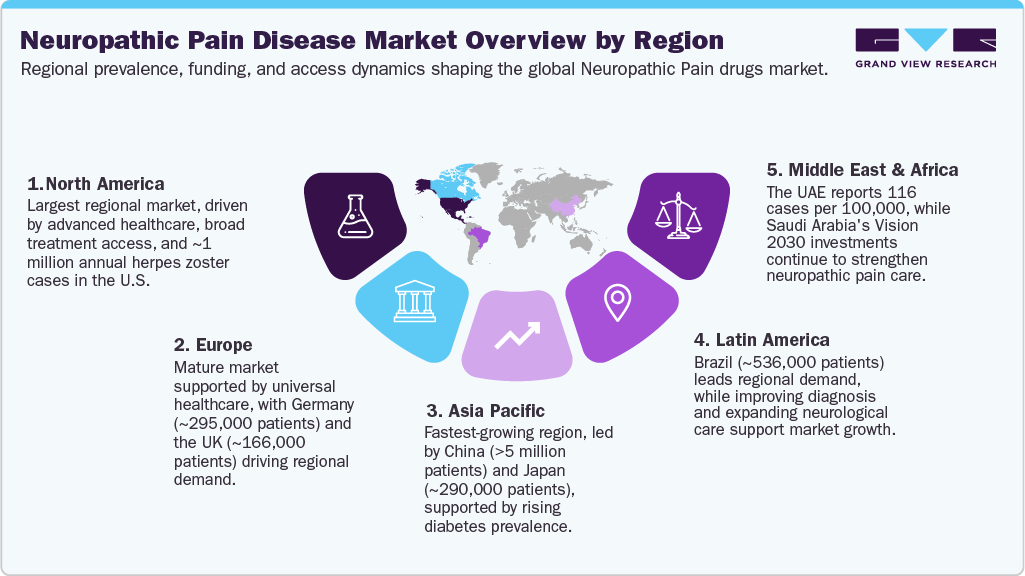
According to the CDC, herpes zoster affects about 1 million Americans each year, and close to 15% of those who develop it go on to have postherpetic neuralgia. Gabapentin, pregabalin, and duloxetine remain the default choices for diabetic and general nerve pain, while the Qutenza patch serves patients who need localized relief without systemic side effects. Growing physician interest in non-opioid alternatives, together with suzetrigine's ongoing Phase 3 testing in diabetic neuropathy, is expected to shape the next phase of treatment adoption in the country.
UK Neuropathic Pain Drugs Market
Clear national prescribing guidance and the National Health Service's structured referral pathways shape the treatment of neuropathic pain across the UK. A primary care study covering general practice records found the annual incidence of postherpetic neuralgia and trigeminal neuralgia to be about 27 to 28 cases per 100,000 people each, with painful diabetic neuropathy close behind at 21 per 100,000. NICE guideline CG173 recommends amitriptyline, duloxetine, gabapentin, or pregabalin as first-choice treatment, and both gabapentin and pregabalin have been classified as controlled substances since 2019 following evidence of rising misuse. This tighter regulatory environment has added a layer of caution to prescribing without materially changing which drugs doctors reach for first.
Germany Neuropathic Pain Drugs Market
Germany's neuropathic pain drug use is shaped heavily by the country's diabetes burden and its dense network of certified pain clinics. A population-based study conducted in an industrial region of eastern Germany, where about 17% of residents have diabetes, found that 40.3% of diabetic patients studied had some form of nerve damage. Generic gabapentinoids and duloxetine account for most prescriptions, while the Qutenza patch is available through pain clinics for patients who need localized, non-oral treatment. Ongoing investment in pain specialist training is expected to support steady growth in diagnosis and treatment rates.
France Neuropathic Pain Drugs Market
France stands out for its research tradition in pain epidemiology, built around a well-organized network of specialist pain centers. A landmark nationwide study led by Dr. Didier Bouhassira found that 6.9% of the French population, or about 1 in 15 people, lives with chronic pain that has neuropathic characteristics, one of the more precisely documented figures for any major market. Gabapentin, pregabalin, duloxetine, and amitriptyline remain the core treatment classes, supported by topical options for patients with more localized pain. Diagnostic tools developed within France's own research institutions continue to support earlier identification of neuropathic pain in primary care.
Japan Neuropathic Pain Drugs Market
Japan's neuropathic pain market is distinguished by a treatment option not widely available elsewhere. Daiichi Sankyo's Tarlige (mirogabalin), a domestically developed gabapentinoid, was approved for peripheral neuropathic pain in 2019 and had its indication widened in 2022 to cover neuropathic pain more broadly. Alongside internationally used therapies such as duloxetine and pregabalin, Tarlige gives Japanese physicians a locally developed alternative within an otherwise import-dependent drug class. The country's rapidly aging population is expected to keep demand for these treatments rising steadily.
China Neuropathic Pain Drugs Market
China's neuropathic pain drug use is driven above all by the scale of its diabetic population, the largest of any country in the world. A large population-based study found that up to 67.6% of Chinese patients with type 2 diabetes had some degree of nerve damage, a notably higher rate than typically reported in Western countries. Generic gabapentinoids and duloxetine dominate treatment across the country, while branded options such as Qutenza remain largely confined to major cities. As neurology specialist capacity expands into smaller cities and rural areas, diagnosis and treatment access are expected to improve gradually.
Brazil Neuropathic Pain Drugs Market
Underdiagnosis remains the defining challenge for Brazil's neuropathic pain drug market, particularly for diabetes-related nerve pain, a gap consistent with patterns reported across Latin America more broadly. Generic gabapentin, pregabalin, and duloxetine make up the bulk of treatment nationally, while branded topical therapies remain largely inaccessible outside major urban centers. Public health screening programs now expanding across the country are expected to gradually close this diagnostic gap and bring more patients into treatment.
Saudi Arabia Neuropathic Pain Drugs Market
Diabetes prevalence sits at the center of Saudi Arabia's neuropathic pain drug market. The International Diabetes Federation estimated about 4.3 million adults in the country had diabetes in 2021, a figure projected to rise to 7.5 million by 2045. Local studies report that 20% to more than 40% of diabetic patients have some form of nerve damage, depending on the population studied, underlining how closely this market tracks the country's broader metabolic health trends. Investment in neurology and pain management services under the Vision 2030 plan is expected to expand specialist capacity and support continued market growth.
UAE Neuropathic Pain Drugs Market
The UAE's neuropathic pain drug market reflects one of the highest diabetes rates in the Gulf region, layered onto an advanced private and public hospital system. Regional studies estimate that about 8% of UAE adults have diabetes, with some international rankings placing the rate even higher. This combination of high diabetes prevalence and strong healthcare infrastructure gives specialist endocrinology and pain management services in the country access to both standard first-choice drugs and more advanced topical treatments such as Qutenza. Continued investment in specialist healthcare is expected to sustain this trajectory.
Analyst Perspective
Market value remains concentrated in low-cost generic pills, unlike categories shifting toward disease modification
Traditional therapies such as gabapentin, pregabalin, duloxetine, and amitriptyline continue to dominate treatment volumes due to their established use and broad generic availability. Suzetrigine, still in Phase 3 testing for diabetic neuropathy, represents the market's clearest opportunity for a premium-priced, mechanism-differentiated product, but its contribution to overall market value will remain limited until trial results are confirmed around 2027.
Clinical trial outcomes, not healthcare infrastructure, will be the primary growth driver over the forecast period
Unlike categories gated by diagnostic access or reimbursement, near-term growth in neuropathic pain depends chiefly on whether suzetrigine's diabetic neuropathy trial succeeds and earns guideline inclusion. Because suzetrigine is being developed as an oral tablet, its eventual adoption would not require the infusion capacity or specialist administration infrastructure that slows uptake of therapies in other disease areas, making trial success the single event most likely to reshape the market.
Route of administration is already a proven differentiator, not an emerging one, through Qutenza's established position
Qutenza has demonstrated for over a decade that localized, non-oral treatment can command sustained branded pricing even within a fully genericized drug class. Its patch format avoids the systemic side effects, such as drowsiness and confusion, that limit daily oral therapy in older patients. This precedent suggests that any future non-oral or less-frequently dosed option, including a potential subcutaneous or extended-release formulation, could find a similarly differentiated niche.
Central neuropathic pain remains a substantial, unaddressed segment with no active late-stage pipeline
Pain following stroke or spinal cord injury affects a large share of patients and responds poorly to existing gabapentinoid and antidepressant therapies, yet none of the current pipeline, including suzetrigine, Lexicon's candidate, or Novaremed's programme, targets this population directly. As awareness of this gap grows among specialists, it represents a long-term opportunity for future drug development rather than a near-term revenue contributor.


Customize this report to your needs - add regions, segments, or data points, with 20% free customization.
Or view our licence options:


ISO 9001:2015 & 27001:2022 Certified
We are GDPR and CCPA compliant! Your transaction & personal information is safe and secure. For more details, please read our privacy policy.


