
- Home
- »
- Pharmaceuticals
- »
-
Ovarian Cancer Drug-Level Market Intelligence & Forecast, 2033GVR Report cover
![Ovarian Cancer Drug-Level Market Intelligence, Commercial Forecasting, Estimations & Portfolio Report]()
Ovarian Cancer Drug-Level Market Intelligence, Commercial Forecasting, Estimations & Portfolio Analysis, 2021 - 2033
Overview
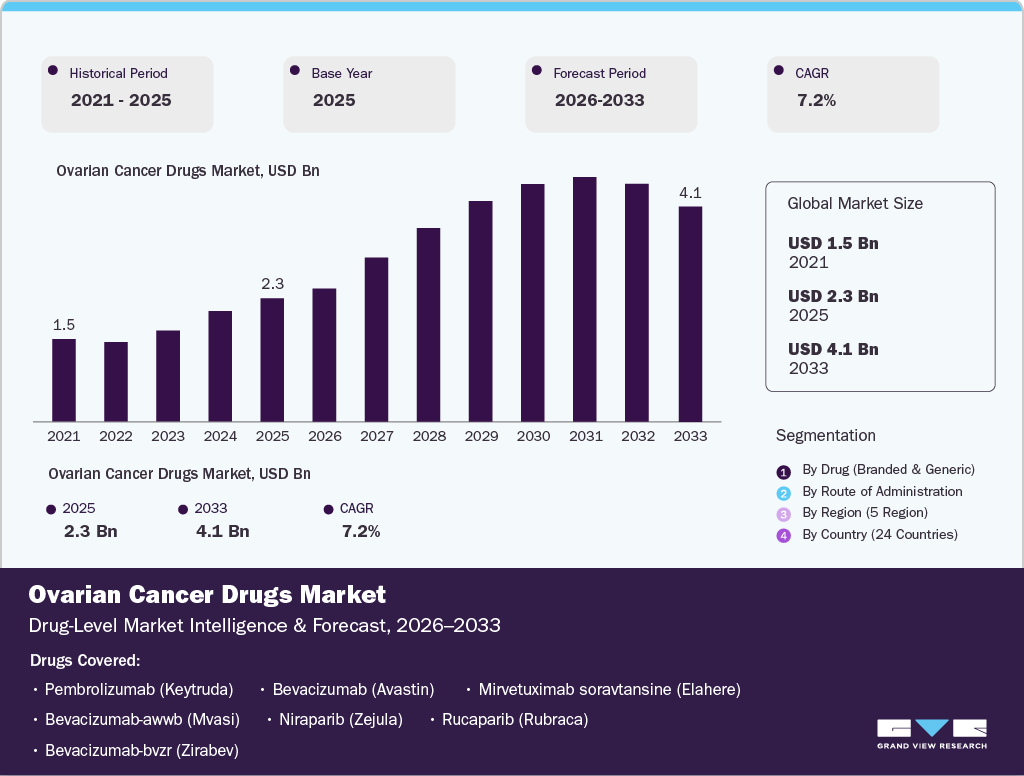
The global ovarian cancer drugs market was valued at USD 2.3B in 2025 and is projected to reach USD 4.1B by 2033, at a CAGR of 7.2% during the forecast period from 2026 to 2033. The market growth is driven by the introduction of first-in-class targeted therapies for a biomarker-defined patient population. For instance, in March 2024, the U.S. FDA granted full approval to Elahere (mirvetuximab soravtansine-gynx) for patients with FRα-positive, platinum-resistant ovarian cancer based on positive results from the confirmatory Phase III MIRASOL trial. As the first and only approved FRα-targeted therapy for platinum-resistant ovarian cancer, Elahere offers better survival outcomes than standard chemotherapy. Following European Commission approval in November 2024, the drug expanded its availability across Europe. Growing patient testing and increasing physician adoption are expected to support continued growth. Elahere generated USD 0.69B in revenue in 2025 and is projected to reach USD 2.1B by 2033.
Strategic investments and pipeline expansion continue to strengthen the competitive landscape of the market. In February 2024, AbbVie completed its USD 10.1 billion acquisition of ImmunoGen, adding Elahere and a differentiated antibody-drug conjugate (ADC) portfolio to strengthen its oncology franchise. The transaction validates the commercial potential of FRα-targeted therapies and reinforces the industry's focus on precision oncology. Coherus BioSciences and Cancer Research Horizons entered a clinical collaboration to evaluate casdozokitug in combination with toripalimab for platinum-resistant disease, reflecting continued investment in next-generation immunotherapy combinations. In January 2026, Eli Lilly's sofetabart mipitecan received U.S. FDA Breakthrough Therapy designation for platinum-resistant ovarian malignancy, highlighting the strong pipeline momentum in biomarker-driven therapeutics.
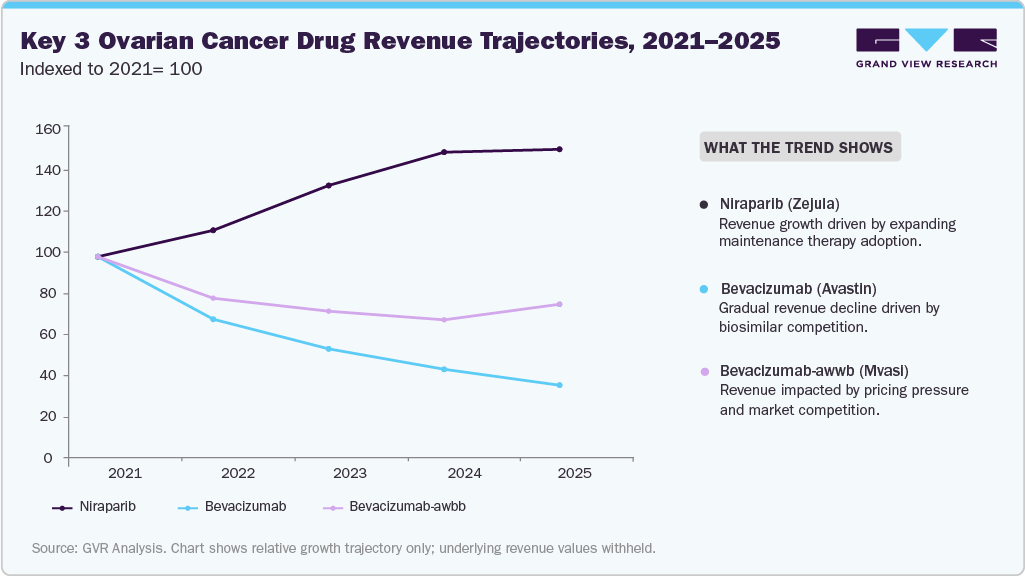
The ovarian malignancy treatment landscape continues to evolve with increasing focus on targeted therapies and next-generation therapeutic platforms. PARP inhibitors and FRα-targeted therapies are driving the transition toward biomarker-guided therapy, while ongoing research is expanding the use of ADC, immunotherapies, and precision medicine approaches. Emerging technologies such as nanotechnology-based drug delivery are being investigated to improve targeted drug delivery and reduce treatment-related toxicity. GVR's portfolio includes key marketed therapies such as Bevacizumab, Niraparib, Rucaparib, Mirvetuximab soravtansine, Mvasi (bevacizumab-awwb), and Zirabev (bevacizumab-bvzr), reflecting the increasing adoption of targeted therapies and biosimilars in ovarian malignancy treatment.
Net effect: First-in-class targeted therapies, strategic acquisitions, and continued clinical development are accelerating the adoption of biomarker-guided therapy in this malignancy.
Current Market Scenario
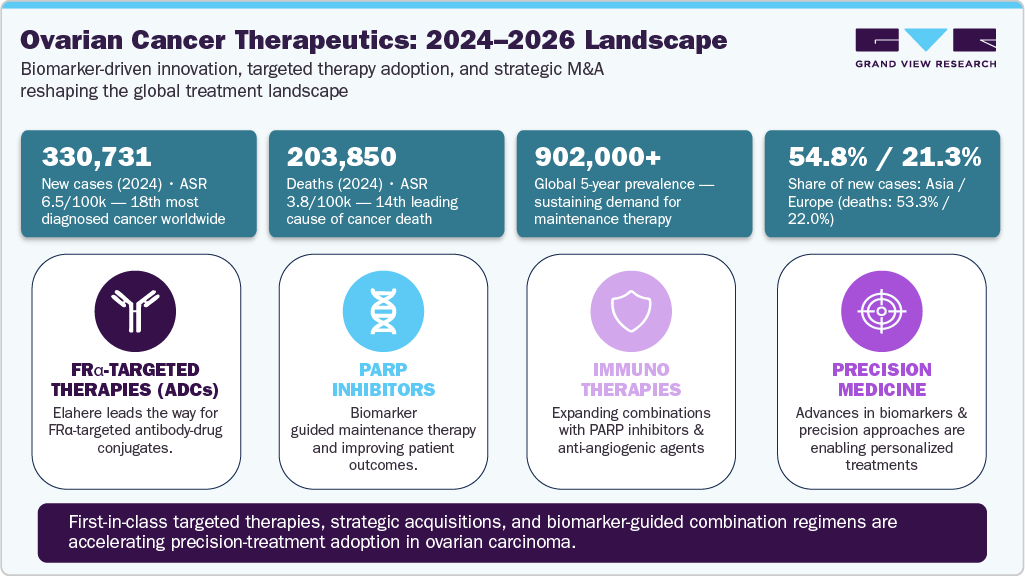
Ovarian carcinoma remains a significant global health burden, ranking as the 18th most diagnosed malignancy worldwide, with 330,731 new cases (Age standardized rate-ASR: 6.5 per 100,000) and the 14th leading cause of cancer-related death, accounting for 203,850 deaths (ASR: 3.8 per 100,000) in 2024. Asia bears the largest disease burden, accounting for 54.8% of new cases (181,187) and 53.3% of deaths (108,742), followed by Europe, with 21.3% of cases (70,286) and 22.0% of deaths (44,836). The global 5-year prevalence exceeds 902,000 cases, highlighting a substantial population requiring long-term treatment and surveillance, thereby driving demand for effective targeted and maintenance therapies.
The therapeutic landscape has shifted toward biomarker-driven maintenance therapy, supported by several Phase III trials. SOLO-1 established olaparib as the standard first-line maintenance therapy for BRCA-mutated advanced ovarian carcinoma, while PRIMA expanded the use of niraparib to patients with HRD-positive tumors. PAOLA-1 further demonstrated improved clinical outcomes with olaparib plus bevacizumab, and ATHENA-MONO confirmed the efficacy of rucaparib in the first-line maintenance setting. The DUO-O trial highlighted the potential of combining durvalumab, bevacizumab, and olaparib, reinforcing the shift toward combination and biomarker-guided treatment strategies for the disease.
The future of ovarian carcinoma treatment is expected to focus on integrated targeted therapy, combining PARP inhibitors, anti-angiogenic agents, immune checkpoint inhibitors, and ADCs to overcome drug resistance and improve long-term outcomes. Advances in precision medicine, biomarker discovery, and innovative drug-delivery platforms, including polymer-drug conjugates and nanomedicines, are anticipated to enable more personalized and effective therapeutic strategies while minimizing systemic toxicity.
Pipeline Landscape
The pipeline continues to advance with several late-stage clinical programs targeting recurrent and platinum-resistant disease. Phase III trials are evaluating the B7-H4–targeted antibody-drug conjugate mocertatug rezetecan as a potential therapy for platinum-resistant ovarian cancer and as a first-line maintenance therapy for newly diagnosed HRD-negative disease. Established PARP inhibitors, including olaparib and niraparib, remain under investigation to optimize maintenance therapy, retreatment strategies, and long-term safety, while additional late-stage studies are assessing agents such as trabectedin and TLK286 to address treatment resistance and improve clinical outcomes.
Trial / Drug
Phase
Ovarian Cancer (disease setting)
Description
Thoracic Drain Tube
Phase IV
Advanced
Assesses whether thoracic drainage reduces postoperative complications after diaphragmatic surgery.
Niraparib
Phase IV
Advanced/Relapsed
Examine the long-term safety of a widely used PARP inhibitor.
Mocertatug Rezetecan + Bevacizumab
Phase III
HRD-negative
Investigates a novel targeted therapy to improve first-line maintenance outcomes.
Mocertatug Rezetecan + Platinum Doublet
Phase III
Platinum-sensitive
Compares an emerging antibody-drug conjugate with current standard chemotherapy.
Pegylated Liposomal Doxorubicin (Caelyx)
Phase IV
Platinum-resistant Epithelial
Evaluates efficacy and tolerability as a treatment for resistant disease.
Trabectedin
Phase III
BRCA-mutated/BRCAness Recurrent
Explores an alternative therapy for recurrent setting with DNA repair defects.
TLK286 + Carboplatin
Phase III
Platinum-resistant/Refractory
Tests a novel combination therapy against existing chemotherapy options.
TLK286 vs Doxil/Caelyx or Topotecan
Phase III
Platinum-resistant
Compares survival benefits of a new investigational therapy with standard treatments.
Olaparib
Phase III
Epithelial Ovarian Carcinoma
Evaluates maintenance retreatment to prolong disease control after prior PARP inhibitor therapy.
Competitive Landscape
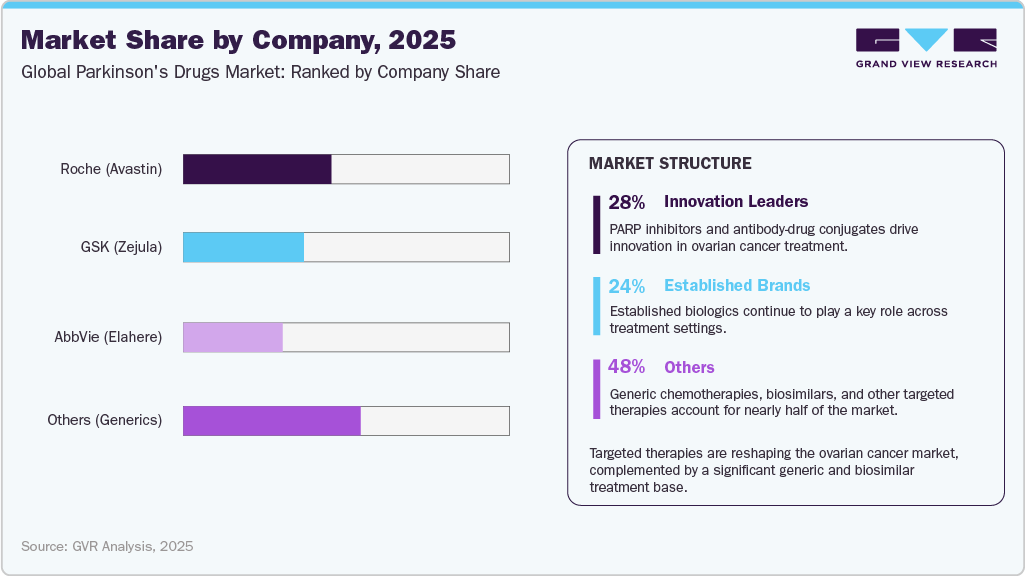
The market is evolving with the FDA approval of the first immunotherapy for PD-L1-positive platinum-resistant ovarian carcinoma and the first antibody-drug conjugate for FRα-positive disease, expanding therapeutic options for specific patient groups. At the same time, stricter FDA requirements for PARP inhibitors are increasing competition among therapies with proven survival benefits. The approval of ELAHERE introduced the first antibody-drug conjugate for FRα-positive platinum-resistant ovarian carcinoma, while Keytruda became the first PD-1 inhibitor-based regimen approved for PD-L1-positive platinum-resistant disease.
Company
Key Marketed Drug
Drug Position
Merck & Co.
Keytruda (pembrolizumab)
PD-1 immune checkpoint inhibitor approved in combination with paclitaxel, with or without bevacizumab, for PD-L1-positive platinum-resistant ovarian malignancy.
AstraZeneca
Lynparza (olaparib)
PARP inhibitor approved as first-line maintenance therapy for BRCA-mutated and HRD-positive advanced disease setting.
AbbVie Inc.
ELAHERE (mirvetuximab soravtansine-gynx)
First FDA-approved ADC for FRα-positive, platinum-resistant ovarian carcinoma.
Genentech (Roche Group)
Avastin (bevacizumab)
Anti-VEGF monoclonal antibody approved for use in combination with chemotherapy and as maintenance therapy for advanced malignancy.
GSK plc
Zejula (niraparib)
PARP inhibitor approved for first-line maintenance treatment in advanced setting response to platinum-based chemotherapy.
Corcept Therapeutics
Lifyorli (relacorilant)
Glucocorticoid receptor antagonist approved in combination with nab-paclitaxel for platinum-resistant cancer after prior bevacizumab-containing therapy.
Market Dynamics
In February 2026, the FDA approved Keytruda (pembrolizumab) in combination with paclitaxel, with or without bevacizumab, as the first FDA-approved PD-1 inhibitor-based therapy for PD-L1-positive platinum-resistant ovarian cancer. Based on the Phase III KEYNOTE-B96 trial, the regimen significantly improved progression-free and overall survival, expanding treatment options and driving adoption of immunotherapy and PD-L1 companion diagnostic testing.
Regulatory scrutiny is restraining the ovarian carcinoma therapeutics market. The FDA's withdrawal of treatment indications for olaparib (Lynparza), rucaparib (Rubraca), and niraparib (Zejula) in March 2024, following confirmatory trials that failed to demonstrate an overall survival benefit, has increased regulatory expectations for robust clinical evidence. These actions have reduced the commercial opportunity for late-line PARP inhibitors and shifted industry focus to biomarker-selected populations and therapies with demonstrated survival benefit.
Key Market Trends
“Emergence of antibody-drug conjugates as a new therapeutic class”
The FDA's full approval of ELAHERE (mirvetuximab soravtansine-gynx) for FRα-positive, platinum-resistant epithelial ovarian, fallopian tube, or primary peritoneal cancer marks the emergence of ADCs in the disease. According to AbbVie, ELAHERE is the first and only ADC approved in the U.S. for this patient population. The approval was based on the Phase III MIRASOL trial, which demonstrated overall survival (OS), progression-free survival (PFS), and confirmed objective response rate (ORR) compared with the investigator's choice chemotherapy.
“Rising Adoption of Personalized and Biomarker-Driven Therapies”
Increasing germline and somatic BRCA and HRD testing drives the adoption of PARP inhibitors in ovarian carcinoma treatment. PARP inhibitors are used as first-line and maintenance therapy after platinum-based chemotherapy and can be combined with bevacizumab for patients with HRD-positive tumors. This supports the shift toward personalized treatment strategies in the therapeutics market.
Regional Analysis
U.S. Ovarian Cancer Drugs Market
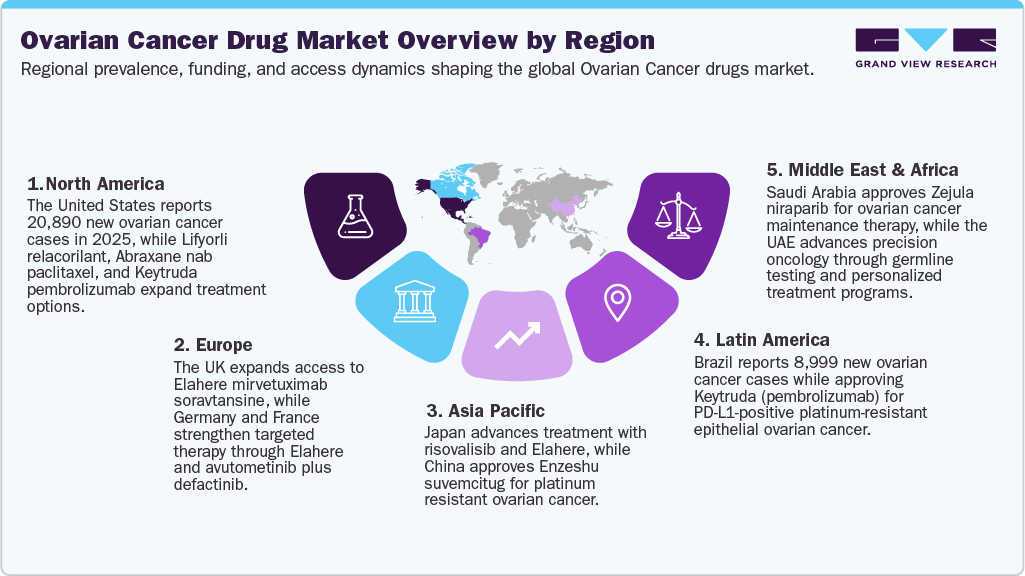
In March 2026, the U.S. FDA approved relacorilant (Lifyorli) in combination with nab-paclitaxel (Abraxane) for adults with platinum-resistant epithelial ovarian, fallopian tube, or primary peritoneal cancer who had received one to three prior systemic therapies. The American Cancer Society estimates that 20,890 new cases and 12,730 deaths will occur in the United States in 2025, highlighting the continued need for effective therapeutic options. SEER data indicate an age-adjusted incidence rate of 10.4 per 100,000 women and a death rate of 5.7 per 100,000 women. The FDA approval of Keytruda for platinum-resistant ovarian malignancy is expected to expand the use of immunotherapy in later-line treatment, increasing competition with existing chemotherapy regimens and reinforcing biomarker-driven (PD-L1) treatment selection.
UK Ovarian Cancer Drugs Market
The Medicines and Healthcare products Regulatory Agency (MHRA) approved mirvetuximab soravtansine (Elahere) in July 2025 for adults with FRα-positive, platinum-resistant ovarian, fallopian tube, or primary peritoneal cancer. This drug is approved for the patients who have received one to three prior systemic treatments, expanding access to targeted therapy in the UK. Cancer Research UK reports that around 7,500 women are diagnosed with the disease and approximately 4,100 die from the disease each year by 2038-2040, emphasizing the continued need for effective therapies.
Germany Ovarian Cancer Drugs Market
According to the World Cancer Research Fund (WCRF), 7,547 new cases were reported in Germany in 2022, with an age-standardized incidence rate of 7.0 per 100,000 women. In November 2024, the European Commission approved mirvetuximab soravtansine (Elahere) for the treatment of FRα-positive, platinum-resistant high-grade serous epithelial ovarian, fallopian tube, or primary peritoneal malignancy. The European Commission granted orphan designation to the combination of avutometinib and defactinib for the treatment of the disease in July 2025.
France Ovarian Cancer Drugs Market
GLOBOCAN 2024 estimates 5,675 new cases, 4,051 deaths, and 16,805 five-year prevalent cases in 2024, highlighting the significant burden of ovarian malignancy in the country. Recent European Union regulatory approvals for targeted therapies (e.g., mirvetuximab soravtansine (Elahere)) will improve treatment availability across EU member states, including France, supporting the adoption of innovative therapies and strengthening the country's market. In June 2024, Institut Curie, PSL University, and Inserm launched the Institute of Women's Cancers (IHU) to accelerate research and innovation in gynecological carcinomas, including ovarian carcinoma.
Japan Ovarian Cancer Drugs Market
In March 2026, the MHLW approved risovalisib for the treatment of PIK3CA-mutated advanced or recurrent ovarian clear cell carcinoma. Takeda submitted a New Drug Application (NDA) to Japan's Ministry of Health, Labour and Welfare in January 2026 for mirvetuximab soravtansine (Elahere) for the treatment of FRα-positive, platinum-resistant recurrent malignancy. According to the World Cancer Research Fund (WCRF), 10,693 new cases were reported in Japan in 2022, with an age-standardized incidence rate of 8.7 per 100,000 women, highlighting the country's substantial disease burden.
China Ovarian Cancer Drugs Market
China reported 61,947 new cases and 32,516 deaths in 2024, ranking it the 17th most common cancer in the country. In July 2025, China's National Medical Products Administration (NMPA) approved suvemcitug (Enzeshu in combination with paclitaxel, pegylated liposomal doxorubicin, or topotecan for the treatment of recurrent platinum-resistant ovarian, fallopian tube, or primary peritoneal carcinoma in adults who had received at least one prior systemic therapy after platinum resistance.
Brazil Ovarian Cancer Drugs Market
In February 2026, the Brazilian Health Regulatory Agency (ANVISA) approved pembrolizumab (Keytruda) in combination with paclitaxel, with or without bevacizumab, for the treatment of PD-L1-positive, platinum-resistant epithelial ovarian, fallopian tube, or primary peritoneal cancer in patients who had received one or two prior systemic treatment regimens, expanding immunotherapy treatment options in Brazil. Brazil reported 8,999 new cases and 5,037 deaths from cancer in 2024, ranking it the 20th most common malignancy in the country.
Saudi Arabia Ovarian Cancer Drugs Market
Zejula (niraparib) received approval from the Saudi Food and Drug Authority (SFDA) in October 2025 for the first-line maintenance treatment of advanced epithelial ovarian, fallopian tube, or primary peritoneal malignancy. The approval also includes maintenance treatment for germline BRCA-mutated recurrent epithelial ovarian carcinoma, expanding access to targeted maintenance therapies in Saudi Arabia. The country reported approximately 293 new cases and 176 deaths from the disease in 2024, reflecting the ongoing need for effective therapeutic options.
UAE Ovarian Cancer Drugs Market
The Department of Health Abu Dhabi (DoH) has strengthened disease care through its Personalised Precision Medicine Programme for Oncology and the introduction of guidelines for germline testing of breast and ovarian cancer-associated genes, supporting precision treatment and the use of targeted therapies in eligible patients. The United Arab Emirates reported 141 new cases and 86 deaths in 2024, with a cumulative lifetime risk of developing the disease before the age of 75 of 0.55%, highlighting the need for early diagnosis and personalized therapy strategies.
Analyst Perspective
Increasing Shift toward Biomarker-Based and Precision Treatment Approaches.
The market is shifting toward biomarker-based therapy, with targeted therapies such as PARP inhibitors and FRα-targeted drugs improving therapeutic options for selected patient groups.
Strategic Partnerships and Investments Accelerating Drug Innovation.
Acquisitions, licensing agreements, and clinical collaborations are helping companies strengthen their oncology portfolios, accelerate drug development, and improve their competitive position in the market.
Evolving Regulatory Landscape Supporting High-Value Therapies.
New approvals for targeted therapies and immunotherapies are expanding therapeutic choices, while stricter regulatory requirements for existing therapies are encouraging the development of drugs with stronger clinical evidence.
Expanding Clinical Pipeline Strengthening Future Market Competition.
A broad pipeline of ADCs, immunotherapies, and next-generation targeted therapies is expected to increase competition and expand future therapeutic options for the disease.


Customize this report to your needs - add regions, segments, or data points, with 20% free customization.
Or view our licence options:


ISO 9001:2015 & 27001:2022 Certified
We are GDPR and CCPA compliant! Your transaction & personal information is safe and secure. For more details, please read our privacy policy.


