- Home
- »
- Market Trend Reports
- »
-
Patient Monitoring Devices: Market Share Trends And Segmental Outlook Analysis
![Patient Monitoring Devices: Market Share Trends And Segmental Outlook Report]()
Patient Monitoring Devices: Market Share Trends And Segmental Outlook Analysis
- Published: May, 2025
- Report ID: GVR-MT-100328
- Format: PDF/Excel databook
- No. of Pages/Datapoints: 50
- Report Coverage: 2024 - 2030
Report Overview
Patient monitoring devices are medical tools used to track a patient's vital signs, such as heart rate, blood pressure, and oxygen levels, in real time, helping healthcare providers make timely decisions. The growth can be attributed to the rising prevalence of chronic diseases, an increasing aging population, and advancements in remote & wearable health technologies. The demand for real-time health monitoring, telemedicine integration, and AI-driven diagnostics further drives market expansion. In addition, government initiatives and healthcare digitization are accelerating the adoption of these devices globally.
The brand and competitive analysis report, compiled by Grand View Research, is a collection of the trends and competitive scenario in more than 20 countries. Qualitative information regarding the trends, competitive strategies, existing competition, and pipeline analysis will be provided in the report. Within the purview of the database, such information is systematically analyzed and provided in the form of outlook reports and summary presentations on individual areas of research.
Patient Monitoring Devices: Market Share Trends and Segmental Outlook Analysis Report Scope
Attributes
Details
Areas of Research
Industry trends, market opportunity, chronic disease penetration across countries, competitive and product revenue analysis
Report Representation
Consolidated report in PDF format
Country Coverage
20+ Countries
Product Coverage
- Blood Glucose Monitoring Systems
- Cardiac Monitoring Devices
- Multi-parameter Monitoring Devices
- Respiratory Monitoring Devices
- Temperature Monitoring Devices
- Hemodynamic/Pressure Monitoring Devices
- Fetal & Neonatal Monitoring Devices
- Neuromonitoring Devices
- Weight Monitoring Devices
- Wearable Drug Delivery Systems
- Other Patient Monitoring Devices
Highlights of Report (Competitive & Revenue Landscape, by Product)
- Trends and Competitive Analysis
- Technological Advancements and Recent Launches
- Key Brand for Patient Monitoring Devices by Product Type
- Product Type Market Share Trends and Segmental Outlook Analysis
- Key Developments Recorded In the Patient Monitoring Devices Industry
Patient Monitoring Devices: Trends and Competitive Analysis Coverage Snapshot
The increasing preference for wearable patient monitoring devices is revolutionizing the healthcare industry by enabling real-time, continuous tracking of vital signs and providing early detection of health issues. The demand for these devices has surged due to rising chronic diseases, an aging population, advancements in sensor technology, and the growing trend of remote patient monitoring (RPM). Wearable devices such as smartwatches, biosensors, patches, and rings have become essential in monitoring heart rate, blood pressure, oxygen saturation, glucose levels, temperature, and respiratory function. Wearable patient monitoring devices empower individuals to track their health in real-time, enabling early intervention and preventive healthcare. By continuously collecting and analyzing health data, these devices help detect abnormalities before they develop into severe conditions, reducing hospitalizations and improving patient outcomes.
The growing preference for wearable patient monitoring devices drives market expansion by shifting healthcare toward preventive and personalized medicine. These devices empower individuals to track their health in real-time, enabling early intervention and reducing hospitalizations by detecting abnormalities before they develop into severe conditions. With the increasing burden on healthcare infrastructure, there is a rising demand for remote patient monitoring (RPM), which allows healthcare providers to assess patient data remotely, reducing the need for frequent hospital visits. This trend is crucial for managing chronic diseases such as cardiovascular conditions, diabetes, and respiratory disorders, enhancing patient outcomes and healthcare efficiency.
Technological Advancements and Recent Launches
Technological advancements such as integrating AI, IoT, and big data analytics have further improved accuracy, predictive capabilities, and efficiency in wearable monitoring. AI-powered algorithms can analyze patient data, providing early alerts for health risks like heart arrhythmias, diabetic fluctuations, or respiratory distress. Smart wearables with cloud connectivity enable data sharing with healthcare professionals, leading to more effective personalized treatment plans. The non-invasive, user-friendly, and comfortable nature of wearable devices enhances patient compliance with monitoring protocols, allowing for greater mobility and making them suitable for daily activities, sports, and sleep tracking.
The increasing prevalence of chronic diseases, including cardiovascular diseases, diabetes, hypertension, and respiratory illnesses, has further propelled the demand for continuous monitoring solutions. Devices such as wearable ECG monitors, bright insulin patches, and respiratory biosensors are crucial in chronic disease management, reducing complication risks and ensuring timely medical intervention. Beyond medical applications, the expanding consumer health and wellness market is also driving growth, as health-conscious consumers are adopting wearable monitoring devices for fitness tracking, sleep monitoring, and stress management.
Some recent launches of wearable patient monitoring devices:
In July 2024, in collaboration with mCare Digital, IoT company KORE launched a smartwatch for patient monitoring, combining wearable health tracking with cloud-based analytics. This smartwatch facilitates real-time remote patient monitoring, enabling physicians to track heart rate, SpO2 levels, and physical activity from a distance.
In January 2024, Blue Spark Technologies introduced VitalTraq, a multi-vital remote patient monitoring platform designed to enhance telehealth and predictive healthcare management. This solution incorporates wireless biosensors that continuously track core vital parameters, alerting caregivers to early signs of health deterioration. The VitalTraq platform supports hospital, homecare, and ambulatory care, ensuring proactive medical intervention and reducing hospital readmissions.
Neuromodulators, such as botulinum toxin, have maintained dominance in facial injectables. Moreover, novel brands are entering the developed markets of the U.S. and China, which are expected to cause significant changes in the forecast period. Korean players such as Hugel, Medytox, Daewoong, and Huons BioPharma are some of the key South Korean manufacturers entering the two largest botulinum toxin markets, the U.S. and China.
Key Brand for Patient Monitoring Devices by Product Type
Product Type
Company
Key brand
Blood Glucose Monitoring Systems
Abbott
FreeStyle Libre
Medtronic plc
Guardian
F. Hoffmann-La Roche Ltd
Accu-Chek
Ascensia Diabetes Care Holdings AG
CONTOUR NEXT
Dexcom, Inc.
Dexcom G6 Continuous Glucose Monitoring (CGM) System
Cardiac Monitoring Devices
Medtronic
CardioMEMS HF System
Abbott
Merlin.net Patient Care Network (PCN)
Boston Scientific Corporation
LATITUDE NXT
Koninklijke Philips N.V.
IntelliVue Patient Monitors
ZOLL Medical Corporation
ZOLL LifeVest Wearable Defibrillator
GE HealthCare
CARESCAPE
NIHON KOHDEN CORPORATION
Life Scope
Source: Industry Journals, Annual Reports, Investor Presentations, Primary Interviews, Grand View Research, Company Websites
AI-Driven Technology Insights by Product Type
Blood Glucose Monitoring Systems
The blood glucose monitoring systems market is undergoing a technology-centric transformation, where AI integration and data interoperability define competitive advantage. These systems are shifting from episodic diagnostic tools to continuous health companions, capable of generating actionable insights through real-time analytics. The evolution is not merely hardware-driven; it is the ecosystem of connectivity, cloud integration, and algorithmic intelligence redefining modern monitoring platforms' value proposition. In February 2025, UC Davis Health featured an article on an AI-driven solution for diabetes management called BeaGL, aimed at reducing the burden of Type 1 diabetes (T1D) care. The project focuses on young adults who face challenges managing the cognitive load of their condition. BeaGL works with continuous glucose monitors (CGMs) to predict glucose imbalances and provide early warnings via a smartwatch. The ultimate goal is to develop a closed-loop insulin delivery system that automates insulin dosing, reducing the need for constant manual checks and providing insight into the future of AI-driven healthcare.
Cardiac Monitoring Devices
Cardiac monitoring devices are increasingly defined by their integration with AI and remote connectivity platforms. Traditionally reliant on hospital-based infrastructure, these technologies have shifted toward portable and wearable form factors, allowing for real-time cardiovascular assessment beyond clinical settings. AI is central to this shift, enabling anomaly detection, arrhythmia classification, and clinical triage at scale. These systems are transitioning from passive data collection tools to active participants in clinical decision-making. In April 2025, a study in JACC: Advances assessed the impact of AI-enhanced insertable cardiac monitors (ICMs) on clinical workflow and resource utilization. The study analyzed data from 140 U.S. device clinics and found that AI-enhanced ICMs reduced non-actionable alerts (NAAs) by over 50%, significantly saving staffing hours and costs. Clinics using AI-enhanced ICMs saw 559 fewer hours of staffing required, translating to USD 29,470 in annual savings, potentially improving healthcare efficiency.
Product Type Market Share Trends and Segmental Outlook Analysis
-
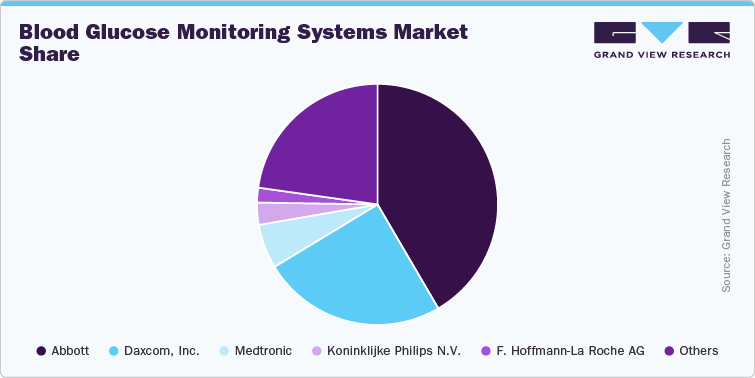
Blood Glucose Monitoring Systems
Blood glucose monitoring systems are medical devices designed to measure and track blood sugar levels, primarily for managing diabetes. These systems are categorized into Self-Monitoring Blood Glucose and Continuous Glucose Monitoring (CGM) systems. With the rising prevalence of diabetes, along with sedentary lifestyles and an aging population, the introduction of these systems is anticipated to enhance patient monitoring with greater accuracy, convenience, and accessibility.
-
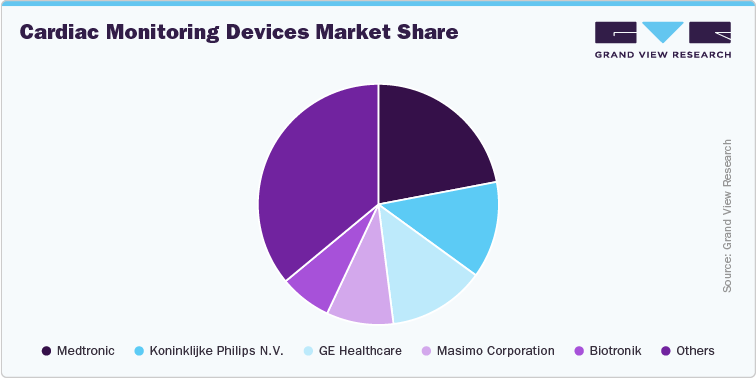
Cardiac Monitoring Devices
Cardiac monitoring devices are specialized medical instruments designed to observe and record the electrical activity and function of the heart. These devices help detect irregular heart rhythms, monitor heart rate, and assess overall cardiac health. They are commonly used in hospitals, emergency care, and during post-surgical recovery to ensure the timely detection of heart-related issues.
Some Of the Key Developments Recorded In the Patient Monitoring Devices Industry
Companies
Year
Month
Details
Compumedics Limited
2025
March
The Falcon HST has received FDA clearance for marketing in the USA, further supporting the company's strategy for growth in the US sleep business. The Falcon HST will complement the Somfit technology platform, which is already gaining commercial momentum in the US home sleep testing (HST) market.
Koninklijke Philips N.V.
2025
February
The company revealed that the AI-enabled CT 5300 monitoring has launched a new CT 5300. The system controls the power of AI at every stage in the CT scanner process. It enhances radiology departments' diagnostic and productivity capabilities and is built for cardiac, bariatric, interventional, and trauma.
Shenzhen Mindray Bio-Medical Electronics Co., Ltd.
2024
December
It announced the launch of the Resona I8 Ultrasound Machine, which features advanced imaging technologies to enhance diagnostic accuracy and patient care.
Dexcom.Inc
2024
December
Stelo is a CGM system designed for prediabetes and non-insulin-dependent type 2 diabetes patients. This product aims to expand DexCom's reach within the non-insulin-using diabetic population.
Nonin Medical Inc.
2024
December
Nonin Medical has received FDA clearance for its over-the-counter fingertip pulse oximeter, which is designed to provide accurate readings for patients of all skin colours.
![gvr icn]()
GET A FREE SAMPLE
![gvr icn]()
This FREE sample includes market data points, ranging from trend analyses to market estimates & forecasts. See for yourself.
![gvr icn]()
NEED A CUSTOM REPORT?
We can customize every report - free of charge - including purchasing stand-alone sections or country-level reports, as well as offer affordable discounts for start-ups & universities.
Contact us now to get our best pricing.
![esomar icon]()
ESOMAR certified & member
![ISO]()
ISO Certified
We are GDPR and CCPA compliant! Your transaction & personal information is safe and secure. For more details, please read our privacy policy.






We are committed towards customer satisfaction, and quality service.
Client Testimonials

"The quality of research they have done for us has been excellent..."
ISO Certified