
- Home
- »
- Pharmaceuticals
- »
-
Spinal Muscular Atrophy Drug Market Intelligence & Forecast, 2033GVR Report cover
![Spinal Muscular Atrophy Drug-Level Market Intelligence, Commercial Forecasting, Estimations & Portfolio Report]()
Spinal Muscular Atrophy Drug-Level Market Intelligence, Commercial Forecasting, Estimations & Portfolio Analysis, 2021 - 2033
Overview
The global spinal muscular atrophy (SMA) drugs market was valued at USD 5.4B in 2025 and is projected to expand at a CAGR of 3.7% from 2026 to 2033. Competition is driven primarily by treatment modality rather than branded versus generic products, as all three therapies remain under patent. Zolgensma (onasemnogene abeparvovec), Novartis's one-time gene therapy, competes against Spinraza (nusinersen), Biogen's chronic intrathecal injection, and Evrysdi (risdiplam), the oral option from Roche/Genentech and PTC Therapeutics. The U.S. remains the largest market, supported by widespread newborn screening, established treatment infrastructure, and early diagnosis. China and other Asia Pacific countries are emerging as high-growth markets due to recent product approvals, improving reimbursement, and expanding access to genetic testing. In markets with limited newborn screening or reimbursement coverage, patients are still often diagnosed only after symptom onset, relying on whichever DMT is locally accessible and reimbursed.
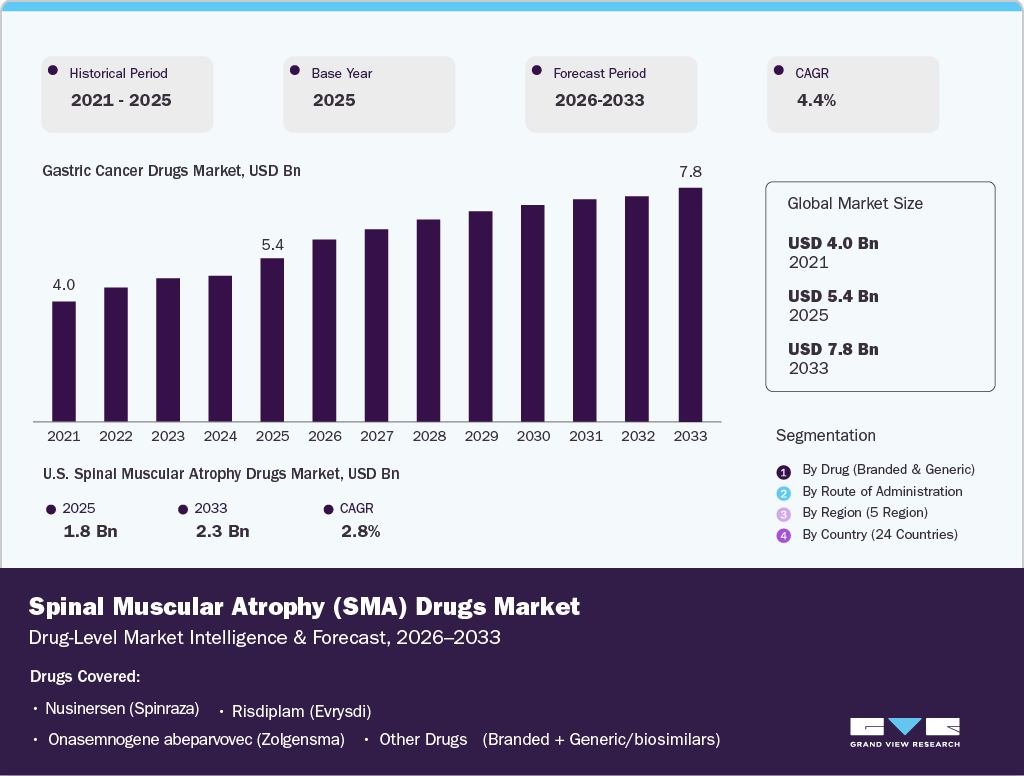
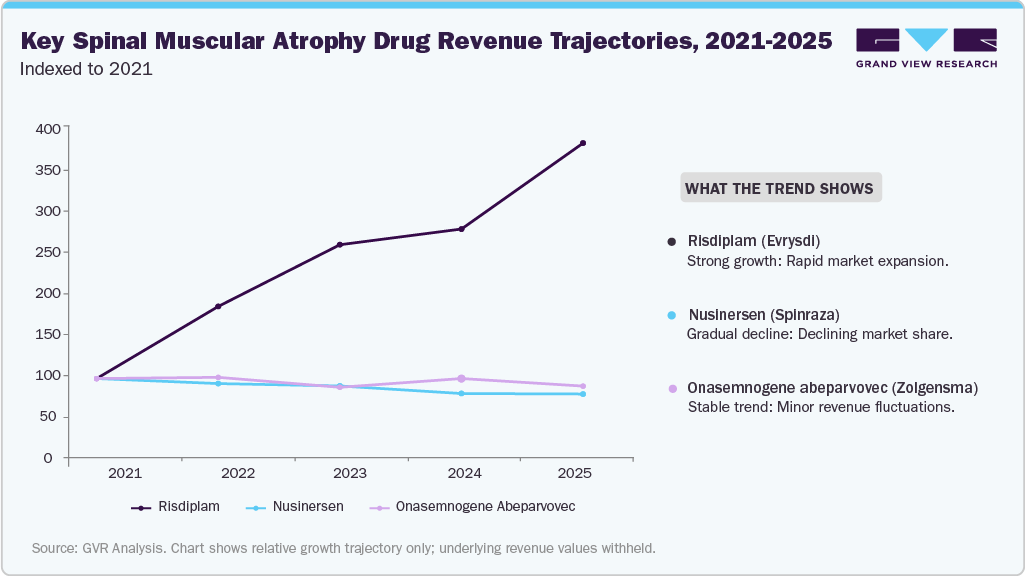
GVR's SMA drug intelligence database tracks branded formulations across the three approved molecule classes, from the SMN2-splicing therapies (Nusinersen/Spinraza, Risdiplam/Evrysdi) to gene therapy (Onasemnogene abeparvovec/Zolgensma). SMA affects approximately 1 in 6,000-10,000 live births, with a carrier frequency of 1 in 40-60 individuals, making it one of the leading inherited causes of infant mortality. Evrysdi has become the leading revenue-generating therapy due to its convenient oral administration and broad patient eligibility, reaching USD 1.5 billion in sales during the first nine months of 2024, reflecting strong double-digit growth. Spinraza continues to maintain a stable patient base, with growth increasingly coming from international markets where access to gene therapy remains limited. Zolgensma continues to generate significant value despite treating fewer patients, supported by its premium one-time pricing and use in eligible infants identified through newborn screening programs.
Market growth over the forecast period will be supported by broader newborn screening programs, improved reimbursement for high-cost gene therapies, and expansion of treatment infrastructure in developing markets. Companies are also focusing on label expansion strategies to increase the eligible patient population. Novartis is evaluating an intrathecal formulation of Zolgensma for older patients, while Roche is investigating combination approaches to improve outcomes in patients with advanced disease. These developments are expected to strengthen market penetration and shift demand toward therapies that offer the best balance of clinical benefit, patient convenience, and reimbursement support.
Current Market Scenario
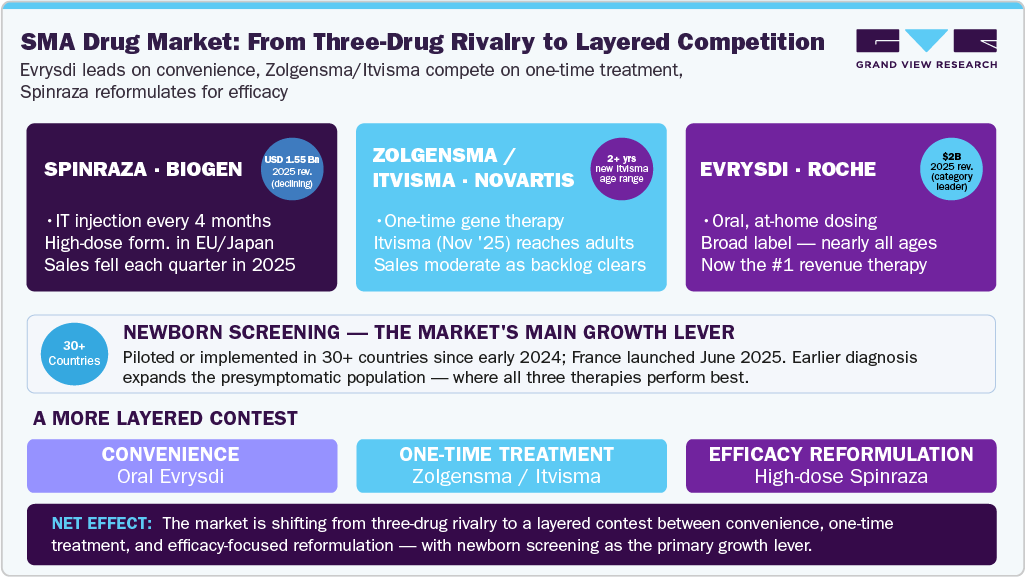
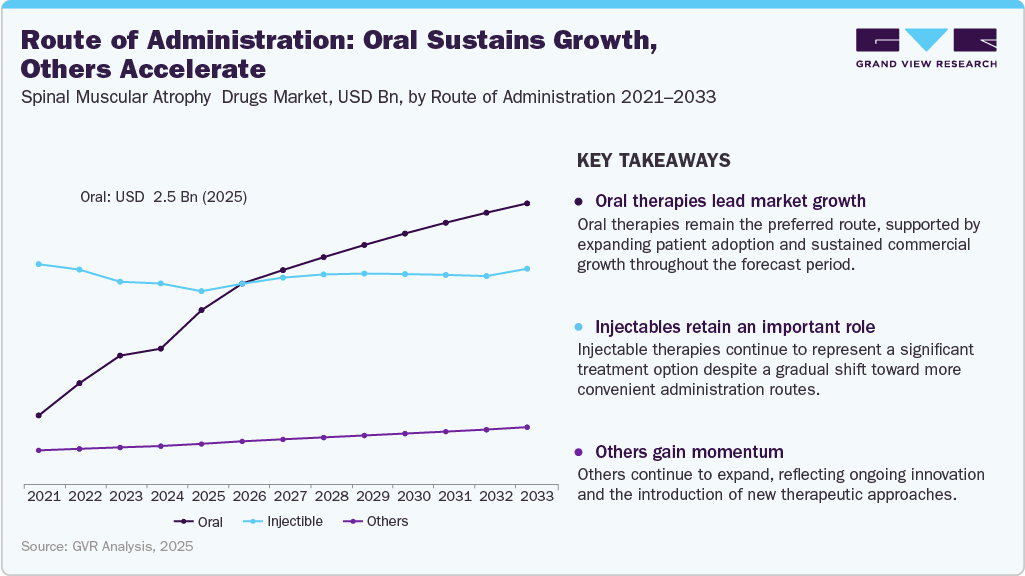
The SMA drugs market is differentiated by treatment format rather than mechanism of action, as all approved therapies are disease-modifying. Spinraza (nusinersen) remains the most widely used therapy across all SMA types and age groups through regular intrathecal administration. Evrysdi (risdiplam) has become the preferred treatment for many patients because of its convenient once-daily oral dosing at home, with more than 16,000 patients treated globally. Zolgensma (onasemnogene abeparvovec) is a one-time gene therapy that delivers the highest revenue per patient, although its use is mainly limited to infants diagnosed early through newborn screening.
Market expansion is primarily limited by early diagnosis, genetic testing, newborn screening programs, reimbursement, and access to specialized treatment centers, especially in emerging markets. Increasing newborn screening coverage and expanding treatment eligibility remain key opportunities to improve patient access and support long-term market growth.
Table: Drug Estimations & Forecast 2025 & 2033 By Country (USD Mn)
Country
2025
2033
Analyst Perspective
Evrysdi
U.S.
703.7
1,023.6
Growth is expected to continue as the oral formulation, including the newly approved tablet, gains further share from injectable competitors based on convenience and broad label coverage across ages and SMA types.
Germany
127.3
155.4
Uptake is projected to keep rising as reimbursement stabilises and prescribers increasingly favour oral dosing for both newly diagnosed and previously treated patients.
UK
83.9
108.6
Adoption is expected to increase steadily, supported by NHS reimbursement and growing use in presymptomatic infants identified through screening pilots.
France
80.5
99.0
Utilization is anticipated to accelerate following the June 2025 launch of France's national newborn screening programme, which is expected to expand the pool of early-identified patients.
Source: GVR Analysis
Competitive Landscape
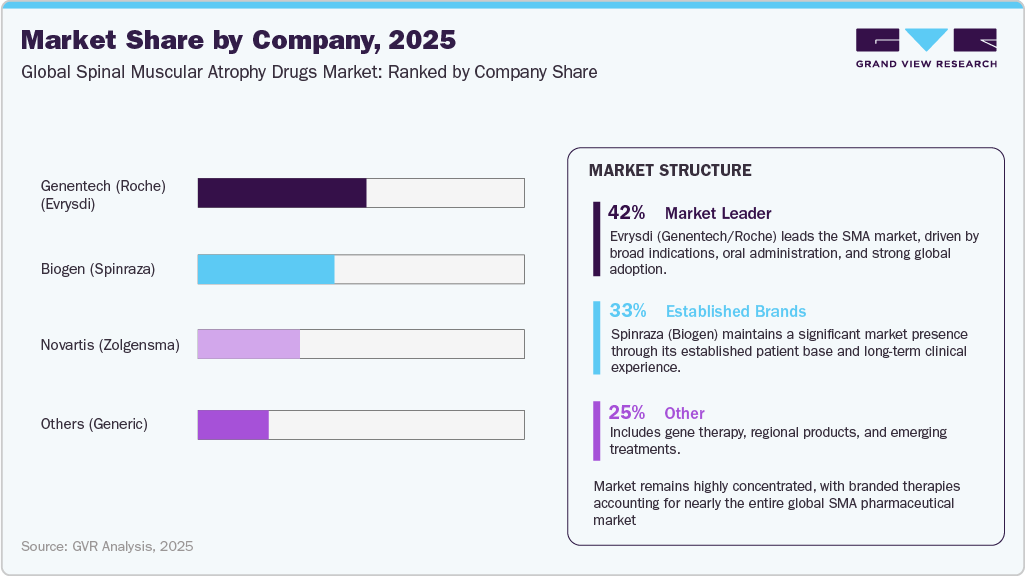
Biogen maintains a strong position with Spinraza, the first approved SMA therapy, supported by its broad indication across SMA types and age groups. Roche/Genentech and PTC Therapeutics continue to gain market share through Evrysdi, driven by its convenient oral administration and growing global adoption. Novartis leads the gene therapy segment with Zolgensma, which generates significant revenue through one-time treatment despite serving a relatively smaller eligible patient population.
Competition is driven by patient convenience, treatment accessibility, and label expansion rather than pricing. Oral therapy continues to gain preference over hospital-based administration, while companies are investing in expanded indications and combination therapies to improve long-term outcomes and reach additional patient populations.
Market Dynamics
NINDS-funded research directly contributed to the antisense and gene therapy science behind the first approved SMA treatments, and the institute has since established the Ultra-Rare Gene Therapy Network (URGenT) to support development of gene-based therapies for conditions affecting 1 in 50,000 people, a category that includes SMA. This reflects a broader shift in government research priorities toward supporting the infrastructure and manufacturing science that gene therapies for rare neuromuscular disease depend on, rather than funding SMA in isolation.
The treatment approach has shifted from managing symptoms to treating patients before symptoms develop. In the NURTURE trial, infants who started nusinersen before symptom onset all survived without permanent ventilation, and 88% achieved independent walking, compared with just 6 of 73 symptomatic infants reaching the ability to sit unsupported in the earlier ENDEAR trial. Similar presymptomatic outcome advantages have been shown for onasemnogene abeparvovec in the SPR1NT trial. This evidence is driving urgency around diagnosing and treating infants immediately upon a positive newborn screen, rather than waiting for symptom confirmation.
Key Market Trends
"Presymptomatic Treatment Is Redefining What 'Standard of Care' Means in SMA"
Presymptomatic treatment is becoming the standard of care in SMA. Earlier diagnosis through genetic newborn screening allows treatment to begin before irreversible motor neuron damage occurs, improving long-term clinical outcomes. This dynamic is reshaping care pathways around rapid genetic confirmation and same-week treatment initiation rather than around traditional diagnostic workup.
"Muscle-Targeted Add-On Therapies Are Emerging to Address Residual Motor Impairment"
Although current SMN-targeted therapies have significantly improved patient outcomes, many patients continue to experience residual muscle weakness. Companies are therefore developing muscle-targeted add-on therapies to complement existing treatments. If approved, these therapies are expected to create a new treatment segment by improving muscle strength while patients continue receiving established SMN-directed therapies.
ROA Analysis
Regional Analysis
U.S. SMA Drugs Market
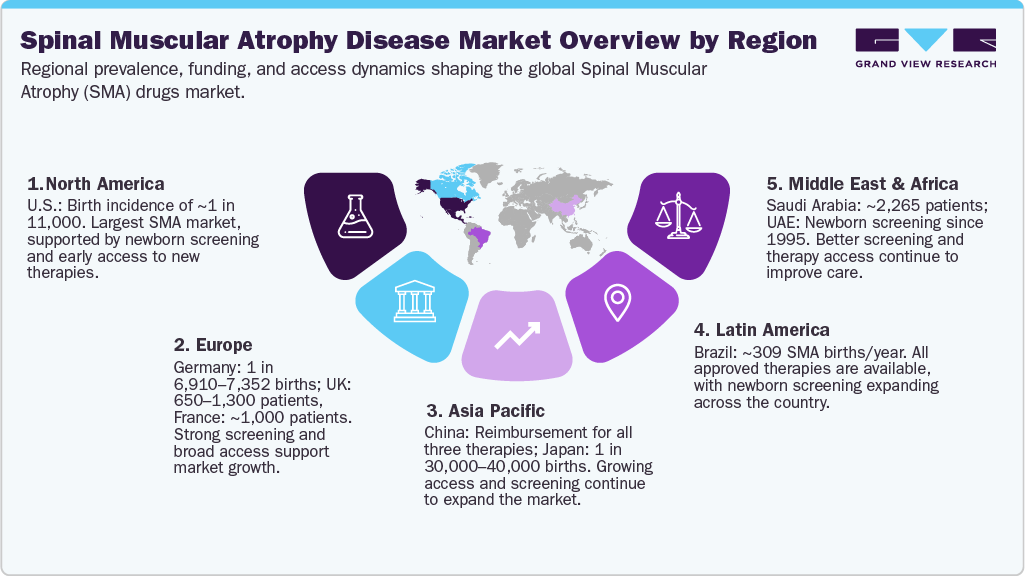
SMA affects an estimated 1 in 8,000 to 11,000 live births. Newborn screening, added to the RUSP in 2018, now covers roughly 97% of newborns, the fastest rollout of any condition added to the panel that decade. All three approved therapies, Spinraza, Zolgensma, and Evrysdi, are reimbursed and commercially available, giving patients the broadest treatment choice of any market.
UK SMA Drugs Market
The UK offers full NHS access to all three approved SMA therapies but lacks universal newborn screening. Spinraza has been NHS-funded since 2019, and Zolgensma followed in 2021 under a confidential pricing deal with Novartis. Without national screening, diagnosis still depends heavily on regional pilot programs and symptom recognition rather than systematic early detection.
Germany SMA Drugs Market
Germany combines early national screening with full reimbursement across all three therapies. Newborn screening went nationwide in 2021, building on an earlier two-state pilot, and birth prevalence is estimated at 1 in 7,000 to 7,500. Germany's established neuromuscular referral network supports fast treatment initiation once a positive screen is confirmed, though coverage gaps remain for patients without local residency status.
France SMA Drugs Market
France has moved from regional pilots to a national newborn screening program for SMA. The DEPISMA project tested feasibility in the Grand-Est and Nouvelle-Aquitaine regions before informing national rollout. All three therapies are reimbursed, and France maintains a national SMA patient registry to track long-term outcomes and support future reimbursement decisions.
Japan SMA Drugs Market
Japan was one of the first countries worldwide to approve SMA therapy and continues to lead on early access. Spinraza was approved in 2017, just a year after its global debut, followed by Zolgensma in 2020 and Evrysdi in 2021. All three are reimbursed nationally, and regional newborn screening pilots in prefectures such as Kumamoto and Osaka have already identified and treated presymptomatic infants.
China SMA Drugs Market
China's SMA market has been reshaped more by pricing negotiation than by approval timing. An estimated 30,000 to 50,000 people live with SMA in China, with roughly 9 in 10 still inadequately treated. Spinraza was approved in 2019 but saw limited uptake until a roughly 95% price cut secured NRDL listing in 2021, expanding treated volume more than sevenfold. Evrysdi followed onto the NRDL in 2023, and Zolgensma is now available at a steep discount versus Western pricing.
Brazil SMA Drugs Market
All three therapies are ANVISA-approved, but between 2019 and 2022, 136 lawsuits sought Zolgensma coverage from the public health system, with 83% ruled in patients' favor at a cost of roughly USD 186.9 million. Pilot newborn screening programs have since begun in several states, aiming to shift diagnosis toward earlier, systematic detection.
Saudi Arabia SMA Drugs Market
Saudi Arabia has an unusually high SMA carrier frequency, estimated at around 1 in 38, driven by higher rates of consanguineous marriage. This has made premarital and newborn genetic screening a public health priority, alongside expanding gene therapy access through specialized centers. The country is also a major referral source for SMA genetic testing across the wider Middle East.
UAE SMA Drugs Market
The UAE has built one of the region's most developed SMA screening infrastructures, running a large-scale newborn screening study of its Emirati population to establish local carrier and incidence data. Confirmed cases receive gene therapy through specialized centers such as Al Jalila Children's Specialty Hospital. This investment positions the UAE as a regional hub for SMA diagnosis and treatment access.
Analyst Perspective
- Market value is driven by treatment format rather than by a symptomatic-to-DMT shift
All approved SMA therapies are disease-modifying, with no symptomatic drug segment competing for market share. Evrysdi leads in patient volume due to its convenient oral administration, Spinraza maintains a strong position through its broad patient eligibility and established use, while Zolgensma generates the highest revenue per patient as a one-time gene therapy.
- Reimbursement negotiation, not diagnostic infrastructure, is the primary lever unlocking emerging markets
Market expansion depends largely on reimbursement approvals and pricing agreements rather than product availability. China's significant increase in Spinraza adoption following its inclusion in the national reimbursement list demonstrates the impact of pricing negotiations, while access in countries such as Brazil continues to depend on reimbursement policies and legal pathways.
- Newborn screening coverage, not treatment approval, is the real bottleneck to earlier intervention
Although all major SMA therapies are approved in many countries, early diagnosis continues to depend on newborn screening programs. Markets with widespread screening, such as the U.S., Germany, and Japan, achieve earlier treatment initiation and better patient outcomes, whereas countries with limited screening continue to diagnose many patients after symptom onset.
- Muscle-targeted add-on therapy is emerging as the next lifecycle lever, rather than new indications
Future market expansion is expected to come from therapies that complement existing SMN-targeted treatments rather than replace them. Muscle-targeted therapies designed to improve motor function alongside current disease-modifying treatments could create an additional revenue opportunity and further improve long-term patient outcomes.


Customize this report to your needs - add regions, segments, or data points, with 20% free customization.
Or view our licence options:


ISO 9001:2015 & 27001:2022 Certified
We are GDPR and CCPA compliant! Your transaction & personal information is safe and secure. For more details, please read our privacy policy.


