
- Home
- »
- Pharmaceuticals
- »
-
Multiple Sclerosis Drug Market Intelligence & Forecast, 2021-2033GVR Report cover
![Multiple Sclerosis Drug-Level Market Intelligence, Commercial Forecasting, Estimations & Portfolio Report]()
Multiple Sclerosis Drug-Level Market Intelligence, Commercial Forecasting, Estimations & Portfolio Analysis, 2021-2033
Overview
The global multiple sclerosis drugs market was valued at USD 31.8B in 2025 and is projected to reach USD 59.6B by 2033, growing at a CAGR of 8.0%. Market growth is increasingly driven by a shift from conventional injectable and oral disease-modifying therapies (DMTs) toward high-efficacy biologics, particularly anti-CD20 monoclonal antibodies and therapies for progressive multiple sclerosis. Ocrevus, Kesimpta, Briumvi, and Tysabri continue to support revenue growth through superior efficacy, convenient administration, and lifecycle management strategies. The U.S. remains the largest market due to the broad adoption of biologics and favorable reimbursement, while Europe continues to expand the use of high-efficacy therapies. Asia-Pacific offers significant long-term growth potential, supported by improving diagnosis, expanding healthcare infrastructure, and wider access to disease-modifying treatments. However, established oral therapies and legacy injectable disease-modifying treatments continue to account for a significant share of global treatment utilization.
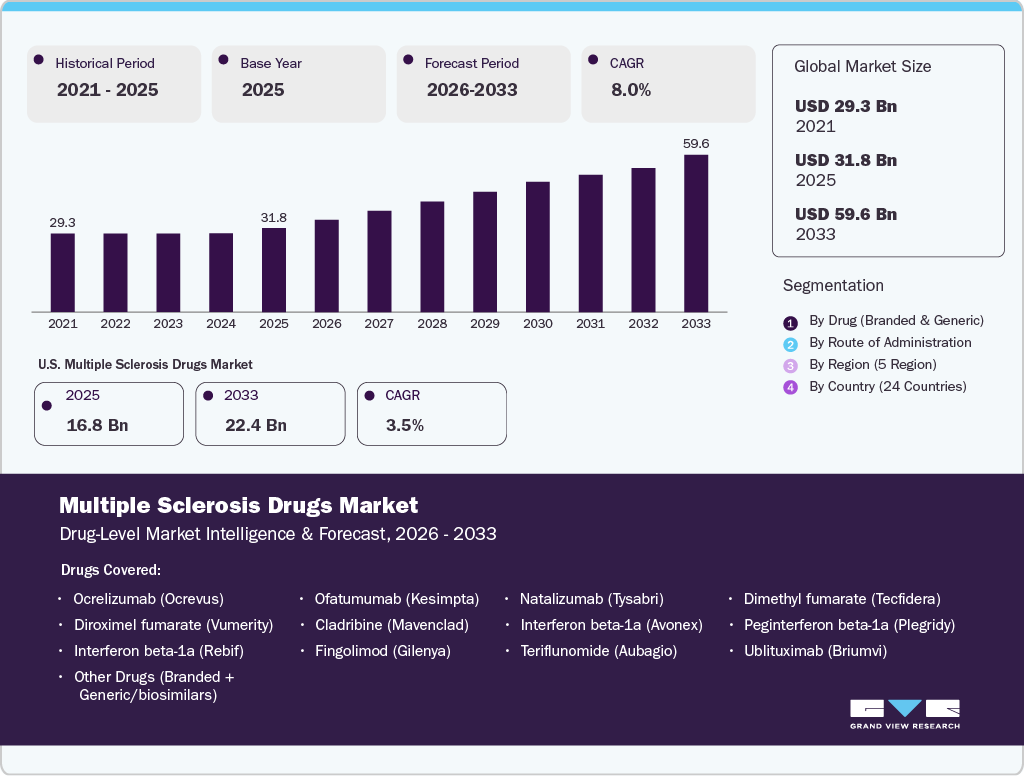
GVR's multiple sclerosis drugs intelligence database tracks 20+ and generic formulations across 30+ molecules across disease-modifying therapies (DMTs), relapse management agents, and symptomatic treatments. The database covers key therapeutic classes including anti-CD20 monoclonal antibodies, sphingosine-1-phosphate (S1P) receptor modulators, fumarates, interferon beta therapies, glatiramer acetate, anti-α4 integrin monoclonal antibodies, pyrimidine synthesis inhibitors, purine analogs, and potassium channel blockers. Major products tracked include Ocrevus, Kesimpta, Briumvi, Tysabri, Tecfidera, Vumerity, Gilenya, Aubagio, Zeposia, Mayzent, Ponvory, Mavenclad, Lemtrada, Copaxone, and Ampyra. The database also monitors product-level market estimates, reimbursement scenarios, competitive positioning, and country-level forecasts, providing a comprehensive view of the evolving multiple sclerosis therapeutic landscape across major pharmaceutical markets.
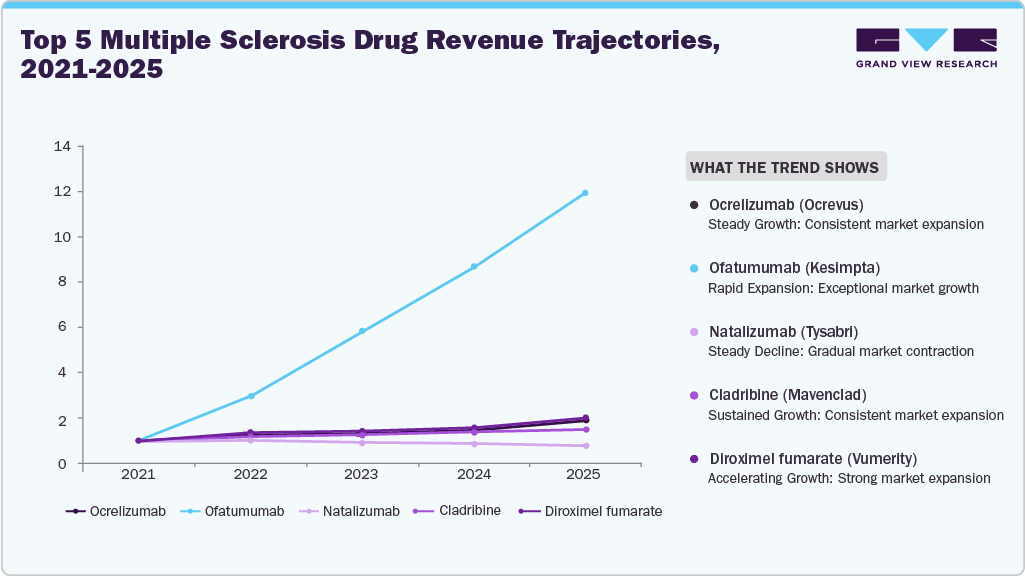
The multiple sclerosis drugs market is following two distinct commercial trajectories. High-efficacy biologics, including Ocrevus, Kesimpta, and Briumvi, continue to drive market value through premium pricing, expanded indications, and increased adoption. In contrast, established oral disease-modifying therapies such as Tecfidera, Aubagio, and Gilenya are experiencing pricing pressure due to generic competition and market maturity. The anticipated launch of ocrelizumab biosimilars is expected to intensify competition, reduce treatment costs, and improve patient access across major markets.
Future growth will be supported by high-efficacy biologics, therapies targeting progressive multiple sclerosis, and lifecycle innovation rather than conventional oral disease-modifying therapies. Pharmaceutical companies are prioritizing subcutaneous formulations, next-generation anti-CD20 therapies, and Bruton tyrosine kinase (BTK) inhibitors to improve treatment convenience and delay disability progression. Recent developments reinforce this trend, including the European Commission's approval of Sanofi's Cenrifki (tolebrutinib) for non-relapsing secondary progressive multiple sclerosis and positive Phase III results for Roche's fenebrutinib, which demonstrated significant efficacy in relapsing multiple sclerosis and primary progressive multiple sclerosis. Advances in biomarker-guided patient stratification, magnetic resonance imaging (MRI), and digital health technologies are expected to optimize clinical development and personalized treatment strategies, shifting future market value toward differentiated biologics and innovative therapeutic platforms.
Net effect: Revenue growth is shifting toward high-efficacy biologics, while established disease-modifying therapies continue to sustain treatment volumes.
Current Market Scenario

Overall, market value is increasingly shifting toward differentiated biologics, while established DMTs continue to maintain high treatment volumes. Products such as Ocrevus, Kesimpta, Tysabri, Tecfidera, Aubagio, Gilenya, Mayzent, and Zeposia remain widely used in relapsing multiple sclerosis, whereas newer therapies such as Briumvi and Ocrevus Zunovo are expanding the premium segment by offering differentiated anti-CD20 treatment options and more convenient administration. The growing availability of high-efficacy therapies and expanded treatment recommendations continue to support demand for advanced disease-modifying therapies across both relapsing and progressive multiple sclerosis.
Adoption of premium multiple sclerosis therapies continues to depend on early diagnosis, individualized treatment selection, reimbursement coverage, and long-term safety monitoring. Although high-efficacy biologics have demonstrated superior clinical outcomes, their uptake remains influenced by payer policies, infusion capacity, and patient access. For example, the ULTIMATE I and II Phase III trials demonstrated that Briumvi (ublituximab) significantly reduced the annualized relapse rate compared with teriflunomide (Aubagio), supporting the continued shift toward high-efficacy anti-CD20 therapies in the multiple sclerosis treatment landscape.
Table: Drug Estimations & Forecast 2025 & 2033, By Country (USD Mn)
Country
2025
Analyst Perspective
Ocrelizumab
U.S.
5,075.0
Largest revenue market, supported by broad biologic adoption and favorable reimbursement.
Germany
309.5
Strong uptake driven by established reimbursement and high-efficacy therapy adoption.
UK
203.9
Growth is supported by NHS access and increasing use of high-efficacy therapies.
France
167.0
Stable demand is supported by reimbursement and continued biologic utilization.
Diroximel fumarate
U.S.
692.1
Primary revenue market is driven by strong commercial uptake.
Germany
9.47
Limited uptake due to competition from established therapies.
France
6.2
Modest market share amid a competitive oral DMT landscape.
UK
5.1
Limited adoption reflecting preference for established treatment options.
Source: GVR Analysis
Competitive Landscape
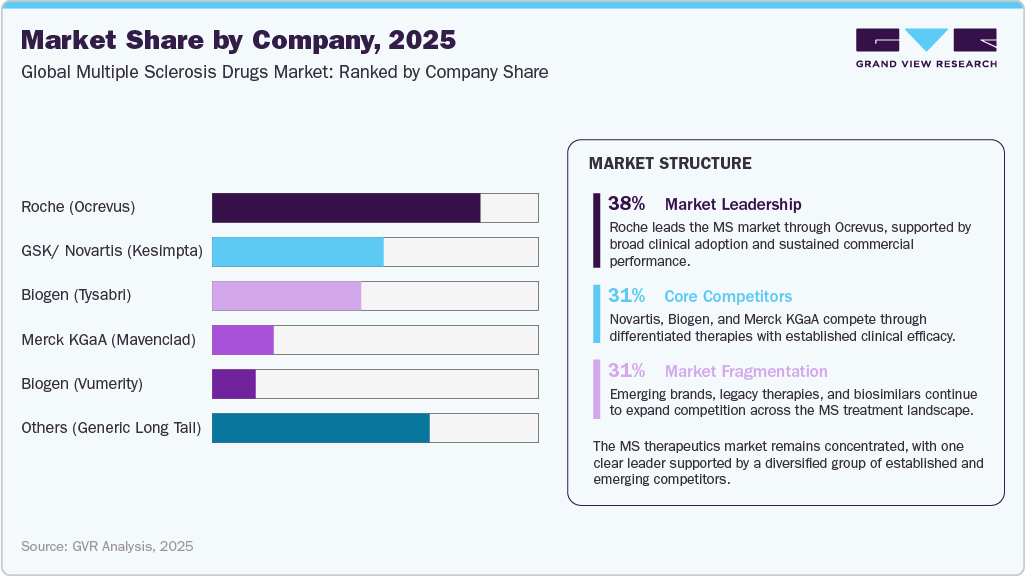
Competition in the multiple sclerosis drugs market is centered on product differentiation through mechanism of action, route of administration, dosing frequency, and lifecycle management. Roche's Ocrevus continues to hold a significant position in the anti-CD20 segment, while Novartis (Kesimpta), TG Therapeutics (Briumvi), Biogen (Tysabri), Bristol Myers Squibb (Zeposia), and Sanofi (Aubagio) compete across relapsing forms of multiple sclerosis with differentiated efficacy, safety, and administration profiles. Oral disease-modifying therapies and monoclonal antibodies continue to account for a substantial share of treatment utilization.
The market comprises both branded biologics and established oral therapies, with competition increasingly influenced by reimbursement, patient access programs, formulation innovation, and lifecycle management strategies. Manufacturers are investing in subcutaneous formulations, expanded indications, and label extensions to strengthen product positioning and maintain market share as treatment preferences continue to evolve.
Pipeline competition is primarily driven by Bruton tyrosine kinase (BTK) inhibitors, including Roche's fenebrutinib and Sanofi's tolebrutinib, which are being developed to address unmet needs in progressive multiple sclerosis through B-cell modulation and microglial activity. In parallel, biosimilar competition is emerging with products such as Tyruko (natalizumab-sztn), the first biosimilar to Biogen's Tysabri, expanding treatment options while increasing pricing pressure. These developments are prompting manufacturers to emphasize clinical differentiation, lifecycle management, and portfolio expansion to sustain long-term revenue growth.
Market Dynamics
Rising disease burden and improving diagnosis
The increasing prevalence of multiple sclerosis (MS) and continued improvements in diagnostic capabilities are expanding the addressable treatment population. According to the Atlas of MS, 3rd Edition, approximately 2.9 million people were living with MS globally in 2023, compared with the previously reported 2.8 million. Wider adoption of MRI and updated diagnostic criteria are supporting earlier diagnosis and treatment initiation, while longer patient survival is increasing the duration of disease-modifying therapy use, creating sustained demand across relapsing and progressive MS treatment segments.
Advancing clinical pipelines is shaping the market
The development of Bruton tyrosine kinase (BTK) inhibitors is reshaping the multiple sclerosis therapeutic landscape. Several pharmaceutical companies are advancing BTK inhibitor candidates through Phase III clinical trials to address both relapsing and progressive forms of the disease. These therapies are designed to modulate B-cell and microglial activity, offering potential benefits beyond currently available disease-modifying therapies. Continued investment in this drug class is expected to expand future commercialization opportunities and strengthen the competitive pipeline.
Analyst Perspective
-
Commercial growth is increasingly driven by high-efficacy biologics
Products such as Ocrevus, Kesimpta, Briumvi, and Tysabri continue to drive market value through premium pricing, expanded indications, and increasing adoption, while established oral therapies, including Tecfidera, Aubagio, and Gilenya, remain significant contributors to treatment utilization.
-
Subcutaneous biologics and BTK inhibitors represent the next wave of innovation
The approval of Ocrevus Zunovo and continued development of fenebrutinib and tolebrutinib reflect the industry's focus on improving treatment convenience and addressing unmet needs in progressive multiple sclerosis.
-
Lifecycle management is strengthening competitive positioning
Manufacturers are expanding product value through subcutaneous formulations, label expansions, and lifecycle strategies rather than introducing additional therapies within established mechanisms of action.
-
Precision medicine is emerging as a long-term strategic focus
Advances in biomarkers, remyelination therapies, neuroprotective agents, and precision immunomodulators are supporting more personalized treatment approaches and are expected to influence future pipeline development and commercial competition.
Key Market Trends
“Briumvi's commercial expansion reflects increasing competition in anti-CD20 therapies”
TG Therapeutics' briumvi (ublituximab) continues to strengthen its position in the multiple sclerosis market following its U.S. launch. The company reported U.S. net product revenue of approximately $195 million in Q1 2026, up from $183 million in Q4 2025, and increased its full-year 2026 revenue guidance based on continued patient adoption. In parallel, Roche's subcutaneous Ocrevus Zunovo expands anti-CD20 treatment options with a shorter administration time than intravenous infusion. These developments indicate a shift toward differentiated anti-CD20 therapies that combine clinical efficacy with improved treatment convenience, intensifying competition within the disease-modifying therapy market.
“Shift toward subcutaneous biologics and next-generation immunotherapies”
The multiple sclerosis therapeutic landscape is shifting toward subcutaneous biologics and next-generation immunotherapies that improve patient convenience and healthcare resource utilization. Roche's Ocrevus Zunovo (subcutaneous ocrelizumab) offers a shorter administration time than the intravenous formulation while maintaining comparable efficacy and safety. At the same time, Bruton tyrosine kinase (BTK) inhibitors, including Sanofi's tolebrutinib and Roche's fenebrutinib, are advancing through late-stage development for progressive multiple sclerosis, reflecting the industry's focus on therapies targeting disability progression and convenient drug delivery. These developments are expected to strengthen future commercialization opportunities and intensify market competition.
ROA Analysis
Regional Analysis
U.S. Multiple Sclerosis Drugs Market
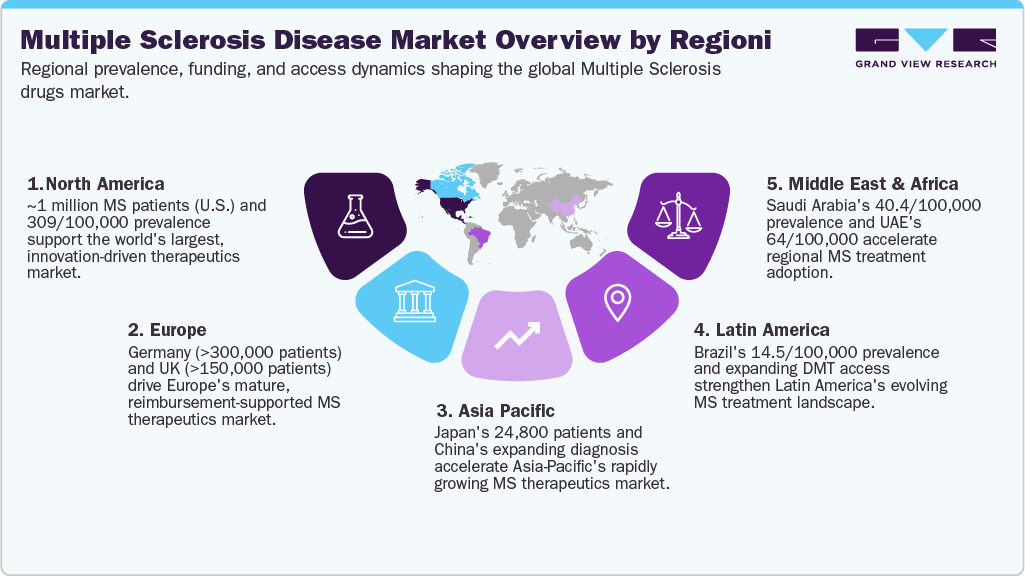
Nearly 1 million Americans are estimated to be living with MS, with a prevalence of approximately 309 cases per 100,000 adults. Women account for nearly 76% of diagnosed cases and are almost three times more likely to develop MS than men. Relapsing-remitting MS (RRMS) represents 80-90% of initial diagnoses, driving significant demand for long-term treatment. Rising utilization of advanced MRI diagnostics, increasing clinical research, expanding availability of high-efficacy therapies, and continued support from the National Multiple Sclerosis Society are further accelerating market growth and strengthening the U.S. position as the leading global MS market.
UK Multiple Sclerosis Drugs Market
More than 150,000 people are currently living with MS in the UK, with approximately 7,100 new cases diagnosed annually. Relapsing-remitting MS (RRMS) accounts for nearly 85% of newly diagnosed cases, sustaining demand for long-term immunomodulatory therapies. In 2025, NHS England became the first healthcare system in Europe to expand access to oral cladribine for eligible patients with active RRMS, improving treatment convenience while reducing hospital visits. Furthermore, a 2026 UK epidemiological study reported an MS incidence rate of 8.84 cases per 100,000 person-years, reflecting the continued clinical and economic burden of the disease and reinforcing opportunities for market growth.
Germany Multiple Sclerosis Drugs Market
According to the 2025 German MS Registry Report, more than 300,000 people are living with MS in Germany, highlighting the country's substantial disease burden. The 2025 Frontiers in Neurology study further reports that approximately 280,000 individuals were affected by MS in 2023 and found that 45.6% of patients remained untreated with DMTs. The study also demonstrated significantly higher untreated rates among patients with progressive MS than those with relapsing-remitting MS (RRMS), indicating an unmet therapeutic need. Continued expansion of high-efficacy therapies and real-world evidence generation is expected to support sustained market growth in Germany.
France Multiple Sclerosis Drugs Market
According to the French National Health Insurance Database (SNDS), 134,062 people were living with MS in France in 2021, corresponding to a prevalence of 197.6 cases per 100,000 population. Women accounted for 71.8% of all patients, with prevalence rates of 274.9 per 100,000 compared with 115.2 per 100,000 in men. A 2025 Neurology study further reported that MS incidence and the female-to-male sex ratio remained stable between 2011 and 2021, while the increasing prevalence reflects improved survival and disease management. Continued reimbursement of innovative therapies and strong real-world research are expected to support sustained market growth in France.
Japan Multiple Sclerosis Drugs Market
According to the Fifth Nationwide Survey of Neuro-immunological Diseases in Japan, the estimated prevalence of MS reached 14.2 cases per 100,000 population, while the combined prevalence of MS and neuromyelitis optica spectrum disorder (NMOSD) was 19.6 per 100,000, corresponding to an estimated 24,800 patients. The survey also showed that the overall burden of MS and NMOSD increased 2.5-fold compared with the 2003 nationwide survey, reflecting improved diagnosis and disease recognition. Researchers at Kyushu University identified astroglial connexin 43 (Cx43) as a promising therapeutic target for chronic multiple sclerosis, highlighting Japan's ongoing commitment to advancing innovative therapies for progressive Multiple Sclerosis.
China Multiple Sclerosis Drugs Market
A 2022 review reported the first nationwide MS incidence of 0.235 cases per 100,000 person-years in 2018 and highlighted that interferon beta was the only approved DMT in China before 2018, while teriflunomide became the first oral DMT approved that year. More recent evidence from 2025 emphasizes continued advances in MS diagnosis and management through expanded treatment options and the China National Registry of Neuro-Inflammatory Diseases. A 2026 national analysis identified a persistent disability burden despite improvements in quality care, while the NSFC continues to support innovative research targeting progressive MS, strengthening future therapeutic development.
Brazil Multiple Sclerosis Drugs Market
A 2025 systematic review and meta-analysis estimated the pooled prevalence of MS at 14.5 cases per 100,000 inhabitants, with women accounting for 76.3% of cases and relapsing-remitting MS (RRMS) representing 80.2% of patients. A nationwide pharmaco-epidemiological review further highlighted the continuous expansion of DMT availability through SUS, including interferons, fingolimod, ocrelizumab, and other high-efficacy therapies, improving access to treatment across the country. Although regional disparities in disease prevalence and medication distribution persist, continued expansion of therapeutic access and epidemiological surveillance is expected to support the sustained growth of Brazil's MS therapeutics market.
Saudi Arabia Multiple Sclerosis Drugs Market
According to the Saudi National MS Registry, the estimated prevalence of MS reached 40.4 cases per 100,000 population, increasing to 61.95 cases per 100,000 Saudi nationals, reflecting a growing disease burden. Relapsing-remitting MS (RRMS) accounts for 65-75% of cases, highlighting the demand for effective long-term treatment strategies. In 2025, Saudi neurologists established a national Delphi consensus on the administration and monitoring of high-efficacy DMTs, providing standardized recommendations to optimize treatment selection, monitoring practices, and healthcare resource utilization, thereby strengthening the country's MS management framework and supporting future market growth.
UAE Multiple Sclerosis Drugs Market
According to the Department of Health Abu Dhabi, the prevalence of MS among Emirati nationals in Abu Dhabi is approximately 64 cases per 100,000 population, while the annual incidence among adolescents aged 15-19 years is 7 cases per 100,000 population. In 2024, the UAE National Multiple Sclerosis Society published the country's first national disease-modifying treatment (DMT) guidelines, adapting international best practices into a pragmatic treatment algorithm tailored to the UAE healthcare system, and in 2025, these guidelines were formally launched nationwide to standardize MS care and improve treatment access.
-


Customize this report to your needs - add regions, segments, or data points, with 20% free customization.
Or view our licence options:


ISO 9001:2015 & 27001:2022 Certified
We are GDPR and CCPA compliant! Your transaction & personal information is safe and secure. For more details, please read our privacy policy.


