
- Home
- »
- Food Additives & Nutricosmetics
- »
-
Carotenoids Market Size And Share, Industry Report, 2033GVR Report cover
![Carotenoids Market Size, Share & Trends Report]()
Carotenoids Market (2025 - 2033) Size, Share & Trends Analysis Report By Product (Beta Carotene, Lutein, Lycopene, Zeaxanthin, Canthaxanthin), By Application (Food, Supplements, Feed, Pharmaceuticals, Cosmetics), By Source, By Region, And Segment Forecasts
- Report ID: GVR-1-68038-321-8
- Number of Report Pages: 80
- Format: PDF
- Historical Range: 2018 - 2023
- Forecast Period: 2025 - 2033
- Industry: Specialty & Chemicals
- Report Summary
- Table of Contents
- Interactive Charts
- Methodology
- Download FREE Sample
-
 Download Sample Report
Carotenoids Market Summary
The global carotenoids market size was estimated at USD 3,261.9 million in 2024 and is projected to reach USD 5,221.3 million by 2033, growing at a CAGR of 5.4% from 2025 to 2033. Increasing health consciousness among consumers is a significant driver, as carotenoids are known for their antioxidant properties and health benefits, including reducing the risk of chronic diseases such as cancer and eye disorders.
Key Market Trends & Insights
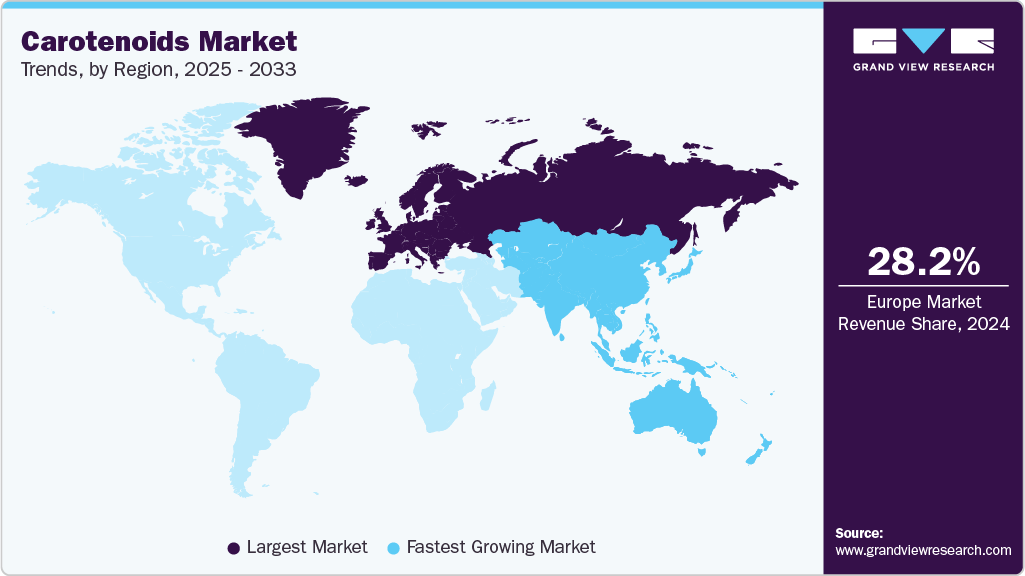
- Europe dominated the carotenoids market with the largest revenue share of 28.2% in 2024.
- The carotenoids market in Germany held a substantial share 32.6% of the Europe carotenoids industry in 2024.
- By product, the astaxanthin carotenoids segment dominated the market with a revenue share of 42.2% in 2024.
- By source, the synthetic source segment dominated the carotenoids market with a share of 52.8% in 2024.
- By application, the feed application segment dominated the carotenoids industry with a market share of 27.3% in 2024.
Market Size & Forecast
- 2024 Market Size: USD 3,261.9 Million
- 2033 Projected Market Size: USD 5,221.3 Million
- CAGR (2025-2033): 5.4%
- Europe: Largest market in 2024
- Asia Pacific: Fastest growing market
The rising demand for natural colorants in the food and beverage industry also propels market growth, as consumers prefer clean-label products with natural ingredients. The expanding applications of carotenoids in cosmetics and personal care products, due to their skin-protective and anti-aging properties, contribute to market expansion. The growing adoption of carotenoids in the animal feed industry, which enhances animal products' quality and nutritional value, further supports market growth. Lastly, advancements in extraction and production technologies make carotenoids more accessible and cost-effective.Additionally, Beta-carotene also functions as a potent antioxidant in animal feed, protecting cells from oxidative damage caused by free radicals and supporting a stronger immune system. Its inclusion in feed formulations enhances animals' resilience to oxidative stress and boosts overall immune response. Additionally, beta-carotene plays a crucial role in supporting reproductive health and performance in livestock and poultry. It contributes to the development of reproductive organs, promotes sperm production, and supports healthy embryo development. Ensuring sufficient beta-carotene levels in animal diets can lead to improved fertility, higher conception rates, and better reproductive outcomes.
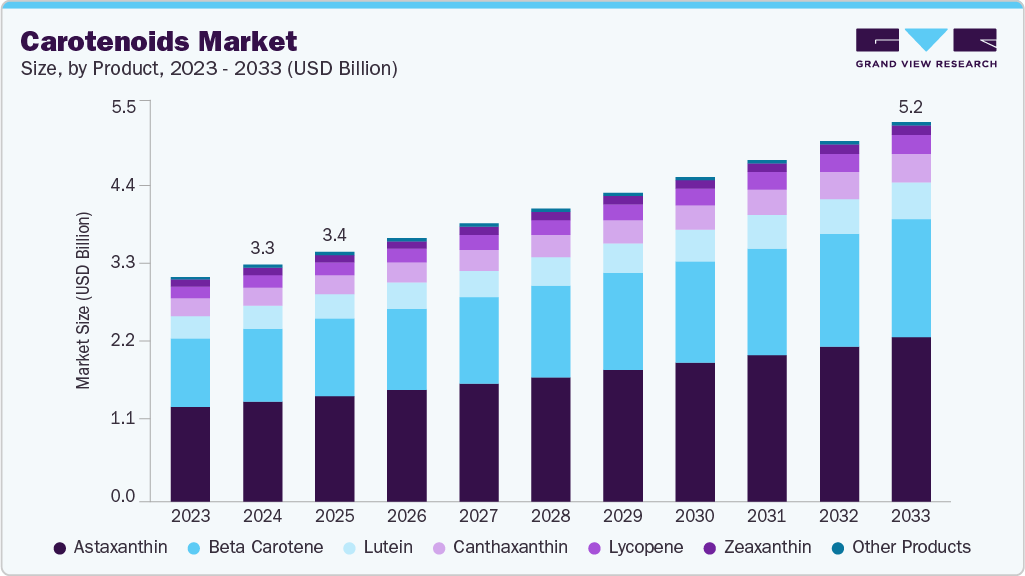
The personal care and cosmetics industry presents significant growth opportunities for the carotenoids market, driven by the multifunctional benefits of compounds like beta-carotene. Known for its potent antioxidant properties, beta-carotene helps protect the skin from oxidative stress caused by free radicals, which can accelerate aging and skin damage. This makes it a valuable ingredient in anti-aging formulations, where it supports the reduction of fine lines, wrinkles, and uneven skin tone. Additionally, beta-carotene contributes to skin brightening by inhibiting melanin production, thereby helping to fade hyperpigmentation and promote a more even complexion. Its natural yellow to orange pigment also enhances the visual appeal of cosmetic products.
Furthermore, carotenoids offer moisturizing and emollient properties, forming a protective barrier that improves skin hydration and elasticity, especially beneficial for dry or sensitive skin. When used in conjunction with other antioxidants, carotenoids can also support sun care products by mitigating UV-induced damage. As consumer demand rises for natural, functional, and clean-label skincare solutions, carotenoids are poised for expanding use in a wide range of personal care applications.
Carotenoids also exhibit pharmaceutical uses, potentially suppressing heart disease and cancer, and helping to cure eye diseases, Parkinson’s disease, Alzheimer’s disease, and macular degeneration. Carotenoid pigments, such as astaxanthin, found in microorganisms and marine animals, offer various biological benefits, further increasing demand in the pharmaceutical and food industries.
Regulations significantly impact the global carotenoids industry, shaping production, distribution, and application. In the European Union, the use of carotenoids in food and feed is regulated under Regulation (EC) No 1333/2008 on food additives, which mandates strict safety assessments and labeling requirements. Similarly, in the United States, the Food and Drug Administration (FDA) regulates carotenoids under the Food, Drug, and Cosmetic Act, ensuring they meet safety standards for use in food and supplements. These regulations favor natural carotenoids over synthetic ones, driving demand for naturally sourced products. In addition, China's National Food Safety Standard (GB 2760-2014) outlines permissible levels and uses of carotenoids in food, further influencing market dynamics.
However, one of the key restraints in the carotenoids market is the potential health risks associated with excessive consumption, particularly of beta-carotene. Overconsumption can lead to carotenodermia, a condition characterized by a yellow or orange discoloration of the skin. While this condition is generally harmless and reversible upon reducing intake, it can raise concerns among consumers.
Market Concentration & Characteristics
The carotenoids market is moderately fragmented, with leadership held by a few major players operating across multiple value chain stages. These companies often benefit from vertical integration, enabling them to manage everything from raw material cultivation or extraction, such as algae, fruits, vegetables, or fermentation processes, to the formulation and distribution of carotenoid-based products. This integrated structure allows them to ensure supply chain reliability, maintain product consistency, and achieve cost advantages. Their global reach and strong R&D capabilities support their ability to cater to diverse end-use sectors, including food and beverages, dietary supplements, animal feed, cosmetics, and pharmaceuticals, reinforcing their competitive position in the market.
At the same time, emerging players in the Asia Pacific, Latin America, and Middle East regions are gaining traction in the carotenoids industry by capitalizing on access to cost-effective raw materials, expanding agricultural resources, and growing demand for fortified foods, animal nutrition, and supplements. These regional manufacturers are investing in fermentation technology, microalgae cultivation, and extraction facilities to produce carotenoids at competitive prices for both local and export markets. Their focus on affordability and scalable production supports growth in price-sensitive, high-volume applications such as animal feed, functional beverages, and food colorants. This shifting landscape, marked by consolidation among global leaders and regional expansion fueled by cost and resource advantages, is actively reshaping the competitive dynamics of the carotenoids market.

However, the market for carotenoids also faces several challenges, with a key restraint being the tightening regulatory scrutiny around synthetic variants and additives used in food and feed products. Increasing consumer demand for clean-label, natural ingredients is driving stricter labeling requirements and compliance standards, particularly in North America and Europe. Additionally, variability in natural carotenoid yields due to climate sensitivity and limited availability of high-quality natural sources presents supply-side constraints. These factors pose hurdles for manufacturers attempting to balance cost, scalability, and regulatory compliance in an increasingly health- and sustainability-focused market.
Product Insights
Astaxanthin carotenoids dominated the carotenoids industry with the largest revenue share of 42.2% in 2024, due to its superior health-promoting properties. It is extensively used in the nutraceutical industry to support cardiovascular health, boost immune function, and reduce inflammation, making it a preferred supplement among health-conscious consumers. In the aquaculture and animal feed sectors, astaxanthin is vital in enhancing the pigmentation of farmed seafood like salmon, trout, and shrimp. Its natural coloring ability improves the visual appeal of these products and contributes to the animals' overall health and productivity. The cosmetics and personal care industry has also embraced astaxanthin for its anti-aging and skin-protective benefits. Its effectiveness in combating oxidative stress caused by UV radiation and environmental pollutants has made it a popular ingredient in premium skincare products such as creams, serums, and sunscreens. As demand rises for natural, science-backed skincare solutions, astaxanthin continues to gain traction, solidifying its role as a high-value product in the expanding market for carotenoids.
The beta carotene-based carotenoids segment is expected to grow at the fastest CAGR of 5.5% from 2025 to 2033, due to its diverse applications and recognized health benefits. As a precursor to vitamin A, it supports eye health, immune function, and skin integrity. It is a key ingredient in nutraceuticals and dietary supplements to prevent chronic diseases like cardiovascular disorders and certain cancers. Its vibrant orange-yellow pigmentation also makes it a popular natural colorant in the food and beverage industry. It is used in juices, dairy, and confectionery to meet the growing demand for clean-label and naturally colored products. In personal care and cosmetics, beta-carotene’s antioxidant properties are harnessed in anti-aging creams, sunscreens, and hair care products, particularly in regions like North America and Europe, where consumers favor natural, functional ingredients. Additionally, innovations in microencapsulation and emulsification technologies are enhancing its stability in processing environments, further boosting its usability across sectors. This combination of nutritional value, functional versatility, and alignment with health-conscious consumer trends drives the sustained demand for beta-carotene in the market.
Source Insights
The synthetic source segment dominated the carotenoids market with a share of 52.8% in 2024, due to their cost-effectiveness, high purity, and consistent quality. Their scalability and stable supply chains make them attractive to the food & beverage, animal feed, and pharmaceutical industries. In the food sector, synthetic beta-carotene and lycopene are widely used in soft drinks, snacks, and baked goods for vibrant coloring and enhanced stability. In animal feed, synthetic canthaxanthin and astaxanthin help improve pigmentation in egg yolks, poultry skin, and farmed seafood. Despite growing consumer preference for natural ingredients, synthetic carotenoids remain a practical choice for mass production, with some manufacturers adopting natural-synthetic blends to balance cost, performance, and clean-label demands.
The natural source segment is expected to grow at the fastest CAGR of 5.7% from 2025 to 2033, due to their well-known health benefits, including antioxidants, anti-inflammatory, and immune-supporting properties. The rising consumer shift toward clean-label and sustainable products has fueled preference for natural carotenoids over synthetic ones, particularly in the nutraceutical sector, where compounds like beta-carotene, lutein, and astaxanthin are widely used in dietary supplements to support eye health, cardiovascular function, and overall wellness.
The food and beverage industry is also a major driver of demand, using natural carotenoids for their vibrant coloration and nutritional value. They are commonly added to fruit juices, dairy products, and confectionery to enhance visual appeal while meeting the growing demand for natural ingredients. For instance, beta-carotene is used to give beverages an orange hue, while lycopene adds a rich red tone to sauces and soups. This dual function of providing color and health benefits makes natural carotenoids highly attractive to manufacturers targeting health-conscious consumers.
Application Insights
The feed application segment dominated the carotenoids industry with a market share of 27.3% in 2024, due to their vital role in enhancing animal health, improving the quality and appearance of animal products, and aligning with consumer demand for natural ingredients. Widely used in poultry, aquaculture, and livestock, carotenoids such as astaxanthin, beta-carotene, lutein, and canthaxanthin are incorporated into feed to boost pigmentation, nutritional value, and animal performance. In aquaculture, astaxanthin is essential for achieving the desired pink-red coloration in farmed salmon, trout, and shrimp, while also supporting immune health and disease resistance. Similarly, in poultry, beta-carotene and canthaxanthin improve egg yolk color and meat quality, contributing to the visual and nutritional appeal of the final product. With a growing base of health-conscious consumers seeking nutrient-rich and naturally colored animal products, the demand for carotenoid-enriched feed is increasing. This trend is expected to support the continued expansion of the feed carotenoids segment within the broader carotenoids market.
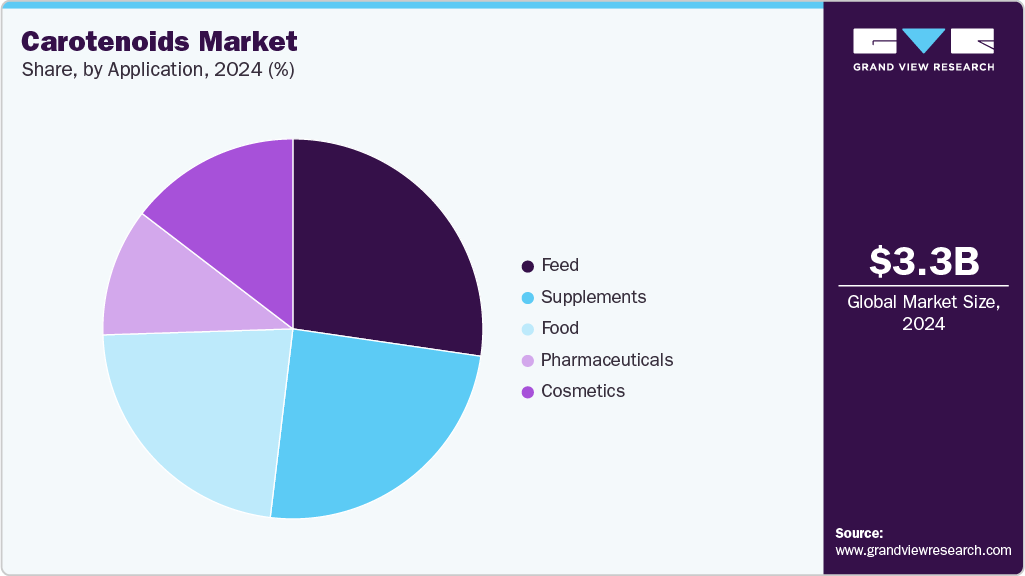
Food-based carotenoids application segment is expected to grow at the fastest CAGR of 5.9% from 2025 to 2033, due to their dual role as natural colorants and nutritional enhancers, significantly driving their demand in this sector. Key carotenoids like beta-carotene, lycopene, lutein, and astaxanthin are incorporated into a range of food products, including beverages, dairy, snacks, and bakery items, to improve visual appeal and offer health benefits. The beverage industry is a major application area where beta-carotene and lycopene are used to impart vibrant orange and red hues to juices and tomato-based drinks. In dairy, beta-carotene adds natural yellow-orange tones to products like butter and cheese, while in baked goods, it enhances the appearance of breads and pastries. Rising consumer preference for clean-label, naturally derived ingredients over synthetic additives has accelerated the shift toward carotenoids. Furthermore, their inclusion in functional and fortified foods, such as cereals, snack bars, and ready-to-eat meals, caters to health-conscious consumers seeking antioxidant and eye health benefits. As awareness of the health-promoting properties of carotenoids grows, their role in the food sector continues to expand.
Regional Insights
The carotenoids market in Europe dominated with a 28.2% share in 2024, driven by rising health awareness and the growing burden of chronic diseases, which account for 86% of all deaths, prompting increased demand for supplements rich in vitamin A and antioxidants. These compounds support vision, immunity, and skin health, which are integral to preventive nutrition. Additionally, the expanding cosmetics and personal care industry, evidenced by L’Oréal’s 31.6% sales share from Europe and the UK’s cosmetics turnover reaching €15 billion in 2023, boosts carotenoid use in skincare, sun protection, and color cosmetics. The food and beverage sector also plays a vital role, as seen in Germany’s non-alcoholic beverage surge, with fruit juice consumption rising by 48.6% and energy drinks by 20.7%, further propelling carotenoid demand as natural colorants and functional ingredients.
Germany Carotenoids Market Trends
The carotenoids market in Germany held a substantial share 32.6% of the Europe carotenoids industry in 2024, due to surging demand for functional and health-oriented non-alcoholic beverages, such as fruit juices, vitamin-enriched drinks, and energy beverages, which increasingly incorporate carotenoids for both nutritional benefits and natural coloring. According to Germany Trade & Invest, the country is Europe’s largest beverage market, with a per capita soft drink consumption of 114.4 liters annually. In 2023, the non-alcoholic beverage segment grew to USD 5.2 billion, with fruit juices experiencing a 48.6% surge, and vitamin, mineral, and energy drinks growing by 20.7%, reflecting a strong shift toward healthier alternatives.
Carotenoids such as beta-carotene, lutein, and lycopene are increasingly used in these beverages due to their provitamin A activity, antioxidant properties, and ability to enhance color, naturally meeting regulatory and clean-label demands. Major beverage brands are reformulating products to exclude synthetic dyes and fortify them with natural bioactives, opening opportunities for carotenoid suppliers.
Asia Pacific Carotenoids Market Trends
The carotenoids industry in Asia Pacific held 22.7% of the global revenue share in 2024, driven by increasing consumer awareness of natural and health-promoting food ingredients, particularly natural colorants. Carotenoids, derived from fruits and vegetables, are widely used in the food industry for their vibrant color and their antioxidant and anti-inflammatory properties, aligning with the growing preference for clean-label and functional foods. The expanding food and beverage industry across the region, rising disposable incomes, and a large population base in countries like China and India are further fueling this growth as consumers seek more nutrient-rich, health-conscious options. According to the Food Export Organization (2023), retail sales in China’s packaged food market were estimated at USD 327.6 billion in 2023, making it the second-largest market globally after the U.S. This marks a 12.4% increase (USD 36 billion) since 2019, with projections indicating growth to USD 411.8 billion by 2028, a 23.2% increase (USD 81 billion) from 2024. This robust expansion in food production is expected to significantly drive the demand for carotenoids in China, as they are increasingly used as natural coloring and nutritional additives in a wide range of packaged food products.
North America Carotenoids Market Trends
The North America carotenoids industry secured 24.2% of the market share in 2024, driven by rising consumer awareness of its nutritional and health benefits, particularly their role as natural colorants in food and beverages. Key factors fueling this demand include the growing preference for natural ingredients, increasing use of dietary supplements, and the broader clean-label movement across the food and nutraceutical industries. According to the U.S. Department of Health & Human Services and the National Center for Health Statistics, as of April 2023, 58.5% of adults and 34.8% of children and adolescents in the U.S. reported using at least one dietary supplement, with usage notably higher among females. These supplements frequently contain carotenoids due to their antioxidant and vitamin A content, contributing to a surge in demand across the region.
Middle East & Africa Carotenoids Market Trends
The Middle East & African carotenoids industry is experiencing steady growth, primarily driven by the rising demand from cosmetic and personal care manufacturers such as Nivea, Garnier, L’Oréal, and Revlon. In addition, major food and beverage companies like RCL Foods, Clover, Tiger Brands, and Montagu contribute to increased usage of carotenoids in a wide range of beverages, food products, and cosmetics. The region’s expanding pharmaceutical sector is also playing a key role, as carotenoids are widely used in dietary supplements for their vitamin A content and nutritional benefits. According to the International Trade Association (ITA), South Africa’s beauty and personal care market is projected to reach USD 5.03 billion by 2028, growing at a CAGR of 3.73%, highlighting the sector’s influence on carotenoid demand. Moreover, South Africa’s role as a regional export hub, accounting for 21.8% of total intra-African trade, provides manufacturers with broader market access, further supporting the regional growth.
Latin America Carotenoids Market Trends
The Latin America carotenoids industry is witnessing steady growth, largely driven by a rising emphasis on health and wellness in the post-pandemic landscape. As consumers become more health-conscious, there is increasing demand for natural and nutritious food ingredients, with carotenoids like beta-carotene gaining popularity due to their antioxidant properties and benefits for immune support and eye health. According to the United Nations (October 2024), the region's goods exports are expected to grow by 4%, with a 5% increase in volume, despite a slight 1% decline in prices. Imports are also projected to rise by 4% in volume, contributing to an overall 2% increase in trade value. Notably, agricultural exports are forecasted to see the largest growth in value at 11%, followed by mining and oil (5%), and manufactured goods (3%). In South America, the sharpest increase in export volume is expected from key agricultural products such as wheat, soy, and corn, further supporting demand for natural additives like carotenoids in food processing and functional product formulations.
Key Carotenoids Company Insights
Some of the key players operating in the carotenoids market include dsm-firmenich and Kemin Industries, Inc.
-
dsm-firmenich, headquartered in Kaiseraugst, Switzerland, is a global science-based company in health, nutrition, and biosciences, and a manufacturer in the carotenoids market. With a strong legacy in nutrition innovation and biosynthetic chemistry, dsm-firmenich offers a comprehensive portfolio of natural and nature-identical carotenoids, including beta-carotene, lutein, canthaxanthin, astaxanthin, zeaxanthin, and apocarotenal, formulated for diverse applications across human and animal nutrition, dietary supplements, pharmaceuticals, and personal care. The company’s carotenoids deliver key functional and nutritional benefits such as antioxidant protection, immune support, eye and skin health, pigmentation, and oxidative stability, making them essential ingredients in sectors such as nutraceuticals, functional foods & beverages, cosmetics, animal feed, and aquaculture. dsm-firmenich is known for its Vertis line of high-purity carotenoids, which are developed using advanced fermentation and synthesis technologies under strict quality and safety standards.
Allied Biotech Corporation and Divi's Nutraceuticals are the emerging participants in the carotenoids market.
-
Allied Biotech Corporation, headquartered in Taiwan, is an emerging and agile player in the global carotenoids industry, steadily expanding its footprint across Asia-Pacific, Europe, and North America. Traditionally known for its expertise in beta-carotene production, Allied Biotech is increasingly diversifying its carotenoid offerings to meet the rising global demand for natural, stable, and health-focused colorants and nutritional ingredients. The company’s product portfolio includes nature-identical carotenoids such as beta-carotene, lutein, zeaxanthin, and canthaxanthin, tailored for a broad range of applications in dietary supplements, food and beverage fortification, cosmetics, and animal nutrition. Allied Biotech’s carotenoids are valued for their vibrant pigmentation, oxidative stability, and nutritional functionality, including antioxidant properties, eye and skin health support, and immune enhancement. Allied Biotech positions itself as a responsive and reliable partner for customers seeking specialized carotenoid solutions. Its dedication to R&D, global market adaptability, and customer-centric innovation enables the company to play a growing role in shaping the future of the market, especially in the value-driven segments of functional nutrition and natural colorants.
Key Carotenoids Companies:
The following are the leading companies in the carotenoids market. These companies collectively hold the largest market share and dictate industry trends.
- dsm-firmenich
- Allied Biotech Corporation
- Sensient Colors LLC
- BioExtract
- Cyanotech Corporation.
- Kemin Industries, Inc.
- BASF
- Döhler GmbH
- Divi's Nutraceuticals
- Lycored
- NHU
Recent Developments
-
In July 2024, Lycored, a global leader in naturally derived carotenoids, unveiled its new lycopene-based colorant, ResilientRed™ BF, at the IFT FIRST 2024 Expo in Chicago. Derived from tomatoes, this nature-based colorant is designed to meet the increasing demand for clean-label, naturally colored foods and beverages. Part of Lycored’s ResilientRed family, the BF variant offers exceptional stability across pH, heat, and light conditions, making it ideal for UHT dairy, plant-based beverages, meat alternatives, and surimi seafood. It features improved viscosity for easier processing, is free from sugar esters and palm oil, and aligns with ingredient standards for retailers like Whole Foods Market.
-
In October 2024, A newly published NIH-funded clinical study, supported by Kemin Industries and led by the University of Utah’s John A. Moran Eye Center, has reinforced the growing importance of carotenoids-specifically FloraGLO Lutein and OPTISHARP Natural Zeaxanthin, in the maternal and infant health segment. The landmark L-ZIP trial, featured in the September 2024 issue of Ophthalmology Science, demonstrated that supplementation with these carotenoids during pregnancy significantly improves systemic and ocular carotenoid levels in both mothers and newborns. Additionally, the study revealed enhanced infant eye development, particularly in foveal maturity, which is linked to long-term visual and cognitive benefits. These findings emphasize the critical need to include lutein and zeaxanthin in prenatal supplements and infant nutrition products, especially given the global shortfall in dietary intake.
Carotenoids Market Report Scope
Report Attribute
Details
Market size value in 2025
USD 3,437.4 million
Revenue forecast in 2033
USD 5,221.3 million
Growth rate
CAGR of 5.4% from 2025 to 2033
Base year for estimation
2024
Historical data
2018 - 2023
Forecast period
2025 - 2033
Quantitative units
Revenue in USD million, volume in kilotons, and CAGR from 2025 to 2033
Report coverage
Revenue forecast, volume forecast, company ranking, competitive landscape, growth factors, and trends
Segments covered
Product, application, source, region
Regional scope
North America; Europe; Asia Pacific; Latin America; Middle East & Africa
Country scope
U.S.; Canada; Mexico; UK; Germany; Italy; France, Spain; China; India; Japan; South Korea; Taiwan; Brazil; Argentina; Saudi Arabia; South Africa
Key companies profiled
dsm-firmenich; Allied Biotech Corporation; Sensient Colors LLC; BioExtract; Cyanotech Corporation.; Kemin Industries, Inc.; BASF; Döhler GmbH; Divi's Nutraceuticals; Lycored; NHU
Customization scope
Free report customization (equivalent to up to 8 analysts’ working days) with purchase. Addition or alteration to country, regional & segment scope.
Pricing and purchase options
Avail customized purchase options to meet your exact research needs. Explore purchase options
Global Carotenoids Market Report Segmentation
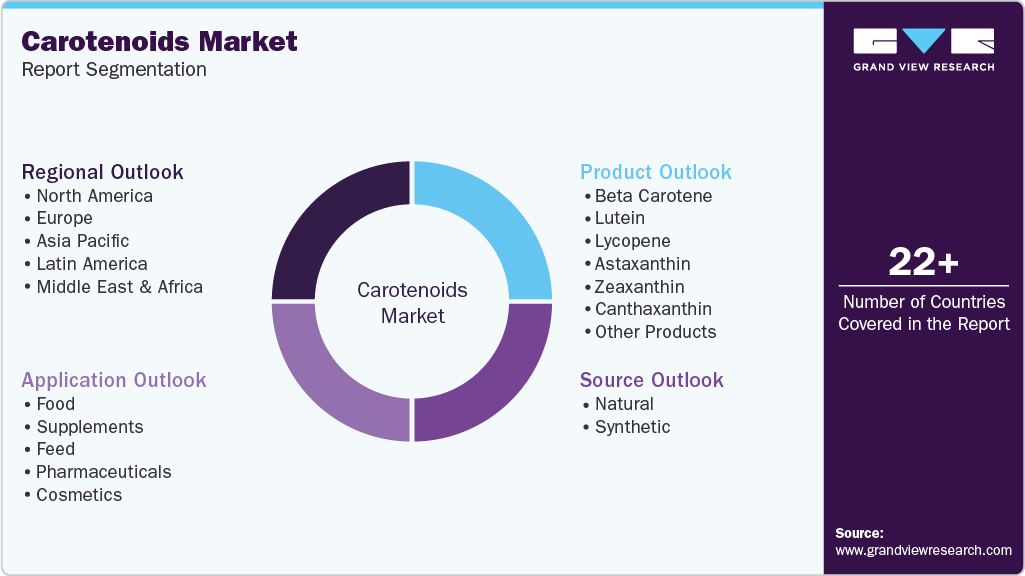
This report forecasts volume & revenue growth at the global, regional, and country levels and provides an analysis of the latest industry trends in each of the sub-segments from 2018 to 2033. For this study, Grand View Research has segmented the global Carotenoids Market report based on product, application, and region:
-
Product Outlook (Volume, Kilotons; Revenue, USD Million, 2018 - 2033)
-
Beta Carotene
-
Lutein
-
Lycopene
-
Astaxanthin
-
Zeaxanthin
-
Canthaxanthin
-
Other Products
-
-
Application Outlook (Volume, Kilotons; Revenue, USD Million, 2018 - 2033)
-
Food
-
Supplements
-
Feed
-
Pharmaceuticals
-
Cosmetics
-
-
Source Outlook (Volume, Kilotons; Revenue, USD Million, 2018 - 2033)
-
Natural
-
Synthetic
-
-
Regional Outlook (Volume, Kilotons; Revenue, USD Million, 2018 - 2033)
-
North America
-
U.S.
-
Canada
-
Mexico
-
-
Europe
-
Germany
-
UK
-
France
-
Italy
-
Spain
-
-
Asia Pacific
-
China
-
India
-
Japan
-
South Korea
-
Taiwan
-
-
Latin America
-
Brazil
-
Argentina
-
-
Middle East & Africa
-
Saudi Arabia
-
South Africa
-
-
Frequently Asked Questions About This Report
b. The global carotenoids market size was estimated at USD 3,261.9 million in 2024 and is expected to reach USD 3,437.4 million in 2025.
b. The global carotenoids market is expected to grow at a compound annual growth rate of 5.4% from 2025 to 2033 to reach USD 5,221.3 million by 2033.
b. The synthetic carotenoids segment led the market and accounted for the largest revenue share of 52.8% in 2024, due to their cost-effectiveness, high purity, and consistent quality.
b. Some of the key players operating in the carotenoids market include dsm-firmenich, Allied Biotech Corporation, Sensient Colors LLC, BioExtract, Cyanotech Corporation., Kemin Industries, Inc., BASF, Döhler GmbH, Divi's Nutraceuticals, Lycored and NHU.
b. The growth in carotenoids is attributed to increasing health consciousness among consumers, which is a significant driver, as carotenoids are known for their antioxidant properties and health benefits, including reducing the risk of chronic diseases such as cancer and eye disorders.


Share this report with your colleague or friend.
Need a Tailored Report?
Customize this report to your needs — add regions, segments, or data points, with 20% free customization.


ISO 9001:2015 & 27001:2022 Certified
We are GDPR and CCPA compliant! Your transaction & personal information is safe and secure. For more details, please read our privacy policy.
Trusted market insights - try a free sample
See how our reports are structured and why industry leaders rely on Grand View Research. Get a free sample or ask us to tailor this report to your needs.













