Normothermic Perfusion: Mimicking the Human Body for a Better Future!
Each year, more than 28,000 donated organs are wasted because of inherent inefficiencies in the healthcare system. Every day, 13 people die waiting for an organ transplant in the U.S. alone. In transplant medicine, minutes kill. Ice boxes, once considered cutting-edge, are now the weakest link in an otherwise advanced ecosystem. This is where biology needs to meet biotechnology, and life-saving innovation needs to become commercially scalable.
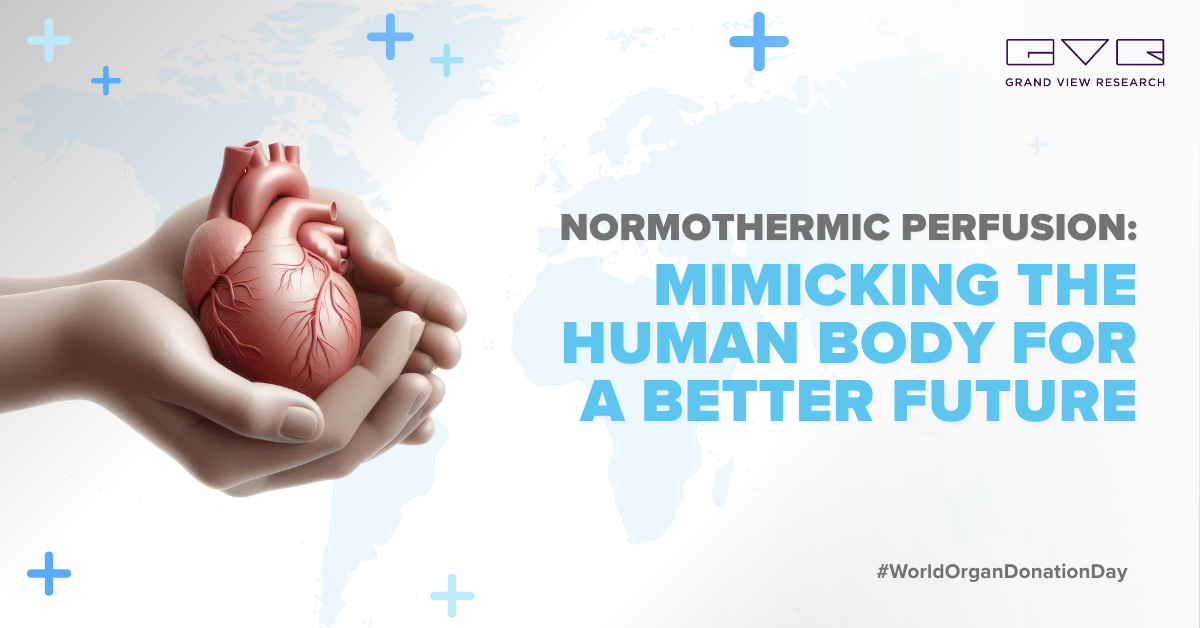
Normothermic perfusion is the technology that doesn’t just preserve organs, but simulates life itself. By recreating the temperature, blood flow, oxygenation, and metabolic functions of the human body, normothermic perfusion turns preservation into active resuscitation. This technology is not just a breakthrough; it is a blueprint for the future of the organ preservation market.
Normothermic perfusion allows human organs to breathe, metabolize, and heal outside the body at 37 °C, giving clinicians precious time to transplant stronger grafts. With World Organ Donation Day 2025 upon us, this technology symbolizes hope for both the individual patient and the wider future of the transplantation market.
What is Normothermic Perfusion and Why Does it Matter?
Normothermic perfusion is a transformative technique that preserves donor organs by mimicking the body's natural environment, maintaining a warm, oxygen-rich, and nutrient-supplied state outside the body. Unlike traditional cold storage, where organs are packed on ice and become metabolically inactive, normothermic perfusion keeps the organ "alive" and functioning. This means doctors can assess organ quality in real time, repair minor damage, and extend preservation windows.
Revamping Organ Preservation
Normothermic systems are pushing the boundaries of how long organs can be preserved. This technology is redefining logistics, enabling longer transport durations and creating demand for smarter, more specialized perfusion devices. The technology gives a new structure to the organ preservation market. For example, more than 48,000 organ transplants were done in the U.S. in 2024 alone, the highest ever in a single year. Organ preservation is crucial in transplantation to maintain the viability of organs from the donor to the recipient.
Companies developing these systems are expanding into new regions and entering high-value partnerships with major transplant centers. As part of the expansion, TransMedics acquired ‘Summit Aviation’, a premier U.S. charter flight operator, in August 2023 to scale end-to-end organ transport services.
Enhancing the Value Chain Across the Transplantation Market
By reducing organ discard rates and increasing the number of transplantable organs, normothermic perfusion boosts the overall supply of viable transplants. Normothermic regional perfusion (NRP)-treated kidneys, for example, have significantly lower rates of delayed graft function (DGF), a complication that drives up hospital stays and costs. This simply means more surgeries, more equipment usage, more medications post-surgery, and ultimately, more value per transplant case. It is reshaping the economics of the transplantation market, from procurement organizations and transplant hospitals to insurers and pharma companies.
Spurring Innovation in Perfusion Systems
Normothermic technology has catalyzed growth in the perfusion systems market, a once-niche area. Companies are now racing to develop compact, portable, and AI-integrated perfusion systems for heart, lung, liver, and kidney preservation. With regulatory approvals accelerating, the market is expected to grow rapidly. For instance, in August 2025, TransMedics announced FDA approval for its Next Generation OCS ENHANCE Heart trial. Such initiatives illustrate regulatory support for advancing normothermic perfusion in heart transplantation, setting the stage for broader clinical use.
Complementing Growth in Artificial Vital Organs and Medical Bionics
Apart from preserving organs, Normothermic platforms are laying the groundwork for integrating synthetic and bioengineered alternatives. As artificial hearts, livers, and kidneys move closer to commercial viability, perfusion systems could be used to condition or test these devices before implantation. A study published in the HPB journal described the development of a novel artificial oxygen-carrier perfusate for normothermic liver perfusion. The perfused organs maintained structural and functional integrity comparable to human blood perfusion, even after one month at normal temperature. This provides a realistic platform for testing lab-grown or bioengineered liver tissues without relying on real blood products. This stable artificial perfusate enables testing of synthetic or semi-synthetic organ scaffolds in a living-like environment, accelerating R&D in the artificial vital organs and medical bionics market.
The Bottom Line
On this World Organ Donation Day, normothermic perfusion stands as a striking example of human ingenuity, merging both medicine and commerce. By breathing life into donor organs outside the body, it not only transforms what is medically possible, rather it also reshapes entire markets discussed above. As these industries converge, the future of transplantation promises fewer discarded organs and faster recoveries. After all, every single donor can save up to 8 lives!
Talk to an analyst
Tell us what you need. We reply within one working day.
Service Guarantee
-
Insured Buying
This report has a service guarantee. We stand by our report quality.
-
Confidentiality
Your transaction & personal information is safe and secure.
-
Custom research service
Design an exclusive study to serve your research needs.
-
24/5 Research support
Get your queries resolved from an industry expert.