World Ozone Day: Are EVs Really Making an Impact?
Each year on September 16, World Ozone Day highlights how collective action can safeguard the atmosphere. The Montreal Protocol of 1987 is proof of what coordinated policy can achieve: a 98 percent reduction in ozone-depleting substances and steady healing of the stratospheric shield that protects life on Earth. Yet even as the “good ozone” recovers, the “bad ozone” at ground level remains a stubborn challenge. In cities worldwide, nitrogen oxides (NO?) and volatile organic compounds (VOCs) from vehicles still react in sunlight, forming smog that harms health, reduces crop yields, and corrodes infrastructure.
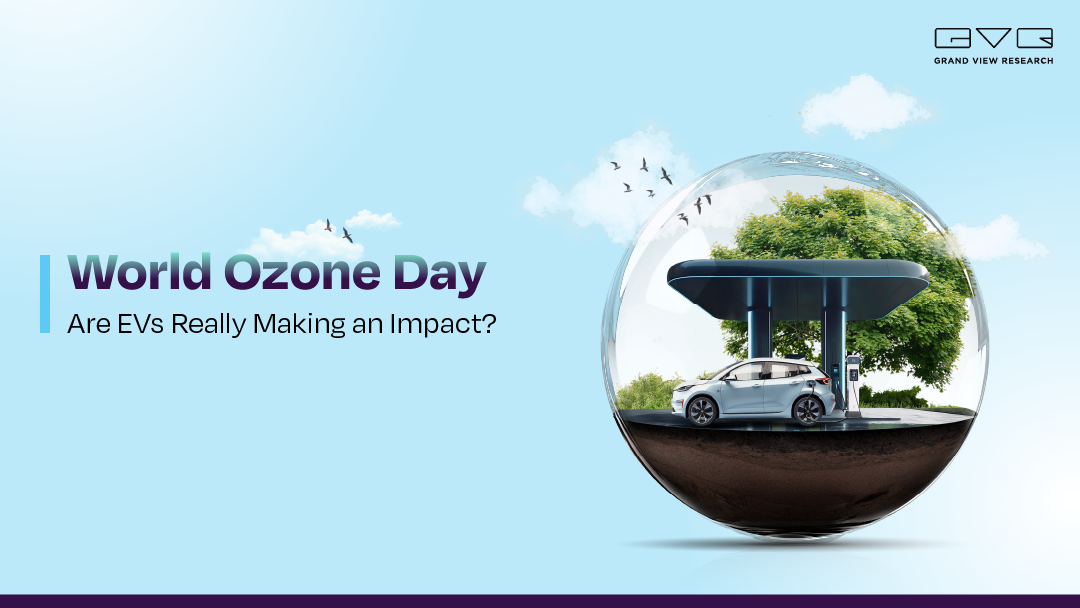
Against this backdrop, electric vehicles (EVs) are positioned as more than just a technological trend; they are being tested as a practical solution to air pollution and climate stress. But are they truly making a measurable difference?
From Global Progress to Local Realities
The gradual recovery of the stratosphere shows what is possible when nations align on policy. But many cities still struggle. The U.S. Environmental Protection Agency reports only a modest 3 percent decline in unhealthy ozone days between 2022 and 2024, even as standards tightened for conventional vehicles. In Europe and Asia, urban air frequently exceeds World Health Organization guidelines. Progress at high altitudes will mean little if smog continues to choke city streets.
Electric Vehicles as a Targeted Solution
EVs directly eliminate tailpipe NO? and VOCs, tackling a primary source of ground-level ozone. In 2024, consumers purchased over 17 million EVs—more than 22 percent of new-car sales worldwide. When powered by a clean grid, these gains multiply, showing that electrification can deliver tangible improvements in air quality. The International Energy Agency expects that by 2030, electric vehicles will be displacing more than 5 million barrels of oil per day.
The Grid Factor
Shifting emissions from cars to power plants makes the grid mix decisive. Where coal dominates, benefits are muted. But change is underway. In 2024, about 80% of additional global electricity demand was met by renewables and nuclear power, marking a significant shift toward cleaner energy sources. A cleaner grid combined with advances in lithium-ion battery efficiency strengthens the argument for EV adoption.
Batteries and Responsibility
Lithium-ion batteries are central to EV performance, but they come with environmental costs. Global production capacity exceeded 1 terawatt-hour in 2024, enabling cheaper EVs and faster adoption. At the same time, concerns over mineral extraction, carbon-intensive processing, and disposal risks persist. Recycling offers part of the answer: reusing metals like lithium and cobalt produces about 80 percent fewer emissions than mining new ones. Building a circular system for battery materials will determine whether EV growth enhances or undermines environmental goals.
Charging Networks as the Backbone of EV Growth
Infrastructure underpins adoption. By 2024, the world counted over 5.5 million public charging points, a 35 percent increase in one year. Europe and North America are expanding fast-charging networks through government incentives, while China leads with massive highway and city deployments. A reliable, visible electric vehicle charging infrastructure not only supports daily commuting but also paves the way for electrification of buses, trucks, and two-wheelers—sectors critical for cutting NO? emissions.
Ozone Generators and Their Controlled Uses
Ozone itself remains a paradox. While dangerous at ground level, it is useful when carefully applied in closed systems. The ozone generators market, valued near $1.3 billion in 2024, is growing in water treatment, disinfection, and odor control. Recognizing this dual role underscores the importance of precision: ozone can be an asset indoors but must not contribute to outdoor air pollution.
Measuring the Real Impact
Evidence from modeling and field studies points to meaningful gains. A 2023 study in Beijing found that achieving 30 percent EV penetration could reduce peak summer ozone by about 4 parts per billion, easing health risks during heat waves. In the European Union, projections suggest that a 50 percent EV share by 2030 could cut ozone precursors by up to 25 percent. These reductions are not abstract; they translate to cleaner air and fewer hospital admissions.
Beyond Passenger Cars
Passenger cars are only part of the story. Heavy-duty trucks, buses, and two-wheelers contribute disproportionately to NO? and VOC emissions. Pilot projects in Europe and India are already testing high-capacity batteries and rapid charging depots for commercial fleets. Expanding electrification to these sectors will be crucial for broader ozone reductions and deeper public health benefits.
Policy and Investment
Effective ozone management integrates transport electrification with targeted policies. The U.S. has committed $5 billion to a national fast-charging network. India’s PM E-DRIVE program is investing $260 million in charging corridors. The European Green Deal ties funding for battery research directly to stricter emission standards. Combined with low-emission zones and procurement mandates, these measures are ensuring that electric mobility moves from pilot scale to mainstream adoption.
A Unified Path Forward
World Ozone Day highlights the link between protecting the stratospheric layer and reducing ground-level ozone pollution. Electric vehicles, backed by a decarbonized grid, responsible battery supply chains, a robust EV charging infrastructure market, and complementary ozone generators, offer a practical path to cleaner air. While EVs alone cannot eradicate urban smog, their integration into comprehensive energy and transport strategies positions them as a decisive factor.
To schedule a free market intelligence database demo, please complete the form below:
Service Guarantee
-
Insured Buying
This report has a service guarantee. We stand by our report quality.
-
Confidentiality
Your transaction & personal information is safe and secure.
-
Custom research service
Design an exclusive study to serve your research needs.
-
24/5 Research support
Get your queries resolved from an industry expert.