
- Home
- »
- Medical Devices
- »
-
2-way Foley Catheter Market Size, Industry Report, 2030GVR Report cover
![2-way Foley Catheter Market Size, Share & Trends Report]()
2-way Foley Catheter Market (2025 - 2030) Size, Share & Trends Analysis Report By Material (Silicone, Latex), By Indication (Urinary Incontinence, BPH), By Usage, By End Use, By Region, And Segment Forecasts
- Report ID: GVR-4-68040-564-2
- Number of Report Pages: 100
- Format: PDF
- Historical Range: 2018 - 2024
- Forecast Period: 2025 - 2030
- Industry: Healthcare
- Report Summary
- Table of Contents
- Segmentation
- Methodology
- Download FREE Sample
-
 Download Sample Report
2-way Foley Catheter Market Size & Trends
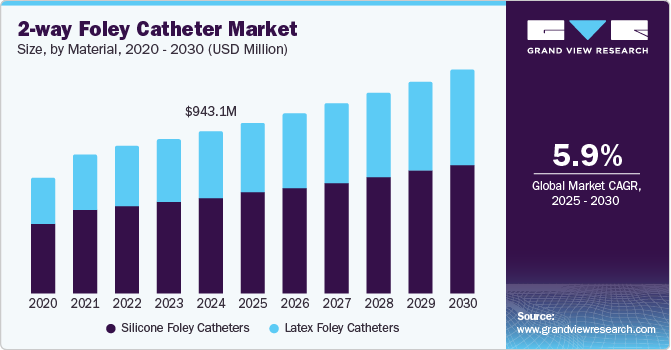
The global 2-way foley catheter market size was estimated at USD 943.14 million in 2024 and is projected to grow at a CAGR of 5.86% from 2025 to 2030. This growth is driven by several key factors, including the rising prevalence of urological disorders such as urinary incontinence and bladder cancer, and an increasing preference for minimally invasive surgeries. Moreover, advancements in healthcare infrastructure, particularly in developing regions, are anticipated to further contribute to the market's expansion.
The increasing prevalence of kidney stone disease, cystitis, benign prostatic hyperplasia, and other urinary tract disorders is expected to drive the 2-way foley catheters industry during the forecast period. According to the data published by the American Kidney Fund , in May 2024, kidney stones affected over 1 in 10 men and 1 in 14 women in the U.S., causing significant discomfort and urinary obstruction. As the incidence of these conditions rises, along with an aging population, the demand for effective management solutions like 2 way foley catheters is also increasing.
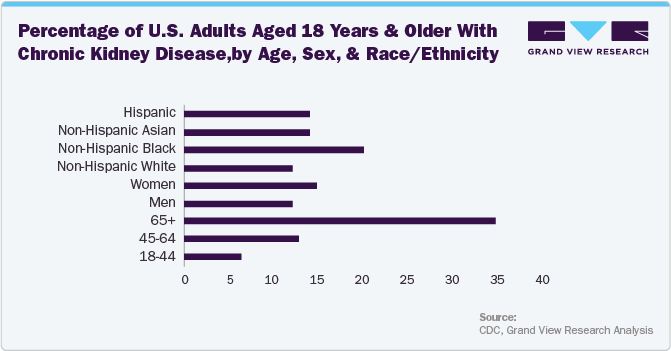
The demand for 2-way Foley catheters is also driven by the increasing number of surgeries, especially urological and gynecological procedures, and growing rates of conditions like prostate enlargement, which may necessitate catheter use. According to the data published by the National Institute of Diabetes and Digestive in March 2025, benign prostatic hyperplasia (BPH) affects 5% to 6% of men aged 40 to 64 and 29% to 33% of those aged 65 and older. Thus, such a large proportion of the population suffering from urinary disorders increases the need for reliable and effective urinary drainage solutions like 2-way Foley catheters, further driving their demand in healthcare settings.
Technological advancements to streamline procedures and make them safer and more cost-effective are key factors driving the market's growth. For instance, the LECS II, a device, was launched to stabilize a 2-way foley catheter. It features a head that rotates 180 degrees, adjusting to patient movements and reducing urethral discomfort during daily activities. With such ongoing product developments and innovations, the 2-way foley catheter industry is expected to experience significant growth in the forecasted period.
Market Concentration & Characteristics
The market growth stage is moderate, at an accelerating pace. The 2-way foley catheter industry is characterized by growth owing to the rising number of surgical procedures and the increasing prevalence of urological disorders.
The 2-way foley catheter industry has seen significant innovation to improve patient comfort, reduce complications, and enhance care efficiency. Key advancements include antimicrobial coatings to minimize infection risks, flexible materials to improve comfort, and innovations in lumen designs for better drainage and stability.
The market has seen a moderate strategic level of mergers and acquisitions, driven by the need to expand product portfolios, integrate innovative technologies, and enhance market reach. For instance, in October 2023, Laborie Medical Technologies, a U.S.-based diagnostics and therapeutics firm, completed the acquisition of Urotronic, integrating its drug-coated balloon technology, Optilume, for global urology market expansion. These moves reflect a broader trend toward consolidation and revolution to improve patient outcomes and operational efficiency in a competitive, evolving healthcare landscape.
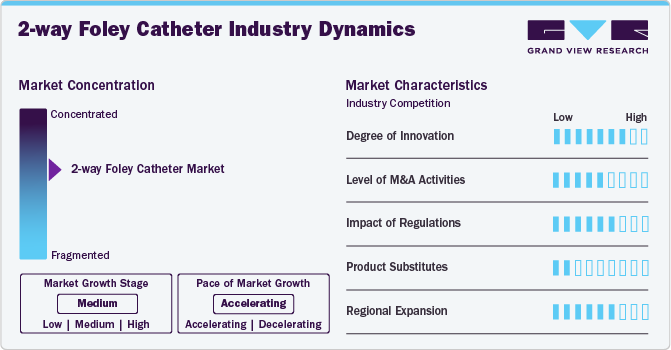
Regulations are crucial in the 2-way foley catheter industry for ensuring product safety, efficacy, and quality. Agencies like the Food and Drug Administration (FDA) and the European Medicines Agency (EMA) mandate rigorous testing, including biocompatibility, microbiological effectiveness, and clear labeling to ensure the safety of catheters. In addition, authorization from regulatory authorities also guarantees the safety of 2-way Foley catheters.
The aging population across Asia, particularly in rapidly developing countries like China and India, is significantly driving regional expansion in the 2-way foley catheter industry. As the senior population continues to grow, so does the prevalence of age-related urological conditions such as urinary incontinence, prostate enlargement, and chronic urinary retention that often require long-term catheterization. The regional momentum, combined with increased awareness of infection control, is driving innovation and adoption of advanced 2-way Foley catheters, including those with antimicrobial coatings and silicone-based designs.
Material Insights
The silicone segment captured the largest market share in 2024, driven by its unique features that enhance patient comfort and reduce infection risks. These catheters are infused with silver ions to inhibit microbial growth, lowering the risk of catheter-related urinary tract infections (CAUTIs). Silicone Foley catheters are non-allergenic and ideal for individuals with sensitive skin, and their smoothness and flexibility ensure easier, less painful insertion. Moreover, they are more tissue-friendly and typically feature larger lumens for better drainage, making them a preferred choice for long-term use and contributing to the segment's growth.
The 2-way latex Foley catheter segment is expected to grow fastest during the forecast period due to its widespread application in both short-term and long-term catheterization. Latex Foley catheters are soft, flexible, and thermo-sensitive, as they can adjust to the temperature of their environment, providing enhanced comfort and flexibility during insertion. Their ease of use, coupled with the natural flexibility of latex, contributes to their growing popularity in the bladder management market.
Indication Insights
The urinary incontinence segment dominated the market with an approximately 33.51% of the revenue share. Urinary incontinence, characterized by the involuntary loss of bladder control with a growing aging population, is a leading factor in the need for 2-way Foley catheters, particularly in long-term care settings. According to a study published by the National Library of Medicine in August 2024, approximately 13 million people in the U.S. are directly affected by urinary incontinence, further emphasizing the demand for effective catheter solutions for managing this condition.
The spinal cord injury (SCI) segment is expected to grow at the fastest CAGR during the forecast period. Spinal cord injuries can disrupt the control of bladder function, as damage to the nerves that relay signals between the bladder and the brain impairs the ability to empty the bladder, leading to bladder dysfunction. According to data published by the WHO in April 2024, over 15 million people globally are living with spinal cord injuries. The increasing prevalence of spinal cord injuries is anticipated to drive the demand for advanced 2-way Foley catheters.
Usage Insights
The short-term use segment dominated the market in 2024. Short-term use is typically defined as catheterization lasting less than 30 days, with the European Association of Urology Nurses (EAUN) recommending a maximum duration of no more than 14 days to minimize the risk of complications and infections. This segment is anticipated to grow fastest over the forecast period. The short-term use segment is driven by the rising number of surgical procedures and hospital admissions requiring temporary urinary drainage. In addition, increasing cases of acute urinary retention and post-operative care protocols are fueling demand for short-duration catheterization solutions across healthcare settings.
The long-term use segment is expected to grow significantly during the forecast period. This growth is primarily driven by the increasing incidence of chronic conditions such as neurogenic bladder and prostate enlargement, which require prolonged catheterization. Moreover, the aging global population and rising demand for home-based care are contributing to the increased adoption of long-term Foley catheters, particularly in nursing homes and extended care facilities.
End Use Insights
The hospital segment held the largest share in 2024. This has largely been driven by an increased rate of urological diseases, driving the need for higher surgical intervention. Hospitals are particularly favored for urological procedures and other related therapies due to their capacity to manage potential emergencies during surgeries and their wide range of treatment options. As hospitals are more equipped to handle complex cases and provide specialized care, they attract more patients than other healthcare settings.
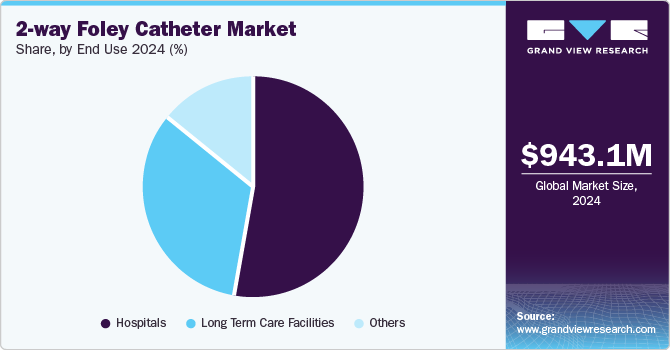
The long-term care facilities segment is anticipated to grow at the fastest CAGR during the forecast period. This growth can be attributed to the increasing prevalence of urological conditions such as urinary retention, incontinence, and prostate-related issues, which often require long-term catheterization. As a result of these factors, the 2-way foley catheter segment in long-term care facilities is projected to grow steadily throughout the forecast period.
Regional Insights
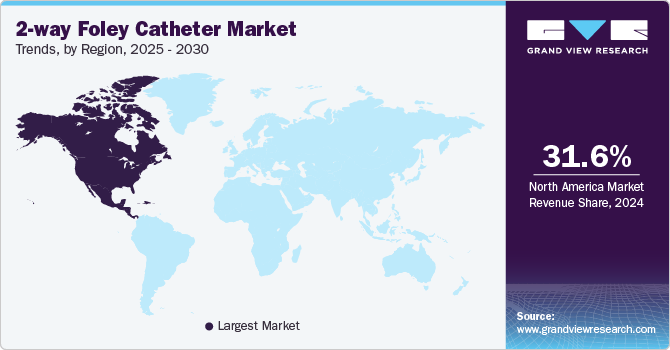
North America 2-way foley catheters industry accounted for 31.62% of global revenue share in 2024, which comprises majorly from specific medical scenarios such as managing postpartum hemorrhage using uterine tamponade, treating complex urological conditions like bladder fistulas or reconstructive surgeries, and handling severe hematuria with continuous bladder irrigation. This demand is supported by the region's advanced healthcare infrastructure, higher surgical rates, and focus on comprehensive maternal and urological care. For instance, in December 2023, HR Pharmaceuticals, Inc. received exclusive commercialization rights for Poiesis Medical's Duette Dual Balloon Catheter in North America, enhancing its urology portfolio with a novel design to improve patient outcomes.
U.S. 2-way Foley Catheters Market Trends
The U.S. 2-way foley catheters industry is fueled by an aging population with a chronic illness that needs catheterization for a prolonged period, and innovation in medical technologies such as the Duette Dual Balloon Catheter. Moreover, hospital treatment guidelines and the trend toward minimally invasive procedures have increased their application in obstetric and urological environments. These drivers reflect the increasing use of dual catheters to address complicated medical requirements and enhance patient outcomes.
Europe 2-way Foley Catheters Market Trends
The Europe 2-way foley catheters industry represents a key growth region owing to the increasing aging population. Older adults often suffer from urinary incontinence, urinary retention, or other conditions that require catheterization. Foley catheters, especially 2-way catheters, are commonly used in healthcare settings for patients who need long-term urinary drainage. According to the European Commission, in January 2024, the EU population was estimated at 449.3 million people, and over one-fifth (21.6%) was 65 years and above. This demographic shift presents a growing demand for medical devices, particularly incontinence management solutions such as 2-way Foley catheters.
The UK 2-way foley catheters industry is experiencing significant market expansion driven by increasing surgical procedures. According to the data published by myHSN , in 2023, approximately 8.6 million elective admissions (operations and procedures) were performed annually. 2-way foley catheters are essential during surgeries, particularly those involving general anesthesia, as patients are unable to urinate naturally. 2-way Foley catheters are critical in managing urine drainage, serving a dual purpose: one channel for drainage and another for balloon inflation to secure the catheter. As the number of elective procedures continues to increase, demand for catheters will rise, underscoring their critical importance to patient care and post-operative management.
Asia Pacific 2-way Foley Catheters Market Trends
The Asia Pacific 2-way foley catheters industry is growing due to increased healthcare infrastructure investment and significant advancements in research and development. Countries like India and China are leading in healthcare innovation, focusing more on developing advanced solutions for long-term patient care. A 2023 study in the Journal of Medical Sciences demonstrated the effectiveness of Foley catheters in managing postpartum hemorrhage (PPH). The survey at Khyber Teaching Hospital in Asia Pacific showed that Foley catheters successfully stopped bleeding in 98% of cases within minutes, highlighting their safety and efficacy in treating PPH caused by uterine atony. This research reflects the ongoing improvements in catheter technology and its expanding clinical applications.
The 2-way foley catheters industry in Japan is influenced by a number of important factors, including the widespread chronic health ailments such as diabetes and neurological conditions that lead to the requirement of catheterization. Japan's developed healthcare infrastructure, emphasizing high-quality care and infection prevention, also leads to higher demand for innovative, antimicrobial 2-way Foley catheters. As the number of long-term care conditions and home healthcare, particularly for older patients, increases, the demand for 2-way Foley catheters also increases, with an important role to play in patient recovery and management.
Latin America 2-way Foley Catheters Market Trends
The Latin American industry for 2-way foley catheters is expanding for various reasons, such as a fast-growing elderly population, with the geriatric population projected to rise in future years, contributing to more urinary complications. Moreover, due to increasing urbanization across the region, access to healthcare has improved, driving demand for sophisticated devices. The region's growing long-term care base further drives the demand for these products, particularly elderly patients receiving home healthcare.
Middle East & Africa 2-way Foley Catheters Market Trends
The Middle East & Africa 2-way foley catheters industry is witnessing steady growth, owing to multiple factors, such as a rapidly growing aging population and rising chronic diseases such as diabetes. The governments of countries such as Saudi Arabia and the UAE spend significant amounts on the development of healthcare, enhancing access to sophisticated medical technologies and pushing the market forward.
Saudi Arabia 2-way foley catheters industry continues to grow steadily, driven by rising awareness of age-related conditions and enhanced access to healthcare. The government's Vision 2030 program, including the modernization of healthcare and the launch of advanced healthcare devices, is anticipated to promote further market growth. Growth of healthcare infrastructure, emphasis on infection prevention, and increased demand for long-term healthcare services.
Key 2-way Foley Catheter Company Insights
Sterimed Group, HEMC (Hospital Equipment Manufacturing Company), ANGIPLAST PRIVATE LIMITED, Advin Health Care, AdvaCare Pharma, Teleflex Incorporated, Bactiguard AB, Cardinal Health, Medtronic, B. Braun SE, Ribbel International Limited, and Coloplast Corp are some of the major players in the 2-way foley catheters industry. Companies are expanding their portfolios of 2-way Foley catheters to gain a competitive advantage in the coming years. Moreover, industry players focus on obtaining approvals for advanced Foley catheters to meet the growing demand in the coming years.
Key 2-way Foley Catheter Companies:
The following are the leading companies in the 2-way foley catheter market. These companies collectively hold the largest market share and dictate industry trends.
- Sterimed Group.
- ANGIPLAST PRIVATE LIMITED
- HEMC (Hospital Equipment Manufacturing Company)
- Cardinal Health
- Advin Health Care
- AdvaCare Pharma
- Teleflex Incorporated
- Bactiguard AB
- Medtronic
- B. Braun SE
- Coloplast Corp
Recent Developments
-
In May 2024, Coloplast launched the Luja catheter for women in four markets, including the U.S. and Europe. This expansion followed the successful introduction of a men's version in various global regions, addressing specific needs for female patients with urinary incontinence. The launch aimed to provide improved comfort and discretion for women managing these conditions.
-
IIn January 2023, Bactiguard received its first MDR (Medical Device Regulation 2017/745) approval for the latex BIP 2-way Foley Catheter in Europe. This approval followed a rigorous authorization process, marking a significant milestone for the company. The BIP 2-way Foley Catheter features Bactiguard’s patented infection prevention technology, which utilizes a thin noble metal alloy coating to reduce microbial adhesion, thereby decreasing the risk of healthcare-associated infections (HAIs) and catheter-associated urinary tract infections (CAUTIs).
2-way Foley Catheter Market Report Scope
Report Attribute
Details
Market size value in 2025
USD 1,940.15 million
Revenue forecast in 2030
USD 2,579.69 million
Growth Rate
CAGR of 5.86% from 2025 to 2030
Actual data
2018 - 2024
Forecast period
2025 - 2030
Quantitative units
Revenue in USD million/billion and CAGR from 2025 to 2030
Report coverage
Revenue forecast, company ranking, competitive landscape, growth factors, and trends
Segments covered
Material, indication, usage, end use, region
Regional scope
North America; Europe; Asia Pacific; Latin America; MEA
Country scope
U.S.; Canada; Mexico; Germany; UK; France; Italy; Spain; Denmark; Sweden; Norway; China; Japan; India; South Korea; Australia; Brazil; Argentina; South Africa; UAE; Kuwait; Saudi Arabia
Key companies profiled
Sterimed Group; HEMC (Hospital Equipment Manufacturing Company); ANGIPLAST PRIVATE LIMITED; Advin Health Care; AdvaCare Pharma; Teleflex Incorporated; Bactiguard AB; Cardinal Health; Medtronic; B. Braun SE; Ribbel International Limited; Coloplast Corp
Customization scope
Free report customization (equivalent up to 8 analysts working days) with purchase. Addition or alteration to country, regional & segment scope.
Pricing and purchase options
Avail customized purchase options to meet your exact research needs. Explore purchase options
Global 2-way Foley Catheter Market Report Segmentation
This report forecasts revenue growth at global, regional, and country levels and provides an analysis of the latest industry trends in each of the sub-segments from 2018 to 2030. For this study, Grand View Research has segmented the global 2-way foley catheter market report based on material, indication, usage, end use, and region:
-
Material Outlook (Revenue, USD Million, 2018 - 2030)
-
Silicone Foley Catheters
-
Latex Foley Catheters
-
-
Indication Outlook (Revenue, USD Million, 2018 - 2030)
-
Urinary Incontinence
-
Enlarged Prostate Gland/BPH
-
Spinal Cord Injury
-
Others
-
-
Usage Outlook (Revenue, USD Million, 2018 - 2030)
-
Short-Term Use
-
Long-Term Use
-
-
End Use Outlook (Revenue, USD Million, 2018 - 2030)
-
Hospitals
-
Long Term Care Facilities
-
Others
-
-
Regional Outlook (Revenue, USD Million, 2018 - 2030)
-
North America
-
U.S.
-
Canada
-
Mexico
-
-
Europe
-
Germany
-
UK
-
France
-
Italy
-
Spain
-
Denmark
-
Sweden
-
Norway
-
-
Asia Pacific
-
China
-
Japan
-
India
-
South Korea
-
Australia
-
Thailand
-
-
Latin America
-
Brazil
-
Argentina
-
-
Middle East and Africa (MEA)
-
South Africa
-
Saudi Arabia
-
Kuwait
-
UAE
-
-
Frequently Asked Questions About This Report
b. The North America segment dominated the global 2-way Foley catheter market and accounted for the largest revenue share of 31.62% in 2024.
b. Some key players operating in the 2-way Foley catheter market include Sterimed Group, HEMC (Hospital Equipment Manufacturing Company), ANGIPLAST PRIVATE LIMITED, Advin Health Care, AdvaCare Pharma, Teleflex Incorporated, Bactiguard AB, Cardinal Health, Medtronic, B. Braun SE, Ribbel International Limited, and Coloplast Corp.
b. Key factors driving the market growth include the rising prevalence of urological disorders such as urinary incontinence and bladder cancer and an increasing preference for minimally invasive surgeries.
b. The global 2-way Foley catheter market size was estimated at USD 943.14 million in 2024 and is expected to reach USD 1,940.15 million in 2025.
b. The global 2-way Foley catheter market is expected to grow at a compound annual growth rate of 5.86% from 2025 to 2030 to reach USD 2,579.69 million by 2030.

Share this report with your colleague or friend.
Need a Tailored Report?
Customize this report to your needs — add regions, segments, or data points, with 20% free customization.


ISO 9001:2015 & 27001:2022 Certified
We are GDPR and CCPA compliant! Your transaction & personal information is safe and secure. For more details, please read our privacy policy.
Trusted market insights - try a free sample
See how our reports are structured and why industry leaders rely on Grand View Research. Get a free sample or ask us to tailor this report to your needs.













