
- Home
- »
- Medical Devices
- »
-
Absorbable Sutures Market Size And Share Report, 2033GVR Report cover

Absorbable Sutures Market (2026 - 2033)
Size, Share & Trends Analysis Report By Product, By Filament (Monofilament, Multifilament), By Application (Orthopedic Surgery, Neurological Surgery), By End-use, By Region, And Segment Forecasts
Market Size, 2025
$3.0BMarket Estimate, 2026
$3.1BMarket Forecast, 2033
$4.6BCAGR, 2026–2033
5.6%Absorbable Sutures Market Summary
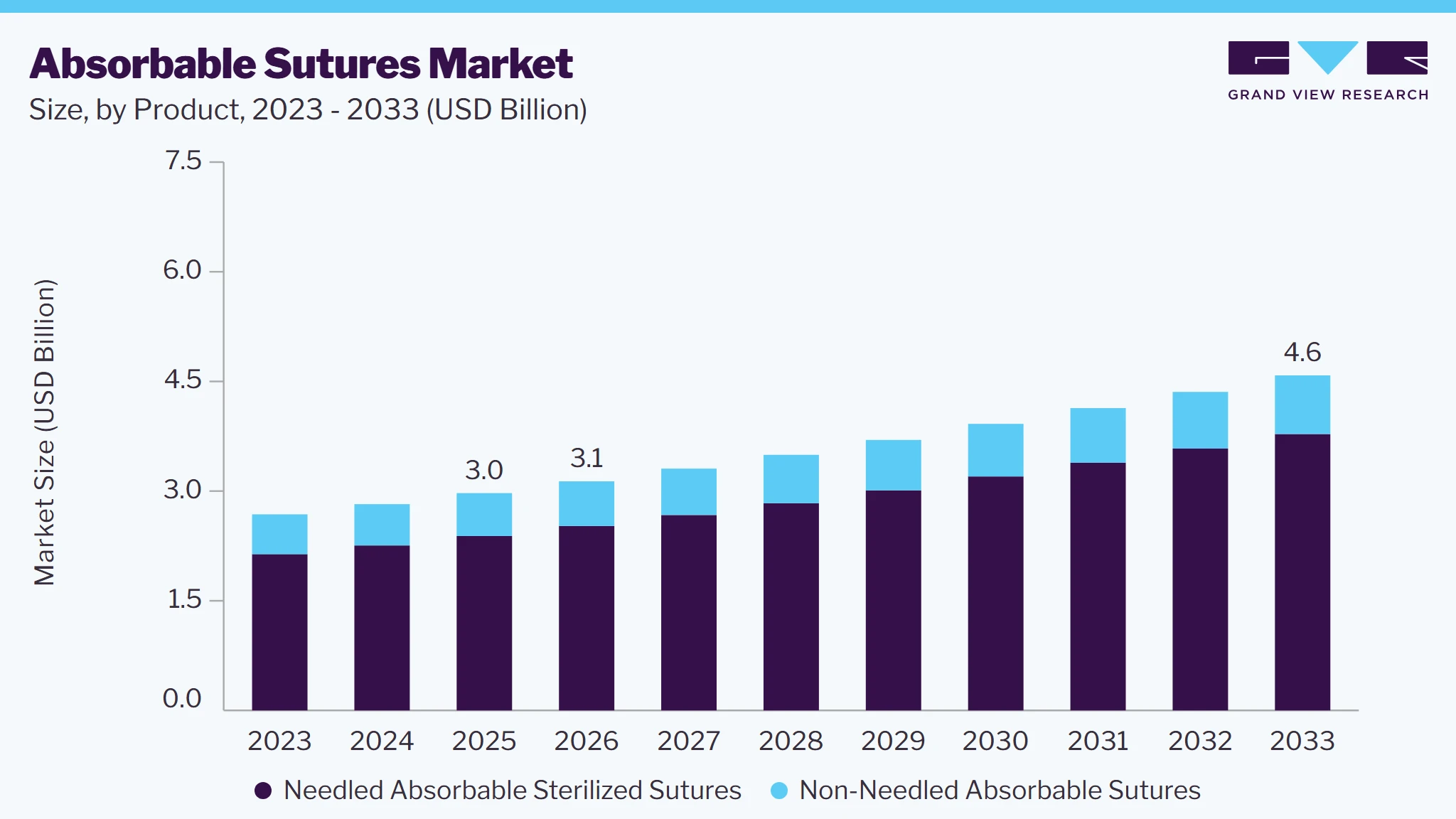
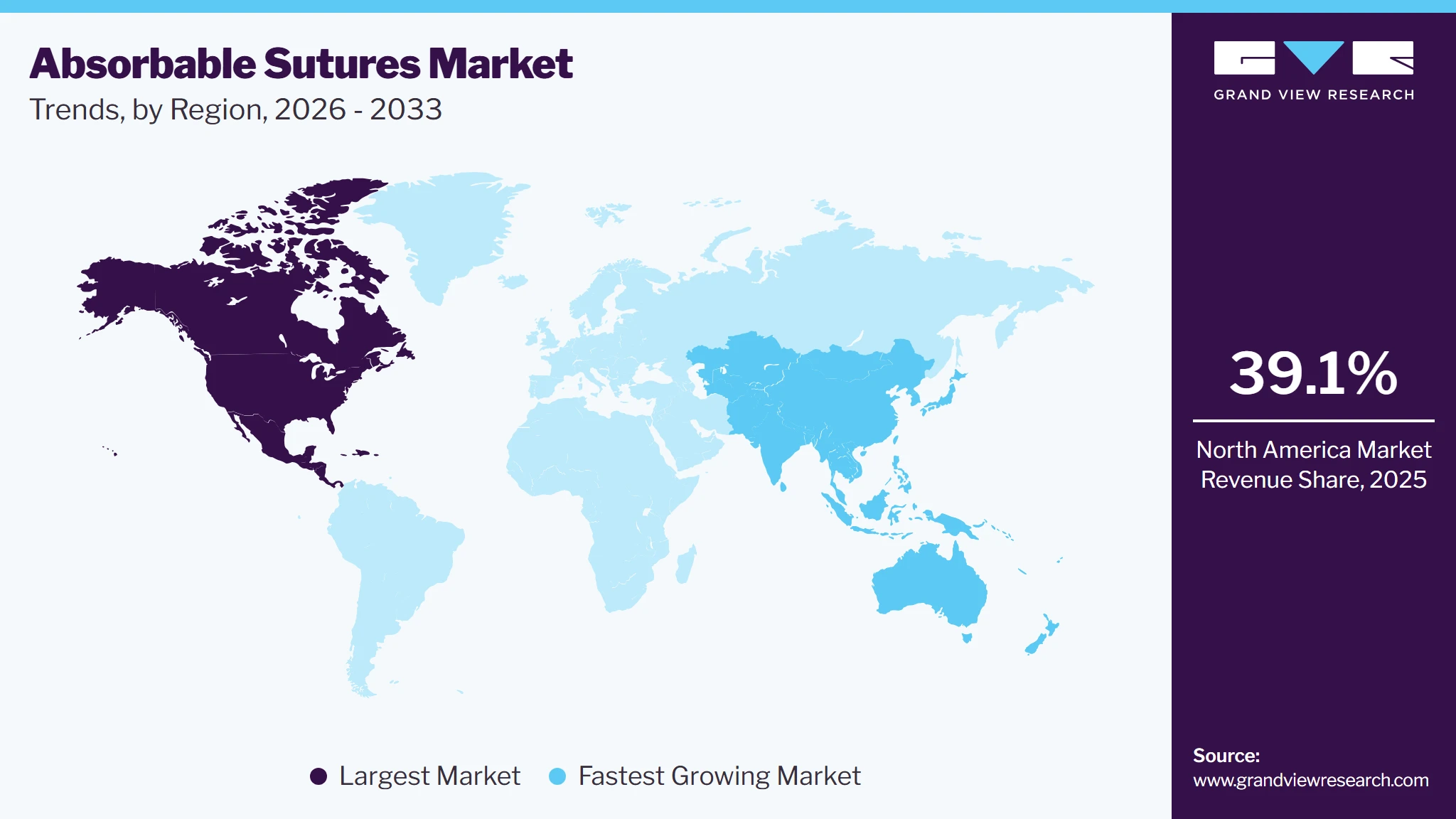
The global absorbable sutures market size was valued at USD 3.0 billion in 2025 and is projected to grow from USD 3.1 billion in 2026 to USD 4.6 billion by 2033, at a CAGR of 5.6% from 2026 to 2033. North America market dominated, with a revenue share of 39.1% in 2025. The absorbable sutures industry is expanding due to several key drivers, including increasing demand for minimally invasive surgeries and advancements in suture materials.
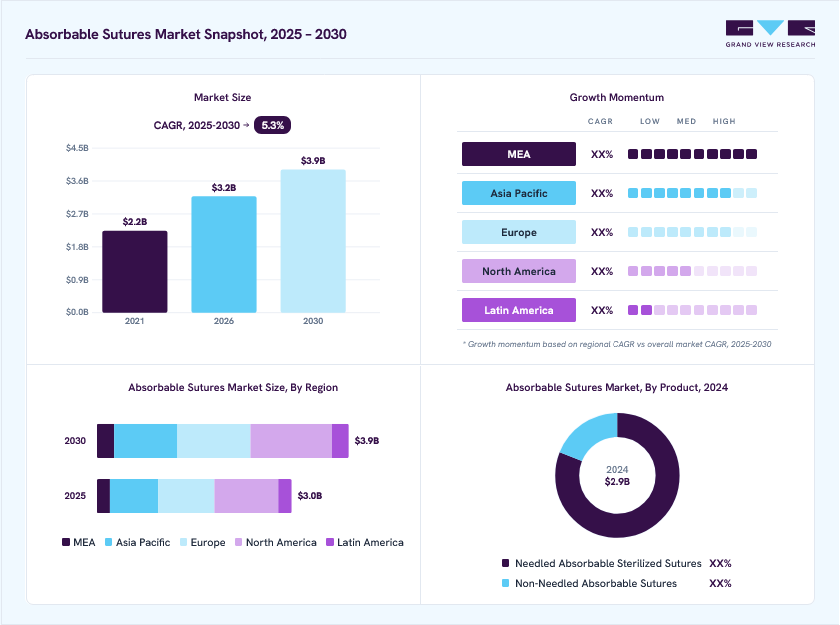 Source: Grand View Research, IR Documents, Primary Interviews, Paid DatabasesTo learn more about this report,
 Download Free Sample Report
Key Market Trends & Insights
- By product: Needled absorbable sterilized sutures segment led the market with the largest revenue share of 80.3% in 2025.
- By filament: Multifilament segment dominated the absorbable sutures market with a market share of 57.5% in 2025.
- By application: Cardiac surgery segment dominated the absorbable sutures market with a market share of 26.1% in 2025.
- By end-use: Hospitals & clinics segment dominated the absorbable sutures market with a market share of 45.3% in 2025.
Regional Highlights
- Largest regional market: North America (39.1% revenue share, 2025)
- Fastest-growing regional market: Asia Pacific (highest CAGR, 2026-2033)
- By country: The U.S. held the largest market share in 2025.
Market Size & Forecast
- Market size in 2025: USD 3.0 Billion
- Estimated market size in 2026: USD 3.1 Billion
- Projected market size by 2033: USD 4.6 Billion
- CAGR (2026-2033): 5.6%
Prism AI by Grand View Research Free to tryAsk a question about the absorbable sutures marketTry asking✓Every figure cited from GVR research Prefer the report? Download free sample →The shift towards less invasive procedures promotes faster recovery and reduced complications, boosting the use of absorbable sutures in various specialties such as general surgery, orthopedics, and ophthalmology. Technological innovations in suture materials, such as enhanced tensile strength and biocompatibility, are also contributing to market growth. Absorbable sutures are a type of sutures that gradually dissolve in the body over time, eliminating the need for removal. These sutures are made from materials like polyglycolic acid (PGA), polylactic acid (PLA), polyglactin, and polydioxanone (PDO), which are bioabsorbable and provide a range of benefits, including reduced patient discomfort, lower risk of infection, and quicker recovery times.
 To learn more about this report, Download Free Sample Report
One of the key drivers of market growth is the increasing number of surgical procedures worldwide. According to the World Federation of Neurology, 12.0% of the total neurology patients succumb to these conditions each year, and according to Medico Experts, 22.6 million people suffer from neurological injuries, of which 13.8 million require surgery. In addition, according to the WHO, the number of Disability-Adjusted Life Years (DALYs) lost due to neurological diseases is anticipated to increase from 95 million in 2015 to 103 million in 2033 across the globe. An increasing number of neurological surgeries and the high demand for absorbable sutures specially designed for these procedures are expected to drive market growth.
The rising geriatric population is another significant driver of the absorbable sutures industry. As the global population ages, the demand for surgical procedures is expected to rise due to the higher incidence of age-related conditions such as heart disease, diabetes, and osteoporosis, which require surgical intervention. According to the United Nations, the global population aged 60 years or older is expected to increase from 1 billion in 2020 to 1.4 billion by 2033. This demographic shift has led to a corresponding rise in the number of elderly individuals requiring surgeries, driving the demand for absorbable sutures in various procedures.
Market Dynamics
The absorbable sutures market is witnessing significant growth, driven by the rising volume of surgical procedures, increasing preference for minimally invasive surgeries, and growing demand for sutures that eliminate the need for removal, thereby improving patient comfort and reducing follow-up visits. Continuous advancements in synthetic absorbable materials and antimicrobial-coated sutures are improving wound-healing outcomes and broadening their clinical applications. In addition, the expanding aging population, the increasing prevalence of chronic diseases requiring surgery, and the improving healthcare infrastructure in emerging economies are further supporting market expansion. However, pricing pressures, availability of alternative wound closure technologies, and stringent regulatory requirements continue to influence the competitive landscape.
The increasing number of surgical procedures performed worldwide is a key driver of the absorbable sutures market. Rising incidences of cardiovascular diseases, cancer, orthopedic disorders, trauma injuries, and cesarean deliveries are significantly increasing the demand for reliable wound closure solutions. Absorbable sutures are widely preferred across general, gynecological, urological, and orthopedic surgeries because they naturally degrade in the body, eliminating the need for suture removal while improving patient comfort and reducing post-operative healthcare costs. According to a 2025 Lancet Commission report, the global unmet need for surgery has risen to at least 160 million operations annually, highlighting the expanding surgical burden worldwide.
For instance,
- In February 2026, ETHICON, Inc. received U.S. FDA 510(k) clearance for its MONOCRYL Plus Antibacterial Poliglecaprone-25 Sterile Synthetic Absorbable Surgical Suture, expanding its portfolio of infection-prevention absorbable sutures for a broad range of surgical procedures.
- In June 2026, Sutura Medical Technology, Inc. obtained U.S. FDA 510(k) clearance for its Barbed PDO (Polydioxanone) Absorbable Suture, designed to improve wound closure efficiency and reduce operative time in minimally invasive and soft tissue surgeries.
The potential for allergic reactions and foreign body responses remains a key restraint in the absorbable sutures market. Although modern synthetic absorbable sutures are highly biocompatible, some patients may still experience localized inflammation, tissue irritation, granuloma formation, or hypersensitivity reactions during absorption. These complications can delay wound healing, increase the risk of post-operative interventions, and influence surgeons to select alternative wound closure materials, particularly for patients with a history of sensitivity or complex surgical conditions. For instance, in July 2024, a case report published in Cureus described a rare hypersensitivity reaction to absorbable VICRYL (polyglactin 910) sutures following arthroscopic ACL reconstruction. The patient developed erythema, edema, itching, blistering, and localized inflammation within 24 hours of surgery, highlighting that, although uncommon, allergic and foreign-body reactions to absorbable sutures can delay healing and require differential diagnosis from surgical site infections.
The growing emphasis on preventing surgical site infections (SSIs) is creating significant opportunities for antibacterial and infection-resistant absorbable sutures. Healthcare providers are increasingly adopting triclosan-coated and other antimicrobial absorbable sutures to reduce bacterial colonization, improve wound-healing outcomes, and lower postoperative complications, particularly in high-risk surgeries. Rising infection prevention initiatives, stricter hospital quality standards, and the increasing volume of complex surgical procedures are expected to accelerate the adoption of advanced absorbable sutures with antimicrobial properties, supporting long-term market growth.
Market Concentration & Characteristics
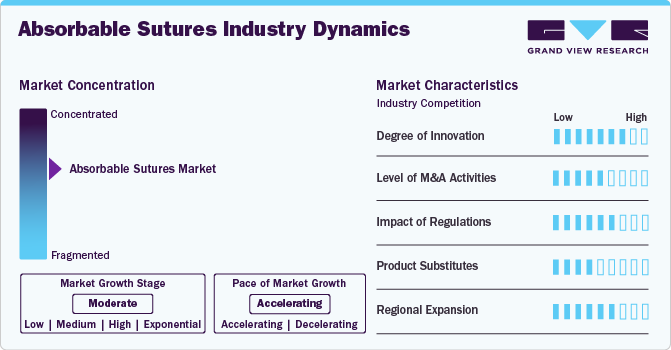
The absorbable sutures industry is moderately concentrated, with key players such as Johnson & Johnson (Ethicon), Medtronic, and B. Braun Melsungen AG dominating the market. These companies hold significant shares due to their established product portfolios, global reach, and innovation in suture materials. The market features a mix of multinational corporations and regional players, contributing to product diversification. Advancements in materials, such as biodegradable polymers, and increasing demand for minimally invasive surgeries are key characteristics driving market growth. As competition intensifies, companies focus on product differentiation, technological innovations, and improving clinical outcomes to strengthen their market position.
The absorbable sutures industry has seen significant innovation with advancements in materials and functionality. In May 2023, MIT engineers introduced “smart” absorbable sutures inspired by traditional catgut, which can detect inflammation and deliver drugs. These sutures are coated with hydrogels, enabling them to house sensors, therapeutic molecules, or cells. The innovation offers multiple potential applications, particularly in enhancing recovery for patients with conditions like Crohn’s disease, as the sutures not only hold tissues together but also monitor healing and release necessary drugs. These developments mark a significant step forward in the functionality and versatility of absorbable sutures.
 To learn more about this report, Download Free Sample Report
Regulations in the absorbable sutures industry ensure product safety, quality, and efficacy, with strict guidelines from bodies like the FDA and the European Medicines Agency (EMA). Manufacturers must adhere to standards related to material biocompatibility, sterilization, and absorption rates. Regulatory approval involves rigorous clinical testing and quality control measures, impacting product development timelines. Compliance with these regulations is essential for market entry and maintaining consumer trust. In addition, increasing regulatory scrutiny surrounding the approval of new materials, such as biodegradable polymers and drug-eluting sutures, drives innovation while ensuring patient safety, creating both challenges and opportunities for manufacturers in the industry.
Mergers and acquisitions (M&A) in the absorbable sutures industry are rapidly increasing as companies aim to bolster their technological capabilities and market reach. For instance, in May 2024, KKR acquired Healthium, a medical device company, from Apax Partners for USD 84 million. This acquisition will enable KKR to strengthen its presence in the healthcare sector, particularly in surgical and wound care solutions. Healthium offers a wide range of medical products with global reach. This strategic acquisition aims to improve product offerings and accelerate the development of innovative health solutions. Additionally, partnerships between established firms and startups are becoming common, enabling knowledge sharing and resource pooling, which fuels growth and innovation within the absorbable sutures industry.
In the absorbable sutures industry, product substitutes include non-absorbable sutures, staples, and tissue adhesives. Non-absorbable sutures, such as nylon or polypropylene, provide long-lasting wound closure but require removal. Staples offer fast and secure wound closure, particularly in surgeries with high-tension areas. Tissue adhesives, like cyanoacrylate, provide an alternative for small incisions or superficial wounds, eliminating the need for stitches. However, absorbable sutures remain the preferred option for internal surgical procedures due to their ability to dissolve naturally, reducing the risk of infection and eliminating the need for removal, offering a more convenient and effective solution.
The absorbable sutures industry is experiencing significant regional expansion, driven by increasing healthcare access and rising surgical procedures worldwide. North America and Europe dominate the market due to advanced healthcare infrastructure and high adoption rates of surgical techniques. However, the Asia Pacific region, led by India and China, is witnessing the fastest growth, supported by expanding healthcare facilities, a large patient population, and rising awareness of advanced surgical products. Additionally, Latin America and the Middle East are emerging markets, with increasing demand for absorbable sutures fueled by improving healthcare services and rising surgical interventions in these regions.
Analyst Perspective
The absorbable sutures market is expected to witness significant growth, supported by increasing surgical volumes, the rising adoption of minimally invasive procedures, and growing preference for sutures that eliminate the need for removal. Innovation in synthetic biodegradable polymers and antibacterial-coated sutures is enhancing clinical outcomes and driving product differentiation. While alternative wound closure technologies and pricing pressures pose competitive challenges, expanding healthcare infrastructure in emerging markets and increasing demand for advanced surgical wound management solutions are expected to sustain long-term market growth.
Product Insights
Based on filament, the multifilament segment dominated the absorbable sutures market with a market share of 57.5% in 2025 and is expected to witness the fastest growth of CAGR over the forecast period and is expected to grow at the fastest CAGR over the forecast period. These sutures are pre-attached to a needle, ensuring precise and efficient application in a variety of surgeries, such as general, cardiovascular, and orthopedic procedures. The sterilization process ensures that the sutures are safe and free from contaminants, making them suitable for use in sterile environments. The convenience of pre-needled sutures, combined with their absorbable nature, which eliminates the need for removal, has driven their dominance in the market, ensuring high demand in healthcare settings.
The non-needled absorbable sutures segment is experiencing steady growth due to its versatility in various surgical applications. These sutures, often used in procedures requiring custom needle selection, offer flexibility for surgeons. Their growing demand is driven by the preference for personalized suturing options and their cost-effectiveness in certain medical fields.
Filament Insights
The multifilament segment held the largest revenue share of 57.0% in 2024 due to its superior strength, flexibility, and ease of handling. Made from multiple intertwined threads, multifilament sutures provide enhanced knot security and are less likely to slip during procedures. These sutures are particularly favored in high-tension surgical areas like cardiovascular and orthopedic surgeries. Their increased surface area facilitates better tissue holding, contributing to improved healing outcomes. The demand for multifilament absorbable sutures is driven by their reliability, ease of use, and performance, making them a preferred choice among surgeons across various medical specialties.
The monofilament segment is expected to grow at the fastest CAGR over the forecast period. Monofilament sutures, made from a single continuous strand, offer advantages such as reduced tissue drag and less chance of infection compared to multifilament sutures. Their smooth surface ensures minimal irritation and allows for precise tissue placement. Monofilament sutures are increasingly preferred in delicate procedures, including plastic and ophthalmic surgeries, due to their superior tensile strength and biocompatibility. The segment's rapid growth is driven by these benefits and the increasing adoption of minimally invasive surgical techniques that prioritize wound healing and infection control.
Application Insights
Based on application, the cardiac surgery segment dominated the absorbable sutures market with a market share of 26.1% in 2025 due to the high demand for surgical procedures involving the heart. Absorbable sutures are crucial in cardiac surgeries for closing incisions and securing tissue, as they eliminate the need for removal, reducing patient discomfort and risk of infection. These sutures provide reliable wound closure, supporting faster healing and minimizing complications. With the increasing prevalence of cardiovascular diseases and advancements in cardiac surgery techniques, the demand for absorbable sutures in cardiac surgeries is expected to continue growing. In addition, the focus on minimally invasive surgeries further boosts the adoption of absorbable sutures in this segment.
The orthopedic surgery segment is expected to witness the fastest growth of CAGR over the forecast period in the absorbable sutures industry due to the rising number of orthopedic surgeries, including joint replacements, bone fractures, and spinal procedures. Absorbable sutures offer advantages in orthopedic surgeries by promoting faster healing, reducing the risk of infection, and eliminating the need for suture removal, which enhances patient comfort. As the demand for minimally invasive procedures increases, absorbable sutures are gaining preference in orthopedic surgeries. In addition, advancements in material technologies, such as improved strength and biocompatibility, are further driving the growth of absorbable sutures in the orthopedic segment.
End Use Insights
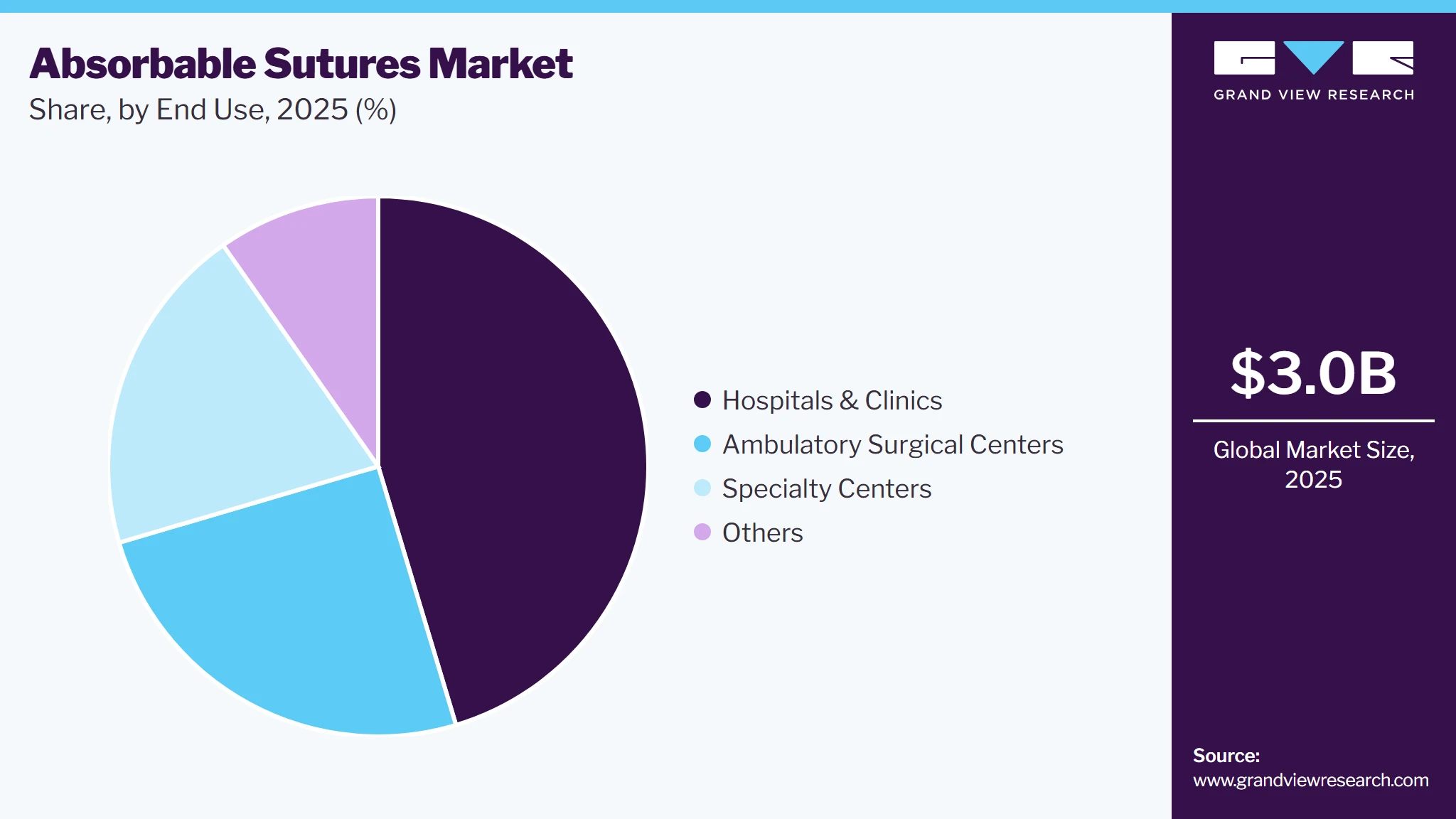
Based on end-use, the hospitals & clinics segment dominated the absorbable sutures market with a market share of 45.3% in 2025. Hospitals and clinics are the primary healthcare facilities where absorbable sutures are widely used for various surgical procedures, including general, orthopedic, and cardiovascular surgeries. The growing number of surgical interventions, combined with the preference for absorbable sutures due to their convenience and effectiveness in wound healing, drives the demand. In addition, the availability of advanced surgical technologies and increasing awareness about infection control in healthcare settings contribute to the market’s dominance by hospitals and clinics.
 To learn more about this report, Download Free Sample Report
The ambulatory surgical centers segment is expected to witness the fastest growth of CAGR over the forecast period due to the increasing demand for specialized surgeries, such as orthopedic, plastic, and cardiovascular procedures. These centers focus on advanced treatments and minimally invasive surgeries, driving the adoption of absorbable sutures for better patient outcomes.
Regional Insights
North America dominated the absorbable sutures market with the largest revenue share of 39.1% in 2025. According to the American Hospital Association Statistics 2024, the U.S. has approximately 6,120 operational hospitals, performing 40–50 million surgeries annually for conditions such as cardiovascular diseases, cancer, and trauma (NCBI, 2020). Rising surgeries drive demand for surgical instruments. In addition, 702,880 heart disease deaths in 2022 highlight the growing demand for minimally invasive techniques, boosting market growth.
 To learn more about this report, Download Free Sample Report
U.S. Absorbable Sutures Market Trends
The absorbable sutures market in the U.S. held the largest share in the North America region in 2025, driven by the increasing prevalence of chronic diseases, rising surgical procedures, and advancements in healthcare infrastructure. The demand for absorbable sutures is further supported by the growing adoption of minimally invasive surgeries and the presence of key players in the U.S. healthcare sector. The country's focus on improving patient outcomes and reducing surgical complications has contributed to the growth of the market, making the U.S. a dominant player in the North American absorbable sutures industry.
Europe Absorbable Sutures Market Trends
The European absorbable sutures market was the second largest globally in 2024. The growth is attributed to the rising chronic diseases like diabetes, affecting 61 million people in Europe, and is projected to reach 67 million by 2033. Increased adoption of robotic-assisted surgeries and expanding outpatient clinics further drive demand for advanced handheld tools.
Theabsorbable sutures market in the UK is witnessing significant growth due to the rising incidence of chronic diseases like diabetes and the expanding elderly population. For instance, according to the Department of Health & Social Care in the UK, the population aged 85 and older is expected to increase by one million between 2021 and 2036.
The absorbable sutures market in France is expanding, supported by substantial healthcare spending that guarantees access to quality, patient-focused services. In 2021, France allocated approximately 12.31% of its GDP to healthcare, according to World Bank data. Its robust healthcare infrastructure promotes the adoption of minimally invasive surgical instruments and devices.
The germany absorbable sutures market is primarily fueled by the rising prevalence of chronic diseases. According to the International Diabetes Federation, in 2021, 10% of Germany's adult population of 62,027,700 had diabetes, amounting to 6,199,900 cases. This growing burden significantly drives the demand for advanced surgical tools. Furthermore, the presence of stainless-steel manufacturers in Germany is also expected to fuel market growth.
Asia Pacific Absorbable Sutures Market Trends
The Asia Pacific absorbable sutures market is growing rapidly due to rising chronic diseases like cancer, diabetes, and cardiovascular conditions, particularly in China, India, and Japan. With 1.4 million cancer diagnoses in India in 2022, demand for advanced surgical tools is growing. In addition, the adoption of minimally invasive techniques and innovations in surgical technology, such as robotic systems, is enhancing patient outcomes. Hospitals are increasingly investing in modern instruments to improve care, driving market growth across the region.
The absorbable sutures market in Japan is growing, primarily driven by the country’s aging population, with approximately 30% aged 65 and older in 2023, according to World Bank data. The introduction of advanced surgical tools and frequent product launches further fuel growth. Manufacturers are heavily investing in R&D to develop innovative instruments that enhance precision, efficiency, and patient care.
The China absorbable sutures market is expected to grow over the forecast period. China's swiftly changing healthcare landscape and patient needs significantly contribute to the growth of the absorbable sutures market. The country faces a rising prevalence of chronic diseases like diabetes, cardiovascular conditions, and autoimmune disorders. For instance, the International Diabetes Federation (IDF) reported that in 2021, 537 million people globally had diabetes, with 206 million in the Western Pacific Region; this number is projected to increase to 260 million by 2045.
The absorbable sutures market in India is set for significant growth over the forecast period. The increasing prevalence of gastrointestinal disorders and colorectal cancer drives this growth. With colorectal cancer cases rising at an estimated 5% annually, the demand for minimally invasive procedures has surged. India's aging population, projected to reach 20% by 2050, further fuels this demand.
Latin America Absorbable Sutures Trends
The Latin American absorbable sutures market is primarily driven by Brazil and Argentina. The geriatric population in Latin America is increasing, leading to a higher demand for healthcare services & products. For instance, according to the World Bank, the adult population aged 65 and above in the Latin America and Caribbean region was around 9% of the total population in 2023, which is anticipated to double by 2050.
Middle East & Africa Surgical Snare Market Trends
The Middle East and Africa absorbable sutures market is growing due to the increasing adoption of minimally invasive procedures and growing awareness of endoscopic techniques. Investments in healthcare infrastructure, particularly in the UAE and Saudi Arabia, are increasing, enhancing access to advanced medical devices. Additionally, the aging population in the region, expected to reach 7% by 2033, further supports market growth alongside government initiatives promoting advanced diagnostic and therapeutic solutions.
The absorbable sutures market in Saudi Arabia is anticipated to expand in the forecast period. The growing geriatric population, which is highly susceptible to chronic diseases, is one of the major factors positively influencing the market growth in this country. For instance, as per the Saudi Arabian Monetary Agency (SAMA), the proportion of the Saudi Arabian population aged 60 and above is estimated to reach 25% by the end of 2050.
Key Absorbable Sutures Company Insights
The competitive scenario in the global absorbable sutures industry is high, with key players such as Johnson & Johnson, B Braun Melsungen AG, and Teleflex Incorporated holding significant positions. The major companies are undertaking various organic as well as inorganic strategies such as new product development, collaborations, acquisitions, mergers, and regional expansion to serve the unmet needs of their customers.
Key Absorbable Sutures Companies
The following key companies have been profiled for this study on the absorbable sutures market.
-
Johnson & Johnson
-
Teleflex Incorporated
-
B Braun Melsungen AG
-
DemeTECH Corporation
-
Lotus Surgicals Pvt Ltd
-
Teleflex Incorporated
-
Integra Lifesciences Corporation
-
Healthium Medtech (formerly Suture India)
-
Samyang Holdings Corporation
- Internacional Farmacéutica S.A. de C.V. (Atramat)
Competitive Benchmarking
Category Operating Strategies Competitive Edge Weakness Established Players (Ethicon (Johnson & Johnson), Medtronic, B. Braun SE, Teleflex Incorporated, Corza Medical) - Invest heavily in R&D to develop advanced synthetic, antibacterial, and absorbable sutures.
- Expand product portfolios across multiple suture materials, needle configurations, and surgical specialties.
- Strong global brand recognition and established surgeon loyalty.
- Broad regulatory approvals and extensive clinical validation.
- Premium pricing compared with regional manufacturers.
- Slower response to niche market opportunities due to large organizational structures.
Emerging Players (Healthium Medtech Limited, Dolphin Sutures, DemeTECH Corporation, Peters Surgical) - Compete through cost-effective manufacturing and value-based pricing.
- Expand presence in Asia-Pacific, Latin America, the Middle East, and Africa.
- Competitive pricing with flexible manufacturing capabilities.
- Faster product customization for regional customer requirements.
- Limited global brand recognition and surgeon preference.
- Smaller R&D budgets and narrower product portfolios.
Recent Developments
-
In October 2024, A study in Nature Communications introduced a bioabsorbable electrical stimulation (BioES) suture, enhancing wound healing through electrical stimulation (ES). Unlike traditional absorbable sutures, BioES-sutures mimic natural electric fields to accelerate healing. Self-powered, they address the limitations of existing ES devices, offering a degradable, biocompatible solution for surgical and traumatic wound repair.
-
In September 2023, Genesis MedTech's triclosan-coated absorbable sutures, approved by China's NMPA, combat bacteria like MRSA and MRSE, reducing surgical site infections (SSIs). Backed by WHO and CDC guidelines, these sutures address a major hospital-acquired infection, offering significant clinical and economic benefits by lowering SSI risks across various surgical procedures.
Absorbable Sutures Market Report Scope
Report Attribute
Details
Market size in 2025
USD 3.0 billion
Estimated market size in 2026
USD 3.1 billion
Projected market size by 2033
USD 4.6 billion
Growth rate
CAGR of 5.6% from 2026 to 2033
Historical data
2021 - 2024
Forecast period
2026 - 2033
Quantitative units
Revenue in USD million/billion and CAGR from 2026 to 2033
Report coverage
Revenue forecast, company ranking, competitive landscape, growth factors, and trends
Segments covered
Product, filament, application, end-use, region
Regional scope
North America; Europe; Asia Pacific; Latin America; MEA
Country scope
U.S.; Canada; Mexico; Germany; UK; France; Italy; Spain; Norway; Denmark; Sweden; Russia; Iceland; Finland; China; Japan; India; South Korea; Australia; Thailand; Singapore; Brazil; Argentina; Saudi Arabia; South Africa; UAE; Kuwait; Israel
Key companies profiled
Ethicon (Johnson & Johnson), Medtronic, B. Braun SE, Teleflex Incorporated, Corza Medical, Healthium Medtech Limited, Dolphin Sutures, DemeTECH Corporation, Peters Surgical (Advanced Medical Solutions Group plc (AMS)), Unisur Lifecare, Kono Seisakusho Co.,Ltd., Assut Europe, Lotus Surgicals Pvt Ltd, Internacional Farmacéutica S.A. de C.V. (Atramat)
Customization scope
Free report customization (equivalent up to 8 analysts' working days) with purchase. Addition or alteration to country, regional & segment scope.
Pricing and purchase options
Avail customized purchase options to meet your exact research needs. Explore purchase options
Global Absorbable Sutures Market Report Segmentation
This report forecasts revenue growth at country levels and provides an analysis of the latest industry trends and opportunities in each of the sub-segments from 2021 to 2033. For this study, Grand View Research has segmented the global absorbable sutures market report based on product, filament, application, end use, and region:
-
Product Outlook (Revenue, USD Million, 2021 - 2033)
-
Needled Absorbable Sterilized Sutures
-
Non-Needled Absorbable Sutures
-
-
Filament Outlook (Revenue, USD Million, 2021 - 2033)
-
Monofilament
-
Multifilament
-
-
Application Outlook (Revenue, USD Million, 2021 - 2033)
-
Ophthalmic Surgery
-
Cardiac Surgery
-
Orthopedic Surgery
-
Neurological Surgery
-
Others
-
-
End Use Outlook (Revenue, USD Million, 2021 - 2033)
-
Hospitals & Clinics
-
Ambulatory Surgical Centers
-
Specialty Centers
-
Others
-
-
Regional Outlook (Revenue, USD Million, 2021 - 2033)
-
North America
-
U.S.
-
Canada
-
Mexico
-
-
Europe
-
UK
-
Germany
-
France
-
Italy
-
Spain
-
Denmark
-
Sweden
-
Norway
-
-
Asia Pacific
-
Japan
-
China
-
India
-
Australia
-
South Korea
-
Thailand
-
-
Latin America
-
Brazil
-
Argentina
-
-
Middle East & Africa
-
South Africa
-
Saudi Arabia
-
UAE
-
Kuwait
-
-
Research Methodology
The absorbable sutures market figures in this report are based on a proven research process that combines executive interviews with secondary research from proprietary databases, company filings, and recognized regulatory and institutional sources. Market size is built through value-chain sizing-reconciling supply-side and demand-side estimates-and triangulated with bottom-up and top-down approaches. Every estimate passes multiple levels of expert validation before publication, with each absorbable sutures segment quantified using the revenue-capture definitions in the table below.
Segment Definition
Segment - Product
Revenue capture definition
Needled Absorbable
Sterilized Sutures
Revenue is generated from the sale of sterile absorbable sutures supplied with an attached surgical needle for soft tissue approximation and ligation across surgical procedures. The segment includes synthetic and natural absorbable sutures packaged in sterile, ready-to-use configurations and excludes non-needled absorbable sutures, non-absorbable sutures, standalone surgical needles, and other wound closure products.
Non-Needled
Absorbable Sutures
Revenue is generated from the sale of absorbable suture threads supplied without an attached surgical needle, including synthetic and natural materials used for soft tissue approximation across various surgical specialties. This segment excludes needled absorbable sutures, non-absorbable sutures, surgical needles sold separately, and other wound closure devices.
Estimation Model
Approach
Description
Bottom-Up Surgical Procedure Volume Modeling
Models the total volume of surgical procedures across general surgery, cardiovascular, orthopedic, gynecological, urological, gastrointestinal, and cosmetic surgeries. Estimates absorbable suture utilization per procedure, average sutures used per surgery, and adoption rates by suture type (needled/non-needled and synthetic/natural) to derive market volume and revenue.
Top-Down Revenue Triangulation
Aggregates supplier-side revenues from leading manufacturers such as Johnson & Johnson (ETHICON), Medtronic, B. Braun SE, Teleflex, Corza Medical, Peters Surgical and Healthium Medtech. Revenue is validated through product portfolio analysis, regional sales distribution, financial disclosures, and elimination of double counting to estimate the global market size.
Demand-Side End-User Consumption Modeling
Evaluates purchasing patterns across hospitals, ambulatory surgical centers (ASCs), specialty clinics, and academic medical centers. The model incorporates procurement contracts, surgical procedure mix, average selling prices (ASPs), regional healthcare expenditure, reimbursement policies, and inventory consumption to estimate demand across end-user segments.
Delivered Customizations
This report has been delivered with the following In-depth customizations
Client Request
Customization Delivered
Value Adds
Country-Level Market Assessment
Detailed market sizing, growth forecasts, reimbursement landscape, regulatory framework, and competitive analysis for selected countries/regions.
Supports market entry strategies, geographic expansion, and investment decision-making with country-specific intelligence.
Product Share Analysis
Market share analysis by product type (Needles, Non-Needles), material (Synthetic vs. Natural), and key brands, including revenue contribution and competitive positioning.
Enables identification of high-growth product categories, portfolio optimization, and product development opportunities.
Competitive Benchmarking & Market Share Analysis
In-depth profiling of key manufacturers, estimated market shares, product portfolio comparison, distribution strategies, recent developments, and SWOT analysis.
Assists in competitor benchmarking, partnership identification, strategic positioning, and differentiation in the absorbable suture market.
Frequently Asked Questions About This Report
The global absorbable sutures market size was valued at USD 3.0 billion in 2025 and is estimated at USD 3.1 billion in 2026.
The global absorbable sutures market is expected to grow at a CAGR of 5.6% from 2026 to 2033, reaching USD 4.6 billion by 2033.
North America dominated with a 39.1% revenue share in 2024.
Major market players included in the absorbable sutures market are Ethicon (Johnson & Johnson), Medtronic, B. Braun SE, Teleflex Incorporated, Corza Medical, Healthium Medtech Limited, Dolphin Sutures, DemeTECH Corporation, Peters Surgical (Advanced Medical Solutions Group plc (AMS)), Unisur Lifecare, Kono Seisakusho Co.,Ltd., Assut Europe, Lotus Surgicals Pvt Ltd, Internacional Farmacéutica S.A. de C.V. (Atramat).
Key factors that are driving growth include the rising number of surgical procedures, increasing preference for biodegradable materials that eliminate the need for removal, and advancements in suture technology offering enhanced wound healing, strength, and reduced infection risks. Additionally, growing healthcare infrastructure and awareness further boost market expansion.
Asia Pacific is the fastest-growing region over the forecast period.
The needled absorbable sterilized sutures segment led the market with the largest revenue share of 80.3% in 2025
The multifilament segment dominated the absorbable sutures market with a market share of 57.5% in 2025.
The cardiac surgery segment dominated the absorbable sutures market with a market share of 26.0% in 2025.
The hospitals & clinics segment dominated the absorbable sutures market with a market share of 45.3% in 2025.
About the Author(s)
Medical Devices Research Team
Healthcare · Medical DevicesThis report was authored by the medical devices research team at Grand View Research - comprising two research analysts, one senior research analyst, and one industry expert - with specialized expertise in the medical devices segment of the healthcare industry. All findings are based on proprietary healthcare databases, executive interviews, and regulatory analysis, subject to internal peer review prior to publication.
Last Updated:
Speak to Analyst

Customize this report to your needs - add regions, segments, or data points, with 20% free customization.
Or view our licence options:


ISO 9001:2015 & 27001:2022 Certified
We are GDPR and CCPA compliant! Your transaction & personal information is safe and secure. For more details, please read our privacy policy.


