
- Home
- »
- Medical Devices
- »
-
Adapalene Market Size And Share, Industry Report, 2033GVR Report cover
![Adapalene Market Size, Share & Trends Report]()
Adapalene Market (2026 - 2033) Size, Share & Trends Analysis Report By Formulation (Gels, Creams, Lotions), By Drug Composition (Adapalene Monotherapy), By Prescription, By Indication, By Distribution Channel, By Region, And Segment Forecasts
Market Size, 2025
$605.5MMarket Estimate, 2026
$626.3MMarket Forecast, 2033
$789.5MCAGR, 2026–2033
3.9%Adapalene Market Summary
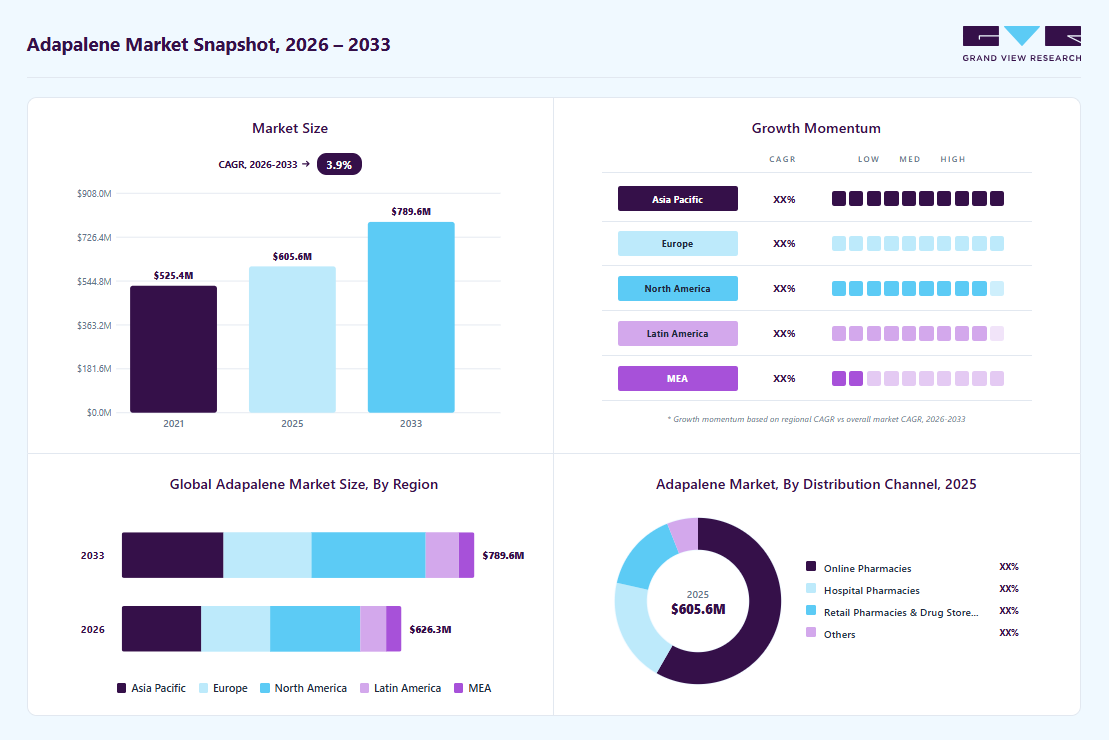
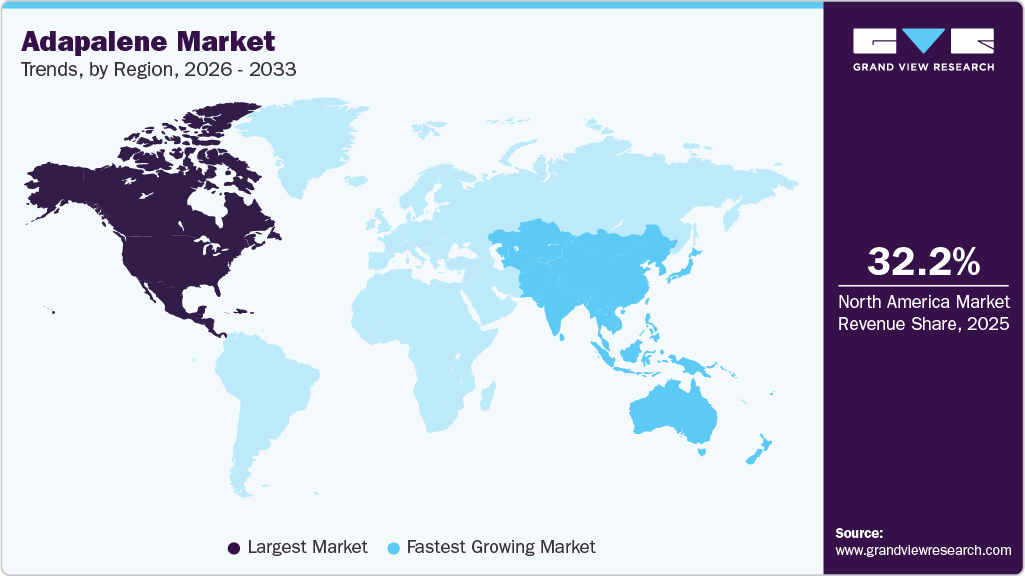
The global adapalene market size was valued at USD 605.5 million in 2025 and is projected to grow from USD 626.3 million in 2026 to USD 789.5 million by 2033, at a CAGR of 3.9% from 2026 to 2033. The North America adapalene market held the largest share of 32.2% of the global market in 2025. The market is experiencing steady growth due to the increasing prevalence of acne and other dermatological disorders, growing awareness of dermatology treatments, and expanding access to topical retinoid therapies.
Key Market Trends & Insights
- By formulation: Gels segment held the highest market share of 74.6% in 2025.
- By drug composition: Adapalene monotherapy segment held a leading market share in 2025.
- By prescription: Prescription-based segment held a leading market share in 2025.
- By indication: Acne vulgaris segment held a leading market share in 2025.
- By distribution channel: Online pharmacies segment held a leading market share in 2025.
Regional Highlights
- Largest regional market: North America (32.2% revenue share, 2025)
- Fastest-growing regional market: Asia Pacific (highest CAGR, 2026-2033)
- By country: The adapalene market in the U.S. held the largest revenue market share of 84.6%.
Market Size & Forecast
- Market size in 2025: USD 605.5 Million
- Estimated market size in 2026: USD 626.3 Million
- Projected market size by 2033: USD 789.5 Million
- CAGR (2026-2033): 3.9%
Adapalene, a third-generation topical retinoid widely used to treat acne vulgaris, works by regulating skin cell turnover, reducing inflammation, and preventing clogged pores. Because of its strong efficacy and relatively favorable safety profile compared with earlier retinoids, adapalene has become one of the most commonly prescribed topical agents for mild-to-moderate acne and is increasingly incorporated into combination therapies with benzoyl peroxide or antibiotics.One of the major factors driving demand for adapalene globally is the high and rising prevalence of acne vulgaris. For instance, in May 2025, a study published by MDPI AG on the epidemiology of acne in the current era: trends and clinical implications highlighted that acne remains a highly prevalent inflammatory skin condition worldwide. This condition affects approximately 9.4% of the global population, with increasing incidence observed among both adolescents and adults, particularly women. These epidemiological trends emphasize the growing need for effective acne therapies such as topical retinoids, including adapalene, in dermatological treatment. As a result, acne consistently ranks among the most prevalent skin diseases globally, creating sustained demand for effective pharmacological treatments such as topical retinoids, including adapalene.
In addition to adolescents, adult acne is becoming increasingly common, particularly among women. Dermatological studies indicate that acne is no longer confined to teenage years, with a growing number of individuals experiencing persistent or late-onset acne beyond the age of 25. As per the article published by MDalgorithms Inc. in August 2025, it suggests that around one-fifth of adults aged 25-39 still experience acne, indicating a broader patient population requiring long-term dermatological treatment. This shift toward adult acne prevalence has significantly expanded the addressable market for topical therapies like adapalene, which is frequently used as a maintenance treatment due to its ability to prevent new lesions and control chronic inflammation.
The market is also benefiting from ongoing pharmaceutical innovation and new combination therapies incorporating adapalene. Such product developments are expanding therapeutic options and strengthening the clinical adoption of adapalene as part of multidrug acne management strategies. Furthermore, lifestyle and environmental factors are contributing to the increasing burden of acne worldwide. Rising urban pollution, dietary changes, hormonal imbalances, and stress levels have been associated with worsening acne incidence in many regions. At the same time, the growing influence of social media and increased awareness about skin health and aesthetics have encouraged more individuals to seek dermatological treatment for acne and related conditions. As acne can lead to scarring, pigmentation, and psychological distress, demand for effective treatments such as adapalene continues to rise across both prescription dermatology and over-the-counter skincare segments.
Market Concentration & Characteristics
The adapalene industry is moderately concentrated, with demand steadily increasing due to the rising prevalence of acne and other dermatological conditions across the globe. The pace of market growth is accelerating as consumers increasingly seek clinically proven topical retinoids for acne management and skin health. In addition, the growing awareness of dermatological treatments, expanding access to over-the-counter (OTC) acne medications in several countries, and the increasing influence of dermatology-driven skincare trends are contributing to market expansion. Owing to continuous pharmaceutical research and formulation improvements, the market demonstrates a moderate degree of innovation. Market participants are focusing on developing improved topical formulations such as gels, creams, and combination therapies with ingredients like benzoyl peroxide to enhance treatment efficacy and reduce skin irritation.
The adapalene industry is experiencing moderate-to-high innovation, particularly through the development of combination topical therapies and improved dermatological treatment strategies designed to enhance efficacy while maintaining tolerability. Pharmaceutical companies and dermatology researchers are increasingly exploring multi-mechanism treatment approaches in which adapalene is combined with other active ingredients to target multiple pathways involved in acne pathogenesis. For instance, recent clinical findings presented by MJH Life Sciences in January 2026 at the Fall Clinical Dermatology Conference highlighted that combining clascoterone cream 1% with adapalene gel 0.3% demonstrated effective acne control and improved patient outcomes. The 16-week study showed significant reductions in acne severity and improved quality of life while maintaining strong tolerability, indicating the potential of combination retinoid-based therapies in improving treatment adherence and clinical results.
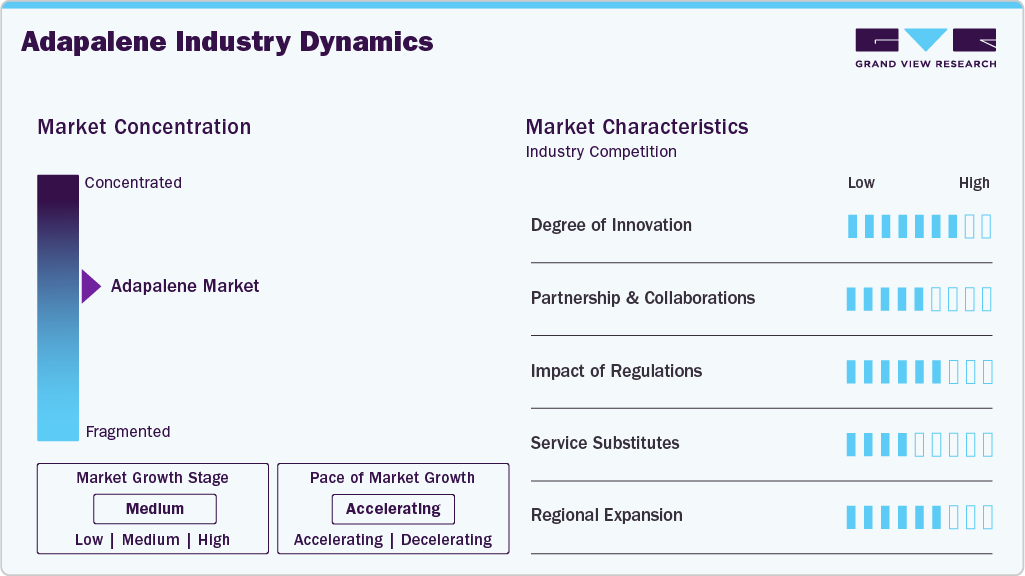
Partnerships and collaborations play an important role in expanding the development, manufacturing, and distribution of adapalene-based dermatology treatments. Pharmaceutical companies frequently collaborate with research partners and commercial distributors to accelerate product development, improve market access, and strengthen dermatology portfolios. For instance, in August 2023, Adalvo collaborated with a strategic partner to develop an adapalene and benzoyl peroxide combination gel, aiming to expand treatment options for mild acne and support broader commercialization across global markets. Such collaborations help companies leverage complementary expertise in formulation development, regulatory approval, and distribution, thereby improving the availability and adoption of adapalene-based acne therapies.
The adapalene industry is strongly influenced by regulatory oversight to ensure the safety, quality, and effectiveness of topical acne treatments. Regulatory agencies such as the U.S. Food and Drug Administration (FDA) require extensive clinical evidence before approving new dermatological therapies containing adapalene. A recent example occurred in October 2023 when the FDA approved CABTREO (clindamycin phosphate 1.2%, adapalene 0.15%, and benzoyl peroxide 3.1%) topical gel for the treatment of acne vulgaris in patients aged 12 years and older. The product represents the first FDA-approved fixed-dose triple-combination topical therapy for acne, highlighting regulatory support for advanced combination formulations that improve treatment outcomes and simplify acne management.
The adapalene industry faces competition from several substitute acne treatments that provide similar therapeutic benefits through different mechanisms of action. Common alternatives include topical agents such as benzoyl peroxide, salicylic acid, azelaic acid, and topical antibiotics, as well as other retinoids like tretinoin and tazarotene, which are widely used in dermatology for the treatment of acne vulgaris. In addition, non-retinoid treatments and systemic therapies, including oral antibiotics and hormonal treatments, are often prescribed for moderate to severe acne cases, providing alternative options for patients who may not tolerate topical retinoids.
Regional expansion is an important growth strategy in the adapalene industry, as pharmaceutical companies focus on increasing product availability through regulatory approvals, generic launches, and distribution partnerships across new geographies. While North America and Europe remain key markets due to high acne prevalence and established dermatology infrastructure, the Asia-Pacific region is emerging rapidly with increasing awareness of acne treatment and expanding access to dermatological therapies. For instance, in September 2025, SoliPharma, a Netherlands-based company, and Shanghai Pharmaceuticals Holding received approval from China’s National Medical Products Administration (NMPA) for Adapalene 0.1% Gel, making it one of the few products to pass the national consistency evaluation and expanding access to adapalene-based acne treatments in the Chinese market.
Formulation Insights
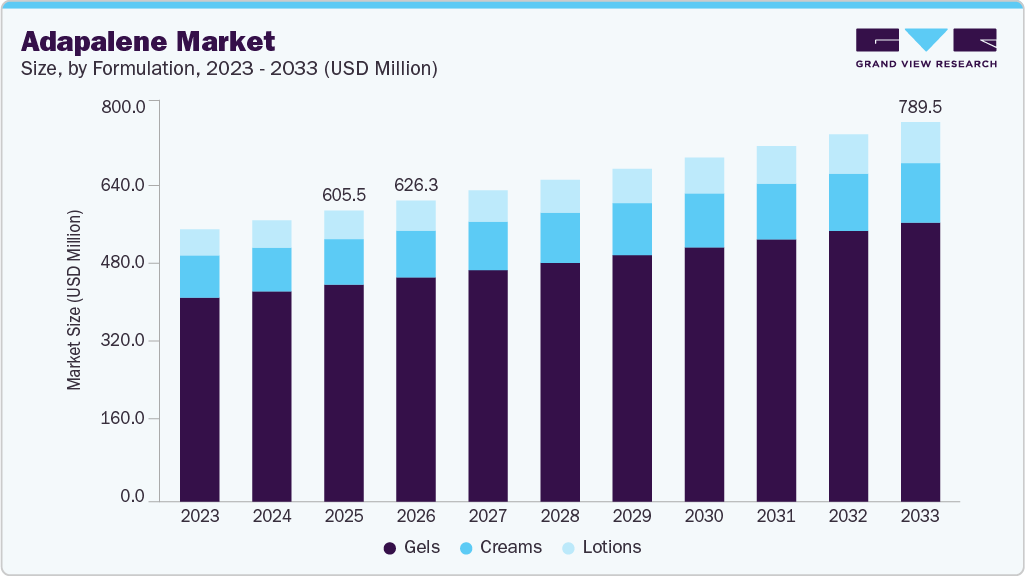
Gels led the market with a revenue share of 74.6% in 2025. The market has witnessed significant growth due to their superior skin penetration, lightweight texture, and compatibility with acne-prone and oily skin types. Gel formulations are widely preferred in dermatology because they deliver active ingredients efficiently into hair follicles while minimizing greasiness and pore blockage, which is critical in acne management. In addition, adapalene gel products are commonly recommended as first-line topical retinoid therapies for mild-to-moderate acne, supporting strong demand across dermatology clinics and over-the-counter skincare segments. Recent clinical developments further highlight the growing importance of gel formulations in acne therapy. A Phase 4 clinical study published by the National Library of Medicine in July 2024 evaluating adapalene 0.3% combined with benzoyl peroxide 2.5% gel in patients with moderate-to-severe acne reported significant reductions in acne lesion counts and demonstrated a favorable safety and tolerability profile among treated patients. These ongoing clinical studies and combination product developments continue to strengthen the demand for adapalene gel formulations in dermatological treatment protocols.
The lotions segment is expected to register the fastest CAGR of 5.4% over the forecast period, driven by increasing demand for lightweight, easily spreadable topical formulations that improve patient adherence and comfort during acne treatment. Lotion-based adapalene formulations are particularly beneficial for patients with sensitive or combination skin types because they provide a more hydrating vehicle compared with gels, while still enabling effective delivery of the retinoid into the skin. These formulations are also commonly used for treating acne on larger body areas such as the chest and back, further expanding their clinical use. Clinical studies have demonstrated the effectiveness of adapalene lotion formulations in acne treatment. For instance, two multicenter randomized clinical trials involving 2,141 patients with acne vulgaris showed that adapalene 0.1% lotion significantly reduced total, inflammatory, and non-inflammatory lesion counts compared with the vehicle formulation after 12 weeks of treatment. In addition, patient surveys in these studies indicated that the lotion formulation was easily absorbed, spreadable, and well-tolerated, which supports its growing adoption among dermatologists and patients seeking convenient topical therapies.
Drug Composition Insights
The adapalene monotherapy segment accounted for the largest market revenue share in 2025. The growth is largely attributed to its proven clinical efficacy, favorable safety profile, and widespread use as a first-line topical retinoid for mild-to-moderate acne. Adapalene monotherapy works by regulating abnormal keratinization, reducing inflammation, and preventing microcomedone formation, making it effective both in the treatment and maintenance phases of acne management. Clinical evidence further supports its effectiveness. A randomized controlled study published in the Pakistan Journal of Medical & Health Sciences evaluated 128 patients with mild-to-moderate acne vulgaris treated with either adapalene 0.1% gel monotherapy or adapalene combined with benzoyl peroxide for 12 weeks. The study reported that adapalene monotherapy achieved an effectiveness rate of 83.3%, demonstrating comparable clinical outcomes to the combination therapy group, highlighting the strong therapeutic potential of adapalene alone in acne treatment. This highlights the rising importance of adapalene monotherapy compositions in the market.
The adapalene combination products segment is projected to witness the fastest growth rate over the forecast period. The growth of the segment is driven by increasing clinical preference for multi-mechanism acne therapies that target several pathogenic factors simultaneously, including abnormal keratinization, bacterial proliferation, and inflammation. Combination formulations such as adapalene with benzoyl peroxide or antibiotics like clindamycin offer improved therapeutic outcomes compared with single-agent treatments and are widely recommended for moderate-to-severe acne cases. According to the study published by the National Library of Medicine in May 2024, pooled Phase 3 clinical trials evaluating a fixed-dose triple-combination gel containing clindamycin phosphate 1.2%, adapalene 0.15%, and benzoyl peroxide 3.1% demonstrated strong therapeutic outcomes in acne patients. After 12 weeks of treatment, about 50% of participants achieved clear or almost clear skin, compared with 22.6% in the vehicle group, while inflammatory and non-inflammatory acne lesions were reduced by over 70%. These results highlight the clinical advantage of combination therapies that integrate antibacterial, antimicrobial, and retinoid mechanisms in a single formulation.
Prescription Insights
Prescription-based led the market with the largest revenue share in 2025. The market has witnessed significant growth supported by the strong clinical reliance on dermatologist-guided acne therapies and the availability of higher-strength adapalene formulations that require medical supervision. The rising prevalence of acne worldwide has further strengthened the demand for prescription treatments; acne affects about 9% of the global population and nearly 85% of individuals aged 12-24 years, making it one of the most common dermatological conditions requiring medical care. Moreover, recent prescription-based products launched by key market players such as Cabtreo by Bausch Health also drive segment growth. These factors, along with increasing awareness of medically supervised acne treatment, continue to drive the dominance of the market segment.
The over-the-counter (OTC) segment is expected to register the fastest CAGR over the forecast period. The growth is driven by increasing consumer awareness about acne treatment, rising demand for self-care dermatology products, and expanding availability of topical retinoids in retail pharmacies and online platforms. OTC adapalene products allow patients to directly access clinically proven acne therapies without requiring a physician visit, which has significantly improved treatment accessibility, particularly for individuals with mild-to-moderate acne. The growing influence of digital health platforms and dermatology-focused skincare brands has further accelerated the adoption of OTC retinoid-based products. Recent product expansion in the consumer dermatology segment highlights this trend. For example, Galderma expanded its consumer dermatology portfolio with Differin 0.1% Adapalene Gel, which transitioned from a prescription-only medication to an over-the-counter treatment. The expansion reflects increasing consumer demand for dermatologist-developed OTC treatments and the broader shift toward accessible retinoid-based skincare solutions for acne management.
Indication Insights
Acne vulgaris dominated the market with the largest revenue share in 2025. The market has witnessed significant growth due to the high global prevalence of acne and the strong clinical adoption of topical retinoids as first-line therapy. Acne vulgaris is one of the most common dermatological conditions worldwide, affecting around 85% of adolescents and young adults, which has significantly increased the demand for effective topical treatments such as adapalene. Recent regulatory developments further highlight the expanding use of adapalene-based therapies for acne treatment. In October 2023, the U.S. Food and Drug Administration approved IDP‑126 topical gel, a triple-combination acne therapy containing clindamycin, adapalene, and benzoyl peroxide. The once-daily treatment is indicated for patients aged 12 years and older with acne vulgaris and represents the first fixed-dose triple-combination topical therapy approved in the U.S. for acne treatment, highlighting continued innovation in adapalene-based dermatology products and reinforcing the strong market demand for therapies targeting acne vulgaris.
Acne maintenance therapy is expected to register the fastest CAGR over the forecast period. The growth is primarily due to the increasing clinical emphasis on long-term acne management and relapse prevention after initial treatment. Dermatologists commonly recommend topical retinoids such as Adapalene as maintenance therapy due to their ability to normalize follicular epithelial cell turnover, reduce inflammation, and prevent the formation of new comedones. After active acne lesions are controlled through combination therapies or systemic treatments, adapalene is frequently continued as a once-daily topical regimen to maintain skin clearance and reduce recurrence rates. Growing awareness among patients regarding long-term skincare routines, along with the increasing adoption of retinoid-based maintenance treatments recommended in dermatology guidelines, is expected to significantly drive the segment growth during the forecast period.
Distribution Channel Insights
The online pharmacies segment dominated the market in 2025 and is expected to witness the fastest CAGR over the forecast period. The segment growth is driven by the rapid expansion of digital healthcare platforms, increasing consumer preference for convenient medication purchasing, and the growing adoption of e-pharmacy services for dermatology treatments. Online pharmacies allow patients to easily access prescription acne therapies, including adapalene-based formulations, with home delivery and tele-dermatology consultations, which significantly improve treatment accessibility. The growth of this channel is further supported by the increasing availability of newly approved prescription acne treatments through pharmacy networks and digital distribution channels. These factors collectively contribute to segment growth.
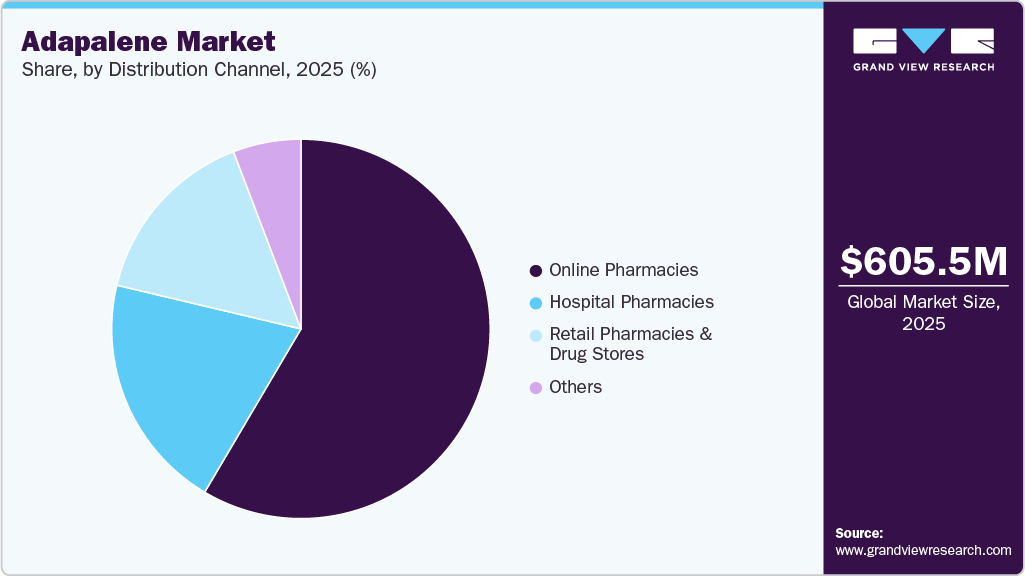
The hospital pharmacies are projected to witness the second-fastest CAGR over the forecast period. The increasing number of dermatology consultations in hospitals and the growing use of prescription-based topical therapies for moderate-to-severe acne management drive the growth. Hospitals often serve as primary treatment centers for patients requiring physician-supervised dermatological care, where dermatologists prescribe advanced combination therapies containing adapalene to improve clinical outcomes. The availability of specialized dermatology services and prescription acne treatments through hospital pharmacies has strengthened the distribution of adapalene-based therapies in this channel. Supporting this trend, in February 2024, Dermatology Times reported that CABTREO topical gel, which contains clindamycin phosphate, adapalene, and benzoyl peroxide, became increasingly accessible across pharmacies in the U.S. Its growing availability across the hospital pharmacies is expected to help dermatologists deliver more effective treatment options for patients with Acne vulgaris and drive segment growth.
Regional Insights
North America dominated the adapalene market and accounted for 32.2% share in 2025. The growth is mainly attributed to the high prevalence of acne and strong access to dermatology treatments in the region. Acne is one of the most common skin conditions worldwide and remains highly prevalent in North America due to lifestyle factors, hormonal changes, and environmental influences. The region also has a well-developed healthcare infrastructure, a large number of dermatology clinics, and strong awareness about early acne treatment, which encourages patients to seek medical care and use topical retinoid therapies such as adapalene. In addition, the presence of major pharmaceutical companies, ongoing dermatology research, and the wide availability of prescription as well as over-the-counter acne medications across pharmacies and retail channels further support market growth.
U.S. Adapalene Market Trends
The adapalene market in the U.S. held the largest revenue market share of 84.6%. Acne is the most common skin condition in the country, affecting nearly 50 million people each year, with around 85% of adolescents experiencing acne at some point in their lives. This large patient population significantly increases the demand for topical retinoid treatments such as adapalene, which dermatologists commonly recommend as a first-line therapy for acne management. In addition, the strong presence of dermatology clinics, growing awareness about early acne treatment, and the availability of adapalene-based products in both prescription and over-the-counter (OTC) forms further support market growth.
Europe Adapalene Market Trends
The adapalene market in Europe held the third-largest revenue market share during the year 2025. The growth is driven by the rising prevalence of acne and increasing awareness about dermatological care among adolescents and young adults. Many European countries have well-established public healthcare systems and access to dermatologists, which supports early diagnosis and treatment of skin conditions. In addition, the growing demand for clinically proven topical retinoids and the expansion of dermatology product portfolios by pharmaceutical companies are contributing to the increased use of adapalene-based treatments across the region.
Germany adapalene market held the largest market share of 17.5%, and various factors, such as strong healthcare infrastructure and high awareness of dermatological conditions, drive the growth of the market. The country has a well-established network of dermatology clinics and pharmacies, enabling easier access to acne treatments. In addition, increasing consultations for skin disorders and the growing demand for clinically approved topical therapies support the adoption of adapalene products in the German dermatology market.
The adapalene market in Norway is anticipated to witness the highest CAGR of 4.9% during the forecast period. The growth is supported by high healthcare standards and strong public healthcare coverage that promotes early diagnosis and treatment of skin conditions. The country also has high health awareness among the population, encouraging individuals to seek medical advice for dermatological issues such as acne. Furthermore, the increasing use of dermatology medications through retail and hospital pharmacies contributes to the demand for adapalene-based products.
Asia Pacific Adapalene Market Trends
The adapalene market in the Asia Pacific is anticipated to grow with the fastest CAGR of 4.2% during the forecast period. This can be attributed to the large population base and the increasing number of individuals experiencing acne and other skin conditions. Rapid urbanization, changing lifestyles, and rising exposure to pollution in several countries have contributed to a higher incidence of skin problems. At the same time, the growing middle-class population, improving healthcare access, and increasing spending on dermatology and personal skincare products are encouraging more people to seek medical treatment, which supports the demand for adapalene therapies in the region.
China adapalene market held the largest revenue market share of 21.0%, and is anticipated to grow at the fastest rate during the forecast period. The growth is attributed to the large patient population and increasing incidence of acne among adolescents and young adults. Rapid urbanization, rising pollution levels, and lifestyle changes have contributed to a higher prevalence of skin problems in major cities. At the same time, expanding dermatology services and the increasing presence of domestic and international pharmaceutical companies in the country are supporting the growth of adapalene treatments.
The adapalene market in India is expected to grow at the second-fastest CAGR of 4.6% during the forecast period. The market is expanding due to the rising number of dermatology patients and increasing awareness of acne treatment among young populations. For instance, in December 2025, a report by Medicircle highlighted that acne cases are increasing across multiple age groups in India, with dermatologists observing a growing number of young adults and adult women seeking treatment. Experts attribute this rise to factors such as urban pollution, high-glycemic diets, hormonal fluctuations, and increased cosmetic use, which are contributing to persistent skin concerns and higher demand for effective dermatological treatments. In addition, the strong presence of generic pharmaceutical manufacturers and improving access to dermatology care are supporting the availability and affordability of adapalene products across the country.
Latin America Adapalene Market Trends
The adapalene market in Latin America is expected to witness a lucrative growth during the forecast period. The growth is attributed to the improved access to dermatology treatments and increasing awareness about acne management. The region has a relatively young population, which contributes to a higher number of individuals affected by acne. In addition, expanding pharmaceutical distribution networks, increasing availability of topical acne medications in pharmacies, and a growing cosmetic dermatology market are supporting the adoption of adapalene-based products across several Latin American countries.
Brazil adapalene market dominated the region with the largest revenue share in 2025. The market growth is supported by the growing dermatology and aesthetic treatment sector in the country. Brazil has one of the highest numbers of dermatologists globally, and dermatological care is widely integrated into both medical and cosmetic practices. Increasing demand for skincare treatments and the expansion of pharmaceutical distribution networks are encouraging the use of topical acne therapies such as adapalene.
MEA Adapalene Market Trends
The adapalene market in the MEA is expected to grow at a lucrative growth. The growth is driven by increasing awareness about skin health and expanding healthcare infrastructure in several countries. Hot climatic conditions and environmental factors such as dust and pollution contribute to skin concerns, including acne, which drives demand for dermatology treatments. In addition, improving access to dermatology clinics, growth in medical retail pharmacies, and rising interest in skincare and aesthetic treatments are supporting the adoption of topical retinoid therapies such as adapalene across the region.
Saudi Arabia adapalene market held the largest revenue market share of 24.1% during 2025. Increasing investment in healthcare infrastructure and rising awareness of skin health are the major growth drivers of the market. Climatic conditions such as heat and dust, along with lifestyle changes, contribute to common skin concerns, including acne. In addition, the expansion of modern pharmacies, dermatology clinics, and government healthcare initiatives aimed at improving access to medical services is supporting the adoption of adapalene-based acne treatments in the country.
Key Adapalene Company Insights
Companies in the market adopt various strategies to strengthen their product portfolios and expand their presence across regional markets. These strategies primarily include new product launches, regulatory approvals, and distribution partnerships to increase the availability of adapalene-based dermatology treatments. By introducing improved formulations and combination therapies, companies aim to provide effective and innovative acne treatment solutions to a broader patient population. Key players engaged in this growth strategy include Galderma S.A., Glenmark Pharmaceuticals, Teva Pharmaceuticals, Sandoz Group AG, and Sun Pharmaceuticals Industries.
Key Adapalene Companies:
The following key companies have been profiled for this study on the adapalene market.
- Galderma S.A.
- Glenmark Pharmaceuticals
- Teva Pharmaceuticals
- Sandoz Group AG
- Sun Pharmaceuticals Industries
- Dr. Reddy's Laboratories
- Cipla Limited
- Lupin Limited
- Torrent Pharmaceuticals
- Zydus Lifesciences Limited
- La Roche-Posay
- Niksan Pharmaceutical
- SoliPharma
Recent Developments
-
In December 2025, Adalvo announced the launch of its Adapalene and Benzoyl Peroxide (0.1%/2.5%) gel in the UK for the treatment of acne. The product is developed based on the reference medicine Epiduo and combines a retinoid (adapalene) with an antibacterial agent to improve acne treatment outcomes.
-
In August 2025, Bausch Health Canada announced that its acne treatment CABTREO (clindamycin phosphate, adapalene, and benzoyl peroxide gel) is now available through the public drug plans of Quebec and Saskatchewan. This expansion improves patient access to the treatment and builds on its earlier inclusion in other Canadian drug plans.
Adapalene Market Report Scope
Report Attribute
Details
Market size in 2025
USD 605.5 million
Estimated market size in 2026
USD 626.3 million
Projected market size by 2033
USD 789.5 million
Growth rate
CAGR of 3.9% from 2026 to 2033
Base year for estimation
2025
Historical data
2021 - 2024
Forecast period
2026 - 2033
Quantitative units
Revenue in USD million/billion and CAGR from 2026 to 2033
Report coverage
Revenue forecast, company ranking, competitive landscape, growth factors, and trends
Segments covered
Formulation, drug composition, prescription, indication, distribution channel, region
Regional scope
North America; Europe; Asia Pacific; Latin America; MEA
Country scope
U.S.; Canada; Mexico; UK; Germany; France; Italy; Spain; Denmark; Sweden; Norway: Japan; China India; Australia; Thailand; South Korea; Brazil; Argentina; South Africa; Saudi Arabia; UAE; Kuwait
Key companies profiled
Galderma S.A.; Glenmark Pharmaceuticals; Teva Pharmaceuticals; Sandoz Group AG; Sun Pharmaceuticals Industries; Dr. Reddy's Laboratories; Cipla Limited; Lupin Limited; Torrent Pharmaceuticals; Zydus Lifesciences Limited; La Roche-Posay; Niksan Pharmaceutical; SoliPharma
Customization scope
Free report customization (equivalent up to 8 analyst’s working days) with purchase. Addition or alteration to country, regional, and segment scope
Pricing and purchase options
Avail customized purchase options to meet your exact research needs. Explore purchase options
Global Adapalene Market Report Segmentation
This report forecasts revenue growth at global, regional, and country levels and provides an analysis of the latest industry trends in each of the sub-segments from 2021 to 2033. For this study, Grand View Research has segmented the global adapalene market report based on formulation, drug composition, prescription, indication, distribution channel, and region:
-
Formulation Outlook (Revenue, USD Million, 2021 - 2033)
-
Gels
-
Creams
-
Lotions
-
-
Drug Composition Outlook (Revenue, USD Million, 2021 - 2033)
-
Adapalene Monotherapy
-
Adapalene Combination Products
-
-
Prescription Outlook (Revenue, USD Million, 2021 - 2033)
-
Over-the-Counter (OTC)
-
Prescription-based
-
-
Indication Outlook (Revenue, USD Million, 2021 - 2033)
-
Acne Vulgaris
-
Post-Inflammatory Hyperpigmentation
-
Photoaging & Skin Texture Disorders
-
Follicular Keratinization Disorders
-
Acne Maintenance Therapy
-
-
Distribution Channel Outlook (Revenue, USD Million, 2021 - 2033)
-
Online Pharmacies
-
Hospital Pharmacies
-
Retail Pharmacies & Drug Stores
-
Others
-
-
Regional Outlook (Revenue, USD Million, 2021 - 2033)
-
North America
-
U.S.
-
Canada
-
Mexico
-
-
Europe
-
Germany
-
UK
-
France
-
Italy
-
Spain
-
Denmark
-
Sweden
-
Norway
-
-
Asia Pacific
-
China
-
Japan
-
India
-
South Korea
-
Australia
-
Thailand
-
-
Latin America
-
Brazil
-
Argentina
-
-
Middle East and Africa (MEA)
-
South Africa
-
Saudi Arabia
-
UAE
-
Kuwait
-
-
Frequently Asked Questions About This Report
Asia Pacific is the fastest-growing region over the forecast period.
The global adapalene market size was valued at USD 605.5 million in 2025 and is estimated at USD 626.3 million for 2026.
The global adapalene market is expected to grow at a CAGR of 3.9% from 2026 to 2033, reaching USD 789.5 million by 2033.
Key factors are driving the adapalene market growth include the increasing prevalence of acne and other dermatological disorders, growing awareness of dermatology treatments, and expanding access to topical retinoid therapies.
The gels segment led with a 74.6% revenue share in 2025, while the lotions segment is the fastest-growing.
The adapalene monotherapy segment held the largest revenue share in 2025, while adapalene combination products is the fastest-growing composition .
North America dominated the global adapalene market with a share of 32.2% in 2025. The growth is mainly attributed to the high prevalence of acne and strong access to dermatology treatments in the region.
Key players include Galderma S.A.; Glenmark Pharmaceuticals; Teva Pharmaceuticals; Sandoz Group AG; Sun Pharmaceuticals Industries; Dr. Reddy's Laboratories; Cipla Limited; Lupin Limited; Torrent Pharmaceuticals; Zydus Lifesciences Limited; La Roche-Posay; Niksan Pharmaceutical; SoliPharma.
About the Author(s)
Medical Devices Research Team
Healthcare · Medical DevicesThis report was authored by the medical devices research team at Grand View Research - comprising two research analysts, one senior research analyst, and one industry expert - with specialized expertise in the medical devices segment of the healthcare industry. All findings are based on proprietary healthcare databases, executive interviews, and regulatory analysis, subject to internal peer review prior to publication.
Last Updated:
Speak to Analyst


Need a Tailored Report?
Customize this report to your needs — add regions, segments, or data points, with 20% free customization.
Or view our licence options:


ISO 9001:2015 & 27001:2022 Certified
We are GDPR and CCPA compliant! Your transaction & personal information is safe and secure. For more details, please read our privacy policy.












