
- Home
- »
- Consumer F&B
- »
-
Adaptogens Market Size And Share Report, 2025-2030GVR Report cover

Adaptogens Market (2025 - 2030)
Size, Share & Trends Analysis Report By Nature (Organic, Synthetic), By Type (Ashwagandha, Ginseng, Tulsi), By Form (Capsules, Powder, Teas & Beverages), By Distribution Channel (B2B, B2C), By Region, And Segment Forecasts
Market Size, 2024
$10.9BMarket Estimate, 2026
$12.2BMarket Forecast, 2030
$16.3BCAGR, 2025–2030
7.2%Adaptogens Market Summary
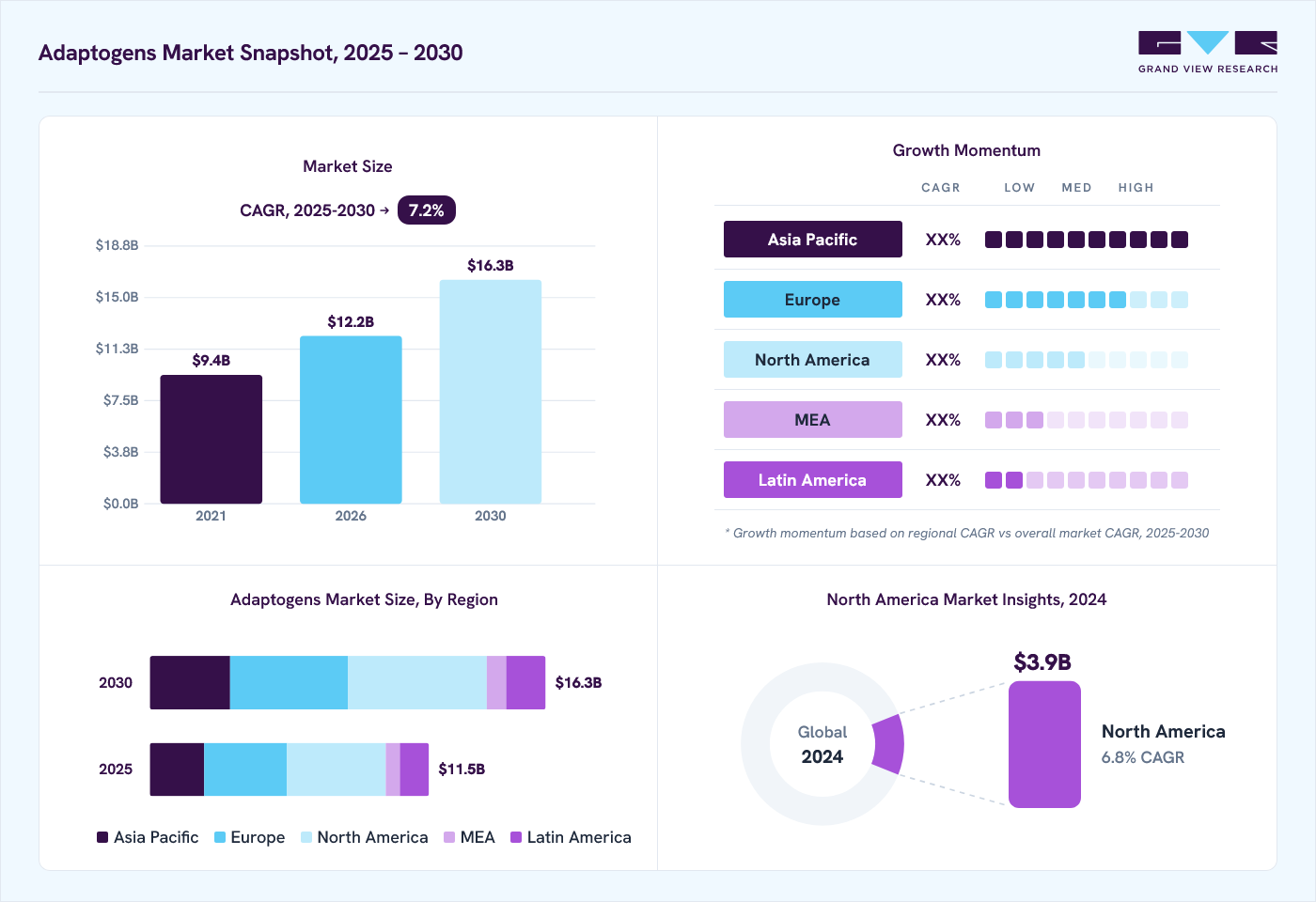
The global adaptogens market size was valued at USD 10.9 billion in 2024 and is projected to grow from USD 12.2 billion in 2026 to USD 16.3 billion by 2030, at a CAGR of 7.2% from 2025 to 2030. North America dominated the market, accounting for a revenue share of 35.4% in 2024. The market for adaptogens is experiencing significant growth due to rising consumer awareness of their health benefits.
 Source: Grand View Research, IR Documents, Primary Interviews, Paid DatabasesTo learn more about this report,
 Download Free Sample Report
 Key Market Trends & Insights
- The adaptogens market in the U.S. is expected to grow significantly from 2024 to 2030.
- Based on nature, the synthetic adaptogens segment accounted for a revenue share of 76.4% in 2023.
- Based on type, the ashwagandha segment accounted for a revenue share of 38.4% in 2023.
- Based on from, the capsules segment accounted for a revenue share of 41.8% in 2023.
Market Size & Forecast
- 2024 Market Size: USD 10.9 Billion
- 2030 Projected Market Size: USD 16.3 Billion
- CAGR (2025-2030): 7.2%
- North America: Largest market in 2024
Three ways to get this report
Buy it, customize it, or ask a question.Ask an Analyst
Analyst response in 1 business day
- AccessReport author, directly
- Reply timeWithin 1 working day
- No sales callDirect answer only
- FormatEmail reply
- CostFree, no cost
Get the Full Report
What the study covers
- FormatsPDF · Excel · Dashboard
- Timeline2025–2030 annual, 2024 base
- Coverage20+ countries, 5 regions
- Companies10+ key players profiled
Customize the Report
20% free customization
- IncludeCountries, segments, points
- TailorTo your product definition
- ExtendDeeper competitor detail
- OrA fully bespoke study
- Turnaround5–10 working days
Adaptogens, such as ashwagandha, ginseng, and rhodiola, are increasingly recognized for their ability to help the body manage stress, enhance mental clarity, and boost immune function. As modern lifestyles become more stressful, people are actively seeking natural solutions to cope with anxiety and fatigue, making adaptogens a popular choice. Their stress-relieving properties resonate with a wide audience looking for holistic ways to improve their mental and physical well-being.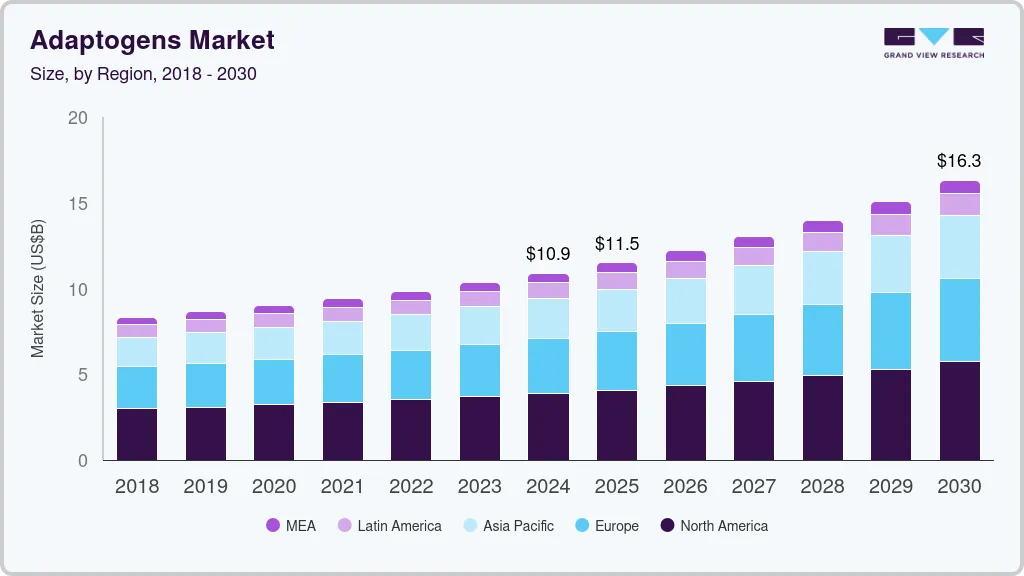 To learn more about this report, Download Free Sample Report
 The global health and wellness movement, which gained further momentum during the COVID-19 pandemic, has also driven the market for adaptogens. Consumers are more focused on self-care and preventive health, leading them to explore natural remedies that offer long-term benefits. Adaptogens, known for building resilience against stress, align perfectly with this shift toward wellness. This has led to their incorporation in various functional foods and beverages, such as teas, energy drinks, and snacks, where consumers can enjoy their health benefits in convenient formats.
In addition to food and beverages, adaptogens are gaining traction in the beauty and skincare sectors. Modern consumers are seeking products that offer both surface-level results and deeper, holistic benefits for skin health. Adaptogen-based skincare products believed to reduce inflammation and improve skin resilience, are becoming more popular as part of the natural beauty movement. The overall shift toward natural, plant-based products has further fueled the demand for adaptogens, as they fit well into the clean-label and organic preferences of health-conscious consumers.
The growing body of scientific research supporting the efficacy of adaptogens in stress management and cognitive enhancement is another key factor driving their market expansion. As more studies validate their benefits, the credibility of adaptogens is increasing, making them more appealing to a broader range of consumers. Additionally, celebrity and influencer endorsements have played a major role in popularizing adaptogens, particularly through social media, where wellness influencers promote their usage, further accelerating market growth. These trends are collectively contributing to the rising demand and broad adoption of adaptogens across various sectors.
Nature Insights
Synthetic adaptogens accounted for a share of 76.4% in 2023. Synthetic adaptogens offer more consistent and reliable results compared to natural sources, which can vary in potency due to factors like soil quality and growing conditions. This ensures that consumers receive a uniform dosage, which is especially important in supplements and pharmaceutical applications. Producing synthetic adaptogens is often more scalable and cost-effective than cultivating and harvesting natural adaptogens. Synthetic versions can be manufactured in controlled environments, reducing reliance on agricultural conditions and ensuring a steady supply at lower costs, which appeals to manufacturers and consumers alike.
Organic adaptogens is expected to grow at a CAGR of 7.6% from 2024 to 2030. Consumers are increasingly prioritizing organic products due to concerns about pesticides, chemicals, and synthetic additives. Organic adaptogens align with this preference for clean-label, non-GMO, and chemical-free products, making them more appealing to health-conscious individuals seeking natural solutions. As more people adopt holistic health practices, they are seeking products that not only address specific symptoms but also promote overall well-being. Organic adaptogens are seen as pure and natural options that support long-term health, stress management, and vitality without harmful side effects.
Type Insights
Ashwagandha accounted for a revenue share of 38.4% in 2023. Traditionally used in Ayurvedic medicine, Ashwagandha has gained significant traction in Western markets as part of the holistic wellness trend. Its incorporation into supplements, functional foods, and beverages has made it easily accessible, driving demand in North America and Europe. Ashwagandha is widely recognized for its ability to reduce stress and anxiety by regulating cortisol levels. With growing awareness of mental health issues and the increasing prevalence of stress-related conditions, consumers are turning to Ashwagandha as a natural, effective solution for managing stress.
Tulsi is expected to grow at a CAGR of 7.1% from 2024 to 2030. With growing awareness of health and wellness, consumers are increasingly looking for natural solutions to support their physical and mental well-being. Tulsi is recognized for its anti-inflammatory, antioxidant, and stress-relief properties, making it a popular choice for those seeking to enhance their overall health. Tulsi is being increasingly incorporated into a variety of functional foods and beverages, including teas, smoothies, and health supplements. This wider availability in convenient formats appeals to health-conscious consumers looking for easy ways to incorporate adaptogens into their daily routines.
Form Insights
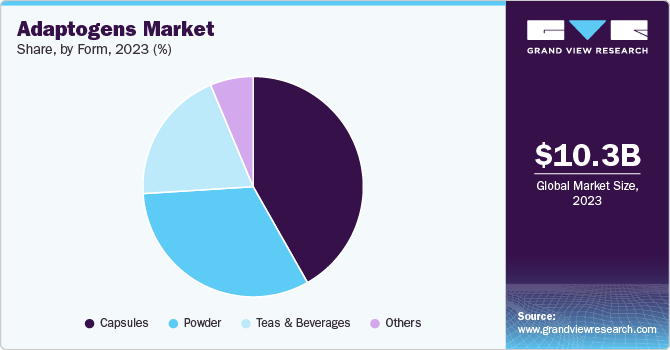
Capsules accounted for a revenue share of 41.8% in 2023. Capsules offer a convenient way to consume adaptogens, allowing users to easily incorporate them into their daily routines without the need for preparation or mixing. This portability makes it simple for consumers to take them on the go, whether at work, traveling, or during outdoor activities. Many adaptogenic herbs have strong flavors or odors that may not be appealing to everyone. Capsules can effectively mask these tastes and smells, making it easier for consumers to enjoy the benefits of adaptogens without any unpleasant sensory experiences.
 To learn more about this report, Download Free Sample Report
 Tea & beverages is expected to grow at a CAGR of 7.1% from 2024 to 2030. The consumption of herbal teas and functional beverages is deeply rooted in many cultures and has become a social activity. Adaptogens incorporated into teas are often marketed as part of a holistic lifestyle, encouraging consumers to enjoy these beverages not just for their taste, but also for their health benefits. This cultural acceptance boosts demand. As consumers become more health-conscious, they are seeking functional beverages that offer wellness benefits. Adaptogenic teas and beverages are perceived as natural solutions for stress relief, improved mood, and overall health, making them appealing to individuals looking to enhance their well-being through their daily drink choices.
Distribution Channel Insights
B2B accounted for a revenue share of 79.7% in 2023. Many businesses in the health and wellness sector, such as supplement manufacturers, functional food producers, and beverage companies, are increasingly integrating adaptogens into their products. As consumer interest in natural remedies grows, these businesses are responding by formulating products that include adaptogens to meet market demand and differentiate themselves from competitors. With consumers increasingly favoring products with natural and organic ingredients, B2B suppliers are capitalizing on this trend by sourcing high-quality adaptogens. Companies that supply adaptogens to manufacturers can benefit from the rising demand as brands seek to align with consumer preferences for clean-label and natural solutions.
B2C is expected to grow at a CAGR of 7.4% from 2024 to 2030. Consumers are becoming more informed about the health benefits of adaptogens, including their ability to reduce stress, enhance mental clarity, and boost overall wellness. This awareness is driven by increased access to information via social media, blogs, and wellness influencers, leading to a surge in interest and demand for adaptogenic products. The availability of adaptogens in various formats, such as supplements, teas, powders, and functional foods, makes it easier for consumers to incorporate them into their daily routines. This variety caters to different preferences and lifestyles, making adaptogens more accessible and appealing to a broader audience.
Regional Insights
The adaptogens market in North America accounted for a revenue share of 35.5% in 2023 of the global market. In North America, there is a growing emphasis on mental health and wellness. With high levels of work-related stress and fast-paced lifestyles, consumers are increasingly turning to natural solutions like adaptogens to manage anxiety, improve sleep, and enhance emotional well-being.
U.S. Adaptogens Market Trends
The adaptogens market in the U.S. is facing intense competition due to innovation in adaptogens varieties. The broader health and wellness movement in the U.S. has driven interest in natural, holistic remedies. Consumers are actively seeking plant-based products that promote long-term health, and adaptogens align with this trend due to their stress-relieving and immune-boosting properties.
Europe Adaptogens Market Trends
The adaptogens market in Europe is expected to grow at a CAGR of 7.1% during the forecast period. In Europe, there is a rising trend toward holistic wellness, which emphasizes the importance of mental, physical, and emotional balance. Adaptogens are seen as valuable tools for managing stress, improving mental clarity, and supporting overall well-being, making them highly appealing to consumers focused on comprehensive health. European markets have seen a surge in functional foods, beverages, and supplements that incorporate adaptogens. This trend is driven by the desire for convenient, health-boosting products that offer tangible benefits, such as increased energy, improved immunity, and enhanced cognitive function.
Asia Pacific Adaptogens Market Trends
The adaptogens market in Asia Pacific is expected to grow at a CAGR of 7.8% from 2024 to 2030. With increasing health consciousness across the region, consumers are prioritizing preventive healthcare and natural remedies. Adaptogens, known for their ability to enhance immunity, reduce stress, and improve overall well-being, fit well within this growing focus on maintaining health rather than just treating illness. The rapid urbanization and fast-paced lifestyles in major Asia Pacific cities are leading to higher levels of stress and anxiety. Adaptogens, with their stress-relieving properties, are increasingly sought after by individuals looking for natural ways to manage stress and improve mental and physical resilience.
Key Adaptogens Company Insights
The market is characterized by dynamic competitive dynamics shaped by a combination of factors including product innovation, regional production capabilities, and evolving consumer preferences. Leading manufacturers invest in R&D and technological advancements to provide cost-effective and quality product.
Market players are entering into joint ventures, partnerships, mergers, agreements, and acquisitions to strengthen their market position and expand their geographical reach. Companies are also focusing on raising consumer awareness of the ambiguity of the ingredients used while strictly adhering to international regulatory standards.
Key Adaptogens Companies:
The following are the leading companies in the adaptogens market. These companies collectively hold the largest market share and dictate industry trends.
- Nutraceutical International Corporation
- Organic India Private Limited
- Himalaya Global Holdings Ltd.
- Rejuvenating Herbs & Nutrition, Inc. (REBBL)
- Embria Health Sciences, LLC
- Natreon, Inc.
- Amax NutraSource, Inc.
- PLT Health Solutions, Inc.
- Xiamen Kingdomway Group Company
- KSM-66 Ashwagandha (Ixoreal Biomed Inc.)
Recent Developments
-
In May 2024, Herbochem launched +91 ASHWAGANDHA, a pioneering nutraceutical product designed to harness the full potential of Ashwagandha. This product is notable for being the world’s first full-spectrum extract specifically aimed at addressing technology-related mental health issues. Developed through an innovative manufacturing process, +91 ASHWAGANDHA captures active compounds and enhances natural macro-nutrients like potassium and magnesium, offering a comprehensive solution for mental wellness.
Adaptogens Market Report Scope
Report Attribute
Details
Market size in 2024
USD 10.9 billion
Estimated Market size in 2026
USD 12.2 billion
Projected Market size by 2030
USD 16.3 billion
Growth rate
CAGR of 7.2% from 2025 to 2030
Actual data
2018 - 2023
Forecast period
2025 - 2030
Quantitative units
Revenue in USD million/billion, and CAGR from 2025 to 2030
Report coverage
Revenue forecast, company ranking, competitive landscape, growth factors, and trends
Segments covered
Nature, type, form, distribution channel, region
Regional scope
North America; Europe; Asia Pacific; Central & South America; Middle East & Africa
Country scope
U.S.; Canada; Mexico; UK; Germany; France; Italy; Spain; China; Japan; India; South Korea; Australia & New Zealand; Brazil; UAE
Key companies profiled
Nutraceutical International Corporation; Organic India Private Limited; Himalaya Global Holdings Ltd.; Rejuvenating Herbs & Nutrition, Inc. (REBBL); Embria Health Sciences, LLC; Natreon, Inc.; Amax NutraSource Inc.; PLT Health Solutions, Inc.; Xiamen Kingdomway Group Company; KSM-66 Ashwagandha (Ixoreal Biomed Inc.)
Customization scope
Free Report customization (equivalent up to 8 analysts working days) with purchase. Addition or alteration to country, regional & segment scope.
Pricing and purchase options
Avail customized purchase options to meet your exact research needs. Explore purchase options.
Global Adaptogens Market Report Segmentation
This report forecasts revenue growth at the global, regional, and country levels and provides an analysis of the latest industry trends and opportunities in each of the sub-segments from 2018 to 2030. For the purpose of this study, Grand View Research has segmented the global adaptogens market report based on nature, type, form, distribution channel, and region:
-
Nature Outlook (Revenue, USD Million; 2018 - 2030)
-
Organic
-
Synthetic
-
-
Type Outlook (Revenue, USD Million; 2018 - 2030)
-
Ashwagandha
-
Ginseng
-
Tulsi
-
Cordyceps
-
Others
-
-
Form Outlook (Revenue, USD Million; 2018 - 2030)
-
Capsules
-
Powder
-
Teas & Beverages
-
Others
-
-
Distribution Channel Outlook (Revenue, USD Million; 2018 - 2030)
-
B2B
-
B2C
-
Hypermarkets & Supermarkets
-
Convenience stores
-
Online
-
Others
-
-
-
Regional Outlook (Revenue, USD Million; 2018 - 2030)
-
North America
-
U.S.
-
Canada
-
Mexico
-
-
Europe
-
UK
-
France
-
Germany
-
Spain
-
Italy
-
-
Asia Pacific
-
China
-
Japan
-
India
-
South Korea
-
Australia & New Zealand
-
-
Central & South America
-
Brazil
-
-
Middle East & Africa
-
UAE
-
Frequently Asked Questions About This Report
The global adaptogens market size was valued at USD 10.9 billion in 2024 and is estimated at USD 12.2 billion for 2026.
Some key players operating in adaptogens market include Nutraceutical International Corporation, Organic India Private Limited, Himalaya Global Holdings Ltd., Rejuvenating Herbs & Nutrition, Inc. (REBBL) and others.
Key factors that are driving the market growth include rising trend towards personalized nutrition and increasing health consciousness among consumers
The global adaptogens market is expected to grow at a CAGR of 7.2% from 2025 to 2030, reaching USD 16.3 billion by 2030.
North America dominated with a revenue share of 35.4% in 2024.
About the Author(s)
Consumer F&B Research Team
Consumer Goods · Consumer F&BThis report was authored by the consumer f&b research team at Grand View Research - comprising two research analysts, one senior research analyst, and one industry expert - with specialized expertise in the consumer f&b segment of the consumer goods industry. All findings are based on proprietary consumer goods databases, executive interviews, and regulatory analysis, subject to internal peer review prior to publication.
Last Updated:
Speak to Analyst

Customize this report to your needs - add regions, segments, or data points, with 20% free customization.
Or view our licence options:


ISO 9001:2015 & 27001:2022 Certified
We are GDPR and CCPA compliant! Your transaction & personal information is safe and secure. For more details, please read our privacy policy.


