
- Home
- »
- Clinical Diagnostics
- »
-
AI In Cytology Screening Device Market Size Report, 2033GVR Report cover

AI In Cytology Screening Device Market (2026 - 2033)
Size, Share & Trends Analysis Report By Product (Automated Cytology Screening Systems, Digital Cytology Imaging Systems, AI Cytology Analysis Software), By Deployment, By Application, By End-use, By Region, And Segment Forecasts
Market Size, 2025
$106.8MMarket Estimate, 2026
$122.6MMarket Forecast, 2033
$330.9MCAGR, 2026–2033
15.2%AI in Cytology Screening Device Market Summary
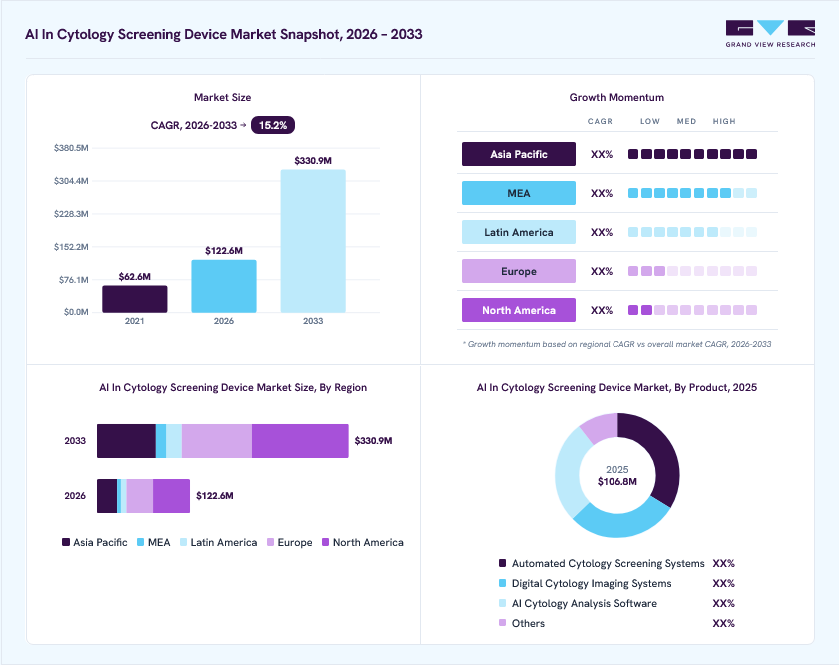
The global AI in cytology screening device market size was valued at USD 106.8 million in 2025 and is projected to grow from USD 122.6 million in 2026 to USD 330.9 million by 2033, growing at a CAGR of 15.2% from 2026 to 2033. North America dominated the AI in cytology screening device market with the largest revenue share of 39.9% in 2025. The market is driven by the growing shortage of skilled cytologists and the increasing adoption of AI enabled screening solutions to improve diagnostic accuracy, reduce manual workload, and enhance laboratory efficiency.
 Source: Grand View Research, IR Documents, Primary Interviews, Paid DatabasesTo learn more about this report,
 Download Free Sample Report
Key Market Trends & Insights
- By product: Automated cytology screening systems segment led the market with the largest revenue share of 33.7% in 2025.
- By deployment: On-premise segment led the market with the largest share of 77.3% in 2025.
- By application: Gynecological cytology screening segment held the largest revenue share of 75.6% in 2025.
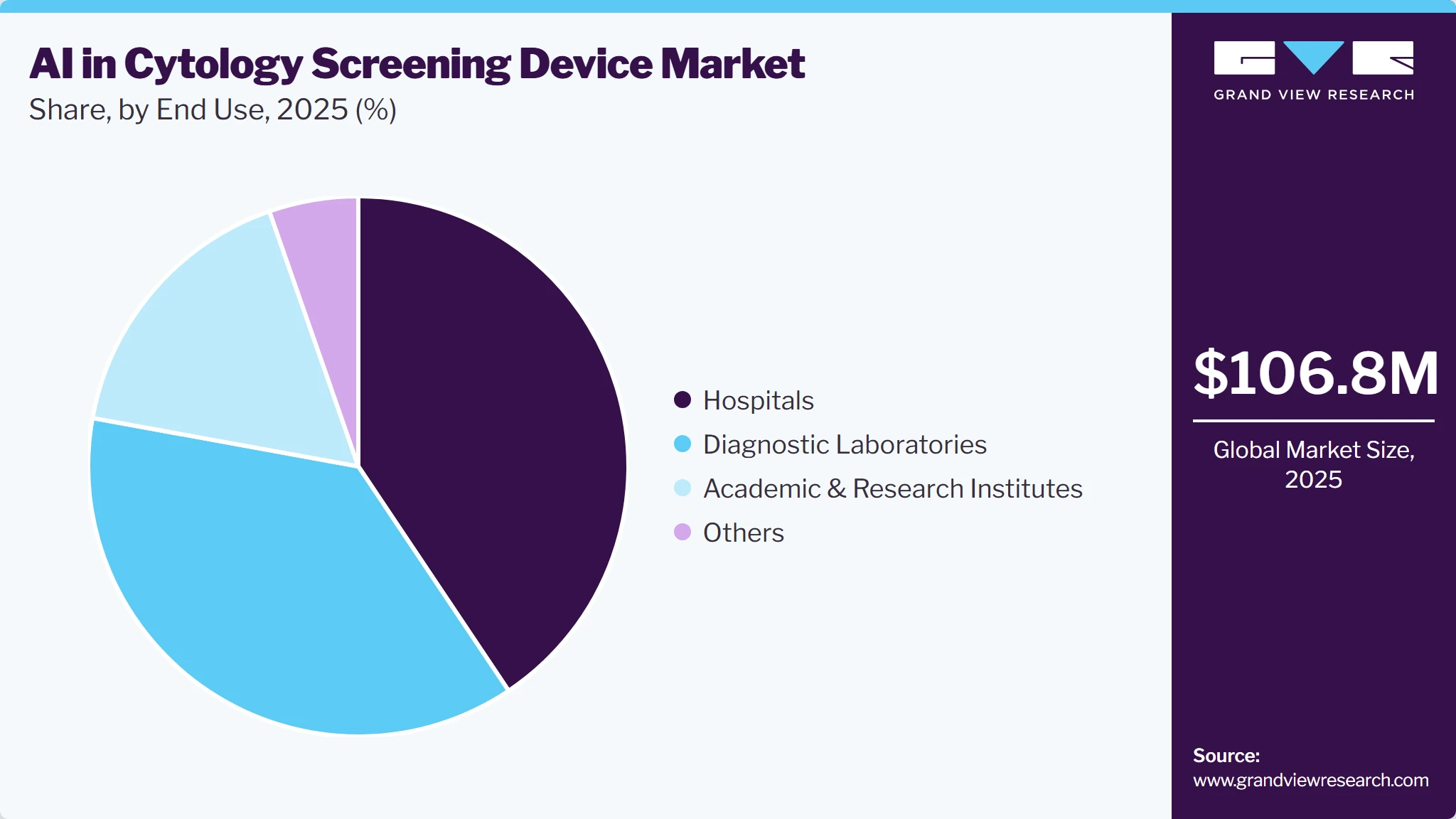
- By end use: Hospitals segment led the market with the largest share of 40.6% in 2025.
Regional Highlights
- Largest regional market: North America (39.9% revenue share, 2025)
- Fastest-growing regional market: Asia Pacific (highest CAGR, 2026-2033)
- By country: The U.S. held the largest market share in 2025.
Market Size & Forecast
- Market size in 2025: USD 106.8 Million
- Estimated market size in 2026: USD 122.6 Million
- Projected market size by 2033: USD 330.9 Million
- CAGR (2026-2033): 15.2%
Prism AI by Grand View Research Free to tryAsk a question about the AI in cytology screening device marketTry asking✓Every figure cited from GVR research Prefer the report? Download free sample →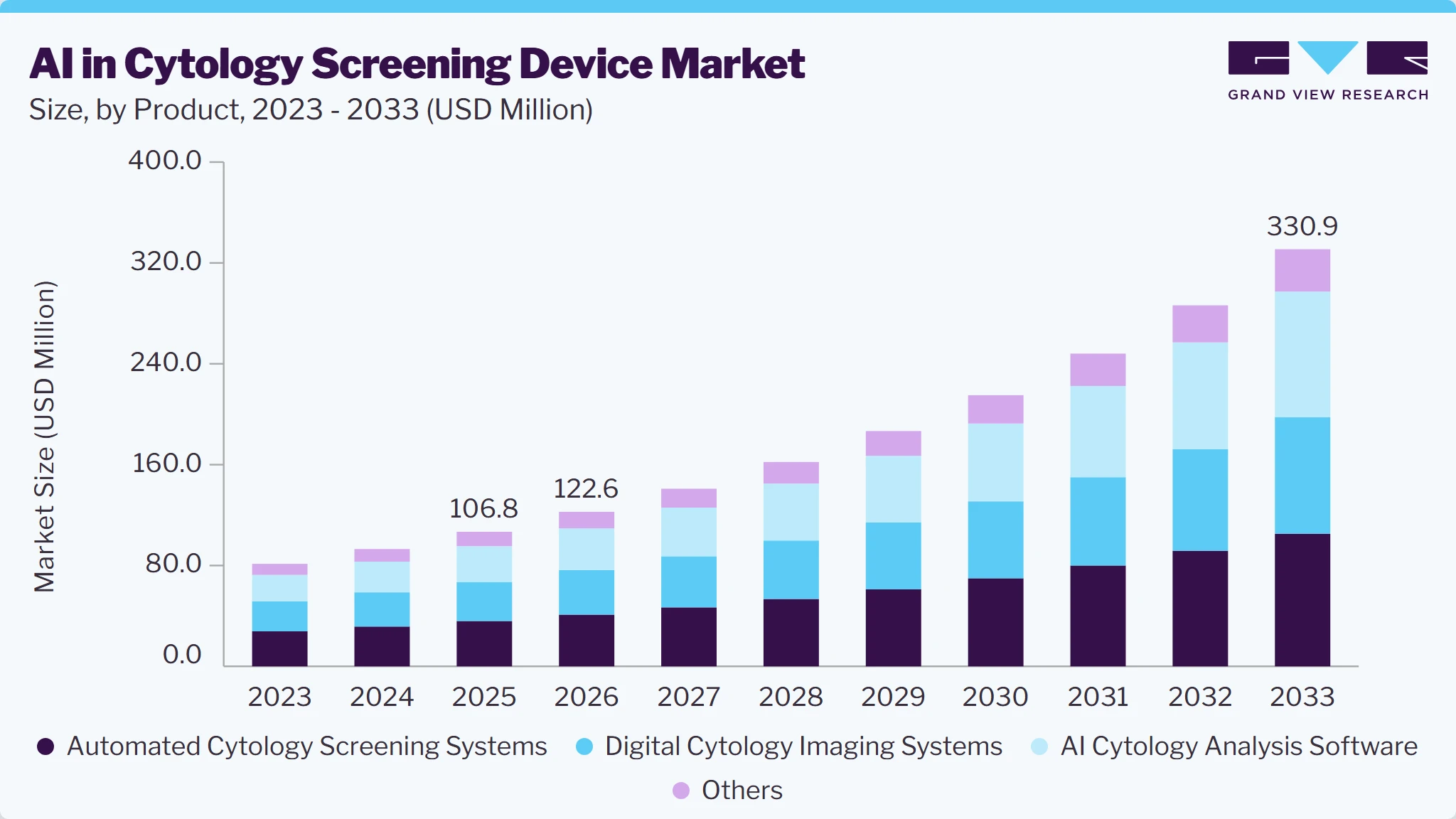 To learn more about this report, Download Free Sample Report
Market Dynamics
The growing shortage of skilled cytologists and pathologists is a key driver of the adoption of AI-enabled cytology screening devices, as healthcare providers increasingly seek technologies that enhance diagnostic efficiency and address workforce limitations. Rising cervical cancer screening volumes, expanding preventive healthcare initiatives, and increasing demand for early cancer detection have significantly increased the workload of pathology laboratories, whereas the availability of qualified specialists has remained constrained in many regions. This imbalance is accelerating investments in AI-assisted cytology solutions that improve laboratory productivity, increase screening capacity, and maintain consistent diagnostic quality. Consequently, hospitals, diagnostic laboratories, and specialized pathology centers are increasingly integrating AI-powered screening systems into routine clinical practice.
Artificial intelligence is transforming cytology diagnostics by automating the analysis of digitized slides and assisting specialists in the rapid identification and classification of abnormal cellular changes. Advanced deep learning algorithms enable automated pre-screening, prioritize high-risk cases for expert review, and reduce the burden of repetitive manual slide evaluation, allowing cytologists to focus on diagnostically challenging specimens. Integration with digital pathology platforms, whole-slide imaging, and laboratory information systems further enhances diagnostic consistency, facilitates remote consultation, and streamlines laboratory operations. These technological capabilities improve resource utilization, reduce turnaround times, and strengthen the overall clinical value of AI-enabled cytology screening devices.
Growing demand for workflow optimization and digital pathology integration is encouraging manufacturers to expand AI-enabled cytology platforms with broader clinical capabilities. For instance, in November 2025, Hologic expanded the CE marking of its Genius Digital Diagnostics System in the European Union, enabling the platform to image and review both cell and tissue specimens. The expanded indication allows laboratories to unify digital pathology workflows on a single system, improving operational efficiency, supporting more effective utilization of pathology professionals, and addressing increasing diagnostic workloads. The expanded indication allows laboratories to consolidate digital pathology workflows on a single AI-enabled platform, improving laboratory efficiency, maximizing the utilization of pathology professionals, and supporting increasing diagnostic workloads. Such product enhancements reflect the industry's focus on delivering integrated diagnostic solutions that address workforce shortages while improving clinical productivity.
The continued expansion of cervical cancer screening programs, combined with persistent workforce shortages and increasing investments in digital pathology infrastructure, is expected to sustain demand for AI-enabled cytology screening devices throughout the forecast period. Healthcare providers are prioritizing intelligent diagnostic solutions that expand testing capacity, optimize specialist productivity, and deliver standardized, high-quality diagnostic services across diverse clinical settings. Ongoing advancements in artificial intelligence, favorable regulatory approvals, and continued investments in digital healthcare technologies are expected to accelerate the integration of AI into routine cytology practice, supporting the long-term growth of the AI in cytology screening device market.
The high implementation costs associated with AI-enabled cytology screening devices remain a significant restraint to market growth. Transitioning from conventional microscopy to AI-assisted digital cytology requires substantial investments in whole-slide imaging systems, AI-powered image analysis software, high-capacity data storage, laboratory information system (LIS) integration, and cybersecurity infrastructure. Beyond the initial capital expenditure, healthcare providers must also invest in clinical validation, software licensing, system maintenance, regulatory compliance, and workforce training to ensure seamless deployment and reliable diagnostic performance. These financial commitments pose considerable challenges for small- and medium-sized hospitals and diagnostic laboratories, particularly in emerging economies with constrained healthcare budgets, limiting the widespread adoption of advanced AI-enabled screening technologies.
The successful deployment of AI-based cytology screening devices also depends on the availability of robust digital pathology infrastructure that supports high-resolution image acquisition, secure data management, high-speed network connectivity, and seamless interoperability across diagnostic platforms. Whole-slide imaging generates large volumes of data that require scalable computing resources and reliable cloud or on-premise storage, increasing the overall cost of ownership and extending implementation timelines. Healthcare institutions lacking established digital pathology ecosystems often face additional technical complexity when integrating AI solutions into existing laboratory workflows, delaying purchasing decisions and slowing technology adoption.
Although continuous technological advancements and cloud-based deployment models are gradually improving accessibility, the substantial investment required to modernize laboratory infrastructure remains a major barrier to market expansion. Consequently, the adoption of AI-enabled cytology screening devices is currently concentrated in well-funded hospitals, academic medical centers, and large reference laboratories with established digital pathology capabilities and dedicated IT resources. This disparity in infrastructure readiness limits market penetration across resource-constrained healthcare systems and is expected to moderate the pace of adoption despite the demonstrated clinical, operational, and economic benefits of AI-assisted cytology screening solutions.
The expansion of AI-enabled cervical cancer screening programs is creating substantial growth opportunities for the AI in the cytology screening device market. Governments and healthcare organizations are strengthening investments in preventive healthcare through organized cervical cancer screening initiatives and improved access to early diagnostic services. As screening coverage expands, healthcare providers are expected to manage higher testing volumes while maintaining diagnostic accuracy and operational efficiency. This is increasing demand for AI-assisted cytology solutions that support workflow optimization, standardized slide interpretation, and efficient utilization of specialist resources. The continued emphasis on early cancer detection and population-based screening is expected to create favorable conditions for the commercialization and adoption of AI driven cytology platforms across global healthcare systems.
Advancements in digital pathology, whole slide imaging, and artificial intelligence are further strengthening market opportunities by enabling scalable and integrated diagnostic workflows. AI powered image analysis supports cytologists by identifying abnormal cellular changes, prioritizing high risk cases, and reducing the burden of routine manual slide evaluation. These capabilities improve laboratory productivity, enhance diagnostic consistency, and facilitate timely clinical decision making across diverse healthcare settings. In addition, the growing adoption of cloud based pathology platforms and digital image management systems is improving access to remote consultation and centralized diagnostic services. These technological developments are expected to accelerate the transition toward digital cytology and expand the addressable market for AI enabled screening solutions.
Growing commercial adoption of AI assisted cytology platforms reflects increasing confidence in intelligent screening technologies and their role in routine clinical practice. For instance, in March 2025, Synergy Laboratories partnered with Hologic to deploy the Genius Digital Diagnostics System with the Genius Cervical AI algorithm, becoming the first laboratory on the U.S. Gulf Coast to implement the FDA cleared AI powered digital cytology platform for cervical cancer screening. The deployment expanded access to AI assisted cervical cytology and demonstrated the commercial viability of AI enabled screening solutions in routine diagnostic workflows. This strategic collaboration highlights the increasing adoption of AI driven cytology technologies and is expected to support broader market penetration as healthcare providers continue investing in advanced cervical cancer screening capabilities.
Market Concentration & Characteristics
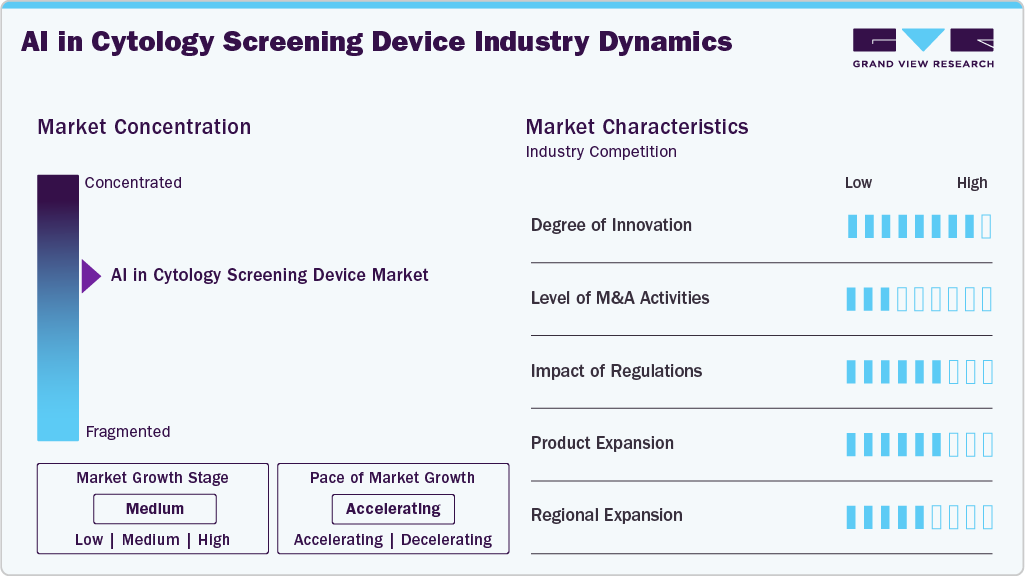
The AI in cytology screening device market demonstrates a high degree of innovation, driven by advancements in artificial intelligence, deep learning, digital pathology, whole-slide imaging, and computational image analysis. Manufacturers are developing AI-enabled platforms that automate slide evaluation, improve the detection of abnormal cellular changes, and integrate seamlessly with digital pathology workflows to enhance diagnostic accuracy and laboratory efficiency. Increasing investments in research and development, expanding regulatory support, and growing demand for laboratory automation are further accelerating innovation. For instance, in February 2024, Hologic received U.S. FDA 510(k) clearance for the Genius Digital Diagnostics System, the first AI-powered digital cytology platform approved for cervical cancer screening. Combining deep learning with advanced volumetric imaging, the system assists in identifying suspicious cervical cells and has demonstrated improved diagnostic performance compared with conventional microscopic review. This milestone highlights the continued evolution of AI-enabled cytology technologies and is expected to accelerate their adoption across clinical laboratories.
The AI in cytology screening device market is witnessing a moderate level of merger and acquisition activity, with transactions primarily focused on strengthening digital pathology, artificial intelligence capabilities, and women's health diagnostics rather than standalone AI cytology businesses. As the market remains highly specialized, acquisitions are relatively limited but strategically significant. For instance, in April 2026, Blackstone and TPG completed the acquisition of Hologic, a global leader in women's health diagnostics and a provider of AI-enabled cervical cytology screening solutions through its Genius Digital Diagnostics System and ThinPrep portfolio. The acquisition is expected to strengthen Hologic's innovation capabilities and support continued investment across its women's health and diagnostic technology portfolio, including AI-enabled cytology solutions.
 To learn more about this report, Download Free Sample Report
Regulations have a high impact on the AI in cytology screening device market by governing the clinical validation, safety, performance, and commercialization of AI-enabled diagnostic systems. Stringent regulatory frameworks established by authorities such as the U.S. FDA and European regulators encourage product innovation, ensure diagnostic reliability, and strengthen market confidence, thereby facilitating the adoption of clinically validated AI-based cytology screening technologies.
Product expansion remains a key competitive strategy in the AI in cytology screening device market, with manufacturers strengthening comprehensive cervical cancer screening portfolios to improve clinical adoption and laboratory workflow efficiency. For instance, in February 2026, Hologic received U.S. FDA approval for an expanded indication of its Aptima HPV Assay for primary HPV screening, broadening its cervical health portfolio to support Pap testing, HPV primary screening, and co-testing. The expanded portfolio complements the company's AI-enabled digital cytology platform, enabling laboratories to deliver more integrated and flexible cervical cancer screening solutions while supporting broader adoption of advanced diagnostic technologies.
North America leads in adoption due to strong R&D and reimbursement infrastructure. Market participants are expanding commercial presence, distribution capabilities, and strategic collaborations to improve the accessibility of AI-enabled digital cytology solutions. Increasing investments in digital pathology infrastructure, supportive regulatory frameworks, and the expansion of cervical cancer screening programs are facilitating market penetration. These initiatives are expected to accelerate the adoption of AI-assisted cytology technologies, broaden access to advanced diagnostic solutions, and reinforce long-term market growth.
Analyst Perspective
The AI in cytology screening device market is transitioning from early adoption toward broader clinical integration, supported by advances in artificial intelligence, digital pathology, and whole-slide imaging technologies. Increasing pressure on healthcare systems to address shortages of skilled cytologists while improving screening accuracy is accelerating demand for AI-enabled diagnostic solutions. Although high implementation costs and digital infrastructure requirements continue to limit adoption in resource-constrained settings, ongoing regulatory approvals, product innovations, and investments in laboratory digitalization are strengthening commercialization prospects. Over the forecast period, cloud-enabled AI platforms, expanding cervical cancer screening initiatives and integration with routine pathology workflows are expected to create significant long-term growth opportunities for market participants.
Product Insights
The Automated Cytology Screening Systems segment accounted for the largest revenue share of 33.7% 2025, driven by the growing adoption of AI-enabled platforms for high-volume cervical cancer screening and routine cytology diagnostics. These systems integrate automated slide scanning, whole-slide imaging, artificial intelligence, and digital pathology to improve the detection of abnormal cellular changes while reducing manual workload and enhancing diagnostic consistency. Increasing cervical cancer screening initiatives, rising laboratory testing volumes, and the growing need to address shortages of skilled cytologists are further supporting segment growth. For instance, in March 2025, Synergy Laboratories implemented Hologic's Genius Digital Diagnostics System with Genius Cervical AI to enhance cervical cytology screening, enabling AI-assisted slide review and improving laboratory efficiency and diagnostic workflow. Continuous product innovations, expanding commercial adoption, and the integration of AI-assisted image analysis into laboratory workflows are expected to further accelerate adoption across hospitals, diagnostic laboratories, and specialized pathology centers worldwide.
The AI in cytology analysis software product segment is expected to be the fastest-growing segment during the forecast period with the CAGR of 17.0%, owing to the increasing adoption of artificial intelligence for automated image analysis, abnormal cell detection, case prioritization, and clinical decision support. Growing investments by key market players in developing advanced AI algorithms and cloud-based digital pathology platforms are further accelerating segment growth. For instance, in August 2025, OptraSCAN launched CytoSiA, an AI-powered digital cytology platform that automates cervical cytology screening using advanced image analysis and the Bethesda classification system. In addition, the ability of AI software to integrate with existing digital pathology infrastructure without requiring complete hardware replacement, coupled with recurring software licensing and subscription-based revenue models, is expected to support sustained market growth.
Deployment Insights
The on-premises deployment segment accounted for the largest revenue share of 77.3% 2025, driven by its widespread adoption among hospitals, pathology laboratories, and cancer centers requiring secure, high-performance AI-enabled cytology workflows. On-premises deployment provides greater control over sensitive patient data, facilitates compliance with stringent regulatory requirements, and enables seamless integration with existing laboratory information systems (LIS) and digital pathology infrastructure. Its ability to support high-volume image processing with minimal latency makes it well suited for routine cytology screening. Furthermore, large healthcare institutions continue to prefer on-premise solutions to maintain data security, operational reliability, and customization capabilities.
The cloud-based deployment segment is expected to register the fastest CAGR during the forecast period, owing to the increasing demand for scalable, cost-effective, and remotely accessible AI-powered cytology solutions. Cloud deployment enables centralized image storage, collaborative case review, rapid software updates, and seamless integration of AI algorithms across multiple healthcare facilities. For instance, in December 2025, Aiforia Technologies launched its next-generation AI technology platform featuring the Foundation Engine and Vision Transformer architecture, enabling faster AI model development and more efficient deployment of pathology AI applications through its Aiforia Create platform. The increasing adoption of subscription-based AI software and cloud-enabled digital pathology solutions is expected to further accelerate segment growth.
Application Insights
The gynecological cytology screening segment accounted for the largest revenue share of 75.6% 2025, driven by the widespread adoption of AI-assisted cervical cancer screening programs and routine Pap smear testing worldwide. Increasing government initiatives promoting early detection, growing awareness of cervical cancer prevention, and expanding HPV screening programs are supporting segment growth. AI-powered cytology solutions improve screening accuracy by automating abnormal cell detection, reducing false-negative results, and enhancing laboratory productivity. Furthermore, the integration of digital pathology with AI-assisted image analysis is enabling high-throughput screening and standardized diagnostic workflows, contributing to the continued dominance of this segment.
The non-gynecological cytology screening segment is expected to register the fastest CAGR of 17.7% during the forecast period, owing to the increasing use of AI for the analysis of respiratory, urinary, thyroid, breast, and body fluid cytology specimens. Growing demand for accurate and rapid diagnosis of cancer and other diseases, coupled with advancements in AI-based image analysis and digital pathology, is accelerating adoption across clinical laboratories. AI-assisted solutions help improve diagnostic consistency, reduce manual workload, and support cytopathologists in interpreting complex cytological samples. In addition, expanding research activities and increasing adoption of AI-enabled diagnostic workflows are expected to further drive the growth of this segment.
End-use Insights
The hospitals segment accounted for the largest revenue share of 40.6% 2025, driven by the increasing adoption of AI-enabled cytology screening systems for routine cancer diagnostics and large-scale screening programs. Hospitals are investing in digital pathology infrastructure and AI-powered image analysis solutions to enhance diagnostic accuracy, reduce turnaround times, and improve workflow efficiency. The availability of advanced laboratory facilities, skilled healthcare professionals, and integrated diagnostic services further supports the widespread adoption of AI cytology technologies in hospital settings. In addition, the growing burden of cervical cancer and increasing emphasis on early disease detection continue to strengthen the demand for AI-assisted cytology screening solutions across hospitals.
 To learn more about this report, Download Free Sample Report
The diagnostic laboratories segment is expected to register the fastest CAGR during the forecast period, owing to the increasing demand for high-throughput cytology testing and the growing adoption of AI-powered digital pathology workflows. Diagnostic laboratories are increasingly implementing AI-based image analysis software to automate slide screening, improve diagnostic consistency, and optimize laboratory productivity while addressing the shortage of skilled cytopathologists. Furthermore, the expansion of outsourced diagnostic services, rising test volumes, and increasing investments in cloud-enabled AI platforms are accelerating adoption. The ability of AI solutions to enhance workflow efficiency, reduce operational costs, and support remote case review is expected to further drive the growth of this segment.
Regional Insights
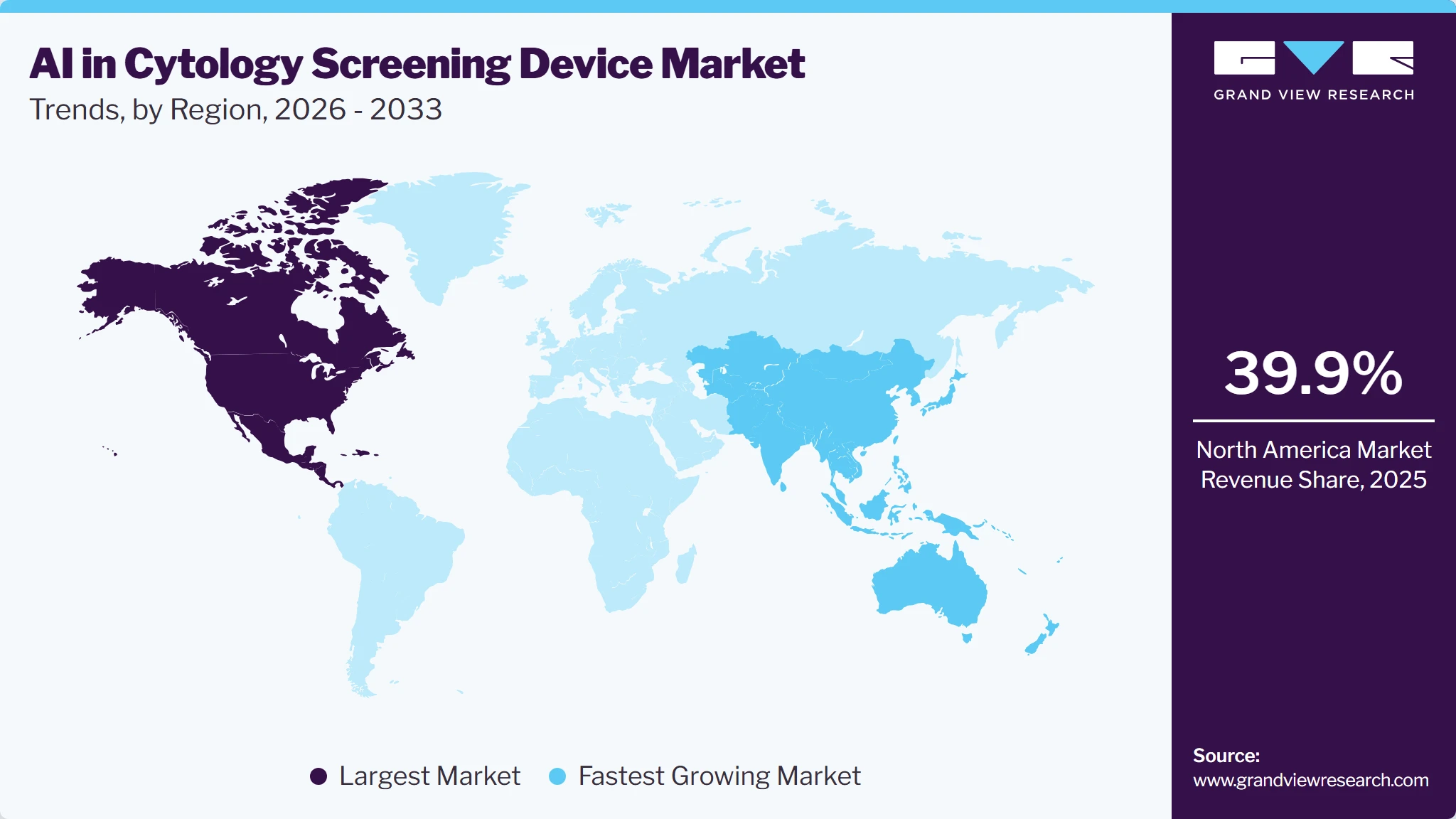
The North America market for AI in cytology screening devices led with a revenue share of 39.9% in 2025, driven by the widespread adoption of digital pathology, well-established cervical cancer screening programs, and the rapid integration of artificial intelligence into clinical diagnostics. The presence of leading market participants, advanced healthcare infrastructure, and favorable reimbursement frameworks supports the commercialization ofs AI-enabled cytology solutions. For instance, in January 2024, Becton, Dickinson and Company (BD) and Techcyte announced a strategic collaboration to develop an AI-based digital cervical cytology system for Pap testing. The solution combines whole-slide imaging with an AI-powered algorithm to assist cytotechnologists and pathologists in identifying cervical cancer and precancerous lesions, enhancing diagnostic accuracy and laboratory workflow efficiency. In addition, increasing investments in laboratory automation, growing acceptance of digital pathology workflows, and the availability of skilled healthcare professionals are accelerating the adoption of AI-assisted screening technologies. Continuous research and development activities, coupled with strong regulatory oversight and early adoption of innovative diagnostic platforms, are expected to sustain the region's leadership throughout the forecast period.
 To learn more about this report, Download Free Sample Report
U.S. AI in Cytology Screening Device Market Trends
The U.S. represents the largest market for AI in cytology screening devices, supported by a high volume of cervical cancer screening procedures, robust healthcare expenditure, and the early adoption of AI-enabled diagnostic technologies. The country benefits from the presence of leading manufacturers, advanced pathology laboratories, and a well-defined regulatory framework that encourages the commercialization of clinically validated AI-based screening solutions. Increasing investments in digital pathology infrastructure, laboratory modernization, and precision diagnostics continue to strengthen market growth. Furthermore, growing awareness of early cervical cancer detection, favorable clinical guidelines, and the integration of artificial intelligence into routine pathology workflows are expected to accelerate the adoption of AI-assisted cytology screening systems across healthcare institutions.
Europe AI in Cytology Screening Device Market Trends
Europe represents a significant market for AI in cytology screening devices, supported by well-established national cervical cancer screening programs, increasing investments in digital healthcare infrastructure, and the growing adoption of artificial intelligence across pathology laboratories. The region continues to witness increasing demand for workflow automation and digital pathology solutions to address workforce shortages and improve diagnostic efficiency. Supportive regulatory frameworks, expanding public healthcare expenditure, and ongoing initiatives to modernize cancer diagnostics are further contributing to market growth. In addition, increasing collaboration between healthcare providers, research institutions, and technology companies is facilitating the clinical integration of AI-enabled cytology solutions, supporting broader adoption across hospitals and diagnostic laboratories.
The UK AI in cytology screening device market is expected to experience steady growth, driven by the modernization of cervical cancer screening services and increasing investments in digital pathology within the National Health Service (NHS). Rising demand for laboratory automation, coupled with the growing implementation of artificial intelligence in diagnostic workflows, is supporting the adoption of AI-enabled cytology technologies. Government initiatives focused on improving cancer screening outcomes, reducing diagnostic turnaround times, and expanding digital healthcare capabilities are creating favorable market conditions. For instance, in February 2025, NHS England issued national guidance for implementing digital histopathology across breast, bowel, and cervical screening programmes, supporting the standardized adoption of digital pathology technologies to improve workflow efficiency, turnaround times, and access to specialist review. Furthermore, collaborations between academic institutions, healthcare providers, and technology developers continue to accelerate innovation and strengthen the deployment of AI-assisted cytology screening solutions across the country.
TheGermany AI in cytology screening device market is one of the leading markets in Europe, supported by its advanced healthcare infrastructure, strong digital pathology adoption, and significant investments in diagnostic innovation. The country's emphasis on precision medicine, laboratory automation, and early cancer detection is driving the adoption of AI-enabled cytology screening technologies. Increasing healthcare expenditure, favorable reimbursement mechanisms, and a robust network of diagnostic laboratories further strengthen market growth. In addition, Germany's active participation in digital health initiatives and research collaborations is accelerating the integration of artificial intelligence into pathology workflows, enhancing diagnostic efficiency and supporting the expansion of advanced cervical cancer screening programs.
Asia Pacific AI in Cytology Screening Device Market Trends
Asia Pacific is projected to register the fastest growth during the forecast period, driven by the increasing burden of cervical cancer, expanding healthcare infrastructure, and improving access to diagnostic services. Governments across the region are investing in national cancer screening initiatives, digital healthcare transformation, and laboratory modernization to improve early disease detection. Rising healthcare expenditure, increasing awareness of preventive screening, and the growing adoption of artificial intelligence and digital pathology technologies are supporting market expansion. Furthermore, the presence of a large patient population, improving regulatory environments, and expanding investments by global diagnostic companies are expected to create significant growth opportunities for AI-enabled cytology screening solutions.
The Japan AI in cytology screening device market represents a technologically advanced market, supported by high healthcare spending, sophisticated diagnostic laboratories, and widespread adoption of digital healthcare technologies. The country's aging population and increasing focus on early cancer detection continue to drive demand for advanced diagnostic solutions. Growing investments in artificial intelligence, digital pathology, and laboratory automation are facilitating the adoption of AI-assisted cytology screening systems. Additionally, strong collaboration between healthcare providers, academic institutions, and medical technology companies is promoting innovation and supporting the integration of AI into routine pathology workflows, contributing to long-term market growth.
The market for AI in cytology screening device in China is expected to witness robust market growth owing to rapid healthcare modernization, increasing investments in artificial intelligence, and expanding cervical cancer screening programs. Government initiatives promoting digital healthcare, precision medicine, and the adoption of advanced diagnostic technologies are accelerating the deployment of AI-enabled cytology solutions. The country's large patient population, expanding diagnostic laboratory network, and improving access to healthcare services further support market growth. In addition, increasing domestic innovation, favorable policy support for AI technologies, and rising investments in healthcare infrastructure are expected to strengthen the adoption of AI-assisted cytology screening devices across both urban and regional healthcare facilities.
Latin America AI in Cytology Screening Device Market Trends
The Latin American market is experiencing gradual growth, supported by improving healthcare infrastructure, increasing awareness of cervical cancer screening, and expanding access to diagnostic services. Governments across the region are strengthening cancer prevention programs and investing in laboratory modernization to improve early diagnosis. Although adoption of AI-enabled cytology technologies remains at an early stage, increasing investments in digital health and growing collaboration with international diagnostic companies are expected to enhance market penetration. Rising demand for automated diagnostic solutions, coupled with efforts to improve healthcare accessibility and reduce diagnostic disparities, is anticipated to support sustained market growth during the forecast period.
Brazil AI in cytology screening device market represents one of the leading markets in Latin America, driven by the growing burden of cervical cancer, expanding access to preventive healthcare, and increasing investments in diagnostic infrastructure. The country's public healthcare system continues to strengthen cervical cancer screening initiatives, creating opportunities for the adoption of AI-enabled digital cytology technologies that improve diagnostic efficiency and reduce laboratory workload. Growing digitalization of pathology laboratories, increasing awareness of early cancer detection, and the gradual integration of artificial intelligence into clinical diagnostics are further supporting market growth. In addition, collaborations between healthcare providers, diagnostic laboratories, and technology companies, coupled with expanding investments in digital health, are expected to accelerate the adoption of AI-assisted cytology screening solutions across Brazil during the forecast period.
Middle East & Africa AI in Cytology Screening Device Market Trends
The Middle East & Africa market is expected to witness steady growth, driven by increasing investments in healthcare infrastructure, expanding cancer screening initiatives, and the gradual adoption of digital diagnostic technologies. Governments are prioritizing early cancer detection through national healthcare transformation programs and strengthening laboratory capabilities across public and private healthcare facilities. Although market adoption remains comparatively limited due to infrastructure and resource constraints, growing awareness of cervical cancer prevention, increasing healthcare expenditure, and ongoing investments in digital pathology and laboratory automation are expected to support the gradual adoption of AI-enabled cytology screening technologies across the region.
Key AI In Cytology Screening Device Company Insights
The AI in Cytology Screening Device market is characterized by the presence of both established diagnostics companies and specialized artificial intelligence solution providers competing through product innovation, strategic collaborations, and expansion of digital pathology capabilities. Leading players, including Hologic, F. Hoffmann-La Roche Ltd., Becton, Dickinson and Company, Leica Biosystems (Danaher), and Koninklijke Philips N.V., leverage their global distribution networks, strong regulatory expertise, and comprehensive diagnostic portfolios to strengthen their market positions. Emerging companies such as Techcyte, Landing AI, Aiforia Technologies Plc, OptraSCAN, Wuhan Konfoong Bioinformation Tech Co., Ltd. (KFBIO), and CellSolutions, LLC focus on AI-powered image analysis, cloud-based pathology platforms, and workflow automation. Strategic partnerships, regulatory approvals, continuous software enhancements, and investments in deep learning technologies remain key competitive strategies driving innovation and market expansion.
Key AI In Cytology Screening Device Companies
The following key companies have been profiled for this study on the AI in cytology screening device market.
-
Hologic, Inc.
-
Landing AI
-
Wuhan Konfoong Bioinformation Tech Co., Ltd. (KFBIO)
-
Leica Biosystems (a Danaher company)
-
Techcyte, Inc.
-
F. Hoffmann-La Roche Ltd
-
Becton, Dickinson and Company
-
OptraSCAN, Inc.
-
Koninklijke Philips N.V.
-
CellSolutions, LLC
-
Aiforia Technologies Plc
Competitive Benchmarking
Operating Strategies
Competitive Edge
Weaknesses
Mature Players: Hologic, Inc.
- Focus on expanding AI-enabled digital cytology and pathology portfolios through product innovation, regulatory approvals, and strategic collaborations.
- Invest in AI-assisted image analysis, whole-slide imaging, laboratory automation, and companion diagnostics.
- Strengthen market leadership through global commercialization, integration of AI with digital pathology workflows, and partnerships with healthcare providers and research institutions.
- Strong global presence with extensive distribution networks and established customer base.
- Broad product portfolios combining imaging systems, AI software, and diagnostic platforms.
- Strong R&D capabilities, regulatory expertise, and financial resources enabling continuous innovation and rapid commercialization.
- High implementation and infrastructure costs may limit adoption in resource-constrained settings.
- Regulatory approval processes and clinical validation requirements increase commercialization timelines.
- Integration with legacy laboratory information systems can be complex and resource-intensive.
Emerging Players: Landing AI; Techcyte, Inc.
- Focus on developing AI-powered image analysis software, cloud-based pathology platforms, and digital cytology solutions.
- Expand through strategic collaborations with hospitals, diagnostic laboratories, and medical device manufacturers.
- Emphasize scalable AI algorithms, workflow automation, telepathology, and cost-effective deployment models.
- High innovation agility and rapid adoption of advanced deep learning algorithms.
- Specialized expertise in AI-based cytology interpretation and digital pathology software.
- Flexible cloud-based platforms supporting remote diagnostics, workflow optimization, and personalized screening applications.
- Limited global commercial footprint compared with established diagnostic companies.
- Dependence on partnerships for market expansion, regulatory approvals, and commercialization.
- Limited financial resources and installed customer base may slow large-scale market penetration.
Recent Development
-
In May 2026 Roche entered into a definitive merger agreement to acquire PathAI, a U.S.-based digital pathology and AI company, to strengthen its AI-driven diagnostics portfolio. The acquisition integrates PathAI's AI-powered image management system, advanced image analysis, and workflow capabilities with Roche's digital pathology solutions to accelerate the development of AI-enabled diagnostic tools and precision medicine applications.
-
In August 2025: OptraSCAN launched its AI-powered CytoSiA digital cytology platform in the Asian market during the 9th Digital Pathology & AI Congress: Asia in Singapore. The platform integrates high-resolution slide scanning with AI-based image analysis to support scalable cervical cancer screening, automated abnormal cell detection, and digital cytology workflows, expanding access to AI-assisted screening across the Asia-Pacific region.
-
In March 2025: Synergy Laboratories introduced Hologic's Genius Digital Diagnostics System with the Genius Cervical AI algorithm through a strategic collaboration with Hologic, becoming the first laboratory on the U.S. Gulf Coast to deploy the FDA-cleared AI-powered digital cytology platform for cervical cancer screening and diagnostic workflow enhancement.
-
In January 2024, Hologic received U.S. FDA De Novo authorization for the Genius Digital Diagnostics System with the Genius Cervical AI algorithm, the first AI-powered digital cervical cytology slide imaging system. Building on this milestone, the company announced in 2026 that more than 120 Genius Digital Diagnostics Systems were in routine clinical use across 16 countries, reflecting the global expansion and growing adoption of its AI-enabled cervical cancer screening platform.
AI In Cytology Screening Device Market Report Scope
Report Attribute
Details
Market size in 2025
USD 106.8 million
Market size value in 2026
USD 122.6 million
Revenue forecast in 2033
USD 330.9 million
Growth rate
CAGR of 15.2% from 2026 to 2033
Base year for estimation
2025
Historical data
2021 - 2024
Forecast period
2026 - 2033
Quantitative units
Revenue in USD million/billion, and CAGR from 2026 to 2033
Report coverage
Revenue forecast, company ranking, competitive landscape, growth factors, and trends
Segments covered
product, deployment, application, end-use, region
Regional scope
North America; Europe; Asia Pacific; Latin America; MEA
Country scope
U.S.; Canada; Mexico; Germany; UK; France; Italy; Spain; Denmark; Sweden; Norway; China; Japan; India; Australia; Thailand; South Korea; Brazil; Argentina; South Africa; Saudi Arabia; UAE; Kuwait
Key companies profiled
Hologic, Inc.; Landing AI; Wuhan Konfoong Bioinformation Tech Co., Ltd. (KFBIO); Leica Biosystems (a Danaher company); Techcyte, Inc.; F. Hoffmann-La Roche Ltd; Becton, Dickinson and Company; OptraSCAN, Inc.; Koninklijke Philips N.V.; CellSolutions, LLC; Aiforia Technologies Plc.
Customization scope
Free report customization (equivalent up to 8 analyst’s working days) with purchase. Addition or alteration to country, regional & segment scope.
Global AI In Cytology Screening Device Market Report Segmentation
This report forecasts revenue growth at the global, regional, and country levels and provides an analysis of the latest industry trends in each of the sub-segments from 2021 to 2033. For this report, Grand View Research has segmented the global AI in cytology screening device market report based on product, deployment, application, end-use, and region:
-
Product Outlook (Revenue, USD Million, 2021 - 2033)
-
Automated Cytology Screening Systems
-
Digital Cytology Imaging Systems
-
AI Cytology Analysis Software
-
Others
-
-
Deployment Outlook (Revenue, USD Million, 2021 - 2033)
-
On-Premises
-
Cloud-Based
-
-
Application Outlook (Revenue, USD Million, 2021 - 2033)
-
Gynecological Cytology Screening
-
Non-Gynecological Cytology Screening
-
-
End-use Outlook (Revenue, USD Million, 2021 - 2033)
-
Hospitals
-
Diagnostic Laboratories
-
Academic & Research Institutes
-
Others
-
-
Regional Outlook (Revenue, USD Million, 2021 - 2033)
-
North America
-
U.S.
-
Canada
-
Mexico
-
-
Europe
-
Germany
-
UK
-
France
-
Italy
-
Spain
-
Denmark
-
Sweden
-
Norway
-
-
Asia Pacific
-
Japan
-
China
-
India
-
Australia
-
South Korea
-
Thailand
-
-
Latin America
-
Brazil
-
Argentina
-
-
Middle East and Africa (MEA)
-
South Africa
-
Saudi Arabia
-
UAE
-
Kuwait
-
-
Research Methodology
The AI in cytology screening device market figures in this report are based on a proven research process that combines executive interviews with secondary research from proprietary databases, company filings, and recognized regulatory and institutional sources. Market size is built through value-chain sizing-reconciling supply-side and demand-side estimates-and triangulated with bottom-up and top-down approaches. Every estimate passes multiple levels of expert validation before publication, with each AI in cytology screening device segment quantified using the revenue-capture definitions in the table below.
Segment Definition
Segment - Product
Revenue capture definition
Automated Cytology Screening Systems
Revenue is primarily captured from the sale of integrated AI-enabled cytology screening instruments that automate slide scanning, image acquisition, and primary screening workflows for routine clinical cytology laboratories.
Digital Cytology Imaging Systems
Revenue flows from dedicated digital imaging hardware that digitizes cytology slides for visualization, storage, remote review, and integration with digital pathology platforms, excluding AI-based analytical software.
AI Cytology Analysis Software
Market value is captured through standalone or integrated AI software licenses, subscriptions, and upgrades that perform automated cell detection, classification, decision support, and image analysis on digitized cytology slides.
Others
Revenue includes complementary cytology products and accessories not classified under core systems, imaging hardware, or AI software, such as workflow management modules, connectivity solutions, and supporting peripheral components.
Segment - Deployment
Revenue capture definition
On-Premises
Revenue is primarily derived from perpetual software licenses, on-site system deployment, implementation services, infrastructure integration, and maintenance contracts installed within healthcare facilities or diagnostic laboratories.
Cloud-Based
Revenue flows from subscription-based AI software, cloud hosting, remote platform access, software upgrades, data management services, and recurring licensing fees delivered through cloud infrastructure.
Segment - Application
Revenue capture definition
Gynecological Cytology Screening
Revenue is predominantly captured from AI-enabled cytology systems and software deployed for cervical cancer screening, Pap smear analysis, HPV-associated cytology assessment, and routine gynecological diagnostic workflows.
Non-Gynecological Cytology Screening
Market value is primarily derived from AI-assisted cytology solutions used for analyzing non-gynecological specimens, including respiratory, urinary, thyroid, breast, body fluid, and other organ-specific cytology applications.
Segment -End use
Revenue capture definition
Hospitals
Revenue is primarily captured from AI-enabled cytology systems, software, installation, and service contracts procured by hospitals for routine cancer screening, diagnosis, and integrated pathology workflows.
Diagnostic Laboratories
Market value is derived from purchases of AI cytology platforms, software subscriptions, and workflow automation solutions adopted by independent and reference laboratories processing high-volume cytology specimens.
Academic & Research Institutes
Revenue flows from AI cytology technologies acquired for research, algorithm development, validation studies, pathology education, and translational research conducted by universities and research organizations.
Others
Revenue includes AI cytology solutions supplied to specialty clinics, government screening centers, contract research organizations, and other healthcare facilities outside hospitals, diagnostic laboratories, and academic institutions.
Estimation Model
 To learn more about this report, Download Free Sample Report
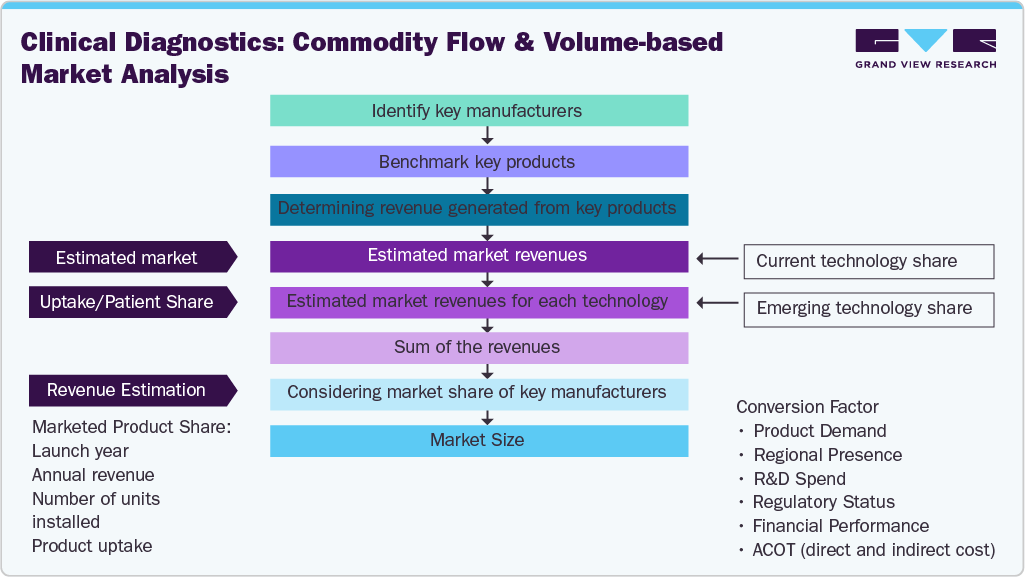
The AI in Cytology Screening Device Market size was estimated by identifying leading manufacturers and benchmarking their AI-enabled cytology screening products and software portfolios. Revenue generated from these solutions was analyzed across key applications and deployment models, followed by estimating technology-wise revenues, validating market shares of major players, and aggregating the findings to derive the overall market size.
Delivered Customizations
This report has been delivered with the following In-depth customizations
Client Request
Customization Delivered
Value Adds
AI-Based Cytology Workflow Optimization Assessment
Developed a customized assessment of AI-enabled cytology workflows across hospitals and diagnostic laboratories, evaluating slide digitization, AI-assisted image analysis, laboratory information system (LIS) integration, workflow automation, and reporting efficiency. The analysis also benchmarked adoption trends across key global markets.
Enables healthcare providers and diagnostic networks to optimize laboratory workflows, reduce turnaround times, improve screening efficiency, and identify opportunities for AI implementation in cytology laboratories.
Competitive Benchmarking of AI Cytology Platforms
Delivered a comprehensive competitive analysis of leading AI cytology solution providers, comparing product portfolios, AI capabilities, regulatory approvals, deployment models, strategic partnerships, pricing approaches, and technology differentiation. The study also assessed innovation pipelines and commercialization strategies.
Supports strategic decision-making by identifying technology leaders, competitive positioning, partnership opportunities, product differentiation strategies, and investment priorities within the AI cytology screening market.
Digital Pathology & AI Adoption Opportunity Analysis
Conducted an in-depth evaluation of digital pathology adoption, AI readiness, reimbursement landscape, regulatory developments, healthcare infrastructure, and country-level growth opportunities influencing AI-based cytology screening. The assessment identified high-growth regions, end users, and application areas with significant commercialization potential.
Provides actionable insights for market expansion, product launch planning, regional prioritization, investment decisions, and long-term commercialization strategies in AI-enabled cytology screening solutions.
Frequently Asked Questions About This Report
The global AI in cytology screening device market is projected to grow to USD 330.9 million by 2033, growing at a CAGR of 15.2% from 2026 to 2033
Based on product, the automated cytology screening systems segment led the market with the largest revenue share of 33.7% in 2025.
North America dominated the AI in cytology screening device market with the largest revenue share of 39.9% in 2025.
The growing shortage of skilled cytologists and pathologists is a key factor driving the adoption of AI-enabled cytology screening devices, as healthcare providers increasingly seek technologies that enhance diagnostic efficiency while addressing workforce limitations.
Leading players, including Hologic, F. Hoffmann-La Roche Ltd., Becton, Dickinson and Company, Leica Biosystems (Danaher), and Koninklijke Philips N.V., leverage their global distribution networks, strong regulatory expertise, and comprehensive diagnostic portfolios to strengthen their market positions.
Asia Pacific is projected to register the fastest growth during the forecast period, driven by the increasing burden of cervical cancer, expanding healthcare infrastructure, and improving access to diagnostic services.
Based on deployment, the on-premise segment led the market with the largest revenue share of 77.3% in 2025.
The expansion of AI enabled cervical cancer screening programs is creating substantial growth opportunities for the AI in cytology screening device market. Governments and healthcare organizations are strengthening investments in preventive healthcare through organized cervical cancer screening initiatives and improved access to early diagnostic services.
The global AI in cytology screening device market size market size was valued at USD 106.8 million in 2025 and is estimated at USD 122.6 million in 2026
About the Author(s)
Clinical Diagnostics Research Team
Industry · Clinical DiagnosticsThis report was authored by the clinical diagnostics research team at Grand View Research - comprising two research analysts, one senior research analyst, and one industry expert - with specialized expertise in the clinical diagnostics segment of the industry industry. All findings are based on proprietary industry databases, executive interviews, and regulatory analysis, subject to internal peer review prior to publication.
Last Updated:
Speak to Analyst

Customize this report to your needs - add regions, segments, or data points, with 20% free customization.
Or view our licence options:


ISO 9001:2015 & 27001:2022 Certified
We are GDPR and CCPA compliant! Your transaction & personal information is safe and secure. For more details, please read our privacy policy.


