
- Home
- »
- Next Generation Technologies
- »
-
Deep Learning Market Size And Share Report, 2026-2033GVR Report cover
![Deep Learning Market (2026 - 2033)Report]()
Deep Learning Market (2026 - 2033)
Size, Share & Trends Analysis Report By Solution, By Application (Image Recognition, Voice Recognition, Video Surveillance & Diagnostics, Data Mining), By End-use, By Region, And Segment Forecasts
Market Size, 2025
$132.3BMarket Estimate, 2026
$178.3BMarket Forecast, 2033
$1,125.7BCAGR, 2026–2033
30.1%Deep Learning Market Summary
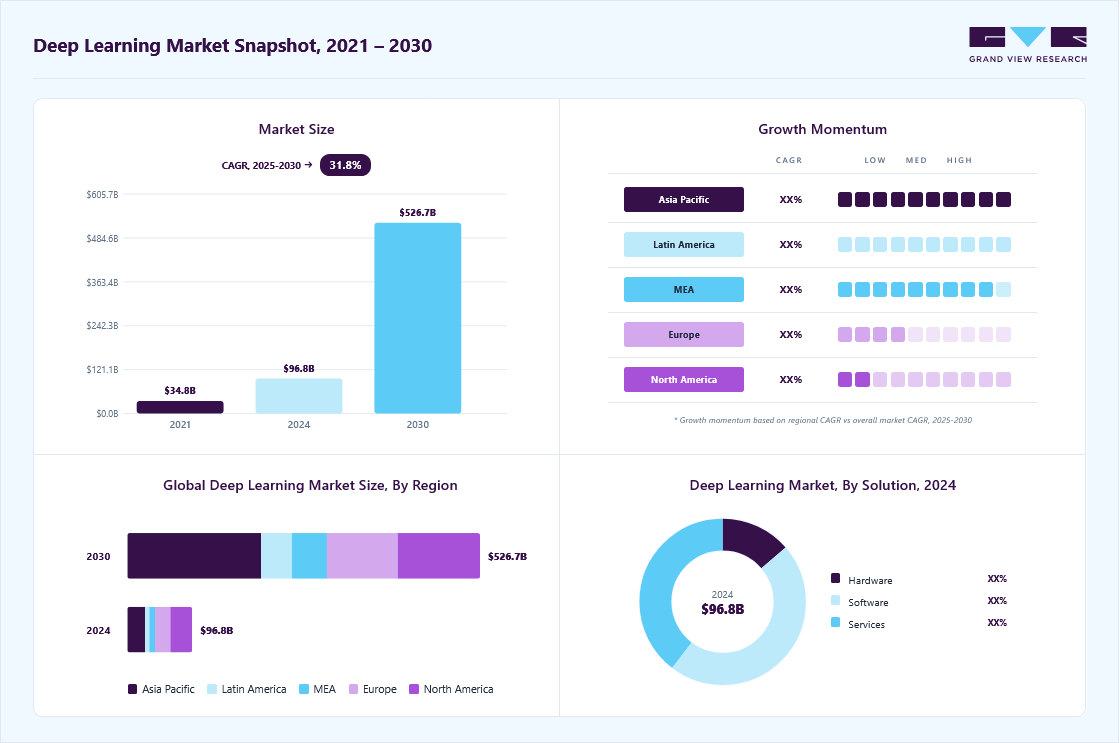
The global deep learning market size was valued at USD 132.3 billion in 2025 and is projected to grow from USD 178.3 billion in 2026 to USD 1,125.7 billion by 2033, growing at a CAGR of 30.1% from 2026 to 2033. North America dominated the Deep learning market with the largest revenue share of 36.2% in 2025. The market is driven by the rising deployment of deep learning models for predictive decision-making, continuous advancements in computing infrastructure, expanding availability of large-scale datasets, and increasing demand for real-time AI applications that enhance operational efficiency and business intelligence across industries.
Key Market Trends & Insights
- By solution: Software segment dominated the market, with a revenue share of 45.3% in 2025.
- By application: Image recognition segment held the largest market share of 39.4% in 2025.
- By end use: Healthcare segment held the largest revenue share in 2025.
Regional Highlights
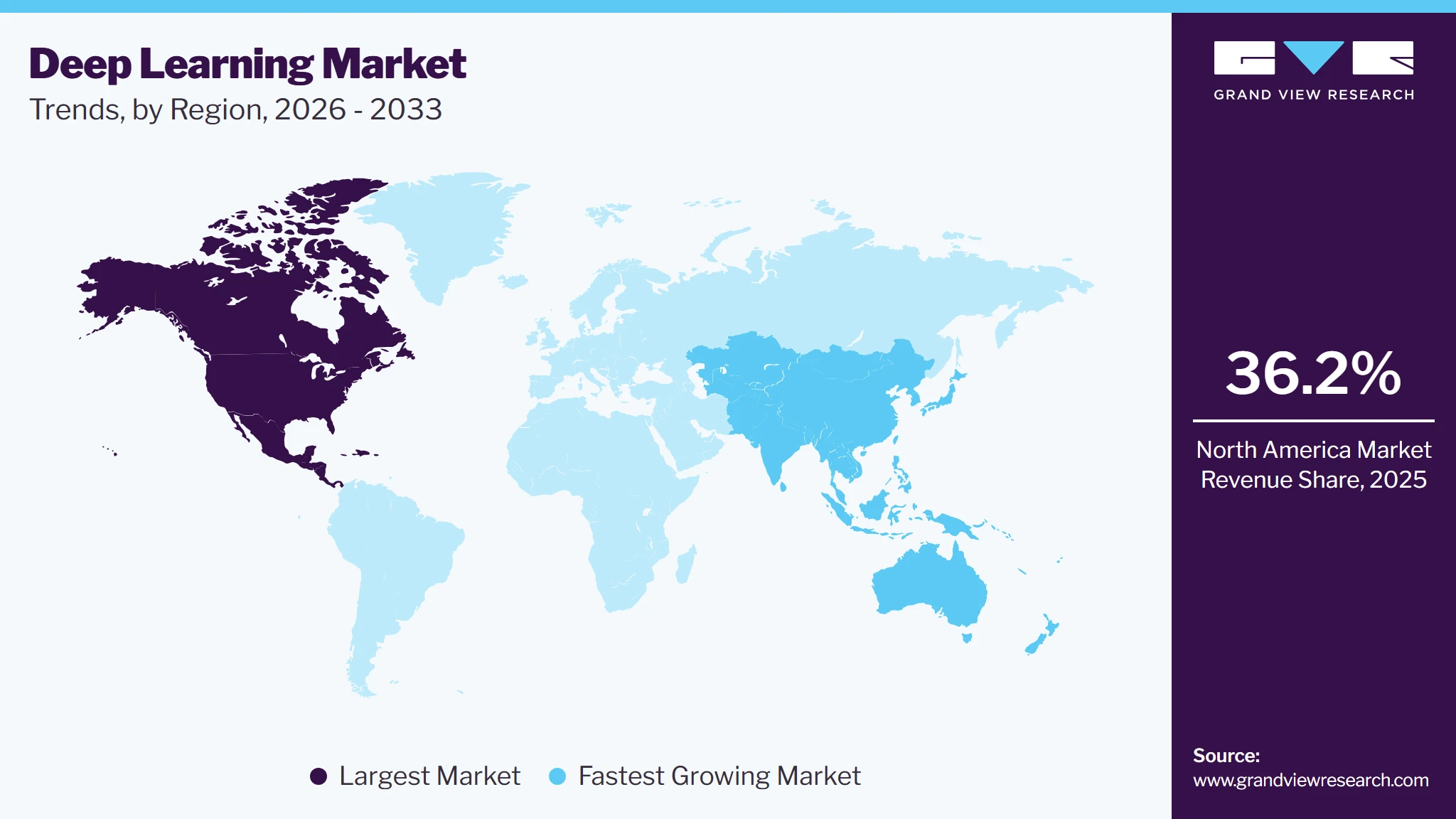
- Largest regional market: North America (36.2% revenue share, 2025)
- Fastest growing regional market: Asia Pacific (highest CAGR, 2026-2033)
- By country: The U.S. held the largest market share in 2025.
Market Size & Forecast
- Market size in 2025: USD 132.3 Billion
- Estimated market size in 2026: USD 178.3 Billion
- Projected market size by 2033: USD 1,125.7 Billion
- CAGR (2026-2033): 30.1%
Three ways to get this report
Buy it, customize it, or ask a question.Ask an Analyst
A direct answer, usually in 1 working day
- AccessReport author, directly
- Reply timeWithin 1 working day
- No sales callDirect answer only
- FormatEmail reply
- CostFree, no cost
Get the Full Report
What the study covers
- FormatsPDF · Excel · Dashboard
- Timeline2026–2033 annual, 2025 base
- Coverage20+ countries, 5 regions
- Companies10+ key players profiled
Customize the Report
20% free customization
- IncludeCountries, segments, points
- TailorTo your product definition
- ExtendDeeper competitor detail
- OrA fully bespoke study
- Turnaround5–10 working days
Deep learning is gaining prominence because of the advancements in data center capabilities, high computing power, and the ability to perform tasks without human interactions. Moreover, the rapid adoption of cloud-based technology across several industries is fueling the growth of the deep learning industry. In January 2025, Google AI Research introduced "Titans," a new machine learning architecture designed to address the limitations of existing models, particularly in handling long-term dependencies and large context windows. Titans combine short-term and long-term memory systems, enabling models to efficiently process sequences exceeding 2 million tokens. This architecture separates memory components to control computational costs, allowing models to find and store critical information during inference. By enhancing memory capabilities, Titans aims to improve performance in tasks such as language modeling and genomics, potentially transforming industries like healthcare and finance through faster, more accurate data analysis.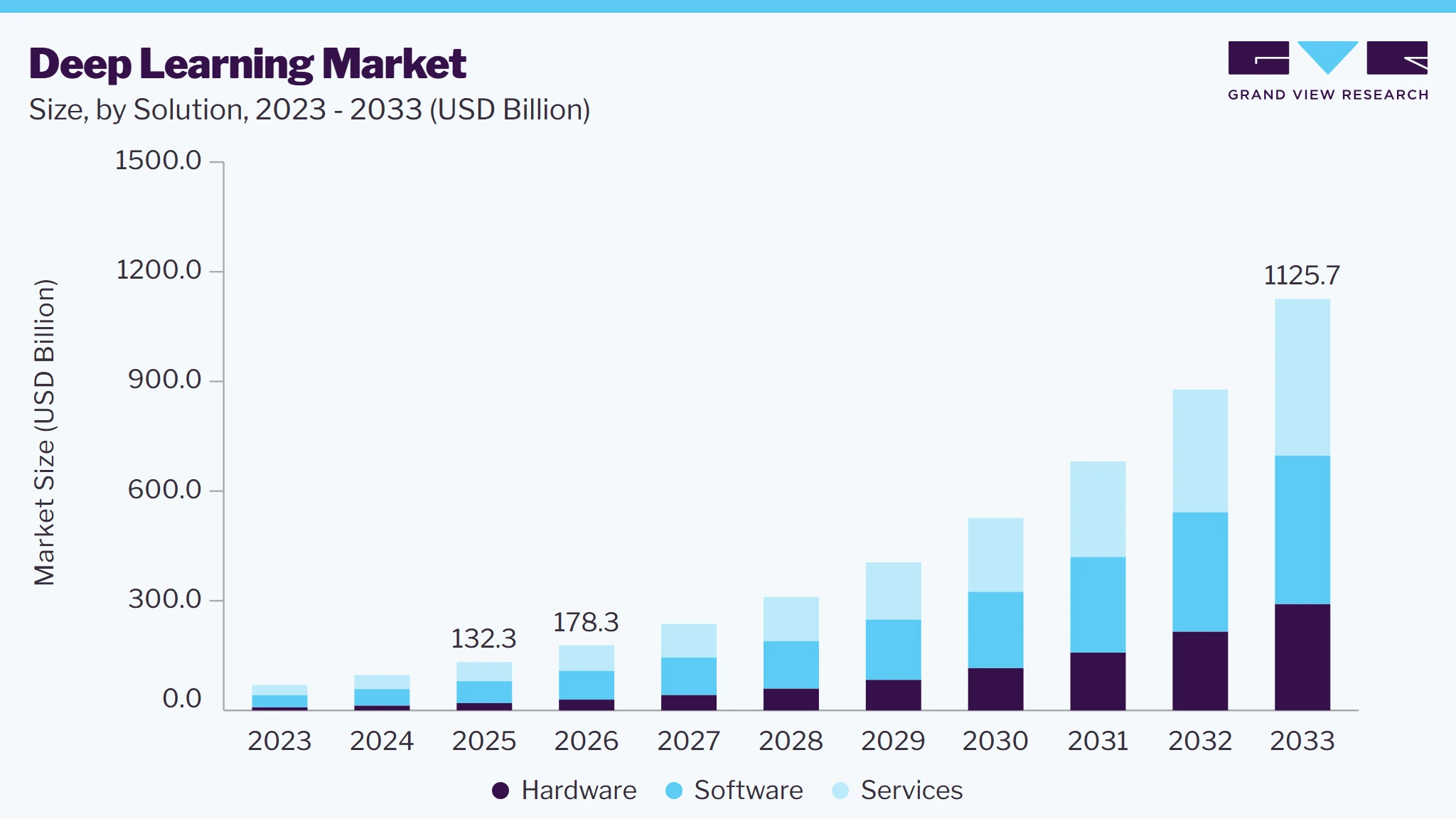
Deep learning algorithms perform several repetitive and routine tasks more efficiently within a shorter time than human beings. In addition to it, the quality of the work is maintained and provides accurate insights. Thus, implementing deep learning in the organization can save time and money, which eventually frees up the employees to perform creative tasks that need human involvement. Therefore, deep learning is considered a disruptive technology across several end use industries, uplifting the demand for technology during the forecast period.
Deep learning technology has grown due to recent developments in neural network architecture and training algorithms, graphics processing units (GPU), and the availability of a significant amount of data across sectors. The increasing adoption of robots, IoT, cybersecurity applications, industrial automation, and machine vision technology led to a large volume of data. This data can serve as a training module in deep learning algorithms, which help diagnose and test purposes. Algorithms of deep learning learn from past experiences and create a consolidated data environment. The more data there is, the more accurate the results will be, and the data will be managed consistently.
Deep learning finds its application in machine translation, chatbots, and service bots. A trained Deep Neural Network (DNN) translates the sentence or a word without using a large database. DNNs provide more accurate and better results than conventional machine translation approaches, which improves system performance.
Market Dynamics
The deep learning market is driven by the rapid growth of artificial intelligence applications, increasing availability of large-scale datasets, expanding adoption of cloud computing infrastructure, and rising demand for intelligent automation across industries. Organizations are leveraging deep learning models to improve decision-making, enhance predictive capabilities, and automate complex workflows. However, high computational requirements, significant model training costs, data privacy concerns, and the shortage of skilled AI professionals continue to challenge broader adoption. The growing need for explainable AI, regulatory compliance, and secure deployment frameworks is also shaping market development. At the same time, advancements in specialized AI hardware and generative AI technologies are creating new growth opportunities across enterprise and consumer applications.
The rising adoption of AI-powered automation and advanced analytics is significantly driving demand for deep learning solutions capable of processing vast volumes of structured and unstructured data. Organizations increasingly rely on deep learning models to automate decision-making, optimize business operations, and generate actionable insights from complex datasets. These capabilities enable enterprises to improve operational efficiency, reduce manual intervention, and enhance customer experiences through intelligent systems. As businesses continue to prioritize digital transformation initiatives, demand for advanced deep learning frameworks and scalable AI platforms is accelerating across multiple sectors.
This trend is increasing the need for sophisticated neural network architectures that can support real-time analytics, predictive modeling, natural language processing, and computer vision applications. Deep learning technologies are becoming essential for extracting value from growing data volumes while enabling faster and more accurate business decisions. Continuous improvements in computing power, cloud infrastructure, and AI accelerators are further enhancing model performance and deployment efficiency. As adoption expands, organizations are investing heavily in AI-driven innovation to maintain competitive advantage and unlock new revenue opportunities.
High computational costs and complexity remain significant barriers to widespread deep learning adoption. Training advanced deep learning models requires substantial processing power, large-scale datasets, and specialized hardware such as GPUs and AI accelerators. Complex neural networks often require extensive experimentation, hyperparameter tuning, and validation processes to achieve desired performance levels. These requirements increase infrastructure investments, energy consumption, and overall development costs, particularly for organizations with limited technical resources.
In addition, deploying and maintaining deep learning systems presents challenges related to scalability, model interpretability, and operational management. Organizations must continuously monitor model performance, update algorithms, and manage evolving data environments to ensure consistent outcomes. Regulatory requirements surrounding data privacy, security, and AI transparency further add to implementation complexity. The shortage of experienced AI engineers and data scientists also increases development timelines and operational expenses, making large-scale deployment more resource-intensive.
The expanding adoption of generative AI and industry-specific deep learning applications is creating substantial growth opportunities across the market. Organizations are increasingly deploying deep learning models to generate content, automate knowledge-based tasks, improve customer interactions, and accelerate innovation processes. These capabilities enable businesses to develop intelligent solutions tailored to industry-specific requirements while improving productivity and operational efficiency. Growing enterprise investments in AI transformation initiatives are further supporting market expansion.
This development is driving demand for advanced deep learning platforms that can support large language models, multimodal AI systems, and domain-specific applications. Industries such as healthcare, financial services, retail, manufacturing, and automotive are increasingly integrating deep learning technologies to enhance diagnostics, fraud detection, predictive maintenance, and autonomous decision-making. Continuous advancements in AI infrastructure, model optimization techniques, and cloud-based deployment environments are making deep learning solutions more accessible and scalable. As organizations seek to unlock greater business value from AI, industry-focused deep learning applications are expected to emerge as a major growth catalyst for the market.
Market Concentration & Characteristics
The deep learning market exhibits a moderate to high level of concentration, as a limited number of global technology companies, cloud service providers, and AI platform developers maintain strong positions across core segments such as machine learning frameworks, AI infrastructure, cloud-based model deployment, and generative AI solutions. These established players benefit from extensive investments in research and development, access to large-scale computing resources, proprietary datasets, and well-developed AI ecosystems. Their ability to continuously innovate and scale advanced deep learning capabilities creates significant barriers for new entrants seeking to compete at a global level.
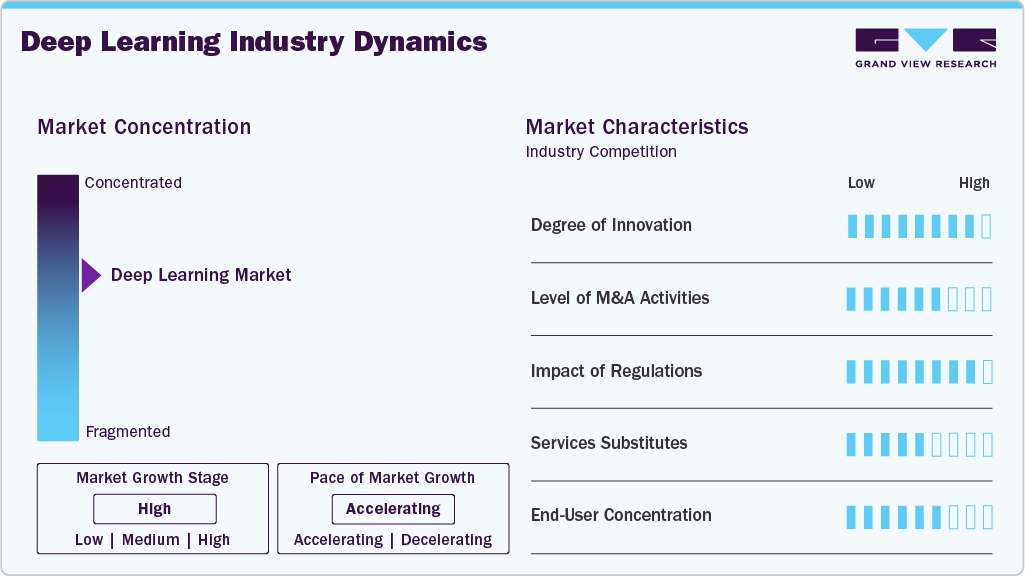
At the same time, the market is not fully consolidated because numerous specialized AI startups, software vendors, and industry-focused solution providers continue to operate across applications such as healthcare diagnostics, financial analytics, autonomous systems, cybersecurity, retail intelligence, and industrial automation. This creates a diverse competitive landscape where market leadership often varies by application area, deployment model, and industry vertically. As a result, the Deep Learning market remains characterized by a combination of concentration among major technology leaders and fragmentation across emerging use cases, specialized AI solutions, and niche application segments.
Analyst Perspective
The deep learning market is experiencing strong momentum as organizations increasingly leverage AI-driven technologies to automate complex processes, enhance decision-making, and unlock value from growing volumes of data. Advancements in generative AI, natural language processing, computer vision, and high-performance computing infrastructure are accelerating adoption across healthcare, financial services, retail, manufacturing, and automotive industries. The growing availability of cloud-based AI platforms and specialized AI accelerators is enabling enterprises to scale deep learning deployments more efficiently and cost-effectively. Additionally, rising investments in intelligent automation, predictive analytics, and real-time AI applications are expanding the scope of deep learning use cases across both enterprise and consumer environments. As competition intensifies, market participants are focusing on innovation, model optimization, and industry-specific AI solutions to capture emerging growth opportunities and strengthen long-term market positioning.
Solution Insights
Based on Solution, the software segment led the market with the largest revenue share of 45.3% in 2025. The number of software tools for developers has grown significantly over the last few years. As a result, the companies are developing deep learning frameworks through a high level of programming, powerful tools, and libraries that will help design, train, and validate deep neural networks. Moreover, ONNX architecture, machine comprehension, and edge intelligence further enhance the deep learning experience across industries.
The hardware segment is accounted to grow at a significant CAGR of 41.5% over the forecast period. Various startups and established companies focus on new hardware innovations to support efficient deep learning processing. Wave Computing, Inc., Cerebras Systems Inc., and Mythic are some of the startups working on developing deep learning chipsets and hardware. Investors and big corporate companies are also showing keen interest in these startups, accelerating the growth of deep learning technology. For instance, in July 2018, Xilinx, Inc. acquired DeePhi Technology Co., Ltd., a Beijing-based startup company working to develop neural networks and provide end-to-end applications on deep-learning processor unit (DPU) platforms.
Application Insights
Based on application, the image recognition segment led the market with the largest revenue share of 39.4% in 2025. Deep learning, particularly through Convolutional Neural Networks (CNNs), has significantly improved image recognition accuracy. CNNs can automatically learn from images, capturing complex patterns and details that traditional algorithms struggle with. This has led to error rates in image classification dropping below 5% in competitive benchmarks like the ImageNet Challenge. Moreover, major players are continuously offering deep learning technologies in various industries to fuel market expansion. For instance, IBM's image detection tools utilize deep learning to refine diagnostic processes in healthcare and improve visual search capabilities in e-commerce. Their focus on industry-specific applications demonstrates the versatility of AI-driven image recognition solutions3.
The data mining applications are expected to grow at the fastest CAGR of over 37% during the forecast period. The integration of data mining within deep learning is witnessing significant growth, driven by advancements in technology and increasing data volumes across various industries. Additionally, the increasing volume of data generated from IoT devices and other sources necessitates sophisticated data mining techniques to extract actionable insights, further propelling the demand for deep learning technologies. Major players in the industry, like Google Inc., have been actively developing deep learning frameworks that facilitate easier integration of data mining techniques into business operations. Their research into self-supervised learning models aims to improve how organizations can utilize unlabeled data for insights.
End-use Insights
Based on end use, the healthcare segment has a significant revenue share of 23.9% in 2025. The autonomous vehicle is a revolutionary technology that requires a massive amount of computation power. A Deep Neural Network (DNN) rapidly helps the autonomous vehicle perform various tasks without human interference. The autonomous vehicle is expected to gain momentum in the forecast period, and thus various startups and large companies are working on its development. Google Inc., Uber Technologies, Inc., and Tesla, Inc. are some prominent companies showing their capabilities in developing autonomous vehicles.
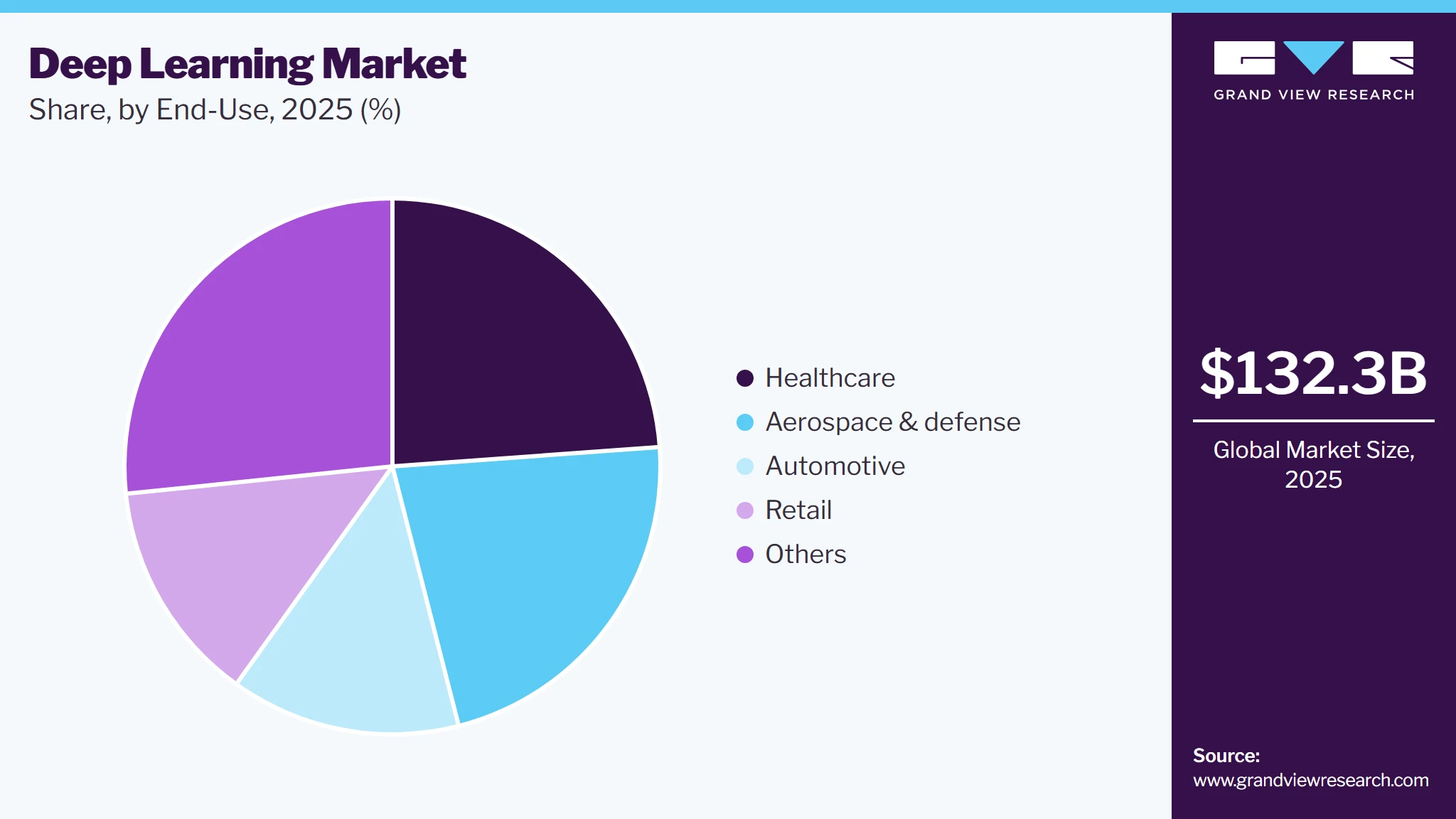
The healthcare segment is expected to witness significant growth over the forecast period. Digital transformation in the healthcare industry is expected to continue for the next few years, providing an opportunity for innovative technologies such as AI, deep learning, and data analytics to intervene in the industry. Deep learning can be used in predictive analytics, such as early detection of diseases, identifying clinical risk and its drivers, and predicting future hospitalization. Moreover, several government initiatives to integrate AI and deep learning in healthcare are expected to drive the market over the forecast period. Currently, NITI Aayog in India is working on implementing DNN models for the early diagnosis and detection of diabetic and cardiac risk. FDA is also working on a regulatory framework to implement AI and machine learning in the healthcare industry.
Regional Insights
North America dominated the deep learning market with the largest revenue share of 36.2% in 2025. This growth is driven by increasing adoption across various sectors, particularly healthcare, automotive, and retail, where deep learning enhances data analysis and operational efficiency. The region's dominance is attributed to strong investments in artificial intelligence and a robust technological infrastructure that supports rapid innovation and implementation of deep learning solutions.
U.S. Deep Learning Market Trends
The Deep learning market in the U.S. held the largest share in the North America region in 2025. This expansion is driven by increasing adoption across various sectors, particularly healthcare, automotive, and retail, where deep learning technologies enhance operational efficiency and decision-making processes. The ongoing digitization across industries further fuels demand, as organizations seek to leverage data-driven insights for competitive advantage. Overall, the deep learning sector is poised for robust growth, supported by advancements in AI applications and a thriving startup ecosystem.
Europe Deep Learning Market Trends
Europe’s deep learning market is prominently growing. The demand for deep learning solutions is being driven by advancements in data analytics, autonomous systems, and smart devices, particularly in industries such as healthcare and cybersecurity. Countries like the UK and Germany are leading this transformation, with substantial government support and a growing acceptance of AI technologies among businesses. Europe's proactive approach to integrating AI into its economy presents numerous opportunities for growth in the deep learning sector.
Asia Pacific deep learning Market Trends
The Asia Pacific deep learning market is anticipated to grow at a significant CAGR from 2025 to 2030. The proliferation of big data analytics and advancements in computing power are also facilitating the adoption of deep learning technologies. Additionally, the integration of deep learning with other technologies like IoT is expected to enhance its application scope, further driving market expansion in the region.
Key Deep Learning Company Insights
The market for deep learning is characterized by strong competition, with a few major worldwide competitors owning a significant market share. The major focus is developing new products and collaborating among the key players.
-
Arm is a major technology provider specializing in processor IP, graphics, and security solutions, pivotal in powering next-generation computing. With a focus on deep learning and artificial intelligence, Arm's technologies, such as the Armv9 CPU and Immortalis GPU, are integral to advanced mobile devices, enhancing performance and efficiency in AI applications. Their extensive portfolio includes various CPU architectures like Cortex-A and Ethos, designed to meet diverse performance and power requirements across devices.
-
Intel Corporation is a key player in semiconductor manufacturing, renowned for its innovative microprocessors and integrated technologies that power a wide range of computing devices. The company is heavily invested in deep learning and artificial intelligence, offering advanced solutions such as the Intel Xeon Scalable processors and the Intel Nervana Neural Network Processor (NNP), which are designed to accelerate AI workloads and enhance performance in data centers.
Key Deep Learning Companies:
The following key companies have been profiled for this study on the deep learning market.
-
Advanced Micro Devices, Inc.
-
ARM Ltd.
-
Clarifai, Inc.
-
Entilic
-
Google, Inc.
-
HyperVerge
-
IBM Corporation
-
Intel Corporation
-
Microsoft Corporation
-
NVIDIA Corporation
Competitive Benchmarking
Operating Strategies
Competitive Edge
Weaknesses
Mature Players: Microsoft Corporation, Google, Inc., IBM Corporation, NVIDIA Corporation, Intel Corporation
- Mature players are focusing on large-scale AI infrastructure, generative AI platforms, foundation model development, cloud-native deep learning ecosystems, and enterprise AI integration. Their strategies emphasize expanding AI computing capabilities, strengthening developer ecosystems, optimizing model training frameworks, and supporting enterprise-wide AI adoption across industries.
- Their competitive advantage is derived from extensive AI research capabilities, global cloud infrastructure, advanced semiconductor technologies, and access to vast datasets. Strong financial resources, established enterprise customer relationships, and integrated hardware-software ecosystems enable these companies to deliver highly scalable deep learning solutions across diverse applications.
- These companies often face challenges associated with high infrastructure costs, complex organizational structures, and increasing regulatory scrutiny related to AI governance and data privacy. Dependence on large-scale enterprise deployments and resource-intensive model development can also limit responsiveness to niche market opportunities and emerging application-specific requirements.
Emerging Players: Clarifai, Inc., HyperVerge, Entilic, Advanced Micro Devices, Inc.and ARM Ltd
- Emerging players are adopting innovation-focused strategies centered on specialized AI models, computer vision applications, edge AI deployment, industry-specific deep learning solutions, and lightweight AI frameworks. Their market approach prioritizes rapid product development, targeted industry solutions, and efficient AI deployment across resource-constrained environments and specialized use cases.
- Their competitive edge stems from focused expertise in specific deep learning domains, agile development processes, and the ability to rapidly commercialize innovative AI technologies. Specialized product offerings, flexible deployment models, and strong application-level capabilities enable these companies to address evolving customer needs with greater speed and customization.
- Limited access to large-scale computing infrastructure, smaller customer bases, and lower brand recognition compared to global technology leaders can restrict market expansion opportunities. Additionally, resource constraints in research, marketing, and ecosystem development may hinder their ability to compete effectively against larger AI platform providers in highly competitive markets.
Recent Developments
-
In June 2024, Hewlett Packard Enterprise and NVIDIA unveiled NVIDIA AI Computing by HPE, a suite of co-developed AI solutions and integrated go-to-market strategies designed to help enterprises accelerate the adoption of generative AI technologies.
-
In March 2024, Google Cloud has unveiled significant advancements in generative AI aimed at enhancing healthcare and life sciences during the HIMSS24 conference in Orlando, Florida. The new Vertex AI Search for Healthcare enables smarter data search capabilities, allowing clinicians to access relevant information quickly and efficiently, thereby reducing administrative burdens. Additionally, the Healthcare Data Engine (HDE) has been introduced as a consumption-priced managed service, facilitating the creation of interoperable data platforms globally.
-
In January 2025, IBM and Red Hat partnered to enhance hybrid cloud adoption by integrating IBM's Hybrid Cloud Mesh with Red Hat's Service Interconnect. This collaboration aims to simplify application connectivity across diverse cloud environments, enabling businesses to deploy and manage applications with greater flexibility and security. By combining IBM's advanced cloud management capabilities with Red Hat's expertise in open-source solutions, the partnership seeks to provide a unified platform for enterprises to accelerate their digital transformation initiatives.
-
In January 2025, Ndea introduced a novel approach to artificial intelligence by combining deep learning with program synthesis, aiming to develop AI systems capable of learning as efficiently as humans. Co-founded by François Chollet, creator of the Keras framework, and Mike Knoop, co-founder of Zapier, Ndea seeks to overcome the limitations of traditional deep learning models by enabling machines to adapt and innovate beyond specific tasks. This strategy positions Ndea to accelerate scientific progress and contribute significantly to the advancement of artificial general intelligence.
Deep Learning Market Report Scope
Report Attribute
Details
Market size in 2025
USD 132.3 billion
Estimated market size in 2026
USD 178.3 billion
Projected market size by 2033
USD 1,125.7 billion
Growth rate
CAGR of 30.1% from 2026 to 2033
Base year for estimation
2025
Historical data
2021 - 2024
Forecast period
2026 - 2033
Quantitative units
Revenue in USD million/billion and CAGR from 2026 to 2033
Report coverage
Revenue forecast, company ranking, competitive landscape, growth factors, and trends
Segments covered
Solution, application, end use, region
Regional scope
North America; Europe; Asia Pacific; Latin America; MEA
Country scope
U.S.; Canada; Mexico; Germany; UK; France; China; Japan; India; South Korea; Australia; Brazil; Saudi Arabia; South Africa; UAE
Key companies profiled
Advanced Micro Devices, Inc.; ARM Ltd.; Clarifai Inc.; Entilic; Google, Inc.; HyperVerge; IBM Corporation; Intel Corporation; Microsoft Corporation; NVIDIA Corporation
Customization scope
Free report customization (equivalent up to 8 analysts' working days) with purchase. Addition or alteration to country, regional & segment scope.
Pricing and purchase options
Avail customized purchase options to meet your exact research needs. Explore purchase options
Global Deep Learning Market Report Segmentation
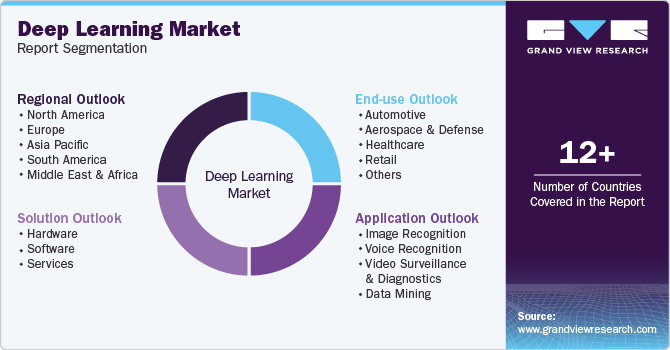
This report forecasts revenue growth at the global, regional, and country levels and provides an analysis of the latest industry trends in each of the sub-segments from 2021 to 2033. For this study, Grand View Research has segmented the global deep learning market report based on solution, application, end-use, and region:
-
Solution Outlook (Revenue, USD Million, 2021 - 2033)
-
Hardware
-
Central Processing Unit (CPU)
-
Graphics Processing Unit (GPU)
-
Field Programmable Gate Array (FPGA)
-
Application-Specific Integration Circuit (ASIC)
-
-
Software
-
Services
-
Installation Services
-
Integration Services
-
Maintenance & Support Services
-
-
-
Application Outlook (Revenue, USD Million, 2021 - 2033)
-
Image Recognition
-
Voice Recognition
-
Video Surveillance & Diagnostics
-
Data Mining
-
-
End-use Outlook (Revenue, USD Million, 2021 - 2033)
-
Automotive
-
Aerospace & Defense
-
Healthcare
-
Retail
-
Others
-
-
Regional Outlook (Revenue, USD Million, 2021 - 2033)
-
North America
-
U.S.
-
Canada
-
Mexico
-
-
Europe
-
Germany
-
UK
-
France
-
-
Asia Pacific
-
China
-
India
-
Japan
-
South Korea
-
Australia
-
-
South America
-
Brazil
-
-
Middle East and Africa
-
KSA
-
UAE
-
South Africa
-
-
Research Methodology
The deep learning market figures in this report are based on a proven research process that combines executive interviews with secondary research from proprietary databases, company filings, and recognized regulatory and institutional sources. Market size is built through value-chain sizing - reconciling supply-side and demand-side estimates - and triangulated with bottom-up and top-down approaches. Every estimate passes multiple levels of expert validation before publication, with each deep learning segment quantified using the revenue-capture definitions in the table below.
Segment Definition
Segment - Operating System
Revenue capture definition
Hardware
The hardware segment comprises physical computing infrastructure used to train, deploy, and execute deep learning models. Revenue is generated from the sale of processors, accelerators, memory systems, servers, and specialized AI computing equipment designed to support deep learning workloads.
Software
This segment includes deep learning platforms, frameworks, development tools, and AI model management solutions that enable the creation, training, and deployment of neural networks. Revenue is derived from software licensing, subscriptions, cloud-based AI platforms, and enterprise AI applications.
Services
The services segment covers professional and managed services that support the implementation and optimization of deep learning solutions. Revenue is captured through consulting, deployment, integration, training, maintenance, and ongoing technical support engagements.
Segment - Hardware
Revenue capture definition
Central Processing Unit (CPU)
The CPU segment consists of general-purpose processors used for data preprocessing, model management, and deep learning inference tasks. Revenue is generated through the sale of processors integrated into servers, workstations, and edge computing systems supporting AI applications.
Graphics Processing Unit (GPU)
This segment includes high-performance parallel processors designed to accelerate deep learning training and inference workloads. Revenue is captured from the sale of AI-optimized GPUs deployed across data centers, cloud environments, and enterprise computing infrastructure.
Field Programmable Gate Array (FPGA)
The FPGA segment comprises reconfigurable semiconductor devices that can be customized to execute deep learning algorithms efficiently. Revenue is generated through hardware sales for applications requiring low latency, adaptability, and energy-efficient AI processing.
Application-Specific Integration Circuit (ASIC)
Application-Specific Integration Circuit (ASIC) devices are custom-designed chips engineered to perform dedicated deep learning tasks with high efficiency. Revenue is derived from the development and commercialization of specialized AI accelerators used in cloud, edge, and embedded AI environments.
Segment - Services
Revenue capture definition
Installation Services
The installation services segment includes activities related to the setup and configuration of deep learning infrastructure, platforms, and associated hardware. Revenue is generated through deployment projects that prepare AI environments for operational use.
Integration Services
This segment encompasses the integration of deep learning solutions with existing enterprise systems, databases, applications, and workflows. Revenue is captured from customization, interoperability development, and implementation projects that ensure seamless AI adoption.
Maintenance & Support Services
Maintenance & support services involve ongoing monitoring, troubleshooting, software updates, performance optimization, and technical assistance for deployed deep learning solutions. Revenue is generated through recurring support contracts and managed service agreements.
Segment - Application
Revenue capture definition
Image Recognition
The image recognition segment includes deep learning solutions that analyze and classify visual content such as photographs, medical images, and industrial inspection data. Revenue is generated from software, platforms, and services used to automate image-based analysis and decision-making processes.
Voice Recognition
This segment consists of deep learning technologies that convert spoken language into actionable digital information. Revenue is captured through speech recognition software, virtual assistants, conversational AI platforms, and voice-enabled enterprise applications.
Video Surveillance & Diagnostics
The video surveillance & diagnostics segment covers AI-powered systems that analyze video streams to detect objects, events, anomalies, and operational conditions. Revenue is generated from intelligent monitoring solutions used across security, healthcare, transportation, and industrial environments.
Data Mining
Data mining refers to the application of deep learning algorithms to discover patterns, relationships, and insights from large datasets. Revenue is derived from analytics platforms, predictive modeling tools, and AI-driven business intelligence solutions that support data-driven decision-making.
Segment - End Use
Revenue capture definition
Automotive
The automotive segment includes the use of deep learning technologies in autonomous driving, advanced driver assistance systems, predictive maintenance, and intelligent vehicle functions. Revenue is generated from AI software, platforms, and computing solutions deployed by automotive manufacturers and mobility providers.
Aerospace & Defense
This segment encompasses deep learning applications used for surveillance, mission planning, threat detection, autonomous systems, and predictive maintenance in aerospace and defense operations. Revenue is captured through the deployment of AI-enabled analytics, vision systems, and decision-support solutions.
Healthcare
The healthcare segment consists of deep learning solutions used for medical imaging, diagnostics, drug discovery, patient monitoring, and clinical decision support. Revenue is generated from AI platforms, software applications, and services adopted by healthcare providers, research institutions, and life sciences organizations.
Retail
Retail applications include customer analytics, recommendation engines, inventory optimization, demand forecasting, and intelligent commerce solutions. Revenue is derived from AI-powered software and services that improve customer engagement and operational efficiency across retail environments.
Others
The others segment covers deep learning deployments across industries such as banking, telecommunications, manufacturing, education, energy, and logistics. Revenue is generated from industry-specific AI solutions designed to enhance automation, analytics, and operational performance.
Estimation Model
Layer Name
Key Questions
Description
AI Adoption & Data-Intensive Industry Layer
Who generates demand for deep learning solutions?
Identify industries with high AI and data-processing requirements, including healthcare, financial services, retail, automotive, manufacturing, telecommunications, media, and government sectors. This layer establishes the total addressable demand base for deep learning technologies across organizations seeking advanced analytics, automation, and intelligent decision-making capabilities.
AI Infrastructure & Computing Deployment Layer
Who invests in infrastructure required for deep learning workloads?
Apply adoption rates of cloud computing platforms, AI accelerators, GPUs, high-performance computing systems, and enterprise AI frameworks. This layer estimates the transition from traditional analytics environments to advanced computing ecosystems capable of supporting large-scale deep learning model development and deployment.
Advanced Deep Learning Implementation Layer
Who deploys deep learning models and AI-driven applications?
Apply penetration levels of neural networks, computer vision systems, natural language processing platforms, speech recognition solutions, recommendation engines, generative AI models, and predictive analytics applications. This layer captures the adoption of advanced deep learning capabilities across enterprise and consumer-facing use cases.
Deep Learning Value Realization Layer
How much value is generated through deep learning adoption?
Estimate revenue by multiplying active deep learning deployments by average spending on software platforms, AI infrastructure, cloud services, model training, integration services, consulting, and maintenance contracts. This layer captures total deep learning market revenue generated through the implementation, operation, and optimization of deep learning solutions.
Delivered Customizations
This report has been delivered with the following In-depth customizations
CLIENT REQUEST
CUSTOMIZATION DELIVERED
VALUE ADDS
Deep Learning Technology Adoption & Growth Assessment
Performed a comprehensive analysis of Deep Learning market trends, including neural networks, computer vision, natural language processing (NLP), generative AI, deep neural architectures, AI accelerators, cloud-based AI platforms, and large language model (LLM) adoption across major industry verticals.
This assessment enables stakeholders to identify high-growth technology segments, evaluate evolving AI adoption patterns, prioritize innovation investments, and strengthen competitive positioning within the rapidly expanding Deep Learning ecosystem.
Industry-Specific Deep Learning Deployment Analysis
Assessed demand for Deep Learning solutions across healthcare, automotive, retail, financial services, manufacturing, telecommunications, media & entertainment, and government sectors, including predictive analytics, intelligent automation, recommendation systems, image recognition, and AI-driven decision support applications.
Provides strategic insights into industry-specific AI transformation initiatives, technology deployment requirements, and long-term revenue opportunities, supporting market expansion planning and targeted business growth strategies.
Generative AI, Advanced Analytics & Intelligent Automation Opportunity Assessment
Evaluated adoption trends for generative AI models, large language models, computer vision systems, speech recognition platforms, autonomous decision-making solutions, AI-powered analytics, and next-generation deep learning frameworks across global markets.
Supports investment and product development strategies by identifying emerging AI opportunities, accelerating innovation roadmaps, enabling technology differentiation, and facilitating data-driven decision-making in high-growth segments of the Deep Learning market.
Frequently Asked Questions About This Report
The global deep learning market size was valued at USD 96.8 billion in 2024 and is expected to reach USD 132.3 billion in 2025.
The global deep learning market size is expected to grow at a compound annual growth rate of 31.8% from 2025 to 2030 to reach USD 526.7 billion by 2030.
North America dominated the market of 36.2% in 2025.
Some key players operating in the deep learning market include NVIDIA Corporation; Intel Corporation; Google, Inc.; Advanced Micro Devices, Inc.; IBM Corporation; and Microsoft Corporation.
Key factors that are driving the deep learning market growth include improvement in deep learning algorithms, a rise in big data analytics, and increasing adoption of artificial intelligence across various end-use verticals.
About the Author(s)
Next Generation Technologies Research Team
Technology · Next Generation TechnologiesThis report was authored by the next generation technologies research team at Grand View Research - comprising two research analysts, one senior research analyst, and one industry expert - with specialized expertise in the next generation technologies segment of the technology industry. All findings are based on proprietary technology databases, executive interviews, and regulatory analysis, subject to internal peer review prior to publication.
Last Updated:
Speak to Analyst


Customize this report to your needs - add regions, segments, or data points, with 20% free customization.
Or view our licence options:


ISO 9001:2015 & 27001:2022 Certified
We are GDPR and CCPA compliant! Your transaction & personal information is safe and secure. For more details, please read our privacy policy.


