
- Home
- »
- Clinical Diagnostics
- »
-
AI-enabled Clinical Laboratory Analyzer Market Report, 2033GVR Report cover
![AI-enabled Clinical Laboratory Analyzer Market (2026 - 2033)Report]()
AI-enabled Clinical Laboratory Analyzer Market (2026 - 2033)
Size, Share & Trends Analysis Report By Product (Clinical Chemistry Analyzers, Immunoassay Analyzers, Hematology Analyzer), By Application, By End Use, By Region, And Segment Forecasts
Market Size, 2025
$7.8BMarket Estimate, 2026
$8.6BMarket Forecast, 2033
$18.6BCAGR, 2026–2033
11.6%AI-enabled Clinical Laboratory Analyzer Market Summary
The global AI-enabled clinical laboratory analyzer market size was valued at USD 7.8 billion in 2025 and is projected to grow from USD 8.6 billion in 2026 to USD 18.6 billion by 2033, at a CAGR of 11.6% from 2026 to 2033. The market in North America dominated with a revenue share of 41.2% in 2025. The market growth is primarily driven by the growing integration of artificial intelligence for automated laboratory workflows.

Key Market Trends & Insights
- By product: Molecular diagnostics analyzers segment held the largest market share of 33.9% in 2025.
- By application: Infectious disease diagnostics segment held the largest market share of 54.2% in 2025.
- By end use: Hospital laboratories segment held the largest market share of 48.5% in 2025.
Regional Highlights
- Largest regional market: North America (41.2% revenue share, 2025)
- Fastest-growing regional market: Asia Pacific (highest CAGR, 2026-2033)
- By country: The U.S. held the largest market share in 2025
Market Size & Forecast
- Market size in 2025: USD 7.8 Billion
- Estimated market size in 2026: USD 8.6 Billion
- Projected market size by 2033: USD 18.6 Billion
- CAGR (2026-2033): 11.6%
Clinical laboratories are increasingly adopting AI-enabled analyzers to automate sample processing, result interpretation, workflow prioritization, quality monitoring, and instrument management. The integration of AI with laboratory automation reduce repetitive manual tasks, improve operational efficiency, minimize processing errors, and support faster turnaround times across high-volume diagnostic laboratories.
Market Dynamics
The growing integration of artificial intelligence into clinical laboratory analyzers is transforming conventional laboratory workflows by enabling automated sample processing, result interpretation, quality control, and workload prioritization. AI algorithms can analyze large volumes of laboratory data, identify abnormal patterns, flag potentially erroneous results, and support automated decision-making with minimal manual intervention. Integration of AI with analyzers also enables laboratories to standardize repetitive processes and optimize testing sequences according to sample characteristics and laboratory priorities. These capabilities are particularly valuable in high-throughput clinical settings where laboratories handle substantial testing volumes and require consistent performance. As laboratories seek to improve productivity while maintaining analytical quality, the incorporation of AI-driven automation into clinical laboratory analyzers is becoming an important factor supporting technology adoption and market expansion.
For instance, in July 2025, Scopio Labs unveiled its Complete Blood Morphology (CBM) analyzer, an AI-powered solution designed to automate blood morphology analysis and reporting. The analyzer combines computational imaging with AI-powered analysis to transform peripheral blood smear review into a more autonomous and standardized workflow, while analyzing substantially more cells than conventional morphology approaches. The development directly addresses labor-intensive manual review, laboratory staffing constraints, workflow bottlenecks, and the need for greater standardization in hematology testing. As AI-enabled automation continues to shift laboratory processes from manual interpretation toward intelligent analysis and reporting, adoption of AI-integrated clinical laboratory analyzers is expected to strengthen across hematology laboratories and other high-throughput diagnostic settings.
AI-enabled clinical laboratory analyzers involve substantial upfront investments compared with conventional analyzers due to the integration of advanced computing systems, AI software, high-resolution imaging components, automation modules, and connectivity infrastructure. In addition to equipment acquisition costs, laboratories may incur expenses related to software integration, system validation, cybersecurity, maintenance, algorithm updates, and staff training. These additional expenditures can increase the total cost of ownership and create financial barriers for smaller diagnostic laboratories and healthcare facilities operating under constrained budgets.
The implementation of AI-enabled analyzers may also require laboratories to upgrade existing information technology infrastructure and laboratory information systems to support data-intensive AI applications. Compatibility issues with legacy systems can further increase integration costs and implementation timelines. Moreover, laboratories may require specialized personnel to validate AI outputs and oversee system performance, limiting the benefits of complete automation. Consequently, the high capital and implementation costs can delay replacement of conventional analyzers and restrict adoption of AI-enabled systems, particularly in price-sensitive and resource-constrained healthcare markets.
The expansion of AI-enabled clinical laboratory analyzers into decentralized and point-of-care settings represents a significant opportunity for market growth, particularly as healthcare systems seek to deliver diagnostic testing closer to patients. AI can enable compact analyzers to automate sample analysis, interpretation, and quality-control processes while reducing dependence on highly specialized laboratory personnel. This can support testing in physician offices, community healthcare centers, emergency departments, remote clinics, and other decentralized settings where conventional laboratory infrastructure may be limited. AI-enabled analyzers can also provide rapid and standardized results, supporting faster clinical decision-making and reducing reliance on centralized laboratories. As healthcare providers increasingly emphasize accessible, timely, and decentralized diagnostics, expanding AI-enabled analyzer applications beyond traditional laboratories can broaden the addressable market and create new revenue opportunities for manufacturers.
For instance, in August 2025, the Technology Development Board of India signed an agreement with Primary Healthtech to support the enhancement and commercial-scale manufacturing of the AI/ML-powered Mobilab clinical chemistry analyzer. The portable, battery-operated, IoT-enabled device can test more than 25 parameters related to kidney, liver, heart, vitamin, and cancer conditions and has undergone trials involving 10,000 patients. The next-generation device is being developed to perform five tests simultaneously, with the objective of reducing patient waiting times and expanding deployment in rural and underserved regions. The project demonstrates the potential of AI-enabled point-of-care analyzers to improve diagnostic accessibility while creating new growth opportunities through decentralized testing and large-scale deployment across emerging healthcare settings.
Market Concentration & Characteristics
The degree of innovation in the AI-enabled clinical laboratory analyzer market is high, driven by the integration of AI-powered decision support, computational imaging, and digital morphology into conventional laboratory workflows. For instance, in February 2026, Scopio Labs achieved EU IVDR certification for its X100 and X100HT platforms with its Full-Field Peripheral Blood Smear application, which incorporates AI-powered decision support for RBC morphology and platelet-clump detection across the entire sample. The expansion of AI capabilities beyond WBC analysis enhances clinical consistency and workflow efficiency while maintaining expert oversight of final diagnostic decisions. Such advancements demonstrate the transition of laboratory analyzers from conventional measurement and visualization systems toward intelligent platforms capable of automated analysis, supporting a high degree of innovation in the market.
The level of M&A activity in the AI-enabled clinical laboratory analyzer market is moderate and strategically focused, with established diagnostic companies pursuing acquisitions to broaden analyzer portfolios and strengthen capabilities across laboratory testing disciplines. For instance, in April 2026, Sysmex completed the acquisition of JEOL's clinical chemistry testing business and established Sysmex BioMajesty Corporation. The transaction added JEOL's BioMajesty clinical chemistry analyzer portfolio and related manufacturing, R&D, sales, and service capabilities to Sysmex's diagnostics portfolio. The acquisition is expected to expand Sysmex's clinical chemistry presence, strengthen its global product offering, and enable integrated solutions leveraging data across multiple testing domains, supporting the company's broader adoption of digital technologies and AI in diagnostics.
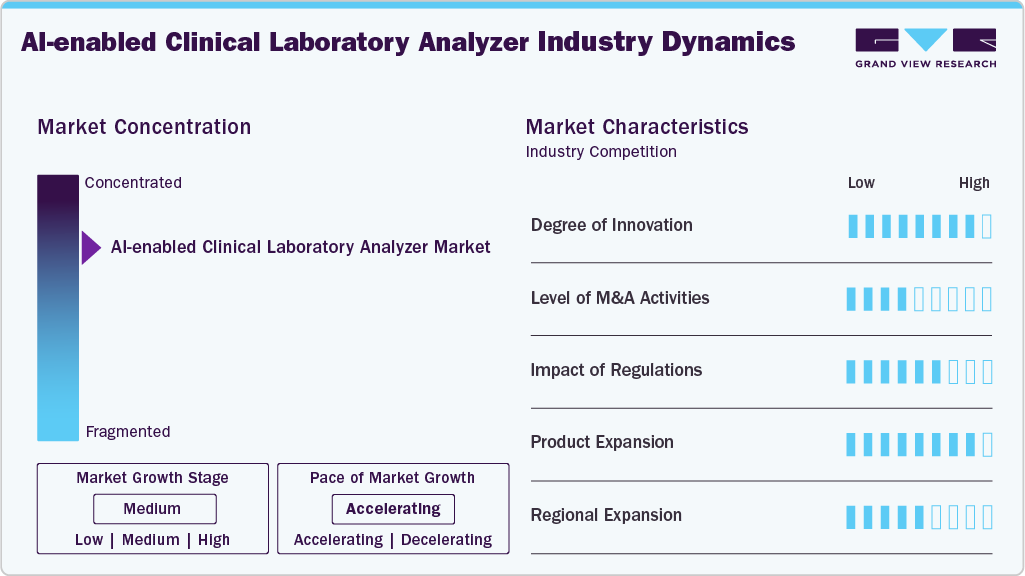
Regulations have a high impact on the AI-enabled clinical laboratory analyzer market due to manufacturers must demonstrate analytical performance, clinical validity, safety, cybersecurity, data protection, and reliability of AI algorithms before commercialization. Regulatory requirements can extend product approval timelines and increase development and compliance costs, particularly as AI systems may require ongoing validation following software or algorithm updates. These regulatory requirements can therefore slow product commercialization and increase the overall cost of developing and deploying AI-enabled clinical laboratory analyzers.
Product expansion in the AI-enabled clinical laboratory analyzer Market is driven by manufacturers extending existing platforms into additional testing applications and workflow stages. Companies are increasingly enhancing laboratory platforms with AI-assisted capabilities to broaden diagnostic utility, improve automation, and address more complex testing requirements. For instance, in March 2026, CellaVision launched its Bone Marrow Aspirate Application across EMEA, with Sysmex serving as the distribution partner. The AI-assisted application automates and standardizes bone marrow morphology workflows, expanding CellaVision's digital morphology portfolio beyond peripheral blood analysis and strengthening the application of intelligent technologies across hematology laboratories. This expansion enables laboratories to address specialized testing requirements while improving workflow consistency and operational efficiency.
Regional expansion in the AI-enabled clinical laboratory analyzer market is being supported by the regulatory approval and localization of AI-powered diagnostic technologies across emerging healthcare markets. The expansion of AI-enabled laboratory technologies into new geographic markets can broaden access to automated diagnostic testing, strengthen manufacturers' commercial presence, and create opportunities to address varying healthcare infrastructure and diagnostic needs. As regulatory pathways become clearer and healthcare providers increasingly adopt intelligent laboratory solutions, manufacturers can expand their analyzer portfolios across developed and emerging markets, supporting broader market penetration and long-term growth across regions.
Analyst Perspective
The AI-enabled clinical laboratory analyzer market is experiencing strong growth, driven by the increasing adoption of intelligent automation in laboratories to enhance testing efficiency, standardization, and turnaround times. Integration of AI, machine learning, computational imaging, and connected platforms is expanding analyzer capabilities from conventional measurement toward automated interpretation and workflow support. Adoption is also likely to increase in decentralized settings as portable AI-enabled systems improve access to diagnostic testing. However, high acquisition and implementation costs, regulatory requirements, data security concerns, and the need for human oversight may constrain adoption. Strategic investments, product expansion, and technological advancements are expected to strengthen competition and accelerate innovation across the market.
Product Insights
The molecular diagnostics analyzers segment accounted for the largest share of 33.9% and is expected to register the fastest growth over the forecast period. The segment’s growth is supported by expanding molecular testing across infectious diseases, oncology, genetic disorders, and precision medicine, where complex diagnostic data increasingly require automated interpretation and quality control. For instance, in May 2025, Diagnostics.ai launched its CE-IVDR-certified transparent machine-learning platform for clinical real-time PCR diagnostics, providing per-test algorithmic accountability, real-time model monitoring, and explainable result analysis. The development demonstrates the growing integration of AI into molecular diagnostic workflows and highlights the importance of transparent, auditable AI for clinical PCR testing. Such capabilities are expected to support the adoption of intelligent molecular diagnostic technologies across clinical laboratories and strengthen segment growth over the forecast period.
The microbiology analyzers segment is expected to grow at a lucrative CAGR from 2026 to 2033. Increasing adoption of AI-driven image analysis and laboratory automation for microorganism detection, colony assessment, and workflow prioritization. AI can reduce manual plate-review requirements while improving consistency and enabling laboratories to manage growing specimen volumes. For instance, in February 2026, COPAN received FDA 510(k) clearance for PhenoMATRIX as a Microbial Colony Image Assessment System and an optional module of the WASPLab automation platform. The system uses advanced image analysis and laboratory-defined expert rules to detect microbial growth, estimate colony counts, and differentiate isolates based on phenotypic characteristics. This regulatory milestone strengthens the commercialization of AI-assisted microbiology workflows and supports broader adoption of intelligent automation across clinical microbiology laboratories.
Application Insights
The infectious disease diagnostics segment dominated the global AI-enabled clinical laboratory analyzer market, accounting for 54.2% of the revenue share in 2025, and is also expected to register the fastest CAGR over the forecast period. Its leading position is supported by high testing volumes, antimicrobial resistance, recurring infectious disease outbreaks, and the need for rapid and accurate diagnostic assessment. AI-enabled analyzers can identify complex patterns, automate interpretation, and support timely clinical decision-making. For instance, in September 2025, HORIBA partnered with GeodAIsics to integrate generative AI into its Yumizen H1500, H2500, and H500 hematology analyzers for early detection of sepsis and infection-related patterns. The solution analyzes routine blood-test parameters and generates interpretable alerts, demonstrating how AI integration into laboratory analyzers can strengthen infectious disease assessment and workflow efficiency.
The oncology diagnostics segment is expected to demonstrate lucrative growth over the forecast period, supported by increasing cancer incidence, growing demand for early detection, and expanding use of biomarker-based and molecular testing. AI-enabled clinical laboratory analyzers can enhance tumor biomarker interpretation, molecular data analysis, abnormality detection, and workflow automation, supporting more efficient cancer diagnosis and monitoring. The growing adoption of precision medicine and companion diagnostics is further creating demand for intelligent analytical technologies capable of handling complex diagnostic datasets. In addition, integration of AI with laboratory testing can help standardize interpretation and support faster clinical decision-making. These factors are expected to strengthen adoption of AI-enabled analyzers across hospitals, reference laboratories, and specialized oncology diagnostic facilities.
End Use Insights
The hospital laboratories segment is expected to account for the largest share of 48.5%. The AI-enabled Clinical Laboratory Analyzer Market, supported by high diagnostic testing volumes, broad test menus, and the need for rapid results across inpatient, outpatient, emergency, and specialty care. Hospitals increasingly require intelligent analyzers that improve workflow efficiency, standardize testing, support quality control, and manage growing workloads. For instance, in November 2025, Dymind showcased its AI-powered DH-8000 hematology analysis line and DH-88CSH fully automated hematology and HbA1c analyzer at MEDICA 2025. The DH-8000 incorporates AI-based abnormal-cell screening and generates structured AI analysis reports, while its high-volume configuration is designed to minimize manual intervention. Such capabilities are particularly relevant to hospital laboratories managing large testing workloads and support greater adoption of AI-enabled analyzers across high-throughput clinical settings.

The independent diagnostic laboratories segment is expected to witness strong adoption of AI-enabled clinical laboratory analyzers as privately operated laboratories seek to manage growing sample volumes while maintaining rapid turnaround and consistent analytical quality. These facilities increasingly favor automation that can reduce manual intervention, streamline result validation, and optimize instrument utilization without requiring extensive expansion of laboratory personnel. For instance, in July 2026, Ozelle highlighted that its AI-powered O-Cyte 1 hematology analyzer is designed for independent laboratories, hospitals, health screening centers, and regional laboratory networks, with a throughput of up to 60 tests per hour standalone and up to 360 tests per hour through cascaded expansion. The analyzer's AI × Complete Blood Morphology technology brings image-based morphology intelligence into routine workflows, supporting scalable testing and standardized interpretation. These capabilities align with independent laboratories' need for efficient, scalable, and technology-enabled diagnostic operations.
Regional Insights
North America dominated the global AI enabled clinical laboratory analyzer market and accounted for the largest revenue share of 41.2% in 2025 and it is expected to remain a leading regional market for ai-enabled clinical laboratory analyzers, supported by advanced laboratory infrastructure, high testing volumes, established automation systems, and strong adoption of digital diagnostic technologies. The region benefits from a large installed base of automated analyzers across hospitals, reference laboratories, and independent diagnostic networks, creating a favorable environment for AI-enabled upgrades and intelligent workflow integration. For instance, in July 2026, Siemens Healthineers introduced the Atellica HEMA 580 Analyzer to U.S. laboratories, combining hematology testing with automation, middleware, and remote digital slide review for mid- to high-volume laboratories facing staffing and testing-volume pressures. Laboratory workforce shortages are encouraging providers to prioritize technologies that improve throughput and reduce manual activities. Overall, demand is likely to remain concentrated in high-throughput laboratories seeking greater operational efficiency and standardized analytical performance.

U.S. AI-enabled Clinical Laboratory Analyzer Market Trends
The U.S. is expected to maintain a dominant position in the region, due to its sophisticated diagnostic infrastructure, extensive adoption of laboratory automation, and strong presence of global analyzer manufacturers. Large hospital systems, reference laboratories, and independent diagnostic networks increasingly require analyzers capable of managing high testing volumes while supporting automated quality control, result validation, and workflow prioritization. Regulatory familiarity with AI-enabled medical technologies is also supporting commercialization, although manufacturers must demonstrate analytical and clinical performance. The country's laboratory staffing constraints further encourage investments in intelligent automation. In addition, growing interest in decentralized testing is creating opportunities for compact AI-enabled analyzers outside traditional laboratory environments. These factors collectively support continued technology adoption and product innovation across U.S. clinical laboratories.
Europe AI-enabled Clinical Laboratory Analyzer Market Trends
Europe represents a significant market for AI-enabled clinical laboratory analyzers, supported by established healthcare systems, widespread laboratory automation, and increasing emphasis on standardized diagnostic workflows. Western European countries are advancing digital transformation across hematology, molecular diagnostics, and connected laboratory systems, while EU IVDR requirements continue to shape product development and commercialization. For instance, in June 2025, Analis extended its partnership with PixCell Medical across the Benelux region, expanding access to the AI-powered HemoScreen point-of-care hematology analyzer. The analyzer combines viscoelastic focusing with AI-powered image analysis to perform automated five-part differential CBC testing from a small blood sample, supporting both centralized and decentralized clinical diagnostics. This expansion demonstrates the growing regional availability of AI-enabled analyzers and supports adoption across European hospitals, outpatient facilities, and other clinical testing settings.
AI-enabled clinical laboratory analyzers market in the UK is supported by the extensive laboratory network of the National Health Service, growing pressure to improve diagnostic capacity, and increasing interest in automation and digital transformation. Centralized pathology services and laboratory consolidation create opportunities for AI-enabled analyzers capable of processing high testing volumes while improving workflow consistency and turnaround times. For instance, in June 2025, the UK Medicines and Healthcare Products Regulatory Agency expanded its AI Airlock program with £1 million in additional funding to test and support the safe deployment of AI-powered medical technologies, including technologies intended for NHS use. The initiative is expected to help address regulatory challenges associated with AI-powered medical devices and facilitate their progression toward clinical adoption. The UK’s strong academic ecosystem, NHS digitization efforts, and focus on reducing diagnostic backlogs and workforce pressures are expected to support continued adoption of intelligent laboratory technologies.
AI-enabled clinical laboratory analyzers market in Germany is expected to represent a significant European market, supported by advanced healthcare infrastructure, an established diagnostic laboratory network, and a strong medical technology industry. Clinical laboratories are increasingly focused on automation, digitalization, and integration of diagnostic instruments with laboratory information systems to improve efficiency and standardization. AI-enabled analyzers can benefit from these developments by supporting automated interpretation, image analysis, quality management, and workflow optimization. Germany’s strong manufacturing and engineering capabilities also provide a favorable environment for the development and commercialization of sophisticated laboratory technologies. Adoption, however, remains influenced by regulatory compliance, healthcare procurement structures, reimbursement considerations, and interoperability requirements. Increasing laboratory workloads and shortages of specialized personnel are expected to strengthen demand for intelligent automation, particularly among high-volume hospitals and centralized diagnostic laboratories.
Asia Pacific AI-enabled Clinical Laboratory Analyzer Market Trends
The Asia Pacific AI-enabled Clinical Laboratory Analyzer Market is expected to experience strong growth, supported by expanding healthcare infrastructure, rising diagnostic testing volumes, and increasing laboratory automation across developed and emerging economies. Countries such as China, Japan, South Korea, India, and Australia are strengthening digital healthcare capabilities and investing in advanced diagnostic technologies to improve testing efficiency, accuracy, and accessibility. AI-enabled analyzers are gaining adoption for automated interpretation of results, abnormality detection, quality control, workflow optimization, and predictive maintenance. The region also presents substantial opportunities for decentralized and point-of-care laboratory testing, particularly in areas with limited access to centralized facilities. Growing healthcare expenditure, laboratory modernization, workforce constraints, and demand for cost-efficient diagnostic solutions are expected to further support adoption across hospitals, diagnostic laboratories, and healthcare networks.
AI-enabled clinical laboratory analyzers market in China represents a high-potential market due to its large population, expanding healthcare infrastructure, increasing diagnostic testing demand, and strong domestic medical-device manufacturing base. Hospitals and diagnostic laboratories are progressively adopting automated systems to improve throughput and standardize testing across large patient populations. Domestic manufacturers can support market expansion by offering AI-enabled laboratory technologies at competitive costs, while established international companies continue to contribute advanced automation and diagnostic platforms. AI adoption is particularly relevant to hematology, digital morphology, clinical chemistry, and connected laboratory workflows, where automated interpretation can help address high testing volumes. Regional disparities in healthcare infrastructure and laboratory capabilities remain a consideration, with major urban hospitals generally demonstrating faster adoption than smaller facilities. Continued healthcare modernization and technological localization should support long-term market development.
AI-enabled clinical laboratory analyzers market in Japan is witnessing growth due to country’s advanced healthcare infrastructure, aging population, established laboratory automation, and strong technological capabilities. Clinical laboratories are increasingly evaluating AI and robotics to improve efficiency, address workforce constraints, and support standardized diagnostic workflows. A 2026 review of AI in clinical laboratory testing highlighted Japan's developing regulatory environment and noted that 44 AI-based medical devices had been approved as of March 2025, while emphasizing the need for workforce training, data integration, and quality management. These conditions create opportunities for AI-enabled analyzers capable of automated morphology assessment, result interpretation, and workflow support. Adoption is likely to progress alongside regulatory development and increasing integration of AI into routine laboratory operations.
Latin America AI-enabled Clinical Laboratory Analyzer Market Trends
Latin America presents an emerging opportunity for AI-enabled Clinical Laboratory Analyzers as healthcare providers gradually modernize laboratory infrastructure and expand access to automated diagnostic testing. Brazil and Mexico are expected to represent important markets due to their established private diagnostic networks and growing demand for efficient testing technologies. For instance, in June 2025, Noul signed a USD 1.1 million, three-year supply agreement with Nihon Kohden Mexico to introduce its AI-powered miLab blood analysis platform across Mexican hospitals, with the agreement covering the miLab BCM platform, diagnostic cartridges, software, and consumables. The partnership followed more than a year of performance testing and is intended to expand AI-based blood analysis in under-resourced clinical settings. AI adoption remains less mature across much of the region, creating opportunities for scalable technologies that can reduce manual workload and improve diagnostic accessibility. Brazil, Mexico, and other Latin American markets are therefore expected to support gradual expansion as laboratory infrastructure and digital diagnostic capabilities develop.
Middle East and Africa AI-enabled Clinical Laboratory Analyzer Market Trends
The Middle East & Africa AI-enabled Clinical Laboratory Analyzer Market is expected to develop steadily as governments and healthcare providers invest in laboratory infrastructure, diagnostic capacity, digital healthcare, and automation. Gulf countries, particularly Saudi Arabia and the UAE, are positioned for faster adoption due to investments in advanced healthcare technologies and modernization of diagnostic facilities. Demand is supported by the need to improve diagnostic efficiency, expand specialized testing, and address laboratory workforce constraints. In Africa, adoption opportunities are more closely associated with portable and decentralized AI-enabled analyzers that can overcome infrastructure limitations and extend diagnostic access to underserved areas. High equipment costs limited digital connectivity, regulatory variation, and shortages of skilled personnel remain key barriers. Nevertheless, healthcare modernization initiatives, increasing private-sector investment, and digital transformation are expected to create gradual opportunities for intelligent laboratory technologies across the region.
Key AI-enabled Clinical Laboratory Analyzer Company Insights
The AI-enabled Clinical Laboratory Analyzer Market is moderately concentrated, with established diagnostic companies leveraging broad analyzer portfolios, laboratory automation capabilities, installed bases, and AI-enabled software to strengthen their positions. F. Hoffmann-La Roche Ltd, Abbott Laboratories, Siemens Healthineers, Danaher Corporation (Beckman Coulter Diagnostics), and Sysmex Corporation represent prominent participants, supported by extensive global distribution and established laboratory relationships. Mindray Bio-Medical Electronics, bioMérieux, BD, Thermo Fisher Scientific, and HORIBA further contribute to competition across specialized analyzer categories. Market positioning varies by product portfolio, geographic presence, installed analyzer base, AI capabilities, and integration with laboratory information and automation systems. Exact company-level market shares should be presented only where validated by company or market-specific revenue data.
Key AI-enabled Clinical Laboratory Analyzer Companies
The following key companies have been profiled for this study on the AI-enabled clinical laboratory analyzer market.
-
F. Hoffmann-La Roche Ltd
-
Abbott Laboratories
-
Siemens Healthineers
-
Danaher Corporation (Beckman Coulter Diagnostics)
-
Sysmex Corporation
-
Mindray Bio-Medical Electronics Co., Ltd.
-
bioMérieux SA
-
Becton, Dickinson and Company (BD)
-
Thermo Fisher Scientific Inc.
-
HORIBA Ltd.
Competitive Benchmarking
Operating Strategies
Competitive Edge
Weaknesses
Established Players: Roche Diagnostics
- Expand integrated laboratory automation and AI-enabled diagnostic solutions across clinical chemistry, immunoassay, molecular diagnostics, and digital pathology.
- Strengthen AI capabilities through internal development, strategic collaborations, and targeted technology acquisitions.
- Leverage connected laboratory platforms and data-driven workflow solutions to improve automation and result interpretation.
- Expand intelligent diagnostics across hospitals, reference laboratories, and centralized testing networks.
- Extensive global presence and established installed base across clinical laboratories.
- Broad portfolio spanning multiple clinical laboratory analyzer categories and diagnostic applications.
- Strong R&D capabilities, regulatory expertise, and established relationships with healthcare providers.
- Ability to integrate AI, automation, software, and diagnostics across comprehensive laboratory workflows.
- High-end AI-enabled laboratory solutions can involve substantial acquisition, implementation, and integration costs.
- Complex regulatory and clinical validation requirements can lengthen commercialization timelines for AI-enabled technologies.
- Large organizational structure may result in longer decision-making and product-development cycles compared with specialized AI companies.
Emerging Players: Stilla Technologies
- Develop integrated laboratory automation combining analyzers, middleware, connectivity, and AI-supported diagnostic workflows.
- Expand intelligent hematology, clinical chemistry, immunoassay, and laboratory automation portfolios.
- Strengthen remote digital analysis and connected laboratory capabilities to address workforce shortages and high testing volumes.
- Utilize its global healthcare network to expand adoption of AI-enabled laboratory technologies across high-throughput facilities.
- Strong global installed base and established laboratory automation capabilities.
- Broad diagnostics portfolio supported by advanced digital and AI technologies.
- Strong expertise in connecting analyzers with laboratory information systems and automation tracks.
- Extensive relationships with hospitals and large healthcare systems support commercialization of integrated solutions.
- Advanced integrated systems may require significant capital investment and infrastructure upgrades by laboratories.
- Dependence on interoperability with existing laboratory information systems can complicate implementation.
- Large-scale integrated portfolios can make customization and deployment more complex for smaller independent laboratories.
Recent Developments
-
In July 2026, Ozelle officially launched O-Cyte 1, an automated hematology analyzer incorporating AI × Complete Blood Morphology technology. The system integrates image-based morphology intelligence into routine hematology workflows, combining automated analysis with morphology information to improve consistency, productivity, and operational efficiency.
-
In July 2026, Algocyte launched the PROXIMA Mobile Health Station, an AI-enabled hematology analyzer designed for regular and remote health monitoring. The ultra-portable system is intended for decentralized use by non-specialist healthcare providers and supports the shift of blood testing toward home and community-based settings.
-
In July 2025, Scopio Labs received its fourth FDA clearance for enhanced AI-powered capabilities on its X100 and X100HT platforms and Peripheral Blood Smear Application. The clearance added AI-driven analysis and grading for 23 RBC morphology parameters and platelet-clump detection across clinically relevant areas of the sample.
AI-enabled Clinical Laboratory Analyzer Market Report Scope
Report Attribute
Details
Market size in 2025
USD 7.8 billion
Estimated market size in 2026
USD 8.6 billion
Projected market size by 2033
USD 18.6 billion
Growth rate
CAGR of 11.6% from 2026 to 2033
Actual data
2021 - 2025
Forecast period
2026 - 2033
Quantitative units
Revenue in USD billion and CAGR from 2026 to 2033
Report coverage
Revenue forecast, company ranking, competitive landscape, growth factors, and trends
Segments covered
Product, application, end use, region
Regional scope
North America; Europe; Asia Pacific; Latin America; and MEA
Country scope
U.S.; Canada; Mexico; UK; Germany; France; Italy; Spain; Norway; Denmark; Sweden; China; Japan; India; Australia; Thailand; South Korea; Brazil; Argentina; South Africa; Saudi Arabia; UAE; Kuwait
Key companies profiled
F. Hoffmann-La Roche Ltd; Abbott Laboratories; Siemens Healthineers; Danaher Corporation (Beckman Coulter Diagnostics); Sysmex Corporation; Mindray Bio-Medical Electronics Co.;Ltd.; bioMérieux SA; Becton; Dickinson and Company (BD); Thermo Fisher Scientific Inc.; HORIBA Ltd.
Customization scope
Free report customization (equivalent up to 8 analyst working days) with purchase. Addition or alteration to country, regional & segment scope.
Pricing and purchase options
Avail customized purchase options to meet your exact research needs. Explore purchase options
Global AI-enabled Clinical Laboratory Analyzer Market Report Segmentation
This report forecasts revenue growth at country levels and provides an analysis of the latest industry trends and opportunities in each of the sub-segments from 2021 to 2033. For this study, Grand View Research has segmented the AI-enabled clinical laboratory analyzer market report based on product, application, end use, and region:

-
Product Outlook (Revenue, USD Billion, 2021 - 2033)
-
Clinical Chemistry Analyzers
-
Immunoassay Analyzers
-
Hematology Analyzers
-
Molecular Diagnostics Analyzers
-
Microbiology Analyzers
-
Coagulation Analyzers
-
Urinalysis Analyzers
-
-
Application Outlook (Revenue, USD Billion, 2021 - 2033)
-
Infectious Disease Diagnostics
-
Oncology Diagnostics
-
Chronic Disease Diagnostics
-
Other Clinical Diagnostics
-
-
End Use Outlook (Revenue, USD Billion, 2021 - 2033)
-
Hospitals & Clinics
-
Independent Diagnostic Laboratories
-
Reference Laboratories
-
Academic & Research Institutions
-
-
Regional Outlook (Revenue, USD Billion; 2021 - 2033)
-
North America
-
U.S.
-
Canada
-
Mexico
-
-
Europe
-
UK
-
Germany
-
France
-
Italy
-
Spain
-
Norway
-
Denmark
-
Sweden
-
-
Asia Pacific
-
Japan
-
China
-
India
-
Australia
-
South Korea
-
Thailand
-
-
Latin America
-
Brazil
-
Argentina
-
-
Middle East & Africa
-
South Africa
-
Saudi Arabia
-
UAE
-
Kuwait
-
-
Research Methodology
The AI-enabled clinical laboratory analyzer market figures in this report are based on a proven research process that combines executive interviews with secondary research from proprietary databases, company filings, and recognized regulatory and institutional sources. Market size is built through value-chain sizing-reconciling supply-side and demand-side estimates-and triangulated with bottom-up and top-down approaches. Every estimate passes multiple levels of expert validation before publication, with each AI-enabled clinical laboratory analyzer segment quantified using the revenue-capture definitions in the table below.
Segment Definition
Product
Revenue capture definition
Clinical Chemistry Analyzers
AI-enabled systems generating market value through automated biochemical measurement of metabolites, enzymes, electrolytes, proteins, and lipids in blood, serum, plasma, urine, and other body fluids.
Immunoassay Analyzers
AI-enabled systems generating market value through automated detection and quantification of hormones, antibodies, antigens, proteins, and biomarkers using immunological assay technologies.
Hematology Analyzers
AI-enabled systems generating market value through automated blood-cell counting, classification, differential analysis, reticulocyte testing, and digital morphology assessment for hematological evaluation.
Molecular Diagnostics Analyzers
AI-enabled systems generating market value through automated detection and analysis of DNA or RNA targets for infectious diseases, oncology, genetic disorders, and other molecular applications.
Microbiology Analyzers
AI-enabled systems generating market value through automated microorganism identification, characterization, colony analysis, and antimicrobial susceptibility testing using culture-based or organism-analysis technologies.
Coagulation Analyzers
AI-enabled systems generating market value through automated assessment of hemostasis, including clotting factors, coagulation pathways, platelet function, and fibrinolytic activity.
Clinical Chemistry Analyzers
AI-enabled systems generating market value through automated biochemical measurement of metabolites, enzymes, electrolytes, proteins, and lipids in blood, serum, plasma, urine, and other body fluids.
Application
Revenue capture definition
Infectious Disease Diagnostics
Market value is captured through AI-enabled analyzer testing for identifying, detecting, monitoring, and characterizing bacterial, viral, fungal, and parasitic infections and antimicrobial resistance.
Oncology Diagnostics
Market value is captured through AI-enabled analyzer testing supporting cancer detection, biomarker characterization, therapeutic monitoring, prognosis, companion diagnostics, and molecular oncology assessment.
Chronic Disease Diagnostics
Market value is captured through AI-enabled analyzer testing used for diagnosis and longitudinal monitoring of diabetes, cardiovascular, endocrine, renal, hepatic, and metabolic conditions.
Other Clinical Diagnostics
Market value is captured through AI-enabled analyzer testing for specialized applications including autoimmune, allergy, reproductive, toxicology, transplant, and inherited or genetic disorder diagnostics.
End use
Revenue capture definition
Hospital Laboratories
Revenue flows from AI-enabled analyzer purchases and associated deployment within public or private hospitals for routine, emergency, inpatient, outpatient, and specialty clinical testing.
Independent Diagnostic Laboratories
Revenue flows from AI-enabled analyzers purchased and operated by privately managed laboratories providing diagnostic testing services to physicians, clinics, organizations, and individuals.
Reference Laboratories
Revenue is primarily captured through AI-enabled analyzers deployed for centralized, high-volume specialized, complex, esoteric, and referral testing performed for external healthcare providers.
Academic & Research Institutions
Revenue is captured through AI-enabled clinical laboratory analyzers purchased for translational research, clinical research, assay validation, and education within eligible academic clinical laboratory environments.
Estimation Model
The market is estimated by identifying key manufacturers, benchmarking their relevant AI-enabled clinical laboratory analyzer products, and determining the revenue generated from these products. Market revenues are estimated across technologies, aggregated, and validated by considering manufacturers’ market shares to derive the overall market size.
Delivered Customizations
This report has been delivered with the following In-depth customizations
Client Request
Customization Delivered
Value Adds
AI-enabled Clinical Laboratory Analyzer Market Competitive Landscape & Technology Assessment
Assessed the global market across clinical chemistry, immunoassay, hematology, molecular diagnostics, microbiology, coagulation, and urinalysis analyzers. Evaluated key manufacturers based on AI integration, analyzer portfolios, automation capabilities, workflow intelligence, regulatory clearances, strategic partnerships, product launches, and geographic presence.
Enabled the client to benchmark leading AI-enabled analyzer providers, assess technology differentiation, identify high-growth analyzer categories, understand AI adoption trends, and prioritize investment opportunities across clinical laboratory applications.
AI-enabled Clinical Laboratory Analyzer Product Benchmarking & Performance Analysis
Conducted comparative benchmarking of AI-enabled clinical laboratory analyzers based on automation level, AI functionality, testing throughput, result interpretation, abnormality detection, quality control, predictive maintenance, connectivity, LIS integration, workflow optimization, and application coverage across major analyzer categories.
Helped the client identify technology and performance gaps, evaluate next-generation analyzer capabilities, optimize product positioning, and benchmark innovations supporting high-volume clinical laboratories, hospitals, diagnostic networks, and decentralized testing environments.
Digital PCR (dPCR) Commercialization & Market Entry Assessment
Assessed commercialization strategies, regulatory pathways, healthcare procurement environments, distribution networks, end-user adoption, pricing considerations, reimbursement factors, and competitive intensity across North America, Europe, Asia Pacific, Latin America, and Middle East & Africa. Evaluated market attractiveness for hospitals, independent diagnostic laboratories, reference laboratories, and academic institutions.
Supported commercialization planning by identifying high-potential regional markets, evaluating market-entry opportunities, assessing regulatory and procurement requirements, identifying adoption barriers, and developing expansion strategies for AI-enabled clinical laboratory analyzer technologies.
Frequently Asked Questions About This Report
Molecular diagnostics analyzers segment led the market with a revenue share of 33.9% in 2025.
North America dominated with a 41.2% revenue share in 2025.
Key factors include the growing integration of artificial intelligence for automated laboratory workflows. Clinical laboratories are increasingly adopting AI-enabled analyzers to automate sample processing, result interpretation, workflow prioritization, quality monitoring, and instrument management.
Key market player includes, F. Hoffmann-La Roche Ltd, Abbott Laboratories, Siemens Healthineers, Danaher Corporation (Beckman Coulter Diagnostics), Sysmex Corporation, Mindray Bio-Medical Electronics Co., Ltd., bioMérieux SA, Becton, Dickinson and Company (BD), Thermo Fisher Scientific Inc., and HORIBA Ltd.
Asia Pacific is the fastest-growing region over the forecast period.
The infectious disease diagnostics segment led with a 54.2% revenue share in 2025.
The global AI-enabled clinical laboratory analyzer market size was valued at USD 7.8 billion in 2025 and is estimated at USD 8.6 billion for 2026.
The hospital laboratories segment led with a 48.5% revenue share in 2025.
The global AI-enabled clinical laboratory analyzer market is expected to grow at a CAGR of 11.6% from 2026 to 2033, reaching USD 18.6 billion by 2033.
About the Author(s)
Clinical Diagnostics Research Team
Healthcare · Clinical DiagnosticsThis report was authored by the clinical diagnostics research team at Grand View Research - comprising two research analysts, one senior research analyst, and one industry expert - with specialized expertise in the clinical diagnostics segment of the healthcare industry. All findings are based on proprietary healthcare databases, executive interviews, and regulatory analysis, subject to internal peer review prior to publication.
Last Updated:
Speak to Analyst


Customize this report to your needs — add regions, segments, or data points, with 20% free customization.
Or view our licence options:


ISO 9001:2015 & 27001:2022 Certified
We are GDPR and CCPA compliant! Your transaction & personal information is safe and secure. For more details, please read our privacy policy.


