
- Home
- »
- Advanced Interior Materials
- »
-
All Weather Tire Market Size And Share Report, 2026-2033GVR Report cover

All Weather Tire Market (2026 - 2033)
Size, Share & Trends Analysis Report By Vehicle Type (Passenger Cars, Light Commercial Vehicle (LCVs), Heavy Commercial Vehicle (HCVs)), Distribution Channel (OEM, Aftermarket), By Region, And Segment Forecasts
Market Size, 2025
$199.2BMarket Estimate, 2026
$208.9BMarket Forecast, 2033
$291.0BCAGR, 2026–2033
4.9%All Weather Tire Market Summary
The global all weather tire market size was valued at USD 199.2 billion in 2025 and is projected to grow from USD 208.9 billion in 2026 to USD 291.0 billion by 2033, growing at a CAGR of 4.9% from 2026 to 2033. Asia Pacific dominated the market, accounting for a revenue share of 45.0% in 2025. The demand for all weather tires is rising due to the growing preference for year-round convenience and cost-efficiency among vehicle owners.
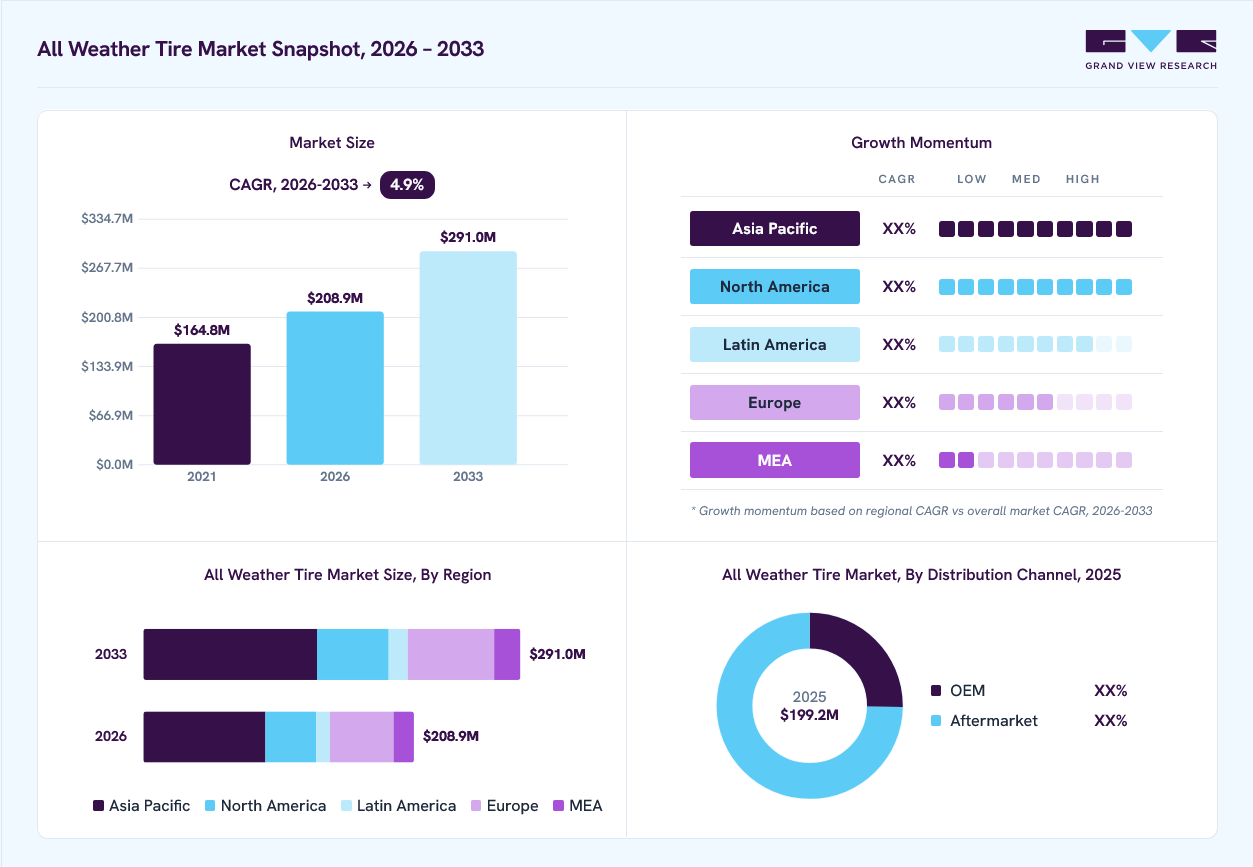 Source: Grand View Research, IR Documents, Primary Interviews, Paid DatabasesTo learn more about this report,
 Download Free Sample Report
Key Market Trends & Insights
- By vehicle type: The passenger segment led the market with the largest revenue share of 70.1% in 2025.
- By distribution channel: The aftermarket segment led the market with the largest revenue share of 74.8% in 2025.
Regional Highlights
- Largest regional market: Asia Pacific (45.0% revenue share, 2025)
- By country: China accounted for dominating revenue share of the Asia Pacific sodium sulfate market in 2025.
Market Size & Forecast
- Market size in 2025: USD 199.2 Billion
- Estimated market size in 2026: USD 208.9 Billion
- Projected market size by 2033: USD 291.0 Billion
- CAGR (2026-2033): 4.9%
Prism AI by Grand View Research Free to tryAsk a question about the all weather tire marketTry asking✓Every figure cited from GVR research Prefer the report? Download free sample →
These tires eliminate the need for seasonal changeovers, offering strong performance in both dry and moderately snowy or wet conditions. With urban consumers seek to reduce downtime and maintenance, all weather tires provide a practical solution.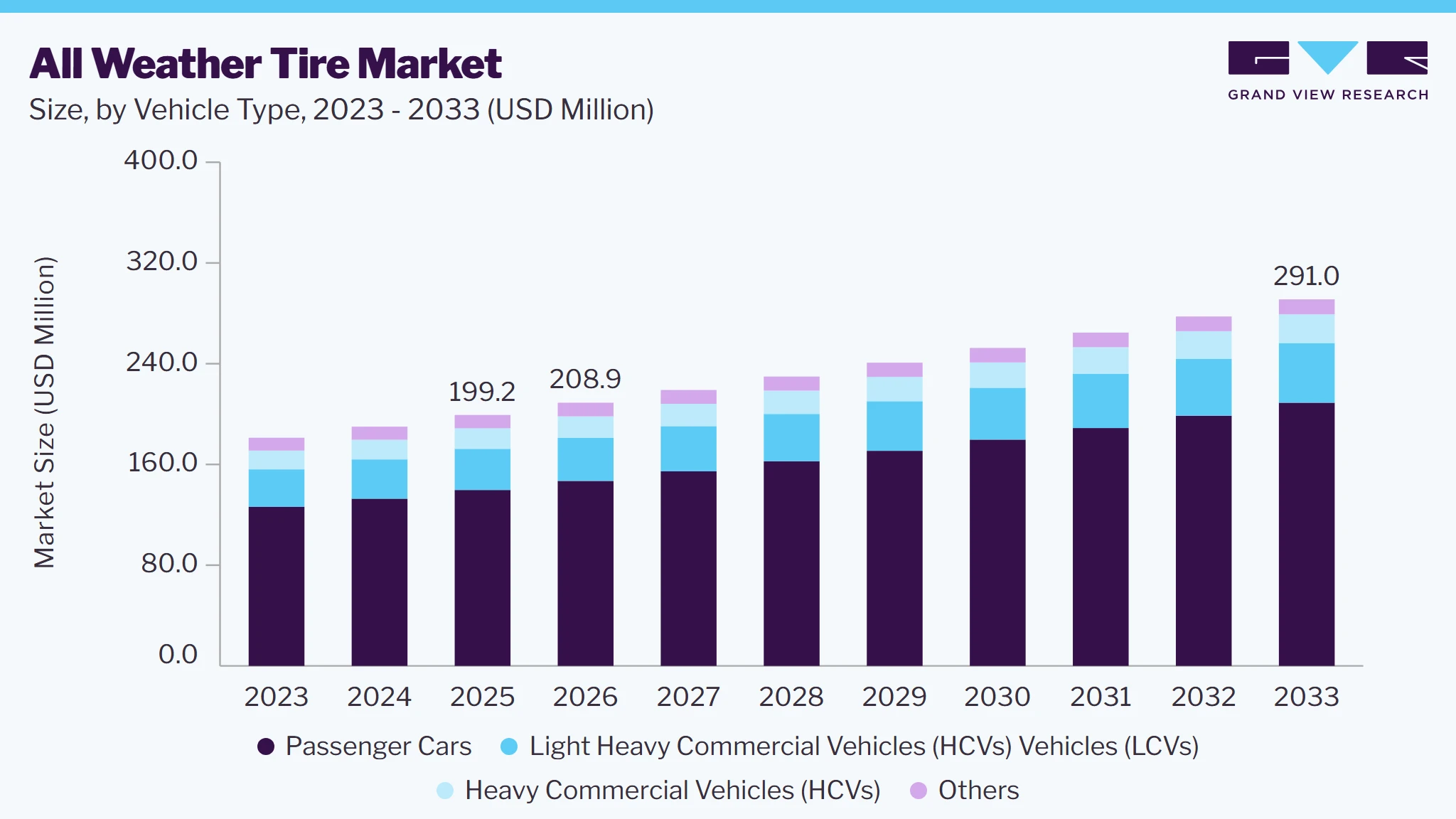 To learn more about this report, Download Free Sample Report
Technological advancements have significantly improved the performance of all-weather tires, narrowing the gap between specialized winter and summer options. Enhanced tread designs, silica-infused compounds, and improved snow traction ratings make them a viable alternative even in variable climates. Increasing awareness about road safety and all-weather preparedness is also driving their popularity.
Despite their versatility, all weather tires may underperform in extreme cold or heat compared to dedicated seasonal tires. This can limit adoption in regions with harsh winters or scorching summers, where specialized tires offer better safety and handling. In addition, their higher upfront cost may deter budget-conscious consumers.
Key tire manufacturers are focusing on R&D to enhance tread life, fuel efficiency, and snow handling capabilities of all weather tires. Marketing strategies are highlighting the long-term value and convenience of these tires, particularly for urban drivers and fleet operators. Companies are also launching region-specific variants to match local road and climate conditions, increasing their appeal.
Market Dynamics
The all-weather tire market is experiencing steady growth due to increasing demand for year-round tire solutions, changing weather patterns, rising vehicle ownership, and growing consumer preference for convenience and cost-effective tire management. All-weather tires are designed to combine the benefits of all-season and winter tires, offering reliable traction, handling, and braking performance across a variety of weather conditions. Their ability to eliminate the need for seasonal tire changes is driving adoption among passenger vehicle owners, SUV users, and fleet operators. In addition, advancements in tread design, rubber compounds, and tire engineering technologies are improving durability, fuel efficiency, and overall driving performance, further supporting market expansion. Growing awareness regarding road safety and the increasing need for versatile mobility solutions are also contributing to the market's growth trajectory.
The rising preference for tires that can deliver dependable performance throughout the year is a major driver of the all-weather tire market. Consumers are increasingly seeking solutions that reduce the inconvenience and costs associated with maintaining separate summer and winter tire sets. All-weather tires offer a practical alternative by providing balanced performance across a wide range of temperatures and road conditions while maintaining suitable winter driving capabilities. Furthermore, growing vehicle ownership, expanding usage of SUVs and crossovers, and increasing awareness of road safety are encouraging consumers to adopt all-weather tires. Regions experiencing moderate winter conditions and variable weather patterns are particularly driving demand, as motorists seek versatile tire solutions that provide traction, comfort, and durability without requiring seasonal replacement.
The all-weather tire market faces challenges due to performance compromises compared to dedicated seasonal tires. Although all-weather tires are designed to deliver balanced year-round performance, they may not provide the same level of traction, braking efficiency, and handling as specialized winter tires in severe snow and ice conditions or summer tires in extreme heat. This can limit adoption among consumers in regions with harsh seasonal weather. Additionally, the use of advanced tread designs and specialized rubber compounds often results in higher manufacturing costs and premium pricing compared to conventional all-season tires, which may discourage price-sensitive buyers and slow market penetration in certain regions.
The growing popularity of SUVs, crossover vehicles, and electric vehicles is creating significant opportunities for the all-weather tire market. Consumers are increasingly seeking versatile tire solutions that offer reliable performance, durability, and safety across diverse weather conditions while reducing the need for seasonal tire changes. At the same time, advancements in tire technologies, including improved tread patterns, silica-enhanced compounds, low rolling resistance designs, and smart tire monitoring systems, are enhancing the performance and efficiency of all-weather tires. Changing weather patterns, increasing focus on vehicle safety, and rising demand for premium replacement tires are further expected to support market growth across both OEM and aftermarket channels.
Market Concentration & Characteristics
The market is moderately concentrated, with global players such as Michelin, Goodyear, and Bridgestone holding significant shares due to strong distribution networks and brand trust. However, regional players and emerging brands are entering the space with competitively priced alternatives, especially in developing countries, leading to healthy competition and innovation.
 To learn more about this report, Download Free Sample Report
The market faces a threat from its substitutes i.e. seasonal tire sets, which offer optimal performance in their respective conditions. In regions with extreme winter or summer climates, consumers often continue to prefer switching between summer and winter tires. However, in moderate climate zones, the practicality of all weather tires makes substitution less likely.
Analyst Perspective
The all-weather tire market is evolving from a niche tire category into a mainstream mobility solution driven by consumer demand for convenience, year-round usability, and enhanced safety across varying weather conditions. Growth opportunities are strongest in passenger cars, SUVs, and crossover vehicles, particularly in regions experiencing moderate winters and unpredictable weather patterns. Advancements in tread design, rubber compounds, and low rolling resistance technologies are improving tire performance and expanding adoption across both OEM and aftermarket channels. Going forward, success will depend not only on tire durability and traction capabilities but also on manufacturers’ ability to deliver fuel efficiency, sustainability, and compatibility with electric vehicles. Companies with strong brand recognition, advanced R&D capabilities, extensive distribution networks, and diversified product portfolios are expected to strengthen their market position and capture long-term growth opportunities.
Vehicle Type Insights
Based on vehicle type, the passenger segment led the market with the largest revenue share of 70.1% in 2025 and is expected to grow at a CAGR of 5.2% over the forecast period. The rise in personal vehicle ownership, particularly in urban centers, is expected to boost the demand for all weather tires in passenger cars. Moreover, consumers prefer a tire that balances performance, safety, and convenience without needing seasonal changes, making all weather options highly attractive in the passenger car segment.
The market for light commercial vehicles (LCVs) is growing at a significant rate from 2025-2030 on account of its usage in last-mile delivery, small logistics, and service industries which require tires that perform consistently across seasons. All weather tires reduce downtime and maintenance for these fleets, providing dependable performance and lowering operational costs, thereby fueling its demand over the coming years.
Distribution Channel Insights
Based on distribution channel, the aftermarket segment led the market with the largest revenue share of 74.8% in 2025 and is expected to grow at a CAGR of 4.7% over the forecast period. The aftermarket segment continues to increase as more vehicle owners seek practical, all-in-one tire solutions. All weather tires appeal to consumers looking to simplify maintenance while ensuring consistent performance throughout the year. Growing awareness of their long-term cost benefits, including fewer replacements and reduced storage needs, supports this shift. In addition, improved safety and traction in variable conditions are making them a preferred choice. This trend is further supported by advancements in tire technology and wider product availability.
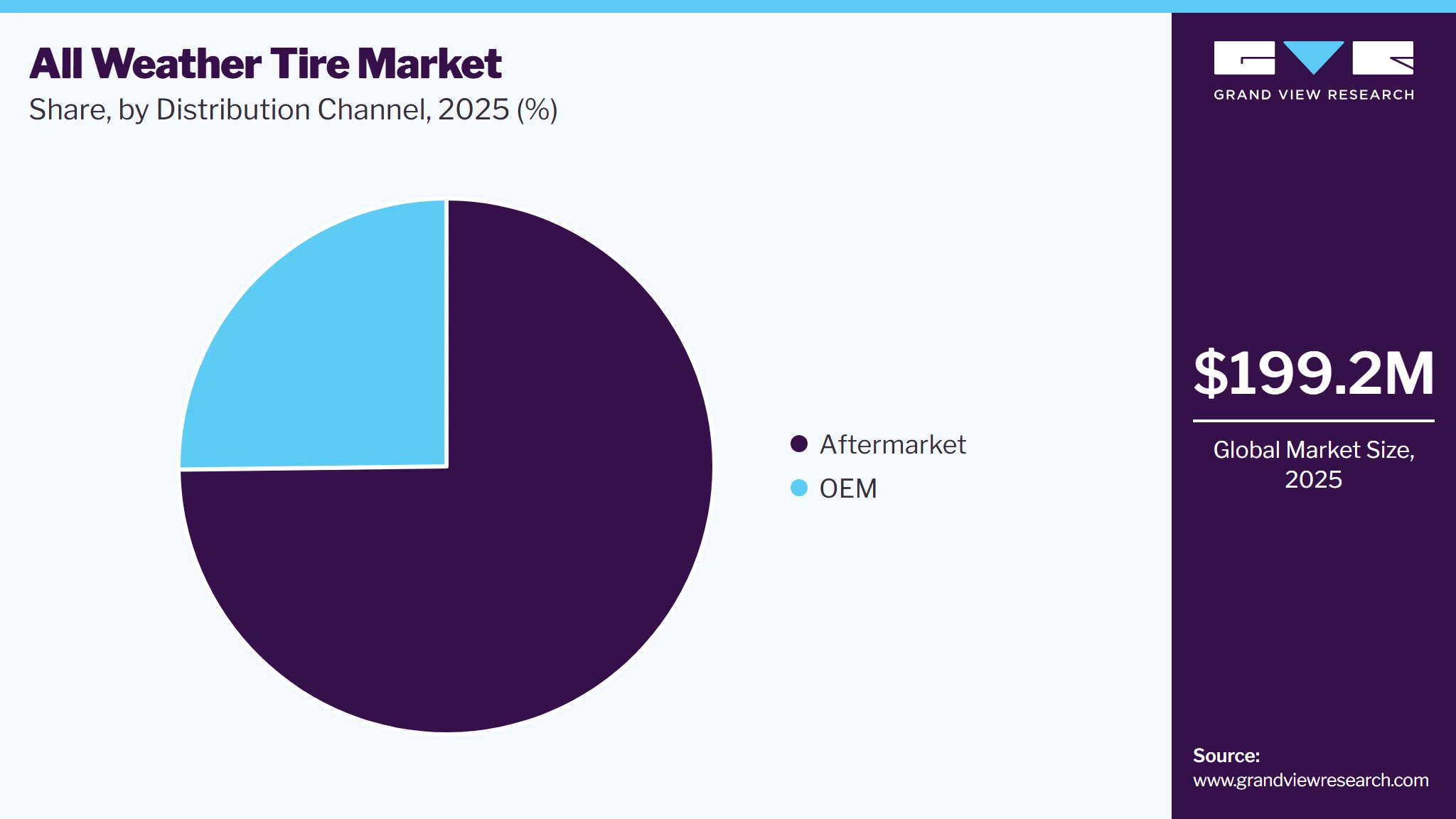 To learn more about this report, Download Free Sample Report
OEMs are increasingly installing all weather tires in new vehicles to cater to consumer demand for year-round usability and convenience. These tires eliminate the need for seasonal replacements, offering better value and practicality. Automakers are using them as a product differentiator to enhance performance and appeal. The trend is especially strong in regions with mixed seasonal conditions. As vehicle production continues to rise globally, the adoption of all weather tires by OEMs is expected to grow. This growth will be fueled by consumer preference for low-maintenance, all-season mobility solutions.
Regional Insights
Asia Pacific dominated the all weather tire market with the largest revenue share of 45.0% in 2025. Asia Pacific is experiencing a surge in vehicle ownership, particularly in nations with mixed or shifting weather conditions. Urbanization, expanding road networks, and infrastructure development are increasing the need for reliable, low-maintenance tires. All weather tires offer a cost-effective and convenient solution for year-round mobility. The growing preference for personal and light commercial vehicles further supports this trend. Demand in the region is expected to grow steadily in the coming years.
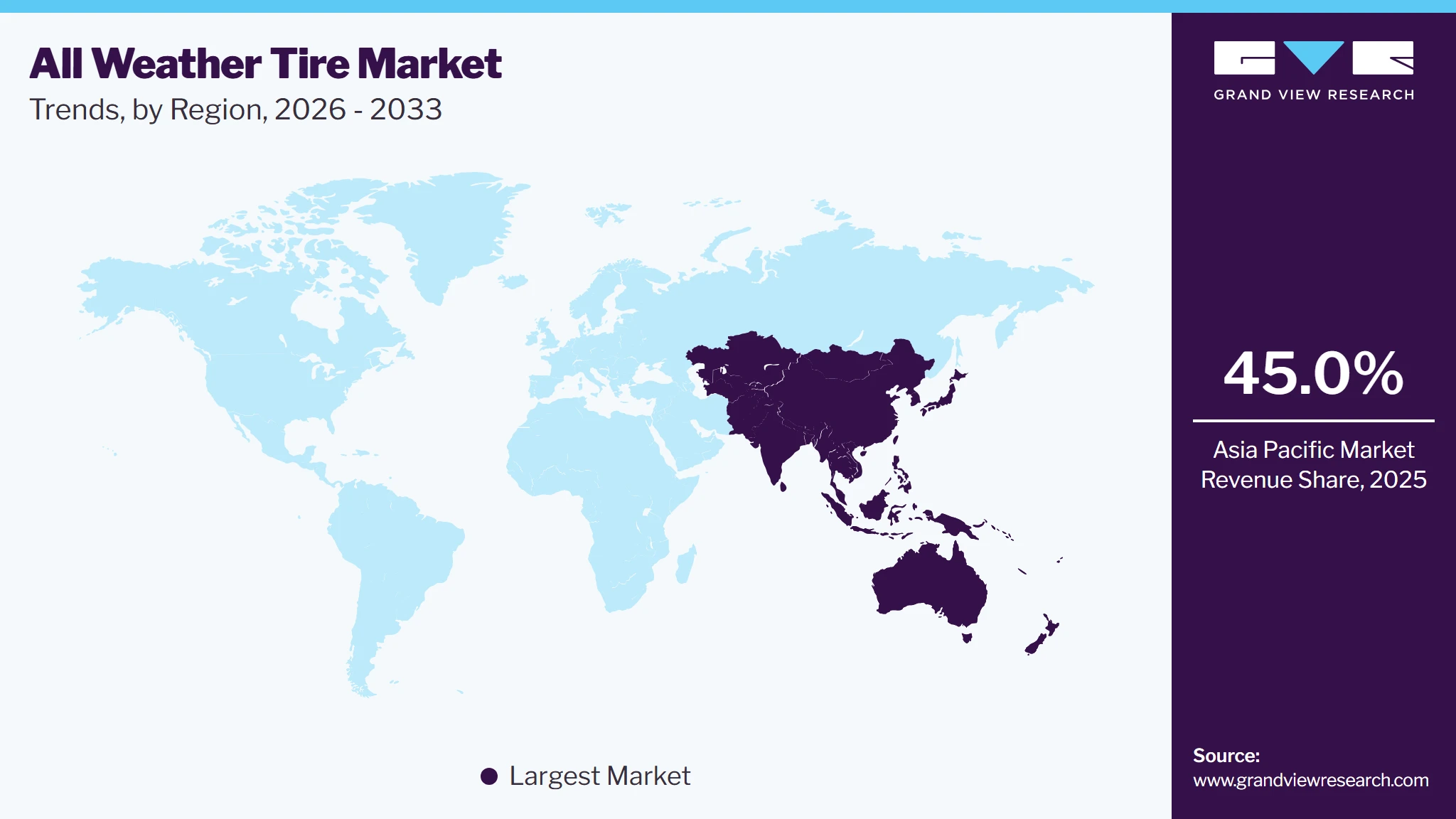 To learn more about this report, Download Free Sample Report
China All Weather Tire Market Trends
The all weather tire market in China held the largest share in the Asia Pacific region in 2025. Rising middle-class incomes and growing vehicle ownership in China are driving interest in all weather tires. Urban and southern regions with mild but erratic winters see high adoption due to the tires' practicality and convenience. Awareness of safety and long-term cost savings is prompting many drivers to shift from seasonal options. Local manufacturers are expanding offerings to cater to this need. As consumer awareness and adoption increase, demand is poised to rise further.
Europe All Weather Tire Market Trends
Europe’s complex mix of climates and stringent winter tire laws are pushing demand for certified all weather tires. These offer a legal and safe alternative for drivers in areas with light to moderate snow. Urban mobility trends and cost-conscious consumers are further driving interest in low-maintenance tire solutions. Leading brands are innovating to meet EU performance and environmental standards. As urbanization grows, the region will likely see increased adoption in the coming years.
Germany to meet both legal and performance needs, winter tire mandates are encouraging many drivers to choose year-round certified models for ease and compliance. Automakers and tire manufacturers are enhancing offerings to align with local expectations for handling and durability. The combination of strong vehicle culture and practical needs is fueling adoption. Demand in Germany is expected to grow consistently going forward.
North America All Weather Tire Market Trends
North America has become a key market for all weather tires due to its widespread seasonal variability. Many drivers prefer avoiding biannual tire swaps, especially in regions where winters are not extreme. The popularity of SUVs and LCVs for both personal and business use also supports tire versatility. Tire brands are expanding certified all season lines to meet this preference. The region’s demand is expected to grow steadily with rising vehicle use and awareness.
In the U.S., demand is climbing in suburban and mixed-climate states where dedicated snow tires are not always necessary. All weather tires are gaining traction among delivery fleets, rideshare services, and everyday commuters who value year-round convenience. Consumers are increasingly prioritizing safety, durability, and cost-efficiency. As OEMs and retailers promote more certified options, adoption is expected to accelerate. The U.S. market is projected to see continued growth in the near future.
Latin America All Weather Tire Market Trends
Latin America’s varied weather patterns and developing road networks are creating demand for adaptable tire solutions. All-weather tires appeal to urban drivers seeking hassle-free, long-lasting products in countries such as Brazil, Chile, and Argentina. Economic considerations and limited infrastructure for seasonal tire changes further favor adoption. The growing middle class and vehicle ownership are key drivers. As product awareness rises, the market is likely to expand steadily.
Middle East & Africa All Weather Tire Market Trends
In Middle Eastern and African regions with moderate climates or varied terrain, all weather tires are gaining ground. While extreme desert heat limits their use in some areas, countries such as South Africa and the UAE show rising demand. Increasing car sales, improving road infrastructure, and the growth of delivery and transport sectors are supporting adoption. Consumers value long-term savings and reduced maintenance. The market is expected to see gradual growth in selected areas.
Key All Weather Tire Company Insights
Some of the key players operating in market include MICHELIN and Bridgestone Corporation.
-
MICHELIN was established in 1889 and is headquartered in Clermont-Ferrand, France. It is a leading tire company engaged in manufacturing and servicing tires for airplanes, earthmovers, automobiles, trucks, and farm equipment. The company has a presence in more than 170 countries and employs over 111,000. MICHELIN has about 67 production plants spread across 17 countries.
-
Bridgestone Corporation is a Japan-based manufacturer of tires for passenger vehicles, motorcycles, aircraft, commercial vehicles, and off-road vehicles. The company also offers various products other than tires. This includes, conveyer belt, rubber track and pad, golf equipment, hydraulic hose, and seismic isolator for buildings. The company has about 130 manufacturing plants and research facilities which are spread across the globe.
Petlas and Apollo Tyres Ltd., are some of the emerging market participants in the market.
-
Petlas was established in 1976 and manufactures tires for passenger cars, off-highway agricultural vehicles, aircraft, and construction/earthmoving vehicles. It produces around 13 million tires per year and employs 4600 people. Furthermore, it has a presence in 130 countries and a stable and large distribution network.
-
Apollo Tyres Ltd. focuses on providing high-performance solutions that enhance traction, durability, and fuel efficiency. The company operates in the agricultural tire market, offering specialized products such as the Farmking and VIRAT series, which cater to the diverse needs of farmers across various terrains. Their innovative designs and robust construction make them a preferred choice among agricultural professionals.
Key All Weather Tire Companies:
The following are the leading companies in the all weather tire market.
-
Michelin
-
Bridgestone Corporation
-
Continental AG
-
Goodyear Tire & Rubber Company
-
Sumitomo Corporation
-
Yokohama Tire Corporation
-
CEAT Ltd.
-
Pirelli & C. S.p.A.
-
Nokian Tyres plc
-
Dunlop
Competitive Benchmarking
Category
Operating Strategies
Competitive Edge
Weakness
Established Players (Michelin, Bridgestone Corporation, Continental AG, Goodyear Tire & Rubber Company, Pirelli & C. S.p.A.)
- Invest in advanced tire technologies, tread designs, and performance-enhancing compounds.
- Maintain strong OEM partnerships and extensive aftermarket distribution networks.
- Expand premium product portfolios and global manufacturing capabilities.
- Focus on sustainability, fuel efficiency, and smart tire innovations.
- Strong global brand recognition and customer loyalty.
- Extensive product portfolios across multiple vehicle segments.
- Large-scale manufacturing capacity and global distribution reach.
- Significant financial resources supporting R&D and expansion.
- Higher operational and production costs.
- Greater exposure to raw material price volatility and regulatory compliance requirements.
- Longer product development and decision-making cycles.
- Lower flexibility in addressing niche regional opportunities.
Emerging & Regional Players (Sumitomo Corporation, Yokohama Tire Corporation, CEAT Ltd., Nokian Tyres plc, Dunlop)
- Focus on regional markets and specialized all-weather tire offerings.
- Compete through value-oriented pricing and product differentiation.
- Strengthen dealer networks and aftermarket presence.
- Develop tires tailored to local climatic and driving conditions.
- Greater flexibility and faster response to changing market needs.
- Strong expertise in specific regional markets and tire categories.
- Competitive pricing and targeted customer engagement.
- Ability to serve niche applications effectively.
- Limited global brand visibility and geographic reach.
- Smaller manufacturing capacity and R&D investments.
- Greater dependence on regional demand and distribution partners.
- Limited access to large-scale OEM contracts compared to market leaders.
Recent Developments
-
In March 2024, Nokian Tyres launched a new all-season tire range for the Central European market, incorporating higher levels of renewable and recycled materials. This initiative aligns with the company’s sustainability goals while meeting growing consumer demand for eco-friendly tire solutions. The move strengthens Nokian’s brand positioning in environmentally conscious markets and is expected to drive sales growth in the all-weather tire segment across Europe.
All Weather Tire Market Report Scope
Report Attribute
Details
Market size in 2025
USD 199.2 billion
Estimated market size in 2026
USD 208.9 billion
Projected market size by 2033
USD 291.0 billion
Growth rate
CAGR of 4.9% from 2026 to 2033
Base year for estimation
2025
Historical data
2021 - 2024
Forecast period
2026 - 2033
Quantitative units
Revenue in USD million/billion and CAGR from 2026 to 2033
Report coverage
Revenue forecast, company ranking, competitive landscape, growth factors, and trends
Segments covered
Vehicle type, distribution channel, region
Regional scope
North America; Europe; Asia Pacific; Latin America; MEA
Country scope
U.S.; Canada; Mexico; UK; Germany; France; Italy; Spain; China; India; Japan; South Korea
Key companies profiled
Michelin; Bridgestone Corporation; Continental AG; Goodyear Tire & Rubber Company; Sumitomo Corporation; Yokohama Tire Corporation; CEAT Ltd.; Pirelli & C. S.p.A.; Nokian Tyres plc; Dunlop
Customization scope
Free report customization (equivalent up to 8 analysts' working days) with purchase. Addition or alteration to country, regional & segment scope.
Pricing and purchase options
Avail customized purchase options to meet your exact research needs. Explore purchase options
Global All Weather Tire Market Report Segmentation
This report forecasts revenue growth at global, regional, and country levels and provides an analysis of the latest industry trends in each of the sub-segments from 2021 to 2033. For this study, Grand View Research has segmented the global all weather tire market report based on vehicle type, distribution channel and region.
 To learn more about this report, Download Free Sample Report
-
Vehicle Type Outlook (Revenue, USD Million, 2021 - 2033)
-
Passenger Cars
-
Light Heavy Commercial Vehicles (LCVs)
-
Heavy Commercial Vehicles (HCVs)
-
Others
-
-
Distribution Channel Outlook (Revenue, USD Million, 2021 - 2033)
-
OEM
-
Aftermarket
-
-
Regional Outlook (Revenue, USD Million, 2021 - 2033)
-
North America
-
U.S.
-
Canada
-
Mexico
-
-
Europe
-
Germany
-
UK
-
France
-
Italy
-
Spain
-
-
Asia Pacific
-
China
-
India
-
Japan
-
South Korea
-
-
Central & South America
-
Middle East & Africa
-
Research Methodology
The all weather tire market figures in this report are based on a proven research process that combines executive interviews with secondary research from proprietary databases, company filings, and recognized regulatory and institutional sources. Market size is built through value-chain sizing - reconciling supply-side and demand-side estimates - and triangulated with bottom-up and top-down approaches. Every estimate passes multiple levels of expert validation before publication, with each all weather tire segment quantified using the revenue-capture definitions in the table below.
Segment Definition
Segment- Vehicle Type
Revenue Capture Definition
Passenger Cars
Revenue generated from the sale of all-weather tires designed for passenger vehicles, including sedans, hatchbacks, coupes, station wagons, crossovers, and sport utility vehicles (SUVs). This segment captures revenues from tire manufacturers and suppliers providing year-round tire solutions that offer balanced performance in dry, wet, and light winter driving conditions for personal transportation applications.
Light Commercial Vehicles (LCVs)
Revenue generated from the sale of all-weather tires used in light commercial vehicles, including pickup trucks, cargo vans, delivery vans, and utility vehicles. This segment captures revenues from manufacturers and suppliers serving commercial fleet operators and vehicle owners requiring versatile tire solutions that support frequent usage, varying load capacities, and reliable performance across changing weather conditions.
Heavy Commercial Vehicles (HCVs)
Revenue generated from the sale of all-weather tires used in heavy commercial vehicles, including trucks, trailers, buses, and other heavy-duty transportation vehicles. This segment captures revenues from tire manufacturers supplying products designed to deliver durability, traction, load-bearing capability, and operational efficiency for long-haul transportation and commercial logistics applications throughout the year.
Others
Revenue generated from the sale of all-weather tires used in vehicle categories not included under passenger cars, LCVs, or HCVs. This segment captures revenues from manufacturers and suppliers serving specialty vehicle applications, including recreational vehicles (RVs), utility vehicles, and other niche transportation segments requiring year-round tire performance.
Segment- Distribution Channel
Revenue Capture Definition
OEM (Original Equipment Manufacturer)
Revenue generated from the sale of all-weather tires supplied directly to vehicle manufacturers for installation on new vehicles during the production process. This segment captures revenues from tire manufacturers serving automotive OEMs through supply agreements and factory-fitment programs for passenger and commercial vehicles.
Aftermarket
Revenue generated from the sale of replacement all-weather tires through distributors, tire dealers, automotive service centers, retailers, and e-commerce channels. This segment captures revenues from consumers and fleet operators purchasing tires for replacement, maintenance, or performance upgrades after the vehicle's initial sale.
Segment
Revenue Capture Definition
OEM (Original Equipment Manufacturer)
Revenue generated from the sale of all-weather tires supplied directly to vehicle manufacturers for installation on new vehicles during the production process. This segment captures revenues from tire manufacturers serving automotive OEMs through supply agreements and factory-fitment programs for passenger and commercial vehicles.
Estimation Model
Layer Name
Key Question
Description
Global Tire Market
What is the total market value of tires sold across vehicle categories and replacement channels?
Establishes the overall addressable market by analyzing demand for tires across passenger cars, light commercial vehicles, heavy commercial vehicles, and specialty vehicles. The analysis includes both OEM and replacement tire sales across major regions and countries.
All-Weather Tire Adoption Analysis
What proportion of total tire demand is represented by all-weather tires?
Filters the broader tire market by evaluating the penetration of all-weather tires relative to all-season, summer, and winter tires. Adoption rates are assessed based on climatic conditions, consumer preferences, vehicle parc, regulatory requirements, and awareness of year-round tire solutions across different markets.
Vehicle-Type and Channel-Level Demand Assessment
How much all-weather tire demand is generated by individual vehicle segments and distribution channels?
Quantifies all-weather tire demand across passenger cars, light commercial vehicles, heavy commercial vehicles, and other vehicle categories. Demand is further analyzed across OEM and aftermarket channels based on vehicle production, vehicle fleet size, tire replacement cycles, annual mileage, and channel-specific adoption rates.
Revenue Realization & Market Sizing
What revenue is generated from all-weather tires sold across vehicle types, channels, and regions?
Converts all-weather tire demand into market revenue using average selling prices, product positioning, rim-size mix, and regional pricing variations. The final market size is calculated by aggregating revenues across vehicle types, distribution channels, and geographic markets to derive the overall all-weather tire market value.
Delivered Customizations
This report has been delivered with the following In-depth customizations
CLIENT REQUEST
CUSTOMIZATION DELIVERED
VALUE ADDS
Market Opportunity Assessment
Evaluated growth opportunities across vehicle categories, distribution channels, and geographic markets, assessing demand drivers such as changing weather patterns, rising vehicle ownership, increasing preference for year-round tire solutions, and growing adoption of SUVs and electric vehicles.
Supports investment and expansion decisions by identifying high-growth segments, emerging demand centers, untapped market opportunities, and long-term revenue potential.
Competitive Landscape
Assessed key tire manufacturers based on product portfolio strength, all-weather tire offerings, technological capabilities, pricing strategies, OEM relationships, geographic presence, and distribution networks.
Help clients benchmark competitors, identify market gaps, evaluate partnership or acquisition opportunities, and strengthen competitive positioning.
Electric Vehicle & Advanced Tire Technology Assessment
Analyzed the adoption of all-weather tires in electric vehicles and the impact of innovations such as low rolling resistance compounds, advanced tread designs, smart tire technologies, and sustainable materials.
Help stakeholders identify technology-driven growth opportunities, future product trends, premiumization potential, and areas for long-term competitive differentiation.
Frequently Asked Questions About This Report
Some of the key players operating in the all weather tire market include Michelin, Bridgestone Corporation, Continental AG, Goodyear Tire & Rubber Company, Sumitomo Corporation, Yokohama Tire Corporation, CEAT Ltd., Pirelli & C. S.p.A., Nokian Tyres plc, Dunlop
The key factors that are driving the all weather tire market is the growing preference for year-round convenience and cost-efficiency among vehicle owners. These tires eliminate the need for seasonal changeovers, offering strong performance in both dry and moderately snowy or wet conditions.
Asia Pacific dominated the airless tires market with a 45% revenue share in 2025.
Asia Pacific is the fastest-growing region in the all weather tire market with a CAGR of 5.2% over the forecast period.
The aftermarket segment led the market with the largest revenue share of 74.8% in 2025.
OEM is the fastest-growing distribution channel segment in the market, with a CAGR of 5.2% over the forecast period.
The global all weather tire market size was estimated at USD 199.2 billion in 2025 and is expected to reach USD 208.9 billion in 2026.
The global all weather tire market is expected to grow at a compound annual growth rate of 4.9% from 2026 to 2033 to reach USD 291.0 billion by 2033.
The passenger cars segment led the market and accounted for the largest revenue share of 70.1% in 2025, driven due to the rise in personal vehicle ownership, particularly in urban centers, is expected to boost the demand for all weather tires in passenger cars.
About the Author(s)
Advanced Interior Materials Research Team
Advanced Materials · Advanced Interior MaterialsThis report was authored by the advanced interior materials research team at Grand View Research - comprising two research analysts, one senior research analyst, and one industry expert - with specialized expertise in the advanced interior materials segment of the advanced materials industry. All findings are based on proprietary advanced materials databases, executive interviews, and regulatory analysis, subject to internal peer review prior to publication.
Last Updated:
Speak to Analyst

Customize this report to your needs - add regions, segments, or data points, with 20% free customization.
Or view our licence options:


ISO 9001:2015 & 27001:2022 Certified
We are GDPR and CCPA compliant! Your transaction & personal information is safe and secure. For more details, please read our privacy policy.


