
- Home
- »
- Advanced Interior Materials
- »
-
Aluminum Composite Materials Market Report, 2026-2033GVR Report cover

Aluminum Composite Materials Market (2026 - 2033)
Size, Share & Trends Analysis Report By Application (Construction, Signage Industry, RV / Trailer Construction Skins), By Region (North America, Asia Pacific, Europe, Central & South America), And Segment Forecasts
Market Size, 2024
$3.4BMarket Estimate, 2026
$3.7BMarket Forecast, 2033
$6.3BCAGR, 2025–2033
8.0%Aluminum Composite Materials Market Summary
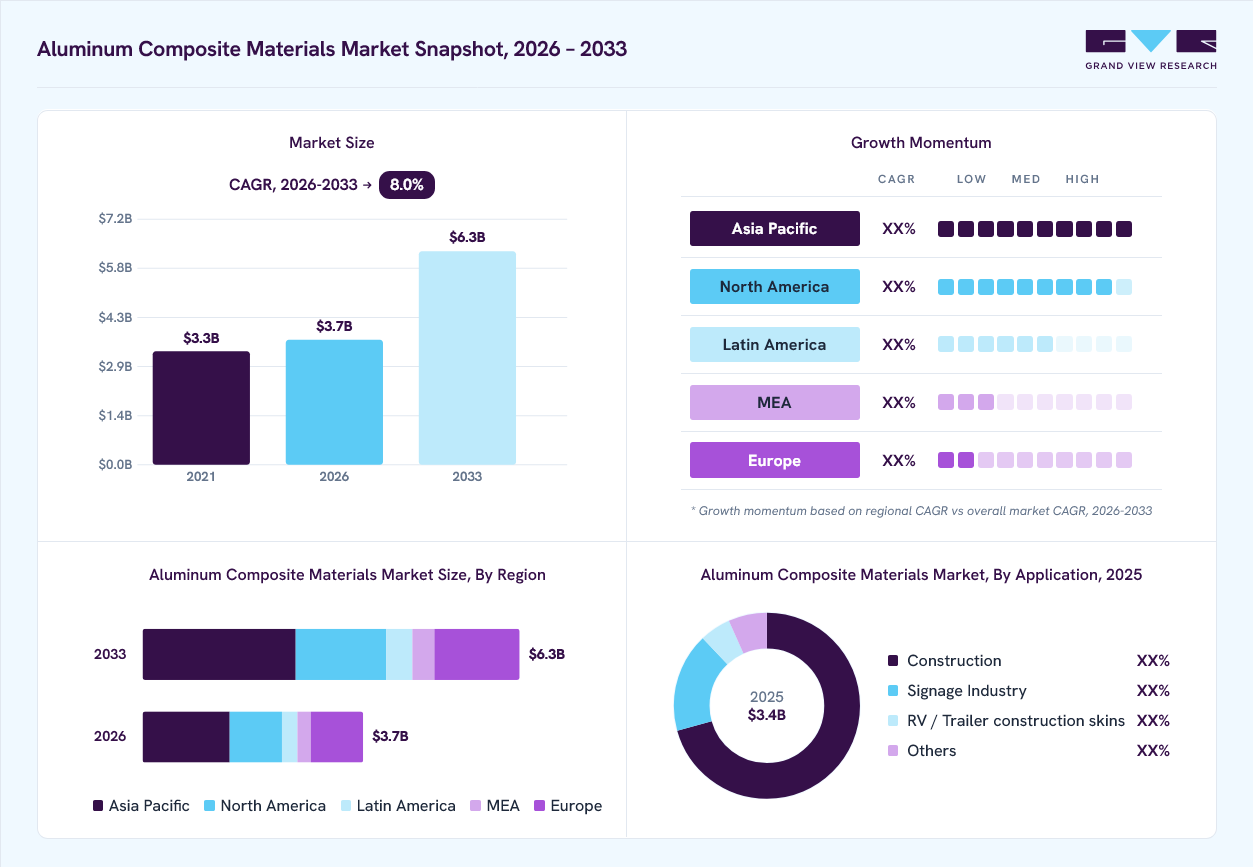
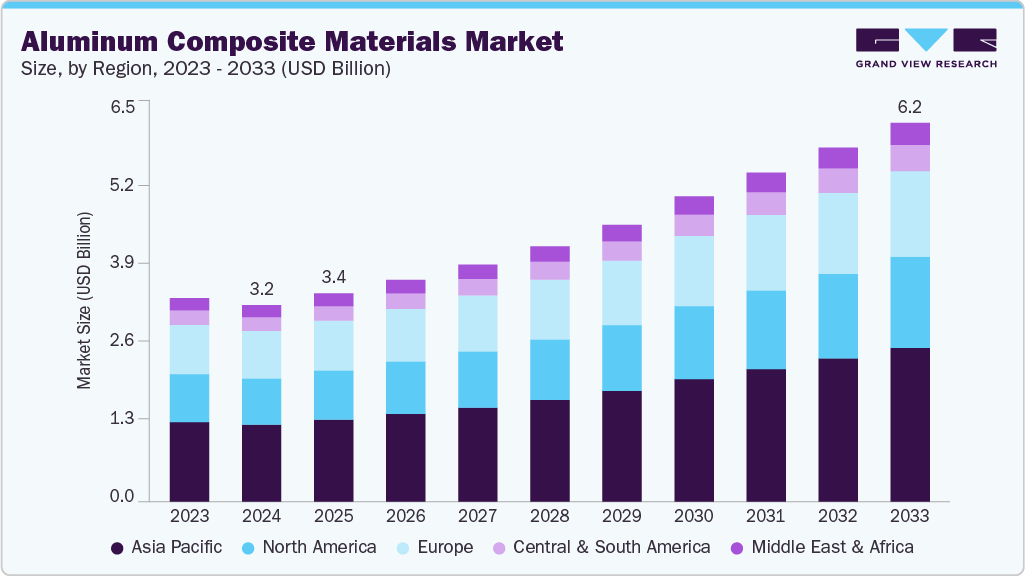
The global aluminum composite materials market size was valued at USD 3.4 billion in 2025 and is projected to grow from USD 3.7 billion in 2026 to USD 6.3 billion by 2033, at a CAGR of 8.0% from 2026 to 2033. The market in Asia Pacific dominated with a revenue share of 39.3% in 2025. The rising demand from the construction and infrastructure sectors drives the growth.
 Source: Grand View Research, IR Documents, Primary Interviews, Paid DatabasesTo learn more about this report,
 Download Free Sample Report
 Key Market Trends & Insights
- By application: Construction segment held the largest market share of 70.6% in 2025.
Regional Highlights
- Largest regional market: Asia Pacific (39.3% revenue share, 2025)
- By country: China held the largest market share in 2025
Market Size & Forecast
- Market size in 2025: USD 3.4 Billion
- Estimated market size in 2026: USD 3.7 Billion
- Projected market size by 2033: USD 6.3 Billion
- CAGR (2026-2033): 8.0%
Three ways to get this report
Buy it, customize it, or ask a question.Ask an Analyst
Analyst response in 1 business day
- AccessReport author, directly
- Reply timeWithin 1 working day
- No sales callDirect answer only
- FormatEmail reply
- CostFree, no cost
Get the Full Report
What the study covers
- FormatsPDF · Excel · Dashboard
- Timeline2025–2033 annual, 2024 base
- Coverage20+ countries, 5 regions
- Companies10+ key players profiled
Customize the Report
20% free customization
- IncludeCountries, segments, points
- TailorTo your product definition
- ExtendDeeper competitor detail
- OrA fully bespoke study
- Turnaround5–10 working days
ACM panels are extensively used in building facades, cladding, partitions, and interior decoration due to their superior durability, lightweight properties, and aesthetic appeal. Rapid urbanization and increasing investments in commercial and residential infrastructure, particularly in emerging economies such as China, India, and Brazil, are further propelling market growth. Additionally, aluminum composite materials (ACMs) offer excellent insulation, fire resistance, and weather durability, making them a preferred choice for modern architectural applications.The expansion of the automotive and transportation industry is contributing significantly to the demand for aluminum composite materials. ACMs are increasingly being utilized in vehicle body panels, signage, and display systems due to their high strength-to-weight ratio and corrosion resistance. As the automotive sector moves towards lightweight materials to enhance fuel efficiency and reduce emissions, ACMs serve as an ideal alternative to traditional metals. The growing trend of electric vehicles (EVs) and demand for innovative, lightweight components also supports the incorporation of ACMs in automotive manufacturing processes.
 To learn more about this report, Download Free Sample Report
 Technological innovations and continuous product development are important drivers for the ACM market. Manufacturers are investing in research to develop high-performance ACMs with improved fire resistance, enhanced thermal insulation, and recyclability. The introduction of nanocomposites and eco-friendly ACMs has expanded the material’s application base while aligning with sustainability goals. Additionally, customization options in terms of color, texture, and finish are attracting consumers from various sectors, including advertising, signage, and retail, thereby fostering the expansion of the aluminum composite materials industry.
Market Dynamics
The aluminum composite materials market is driven by increasing demand for lightweight, durable, and visually appealing materials in construction, transportation, and industrial applications. Rapid urbanization, infrastructure development, and growing adoption of aluminum composite panels for building façades and interiors are supporting market growth. Demand is also rising from the automotive sector due to the need for weight reduction and improved fuel efficiency. While fluctuations in aluminum prices and stringent safety regulations pose challenges, advancements in fire-resistant and sustainable composite solutions continue to create growth opportunities for the market.
The increasing use of aluminum composite materials (ACMs) in the building and construction sector is one of the primary drivers of market growth. ACMs are widely used for exterior cladding, facades, partitions, ceilings, and interior decoration due to their lightweight nature, durability, corrosion resistance, and design flexibility. As urbanization accelerates and governments invest in commercial, residential, and public infrastructure projects, demand for modern building materials that combine aesthetics with performance continues to rise.
The growing focus on energy-efficient and sustainable construction practices is further supporting the adoption of aluminum composite materials. ACMs help improve building performance through enhanced insulation properties while offering low maintenance requirements and long service life. Their availability in a wide range of colors, finishes, and textures also makes them a preferred choice among architects and developers seeking innovative and visually appealing building designs, further driving market expansion.
One of the key restraints affecting the aluminum composite materials market is the increasing scrutiny of fire safety standards, particularly for building facade applications. Certain aluminum composite panels containing combustible core materials have raised safety concerns, leading regulatory authorities in several countries to implement stricter building codes and compliance requirements. These regulations can increase testing, certification, and material costs for manufacturers while limiting the use of some ACM products in construction projects. As a result, compliance challenges and the need for more expensive fire-resistant alternatives may restrain market growth in certain regions.
A significant opportunity for the aluminum composite materials market lies in the increasing demand for sustainable and environmentally friendly construction materials. As governments, developers, and building owners prioritize green building practices and carbon reduction goals, the adoption of recyclable and resource-efficient materials is accelerating. Aluminum composite materials offer advantages such as recyclability, durability, and reduced maintenance requirements, making them well-suited for sustainable construction projects. Furthermore, ongoing innovations in eco-friendly core materials and low-emission manufacturing processes are expected to expand their application across residential, commercial, and infrastructure developments, creating new growth opportunities for market participants.
Market Concentration & Characteristics
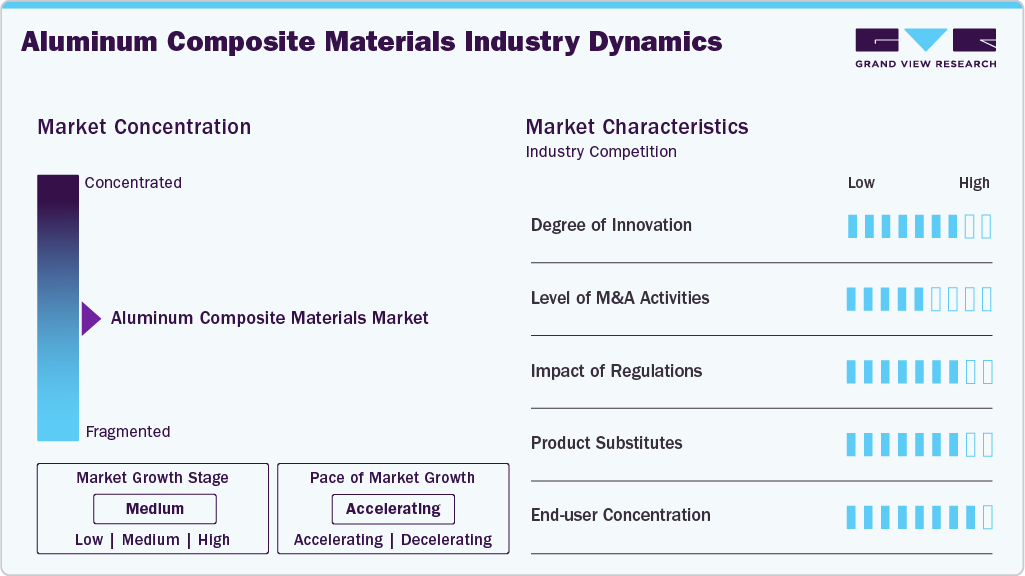
The global aluminum composite materials (ACM) market is moderately concentrated, with a mix of well-established multinational players and regional manufacturers competing based on product quality, innovation, and pricing. The degree of innovation in the market is significant, as companies focus on developing advanced ACM panels with enhanced fire resistance, recyclability, and aesthetic flexibility to meet evolving industry standards and customer preferences. There is a notable level of merger and acquisition activity, with leading firms acquiring smaller companies or forming strategic alliances to expand their geographic presence and technological capabilities. These consolidations aim to strengthen supply chain efficiency, product portfolios, and distribution networks in both developed and emerging markets.
 To learn more about this report, Download Free Sample Report
 Regulations play a critical role in shaping the aluminum composite materials (ACM) industry, especially concerning fire safety, environmental impact, and construction standards. In response, manufacturers are increasingly investing in compliance and certification to meet international building codes and safety norms. While direct product substitutes such as fiber cement panels, high-pressure laminates, and traditional metal sheets exist, they often lack the same balance of cost-efficiency, weight advantage, and design versatility offered by ACMs. The end-use concentration remains high in the building and construction sector, particularly in exterior cladding applications. However, diversification into transportation, signage, and industrial uses is gradually increasing, driven by material adaptability and performance benefits.
Analyst Perspective
The aluminum composite materials market is evolving as a regulation-sensitive and quality-driven segment within the broader construction materials industry, with increasing emphasis on compliance, standardization, and long-term performance reliability. Demand is gradually shifting toward certified, non-combustible, and specification-grade panel systems, largely influenced by tightening fire safety norms and building code enforcement across key markets. Pricing structures continue to be impacted by aluminum input volatility, creating periodic pressure on margins and procurement planning. At the same time, differentiation is moving away from basic cladding functionality toward advanced coating systems, durability, and lifecycle performance. Competitive advantage is increasingly concentrated among integrated manufacturers with strong certification frameworks and quality control capabilities. Smaller and fragmented suppliers face growing challenges in meeting regulatory requirements and scaling consistently across geographies.
Application Insights
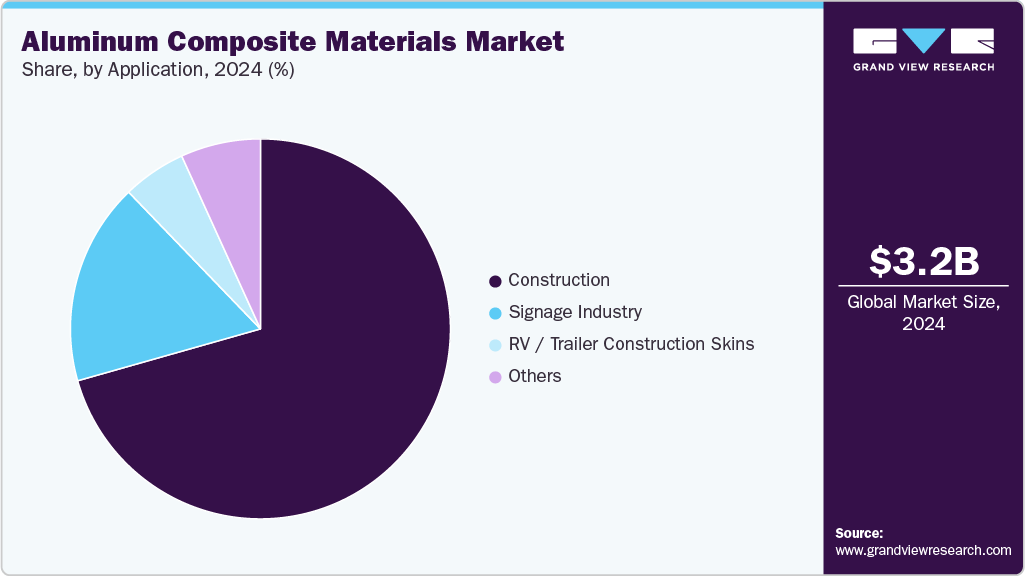
Based on application, the construction segment led the market with the largest revenue share of 70.6% in 2025, driven by the rising demand for durable, lightweight, and aesthetically versatile cladding and façade solutions in modern architecture. ACM panels are widely used in commercial, residential, and institutional buildings due to their superior weather resistance, thermal insulation properties, and ease of installation. The increasing focus on sustainable and energy-efficient construction, along with rapid urbanization and infrastructure development-particularly in emerging economies-is further accelerating the adoption of ACMs. Additionally, strict building safety codes and fire resistance requirements are prompting the use of advanced ACM variants, supporting sustained growth in the construction sector.
The signage industry segment is expected to grow at the fastest CAGR of 8.3% over the forecast period, driven by the material’s excellent printability, smooth surface finish, and durability in varying weather conditions. ACM panels are widely preferred for indoor and outdoor signage, retail displays, wayfinding systems, and advertising boards due to their lightweight structure, corrosion resistance, and ease of fabrication. The growing demand for vibrant, customizable, and long-lasting signage in sectors such as retail, transportation, hospitality, and public infrastructure is fueling the adoption of ACMs. Additionally, advancements in digital printing technology and the rising focus on brand visibility and aesthetics are further propelling market growth in this segment.
Regional Insights
Asia Pacific dominated the aluminum composite materials market with the largest revenue share of 39.3% in 2025. The growth is driven by rapid urbanization, robust infrastructure development, and expanding construction activities across emerging economies such as India, Japan, and Vietnam. The increasing demand for modern architectural solutions in commercial and residential buildings, coupled with government-led smart city initiatives, is boosting the adoption of ACM panels. Additionally, the rising automotive manufacturing sector and the growing use of lightweight materials in transportation further support regional market expansion. The availability of cost-effective raw materials and manufacturing capabilities also positions Asia Pacific as a key hub for ACM production.
 To learn more about this report, Download Free Sample Report
 China Aluminum Composite Materials Market Trends
The aluminum composite materials market in China held the largest share in the Asia Pacific region in 2025, due to its massive construction sector and dominance in manufacturing. Strong government investment in real estate, transportation infrastructure, and urban development projects continues to fuel demand for ACMs. Moreover, domestic manufacturers benefit from advanced production technologies and economies of scale, allowing for a wide variety of product offerings. Environmental regulations have also led to a shift toward eco-friendly and fire-resistant ACM variants, further driving innovation and adoption across public and private projects.
North America Aluminum Composite Materials Market Trends
In North America, the aluminum composite materials industry’s growth is primarily driven by the renovation and modernization of aging infrastructure, alongside growing commercial construction activities. ACMs are increasingly preferred for exterior cladding, signage, and corporate identity applications due to their aesthetic versatility and durability. Technological advancements and strict fire safety regulations have led to the adoption of high-performance, code-compliant ACM products. Additionally, the push for sustainable construction practices has increased the demand for recyclable and energy-efficient materials, supporting the growth of ACM usage across various sectors.
The U.S. aluminum composite materials industry benefits from a well-established construction sector, with a particular emphasis on commercial and institutional buildings. The rise in demand for energy-efficient and sustainable building materials, coupled with regulatory compliance for fire-rated and environmentally friendly products, is accelerating the use of ACM panels. Moreover, the presence of leading manufacturers, investments in R&D, and widespread adoption in the signage and automotive sectors contribute to the country's sustained market growth. The shift toward green building certifications such as LEED also fosters the increased integration of ACMs in architectural projects.
Europe Aluminum Composite Materials Market Trends
Stringent environmental regulations, energy efficiency standards, and a strong focus on sustainable building practices drive the Europe aluminum composite materials industry’s growth. Demand for ACM panels is rising across commercial, residential, and industrial applications, particularly in façade systems and ventilated cladding. Countries in Western Europe are investing in modernizing existing infrastructure while adhering to strict fire safety and insulation standards, which is bolstering the demand for fire-rated and recyclable ACM solutions. Additionally, technological innovation and growing trends in modular construction are supporting the market’s expansion across the region.
The Germany aluminum composite materials market is expected to grow over the forecast period. Germany, as a leading construction and manufacturing hub in Europe, plays a pivotal role in driving the regional ACM market growth. The country’s emphasis on energy-efficient buildings and adherence to rigorous fire protection and sustainability standards are key growth drivers. The integration of ACMs in green building projects, coupled with increasing use in transportation and industrial applications, reflects the growing versatility of these materials. Additionally, strong innovation capabilities and the presence of several global and regional manufacturers enable the development of advanced ACM products tailored to evolving architectural and environmental requirements.
Latin America Aluminum Composite Materials Market Trends
The Latin American aluminum composite materials industry is growing steadily, supported by urban development and infrastructure modernization in countries like Brazil, Mexico, and Chile. Economic recovery and increasing foreign investments in real estate and commercial construction are enhancing the demand for ACM panels. The material's cost-effectiveness, weather resistance, and aesthetic flexibility make it suitable for the region’s diverse climatic and design needs. While the market faces challenges such as limited local production and regulatory inconsistencies, rising awareness about modern construction materials and the demand for energy-efficient buildings offer promising growth prospects.
Middle East & Africa Aluminum Composite Materials Market Trends
The Middle East & Africa aluminum composite materials industry’s growth is driven by large-scale infrastructure and construction projects, particularly in the Gulf Cooperation Council (GCC) countries. Ambitious urban development programs, tourism-driven real estate growth, and government investments in smart cities are fueling demand for modern, durable, and fire-resistant façade materials. ACMs are extensively used in high-rise buildings and commercial complexes due to their design versatility and performance in harsh climates. Additionally, the focus on sustainable construction and the integration of green building practices are expected to further drive ACM adoption across the region.
Key Aluminum Composite Materials Company Insights
Some of the key players operating in the market include 3A Composites GmbH and Arconic Corporation:
-
3A Composites GmbH is a Germany-based company known for its premium aluminum composite panels under brand names such as ALUCOBOND. Its product offerings cater to architecture, transportation, and display sectors, with panels featuring fire resistance, weather durability, and design flexibility.
-
Arconic Corporation, headquartered in the United States, offers high-performance aluminum sheet and coil products, including composite panels used in building façades and architectural structures. Its Reynobond aluminum composite material is widely used for exterior cladding and signage applications.
Alstrong Enterprises India Pvt. Ltd and Mitsubishi Chemical Corporation are some of the emerging participants in the market.
-
Alstrong Enterprises India Pvt. Ltd. is a leading Indian manufacturer specializing in aluminum composite panels for the architectural and interior design markets. The company provides ACPs in a variety of colors, textures, and finishes, tailored for exterior facades, partitions, and false ceilings.
-
Mitsubishi Chemical Corporation, through its ALPOLIC brand, delivers a broad range of aluminum composite panels for use in high-end architecture and signage. The company's offerings are known for their superior surface flatness, coating durability, and fire-retardant core technologies.
Key Aluminum Composite Materials Companies:
The following key companies have been profiled for this study on the aluminum composite materials market.
-
3A Composites GmbH
-
Arconic Corporation
-
Alstrong Enterprises India Pvt. Ltd.
-
Mitsubishi Chemical Corporation
-
Alubond U.S.A. (a brand of Mulk Holdings International)
-
Yaret Industrial Group Co., Ltd.
-
Shanghai Huayuan New Composite Materials Co., Ltd.
-
Jyi Shyang Industrial Co., Ltd.
-
Interplast Co. Ltd.
Competitive Benchmarking
Category
Operating Strategies
Competitive Edge
Weakness
Established Players (3A Composites GmbH, Arconic Corporation, Mitsubishi Chemical Corporation, Alubond U.S.A. (a brand of Mulk Holdings International))
- Focus on continuous product innovation, including fire-resistant, sustainable, and high-performance aluminum composite materials for premium architectural and industrial applications.
- Leverage global manufacturing networks and established distribution channels to serve large-scale projects and maintain market leadership across regions.
- Strong brand recognition, extensive technical expertise, and proven track records in delivering high-quality ACM solutions for complex construction projects.
- Significant financial resources and R&D capabilities enable faster development of advanced materials and compliance with evolving building regulations.
- Higher operating and manufacturing costs can reduce pricing flexibility in highly competitive markets.
- Large organizational structures may slow decision-making and responsiveness to rapidly changing regional market requirements.
Emerging Players (Alstrong Enterprises India Pvt. Ltd., Yaret Industrial Group Co., Ltd., Shanghai Huayuan New Composite Materials Co., Ltd., and Jyi Shyang Industrial Co., Ltd.)
- Concentrate on expanding production capacity and strengthening regional distribution networks to increase market penetration.
- Compete through cost-effective product offerings while gradually enhancing product quality and application diversity.
- Greater operational flexibility allows quicker adaptation to local customer requirements and changing market trends.
- Competitive pricing strategies help capture market share in price-sensitive construction and infrastructure sectors.
- Limited global presence and brand recognition compared to established multinational competitors.
- Lower investment capacity in advanced R&D and certification programs may restrict participation in premium and highly regulated projects.
Recent Developments
-
In March 2024, Kyocera Corporation revealed its intention to expand the production capacity of its fine ceramics operations at its Kagoshima facility in Japan. The expansion aims to enhance the company’s ability to produce advanced ceramic components used in 5G telecommunications and semiconductor manufacturing equipment.
Aluminum Composite Materials Market Report Scope
Report Attribute
Details
Market size in 2025
USD 3.4 billion
Estimated market size in 2026
USD 3.7 billion
Projected market size by 2033
USD 6.3 billion
Growth rate
CAGR of 8.0% from 2026 to 2033
Base year for estimation
2025
Historical data
2021 - 2024
Forecast period
2026 - 2033
Quantitative units
Revenue in USD million/billion and CAGR from 2026 to 2033
Report coverage
Revenue forecast, company ranking, competitive landscape, growth factors, and trends
Segments covered
Application, region
Regional scope
North America; Europe; Asia Pacific; Latin America; MEA
Country scope
U.S.; Canada; Mexico; Germany; UK; France; Italy; Spain; China; Japan; India; South Korea; Australia; Brazil; Argentina; Saudi Arabia; South Africa; UAE
Key companies profiled
3A Composites GmbH; Arconic Corporation; Alstrong Enterprises India Pvt. Ltd.; Mitsubishi Chemical Corporation; Alubond U.S.A.; Yaret Industrial Group Co., Ltd.; Shanghai Huayuan New Composite Materials Co., Ltd.; Jyi Shyang Industrial Co., Ltd.; Interplast Co., Ltd.
Customization scope
Free report customization (equivalent up to 8 analysts' working days) with purchase. Addition or alteration to country, regional & segment scope.
Pricing and purchase options
Avail customized purchase options to meet your exact research needs. Explore purchase options
Global Aluminum Composite Materials Market Report Segmentation
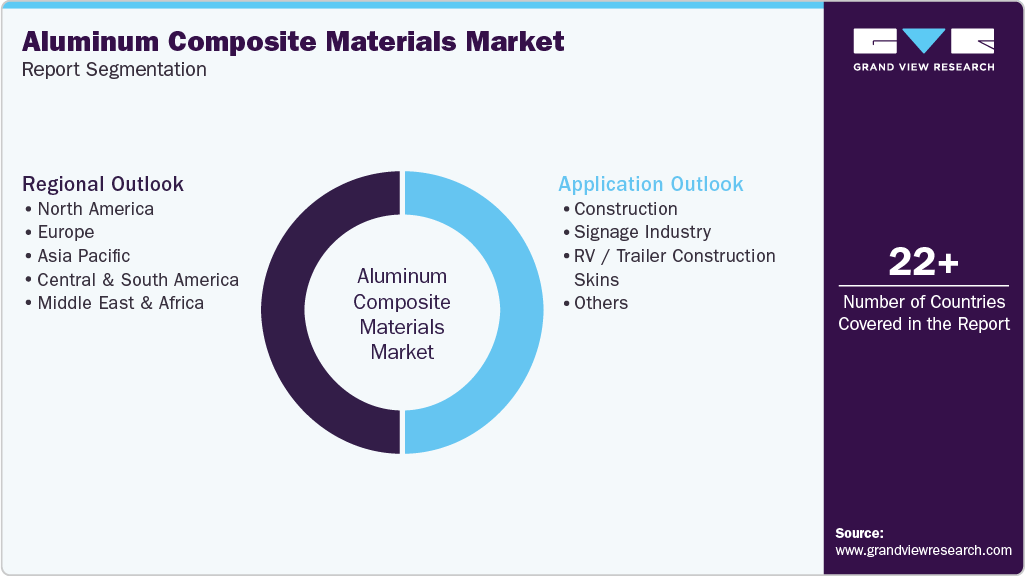
This report forecasts volume & revenue growth at the global, regional, and country levels and provides an analysis of the industry trends in each of the segments from 2021 to 2033. For this study, Grand View Research has segmented the aluminum composite materials market report based on application and region:
 To learn more about this report, Download Free Sample Report
 -
Application Outlook (Volume, Million Units; Revenue, USD Million, 2021 - 2033)
-
Construction
-
Signage Industry
-
RV / Trailer construction skins
-
Others
-
-
Regional Outlook (Volume, Million Units; Revenue, USD Million, 2021 - 2033)
-
North America
-
U.S.
-
Canada
-
Mexico
-
-
Europe
-
Germany
-
UK
-
France
-
Italy
-
Spain
-
-
Asia Pacific
-
China
-
South Korea
-
India
-
Japan
-
-
Central & South America
-
Middle East & Africa
-
Research Methodology
The aluminum composite materials market figures in this report are based on a proven research process that combines executive interviews with secondary research from proprietary databases, company filings, and recognized regulatory and institutional sources. Market size is built through value-chain sizing - reconciling supply-side and demand-side estimates - and triangulated with bottom-up and top-down approaches. Every estimate passes multiple levels of expert validation before publication, with each aluminum composite materials segment quantified using the revenue-capture definitions in the table below.
Segment Definition
Segment - Application
Revenue capture definition
Construction
Revenue generated from the sale of aluminum composite materials used in building façades, exterior cladding, interior wall panels, ceilings, partitions, and architectural applications. This segment includes ACM products utilized across residential, commercial, institutional, and infrastructure construction projects.
Signage Industry
Revenue generated from the sale of aluminum composite materials used in indoor and outdoor signage applications. This segment includes ACM sheets utilized for advertising boards, retail displays, wayfinding signs, corporate branding, billboards, and digital signage structures due to their lightweight, durability, and printability.
RV / Trailer Construction Skins
Revenue generated from the sale of aluminum composite materials used as exterior and interior skins for recreational vehicles (RVs), trailers, motorhomes, and specialty transport units. This segment includes ACM products designed to provide lightweight construction, weather resistance, and enhanced aesthetics.
Others
Revenue generated from the sale of aluminum composite materials used in applications outside construction, signage, and RV/trailer manufacturing. This segment includes industrial equipment panels, transportation components, furniture, exhibition structures, and other specialty applications.
Segment - Construction Application
Revenue capture definition
Healthcare
Revenue generated from the sale of aluminum composite materials used in hospitals, clinics, diagnostic centers, laboratories, and healthcare facilities. This segment includes ACM products utilized for façades, interior wall systems, ceilings, and decorative architectural elements.
Educational
Revenue generated from the sale of aluminum composite materials used in schools, colleges, universities, research institutes, and training centers. This segment includes ACM products applied in building exteriors, interior finishes, signage, and renovation projects.
Residential
Revenue generated from the sale of aluminum composite materials used in single-family homes, apartments, condominiums, and residential complexes. This segment includes ACM products utilized for exterior cladding, balconies, interior decoration, and façade enhancement.
Commercial Buildings
Revenue generated from the sale of aluminum composite materials used in office buildings, retail centers, shopping malls, mixed-use developments, and business complexes. This segment includes ACM products employed for modern architectural façades, interior wall systems, and branding elements.
Hospitality
Revenue generated from the sale of aluminum composite materials used in hotels, resorts, restaurants, convention centers, and entertainment venues. This segment includes ACM products applied in exterior cladding, interior décor, ceilings, and aesthetic architectural features.
Infrastructure
Revenue generated from the sale of aluminum composite materials used in airports, railway stations, metro systems, bridges, tunnels, and other public infrastructure projects. This segment includes ACM products utilized for cladding, wall systems, signage, and structural architectural applications.
Government
Revenue generated from the sale of aluminum composite materials used in government offices, public administration buildings, defense facilities, and civic institutions. This segment includes ACM products applied in new construction, modernization, and renovation projects.
Others
Revenue generated from the sale of aluminum composite materials used in construction applications not covered under healthcare, educational, residential, commercial, hospitality, infrastructure, or government sectors. This segment includes religious buildings, cultural centers, sports facilities, and other specialized structures.
Estimation Model
Layer Name
Key Question
Description
Construction & Industrial Demand Base Layer
What forms the demand base?
Identify global consumption volumes of aluminum composite materials across key end-use applications including construction, signage, transportation, RV/trailer manufacturing, industrial equipment, and architectural applications. This layer establishes the total addressable demand for aluminum composite materials that drives market growth.
Application Penetration Layer
Where are aluminum composite materials utilized?
Estimate the penetration of aluminum composite materials across major applications and construction sectors. Assess adoption levels in residential, commercial, healthcare, educational, hospitality, infrastructure, government, and signage projects, considering factors such as durability, aesthetics, cost-effectiveness, and building design requirements.
Installation & Usage Intensity Layer
How much aluminum composite material is consumed?
Analyze average material consumption per project, façade coverage area, renovation activity, infrastructure investments, and construction intensity across regions. Usage intensity is influenced by building size, architectural complexity, climate conditions, regulatory standards, and the growing preference for lightweight building materials.
Revenue Layer
How is market revenue generated?
Market revenue is quantified through the sale of aluminum composite panels and related composite material solutions used in construction, signage, transportation, and industrial applications. Revenue is generated from demand for exterior cladding, interior architectural systems, advertising displays, vehicle body panels, and specialty applications, supported by ongoing urbanization, infrastructure development, and renovation activities worldwide.
Delivered Customizations
This report has been delivered with the following In-depth customizations
Client Request
Customization Delivered
Value Adds
Regional Segmentation Analysis
Detailed market sizing, growth forecasts, and demand analysis across North America, Europe, Asia Pacific, Central & South America, and Middle East & Africa, with country-level insights for major aluminum composite materials markets.
Enabled identification of high-growth regions, regional demand trends, regulatory influences, and investment opportunities across key geographies.
Cross-Segmentation Analysis
Comprehensive market analysis by Application (Construction, Signage Industry, RV/Trailer Construction Skins, and Others), along with detailed assessment of Construction Applications including Healthcare, Educational, Residential, Commercial Buildings, Hospitality, Infrastructure, Government, and Others across all major regions.
Provided deeper insights into the most lucrative application-end use combinations, helping stakeholders identify high-potential revenue streams and target customer segments.
Opportunity Assessment
Evaluation of emerging growth opportunities across construction applications such as healthcare, educational, residential, commercial buildings, hospitality, infrastructure, and government projects, along with opportunities in signage and RV/trailer construction skin applications.
Enabled prioritization of high-growth segments, strategic investment planning, and identification of untapped market opportunities driven by infrastructure development and modernization projects.
Frequently Asked Questions About This Report
Asia Pacific dominated the aluminum composite materials market with a 39.3% revenue share in 2025.
Asia Pacific is the fastest-growing region in the aluminum composite materials market with a CAGR of 8.4% over the forecast period.
The signage industry is the fastest-growing application segment in the aluminum composite materials market with a CAGR of 8.3% over the forecast period.
China led the Asia Pacific aluminum composite materials market in 2025.
Key factors driving the aluminum composite materials market include growing construction and infrastructure activities, rising demand for lightweight and durable materials, increasing adoption of modern façade and cladding systems, rapid urbanization, and advancements in fire-resistant and sustainable composite technologies.
The construction segment led the aluminum composite materials market with a 70.6% revenue share in 2025.
Some key players operating in the aluminum composite materials market include 3A Composites GmbH, Arconic Corporation, Alstrong Enterprises India Pvt. Ltd., Mitsubishi Chemical Corporation, Alubond U.S.A., Yaret Industrial Group Co., Ltd., Shanghai Huayuan New Composite Materials Co., Ltd., Jyi Shyang Industrial Co., Ltd., Interplast Co. Ltd.
The global aluminum composite materials market size was valued at USD 3.4 billion in 2025 and is estimated at USD 3.7 billion for 2026.
The global aluminum composite materials market is expected to grow at a CAGR of 8.0% from 2026 to 2033, reaching USD 6.3 billion by 2033.
About the Author(s)
Advanced Interior Materials Research Team
Advanced Materials · Advanced Interior MaterialsThis report was authored by the advanced interior materials research team at Grand View Research - comprising two research analysts, one senior research analyst, and one industry expert - with specialized expertise in the advanced interior materials segment of the advanced materials industry. All findings are based on proprietary advanced materials databases, executive interviews, and regulatory analysis, subject to internal peer review prior to publication.
Last Updated:
Speak to Analyst

Customize this report to your needs - add regions, segments, or data points, with 20% free customization.
Or view our licence options:


ISO 9001:2015 & 27001:2022 Certified
We are GDPR and CCPA compliant! Your transaction & personal information is safe and secure. For more details, please read our privacy policy.


