
- Home
- »
- Pharmaceuticals
- »
-
Analgesics Market Size, Share & Growth Report, 2026-2033GVR Report cover
![Analgesics Market (2023 - 2033)Report]()
Analgesics Market (2023 - 2033)
Size, Share & Trends Analysis Report By Drug Type (Opioid, Non-opioid, Compound Medication), By Route of Administration (Oral, Parenteral, Transdermal), By Application, By Distribution Channel, By Region, And Segment Forecasts
Market Size, 2025
$45.8BMarket Estimate, 2026
$48.6BMarket Forecast, 2033
$73.0BCAGR, 2026–2033
6.0%Analgesics Market Summary
The global analgesics market size was valued at USD 45.8 billion in 2025 and is projected to grow from USD 48.6 billion in 2026 to USD 73.0 billion in 2033, at a CAGR of 6.0% from 2026 to 2033. North America dominated the global market, accounting for the largest revenue share of 32.0%% in 2025. Increasing incidences of arthritis & osteoarthritis, neuropathic diseases, and cancer are expected to boost market growth during the forecast period.
Key Market Trends & Insights
- By drug type: The non-opioid segment held the largest market share of over 52.0% in 2025.
- By route of administration: The oral segment held the largest market share of approximately 48.0% in 2025.
- By application: The surgical & trauma segment held the largest market share of around 23% in 2025.
- By distribution channel: The retail pharmacies segment held the largest market share of approximately 51.0% in 2025.
Regional Highlights
- Largest regional market: North America (32.0% revenue share, 2025)
- Fastest-growing regional market: Asia Pacific (highest CAGR, 2026-2033)
Market Size & Forecast
- Market size in 2025: USD 45.8 Billion
- Estimated market size in 2026: USD 48.6 Billion
- Projected market size by 2033: USD 73.0 Billion
- CAGR (2026-2033): 6.0%
Three ways to get this report
Buy it, customize it, or ask a question.Ask an Analyst
A direct answer, usually in 1 working day
- AccessReport author, directly
- Reply timeWithin 1 working day
- No sales callDirect answer only
- FormatEmail reply
- CostFree, no cost
Get the Full Report
What the study covers
- FormatsPDF · Excel · Dashboard
- Timeline2026–2033 annual, 2025 base
- Coverage20+ countries, 5 regions
- Companies10+ key players profiled
Customize the Report
20% free customization
- IncludeCountries, segments, points
- TailorTo your product definition
- ExtendDeeper competitor detail
- OrA fully bespoke study
- Turnaround5–10 working days
The growing geriatric population worldwide, which is more susceptible to chronic pain conditions and musculoskeletal disorders, is contributing significantly to the increasing demand for analgesic medications. The increasing efforts of pharmaceutical companies to develop novel analgesics to manage pain and related disorders are expected to offer lucrative growth opportunities. For instance, in January 2025, the U.S. Food and Drug Administration (FDA) approved Journavx, developed by Vertex Pharmaceuticals, making it the first new class of pain medicine. The drug is a first-in-class, non-opioid NaV1.8 pain-signal inhibitor designed for the treatment of moderate-to-severe acute pain, representing a major advancement in pain management therapies. The increasing prevalence of targeted diseases is expected to drive market growth over the forecast period. For instance, according to the U.S. Centers for Disease Control and Prevention (CDC), approximately 21.3% of U.S. adults aged 18 years and older had diagnosed arthritis in 2024. It is more prevalent in women than in men, and its prevalence increases with age.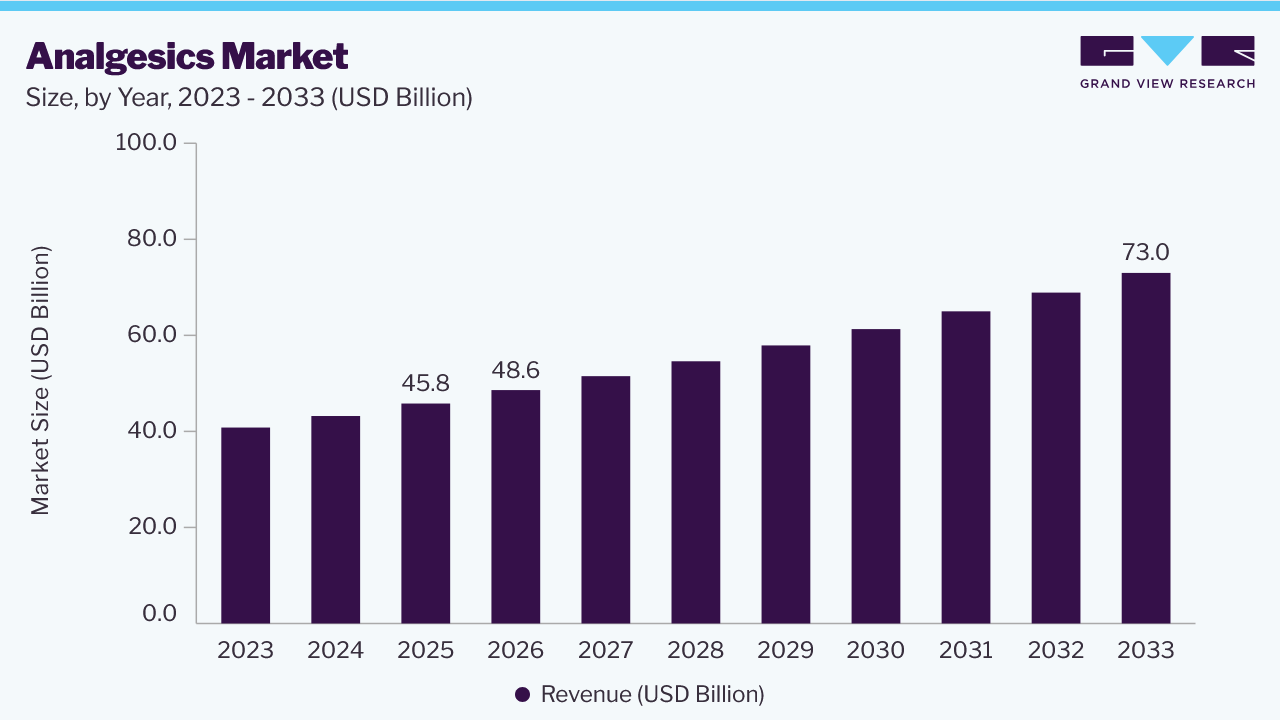
Osteoarthritis is a leading form of arthritis; fibromyalgia and gout are some of the common rheumatic conditions. Common analgesics used to manage arthritis include celecoxib, naproxen, ibuprofen, diclofenac, and etodolac, among others. Thus, the surge in arthritis prevalence is a major driver of the industry.
The increasing number of surgeries worldwide is likely to drive demand for analgesics in the coming years. For instance, according to the NCBI, around 310 million major surgeries are reported annually; out of these, 40-50 million are performed in the U.S. and around 20 million in Europe. In addition, according to the Australian Commission on Safety and Quality in Health Care, more than 2.5 million people undergo surgeries in private and public hospitals in Australia annually.
The increasing demand for safe and effective drugs for pain management is pushing regulatory bodies to approve novel, safe analgesic preparations. Ongoing R&D activities have aimed to develop effective pain relief drugs that have a low risk of addiction and overdose. For instance, in May 2026, the U.S. FDA accepted the New Drug Application (NDA) of fast-acting meloxicam by Viatris for the treatment of moderate-to-severe acute pain. Such regulatory advancements and the growing pipeline of non-opioid analgesics are expected to expand treatment options, improve patient outcomes, and support the long-term growth of the market.
The broad range of pain-related indications and the availability of multiple analgesic classes continue to support sustained demand for pain-relief therapies worldwide. For instance, according to the U.S. National Library of Medicine's MedlinePlus, analgesics remain among the most widely used medications for the management of headaches, arthritis, muscle pain, menstrual pain, and other acute and chronic pain conditions.Market Dynamics
The industry is expanding as the prevalence of acute and chronic pain continues to rise worldwide. Analgesics are widely used for the management of pain associated with arthritis, musculoskeletal disorders, cancer, postoperative recovery, migraine, neuropathic disorders, and sports injuries.Market growth is driven by rising awareness of pain management, increased healthcare expenditure, and better access to prescription and over-the-counter (OTC) pain relief medications. The growing elderly population, which is more prone to chronic pain-related diseases, is also adding to the need for analgesic therapies. Furthermore, the ongoing development of pharmaceutical research has led to the creation of safer and more effective pain management options, including non-opioid therapies, which are supporting the market's ongoing growth.
The increasing prevalence of chronic pain conditions is a key driver of growth in the market. Conditions such as arthritis, osteoarthritis, rheumatoid arthritis, neuropathic pain, and other musculoskeletal disorders have become common worldwide, creating a strong demand for both prescription and over-the-counter pain relief medications. Pain remains one of the leading reasons people seek medical care, making effective pain management an essential part of healthcare systems.
The aging global population is further contributing to market growth, as older adults are more prone to age-related degenerative diseases and chronic pain conditions requiring continuous healthcare attention. In addition, rising obesity rates caused by sedentary lifestyles have led to a higher incidence of joint disorders and long-term pain-related health issues, further increasing the need for analgesic products.
The growing burden of chronic diseases is particularly evident in major healthcare markets. According to the U.S. Centers for Disease Control and Prevention (CDC), approximately 40.1 million people in the U.S. are suffering from diabetes. These people are at constant risk of developing painful diabetic neuropathy and other pain-related complications. As the number of patients suffering from chronic conditions continues to rise, the demand for long-term pain management solutions and analgesic medications is expected to grow steadily over the forecast period.
Safety concerns associated with long-term use of analgesics continue to be a major restraint for the market. Gastrointestinal complications, cardiovascular risks, and kidney-related issues are potential adverse effects of extensive use of nonsteroidal anti-inflammatory drugs (NSAID). Additionally, opioid analgesics are associated with risks of dependency, addiction, misuse, and overdose. These concerns have led to more stringent prescribing practices and monitoring programs, especially for opioid-based medications, by regulatory agencies and healthcare providers.
Governments worldwide continue to strengthen regulations aimed at minimizing opioid misuse and ensuring safer pain management practices. Regulatory requirements for clinical evaluation, post-market surveillance, labeling updates, and risk mitigation strategies have increased the complexity and cost of bringing new analgesic products to market. Stringent approval processes and heightened scrutiny of analgesic safety profiles often extend product development timelines, creating challenges for manufacturers introducing new therapies and expanding their market presence.
Pharmaceutical companies' focus on developing innovative, safer therapies for pain management is expected to drive the market over the coming years. Concerns over opioid addiction, side effects, and a stringent regulatory framework have encouraged investments in novel non-opioid analgesics targeting alternative pain pathways. For instance, in March 2025, Tris Pharma announced positive Phase III trial results for cebranopadol, an investigational analgesic being developed for the treatment of moderate-to-severe acute pain. The successful clinical advancement of novel pain therapies underscores the pharma industry's commitment to developing effective alternatives with improved safety profiles.
Advancements in pain neuroscience and drug discovery technologies are enabling the identification of new molecular targets for pain treatment, encouraging the development of next-generation analgesics. Pharmaceutical and biotechnology companies are increasingly pursuing collaborations, licensing agreements, and clinical research initiatives to expand their pain management portfolios. The growing pipeline of non-opioid therapies for acute, chronic, neuropathic, and cancer-related pain is expected to enhance treatment options for patients while creating significant commercial opportunities for market participants during the forecast period.
Analyst Perspective
The analgesics market is witnessing steady growth, driven by the rising prevalence of chronic pain, arthritis, musculoskeletal disorders, and an aging population. Increasing demand for effective pain management and improved healthcare access is supporting market expansion. Ongoing innovation in non-opioid therapies and advanced drug formulations is enhancing treatment outcomes and safety. Companies focused on developing safer, more effective, and accessible pain management solutions are expected to gain a competitive advantage.
Drug Type Insights
The non-opioid segment dominated the market with a share of over 52.0% in 2025. This is due to the increasing demand for non-opioid analgesics owing to the lower risk of adverse effects, strong availability of generic preparations, and various initiatives taken by private organizations and governments for the use of non-opioid preparations in pain management. The growing adoption of multimodal pain management protocols in hospitals and surgical centers is encouraging the use of non-opioid analgesics to reduce opioid exposure and improve patient recovery outcomes. For instance, in June 2025, the U.S. FDA approved XIFYRM (meloxicam injection) by Azurity Pharmaceuticals for the management of moderate-to-severe pain in adults, providing a new intravenous non-opioid treatment option. The introduction of novel non-opioid formulations is expected to expand therapeutic choices for healthcare providers and further strengthen the growth of the non-opioid segment.
The compound medication segment is expected to show the fastest growth over the forecast period. Increasing adoption of combination drugs, the high effectiveness of opioid-combined analgesics with minimal side effects, and increasing awareness regarding the safe use of analgesics are expected to fuel segment growth through 2033. The growth is also aided by the promising results of non-opioid medicines in clinical trials.For instance, in June 2025, Artelo Biosciences reported positive first-in-human data for ART26.12, a novel non-opioid analgesic candidate targeting Fatty Acid Binding Protein 5 (FABP5), supporting the industry's growing focus on innovative non-addictive pain management solutions.
Route Of Administration Insights
By route of administration, the oral route dominated the analgesic market, accounting for approximately 48.0% in 2025. Factors such as the convenient administration of analgesic preparations by the oral route and their non-invasive nature are key contributors to the segment's share. Moreover, pharmaceutical companies' increased R&D efforts to develop novel oral analgesics with fewer side effects and a lower risk of overdose are poised to drive segment growth. In addition, the widespread availability of oral analgesics in both prescription and over-the-counter (OTC) formulations has enhanced patient accessibility and adherence to pain management therapies, further supporting the segment's dominance.
The parenteral route of administration held the second-largest market share and is anticipated to expand at a lucrative growth rate during the projected period. High hospitalization rates due to certain chronic disorders & surgeries, rapid onset of action, and improved bioavailability of administered products are key factors driving demand for parenteral analgesics. In addition, the high demand for parenteral analgesics in critical care settings & cancer care centers is also expected to spur segment growth.
Application Insights
The surgical & trauma segment led the analgesics market, accounting for approximately 23.0% in 2025. The high market share of the segment is due to the increasing demand for painkillers during & after surgeries, increasing incidences of traumatic injuries, and various initiatives undertaken for the management of traumatic events. Initiatives and programs such as the Global Emergency and Trauma Care Initiative, the National Child Traumatic Stress Initiative, and others are expected to drive segment growth over the forecast period.
According to the Australian Institute of Health and Welfare (AIHW), public hospital admissions for elective surgery reached a record high in Australia during 2023-24, with approximately 778,500 admissions from public hospital elective surgery waiting lists, representing a 5.8% increase from the previous year. The record number of surgical procedures highlights the growing demand for perioperative and postoperative pain management therapies. Analgesics such as opioids and non-opioids are routinely used before, during, and after surgical procedures to manage acute pain and support patient recovery.
The neuropathic segment is expected to exhibit a lucrative CAGR throughout the forecast period. The increasing incidence of neuropathic pain and the rising demand for analgesics to treat neuropathic disorders are major drivers of segment growth. Most investigational analgesics are being investigated for neuralgia, back pain, and muscle pain. Moreover, increasing R&D efforts to develop novel, effective analgesics for neuropathic pain is expected to further drive segment growth.
Distribution Channel Insights
The retail pharmacies segment dominated the market, accounting for approximately 51.0% of revenue in 2025. The growth of the retail pharmacies segment is attributed to the rising availability of OTC prescriptions, high generic penetration, and the increasing number of analgesic prescriptions due to the rising incidence of pain, injuries, etc. In addition, the surge in OTC drug launches is another factor fueling segment growth. For instance, analgesics such as diclofenac, ibuprofen, and ketorolac are now available as OTC drugs.
The online pharmacies segment is anticipated to grow at the fastest rate in the coming years, driven by high internet penetration, increasing e-commerce adoption, growing awareness of online pharmacies, and additional discounts on online medicines. Moreover, the increasing adoption of telemedicine worldwide is expected to drive segment growth during the projection period.
Regional Insights
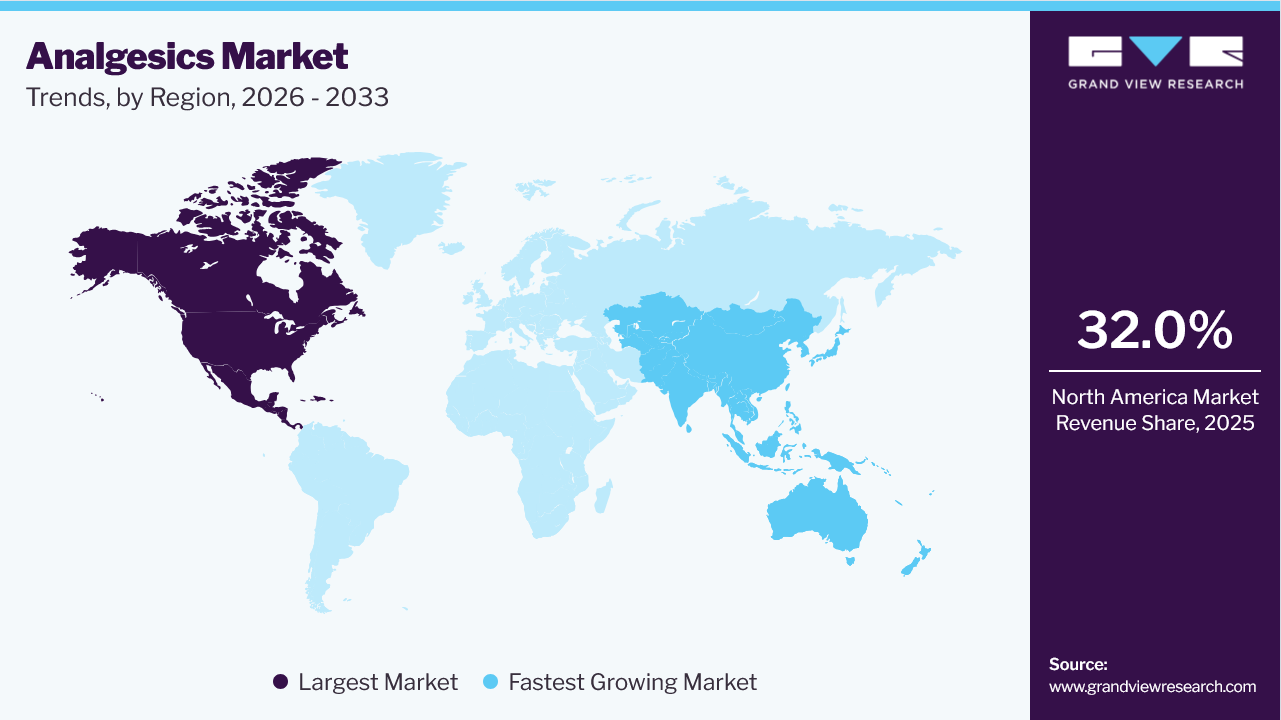
North America led the global analgesics market with a revenue share of approximately 32.0% in 2025. This is due to several leading players undertaking various strategic initiatives and making significant investments in analgesics-focused R&D in the region. The growth is also governed by the high prevalence of target diseases such as musculoskeletal disorders and chronic pain, among others, coupled with the cost of analgesics in the region.
In addition, the increasing number of surgeries and various government initiatives to safeguard the use of analgesics are also expected to fuel regional expansion during the forecast period. For instance, in January 2025, Vertex Pharmaceuticals announced the commercial launch of JOURNAVX (suzetrigine) in the United States following FDA approval, expanding access to a first-in-class non-opioid pain therapy and highlighting the region's strong focus on innovative analgesic drug development.
Asia Pacific Analgesics Market Trends
The analgesics market in Asia Pacific is expected to grow at the fastest rate over the forecast period. The high prevalence of chronic diseases, coupled with the growing geriatric population and the region's expanding economies, are among the primary factors expected to drive market growth over the forecast period. Moreover, the high unmet needs of the patient population and rising investments by key market players in the region are expected to drive industry growth over the projected period.
Key Analgesics Company Insights
Key market players are adopting strategies such as product portfolio expansion, licensing agreements, strategic collaborations, and geographic expansion to strengthen their position in the analgesics market. For instance, in January 2025, the FDA approved Journavx (suzetrigine) 50 milligram oral tablets, a non-opioid analgesic. It targets a pain-signaling pathway involving sodium channels before the pain signal reaches the nervous system.
Key Analgesics Market Companies
The following key companies have been profiled for this study on the analgesics market
-
Bayer AG
-
Par Health, Inc.
-
Assertio Holdings, Inc.
-
Janssen Pharmaceuticals, Inc.
-
GSK plc
-
AbbVie Inc.
-
Novartis AG
-
Viatris Inc.
-
Teva Pharmaceutical Industries Ltd.
-
Pfizer Inc.
Recent Developments
-
In May 2026, the U.S. FDA accepted a New Drug Application (NDA) for fast-acting meloxicam from Viatris Inc. as a non-opioid therapy. This advancement enhances the company's analgesics portfolio and demonstrates the increasing industry emphasis on non-opioid pain management strategies aimed at reducing opioid dependence.
-
In August 2025, Bayer launched Aspirina in the U.S. market, expanding access to one of its well-established pain relief brands among Hispanic consumers. The launch is expected to strengthen Bayer's presence in the OTC analgesics segment while broadening consumer access to trusted pain management products.
Analgesics Market Report Scope
Report Attribute
Details
Market size in 2025
USD 45.8 billion
Estimated market size in 2026
USD 48.6 billion
Projected market size by 2033
USD 73.0 billion
Growth rate
CAGR of 6.0% from 2026 to 2033
Base year for estimation
2025
Actual data
2021 - 2024
Forecast period
2026 - 2033
Quantitative units
Revenue in USD billion, and CAGR from 2026 to 2033
Report coverage
Revenue forecast, company ranking, competitive landscape, growth factors, and trends
Segments covered
Drug type, route of administration, application, distribution channel, region
Regional scope
North America; Europe; Asia Pacific; Latin America; Middle East & Africa
Country scope
U.S.; Canada; UK; Germany; France; Italy; Spain; Denmark; Sweden; Norway; India; China; Japan; Australia; South Korea; Thailand; Brazil; Mexico; Argentina; Saudi Arabia; UAE; South Africa; Kuwait
Key companies profiled
Bayer AG; Par Health; Assertio Holdings, Inc.; Janssen Global Services, LLC; GSK plc; AbbVie Inc.; Novartis AG; Viatris Inc.; Teva Pharmaceutical Industries Ltd.; Pfizer
Customization scope
Free report customization (equivalent up to 8 analysts working days) with purchase. Addition or alteration to country, regional & segment scope.
Pricing and purchase options
Avail of customized purchase options to meet your exact research needs. Explore purchase options
Global Analgesics Market Report Segmentation
This report forecasts revenue growth at the global, regional, and country levels and provides an analysis of the latest industry trends in each of the sub-segments from 2021 to 2033. For this study, Grand View Research has segmented the global analgesics market report based on drug type, route of administration, application, distribution channel, and region:
-
Drug Type Outlook (Revenue, USD Billion, 2021 - 2033)
-
Opioid
-
Non-opioid
-
Compound Medication
-
-
Route of Administration Outlook (Revenue, USD Billion, 2021 - 2033)
-
Oral
-
Parenteral
-
Transdermal
-
Others
-
-
Application Outlook (Revenue, USD Billion, 2021 - 2033)
-
Musculoskeletal
-
Surgical and Trauma
-
Cancer
-
Neuropathic
-
Migraine
-
Obstetrical
-
Fibromyalgia
-
Pain Due to Burns
-
Dental/Facial
-
Pediatric
-
Others
-
-
Distribution Channel Outlook (Revenue, USD Billion, 2021 - 2033)
-
Hospital Pharmacies
-
Retail Pharmacies
-
Online Pharmacies
-
-
Regional Outlook (Revenue, USD Billion, 2021 - 2033)
-
North America
-
U.S.
-
Canada
-
-
Europe
-
U.K.
-
Germany
-
France
-
Italy
-
Spain
-
Denmark
-
Sweden
-
Norway
-
-
Asia Pacific
-
Japan
-
China
-
India
-
South Korea
-
Australia
-
Thailand
-
-
Latin America
-
Brazil
-
Mexico
-
Argentina
-
-
Middle East & Africa
-
South Africa
-
Saudi Arabia
-
Kuwait
-
UAE
-
-
Frequently Asked Questions About This Report
The global analgesics market size was valued at USD 45.8 billion in 2025 and is estimated at USD 48.6 billion in 2026.
The global analgesics market is expected to grow at a CAGR of 6.0% from 2026 to 2033, reaching USD 73.0 billion.
North America dominated with a revenue share of 32.0% in 2025.
Some key players operating in the analgesics market include Bayer AG, Endo International plc, Assertio Holdings, Inc., Janssen Global Services, LLC, GSK plc., AbbVie Inc., Dr. Reddy’s Laboratories Ltd., Novartis AG, Viatris Inc., and Teva Pharmaceutical Industries Ltd.
Non-opioid segment dominated the container security market with a share of 52.0% in 2025, while compound medication is the fastest-growing segment.
About the Author(s)
Pharmaceuticals Research Team
Healthcare · PharmaceuticalsThis report was authored by the pharmaceuticals research team at Grand View Research - comprising two research analysts, one senior research analyst, and one industry expert - with specialized expertise in the pharmaceuticals segment of the healthcare industry. All findings are based on proprietary healthcare databases, executive interviews, and regulatory analysis, subject to internal peer review prior to publication.
Last Updated:
Speak to Analyst


Customize this report to your needs - add regions, segments, or data points, with 20% free customization.
Or view our licence options:


ISO 9001:2015 & 27001:2022 Certified
We are GDPR and CCPA compliant! Your transaction & personal information is safe and secure. For more details, please read our privacy policy.


