
- Home
- »
- Biotechnology
- »
-
Analytical Instrumentation Market Size & Share Report, 2033GVR Report cover

Analytical Instrumentation Market (2026 - 2033)
Size, Share & Trends Analysis Report By Product (Instruments, Services, Software), By Technology (Polymerase Chain Reaction, Spectroscopy, Microscopy, Chromatography), By Application, By Region, And Segment Forecasts
Market Size, 2025
$57.7BMarket Estimate, 2026
$60.6BMarket Forecast, 2033
$90.5BCAGR, 2026–2033
5.9%Analytical Instrumentation Market Summary
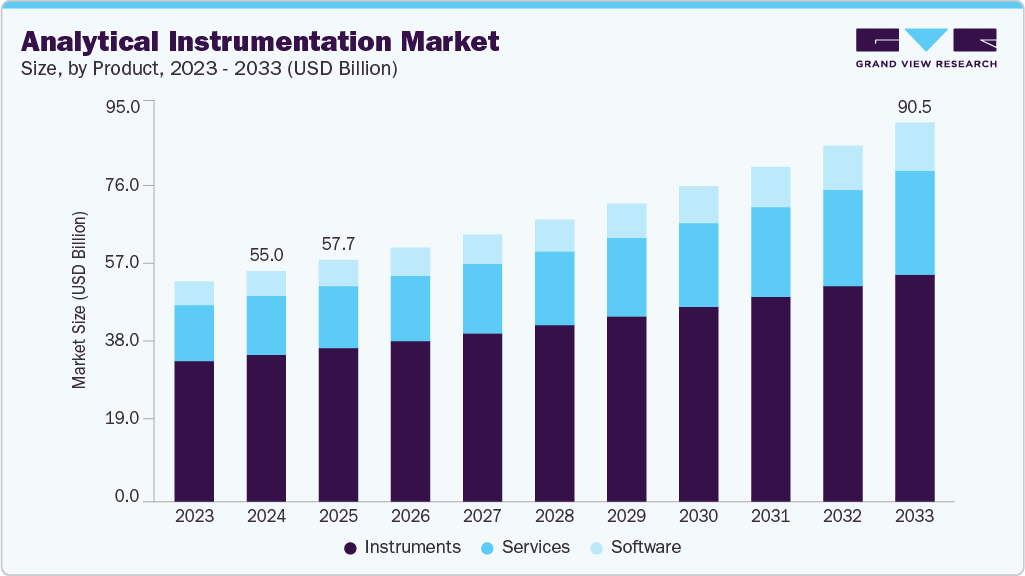
The global analytical instrumentation market size was valued at USD 57.7 billion in 2025 and is projected to grow from USD 60.6 billion in 2026 to USD 90.5 billion by 2033, growing at a CAGR of 5.9% from 2026 to 2033. North America dominated the market, accounting for the largest global share of 47.0% in 2025. Rising requirements for accurate quality assurance, ongoing innovations in research and development, stricter regulatory standards, and broader adoption across sectors such as pharmaceuticals, environmental monitoring, food safety, and chemicals primarily drive market expansion.
 Source: Grand View Research, IR Documents, Primary Interviews, Paid DatabasesTo learn more about this report,
 Download Free Sample Report
 Key Market Trends & Insights
- By product: The instruments segment held the largest share of 63.5% in 2025.
- By technology: The polymerase chain reaction segment held the largest share of 25.2% in 2025.
- By application: The life sciences research & development segment held the highest share of 47.0% in 2025.
Regional Highlights
- Largest regional market: North America (47.0% revenue share, 2025)
- Fastest-growing regional market: Asia Pacific (fastest CAGR, 2026-2033)
- By country: The U.S. held the largest share of North America in 2025.
Market Size & Forecast
- Market size in 2025: USD 57.7 Billion
- Estimated market size in 2026: USD 60.6 Billion
- Projected market size by 2033: USD 90.5 Billion
- CAGR (2026-2033): 5.9%
Three ways to get this report
Buy it, customize it, or ask a question.Ask an Analyst
Analyst response in 1 business day
- AccessReport author, directly
- Reply timeWithin 1 working day
- No sales callDirect answer only
- FormatEmail reply
- CostFree, no cost
Get the Full Report
What the study covers
- FormatsPDF · Excel · Dashboard
- Timeline2026–2033 annual, 2025 base
- Coverage20+ countries, 5 regions
- Companies10+ key players profiled
Customize the Report
20% free customization
- IncludeCountries, segments, points
- TailorTo your product definition
- ExtendDeeper competitor detail
- OrA fully bespoke study
- Turnaround5–10 working days
 To learn more about this report, Download Free Sample Report
 Technological Innovation
Technological innovation is a major driver of growth in the global analytical instrumentation industry. Advances in chromatography, mass spectrometry, spectroscopy, and nuclear magnetic resonance (NMR) have significantly enhanced the accuracy, sensitivity, and efficiency of analytical instruments. For instance, in February 2024, Thermo Fisher Scientific launched its Dionex Inuvion ion chromatography system in the United States. The reconfigurable instrument streamlined the analysis of ionic and small polar compounds across diverse laboratory sectors. These improvements enable faster, more precise detection of chemical and biological compounds, which are critical across applications ranging from drug development and clinical diagnostics to environmental testing and food quality assurance. As industries demand more detailed and reliable analytical results, the push for cutting-edge technologies continues to grow.
 To learn more about this report, Download Free Sample Report
 Moreover, the integration of emerging technologies such as artificial intelligence (AI), machine learning, and the Internet of Things (IoT) has revolutionized the capabilities of analytical systems. These innovations support automation, real-time data analysis, remote monitoring, and predictive maintenance, greatly improving operational efficiency and reducing human error. The trend toward miniaturization and the development of portable analytical instruments is also expanding the market by making advanced analysis accessible in field settings, such as remote healthcare facilities, environmental sites, and food safety inspections. Together, these advancements drive broader adoption and open new growth opportunities across various industries.
Rising emphasis on quality control and safety
The rising emphasis on quality control and safety across multiple industries is a significant driver of demand for analytical instrumentation. In sectors such as pharmaceuticals, biotechnology, food and beverages, chemicals, and cosmetics, ensuring product purity, consistency, and compliance with safety standards is not just a competitive advantage but a legal necessity. Regulatory bodies such as the FDA (U.S. Food and Drug Administration), EMA (European Medicines Agency), and other global organizations enforce strict guidelines for product testing, manufacturing processes, and batch validation. Analytical instruments are essential in meeting these requirements, offering precise measurement of active ingredients, detection of contaminants, and verification of chemical composition.
Moreover, the increasing complexity of products, especially in pharmaceuticals and biologics, requires more sophisticated analysis to ensure efficacy and patient safety. For instance, in November 2024, PerkinElmer advanced battery science in North America, enhancing analytical tools and recycling processes to improve battery chemistries, boost performance, and optimize recycling efficiency across industry applications. Maintaining consistent quality is critical for product performance and operational safety in the chemicals and materials sectors. Analytical instruments help companies comply with regulatory standards, minimize risks, reduce product recalls, and build consumer trust, making them an indispensable part of modern industrial operations and a key driver of market growth.
Market Dynamics
Technological advancements are a key driver of the analytical instrumentation market, with continuous innovations in chromatography, mass spectrometry, spectroscopy, and nuclear magnetic resonance (NMR) improving the accuracy, sensitivity, and efficiency of analytical systems. These advancements enable faster and more reliable analysis for applications such as drug development, clinical diagnostics, environmental monitoring, and food safety testing. For instance, in February 2024, Thermo Fisher Scientific launched the Dionex Inuvion Ion Chromatography System in the U.S., a reconfigurable platform designed to streamline the analysis of ionic and small polar compounds across diverse laboratory settings. Furthermore, the integration of AI, machine learning, IoT, automation, and portable analytical technologies enhancing data analysis, operational efficiency, and field-based testing capabilities, driving wider adoption of advanced analytical instruments across multiple industries.
The increasing emphasis on quality control, product safety, and regulatory compliance across industries is a major driver of the analytical instrumentation market. Sectors such as pharmaceuticals, biotechnology, food and beverages, chemicals, and cosmetics rely on analytical instruments to ensure product purity, detect contaminants, verify chemical composition, and maintain batch consistency while complying with stringent regulations from agencies such as the FDA and EMA. As products, particularly biologics and advanced pharmaceuticals, become more complex, the demand for high-precision analytical technologies continues to grow. For instance, in November 2024, PerkinElmer expanded its battery science capabilities in North America by enhancing analytical tools and recycling processes to improve battery chemistry analysis, optimize recycling efficiency, and support advanced materials research. Such advancements highlight the expanding role of analytical instrumentation in ensuring quality, regulatory compliance, and operational efficiency across diverse industries, thereby driving market growth.
Analytical instruments such as mass spectrometers, chromatography systems, spectroscopy instruments, electron microscopes, and high-performance liquid chromatography (HPLC) systems require significant upfront capital investment, making them expensive for many end users. Beyond the initial purchase, laboratories must also bear recurring expenses for instrument calibration, preventive maintenance, software updates, consumables, spare parts, and annual service contracts to ensure accuracy and regulatory compliance. In addition, costs associated with laboratory infrastructure, installation, validation, and operator training further increase the total cost of ownership. These financial constraints are particularly challenging for small and medium-sized laboratories, academic institutions, contract research organizations (CROs), and healthcare facilities in emerging economies, limiting the widespread adoption of advanced analytical instrumentation and slowing overall market growth.
Market Concentration & Characteristics
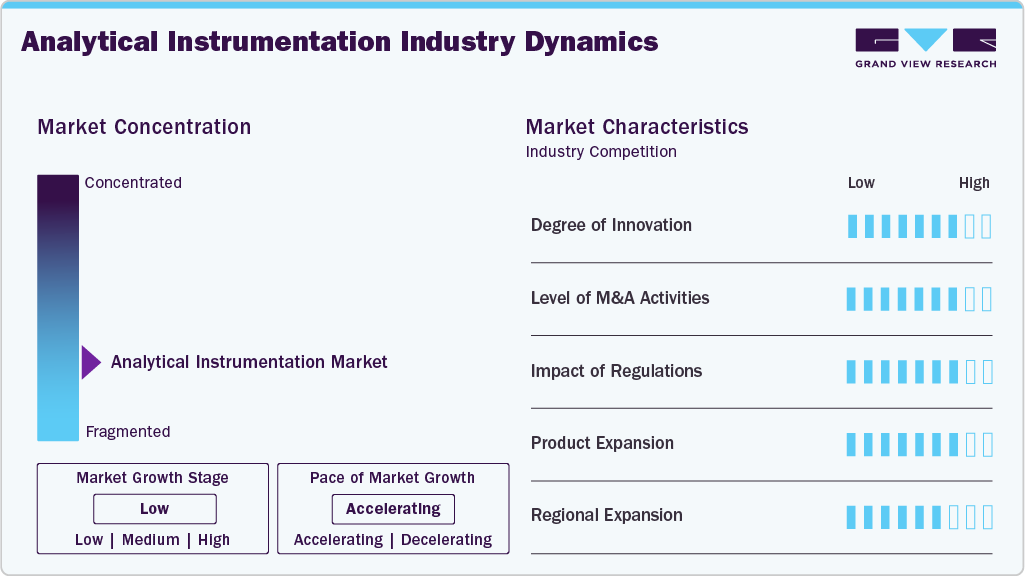
The industry is highly innovative, driven by growing demand for faster, more accurate, and more versatile analytical solutions across sectors. Advancements in core techniques such as chromatography, mass spectrometry, and spectroscopy improve accuracy and sensitivity, while AI, machine learning, and IoT enable smart, automated systems with real-time monitoring and predictive insights. For instance, in March 2025, Japan-based HORIBA launched three high-speed analytical instruments at Pittcon in the United States: the PoliSpectra Rapid Raman Plate Reader for ultra-fast 96-well screening, the Veloci BioPharma Analyzer employing A-TEEM fluorescence for rapid biomolecule fingerprinting, and the SignatureSPM, a multimodal system combining AFM, Raman, and photoluminescence. These innovations aimed to accelerate pharmaceutical research and streamline drug development and bioprocessing workflows. This strong pace of innovation positions the market as highly dynamic and technology-intensive.
The industry has seen a moderate to high level of M&A activity in recent years, driven by the need for companies to expand their technological capabilities, product portfolios, and global reach. For instance, in March 2025, Advanced Instruments, a subsidiary of Sweden's Investor AB, announced plans to acquire Nova Biomedical in a USD 2.2 billion deal. These strategic acquisitions also help consolidate market share, improve economies of scale, and accelerate innovation. Moreover, cross-sector M&A deals involving companies in life sciences, diagnostics, and environmental monitoring reflect the growing convergence of technologies and end-user applications within the analytical instrumentation space.
 To learn more about this report, Download Free Sample Report
 Regulations are crucial in shaping the industry by driving demand for precise, reliable, and compliant testing solutions. Stringent regulatory frameworks imposed by agencies such as the FDA, EMA, EPA, and other global bodies require industries, particularly pharmaceuticals, food and beverages, environmental monitoring, and chemicals, to adhere to strict quality and safety standards. These regulations mandate rigorous testing protocols for product development, manufacturing, and environmental compliance, fueling the adoption of advanced analytical instruments. Evolving, increasingly stringent regulations are a significant growth catalyst for the market, encouraging continuous innovation and the global adoption of sophisticated analytical technologies.
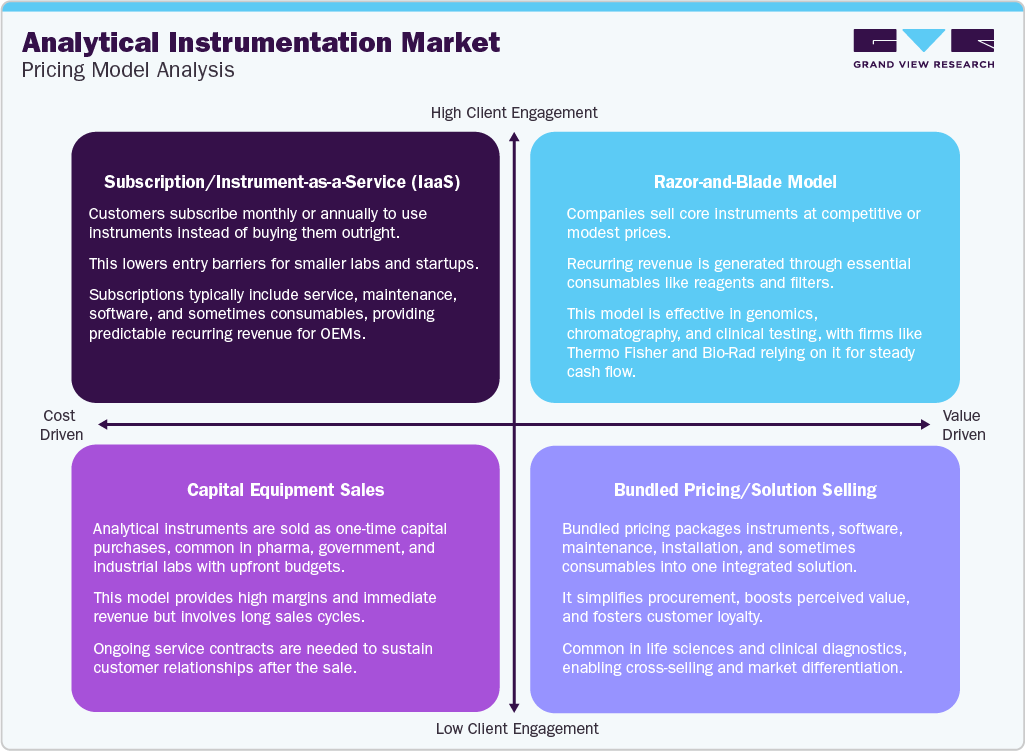
Product expansion is a key growth driver as companies strive to offer comprehensive solutions beyond equipment sales. Many manufacturers and third-party providers are broadening their service portfolios to include instrument installation, calibration, maintenance, repair, training, and software support. For instance, in March 2025, BrightSpec unveiled the first commercial Molecular Rotational Resonance (MRR) instruments in over 50 years at PittCon 2025 in Boston, USA. Their product suite includes the spectraMRR, isoMRR, and nanoMRR platforms, designed to deliver high-precision molecular analysis with minimal sample preparation. This shift helps customers optimize instrument performance, extend equipment lifespan, and comply with regulatory standards more efficiently. By providing end-to-end services, companies not only enhance customer satisfaction and loyalty but also generate recurring revenue streams, thereby strengthening their market position in a highly competitive landscape.
Regional expansion is a significant growth driver as companies target emerging markets in Asia-Pacific, Latin America, and the Middle East. These regions are experiencing rapid industrialization, increased pharmaceutical investments, enhanced environmental monitoring, strengthened food safety, and strengthened regulatory frameworks, all of which are boosting demand for advanced analytical instruments. Moreover, growing research and development activities and expanding healthcare infrastructure in these markets create new vendor opportunities. Companies can better address region-specific needs, reduce costs, and improve customer support by establishing local manufacturing facilities, sales offices, and service centers. This strategic regional focus helps players capture untapped markets and diversify their global footprint.
Analyst Perspective
The analytical instrumentation market is transitioning from a hardware-centric industry to an integrated ecosystem that combines advanced instruments, intelligent software, automation, and digital laboratory workflows. Vendors that offer comprehensive solutions encompassing instruments, informatics platforms, predictive maintenance, cloud connectivity, and application-specific expertise are expected to gain a competitive advantage. While premium instrument costs and lengthy procurement cycles remain key challenges, sustained investments in biopharmaceutical manufacturing, precision medicine, semiconductor manufacturing, environmental sustainability, and industrial process optimization are expected to create long-term growth opportunities. Continuous innovation in high-throughput, miniaturized, and AI-assisted analytical technologies will further redefine laboratory efficiency and decision-making over the coming decade.
Product Insights
Based on product, the instruments segment held the largest share, 63.5% of overall revenue in 2025, owing to many companies offering a range of analytical instruments, including mass spectrometers, chromatographs, sequencers, and microscopes. Moreover, key players are expanding their instrumentation portfolio by adding new products. For instance, in May 2025, the United States launched an enhanced three‑phase, integrated lifecycle approach to the qualification of analytical instruments and systems, updating USP General and expanding analytical instrumentation globally.
The software segment is expected to grow at the fastest CAGR during the forecast period, driven by its critical role in data analysis and interpretation across applications such as academic research and clinical diagnostics. For instance, in April 2024, Waters Corporation launched the Alliance iS Bio HPLC system, integrating Empower Chromatography Software to enhance data management, ensure compliance, and improve analytical efficiency. Such advancements are expected to support segment growth over the forecast period.
Technology Insights
Based on technology, the polymerase chain reaction (PCR) segment held the largest share, accounting for 25.2% in 2025. Technology offers several benefits, such as rapid amplification, the requirement of a small sample, and utility for detecting various diseases. PCR enables higher amplification of specific sequences and more sensitive detection in less time than traditional methods, making the technique highly useful for basic & commercial applications, including forensics, genetic identity testing, in vitro diagnostics, and industrial quality control.
The sequencing segment is projected to grow at the fastest CAGR over the forecast period. Sequencing technology can determine the order of nucleotides in small, targeted genomes or genomic regions. The key sequencing methods are DNA sequencing, RNA sequencing, high-throughput sequencing, and methylation sequencing. Sequencing technology has a variety of applications in cancer, microbiology, complex disease, and reproductive health research. Hence, the extensive application of sequencing across multiple areas is boosting segment growth.
Application Insights
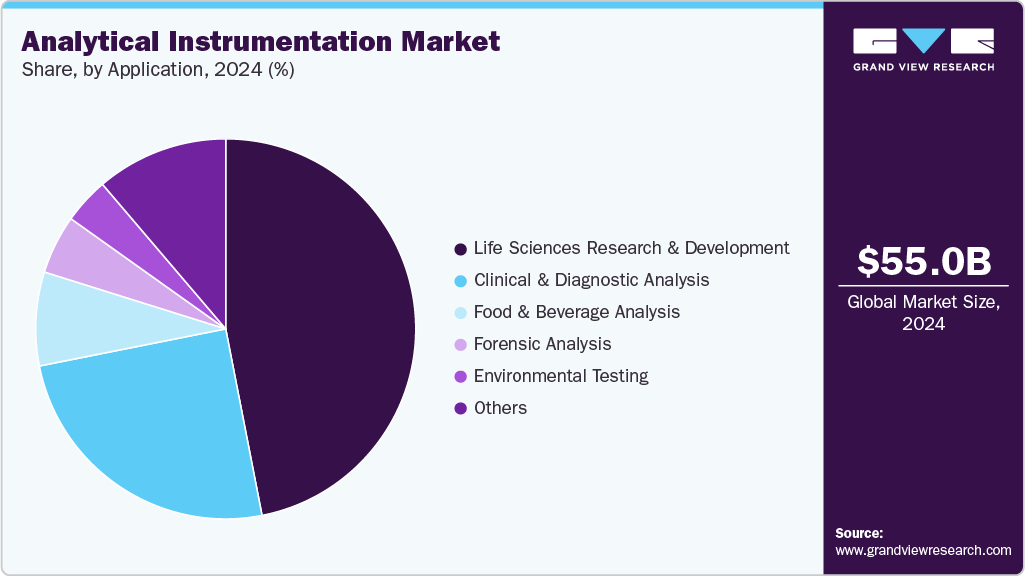
Based on application, the life sciences research & development segment accounted for the highest share of 47.0% of overall revenue in 2025. The increasing prevalence of chronic and infectious diseases is a key driver of increased R&D across the life sciences industry to develop and manufacture novel biologics, such as monoclonal antibodies, vaccines, and therapeutic proteins. Analytical tools, such as liquid chromatography, mass spectroscopy, and UV-Vis spectroscopy, are used to characterize antibodies. Moreover, therapeutic proteins require extensive chemical analysis, which can be performed using analytical instrumentation such as HPLC, capillary electrophoresis, and mass spectrometry. Such analytical instrumentation applications in life sciences research & development are driving the segment growth.
 To learn more about this report, Download Free Sample Report
 The clinical & diagnostics analysis segment is anticipated to grow at the fastest CAGR throughout the forecast period. The increasing incidence of cancer and chronic diseases has driven a high demand for diagnostic tests, which, in turn, is likely to increase demand for analytical instrumentation products, such as flow cytometers, for clinical testing. For instance, in March 2025, illumination technologies introduced advanced fluorescence, transitioning from traditional xenon and halogen lamps to LEDs and lasers. These innovations enhanced precision, sensitivity, and efficiency in medical diagnostics and surgical visualization. Integrating AI and closed-loop feedback systems enabled real-time guidance and automated diagnostics, significantly improving patient care and scientific research outcomes.
Regional Insights
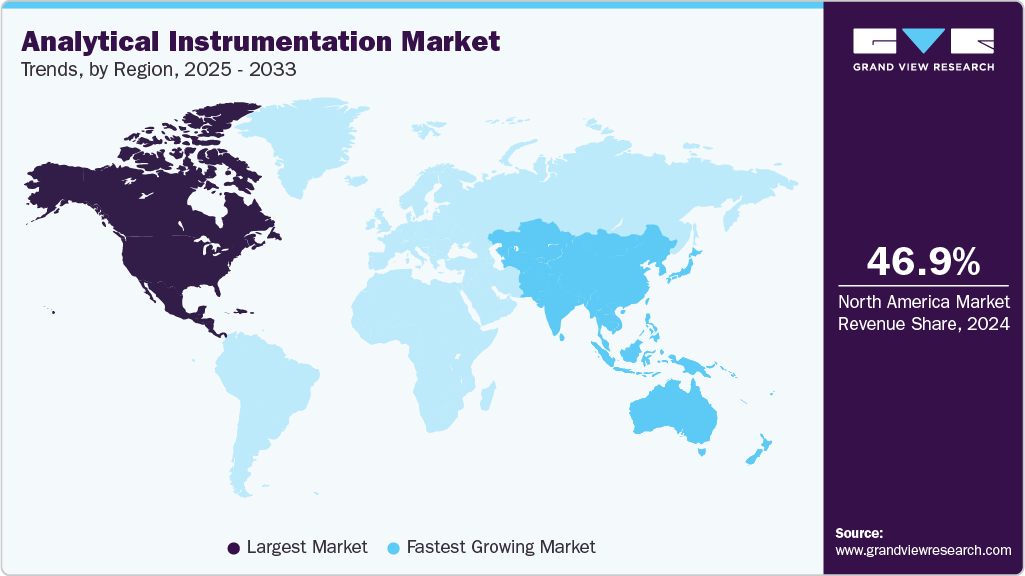
North America dominated the analytical instrumentation market with the largest revenue share of 47.0% in 2025. This large share can be attributed to the region's well-established healthcare system and pharmaceutical industry, which has created a significant demand for analytical instrumentation for clinical and research purposes. Extensive R&D initiatives to develop vaccines & therapeutics for various diseases, and increased public-private investments in cancer research, have also fueled the need for these tools.
 To learn more about this report, Download Free Sample Report
 U.S. Analytical Instrumentation Market Trends
The analytical instrumentation market in the U.S. held the largest share in the North America region in 2025. It benefits from a strong pharmaceutical and biotechnology sector, leading research institutions, and significant R&D investments. The presence of stringent regulatory bodies, such as the FDA, drives high demand for precise, reliable analytical solutions. For instance, in June 2024, PerkinElmer unveiled its next-generation thermal analysis instruments, the DSC 9, TGA 9, STA 9, and NEXION 1100, enhancing polymer and inorganic material analysis. These advancements offer expanded temperature ranges, improved baseline stability, and interchangeable components, facilitating seamless upgrades and integration. The instruments support hyphenated techniques, enabling comprehensive analyses in polymer and pharmaceutical laboratories.
Europe Analytical Instrumentation Market Trends
The analytical instrumentation market in Europe is expected to grow steadily during the forecast period. The region benefits from well-established pharmaceutical, chemical, and environmental sectors, as well as stringent regulatory frameworks such as REACH (Registration, Evaluation, Authorization, and Restriction of Chemicals). Strong government support for research and innovation, along with a growing emphasis on sustainability and environmental monitoring, further drives demand for sophisticated analytical tools. The region's focus on precision medicine and biotechnology also fosters the continuous adoption of cutting-edge instruments in life sciences and healthcare industries.
The UK's analytical instrumentation market is driven by a strong life sciences and pharmaceutical industry supported by world-class research infrastructure. For instance, in September 2024, the University of Nottingham partnered with Asynt Ltd to provide advanced analytical services. This collaboration combines Asynt's expertise in scientific equipment with Nottingham Analytical's advanced instrumentation, including NMR, mass spectrometry, and chromatography. The partnership aims to support R&D across various industries by offering precise, reliable results and sustainable laboratory solutions, further driving the demand in the country's analytical instrumentation industry.
The analytical instrumentation market in Germany is expected to grow over the forecast period, driven by its strong industrial base, particularly in chemicals, pharmaceuticals, and manufacturing. The country’s emphasis on quality control, strict regulatory standards, and extensive R&D activities supports continuous demand. Germany is also a leader in engineering and automation, encouraging the adoption of advanced, integrated analytical solutions.
Asia Pacific Analytical Instrumentation Market Trends
The analytical instrumentation market in Asia-Pacific is anticipated to grow at the fastest CAGR of 7.4% from 2026 to 2033, driven by industrial expansion, rising R&D investments, and increasing regulatory compliance requirements. Countries like China, India, Japan, and South Korea are major contributors, driven by booming pharmaceutical manufacturing. For instance, in December 2024, Manipal Institute of Technology inaugurated the Central Analytical Instrumentation Facility, enhancing access to advanced analytical instruments, supporting multidisciplinary research, skill development, and strengthening academic-industry collaboration in the analytical instrumentation market.
China analytical instrumentation market is growing rapidly, driven by fast industrialization, increased healthcare spending, and growing development in the analytical instrumentation market. For instance, in January 2025, Shimadzu Corporation expanded its Suzhou facility, increasing capacity and initiating high-end analytical instrument production, including LC-MS and GC-MS, to strengthen global manufacturing capabilities and meet regional demand.
The analytical instrumentation market in Japan is expected to witness significant growth over the forecast period, driven by the adoption of advanced technologies and the strong pharmaceutical and cross-border expansion of domestic companies. For instance, in September 2024, Japan-based Shimadzu Corporation commenced operations of its subsidiary, Shimadzu Mexico. This strategic move enables localized sales and service for analytical and measuring instruments and medical systems, enhancing regional support and accessibility. Moreover, the country's growing population fuels healthcare demand, while strict regulatory oversight ensures high-quality product standards, supporting growth in clinical diagnostics and environmental monitoring.
MEA Analytical Instrumentation Market Trends
The market for analytical instrumentation in the Middle East & Africa is emerging with increasing regulatory standards encouraging adoption. Healthcare infrastructure development and rising public health concerns are boosting investments in diagnostic and pharmaceutical analysis. Moreover, ongoing industrialization, government initiatives for sustainable development, and international collaborations are expected to accelerate growth in the forecast period.
Kuwait analytical instrumentation market is still in the early stages of development, but it shows potential due to rising investments in scientific research and healthcare modernization. The government’s efforts to diversify the economy and build a knowledge-based sector have increased interest in genomics, precision medicine, and biotechnology. Partnerships with international research organizations and universities are helping to introduce advanced technologies, including analytical instrumentation, into Kuwait’s healthcare and research ecosystems.
Key Analytical Instrumentation Companies Insights
The analytical instrumentation market is dominated by established global leaders known for their broad product ranges, cutting-edge technologies, and strong market positions. Companies such as Thermo Fisher Scientific, Waters Corporation, Shimadzu Corporation, Danaher, Agilent Technologies, Bruker Corporation, and PerkinElmer hold significant market share by continuously investing in research and development and by offering solutions across sectors, including pharmaceuticals, environmental analysis, food safety, and clinical diagnostics. Companies like LGC Biosearch Technologies, Quintara Biosciences, GenScript, and IBA Lifesciences GmbH are expanding their presence by offering innovative solutions and customized analytical instrumentation services to meet the growing needs of research institutions, pharmaceutical companies, and synthetic biology enterprises.
Prominent players like Mettler Toledo, Zeiss Group, Bio-Rad Laboratories, Illumina, Eppendorf SE, F. Hoffmann-La Roche AG, Sartorius AG, and Avantor, Inc. further enrich the competitive environment by providing specialized instruments, integrated systems, and value-added services designed to meet specific customer requirements. These firms prioritize advancements in automation, enhanced sensitivity, and user-friendly platforms that streamline complex processes in research and industrial settings.
 To learn more about this report, Download Free Sample Report
 These companies sustain their leadership positions by harnessing technological innovation, forming strategic alliances, and leveraging extensive global distribution networks. With increasing demand for precise analysis across fields such as gene sequencing, drug discovery, synthetic biology, and personalized medicine, these market leaders are well-positioned to drive future growth. Their dedication to improving accuracy, efficiency, and sustainability is shaping the ongoing evolution of the analytical instrumentation market.
Key Analytical Instrumentation Companies:
The following key companies have been profiled for this study on the analytical instrumentation market.
-
Thermo Fisher Scientific, Inc.
-
Waters Corp.
-
Shimadzu Corp.
-
Danaher
-
Agilent Technologies, Inc.
-
Bruker Corp.
-
PerkinElmer, Inc.
-
Mettler Toledo
-
Zeiss Group
-
Bio-Rad Laboratories, Inc.
-
Illumina, Inc.
-
Eppendorf SE
-
F. Hoffmann-La Roche AG
-
Sartorius AG
-
Avantor, Inc.
Competitive Benchmarking
Category
Operating Strategies
Competitive Edge
Weakness
Established Players (Thermo Fisher Scientific, Inc., Waters Corp., Shimadzu Corp,etc)
- Strengthen integrated analytical instrumentation portfolios through continuous innovation, acquisitions, and expansion of software-enabled laboratory solutions.
- Broad technology portfolios spanning chromatography, spectroscopy, mass spectrometry, microscopy, and laboratory automation with strong global service networks.
- High capital costs and dependence on research funding and industrial capital expenditure cycles.
Emerging Players (Avantor, Inc., Zeiss Group, Mettler Toledo., etc)
- Expand specialized analytical technologies and laboratory workflow solutions through targeted innovation and strategic collaborations.
- Strong expertise in niche analytical applications, life science research, and integrated laboratory workflows.
- Narrower analytical instrumentation portfolios and lower market reach than industry leaders.
Recent Developments
-
In April 2026, Innovative Lab Services acquired Analytical Instrument Management, expanding lifecycle capabilities in analytical instruments by integrating refurbished equipment supply with maintenance services, thereby enhancing end-to-end laboratory solutions and strengthening market positioning.
-
In January 2026, Specac Ltd acquired Amax Precision Ltd, enhancing analytical instrument manufacturing capabilities, expanding global reach, and strengthening vertical integration to support OEM partners across spectroscopy and analytical instrumentation markets.
-
In June 2025, Bruker Corporation acquired Biocrates Life Sciences AG, strengthening its mass spectrometry-based metabolomics portfolio and advancing its multiomics strategy by integrating kits, assays, software, and research services to enhance analytical capabilities and scientific applications.
-
In June 2025, ABB Robotics and METTLER TOLEDO in Switzerland signed an MOU to integrate ABB’s collaborative robots with METTLER TOLEDO’s LabX software. This collaboration aimed to enhance flexible, efficient lab automation, boosting productivity and data management across industries while addressing labor shortages.
-
In May 2025, Waters Corporation acquired Halo Labs, enhancing its capabilities in biological analysis. Halo Labs' Aura platform offers advanced imaging technologies for detecting and analyzing particles in therapeutic products, such as cell, protein, and gene therapies. This acquisition complements Waters' existing Wyatt Technology portfolio, enabling comprehensive particle analysis and supporting the development and quality control of large molecule therapies.
-
In January 2025, ABB Robotics and Agilent Technologies announced a strategic collaboration to advance laboratory automation. This partnership aims to integrate Agilent's advanced analytical instruments and software with ABB's robotics technology to automate repetitive tasks, including sample handling, testing, and data processing.
-
In October 2024, Thermo Fisher Scientific launched the iCAP MX Series ICP-MS instruments, comprising the single quadrupole iCAP MSX and triple quadrupole iCAP MTX models. Designed for environmental, food safety, industrial, and research laboratories, these instruments offer high sensitivity and precision in analyzing trace elements across complex matrices. The iCAP MSX delivers robust performance without compromising sensitivity, while the iCAP MTX delivers interference-free analysis, ideal for challenging samples. Both models feature advanced argon gas dilution and cone designs to extend maintenance intervals, enhance laboratory productivity, and ensure reliable results.
Analytical Instrumentation Market Report Scope
Report Attribute
Details
Market size value in 2025
USD 57.7 billion
Market size value in 2026
USD 60.6 billion
Revenue forecast in 2033
USD 90.5 billion
Growth rate
CAGR of 5.9% from 2026 to 2033
Base year for estimation
2025
Historical data
2021 - 2024
Forecast period
2026 - 2033
Quantitative units
Revenue in USD million/billion, and CAGR from 2026 to 2033
Report coverage
Revenue forecast, company ranking, competitive landscape, growth factors, and trends
Segments covered
Product, technology, application, region
Regional scope
North America; Europe; Asia Pacific; Latin America; MEA
Country scope
U.S.; Canada; UK; Germany; France; Spain; Italy; Sweden; Norway; Denmark; Russia; Japan; China; India; South Korea; Australia; Thailand; Brazil; Mexico; Argentina; South Africa; UAE; Saudi Arabia; Kuwait
Key companies profiled
Thermo Fisher Scientific, Inc.; Waters Corp.; Shimadzu Corp.; Danaher Corp.; Agilent Technologies, Inc.; Bruker Corp.; PerkinElmer, Inc.; Mettler Toledo; Zeiss Group; Bio-Rad Laboratories, Inc.; Illumina, Inc.; Eppendorf SE; F. Hoffmann-La Roche AG; Sartorius AG; Avantor, Inc.
Customization scope
Free report customization (equivalent up to 8 analysts' working days) with purchase. Addition or alteration to country, regional & segment scope.
Pricing and purchase options
Avail customized purchase options to meet your exact research needs. Explore purchase options
Global Analytical Instrumentation Market Report Segmentation
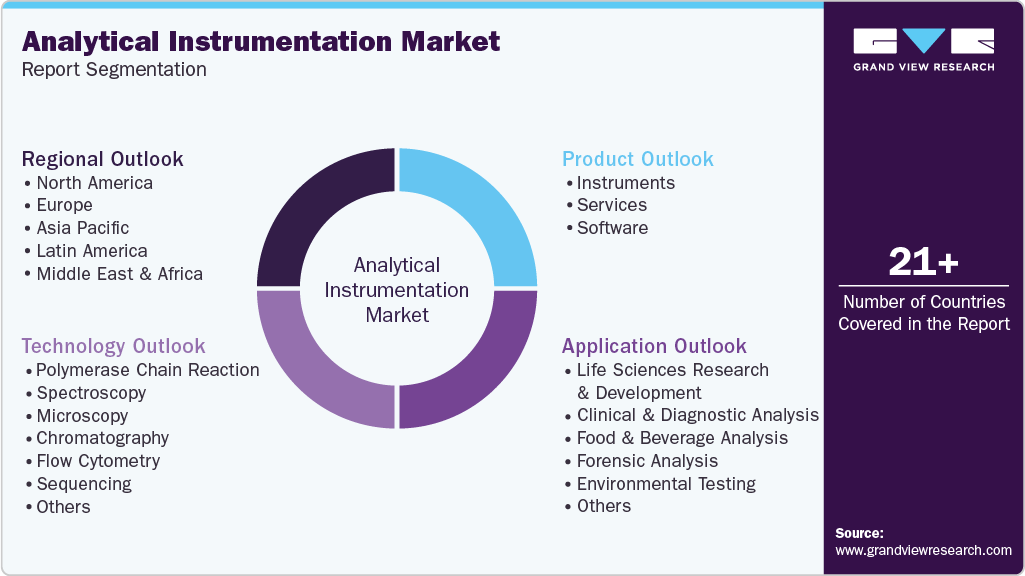
This report forecasts revenue growth at global, regional and country levels, and provides an analysis of the latest trends in each of the sub-segments from 2021 to 2033. For this study, Grand View Research has segmented the analytical instrumentation market on the basis of product, technology, application, and region.
 To learn more about this report, Download Free Sample Report
 -
Product Outlook (Revenue, USD Million, 2021 - 2033)
-
Instruments
-
Services
-
Software
-
-
Technology Outlook (Revenue, USD Million, 2021 - 2033)
-
Polymerase Chain Reaction
-
Spectroscopy
-
Microscopy
-
Chromatography
-
Flow Cytometry
-
Sequencing
-
Microarray
-
Others
-
-
Application Outlook (Revenue, USD Million, 2021 - 2033)
-
Life Sciences Research & Development
-
Clinical & Diagnostic Analysis
-
Food & Beverage Analysis
-
Forensic Analysis
-
Environmental Testing
-
Others
-
-
Regional Outlook (Revenue, USD Million, 2021 - 2033)
-
North America
-
U.S.
-
Canada
-
Mexico
-
-
Europe
-
UK
-
Germany
-
France
-
Italy
-
Spain
-
Denmark
-
Sweden
-
Norway
-
Russia
-
-
Asia Pacific
-
Japan
-
China
-
India
-
Australia
-
Thailand
-
South Korea
-
-
Latin America
-
Brazil
-
Argentina
-
-
Middle East and Africa (MEA)
-
South Africa
-
Saudi Arabia
-
UAE
-
Kuwait
-
-
Research Methodology
The analytical instrumentation market figures in this report are based on a proven research process that combines executive interviews with secondary research from proprietary databases, company filings, and recognized regulatory and institutional sources. Market size is built through value-chain sizing - reconciling supply-side and demand-side estimates - and triangulated with bottom-up and top-down approaches. Every estimate passes multiple levels of expert validation before publication, with each analytical instrumentation segment quantified using the revenue-capture definitions in the table below.
Segment Definition
Segment - Product
Revenue capture definition
Instruments
Revenue is generated from the sale of analytical instruments used for qualitative and quantitative analysis, including chromatography systems, spectrometers, microscopes, flow cytometers, sequencers, PCR systems, and other laboratory analytical equipment.
Services
Revenue is generated from installation, calibration, maintenance, repair, validation, training, consulting, and other aftermarket services that support the operation and performance of analytical instrumentation.
Software
Revenue is generated from analytical software solutions used for instrument control, data acquisition, processing, visualization, laboratory information management (LIMS), compliance, and workflow automation.
Segment - Technology
Revenue capture definition
Polymerase Chain Reaction
Revenue is generated from analytical instrumentation based on PCR technology for nucleic acid amplification, molecular diagnostics, genetic analysis, pathogen detection, and life sciences research.
Spectroscopy
Revenue is generated from spectroscopy-based analytical instruments used to identify and quantify chemical composition through the interaction of electromagnetic radiation with matter, including UV-Vis, IR, Raman, and atomic spectroscopy systems.
Microscopy
Revenue is generated from analytical microscopy instruments that provide high-resolution visualization and characterization of biological specimens, cells, tissues, and materials for research, diagnostics, and industrial analysis.
Chromatography
Revenue is generated from chromatography instruments used to separate, identify, and quantify chemical compounds in pharmaceutical, environmental, food, chemical, and clinical laboratories.
Flow Cytometry
Revenue is generated from flow cytometry systems used for rapid analysis and characterization of cells and particles based on their physical and fluorescent properties in research and clinical applications.
Sequencing
Revenue is generated from DNA and RNA sequencing instruments used for genomic, transcriptomic, precision medicine, and molecular biology applications.
Microarray
Revenue is generated from microarray-based analytical platforms used for high-throughput analysis of gene expression, genotyping, mutation detection, and biomarker discovery.
Others
Revenue is generated from other analytical instrumentation utilizing technologies such as electrophoresis, thermal analysis, electrochemical analysis, elemental analysis, and other specialized analytical techniques not included in the above categories.
Segment - Application
Revenue capture definition
Life Sciences Research & Development
Revenue is generated from analytical instrumentation used in pharmaceutical, biotechnology, academic, and research laboratories for drug discovery, biomarker identification, genomics, proteomics, and other life sciences research activities.
Clinical & Diagnostic Analysis
Revenue is generated from analytical instruments used in hospitals, clinical laboratories, and diagnostic centers for disease diagnosis, molecular testing, pathology, and routine clinical analysis.
Food & Beverage Analysis
Revenue is generated from analytical instrumentation used for food safety testing, quality assurance, contaminant detection, nutritional analysis, and regulatory compliance in the food and beverage industry.
Forensic Analysis
Revenue is generated from analytical instruments used by forensic laboratories and law enforcement agencies for toxicology, drug testing, DNA profiling, trace evidence analysis, and criminal investigations.
Environmental Testing
Revenue is generated from analytical instrumentation used to monitor and analyze air, water, soil, and industrial emissions for pollution control, environmental compliance, and public health protection.
Others
Revenue is generated from analytical instrumentation used in other applications such as chemical and petrochemical analysis, material science, agriculture, mining, energy, cosmetics, and other industrial quality control and research activities.
Delivered Customizations
This report has been delivered with the following In-depth customizations
Client Request
Customization Delivered
Value Adds
Innovation & Patent Landscape
Delivered assessment of recent patents, AI-enabled analytical software, laboratory automation, cloud-connected instruments, digital laboratory solutions, and emerging analytical technologies.
Supports R&D strategy, technology roadmaps, and identification of innovation and partnership opportunities.
AI & Digital Laboratory Trends Analysis
Evaluated the adoption of AI, machine learning, cloud-based laboratory informatics, predictive maintenance, and remote instrument monitoring across analytical laboratories.
Helps clients identify future technology trends and develop digital transformation strategies.
High-growth Application Opportunity Assessment
Assessed emerging opportunities in biopharmaceutical manufacturing, precision medicine, semiconductor manufacturing, environmental monitoring, food safety testing, battery materials, and advanced materials research.
Identifies high-growth end markets and supports portfolio expansion into rapidly growing application areas.
Frequently Asked Questions About This Report
Some key players operating in the analytical instrumentation market include Thermo Fisher Scientific, Inc.; Waters Corporation; Shimadzu Corporation; Danaher Corporation; Agilent Technologies, Inc.; Bruker Corporation; PerkinElmer, Inc.; Mettler Toledo; Zeiss Group; Bio-Rad Laboratories, Inc.; Illumina, Inc.; Eppendorf SE; F. Hoffmann-La Roche AG; Sartorius AG; and Avantor, Inc.
The increasing R&D activities and continuously growing investments & funding in the life sciences domain are driving the demand for efficient analytical tools, thereby boosting market growth.
Asia Pacific is the fastest-growing region over the forecast period.
The instruments segment led with a 63.5% revenue share in 2025, while the software segment is the fastest-growing.
The polymerase chain reaction segment led with a 25.2% revenue share in 2025, while the sequencing segment is the fastest-growing.
The life sciences research & development segment led with a 47.0% revenue share in 2025, while the clinical & diagnostics analysis segment is the fastest-growing.
The global analytical instrumentation market size was estimated at USD 57.7 billion in 2025 and is expected to reach USD 60.6 billion in 2026.
The global analytical instrumentation market is expected to grow at a compound annual growth rate of 5.9% from 2026 to 2033 to reach USD 90.5 billion by 2033.
North America dominated the analytical instrumentation market with a share of 47.0% in 2025. This is attributable to the increasing research and development activities coupled with the presence of established companies such as Thermo Fisher Scientific, Inc., Danaher Corporation, and others in the region.
About the Author(s)
Biotechnology Research Team
Healthcare · BiotechnologyThis report was authored by the biotechnology research team at Grand View Research - comprising two research analysts, one senior research analyst, and one industry expert - with specialized expertise in the biotechnology segment of the healthcare industry. All findings are based on proprietary healthcare databases, executive interviews, and regulatory analysis, subject to internal peer review prior to publication.
Last Updated:
Speak to Analyst

Customize this report to your needs - add regions, segments, or data points, with 20% free customization.
Or view our licence options:


ISO 9001:2015 & 27001:2022 Certified
We are GDPR and CCPA compliant! Your transaction & personal information is safe and secure. For more details, please read our privacy policy.


