
- Home
- »
- Animal Health
- »
-
Animal Blood Bank Market Size & Share Report, 2026-2033GVR Report cover

Animal Blood Bank Market (2026 - 2033)
Size, Share & Trends Analysis Report By Product (Packed Red Blood Cells, Whole Blood, Plasma), By Species (Canine, Feline), By Type, By End-use (Hospitals & Clinics, Academic & Research Institutions), By Region, And Segment Forecasts
Market Size, 2025
$1.7BMarket Estimate, 2026
$1.8BMarket Forecast, 2033
$3.3BCAGR, 2026–2033
9.0%Animal Blood Bank Market Summary
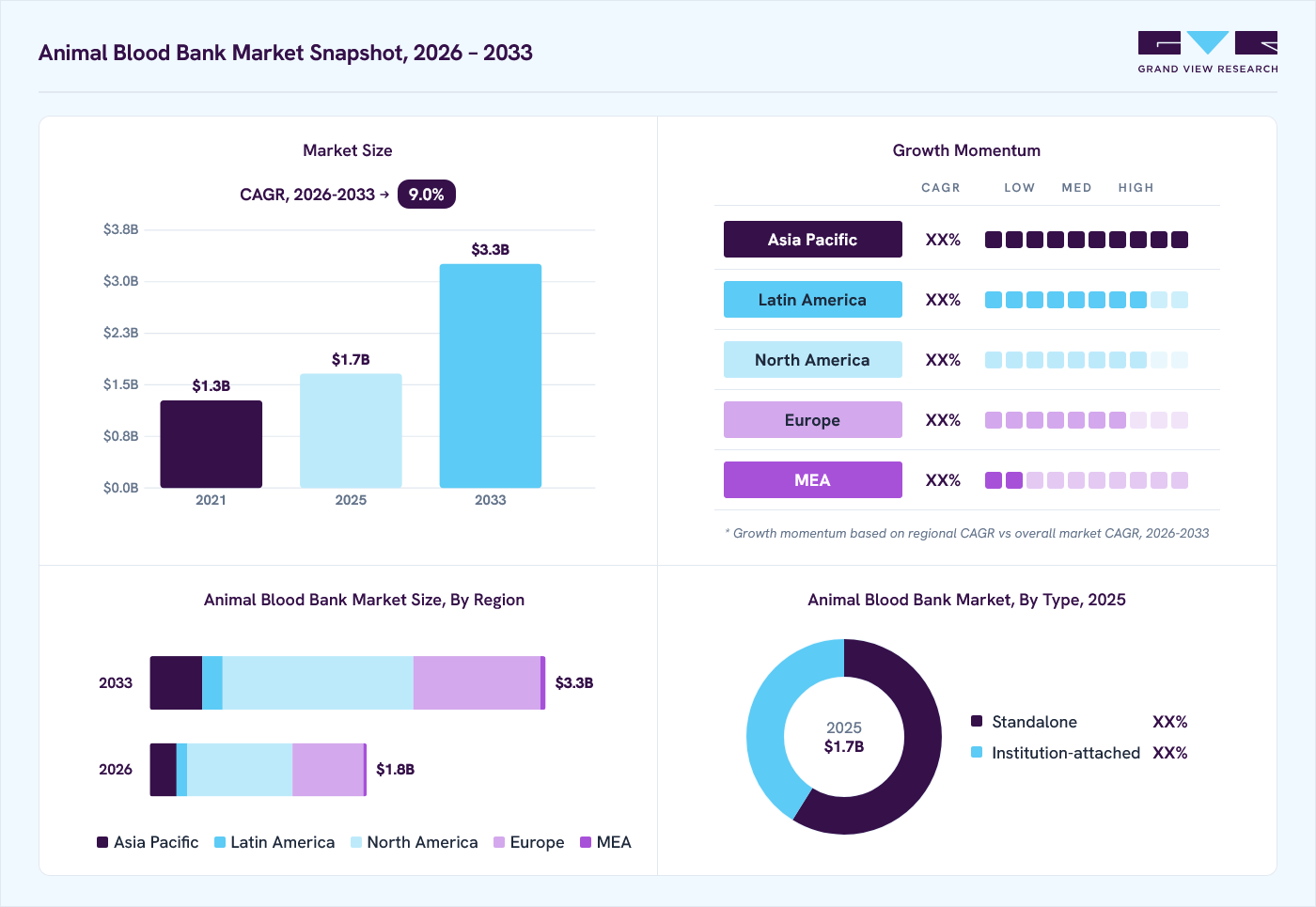
The global animal blood bank market size was valued at USD 1.7 billion in 2025 and is projected to grow from USD 1.8 billion in 2026 to USD 3.3 billion by 2033, at a CAGR of 9.0% from 2026 to 2033. North America dominated the animal blood bank market with the largest revenue share of 48.4% in 2025. The primary factor driving the market is the rising demand for animal blood products, fueled by increased use of transfusions in emergency and specialty veterinary care, expanding blood banking infrastructure, and greater pet owner participation in donor programs.
 Source: Grand View Research, IR Documents, Primary Interviews, Paid DatabasesTo learn more about this report,
 Download Free Sample Report
Key Market Trends & Insights
- By product: Packed red blood cells (PRBCs) segment held the largest market share of 46.8% in 2025.
- By species: Canine segment held the largest market share of 55.5% in 2025.
- By end use: Hospitals and clinics segment held the largest market share of 49.8% in 2025.
- By type: Standalone animal blood banks segment held the largest market share of 58.8% in 2025.
Regional Highlights
- Largest regional market: North America (48.4% revenue share, 2025)
- Fastest-growing regional market: Asia Pacific (highest CAGR, 2026-2033)
- By country: The U.S. held the largest market share in 2025.
Market Size & Forecast
- Market size in 2025: USD 1.7 Billion
- Estimated market size in 2026: USD 1.8 Billion
- Projected market size by 2033: USD 3.3 Billion
- CAGR (2026-2033): 9.0%
Prism AI by Grand View Research Free to tryAsk a question about the animal blood bank marketTry asking✓Every figure cited from GVR research Prefer the report? Download free sample →
A rising demand for animal blood products is driving the industry. Advances in veterinary care and changing pet owner expectations have made blood transfusions an increasingly essential component of treatment protocols in emergency and specialty settings.Clinical cases highlight this trend. At leading veterinary institutions, transfusions are no longer rare interventions but critical, often repeated procedures that can determine survival outcomes. One such case involved a canine patient at Tufts University. In June 2025, the canine patients required multiple units of blood products, including whole blood, red blood cells, and plasma, to recover from severe internal hemorrhage. Such examples highlight how access to readily available blood supplies is becoming indispensable in modern veterinary medicine.
 To learn more about this report, Download Free Sample Report
However, the demand has begun to surpass the supply. Veterinary practitioners consistently report shortages of blood products, driven by several factors such as the growing prevalence of advanced interventions, the expanding availability of specialty and emergency services, and the increasing willingness of pet owners to invest in life-saving treatments. As a result, clinics are turning to structured blood banking systems rather than relying solely on external suppliers. Many hospitals are now working to establish internal donor programs, with some aiming to source a substantial proportion of their transfusion needs from within their networks.
Awareness and donor participation remain critical to meeting this demand. While many pet owners are unaware that dogs and cats can be blood donors, studies show that most express willingness once informed. This has led to increased emphasis on outreach initiatives, owner education, and donor incentive programs, all of which are expected to strengthen the donor base and reduce supply gaps.
Growing clinical need, expanding blood banking infrastructure, and increased donor participation significantly support the market's rising trajectory. The rising demand for animal blood products is anticipated to continue to be a major factor in the sector's steady expansion as transfusions are increasingly incorporated into routine veterinary care.
National Guidelines/SOPs for Animal Blood Transfusion and Blood Banks, India - Key Highlights
Factor
Description
Purpose
Establish a national framework for veterinary transfusion medicine in India
Infrastructure
State-regulated veterinary blood banks with biosafety-compliant facilities
Donor Selection
Eligibility criteria based on health, vaccination status, age, weight, and disease screening
Blood Compatibility
Mandatory blood typing and cross-matching to prevent incompatibility reactions
Donation Ethics
Emphasis on voluntary, non-remunerated donations; informed consent; Donor Rights Charter
Zoonotic Risk Management
Integration of One Health principles to manage zoonotic risks
SOP Standardization
Uniform SOPs, forms, and checklists for donor registration, transfusion monitoring, and adverse reaction reporting
Network Development
Roadmap for National Veterinary Blood Bank Network (N-VBBN) with digital registries, real-time inventories, emergency helpline
Education & Training
Incorporation of transfusion medicine training into BVSc & AH curriculum, postgraduate education, and Continuing Veterinary Education
Innovations & Future Outlook
Mobile blood collection units, cryopreservation of rare blood types, mobile applications for donor-recipient matching, advanced transfusion research
Sector Significance
Addresses needs of 537 million livestock and 125 million companion animals contributing to national GDP and public health
Document Nature
Advisory, non-statutory, dynamic framework evolving with science, field experience, and stakeholder feedback
Source: Press Information Bureau of India (PIB)
Market Dynamics
The global animal blood bank market is driven by the increasing use of blood transfusions in companion animal emergency medicine, growing establishment of dedicated veterinary blood banks, rising awareness regarding voluntary donor programs, and supportive regulatory initiatives promoting standardized transfusion practices. Advances in veterinary critical care, oncology, trauma management, and complex surgical procedures have increased the clinical requirement for whole blood, packed red blood cells, plasma, and platelet products across veterinary hospitals and specialty clinics.
Furthermore, organized donor recruitment campaigns and hospital-based blood banking programs are improving blood availability while strengthening owner participation. Regulatory agencies and veterinary organizations are introducing standardized protocols for donor screening, blood typing, storage, and traceability, improving product quality and transfusion safety. However, the market continues to encounter challenges associated with limited donor availability, high operational costs, species-specific compatibility requirements, and fragmented blood banking infrastructure in several developing regions. In addition, investments in advanced storage technologies, digital donor registries, and expansion of blood banking services for livestock and exotic animals are expected to create new growth opportunities.
The increasing requirement for blood products across veterinary emergency, critical care, oncology, internal medicine, and surgical procedures remains the primary factor driving market growth. Companion animals are living longer due to improved healthcare access, resulting in a higher incidence of chronic diseases, trauma, immune-mediated disorders, and complex surgical interventions that frequently require blood transfusions. Veterinary hospitals are consequently expanding their transfusion capabilities to maintain immediate access to compatible blood products.
For instance, in June 2025, clinicians at Tufts University administered multiple units of whole blood, packed red blood cells, and plasma to successfully manage severe internal hemorrhage in a canine patient. Furthermore, veterinary referral centers are increasingly developing in-house donor programs to reduce dependence on external blood suppliers and improve treatment readiness. Growing willingness among pet owners to pursue advanced life-saving procedures has further increased transfusion volumes, supporting sustained demand for whole blood and blood components across developed and emerging veterinary healthcare markets.
A constrained donor pool remains one of the major limitations affecting the animal blood bank market. Blood donation programs depend on healthy, appropriately screened animals meeting strict eligibility criteria related to age, body weight, vaccination status, temperament, and infectious disease screening, reducing the number of suitable donors. Furthermore, awareness regarding companion animal blood donation remains limited across several countries, restricting voluntary participation and resulting in periodic shortages of blood products. Supply constraints become particularly significant during emergency situations and seasonal increases in trauma cases.
Ethical concerns surrounding donor welfare have also attracted greater regulatory attention. For instance, in April 2026, allegations regarding the commercial use of stray dogs for blood collection in Hyderabad, India; prompted investigations into veterinary practices and donor welfare standards. Additionally, reports involving illegal extraction of blood from livestock have strengthened calls for stricter regulatory oversight and ethical donor management. These factors increase operational complexity while limiting the consistent availability of safe blood products.
The expansion of structured veterinary blood banking infrastructure presents significant opportunities for market participants. Governments, veterinary universities, specialty hospitals, and private organizations are investing in dedicated blood collection facilities, digital donor registries, component processing laboratories, and regional distribution networks to improve blood availability. Standardized operating procedures for donor selection, blood typing, infectious disease screening, storage, and transfusion practices are improving clinical confidence and supporting wider adoption of transfusion medicine.
For instance, in August 2025, India's Department of Animal Husbandry & Dairying (DAHD) introduced comprehensive national guidelines for veterinary blood transfusion and outlined the development of a National Veterinary Blood Bank Network with digital inventories and standardized operating procedures. Furthermore, expansion of species-specific blood banking services for alpacas, llamas, camelids, zoo animals, and feline patients demonstrates increasing diversification beyond traditional canine blood banking. Continued investments in mobile blood collection units, cryopreservation technologies, and integrated inventory management platforms are anticipated to improve accessibility and strengthen long-term market growth.
Market Concentration & Characteristics
The animal blood bank market demonstrates a moderate to high degree of innovation, with advancements in blood storage, component separation, cross-matching, and pathogen screening improving safety and efficiency. Emerging technologies such as cryopreservation and synthetic substitutes are also being explored, though adoption is still in early stages. Innovation increasingly focuses on standardizing protocols and expanding donor recruitment systems to meet rising clinical demand.
Considering its niche and still-eveloping nature, M&A activity in this market remain limited when compared to larger veterinary sectors. Yet, trends towards consolidation are becoming prominent as diagnostic companies and associations of veterinary hospitals indicate interest in integrating blood banking services to their networks. This signifies a gradual move towards collaborations and acquisitions to expand clinical offerings, guarantee supply security, and improve geographic reach.
 To learn more about this report, Download Free Sample Report
The regulatory landscape is significantly shaping the growth of the animal blood bank market. For instance, in August 2025, the Department of Animal Husbandry & Dairying (DAHD), India, introduced comprehensive guidelines for animal blood transfusion and blood banks, emphasizing biosafety, standardized protocols, and ethical donor practices. These guidelines mandate blood typing, cross-matching, and establishing state-regulated blood banks with digital registries and real-time inventories. Furthermore, the government's plan to create a National Veterinary Blood Bank Network (N-VBBN) aims to unify practices, ensure quality control, and address the increasing demand for blood products across species.
The sector's product alternatives are a handful but expanding and primarily comprise oxygen-carrying solutions, synthetic blood components, and plasma expanders. Although such substitutes may offer critical patients with short-term support, they cannot completely replace the functions of whole blood or certain blood components. As a result, traditional animal blood products remain the preferred option, especially for complex transfusions and life-saving interventions.
The establishment of new blood banks, hospital-based donor programs, and national networks is driving expansion in the animal blood bank market. Increased availability can be made feasible by investments in infrastructure, storage, and logistics, and geographic coverage is growing, particularly in urban areas with cutting-edge veterinary facilities. Furthermore, improving veterinary professionals' and pet owners' awareness promotes growth of services to satisfy growing clinical demand.
Analyst Perspective
The animal blood bank market is evolving from a niche veterinary service into an essential component of advanced animal healthcare infrastructure. Expanding organized donor networks, regional blood banking facilities, and standardized blood component processing capabilities is helping address supply constraints. Investments in digital donor registries, inventory management systems, and cold-chain logistics are improving blood availability and operational efficiency. Companies are also expanding beyond canine and feline applications to include equine, livestock, and exotic animals as specialized veterinary care advances. Strategic collaborations with veterinary hospitals, universities, and emergency care networks are expected to strengthen market penetration, support sustainable blood supply, and drive long-term growth.
Product Insights
Based on product, the packed red blood cells (PRBCs) segment led the market with the largest revenue share of 46.8% in 2025, due to their critical role in treating anemia, trauma, and surgical blood loss in pets and other animals. PRBCs provide targeted oxygen-carrying capacity without the volume overload associated with whole blood, making them safer and more efficient for clinical use. Increased availability becomes attainable by investments in infrastructure, storage, and logistics, and geographic coverage is growing, particularly in urban areas with cutting-edge veterinary facilities. Furthermore, improving veterinary professionals' and pet owners' awareness promotes growth of services to satisfy growing clinical demand.
The plasma segment is expected to grow at a significant CAGR of 8.8% over the forecast period. This can be attributed to its increasing use in treating clotting disorders, immune deficiencies, and shock in animals. Plasma products, including fresh frozen and hyperimmune plasma, are critical for emergency and specialized therapies, driving clinical demand. Advances in fractionation, storage, and transfusion protocols have improved safety and efficacy, encouraging broader adoption. Additionally, rising awareness among veterinarians and pet owners about the therapeutic benefits of plasma is contributing to its projected CAGR.
Species Insights
Based on species, the canine segment led the market with the largest revenue share of 55.5% in 2025, while feline segment is expected to grow at the fastest rate of 9.5% over the forecast period. This is because dogs are the most common companion animals and often require blood transfusions for emergencies, surgeries, or chronic illnesses. Structured canine donor programs make blood collection reliable and consistent, while standardized blood typing and cross-matching protocols ensure safe transfusions. In contrast, adoption in felines and other species remains limited due to smaller donor pools, higher risk of transfusion reactions, and less-developed blood banking infrastructure. These challenges, combined with lower overall transfusion demand in cats, horses, and production animals, result in dogs accounting for the largest share of the market.
The feline segment is projected to exhibit the fastest growth rate over the forecast period. This can be due to increasing pet cat ownership and rising awareness of life-saving transfusions for conditions like anemia, kidney disease, and hemolytic disorders. Advances in feline blood typing and cross-matching have improved transfusion safety, encouraging broader clinical adoption. Furthermore, more structured feline donor programs have been developed by veterinary clinics and hospitals, and pet owners are becoming more eager to take part. All of these factors combine to promote the sharp rise in demand for feline blood products.
End-use Insights
Based on end use, the hospitals and clinics segment led the market with the largest revenue share of 49.8% in 2025 and is expected to showcase the fastest growth rate. This can be due to the high demand for transfusions in emergency care, surgeries, and chronic disease management. Their direct access to patients ensures frequent utilization of blood products, driving revenue. Additionally, establishing in-house donor programs and expanded veterinary services has accelerated adoption. The segment's rapid growth is further supported by increasing pet ownership and greater awareness among veterinarians and owners about the benefits of timely transfusions.
The academic & research institutions represent the second-largest market sharebecause they combine clinical services with training and research, creating consistent demand for blood products. These institutions often operate hospital-attached blood banks supporting patient care and experimental studies. Their involvement in veterinary education, clinical trials, and protocol development drives utilization and innovation in blood banking practices. This dual role ensures steady revenue and a significant presence in the market.
Type Insights
Based on type, the standalone animal blood banks segment led the market with the largest revenue share of 58.8% in 2025 as well as growth rate of 9.3% over 2026-2033. This dominance can be attributed to their ability to serve multiple veterinary hospitals and clinics, offering a centralized and scalable supply of blood products. Unlike institute-attached banks, they are not limited to a single facility, allowing for higher collection volumes and broader distribution. Their dedicated infrastructure, specialized staff, and advanced storage capabilities enhance reliability and efficiency. Additionally, standalone banks can implement standardized protocols and maintain larger donor pools, making them the preferred choice for a consistent and high-quality blood supply.
 To learn more about this report, Download Free Sample Report
Through their integration with clinical and educational settings, the institution-attached blood bank category that is linked with academic, research, and hospital facilities maintains an important presence. They give the institution quick accessibility to blood products for research, surgeries, and emergency care. Timely transfusions are ensured by their close collaboration with veterinary teams, and research and training initiatives aid in the development of blood banking procedures. Despite having a smaller reach than independent banks, they are still essential for providing specialized, superior healthcare.
Regional Insights
North America dominated the animal blood bank market with the largest revenue share of 48.4% in 2025, is experiencing robust growth, driven by increasing demand for veterinary blood products. In Canada, for instance, in January 2025, the Nova Scotia SPCA initiated a program to encourage dog blood donations, highlighting the need for a sustainable blood supply to support animal health services. Similarly, in the U.S., veterinary professionals emphasize the importance of pet blood donations to save patient lives, underscoring the critical role of blood banks in emergency and specialty care.
 To learn more about this report, Download Free Sample Report
U.S. Animal Blood Bank Market Trends
The animal blood bank market in the U.S. held the largest share in the North America region in 2025. In the U.S., the demand for animal blood products is escalating, particularly in emergency and specialty veterinary care. Academic and research institutions are highlighting the life-saving impact of animal blood donors and showcasing the essential role of blood banks in treating critically ill animals. Furthermore, veterinary hospitals are increasingly establishing in-house blood donation programs to meet the growing need for blood products, ensuring a timely and adequate supply for patient care.
Europe Animal Blood Bank Market Trends
The Europe animal blood bank market is witnessing significant developments, with initiatives to improve blood donation and transfusion practices. In the UK, organizations are advancing blood banking practices to enhance the availability and safety of blood products for pets, reflecting a commitment to improving animal healthcare standards. These efforts are supported by increasing awareness and collaboration among regional veterinary professionals.
The animal blood bank market in the UKis evolving, focusing on enhancing blood donation systems and practices. The June 2025 BBC reports on initiatives encouraging dog blood donations, addressing the critical need for blood products in veterinary care. Additionally, media outlets like WRAL, in February 2025, highlighted the challenges posed by pet blood shortages, emphasizing the importance of donor programs and public awareness in ensuring a steady supply of blood for animal patients.
Asia Pacific Animal Blood Bank Market Trends
The Asia Pacific region is experiencing the fastest growth in the animal blood bank market, driven by increasing pet ownership and advancements in veterinary care. Countries in this region are developing infrastructure and protocols to support blood donation and transfusion services, aiming to meet the rising demand for animal blood products. Collaborations between veterinary institutions and blood banks foster improvements in service delivery and animal health outcomes.
India animal blood bank market in India is growing fastest globally. The sector is undergoing a significant transformation with the introduction of national guidelines for veterinary blood transfusion services. The DAHD, India has issued comprehensive Standard Operating Procedures (SOPs) to establish a structured, ethical animal blood banking network nationwide. These guidelines aim to improve animal welfare, ensure biosafety, and integrate One Health principles, benefiting livestock and companion animals. Moreover, initiatives in cities like Chennai and Mangaluru are promoting canine blood donation programs to address local blood supply needs.
Latin America Animal Blood Bank Market Trends
The animal blood bank market in Latin America is gradually growing alongside increasing awareness of animal welfare and veterinary care. Incidents highlighting the need for ethical treatment and better veterinary support have spurred initiatives for improved healthcare infrastructure. This has created opportunities for developing blood banking systems to support companion and rescue animals in the region.
Brazil animal blood bank marketis expanding as veterinary institutions and rescue centers focus on providing comprehensive care for pets and wildlife. Efforts to rehabilitate trafficked animals and the growing emphasis on cruelty-free practices have increased attention on veterinary support services. These trends drive the establishment of blood banks and donor programs to ensure an adequate blood supply for needy animals.
Middle East & Africa Animal Blood Bank Market Trends
The market in the Middle East & Africa is developing steadily, driven by rising pet ownership and increasing awareness of life-saving transfusions. Initiatives in countries like the UAE, including painless pet blood donation programs and advocacy for blood banks, encourage broader adoption. This has led to a gradual expansion of veterinary blood banking infrastructure across the region.
South Africa animal blood bank market is strengthening due to growing demand for veterinary transfusions and specialized animal care. Institutions like the Onderstepoort Blood Bank are leading in donor recruitment and the use of advanced blood collection and storage techniques. These developments are enhancing the availability of safe and reliable blood products for both companion and research animals.
Key Animal Blood Bank Company Insights
The animal blood bank market comprises specialized standalone blood banks, veterinary hospitals with in-house blood programs, and academic or research institution-attached banks. Major players emphasize on establishing donor networks, enhancing processing and storage capabilities, and offering an array of blood products, such as plasma, pRBCs, and whole blood. Because of their adaptable business models and capacity to serve multiple institutions, standalone banks and large networks of veterinary hospitals hold a dominant market share. Due to their association with clinical services and training programs, academic and research institutions retain a significant presence regardless of their smaller distribution. By ensuring a consistent supply of blood and enhancing transfusion techniques, these organizations and businesses work together to propel market expansion.
Key Animal Blood Bank Companies:
The following key companies have been profiled for this study on the animal blood bank market.
-
Plassvac
-
NVABB, LLC
-
Pet Blood Bank UK
-
HemoLife
-
Animal Blood Resources International
-
Canadian Animal Blood Bank
-
VEG ER
-
GADVASU Blood Bank
-
Tufts University
-
Mount Vets Veterinary Hospital
-
DoveLewis
-
MAX PETZ HOSPITALS PRIVATE LIMITED
Competitive Benchmarking
Category
Operating Strategies
Competitive Edge
Weakness
Established Players:
• Animal Blood Resources International
• Pet Blood Bank UK
• HemoLife
• Canadian Animal Blood Bank
- Operate dedicated animal blood banking networks with structured donor recruitment and retention programs.
- Offer a comprehensive portfolio of blood products, including whole blood, packed red blood cells, plasma, platelets, and specialty blood components.
- Maintain advanced blood collection, component processing, storage, and distribution infrastructure.
- Expand partnerships with veterinary hospitals, emergency clinics, and referral centers to strengthen blood availability and supply continuity.
- Invest in quality management systems, donor screening, and regulatory compliance to maintain product safety and consistency.
- Extensive donor databases and established collection programs.
- Strong processing, storage, and cold-chain infrastructure.
- High brand recognition and trusted relationships with veterinary professionals.
- Standardized quality systems and operational expertise.
- Broad clinical network supporting consistent blood product utilization.
- High operational expenditure associated with donor recruitment, processing, storage, and logistics.
- Continuous dependence on healthy donor availability to maintain inventory.
- Geographic expansion remains limited in several developing markets.
- Regulatory compliance and quality assurance increase operational complexity.
Emerging Players:
• NVABB, LLC
• Plasvacc
• VEG ER
• MAX PETZ HOSPITALS PRIVATE LIMITED
• Tufts University
• GADVASU Blood Bank
• Mount Vets
• Veterinary Hospital
• DoveLewis
- Expand through hospital-attached blood banks, regional donor programs, and partnerships with veterinary clinics.
- Focus on increasing local blood collection capacity and improving transfusion accessibility.
- Adopt digital inventory management, blood typing technologies, and efficient logistics.
- Strengthen collaborations with academic institutions and specialty hospitals to expand service capabilities.
- Target underserved regions and species-specific blood banking requirements.
- Strong regional presence and close relationships with veterinary hospitals.
- Flexible operations enabling faster implementation of new services.
- Lower organizational complexity and quicker decision-making.
- Specialized expertise in regional clinical requirements and donor management.
- Opportunity to expand through localized partnerships and service innovation.
- Smaller donor pools and limited processing capacity compared with established players.
- Limited geographic footprint and lower brand visibility.
- Resource constraints may restrict investment in advanced infrastructure and technology.
- Higher dependence on regional partnerships and institutional support for growth.
Recent Developments
-
In August 2025,the Indian government unveiled plans to establish a National Veterinary Blood Bank Network (N-VBBN) under the Department of Animal Husbandry and Dairying (DAHD). This initiative aims to provide standardized protocols for animal blood transfusion, define donor animal criteria, and build infrastructure for veterinary blood banks nationwide.
-
In August 2025, the Department of Animal Husbandry & Dairying (DAHD) in India released comprehensive guidelines for animal blood transfusion and blood banks. These guidelines aim to establish state-regulated veterinary blood banks, emphasizing biosafety and future-ready innovations in animal blood transfusion.
-
In May 2025, in Chennai, India, an animal welfare organization, Hope for Critters, launched a canine blood donor program to create a database of canine blood donors to address the blood shortage for pets in need. This initiative aims to connect potential donors with veterinary hospitals to ensure timely blood transfusions.
-
In April 2025, an umbrella cockatoo bird regained sight after cataract surgery at North Carolina State University's Veterinary Hospital. The procedure was performed by a team of veterinary ophthalmologists and exotic animal specialists, marking a significant achievement in avian eye care. This surgery highlighted the advanced capabilities of veterinary medicine in treating exotic species
Animal Blood Bank Market Report Scope
Report Attribute
Details
Market size in 2025
USD 1.7 billion
Estimated market size in 2026
USD 1.8 billion
Projected market size by 2033
USD 3.3 billion
Growth rate
CAGR of 9.0% from 2026 to 2033
Historical data
2021 - 2024
Forecast period
2026 - 2033
Quantitative units
Revenue in USD million/billion and CAGR from 2026 to 2033
Report coverage
Revenue forecast, company ranking, competitive landscape, growth factors, and trends
Segments covered
Product, species, end use, type and region
Regional scope
North America; Europe; Asia Pacific; Latin America; MEA
Country scope
U.S.; Canada; Mexico; Germany; UK; France; Italy; Spain; Norway; Denmark; Sweden; China; Japan; India; South Korea; Australia; Thailand; Brazil; Argentina; Saudi Arabia; South Africa; UAE; Kuwait; Oman; Qatar.
Key companies profiled
Plassvac; NVABB LLC; Pet Blood Bank UK; HemoLife; Animal Blood Resources International; Canadian Animal Blood Bank; VEG ER; GADVASU Blood Bank; Tufts University; Mount Vets Veterinary Hospital; DoveLewis; MAX PETZ HOSPITALS PRIVATE LIMITED
Customization scope
Free report customization (equivalent up to 8 analysts' working days) with purchase. Addition or alteration to country, regional & segment scope.
Pricing and purchase options
Avail customized purchase options to meet your exact research needs. Explore purchase options
Global Animal Blood Bank Market Report Segmentation
This report forecasts revenue growth at global, regional, and country levels and provides an analysis of the latest industry trends in each of the sub-segments from 2021 to 2033. For this study, Grand View Research has segmented the global animal blood bank market report based on product, species, type, end-use, and region.
-
Product Outlook (Revenue, USD Million, 2021 - 2033)
-
Packed Red Blood Cells
-
Whole Blood
-
Plasma
-
Other Products
-
-
Species Outlook (Revenue, USD Million, 2021 - 2033)
-
Canine
-
Feline
-
Other Species
-
-
Type Outlook (Revenue, USD Million, 2021 - 2033)
-
Standalone
-
Institution-attached
-
-
End-use Outlook (Revenue, USD Million, 2021 - 2033)
-
Hospitals & Clinics
-
Academic & Research Institutions
-
Other end use
-
-
Regional Outlook (Revenue, USD Million, 2021 - 2033)
-
North America
-
U.S.
-
Canada
-
Mexico
-
-
Europe
-
UK
-
Germany
-
France
-
Italy
-
Spain
-
Denmark
-
Sweden
-
Norway
-
-
Asia Pacific
-
Japan
-
India
-
China
-
South Korea
-
Australia
-
Thailand
-
-
Latin America
-
Brazil
-
Argentina
-
-
Middle East and Africa (MEA)
-
South Africa
-
Saudi Arabia
-
UAE
-
Kuwait
-
Qatar
-
Oman
-
-
Research Methodology
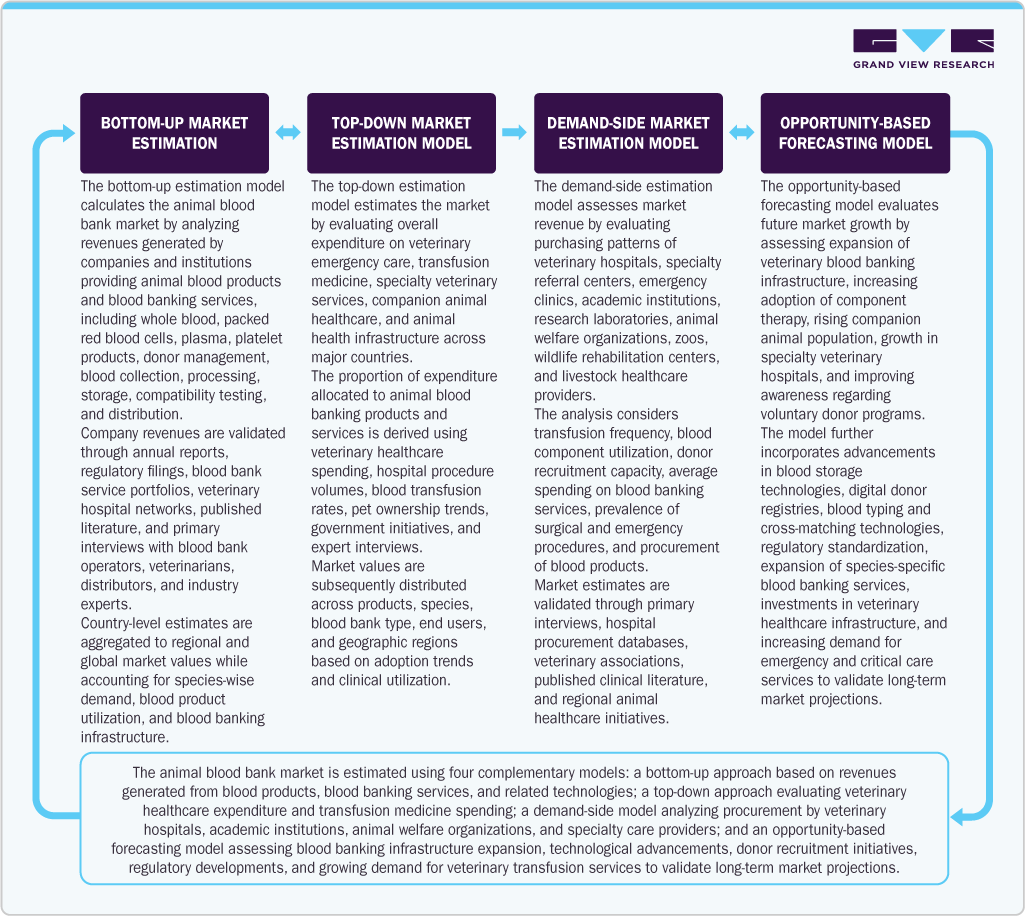
The animal blood bank market figures in this report are based on a proven research process that combines executive interviews with secondary research from proprietary databases, company filings, and recognized regulatory and institutional sources. Market size is built through value-chain sizing - reconciling supply-side and demand-side estimates - and triangulated with bottom-up and top-down approaches. Every estimate passes multiple levels of expert validation before publication, with each animal blood bank segment quantified using the revenue-capture definitions in the table below.
Segment Definition
Segment - Products
Revenue Capture Definition
Packed Red Blood Cells
The market size represents revenue generated from packed red blood cell (PRBC) products used in veterinary transfusion medicine for the treatment of acute blood loss, anemia, surgical procedures, trauma, immune-mediated diseases, and other conditions requiring restoration of oxygen-carrying capacity in animals.
Whole Blood
The market size represents revenue generated from whole blood products used in veterinary transfusion procedures requiring simultaneous replacement of red blood cells, plasma proteins, clotting factors, and circulating blood volume during emergency care, trauma, surgery, and hemorrhagic conditions.
Plasma
The market size represents revenue generated from plasma products, including fresh frozen plasma and frozen plasma, used in veterinary medicine for the management of coagulation disorders, hypoproteinemia, liver diseases, anticoagulant toxicity, and other conditions requiring plasma protein and clotting factor replacement.
Other Products
The market size represents revenue generated from veterinary blood products including platelet concentrates, cryoprecipitate, cryo-poor plasma, granulocyte products, serum, and specialized blood derivatives used for species-specific transfusion requirements and critical care applications.
Segment - Species
Revenue Capture Definition
Canine
The market size represents revenue generated from blood banking products and services developed for dogs, including donor recruitment, blood collection, processing, storage, compatibility testing, and transfusion support across companion animal healthcare facilities.
Feline
The market size represents revenue generated from blood banking products and services developed for cats, including feline donor programs, blood component preparation, blood typing, cross-matching, storage, and transfusion procedures for medical and surgical applications.
Other Species
The market size represents revenue generated from blood banking products and services for equine, production animals, exotic pets, camelids, zoo animals, wildlife, avian species, and other veterinary species requiring blood collection, processing, storage, and transfusion support.
Segment - Type
Revenue Capture Definition
Standalone
The market size represents revenue generated from independent veterinary blood banks that specialize in donor recruitment, blood collection, component processing, storage, compatibility testing, inventory management, and distribution of blood products to veterinary healthcare providers.
Institution-attached
The market size represents revenue generated from blood banks operated by or affiliated with veterinary hospitals, clinics, universities, academic institutions, and research organizations that provide blood banking services primarily for internal clinical, educational, and research activities while supporting external transfusion requirements where applicable.
Segment - End Use
Revenue Capture Definition
Hospitals & Clinics
The market size represents revenue generated from animal blood bank products and services utilized by veterinary hospitals, specialty centers, emergency clinics, and general veterinary practices for transfusion therapy, surgical procedures, trauma management, and critical care treatment.
Academic & Research Institutions
The market size represents revenue generated from animal blood bank products and services utilized by veterinary colleges, universities, teaching hospitals, and research institutions for clinical training, transfusion medicine research, disease studies, and educational programs.
Other End Use
The market size represents revenue generated from animal blood bank products and services utilized by rescue centers, animal welfare organizations, zoological parks, wildlife rehabilitation centers, livestock producers, breeding organizations, pharmaceutical and biotechnology companies, and government veterinary agencies for clinical care, conservation, research, and emergency response activities.
Estimation Model
 To learn more about this report, Download Free Sample Report
Delivered Customizations
This report has been delivered with the following In-depth customizations
Client Request
Customization Delivered
Value Adds
Veterinary Transfusion Infrastructure & Gap Assessment
GVR developed a country-level assessment of animal blood availability by analyzing donor population, blood bank density, emergency transfusion demand, hospital infrastructure, blood component utilization, and regional supply-demand gaps. The study also identified countries with limited blood banking penetration and evaluated infrastructure readiness for expansion.
Enabled the client to identify underserved markets, prioritize regional expansion, allocate investments efficiently, and establish blood banking operations where demand exceeded existing supply capacity.
Species-wise Blood Product Demand & Utilization Analysis
GVR expanded the competitive assessment to benchmark commercial blood banks, university blood banks, and hospital-attached blood banks based on donor acquisition models, blood product portfolio, processing capabilities, geographic coverage, partnerships, pricing approach, technology adoption, and future expansion strategies.
Enabled the client to benchmark business models, identify competitive gaps, evaluate partnership and acquisition opportunities, and strengthen market positioning through differentiated service offerings.
Demand Assessment by Animal Species and Blood Components
GVR customized the report with procedure-level demand estimates for whole blood, packed red blood cells, plasma, and other blood products across canine, feline, equine, production animals, and exotic species. The assessment included transfusion frequency, disease burden, specialty care utilization, and blood component consumption by end user and geography.
Enabled the client to optimize product portfolio planning, forecast species-specific demand, improve inventory allocation, identify high-growth customer segments, and develop targeted commercialization strategies for blood banking products and services.
Frequently Asked Questions About This Report
The global animal blood bank market size was estimated at USD 1.7 billion in 2025 and is expected to reach USD 1.8 billion in 2026.
The global animal blood bank market is expected to grow at a compound annual growth rate of 9.0% from 2025 to 2033 to reach USD 3.3 billion by 2033.
North America dominated the animal blood bank market with the largest revenue share of 48.4% in 2025, driven by increasing demand for veterinary blood products. In Canada, for instance, in January 2025, the Nova Scotia SPCA initiated a program to encourage dog blood donations, highlighting the need for a sustainable blood supply to support animal health services.
Some key players operating in the animal blood bank market include Plassvac, NVABB, LLC, Pet Blood Bank UK, HemoLife, Animal Blood Resources International, Canadian Animal Blood Bank, VEG ER, GADVASU Blood Bank, Tufts University, Mount Vets Veterinary Hospital, DoveLewis, and MAX PETZ HOSPITALS PRIVATE LIMITED.
Key factors that are driving the market growth include increasing use of blood transfusions in companion animal emergency medicine, growing establishment of dedicated veterinary blood banks, rising awareness regarding voluntary donor programs, and supportive regulatory initiatives promoting standardized transfusion practices.
Asia Pacific is also the fastest-growing region over the forecast period.
Based on product, the packed red blood cells (PRBCs) segment led the market with the largest revenue share of 46.8% in 2025.
Based on species, the canine segment led the market with the largest revenue share of 55.5% in 2025, while feline segment is expected to grow at the fastest rate of 9.5% over the forecast period.
Based on type, the standalone animal blood banks segment led the market with the largest revenue share of 58.8% in 2025 as well as growth rate of 9.3% over 2026-2033.
About the Author(s)
Animal Health Research Team
Healthcare · Animal HealthThis report was authored by the animal health research team at Grand View Research - comprising two research analysts, one senior research analyst, and one industry expert - with specialized expertise in the animal health segment of the healthcare industry. All findings are based on proprietary healthcare databases, executive interviews, and regulatory analysis, subject to internal peer review prior to publication.
Last Updated:
Speak to Analyst

Customize this report to your needs - add regions, segments, or data points, with 20% free customization.
Or view our licence options:


ISO 9001:2015 & 27001:2022 Certified
We are GDPR and CCPA compliant! Your transaction & personal information is safe and secure. For more details, please read our privacy policy.


