
- Home
- »
- Medical Devices
- »
-
Antimicrobial Wound Cleanser Market Report, 2026-2033GVR Report cover

Antimicrobial Wound Cleanser Market (2026 - 2033)
Size, Share & Trends Analysis Report By Class (Silver Antimicrobial Wound Cleansers, Non-Silver Antimicrobial Wound Cleansers), By Form, By Wound Type, By End Use, By Region, And Segment Forecasts
Market Size, 2023
$575.3MMarket Estimate, 2026
$600.7MMarket Forecast, 2033
$852.2MCAGR, 2024–2033
4.5%Antimicrobial Wound Cleanser Market Summary
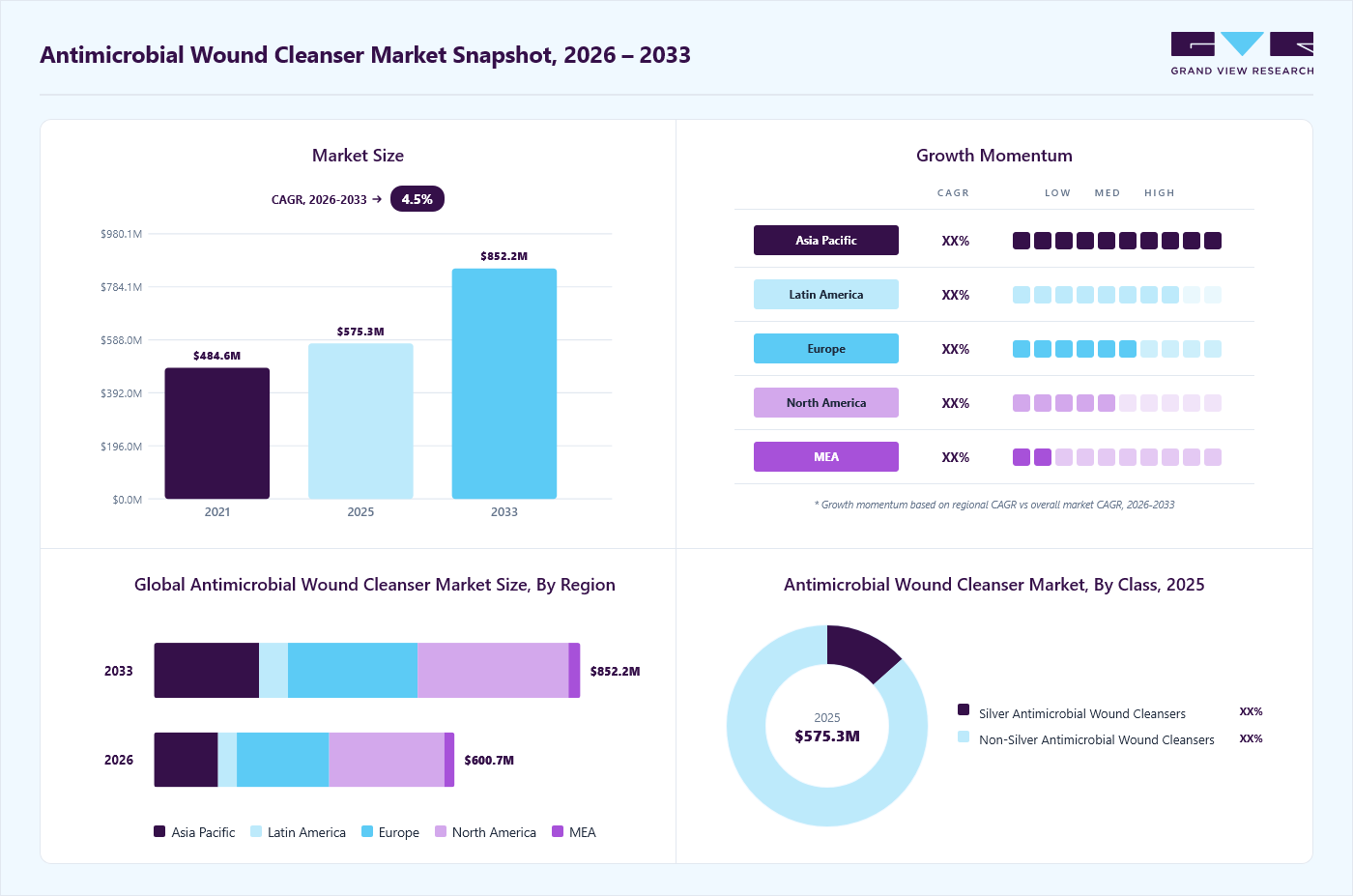
The global antimicrobial wound cleanser market size was valued at USD 575.3 million in 2025 and is projected to grow from USD 600.7 million in 2026 to USD 852.2 million by 2033, at a CAGR of 4.5% from 2026 to 2033. The market in North America dominated with a revenue share of 38.7% in 2025. The market growth is driven by the rising prevalence of chronic wounds such as diabetic foot ulcers and pressure injuries, which require ongoing infection control.
 Source: Grand View Research, IR Documents, Primary Interviews, Paid DatabasesTo learn more about this report,
 Download Free Sample Report
 Key Market Trends & Insights
- By class: Non-silver antimicrobial wound cleansers segment held the largest market share in 2025.
- By form: Liquid solutions segment held the largest market share in 2025.
- By wound type: Acute wounds segment held the largest market share in 2025.
- By end-use: Hospitals segment held the largest market share in 2025.
Regional Highlights
- Largest regional market: North America (38.7% revenue share, 2025)
- By country: The U.S. held the largest market share in 2025
Market Size & Forecast
- Market size in 2025: USD 575.3 Million
- Estimated market size in 2026: USD 600.7 Million
- Projected market size by 2033: USD 852.2 Million
- CAGR (2026-2033): 4.5%
Three ways to get this report
Buy it, customize it, or ask a question.Ask an Analyst
Analyst response in 1 business day
- AccessReport author, directly
- Reply timeWithin 1 working day
- No sales callDirect answer only
- FormatEmail reply
- CostFree, no cost
Get the Full Report
What the study covers
- FormatsPDF · Excel · Dashboard
- Timeline2024–2033 annual, 2023 base
- Coverage20+ countries, 5 regions
- Companies10+ key players profiled
Customize the Report
20% free customization
- IncludeCountries, segments, points
- TailorTo your product definition
- ExtendDeeper competitor detail
- OrA fully bespoke study
- Turnaround5–10 working days
Increasing surgical procedures and trauma cases are also boosting demand for effective wound cleansing solutions. Growing awareness of infection prevention and the reduction of hospital-acquired infections further supports market growth. In addition, the shift toward outpatient and home-based wound care is expanding the use of convenient antimicrobial formulations.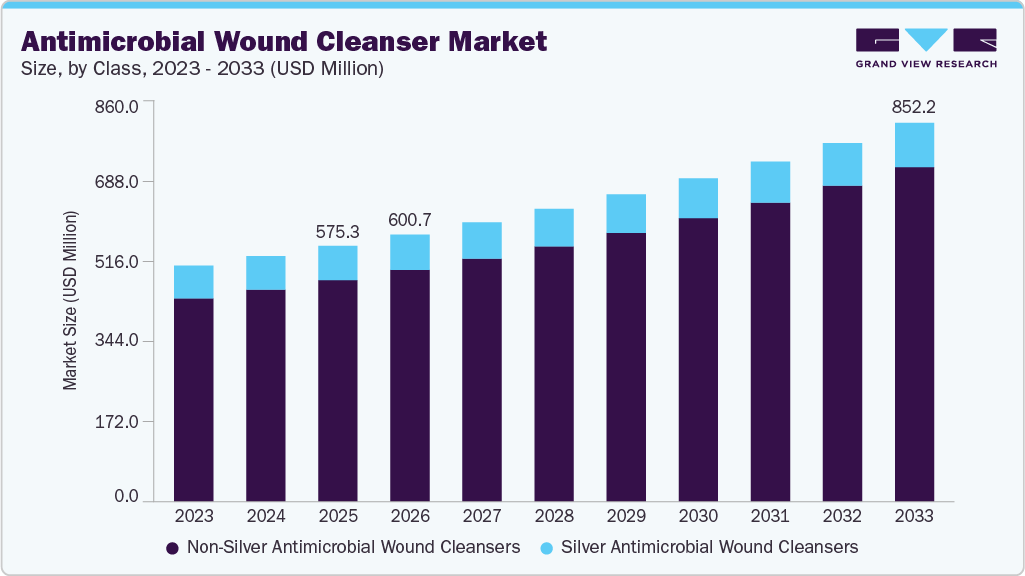 To learn more about this report, Download Free Sample Report
 The growing prevalence of chronic wounds such as diabetic foot ulcers and pressure injuries increases the risk of infection, driving demand for antimicrobial wound therapy. These wounds require long-term management and repeated cleansing, leading to higher product utilization. As diabetes and aging populations rise, the need for effective antimicrobial treatment continues to expand.
Key Statistics on Diabetic Foot Ulcers (DFUs) in Saudi Arabia (2024)
Parameter
Statistic
Lifetime risk of developing DFU in diabetes patients
19-34%
Mortality within 12 months of DFU
~5%
Mortality within 5 years of DFU
~42%
Amputation risk
Higher in patients with diabetes compared to non-diabetics
Source: NCBI
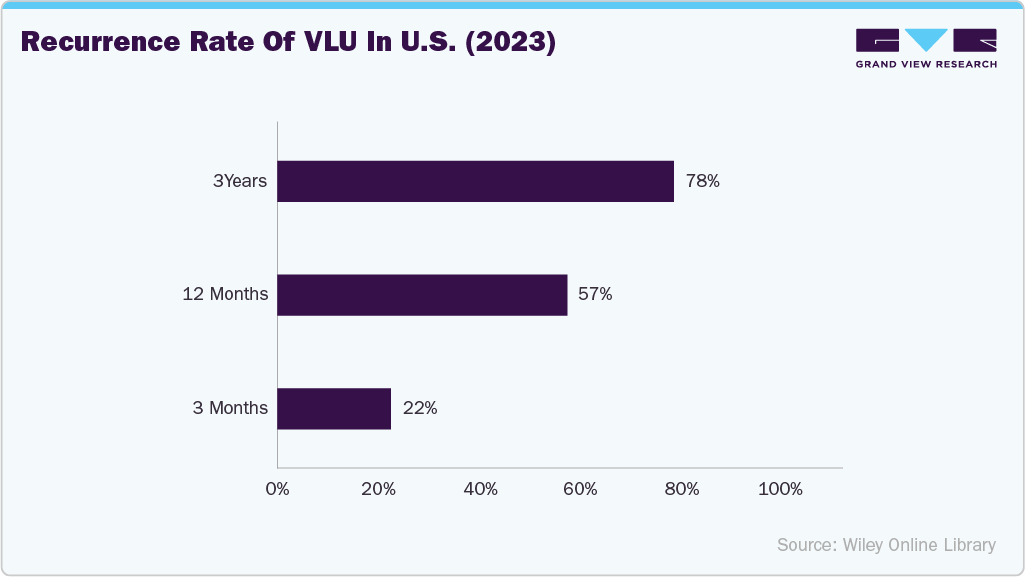
Similarly, venous leg ulcers drive growth in the antimicrobial wound cleanser industry due to their prolonged healing times and high susceptibility to infection. These chronic wounds require regular cleansing to manage bacterial burden and promote recovery. With increasing cases of venous insufficiency and an aging population, the need for antimicrobial cleansing solutions continues to expand. The table below shows the prevalence and reoccurrence rate of VLU in U.S.
Prevalence and Recurrence Rate of VLU in U.S. (2023)
Country
Population Group
Prevalence
Recurrence Rate (3 Months)
Recurrence Rate (12 Months)
Recurrence Rate (3 Years)
United States
People aged 65 and above
4%
22%
57%
78%
Source: Wiley Online Library
Collectively, these factors are increasing the demand for effective infection control solutions in wound management. As a result, the antimicrobial wound cleanser market is poised for sustained growth driven by rising clinical needs and expanding care settings.
Furthermore, the growth in surgical procedures and trauma cases is a key driver, as it increases the number of acute wounds that require prompt, effective infection prevention. Post-operative incisions and injury-related wounds must be properly cleansed to minimize the risk of surgical site infections and complications. This supports steady demand for antimicrobial wound cleansers across hospitals and emergency care settings. As surgical volumes and accident-related injuries continue to rise, overall product utilization is expected to grow.
Surgeries performed in Canada (April 1 - June 30, 2025)
Metric
Statistics
Surgeries Performed or Offered Within 3 Months
78%
Surgeries Performed or Offered Within 6 Months
88.50%
Surgeries Performed or Offered Within 12 Months
96.70%
Total Surgeries Performed
24,627
Source: Saskatchewan
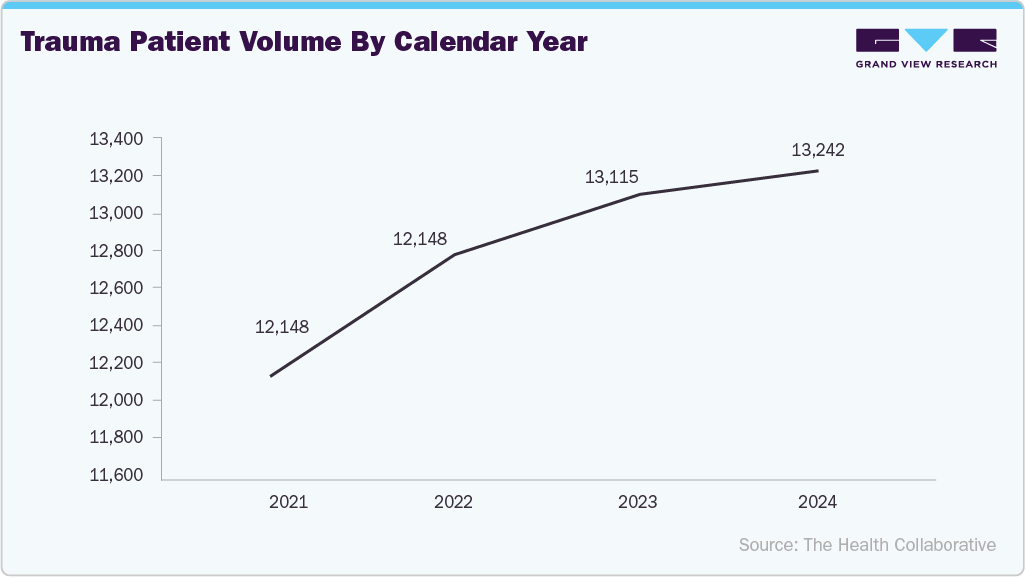
The increase in trauma patients significantly drives the antimicrobial wound cleanser industry, as traumatic injuries often result in open wounds that are highly susceptible to contamination and infection. Immediate and thorough wound cleansing is essential to reduce microbial load and prevent complications. Higher trauma admissions in emergency departments and critical care units lead to greater consumption of antimicrobial cleansing solutions. As accident rates and injury cases continue to rise globally, demand for effective infection-control products correspondingly increases. The table below shows the trauma patient volume.
 To learn more about this report, Download Free Sample Report
 As a result, the increasing number of trauma cases is strengthening the need for effective wound cleansing and infection prevention solutions. This sustained rise in injuries continues to drive growth in the antimicrobial wound cleanser market.
Market Concentration & Characteristics
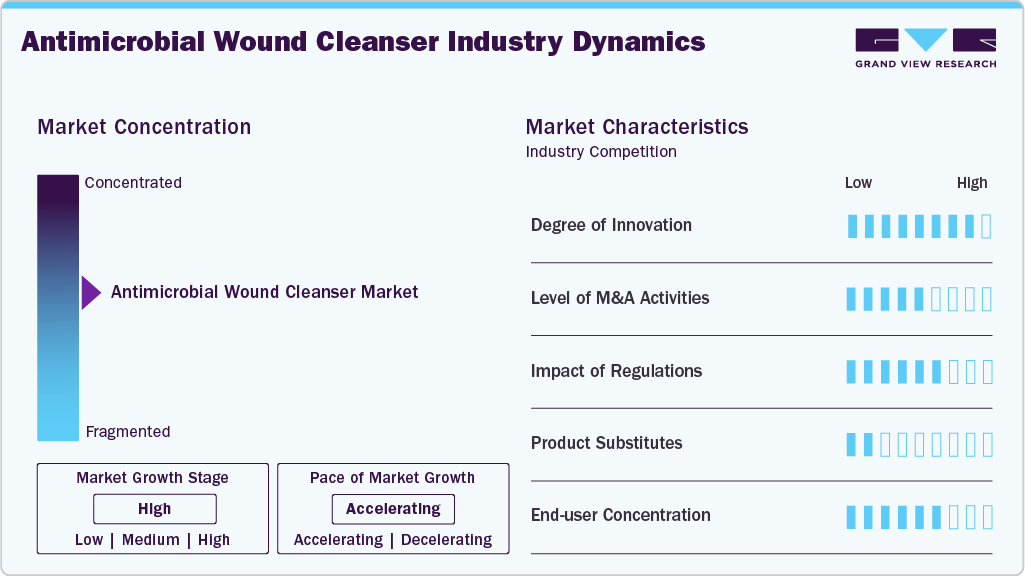
The antimicrobial wound cleanser market is witnessing a moderate to high degree of innovation, driven by the need for improved infection control and enhanced tissue compatibility. Companies are developing advanced formulations that provide broad-spectrum antimicrobial action while minimizing cytotoxicity and irritation. Innovations also include convenient delivery formats, such as sprays, foams, and presaturated wipes, to support home and outpatient care. Furthermore, ongoing research focuses on bioactive and non-traditional antimicrobial agents to improve healing outcomes and product differentiation. For instance, in October 2025, Sonoma Pharmaceuticals, Inc., a global healthcare company focused on stabilized hypochlorous acid (HOCl) solutions utilizing its proprietary Microcyn technology, announced the introduction of a new HOCl wound cleanser produced for Medline Industries, LP. The product will be distributed by Medline across U.S. hospital networks, home healthcare settings, and other healthcare channels nationwide.
"We are very excited for the launch of the new HOCl wound cleanser into hospitals in the United States, which marks a significant milestone in the growth of our U.S. business," said Amy Trombly, CEO of Sonoma Pharmaceuticals. "The substantial efforts by both Sonoma and Medline to make this possible reflect the value to patients and doctors in bringing our wound care technology to major hospital systems. We are proud to be contributing to improved patient care across the country."
 To learn more about this report, Download Free Sample Report
 The antimicrobial wound cleanser market is experiencing a moderate level of mergers and acquisitions, primarily driven by larger wound care companies seeking to expand their product portfolios and geographic presence. Acquisitions often focus on niche manufacturers with innovative formulations or strong regional distribution networks. Strategic consolidation helps companies strengthen their position in hospital procurement channels and outpatient care segments. So, M&A activity supports competitive expansion rather than large-scale market restructuring. For instance, In April 2024, Mölnlycke, a global MedTech company specializing in wound care and wound management, announced that it had signed an agreement to acquire P.G.F. Industry Solutions GmbH, the Austrian manufacturer of Granudacyn wound cleansing and moisturizing solutions.
“With an ageing population in combination with increased chronic wounds, such as diabetic foot ulcers or venous leg ulcers, it is our obligation to help ease the burden of wounds on national healthcare regimes” said Zlatko Rihter, CEO of Mölnlycke Health Care. “The acquisition of P.G.F. and its state-of-the-art manufacturing plant, will allow Mölnlycke to aggressively expand our Granudacyn business to improve the lives of even more patients.”
“I’m excited for P.G.F. to become part of Mölnlycke and for the team to continue to manufacture products that support Mölnlycke’s Wound Care mission to help free patients from the burden of wounds” said Peter Fritz, P.G.F. founder and CEO, who will continue to lead this team and manufacturing process from P.G.F.’s Austria headquarters.
Regulations have a significant impact on the antimicrobial wound cleanser market, as products must meet strict safety, efficacy, and quality standards before commercialization. Classification differences, whether as medical devices or drug-based products, affect approval timelines and compliance requirements across regions. Regulatory scrutiny on antimicrobial claims and labeling also influences product positioning and marketing strategies. While compliance increases development costs, it strengthens clinical confidence and supports long-term market credibility.
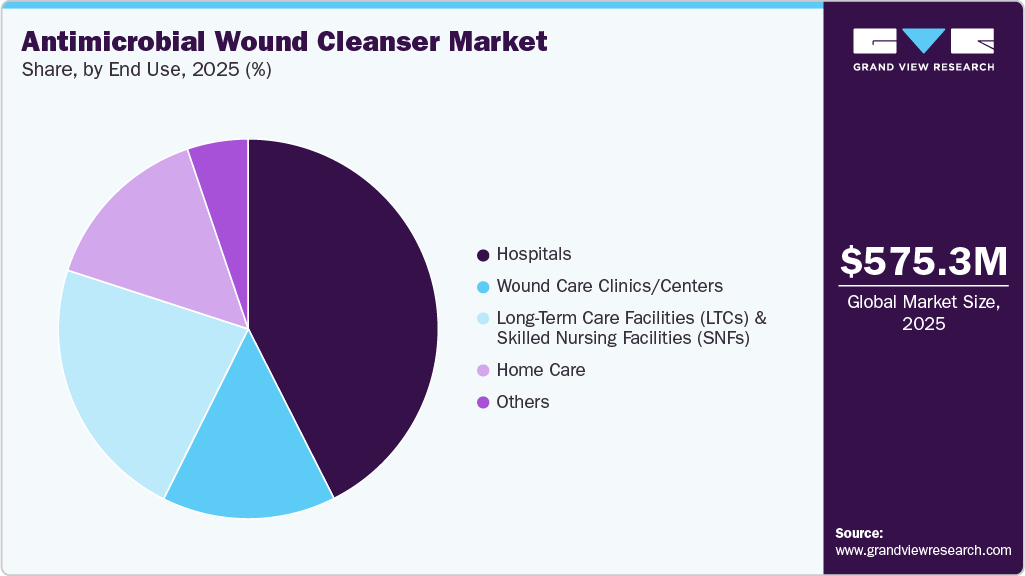
The end-use concentration remains relatively high within hospital and acute care settings, as these facilities account for a large volume of surgical and trauma-related wound management cases. Hospitals typically procure products in bulk under standardized infection-control protocols, thereby supporting consistent demand. However, concentration is gradually diversifying as outpatient clinics, long-term care facilities, and home healthcare providers increase their adoption. This shift is slowly broadening the end-user base beyond traditional hospital dominance.
Class Insights
The non-silver antimicrobial wound cleansers segment dominated the antimicrobial wound cleanser market in 2025, and is expected to grow at the fastest CAGR during the forecast period. These products are widely preferred for their broad-spectrum antimicrobial activity, lower risk of tissue staining, and cost-effectiveness compared to silver-based alternatives. Formulations such as hypochlorous acid and polyhexanide-based solutions are gaining strong clinical acceptance for their safety and tissue compatibility. Increasing demand for gentle yet effective infection control solutions is further driving growth in this segment.
Silver antimicrobial wound cleansers are experiencing significant growth in the market due to their well-established, broad-spectrum antimicrobial properties. These formulations are increasingly used in managing high-risk and infected wounds, particularly in hospital and specialty wound care settings. Silver-based solutions are valued for their sustained antimicrobial activity, which supports infection control in complex and chronic wounds. Growing awareness of advanced wound care options is further contributing to the segment’s expansion.
Form Insights
Liquid solutions dominated the antimicrobial wound cleanser industry, in 2025 due to their widespread use in hospitals, emergency departments, and surgical settings. Their ease of application, ability to thoroughly irrigate wounds, and compatibility with various wound types supported strong adoption. Liquid formats are also preferred for bulk usage in acute care environments where high patient volumes require efficient wound cleansing. In addition, their cost-effectiveness compared to specialized formats contributed to their leading market share.
The pre-saturated wipes & swabs segment is expected to grow at the fastest CAGR during the forecast period, driven by increasing demand for convenience and infection control. These single-use formats reduce cross-contamination risks and eliminate the need for additional preparation, making them ideal for home care and outpatient settings. Their portability and ease of disposal further support adoption among caregivers and mobile healthcare providers. As wound management shifts outside hospitals, demand for ready-to-use cleansing solutions is projected to accelerate.
Wound Type Insights
Acute wounds dominated the antimicrobial wound cleanser industry in 2025, largely due to the high volume of surgical procedures, trauma cases, and burn injuries requiring immediate infection prevention. These wounds required prompt and effective cleansing to minimize complications and support optimal healing. Hospitals and emergency care settings accounted for a significant share of product usage within this segment. The increased number of surgical interventions and accidental injuries contributed to strong demand for antimicrobial wound cleansers in acute care.
The chronic wounds segment is expected to grow at the fastest CAGR during the forecast period, driven by the rising prevalence of diabetes, obesity, and vascular disorders. Conditions such as diabetic foot ulcers, pressure ulcers, and venous leg ulcers require ongoing wound management and repeated cleansing to prevent infection. The aging population further contributes to the increasing burden of slow-healing wounds. As a result, demand for effective and tissue-friendly antimicrobial cleansing solutions is projected to rise significantly in this segment.
End Use Insights
Hospitals dominated the antimicrobial wound cleanser market in 2025, due to the high volume of surgical procedures, trauma cases, and inpatient wound management treatments. Strict infection control protocols and the need to prevent hospital-acquired infections drive consistent use of antimicrobial cleansing solutions. Hospitals also benefit from bulk procurement systems and standardized wound care pathways, which support greater product adoption. The presence of skilled healthcare professionals ensures the routine use of advanced wound care products in acute settings.
 To learn more about this report, Download Free Sample Report
 The home care segment is expected to grow the fastest during the forecast period, driven by the shift in wound management from hospitals to residential settings. Rising cases of chronic wounds, particularly among elderly and diabetic patients, are encouraging at-home treatment under professional guidance. Patients and caregivers prefer easy-to-use, ready-to-apply antimicrobial cleansers that reduce infection risk. In addition, cost savings and reduced hospital visits are further accelerating growth in this segment.
Regional Insights
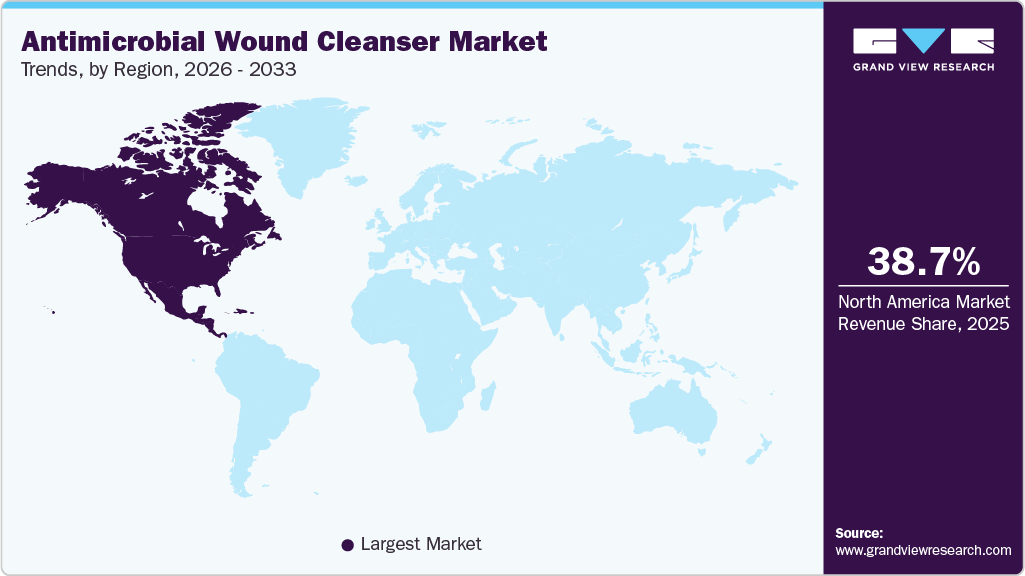
The antimicrobial wound cleanser industry in North America held the largest share and accounted for 38.71% of global revenue in 2025. The market is being shaped by growing emphasis on infection prevention and value-based care, driving hospitals and outpatient clinics to adopt more advanced cleansing solutions. There is increasing uptake of low-toxicity, broad-spectrum formulations as clinicians seek better healing outcomes and reduced complications. Home healthcare and post-acute care settings are also driving demand as more wound management shifts away from traditional hospitals. In addition, innovation in user-friendly formats, such as sprays and single-use packs, is a notable trend supporting broader adoption across care environments.
 To learn more about this report, Download Free Sample Report
 U.S. Antimicrobial Wound Cleanser Market Trends
The antimicrobial wound cleanser industry in the U.S. is evolving as clinicians adopt evidence-based wound care practices and prefer products that balance infection control with gentle tissue compatibility. Growth in outpatient wound care clinics and home health services is expanding in use beyond hospitals, especially for chronic wounds like DFU, VLU and pressure injuries and post-surgical care. There is also a shift toward convenient, single-use formats that support infection control and reduce caregiver burden. Ongoing clinician education on wound management is helping drive more consistent use of antimicrobial cleansing products.
 To learn more about this report, Download Free Sample Report
 Europe Antimicrobial Wound Cleanser Market Trends
The Europe antimicrobial wound cleanser industry is witnessing significant growth driven by the rising adoption of structured wound management protocols across hospitals and community care settings. Healthcare providers are selecting formulations that offer effective antimicrobial action while remaining gentle on tissue. The shift toward outpatient and home-based care is further driving demand for convenient, easy-to-use products. Moreover, strict regulatory standards across the region continue to influence product development and quality expectations.
The UK antimicrobial wound cleanser market is growing as healthcare providers place greater emphasis on effective infection prevention and efficient wound healing pathways. There is increasing use of advanced, low-irritation cleansing solutions in both NHS and private care settings, especially for chronic ulcers and post-surgical wounds. Expansion of community and home healthcare services is also boosting demand for easy-to-use formats. In addition, clinicians' focus on cost-effective care is encouraging wider adoption of products that demonstrate clear clinical benefit.
Average Annual Cost and total treatment cost of VLU in UK (2022)
Country
Average Annual Treatment Cost per Patient
Total Treatment Cost
UK
£5,488
£300 million
Source: Science Direct
The France antimicrobial wound cleanser market is evolving as healthcare providers increasingly emphasize standardized wound care practices and infection prevention across hospitals and outpatient clinics. There is a growing preference for formulations that are effective yet gentle on sensitive tissue, particularly for chronic and post-operative wounds. Demand is also rising in home care and long-term care settings as more wound management shifts outside traditional hospital environments. Furthermore, French clinicians are increasingly interested in products with clearer clinical outcomes and user-friendly application formats.
Asia Pacific Antimicrobial Wound Cleanser Market Trends
The Asia Pacific antimicrobial wound cleanser industry is gaining momentum as more healthcare facilities adopt improved wound care practices to address rising rates of chronic conditions and surgical procedures. Growth in home healthcare and outpatient services is expanding demand beyond traditional hospital settings. There is increasing interest in cost-effective, easy-to-use products that are suitable for both clinical and home environments. In addition, broader distribution and awareness are helping drive uptake in emerging markets across Southeast Asia and South Asia.
The Japan antimicrobial wound cleanser market is being shaped by a rapidly aging population with a higher incidence of chronic wounds and pressure injuries, which is driving greater use of specialized cleansing solutions. Hospitals and long-term care facilities are increasingly adopting gentle, effective antimicrobial products that support infection prevention. There is also growing demand for home healthcare as more wound management shifts out of traditional hospital settings. Furthermore, Japanese clinicians prioritize products with strong safety profiles and ease of application, reflecting a focus on patient comfort and quality of care.
Latin America Antimicrobial Wound Cleanser Market Trends
The Latin America antimicrobial wound cleanser industry is gradually expanding as healthcare systems strengthen their focus on infection control and wound management. Increasing access to modern wound care products in both urban hospitals and community clinics is driving broader adoption. Demand is also rising for affordable, easy-to-use formulations suitable for outpatient and home care environments. The growing awareness among clinicians and patients about the benefits of specialized cleansers is supporting market growth across key countries.
MEA Antimicrobial Wound Cleanser Market Trends
The MEA antimicrobial wound cleanser industry is expanding rapidly due to increased focus on infection control and improved wound management practices. In countries such as Saudi Arabia, healthcare modernization initiatives under Saudi Vision 2030 are strengthening hospital infrastructure and expanding access to advanced medical products, supporting demand for antimicrobial wound care solutions. Growing surgical volumes and increased adoption in outpatient and home care settings are further contributing to market growth. In addition, cost-effective and easy-to-use formulations are gaining traction across both public and private healthcare facilities in the region.
Key Antimicrobial Wound Cleanser Company Insights
The antimicrobial wound cleanser market is led by major wound care companies, including 3M, Smith+Nephew, Mölnlycke Health Care, Medline Industries, and Cardinal Health. Large multinational players hold a significant share due to strong hospital networks and diversified product portfolios, while regional manufacturers compete in price-sensitive and niche segments. The market remains moderately fragmented, with dominance varying by region.
Key Antimicrobial Wound Cleanser Companies:
The following key companies have been profiled for this study on the antimicrobial wound cleanser market.
- 3M
- Smith+Nephew
- B. Braun Melsungen AG
- Urgo Medical
- Medline Industries
- Mölnlycke Health Care
- Sonoma Pharmaceuticals
- Johnson & Johnson (Band-Aid)
- MPM Medical
- Beiersdorf (Hansaplast and Elastoplast)
- iNova Pharmaceuticals (Betadine)
- Bactiguard AB
- Stryker
- Cardinal Health
Recent Developments
-
In September 2025, Kane Biotech Inc. announced that it had submitted a 510 (k) application to the U.S. Food and Drug Administration (FDA) for its revyve Antimicrobial Wound Cleanser.
-
In October 2025, Sonoma Pharmaceuticals, Inc., a global healthcare company specializing in stabilized hypochlorous acid (HOCl) products based on its patented Microcyn technology, announced the launch of a new HOCl wound cleanser manufactured for Medline Industries, LP. The product will be distributed by Medline to hospital systems, home healthcare providers, and other healthcare channels throughout the United States.
-
In May 2025, Mölnlycke Health Care signed an agreement to acquire P.G.F. Industry Solutions GmbH, the manufacturer of Granudacyn, a range of solutions for wound cleansing and moisturizing, to further strengthen its position as a global leader in wound care.
-
In August 2024, Biomiq Inc., a Canadian medical device innovation company, announced the launch of PureCleanse STAT, the newest addition to its PureCleanse product portfolio. Designed for emergency responders, acute care professionals, and clinicians treating chronic, hard-to-heal wounds, PureCleanse STAT is a pure hypochlorous acid (HOCl) wound irrigation and debridement system engineered for rapid application and optimal irrigation pressure.
Antimicrobial Wound Cleanser Market Report Scope
Report Attribute
Details
Market size in 2025
USD 575.3 million
Estimated market size in 2026
USD 600.7 million
Projected market size by 2033
USD 852.2 million
Growth rate
CAGR of 4.5% from 2026 to 2033
Base year for estimation
2025
Historical data
2021 - 2024
Forecast period
2026 - 2033
Quantitative units
Revenue in USD million/billion and CAGR from 2026 to 2033
Report coverage
Revenue forecast, company ranking, competitive landscape, growth factors, and trends
Segments covered
Class, form, wound type, end use, region
Regional scope
North America; Europe; Asia Pacific; Latin America; MEA
Country scope
U.S.; Canada; Mexico; Germany; UK; France; Norway; Italy; Denmark; Sweden; Spain; China; Japan; India; South Korea; Australia; Brazil; KSA; UAE; South Africa
Key companies profiled
3M; Smith+Nephew; B. Braun Melsungen AG; Urgo Medical; Medline Industries; Mölnlycke Health Care; Sonoma Pharmaceuticals; Johnson & Johnson (Band-Aid); MPM Medical; Beiersdorf (Hansaplast and Elastoplast); iNova Pharmaceuticals (Betadine); Bactiguard AB; Stryker; Cardinal Health
Customization scope
Free report customization (equivalent up to 8 analysts working days) with purchase. Addition or alteration to country, regional & segment scope.
Pricing and purchase options
Avail customized purchase options to meet your exact research needs. Explore purchase options
Global Antimicrobial Wound Cleanser Market Report Segmentation
This report forecasts revenue growth at the global, regional, and country levels and provides an analysis on the latest industry trends in each of the sub-segments from 2021 to 2033. For this study, Grand View Research has segmented the global antimicrobial wound cleanser market report based on class, form, wound type, end use, and region:
-
Class Outlook (Revenue, USD Million, 2021 - 2033)
-
Silver Antimicrobial Wound Cleansers
-
Non-Silver Antimicrobial Wound Cleansers
-
Biguanides
-
Polyhexamethylene Biguanide (PHMB)
-
Chlorhexidine Gluconate (CHG)
-
-
-
Chlorine-based Compounds
-
Iodophores (Iodine-Based)
-
Surfactant Only
-
Others
-
-
Form Outlook (Revenue, USD Million, 2021 - 2033)
-
Liquid Solutions
-
Spray & Aerosol Systems
-
Pre-Saturated Wipes & Swabs
-
-
Wound Type Outlook (Revenue, USD Million, 2021 - 2033)
-
Acute Wounds
-
Surgical incisions
-
Traumatic Injuries
-
Thermal Burns
-
1st Degree
-
2nd Degree
-
-
-
Chronic Wounds
-
Diabetic Foot Ulcers (DFU)
-
Venous/Arterial Leg Ulcers (VLU)
-
Pressure Injuries (Pressure Ulcers)
-
-
-
End Use Outlook (Revenue, USD Million; 2021 - 2033)
-
Hospitals
-
Wound Care Clinics/Centers
-
Long-Term Care Facilities (LTCs) & Skilled Nursing Facilities (SNFs)
-
Home Care
-
Others
-
-
Regional Outlook (Revenue, USD Million, 2021 - 2033)
-
North America
-
U.S.
-
Canada
-
Mexico
-
-
Europe
-
Germany
-
UK
-
France
-
Italy
-
Spain
-
Sweden
-
Denmark
-
Norway
-
-
Asia Pacific
-
Japan
-
China
-
India
-
Australia
-
South Korea
-
Thailand
-
-
Latin America
-
Brazil
-
Argentina
-
-
Middle East & Africa
-
South Africa
-
Saudi Arabia
-
UAE
-
Kuwait
-
-
Frequently Asked Questions About This Report
Non-silver antimicrobial wound cleansers segment held the largest revenue share in 2025.
Liquid solutions segment held the largest revenue share in 2025, while pre-saturated wipes & swabs is the fastest-growing segment.
Acute wounds segment held the largest revenue share in 2025, while chronic wounds is the fastest-growing area.
Hospitals segment held the largest revenue share in 2025 and home care is the fastest-growing.
The global antimicrobial wound cleanser market size was valued at USD 575.3 million in 2025 and is estimated at USD 600.7 million for 2026.
The global antimicrobial wound cleanser market is expected to grow at a CAGR of 4.5% from 2026 to 2033, reaching USD 852.2 million.
North America dominated with a 38.7% revenue share in 2025.
Key players include the rising prevalence of chronic wounds such as diabetic foot ulcers and pressure injuries, which require ongoing infection control. Increasing surgical procedures and trauma cases are also boosting demand for effective wound cleansing solutions.
The antimicrobial wound cleanser market is driven by rising chronic wound cases, increasing surgical procedures, growing infection-control awareness, an aging population, technological innovations in wound care products, and expanding home healthcare services.
About the Author(s)
Medical Devices Research Team
Healthcare · Medical DevicesThis report was authored by the medical devices research team at Grand View Research - comprising two research analysts, one senior research analyst, and one industry expert - with specialized expertise in the medical devices segment of the healthcare industry. All findings are based on proprietary healthcare databases, executive interviews, and regulatory analysis, subject to internal peer review prior to publication.
Last Updated:
Speak to Analyst

Customize this report to your needs - add regions, segments, or data points, with 20% free customization.
Or view our licence options:


ISO 9001:2015 & 27001:2022 Certified
We are GDPR and CCPA compliant! Your transaction & personal information is safe and secure. For more details, please read our privacy policy.


