
- Home
- »
- Healthcare IT
- »
-
Artificial Intelligence In Healthcare Market Report, 2026-2033GVR Report cover
![Artificial Intelligence In Healthcare Market (2026 - 2033)Report]()
Artificial Intelligence In Healthcare Market (2026 - 2033)
Size, Share & Trends Analysis Report By Component (Hardware, Software, Services), By Application (Clinical Trials, Cybersecurity), By End-use, By Technology, By Region, And Segment Forecasts
Market Size, 2025
$36.7BMarket Estimate, 2026
$50.7BMarket Forecast, 2033
$505.6BCAGR, 2026–2033
38.9%AI In Healthcare Market Summary
The global artificial intelligence in healthcare market size was valued at USD 36.7 billion in 2025 and is projected to grow from USD 50.7 billion in 2026 to USD 505.6 billion by 2033, at a CAGR of 38.9% from 2026 to 2033. The market in North America dominated with a revenue share of 54% in 2025. The key factor driving market growth is the increasing demand in the healthcare sector for enhanced efficiency, accuracy, and better patient outcomes.

Key Market Trends & Insights
- By component: Software solution segment held the largest market share of 46% in 2025.
- By application: Robot-assisted surgery segment held the largest market share of 13% in 2025.
- By end-use: Pharmaceutical and biotechnology segment held the largest market share of 30% in 2025.
- By technology: Machine learning segment held the largest market share of 35% in 2025.
Regional Highlights
- Largest regional market: North America (54% revenue share, 2025)
- By country: U.S. held the largest market share in 2025
Market Size & Forecast
- Market size in 2025: USD 36.7 Billion
- Estimated market size in 2026: USD 50.7 Billion
- Projected market size by 2033: USD 505.6 Billion
- CAGR (2026-2033): 38.9%
According to a March 2024 Microsoft-IDC study, 79% of healthcare organizations are presently utilizing AI technology. In addition, the return on investment (ROI) is realized within 14 months, generating USD 3.20 for every USD 1 invested in AI. AI technologies hold transformative potential in various areas, including medical imaging analysis, predictive analytics, personalized treatment planning, and drug discovery, with the potential to transform conventional healthcare practices.
The exponential growth in healthcare data, sourced from electronic health records, medical imaging scans, wearable devices, and genomic sequencing, presents significant opportunities for AI-powered solutions to extract actionable insights and support clinical decision-making.
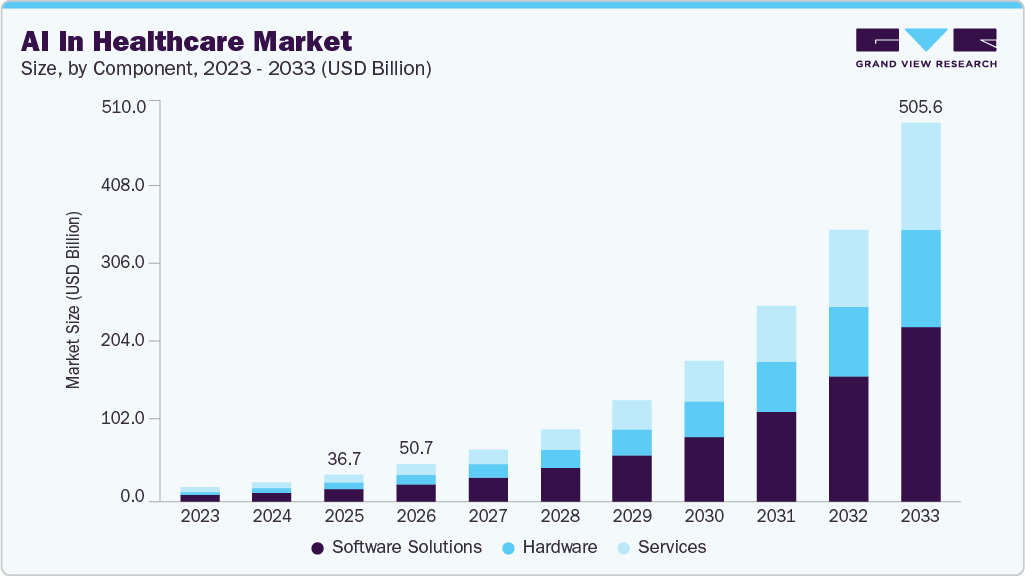
The increasing shortage of healthcare workers is also driving the adoption of AI and machine learning (ML) technologies. According to World Economic Forum estimates from May 2023, there will be a global health worker deficit of 10 million by 2033. Hence, AI algorithms can be trained to analyze patient health data, aiding care providers in rapid diagnosis and treatment planning.
The implementation of AI and ML technologies aims to enhance patient care, reduce machine downtime, and lower care expenses, driving market growth. The pandemic has further accelerated the adoption of AI-based technologies, particularly in diagnostics, patient and medication management, claims processing, workflow optimization, machine integration, and cybersecurity within healthcare settings.
Regulatory Trends Analysis
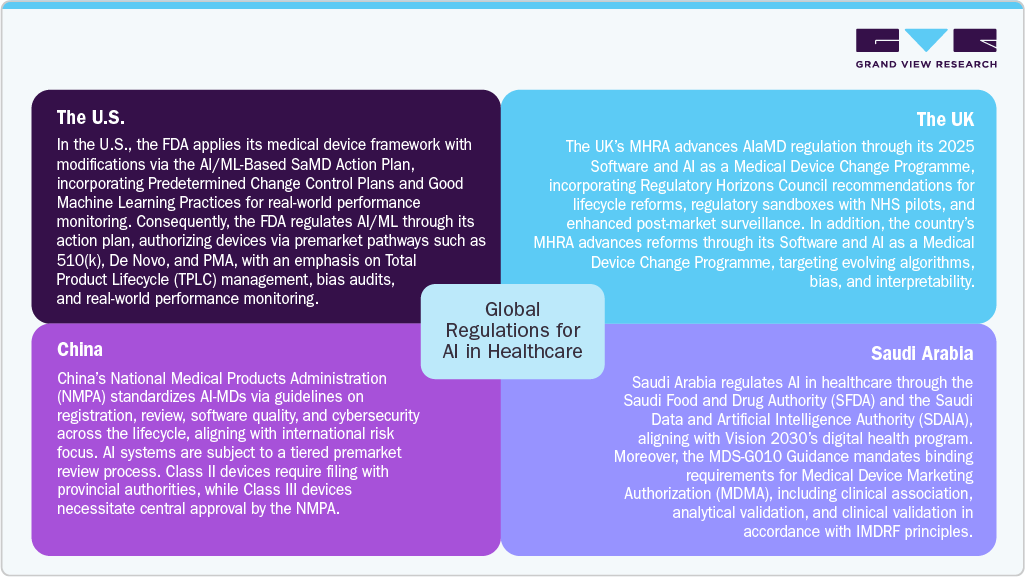
The global regulatory framework for AI in healthcare primarily regulates artificial intelligence through Software as a Medical Device (SaMD) classifications under existing medical device laws, emphasizing risk-based approaches across jurisdictions. The International Telecommunication Union (ITU) provides foundational guidance through its 2022/2023 publication "Regulatory Considerations on Artificial Intelligence for Health," emphasizing six key areas: transparency and documentation across the product lifecycle, risk management addressing intended use and cybersecurity, data quality with bias mitigation, clinical validation through independent testing, post-market surveillance, and ethical governance promoting equity.
Similarly, the International Medical Device Regulators Forum (IMDRF) establishes Good Machine Learning Practice (GMLP) through its 2025 document, outlining 10 guiding principles for AI/ML-enabled medical devices. In addition, the IMDRF efforts promote harmonization by standardizing the risk categorization of SaMD and total product lifecycle (TPLC) oversight, addressing adaptive algorithms, cybersecurity, and post-market surveillance.
Survey/Case Study Insights
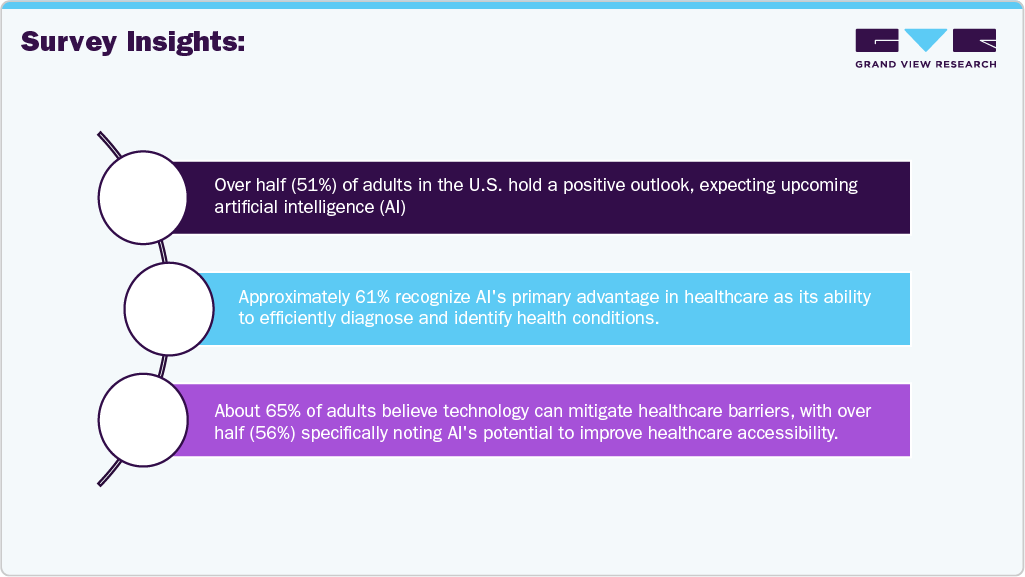
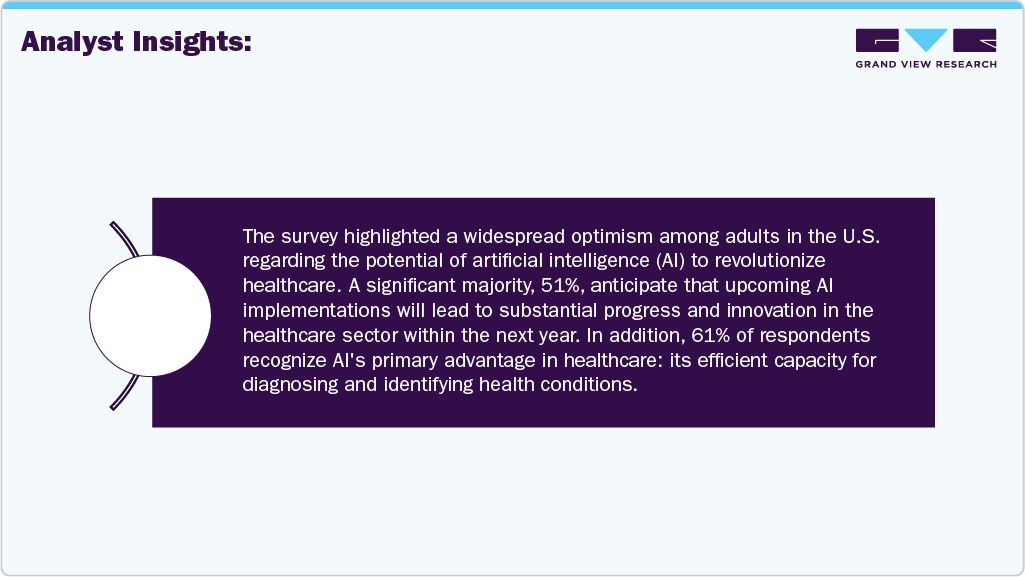
- Medtronic Survey, November 2023: AI's Potential for Earlier Diagnosis and Improved Access to Care
Market Dynamics
The growing integration of artificial intelligence across connected healthcare ecosystems is significantly driving the global AI in healthcare market. AI-powered platforms enable real-time health tracking, predictive analytics, and personalized wellness management through wearable devices, biosensors, and remote monitoring systems. These technologies support continuous monitoring of physiological parameters such as heart rate, sleep quality, blood oxygen levels, and stress indicators, improving preventive healthcare and early intervention. Rising demand for personalized digital health solutions and proactive, data-driven patient management is further accelerating market growth.
The increasing adoption of AI-enabled clinical technologies in diagnostics, surgery, and drug development is also transforming healthcare delivery globally. For instance, in May 2026, Aidoc partnered with Sol Radiology to deploy enterprise-grade clinical AI solutions across Southern California, integrating imaging-based AI into radiology workflows to improve diagnostic prioritization, care coordination, and treatment efficiency.
Furthermore, AI is playing a critical role in advancing remote patient monitoring and scalable virtual care delivery. AI-enabled platforms analyze large volumes of real-time patient data generated through wearables, connected medical devices, and cloud-based healthcare systems to support early detection of clinical deterioration. Healthcare providers are increasingly implementing AI-powered command centers, smart wards, and predictive monitoring systems to improve patient outcomes and reduce hospital readmissions across cardiovascular, respiratory, neurological, and chronic disease management applications.
Healthcare AI platforms are also being integrated into remote patient monitoring workflows to enhance predictive analytics and clinical decision support. Regulatory support for digital health technologies and expanding telehealth infrastructure are strengthening adoption across hospitals, ambulatory care centers, and homecare settings. For instance, in March 2026, MultiCare Health System selected hellocare.ai as its enterprise-wide virtual care platform. In addition, in February 2026, Ardent Health partnered with hellocare.ai to deploy AI-assisted virtual physicians, nurses, patient observation, and safety solutions across more than 2,000 hospital rooms.
Cybersecurity and privacy concerns represent a major restraint for AI in healthcare market, as the increasing reliance on cloud-based platforms, connected medical devices, and digital health ecosystems expands exposure to sensitive patient data. The growing integration of telehealth platforms with electronic health records (EHRs) and remote monitoring solutions has heightened vulnerabilities to cyber threats such as ransomware attacks, unauthorized access, and system disruptions. These risks are further intensified by limited cybersecurity budgets, a shortage of skilled IT professionals, and reliance on legacy healthcare IT infrastructure, which collectively challenge the secure and scalable deployment of telehealth services.
Healthcare data breaches have increased significantly in recent years. According to the 2024 Healthcare Data Breach Report, 725 healthcare data breaches involving 500 or more records were reported, exposing more than 133 million patient records, highlighting the increasing vulnerability of healthcare IT systems to cyber threats. These incidents raise concerns among healthcare providers regarding the protection of sensitive patient information and create challenges for the adoption of telehealth platforms.
Market Concentration & Characteristics
The chart below illustrates the relationship between industry concentration, industry characteristics, and industry participants. The X-axis represents the level of market concentration, ranging from low to high. The Y-axis represents various market characteristics, including industry competition, degree of innovation, level of mergers & acquisition activities, regulatory impact, and regional expansion. For instance, the artificial intelligence in the healthcare industry is highly fragmented, with many players entering the market and launching new innovative products.
The healthcare AI market exhibits a high degree of innovation, characterized by ongoing advancements in technology. Rapid developments in machine learning, deep learning, natural language processing, and computer vision are driving the evolution of AI-powered healthcare solutions. For instance, in November 2025, Samsung launched the R20 ultrasound system, a premium platform for general imaging.
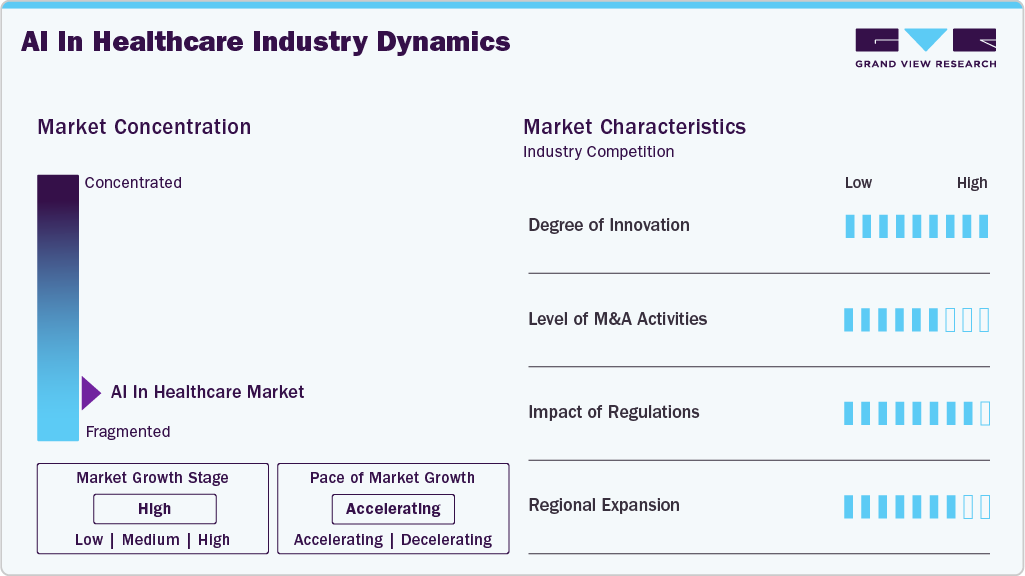
Mergers and acquisitions (M&A) play a significant role in shaping the healthcare AI market landscape. Companies engage in M&A to expand their AI software and services, expand their market reach, or acquire specialized technology and expertise. For instance, in January 2026, OpenAI acquired the healthcare startup Torch to integrate its "unified medical memory" technology, aggregating lab results, medications, and visit recordings into ChatGPT Health.
Regulations such as HIPAA (Health Insurance Portability and Accountability Act) in the U.S. and GDPR (General Data Protection Regulation) in Europe establish standards for safeguarding patient data privacy and security. Compliance with these regulations is crucial for AI applications in healthcare to ensure the safe and secure handling of patient information, reducing the risk of data breaches and unauthorized access.
End Users are becoming increasingly aware of the potential benefits of AI in improving patient care, operational efficiency, and healthcare outcomes. Education initiatives and industry events helped raise awareness about the capabilities and applications of AI in healthcare.
Component Insights
Based on component, the software solution segment dominated the market with the largest revenue share of over 46% in 2025, and it is expected to grow significantly during the forecast period. This growth is attributed to the rapidly growing adoption rate of AI-based software solutions amongst healthcare providers, payers, and patients. For instance, in May 2025, Mexico's COFEPRIS approved Medsi AI's platform as a Class II SaMD, transforming 70-second smartphone video selfies into comprehensive health reports with over 20 vital signs, including heart rate, blood pressure, oxygen saturation, hemoglobin, and A1C, via rPPG and RAG algorithms. It detects prediabetes/hypertension early, offers preventive insights, and ensures data privacy through anonymization.
The services segment is expected to grow at the fastest CAGR from 2026 to 2033. This growth is attributable to the rising penetration of AI-based technologies in several healthcare applications, such as clinical trials, virtual assistants, robot-assisted surgeries, dosage error reduction, and fraud detection. This segment encompasses consulting, implementation, training, and managed services that support the adoption of AI across providers and payers. Providers leverage these services for AI integration in diagnostics, workflow automation, and predictive analytics, driving significant efficiency gains in operational costs.
Application Insights
Based on application, the robot-assisted surgery segment dominated the market in 2025 with the largest revenue share of over 13%. The surge in robot-assisted surgeries, coupled with increased funding and investment in AI platform development, is a key driver propelling AI penetration in this field. For instance, in July 2025, Hyderabad-based CARE Hospitals launched the AI-powered Stryker Mako Robotic System for joint replacement surgeries. This advanced system integrates AI-driven 3D CT-based surgical planning with real-time robotic guidance and haptic feedback to deliver personalized, precise knee and hip replacements. Similarly, in May 2025, South Korea's Ministry of Health and Welfare (MOHW) and the Korea Health Industry Development Institute (KHIDI) announced plans to develop an AI-driven surgery assistant robot under the Korean Advanced Research Projects Agency for Health (ARPA-H). This AI-powered assistant robot aims to perform repetitive tasks to support surgeons during operations, addressing the shortage of surgical staff.
The fraud detection segment is anticipated to grow at the fastest CAGR from 2026 to 2033. The increasing penetration of health insurance, coupled with the rising number of fraud cases in the healthcare industry, is a factor contributing to segment growth. For instance, in March 2024, the government issued guidelines to intensify measures on healthcare fraud. Moreover, the growing focus on curbing healthcare costs, along with the technological advancements to launch advanced analytical techniques, is also expected to fuel the segment growth. For instance, in August 2024, MediBuddy launched an artificial intelligence (AI)-powered fraud detection system for healthcare reimbursement claims. The system uses machine learning algorithms to provide real-time analysis and alerts, aiding in the identification of potential errors and fraud before they occur.
End-use Insights
Based on end use, pharmaceutical and biotechnology companies dominated the market with the largest revenue share of over 30% in 2025. The widespread adoption of AI technologies in drug development, leveraging genomic information, medical records, and clinical trial data, enables the identification of personalized treatment options and the targeting of therapies to specific patient groups. For instance, in April 2025, PRISM BioLab and Elix partnered to advance AI-driven drug discovery using PRISM BioLab's small molecule peptide-mimetic PepMetics technology and Elix's AI drug discovery platform.
“Improving drug discovery efficiency is an eternal challenge. Delivering better medicines to patients and healthcare professionals as quickly as possible requires innovation. Our PepMetics technology has characteristics that are highly compatible with AI applications.”
-PRISM BioLab CTO Tatsuya Toma
Moreover, AI-driven analytics and predictive modeling improve the design, execution, and analysis of clinical trials, resulting in more efficient and cost-effective trials. As per a study by Scilife N.V. in January 2024, approximately 80% of professionals in the pharmaceutical and life sciences sectors utilize AI in drug discovery. Furthermore, research from another study suggests that AI technology reduces the time required by pharmaceutical companies to discover new drugs from 5-6 years to just one year.
The healthcare providers (hospitals, outpatient facilities, and others) segment is expected to grow significantly over the forecast period. AI-powered medical imaging analysis tools aid healthcare providers in interpreting medical images like X-rays, MRIs, and CT scans. These tools improve diagnostic accuracy, shorten interpretation time, and facilitate early disease detection, resulting in prompt interventions and enhanced patient care. For instance, in February 2025, researchers in Switzerland developed a robust AI model that can automatically segment major anatomical structures in MRI images, independent of the imaging sequence. This advancement enhances the efficiency and accuracy of MRI analysis, potentially transforming diagnostic practices in medical imaging. In addition, hospitals are leveraging AI-driven predictive analytics to anticipate patient admission rates, pinpoint at-risk populations, and allocate resources effectively. These factors are driving growth within the segment throughout the forecast period.
Technology Insights
Based on technology, the machine learning segment held the largest market share of over 35 % in 2025. The healthcare industry generates vast amounts of data, including electronic health records (EHRs), medical imaging, genomic data, and wearable device data. Machine learning excels at extracting valuable insights from these large and diverse datasets, enabling healthcare providers to make data-driven decisions and improve patient outcomes. This technology is extensively integrated into healthcare solutions for disease diagnosis, prognosis, and treatment planning. Leveraging patient data patterns and correlations, machine learning models can detect early disease indicators, forecast patient outcomes, and propose personalized treatment strategies, thereby enhancing the accuracy and timeliness of interventions.
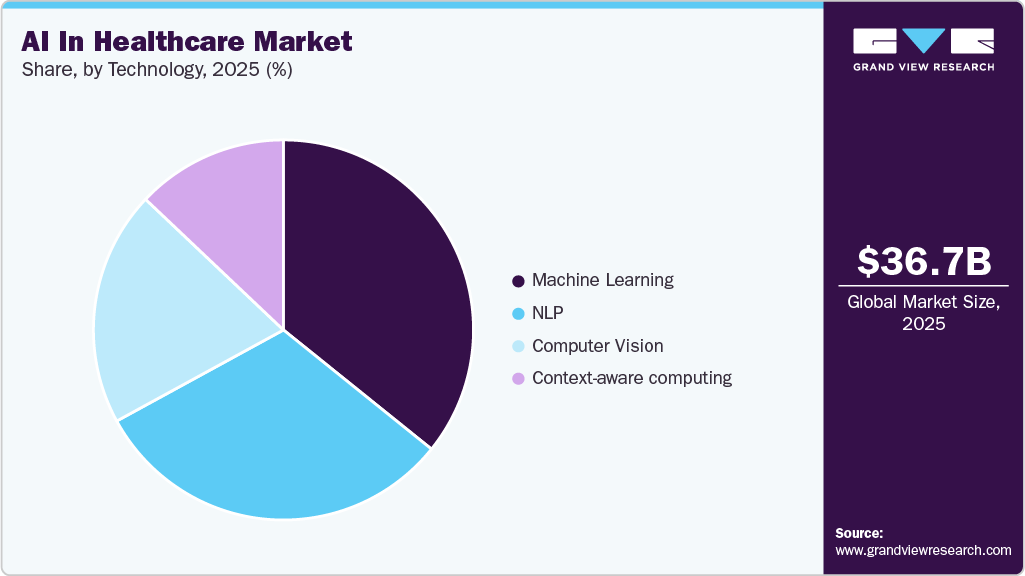
The context-aware computing segment is expected to grow at the fastest CAGR over the forecast period. AI algorithms integrate and analyze diverse data sources such as electronic health records (EHRs), real-time vital signs, medical history, environmental factors, and patient activity to understand patient context dynamically. Moreover, these systems
Regional Insights
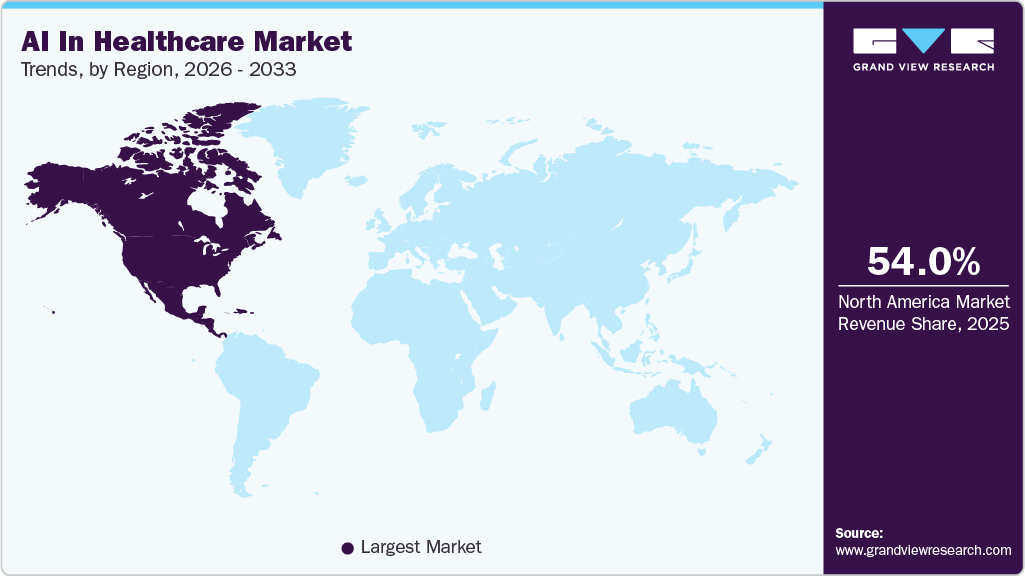
North America dominated the artificial intelligence in healthcare market and accounted for the largest revenue share of over 54% in 2025. This is attributed to advancements in healthcare IT infrastructure, growing care expenditures, widespread adoption of AI/ML technologies, favorable government initiatives, lucrative funding options, and the presence of several key market players. Factors such as a growing geriatric population, changing lifestyles, increasing prevalence of chronic disorders, growing demand for value-based care, and rising awareness levels towards the implementation of AI-based technologies are further propelling market growth in North America.
U.S. Artificial Intelligence In Healthcare Market Trends
The artificial intelligence in healthcare market in the U.S. is expected to grow significantly over the forecast period. This can be attributed to rising demand for efficient and personalized healthcare solutions, coupled with advancements in AI research and development-especially in machine learning and natural language processing-alongside regulatory initiatives and supportive policies.
Europe Artificial Intelligence In Healthcare Market Trends
The artificial intelligence in healthcare market in Europe is anticipated to witness significant growth during the forecast period. This can be attributed to the widespread adoption of AI technologies and increasing investments in AI by both government and private organizations. For instance, in January 2026, Swiss startup Ahead Health raised USD 6 million in seed funding led by RTP Global to expand its AI-powered preventive health platform across Europe.
UK Artificial Intelligence in Healthcare market is expected to hold the largest market share in 2025. AI applications are becoming increasingly prevalent in healthcare, particularly in areas such as medical imaging analysis, predictive analytics, and personalized treatment planning. The UK's National Health Service (NHS) is actively exploring AI technologies to enhance patient care, optimize operations, and tackle various healthcare challenges. In addition, supportive government initiatives are expected to propel market growth further. For instance, in April 2025, the UK government encouraged the use of AI in hospitals to improve patient care.
Asia Pacific Artificial Intelligence In Healthcare Market Trends
The artificial intelligence in healthcare market in the Asia Pacific is expected to experience significant growth in the coming years. This growth is fueled by rapid innovations and advancements in IT infrastructure, as well as the emergence of entrepreneurship ventures specializing in AI-based technologies. Increasing investments from private investors, venture capitalists, and non-profit organizations aimed at enhancing clinical outcomes, improving data analysis and security, and reducing costs are driving adoption rates in the region. In addition, favorable government initiatives that support and promote the adoption of AI-based technologies by healthcare organizations and providers are key factors driving the growth of the Asia Pacific market.
China artificial intelligence in healthcare marketheld the largest market share in 2025. This can be attributed to the increasing adoption of AI technologies for diagnosis, medical imaging, and robot-assisted surgeries in the country. Moreover, supportive government initiatives, partnerships, and collaborations by key market players contribute to market growth further. For instance, in May 2024, Wuhan Union Hospital and Baidu Health partnered to enhance outpatient services by integrating AI technology into healthcare.
Latin America Artificial Intelligence In Healthcare Market Trends
The artificial intelligence in healthcare market in Latin America is anticipated to grow significantly in the coming years. This can be attributed to the growing awareness about AI technologies, increasing government spending, and collaboration activities.
Middle East & Africa Artificial Intelligence In Healthcare Market Trends
The artificial intelligence in healthcare market in the Middle East & Africa region is anticipated to grow significantly during the forecast period. The rising prevalence of chronic diseases in the region and the growing need for efficient and accurate diagnosis and treatment methods are prompting Healthcare providers to integrate AI into their systems.
Key Artificial Intelligence In Healthcare Company Insights
Market players are utilizing innovative product development strategies, partnerships, and mergers & acquisitions to expand their presence in response to the increasing demand for early and accurate disease detection, cost containment, addressing the shortage of healthcare providers, and providing value-based care.
Key Artificial Intelligence In Healthcare Companies:
The following key companies have been profiled for this study on the AI in healthcare market.
- Microsoft
- IBM
- NVIDIA Corporation
- Intel Corporation
- Itrex Group
- GE Healthcare
- Medtronic
- Oracle
- Medidata
- Merck
- IQVIA
Competitive Benchmarking
Operating Strategies
Competitive Edge
Weaknesses
Mature Players: GE Healthcare
- Mature players focus on scaling clinically validated robotic and automation platforms across global healthcare and industrial markets.
- Advanced R&D capabilities and deep regulatory expertise enable faster approvals and stable product pipelines.
- High operational scale reduces agility in disruptive innovation adoption.
Emerging Players: BenevolentAI
- These companies focus on developing specialized AI platforms. They often operate through partnership models with healthcare providers and life science companies to validate technologies and accelerate AI adoption.
- High innovation agility, strong expertise in machine learning and computational biology, and the ability to rapidly develop novel products.
- Limited financial resources, smaller proprietary datasets, and dependence on partnerships with healthcare providers and life science companies for clinical validation and commercialization.
Recent Developments
-
In December 2025, Hallym University Hospital in South Korea adopted stroke AI from Vuno for the rapid detection of LVO and ICH on CT scans, thereby reducing door-to-needle times. Apollo Hospitals in India implemented Qure.ai's qER platform across its network, enabling AI prioritization of stroke cases for faster intervention within the golden hour.
-
In October 2025, Heidi Health raised USD 65 million in Series A funding to expand its AI medical scribe platform globally, automating clinical documentation from patient encounters. The platform leverages large language models for accurate transcription, generating progress notes, referral letters, patient summaries, and handover documents with customizable templates across specialties.
-
In April 2025, HelloCareAI raised USD 47 million to expand its AI-driven virtual care platform for smart hospitals. The initiative focuses on enhancing patient care through AI-assisted nursing, remote monitoring, and efficient workflow management.
-
In February 2025, Innovaccer launched "Agents of Care," AI-powered assistants designed to combat burnout among healthcare professionals. These agents automate routine administrative tasks, enhancing operational efficiency and enabling healthcare professionals to dedicate more time to patient interactions.
-
In January 2025, VitVio secured USD 2.05 million in pre-seed funding to develop AI-powered operating rooms to enhance surgical efficiency and patient safety.
-
In September 2024, Huawei Launched Medical Technology Digitalization 2.0 Solution to facilitate precision healthcare with AI.
-
In June 2024, the National Health Research Institute (NHRI) and Chang Gung Memorial Hospital (CGMH) adopted NVIDIA's accelerated computing and generative AI technologies to advance biomedical research.
“The use of AI in healthcare will fundamentally change the way we approach disease prevention and treatment. With AI’s ability to analyze vast amounts of data quickly and accurately, we can develop personalized medicine strategies and early intervention methods that were previously unattainable.”
-Dr. Hung-Yi Chiou, director of the Institute of Population Health Sciences (IPHS) at NHRI.
-
In March 2024, Microsoft collaborated with NVIDIA to enhance AI innovation and accelerate computing capabilities. This collaboration leverages Microsoft Azure's global scale and advanced computing, along with NVIDIA's DGX Cloud and Clara suite, to accelerate innovation and improve patient care.
“Microsoft is building on its longstanding collaboration with NVIDIA to empower the healthcare and life sciences industry with the power of Azure and generative AI, helping unlock new horizons for clinical research, drug discovery, and patient care worldwide. Through this collaboration, we aim to help the industry unlock breakthroughs in healthcare, making care more precise, accessible, and effective to deliver a meaningful difference in the lives of patients globally.”
- Peter Durlach, corporate vice president, Health & Life Sciences, Microsoft
-
In March 2024, NVIDIA introduced new Generative AI Microservices to transform medical technology (MedTech), drug discovery, and digital health. This innovative approach aims to reshape healthcare technology by harnessing advanced artificial intelligence (AI) capabilities.
“For the first time in history, we can represent the world of biology and chemistry in a computer, making computer-aided drug discovery possible. By helping healthcare companies easily build and manage AI solutions, we’re enabling them to harness the full power and potential of generative AI.”
- Kimberly Powell, vice president of healthcare at NVIDIA
-
In September 2023, Merck KGaA entered into a strategic collaboration with Exscientia and BenevolentAI to drive accelerated drug discovery with the integration of high-end AI platforms.
Artificial Intelligence In Healthcare Market Report Scope
Report Attribute
Details
Market size in 2025
USD 36.7 billion
Estimated market size in 2026
USD 50.7 billion
Projected market size by 2033
USD 505.6 billion
Growth rate
CAGR of 38.9% from 2026 to 2033
Historical data
2021 - 2025
Forecast period
2026 - 2033
Quantitative units
Revenue in USD million/billion, and CAGR from 2026 to 2033
Report coverage
Revenue, company ranking, competitive landscape, growth factors, and trends
Segments covered
Component, application, technology, end-use, region
Regional scope
North America; Europe; Asia Pacific; Latin America; MEA
Country scope
U.S.; Canada; Mexico; Germany; UK; Spain; France; Italy; Sweden; Denmark; Norway; Russia; Japan; China; India; South Korea; Australia; Thailand; Singapore; Brazil; Argentina; South Africa; Saudi Arabia; UAE; Kuwait
Key companies profiled
Microsoft; IBM; NVIDIA Corporation; Intel Corporation; Itrex Group; GE Healthcare; Google; Medtronic; Oracle; Medidata; Merck; IQVIA
Customization scope
Free report customization (equivalent up to 8 analysts working days) with purchase. Addition or alteration to country, regional & segment scope.
Pricing and purchase options
Avail customized purchase options to meet your exact research needs. Explore purchase options Global AI In Healthcare Market Report Segmentation
This report forecasts revenue growth at the global, regional, and country-level and provides an analysis of industry trends in each of the sub-segments from 2021 to 2033. For this study, Grand View Research, Inc. has segmented the global artificial intelligence in healthcare market report based on component, application, technology, end-use, and region:
-
Component Outlook (Revenue, USD Million, 2021 - 2033)
-
Hardware
-
Processor
-
MPU (memory protection unit)
-
FPGA (Field-programmable gate array)
-
GPU (Graphics processing unit)
-
ASIC (Application-specific integrated circuit)
-
-
Memory
-
Network
-
Adapter
-
Interconnect
-
Switch
-
-
-
Software Solutions
-
AI platform
-
Application Program Interface (API)
-
Machine Learning Framework
-
-
AI Solutions
-
On premise
-
Cloud-based
-
-
-
Services
-
Deployment & Integration
-
Support & Maintenance
-
Others (Consulting, Compliance management, etc.)
-
-
-
Application Outlook (Revenue, USD Million, 2021 - 2033)
-
Robot-Assisted Surgery
-
Virtual Assistants
-
Administrative Workflow Assistants
-
Connected Medical devices
-
Medical Imaging & Diagnostics
-
Clinical Trials
-
Fraud Detection
-
Cybersecurity
-
Dosage Error Reduction
-
Precision medicine
-
Drug discovery & development
-
Lifestyle management & remote patient monitoring
-
Wearables
-
Others (Patient engagement, etc.)
-
-
Technology Outlook (Revenue, USD Million, 2021 - 2033)
-
Machine Learning
-
Deep learning
-
Supervised
-
Unsupervised
-
Others (Reinforcement learning, Semi-supervised)
-
-
Natural Language Processing
-
Smart Assistance
-
OCR (Optical Character Recognition)
-
Auto Coding
-
Text analytics
-
Speech analytics
-
Classification and categorization
-
-
Context-Aware Computing'
-
Computer Vision
-
-
End-use Outlook (Revenue, USD Million, 2021 - 2033)
-
Healthcare providers (hospitals, outpatient facilities, and others)
-
Healthcare payers
-
Healthcare companies (Pharmaceutical, Biotechnology, Medical Devices)
-
Patients
-
Others
-
-
Regional Outlook (Revenue, USD Million, 2021 - 2033)
-
North America
-
U.S.
-
Canada
-
Mexico
-
-
Europe
-
UK
-
Germany
-
France
-
Italy
-
Spain
-
Sweden
-
Denmark
-
Norway
-
Russia
-
-
Asia Pacific
-
China
-
India
-
Japan
-
Australia
-
South Korea
-
Thailand
-
Singapore
-
-
Latin America
-
Brazil
-
Argentina
-
-
MEA
-
South Africa
-
Saudi Arabia
-
UAE
-
Kuwait
-
-
Delivered Customizations
This report has been delivered with the following In-depth customizations
Client Request
Customization Delivered
Value Adds
End Use × Application Cross-Segmentation Analysis
Developed a comprehensive cross-segmentation analysis of the global AI in healthcare market by mapping AI applications across key end-use categories, including healthcare providers, life sciences companies, patients, payers, and academic/research institutions. The study further segmented hospitals, physician groups, ambulatory care centers, pharmaceutical companies, biotechnology firms, CROs, and other healthcare entities by AI application areas such as medical imaging diagnostics, digital pathology, genomic diagnostics, clinical & treatment support, robot-assisted surgery, connected medical devices, cybersecurity, wearables, precision medicine, remote patient monitoring, and patient engagement solutions. The customization provided granular revenue-level insights, adoption trends, technology penetration analysis, and use-case mapping across each end-use environment.
Enables stakeholders to identify high-growth AI adoption areas across different healthcare settings and understand how application demand varies by institutional use case. Supports strategic investment planning, product positioning, partnership development, and commercialization strategies by providing detailed visibility into AI deployment trends across hospitals, life sciences organizations, payer systems, and patient-centric care environments. The analysis also assists clients in evaluating competitive intensity, workflow transformation opportunities, and future expansion potential across diversified healthcare ecosystems.
Patient Journey × Application Cross-Segmentation Analysis
Delivered an in-depth patient journey-based segmentation analysis of the AI in healthcare market by evaluating AI application deployment across prevention/wellness, diagnostics, treatment/intervention, and post-care/management stages. The study mapped technologies, including medical imaging diagnostics AI, digital pathology AI, genomic diagnostics AI, bio-signal diagnostics AI, multimodal diagnostics AI, clinical & treatment support, robot-assisted surgery, connected medical devices, precision medicine, wearables, lifestyle management, and remote patient monitoring solutions across different stages of the healthcare continuum. The customization incorporated workflow integration analysis, patient management trends, clinical adoption patterns, and stage-specific AI utilization insights.
Provides actionable insights into how AI technologies are transforming the healthcare continuum from preventive care to long-term disease management. Helps clients identify the most commercially attractive patient journey stages, optimize go-to-market strategies, and prioritize innovation areas based on evolving clinical and operational requirements. The analysis further supports strategic decision-making related to care delivery optimization, patient engagement enhancement, digital health integration, and identification of emerging opportunities in personalized and connected healthcare models.
Competitive Landscape Analysis by AI Healthcare Application Areas
Developed a comprehensive competitive landscape assessment of the global AI in healthcare market covering approximately 18 major application areas and profiling more than 140 companies across the value chain. The analysis included detailed company profiling, product benchmarking, platform evaluation, strategic positioning, and innovation mapping across segments such as medical imaging diagnostics, digital pathology, genomic diagnostics, bio-signal diagnostics, multimodal diagnostics, clinical & treatment support, drug discovery & development, robot-assisted surgery, connected medical devices, clinical trials, fraud detection, cybersecurity, dosage error reduction, precision medicine, remote patient monitoring, wearables, and patient engagement solutions. The study evaluated each company's core offerings, AI capabilities, commercialization focus, technology differentiation, strategic initiatives, and application-specific market presence.
Enables stakeholders to benchmark competitors across highly specialized AI healthcare application areas and identify leading innovators, emerging disruptors, and strategic technology gaps. Supports strategic decision-making related to partnerships, acquisitions, investment prioritization, and product development by providing deep visibility into platform capabilities, competitive intensity, and commercialization trends across the AI healthcare ecosystem. The analysis also assists clients in identifying white-space opportunities, evaluating market consolidation potential, understanding evolving technology leadership, and tracking competitive positioning across diagnostics, therapeutics, clinical operations, and patient engagement workflows.
Frequently Asked Questions About This Report
Key factor driving market growth is the increasing demand in the healthcare sector for enhanced efficiency, accuracy, and better patient outcomes.
The software solution segment led with a 46% revenue share in 2025, while the services segment is the fastest-growing.
The robot-assisted surgery segment led with a 13% revenue share in 2025, while the fraud detection segment is the fastest-growing.
The pharmaceutical and biotechnology segment led with a 30% revenue share in 2025.
Machine learning segment held the largest share (over 35.0%) in 2025, while the context-aware computing segment is the fastest-growing.
The global artificial intelligence in healthcare market size was estimated at USD 36.7 billion in 2025 and is expected to reach USD 50.7 billion in 2026.
The global AI in healthcare market is expected to grow at a compound annual growth rate of 38.9% from 2026 to 2033 to reach USD 505.6 billion by 2033.
North America dominated with a 54% revenue share in 2025.
Some key players operating in the AI in healthcare market include Microsoft; IBM; NVIDIA Corporation; Intel Corporation; Itrex Group; GE Healthcare; Google; Medtronic; Oracle; Medidata; Merck; IQVIA.
About the Author(s)
Healthcare IT Research Team
Healthcare · Healthcare ITThis report was authored by the healthcare it research team at Grand View Research - comprising two research analysts, one senior research analyst, and one industry expert - with specialized expertise in the healthcare it segment of the healthcare industry. All findings are based on proprietary healthcare databases, executive interviews, and regulatory analysis, subject to internal peer review prior to publication.
Last Updated:
Speak to Analyst


Customize this report to your needs — add regions, segments, or data points, with 20% free customization.
Or view our licence options:


ISO 9001:2015 & 27001:2022 Certified
We are GDPR and CCPA compliant! Your transaction & personal information is safe and secure. For more details, please read our privacy policy.


