
- Home
- »
- Healthcare IT
- »
-
Artificial Intelligence In Clinical Decision Market Size, Growth Report, 2026-2033GVR Report cover

Artificial Intelligence In Clinical Decision Support Market (2026 - 2033)
Size, Share & Trends Analysis Report By Component (Software, Services), Application (Diagnostic Decision Support, Clinical Workflow Optimization), By Deployment Mode, By End Use, By Region, And Segment Forecasts
Market Size, 2025
$1.3BMarket Estimate, 2026
$1.5BMarket Forecast, 2033
$4.5BCAGR, 2026–2033
17.1%Artificial Intelligence In Clinical Decision Support Market Summary
The global artificial intelligence in clinical decision support market size was valued at USD 1.3 billion in 2025 and is projected to grow from USD 1.5 billion in 2026 to USD 4.5 billion by 2033, at a CAGR of 17.1% from 2026 to 2033. North America dominated the global market, accounting for the largest revenue share of 55.9% in 2025. The increasing adoption of Electronic Health Records (EHRs), the shift toward value-based care models, and the growing demand for clinical workflow efficiency are driving market growth.
 Source: Grand View Research, IR Documents, Primary Interviews, Paid DatabasesTo learn more about this report,
 Download Free Sample Report
 Key Market Trends & Insights
- By component: Software segment led the market with the largest revenue share of 68.6% in 2025.
- By application: Diagnostic decision support segment led the market with the largest revenue share of 39.4% in 2025.
- By end use: Hospitals segment led the market with the largest revenue share of 46.6% in 2025.
Regional Highlights
- Largest regional market: North America (55.9% revenue share, 2025)
- Fastest-growing regional market: Asia Pacific (highest CAGR, 2026-2033)
- By country: The Canada artificial intelligence in clinical decision support industry is a major contributor to the global market.
Market Size & Forecast
- Market size in 2025: USD 1.3 Billion
- Estimated market size in 2026: USD 1.5 Billion
- Projected market size by 2033: USD 4.5 Billion
- CAGR (2026-2033): 17.1%
Three ways to get this report
Buy it, customize it, or ask a question.Ask an Analyst
A direct answer, usually in 1 working day
- AccessReport author, directly
- Reply timeWithin 1 working day
- No sales callDirect answer only
- FormatEmail reply
- CostFree, no cost
Get the Full Report
What the study covers
- FormatsPDF · Excel · Dashboard
- Timeline2026–2033 annual, 2025 base
- Coverage20+ countries, 5 regions
- Companies10+ key players profiled
Customize the Report
20% free customization
- IncludeCountries, segments, points
- TailorTo your product definition
- ExtendDeeper competitor detail
- OrA fully bespoke study
- Turnaround5–10 working days
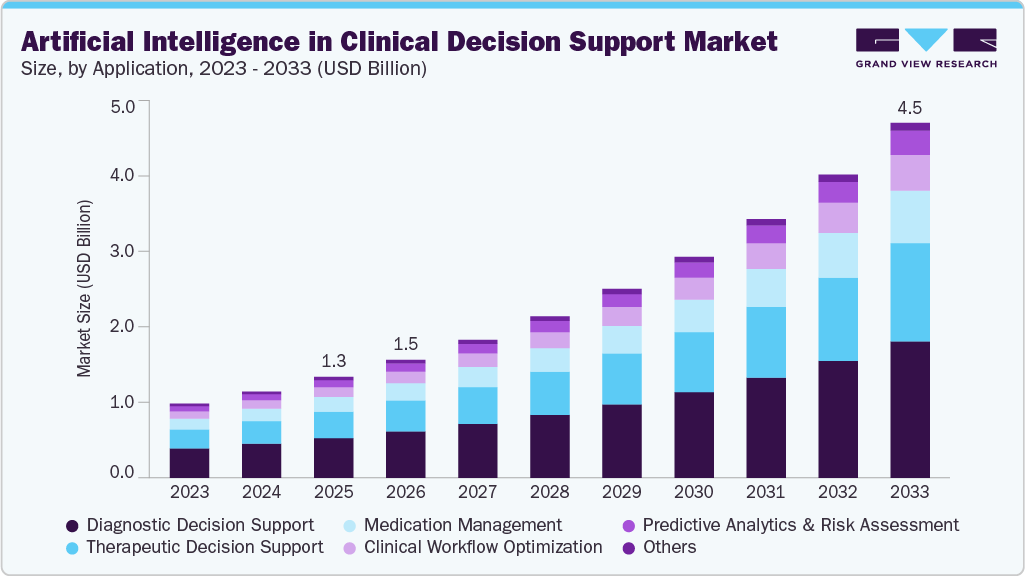 To learn more about this report, Download Free Sample Report
The section below outlines the key factors driving the growth of the artificial intelligence (AI) in clinical decision support industry, highlighting the increasing adoption of Electronic Health Records (EHRs), the increasing shift toward value-based care models, and the growing demand for clinical workflow efficiency.Market Drivers and Dynamics
Increasing Adoption of Electronic Health Records (EHRs)
The increasing adoption of Electronic Health Records (EHRs) is essential for AI in Clinical Decision Support, as these platforms rely on large volumes of digitized patient data to generate actionable insights. Healthcare systems across the U.S., Europe, and parts of the Asia Pacific have achieved high levels of EHR penetration, supported by regulatory mandates and incentive programs. This widespread digitization allows AI-CDSS solutions to access longitudinal patient records, including medical history, lab results, imaging data, and medication profiles. Seamless integration of CDSS within EHR workflows enables real-time clinical recommendations at the point of care, improving diagnostic accuracy and treatment decisions. For instance, Oracle's EHR-integrated CDSS prototype uses Oracle Cloud Infrastructure (OCI) AI Vision to analyze patient images for precise skin cancer detection.
Increasing Shift toward Value-Based Care Models
The shift toward value-based care models is transforming healthcare delivery by linking reimbursement to patient outcomes, clinical quality, and cost control. AI-CDSS strengthens care coordination and ongoing patient management. By analyzing real-time and historical patient data, these systems pinpoint high-risk individuals, predict readmission risk, and support timely interventions. Integration with EHRs and population health platforms enables providers to track outcomes, ensure adherence to clinical guidelines, and streamline resource use. This facilitates proactive care, especially in chronic disease management, where continuous monitoring and timely changes are vital. For example, a BMJ study in March 2026 analyzed an AI-powered clinical decision support system across 40 Chinese hospitals, randomizing 21,603 patients with acute ischemic stroke to AI-assisted or standard care. AI CDSS assessed data, including demographics, imaging, labs, and vitals, to generate tailored guideline recommendations. The study showed that the stroke CDSS reduced new vascular events at three months, improved stroke care quality, and lowered long-term vascular event rates.
Growing Demand for Clinical Workflow Efficiency
Rising patient volumes, workforce shortages, and increasing administrative burdens across healthcare systems are driving the growing demand for clinical workflow efficiency. Clinicians spend a significant portion of their time on documentation, data retrieval, and care coordination, which limits direct patient interaction and contributes to burnout. AI in Clinical Decision Support addresses these challenges by automating routine tasks and embedding decision support within existing clinical workflows. AI-CDSS also enhances interdisciplinary coordination and operational efficiency by standardizing workflows and reducing variability in care delivery. These systems facilitate faster communication between departments by providing unified access to patient data and actionable insights. Predictive analytics capabilities enable better scheduling, resource allocation, and patient triage, minimizing delays and optimizing utilization of clinical assets. For instance, in April 2026, Abridge partnered with Wolters Kluwer's UpToDate to expand AI clinical decision support (CDS) within its ambient documentation platform. Clinicians access real-time, evidence-based recommendations from patient conversations and notes during visits, including pre-, intra-, and post-encounter.
Market Concentration & Characteristics
The chart below represents the relationship between industry concentration, characteristics, and participants. The AI in clinical decision support market experiences a high degree of innovation, a significant level of partnership and collaboration activities, a high impact of regulations, and geographic expansion of the industry.
The degree of innovation in the artificial intelligence (AI) in clinical decision support industry is high. Technological advancements are driven by growing use of AI and other technologies in healthcare IT, drug discovery & research, patient care, disease diagnostics, etc. For instance, in April 2026, VIRad.AI Launch introduced AI-powered clinical decision support for interventional radiology.
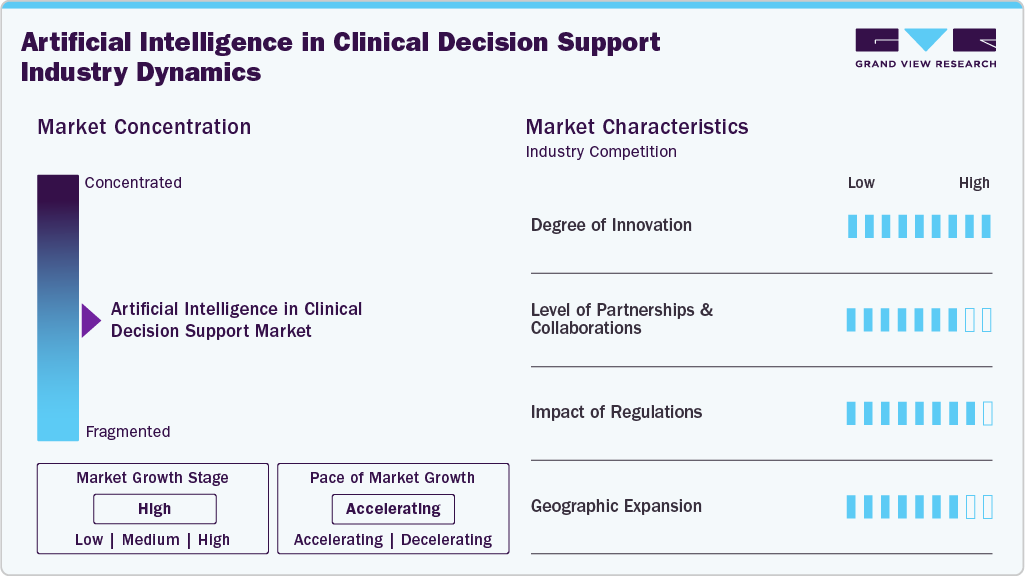 To learn more about this report, Download Free Sample Report
 “Interventional radiology is its own hyperspecialized discipline with procedures, devices and evidence that general medical AI often treats as a footnote. We built VIRad.AI ground up from an interventional radiology-centric lens, grounded in the literature interventional radiologists actually cite, organized around the decisions interventional radiologists actually make.”
-Syed Aziz Rahman, MD, a board-certified diagnostic and interventional radiologist.
Partnerships and collaborations enable companies to expand their geographic presence, strengthen financial capabilities, and enhance technological capabilities. For instance, in October 2024, Ozarks Healthcare partnered with Avo to integrate AI-powered clinical decision support into its MEDITECH EHR system. The 114-bed hospital system deploys Avo's AI Scribe for real-time transcription, Chart Synopsis & Care Guide for patient snapshots/care gaps, and Ask Avo for evidence-based clinical queries/orders.
The U.S. FDA classifies AI-driven CDS as Software as a Medical Device (SaMD). The EU-MDR governs SaMD alongside the AI Act. UK MHRA's SaMD reform addresses algorithm evolution, while China NMPA requires Class II/III registration with lifecycle monitoring.
Geographic expansion significantly drives the artificial intelligence (AI) in clinical decision support market by increasing market penetration, enabling access to diverse data sources, and fostering regulatory compliance and standardization.
Component Insights
The software segment dominated the AI in clinical decision support market in 2025, driven by the significance of AI algorithms and clinical intelligence platforms in care delivery. These solutions include diagnostic engines, predictive analytics tools, and evidence-based recommendation systems integrated with EHRs. Software platforms enable real-time analysis of patient data, supporting accurate diagnosis, treatment planning, and risk assessment. Software solutions are evolving to incorporate natural language processing, computer vision, and advanced machine learning to improve decision-making. Subscription-based and SaaS delivery models are gaining traction, enabling cost-effective deployment across multi-site health systems.
The services segment is expected to grow at the fastest CAGR during the forecast period. These services include implementation, system integration with EHR/EMR, customization of AI models, and clinical validation. Healthcare providers require tailored configurations to align CDSS tools with specific workflows, specialties, and regulatory requirements. Vendors and third-party service providers support data migration, interoperability, and infrastructure setup to ensure seamless functionality. Growth in this segment is driven by the increasing complexity of AI integration and the need for continuous model training and updates. Demand for training services is rising as clinicians require guidance to effectively use AI-enabled tools in decision-making.
Deployment Mode Insights
The web and cloud-based segment dominated the artificial intelligence (AI) in clinical decision support industry, accounting for the largest revenue share of 82.9% in 2025, driven by scalability, flexibility, and rapid implementation capabilities. In addition, this segment is anticipated to grow at the fastest CAGR from 2026 to 2033. These platforms enable centralized storage and processing of large clinical datasets, allowing AI algorithms to deliver rapid, evidence-based recommendations. Integration with EHRs, imaging systems, and remote monitoring tools enhances continuity of care across multiple settings.
Cloud infrastructure supports multi-site healthcare networks by enabling standardized decision support and seamless data exchange. Moreover, growth in this segment is driven by increasing adoption of Software-as-a-Service (SaaS) models and the need for cost-effective deployment without significant upfront infrastructure investment. Cloud-based CDS solutions facilitate continuous updates, AI model improvements, and remote accessibility, ensuring consistent performance across locations.
Application Insights
The diagnostic decision support segment dominated the artificial intelligence (AI) in clinical decision support market, accounting for the largest revenue share of 39.4% in 2025. These solutions leverage machine learning, deep learning, and computer vision to analyze clinical data, imaging, and laboratory results for accurate diagnosis. AI models assist clinicians in identifying patterns, detecting abnormalities, and reducing diagnostic variability across care settings. Moreover, growth in this segment is driven by the need to reduce diagnostic errors and improve early disease detection.
The therapeutic decision support segment is expected to grow at the fastest CAGR during the forecast period. This segment focuses on AI-enabled tools that help clinicians select optimal treatment pathways, drug regimens, and care plans. These systems analyze patient-specific data, clinical guidelines, and real-world evidence to generate personalized treatment recommendations. Integration with EHRs enables access to medical history, comorbidities, and prior interventions, improving decision accuracy.
End Use Insights
The hospitals segment held the largest revenue share of 46.6% in 2025, driven by high patient volumes and complex clinical workflows. Hospitals generate extensive clinical data across departments, including imaging, laboratory, and electronic health records, creating a strong foundation for AI deployment. CDS solutions are integrated into hospital information systems to provide real-time diagnostic and therapeutic insights at the point of care. AI-CDS tools support hospitals in reducing diagnostic errors, optimizing treatment pathways, and minimizing readmissions. Integration with clinical workflows enables automation of routine tasks, improving clinician productivity and reducing administrative burden.
Hospitals are also leveraging predictive analytics for patient risk stratification, resource allocation, and capacity planning. For instance, in February 2026, Apollo Hospitals signed an MoU with Roche Diagnostics India to integrate Roche's Navify Algorithm Suite into EMR/LIS/HIS systems. A cloud-based platform delivers AI-driven insights for early, complex disease diagnosis, workflow efficiency, and real-world algorithm validation across Apollo's research centers.
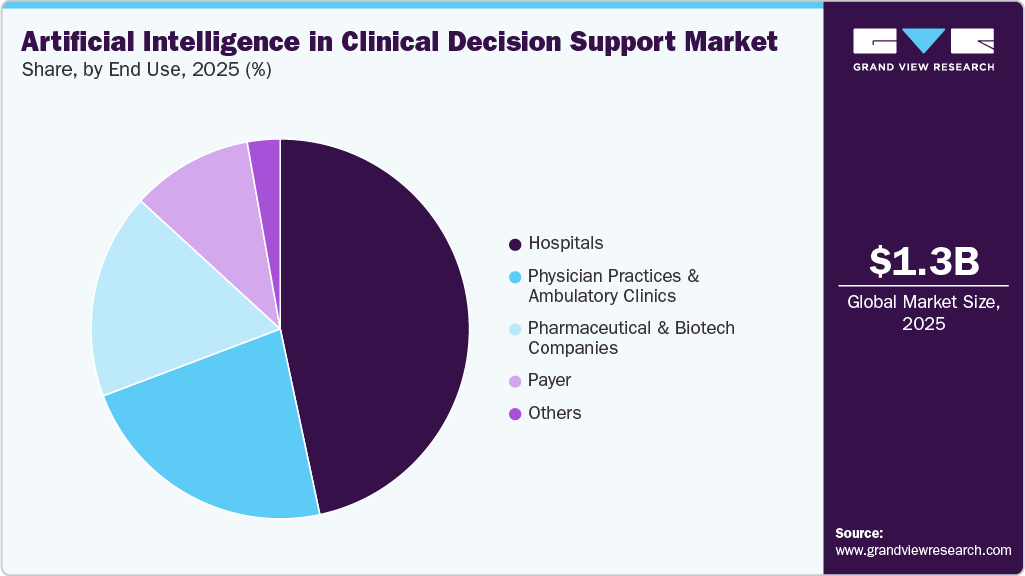 To learn more about this report, Download Free Sample Report
 The pharmaceutical & biotechnology companies segment is anticipated to grow at the fastest CAGR from 2026 to 2033, driven by the need for data-driven research and development. These organizations utilize AI-CDS to support clinical trial design, patient stratification, and biomarker identification. Integration with real-world data and clinical datasets enables more precise cohort selection and improves trial outcomes.
Regional Insights
North America dominated the artificial intelligence (AI) in clinical decision support market, accounting for a revenue share of 55.9% in 2025. Growth is supported by advanced healthcare IT infrastructure, widespread EHR adoption, and early integration of AI into clinical workflows. The region benefits from established regulatory frameworks for AI-based Software as a Medical Device (SaMD) and strong investment in digital health. Healthcare providers are deploying AI-CDS for diagnostic support, medication management, and workflow optimization. The presence of leading technology companies and academic medical centers accelerates innovation and large-scale implementation across hospitals and integrated delivery networks.
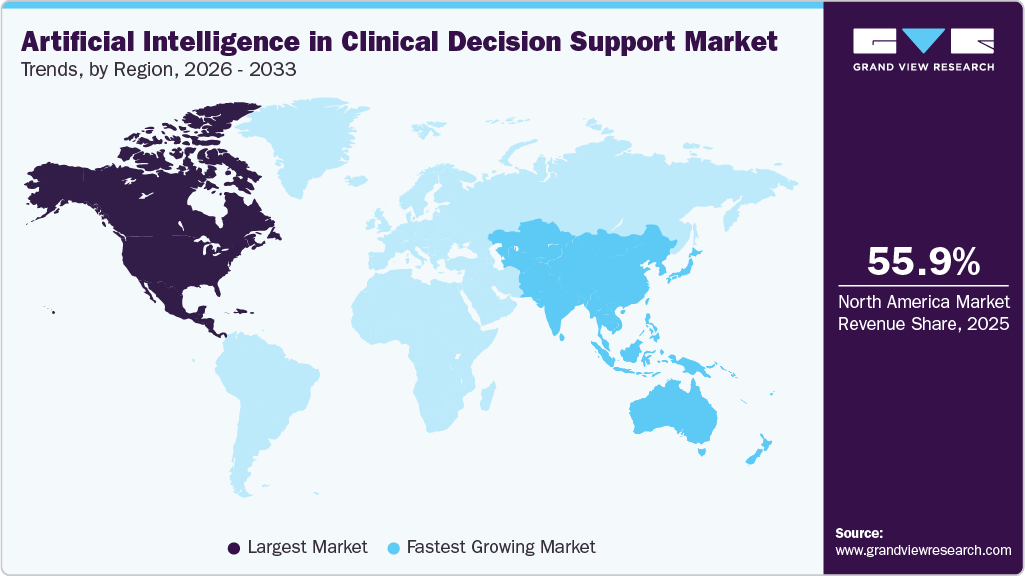 To learn more about this report, Download Free Sample Report
 U.S. Artificial Intelligence (AI) In Clinical Decision Support Market Trends
The U.S. AI in clinical decision support industry dominated North America in 2025. Mature digital ecosystems, interoperability initiatives, and value-based care models drive high adoption. AI-CDS integration with EHR platforms supports real-time clinical decision-making and reduces administrative burden. In addition, increasing FDA approvals for AI-based clinical tools and strong private investment are accelerating adoption across hospitals, payers, and research institutions. For instance, in February 2026, Sutter Health integrated OpenEvidence's AI-powered CDS into Epic EHR workflows across its 24-hospital system in California.
Europe Artificial Intelligence (AI) In Clinical Decision Support Market Trends
Europe's AI in clinical decision support market is growing steadily, supported by established public healthcare systems and an increasing focus on digital transformation. Governments are promoting interoperability, data sharing, and AI adoption through regional health data initiatives. CDS solutions are being integrated into clinical workflows to improve diagnostic accuracy, optimize treatment pathways, and enhance patient safety.
The UK's artificial intelligence (AI) in clinical decision support market is advancing with strong support from the National Health Service (NHS) and national digital health programs. Adoption is driven by the need to improve care efficiency and reduce system burden. Healthcare providers are implementing CDS tools for clinical decision-making, triage, and workflow automation. Collaborations between healthcare institutions and technology firms are accelerating the innovation and deployment of AI-based decision-support solutions. For instance, in January 2026, Sanome deployed the AI-powered MEMORI platform at Royal Hospital to detect hospital-acquired infections (HAIs) earlier. Deployments at Royal Hospital for Neuro-disability and East Kent Hospitals enable proactive interventions, reducing complications in high-risk neuro/ICU patients.
“Partnering with leading healthcare organisations like the Royal Hospital for Neuro-disability and East Kent Hospitals University NHS Foundation Trust marks another major step towards bringing earlier, data-driven infection detection into everyday care for every patient,”
-said Benedikt von Thüngen, Founder and CEO of Sanome.
The Germany AI in clinical decision support market is expanding as the country strengthens healthcare digitalization and data infrastructure. CDS adoption is increasing across hospitals and research institutions for clinical analytics, diagnostic support, and treatment optimization. Government initiatives promoting electronic patient records and digital health applications are supporting the integration of AI-driven systems into routine care delivery.
Asia Pacific Artificial Intelligence (AI) In Clinical Decision Support Market Trends
The Asia Pacific artificial intelligence (AI) in clinical decision support industry is expected to grow at the fastest CAGR over the forecast period. Growth is driven by the rapid digitalization of healthcare, expanding infrastructure, and the increasing adoption of AI technologies. Large patient populations and rising demand for efficient care delivery are encouraging the deployment of CDS solutions across hospitals and diagnostic centers. Governments are investing in digital health initiatives to improve access and quality of care.
The AI in clinical decision support market in China is expected to grow significantly over the forecast period, supported by a strong government focus on AI and healthcare modernization. Increasing adoption of AI tools for diagnostics, clinical analytics, and hospital management is driving market expansion. Availability of large healthcare datasets and investments in AI infrastructure are enabling scalable deployment across healthcare systems.
The Japan artificial intelligence (AI) in clinical decision support market is expanding steadily, supported by an advanced healthcare infrastructure and an aging population. The country is adopting AI-CDS to improve diagnostic accuracy, enhance clinical workflows, and manage complex chronic conditions. Strong collaboration between technology companies and healthcare providers is supporting innovation and the integration of decision-support tools.
Latin America Artificial Intelligence (AI) In Clinical Decision Support Market Trends
The Latin America AI in clinical decision support industry is expected to grow significantly over the forecast period. The increasing focus on improving healthcare access and efficiency is driving the adoption of AI-CDS solutions. Investments in digital health infrastructure and growing awareness of AI benefits are supporting market development. CDS tools are being deployed to enhance diagnostic capabilities and optimize resource utilization in constrained healthcare systems.
Middle East & Africa Artificial Intelligence (AI) In Clinical Decision Support Market Trends
The Middle East and Africa AI in clinical decision support industry is growing rapidly, driven by rising investments in healthcare infrastructure and digital transformation initiatives. Governments are promoting the adoption of AI technologies to improve care quality and operational efficiency. AI-CDS solutions are being implemented for clinical decision-making, patient management, and workflow optimization. Increasing focus on healthcare modernization and access is expected to drive continued market growth.
Key Artificial Intelligence In Clinical Decision Support Company Insights
Strategic initiatives, including partnerships, new launches, collaborations, & acquisitions, foster innovation and accelerate the development & deployment of CDS solutions in healthcare.
Key Artificial Intelligence In Clinical Decision Support Companies:
The following key companies have been profiled for this study on the artificial intelligence in clinical decision support market.
- UpToDate, Inc. (Wolters Kluwer)
- Siemens Healthcare Private Limited
- GE Healthcare
- Royal Philips NV
- Premier Inc.
- Natus
- PERSYST DEVELOPMENT LLC
- Oracle
- Aidoc
- Viz.ai
- Merative
- Etiometry
Recent Developments
-
In March 2026, Viz.ai collaborated with Alnylam Pharmaceuticals to develop an AI Care Pathway within Viz Cardio Suite to enable earlier detection of cardiac amyloidosis. Uses FDA-cleared Us2.ai echocardiography algorithm integrated with EHR data to identify patients, coordinate confirmatory testing, and standardize care across cardiology/heart failure teams.
“By partnering with Viz.ai, we are bringing AI into everyday clinical decision-making, helping clinicians detect warning signs earlier, initiate appropriate diagnostic testing sooner, and ultimately deliver more timely, coordinated care for patients.”
-Sameer Bansilal, M.D., M.S., Cardiologist and Vice President, Global TTR Medical Lead, Alnylam Pharmaceuticals.
-
In December 2025, the Government of India planned to deploy Smart Doctor, an AI-powered Clinical Decision Support System (CDS), across 70,000 public/private hospitals under Ayushman Bharat Digital Mission (ABDM). Developed by AIIMS New Delhi, it functions as a digital assistant that analyzes patient history against standardized protocols for NCDs such as diabetes/hypertension.
“The CDS is fundamentally a decision support mechanism designed to assist clinicians, not to override their judgment. Developed by AIIMS, it uses a rule-based framework that allows doctors to cross-reference symptoms and protocols against a standardized database.”
-Officials of the National Health Authority (NHA)
-
In October 2025, Wolters Kluwer rolled out UpToDate Expert AI, a generative AI-powered clinical decision support solution built on UpToDate's evidence-based content from 7,600+ clinician experts.
Artificial Intelligence In Clinical Decision Support Market Report Scope
Report Attribute
Details
Market size in 2025
USD 1.3 billion
Estimated Market size in 2026
USD 1.5 billion
Projected Market size by 2033
USD 4.5 billion
Growth rate
CAGR of 17.1% from 2026 to 2033
Actual data
2021 - 2025
Forecast period
2026 - 2033
Quantitative units
Revenue in USD million/billion and CAGR from 2026 to 2033
Report coverage
Revenue forecast, company ranking, competitive landscape, growth factors, and trends
Segments covered
Component, application, deployment mode, end use, and region
Regional scope
North America; Europe; Asia Pacific; Latin America; MEA
Country scope
U.S.; Canada; Mexico; UK; Germany; Spain; France; Italy; Denmark; Sweden; Norway; China; Japan; India; Australia; South Korea; Thailand; Brazil; Argentina; South Africa; Saudi Arabia; UAE; Kuwait
Key companies profiled
UpToDate, Inc. (Wolters Kluwer); Siemens Healthcare Private Limited; GE Healthcare; Royal Philips NV; Premier Inc.; Natus; PERSYST DEVELOPMENT LLC; Oracle; Aidoc; Viz.ai; Merative; Etiometry
Customization scope
Free report customization (equivalent up to 8 analysts working days) with purchase. Addition or alteration to country, regional & segment scope.
Pricing and purchase options
Avail customized purchase options to meet your exact research needs. Explore purchase options
Global Artificial Intelligence In Clinical Decision Support Market Segmentation
This report forecasts revenue growth at the global, regional, and country levels and provides analysis of the latest trends in each of the sub-segments from 2021 to 2033. For this report, Grand View Research has segmented the global artificial intelligence (AI) in clinical decision support market report based on component, application, deployment mode, end use, and region:
-
Component Outlook (Revenue, USD Million, 2021 - 2033)
-
Software
-
Services
-
-
Application Outlook (Revenue, USD Million, 2021 - 2033)
-
Diagnostic Decision Support
-
Therapeutic Decision Support
-
Medication Management
-
Clinical Workflow Optimization
-
Predictive Analytics & Risk Assessment
-
Others
-
-
Deployment Mode Outlook (Revenue, USD Million, 2021 - 2033)
-
Web & Cloud-based
-
On-premise
-
-
End use Outlook (Revenue, USD Million, 2021 - 2033)
-
Hospitals
-
Physician Practices & Ambulatory Clinics
-
Pharmaceutical & Biotech Companies
-
Payer
-
Others
-
-
Regional Outlook (Revenue, USD Million, 2021 - 2033)
-
North America
-
U.S.
-
Canada
-
Mexico
-
-
Europe
-
UK
-
Germany
-
France
-
Italy
-
Spain
-
Denmark
-
Sweden
-
Norway
-
-
Asia Pacific
-
Japan
-
China
-
India
-
Australia
-
South Korea
-
Thailand
-
-
Latin America
-
Brazil
-
Argentina
-
-
Middle East & Africa
-
South Africa
-
Saudi Arabia
-
UAE
-
Kuwait
-
-
Frequently Asked Questions About This Report
North America dominated the market with 55.9% revenue share in 2025.
The software segment held the largest revenue share in 2025, while the services segment is the fastest-growing.
The diagnostic decision support segment led with a 39.4% revenue share in 2025, while the therapeutic decision support segment is the fastest-growing.
Hospitals segment held the largest share (over 46.0%) in 2025, while the pharmaceutical & biotechnology companies segment is the fastest-growing.
Key factors that are driving the AI in clinical decision support market are increasing adoption of Electronic Health Records (EHRs), increasing shift toward value-based care models, and growing demand for clinical workflow efficiency.
The global artificial intelligence in clinical decision support market size was estimated at USD 1.3 billion in 2025 and is expected to reach USD 1.5 billion in 2026.
The global artificial intelligence in clinical decision support market is expected to grow at a compound annual growth rate of 17.1% from 2026 to 2033 to reach USD 4.5 billion by 2033.
The web & cloud-based segment held the largest market share of 82.9% in 2025.
Some key players operating in the AI in clinical decision support market include UpToDate, Inc. (Wolters Kluwer); Siemens Healthcare Private Limited; GE Healthcare; Royal Philips NV; Premier Inc.; Natus; PERSYST DEVELOPMENT LLC; Oracle; Aidoc; Viz.ai; Merative; Etiometry.
About the Author(s)
Healthcare IT Research Team
Healthcare · Healthcare ITThis report was authored by the healthcare it research team at Grand View Research - comprising two research analysts, one senior research analyst, and one industry expert - with specialized expertise in the healthcare it segment of the healthcare industry. All findings are based on proprietary healthcare databases, executive interviews, and regulatory analysis, subject to internal peer review prior to publication.
Last Updated:
Speak to Analyst

Customize this report to your needs - add regions, segments, or data points, with 20% free customization.
Or view our licence options:


ISO 9001:2015 & 27001:2022 Certified
We are GDPR and CCPA compliant! Your transaction & personal information is safe and secure. For more details, please read our privacy policy.


