
- Home
- »
- Animal Health
- »
-
Asia Pacific Companion Animal Health Market Report, 2033GVR Report cover
![Asia Pacific Companion Animal Health Market Size, Share & Trends Report]()
Asia Pacific Companion Animal Health Market (2025 - 2033) Size, Share & Trends Analysis Report By Animal Type, By Product (Biologics, Pharmaceuticals, Diagnostics, Equipment & Disposables, Medicated Feed Additives), By Country, And Segment Forecasts
- Report ID: GVR-4-68040-670-7
- Number of Report Pages: 150
- Format: PDF
- Historical Range: 2021 - 2023
- Forecast Period: 2025 - 2033
- Industry: Healthcare
- Report Summary
- Table of Contents
- Segmentation
- Methodology
- Download FREE Sample
-
 Download Sample Report
Asia Pacific Companion Animal Health Market Summary
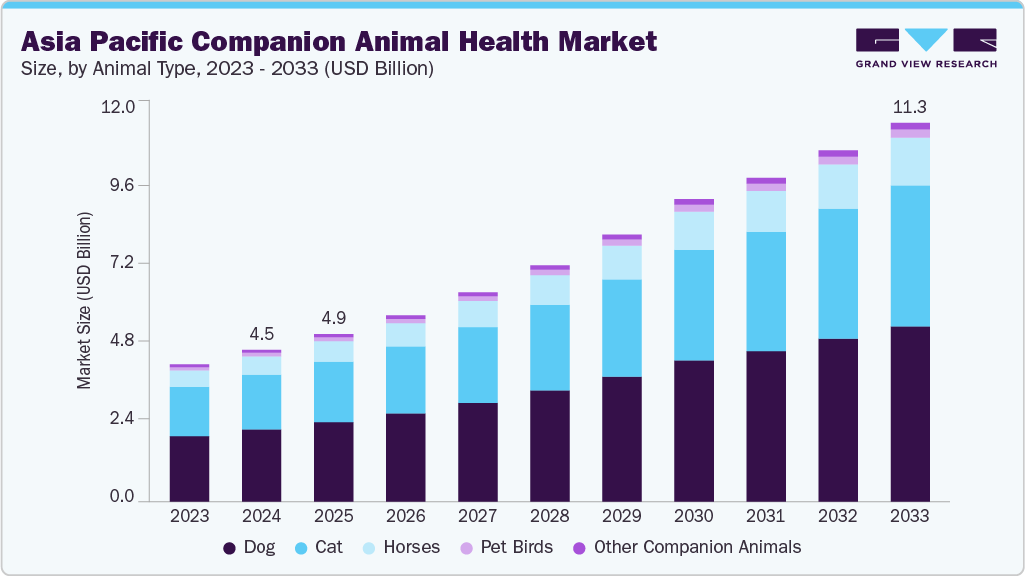
The Asia Pacific companion animal health market size was estimated at USD 4.51 billion in 2024 and is projected to reach USD 11.26 billion by 2033, growing at a CAGR of 10.73% from 2025 to 2033. The Asia Pacific companion animal health industry is growing rapidly due to rising pet ownership, increased awareness of animal welfare, and growing disposable incomes across emerging economies.
Key Market Trends & Insights
- China dominated the Asia Pacific companion animal health market with the largest revenue share of 19.10% in 2024.
- The companion animal health market in India is expected to grow at the fastest CAGR over the forecast period.
- By animal type, the dog segment led the market with the largest revenue share of 47.68% in 2024.
- Based on product, the pharmaceuticals segment led the market with the largest revenue share of 47.74% in 2024.
Market Size & Forecast
- 2024 Market Size: USD 4.51 Billion
- 2033 Projected Market Size: USD 11.26 Billion
- CAGR (2025-2033): 10.73%
- China: Largest market in 2024
- India: Fastest growing market
Countries like India, China, Japan, and Australia are witnessing a surge in the number of households adopting pets, especially dogs and cats, with urbanization and nuclear family structures playing a key role. As pets increasingly become viewed as family members, owners are investing more in preventive healthcare, including vaccinations, diagnostics, parasite control, and wellness products. For instance, according to a USDA Foreign Agricultural Service report, China’s total pet population reached 124.1 million in 2024, comprising 52.6 million dogs and 71.5 million cats, representing a growth of 1.6% for dogs and 2.5% for cats compared to 2023.Simultaneously, demand for advanced veterinary care is fueling innovation, with companies introducing cutting-edge solutions such as combination parasiticides (e.g., NexGard SPECTRA) and emerging therapies like canine gene treatments for heart disease. These breakthroughs, alongside a strengthening veterinary infrastructure and an improving regulatory environment, are transforming pet healthcare into a high-growth, tech-driven sector.
Moreover, the rapid advancement and adoption of integrated diagnostic and specialized veterinary care services across the region are driving the Asia Pacific companion animal health industry significantly. As pet ownership grows across urban and semi-urban regions, there is increasing demand for comprehensive, one-stop veterinary solutions. Clinics and hospitals are responding by upgrading infrastructure and introducing in-house diagnostics such as digital imaging, blood testing, and ultrasound. This trend is evident in facilities like Soulmates Vet Hospital in Belagavi, India, which launched in April 2025 with integrated diagnostic capabilities.
Similarly, in February 2025, Veterinary Cardiologists Australia opened the country’s first dedicated veterinary cardiology hospital. This reflects a broader trend towards super-specialization in companion animal medicine and, with it, increased use of diagnostics such as echocardiography, cardiac biomarker testing, and advanced imaging. These private sector initiatives are also aligned with national priorities. These developments reflect a growing preference for accurate, timely diagnosis and treatment planning, making diagnostics a central pillar of veterinary care. Collectively, such innovations are strengthening the region’s veterinary ecosystem and driving the expansion of the companion animal health industry in Asia Pacific.
Market Concentration & Characteristic
The Asia Pacific companion animal health industry is moderately to highly concentrated, with a few multinational corporations holding a significant share of the market. Leading global players such as Zoetis, Boehringer Ingelheim, Merck Animal Health, and Elanco dominate the landscape, collectively accounting for a substantial portion of regional revenues. These companies benefit from extensive distribution networks, established brand recognition, and a broad portfolio of pharmaceuticals, vaccines, and diagnostics designed for companion animals.
While domestic companies in countries like China, India, Japan, and Australia are present, they tend to have a more limited reach and smaller product portfolios, often focusing on generics or niche therapeutic segments. The market concentration is further strengthened by barriers to entry such as stringent regulatory approval processes, high R&D costs, and the need for technical expertise in formulation and manufacturing. Despite this, there is a growing trend of local firms forming strategic partnerships or being acquired by global leaders, which may slightly diversify the competitive landscape in the coming years but is unlikely to significantly dilute the dominance of the top-tier players in the short to medium term.
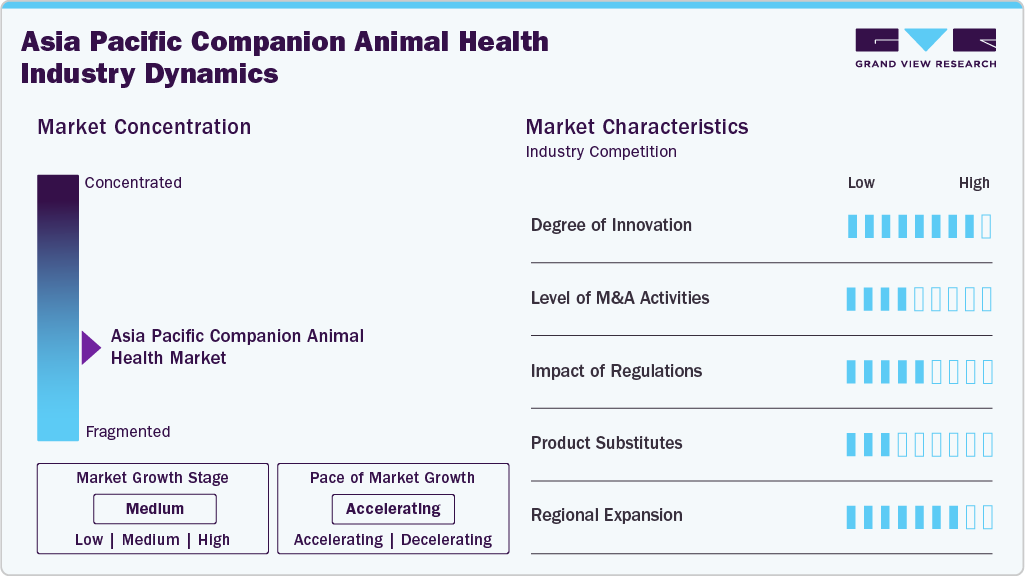
The Asia Pacific companion animal health industry is witnessing a high degree of innovation, driven by rapid technological adoption and growing demand for advanced veterinary services. For instance, in May 2024, SK Telecom launched X Caliber, its AI-powered veterinary X-ray diagnostic tool, in Australia through a partnership with ATX Medical Solutions. The service delivers rapid, cloud-based image analysis for dogs and cats, and is now accessible to over 100 veterinary clinics. This launch enables near-instant analysis of canine and feline X-rays via cloud-based platforms, eliminating the need for in-clinic servers and supporting remote diagnostics. In addition, the emergence of specialist centers, such as Veterinary Cardiologists Australia, reflects the region's shift toward super-specialized, data-driven care. These innovations are enhancing diagnostic accuracy, expanding access to expert-level care, and reshaping clinical workflows, positioning Asia Pacific as a fast-evolving and technology-forward market in global companion animal health.
Mergers and acquisitions (M&A) activity in the Asia Pacific companion animal health industry has been gradually increasing, driven by rising pet ownership, expanding veterinary infrastructure, and investor interest in high-growth sectors such as diagnostics, specialty care, and pet wellness. Strategic consolidations are often aimed at gaining access to local distribution networks, innovative technologies, or expanding service capabilities. Similarly, veterinary diagnostics and services groups across Southeast Asia have seen increased consolidation, with larger players acquiring independent clinics to broaden service networks and adopt standardized diagnostic technologies. These developments highlight the strategic push toward market consolidation, regional expansion, and integration of advanced care capabilities.
Regulations play a pivotal role in shaping the Asia Pacific companion animal health industry, influencing product approvals, clinical practices, and market entry for veterinary pharmaceuticals and diagnostics. Stringent regulatory frameworks in countries like Japan and Australia ensure high standards for safety and efficacy, but they can also extend time-to-market for new therapies.
For instance, in Australia, all veterinary medicines and biologicals must be registered with the Australian Pesticides and Veterinary Medicines Authority (APVMA), which enforces rigorous quality and labeling requirements. Similarly, in India, the introduction of stricter guidelines for pet vaccine labeling and antibiotic use in 2024 reflects growing regulatory oversight aimed at improving animal welfare and addressing antimicrobial resistance. While these regulations enhance product reliability and public trust, they also increase compliance costs and complexity for manufacturers and service providers operating across diverse regulatory environments in the region.
Product substitution is an emerging factor influencing the Asia Pacific companion animal health industry, particularly as pet owners increasingly turn to alternative therapies and wellness products alongside or in place of conventional veterinary treatments. For example, the rising popularity of herbal remedies and functional pet foods is creating competition for traditional pharmaceuticals used in managing chronic conditions like arthritis or gastrointestinal issues. In countries like India and China, where traditional medicine systems such as Ayurveda and Traditional Chinese Medicine (TCM) are culturally embedded, pet owners often seek natural or holistic substitutes over synthetic drugs. While these substitutes enhance accessibility and cater to evolving consumer preferences, they also present challenges for regulatory oversight and clinical validation, potentially impacting the sales and market share of conventional veterinary products.
Regional expansion is a key growth strategy in the Asia Pacific companion animal health industry, as companies seek to tap into emerging markets with rising pet ownership and underdeveloped veterinary infrastructure. Multinational and regional players are increasingly entering Southeast Asian countries such as Indonesia, Vietnam, and the Philippines, where demand for veterinary services and products is rapidly increasing.
Animal Type Insights
The dog segment led the market with the largest revenue share of 47.68% in 2024. This is attributed to a combination of high ownership rates, greater healthcare spending per pet, and a wider range of available veterinary products and services tailored to canine needs. Countries like Australia, Japan, China, and India have seen significant increases in dog ownership, with dogs often viewed as family members, driving demand for vaccinations, parasite control, diagnostics, and wellness products. In Australia alone, as of 2024, there were an estimated 6.4 million pet dogs, surpassing the cat population, with owners spending more on routine veterinary care, insurance, and preventive treatments for dogs than for other companion animals. This strong consumer preference, along with targeted product development by veterinary pharmaceutical companies, has positioned the dog segment as the dominant revenue contributor in the region’s companion animal health market.
The cat segment is anticipated to grow at the fastest CAGR during the forecast period, driven by evolving pet ownership trends, rising urbanization, and increasing pet humanization. In many Asian cities, smaller living spaces and fast-paced lifestyles make cats a more practical choice than dogs, leading to a steady rise in feline ownership. Notably, in China, the pet cat population reached approximately 70 million in 2023, surpassing the number of pet dogs for the first time, according to data from the China Pet Industry White Paper. This shift is driving strong demand for feline-focused veterinary services, preventive care, diagnostics, and pharmaceuticals. Furthermore, younger pet owners in urban centers are increasingly willing to spend on premium health products and services for their cats, such as parasite control, vaccines, renal therapies, and behavioral treatments. International companies like Zoetis and local players such as Yantai China Pet Foods are expanding their feline health offerings in response to this trend, supporting continued segment growth across key Asia Pacific markets.
Product Insights
The pharmaceuticals segment led the market with the largest revenue share of 47.74% in 2024, due to Pharmaceuticals represent the largest segment in the Asia Pacific companion animal health industry among product types due to the high prevalence of infectious, parasitic, and chronic diseases in pets, coupled with increasing awareness and access to veterinary care. As companion animal ownership rises, particularly in urban centers across China, India, South Korea, and Southeast Asia, so does the demand for effective treatment options. Anti-parasitic drugs, antibiotics, pain management therapies, and products for chronic conditions such as osteoarthritis and dermatitis are widely used, driving pharmaceutical sales
According to Zoetis, pharmaceutical products accounted for over 69% of its companion animal revenue in Asia Pacific in 2024, reflecting strong demand across key markets. The growth is further supported by the expansion of veterinary clinic networks, e-commerce platforms offering pet medications, and regulatory support for new drug approvals. In addition, increased humanization of pets is encouraging owners to seek timely and high-quality pharmaceutical care, reinforcing this segment's dominance within the regional market.
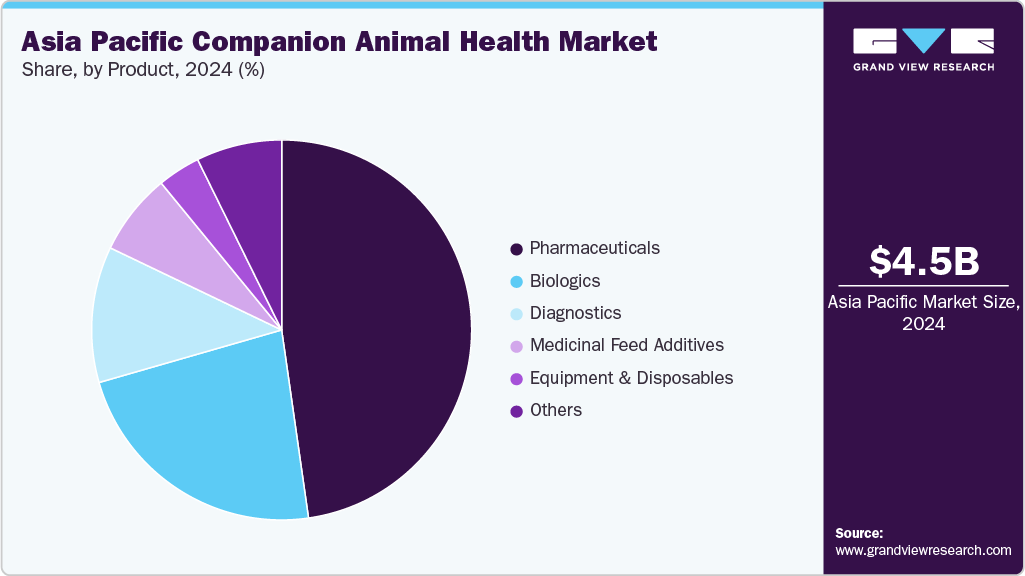
The others segment is anticipated to grow at the fastest CAGR during the forecast period, due to the region’s accelerating digital transformation in veterinary care. Pet owners across urban centers in China, India, and Southeast Asia increasingly adopted mobile-based veterinary consultations, AI-powered diagnostics, and electronic health record systems as part of routine pet care.
For example, India saw a 150% year-on-year increase in teleconsultation usage for pets in 2024, driven by limited access to physical clinics in tier 2 and 3 cities. Meanwhile, veterinary practices in markets like South Korea and Singapore reported over 60% adoption of digital practice management software to streamline appointments, prescriptions, and follow-ups. These tools not only address veterinary access gaps but also align with the rising demand for preventive and continuous care, as pet owners increasingly treat their animals as family members.
Regional Insights
China dominated the Asia Pacific companion animal health market with the largest revenue share of 19.10% in 2024, due to the increasing pet ownership, rising consumer demand for high-quality nutrition and healthcare, and rapid innovation in pet technology and biotechnology. According to the Economic Information Daily, the number of newly registered pet-related enterprises reached 945,000 by mid-2024, reflecting the sector's dynamism. Pet healthcare products, particularly for joint, dental, liver, and immune support, saw rapid sales growth on platforms like JD Health, as owners increasingly prioritized wellness and longevity, especially for aging pets.
Functional and premium pet foods, including gut-friendly dairy and enzymatic grooming solutions, gained popularity, with strong investment from major firms such as Yili Group and Novonesis. Technological solutions like smart pet cabins with environmental monitoring attracted significant commercial interest, while digital pet insurance also gained traction, with cat insurance policies surpassing dog policies for the second year in a row, now comprising over 60% of the market. These trends underscore China's shift toward a more health-conscious, tech-integrated, and service-oriented companion animal care landscape.
The India companion animal health market is undergoing rapid transformation in 2024-2025, driven by rising pet ownership, digital innovation, and expanding veterinary infrastructure beyond metropolitan areas. A key milestone was the November 2024 launch of West Bengal’s first dedicated pet diagnostic center in Kalyani, reflecting a decentralization of diagnostic services into Tier 2 and 3 cities. Simultaneously, startups like Chennai-based MimiBowBow are reshaping diagnostics through AI and IoT; its Pet Scan Pro, launched in March 2025, detects over 40 pet health conditions with ~95% accuracy via smartphone, enabling remote veterinary access. The sector also witnessed a major philanthropic leap with the Tata Group opening a 200-bed multi-specialty animal hospital in Mumbai, equipped with CT, MRI, and critical care units, one of the largest in India.
Local integrated care models, like Soulmates Vet Hospital in Belagavi, launched in April 2025, now offer digital X-rays, blood tests, and ultrasound in one location. These advances, supported by private investment and rising consumer awareness, are establishing a robust ecosystem where diagnostics, technology, and clinical care converge, fueling growth and transforming companion animal health delivery across the country.
Key Asia Pacific Companion Animal Health Company Insights
The Asia Pacific companion animal health industry is dominated by key multinational companies such as Zoetis, Boehringer Ingelheim, Elanco, and Merck Animal Health, which collectively account for over 60% of the regional market share through their broad portfolios in pharmaceuticals, vaccines, diagnostics, and digital health solutions. Zoetis leads with strong brand recognition and expansive veterinary networks, particularly in markets like China, Japan, and Australia. Regional players such as Vetoquinol and Virbac have also gained traction by tailoring affordable and locally relevant products for emerging markets like India and Southeast Asia.
In addition, newer entrants and local startups in diagnostics, nutraceuticals, and telehealth such as Petdoc (Thailand), BowBow (India), and JD Health (China) are contributing to market fragmentation and innovation, especially in fast-growing segments like AI diagnostics and preventive wellness. This mix of global incumbents and agile regional innovators is shaping a competitive and rapidly evolving companion animal health landscape across Asia Pacific.
Key Asia Pacific Companion Animal Health Companies
- Boehringer Ingelheim International GmbH
- Zoetis
- IDEXX Laboratories, Inc.
- Merck & Co., Inc.
- Elanco
- Hester Biosciences Limited
- Ceva Santé Animale
- Phibro Animal Health Corporation
- Virbac
- Dechra Pharmaceuticals Plc
Recent Developments
-
In December 2024, Protect Biotech (Taiwan) partnered with U.S.-based Rejuvenate Bio to introduce a pioneering gene therapy for canine heart disease (MMVD) across the Asia-Pacific region. Based on Harvard’s Wyss Institute research, the therapy delivers anti-aging genes to slow mitral valve degeneration, potentially preventing heart failure in at-risk breeds. Protect Biotech holds exclusive regional rights and will begin preclinical trials in Taiwan by end-2024, targeting regulatory milestones before 2027.
-
In June 2024, Virbac entered a definitive agreement to acquire Japanese animal health firm Sasaeah from ORIX Corporation for approximately €280 million. Sasaeah, with €75 million in annual revenue (50% from vaccines), has a strong presence in both farm and companion animal sectors. This acquisition will position Virbac as a market leader in Japan, significantly strengthen its local manufacturing and R&D footprint, and provide a platform for growth across Asia.
-
In April 2024, Boehringer Ingelheim launched NexGard SPECTRA in India following CDSCO approval, expanding its NexGard range. This monthly chewable combines afoxolaner and milbemycin oxime to offer broad-spectrum protection against fleas, ticks, mites, heartworms, lungworms, eyeworms, and intestinal parasites. Designed for dogs over 2 months and 2 kg, the product delivers rapid, effective treatment with convenience and high compliance.
Asia Pacific Companion Animal Health Market Report Scope
Report Attribute
Details
Market size value in 2025
USD 4.98 billion
Revenue forecast in 2033
USD 11.26 billion
Growth rate
CAGR of 10.73% from 2025 to 2033
Base year for estimation
2024
Historical Period
2021 - 2023
Forecast period
2025 - 2033
Quantitative units
Revenue in USD million/billion and CAGR from 2025 to 2033
Report coverage
Revenue forecast, company ranking, competitive landscape, growth factors, and trends
Segments covered
Animal type, product, country
Regional scope
Asia Pacific
Country scope
Japan; China; India; Indonesia; Thailand; Australia; South Korea; Philippines; Malaysia; Singapore; Vietnam
Key companies profiled
Boehringer Ingelheim International GmbH; Zoetis; IDEXX Laboratories, Inc.; Merck & Co., Inc.; Elanco; Hester Biosciences Limited; Ceva Santé Animale; Phibro Animal Health Corporation; Virbac; Dechra Pharmaceuticals Plc
Customization scope
Free report customization (equivalent up to 8 analysts working days) with purchase. Addition or alteration to country, regional & segment scope.
Pricing and purchase options
Avail customized purchase options to meet your exact research needs. Explore purchase options
Asia Pacific Companion Animal Health Market Report Segmentation
This report forecasts revenue growth at the regional and country levels and provides an analysis of the latest industry trends in each of the sub-segments from 2021 to 2033. For this study, Grand View Research has segmented the Asia Pacific companion animal health market report based on product, animal type, and country:
-
Product Outlook (Revenue, USD Million, 2021 - 2033)
-
Biologics
-
Vaccines
-
Modified/ Attenuated Live
-
Inactivated (Killed)
-
Other Vaccines
-
-
Other Biologics
-
-
Pharmaceuticals
-
Parasiticides
-
Anti-infectives
-
Anti-inflammatory
-
Analgesics
-
Others
-
-
Diagnostics
-
Consumables, reagents and kits
-
Instruments and devices
-
-
Equipment & Disposables
-
Critical Care Consumables
-
Anesthesia Equipment
-
Fluid Management Equipment
-
Temperature Management Equipment
-
Rescue & Resuscitation Equipment
-
Research Equipment
-
Patient Monitoring Equipment
-
-
Medicinal Feed Additives
-
Others
-
Veterinary Telehealth
-
Veterinary Software
-
-
-
Animal Type Outlook (Revenue, USD Million, 2021 - 2033)
-
Dogs
-
Biologics
-
Vaccines
-
Modified/ Attenuated Live
-
Inactivated (Killed)
-
Other Vaccines
-
-
Other Biologics
-
-
Pharmaceuticals
-
Parasiticides
-
Ectoparasiticides
-
Endoparasiticides
-
Endectocides
-
-
Anti-infectives
-
Antimicrobials
-
Anti-infectives except Antimicrobial
-
-
Anti-inflammatory
-
Analgesics
-
Others
-
-
Dermatology Products
-
Otic Products
-
Shampoo Products
-
Other dermatology products
-
-
Diagnostics
-
Consumables, reagents and kits
-
Instruments and devices
-
-
Equipment & Disposables
-
Critical Care Consumables
-
Anesthesia Equipment
-
Fluid Management Equipment
-
Temperature Management Equipment
-
Rescue & Resuscitation Equipment
-
Research Equipment
-
Patient Monitoring Equipment
-
-
Medicinal Feed Additives
-
Oral MFAs (includes chondroprotective)
-
Injectable MFAs
-
-
Others
-
Veterinary Telehealth
-
Veterinary Software
-
-
-
Cats
-
Biologics
-
Vaccines
-
Modified/ Attenuated Live
-
Inactivated (Killed)
-
Other Vaccines
-
-
Other Biologics
-
-
Pharmaceuticals
-
Parasiticides
-
Ectoparasiticides
-
Endoparasiticides
-
Endectocides
-
-
Anti-infectives
-
Antimicrobials
-
Anti-infectives except Antimicrobial
-
-
Anti-inflammatory
-
Analgesics
-
Others
-
-
Dermatology Products
-
Otic Products
-
Shampoo Products
-
Other dermatology products
-
-
Diagnostics
-
Consumables, reagents and kits
-
Instruments and devices
-
-
Equipment & Disposables
-
Critical Care Consumables
-
Anesthesia Equipment
-
Fluid Management Equipment
-
Temperature Management Equipment
-
Rescue & Resuscitation Equipment
-
Research Equipment
-
Patient Monitoring Equipment
-
-
Medicinal Feed Additives
-
Oral MFAs (includes chondroprotective)
-
Injectable MFAs
-
-
Others
-
Veterinary Telehealth
-
Veterinary Software
-
-
-
Horses
-
Biologics
-
Vaccines
-
Modified/ Attenuated Live
-
Inactivated (Killed)
-
Other Vaccines
-
-
Other Biologics
-
-
Pharmaceuticals
-
Parasiticides
-
Anti-infectives
-
Anti-inflammatory
-
Analgesics
-
Others
-
-
Diagnostics
-
Consumables, reagents and kits
-
Instruments and devices
-
-
Equipment & Disposables
-
Critical Care Consumables
-
Anesthesia Equipment
-
Fluid Management Equipment
-
Temperature Management Equipment
-
Rescue & Resuscitation Equipment
-
Research Equipment
-
-
Patient Monitoring Equipment
-
Medicinal Feed Additives
-
Others
-
Veterinary Telehealth
-
Veterinary Software
-
-
-
Pet Birds
-
Biologics
-
Vaccines
-
Modified/ Attenuated Live
-
Inactivated (Killed)
-
Other Vaccines
-
-
Other Biologics
-
-
Pharmaceuticals
-
Parasiticides
-
Anti-infectives
-
Anti-inflammatory
-
Analgesics
-
Others
-
-
Diagnostics
-
Consumables, reagents and kits
-
Instruments and devices
-
-
Equipment & Disposables
-
Critical Care Consumables
-
Anesthesia Equipment
-
Fluid Management Equipment
-
Temperature Management Equipment
-
Rescue & Resuscitation Equipment
-
Research Equipment
-
Patient Monitoring Equipment
-
-
Medicinal Feed Additives
-
Others
-
Veterinary Telehealth
-
Veterinary Software
-
-
-
Other Companion Animals
-
Biologics
-
Vaccines
-
Modified/ Attenuated Live
-
Inactivated (Killed)
-
Other Vaccines
-
-
Other Biologics
-
-
Pharmaceuticals
-
Parasiticides
-
Anti-infectives
-
Anti-inflammatory
-
Analgesics
-
Others
-
-
Diagnostics
-
Consumables, reagents and kits
-
Instruments and devices
-
-
Equipment & Disposables
-
Critical Care Consumables
-
Anesthesia Equipment
-
Fluid Management Equipment
-
Temperature Management Equipment
-
Rescue & Resuscitation Equipment
-
Research Equipment
-
Patient Monitoring Equipment
-
-
Medicinal Feed Additives
-
Others
-
Veterinary Telehealth
-
Veterinary Software
-
-
-
-
Country Outlook (Revenue, USD Million, 2021 - 2033)
-
Japan
-
China
-
India
-
Indonesia
-
Thailand
-
Australia
-
South Korea
-
Philippines
-
Malaysia
-
Singapore
-
Vietnam
-
Frequently Asked Questions About This Report
b. The Asia Pacific companion animal health market size was estimated at USD 4.51 billion in 2024 and is expected to reach USD 4.98 billion in 2025.
b. The Asia Pacific companion animal health market is expected to grow at a compound annual growth rate of 10.73% from 2025 to 2033 to reach USD 11.26 billion by 2033.
b. In Asia Pacific companion animal health market, Dog segment represents the largest share of 47.68% in 2024. This is attributed to a combination of high ownership rates, greater healthcare spending per pet, and a wider range of available veterinary products and services tailored to canine needs. Countries like Australia, Japan, China, and India have seen significant increases in dog ownership.
b. Some key players operating in the Asia Pacific companion animal health market include Boehringer Ingelheim International GmbH, Zoetis, IDEXX Laboratories, Inc., Merck & Co., Inc., Elanco, Hester Biosciences Limited, Ceva Santé Animale, Phibro Animal Health Corporation, Virbac, Dechra Pharmaceuticals Plc
b. The Asia Pacific companion animal health market is growing rapidly due to rising pet ownership, increased awareness of animal welfare, and growing disposable incomes across emerging economies. Countries like India, China, Japan, and Australia are witnessing a surge in the number of households adopting pets, especially dogs and cats, with urbanization and nuclear family structures playing a key role. As pets increasingly become viewed as family members, owners are investing more in preventive healthcare, including vaccinations, diagnostics, parasite control, and wellness products.


Share this report with your colleague or friend.
Need a Tailored Report?
Customize this report to your needs — add regions, segments, or data points, with 20% free customization.


ISO 9001:2015 & 27001:2022 Certified
We are GDPR and CCPA compliant! Your transaction & personal information is safe and secure. For more details, please read our privacy policy.
Trusted market insights - try a free sample
See how our reports are structured and why industry leaders rely on Grand View Research. Get a free sample or ask us to tailor this report to your needs.













