
- Home
- »
- Medical Devices
- »
-
Asia Pacific Peripheral Liquid Embolic Agents Market Report, 2033GVR Report cover

Asia Pacific Peripheral Liquid Embolic Agents Market (2026 - 2036)
Size, Share & Trends Analysis Report By Product Type, By Application (Peripheral Vascular Hemorrhage, Hypervascular Tumors, Type II Endoleaks, Aneurysms / Pseudoaneurysms), By End Use, By Region, And Segment Forecasts
Market Size, 2025
$40.6MMarket Estimate, 2026
$44.8MMarket Forecast, 2036
$91.1MCAGR, 2026–2036
7.4%Asia Pacific Peripheral Liquid Embolic Agents Market Summary
The Asia Pacific peripheral liquid embolic agents market size was valued at USD 40.6 million in 2025 and is projected to grow from USD 44.8 million in 2026 to USD 91.1 million by 2036, at a CAGR of 7.4% from 2026 to 2036. The rising burden of peripheral artery disease and other vascular disorders across Asia Pacific is supporting demand for endovascular interventions. In addition, the growing adoption of minimally invasive vascular procedures is contributing to the use of catheter-based treatment approaches, particularly as healthcare systems emphasize procedures associated with lower procedural morbidity, shorter hospital stays, and faster patient recovery.
Key Market Trends & Insights
- By product type: Ethylene vinyl alcohol copolymer (EVOH) segment led the market with the largest revenue share of 55.6% in 2025.
- By application: Venous applications segment led the market with the largest revenue share of 36.5% in 2025.
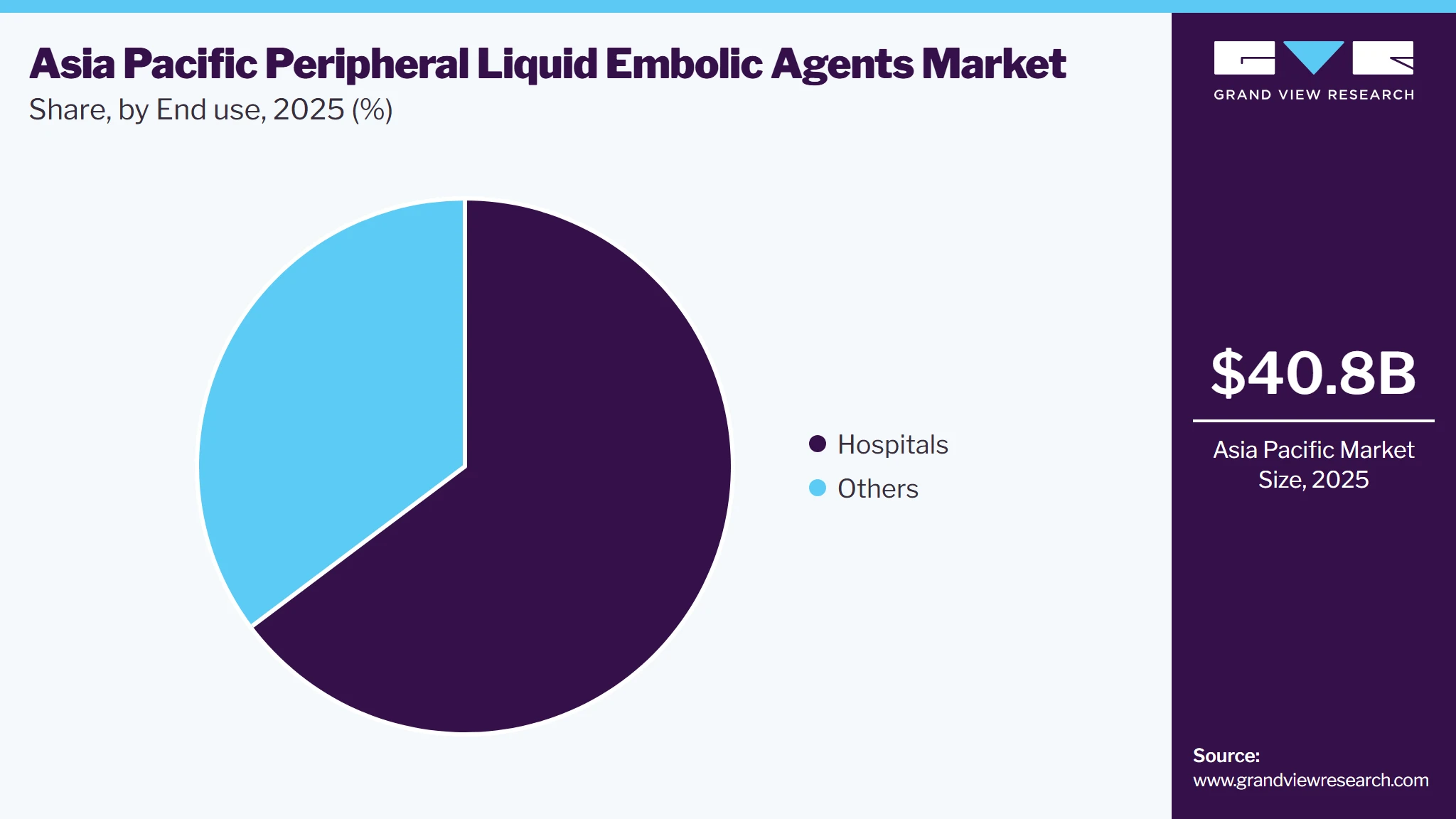
- By end use: Hospitals segment led the market with the largest revenue share of 64.7% in 2025.
Market Size & Forecast
- Market Size in 2025: USD 40.6 million
- Estimated market size in 2026: USD 44.8 million
- Projected Market Size by 2036: USD 91.1 million
- CAGR (2026-2036): 7.4%
Three ways to get this report
Buy it, customize it, or ask a question.Ask an Analyst
A direct answer, usually in 1 working day
- AccessReport author, directly
- Reply timeWithin 1 working day
- No sales callDirect answer only
- FormatEmail reply
- CostFree, no cost
Get the Full Report
What the study covers
- FormatsPDF · Excel · Dashboard
- Timeline2026–2036 annual, 2025 base
- Coverage20+ countries, 5 regions
- Companies10+ key players profiled
Customize the Report
20% free customization
- IncludeCountries, segments, points
- TailorTo your product definition
- ExtendDeeper competitor detail
- OrA fully bespoke study
- Turnaround5–10 working days
The rising burden of varicose veins in Asia Pacific is driving growth in the peripheral liquid embolic agent market, driven by growing demand for minimally invasive venous treatment approaches. Varicose veins, primarily associated with chronic venous insufficiency and malfunctioning venous valves, are becoming an important vascular health concern due to the aging population and increasing need for effective symptom management. The shift from conventional surgical vein stripping toward minimally invasive endovascular procedures has increased the adoption of advanced venous closure technologies. Liquid embolic agents, particularly adhesive-based embolic materials, are gaining attention for enabling non-thermal vein occlusion through controlled delivery and reduced dependence on energy-based ablation techniques. The rising number of patients undergoing treatment for symptomatic varicose veins, along with increasing physician preference for minimally invasive procedures, is creating opportunities for peripheral liquid embolic agents in venous applications.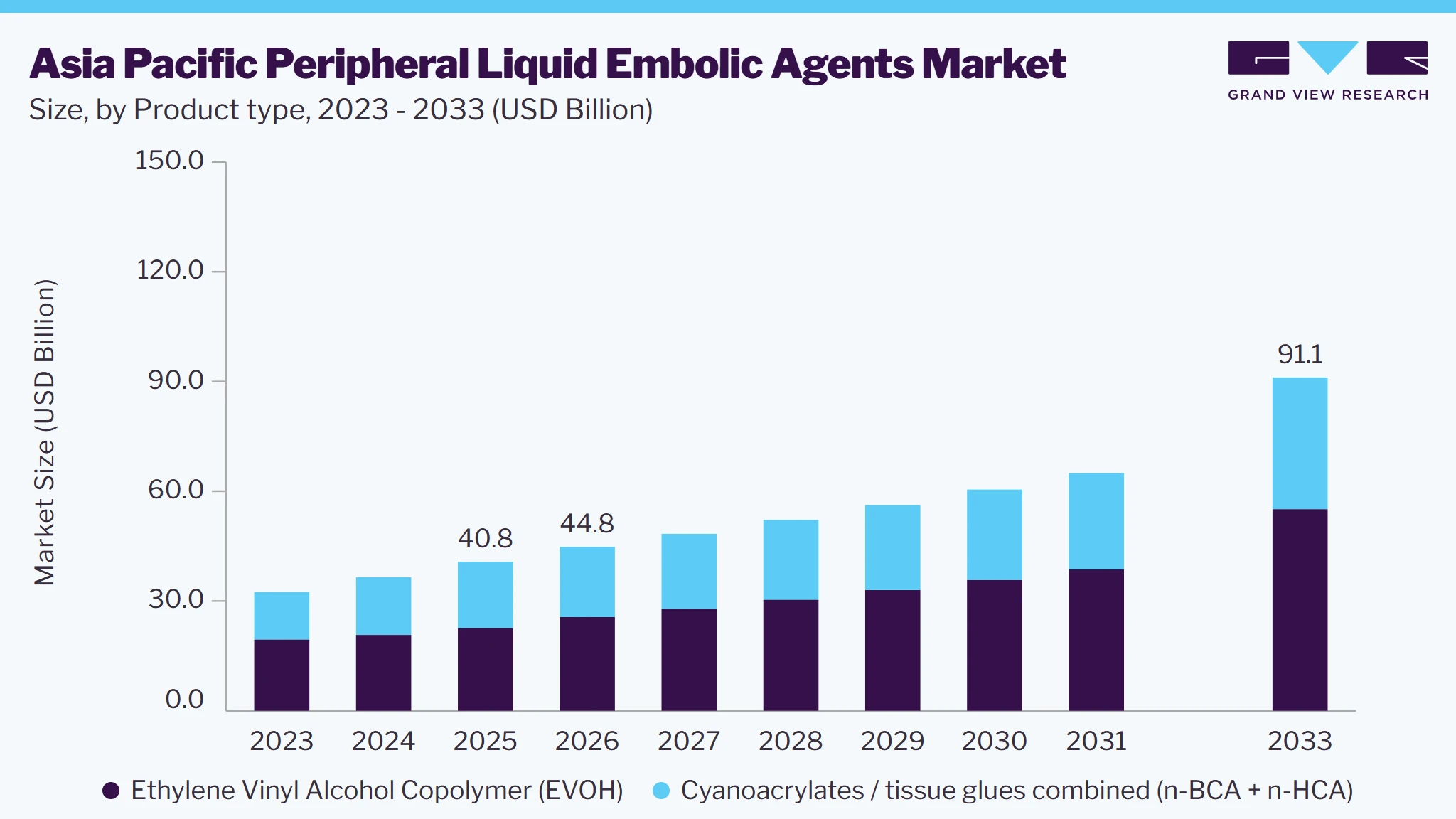 Source: Grand View Research, IR Documents, Primary Interviews, Paid DatabasesTo learn more about this report,
 Download Free Sample Report
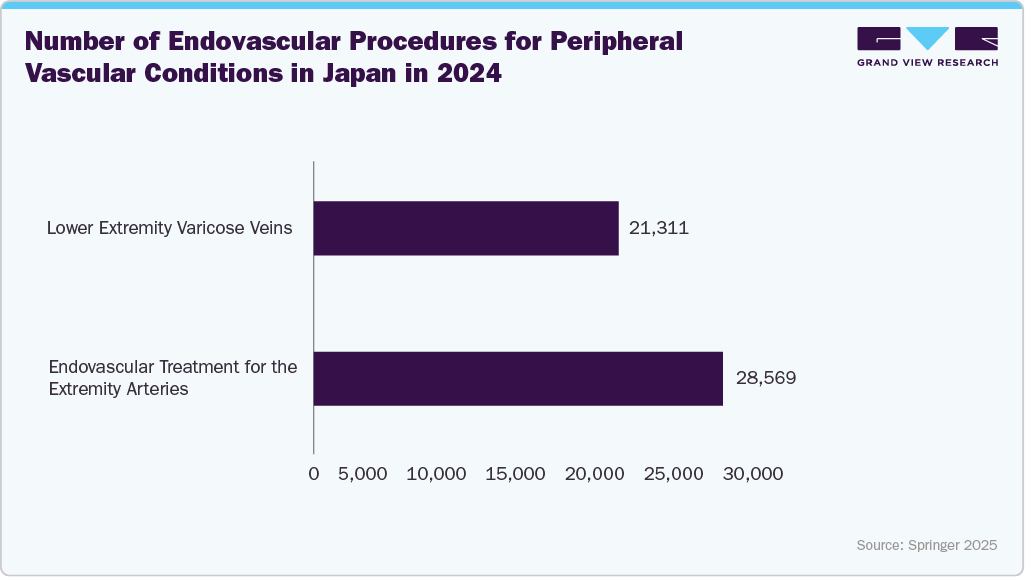
 For instance, data published by Springer in June 2026 and the 2024 National Clinical Database (NCD) annual report by the Japan Surgical Society indicate that 223,422 peripheral vascular surgical procedures were registered in the NCD in 2024, an increase of more than 2,700 cases compared with 2023. The procedure with the highest number in this category was endovascular treatment for extremity arteries.
 To learn more about this report, Download Free Sample Report
 Market Dynamics
The Asia Pacific peripheral liquid embolic agents market is supported by the expansion of interventional radiology capabilities, increasing use of embolization in oncology, and growing adoption of image-guided vascular interventions across major markets such as Japan and India. The region's substantial cancer burden is creating greater demand for transarterial and other embolization procedures for hypervascular tumors and preoperative vascular management. In addition, the increasing availability of specialized interventional radiology centers and advanced angiographic technologies is enabling physicians to perform more selective and complex embolization procedures. The use of liquid embolic agents, including NBCA and ethylene vinyl alcohol copolymers, is particularly relevant where deep distal penetration and controlled vascular occlusion are required.
A growing cardiovascular disease burden is increasing the overall need for vascular diagnosis and interventional treatment across South and Southeast Asia. The WHO South-East Asia Region reports that cardiovascular diseases account for approximately 3.9 million deaths annually, representing around 30% of all deaths in the region. Importantly, peripheral artery disease (PAD) is included within the cardiovascular disease category. Also, the expansion of cardiovascular and vascular care is encouraging hospitals to strengthen vascular surgery, interventional radiology, angiography, and catheter-based treatment capabilities. As more patients are evaluated for peripheral vascular abnormalities, bleeding, malformations, and other conditions requiring vessel occlusion, demand for embolization technologies can increase.
High out-of-pocket healthcare expenditure remains a key restraint for the Asia Pacific peripheral liquid embolic agents market, particularly across emerging economies where insurance coverage and reimbursement for specialized interventional procedures remain limited. Peripheral embolization procedures can involve substantial costs associated with angiography, microcatheters, liquid embolic agents, hospital services, and specialist intervention. Consequently, high patient-paid healthcare expenses can lead to treatment delays, lower procedure volumes, and preference for lower-cost therapeutic options, thereby limiting the adoption of advanced and relatively expensive liquid embolic technologies in price-sensitive APAC markets.
The development of next-generation liquid embolic formulations presents a significant opportunity for the Asia Pacific peripheral liquid embolic agents market as interventional procedures become selective and technically complex. Advances in liquid embolic technology are focused on improving injectability, distal vessel penetration, occlusion control, and resistance to unwanted reflux, which can enhance procedural precision and safety. These characteristics are particularly valuable in peripheral vascular malformations, complex bleeding, venous interventions, and interventional oncology procedures where controlled delivery and targeted vessel occlusion are required. The increasing clinical focus on non-adhesive liquid embolic agents across Asia Pacific is also encouraging interest in advanced formulations.
Market Concentration & Characteristics
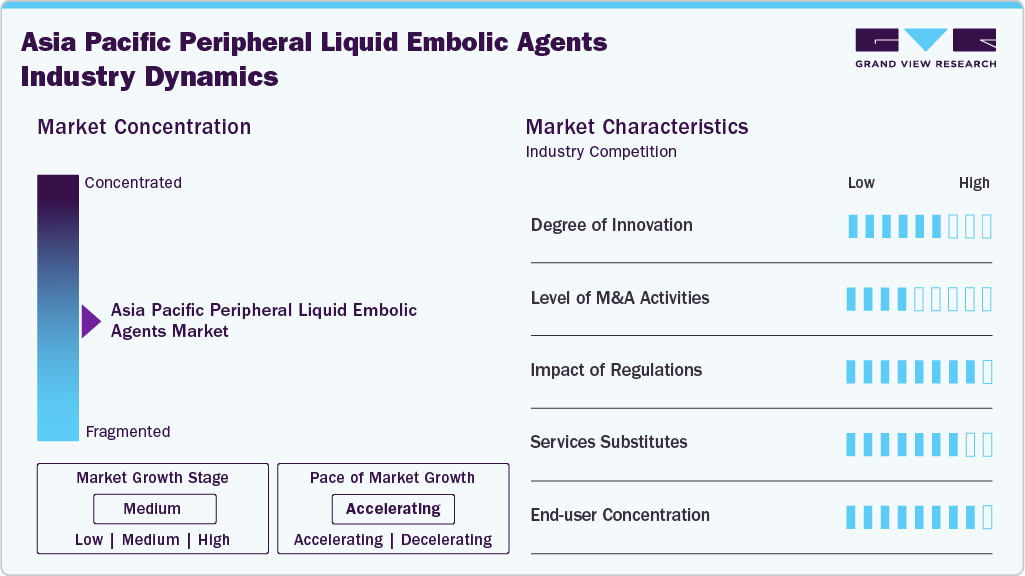
The market is characterized by a high degree of innovation, supported by ongoing advancements in liquid embolic formulations, delivery systems, radiopacity, viscosity, polymerization characteristics, and catheter compatibility. Manufacturers and clinical users are focused on technologies that provide controlled delivery, predictable vessel occlusion, and improved visualization during image-guided procedures.
The market is characterized by a moderate level of M&A activity, with companies seeking to strengthen their interventional radiology and peripheral vascular portfolios through acquisitions, strategic partnerships, licensing arrangements, and regional distribution agreements. These activities can provide manufacturers with access to complementary embolization technologies, established hospital and distributor networks, specialized clinical expertise, and new geographic markets. M&A and partnership opportunities are particularly relevant in emerging Asia Pacific markets, where local regulatory knowledge and distribution capabilities can accelerate commercialization.
 To learn more about this report, Download Free Sample Report
 The market experiences a high regulatory impact because products must satisfy country-specific requirements related to safety, performance, clinical evidence, manufacturing quality, registration, and post-market surveillance. Regulatory pathways vary significantly across major markets. China's National Medical Products Administration (NMPA) maintains specific provisions for medical device registration and filing, while India's Central Drugs Standard Control Organization (CDSCO) regulates medical devices under the Medical Devices Rules, 2017. Japan's PMDA and Ministry of Health, Labour and Welfare (MHLW) oversee medical device review, approval, and post-market safety activities. Differences in regulatory requirements across China, Japan, India, Australia, South Korea, and Southeast Asian countries can increase product registration costs, documentation requirements, and time to market.
The market faces moderate to high competition from substitute embolization technologies, including embolization coils, vascular plugs, particles, and other embolic materials. Product selection depends on vessel size, lesion characteristics, vascular anatomy, desired permanence of occlusion, procedural complexity, and physician preference. Coils and vascular plugs are commonly used for focal vessel occlusion, while particles may be preferred for selected tumor embolization and other applications. Liquid embolic agents provide differentiated capabilities, including penetration into distal or complex vascular networks, conformity to irregular vascular anatomy, and the potential for more extensive embolization of interconnected vessels.
Demand for peripheral liquid embolic agents in Asia Pacific is highly concentrated among hospitals, academic medical centers, tertiary care facilities, and specialized interventional radiology and vascular centers. These facilities generally have access to angiography systems, advanced imaging technologies, catheterization laboratories, microcatheters, and trained interventional specialists required for complex embolization procedures. The concentration is particularly strong in high-volume centers in countries such as China, Japan, South Korea, Australia, and India, where interventional radiology capabilities are relatively established.
Analyst Perspective
From an analyst’s perspective, the Asia Pacific peripheral liquid embolic agents market is positioned for steady expansion as healthcare systems strengthen interventional radiology infrastructure and physicians adopt minimally invasive embolization techniques. Market opportunities are expected to be driven by continued innovation in liquid embolic formulations, improved delivery systems, expanding clinical applications, and increasing availability of advanced imaging technologies. Manufacturers with products offering controlled delivery, adequate radiopacity, biocompatibility, and reliable occlusion, supported by strong clinical evidence and regulatory clearances, are likely to gain a competitive advantage. In addition, specialist physician training, development of dedicated vascular centers, and increasing adoption of embolization across hospitals and outpatient facilities are expected to support broader penetration of peripheral liquid embolic agents across major Asia Pacific markets.
Product Type Insights
The Ethylene Vinyl Alcohol Copolymer (EVOH) segment dominated the Asia Pacific peripheral liquid embolic agents market, accounting for 55.6% of the market in 2025. The segment's leading position is supported by the increasing use of non-adhesive liquid embolic agents in complex peripheral vascular procedures, where controlled delivery and distal vessel penetration are important for achieving targeted vascular occlusion. EVOH-based agents can provide more controlled embolization with reduced risk of unintended catheter adhesion compared with adhesive liquid embolics, supporting their use in technically challenging procedures.
Cyanoacrylates / tissue glues combined segment is expected to witness significant growth during the forecast period, driven by the increasing demand for rapid and permanent vascular occlusion in emergency hemorrhage management and high-flow vascular lesions. n-Butyl cyanoacrylate (n-BCA) rapidly polymerizes upon contact with blood, enabling immediate vessel occlusion and making it particularly useful for small-caliber and tortuous vessels where rapid hemostasis is required. For instance, in November 2025, a systematic review of six studies involving 667 patients found that NBCA-based embolization in prostate artery embolization achieved high technical success, with International Prostate Symptom Score (IPSS) improvement reported in 83–94% of patients and no major adverse events reported across the reviewed studies. The availability of n-hexyl cyanoacrylate (n-HCA), which offers slower polymerization and controlled delivery, further expands the application potential of cyanoacrylate-based embolics in small and tortuous vessels.
Application Insights
The venous applications segment dominated Asia Pacific peripheral liquid embolic agents market, accounting for 36.5% of the market in 2025. This dominance is supported by the substantial burden of venous conditions requiring vascular intervention, particularly varicocele. A 2024 systematic review and meta-analysis reported that varicocele was present in 10.9% of men with azoospermia and contributed to 14.8% of male infertility cases. The study also included nine studies and found significant improvements in sperm concentration (SMD: 1.81), progressive sperm motility (SMD: 4.28), and sperm morphology (SMD: 3.59) following varicocele repair. The high prevalence and clinical impact of varicocele support continued demand for minimally invasive venous interventions, including embolization, thereby contributing to the leading position of venous applications in the Asia Pacific peripheral liquid embolic agents market.
The Type II endoleaks segment in Asia Pacific peripheral liquid embolic agents market is expected to grow at the fastest rate during the forecast period, driven by the increasing use of endovascular aneurysm repair (EVAR) for abdominal aortic aneurysms and the persistent occurrence of Type II endoleaks following these procedures. Type II endoleaks are the most common type of endoleak and require secondary embolization when associated with persistent blood flow and aneurysm sac enlargement. The growing adoption of minimally invasive endovascular interventions, combined with advances in liquid embolic agents such as ethylene-vinyl alcohol copolymers and n-butyl cyanoacrylate, is supporting the use of embolization for complex endoleaks. Liquid embolic agents can penetrate the endoleak cavity and smaller collateral vessels, providing an important treatment option when selective catheterization of all feeding vessels is difficult.
End Use Insights
The hospitals end use segment dominated the market, accounting for 64.7% in 2025. Increasing investment in hospital infrastructure and the expansion of tertiary and specialized healthcare facilities across Asia Pacific are creating opportunities for the hospital end-use segment. For instance, India's Union Budget 2026–27 allocated INR 4,770 crore (approximately USD 526 million) to the Pradhan Mantri Ayushman Bharat Health Infrastructure Mission (PM-ABHIM), representing a 67.7% increase from the revised allocation of INR 2,845 crore (approximately USD 313 million) in 2025–26. The funding is intended to expand critical care blocks, integrated public health laboratories, district and sub-district hospitals, and other healthcare infrastructure. These investments are expected to expand hospital capacity and strengthen access to advanced diagnostic and interventional services, supporting the adoption of peripheral liquid embolic agents across hospitals in Asia Pacific.
 To learn more about this report, Download Free Sample Report
 The others end use segment of the Asia Pacific peripheral liquid embolic agents market is expected to grow at the fastest rate during the forecast period. This growth is supported by the increasing adoption of outpatient interventional procedures, office-based laboratories (OBLs), ambulatory surgery centers (ASCs), and specialized vascular treatment facilities. The shift toward outpatient care is particularly relevant in Asia Pacific, where ambulatory surgery infrastructure is expanding in response to rising healthcare costs, chronic disease burden, and demand for shorter hospital stays.
Country Insights
Japan Peripheral Liquid Embolic Agents Market Trends
The Japan peripheral liquid embolic agents market held a significant share in 2025, supported by the country’s rapidly aging population, well-established interventional radiology infrastructure, and broad clinical experience with embolization procedures. Japan has developed clinical guidelines covering several embolization applications, including vascular malformations, portal vein embolization, and vascular access interventions, supporting standardized adoption of image-guided procedures. In addition, the increasing burden of vascular and chronic diseases among older adults and the continued use of endovascular therapies are sustaining demand for advanced embolic technologies, including liquid embolic agents.
India Peripheral Liquid Embolic Agents Market Trends
The India peripheral liquid embolic agents market is witnessing the fastest rate during the forecast period, supported by the substantial burden of chronic venous disorders and increasing recognition of vascular diseases across underserved populations. For instance, a study published by Elsevier Inc in May 2026, titled "prevalence of chronic venous disorders and its risk factors among rural adults in Tamil Nadu, South India," a cross-sectional study was conducted in four rural villages in Tamil Nadu, involving 1,151 participants aged ≥18 years. A two-stage cluster sampling approach was used, selecting one large village from each Primary Health Center area and enrolling all eligible adults from consecutive streets until the sample size was met.
Distribution of Chronic Venous Disease Based on CEAP Clinical Classification
CEAP Clinical Class
Description
Frequency (n)
Percent (95% CI)
C0
No visible signs
1,068
92.8 (91.3–94.3)
C1
Telangiectasia / reticular veins
24
2.1 (1.3–2.9)
C2
Varicose veins
52
4.5 (3.3–5.7)
C3
Edema
4
0.3 (0.0–0.7)
C4b
Lipodermatosclerosis
3
0.3 (0.0–0.6)
Total
—
1,151
100
Source: Elsevier 2026
Key Asia Pacific Peripheral Liquid Embolic Agents Company Insights
Some of the key companies in the Asia Pacific peripheral liquid embolic agents market include Medtronic, BALT Group (via Getz Healthcare), GEM S.r.l. (H.B. Fuller), and B. Braun SE. Major players in the Asia Pacific peripheral liquid embolic agents market are focusing on product innovation and development of advanced formulations with improved delivery control, penetration, visibility, and safety.
Key Asia Pacific Peripheral Liquid Embolic Agents Companies
-
Medtronic
-
BALT Group (via Getz Healthcare)
-
GEM S.r.l. (H.B. Fuller Company)
-
B. Braun SE
Competitive Benchmarking
Category
Operating Strategies
Competitive Edge
Weakness
Established Players (Medtronic)
- Focuses on maintaining and expanding its peripheral embolization portfolio, including EVOH-based liquid embolic technology, while strengthening relationships with hospitals, interventional radiologists, vascular centers, and regional healthcare systems.
- The company also emphasizes clinical evidence, product education, and expansion of peripheral embolization applications.
- Strong global brand recognition, extensive R&D capabilities, broad peripheral vascular portfolio, established distribution infrastructure, regulatory expertise, and strong physician relationships.
- Its Onyx Liquid Embolic System is specifically positioned for peripheral embolization and uses EVOH technology.
- Premium pricing, high clinical-development and regulatory costs, and dependence on specialized physicians and advanced imaging infrastructure may limit adoption in price-sensitive APAC markets.
- Competition from specialized embolic-agent manufacturers may also increase pricing pressure.
Emerging Players (BALT Group (via Getz Healthcare), B. Braun SE)
- Focuses on developing and commercializing specialized embolization technologies and expanding access through regional distributors and healthcare partners.
- In Asia Pacific, partnerships and distributor-led commercialization can support penetration into markets where direct sales infrastructure is less developed.
- Specialized focus on embolization, innovative product development, and flexibility in addressing niche vascular indications.
- Its product portfolio includes newer liquid embolic technologies designed to improve control and predictability during embolization.
Smaller global scale compared with diversified multinational companies, comparatively narrower distribution and service infrastructure in some APAC countries, and lower brand recognition in developing markets.
Asia Pacific Peripheral Liquid Embolic Agents Market Report Scope
Report Attribute
Details
Market size in 2025
USD 40.6 million
Estimated market size in 2026
USD 44.8 million
Projected market size by 2036
USD 91.1 million
Growth rate
CAGR of 7.4% from 2026 to 2036
Base year for estimation
2025
Actual estimates/Historical data
2021 – 2024
Forecast period
2026 – 2036
Quantitative units
Revenue in USD million and CAGR from 2026 to 2036
Report coverage
Revenue forecast, company ranking, competitive landscape, growth factors, and trends
Segments covered
Product type, application, end use, region
Country scope
Japan; India; Rest of Asia Pacific
Key companies profiled
Medtronic; BALT Group (via Getz Healthcare); GEM S.r.l. (H.B. Fuller); B. Braun SE
Customization scope
Free report customization (equivalent up to 8 analyst’s working days) with purchase. Addition or alteration to country, regional & segment scope
Pricing and purchase options
Avail customized purchase options to meet your exact research needs. Explore purchase options
Asia Pacific Peripheral Liquid Embolic Agents Market Report Segmentation
This report forecasts revenue growth at country level and provides an analysis of the latest industry trends in each of the sub-segments from 2021 to 2036. For this study, Grand View Research has segmented the Asia Pacific peripheral liquid embolic agents market report based on product type, application and end use:
-
Product Type Outlook (Revenue, USD Million, 2021 - 2036)
-
Ethylene Vinyl Alcohol Copolymer (EVOH)
-
Cyanoacrylates / tissue glues combined
-
n-butyl cyanoacrylate (n-BCA)
-
n-hexyl cyanoacrylate (n-HCA)
-
-
Application Outlook (Revenue, USD Million, 2021 - 2036)
-
Peripheral Vascular Hemorrhage
-
Hypervascular Tumors
-
Peripheral Vascular Malformations / AVMs
-
Aneurysms / Pseudoaneurysms
-
Type II Endoleaks
-
Portal Vein Embolization (PVE)
-
Venous Applications (varicocele, PCS, varicose veins)
-
-
End Use Outlook (Revenue, USD Million, 2021 - 2036)
-
Hospitals
-
Others
-
-
Country Outlook (Revenue, USD Million, 2021-2036)
-
Japan
-
India
-
Research Methodology
The Asia Pacific peripheral liquid embolic agents market figures in this report are based on a proven research process that combines executive interviews with secondary research from proprietary databases, company filings, and recognized regulatory and institutional sources. Market size is built through value-chain sizing—reconciling supply-side and demand-side estimates—and triangulated with bottom-up and top-down approaches. Every estimate passes multiple levels of expert validation before publication, with each Asia Pacific peripheral liquid embolic agents segment quantified using the revenue-capture definitions in the table below.
Segment Definition
Segment – Product Type
Revenue capture definition
Ethylene Vinyl Alcohol
Copolymer (EVOH)
Revenue generated from EVOH-based liquid embolic agents, consisting of ethylene vinyl alcohol copolymer dissolved in DMSO and typically containing radiopaque materials such as tantalum. These non-adhesive agents form a cohesive polymer cast within the target vessels and are used for controlled and permanent embolization of peripheral vascular lesions, including arteriovenous malformations, hypervascular tumors, bleeding, and Type II endoleaks.
Cyanoacrylates / tissue
glues combined
Revenue generated from the sale of cyanoacrylate-based liquid embolic agents and tissue glues containing n-butyl cyanoacrylate (n-BCA), N-hexyl cyanoacrylate (n-HCA), or formulations combining these agents, used for vascular embolization and tissue sealing procedures. Revenue includes the product value realized by manufacturers from these embolic/glue products, while excluding delivery catheters, ancillary devices, and procedure-related services.
Estimation Model
Step Number
Approach
Description
01
Bottom‑Up Estimation
The market is estimated by assessing the annual volume of peripheral embolization procedures performed across hospitals, interventional radiology centers, ambulatory surgical centers, specialty healthcare facilities, and other healthcare settings across major Asia Pacific countries. The analysis considers procedures involving EVOH‑based agents, cyanoacrylate‑based agents, and other liquid embolics used for Type II endoleaks, peripheral AVMs, pseudoaneurysms, hemorrhage, portal vein embolization, and venous malformations.
02
Top‑Down Approach
The market estimation begins with an assessment of the broader peripheral vascular intervention, embolization, and interventional radiology markets across Asia Pacific, followed by evaluating the proportion attributable to peripheral liquid embolic agents. The analysis incorporates key market indicators such as the prevalence of peripheral vascular diseases, volume of endovascular procedures, EVAR procedures and associated Type II endoleaks, prevalence of vascular malformations, interventional oncology activity, and the increasing adoption of minimally invasive embolization techniques.
03
Supply‑Side Analysis
The supply‑side assessment evaluates manufacturers’ product portfolios, production capacity, regional sales, shipment volumes, average selling prices, regulatory approvals, product indications, and distribution networks across Asia Pacific. The analysis considers major liquid embolic technologies, including EVOH copolymers, NBCA/cyanoacrylate‑based agents, and other liquid embolics, together with compatible microcatheters and delivery systems. Manufacturer‑level revenue contribution, regional commercialization, distributor partnerships, product launches, regulatory clearances, and inventory flow.
Delivered Customizations
This report has been delivered with the following In-depth customizations
Client Request
Customization Delivered
Value Adds
Peripheral Liquid Embolic Agents Product Portfolio & Application Analysis
Conducted a comprehensive assessment of peripheral liquid embolic agent portfolios, including EVOH-based embolics, cyanoacrylate/tissue glues, and other liquid embolic technologies. Evaluated adoption across key applications such as Type II endoleaks, portal vein embolization, peripheral AVMs, vascular malformations, hemorrhage, pseudoaneurysms, and tumor embolization.
Helps stakeholders identify high-growth product and application segments, understand technology adoption, evaluate unmet clinical needs, and optimize product portfolios according to evolving peripheral embolization requirements.
End-user Adoption & Procurement Landscape Analysis
Analyzed adoption across hospitals, tertiary care centers, interventional radiology centers, ambulatory surgical centers, specialty vascular facilities, and other healthcare settings. Assessed procurement criteria, product pricing, clinical preferences, availability of specialized physicians, imaging infrastructure, distributor networks, and factors influencing the selection of liquid embolic agents.
Enables manufacturers to identify high-potential end-user segments, strengthen distribution strategies, improve procurement planning, and expand market penetration across developed and emerging Asia Pacific markets.
Product Positioning & Manufacturer Competitiveness Assessment
Evaluated key manufacturers based on liquid embolic technology, product portfolio breadth, clinical applications, delivery-system compatibility, radiopacity, controlled embolization, regulatory positioning, geographic presence, pricing strategies, distribution capabilities, and clinical evidence. The assessment also examined product launches, portfolio expansion, technology development, strategic partnerships, and competitive differentiation across the Asia Pacific market.
Supports competitive benchmarking, identifies technology and product development opportunities, enables differentiation across EVOH and cyanoacrylate-based solutions, and helps manufacturers strengthen go-to-market strategies and competitive positioning across high-growth APAC markets.
Frequently Asked Questions About This Report
The hospitals held the largest share of 64.7% in 2025 while others is the fastest-growing segment over the forecast period.
The Asia Pacific peripheral liquid embolic agents market size was valued at USD 40.6 million in 2025 and is estimated at USD 44.8 million for 2026.
Key players include Medtronic, BALT Group (via Getz Healthcare), GEM S.r.l. (H.B. Fuller), and B. Braun SE.
The Asia Pacific peripheral liquid embolic agents market is expected to grow at a CAGR of 7.4% from 2026 to 2036, reaching USD 91.1 million by 2036
Key factors include the rising burden of peripheral artery disease and other vascular disorders across Asia Pacific is supporting demand for endovascular interventions.
The Ethylene Vinyl Alcohol Copolymer (EVOH) segment held the largest share of 55.6% in 2025 and is the fastest-growing segment over the forecast period.
The venous applications held the largest share of 36.5% in 2025 and is the fastest-growing segment over the forecast period.
About the Author(s)
Medical Devices Research Team
Healthcare · Medical DevicesThis report was authored by the medical devices research team at Grand View Research - comprising two research analysts, one senior research analyst, and one industry expert - with specialized expertise in the medical devices segment of the healthcare industry. All findings are based on proprietary healthcare databases, executive interviews, and regulatory analysis, subject to internal peer review prior to publication.
Last Updated:
Speak to Analyst

Customize this report to your needs - add regions, segments, or data points, with 20% free customization.
Or view our licence options:


ISO 9001:2015 & 27001:2022 Certified
We are GDPR and CCPA compliant! Your transaction & personal information is safe and secure. For more details, please read our privacy policy.


