
- Home
- »
- Medical Devices
- »
-
Embolization Coils Market Size & Share Report, 2026-2033GVR Report cover

Embolization Coils Market (2026 - 2033)
Size, Share & Trends Analysis Report By Deployment Type (Detachable Coils, Pushable Coils), By Material (Bare Platinum Coils, Hydrogel-Coated Coils), By End Use, By Region, And Segment Forecasts
Market Size, 2025
$1.9BMarket Estimate, 2026
$2.0BMarket Forecast, 2033
$3.1BCAGR, 2026–2033
6.4%Embolization Coils Market Summary
The global embolization coils market size was valued at USD 1.9 billion in 2025 and is projected to grow from USD 2.0 billion in 2026 to USD 3.1 billion by 2033, at a CAGR of 6.4% from 2026 to 2033. The market in North America dominated with a revenue share of 42.6% in 2025. Market growth is driven by increasing neurovascular and peripheral embolization procedures, supported by improved disease detection through advanced imaging.
Key Market Trends & Insights
- By deployment type: Detachable coils segment held the largest market share in 2025.
- By material: Bare platinum coils segment held the largest market share in 2025.
- By end-use: Hospitals segment held the largest market share of 74.8% in 2025.
Regional Highlights
- Largest regional market: North America (42.6% revenue share, 2025)
- Fastest-growing regional market: Asia Pacific (highest CAGR, 2026-2033)
- By country: The U.S. held the largest market share in 2025
Market Size & Forecast
- Market size in 2025: USD 1.9 Billion
- Estimated market size in 2026: USD 2.0 Billion
- Projected market size by 2033: USD 3.1 Billion
- CAGR (2026-2033): 6.4%
Three ways to get this report
Buy it, customize it, or ask a question.Ask an Analyst
Analyst response in 1 business day
- AccessReport author, directly
- Reply timeWithin 1 working day
- No sales callDirect answer only
- FormatEmail reply
- CostFree, no cost
Get the Full Report
What the study covers
- FormatsPDF · Excel · Dashboard
- Timeline2026–2033 annual, 2025 base
- Coverage20+ countries, 5 regions
- Companies10+ key players profiled
Customize the Report
20% free customization
- IncludeCountries, segments, points
- TailorTo your product definition
- ExtendDeeper competitor detail
- OrA fully bespoke study
- Turnaround5–10 working days
Expanding preference for minimally invasive endovascular treatments, along with technological advancements such as hydrogel-coated and complex-shaped coils, enhances clinical outcomes. Aging populations, rising interventional radiology adoption, and improving healthcare access in emerging markets further contribute to sustained demand.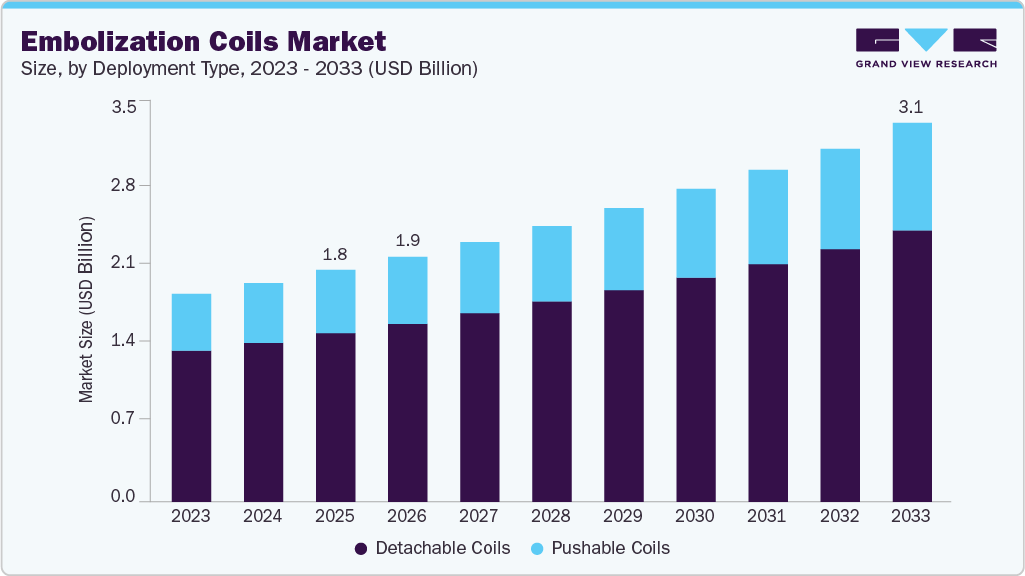 Source: Grand View Research, IR Documents, Primary Interviews, Paid DatabasesTo learn more about this report,
 Download Free Sample Report
 Global Brain Aneurysm Epidemiology & Clinical Impact (2025)
Brain aneurysms represent a significant yet often underdiagnosed neurological risk, affecting millions globally. While rupture incidence remains comparatively low, associated mortality and long-term disability rates are substantial. Advances in diagnosticimaging continue to drive incidental detection, reshaping treatment demand, healthcare burden, and interventional strategy planning worldwide.
Interventional Strategy Planning Worldwide
Category
Statistic
Value / Description
Notes / Units
Prevalence
Unruptured brain aneurysms in US
6.8 million
~1 in 50 people (Brain Aneurysm Foundation)
Rupture Rate
Annual rupture rate
8-10 per 100,000
Population rate (Brain Aneurysm Foundation)
Annual Ruptures (US)
Brain aneurysm ruptures per year
~30,000
US cases annually (Brain Aneurysm Foundation)
Rupture Frequency
Every
18 minutes
US rupture frequency (Brain Aneurysm Foundation)
Worldwide Deaths
Brain aneurysm deaths per year
~500,000
Global estimate (Brain Aneurysm Foundation)
% of victims younger than 50
~50%
Of global fatalities (Brain Aneurysm Foundation)
Age Affected
Most prevalent age range
35-60 years
Age distribution (Brain Aneurysm Foundation)
Most aneurysms develop after age
40 years
Onset trend (Brain Aneurysm Foundation)
Gender Distribution
Women vs. men ratio (prevalence)
3:02
Female > male (Brain Aneurysm Foundation)
Women >55 rupture risk vs. men
~1.5×
Relative risk (Brain Aneurysm Foundation)
Ethnicity Risk
African-Americans & Hispanics rupture risk vs Caucasians
~2×
Relative risk (Brain Aneurysm Foundation)
Fatality & Outcomes
Fatality rate after rupture
~50%
Death after rupture (Brain Aneurysm Foundation)
Survivors with permanent deficit
~66%
Among survivors (Brain Aneurysm Foundation)
Die before reaching hospital
~15%
Pre-hospital deaths (Brain Aneurysm Foundation)
Economic Impact
Lost wages one year after rupture
USD 150 million
US, 2004 study (Brain Aneurysm Foundation)
Aneurysm Size
Most aneurysms are
Small (⅛" - 1")
Size distribution (Brain Aneurysm Foundation)
Multiple aneurysms diagnosed
20%
Multiple sites (Brain Aneurysm Foundation)
Giant aneurysm defined as >
1 inch
Definition (Brain Aneurysm Foundation)
Stroke Impact
Ruptured aneurysms % of new strokes
3-5%
Stroke fraction (Brain Aneurysm Foundation)
Emergency Diagnosis
Headache ED eval → ruptured aneurysm
1-4 per 100
Based on studies (Brain Aneurysm Foundation)
Misdiagnosis
Misdiagnosis/delayed diagnosis
up to 25%
Delays in correct diagnosis (Brain Aneurysm Foundation)
Cost Insights
Clipping cost ↑ after rupture
>2×
Cost increase factor (Brain Aneurysm Foundation)
Coiling cost ↑ after rupture
~70%
Cost increase factor (Brain Aneurysm Foundation)
Federal Funding
Gov’t research spend per patient
USD 2.94/yr
Per afflicted person (Brain Aneurysm Foundation)
Source: Brain Aneurysm Foundation
Research Funding, Technological Innovation, and Regulatory Dynamics in Neurovascular Care
Initiatives such as dedicated research funding programs and increased academic collaboration highlight the growing clinical and scientific focus on brain aneurysms within the broader neurovascular disease landscape. These efforts reflect rising awareness of disease burden, innovation needs, and the strategic importance of advancing early detection, prevention, and treatment outcomes. For instance, in September 2025, the Brain Aneurysm Foundation announced its 2025 research grant recipients, awarding nearly USD 600,000 to 14 academic researchers advancing innovations in prediction, detection, and treatmentof brain aneurysms. Projects span genome sequencing, cellular mechanisms to prevent rupture, repurposing medications for neurorepair, and strategies to reduce fatal subarachnoid hemorrhage. Recipients will be recognized at the 19th Annual Research Grant Symposium in Scottsdale, Arizona. Funding aims to offset limited federal research investment and accelerate lifesaving breakthroughs.
In parallel with research funding, medical device manufacturers continue to prioritize product innovation to improve procedural performance and clinical outcomes. Advancements in embolization technologies increasingly focus on optimizing coil design, enhancing deliverability, and improving occlusion efficiency, particularly in complex neurovascular anatomies.
Reflecting this emphasis on innovation, Shruthi Narayan, President of Interventional Business at Penumbra, Inc., stated: “We’ve engineered Ruby XL to deliver more volume per coil than any other coil on the market, which may result in cost savings. Ruby XL embodies Penumbra’s commitment to innovation, delivering mechanical occlusion through more volume without sacrificing softness or deliverability.”
Continuing this trajectory of technological advancement, in October 2025, Penumbra, Inc. commercially launched the SwiftSet coil, a complex neurovascular embolization device engineered for adaptive vessel wall apposition and controlled deployment. The SwiftSet coil is designed to achieve dense occlusion in small, tortuous anatomies and expands the company’s Swift coil platform by enabling physicians to anchor with SwiftSet coils before filling with complementary SwiftPac coils. This modular treatment approach provides greater procedural flexibility and supports tailored embolization strategies for intracranial aneurysms, arteriovenous malformations, and fistulae. Such device introductions illustrate how incremental design refinements continue to address clinical challenges associated with neurovascular interventions.
While innovation and expansion remain central drivers of market evolution, regulatory actions underscore the critical importance of safety and quality assurance. In February 2026, the U.S. Food and Drug Administration announced a recall of certain CEREPAK Detachable Coil Systems marketed by Johnson & Johnson MedTech/Cerenovus Inc. due to a higher-than-expected failure-to-detach rate. The identified device issue carries the potential risk of hemorrhagic or ischemic stroke, procedural delays, or the need for additional surgical intervention. Affected products, used for embolization of intracranial aneurysms and other neurovascular conditions, were recommended for immediate removal from clinical use. Regulatory reports indicated four serious injuries and one death associated with the malfunction. This event highlights the stringent performance requirements governing neurovascular devices and reinforces the necessity of robust post-market surveillance mechanisms.
Collectively, these developments reflect the dynamic interplay between scientific research, device innovation, regulatory oversight, and evolving clinical demand within the neurovascular disease landscape. Research funding initiatives continue to advance understanding of disease mechanisms and risk prediction, while technological innovations enhance therapeutic precision and procedural efficiency. Within this environment, clinical demand patterns and procedural complexity remain key drivers shaping adoption across embolization coil segments. Detachable coils increasingly gain preference in neurovascular and peripheral vascular interventions due to their controlled deployment, repositioning capability, and suitability across diverse morphologies, including 3D / Complex Shapes, 2D / Helical Shapes, and Specialized / Anatomical Shapes. These design variations enable optimized framing, filling, and finishing in challenging anatomies, particularly in neurovascular applications such as intracranial aneurysms and arteriovenous malformations (AVMs), where precision is critical. Recent product developments reinforce this trajectory; for example, Penumbra, Inc. launched the SwiftSet coil engineered for adaptive vessel wall apposition in small, tortuous anatomies, while Boston Scientific Corporation received CE Mark approval for its Embold Detachable Coil System, reflecting sustained investments in advanced detachable platforms. In parallel, pushable coils maintain relevance in high-volume, time-sensitive procedures where rapid deployment and cost efficiency are prioritized, particularly across emergency trauma, venous embolization, and oncology applications. The coexistence of these segments underscores how device selection is increasingly guided by clinical context, anatomical complexity, safety considerations, and procedural objectives rather than a singular technology preference.
Ongoing Clinical Trials in Embolization Coil Technologies
Clinical trials continue to play a critical role in advancing embolization coil technologies by evaluating safety, effectiveness, and procedural outcomes across diverse neurovascular conditions. These studies reflect ongoing innovation, comparative treatment strategies, and growing clinical emphasis on optimizing aneurysm management and endovascular intervention approaches globally.
Embolization Coil Technologies
NCT Number
Conditions
Interventions
Sponsor
Completion Date
NCT05636124
Intracranial Aneurysms|Wide Neck Intracranial Aneurysms
DEVICE: Kaneka i-ED coil
Icahn School of Medicine at Mount Sinai
2027-07
NCT06466564
Intracranial Aneurysm
DEVICE: Nufairy Coil embolization system for intracranial aneurysm
MicroPort NeuroTech Co., Ltd.
6/1/2026
NCT03936647
Intracranial Aneurysm|Brain Aneurysm|Unruptured Cerebral Aneurysm|Ruptured Cerebral Aneurysm|Cerebral Aneurysm
PROCEDURE: surgical clipping, simple coiling, high-porosity stenting with/ without coiling, intra-arterial flow diversion with/ without coiling|DEVICE: WEB embolization device
Centre hospitalier de l'Università de MontrÃal (CHUM)
2026-01
Source: National Library of Medicine, and National Center for Biotechnology Information.
Market Concentration & Characteristics
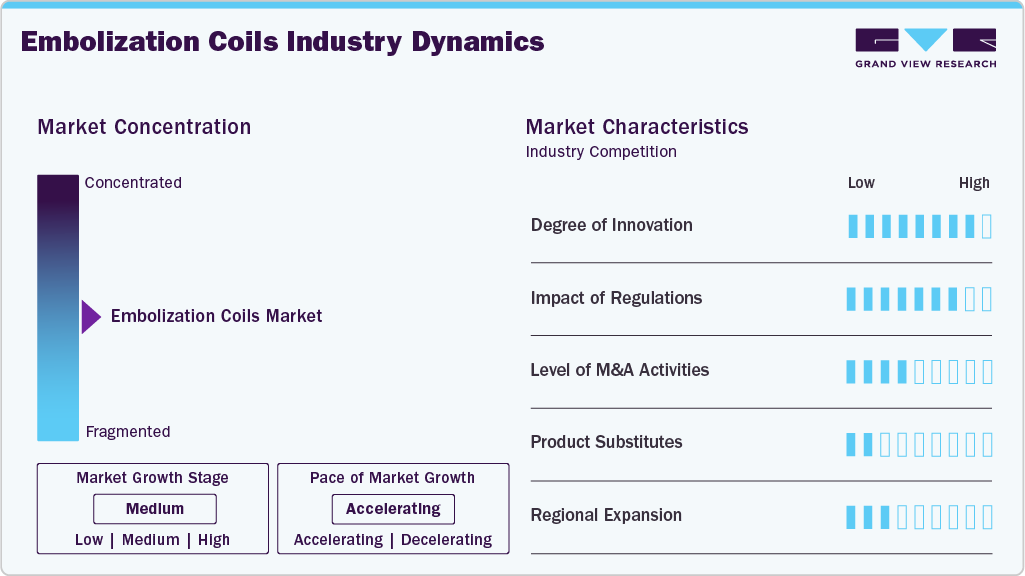
The embolization coils market is in a medium growth stage, with an accelerating growth pace. Market expansion is driven by increasing adoption of minimally invasive endovascular procedures across neurovascular, peripheral vascular, oncology, and trauma applications. Rising prevalence of vascular abnormalities, growing incidental detection through advanced imaging technologies, and expanding interventional radiology capabilities are supporting procedural volumes. Technological advancements in coil design, including complex-shaped and coated coils, continue to improve clinical outcomes, encouraging physician adoption. In addition, aging populations and expanding access to specialized interventional care are sustaining long-term market demand.
Innovation in the embolization coil space is active, driven by improvements in coil materials, delivery mechanisms, and procedural precision. Latest clinical references describe coils with advanced conformability, platinum-based materials, and variable geometric designs (3D/complex, helical, specialized) optimized to occlude vessels and support thrombus formation across diverse vascular anatomy. These material and design refinements enhance device handling and long-term outcomes in neurovascular and peripheral embolization procedures.
 To learn more about this report, Download Free Sample Report
 Regulatory oversight from bodies like the U.S. Food and Drug Administration (FDA) and European CE marking processes remains influential due to the high-risk nature of intracranial and peripheral interventions. Compliance with safety standards for implantable devices, MRI safety considerations, and rigorous clinical evaluation requirements shape product development, approval timelines, and post-market surveillance. Regulatory emphasis on patient safety and device reliability encourages established manufacturers to invest in iterative improvements.
The primary alternative to coil embolization in some neurovascular indications is surgical clipping; however, clipping is more invasive and less favored for many aneurysm types. Adjunct technologies such as flow diverters and liquid embolic agents are used in select cases but do not replace coils across all indications. Their complementary use underscores a diversified interventional toolkit rather than direct substitution.
Mergers and acquisitions activity in the embolization coils market remains moderate, driven by selective and strategically aligned transactions. Companies typically focus on acquiring complementary technologies, specialized coil platforms, or material science capabilities to enhance product differentiation and clinical performance. The moderate deal pace reflects the market’s technical complexity, stringent regulatory requirements, and long product development cycles.
Emerging healthcare systems are progressively increasing the adoption of embolization procedures alongside investments in interventional infrastructure. Although established markets such as North America, Europe, and Japan continue to account for the majority of procedural volumes, expanding imaging capabilities and the growing availability of trained neurointerventional specialists across Asia, the Middle East, and Africa are creating meaningful growth opportunities. For instance, MicroPort NeuroScientific introduced its NUMEN Coil Embolization System in Egypt. Announced in August 2025 in collaboration with local distributor PentaMed, this launch illustrates the company’s strategic expansion into developing clinical markets. The introduction reflects rising regional demand for advanced endovascular technologies and highlights the broader trend of increasing access to specialized neurovascular treatment solutions in emerging healthcare economies.
Deployment Type Insights
The detachable coils segment dominated the embolization coils market in 2025, accounting for the highest revenue share of 73.12%, driven by its strong clinical preference in complex embolization procedures. Detachable coils are widely favored due to their controlled deployment and precise positioning, which significantly reduce the risk of non-target embolization when compared with pushable coils. Clinical literature consistently emphasizes that detachable coils enable accurate embolization within delicate vasculature and allow repositioning prior to final detachment, contributing to improved procedural outcomes in the treatment of aneurysms and arteriovenous malformations (AVMs). These clinical advantages have supported higher adoption across neurovascular and peripheral interventions, reinforcing the segment’s revenue leadership and accelerating the uptake of advanced coil technologies.
Ongoing innovation within this segment further underscores its dominance. In January 2026, Boston Scientific Corporation received CE Mark approval for its Embold Detachable Coil System, a next-generation, fully retractable embolization platform designed to obstruct or reduce blood flow in the peripheral vasculature. The system integrates Embold Fibered, Packing, and Soft coils within a single platform, offering enhanced control, versatility, and procedural efficiency across diverse anatomical scenarios. This approval highlights continued technological progress in detachable coil systems and supports sustained market growth through expanded clinical applications and streamlined minimally invasive embolization procedures.
The pushable coils segment is projected to grow moderately. Pushable coils provide cost-effective embolization in trauma, peripheral hemorrhage, and straightforward vascular occlusion cases. Their simplicity and compatibility with standard microcatheters make them widely used in emergency trauma and venous embolization procedures where rapid occlusion is essential. As interventional radiology services expand globally and procedural volumes increase across peripheral interventions, pushable coils sustain moderate growth by supporting high-volume, routine embolization without the need for complex detachment mechanisms.
Material Insights
The bare platinum coils segment dominated the embolization coils market in 2025, accounting for a revenue share of 58.03%, supported by its strong clinical utility and widespread procedural adoption. Bare platinum coils provide high visibility under fluoroscopic guidance and deliver reliable, durable vessel occlusion, making them suitable across a broad range of embolization indications, including neurovascular, peripheral, and trauma-related interventions. Clinical overviews consistently highlight their ease of use, predictable deployment behavior, and broad availability in multiple shapes and sizes, factors that reinforce clinician confidence and sustain utilization across diverse institutional settings. These attributes continue to drive significant revenue contribution within the coil material segment, particularly in conventional embolization procedures where procedural familiarity and performance reliability remain critical decision factors.
Complementing this sustained adoption, ongoing clinical research efforts further emphasize the importance of coil-based therapies in neurovascular treatment strategies. In January 2026, Boston Scientific Corporation announced the completion of patient enrollment in its MAPS clinical trial, a prospective, randomized study evaluating coiling treatments for intracranial aneurysms. The trial successfully enrolled 630 patients across 47 hospitals in 11 countries, comparing outcomes between different detachable coil technologies. With enrollment finalized, the study advances into data monitoring and follow-up phases, with results expected to contribute valuable evidence supporting future technological refinement and clinical decision-making.
The hydrogel-coated coils segment in the embolization coils market is expected to grow significantly over the forecast period. Hydrogel-coated coils expand after deployment to increase packing density and durable occlusion, improving long-term outcomes in both aneurysm and peripheral embolization procedures. Original hydrogel coil systems demonstrated effective occlusion and expanded applications beyond neurovascular care into visceral and peripheral aneurysms. These expanded clinical applications and improved occlusion performance support growing preference for hydrogel-coated technologies over traditional designs in complex cases.
End Use Insights
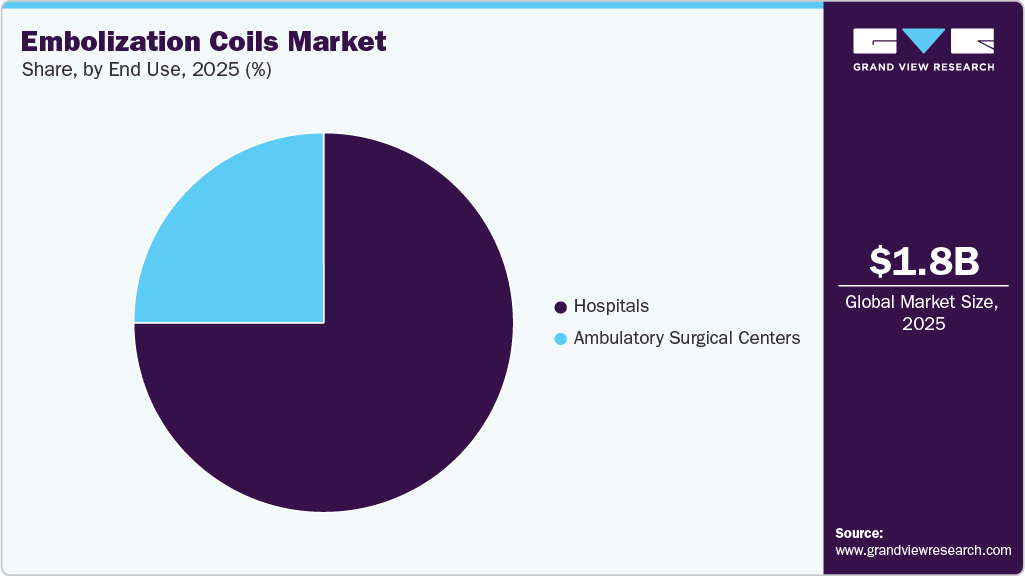
Hospitals led the embolization coils market, accounting for the highest revenue share of 74.84% in 2025. Hospitals continue to lead embolization coil utilization due to their comprehensive interventional radiology infrastructure, multidisciplinary procedural teams, and capacity to manage complex cases requiring specialized imaging and surgical backup. Expansion of interventional radiology suites and hybrid procedural theaters enhances hospitals’ ability to perform advanced embolization procedures across neurovascular, oncology, and trauma indications, reinforcing strong coils demand in hospital settings.
 To learn more about this report, Download Free Sample Report
 The ambulatory surgical centers segment is expected to grow at the fastest CAGR over the forecast period. Ambulatory surgical centers are gaining traction for lower-acuity embolization procedures as outpatient care expands. Growing preference for minimally invasive techniques and shorter recovery pathways promotes procedural migration out of inpatient settings. Although evidence specific to embolization coils in ASCs is emergent, broader interventional medicine trends show ASCs expanding advanced imaging and image-guided therapies for cost efficiency and workflow optimization, supporting faster CAGR in ASC adoption of embolization interventions.
Regional Insights
The North America embolization coils market dominated the global market and accounted for the largest revenue share of 42.56% in 2025. Market leadership is primarily supported by advanced healthcare infrastructure, high adoption of minimally invasive endovascular procedures, and strong reimbursement frameworks. The region benefits from early clinical adoption of novel embolization technologies, increasing preference for endovascular interventions over open surgery, and high procedural volumes across neurovascular, peripheral vascular, oncology, and trauma applications.
 To learn more about this report, Download Free Sample Report
 U.S. Embolization Coils Market Trends
The U.S. represented the largest contributor to the North America embolization coils market in 2025, driven by high utilization of neurovascular and peripheral embolization procedures, increasing incidental detection of vascular abnormalities through advanced imaging, and strong physician preference for detachable coil systems. This trend aligns with broader clinical needs in aneurysm care: an estimated 6.8 million people in the U.S. have an unruptured brain aneurysm (about 1 in 50 people), and approximately 30,000 aneurysm ruptures occur annually — highlighting the importance of early intervention and effective endovascular therapies. Technological advancements, including complex-shaped coils and coated coil technologies, continue to support product innovation and premium device adoption across hospitals and specialized interventional centers.
Europe Embolization Coils Market Trends
The Europe embolization coils market held a substantial revenue share in 2025, supported by well-established public healthcare systems and expanding interventional radiology capabilities. Regulatory emphasis on patient safety, procedural efficiency, and clinical outcomes continues to encourage adoption of advanced embolization devices. Increasing investments in minimally invasive therapies and structured treatment pathways are contributing to stable market expansion across the region.
Germany’s position as the leading market in Europe in 2025 is supported by a well-established healthcare system characterized by strong clinical expertise, advanced hospital infrastructure, and widespread adoption of innovative endovascular technologies. The country benefits from a high concentration of specialized interventional centers, experienced neurovascular specialists, and consistent procedural volumes across both neurovascular and peripheral vascular interventions. Additionally, Germany’s emphasis on technological integration, clinical research, and early adoption of advanced medical devices continues to drive demand for precision-driven embolization solutions, reinforcing its leadership within the European interventional landscape.
The UK embolization coils market is supported by increasing utilization of minimally invasive vascular interventions within both public and private healthcare settings. Growth is driven by expanding interventional radiology capacity, rising preference for endovascular treatment strategies, and continued adoption of advanced coil technologies designed to improve procedural precision and clinical outcomes. This clinical demand aligns with growing research efforts focused on aneurysm risk and detection: a world-first UK genetics study (ROAR-DNA) is collecting genetic data from thousands of aneurysm patients to improve risk prediction and management, as brain aneurysms affect an estimated ~3% of the UK population (over 2 million people) and cause 3,000-5,000 ruptures annually, nearly half of which are fatal, highlighting the importance of early detection and targeted endovascular care.
France’s embolization coils market benefits from structured healthcare delivery models and strong adoption of minimally invasive treatment approaches. Increasing clinical reliance on embolization procedures across oncology, peripheral vascular, and neurovascular applications continues to support demand. Technological advancements and physician familiarity with coil-based therapies contribute to steady market growth.
Asia Pacific Embolization Coils Market Trends
The Asia Pacific embolization coils market is expected to grow at the fastest rate over the forecast period. Growth is supported by expanding healthcare infrastructure, increasing access to advanced imaging technologies, rising awareness of minimally invasive procedures, and growing investments in interventional specialties. Rapid modernization of hospital facilities and improving reimbursement environments are accelerating adoption across major economies.
Japan represented a leading market within Asia Pacific in 2025, supported by advanced medical technology adoption, high procedural precision standards, and strong clinical expertise in endovascular therapies. Demand remains stable across neurovascular and peripheral vascular applications, supported by continuous innovation and high utilization of minimally invasive interventions.
China’s embolization coils market is driven by rapid healthcare modernization, increasing interventional procedure volumes, and expanding hospital infrastructure. Growing adoption of minimally invasive therapies and rising physician familiarity with endovascular techniques are contributing to accelerated market expansion. Increasing investments in medical technology continue to support device penetration.
Middle East & Africa Embolization Coils Market Trends
The Middle East & Africa embolization coils market is experiencing gradual growth, supported by expanding healthcare infrastructure, rising investments in advanced medical technologies, and increasing adoption of minimally invasive procedures. Demand is strengthening across large urban hospitals and specialized medical centers, particularly for peripheral embolization and trauma interventions.
Saudi Arabia represents a key growth market within the region, supported by large-scale healthcare investments, expansion of specialized treatment centers, and rising adoption of advanced endovascular technologies. Increasing focus on modernizing interventional capabilities continues to drive demand for embolization devices.
Kuwait’s embolization coils market is supported by healthcare modernization initiatives and increasing clinical adoption of minimally invasive vascular interventions. Growth is driven by expanding hospital capabilities, rising demand for advanced interventional procedures, and improving access to specialized medical technologies.
Key Embolization Coils Company Insights
Leading participants maintain competitiveness through continuous innovation in coil technologies, focusing on enhanced deliverability, controlled deployment, and improved occlusion efficiency. Companies emphasize portfolio expansion, material advancements, and integrated embolization solutions. Strong distribution networks, clinical validation, physician training, and regulatory compliance remain critical strategies supporting global market growth and technological differentiation within this specialized interventional segment.
Key Embolization Coils Companies:
The following key companies have been profiled for this study on the embolization coils market.
- Terumo Corporation
- Boston Scientific Corporation
- Medtronic plc
- Penumbra, Inc.
- MicroVention, Inc.
- BALT Group
- Cook Medical LLC
- Johnson & Johnson Services, Inc.
- Kaneka Corporation
- Shape Memory Medical Inc.
Recent Developments
-
In November 2025, Kaneka Corporation has begun sales of its i-ED COIL, a brain aneurysm embolization coil, across Europe after receiving EC certification under the EU Medical Device Regulation in July 2025. The device, already marketed in Japan since 2019, offers enhanced flexibility and packing density for treating irregularly shaped aneurysms, potentially reducing rupture risk. Distribution will be managed primarily through Kaneka Medical Europe, and the company aims to expand global reach and grow its medical device business.
-
In June 2025, Embolization, Inc. announced that its Nitinol Enhanced Device (NED) — a polymer-based embolization coil for arterial and venous use in the peripheral vasculature — received FDA 510(k) clearance in June 2025, allowing it to be marketed in the U.S. The NED is designed to reduce CT/MRI imaging artifacts compared with traditional metal coils while maintaining fluoroscopic visibility, and preclinical data suggest tighter coil packing and faster occlusion.
-
In June 2025, Penumbra introduced the Ruby XL System, the longest, largest, and softest embolization coil available for vascular embolization, enhancing peripheral vessel occlusion options. Designed to improve packing density and flow control in larger vessels, Ruby XL expands the capabilities of the existing Ruby Coil platform. The system supports more efficient embolization in challenging anatomy and aims to offer clinicians greater versatility and control during peripheral interventional procedures.
-
In May 2025, Cook Medical has released a new embolization coil, expanding its portfolio of vascular occlusion devices. The latest coil aims to improve deployment control, enhance vessel packing, and support efficient embolization in a range of peripheral and potentially neurovascular procedures. Designed for clinician ease-of-use and procedural versatility, the device underscores Cook Medical’s focus on innovation in interventional therapies. The launch reflects ongoing demand for advanced coil technologies in minimally invasive embolization. (mpo-mag.com)
Embolization Coils Market Report Scope
Report Attribute
Details
Market size in 2025
USD 1.9 billion
Estimated market size in 2026
USD 2.0 billion
Projected market size by 2033
USD 3.1 billion
Growth rate
CAGR of 6.4% from 2026 to 2033
Base year for estimation
2025
Historical data
2021 - 2024
Forecast period
2026 - 2033
Quantitative units
Revenue in USD million/billion, and CAGR from 2026 to 2033
Report coverage
Revenue forecast, company ranking, competitive landscape, growth factors, and trends
Segments covered
Deployment type, material, end use, region
Regional scope
North America; Europe; Asia Pacific; Latin America; Middle East & Africa
Country scope
U.S.; Canada; Mexico; UK; Germany; France; Italy; Spain; Japan; China; India; Australia; South Korea; Brazil; Argentina; South Africa; Saudi Arabia; UAE
Key companies profiled
Terumo Corporation; Boston Scientific Corporation; Medtronic plc; Penumbra Inc.; MicroVention Inc.; Cook Medical LLC; Stryker Corporation; Johnson & Johnson Services Inc.; Kaneka Corporation; Shape Memory Medical Inc.
Customization scope
Free report customization (equivalent up to 8 analysts working days) with purchase. Addition or alteration to country, regional & segment scope.
Pricing and purchase options
Avail customized purchase options to meet your exact research needs. Explore purchase options
Global Embolization Coils Market Report Segmentation
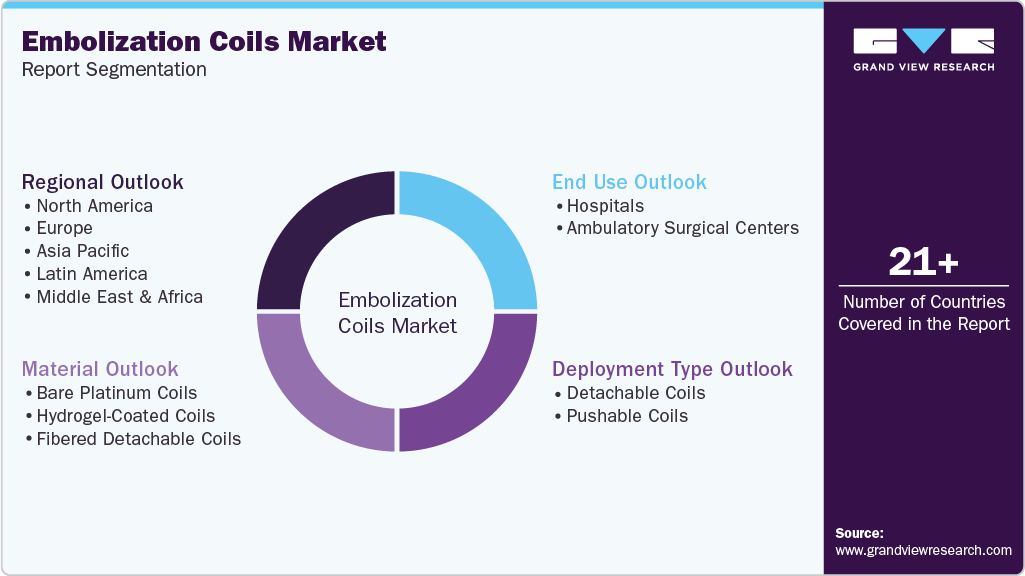
This report forecasts revenue growth at global, regional, and country levels and provides an analysis of the latest industry trends in each of the sub-segments from 2021 to 2033. For this study, Grand View Research has segmented the global embolization coils market report based on deployment type, material, and end use, and region:
 To learn more about this report, Download Free Sample Report
 -
Deployment Type Outlook (Revenue, USD Million, 2021 - 2033)
-
Detachable Coils
-
Detachable Coils, By Shape
-
3D / Complex Shapes
-
2D / Helical Shapes
-
Specialized / Anatomical Shapes
-
-
Detachable Coils, By Application
-
Neurovascular
-
Intracranial Aneurysms
-
Arteriovenous Malformations (AVMs)
-
-
Peripheral Vascular
-
-
-
Pushable Coils
-
Pushable Coils, By Application
-
Emergency Trauma
-
Venous Embolization
-
Oncology
-
-
-
-
Material Outlook (Revenue, USD Million, 2021 - 2033)
-
Bare Platinum Coils
-
Hydrogel-Coated Coils
-
Fibered Detachable Coils
-
-
End Use Outlook (Revenue, USD Million, 2021 - 2033)
-
Hospitals
-
Ambulatory Surgical Centers
-
-
Regional Outlook (Revenue, USD Million, 2021 - 2033)
-
North America
-
U.S.
-
Canada
-
Mexico
-
-
Europe
-
UK
-
Germany
-
France
-
Italy
-
Spain
-
Denmark
-
Sweden
-
Norway
-
-
Asia Pacific
-
Japan
-
China
-
India
-
Australia
-
South Korea
-
Thailand
-
-
Latin America
-
Brazil
-
Argentina
-
-
Middle East & Africa
-
South Africa
-
Saudi Arabia
-
UAE
-
Kuwait
-
-
Frequently Asked Questions About This Report
North America dominated with a 42.6% revenue share in 2025.
Bare platinum coils held the largest revenue share 58.0% in 2025.
Hospitals held the largest share (over 74.8%) in 2025.
Detachable coils segment dominated the embolization coils market in 2025, accounting for the highest revenue share of 73.1%.
Key companies in the global embolization coils market include Terumo Corporation, Boston Scientific Corporation, Medtronic plc, Penumbra, Inc., MicroVention, Inc., B. Braun SE, BALT Group, Cook Medical LLC, Johnson & Johnson Services, Inc., Kaneka Corporation, and Shape Memory Medical Inc., among others.
The embolization coils market is driven by increasing neurovascular and peripheral embolization procedures, supported by improved disease detection through advanced imaging. Expanding preference for minimally invasive endovascular treatments, along with technological advancements such as hydrogel-coated and complex-shaped coils, enhances clinical outcomes. Aging populations, rising interventional radiology adoption, and improving healthcare access in emerging markets further contribute to sustained demand.
The global embolization coils market size was estimated at USD 1.9 billion in 2025 and is expected to reach USD 2.0 billion in 2026.
The global embolization coils market is projected to grow at a CAGR of 6.4% from 2026 to 2033 to reach USD 3.1 billion by 2033.
About the Author(s)
Medical Devices Research Team
Healthcare · Medical DevicesThis report was authored by the medical devices research team at Grand View Research - comprising two research analysts, one senior research analyst, and one industry expert - with specialized expertise in the medical devices segment of the healthcare industry. All findings are based on proprietary healthcare databases, executive interviews, and regulatory analysis, subject to internal peer review prior to publication.
Last Updated:
Speak to Analyst

Customize this report to your needs - add regions, segments, or data points, with 20% free customization.
Or view our licence options:


ISO 9001:2015 & 27001:2022 Certified
We are GDPR and CCPA compliant! Your transaction & personal information is safe and secure. For more details, please read our privacy policy.


