
- Home
- »
- Medical Devices
- »
-
Automated Insulin Delivery Systems Market Report, 2033GVR Report cover

Automated Insulin Delivery Systems Market (2026 - 2033)
Size, Share & Trends Analysis Report By Product (Predictive Low Glucose Suspend (PLGS) System, Fully Closed Loop (FCL) System), By Diabetes Type, By Age Group, By End-use, By Region, And Segment Forecasts
Market Size, 2025
$5.7BMarket Estimate, 2026
$6.5BMarket Forecast, 2033
$18.8BCAGR, 2026–2033
16.3%Automated Insulin Delivery Systems Market Summary
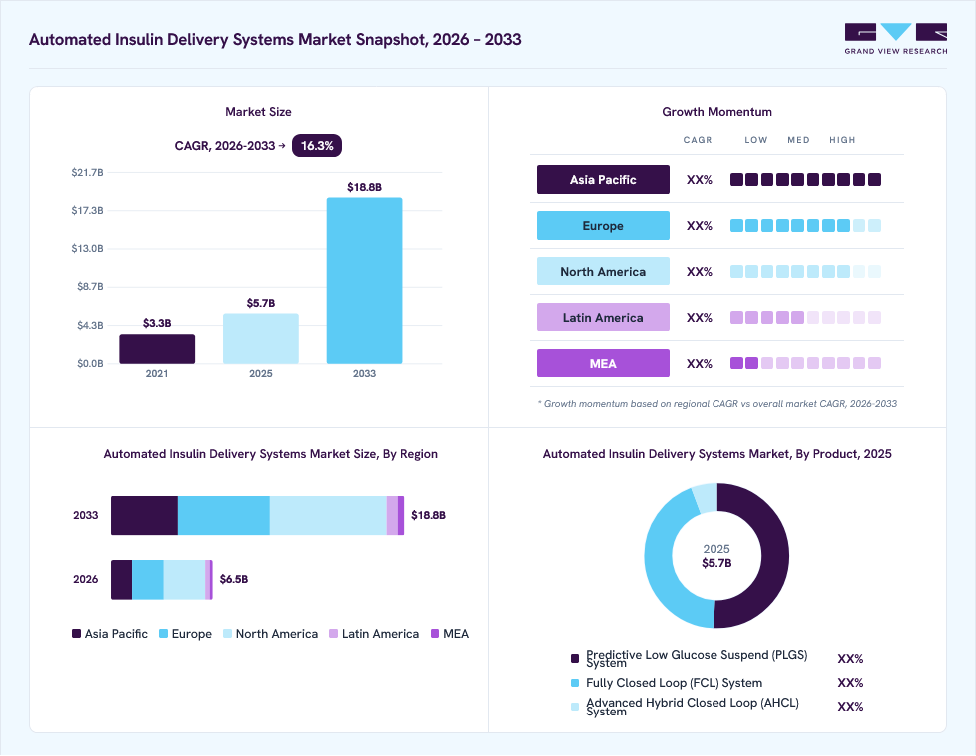
The global automated insulin delivery systems market size was valued at USD 5.7 billion in 2025 and is projected to grow from USD 6.5 billion in 2026 to USD 18.8 billion by 2033, at a CAGR of 16.3% from 2026 to 2033. North America dominated the market, accounting for the largest revenue share of 40.7% in 2025. The automated insulin delivery (AID) systems combine an insulin pump, continuous glucose monitoring (CGM), and a software algorithm that uses glucose information to automatically adjust insulin delivery. The growing diabetes burden is creating a large underlying need for effective insulin-management solutions.
 Source: Grand View Research, IR Documents, Primary Interviews, Paid DatabasesTo learn more about this report,
 Download Free Sample Report
 Key Market Trends & Insights
- By product: Predictive low glucose suspend (PLGS) system segment held the highest market share of 50.6% in 2025.
- By diabetes type: Type 1 Diabetes segment held a leading market share of 89.6% in 2025.
- By age group: Adult & geriatric segment held a leading market share of 84.0% in 2025.
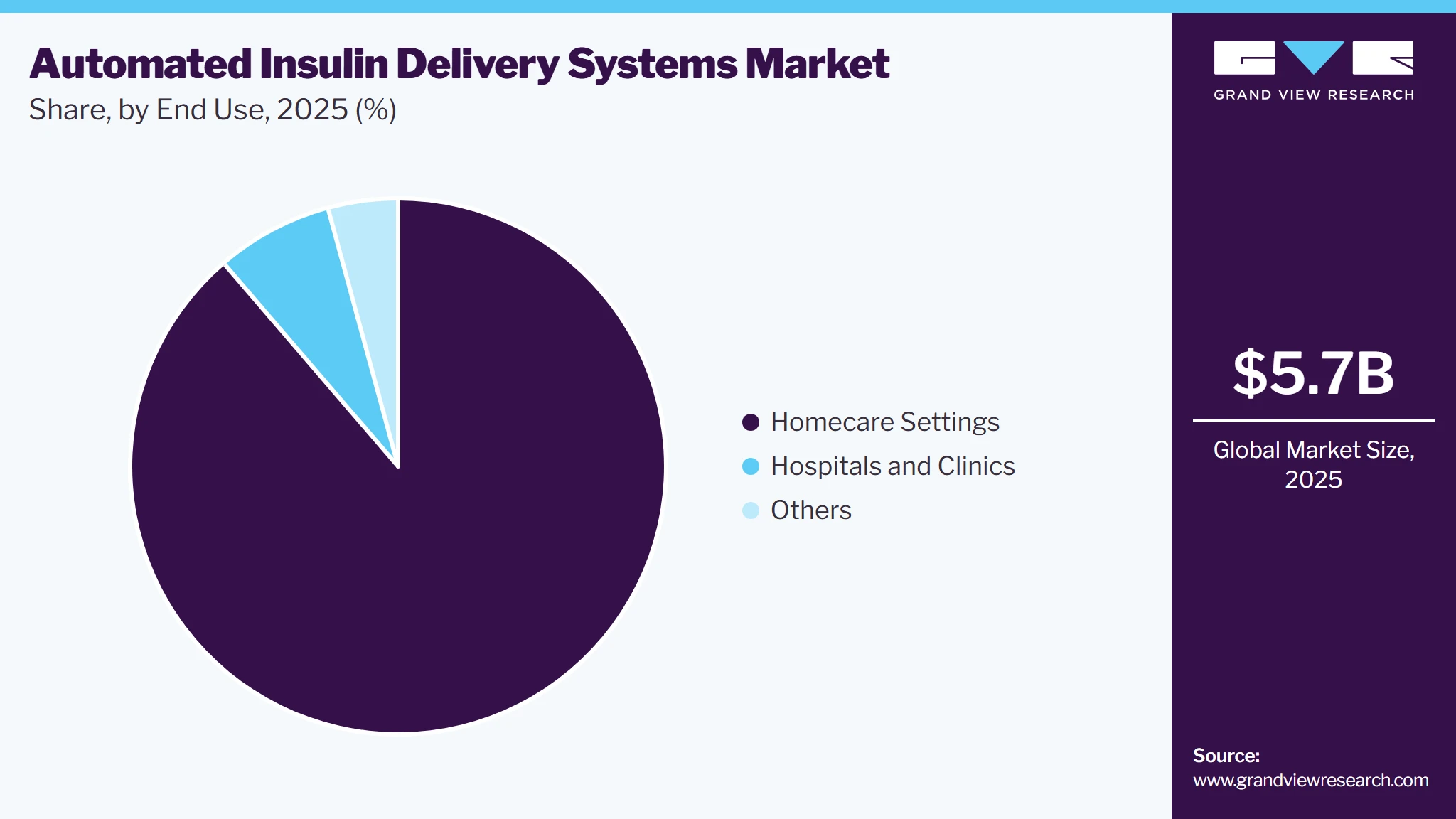
- By end-use: Homecare settings segment held a leading market share of 88.7% in 2025.
Regional Highlights
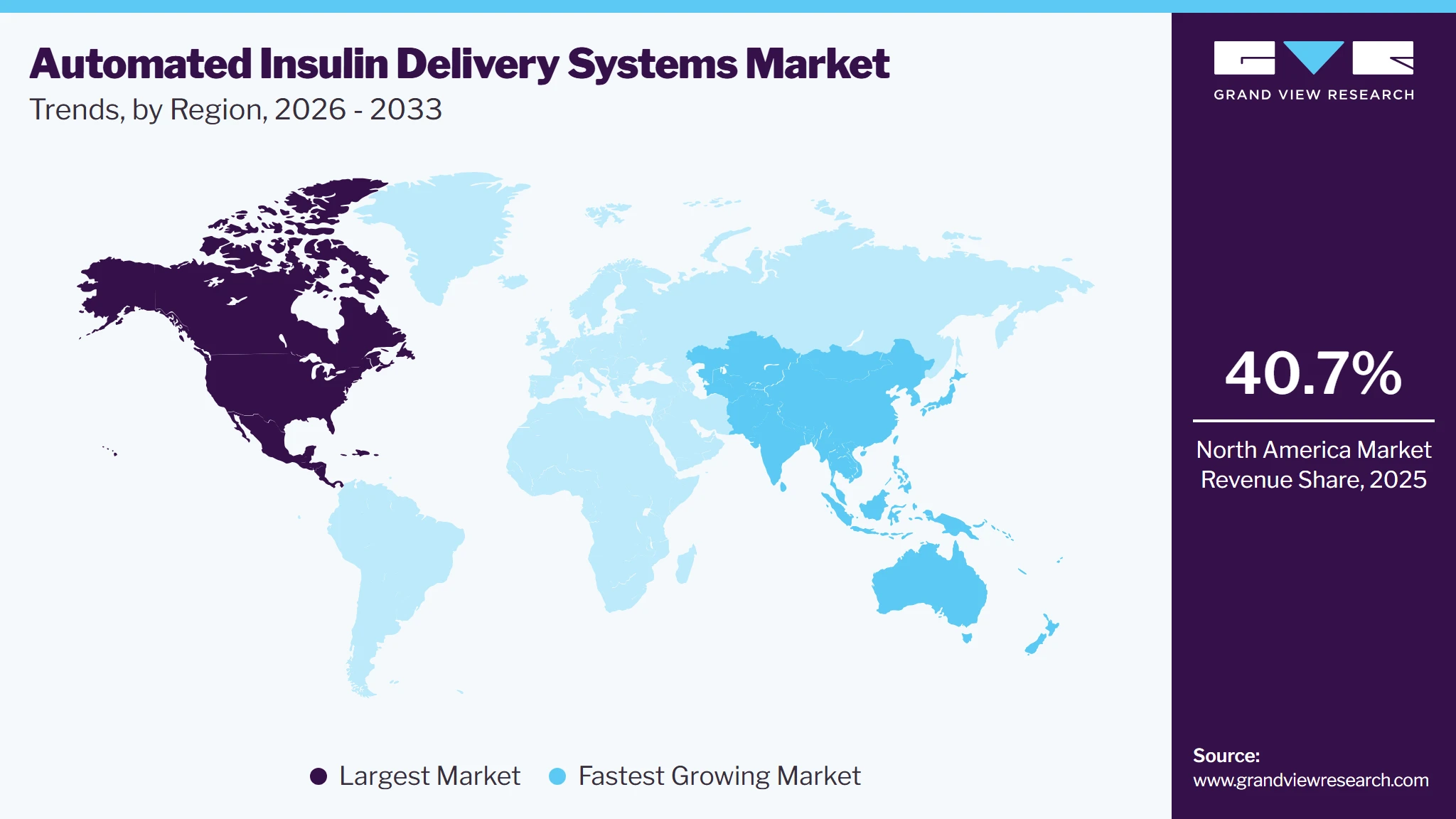
- Largest regional market: North America (40.7% revenue share, 2025)
- Fastest-growing regional market: Asia Pacific (highest CAGR, 2026-2033)
- By country: The U.S. held the largest market share in 2025
Market Size & Forecast
- Market Size in 2025: USD 5.7 billion
- Estimated market size in 2026: USD 6.5 billion
- Projected Market Size in 2033: USD 18.8 billion
- CAGR (2026-2033): 16.3%
Three ways to get this report
Buy it, customize it, or ask a question.Ask an Analyst
A direct answer, usually in 1 working day
- AccessReport author, directly
- Reply timeWithin 1 working day
- No sales callDirect answer only
- FormatEmail reply
- CostFree, no cost
Get the Full Report
What the study covers
- FormatsPDF · Excel · Dashboard
- Timeline2026–2033 annual, 2025 base
- Coverage20+ countries, 5 regions
- Companies10+ key players profiled
Customize the Report
20% free customization
- IncludeCountries, segments, points
- TailorTo your product definition
- ExtendDeeper competitor detail
- OrA fully bespoke study
- Turnaround5–10 working days
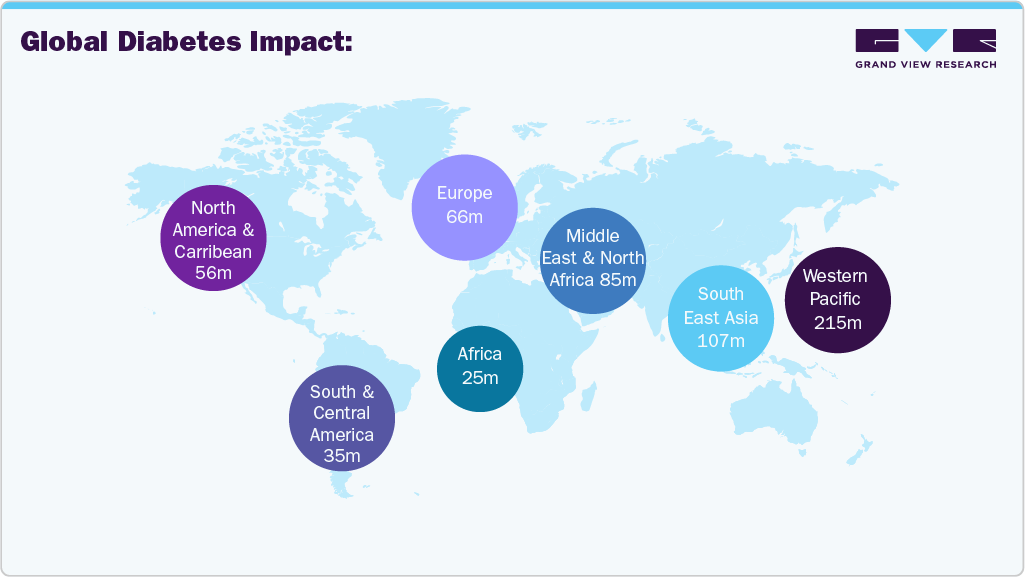
The International Diabetes Federation estimates that 589 million adults aged 20-79 years were living with diabetes globally in 2024, with the number projected to rise substantially over the coming decades. This expanding patient population, particularly people requiring intensive insulin therapy, provides a growing base of potential users for advanced insulin-delivery technologies.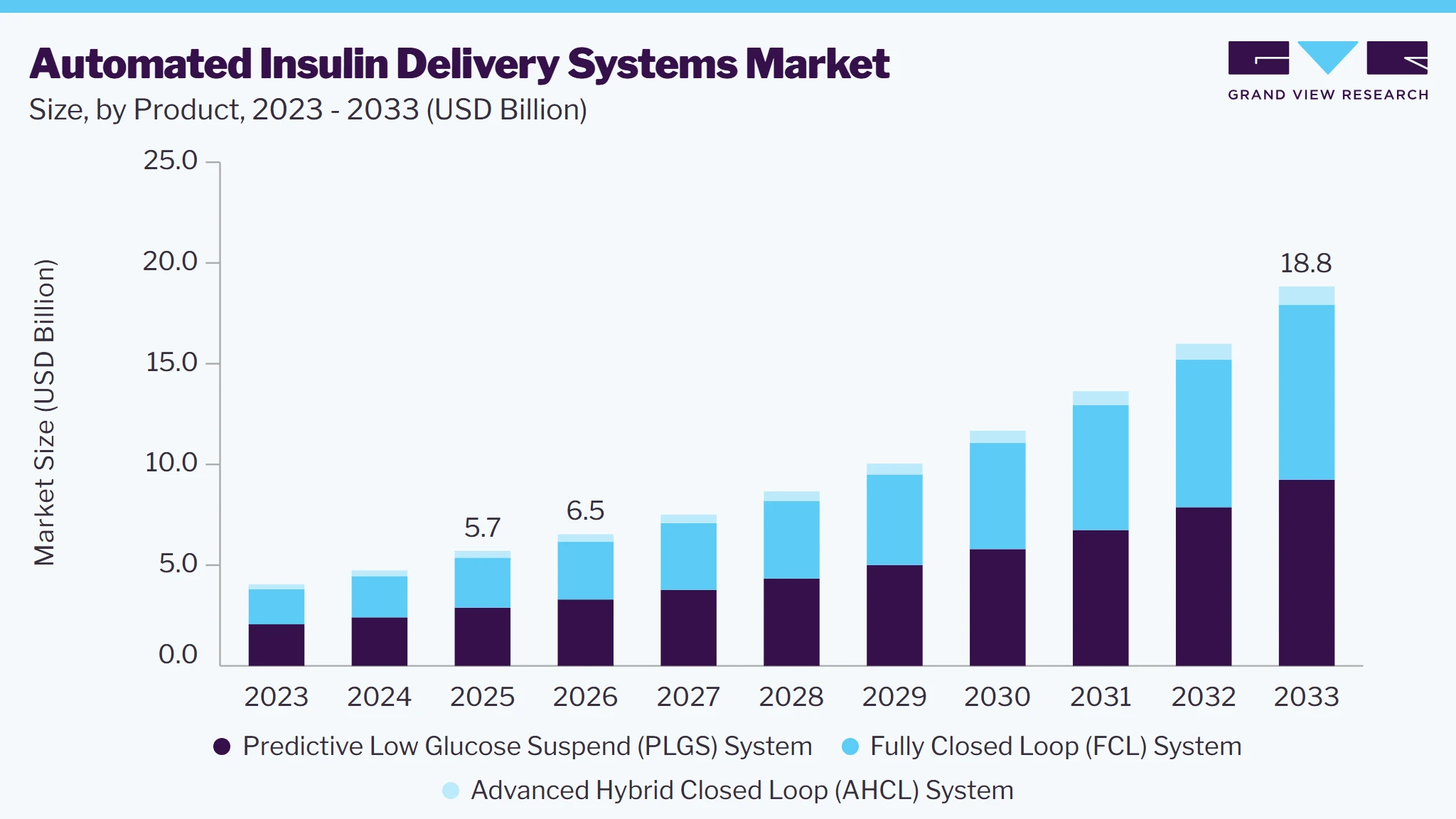 To learn more about this report, Download Free Sample Report
 A major factor supporting market growth is the increasing adoption of CGM and integrated diabetes technologies. CGM provides the continuous glucose information required for AID algorithms to automatically adjust insulin delivery, making CGM integration an important foundation for AID adoption. The American Diabetes Association's 2026 Standards of Care recommends CGM for people with diabetes using insulin and recognizes AID systems as a major component of modern diabetes technology. The guideline describes AID systems as technologies that use CGM-informed algorithms to modulate insulin delivery, demonstrating the increasing role of integrated pump-CGM systems in routine diabetes management. As CGM becomes more widely adopted and device interoperability improves, patients and healthcare professionals have greater access to integrated solutions capable of providing automated insulin adjustments.
Growing clinical evidence and expanding use of AID beyond type 1 diabetes are also strengthening market demand. Historically, AID systems were primarily associated with type 1 diabetes, but recent clinical studies have demonstrated benefits among insulin-treated people with type 2 diabetes. In a 2025 randomized clinical trial published in the New England Journal of Medicine, adults with insulin-treated type 2 diabetes who received AID experienced a greater reduction in HbA1c than those continuing their previous insulin-delivery method while using CGM. Another 2025 clinical study involving 305 adults with type 2 diabetes reported a reduction in average HbA1c from 8.2% to 7.4% after 13 weeks of AID use. These findings support the expansion of AID technology into a substantially broader insulin-treated population and strengthen the clinical rationale for adoption.
Global Diabetes Impact:
Regulatory acceptance is further supporting the expansion of the AID systems market. In August 2024, the U.S. Food and Drug Administration expanded Insulet's SmartAdjust technology to include adults with type 2 diabetes, making it the first FDA-cleared automated insulin-dosing technology specifically indicated for this population. This regulatory expansion is significant because it demonstrates that AID technology is moving beyond its traditional type 1 diabetes application and into broader insulin-treated diabetes management. More recently, in February 2026, Medtronic announced FDA clearance of the MiniMed 780G system for use with the ultra-rapid-acting insulins Fiasp and Lyumjev, providing additional flexibility in insulin selection for people using the AID system and supporting greater personalization of therapy.
 To learn more about this report, Download Free Sample Report
 Technological advancement is another important growth factor, with manufacturers focusing on more automated dosing, improved algorithms, longer-wear CGM sensors, interoperability, and simpler user interfaces. Recent clinical and technology developments illustrate this direction. At the 2026 ADA Scientific Sessions, data involving 153 people with type 1 diabetes using the twiist AID system with the Eversense 365 implantable CGM showed approximately 76% time in range after the first 30 days, while median sensor wear time was 99%, highlighting the potential benefits of combining AID with longer-duration CGM technology. In parallel, research is moving toward more adaptive and fully automated systems that can reduce the need for user intervention.
Market Dynamics
The automated insulin delivery (AID) systems market is witnessing steady growth as diabetes care increasingly shifts toward integrated, technology-enabled insulin management solutions that can automatically adjust insulin delivery in response to continuously monitored glucose levels. Demand is being supported by the increasing use of continuous glucose monitoring (CGM), growing adoption of insulin pump therapy, rising emphasis on improving time in range and reducing hypoglycemia, and expanding clinical acceptance of hybrid closed-loop and other AID technologies. AID systems integrate an insulin pump, CGM, and control algorithm to adjust insulin delivery based on real-time glucose information, reducing the need for users to manually determine every basal insulin adjustment. The 2026 American Diabetes Association Standards of Care identify AID as the preferred insulin-delivery method for people with type 1 diabetes and support its use in appropriate people with type 2 diabetes, reflecting the increasing integration of automated insulin management into routine diabetes care. Clinical evidence has also demonstrated that AID systems can improve time in range, lower A1C, and reduce hypoglycemia compared with conventional insulin-delivery approaches.
Increasing adoption of continuous glucose monitoring (CGM) and integrated diabetes technologies is a major driver of the automated insulin delivery (AID) systems market, as CGM provides the continuous, real-time glucose data required by AID algorithms to automatically adjust insulin delivery. Unlike conventional glucose monitoring, CGM enables frequent assessment of glucose levels and trends, allowing integrated AID systems to increase, decrease, or pause insulin delivery based on current and predicted glucose levels. The growing clinical acceptance of CGM is therefore directly supporting the transition toward integrated diabetes-management platforms combining CGMs, insulin pumps, algorithms, mobile applications, and connected digital-health services. The American Diabetes Association's 2026 Standards of Care recommends CGM for people with diabetes who use insulin and identifies AID as the preferred insulin-delivery method for people with type 1 diabetes, while currently available AID systems integrate with one or more CGM systems.
High cost of AID systems and recurring consumables is a major restraint for the growth of the automated insulin delivery (AID) systems market, as the total cost of therapy extends beyond the initial purchase of the insulin pump or AID platform to include recurring expenses for continuous glucose monitoring (CGM) sensors, infusion sets or pods, insulin reservoirs, batteries, transmitters, and other replacement components. The EASD/ADA consensus report identifies the high cost of AID therapy as a key barrier to access and notes that ongoing supply costs can significantly influence affordability, particularly where insurance coverage or public reimbursement is limited. These recurring expenses can increase patients' out-of-pocket burden and make long-term AID therapy difficult to sustain, particularly in low- and middle-income countries and among underserved populations. In addition, differences in reimbursement policies and coverage eligibility across healthcare systems can restrict access to specific AID devices even when they have received regulatory approval. Consequently, affordability and inconsistent reimbursement can slow adoption, limit penetration into price-sensitive patient populations, and create disparities in access to advanced insulin-delivery technologies.
Market Concentration & Characteristics
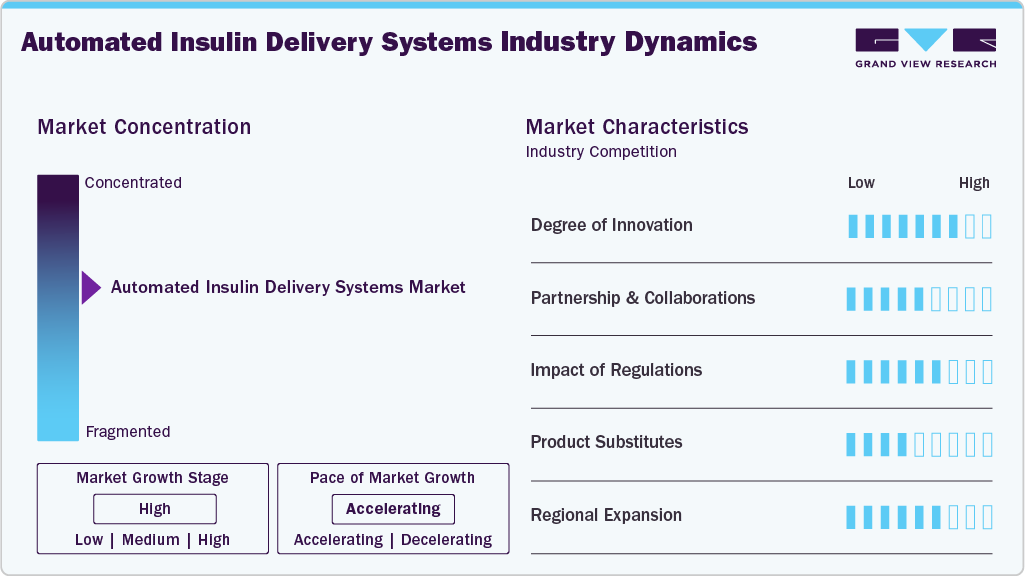
The automated insulin delivery (AID) systems market is moderately to highly concentrated, with established diabetes-technology companies such as Medtronic, Insulet, Tandem Diabetes Care, and Beta Bionics maintaining strong positions across insulin pumps, continuous glucose monitoring (CGM)-integrated systems, and hybrid closed-loop solutions. Competition is primarily shaped by algorithm performance, CGM integration, automated insulin-adjustment capabilities, device reliability, ease of use, and interoperability rather than price alone. Companies are increasingly differentiating their AID platforms through improved automated correction dosing, faster response to glucose fluctuations, tubed and tubeless pump configurations, smartphone connectivity, remote monitoring, and integration with multiple CGM platforms. Competition is also centered on improving time in range, reducing hypoglycemia, simplifying meal and exercise management, and reducing user intervention, while manufacturers increasingly focus on smaller and more discreet devices, longer-wear infusion systems, simplified onboarding, and patient-friendly digital interfaces.
The automated insulin delivery (AID) systems market is characterized by a high degree of innovation, with manufacturers increasingly focusing on advanced glucose-responsive algorithms, improved continuous glucose monitoring (CGM) integration, automated correction boluses, interoperability, smartphone connectivity, and simplified user interfaces. Innovation is increasingly centered on algorithms that can dynamically adjust basal insulin and deliver automated correction doses, improved sensor accuracy and wear duration, smaller and more discreet insulin pumps, tubeless delivery formats, and greater compatibility between insulin pumps and CGM systems. Manufacturers are also developing systems that reduce the need for manual intervention by incorporating predictive glucose modeling, adaptive insulin dosing, activity modes, remote monitoring, and simplified meal-management features. A notable recent development was Medtronic's December 2025 U.S. commercial launch of the MiniMed 780G system integrated with Abbott's Instinct sensor, following FDA clearance for the combination earlier in 2025.
 To learn more about this report, Download Free Sample Report
 Partnerships and collaborations are becoming an important strategy in the automated insulin delivery (AID) systems market, as insulin-pump manufacturers, continuous glucose monitoring (CGM) companies, algorithm developers, research institutions, and healthcare organizations increasingly collaborate to improve interoperability, accelerate AID development, expand device compatibility, and provide more personalized diabetes-management options. Rather than relying solely on internally developed technologies, companies are increasingly using strategic agreements to combine insulin-delivery platforms with CGM sensors, develop next-generation automated dosing algorithms, conduct clinical research, and expand access to integrated diabetes-management ecosystems. For instance, in January 2025, Tandem also entered a multi-year research collaboration with the University of Virginia Center for Diabetes Technology to advance fully automated closed-loop insulin-delivery systems, combining UVA's expertise in AID algorithms with Tandem's insulin-delivery and device-development capabilities.
Regulatory oversight has a significant impact on the automated insulin delivery (AID) systems market because these systems combine insulin-delivery hardware, continuous glucose monitoring (CGM), and software algorithms that automatically calculate and adjust insulin doses, making safety, accuracy, interoperability, cybersecurity, and clinical performance important requirements for commercialization. In the U.S., the FDA regulates key components of AID ecosystems under specific medical-device classifications, including interoperable automated glycemic controllers (iAGCs), alternate controller enabled insulin infusion pumps (ACE pumps), and integrated continuous glucose monitors (iCGMs). Regulatory requirements therefore influence manufacturers' product-development timelines, clinical evidence requirements, interoperability testing, software validation, and post-market monitoring, while regulatory clearances can also expand the addressable patient population and enable new device configurations. For example, in August 2024, the FDA expanded Insulet's SmartAdjust technology to include adults with type 2 diabetes, making it the first FDA-cleared device to enable automated insulin dosing specifically for this population and demonstrating how regulatory decisions can directly broaden the commercial application of AID technology.
The automated insulin delivery (AID) systems market faces substitution from multiple daily injections (MDI) using insulin pens or syringes, conventional insulin pumps without automated dosing, smart insulin pens, and, for selected patients, emerging connected insulin-delivery technologies that can provide effective insulin administration without a fully automated closed-loop system. MDI remains one of the most direct substitutes because patients can use long- and rapid-acting insulin to manage basal and mealtime requirements without the cost, device burden, and continuous sensor requirements associated with AID systems. Conventional insulin pumps also represent an important substitute for patients who prefer continuous subcutaneous insulin infusion but do not require or cannot access automated glucose-responsive dosing. Smart insulin pens provide another technology-enabled alternative by recording insulin doses and connecting with digital applications to support dose tracking and diabetes management, although they generally do not automatically adjust insulin delivery in response to CGM data to the same extent as AID systems.
Regional expansion is an important growth strategy in the automated insulin delivery (AID) systems market, as manufacturers increasingly seek to broaden access to advanced insulin-delivery technologies through regulatory approvals, country-specific registrations, reimbursement strategies, distribution networks, local healthcare partnerships, and expanded compatibility with regionally available continuous glucose monitoring (CGM) systems. Expansion is particularly relevant across Europe, Asia Pacific, the Middle East, and other emerging markets, where diabetes-technology adoption is increasing but access to AID systems remains dependent on regulatory authorization, reimbursement, affordability, specialist support, and availability of compatible CGM infrastructure. Companies are therefore expanding beyond established U.S. markets by introducing AID platforms in additional countries and adapting device ecosystems to local healthcare requirements and available CGM technologies. A notable recent development occurred in February 2026, when Insulet launched the Omnipod 5 Automated Insulin Delivery System in Saudi Arabia, Kuwait, Qatar, and the United Arab Emirates, with compatibility with Abbott and Dexcom CGM sensors, marking the company's expansion into four additional Middle Eastern markets.
Analyst Perspective
The automated insulin delivery (AID) systems market has evolved as an important segment within the broader diabetes management and insulin-delivery technology industry, supported by the increasing adoption of integrated systems for type 1 diabetes and selected insulin-dependent type 2 diabetes populations, growing demand for improved glycemic control, and increasing preference for less burdensome insulin-management approaches. Unlike conventional insulin therapy, AID systems combine a continuous glucose monitoring (CGM) system, an insulin pump, and a control algorithm that continuously interprets glucose data and automatically adjusts insulin delivery. This closed-loop configuration enables automated modulation of insulin delivery, including increasing, decreasing, or suspending insulin based on current and predicted glucose levels, thereby reducing the need for continuous manual dose adjustments.
Product Insights
The predictive low glucose suspend (PLGS) system segment dominated the market in 2025 and accounted for the largest share of 50.6% of the overall revenue. The segment's leading position is primarily supported by the clinical value of reducing insulin exposure when CGM-derived glucose trends indicate an impending hypoglycemic event, making PLGS particularly attractive for users who prioritize hypoglycemia prevention and overnight glucose safety. Unlike conventional insulin pumps that require users to respond to low-glucose alerts, PLGS technology uses predictive algorithms to automatically suspend insulin delivery when future glucose levels are expected to fall below a predefined threshold. For example, Tandem's Basal-IQ technology describes PLGS as an algorithm that uses interstitial glucose values and predicted glucose values to automatically suspend insulin delivery, illustrating the core functionality underlying this product category.
The fully closed loop (FCL) system segment is expected to witness the fastest CAGR of 17.2% over the forecast period. The rapid growth is primarily attributed to the industry's transition toward minimizing or eliminating routine user intervention in insulin dosing. Unlike PLGS systems, which primarily suspend insulin when hypoglycemia is predicted, and hybrid systems that generally require some degree of meal-related user input, FCL systems seek to use continuous glucose data and automated algorithms to determine insulin delivery with substantially reduced user interaction. Recent clinical development provides strong evidence of this trend. In March 2026, Insulet reported results from its EVOLUTION 2 study evaluating a fully closed-loop AID system in adults with type 2 diabetes. With the final algorithm and no mealtime boluses, participants achieved an average 68% time in range, representing a 24% improvement compared with standard injection therapy; median time below 70 mg/dL remained only 0.14%, and no severe hypoglycemia or DKA events were observed.
Diabetes Type Insights
The Type 1 Diabetes segment dominated the market and held the largest revenue share in 2025 and is expected to witness fastest CAGR over the forecast period. The segment's leading position is primarily attributed to the high clinical dependence of people with type 1 diabetes on continuous insulin replacement, which makes automated insulin delivery particularly relevant for maintaining glucose control and reducing the burden associated with frequent insulin-dose adjustments. Automated insulin delivery has become increasingly integrated into the management of type 1 diabetes because these systems combine CGM data with insulin-delivery algorithms to automatically adjust insulin delivery in response to changing glucose levels. evidence continues to support AID in populations with suboptimal glucose control. A 2025 randomized controlled trial evaluated AID in adults with type 1 diabetes who had persistent glycemic challenges despite insulin pump and CGM use, reinforcing the continued clinical development of AID for patients who remain inadequately controlled with conventional technology.
The Type 2 Diabetes segment is expected to witness the significant CAGR over the forecast period. The growth is supported by the expansion of AID technology beyond its traditional type 1 diabetes application and increasing clinical evidence demonstrating the effectiveness of automated insulin delivery in insulin-treated type 2 diabetes. Historically, AID systems were primarily developed and commercialized for type 1 diabetes, whereas insulin-treated type 2 diabetes represented a comparatively underpenetrated application. This situation has begun to change as regulatory approvals, clinical studies, and product-development programs increasingly target adults with type 2 diabetes. For instance, in August 2024, the U.S. Food and Drug Administration (FDA) cleared the first automated insulin dosing system for adults with type 2 diabetes, expanding AID technology beyond its previous use primarily in type 1 diabetes. The clearance broadened access to automated insulin management for insulin-treated adults with type 2 diabetes and marked an important regulatory milestone for the expansion of the AID systems market into the type 2 diabetes population.
Age Group Insights
The adult & geriatric segment dominated the market and held the largest revenue share in 2025 and is expected to witness fastest CAGR over the forecast period. Growth in this segment is primarily driven by the increasing adoption of automated insulin delivery among working-age adults and older adults who require continuous insulin management, with AID systems helping reduce the frequency of manual insulin adjustments and improve glucose control during daily activities. Recent clinical evidence specifically supports this age-related demand. For instance, the 2025 AIDE study evaluated 82 adults aged 65-86 years with type 1 diabetes and found that both hybrid closed-loop and predictive low-glucose-suspend therapy reduced time spent in hypoglycemia compared with sensor-augmented pump therapy, while hybrid closed-loop therapy also improved time in range and HbA1c. Thus, the major age-group-specific growth driver is the increasing need among adults and older adults for simplified, automated glucose management and improved protection against hypoglycemia, supported by continued clinical validation and algorithm innovation.
The pediatric segment is expected to witness the significant CAGR over the forecast period, primarily driven by increasing adoption of AID systems among children and adolescents with type 1 diabetes, where continuous changes in insulin requirements associated with growth, physical activity, meals, and daily routines make manual insulin management particularly demanding for both children and their caregivers. A key age-specific growth driver is the expansion of AID availability into younger children, allowing automated insulin adjustment to be used earlier in life rather than being restricted to adolescents or adults. For example, Omnipod 5 is indicated for children aged 2 years and older with type 1 diabetes, and its pediatric implementation specifically emphasizes reducing hypoglycemia and eliminating the need for tubing and multiple daily injections; the comoany also highlight the reduced overall and overnight hypoglycemia in children aged 2-5.9 years. This hiughlights the rising demand for AID systems across pediatric segment.
End-use Insights
The homecare settings segment held the largest revenue share in 2025 and expected to witness fastest CAGR over the forecast period. The growth is attributed to the increasing shift of automated insulin management from supervised healthcare environments to routine, patient-managed use at home. AID systems are particularly suited to homecare because they continuously integrate CGM readings with insulin-delivery algorithms, allowing users to adjust insulin delivery automatically during meals, sleep, physical activity, and other day-to-day situations without requiring repeated clinical intervention. Therefore, the major end use-specific growth driver is the increasing preference for continuous, automated, and remotely manageable insulin therapy in the home environment, supported by expanded indications, connected CGM integration, and growing patient familiarity with self-managed AID systems.
 To learn more about this report, Download Free Sample Report
 The hospitals & clinics segment is anticipated to grow at significant CAGR over the forecast period. The growth is supported by the increasing role of healthcare providers in initiating AID therapy, selecting appropriate patients, configuring insulin-delivery parameters, training users, and monitoring treatment transitions between clinical and home environments. Hospitals and specialized diabetes clinics are particularly important for patients beginning pump or AID therapy because healthcare professionals must assess insulin requirements, review CGM data, establish appropriate therapy settings, and educate patients on device operation and safety before long-term home use. The clinical role of AID in institutional settings is also expanding: the 2025 Standards of Care in Diabetes recommends continuing insulin pump or AID use in hospitalized patients when clinically appropriate, indicating increasing recognition of patients' personal AID systems within hospital-based diabetes management.
Regional Insights
North America automated insulin delivery (AID) systems market accounted for the largest revenue share of 40.7% in 2025. The growth is supported by the region’s mature diabetes technology ecosystem, broad availability of continuous glucose monitoring (CGM)-integrated insulin delivery systems, established reimbursement infrastructure, and high adoption of advanced diabetes-management technologies. The U.S. is particularly important to regional demand because AID systems have become an established component of intensive insulin therapy, with the American Diabetes Association’s 2026 Standards of Care identifying AID as the preferred insulin-delivery approach for people with type 1 diabetes and for adults with type 2 diabetes in appropriate circumstances. The guideline also notes that currently available AID systems integrate an insulin pump, CGM, and algorithm to automatically adjust insulin delivery according to glucose readings, supporting continued transition from conventional insulin pumps and multiple daily injections toward automated therapy.
 To learn more about this report, Download Free Sample Report
 U.S. Automated Insulin Delivery Systems Market Trends
The U.S. automated insulin delivery (AID) systems market is experiencing robust growth, driven by the increasing clinical acceptance of automated insulin management, a large insulin-dependent diabetes population, expanding use of CGM-integrated therapy, and continued advancement of commercially available AID technologies. The American Diabetes Association’s 2026 Standards of Care recommends AID as the preferred insulin-delivery method over multiple daily injections, conventional continuous subcutaneous insulin infusion, and sensor-augmented pumps for people with type 1 diabetes, while also recommending consideration of AID for selected people with type 2 diabetes who are not achieving individualized glycemic goals. The U.S. market is further supported by the substantial diabetes burden, with CDC data reporting approximately 38 million U.S. adults living with diabetes, creating a large population requiring ongoing glucose and insulin management.
Europe Automated Insulin Delivery Systems Market Trends
The Europe automated insulin delivery (AID) systems market is being shaped by increasing integration of continuous glucose monitoring (CGM) with insulin pumps, stronger clinical acceptance of hybrid closed-loop therapy, improving access to diabetes technologies, and the growing emphasis on achieving individualized glycemic targets while reducing hypoglycemia. The European Association for the Study of Diabetes (EASD) and American Diabetes Association (ADA) have identified AID systems as an important technology for improving glucose regulation, with evidence showing improvements in time in range and reductions in hypoglycemia and diabetes-related distress compared with conventional management.
The UK automated insulin delivery (AID) systems marketis steadily growing. The growth is supported by the National Health Service's structured adoption of hybrid closed-loop systems, expanding eligibility among people with type 1 diabetes, and increasing clinical evidence of improved glucose control. In December 2023, NICE recommended hybrid closed-loop systems for children and young people with type 1 diabetes, adults with type 1 diabetes who have disabling hypoglycemia or an HbA1c of at least 58 mmol/mol despite appropriate management, and people with type 1 diabetes who are pregnant or planning pregnancy, subject to cost-effective procurement and NHS implementation. The impact of this policy is already visible as NICE reported in June 2025 that the proportion of children and young people with type 1 diabetes in England using hybrid closed-loop systems increased from 36% in 2023-24 to 62% in 2024-25.
The Spain automated insulin delivery (AID) systems marketexperiencing significant growth in global automated insulin delivery (AID) systems market. The growth is attributed to the increasing use of advanced diabetes technologies, greater integration of CGM with insulin pumps, and the expansion of technology-enabled management of type 1 diabetes. Spain's adoption environment is supported by European clinical recommendations and the country's established specialist diabetes-care infrastructure, where insulin pump therapy and CGM-based monitoring are increasingly used to improve glycemic control and reduce hypoglycemia. The shift from conventional insulin pump therapy toward hybrid closed-loop systems is particularly relevant because these devices combine real-time glucose monitoring with algorithm-driven insulin adjustment, reducing the amount of manual intervention required from patients.
Asia Pacific Automated Insulin Delivery Systems Market Trends
Asia Pacific automated insulin delivery (AID) systems market is gaining significant momentum and is expected to witness the fastest CAGR of 18.0% during the forecast period. The demand is driven by the region's large diabetes population, increasing adoption of continuous glucose monitoring (CGM), gradual transition from conventional insulin-delivery methods toward connected and automated technologies, and growing clinical evidence supporting hybrid closed-loop therapy. AID systems are increasingly being incorporated into diabetes-management strategies as healthcare providers seek to improve time in range, reduce hypoglycemia, and reduce the day-to-day burden of insulin dose adjustment. The expansion of locally developed insulin pumps and CGM technologies is also improving the availability of AID solutions in Asian markets.
China's automated insulin delivery (AID) systems market is experiencing rapid expansion, driven by increasing adoption of CGM and insulin pump technologies, growing clinical evidence supporting hybrid closed-loop therapy, and the development and clinical evaluation of domestically available AID platforms. The Chinese market is transitioning from conventional insulin pump therapy toward systems that combine insulin pumps, CGM, and automated algorithms for real-time adjustment of insulin delivery. A 2025/2026 multicenter study involving 126 Chinese adolescents and adults with type 1 diabetes found that use of the Equil S hybrid closed-loop system increased time in range from 69.11% to 76.72% and increased the proportion of participants achieving more than 70% time in range from 56.03% to 77.59%, while reducing time below range and demonstrating no severe hypoglycemia or diabetic ketoacidosis during the study period.
South Korea's automated insulin delivery (AID) systems market is experiencing strong growth, driven by increasing clinical acceptance of CGM-integrated insulin pumps, recognition of hybrid closed-loop therapy in national diabetes-management guidelines, and growing awareness of the benefits of automated glucose-responsive insulin delivery among people with type 1 diabetes. The 2025 Clinical Practice Guidelines for Diabetes Management in Korea recommend AID systems for adults with type 1 diabetes and recognize their ability to automatically adjust basal insulin delivery according to CGM-derived glucose levels. The Korean Diabetes Association's guideline also summarizes evidence showing that hybrid closed-loop systems improve time in range and HbA1c while reducing hypoglycemia compared with conventional insulin-delivery approaches. Importantly for the South Korean market, the guideline highlights the need for appropriate patient education and professional training because device handling, insulin-management knowledge, and socioeconomic considerations can influence successful AID use.
Latin America Automated Insulin Delivery Systems Market Trends
The Latin America automated insulin delivery (AID) systems market is emerging as a high-growth market, driven by the increasing diabetes burden, gradual expansion of continuous glucose monitoring (CGM) and insulin pump adoption, improving awareness of technology-enabled diabetes management, and growing clinical evidence supporting hybrid closed-loop therapy. Across the region, the transition from conventional multiple daily injections and nonautomated insulin pumps toward integrated CGM-insulin pump systems is being supported by the need to improve glycemic control while reducing hypoglycemia and the daily burden associated with insulin dose adjustment. Clinical evidence from AID studies has demonstrated that hybrid closed-loop systems can substantially improve time in range and reduce time spent in hypoglycemia compared with conventional pump-based therapy, providing an important clinical rationale for wider adoption as access to advanced diabetes technologies expands in Latin American healthcare systems.
The Brazil automated insulin delivery (AID) systems market is growing. The growth is supported by increasing use of diabetes technologies, the development of CGM- and insulin-pump-based treatment pathways, growing awareness among endocrinologists and patients, and the clinical need for improved glycemic control among people requiring intensive insulin therapy. Brazil represents an important market within Latin America because its large population of people living with diabetes creates a substantial underlying need for advanced glucose-monitoring and insulin-delivery technologies. Adoption of AID is also being supported by accumulating clinical evidence that automated insulin delivery can improve glycemic outcomes compared with conventional insulin therapy, particularly through increased time in the target glucose range and reduced exposure to hypoglycemia.
Middle East & Africa Automated Insulin Delivery Systems Market Trends
The Middle East & Africa (MEA) automated insulin delivery (AID) systems market is witnessing steady growth, driven by the increasing adoption of diabetes technologies, rising demand for continuous glucose monitoring (CGM) and insulin pump therapy, improving availability of AID platforms, and growing clinical evidence supporting automated glucose-responsive insulin delivery. Adoption is particularly developing in the Gulf countries, where advanced diabetes-care infrastructure and access to specialist endocrinology services have enabled greater use of connected diabetes technologies.
The South Africa automated insulin delivery (AID) systems market is experiencing notable growth. The rising demand is attributed to the increasing awareness of advanced diabetes-management technologies, gradual adoption of CGM-integrated insulin pumps, growing demand for improved glycemic control among people with type 1 diabetes, and increasing availability of hybrid closed-loop systems in the country. South Africa already has an established clinical understanding of hybrid closed-loop insulin pumps, in which CGM data are communicated to an insulin pump and an integrated algorithm automatically adjusts insulin delivery according to glucose levels. This highlight the rising importance of AID systems in south Africa.
Key Automated Insulin Delivery Systems Company Insights
The automated insulin delivery (AID) systems market is highly competitive and is characterized by established diabetes-device manufacturers, insulin pump companies, continuous glucose monitoring (CGM) manufacturers, and emerging digital-health and algorithm developers competing through integrated system performance, interoperability, automation capabilities, device miniaturization, connectivity, and patient-centric design.
Key Automated Insulin Delivery Systems Companies
The following key companies have been profiled for this study on the automated insulin delivery systems market:
-
Medtronic plc
-
Tandem Diabetes Care
-
Insulet Corporation
-
Ypsomed
-
Nikkiso Co., Ltd.
-
Beta Bionics, Inc.
-
Diabeloop
-
Medtrum GmbH
-
CamDiab
-
Sequel Med Tech, LLC
Competitive Benchmarking
Category
Operating Strategies
Competitive Edge
Weakness
Established Players (Medtronic; Insulet Corporation; Tandem Diabetes Care)
- Focus on continuous enhancement of integrated AID ecosystems combining insulin pumps, CGMs, and automated dosing algorithms to improve glycemic control and user convenience.
- Expand device compatibility, indications, and geographic reach while strengthening physician, diabetes-center, and reimbursement networks.
- Strong brand recognition, established installed bases, extensive clinical evidence, and established relationships with healthcare providers support broad market adoption.
- Advanced AID algorithms and integration with leading CGM technologies enable automated insulin adjustment based on real-time glucose data.
- High R&D, clinical-trial, regulatory, manufacturing, and post-market surveillance requirements increase operating costs and product-development complexity.
- Dependence on reliable CGM connectivity, infusion sets/pods, sensors, and software interoperability can create system-level vulnerabilities.
Emerging Players (Beta Bionics; Sequel Med Tech; CamDiab; Diabeloop)
- Focus on differentiated AID technologies, simplified insulin-management workflows, interoperable algorithms, and next-generation pump designs.
- Prioritize partnerships with CGM manufacturers, algorithm developers, and diabetes technology companies to accelerate commercialization and expand system compatibility.
- Faster innovation cycles and specialized technology platforms allow emerging companies to differentiate through simplified dosing, interoperable systems, and novel pump architectures.
- iLet reduces the need for conventional carbohydrate-counting and manual insulin-dose calculations, while twiist incorporates direct measurement of delivered insulin volume and Tidepool Loop-based automated dosing.
- Smaller commercial infrastructure, limited installed bases, and lower physician awareness can restrict market penetration relative to established AID manufacturers.
- Dependence on regulatory clearances, clinical evidence, manufacturing scale-up, and reimbursement coverage can delay commercialization and geographic expansion.
Recent Development:
-
In May 2026, Sequel Med Tech’s twist Automated Insulin Delivery (AID) System was recognized as the “Best New Technology Solution for Diabetes Management” in the 2026 MedTech Breakthrough Awards. The recognition highlights twiist’s Tidepool-powered automated insulin delivery, personalized glucose management, and proprietary iiSure technology, which directly measures insulin delivery and enables faster detection of potential occlusions.
-
In April 2026, Tandem Diabetes Care announced that its Control-IQ+ automated insulin delivery (AID) technology received FDA clearance for use during pregnancy in people with type 1 diabetes. The expanded indication enables the technology to power both the t:slim X2 and Tandem Mobi insulin delivery systems, making them the first commercially available AID systems in the U.S. cleared for pregnancy use.
Automated Insulin Delivery Systems Market Report Scope
Report Attribute
Details
Market size in 2025
USD 5.7 billion
Estimated market size in 2026
USD 6.5 billion
Projected market size by 2033
USD 18.8 billion
Growth rate
CAGR of 16.3% from 2026 to 2033
Base year for estimation
2025
Historical data
2021 - 2024
Forecast period
2026 - 2033
Quantitative units
Revenue in USD million/billion, and CAGR from 2026 to 2033
Report coverage
Revenue forecast, company ranking, competitive landscape, growth factors, and trends
Segments covered
Product, diabetes type, age group, end-use, region
Regional scope
North America; Europe; Asia Pacific; Latin America; MEA
Country scope
U.S.; Canada; Mexico; UK; Germany; France; Italy; Spain; Denmark; Sweden; Norway; Japan; China India; Australia; Thailand; South Korea; Brazil; Argentina; South Africa; Saudi Arabia; UAE; Kuwait
Key companies profiled
Medtronic plc; Tandem Diabetes Care; Insulet Corporation; Ypsomed; Nikkiso Co., Ltd.; Beta Bionics, Inc.; Diabeloop; Medtrum GmbH; CamDiab; Sequel Med Tech, LLC
Customization scope
Free report customization (equivalent up to 8 analyst’s working days) with purchase. Addition or alteration to country, regional, and segment scope
Pricing and purchase options
Avail customized purchase options to meet your exact research needs. Explore purchase options
Global Automated Insulin Delivery Systems Market Report Segmentation
This report forecasts revenue growth at global, regional, and country levels and provides an analysis of the latest industry trends in each of the sub-segments from 2021 to 2033. For this study, Grand View Research has segmented the global automated insulin delivery systems market report based on product, diabetes type, age group, end-use, and region:
-
Product Outlook (Revenue, USD Million, 2021 - 2033)
-
Predictive Low Glucose Suspend (PLGS) System
-
Fully Closed Loop (FCL) System
-
Advanced Hybrid Closed Loop (AHCL) System
-
-
Diabetes Type Outlook (Revenue, USD Million, 2021 - 2033)
-
Type 1 Diabetes
-
Type 2 Diabetes
-
-
Age Group Outlook (Revenue, USD Million, 2021 - 2033)
-
Pediatric
-
Adult & Geriatric
-
-
End-use Outlook (Revenue, USD Million, 2021 - 2033)
-
Hospitals and Clinics
-
Homecare Settings
-
Others
-
-
Region Outlook (Revenue, USD Million, 2021 - 2033)
-
North America
-
U.S.
-
Canada
-
Mexico
-
-
Europe
-
UK
-
Germany
-
France
-
Italy
-
Spain
-
Norway
-
Denmark
-
Sweden
-
-
Asia Pacific
-
China
-
Japan
-
South Korea
-
Thailand
-
Australia
-
India
-
-
Latin America
-
Brazil
-
Argentina
-
-
MEA
-
South Africa
-
Saudi Arabia
-
UAE
-
Kuwait
-
-
Research Methodology
The automated insulin delivery systems market figures in this report are based on a proven research process that combines executive interviews with secondary research from proprietary databases, company filings, and recognized regulatory and institutional sources. Market size is built through value-chain sizing—reconciling supply-side and demand-side estimates—and triangulated with bottom-up and top-down approaches. Every estimate passes multiple levels of expert validation before publication, with each automated insulin delivery systems segment quantified using the revenue-capture definitions in the table below.
Segment Definition
Segment - Product
Revenue capture definition
Predictive Low Glucose Suspend (PLGS) System
Revenue is generated through the commercialization of baseline automated insulin delivery systems that utilize continuous glucose monitor (CGM) sensor trends to automatically stop insulin delivery before hypoglycemia occurs, resuming basal dosing once glucose levels stabilize. Manufacturers earn revenue from initial hardware pump sales, companion CGM integrations, and ongoing sales of recurring therapy consumables, including infusion sets, drug reservoirs, and system maintenance kits.
Fully Closed Loop (FCL) System
Revenue flows from advanced, fully autonomous insulin delivery systems that automatically adjust both background basal rates and mealtime bolus doses without requiring manual carbohydrate counting or user intervention. Companies capture premium device margins and subscription-based software revenue for proprietary decision-support algorithms, alongside constant, high-margin recurring income from disposable sensor patches, infusion tubing, and automated cartridge replacements.
Advanced Hybrid Closed Loop (AHCL) System
Revenue is captured through commercial-grade closed-loop platforms that automatically adjust basal insulin and deliver auto-correction boluses in real time, while still requiring user input for mealtime carbohydrate estimates. Market participants derive income from durable controller/pump sales, software license upgrades, algorithmic cloud connectivity features, and high-frequency, long-term consumable replenishment orders.
Segment - Diabetes Type
Revenue capture definition
Type 1 Diabetes
Revenue is generated by supplying automated delivery systems to an established patient base requiring lifelong, intensive insulin replacement therapy. Given the critical clinical need and strong insurance coverage profiles, manufacturers capture high per-patient value through multi-year system adoption, consistent recurring consumable orders (sensors, pods, infusion sets), and frequent digital platform usage.
Type 2 Diabetes
Revenue flows from expanding the deployment of automated systems into insulin-requiring Type 2 diabetes populations. Market participants monetize this fast-growing segment by offering simplified, easy-to-use patch pump systems and automated dosing platforms, driving higher long-term volume pull-through via physician prescribing networks, retail pharmacy distribution, and favorable payer reimbursement pathways.
Segment - Age Group
Revenue capture definition
Pediatric
Revenue is derived from specialized, pediatric-approved automated delivery platforms engineered with strict target glucose controls, low minimum basal delivery increments, and robust parental remote monitoring apps. Device developers capture high-value market share by securing early, brand-loyal pediatric adoption, driving continuous, multi-year supply subscription revenues through childhood and adolescence.
Adult & Geriatric
Revenue is captured through the widespread commercial distribution of systems tailored to broad adult demographics and elderly patients seeking simplified disease management. Income is sustained through steady, population-wide device placements, Medicare and private insurance coverage reimbursements, and recurring orders for long-wear sensors, intuitive user interface software, and easy-to-load consumable cartridges.
Segment - End Use
Revenue capture definition
Hospitals and Clinics
Revenue is generated through direct institutional procurement contracts, specialized endocrinology clinic buying groups, and hospital inpatient delivery system placements. Device makers capture revenue via bulk hardware procurement, clinical software integration packages, and professional training and certification programs for healthcare providers initiating patients on automated therapy protocols.
Homecare Settings
Revenue flows through prescription-driven direct-to-patient fulfillment networks, specialized mail-order pharmacies, and direct-to-consumer (DTC) subscription models. This dominant end-use segment generates highly predictable, recurring monthly revenue from individual patients purchasing continuous supplies of sensors, infusion sets, reservoirs, and digital health software access for everyday self-management.
Others
Revenue is captured through consolidated secondary distribution channels, including academic research institutions conducting clinical trials on novel automated algorithms, long-term care facilities, specialized ambulatory diabetes management centers, and emergency department initial-setup programs.
Estimation Model
01
Scope DefinitionWhat constitutes the Automated Insulin Delivery Systems market?
02
Build the Product BaseHow large is the addressable population and installed AID device base?
03
Estimate PenetrationHow rapidly are eligible insulin users adopting automated insulin delivery?
04
Revenue ConversionHow does the AID user and device base translate into market revenue?
PROCESS STEPS
PROCESS STEPS
PROCESS STEPS
PROCESS STEPS
1 Define the AID system market boundary
2 Establish the product architecture
3 Define market segmentation
4 Establish geographic, temporal, and revenue scope
1 Quantify the clinically relevant patient population
2 Estimate the insulin pump-eligible population
3 Establish the existing pump and AID installed base
4 Estimate AID penetration within insulin pump users
1 Estimate conversion from conventional insulin therapy to AID
2 Measure AID adoption by system configuration
3 Assess replacement and upgrade cycles
4 Evaluate adoption barriers and accelerators
1 Establish ASPs by AID component
2 Separate initial system revenue from recurring revenue
3 Calculate recurring consumable revenue
4 Apply country-specific pricing and reimbursement adjustments
DATA SOURCES
FDA device databases and regulatory clearances, clinical guidelines, ADA publications, International Diabetes Federation
DATA SOURCES
FDA databases, ADA Standards of Care, International Diabetes Federation, CDC, national diabetes registries
DATA SOURCES
FDA regulatory databases, ADA, diabetes associations, peer-reviewed clinical studies, reimbursement policies
DATA SOURCES
Manufacturer annual reports and SEC filings, FDA databases, manufacturer price lists, distributor pricing, public reimbursement schedules
Delivered Customizations
This report has been delivered with the following In-depth customizations
Client Request
Customization Delivered
Value Adds
Porter’s Analysis
Conducted a comprehensive Porter’s Five Forces analysis of the global automated insulin delivery systems market, assessing competitive rivalry, threat of new entrants, bargaining power of suppliers, bargaining power of buyers, and threat of substitutes. The analysis evaluated the competitive intensity created by established AID platforms combining insulin pumps, continuous glucose monitoring (CGM) systems, and automated dosing algorithms, with major participants including Medtronic, Insulet, Tandem Diabetes Care, and Beta Bionics. Competitive rivalry was assessed based on technological differentiation, algorithm performance, CGM compatibility, pump form factor, interoperability, clinical evidence, regulatory clearances, product reliability, and geographic commercialization. The study evaluated barriers to entry arising from regulatory requirements, clinical validation, software development, cybersecurity, intellectual property, manufacturing capabilities, and the need to establish relationships with healthcare providers and reimbursement systems.
Enables stakeholders to understand the structural attractiveness and competitive intensity of the automated insulin delivery systems market. The analysis supports strategic decisions related to product positioning, pricing, interoperability, technology investment, supplier diversification, reimbursement strategy, and market entry.
Key Market Players Analysis
Conducted a detailed competitive assessment of key participants in the automated insulin delivery systems market, covering their product portfolios, AID technologies, insulin pump platforms, CGM integrations, dosing algorithms, interoperability strategies, regulatory status, geographic presence, partnerships, product launches, and commercialization strategies. The assessment covers established companies such as Medtronic, with its MiniMed 780G automated insulin delivery platform; Insulet Corporation, with the Omnipod 5 automated insulin delivery system; Tandem Diabetes Care, with Control-IQ technology integrated into its insulin pump platforms; and Beta Bionics, with the iLet Bionic Pancreas. The analysis also considers emerging and interoperability-focused participants such as CamDiab, Ypsomed, Diabeloop, Tidepool, and Sequel Med Tech. Company-level analysis evaluates differentiation based on tubed versus tubeless delivery, automated correction dosing, adaptive algorithms, smartphone connectivity, CGM compatibility, user interface, wearability, pediatric indications, and interoperability.
Enables stakeholders to benchmark the capabilities, strategic positioning, and commercialization strength of leading AID system manufacturers. The analysis supports competitor benchmarking, product-development planning, partnership identification, technology licensing decisions, geographic expansion, and portfolio optimization.
PESTEL Analysis
Conducted a comprehensive PESTEL analysis of the automated insulin delivery systems market, examining political, economic, social, technological, environmental, and legal factors influencing adoption and commercialization. The political assessment considered government diabetes-management initiatives, public healthcare expenditure, national strategies for diabetes prevention and management, and policies supporting digital health and medical-device innovation. The economic assessment evaluated healthcare spending, reimbursement availability, patient affordability, insurance coverage, recurring expenditure associated with CGM sensors and infusion sets, hospital and clinic procurement budgets, inflationary pressure on medical-device manufacturing, foreign-exchange fluctuations, and differences in purchasing power between developed and emerging economies.
Enables stakeholders to understand the broader macroeconomic, regulatory, technological, and societal forces shaping the automated insulin delivery systems market. The analysis supports market-entry planning, regulatory strategy, investment prioritization, pricing and reimbursement decisions, supply-chain planning, and technology-roadmap development.
Frequently Asked Questions About This Report
The global automated insulin delivery systems market size was valued at USD 5.7 billion in 2025 and is estimated at USD 6.5 billion in 2026.
The automated insulin delivery systems market is expected to grow at a CAGR of 16.3% from 2026 to 2033, reaching USD 18.8 billion by 2033.
By product, the predictive low glucose suspend (PLGS) system segment held the highest market share of 50.6% in 2025.
North America automated insulin delivery systems market held the largest share of 40.7% of the global market in 2025.
AID systems combine an insulin pump, continuous glucose monitoring (CGM), and a software algorithm that uses glucose information to automatically adjust insulin delivery. The growing diabetes burden is creating a large underlying need for effective insulin-management solutions.
Some key players operating in market includes Medtronic plc; Tandem Diabetes Care; Insulet Corporation; Ypsomed; Nikkiso Co., Ltd.; Beta Bionics, Inc.; Diabeloop; Medtrum GmbH; CamDiab; Sequel Med Tech, LLC
By end use, the homecare settings segment held a leading market share of 88.7% in 2025.
Asia Pacific is the fastest-growing region over the forecast period.
About the Author(s)
Medical Devices Research Team
Healthcare · Medical DevicesThis report was authored by the medical devices research team at Grand View Research - comprising two research analysts, one senior research analyst, and one industry expert - with specialized expertise in the medical devices segment of the healthcare industry. All findings are based on proprietary healthcare databases, executive interviews, and regulatory analysis, subject to internal peer review prior to publication.
Last Updated:
Speak to Analyst

Customize this report to your needs - add regions, segments, or data points, with 20% free customization.
Or view our licence options:


ISO 9001:2015 & 27001:2022 Certified
We are GDPR and CCPA compliant! Your transaction & personal information is safe and secure. For more details, please read our privacy policy.


