
- Home
- »
- Biotechnology
- »
-
Automatic Aseptic Sampling Market Size Report, 2026-2033GVR Report cover

Automatic Aseptic Sampling Market (2026 - 2033)
Size, Share & Trends Analysis Report By Technique (On-line Sampling, In-line Sampling), By Product, By Application (Upstream Processing, Downstream Processing), By End Use, By Region, And Segment Forecasts
Market Size, 2025
$517.0MMarket Estimate, 2026
$565.6MMarket Forecast, 2033
$1,078.4MCAGR, 2026–2033
9.7%Automatic Aseptic Sampling Market Summary
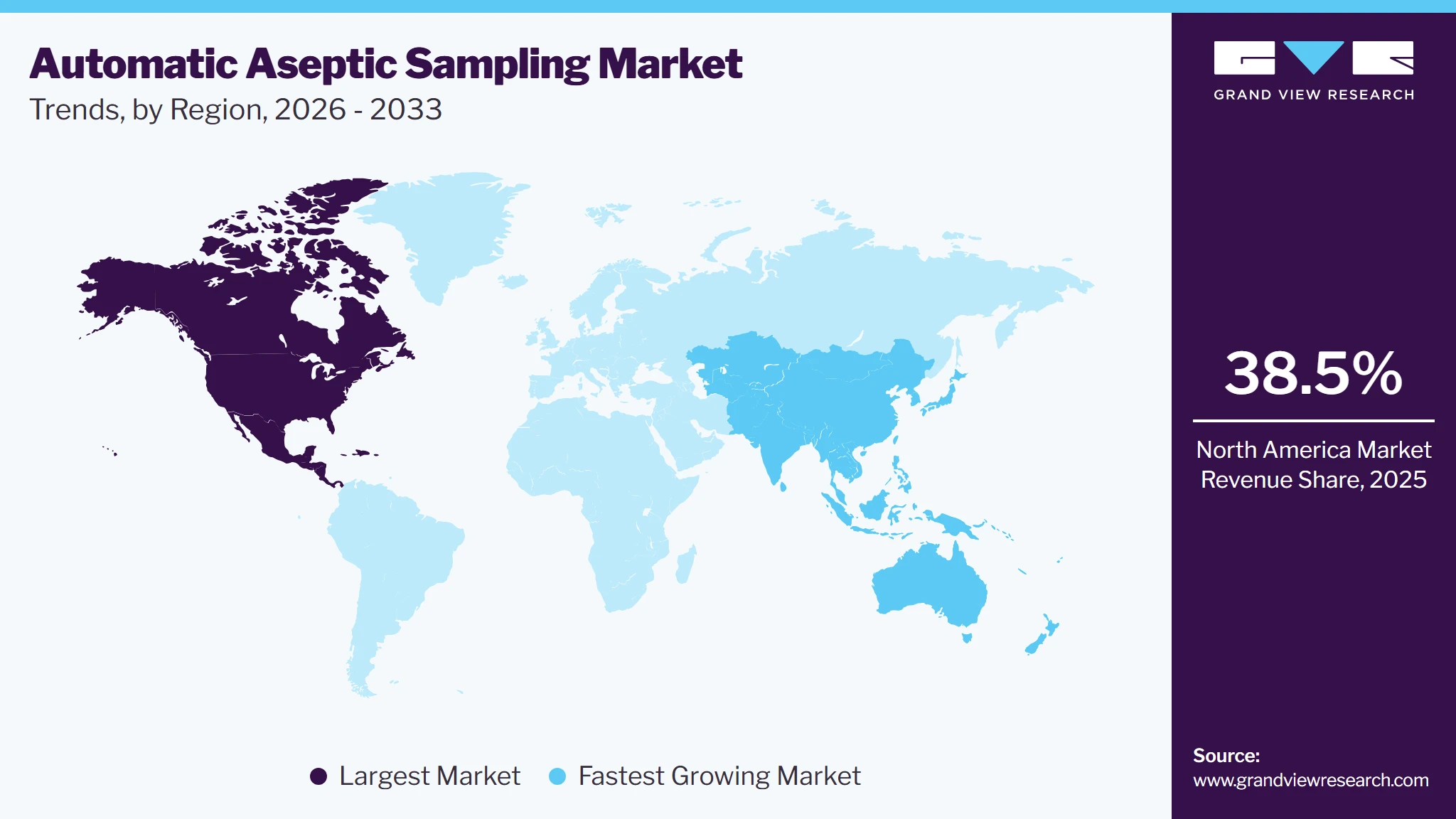
The global automatic aseptic sampling market size was valued at USD 517.0 million in 2025 and is projected to grow from USD 565.6 million in 2026 to USD 1,078.4 million by 2033, at a CAGR of 9.7% from 2026 to 2033. North America dominated the market, accounting for a revenue share of 38.5% in 2025. The market growth is driven by increasing adoption of automated aseptic sampling technologies, growing demand for contamination-free sampling in biopharmaceutical manufacturing, and expanding applications of automatic aseptic sampling systems in process monitoring, cell culture, fermentation, vaccine production, and pharmaceutical research.
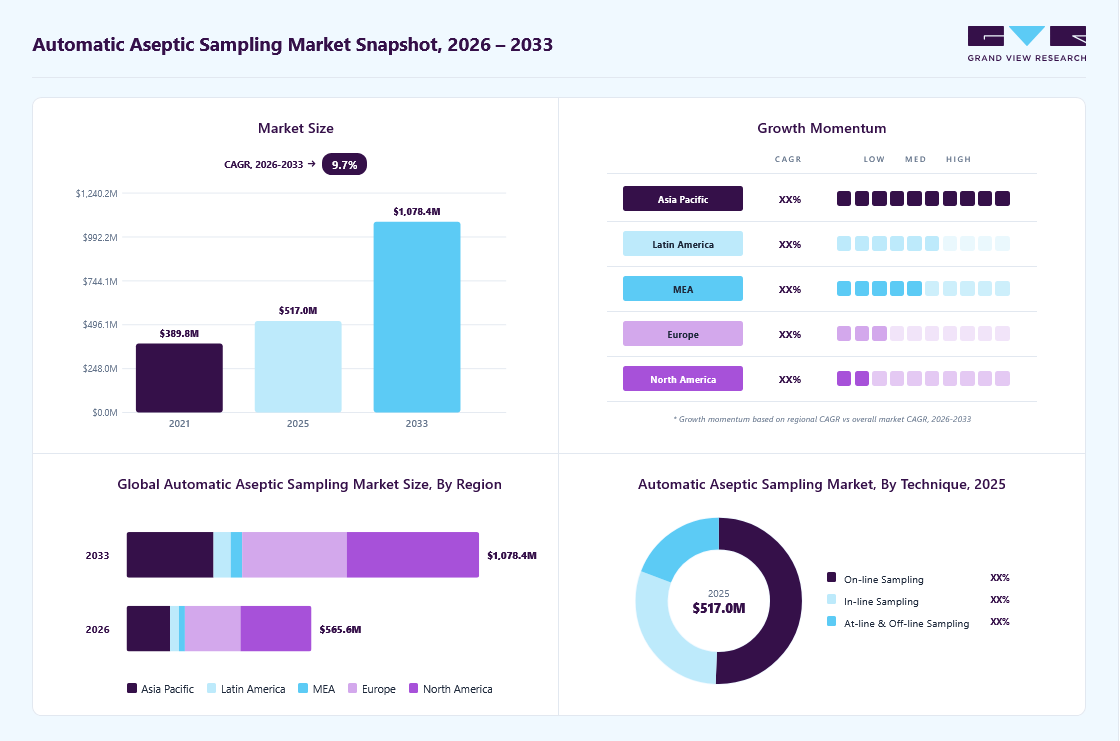 Source: Grand View Research, IR Documents, Primary Interviews, Paid DatabasesTo learn more about this report,
 Download Free Sample Report
 Key Market Trends & Insights
- By technique: On-line sampling segment held the largest market share of 50.5% in 2025.
- By product: Consumables & accessories segment held the largest market share in 2025.
- By end use: Pharmaceutical & biotechnology companies segment held the largest market revenue share of 49.5% in 2025.
Regional Highlights
- Largest regional market: North America (38.5% revenue share, 2025)
- Fastest-growing regional market: Asia Pacific (fastest CAGR, 2026-2033)
- By country: The U.S. is expected to grow significantly from 2026 to 2033.
Market Size & Forecast
- Market size in 2025: USD 517.0 Million
- Estimated market size in 2026: USD 565.6 Million
- Projected market size by 2033: USD 1,078.4 Million
- CAGR (2026-2033): 9.7%
Three ways to get this report
Buy it, customize it, or ask a question.Ask an Analyst
Analyst response in 1 business day
- AccessReport author, directly
- Reply timeWithin 1 working day
- No sales callDirect answer only
- FormatEmail reply
- CostFree, no cost
Get the Full Report
What the study covers
- FormatsPDF · Excel · Dashboard
- Timeline2026–2033 annual, 2025 base
- Coverage20+ countries, 5 regions
- Companies10+ key players profiled
Customize the Report
20% free customization
- IncludeCountries, segments, points
- TailorTo your product definition
- ExtendDeeper competitor detail
- OrA fully bespoke study
- Turnaround5–10 working days
 To learn more about this report, Download Free Sample Report
 Market Dynamics
The automatic aseptic sampling market is witnessing significant growth, driven by increasing demand for contamination-controlled sampling across biopharmaceutical manufacturing, vaccine production, cell and gene therapy, and sterile processing applications. The growing adoption of automated and closed sampling systems is enabling greater process control, reproducibility, and efficiency, while reducing contamination risks. In addition, expanding use of process analytical technology, real-time monitoring, and single-use bioprocessing systems is supporting market growth across biopharmaceutical production and process development environments.
The increasing adoption of automated aseptic sampling for bioprocess monitoring is driving the automatic aseptic sampling market by reducing manual sampling requirements and enabling faster access to process data. Automated systems can support frequent sampling while reducing operator intervention and improving process control. For instance, in April 2026, ArgusEye launched AugaSampler, an automated liquid handling and data processing system with aseptic sampling for on-line and at-line bioprocess measurements. The system is designed to provide near-real-time data, reduce hands-on time, and improve process control and efficiency in biopharmaceutical development and manufacturing.
“With AugaSampler, we are removing one of the key bottlenecks in bioprocess development. By combining automated sampling with rapid, high-quality data, we enable scientists to make faster and better-informed decisions
- Erik Martinsson, CTO and Co-Founder of ArgusEye.
Limitations in the sampling volume and physical configuration of existing automated aseptic sampling systems may restrain the automatic aseptic sampling market, particularly in cell and gene therapy applications. According to an article published in Frontiers in Bioengineering and Biotechnology in November 2024, commercially available automated aseptic sampling systems generally require minimum sampling volumes of 1–2 mL, which can lead to considerable product loss when frequent sampling is required for autologous cell and gene therapy manufacturing. The article also highlights that some systems have large footprints and require considerable physical space to operate, making their integration into cell and gene therapy manufacturing workflows and environments challenging.
The development of integrated automated sampling systems with process analytical technologies (PAT) is creating opportunities for the automatic aseptic sampling market by enabling automated sample collection alongside real-time process monitoring. According to an article published in Frontiers in Bioengineering and Biotechnology in July 2025, the Auto-CeSS platform was designed with the capability to connect automated aseptic sampling with optical flow cells and PAT technologies such as Raman and UV-absorbance spectroscopy. The article states that such integration could enable real-time metabolite monitoring and closed-loop feedback control, supporting process optimization and adaptive manufacturing of cell therapies.
Case Study: Automation of Aseptic Sampling to Improve Biopharmaceutical Process Development
Case Study Overview
A case study conducted in collaboration with Takeda Pharmaceuticals evaluated the application of an automated aseptic sampling solution for biopharmaceutical process development. The study utilized the MAST Autosampling Solution to automate sample collection from bench-scale bioreactors and integrate sampling with subsequent analytical testing.
The evaluation involved eight bench-scale bioreactors, with automated sampling performed approximately once or twice per day over a 14-day period. Samples were subsequently analyzed using multiple analytical techniques, including Protein A/titer analysis, size-exclusion chromatography (SEC), cation-exchange chromatography (CEX), and liquid chromatography-mass spectrometry/mass spectrometry (LC-MS/MAM).
Implementation
The automated sampling workflow incorporated MAST Sample Pilots and Controllers to facilitate aseptic sample collection from multiple bioreactors. Automation reduced the need for manual intervention during routine sampling and enabled samples to be transferred into an integrated analytical workflow.
The case study compared the automated approach with conventional manual sampling to evaluate the effects of automation on process development activities, labor requirements, experimental duration, and analytical turnaround time.
Key Outcomes
According to the case study, implementation of automated aseptic sampling resulted in substantial reductions in process-development workload and analytical turnaround:
Performance indicator
Reported outcome
FTE time
Approximately 10× reduction
Experiment run time
Approximately 10× reduction
Analytical result turnaround
Approximately 10× faster
Analyst requirement
Approximately 60% reduction
Manual analytical turnaround
Approximately 10 days
Automated process
Approximately 0.16 days
The automated approach also generated analytical results that were reported to be comparable with those obtained through manual sampling, supporting its use for automated bioprocess development workflows.
Market Implications
The case demonstrates the potential of automated aseptic sampling technologies to improve operational efficiency in biopharmaceutical process development. Reductions in analyst involvement and experimental turnaround time can support higher-throughput process development and facilitate the integration of automated sampling with PAT and data-driven bioprocessing workflows.
Conclusion
The Takeda Pharmaceuticals case study demonstrates the potential of automated aseptic sampling to reduce manual intervention and accelerate analytical workflows during biopharmaceutical process development. The reported reductions in FTE requirements, experiment duration, and analytical turnaround highlight the operational benefits associated with integrating automated sampling technologies into biopharmaceutical development workflows.
Market Concentration & Characteristics
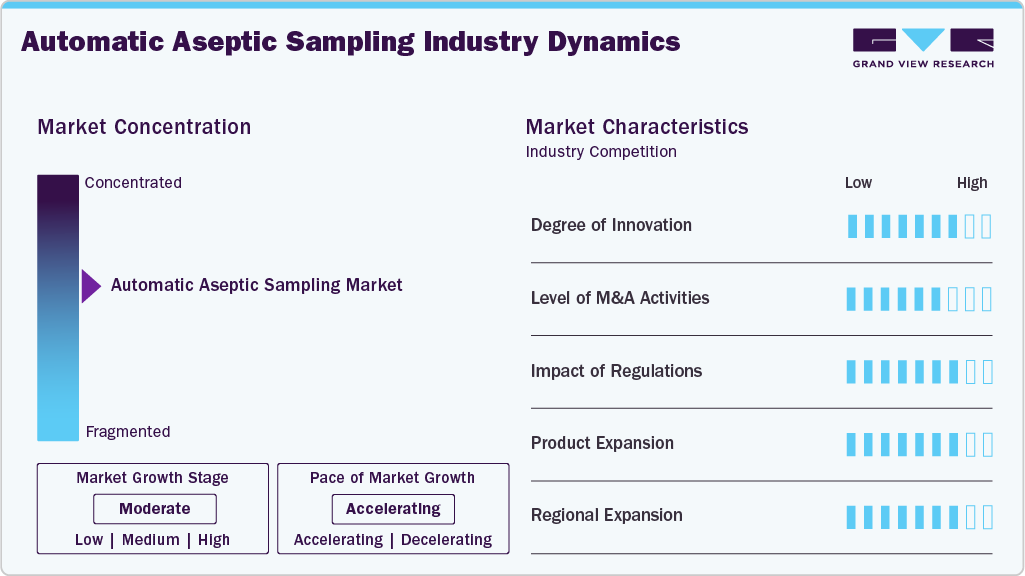
The degree of innovation in the automatic aseptic sampling market is high, driven by closed-path sampling, automation, multi-sample configurations, and reduced operator intervention. For instance, in October 2025, Avantor launched its next-generation sterile sampling platform, including the Exact Volume Sampling System (EVSS) and Needle-Free Sampling System (NFSS). These systems enable closed and precise sampling while reducing contamination risks and operator intervention. Such innovations improve sampling accuracy, process flexibility, and sterility assurance, supporting automated in-process monitoring across biopharmaceutical manufacturing.
“Biopharmaceutical manufacturers need solutions that are configurable, easy to implement, and consistently perform across scales. The new products we highlighted at CPHI meet these core needs—from established biologics to emerging advanced therapies—helping customers strengthen process control and bring therapies to patients with greater reliability and speed.”
-Benoit Gourdier, Executive Vice President, Bioscience Production, Avantor.
 To learn more about this report, Download Free Sample Report
 The automatic aseptic sampling industry is witnessing strategic acquisitions that strengthen aseptic and sampling capabilities. For instance, in February 2026, IMA Group acquired a majority stake in ProSys Sampling Systems, a provider of isolator and sampling equipment for the global biopharmaceutical market. The acquisition expands IMA’s capabilities in aseptic, containment, and sampling technologies, supporting pharmaceutical manufacturing applications. This transaction strengthens the combined portfolio of specialized sampling and aseptic processing solutions, supporting the adoption of controlled and automated sampling technologies.
The market is influenced by regulatory requirements to maintain sample integrity and prevent contamination during sampling. For instance, in July 2026, the U.S. FDA updated its Investigations Operations Manual, Chapter 4 on Sampling, providing specific procedures for aseptic sampling and the use of sterile sampling equipment and containers. These requirements reinforce the need for sampling systems that minimize contamination risks and maintain sample integrity. In addition, regulatory emphasis on controlled aseptic sampling supports the adoption of closed and automated sampling technologies in pharmaceutical and biopharmaceutical manufacturing.
The automatic aseptic sampling market is witnessing product expansion through enhancements to automated sampling technologies. For instance, in March 2025, Merck integrated three new analytical systems into its MAST autosampling solution, an automated aseptic sampling technology ensuring source sterility and hands-free sample handling. The expansion strengthens automated sampling and analytical integration, supporting efficient process monitoring in biopharmaceutical manufacturing and promoting adoption across upstream and downstream processing.
The automatic aseptic sampling industry is witnessing regional expansion as bioprocessing technology providers increase manufacturing capacity across key markets. For instance, in June 2025, Cytiva announced significant manufacturing expansions across the U.S., Europe, and Asia, supported by USD 1.6 billion invested since 2019, including increased capacity for filtration and single-use technologies. These expansions strengthen regional supply capabilities for bioprocessing technologies and support the broader adoption of aseptic and automated processing solutions.
“A robust supply chain is critical to our customers so they can deliver life-changing therapies to patients around the world. We have increased our global manufacturing capacity, with a focus on in-region for-region, to meet the demands and best serve the customer.”
-Pierre-Alain Ruffieux, Cytiva’s Chief Operating Officer
Analyst Perspective
The automatic aseptic sampling market is expected to witness moderate growth as bioprocessing operations prioritize controlled and efficient sampling practices. Demand is likely to shift toward solutions that can simplify sampling procedures while maintaining process integrity and reducing the need for manual handling. Growing emphasis on operational consistency is also expected to support the adoption of systems that can be integrated into existing bioprocessing workflows with minimal disruption. Manufacturers are focusing on improving system flexibility, ease of operation, and compatibility with different process configurations. Market participants are focusing on developing reliable sampling solutions that support efficient process monitoring while addressing evolving requirements across biopharmaceutical manufacturing.
Technique Insights
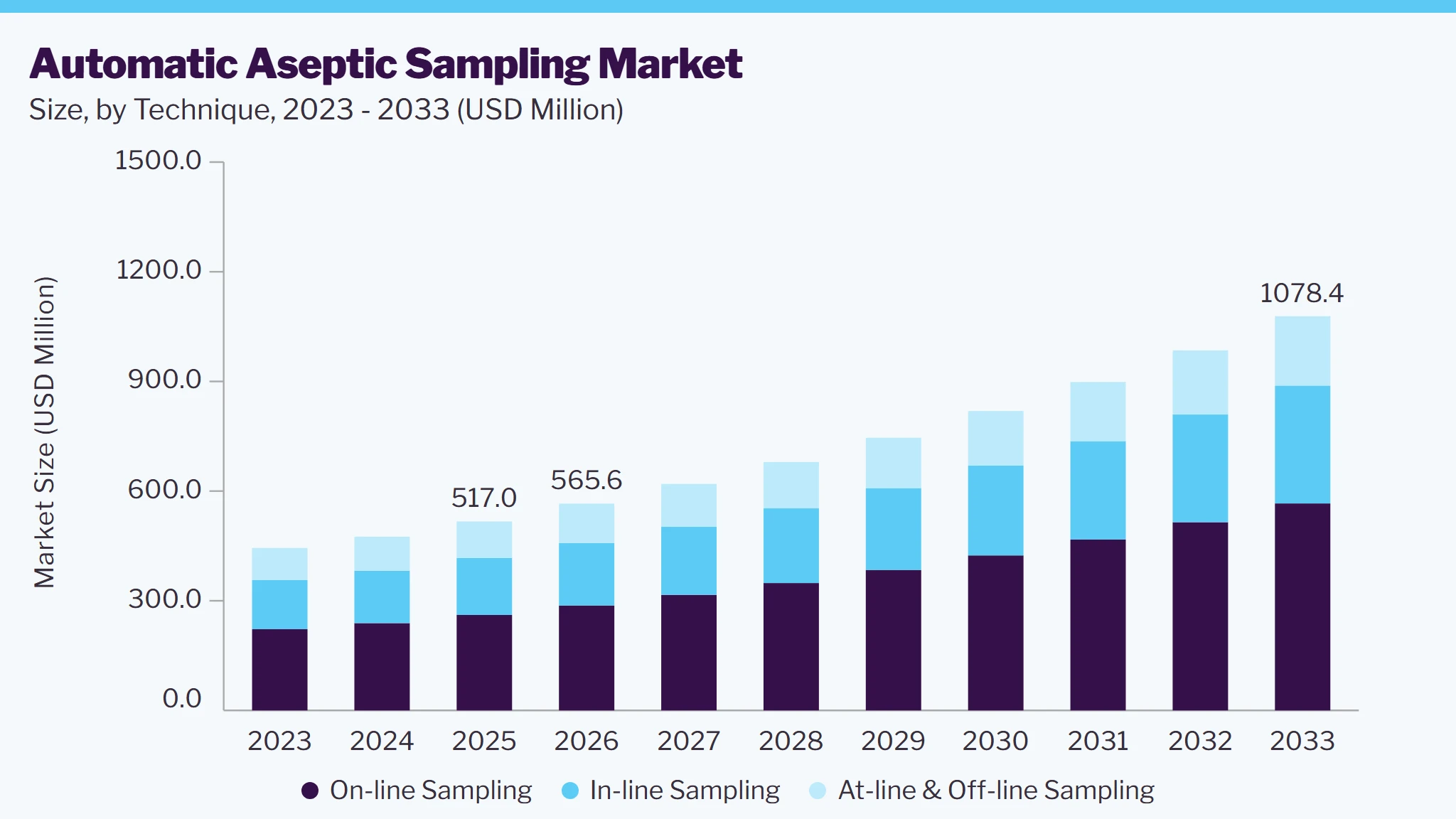
The on-line sampling segment accounted for the largest revenue share of 50.5% in 2025, and it is anticipated to grow at the fastest CAGR over the forecast period. The segment growth is driven by increasing demand for real-time process monitoring, automated sample collection, and continuous assessment of critical quality attributes during biopharmaceutical manufacturing. For instance, according to an article published in the Journal of Separation Science in March 2024, an automated online sampling mD-LC workflow was developed in 2023 to enable streamlined measurement of concentration, aggregation, and charge heterogeneity of monoclonal antibodies produced in CHO cell cultures across six 2-L stirred-tank bioreactors. Moreover, the development highlights the use of automated on-line sampling for continuous monitoring of biopharmaceutical quality.
The in-line sampling segment is expected to register the significant CAGR during 2026-2033, driven by increasing adoption of real-time process monitoring, integrated analytical technologies, and automated bioprocessing systems. For instance, in February 2024, 908 Devices and Cellares collaborated to integrate the MAVERICK optical in-line analyzer into the Cell Shuttle, a fully integrated cell therapy manufacturing platform, enabling real-time monitoring of bioprocess parameters. The development highlights the growing adoption of in-line sampling and monitoring technologies for automated, closed, and contamination-controlled biopharmaceutical manufacturing.
“In-line analysis provides real-time monitoring of the cell culture process, allowing for immediate corrective action. It also maintains sample integrity, reduces contamination risk, and improves product quality. We’re very proud to partner with Cellares to accelerate access to life-saving cell therapies.”
-Christopher D. Brown, PhD, Chief Product Officer and Co-founder, 908 Devices
Product Insights
The consumables & accessories segment dominated the market with a share of 49.9% in 2025, driven by the increasing demand for sterile sampling bags, tubes, tubing, connectors, and other single-use components. For instance, in August 2025, Foxx Life Sciences launched EZBio Centrifuge Tube Assemblies, closed-system solutions designed for sampling and transfer of biopharmaceutical products and reagents. The assemblies feature TPE tubing, a vent filter, and an aseptic tube separation option, and are gamma irradiated for sterile use. The launch highlights increasing demand for specialized consumables that support contamination-controlled sampling in biopharmaceutical processing.
The software & services segment is expected to grow at the fastest CAGR during the forecast period, driven by increasing adoption of digital process monitoring, automated sampling workflows, data management, and system integration in biopharmaceutical manufacturing. For instance, according to an article published in BioPharm International in June 2025, advances in digitalization and automation of aseptic processing are enabling real-time monitoring, automated data management, trend analysis, and digital tracking of sampling activities. These developments support greater control, traceability, and accuracy in automated aseptic sampling workflows, contributing to the growing adoption of software and related services.
Application Insights
The upstream processing segment accounted for a revenue share of 59.5% in 2025, making it the leading and fastest-growing application segment. The segment is driven by increasing adoption of bioreactors, frequent cell culture monitoring, and automated sampling for process control. For instance, according to an article published in Frontiers in Bioengineering and Biotechnology in November 2024, Agency for Science, Technology and Research (A*STAR) researchers developed the Device for Automated Aseptic Sampling (DAAS), enabling repeated aseptic sampling from an automated bioreactor during a 10-day donor T-cell culture. The development highlights the use of automated aseptic sampling for upstream cell culture monitoring and process control.
The downstream processing segment is projected to grow at a significant CAGR during the forecast period, driven by increasing adoption of continuous purification, automated process monitoring, and frequent sampling for product quality assessment. For instance, according to an article published in Journal of Chromatography A in August 2023, researchers developed an automated system for sample collection, preparation, and analysis during continuous downstream bioprocessing and demonstrated its use in a monoclonal antibody purification process. The system enabled automated sampling of bioreactor supernatant and product pools during capture chromatography, highlighting the role of automated sampling in downstream process monitoring and control.
End Use Insights
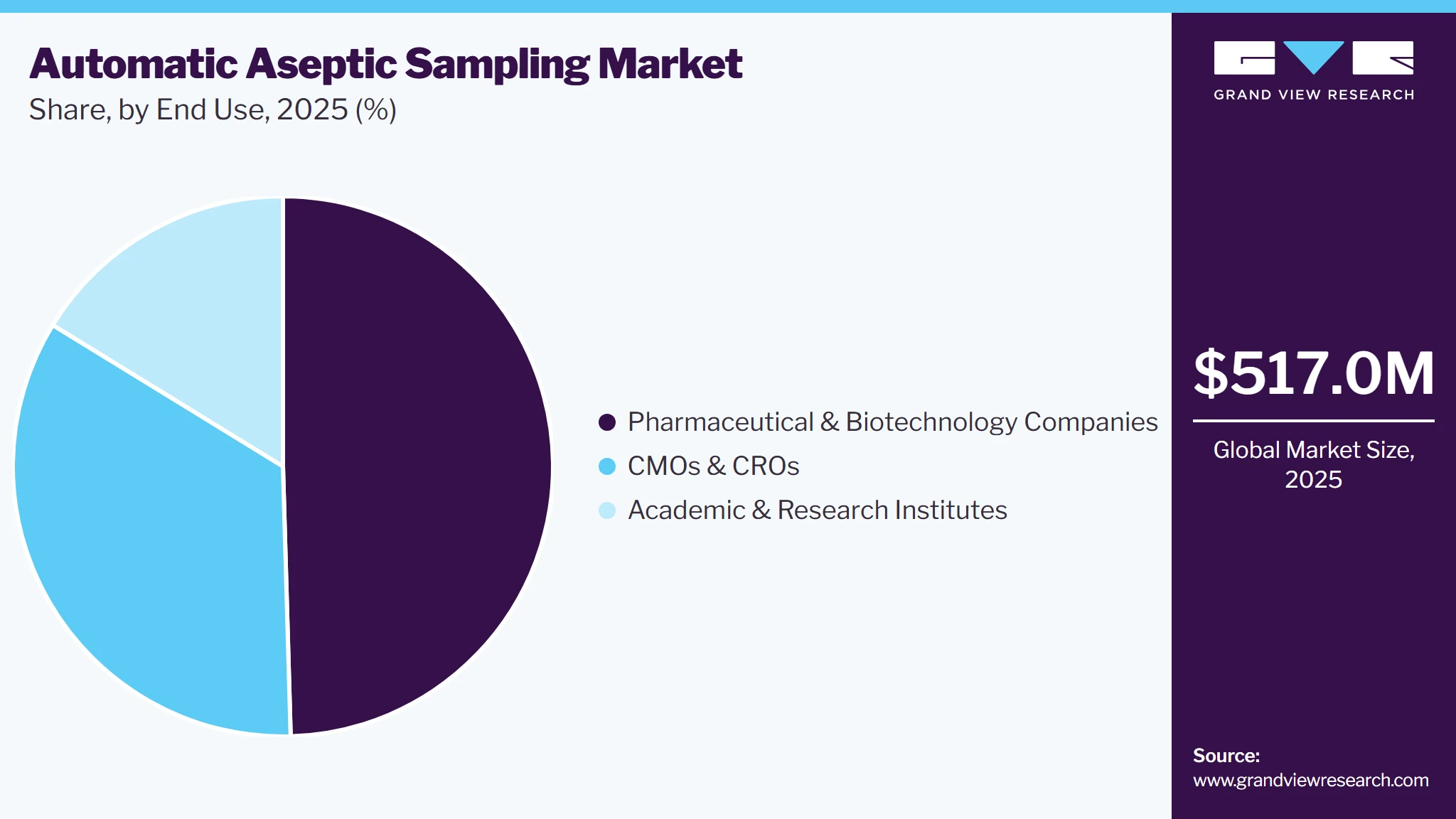
The pharmaceutical & biotechnology companies segment accounted for a revenue share of 49.5% in 2025, making it the leading end-use segment. Growth is driven by increasing adoption of automated bioprocessing, stringent contamination control requirements, and the growing need for frequent process monitoring. Automated aseptic sampling enables pharmaceutical and biotechnology companies to collect representative samples with minimal manual intervention, while supporting near real-time monitoring of critical process parameters and quality attributes. Moreover, increasing adoption of process analytical technology and automated manufacturing workflows is expected to support the use of automated aseptic sampling solutions across biopharmaceutical production.
 To learn more about this report, Download Free Sample Report
 The CMOs & CROs segment is projected to grow at the fastest CAGR over the forecast period, driven by increasing outsourcing of biopharmaceutical development and manufacturing activities, rising demand for flexible production capabilities, and the need for efficient process monitoring. Automated aseptic sampling enables CMOs and CROs to collect samples at defined intervals with reduced manual intervention, supporting process development, scale-up, and manufacturing activities. Moreover, growing demand for faster turnaround times, consistent process control, and contamination-controlled workflows is expected to support the adoption of automated aseptic sampling solutions among CMOs and CROs.
Regional Insights
North America dominated the automatic aseptic sampling market, accounting for a revenue share of 38.5% in 2025, driven by the region’s established biopharmaceutical manufacturing base and increasing adoption of automated process monitoring and digital bioprocessing technologies. For instance, in April 2026, Rockwell Automation and Cytiva launched the Figurate SCADA system, a digital platform designed to integrate bioprocessing equipment from multiple vendors and provide real-time monitoring, centralized process control, and batch reporting. The development supports broader adoption of automated process monitoring and digital manufacturing technologies across biopharmaceutical operations.
 To learn more about this report, Download Free Sample Report
 “Biopharma teams are under pressure to move more quickly, but their systems are often not built to keep up. This collaboration with Cytiva marks a pivotal step in our mission to democratize digital manufacturing, enabling biopharma innovators to deploy SCADA faster, smarter and more affordably.”
-Matt Weaver, vice president of global industry life sciences at Rockwell Automation.
U.S. Automatic Aseptic Sampling Market Trends
The U.S. automatic aseptic sampling industry is expected to grow over the forecast period, supported by increasing adoption of automated process monitoring and process analytical technologies in upstream biopharmaceutical manufacturing. For instance, in March 2025, Massachusetts-based Repligen acquired 908 Devices’ desktop bioprocessing analytics portfolio, including MAVERICK and MAVEN for real-time monitoring and control of critical bioprocess parameters and REBEL for at-line cell culture media analysis. The acquisition expanded Repligen’s upstream PAT portfolio and strengthened the availability of automated and at-line analytical technologies for bioprocess monitoring.
Europe Automatic Aseptic Sampling Market Trends
The Europe automatic aseptic sampling industry is anticipated to grow significantly over the forecast period, supported by increasing investment in single-use bioprocessing infrastructure and advanced manufacturing technologies. For instance, in June 2025, Sartorius Stedim Biotech completed a multi-year capacity expansion at its headquarters in Aubagne, France, nearly doubling cleanroom space and adding automated and digitized production lines for 2D and 3D single-use bags used in biopharmaceutical manufacturing. The expansion strengthens regional capacity for single-use fluid-management technologies, supporting the broader adoption of contamination-controlled and automated bioprocessing solutions.
The UK automatic aseptic sampling market is expected to grow over the forecast period, driven by increasing adoption of automated bioprocessing and real-time process monitoring in biopharmaceutical manufacturing. For instance, in July 2025, the UK’s Centre for Process Innovation (CPI) joined a Canada–UK collaboration to develop AI-powered bioreactors, with UK-based Labman developing an automated modular sampling platform for molecular analysis. The platform integrates automated sampling with real-time biosensing and AI-based bioreactor control, supporting the adoption of automated sampling technologies in upstream bioprocessing applications in the UK.
The automatic aseptic sampling market in Germany is anticipated to grow significantly over the forecast period, supported by the country’s strong emphasis on Industry 4.0 and digitalization of biopharmaceutical manufacturing processes. The integration of process analytical technology, automated data acquisition, and digital process control is increasing the need for automated sampling solutions that enable timely monitoring of critical process parameters. Furthermore, growing adoption of continuous and intensified bioprocessing is creating demand for frequent and reliable sampling while reducing manual intervention, supporting the use of automated sampling technologies across upstream and downstream processing applications.
Asia Pacific Automatic Aseptic Sampling Market Trends
The Asia Pacific automatic aseptic sampling industry is expected to grow at the fastest CAGR of 10.4% during the forecast period, driven by increasing regional investment in bioprocessing capacity and localization of critical biomanufacturing technologies. For instance, in March 2024, Merck announced an investment of more than €300 million (USD 325.8 million) in a new Bioprocessing Production Center in Daejeon, South Korea, which will manufacture essential biotechnology products, including sterile sampling systems. The facility will support process development, clinical research, and commercial manufacturing of biologics, strengthening the regional availability of sterile sampling solutions for biopharmaceutical manufacturing.
“The Asia-Pacific region is home to a large number of institutions that conduct leading-edge and innovative research, manufacturing and services in areas such as biotechnology, mRNA and gene therapy. Expanding our presence in the region will bring us even closer to our customers in this evolving and dynamic market. Our goal is to foster deep collaboration to increase the speed in bringing new therapies to patients.”
- Matthias Heinzel, Member of the Executive Board of Merck and CEO Life Science.
China’s automatic aseptic sampling market is expected to grow over the forecast period, supported by increasing adoption of automated bioprocessing technologies and expansion of biopharmaceutical manufacturing capabilities. For instance, in September 2025, Wuhan CEKG Tech Co., Ltd. received a Chinese utility model patent for fully automatic bioreactor sampling equipment designed to perform repeated sampling via disposable sterile sampling pipelines. The system enables automated sampling with reduced manual intervention and contamination risk, supporting the adoption of automatic aseptic sampling technologies in bioreactor-based biopharmaceutical production.
The automatic aseptic sampling market in Japan is witnessing rapid growth, driven by increasing adoption of automated bioprocessing technologies and the country’s focus on advanced biopharmaceutical manufacturing. The growing use of single-use bioreactors and process analytical technologies is driving demand for automated sampling solutions that enable frequent process monitoring while maintaining sterility and reducing manual intervention. In addition, increasing emphasis on process efficiency, quality control, and closed manufacturing workflows is supporting the adoption of automated aseptic sampling technologies across upstream and downstream bioprocessing applications.
Latin America Automatic Aseptic Sampling Market Trends
The Latin America automatic aseptic sampling industry is expected to grow steadily over the forecast period, supported by the expansion of biopharmaceutical manufacturing and increasing adoption of modern bioprocessing technologies across the region. The growing production of vaccines, biologics, and other advanced therapies is driving demand for reliable process-monitoring solutions that maintain sterility while reducing the need for manual sampling. In addition, increasing adoption of single-use bioprocessing systems and automated process monitoring is supporting the use of aseptic sampling technologies across upstream and downstream manufacturing applications in Latin America.
MEA Automatic Aseptic Sampling Market Trends
The Middle East & Africa automatic aseptic sampling industry is growing steadily, supported by increasing investments in pharmaceutical manufacturing and the development of local biopharmaceutical production capabilities. The growing emphasis on improving manufacturing quality and compliance with international standards is creating demand for sterile, contamination-controlled sampling solutions. In addition, increasing adoption of automated process monitoring and single-use bioprocessing technologies is supporting the use of automatic aseptic sampling systems across upstream and downstream pharmaceutical and biotechnology manufacturing applications in the region.
Key Automatic Aseptic Sampling Company Insights
The automatic aseptic sampling industry is competitive, with key players focusing on automated sampling systems and instruments, consumables and accessories, and software and services for on-line, in-line, at-line, and off-line sampling applications. Companies are strengthening their market presence through product launches, technological advancements, strategic collaborations, capacity expansion, and development of integrated and automated sampling solutions. Competitive positioning depends on product portfolio, technological capabilities, sampling accuracy, automation, scalability, geographic presence, customer base, and applications across upstream and downstream processing in biopharmaceutical and pharmaceutical manufacturing.
Key Automatic Aseptic Sampling Companies
The following key companies have been profiled for this study of the automatic aseptic sampling market.
-
Danaher Corporation
-
Sartorius AG
-
Merck KGaA
-
Thermo Fisher Scientific Inc.
-
SECURECELL AG
-
Eppendorf SE
-
GEA Group Aktiengesellschaft
-
KEOFITT
-
QualiTru Sampling Systems
-
W. L. Gore & Associates, Inc.
Competitive Benchmarking
Category
Operating Strategies
Competitive Edge
Weakness
Established Players (Danaher Corporation; Sartorius AG; Merck KGaA; Thermo Fisher Scientific Inc.; Eppendorf SE; GEA Group Aktiengesellschaft)
Expanding automated aseptic sampling, bioprocessing, single-use, and sampling technologies through product development, automation, technology innovation, and strategic partnerships.
Broad product portfolios, strong R&D and technology capabilities, established customer bases, global presence, extensive distribution networks, and integrated bioprocessing and aseptic sampling solutions.
High R&D and manufacturing costs, complex workflow integration, significant validation and infrastructure requirements, high capital requirements for advanced systems, and intense competition.
Specialized Players (SECURECELL AG; KEOFITT A/S; QualiTru Sampling Systems; W. L. Gore & Associates, Inc.)
Expanding specialized aseptic sampling, automated sampling, sampling valves, and sterile sampling technologies through product development, automation, technology innovation, and strategic partnerships.
Specialized technologies, differentiated sampling systems, strong technical capabilities, application-specific expertise, and focused solutions for aseptic sampling and biopharmaceutical processing workflows.
Narrower product portfolios, limited scale in certain markets, high technology costs, workflow integration challenges, specialized application requirements, and competition from established integrated players.
Recent Developments
-
In September 2025, SECURECELL AG launched Numera 3, the next generation of its automated bioprocess sampling and online analytics system. The platform enables automated and aseptic sampling from up to 16 bioreactors, with integrated filtration, dilution, chilled sample storage, and analyzer connectivity, supporting high-frequency and contamination-controlled bioprocess monitoring.
-
In October 2024, SECURECELL AG launched its Integra1 64 and Axon HT solutions for high-throughput bioprocessing. The automated platforms enable sterile access to bioreactors, automated sample collection and transport, sample preparation, and integration with process analytical technology, supporting high-frequency aseptic sampling and real-time bioprocess monitoring.
-
In May 2023, Eppendorf launched its Bioprocess Autosampler, an automated bioprocess sampling system designed for 24/7 sampling from multiple bioreactors. The system enables aseptic operation without a laminar-flow cabinet and supports both glass and single-use bioreactors, directly addressing the need for automated aseptic sampling in bioprocessing.
“By delegating bioprocess sampling to the Bioprocess Autosampler from Eppendorf the researchers’ time is freed up for their scientific work. Furthermore, it reduces the risk for human error, because with the help of our bioprocess control software the storage of the precious samples in a predefined location can be automized.”
- Dr. Falk Schneider, who led the development of the device at the Eppendorf Bioprocess Unit.
Automatic Aseptic Sampling Market Report Scope
Report Attribute
Details
Market size in 2025
USD 517.0 million
Estimated market size in 2026
USD 565.6 million
Projected market size by 2033
USD 1,078.4 million
Growth rate
CAGR of 9.7% from 2026 to 2033
Historical data
2021 - 2025
Forecast period
2026 - 2033
Quantitative units
Revenue in USD million and CAGR from 2026 to 2033
Report coverage
Revenue forecast, company ranking, competitive landscape, growth factors, and trends
Segments covered
Technique, product, application, end use, and region
Regional scope
North America; Europe; Asia Pacific; Latin America; MEA
Country scope
U.S.; Canada; Mexico; UK; Germany; France; Italy; Spain; Denmark; Sweden; Norway; Japan; China; India; Australia; Thailand; South Korea; Brazil; Argentina; South Africa; Saudi Arabia; UAE; Kuwait
Key companies profiled
Danaher Corporation; Sartorius AG; Merck KGaA; Thermo Fisher Scientific Inc.; SECURECELL AG; Eppendorf SE; GEA Group Aktiengesellschaft; KEOFITT; QualiTru Sampling Systems; W. L. Gore & Associates, Inc.
Customization scope
Free report customization (equivalent up to 8 analysts' working days) with purchase. Addition or alteration to country, regional & segment scope.
Pricing and purchase options
Avail customized purchase options to meet your exact research needs. Explore purchase options
Global Automatic Aseptic Sampling Market Report Segmentation
This report forecasts revenue growth and provides an analysis of the latest trends in each of the sub-segments from 2021 to 2033. For this study, Grand View Research has segmented the global automatic aseptic sampling market report based on technique, product, application, end use, and region:
-
Technique Outlook (Revenue, USD Million, 2021 - 2033)
-
On-line Sampling
-
In-line Sampling
-
At-line & Off-line Sampling
-
-
Product Outlook (Revenue, USD Million, 2021 - 2033)
-
Automated Sampling Systems & Instruments
-
Consumables & Accessories
-
Software & Services
-
-
Application Outlook (Revenue, USD Million, 2021 - 2033)
-
Upstream Processing
-
Downstream Processing
-
-
End Use Outlook (Revenue, USD Million, 2021 - 2033)
-
Pharmaceutical & Biotechnology Companies
-
CMOs & CROs
-
Academic & Research Institutes
-
-
Regional Outlook (Revenue, USD Million, 2021 - 2033)
-
North America
-
U.S.
-
Canada
-
Mexico
-
-
Europe
-
UK
-
Germany
-
France
-
Italy
-
Spain
-
Denmark
-
Sweden
-
Norway
-
-
Asia Pacific
-
Japan
-
China
-
India
-
Australia
-
Thailand
-
South Korea
-
-
Latin America
-
Brazil
-
Argentina
-
-
Middle East and Africa (MEA)
-
South Africa
-
Saudi Arabia
-
UAE
-
Kuwait
-
-
Research Methodology
The automatic aseptic sampling market figures in this report are based on a proven research process that combines executive interviews with secondary research from proprietary databases, company filings, and recognized regulatory and institutional sources. Market size is built through value-chain sizing—reconciling supply-side and demand-side estimates—and triangulated with bottom-up and top-down approaches. Every estimate passes multiple levels of expert validation before publication, with each automatic aseptic sampling segment quantified using the revenue-capture definitions in the table below.
Segment Definition
Segment- Technique
Revenue Capture Definition
On-line Sampling
Revenue generated from automated aseptic sampling systems that enable automated collection of samples from bioprocess streams for external analysis while maintaining sample integrity and aseptic conditions.
In-line Sampling
This segment captures income from automated aseptic sampling systems integrated directly into bioprocess lines or vessels to enable sample collection or measurement within the process stream while maintaining aseptic conditions.
At-line & Off-line Sampling
Market value in this category stems from automated aseptic sampling solutions that collect samples for analysis near the process equipment or in separate laboratory environments while maintaining sample integrity and minimizing contamination risks.
Segment- Product
Revenue Capture Definition
Automated Sampling Systems & Instruments
Revenue generated from automated systems and instruments designed for aseptic sample collection, transfer, and handling from biopharmaceutical processes while maintaining sterile and closed-system conditions.
Consumables & Accessories
This segment captures income from consumables and accessories used with automated aseptic sampling systems, including sampling bags, tubing, connectors, valves, probes, containers, and other components required for aseptic sample collection and transfer.
Software & Services
Market value in this category stems from software and services supporting automated aseptic sampling operations, including system control, data management, integration, installation, validation, maintenance, and technical support.
Segment- Application
Revenue Capture Definition
Upstream Processing
Revenue generated from automated aseptic sampling solutions used during upstream processing to collect samples from cell culture, fermentation, and bioreactor operations for monitoring cell growth, viability, nutrients, metabolites, and other process parameters.
Downstream Processing
This segment captures income from automated aseptic sampling solutions used during downstream processing to collect samples from purification, filtration, chromatography, and product recovery operations for process monitoring and product quality assessment.
Segment- End Use
Revenue Capture Definition
Pharmaceutical & Biotechnology Companies
Revenue generated from automated aseptic sampling solutions used by pharmaceutical and biotechnology companies for biopharmaceutical development, manufacturing, process monitoring, quality control, and related laboratory activities.
CMOs & CROs
This segment captures income from automated aseptic sampling solutions used by contract manufacturing organizations and contract research organizations to support outsourced bioprocess development, testing, process monitoring, and biopharmaceutical manufacturing activities.
Academic & Research Institutes
Market value in this category stems from automated aseptic sampling solutions used by universities, academic laboratories, and research institutes for cell culture, fermentation, bioprocess development, and other research activities requiring controlled aseptic sampling.
Delivered Customizations
This report has been delivered with the following In-depth customizations
Client Request
Customization Delivered
Value Adds
Automatic Aseptic Sampling Cost & Consumables Assessment
Assessment of equipment costs, sampling consumables, maintenance expenses, and key cost drivers across selected aseptic sampling systems.
Help clients understand cost structures, benchmark economics, and identify cost-optimization opportunities.
Automatic Aseptic Sampling Workflow & Integration Assessment
Assessment of sampling workflows, equipment integration, automation requirements, sampling frequency, and process compatibility across selected bioprocessing applications.
Helps clients identify integration requirements, workflow challenges, and opportunities to improve sampling efficiency.
Automatic Aseptic Sampling Cleaning & Maintenance Assessment
Assessment of cleaning, sterilization, calibration, maintenance, and downtime requirements for selected automatic aseptic sampling systems.
Helps clients understand operational requirements and identify opportunities to improve system reliability and maintenance efficiency.
About the Author(s)
Biotechnology Research Team
Healthcare · BiotechnologyThis report was authored by the biotechnology research team at Grand View Research - comprising two research analysts, one senior research analyst, and one industry expert - with specialized expertise in the biotechnology segment of the healthcare industry. All findings are based on proprietary healthcare databases, executive interviews, and regulatory analysis, subject to internal peer review prior to publication.
Last Updated:
Speak to Analyst

Customize this report to your needs - add regions, segments, or data points, with 20% free customization.
Or view our licence options:


ISO 9001:2015 & 27001:2022 Certified
We are GDPR and CCPA compliant! Your transaction & personal information is safe and secure. For more details, please read our privacy policy.


