
- Home
- »
- Food Additives & Nutricosmetics
- »
-
Avenanthramides Market Size And Share Report, 2026-2033GVR Report cover

Avenanthramides Market (2026 - 2033) Size, Share & Trends Analysis Report By Product (Natural, Synthetic), By End Use (Personal Care & Cosmetics, Pharmaceuticals, Animal Health), By Region (North America, Europe, Asia Pacific, Latin America), And Segment Forecasts
Market Size, 2025
$145.1MMarket Estimate, 2026
$156.8MMarket Forecast, 2033
$295.0MCAGR, 2026–2033
9.5%Avenanthramides Market Summary
The global avenanthramides market size was valued at USD 145.1 million in 2025 and is projected to grow from USD 156.8 million in 2026 to USD 295.0 million by 2033, at a CAGR of 9.5% from 2026 to 2033. The Asia Pacific held the largest share of 43.2% of the global market in 2025. Demand for avenanthramides is increasing as the cosmetic, pharmaceutical, and nutraceutical industries look for natural, evidence-based anti-inflammatory ingredients.
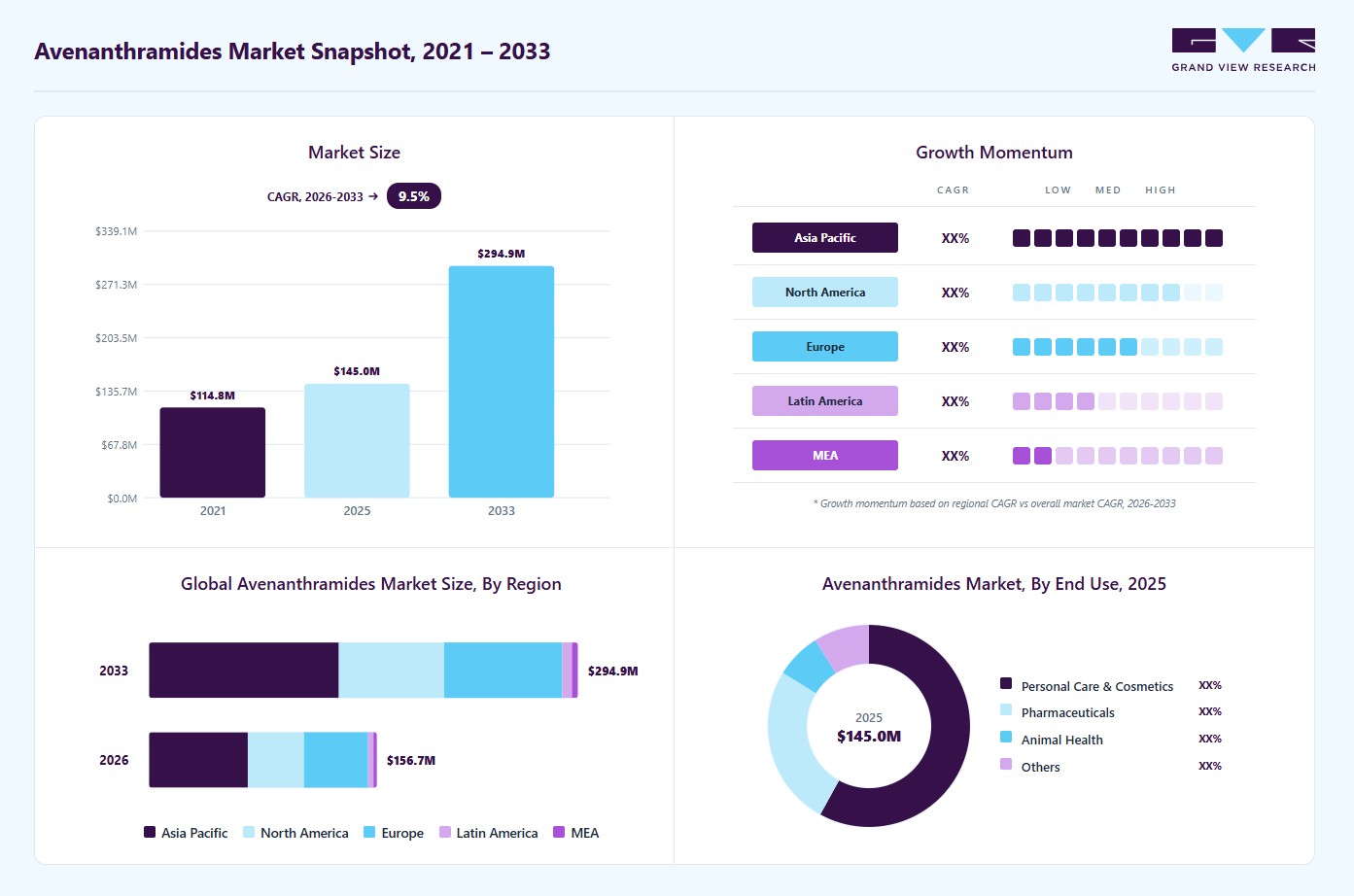 Source: Grand View Research, IR Documents, Primary Interviews, Paid DatabasesTo learn more about this report,
 Download Free Sample Report
 Key Market Trends & Insights
- By product: The synthetic segment accounted for the largest revenue share of 93.2% in 2025.
- By end use: The personal care and cosmetics segment led the market, accounting for 58.0% of total revenue in 2025.
Regional Highlights
- Largest regional market: Asia Pacific (43.2% revenue share, 2025)
- Fastest-growing regional market: Asia Pacific (highest CAGR, 2026-2033)
- By country: The U.S. held a dominant position in 2025.
Market Size & Forecast
- Market size in 2025: USD 145.1 Million
- Estimated market size in 2026: USD 156.8 Million
- Projected market size by 2033: USD 295.0 Million
- CAGR (2026-2033): 9.5%
Three ways to get this report
Buy it, customize it, or ask a question.Ask an Analyst
Analyst response in 1 business day
- AccessReport author, directly
- Reply timeWithin 1 working day
- No sales callDirect answer only
- FormatEmail reply
- CostFree, no cost
Get the Full Report
What the study covers
- FormatsPDF · Excel · Dashboard
- Timeline2026–2033 annual, 2025 base
- Coverage20+ countries, 5 regions
- Companies10+ key players profiled
Customize the Report
20% free customization
- IncludeCountries, segments, points
- TailorTo your product definition
- ExtendDeeper competitor detail
- OrA fully bespoke study
- Turnaround5–10 working days
Patents and clinical advancements support this growth, while rising consumer preference for oat-derived actives further boosts adoption. Limited availability of raw materials and complex extraction processes keep prices and margins high, which, in turn, drive greater investment in specialized processing capacity. Consumers increasingly prefer natural, clinically validated ingredients, while formulators value avenanthramides for their combined antioxidant and anti-inflammatory benefits. Pharmaceutical interest is also expanding as early clinical findings indicate a strong safety profile. Premium positioning supports higher margins, which encourages ingredient manufacturers and biotech firms to invest in advanced extraction techniques, standardization, and stability research. Demand is strongest in North America, Europe, and the Asia Pacific, where regulatory systems and skincare markets are well established.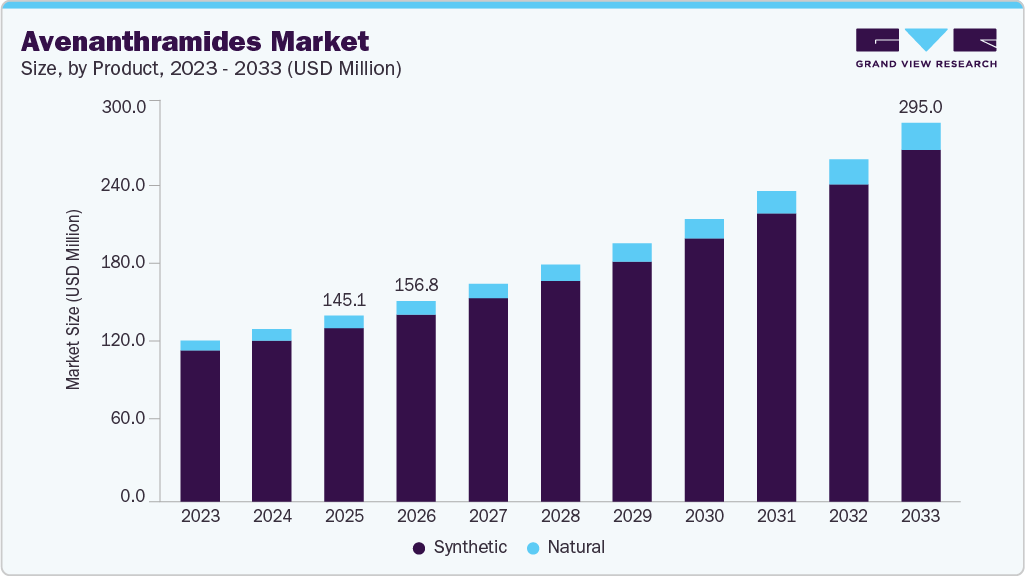 To learn more about this report, Download Free Sample Report
 However, growth is constrained by the limited availability of oat bran rich in avenanthramides, variability in phytochemical yields across cultivars, and the high cost of purification. Smaller suppliers often face challenges in scaling GMP production, whereas larger companies secure intellectual property rights and long-term supply agreements to maintain market share. Strategic research partnerships and contract manufacturing help reduce supply risks and accelerate commercialization, while investors continue to support expansion and scale-up initiatives.
The rising preference for personalized beauty and nutrition solutions is driving demand further. Brands are reformulating products with targeted bioactive compounds that address concerns such as sensitive skin, eczema, and lifestyle-related inflammation. In addition, sustainability trends are shaping adoption as oat cultivation has a relatively low environmental impact. This aligns well with clean-label and eco-conscious initiatives, strengthening consumer trust, enabling premium pricing, and reinforcing avenanthramides as a key ingredient in advanced skincare and functional health products.
Market Concentration & Characteristics
The avenanthramides market shows moderate concentration, with both global manufacturers and specialized regional suppliers competing across construction, automotive, and industrial applications. Market development is driven by ongoing innovation in formulation technologies, with a focus on improved durability, flexibility, and resistance to environmental factors. Companies differentiate themselves through performance features such as strong adhesion, weather resistance, and compliance with evolving environmental and safety standards.
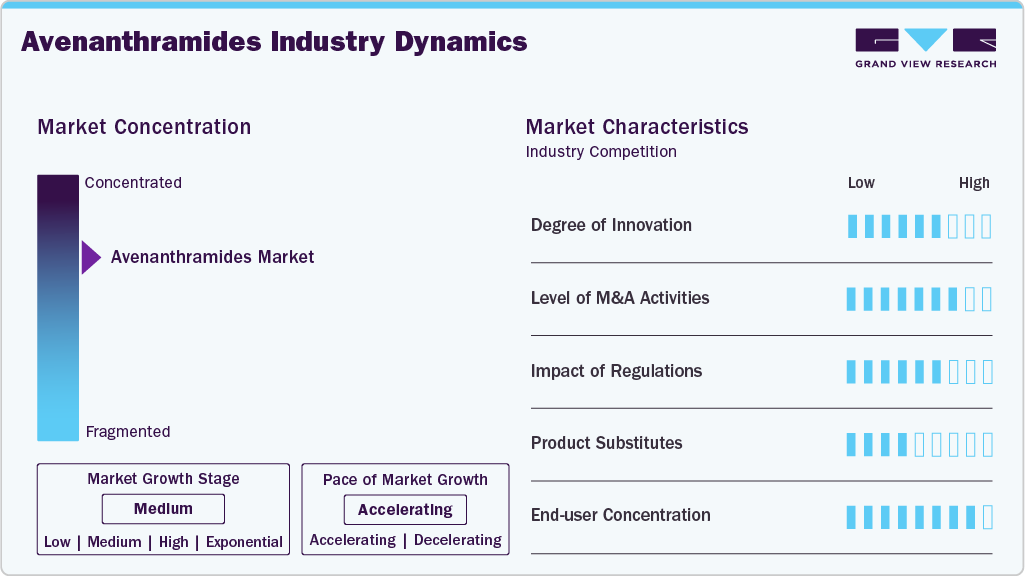 To learn more about this report, Download Free Sample Report
 Market dynamics are influenced by increasing infrastructure development, growing demand for energy-efficient buildings, and the expansion of advanced manufacturing industries. Large multinational players set benchmarks for quality and performance, while regional manufacturers serve cost-sensitive segments through strong local distribution networks. This competitive landscape drives continuous investment in research and development, collaboration with end users, and sustainability-focused innovation to meet green building trends and regulatory requirements.
Product Insights
The synthetic segment led the market in 2025, accounting for the largest revenue share of 93.2%. This dominance is driven by its wide availability, consistent performance, and cost advantages over natural alternatives. Synthetic sealants offer strong durability, chemical resistance, and scalability, making them highly suitable for industries such as construction, automotive, and packaging. Their established supply chains and reliable material properties continue to support steady demand from manufacturers seeking high-volume, dependable sealing solutions.
The natural segment is projected to register the fastest growth, with a CAGR of 10.2% from 2026 to 2033. This growth is fueled by increasing demand for sustainable, eco-friendly, and bio-based products. Rising environmental awareness and stricter regulations on petrochemical-based materials are encouraging industries to adopt renewable alternatives. At the same time, advancements in bio-extraction methods, processing technologies, and enhanced performance characteristics are improving feasibility, positioning natural sealants as a strong option for green building, healthcare, and specialized industrial applications.
End Use Insights
The personal care and cosmetics segment led the market, accounting for 58.0% of total revenue in 2025. This dominance reflects strong demand for bioactive ingredients that enhance skin health and appearance. Consumers are increasingly drawn to natural, multifunctional components with proven effectiveness, and avenanthramides are widely used in products for sensitive skin, anti-aging, and sun protection. Their antioxidant and anti-inflammatory properties strengthen product claims, while clean-label trends and premium skincare innovation continue to support higher adoption.
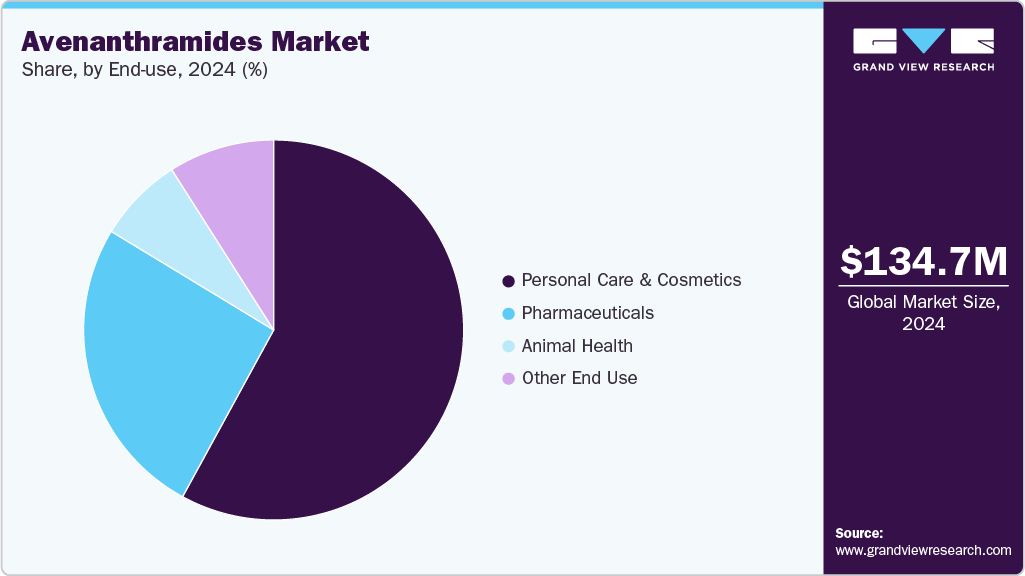 To learn more about this report, Download Free Sample Report
 The pharmaceuticals segment is projected to grow at the fastest rate, with a CAGR of 9.9% from 2026 to 2033. Growth is driven by ongoing clinical research into the therapeutic potential of avenanthramides. Early studies highlight their role in managing inflammation-related conditions, supporting cardiovascular health, and addressing dermatological concerns. Increasing investment in plant-based active pharmaceutical ingredients, along with regulatory support for safer and naturally derived compounds, is encouraging broader exploration and creating new opportunities for expansion.
Regional Insights
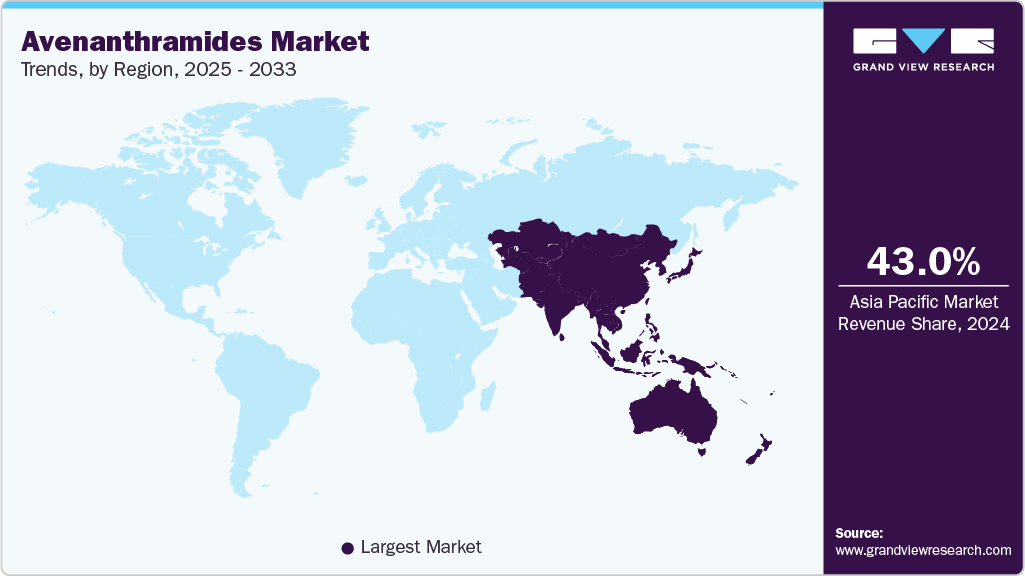
The Asia Pacific avenanthramides industry dominated the market in 2025 with a 43.2% revenue share, and it is projected to register the fastest CAGR of 9.8% from 2026 to 2033. The region’s leadership is supported by high consumption of cosmetics and personal care products in key markets such as China, Japan, and South Korea. Strong domestic manufacturing capabilities, availability of raw materials, and cost-efficient production structures enable large-scale output. In addition, well-established supply chains and expanding distribution networks across urban and semi-urban areas continue to strengthen market penetration and reinforce the region’s leading position globally.
 To learn more about this report, Download Free Sample Report
 The avenanthramides industry in China plays a key role in regional growth, driven by urban expansion, higher consumer spending, and a growing middle class investing in premium cosmetics and healthcare products. The increasing popularity of natural and functional skincare ingredients, along with the rapid growth of e-commerce, is improving product accessibility. Supportive government policies for the biotechnology and nutraceutical sectors, combined with a focus on localized innovation, continue to strengthen China’s presence in the global market.
North America Avenanthramides Market Trends
The avenanthramides industry in North America is expected to grow with a projected CAGR of 9.4% from 2026 to 2033. This growth is fueled by strong consumer preference for clinically validated, natural, and sustainable ingredients in personal care and pharmaceutical products. High healthcare expenditure, robust research and development capabilities, and early adoption of advanced bioactive compounds create favorable conditions. In the United States, strong consumer awareness, established regulatory frameworks, and increasing demand for anti-aging, sensitive skin, and wellness-focused products continue to drive expansion, alongside premiumization trends and growing innovation in skincare and nutraceutical segments.
U.S. Avenanthramides Market Trends
The avenanthramides industry in the U.S.is driven by high consumer awareness of natural and clinically validated ingredients, particularly in personal care and pharmaceutical applications. Strong R&D infrastructure, well-established regulatory frameworks, and early adoption of innovative bioactives, such as avenanthramides, support growth. Additionally, rising demand for anti-aging, sensitive skin, and wellness-oriented products, combined with premiumization trends, encourages formulators and ingredient suppliers to expand offerings in both skincare and nutraceutical segments.
Europe Avenanthramides Market Trends
The avenanthramides industry in Europe shows steady growth, supported by strict safety and sustainability regulations that promote the use of natural and eco-friendly ingredients. Consumers place strong emphasis on high-quality, certified products, particularly in personal care and cosmeceuticals. The presence of well-established pharmaceutical and cosmetic industries, along with advanced clinical research capabilities, encourages the integration of ingredients such as avenanthramides into premium formulations. Growing awareness of their antioxidant and anti-inflammatory benefits, combined with clean-label and sustainability trends, continues to support market expansion.
The Germany avenanthramides industryis driven by strong demand for high-quality, natural, and scientifically validated ingredients, particularly in personal care, cosmeceuticals, and pharmaceutical applications. Consumers show a clear preference for clean-label, dermatologically tested products, which encourages the use of bioactive compounds such as avenanthramides. The country’s well-established cosmetic and healthcare industries, combined with strict regulatory standards, support the development and adoption of safe and effective formulations.
Latin America Avenanthramides Market Trends
The avenanthramides industry in Latin America is experiencing gradual growth, driven by rising urbanization, higher disposable incomes, and expanding middle-class demand for personal care and wellness products. Awareness of plant-based and natural ingredients is improving, while the region’s developing cosmetic and pharmaceutical industries are supporting wider adoption. The growth of e-commerce and retail networks is enhancing product accessibility, and local ingredient suppliers are investing in extraction and processing capabilities to meet demand for high-quality bioactive compounds.
Middle East & Africa Avenanthramides Market Trends
The avenanthramides industry in the Middle East and Africa is gaining momentum due to rising consumer interest in premium, natural, and skin-friendly products, particularly in GCC countries. Economic development, higher disposable incomes, and strong tourism-driven demand for cosmetics are contributing to market growth. Increasing investment in healthcare infrastructure and awareness of natural therapeutic ingredients are also supporting adoption across pharmaceutical and personal care applications. Dependence on imports and collaborations with global ingredient manufacturers continue to shape the region’s market landscape.
Key Avenanthramides Company Insights
The avenanthramides market is led by a few specialized players focused on innovation, clinical validation, and scalable production of oat-derived bioactive compounds for diverse applications.
-
Ceapro Inc. is a biotechnology company specializing in the development and commercialization of oat-derived active ingredients, including avenanthramides. It focuses on proprietary extraction technologies, clinical validation, and sustainable manufacturing to deliver high-purity bioactives. The company supports applications across personal care, nutraceutical, and pharmaceutical industries with consistent, research-backed solutions.
-
Cosciens Biopharma Inc. is a clinical-stage biopharmaceutical company advancing plant-based bioactive compounds for therapeutic use. It emphasizes rigorous clinical research to validate safety and efficacy, particularly for anti-inflammatory applications. Through strategic partnerships and biotechnology integration, the company develops innovative treatments targeting inflammation and related health conditions.
Key Avenanthramides Companies:
The following key companies have been profiled for this study on the avenanthramides market.
- Ceapro Inc.
- Cosciens Biopharma Inc.
- Chemicea Pharma
- Symrise AG
- Chen Lan gBio
- Henan Steeda Industrial Co., Ltd.
- BioCrick
Recent Developments
-
In March 2025, Seriant partnered with COSCIENS Biopharma to advance Avenanthramides into Phase 2a at Montreal Heart Institute, following Phase 1 success. The trial evaluates efficacy in mild to moderate inflammation with Seriant’s clinical research expertise.
Avenanthramides Market Report Scope
Report Attribute
Details
Market size in 2025
USD 145.1 million
Estimated Market size in 2026
USD 156.8 million
Projected Market size by 2033
USD 295.0 million
Growth rate
CAGR of 9.5% from 2026 to 2033
Base year for estimation
2025
Historical data
2021 - 2024
Forecast period
2026 - 2033
Quantitative units
Revenue in USD million, Volume in Kilotons, and CAGR from 2026 to 2033
Report coverage
Revenue forecast, company ranking, competitive landscape, growth factors, and trends
Segments covered
Product, end use, region
Regional scope
North America; Europe; Asia Pacific; Latin America; Middle East & Africa
Country scope
U.S.; Canada; Mexico; Germany; UK; Italy; Spain France; China; India; Japan; South Korea; Brazil; Argentina; Saudi Arabia; South Africa
Key companies profiled
Ceapro Inc.; Cosciens Biopharma Inc.; Chemicea Pharma; Symrise AG; Chen Lan gBio; Henan Steeda Industrial Co., Ltd.; BioCrick
Customization scope
Free report customization (equivalent to up to 8 analysts’ working days) with purchase. Addition or alteration to country, regional & segment scope.
Pricing and purchase options
Avail customized purchase options to meet your exact research needs. Explore purchase options
Global Avenanthramides Market Report Segmentation
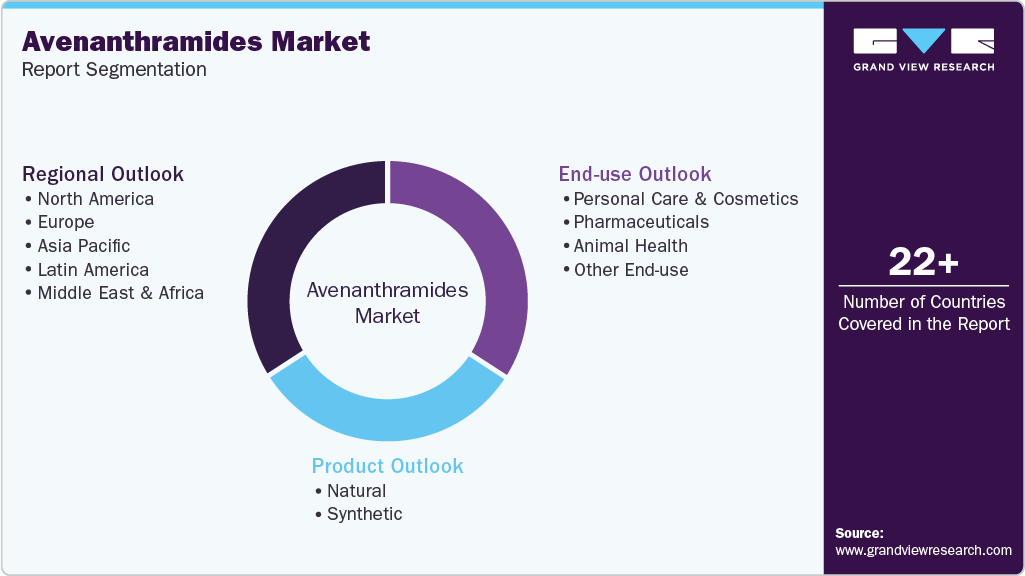
This report forecasts revenue growth at global, regional, and country levels and provides an analysis of the latest industry trends in each of the sub-segments from 2021 to 2033. For this study, Grand View Research has segmented the global avenanthramides market report based on product, end use, and region.
 To learn more about this report, Download Free Sample Report
 -
Product Outlook (Volume, Kilotons; Revenue, USD Million, 2021 - 2033)
-
Natural
-
Synthetic
-
-
End Use Outlook (Volume, Kilotons; Revenue, USD Million, 2021 - 2033)
-
Personal Care & Cosmetics
-
Pharmaceuticals
-
Animal Health
-
Other End Use
-
-
Regional Outlook (Volume, Kilotons; Revenue, USD Million, 2021 - 2033)
-
North America
-
U.S.
-
Canada
-
Mexico
-
-
Europe
-
Germany
-
UK
-
Italy
-
Spain
-
France
-
-
Asia Pacific
-
China
-
India
-
Japan
-
South Korea
-
-
Latin America
-
Brazil
-
Argentina
-
-
Middle East & Africa
-
Saudi Arabia
-
South Africa
-
-
Frequently Asked Questions About This Report
The global avenanthramides market was valued at USD 145.1 million in 2025 and is expected to reach USD 156.8 million in 2026.
Key factors driving the Avenanthramides market include rising demand for natural, bioactive ingredients in personal care and pharmaceuticals, growing consumer awareness of anti-inflammatory and antioxidant benefits, clinical validation of efficacy, and increasing adoption in premium skincare and nutraceutical products.
Asia Pacific dominated the avenanthramides market with the largest revenue share of 43.2% in 2025.
Asia Pacific is the fastest growing regional market.
The synthetic segment accounted for the largest revenue share of 93.2% in 2025.
The personal care & cosmetics segment accounted for the largest share of the Avenanthramides market.
Some of the key players operating in the Avenanthramides Market include Ceapro Inc., Cosciens Biopharma Inc., Chemicea Pharma, Symrise AG, Chen Lan gBio, Henan Steeda Industrial Co., Ltd., and BioCrick.
About the Author(s)
Food Additives & Nutricosmetics Research Team
Specialty & Chemicals · Food Additives & NutricosmeticsThis report was authored by the food additives & nutricosmetics research team at Grand View Research - comprising two research analysts, one senior research analyst, and one industry expert - with specialized expertise in the food additives & nutricosmetics segment of the specialty & chemicals industry. All findings are based on proprietary specialty & chemicals databases, executive interviews, and regulatory analysis, subject to internal peer review prior to publication.
Last Updated:
Speak to Analyst

Customize this report to your needs - add regions, segments, or data points, with 20% free customization.
Or view our licence options:


ISO 9001:2015 & 27001:2022 Certified
We are GDPR and CCPA compliant! Your transaction & personal information is safe and secure. For more details, please read our privacy policy.


