
- Home
- »
- Advanced Interior Materials
- »
-
Axial Flow Pump Market Size & Share Report, 2026 - 2033GVR Report cover
![Axial Flow Pump Market (2026 - 2033)Report]()
Axial Flow Pump Market (2026 - 2033)
Size, Share & Trends Analysis Report By Type (High Power, Miniwatt), By Configuration (Single-Stage, Multi-stage), By End-use (Agriculture, Power Generation, Construction & Building Services), By Region, And Segment Forecasts
Market Size, 2025
$4.3BMarket Estimate, 2026
$4.5BMarket Forecast, 2033
$5.8BCAGR, 2026–2033
3.8%Axial Flow Pump Market Summary
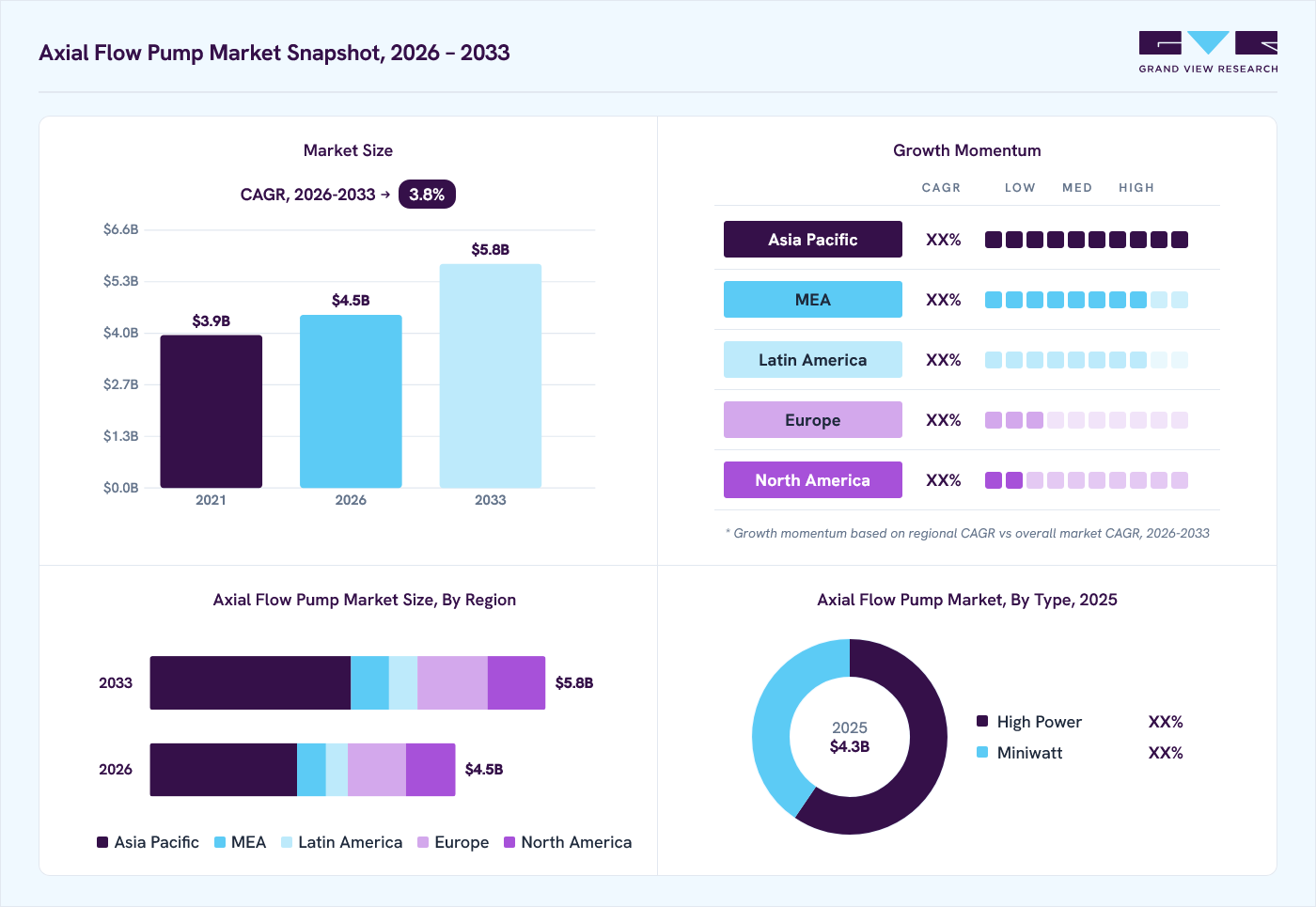
The global axial flow pump market size was valued at USD 4.3 billion in 2025 and is projected to grow from USD 4.5 billion in 2026 to USD 5.8 billion by 2033, growing at a CAGR of 3.8% from 2026 to 2033. Asia Pacific dominated the market, accounting for the largest global share of 47.6% in 2025. The rise of the market is primarily attributable to rising investments in wastewater treatment facilities and an uptick in activity in the oil industry to meet the rising demand for energy.
Key Market Trends & Insights
- By type: High power segment led the market with the largest share of 59.4% in 2025.
- By configuration: Single-stage segment led the market with the largest share of 61.9% in 2025.
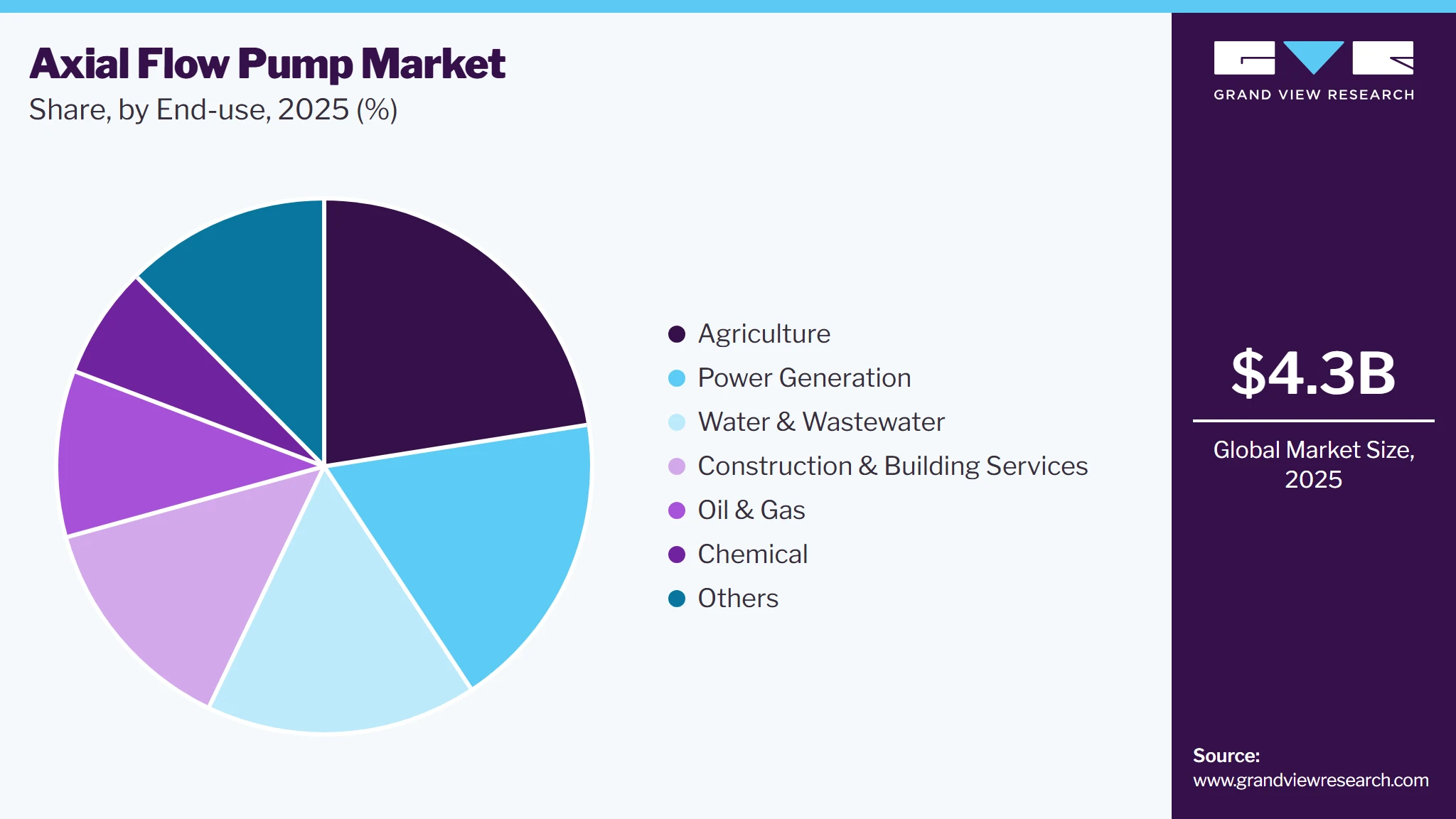
- By end use: Agriculture segment led the market with the largest share of 22.5% in 2025
Regional Highlights
- Largest regional market: Asia Pacific (47.6% revenue share, 2025)
- By country: China held the largest share of Asia pacific in 2025.
Market Size & Forecast
- Market size in 2025: USD 4.3 Billion
- Estimated market size in 2026: USD 4.5 Billion
- Projected market size by 2033: USD 5.8 Billion
- CAGR (2026-2033): 3.8%
Three ways to get this report
Buy it, customize it, or ask a question.Get the Full Report
What the study covers
- FormatsPDF · Excel · Dashboard
- Timeline2026–2033 annual, 2025 base
- Coverage20+ countries, 5 regions
- Companies10+ key players profiled
Customize the Report
20% free customization
- IncludeCountries, segments, points
- TailorTo your product definition
- ExtendDeeper competitor detail
- OrA fully bespoke study
- Turnaround5–10 working days
Ask an Analyst
A direct answer, usually in 1 working day
- AccessReport author, directly
- Reply timeWithin 1 working day
- No sales callDirect answer only
- FormatEmail reply
- CostFree, no cost
Additionally, it is anticipated that the world's rising urbanization and industrialization would have a beneficial effect on the expansion of the axial flow pump market in the coming years. Government laws such as DOE energy conservation standards that are strict on energy efficiency, safety, and standards are anticipated to have a significant impact on the pump market. Many government agencies have not only restructured their existing structures but also their current policies.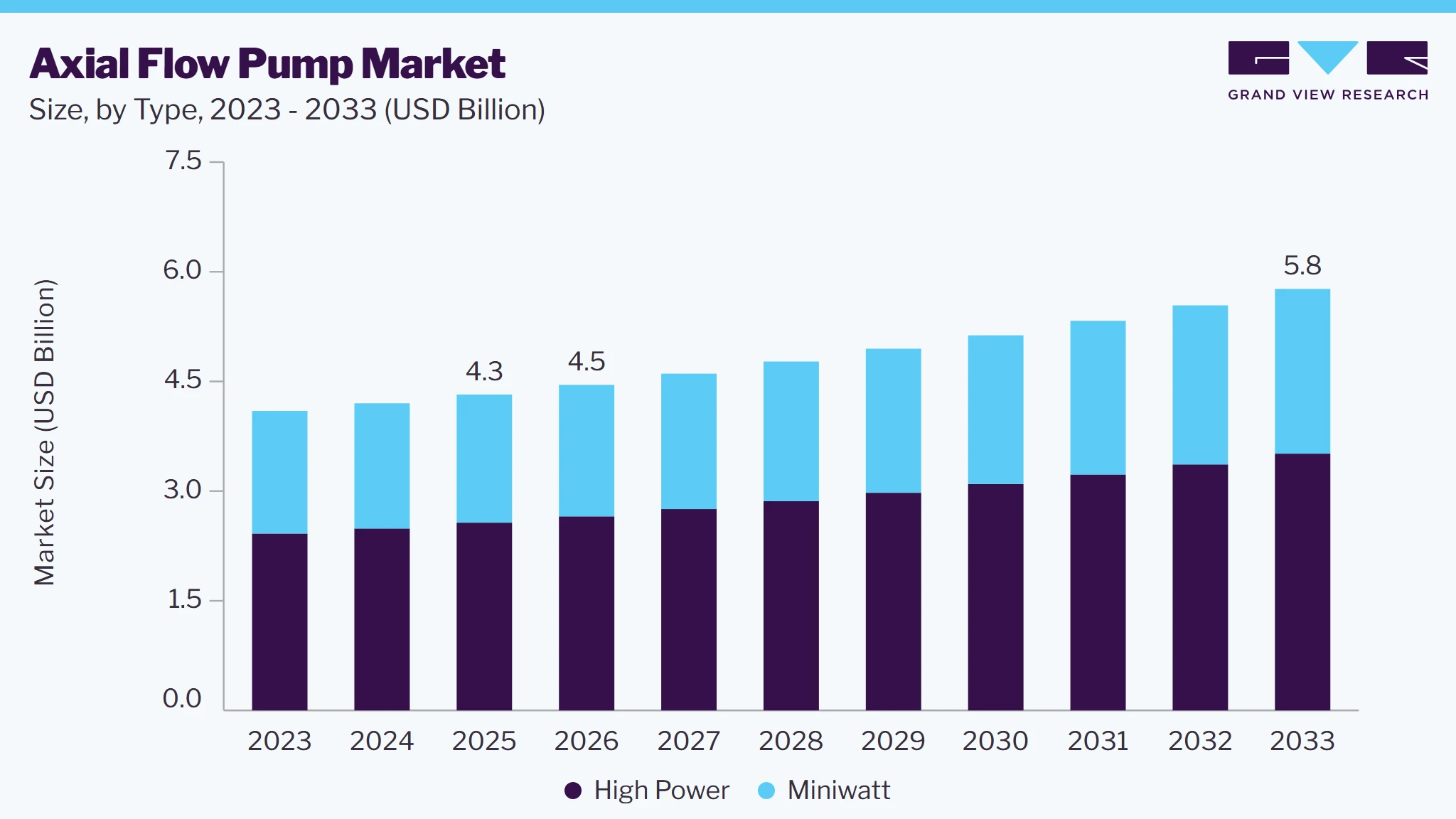
Moreover, the market for axial flow pump is expected to grow significantly in the U.S. owing to increasing exploration activities in both the onshore & offshore unconventional oil & gas sectors. In addition, renovation and technological developments of the existing industrial water and wastewater management infrastructure in the country are likely to drive the overall market. Axial flow pumps are increasingly finding applications in setting up of wastewater management & water treatment facilities in various countries, such as the U.S., China, the UAE, India, and Australia, which is expected to drive the market over the forecast period. In addition, the usage of axial flow pump is likely to grow in the chemical industry as they offer a high discharge rate with controlled vertical heads, thus avoiding spillage.
Market Dynamics
The axial flow pump market is gaining steady traction due to rising requirements for high-capacity, low-head pumping solutions across agriculture, municipal infrastructure, and industrial operations. Expansion of irrigation networks and development of efficient water distribution systems are strengthening adoption, particularly in regions with uneven water availability. Increasing investments in flood control, stormwater drainage, and wastewater treatment infrastructure are further supporting demand in urban development projects. Industrial usage remains prominent in power generation, oil & gas, and chemical processing, where continuous large-volume circulation is required.
The axial flow pump market is driven by expanding investments in large-scale water infrastructure, including irrigation networks, river linking projects, municipal water supply systems, and flood control infrastructure. Increasing pressure on agricultural productivity and water resource optimization is accelerating the deployment of high-capacity, low-head pumping solutions in both developed and emerging economies.
Urban expansion is further supporting demand for stormwater drainage and wastewater conveyance systems, where continuous high-volume flow handling is essential. In industrial applications, axial flow pumps are widely utilized in power generation plants, oil & gas facilities, chemical processing units, and steel manufacturing for cooling water circulation, condenser operations, and process fluid management, reinforcing their critical role in uninterrupted operations.
Market growth is constrained by high initial capital requirements associated with installation, which include civil construction, structural alignment, and system integration with large-scale infrastructure. The engineering complexity of axial flow pumps, particularly in terms of site-specific design and hydraulic configuration, further increases project execution time and cost.
Additionally, operational challenges such as cavitation sensitivity, reduced efficiency under fluctuating flow conditions, and periodic maintenance requirements contribute to higher lifecycle costs. These factors limit adoption in small-scale and budget-sensitive applications, where alternative pumping technologies with lower installation complexity are often preferred.
The increasing shift toward smart water infrastructure presents significant growth opportunities for axial flow pump adoption. The integration of IoT-enabled monitoring systems, real-time flow analytics, and predictive maintenance solutions is improving operational reliability and reducing unplanned downtime. Advancements in automation and remote-control capabilities are enhancing system efficiency and enabling optimized water distribution across municipal and industrial networks.
Concurrently, rising emphasis on energy conservation is driving demand for hydraulically optimized pump designs that deliver higher efficiency across variable operating conditions. The convergence of digital water management systems and sustainable infrastructure development is expected to accelerate the adoption of advanced axial flow pumping solutions globally.
Analyst Perspective
The axial flow pump market is being driven by the growing need for efficient, high-volume water movement across agriculture, municipal infrastructure, and industrial applications. Rising investments in irrigation systems, flood control projects, wastewater treatment facilities, and power generation are creating sustained demand for pumps capable of delivering high flow rates with low operating head. At the same time, increasing focus on energy efficiency and lifecycle cost reduction is encouraging end users to replace conventional pumping systems with advanced axial flow pumps that offer improved hydraulic performance and lower operating costs. As governments continue to invest in water infrastructure and industries expand their water management capabilities, manufacturers offering reliable, energy-efficient, and application-specific axial flow pump solutions are expected to benefit from long-term market growth.
Type Insights
“The demand for the high power type is expected to grow at a significant CAGR of 4.1% from 2026 to 2033 in terms of revenue”
Based on type, the high power segment led the market with the largest revenue share of 59.4% in 2025. High power axial flow pump offer a great rate of flow and power as compared to their counterparts. In this regard, the heightened application of these pumps in the flood dewatering, water and wastewater, and oil and gas industry, among others, is driving the segment’s growth. The increasing inclination towards using axial flow pump with high power to accelerate the industrial operation in various end-use industries is anticipated to provide impetus to the segment.
The demand for mini watt type axial flow pump has been steadily increasing due to their efficiency and versatility in various applications. These pumps are particularly valued in sectors such as agriculture, waste management, and industrial processes, where the need for reliable fluid handling is critical. Their ability to move large volumes of fluid at low pressures makes them ideal for irrigation systems, water treatment facilities, and cooling systems in power plants. Additionally, the compact size and energy-efficient designs of mini watt axial flow pump offer businesses cost-effective solutions, further fueling their popularity in both residential and commercial markets. As industries continue to focus on sustainability and cost reduction, the demand for these pumps is expected to grow even more in the coming years.
Configuration Insights
“The demand for the multi stage configuration segment is expected to grow at a significant CAGR of 4.5% from 2026 to 2033 in terms of revenue.”
Based on the configuration, the single-stage segment led the market with the largest revenue share of 61.9% in 2025. One of the primary driving factors for single stage axial flow pump is their ability to handle high flow rates of fluids. These pumps are well-suited for applications where a significant volume of fluid needs to be moved efficiently.
The demand for multi-stage type pumps is rising significantly across various industries due to their ability to achieve high pressure and flow rates in a compact design. These pumps are particularly sought after in applications such as water supply, irrigation, and chemical processing, where consistent performance and reliability are essential. Their efficiency in handling both clean and contaminated fluids makes them ideal for municipal water systems and wastewater treatment plants. Additionally, the trend towards energy efficiency and sustainable practices is driving the adoption of multi-stage pumps, as they can reduce operational costs while providing superior performance. As industries continue to expand and require more advanced pumping solutions, the market for multi-stage pumps is poised for continued growth.
End-use Insights
“The demand for the chemical end use segment is expected to grow at a significant CAGR of 5.0% from 2026 to 2033 in terms of revenue.”
Based on end use, the agriculture segment led the market with the largest revenue share of 22.5% in 2025. The utilization of axial flow pump in the agricultural sectors such as drainage, irrigation, and fisheries, among others, is a major driving factor for this segment. Additionally, there is a greater need for food production due to the growing population, and axial flow pump are frequently used for irrigation.
Axial flow pumps play a crucial role in the chemical industry due to their ability to efficiently handle large volumes of corrosive and viscous fluids at relatively low pressures. These pumps are ideal for processes such as mixing, transferring, and circulation of chemicals, making them essential in applications like bulk chemical manufacturing, wastewater treatment, and cooling systems. Their design allows for continuous operation with minimal vibration and noise, which is advantageous for maintaining a safe working environment.
Regional Insights
“India to witness fastest market growth at 5.1% CAGR”
The demand for axial flow pump in North America is driven by the growing industrial sector, particularly in water treatment, oil and gas, and chemical processing. The region's emphasis on infrastructure development and the need for efficient fluid transfer solutions have propelled the market forward. Additionally, technological advancements and a focus on energy-efficient systems are expected to further enhance the adoption of these pumps.
U.S. Axial Flow Pump Market
The axial flow pump market in the U.S. is expected to grow at a CAGR of 1.7% from 2026 to 2033. In the United States, the increasing investments in water infrastructure and the oil and gas industry are key factors fueling the demand for axial flow pump. The need for efficient and reliable pumping solutions for large volumes of liquids, especially in municipal and industrial applications, is rising. Moreover, regulatory pressures for improved water quality and sustainability are encouraging the adoption of advanced pumping technologies.
The axial flow pump market in the Canada is expected to grow at a CAGR of 2.6% from 2026 to 2033. Canada's demand for axial flow pump is influenced by its expansive natural resource sector, particularly mining and forestry. The country’s commitment to environmental sustainability and energy efficiency has spurred investments in modernized pumping systems. Additionally, the need for effective water management in urban areas contributes to the growth of this market.
The axial flow pump market in the Mexico is expected to grow at a CAGR of 4.0% from 2026 to 2033. In Mexico, the demand for axial flow pump is closely linked to the country's expanding manufacturing sector and infrastructure projects. As urbanization continues to rise, there is a growing requirement for efficient water management systems. Additionally, investments in renewable energy projects and improved agricultural practices are driving the need for reliable pumping solutions.
Europe Axial Flow Pump Market Trends
The axial flow pump market in Europe held a share of 19.2% in 2025. The European market for axial flow pump is characterized by stringent environmental regulations and a strong focus on sustainability. Industries such as wastewater treatment, chemical processing, and food and beverage are increasingly adopting these pumps for their efficiency and reliability. The transition towards greener technologies and increased industrial automation further enhances market prospects.
Germany's axial flow pump market held 20.2% share in the European market. Germany stands out in Europe as a key market for axial flow pump, driven by its robust industrial base and emphasis on engineering excellence. The country’s strong commitment to environmental sustainability and innovative technologies supports the demand for efficient pumping solutions. Additionally, the automotive and manufacturing sectors contribute significantly to the growth of this market.
In the UK, the demand for axial flow pump is influenced by infrastructure investments in water and wastewater management. The government's focus on improving water quality and the transition to renewable energy sources are creating opportunities for advanced pumping solutions. Furthermore, the growing industrial sector and the need for reliable fluid handling systems are key growth drivers.
Asia Pacific Axial Flow Pump Market Trends
Asia Pacific dominated the axial flow pump market with the largest revenue share of 47.6% in 2025. The Asia Pacific region is witnessing significant growth in the axial flow pump market, fueled by rapid industrialization and urbanization. Countries like China and India are investing heavily in infrastructure development, including water supply and sewage treatment systems. Additionally, the increasing demand for energy-efficient solutions and technological advancements in pumping systems are propelling market growth.

The axial flow pump market in China held the largest share in the Asia Pacific region in 2025. China's demand for axial flow pump is primarily driven by its large-scale industrial activities and extensive infrastructure projects. The government's initiatives to enhance water management and environmental protection are boosting the adoption of efficient pumping technologies. Moreover, the rapid expansion of urban areas and the need for reliable water supply systems contribute to the market's growth.
The axial flow pump market in the India held a share of 17.5% in 2025. In India, the growing population and urbanization are significant factors driving the demand for axial flow pump. The country is investing in water supply and sanitation projects to address the challenges of water scarcity and quality. Additionally, the expansion of industries such as agriculture, manufacturing, and power generation is increasing the need for efficient fluid transfer solutions.
Middle East & Africa Axial Flow Pump Market Trends
The Middle East and Africa region is witnessing an increasing demand for axial flow pump due to the need for effective water management solutions in arid areas. The oil and gas sector, along with infrastructural development in cities, are key drivers of this market. Additionally, the emphasis on sustainability and efficient water use is prompting the adoption of modern pumping technologies.
In the UAE, the demand for axial flow pump is growing rapidly, driven by ambitious infrastructure projects and a focus on sustainability. The country's investments in water and wastewater treatment facilities, coupled with its expanding industrial base, create significant opportunities for axial flow pump manufacturers. Furthermore, the government's commitment to reducing water scarcity through efficient management practices enhances market potential.
Latin America Axial Flow Pump Market Trends
Latin America is experiencing a rising demand for axial flow pump due to the growth in the mining, agriculture, and energy sectors. Countries like Brazil are investing in infrastructure improvements, particularly in water supply and wastewater treatment. The increasing focus on sustainable practices and efficient resource management further enhances the market potential in the region.
In Brazil, the demand for axial flow pump is closely linked to its vibrant agricultural sector and the expansion of mining operations. The country's focus on improving water infrastructure and managing resources efficiently drives the market. Additionally, the push for sustainable practices and investments in renewable energy projects are fostering the adoption of advanced pumping solutions.
Key Axial Flow Pump Company Insights
Some of the key players operating in the axial flow pump market include Ebara Corporation, Flowserve Corporation, Grundfos Holding A/S, among others.
-
Ebara Corporation has a subsidiary, namely EBARA Pumps Americas Corporation, in South Carolina, U.S. It provides products and services related to engineered pumps & pumping. The company serves its products to various industries, such as wastewater, water, municipal, commercial, energy, and power, which offer reliable product knowledge, responsive support, and application expertise including aftermarket replacement parts services. EBARA Pumps Americas Corporation, commonly known as EPAC, provides a complete line of stainless steel pumps that are corrosion resistant and include end suction centrifugal, submersible, sump, multistage, effluent, and sewage pumps. EBARA pump service and parts are accessible over a wide network across North America to support clientele for complete motors and pump parts replacement or service.
-
Flowserve Corporation, manufactures comprehensive flow control systems and provides aftermarket services. The company has a strong operational presence in more than 50 countries. Currently, it operates 206 facilities, including manufacturing and quick response centers (QRS), around the globe and provides an array of aftermarket services such as installation, advanced diagnostics, retrofitting, and repair. The company has been supplying to more than 10,000 customers globally, including OEMs. power, chemical, water, oil & gas, and general industries.
The Weir Group PLC, Handol Pumps Ltd. are some of the emerging players in the axial flow pump market.
-
The Weir Group PLC offers solutions in process equipment, equipment attachments, and wear parts segments. It is present in more than 50 countries. The company also provides support services, field services, rebuild & repair services, and digital services. The Weir Minerals division provides mill cut technology and services as well as slurry handling equipment and related aftermarket support. These technologies are particularly utilized in oil & gas, mineral, and general industrial markets. The Weir ESCO division offers ground-engaging tools that are used in large mining machines. Primary infrastructure markets catered by the ESCO division include construction, dredging and sand, and aggregates. The Weir Oil & Gas division offers products, including pressure pumping equipment and pressure control equipment, as well as aftermarket spare parts and services.
Key Axial Flow Pump Companies
The following are the leading companies in the axial flow pump market.
-
Ebara Corporation
-
Flowserve Corporation
-
Grundfos Holding A/S
-
Handol Pumps Limited
-
Hitachi Industrial Products Ltd.
-
ITT Goulds Pumps
-
Pentair PLC
-
Sulzer Ltd.
-
The Weir Group PLC
-
Xylem Inc.
Competitive Benchmarking
Category
Operating Strategies
Competitive Edge
Weakness
Established Players (e.g., Ebara Corporation; Flowserve Corp.; Grundfos Holding A/S; ITT Goulds Pumps; Pentair PLC; Sulzer Ltd.; The Weir Group PLC; Xylem Inc.
- Focus on diversified pump portfolios serving municipal, industrial, power generation, and water infrastructure applications.
- Strengthen market presence through global distribution networks, aftermarket services, and strategic acquisitions.
- Invest in digitalization, energy-efficient technologies, and intelligent pumping solutions to enhance lifecycle value.
- Strong brand recognition supported by extensive engineering expertise and broad product offerings.
- Established global footprint with deep penetration across multiple end-use industries.
- Robust aftermarket capabilities and long-standing customer relationships enabling recurring revenue streams.
- Premium pricing limits competitiveness in highly cost-sensitive markets.
- Exposure to cyclical capital expenditure trends in infrastructure and industrial sectors.
- Longer lead times and complex organizational structures may reduce responsiveness to localized demand.
Emerging & Regional Players (e.g., Handol Pumps Ltd.; Hitachi Industrial Products Ltd., regional players)
- Focus on application-specific pumping solutions and targeted regional expansion initiatives.
- Compete through customized products and localized technical support capabilities.
- Emphasize selective investments in manufacturing efficiency and niche industrial applications.
- Greater flexibility in addressing customer-specific requirements and project needs.
- Competitive pricing and faster delivery capabilities in regional markets.
- Strong presence in selected industries and domestic markets with specialized expertise.
- Limited global reach and narrower distribution networks compared with multinational competitors.
- Smaller product portfolios and lower diversification across end-use sectors.
- Relatively lower investment in digital technologies and advanced smart pumping solutions.
Recent Developments
-
In March 2024, ITT INC. disclosed an investment plan of USD 11.0 million aimed at expanded pump testing capabilities across Germany, India, and Saudi Arabia. This financial commitment is directed toward enhancing the company's power capacity related to pump, motor, and control systems testing. It will allow the company to conduct local testing of bigger and more complex pump systems.
Axial Flow Pump Market Report Scope
Report Attribute
Details
Market size value in 2025
USD 4.3 billion
Market size value in 2026
USD 4.5 billion
Revenue forecast in 2033
USD 5.8 billion
Growth rate
CAGR of 3.8% from 2026 to 2033
Base year for estimation
2025
Historical data
2021 - 2024
Forecast period
2026 - 2033
Quantitative units
Revenue in USD billion and CAGR from 2026 to 2033
Report coverage
Revenue forecast, company ranking, competitive landscape, growth factors, and trends
Segments covered
Type, configuration, end-use, region
Regional scope
North America; Europe; Asia Pacific; Latin America; Middle East & Africa
Country scope
U.S.; Canada; Mexico; France; Germany; Italy; UK; China; Japan; India; Australia; Argentina; Brazil; Saudi Arabia; UAE
Key companies profiled
Ebara Corporation; Flowserve Corp.; Grundfos Holding A/S; Handol Pumps Ltd.; Hitachi Industrial Products Ltd.; ITT Goulds Pumps; Pentair PLC; Sulzer Ltd.; The Weir Group PLC; Xylem Inc.
Customization scope
Free report customization (equivalent up to 8 analysts' working days) with purchase. Addition or alteration to country, regional & segment scope.
Pricing and purchase options
Avail customized purchase options to meet your exact research needs. Explore purchase options
Global Axial Flow Pump Market Report Segmentation
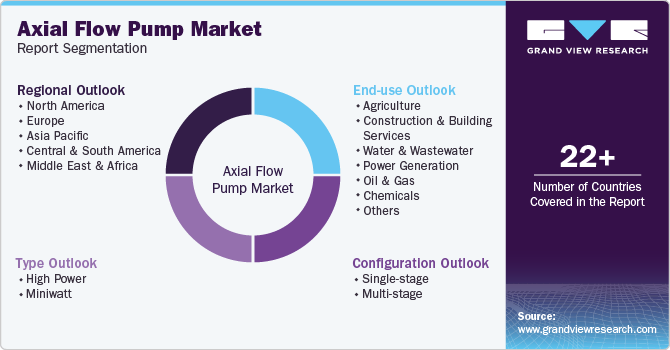
This report forecasts revenue growth at global, regional & country levels and provides an analysis on the industry trends in each of the sub-segments from 2021 to 2033. For the purpose of this study, Grand View Research has segmented the axial flow pump market on the basis of type, configuration, end-use, and region:
-
Type Outlook (Revenue, USD Million, 2021 - 2033)
-
High Power
-
Miniwatt
-
-
End-use Outlook (Revenue, USD Million, 2021 - 2033)
-
Agriculture
-
Construction & Building Services
-
Water & Wastewater
-
Power Generation
-
Oil & Gas
-
Chemicals
-
Others
-
-
Configuration Outlook (Revenue, USD Million, 2021 - 2033)
-
Single-stage
-
Multi-stage
-
-
Regional Outlook (Revenue, USD Million, 2021 - 2033)
-
North America
-
U.S.
-
Canada
-
Mexico
-
-
Europe
-
France
-
Germany
-
Italy
-
UK
-
-
Asia Pacific
-
China
-
Japan
-
India
-
Australia
-
-
Central & South America
-
Brazil
-
Argentina
-
-
Middle East & Africa
-
Saudi Arabia
-
UAE
-
-
Research Methodology
The axial flow pump market figures in this report are based on a proven research process that combines executive interviews with secondary research from proprietary databases, company filings, and recognized regulatory and institutional sources. Market size is built through value-chain sizing - reconciling supply-side and demand-side estimates - and triangulated with bottom-up and top-down approaches. Every estimate passes multiple levels of expert validation before publication, with each axial flow pump segment quantified using the revenue-capture definitions in the table below.
Segment Definition
Segment - Type
Revenue Capture Definition
High Power
Revenue generated from the sale of high-power axial flow pumps designed for high-capacity fluid transfer applications across irrigation, flood control, water & wastewater treatment, power generation, and industrial processes.
Miniwatt
Revenue generated from the sale of low-power (miniwatt) axial flow pumps used for light-duty fluid transfer applications including small irrigation systems, aquaculture, water circulation, and other low-flow industrial and commercial applications.
Segment - End Use
Revenue Capture Definition
Agriculture
Revenue generated from the sale of axial flow pumps supplied for irrigation, drainage, flood control, water transfer, and agricultural water management applications.
Construction & Building Services
Revenue generated from the sale of axial flow pumps used for construction dewatering, flood mitigation, stormwater management, and water circulation systems in commercial and infrastructure projects.
Water & Wastewater
Revenue generated from the sale of axial flow pumps supplied for municipal water supply, wastewater treatment, drainage pumping stations, flood control, and water distribution systems.
Power Generation
Revenue generated from the sale of axial flow pumps used in cooling water circulation, condenser water systems, intake structures, and other power plant water handling applications.
Oil & Gas
Revenue generated from the sale of axial flow pumps supplied for water transfer, produced water management, cooling systems, and utility applications across upstream, midstream, and downstream facilities.
Chemical
Revenue generated from the sale of axial flow pumps used for transferring process water, cooling fluids, and compatible chemicals in chemical processing facilities.
Others
Revenue generated from the sale of axial flow pumps supplied for marine, aquaculture, mining, district cooling, industrial water circulation, and other applications not covered under the above end-use industries.
Segment - Configuration
Revenue Capture Definition
Single-Stage
Revenue generated from the sale of single-stage axial flow pumps designed for high-flow, low-head pumping applications across municipal, agricultural, industrial, and water management sectors.
Multi-Stage
Revenue generated from the sale of multi-stage axial flow pumps designed to deliver higher discharge pressures while maintaining high flow rates for specialized industrial and infrastructure applications.
Estimation Model
Layer Name
Key Question
Description
Industrial Fluid Demand Base Layer
Where are axial flow pumps required?
Analyze demand across agriculture, water & wastewater, construction & building services, power generation, oil & gas, chemical processing, and other industrial sectors.
Infrastructure & Industrial Investment Layer
Where is new equipment demand being created?
Evaluate investments in irrigation infrastructure, municipal water and wastewater projects, flood control systems, power plants, industrial facilities, and construction activities.
Product Adoption Layer
Which axial flow pump configurations are being deployed?
Segment demand by type (High Power and Miniwatt), configuration (Single-Stage and Multi-Stage), and end-use industry. Apply adoption rates based on flow requirements, operating head, energy efficiency, installation conditions, and application-specific performance requirements.
Revenue Conversion Layer
How is market revenue generated ?
Estimate annual shipments of axial flow pumps by type, configuration, end-use industry, and region. Quantify revenues generated exclusively from the sale of new axial flow pumps supplied to OEMs, EPC contractors, municipalities, utilities, and industrial end users.
Delivered Customizations
This report has been delivered with the following In-depth customizations
Client Request
Customization Delivered
Value Adds
Competitive Benchmarking
Benchmarked leading axial flow pump manufacturers based on product portfolio strength, hydraulic engineering capabilities, energy-efficiency performance, financial standing, end-use industry focus, geographic footprint, and strategic positioning.
Provided a comprehensive view of the competitive landscape, enabling the client to assess market positioning, identify sources of differentiation, and monitor competitive intensity across major application areas.
Regional Segmentation
Refined regional analysis by evaluating agricultural irrigation intensity, water and wastewater infrastructure investments, industrial activity, flood control initiatives, and power generation capacity across North America, Europe, Asia Pacific, Middle East & Africa, and Latin America.
Enabled identification of high-growth regions, infrastructure investment hotspots, and demand concentration areas, supporting market prioritization and expansion strategies.
Opportunity assessment
Assessed emerging growth opportunities across irrigation modernization, municipal water supply and drainage systems, wastewater management projects, industrial cooling water circulation, flood mitigation infrastructure, and energy-efficient pumping solutions.
Helped prioritize the most attractive revenue pockets and investment areas by identifying applications supported by infrastructure development, water management initiatives, and increasing emphasis on operational efficiency and lifecycle optimization.
Frequently Asked Questions About This Report
The global axial flow pump market size was estimated at USD 4.3 billion in 2025 and is expected to be USD 4.5 billion in 2026.
The global axial flow pump market, in terms of revenue, is expected to grow at a compound annual growth rate of 3.8% from 2026 to 2033 to reach USD 5.8 billion by 2033.
The high power segment led the market with the largest revenue share of 59.4% in 2025.
Some of the key players operating in the axial flow pump market include Ebara Corporation; Flowserve Corp.; Grundfos Holding A/S; Handol Pumps Ltd.; Hitachi Industrial Products Ltd.; ITT Goulds Pumps; Pentair PLC; Sulzer Ltd.; The Weir Group PLC; Xylem Inc
The key factors that are driving the axial flow pump market include the growth of the market can be primarily attributed to the growth of the market can be primarily attributed to the rising investments taking place in the wastewater treatment plants and the increase in oil filed activities taking place to satisfy the increased energy demand
Asia Pacific dominated the axial flow pump market with the largest revenue share of 47.6% in 2025.
Asia Pacific is anticipated to be one of the fastest-growing regional markets over the forecast period, driven by rapid infrastructure development, expanding agricultural irrigation, and increasing investments in water and wastewater management.
The single-stage segment accounted for the largest revenue share of 61.9% in 2025.
The agriculture segment led the market with the largest revenue share of 22.5% in 2025.
About the Author(s)
Advanced Interior Materials Research Team
Advanced Materials · Advanced Interior MaterialsThis report was authored by the advanced interior materials research team at Grand View Research - comprising two research analysts, one senior research analyst, and one industry expert - with specialized expertise in the advanced interior materials segment of the advanced materials industry. All findings are based on proprietary advanced materials databases, executive interviews, and regulatory analysis, subject to internal peer review prior to publication.
Last Updated:
Speak to Analyst


Customize this report to your needs - add regions, segments, or data points, with 20% free customization.
Or view our licence options:


ISO 9001:2015 & 27001:2022 Certified
We are GDPR and CCPA compliant! Your transaction & personal information is safe and secure. For more details, please read our privacy policy.


