
- Home
- »
- Beauty & Personal Care
- »
-
Azelaic Acid Cosmetics Market Size, Industry Report, 2033GVR Report cover
![Azelaic Acid Cosmetics Market Size, Share & Trends Report]()
Azelaic Acid Cosmetics Market (2026 - 2033) Size, Share & Trends Analysis Report By Product (Creams & Lotions, Gels & Foams, Serums, Ampoules & Essences, Masks & Peels, Spot & Targeted Treatments), By Concentration, By End User, By Skin Type, By Distribution Channel, By Region, And Segment Forecasts
- Report ID: GVR-4-68040-881-4
- Number of Report Pages: 80
- Format: PDF
- Historical Range: 2021 - 2024
- Forecast Period: 2026 - 2033
- Industry: Consumer Goods
- Report Summary
- Table of Contents
- Segmentation
- Methodology
- Download FREE Sample
-
 Download Sample Report
Azelaic Acid Cosmetics Market Summary
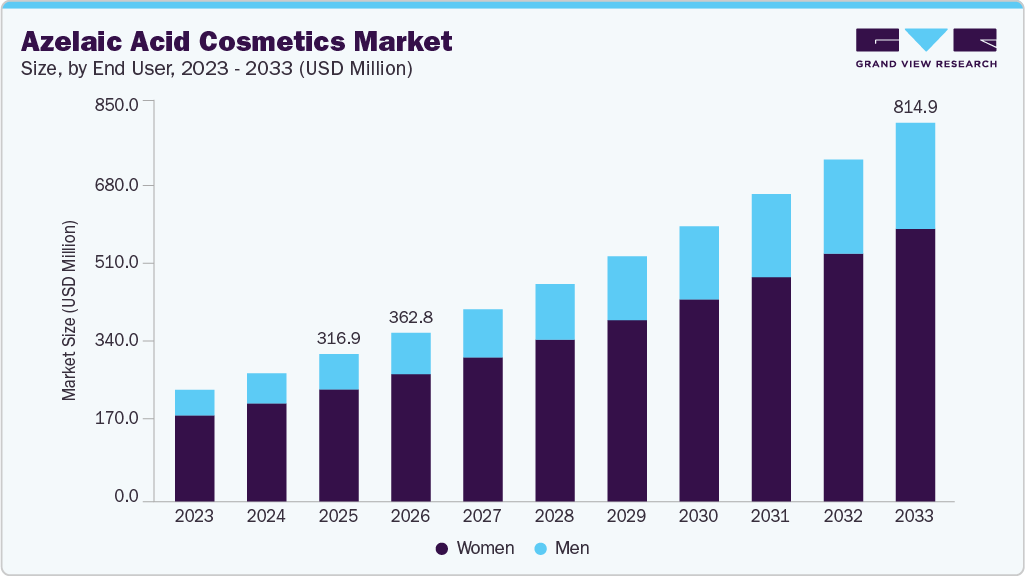
The global azelaic acid cosmetics market size was estimated at USD 316.9 million in 2025 and is projected to reach USD 814.9 million by 2033, growing at a CAGR of 12.3% from 2026 to 2033. Growing consumer awareness about active ingredients used in cosmetics is significantly influencing the development of the global market.
Key Market Trends & Insights
- North America azelaic acid cosmetics accounted for a market share of 32.8% in 2025.
- The U.S. azelaic acid cosmetics industry led North America with the largest share in 2025.
- By product, creams & lotions segment accounted for a market share of 31.1% in 2025.
- By concentration, moderate concentration (5%-10%) segment accounted for a market share of 47.0% in 2025.
- By end use, women segment accounted for a market share of 36.5% in 2025.
Market Size & Forecast
- 2025 Market Size: USD 316.9 Billion
- 2033 Projected Market Size: USD 814.9 Billion
- CAGR (2026-2033): 12.3%
- North America: Largest market in 2025
Consumers today are increasingly educating themselves about ingredient functionality, dermatological benefits, and formulation safety before purchasing skincare products. This shift toward ingredient-focused beauty routines has driven demand for scientifically supported actives that address multiple skin concerns, significantly influencing the azelaic acid cosmetics industry. Azelaic acid has gained significant attention in this environment for its ability to treat acne, rosacea, hyperpigmentation, and uneven skin tone while remaining gentle on sensitive skin. As consumers seek targeted skincare solutions that deliver visible results, azelaic acid is increasingly incorporated into serums, creams, and treatment formulations designed to address complex skin concerns simultaneously, supporting the growth of the Azelaic Acid-Based Cosmetics Market.Formulation innovation is also driving the popularity of azelaic acid across the beauty industry. Manufacturers are increasingly developing advanced formulations that improve ingredient stability and skin absorption while maintaining gentle performance. According to insights published by Grand Ingredients, azelaic acid is commonly formulated in concentrations ranging from 10% to 20% in cosmetic products, allowing brands to deliver targeted treatment benefits while maintaining skin compatibility. As consumers increasingly seek high-performance skincare ingredients supported by dermatological science, the demand for formulations containing azelaic acid continues to grow across both premium and mass-market skincare categories within the azelaic acid cosmetics market.
The ingredient is also gaining momentum as part of emerging skincare trends focused on dermatologist-inspired and sensitive-skin-friendly formulations. According to industry analysis highlighted by Happi, azelaic acid is among the most in-demand skincare ingredients expected to shape beauty trends in 2026, reflecting growing consumer interest in ingredients that address multiple skin conditions with minimal irritation. This trend aligns with the broader industry movement toward multifunctional skincare products that combine acne treatment, skin tone correction, and anti-inflammatory benefits within a single formulation, further strengthening the expansion of the Azelaic Acid-Based Cosmetics Market.
Brands are also expanding their product portfolios by integrating azelaic acid into new skincare launches designed to address complex skin concerns. For instance, in November 2024, skincare brand Skinvest relaunched its CEO Serum, incorporating new active ingredients and upgraded packaging to improve product performance and consumer experience. The updated formulation highlights the growing industry emphasis on science-driven ingredients and targeted skincare treatments. Such product innovations demonstrate how brands are increasingly integrating clinically recognized ingredients, such as azelaic acid, into advanced formulations to meet consumer demand for effective, research-backed cosmetic products in the market.
In addition, digital media and ingredient education are playing a critical role in shaping consumer demand for azelaic acid-based skincare products. Online skincare communities, dermatology content creators, and ingredient-focused beauty platforms are helping consumers understand how active ingredients work and how to incorporate them into skincare routines. As ingredient transparency becomes a key purchasing factor, consumers are actively seeking products formulated with proven actives, such as azelaic acid. This rising awareness of cosmetic ingredients, combined with ongoing formulation innovation and new product launches, is expected to strengthen the adoption of azelaic acid across the global cosmetics industry and further accelerate the growth of the Azelaic Acid-Based Cosmetics Market.
Brand Market Share Insights
The global azelaic acid cosmetics market is characterized by a competitive landscape supported by multinational beauty companies, dermatology-focused skincare brands, and emerging science-led cosmetic labels. Leading manufacturers such as L'Oréal, Procter & Gamble, Estée Lauder Companies, Unilever, and Shiseido maintain strong market positions through extensive skincare portfolios, global distribution networks, and continuous product innovation. Companies are increasingly investing in research and development to introduce clinically tested formulations that incorporate active ingredients such as azelaic acid for treating acne, hyperpigmentation, and skin sensitivity.
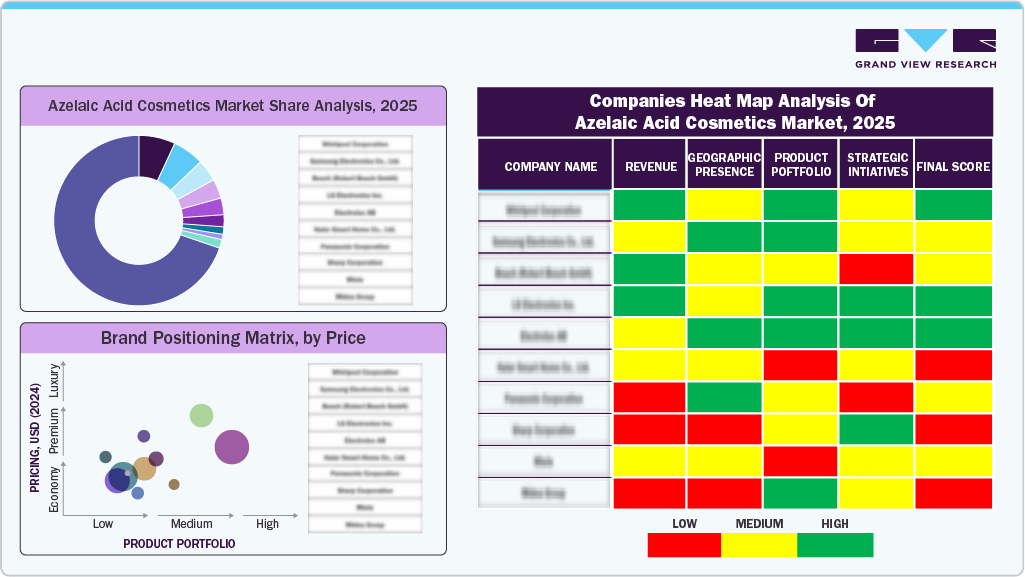
At the same time, emerging skincare brands are gaining traction through ingredient-focused positioning and clean beauty formulations, while the rapid expansion of e-commerce and direct-to-consumer channels is intensifying competition and enabling brands to reach wider consumer audiences.
Consumer Insights
Consumers increasingly evaluate skincare formulations based on ingredient transparency, clinical effectiveness, and compatibility with different skin types before making purchasing decisions. Azelaic acid has gained popularity as a multifunctional cosmetic ingredient due to its ability to treat several skin concerns simultaneously, including acne, rosacea, and hyperpigmentation, while remaining gentle on sensitive skin. Its antibacterial, anti-inflammatory, and pigmentation-regulating properties make it suitable for treatment-oriented skincare products such as serums, creams, and targeted treatments.
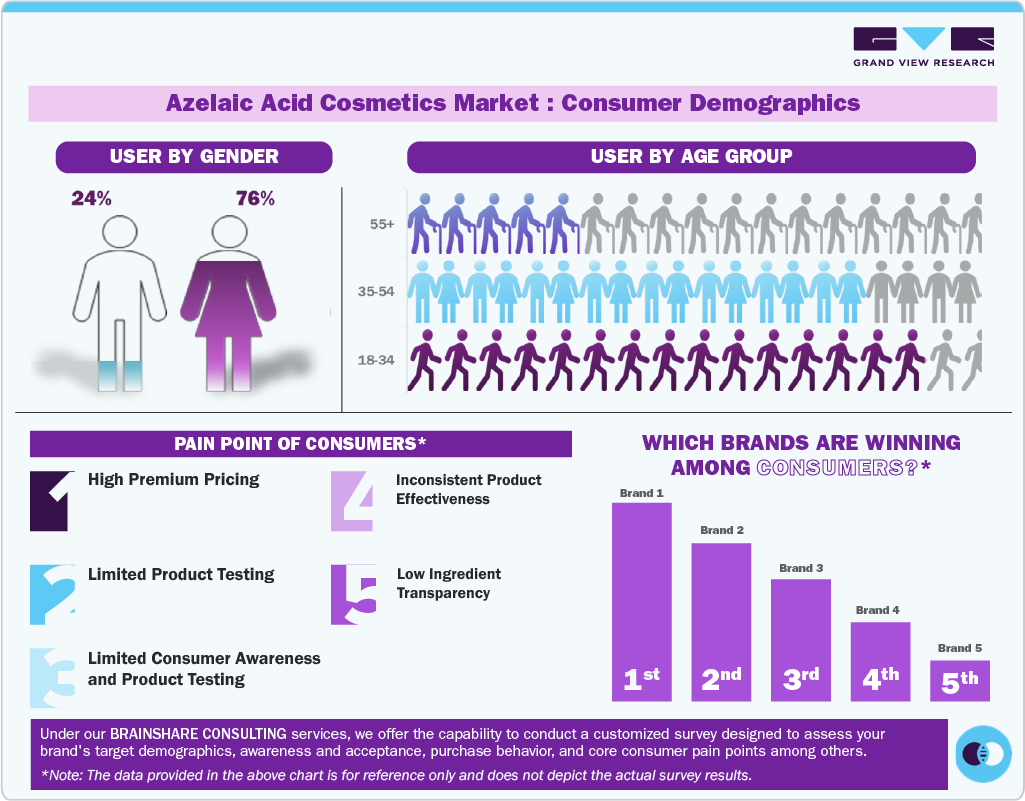
Rising demand for clean and ingredient-transparent beauty products is also shaping consumer preferences in the azelaic acid cosmetics market. Consumers increasingly prefer skincare products that clearly disclose ingredients and avoid potentially harmful chemicals. Industry data indicates that about 68% of consumers actively seek skincare products formulated with clean ingredients, reflecting a strong interest in ingredient safety and formulation transparency. In addition, around 41% of consumers report that social media platforms such as Instagram influence their clean beauty purchases, highlighting the growing role of digital content in product discovery and purchasing decisions.
Scientific credibility and dermatological validation further strengthen consumer confidence in azelaic acid-based skincare products. Research highlights that azelaic acid can effectively regulate abnormal keratin production, reduce inflammation, and inhibit excess pigmentation, making it widely used in both cosmetic and dermatological skincare treatments. As consumers increasingly adopt ingredient-focused skincare routines, brands are incorporating azelaic acid into targeted formulations designed for acne-prone, sensitive, and hyperpigmented skin types. Combined with rising digital education about skincare ingredients and increasing demand for science-backed formulations, these factors continue to shape purchasing behavior and support the expansion of the global market.
Product Insights
Creams & lotions accounted for the largest market share of 31.17% in 2025, driven by the growing consumer focus on targeted skincare treatments for conditions such as acne, post-inflammatory hyperpigmentation, rosacea, and uneven skin tone. Cream and lotion formulations allow controlled release of azelaic acid and are easy to integrate into both morning and nighttime skincare routines, making them suitable for long-term skin management. Dermatologists frequently recommend these formats because they deliver active ingredients in a balanced manner while reducing the risk of dryness or irritation compared with higher-concentration formulations.
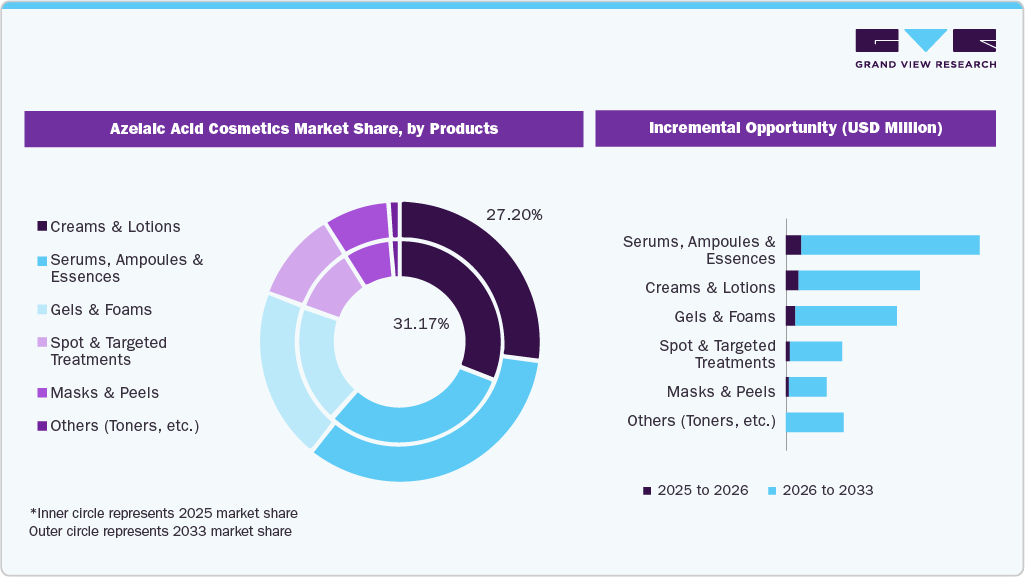
Serums, ampoules & essences is anticipated to grow at a CAGR of 13.7% from 2026 to 2033, driven by the rising demand for targeted skincare treatments that deliver higher concentrations of active ingredients to address concerns such as acne, redness, hyperpigmentation, and uneven skin texture. These lightweight formulations penetrate quickly into the skin and are widely incorporated into multi-step skincare routines, making them popular among consumers seeking faster and more visible results. Increasing interest in dermatologist-inspired skincare and clinical-style cosmetic products is also encouraging brands to introduce azelaic acid serums and ampoules designed for sensitive and acne-prone skin. In addition, strong influence from digital beauty platforms, ingredient-focused skincare education, and the expanding presence of premium treatment products across online beauty retailers and dermatology clinics are further supporting the rapid growth of this segment during the forecast period.
Concentration Insights
Moderately concentrated azelaic acid cosmetics accounted for a market share of 47.04% in 2025. Moderate concentrations offer a balance between treatment effectiveness and skin tolerability, making them suitable for regular use in daily skincare routines. Consumers commonly select these formulations to manage concerns such as mild acne, redness, uneven skin tone, and post-blemish marks, while minimizing the risk of irritation associated with stronger concentrations. In addition, moderately concentrated azelaic acid products are widely available in various cosmetic formats, including creams, gels, and serums, allowing consumers to easily incorporate them with other skincare ingredients such as niacinamide or hyaluronic acid.
Medical-grade cosmetic azelaic acid cosmetics are expected to grow at a CAGR of 14.2% from 2026 to 2033. Medical-grade formulations typically contain higher purity ingredients and are often recommended by dermatologists as part of treatment-based skincare regimens, which strengthens consumer trust and adoption. These products are often positioned as advanced solutions for problem-prone or sensitive skin, offering stronger therapeutic benefits than conventional cosmetic formulations. In addition, expanding availability through dermatology clinics, medical spas, specialty pharmacies, and online skincare retailers is improving consumer access to professional-grade skincare products, further supporting the rapid growth of this segment during the forecast period.
End User Insights
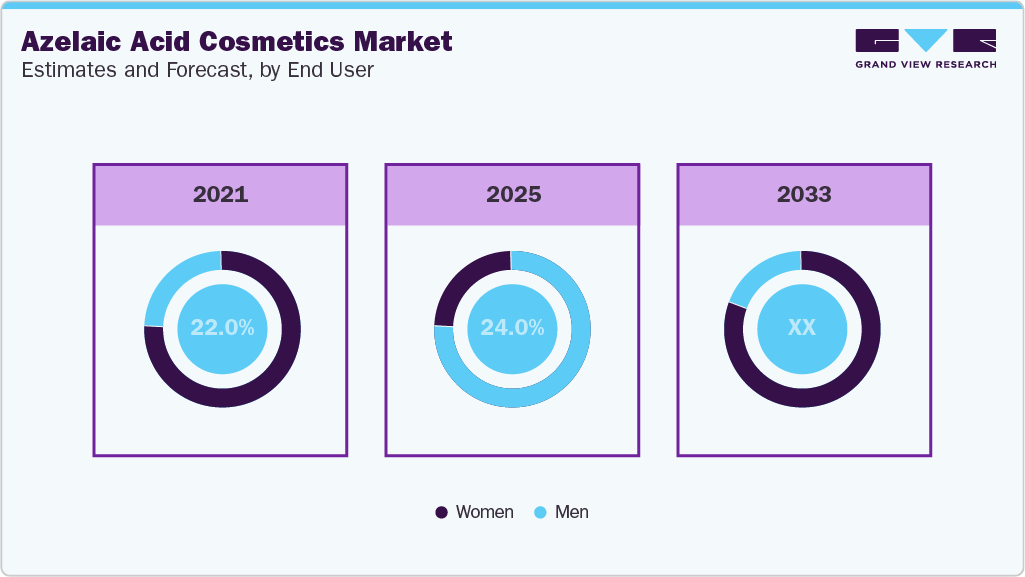
The demand for women’s azelaic acid cosmetics accounted for a market share of 76.0% in 2025, supported by strong awareness of skincare treatments that address common concerns such as acne, hyperpigmentation, redness, and uneven skin tone. Many women follow structured skincare routines that incorporate targeted treatment products alongside daily cleansers, moisturizers, and sun protection, which increases the adoption of active ingredients such as azelaic acid. The ingredient is widely used in cosmetic formulations designed to improve skin clarity and tone while remaining suitable for sensitive or acne-prone skin.
The demand for azelaic acid cosmetics among men is expected to grow at a CAGR of 15.9% from 2026 to 2033, supported by the rising adoption of targeted skincare routines among male consumers. Men are increasingly seeking treatment-based products to address concerns such as acne, razor bumps, excess oil production, and post-shave irritation, thereby increasing the relevance of ingredients like azelaic acid, known for its anti-inflammatory and antibacterial properties. As awareness of skin health and appearance management grows, many men are incorporating specialized products such as treatment creams, serums, and spot-correction solutions into their daily grooming routines.
Manufacturers are responding by introducing azelaic acid formulations specifically designed for male skin, often combining the ingredient with soothing and oil-balancing components suited to thicker, oil-prone skin types. In addition, the expansion of men’s skincare product sections across pharmacies, dermatology clinics, and online grooming retailers is improving product accessibility and consumer awareness.
Skin Type Insights
Azelaic acid cosmetics for oily/acne-prone skin accounted for 36.5% of the market share in 2025, driven by the rising prevalence of acne and sebum-related skin concerns among adolescents and adults. Consumers with oily skin types often seek ingredients that help regulate excess oil production while preventing pore congestion and inflammatory breakouts. Azelaic acid has gained popularity in cosmetic formulations because it helps reduce acne-causing bacteria, supports gentle exfoliation of clogged pores, and improves overall skin texture, making it suitable for individuals looking for non-irritating treatment options.
In addition, rising consumer awareness of dermatology-inspired skincare ingredients has encouraged greater adoption of products specifically formulated for acne-prone skin. Many cosmetic brands now develop lightweight, oil-free formulations such as gels, emulsions, and treatment serums designed to control shine and support clearer skin without leaving heavy residues.
Azelaic acid cosmetics for dry skin are expected to grow at a CAGR of 14.2% from 2026 to 2033. Consumers with dry skin often look for treatment products that address concerns such as redness, dullness, and uneven pigmentation without aggravating skin irritation. Azelaic acid is gaining popularity in such formulations because it provides anti-inflammatory and skin-brightening benefits while remaining suitable for sensitive skin types. In addition, cosmetic brands are expanding their portfolios with richer cream-based and emulsion formulations designed to deliver both treatment and hydration, allowing consumers with dry skin to manage multiple concerns within a single skincare routine.
Distribution Channel Insights
The sale of azelaic acid cosmetics through online/e-commerce channels accounted for a market share of 39.0% in 2025, driven by the growing preference among consumers to purchase skincare products through digital platforms where they can easily compare formulations, concentrations, and brand offerings. Online retailers offer a wide range of azelaic acid-based creams, gels, and serums from both established skincare brands and emerging dermatology-focused companies. Detailed product descriptions, ingredient transparency, and consumer reviews available on e-commerce platforms also help buyers make informed purchasing decisions when selecting treatment-oriented skincare products. In addition, frequent promotional discounts, bundled product offers, and the growing influence of skincare education on social media and in digital beauty communities continue to encourage consumers to purchase azelaic acid cosmetics online.
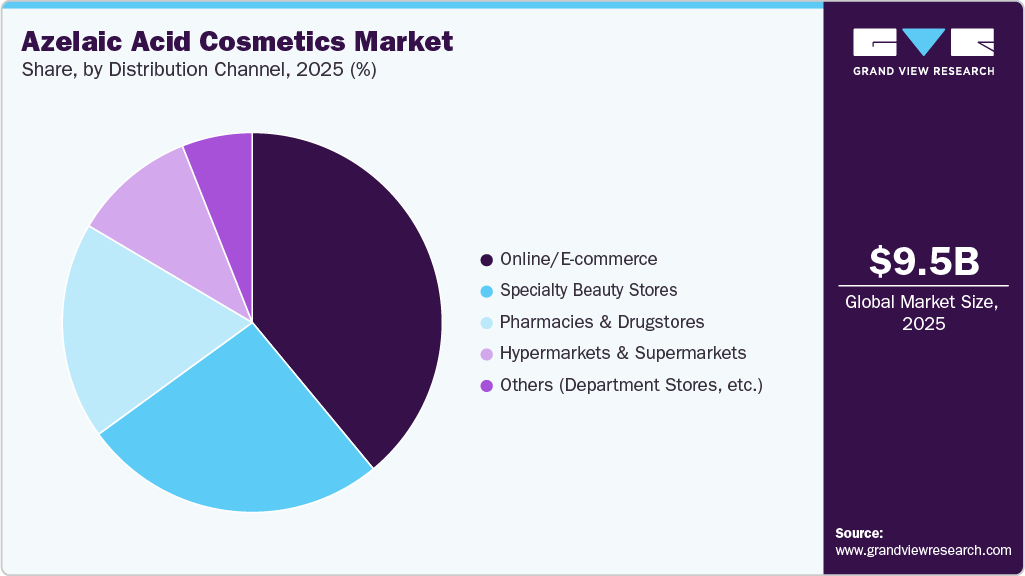
The sale of azelaic acid cosmetics through pharmacies & drugstores is expected to grow at a CAGR of 14.6% from 2026 to 2033, supported by the increasing consumer preference for purchasing treatment-oriented skincare products from medically trusted retail environments. Pharmacies and drugstores are widely regarded as reliable outlets for dermatology-backed products, which encourages consumers to buy azelaic acid formulations used for managing concerns such as acne, rosacea, and pigmentation. Many pharmacy chains also expand their skincare sections with clinically positioned cosmetic brands and dermatologist-recommended products, making it easier for consumers to access targeted treatment solutions.
Regional Insights
North America Azelaic Acid Cosmetics Market Trends
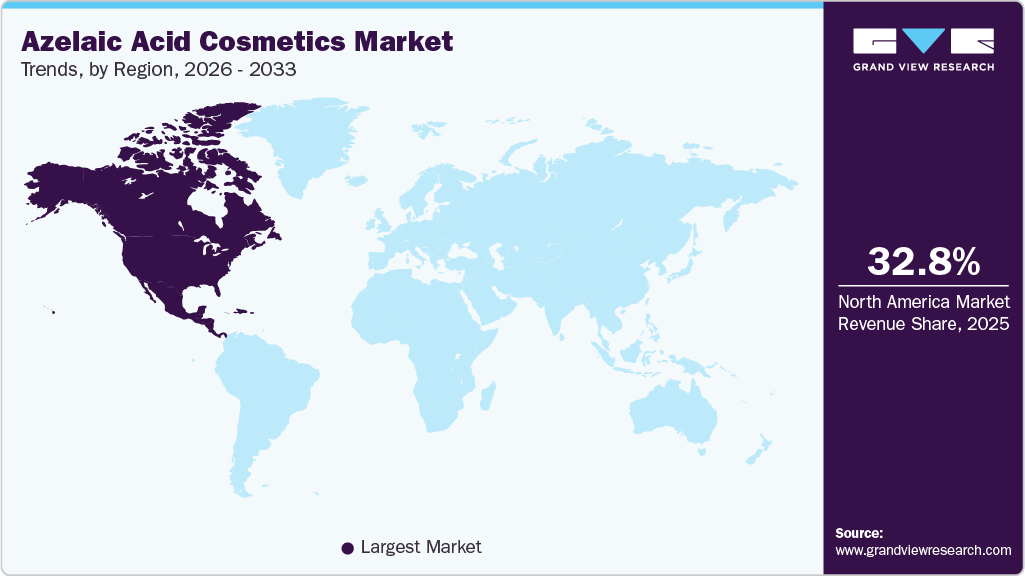
The North America azelaic acid cosmetics industry accounted for the largest share of 32.8% in 2025, driven by the strong presence of dermatology-focused skincare brands and a well-established dermocosmetic segment that emphasizes clinically supported ingredients for treating concerns such as acne, rosacea, and hyperpigmentation. Consumers across the United States and Canada increasingly prefer treatment-oriented cosmetic products that combine skincare benefits with scientifically backed formulations, thereby strengthening the adoption of active ingredients like azelaic acid.
The region also benefits from advanced research and development capabilities within the beauty industry, enabling companies to introduce innovative skincare formulations and ingredient combinations.
U.S. Azelaic Acid Cosmetics Market Trends
The U.S. azelaic acid cosmetics industry led North America, accounting for a revenue share of 87.4% in 2025, driven by strong consumer interest in treatment-focused skincare products designed to address concerns such as acne, rosacea, redness, and hyperpigmentation. Many consumers actively follow ingredient-driven skincare routines and seek products formulated with clinically supported active ingredients that deliver visible skin improvements. Azelaic acid has gained wider adoption in cosmetic formulations because it offers multiple benefits, including anti-inflammatory and skin-brightening properties, making it suitable for sensitive and acne-prone skin types. The market also benefits from the strong presence of dermocosmetic brands, dermatologist-developed skincare lines, and continuous product innovation within the U.S. beauty industry.
The Canada azelaic acid cosmetics market is expected to grow at a CAGR of 12.2% from 2026 to 2033, driven by rising consumer interest in dermatologist-inspired skincare products that address concerns such as acne, redness, and uneven skin tone. Many consumers increasingly prefer treatment-oriented cosmetic formulations that combine active ingredients with gentle, skin-compatible bases suitable for sensitive skin. Azelaic acid-based creams and serums are gaining attention as consumers seek products that help improve skin clarity while remaining suitable for regular use.
Europe Azelaic Acid Cosmetics Market Trends
The Europe azelaic acid cosmetics industry accounted for a revenue share of 26.9% in 2025, driven by the strong adoption of dermocosmetic skincare products that combine cosmetic benefits with clinically supported active ingredients. Consumers across countries such as France, Germany, Italy, Spain, and the UK increasingly prefer treatment-oriented skincare products designed to address concerns, including acne, redness, and uneven pigmentation, thereby strengthening the adoption of ingredients such as azelaic acid, known for its anti-inflammatory and skin-brightening properties. The region also benefits from a mature skincare industry with a strong presence of pharmacy-led cosmetic brands and dermatology-backed formulations that emphasize product efficacy and ingredient transparency.
The azelaic acid cosmetics market in the UK dominated Europe, accounting for a revenue share of 22.7% in 2025, driven by strong consumer interest in targeted skincare solutions that address concerns such as redness, acne, and uneven skin tone, encouraging the adoption of active ingredients known for improving skin clarity. British consumers increasingly follow ingredient-focused skincare routines and actively seek dermatology-inspired formulations that deliver visible results.
Continuous product innovation by beauty brands also contributes to market expansion. For instance, in October 2025, Trinny London launched Naked Ambition, a skincare product designed to improve skin clarity and evenness. The formulation combines slow-release vitamin C with azelaic acid exosomes to help reduce redness and dullness while remaining suitable for use under makeup. The launch highlights the brand’s focus on developing high-performance skincare solutions based on consumer feedback and real skincare concerns, reinforcing the growing demand for advanced treatment-based cosmetic products in the UK market.
Germany's azelaic acid cosmetics market is expected to grow at a CAGR of 10.5% from 2026 to 2033, driven by increasing consumer focus on solutions for skin conditions associated with environmental stress and lifestyle factors, such as acne, redness, and uneven pigmentation. Consumers increasingly seek skincare products that provide visible improvements while remaining suitable for sensitive skin types, which has strengthened interest in active ingredients such as azelaic acid that help calm inflammation and improve skin clarity. In addition, the strong presence of European dermocosmetic brands and the ongoing innovation in treatment-focused skincare formulations are expanding the availability of specialized azelaic acid products.
Asia Pacific Azelaic Acid Cosmetics Market Trends
The Asia Pacific azelaic acid cosmetics industry is expected to grow at a CAGR of 15.1% from 2026 to 2033, driven by increasing consumer demand for skincare products that help manage pigmentation, acne marks, and uneven skin tone, which are common concerns across many Asian populations. Consumers in several Asia Pacific countries place strong emphasis on maintaining clear and even-looking skin, encouraging the adoption of treatment-focused cosmetic ingredients such as azelaic acid. In addition, the rapid development of regional dermocosmetic brands and pharmacy skincare product lines is expanding the availability of clinically inspired cosmetic formulations positioned between pharmaceutical treatments and conventional beauty products.
The azelaic acid cosmetics market in China dominated Asia Pacific,accounting for a revenue share of 28.5% in 2025, driven by the rising prevalence of skin concerns such as acne, pigmentation, and skin sensitivity, particularly among young urban consumers exposed to pollution and high levels of environmental stress. Consumers are increasingly seeking skincare products that provide targeted treatment benefits while remaining gentle enough for regular use, which has increased interest in ingredients such as azelaic acid, known for its anti-inflammatory and skin-brightening properties. The strong popularity of ingredient-focused skincare trends and the growing consumer habit of researching active ingredients before purchasing cosmetic products are also contributing to the adoption of azelaic acid-based formulations.
The India azelaic acid cosmetics market is expected to grow at a CAGR of 10.6% from 2026 to 2033, driven by the increasing prevalence of skin concerns such as acne, post-inflammatory pigmentation, and uneven skin tone, which are commonly associated with humid weather, pollution, and high UV levels in many Indian cities. As consumers become more aware of targeted treatment ingredients, there is growing interest in skincare products that deliver visible improvements in skin clarity and tone. Azelaic acid-based creams and serums are gaining attention for addressing multiple concerns, including acne management, redness reduction, and pigmentation correction.
For instance, in February 2025, Alkem Laboratories introduced Kojiglo Serum in India to help manage facial hyperpigmentation and uneven skin tone. The serum uses liposomal technology to enhance the delivery of active ingredients, including azelaic acid, tranexamic acid, and niacinamide. With this launch, Alkem aims to strengthen its dermatology portfolio and expand its presence in the skincare treatment segment.
Central & South America Azelaic Acid Cosmetics Market Trends
The Central & South America azelaic acid cosmetics industry is expected to grow at a CAGR of 11.7% from 2026 to 2033, driven by increasing consumer demand for skincare products that address pigmentation concerns, acne, and uneven skin tone, which are common in regions with strong sun exposure. Consumers in countries such as Brazil, Mexico, and Chile are increasingly adopting treatment-focused skincare ingredients such as azelaic acid to manage post-acne marks and sun-related skin discoloration. Rising awareness of dermatologist-recommended skincare solutions and the growing influence of ingredient-focused beauty education are encouraging consumers to incorporate targeted treatment products into their daily routines.
Middle East & Africa Azelaic Acid Cosmetics Market Trends
The Middle East & Africa azelaic acid cosmetics industry is expected to grow at a CAGR of 12.5% from 2026 to 2033, driven by rising consumer awareness of dermatology-based skincare treatments for conditions such as acne, hyperpigmentation, and uneven skin tone, which are common in hot, high-UV climates. Increasing urbanization and the expansion of modern beauty retail across major cities in countries such as the United Arab Emirates, Saudi Arabia, and South Africa are improving consumer access to treatment-oriented skincare products containing active ingredients, such as azelaic acid. In addition, the growing presence of international skincare brands, the expansion of pharmacy and specialty beauty store networks, and the rising influence of dermatologist recommendations and skincare consultations are encouraging consumers to adopt clinically inspired cosmetic products.
Key Azelaic Acid Cosmetics Companies:
The following key companies have been profiled for this study on the azelaic acid cosmetics market.
- L'Oréal S.A.
- Estée Lauder Companies
- Shiseido Company
- Procter & Gamble
- Unilever
- Beiersdorf AG
- Johnson & Johnson
- The Ordinary (Deciem)
- Paula's Choice Skincare
- Naturium
Recent Developments
-
In January 2026, skincare brand Naturium launched a new brightening product duo formulated with an azelaic acid derivative. The formulation also includes fermented grape extract, arginine, and botanical ingredients designed to smooth skin texture and reduce dark spots. The launch aligns with the rising “glass skin” trend and reflects increasing consumer demand for multi-functional skincare actives that address pigmentation, redness, and uneven skin tone simultaneously.
-
In January 2026, dermatologist Shereene Idriss launched the Left Un-Red Reducer Serum, formulated with 10% azelaic acid to address redness, rosacea, and acne-related inflammation. The product was developed to reduce visible redness while regulating oil production and calming irritated skin. The launch highlighted the growing use of azelaic acid in dermatology-inspired cosmetic products designed to treat sensitive and acne-prone skin.
-
In April 2025, A Southeast Asian entrepreneur launched DEAU, a skincare line developed in Japan and designed specifically for people with melanin-rich skin. Founded by Hina Mian, the brand combines Japanese formulation expertise with products created to address concerns such as hyperpigmentation and uneven skin tone. The collection focuses on multifunctional skincare solutions that support hydration, skin barrier protection, and overall skin health while simplifying daily routines.
-
In February 2025, AV Laboratories expanded its product range with the launch of Face Cream Rich and Eye Cream, designed to provide hydration and support skin firmness and texture. The products use the brand’s patented AVL SOM3 longevity technology, developed through stem cell research to promote skin rejuvenation and barrier health. With these additions, the company aims to strengthen its presence in the science-driven skincare segment.
Azelaic Acid Cosmetics Market Report Scope
Report Attribute
Details
Market size value in 2026
USD 362.8 million
Revenue forecast in 2033
USD 814.9 million
Growth rate
CAGR of 12.3% from 2026 to 2033
Base year for estimation
2025
Historical data
2021 - 2024
Forecast period
2026 - 2033
Quantitative units
Revenue in USD million/billion and CAGR from 2026 to 2033
Report coverage
Revenue forecast, company ranking, competitive landscape, growth factors, and trends
Segments covered
Product, concentration, end user, skin type, distribution channel, region
Regional scope
North America; Europe; Asia Pacific; Central & South America; Middle East & Africa
Country scope
U.S.; Canada; Mexico; Germany; UK; France; Italy; Spain; China; India; Japan; Australia & New Zealand; South Korea; Brazil; South Africa
Key companies profiled
L'Oréal S.A.; Estée Lauder Companies; Shiseido Company; Procter & Gamble; Unilever; Beiersdorf AG; Johnson & Johnson; The Ordinary (Deciem); Paula's Choice Skincare; Naturium
Customization scope
Free report customization (equivalent up to 8 analysts working days) with purchase. Addition or alteration to country, regional & segment scope.
Pricing and purchase options
Avail customized purchase options to meet your exact research needs. Explore purchase options
Global Azelaic Acid Cosmetics Market Report Segmentation
This report forecasts revenue growth at the global, regional & country levels and provides an analysis of the latest trends and opportunities in each of the sub-segments from 2021 to 2033. For this study, Grand View Research has segmented the global azelaic acid cosmetics market report based on product, concentration, end user, skin type, distribution channel, and region:
-
Product Outlook (Revenue, USD Million, 2021 - 2033)
-
Creams & Lotions
-
Gels & Foams
-
Serums, Ampoules & Essences
-
Masks & Peels
-
Spot & Targeted Treatments
-
Others (Toners, etc.)
-
-
Concentration Outlook (Revenue, USD Million, 2021 - 2033)
-
Low Concentration (≤5%)
-
Moderate Concentration (5%-10%)
-
High Concentration (10%-15%)
-
Medical-Grade Cosmetic (15%-20%)
-
-
End User Outlook (Revenue, USD Million, 2021 - 2033)
-
Men
-
Women
-
-
Skin Type Outlook (Revenue, USD Million, 2021 - 2033)
-
Oily / Acne-Prone Skin
-
Dry Skin
-
Combination Skin
-
Sensitive Skin
-
Normal Skin
-
-
Distribution Channel Outlook (Revenue, USD Million, 2021 - 2033)
-
Supermarkets & Hypermarkets
-
Pharmacies & Drugstores
-
Specialty Beauty Stores
-
Online / E-Commerce
-
Others (Dept. Stores, etc.)
-
-
Regional Outlook (Revenue, USD Million, 2021 - 2033)
-
North America
-
U.S.
-
Canada
-
Mexico
-
-
Europe
-
Germany
-
UK
-
France
-
Italy
-
Spain
-
-
Asia Pacific
-
China
-
India
-
Japan
-
Australia & New Zealand
-
South Korea
-
-
Central & South America
-
Brazil
-
-
Middle East & Africa
-
South Africa
-
-
Frequently Asked Questions About This Report
b. The global azelaic acid cosmetics market was estimated at USD 316.9 million in 2025 and is expected to reach USD 362.8 million in 2026.
b. The global azelaic acid cosmetics market is expected to grow at a compound annual growth rate of 12.3% from 2026 to 2033 to reach USD 814.9 million by 2033.
b. Creams & lotions accounted for the largest market share of 31.17% in 2025, due to their ease of application, better skin absorption, and suitability for daily use in treating acne, rosacea, and hyperpigmentation. Their widespread availability across dermatology-recommended and over-the-counter formulations further supports higher consumer adoption.
b. Some key players operating in the azelaic acid cosmetics market include L'Oréal S.A.; Estée Lauder Companies; Shiseido Company; Procter & Gamble; Unilever; Beiersdorf AG; Johnson & Johnson; The Ordinary (Deciem); Paula's Choice Skincare; Naturium
b. The azelaic acid cosmetics market is driven by increasing prevalence of acne, rosacea, and hyperpigmentation, along with rising consumer preference for dermatologist-recommended and clinically proven skincare ingredients.


Share this report with your colleague or friend.
Need a Tailored Report?
Customize this report to your needs — add regions, segments, or data points, with 20% free customization.


ISO 9001:2015 & 27001:2022 Certified
We are GDPR and CCPA compliant! Your transaction & personal information is safe and secure. For more details, please read our privacy policy.
Trusted market insights - try a free sample
See how our reports are structured and why industry leaders rely on Grand View Research. Get a free sample or ask us to tailor this report to your needs.













