
- Home
- »
- Consumer F&B
- »
-
Bagel Market Size & Share Report, 2026-2033GVR Report cover
![Bagel Market (2026 - 2033)Report]()
Bagel Market (2026 - 2033)
Size, Share & Trends Analysis Report By Product (Plain Bagel, Flavored Bagel, Protein Bagel, Whole-wheat Bagel, Egg Bagel, Gluten-free Bagel), By Distribution Channel (Foodservice, Retail), By Region, And Segment Forecasts
Market Size, 2025
$5.8BMarket Estimate, 2026
$6.1BMarket Forecast, 2033
$8.6BCAGR, 2026–2033
5.0%Bagel Market Summary
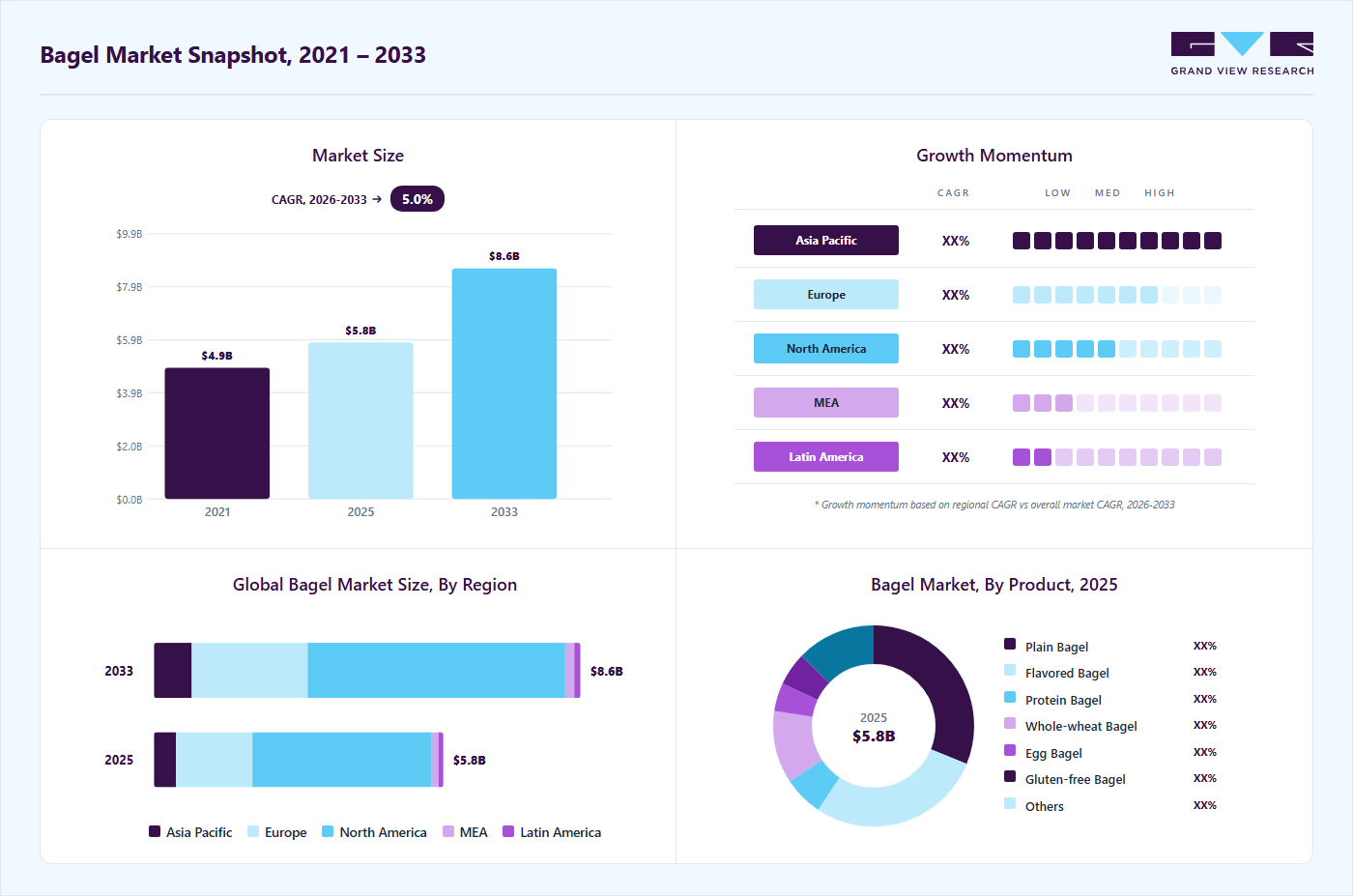
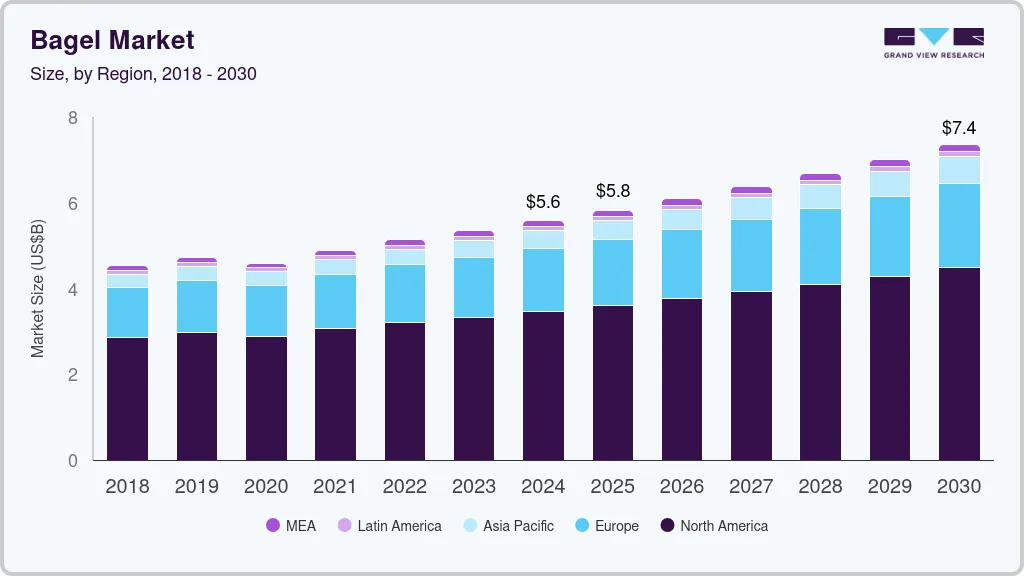
The global bagel market size was valued at USD 5.8 billion in 2025 and is projected to grow from USD 6.1 billion in 2026 to USD 8.6 billion by 2033, at a CAGR of 5.0% from 2026 to 2033. North America dominated the market with the largest revenue share of 61.9% in the global market in 2025. The market is driven by growing demand for convenient, quick breakfast options.
Key Market Trends & Insights
- By product: The plain bagel segment held the largest market share of 31.3% in 2025.
- By distribution channel: The retail segment held the largest market share of 61.8% in 2025.
Regional Highlights
- Largest regional market: North America (61.9% revenue share, 2025)
- Fastest-growing regional market: Asia Pacific (highest CAGR, 2026-2033)
- By country: The U.S. held the largest market share in 2025.
Market Size & Forecast
- Market size in 2025: USD 5.8 Billion
- Estimated market size in 2026: USD 6.1 Billion
- Projected market size by 2033: USD 8.6 Billion
- CAGR (2026-2033): 5.0%
Consumers are increasingly seeking out foods that are easy to prepare and consume on the go. Furthermore, the rise of bagel cafés and chains, particularly in North America and Europe, has significantly boosted the bagel market. Chains like Bruegger's Bagels, Einstein Bros. Bagels, and Panera Bread have capitalized on the demand for fresh, high-quality bagels served in a café environment.
Bagels have deep cultural roots, particularly within Jewish communities in Eastern Europe. The migration of Jewish populations to North America in the late 19th and early 20th centuries brought bagels into mainstream American culture. Over time, the bagel transitioned from a niche ethnic food to a widely consumed product. This cultural shift played a crucial role in the initial expansion of the market, especially in urban centers like New York City. Today, the cultural legacy of bagels continues to drive their popularity, particularly in regions with strong Jewish heritage, which is expected to augment the growth of the market during the forecast period.
The health and wellness trend has significantly impacted the market. As consumers become more health-conscious, demand for bagels that cater to specific dietary needs has grown. This includes gluten-free, low-calorie, high-fiber, and protein-enriched bagels. Manufacturers have responded by introducing products that align with these preferences. For instance, Western Bagel Baking Corp. offers "Alternative Bagels" that are lower in calories and carbs, appealing to consumers on weight management programs. The rise of plant-based diets has also led to the introduction of vegan bagels that exclude dairy or egg ingredients.
Furthermore, there is a growing consumer preference for authentic and artisanal products, which has benefited the market. Artisanal bagels, often made with traditional methods and high-quality ingredients, are perceived as superior to mass-produced alternatives. This trend has given rise to boutique bagel shops and bakeries that emphasize hand-rolled, kettle-boiled bagels made from organic or locally sourced ingredients. St-Viateur Bagel in Montreal, for instance, is renowned for its traditional bagel-making method, which has attracted a loyal customer base both locally and internationally. The demand for authenticity and craftsmanship has driven the growth of this segment of the market.
Manufacturers in the bagel market have been proactive in responding to consumer demands for variety and innovation. Traditional plain or sesame bagels have given way to a wide array of flavors, from blueberry and cinnamon raisin to more adventurous options like everything bagels and jalapeño cheddar. This diversification of flavors has helped attract a broader consumer base, catering to different taste preferences. Additionally, the introduction of bagels made from alternative grains, such as whole wheat, gluten-free, and low-carb options, has expanded the market to include health-conscious consumers. Companies like Einstein Bros. Bagels have launched new flavors and limited-edition products to keep the market engaged.
Market Dynamics
The rapid expansion of café culture and foodservice chains is significantly driving the growth of the global bagel market. Increasing urbanization, changing consumer lifestyles, and rising demand for convenient dining options have contributed to the popularity of cafés, coffee shops, bakeries, and quick-service restaurants (QSRs). Bagels are widely preferred in these establishments because they are versatile, portable, and suitable for a variety of meal occasions, including breakfast, brunch, and snacks. Foodservice operators are increasingly offering bagel-based sandwiches, cream cheese spreads, and premium fillings to attract consumers seeking convenient yet satisfying meals. The growing coffee culture among millennials and working professionals has also increased the consumption of bagels alongside beverages such as coffee and tea. Additionally, café chains are introducing innovative bagel flavors and healthier options, including multigrain and gluten-free varieties, to cater to evolving consumer preferences. The continued global expansion of branded café chains and bakery outlets is expected to strengthen demand for bagels further.
Rising health concerns regarding refined carbohydrates and calorie intake are restraining the growth of the global bagel market. Traditional bagels are primarily made from refined wheat flour. They are often high in carbohydrates and calories, which has led to growing consumer concerns about weight management, obesity, diabetes, and cardiovascular health. Health-conscious consumers are increasingly shifting toward low-carb, high-protein, gluten-free, and fiber-rich dietary alternatives, reducing the consumption of conventional bakery products such as bagels. In addition, increasing awareness about balanced nutrition and healthy eating habits has encouraged consumers to limit processed and carbohydrate-dense foods in their daily diets. Many flavored and cream cheese-filled bagels also contain high levels of sugar, sodium, and saturated fats, further raising health concerns among consumers. These changing dietary preferences are creating challenges for bagel manufacturers and foodservice providers, compelling companies to develop healthier formulations, whole-grain options, and reduced-calorie products to maintain consumer interest and market competitiveness.
Consumer Insights
Consumers are increasingly choosing health-focused bagels such as whole-grain, multigrain, high-protein, and gluten-free varieties. Rising awareness of nutrition and digestive health has encouraged many buyers to seek bagels with added fiber, reduced sugar, or clean-label ingredients. As a result, bakeries and packaged food brands are introducing functional bagels that support healthier diets.
Many consumers prefer ready-to-eat or easy-to-prepare bagels that fit into busy lifestyles. Pre-sliced, frozen, and packaged bagels that can be quickly toasted at home are gaining popularity. Bagel sandwiches sold in cafés and quick-service restaurants are also favored as quick breakfast or snack options.
Consumers enjoy experimenting with different bagel flavors and toppings, which has increased demand for varieties such as sesame, everything bagel, cinnamon raisin, blueberry, cheese, and garlic. In some regions, bakeries also introduce local or fusion flavors to attract younger consumers seeking new taste experiences.

Product Insights
The plain bagel market held the revenue share of 31.1% of the bagel industry in 2025. As consumers become more health-conscious, there has been a noticeable shift toward healthier versions of traditionally carbohydrate-heavy foods, such as bagels. Many companies are now producing plain bagels made from whole grains, offering low-carb or gluten-free varieties to meet the demands of health-focused consumers. This trend is evident in brands such as Dave’s Killer Bread and Thomas's, which offer whole-grain or reduced-calorie plain bagels that appeal to a broader health-conscious audience.

The gluten-free bagel market is estimated to witness a CAGR of 6.6% from 2026 to 2033. The demand for gluten-free bagels is influenced by dietary preferences, health awareness, and changing consumer behaviors. As more people are diagnosed with celiac disease or gluten sensitivity, the demand for gluten-free products, including bagels, has surged. For example, brands like Udi’s and Canyon Bakehouse have developed gluten-free bagels for individuals with these dietary restrictions, providing safe, high-quality alternatives to traditional wheat-based products.
Distribution Channel Insights
Sales through retail channels held the revenue share of 61.8% of the bagel industry in 2025. Traditionally, bagels were sold primarily in bakeries and specialty stores, but the rise of supermarkets, hypermarkets, and convenience stores has made them more accessible to a broader audience. Additionally, the growth of e-commerce has given consumers the convenience of ordering bagels online and having them delivered to their doorsteps. This has been particularly beneficial for brands with a weak physical retail presence, but that can reach consumers through online sales channels.
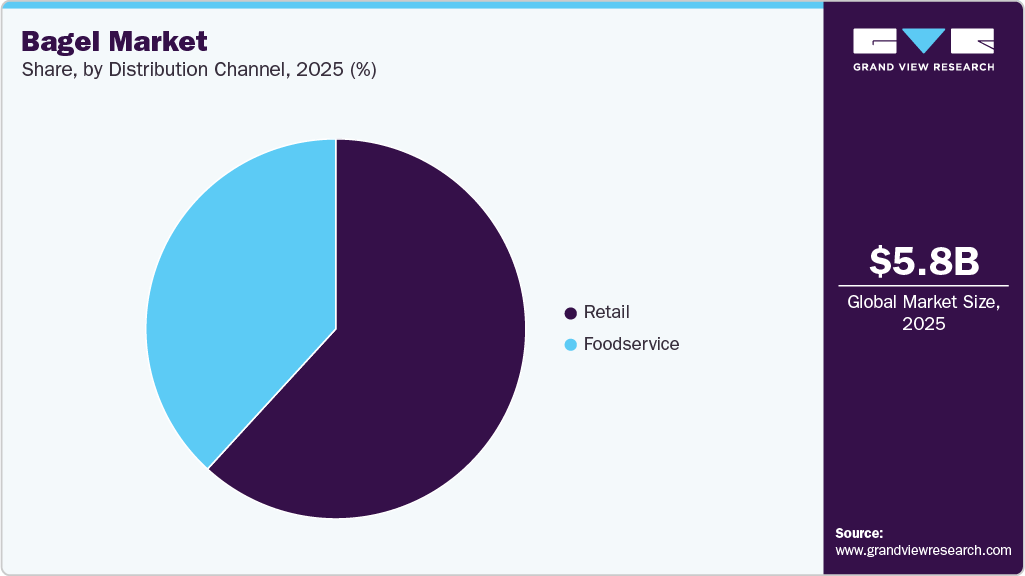
Sales of bagels through food service are estimated to witness a CAGR of 4.6% from 2026 to 2033. The growth of café culture, particularly in urban areas, has driven the rising demand for bagels in foodservice outlets. Cafés and coffee shops often feature bagels on their menus, paired with coffee or other beverages, catering to consumers seeking a quick, satisfying meal or snack. Furthermore, food service outlets offer customization, allowing consumers to personalize their bagels with a variety of toppings, spreads, and fillings. The ability to tailor meals to individual preferences enhances bagel appeal through the foodservice channel. Additionally, perceptions of freshness and quality at food service establishments further drive consumer demand.
In addition, foodservice operators have responded to the growing demand for healthier options by offering whole-grain, multigrain, and gluten-free bagels on their menus. The inclusion of healthier alternatives has attracted health-conscious consumers to foodservice establishments, driving the rapid growth of bagel sales in this channel.
Regional Insights
The bagel market in North America held the revenue share of 61.9% of the bagel industry in 2025. Bagels have a deep cultural significance in North America, particularly in urban centers with large Jewish populations like New York City and Montreal. The traditional New York-style bagel, known for its dense texture and distinct flavor, has become a staple in American cuisine.North American consumers are increasingly seeking variety and innovation in their food choices. Manufacturers have responded by introducing new flavors, healthier options like whole wheat and multigrain bagels, and specialty products such as gluten-free and low-carb bagels. This innovation caters to a broad audience, from traditionalists who prefer classic plain or sesame bagels to health-conscious consumers looking for protein-enriched or low-calorie options, thus driving the demand for bagel market in this region during the forecast period.

U.S. Bagel Market Trends
The bagel market in the U.S. is estimated to witness a CAGR of 4.6% from 2026 to 2033. The U.S. foodservice sector, particularly the café culture, has been instrumental in driving the bagel market. Bagels are a staple at many coffee shops and breakfast chains, often served with cream cheese and smoked salmon, or as part of breakfast sandwiches. The convenience and versatility of bagels make them a popular choice for on-the-go consumers, contributing to their sustained demand in the foodservice industry, which is expected to drive the bagel market in the country during the forecast period.
Asia Pacific Bagel Market Trends
The bagel market in Asia Pacific is estimated to witness a CAGR of 7.0% from 2026 to 2033. The influence of Western food culture in Asia Pacific, particularly in urban areas, has led to the growing popularity of bagels. As more consumers in the region are exposed to Western cuisine through travel, media, and the presence of international food chains, bagels have gained popularity as a trendy, versatile option. This is particularly evident in countries like Japan, South Korea, and Australia, where Western-style cafés and bakeries are popular.
The bagel market in China is estimated to witness a CAGR of 8.3% from 2026 to 2033. The China bagel market is experiencing steady growth as Western-style bakery products gain popularity among urban consumers and younger demographics. The market is driven by rising demand for convenient breakfast foods and increasing exposure to international food trends.
The bagel market in Japan is estimated to witness a CAGR of 6.9% from 2026 to 2033. Health-conscious consumers in Japan are increasingly choosing whole-wheat, multigrain, gluten-free, and high-protein bagels. While plain bagels still dominate the market, gluten-free varieties are among the fastest-growing segments due to rising awareness of dietary preferences and digestive health
Europe Bagel Market Trends
The Europe bagel industry is estimated to witness a CAGR of 5.4% from 2026 to 2033. The demand for artisanal and premium food products is strong in Europe, and this trend extends to the bagel market. European consumers are willing to pay a premium for high-quality, freshly baked bagels made with natural ingredients. This has led to the growth of artisanal bagel bakeries across Europe, particularly in countries like the UK, France, and Germany, where consumers appreciate the craftsmanship and quality of artisanal products. Furthermore, the retail channel in Europe is also seeing growth in the bagel market, driven by the increasing availability of bagels in supermarkets and specialty stores, which is expected to contribute to the growth of the bagel market in Europe during the forecast period.
The bagel market in the UK is estimated to witness a CAGR of 5.4% from 2026 to 2033. The expansion of specialty bagel bakeries and café chains is strengthening the market. For example, London-based bagel chain B Bagel plans to expand to around 20 locations by 2030, reflecting growing consumer demand for freshly baked bagels and deli-style sandwiches. This trend is particularly strong in major cities such as London.
The bagel market in France is estimated to witness a CAGR of 4.5% from 2026 to 2033. French consumers place a high value on artisan bakery products, which has encouraged cafés and bakeries to offer premium bagels made with sourdough, traditional boiling techniques, and gourmet fillings. This trend reflects the country’s strong bakery culture while introducing international products, such as New York-style bagels, in a more artisanal format.
Central and South America Bagel Market Trends
The bagel market in Central and South America is estimated to witness a CAGR of 3.1% from 2026 to 2033. The growth of modern retail channels and supermarket bakeries in countries is improving the availability of packaged bakery products, including bagels. Retailers are expanding frozen and packaged bakery categories, making bagels more accessible to consumers
Middle East and Asia Bagel Market Trends
The bagel market in the Middle East and Asia is estimated to witness a CAGR of 3.6% from 2026 to 2033. Urban consumers in countries such as the UAE, Saudi Arabia, and Israel are increasingly adopting Western-style bakery products, including bagels. International café chains, hotels, and modern bakeries are introducing bagel sandwiches and breakfast menus, which are helping expand awareness and consumption in the region.
Key Bagel Company Insights
The global bagel market is characterized by numerous well-established and emerging players. Recognizing the increasing demand for healthier food products, manufacturers are developing bagels that cater to health-conscious consumers. This includes whole-wheat, multigrain, and high-protein bagels, as well as options low in carbohydrates or calories. Furthermore, to appeal to a broader audience, manufacturers are expanding their product lines with a variety of flavors. Everything bagels, cinnamon raisin, blueberry, and jalapeño are just a few examples of the diverse flavors available. This variety not only attracts traditional bagel consumers but also attracts new customers interested in trying different taste profiles.

Key Bagel Companies:
The following key companies have been profiled for this study on the bagel market.
- Einstein Bros. Bagels
- Bruegger's Enterprises, Inc. (Bruegger's Bagels)
- Lender's Bagels (Pinnacle Foods, Inc.)
- H&H Bagels, LLC
- Bimbo Bakeries USA, Inc. (Thomas' Bagels)
- Manhattan Bagel Company, Inc.
- Bagel Nash Limited
- New York Bakery Company Limited
- Just Bagels Manufacturing, Inc.
- Western Bagel Baking Corp.
- Davidovich Bakery, Inc.
- Bagel Factory (Vandemoortele UK Ltd.)
Recent Developments
-
In February 2026, Easy Lunches & More, a delivery service that previously handled shipping for BetterBrand’s popular “Better Bagel,” launched a new product called The Fit Bagel, a high-protein, low-carbohydrate bagel positioned as a similar alternative to BetterBrand’s original product.
-
In April 2025, Thomas’ launched Thomas’ High Protein Bagels, a new breakfast product containing 20 grams of protein per bagel to meet growing consumer demand for convenient, protein-rich foods. The bagels were made using a plant-based protein blend of soy protein isolate, pea protein isolate, and fava bean protein to provide a complete amino acid profile while maintaining the traditional bagel taste and texture.
-
In June 2025, New York Bakery launched a new Health & Wellness bagel range designed to offer added functional benefits while maintaining the brand’s traditional taste and texture. The range includes three variants: Lighter bagels with 30% fewer calories, Fibre Plus bagels made with multiseeds and grains to provide high fibre, and Protein Boost bagels delivering 10 g of plant-based protein per bagel.
Bagel Market Report Scope
Report Attribute
Details
Market size value in 2025
USD 5.8 billion
Estimated Market size in 2026
USD 6.1 billion
Projected Market size by 2033
USD 8.6 billion
Growth rate
CAGR of 5.0% from 2026 to 2033
Actual data
2021 - 2025
Forecast period
2026 - 2033
Quantitative units
Revenue in USD Million, and CAGR from 2026 to 2033
Report coverage
Revenue forecast, company ranking, competitive landscape, growth factors, and trends
Segments covered
Product, distribution channel, region
Regional scope
North America; Europe; Asia Pacific; Central & South America; Middle East & Africa
Country scope
U.S.; Canada; Mexico; Germany; UK; France; Italy; Spain; China; Japan; India; Australia & New Zealand; South Korea; Brazil; South Africa
Key companies profiled
Einstein Bros. Bagels; Bruegger's Enterprises, Inc. (Bruegger's Bagels); Lender's Bagels (Pinnacle Foods, Inc.); H&H Bagels, LLC; Bimbo Bakeries USA, Inc. (Thomas' Bagels); Manhattan Bagel Company, Inc.; Bagel Nash Limited; New York Bakery Company Limited; Just Bagels Manufacturing, Inc.; Western Bagel Baking Corp.; Davidovich Bakery, Inc.; Bagel Factory (Vandemoortele UK Ltd.)
Customization scope
Free report customization (equivalent up to 8 analysts working days) with purchase. Addition or alteration to country, regional & segment scope.
Pricing and purchase options
Avail customized purchase options to meet your exact research needs. Explore purchase options
Global Bagel Market Report Segmentation
This report forecasts revenue growth at the global, regional, and country levels and provides an analysis of the latest industry trends and opportunities in each of the sub-segments from 2021 to 2033. For the purpose of this study, Grand View Research has segmented the global bagel market report on the basis of product, distribution channel, and region.

-
Product Outlook (Revenue, USD Million, 2021 - 2033)
-
Plain Bagel
-
Flavored Bagel
-
Protein Bagel
-
Whole wheat Bagel
-
Egg Bagel
-
Gluten-free Bagel
-
Others
-
-
Distribution Channel Outlook (Revenue, USD Million, 2021 - 2033)
-
Foodservice
-
Retail
-
Hypermarkets & Supermarkets
-
Convenience Stores
-
Online
-
Others
-
-
-
Regional Outlook (Revenue, USD Million, 2021 - 2033)
-
North America
-
U.S.
-
Canada
-
Mexico
-
-
Europe
-
Germany
-
UK
-
France
-
Italy
-
Spain
-
-
Asia Pacific
-
China
-
Japan
-
India
-
Australia & New Zealand
-
South Korea
-
-
Central & South America
-
Brazil
-
-
Middle East & Africa
-
South Africa
-
-
Delivered Customizations
This report has been delivered with the following In-depth customizations
Client Request
Customization Delivered
Value Adds
Cross-Segmentation Analysis for Product Types Across Distribution Channels
Detailed cross-segmentation analysis of bagel product categories, including plain bagels, protein bagels, flavored bagels, whole wheat bagels, egg bagels, and other specialty variants across food service and retail distribution channels. Analysis of consumption trends across cafes, bakeries, quick-service restaurants, supermarkets, hypermarkets, convenience stores, specialty food retailers, and online retail platforms.
Identify the fastest-growing bagel categories across food service and retail channels. Support targeted category expansion and channel prioritization strategies through demand benchmarking and competitive analysis. Highlight whitespace opportunities for protein-enriched bagels, gluten-free options, organic products, and innovative flavor combinations.
Consumer Behavior Analysis.
Comprehensive assessment of bagel consumption behavior across different demographic groups, including age, income, lifestyle, household size, and geographic location. Analysis of consumer trends and preferences related to taste profile, health consciousness, convenience, premiumization, clean-label ingredients, and protein-rich diets. Evaluation of factors influencing purchasing behavior, including pricing sensitivity, brand loyalty, packaging preferences, product origin, nutritional value, and promotional activities.
Support consumer-centric product development and marketing strategies through detailed behavioral insights and demographic segmentation. Identify high-growth consumer groups and emerging purchasing trends influencing bagel consumption. Evaluate key purchase drivers and barriers impacting brand selection and category penetration. Support pricing, packaging, and promotional optimization strategies based on consumer buying behavior analysis.
Market Share Analysis of Key Players Operating Across the Market (%)
Detailed analysis of market share distribution among leading global and regional bagel manufacturers across the market. Assessment of competitor positioning by product portfolio, pricing strategy, production capacity, geographic presence, distribution network, and brand equity. Analysis of mergers, acquisitions, strategic alliances, and production expansions shaping competitive dynamics within the industry.
Identify market leaders, emerging brands, and high-growth competitors across regional and global bagel markets. Evaluate competitive intensity and market concentration to support strategic positioning and investment decisions. Benchmark competitor strengths in branding, sourcing, manufacturing scale, product innovation, and distribution capabilities. Support acquisition, partnership, and expansion strategies through detailed competitor intelligence and market share benchmarking.
Frequently Asked Questions About This Report
The global bagel market size was estimated at USD 5.8 billion in 2025 and is expected to reach USD 6.1 billion in 2026.
North America dominated with a revenue share of 61.9% in 2025.
Asia Pacific is the fastest-growing region over the forecast period.
The retail segment led with a 61.6% revenue share in 2025.
Some key players operating in bagel market include Einstein Bros. Bagels; Bruegger's Enterprises, Inc. (Bruegger's Bagels); Lender's Bagels (Pinnacle Foods, Inc.); H&H Bagels, LLC; Bimbo Bakeries USA, Inc. (Thomas' Bagels); Manhattan Bagel Company, Inc.; Bagel Nash Limited; New York Bakery Company Limited; Just Bagels Manufacturing, Inc.; Western Bagel Baking Corp.; Davidovich Bakery, Inc.; Bagel Factory (Vandemoortele UK Ltd.)
Key factors driving the market is driven by consumer preferences for variety and innovation, with a growing demand for flavored, whole grain, and specialty bagels. Rising health consciousness fuels interest in healthier options, such as gluten-free and high-protein bagels. Convenience and on-the-go consumption also boost demand, alongside expanded distribution channels through supermarkets and online platforms.
The global bagel market is expected to grow at a compounded growth rate of 5.0% from 2026 to 2033 to reach USD 8.6 billion by 2033.
The plain bagel held the revenue share of 31.1% of the bagel industry in 2025. As consumers become more health-conscious, there has been a noticeable shift toward healthier versions of traditionally carbohydrate-heavy foods, such as bagels
About the Author(s)
Consumer F&B Research Team
Consumer Goods · Consumer F&BThis report was authored by the consumer f&b research team at Grand View Research - comprising two research analysts, one senior research analyst, and one industry expert - with specialized expertise in the consumer f&b segment of the consumer goods industry. All findings are based on proprietary consumer goods databases, executive interviews, and regulatory analysis, subject to internal peer review prior to publication.
Last Updated:
Speak to Analyst

Need a Tailored Report?
Customize this report to your needs — add regions, segments, or data points, with 20% free customization.
Or view our licence options:


ISO 9001:2015 & 27001:2022 Certified
We are GDPR and CCPA compliant! Your transaction & personal information is safe and secure. For more details, please read our privacy policy.












