
- Home
- »
- Organic Chemicals
- »
-
Benzoyl Peroxide Market Size And Share Report, 2026-2033GVR Report cover

Benzoyl Peroxide Market (2026 - 2033)
Size, Share & Trends Analysis Report By Grade (Pharmaceutical Grade, Industrial Grade, Food Grade), By Form (Powder, Paste, Granular), By Application, By Region, And Segment Forecasts
Market Size, 2025
$898.8MMarket Estimate, 2026
$946.3MMarket Forecast, 2033
$1,389.5MCAGR, 2026–2033
5.6%Benzoyl Peroxide Market Summary
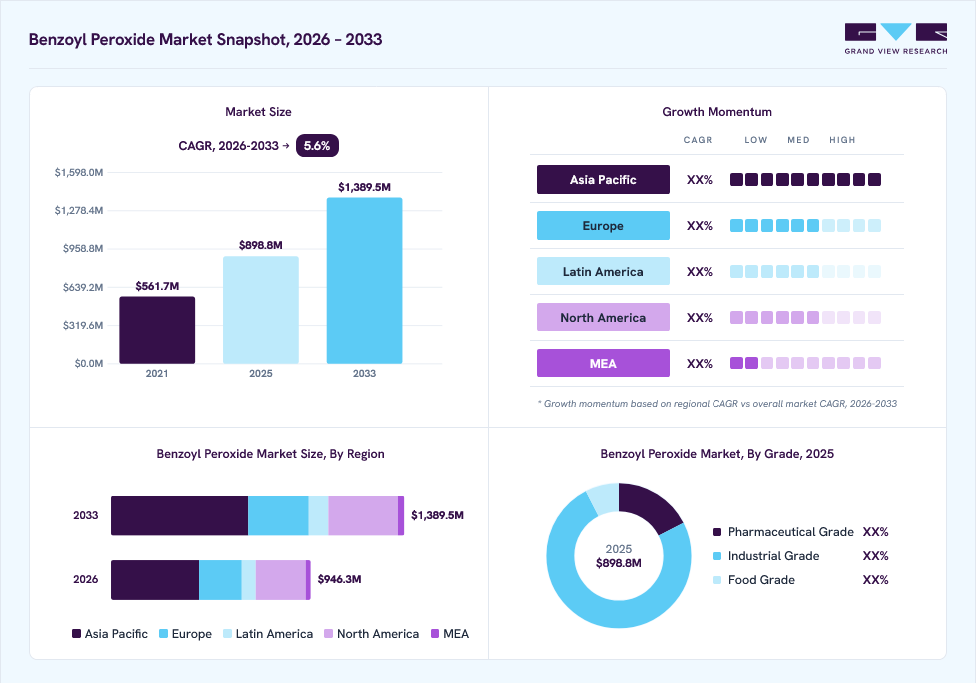
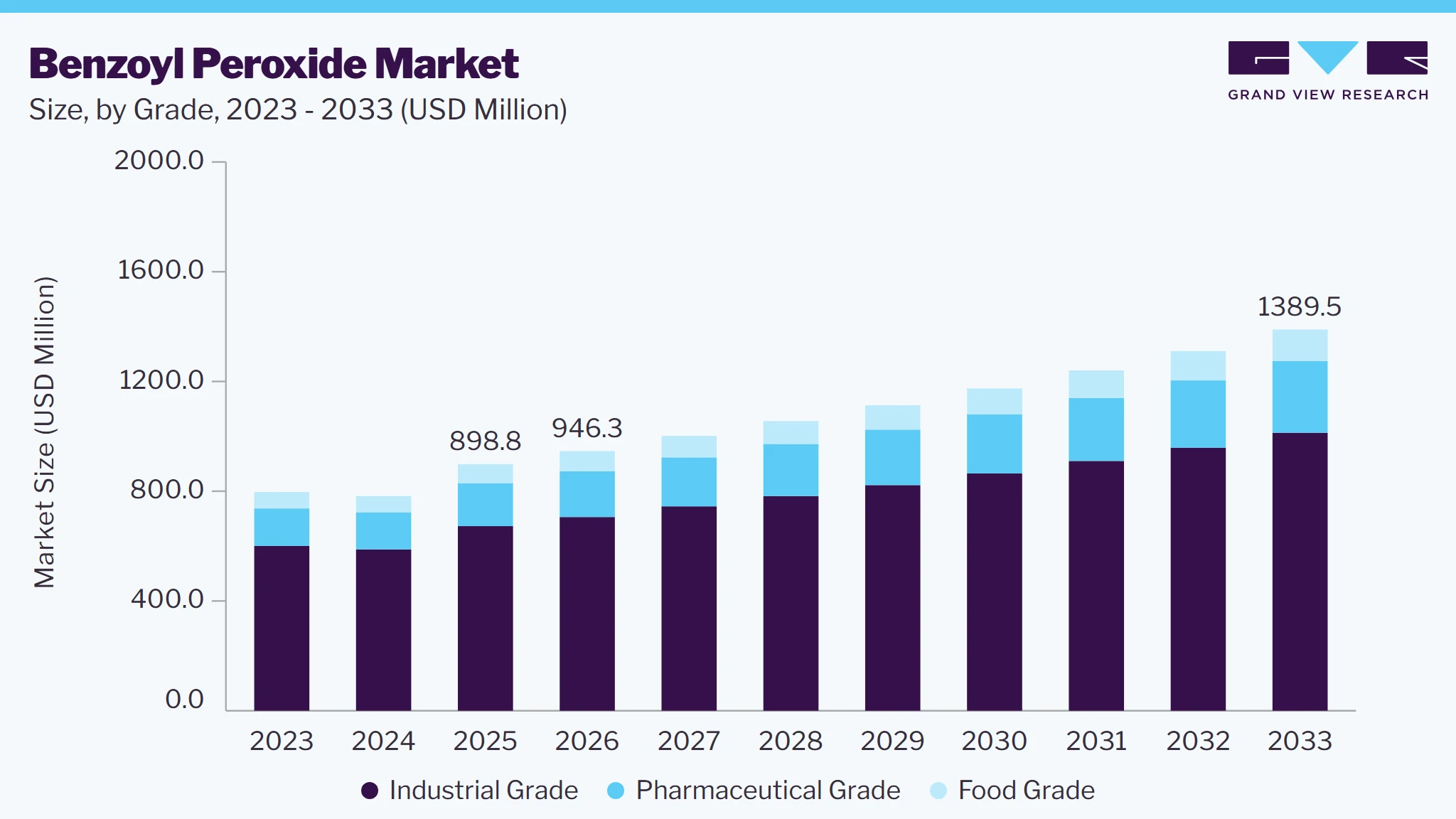
The global benzoyl peroxide market size was valued at USD 898.8 million in 2025 and is projected to grow from USD 946.3 million in 2026 to USD 1,389.5 million by 2033, at a CAGR of 5.6% from 2026 to 2033. Asia Pacific dominated the market, accounting for the revenue share of 43.7% in 2025. The market growth will be supported by increasing demand from dermatological applications and the expanding use of benzoyl peroxide as an initiator in polymer and specialty material production.
 Source: Grand View Research, IR Documents, Primary Interviews, Paid DatabasesTo learn more about this report,
 Download Free Sample Report
 Key Market Trends & Insights
- By grade: Industrial grade segment held the largest revenue share of 74.9% in 2025.
- By form: Powder segment dominated with the largest revenue share of 38.0% in 2025.
- By application: Polymerization initiator segment held the largest revenue share of 50.0% in 2025.
Regional Highlights
- Largest regional market: Asia Pacific (43.7% revenue share, 2025)
- By country: The China dominated the Asia Pacific with the largest revenue share in 2025
Market Size & Forecast
- Market size in 2025: USD 898.8 Million
- Estimated market size in 2026: USD 946.3 Million
- Projected market size by 2033: USD 1,389.5 Million
- CAGR (2026-2033): 5.6%
Three ways to get this report
Buy it, customize it, or ask a question.Ask an Analyst
A direct answer, usually in 1 working day
- AccessReport author, directly
- Reply timeWithin 1 working day
- No sales callDirect answer only
- FormatEmail reply
- CostFree, no cost
Get the Full Report
What the study covers
- FormatsPDF · Excel · Dashboard
- Timeline2026–2033 annual, 2025 base
- Coverage20+ countries, 5 regions
- Companies10+ key players profiled
Customize the Report
20% free customization
- IncludeCountries, segments, points
- TailorTo your product definition
- ExtendDeeper competitor detail
- OrA fully bespoke study
- Turnaround5–10 working days
 To learn more about this report, Download Free Sample Report
 Market Dynamics
Demand is supported by the compound's established position in dermatological formulations and its functional importance as a free-radical initiator in polymer production, resins, and specialty materials. Growing consumer spending on skincare and the continued development of polymer-based products are creating favorable commercial prospects. At the same time, stringent safety requirements present a significant operational consideration. Its reactive nature necessitates specialized manufacturing practices, temperature-controlled storage, compliant packaging, and careful transportation, which can increase production and logistics costs. The competitive environment is consequently shifting toward differentiated, high-quality grades and stronger technical support. Opportunities also exist in application-specific formulations that address evolving customer and regulatory requirements. Long-term success will depend on supply reliability, process efficiency, product consistency, and the ability to manage safety and compliance requirements while meeting demand across healthcare and industrial value chains.
A key growth driver is the sustained use in topical formulations for the management of mild to moderate acne. Its established position in gels, cleansers, creams, and lotions provides manufacturers with access to a broad ecosystem across consumer healthcare and dermatology. Growing awareness of personal skincare, increasing expenditure on over-the-counter treatments, and the expansion of specialized dermatological product portfolios are supporting commercial demand.
The compound's versatility also strengthens its demand profile beyond consumer-facing applications. Its use in pharmaceutical formulations creates opportunities for suppliers to develop differentiated grades that meet specific purity, quality, and formulation requirements. As skincare brands and pharmaceutical companies continue to emphasize product efficacy and targeted treatment solutions, demand for reliable and consistently performing raw materials is expected to remain favorable.
The reactive nature of benzoyl peroxide represents a significant operational restraint. As an organic peroxide, the material can present fire and explosion hazards under unfavorable conditions, including exposure to excessive heat, friction, shock, or incompatible substances. These characteristics necessitate rigorous controls throughout manufacturing, storage, packaging, transportation, and distribution. Producers and supply-chain participants must invest in specialized infrastructure, safety systems, employee training, compliant packaging, and robust quality-control procedures. These requirements can increase operating and logistics costs while creating barriers for smaller manufacturers seeking to expand production. Regulatory compliance may also add complexity, particularly for cross-border trade involving hazardous materials. Any concerns about product stability during storage can undermine customer confidence and necessitate additional investment in formulation and packaging technologies. Together, these factors can constrain profitability, increase entry barriers, and limit the flexibility of supply-chain operations.
A significant opportunity lies in the development of specialized grades tailored to the requirements of pharmaceutical, polymer, and other industrial applications. The material serves as a polymerization initiator across several polymer systems, creating scope for suppliers to address technically demanding downstream processes with customized formulations and performance characteristics.
Manufacturers can further strengthen their competitive position by investing in product consistency, enhanced stability, technical support, and application-specific solutions. The growing emphasis on advanced polymers, specialty materials, and differentiated healthcare formulations creates opportunities to move beyond standardized offerings. Companies capable of combining technical expertise with dependable supply capabilities may capture higher-value customer relationships and improve their market positioning.
Market Concentration & Characteristics
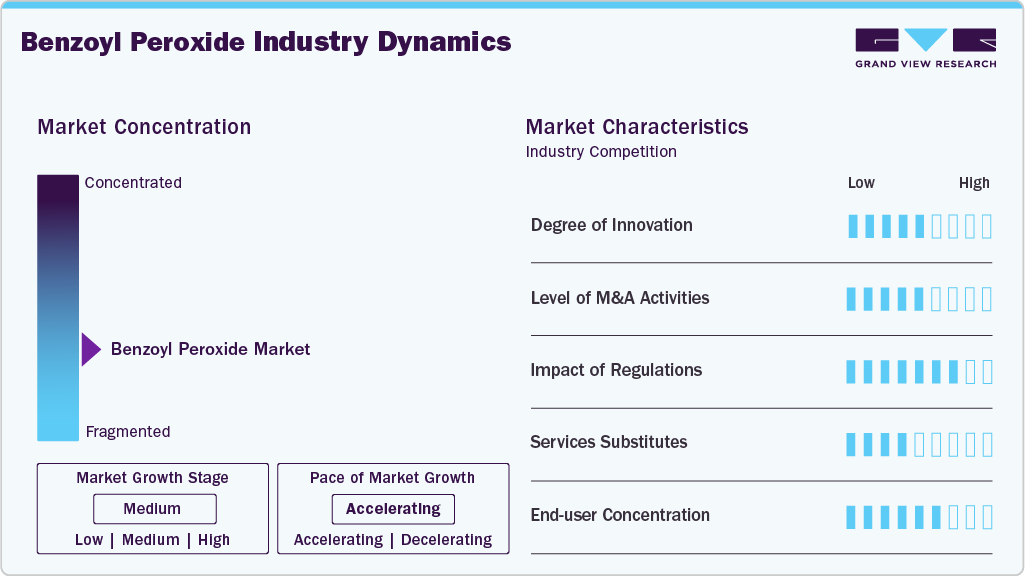
The competitive environment comprises multinational chemical groups alongside specialized regional producers. Leading participants, including Arkema S.A., Nouryon, United Initiators GmbH, and PERGAN GmbH, benefit from established expertise in organic peroxide chemistry, extensive technical resources, and well-developed supply networks. Arkema identifies organic peroxides as a significant global business area, while competition within the broader segment includes other major international suppliers. Regional manufacturers, particularly across Asia, add further diversity to the supplier base by serving localized requirements and offering application-oriented product grades.
 To learn more about this report, Download Free Sample Report
 The benzoyl peroxide industry is shaped by several factors, including manufacturing quality, product stability, safety performance, regulatory adherence, pricing, and dependable delivery. Companies are also seeking differentiation through customized formulations, broader technical support, and improved manufacturing efficiency. Larger producers generally leverage scale and international reach, whereas smaller participants compete through flexibility, regional accessibility, and targeted customer service. Consequently, long-term competitive success is expected to depend on balancing cost efficiency with stringent quality standards, reliable supply, and the ability to address evolving requirements across pharmaceutical and industrial applications.
Analyst Perspective
The outlook for the benzoyl peroxide industry remains constructive, supported by steady demand from dermatology and a diverse range of industrial applications. Its established role in acne treatment provides a relatively resilient demand base, while applications in polymers and specialty materials broaden commercial opportunities. However, safety, storage, and formulation stability remain critical considerations for manufacturers and downstream brands. Recent scrutiny surrounding potential benzene formation under certain storage conditions is also increasing the focus on quality assurance and product handling.
Grade Insights
The industrial-grade acid segment led the market with the largest revenue share of 74.9% in 2025, supported by its extensive use across polymer manufacturing, resin processing, composite production, and other specialty chemical operations. Its effectiveness as a free-radical initiator makes it suitable for large-scale industrial processes that require controlled and consistent reaction performance. Growing consumption of plastics, engineered materials, and thermosetting resins across automotive, construction, electrical, and consumer goods industries further supported demand. Broad application versatility and its established role in downstream chemical manufacturing reinforced its leading position during the year.
The pharmaceutical grade segment is expected to grow at the fastest CAGR of 6.7% during the forecast period. Growth is primarily supported by rising demand for dermatological formulations and the continued prevalence of acne-related skin concerns among different consumer groups. Increasing awareness of skin health, coupled with greater spending on effective over-the-counter and prescription treatments, is strengthening the commercial outlook. Pharmaceutical manufacturers also require materials that meet stringent purity, quality, consistency, and regulatory standards. These higher specifications create opportunities for suppliers to offer value-added products and support the segment's comparatively stronger growth trajectory.
Form Insights
The powder form segment led the market with the largest revenue share of 38.0% in 2025, due to its widespread applicability and established adoption across pharmaceutical and industrial uses. This form offers formulation flexibility, enabling manufacturers to incorporate the material into a variety of downstream products and chemical processes. Its suitability for controlled measurement and processing also supports its use across different production environments. The availability of multiple stabilized and application-oriented powder grades further strengthens customer preference.
The granular segment is projected to grow at the fastest CAGR of 6.9% from 2026 to 2033. Its increasing adoption is associated with improved handling characteristics, convenient storage, and greater control during dosing and processing operations. Granular grades can help address dust-related handling concerns, making them attractive for facilities focused on improving workplace safety and operational efficiency. The format also offers advantages in transportation and material management compared with certain conventional forms. As industrial users increasingly prioritize safer processing practices and consistent production performance, demand for granular formulations is expected to strengthen further.
Application Insights
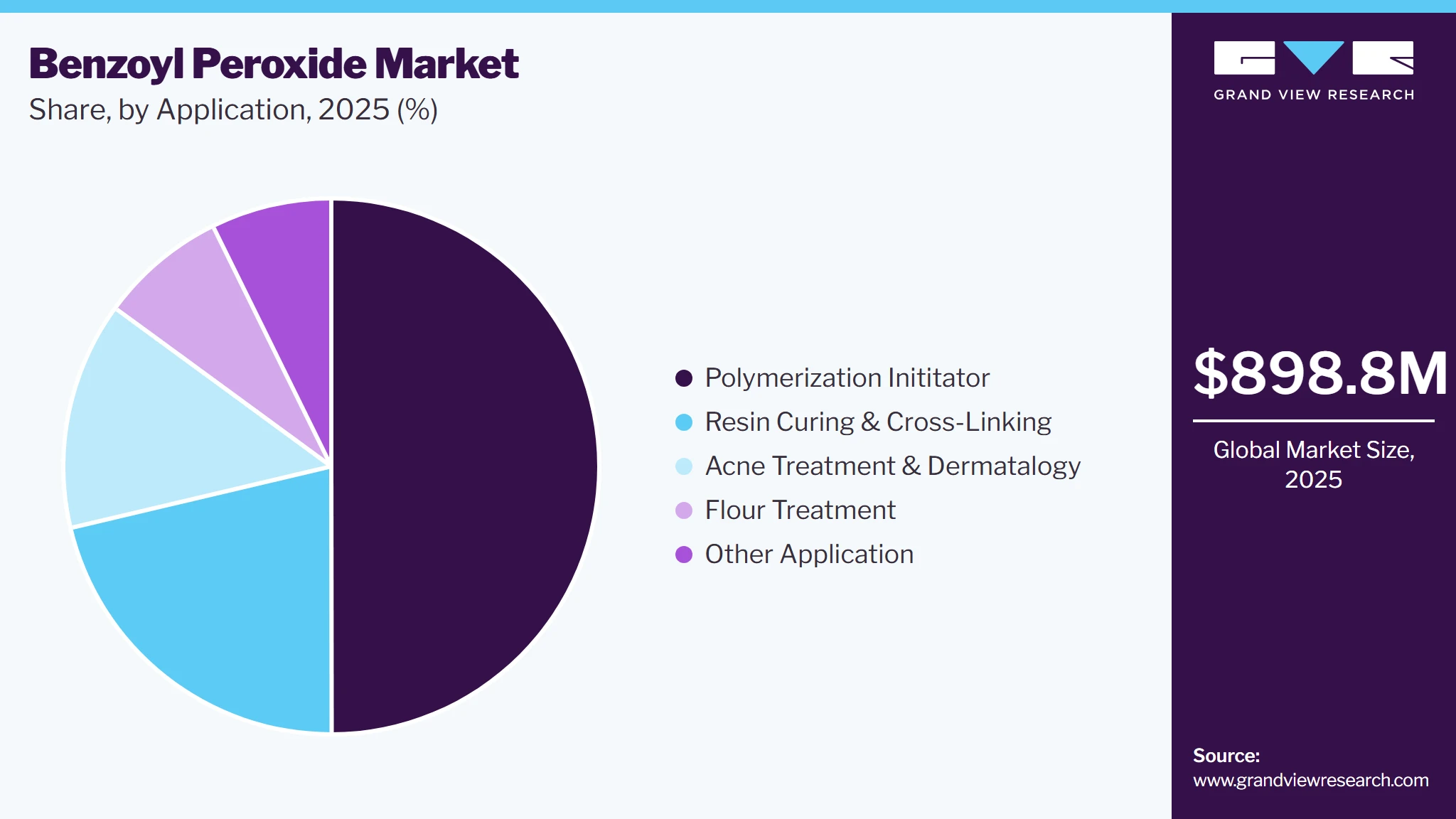
The polymerization initiator segment led the market with the largest revenue share of 50.0% in 2025. The material plays an important role in initiating free-radical reactions required for the manufacture and modification of polymers, plastics, resins, and composite materials. Strong production volumes across downstream polymer-processing industries supported substantial consumption within this application. Demand is further influenced by the growing use of lightweight materials, specialty plastics, and engineered polymer products across automotive, construction, electrical, and consumer sectors. Its functional importance in large-scale manufacturing processes and broad industrial applicability continued to underpin the segment's dominant position.
 To learn more about this report, Download Free Sample Report
 The acne treatment & dermatology segment is anticipated to grow at the fastest CAGR of 6.9% from 2026 to 2033. Rising awareness of skincare, increasing concern regarding acne and related conditions, and greater accessibility of topical treatment products are supporting segment expansion. The compound is widely incorporated into creams, gels, cleansers, lotions, and other formulations designed for acne management. Growing consumer expenditure on personal care and the continued development of targeted dermatological solutions are creating additional commercial opportunities. The expansion of online retail and pharmacy distribution channels is improving product accessibility, supporting sustained demand over the forecast period.
Regional Insights
The benzoyl peroxide market in North America is characterized by established demand for dermatological products, specialty chemicals, polymers, and advanced manufacturing activities. The region benefits from a well-developed pharmaceutical industry, strong regulatory frameworks, and the presence of multinational chemical companies with sophisticated distribution capabilities. Demand is increasingly shaped by product quality, regulatory compliance, and supply-chain reliability. Innovation in specialty formulations and higher-value applications is likely to remain an important competitive factor.
U.S. Benzoyl Peroxide Market Trends
The benzoyl peroxide market in the U.S. held a significant share in North America in 2025, driven primarily by its substantial presence in the consumer healthcare, dermatology, and specialty manufacturing sectors. Strong awareness of acne treatment and the widespread availability of over-the-counter skincare formulations support demand from pharmaceutical and personal care channels. The country also maintains significant capabilities in polymer, composite, and resin processing. Regulatory scrutiny and heightened attention to product quality and storage stability are encouraging suppliers and formulators to strengthen testing, quality assurance, and compliance practices.
Asia Pacific Benzoyl Peroxide Market Trends
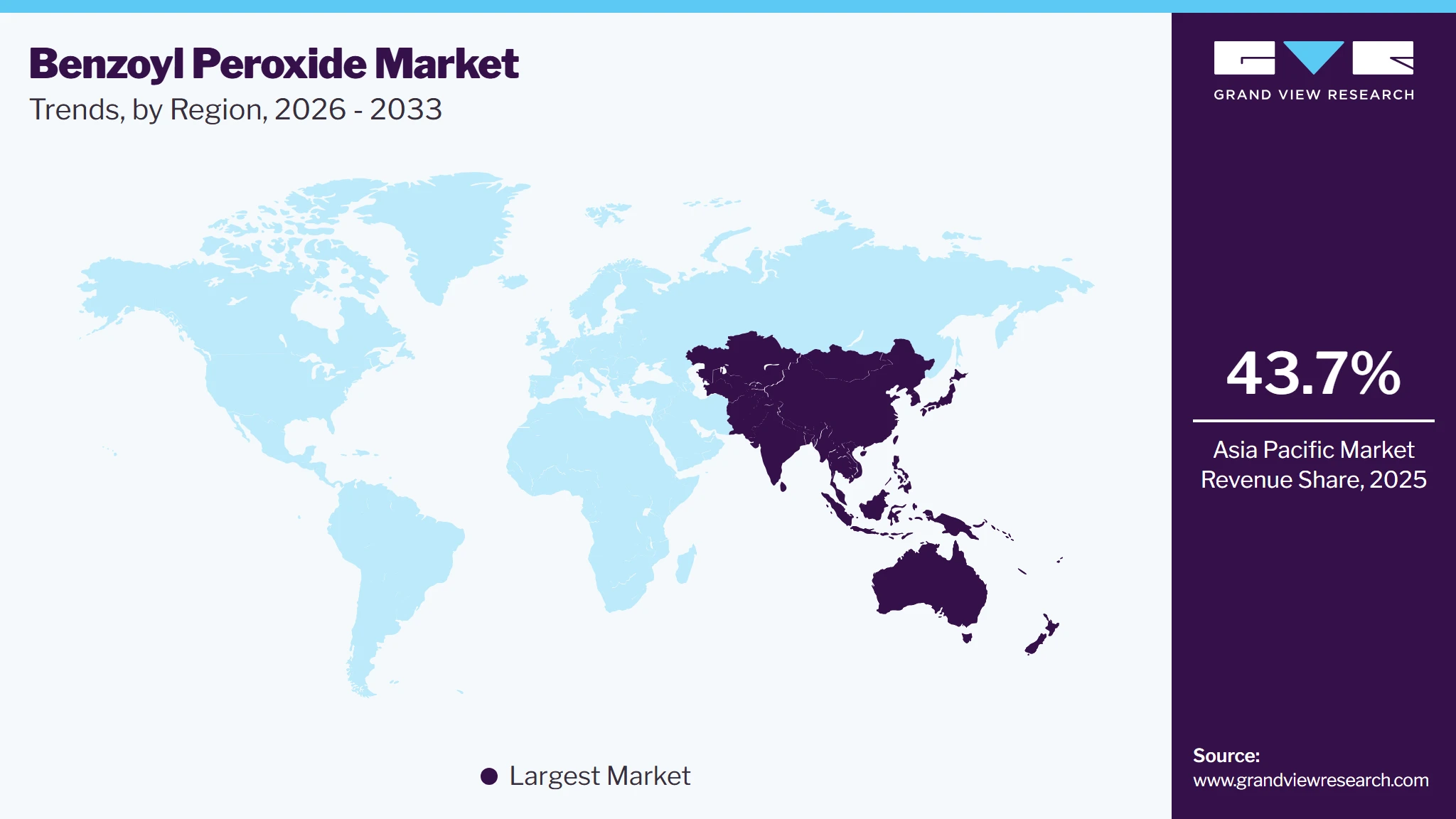
Asia Pacific benzoyl peroxide market held the largest revenue share of 43.7% in 2025 and is anticipated to grow at the fastest CAGR during the forecast period, as it represents an important growth center, supported by expanding polymer manufacturing, a large consumer base for skincare products, and the presence of numerous regional chemical producers. China, India, Japan, South Korea, and Southeast Asian countries contribute to demand through plastics, composites, specialty chemicals, and personal care applications. The region also benefits from comparatively strong manufacturing expansion and increasing investment in downstream chemical processing. Cost-competitive production and the development of regional supply chains are expected to strengthen its strategic importance.
 To learn more about this report, Download Free Sample Report
 The benzoyl peroxide market in China accounted for the largest market revenue share in the Asia Pacific in 2025. China is a major production and consumption hub, supported by its extensive chemical manufacturing infrastructure and large plastics and polymer-processing industries. Domestic producers contribute to the availability of industrial grades, while the country's sizeable personal care and pharmaceutical sectors provide an additional source of demand. Continued investment in advanced materials, manufacturing modernization, and localized supply capabilities is expected to support business opportunities. However, increasingly stringent environmental and chemical safety requirements may influence production costs and operational practices.
Europe Benzoyl Peroxide Market Trends
The benzoyl peroxide market in Europe is mature yet technologically advanced, supported by established pharmaceutical, personal care, polymer, and specialty chemical industries. Germany, France, Italy, and other industrial economies drive demand for high-quality, application-specific grades. The region's rigorous chemical regulations and emphasis on workplace safety create opportunities for suppliers with strong compliance capabilities. Sustainability considerations, product stewardship, and advanced technical services are increasingly influencing purchasing and competitive strategies.
The Germany benzoyl peroxide market is a major European center for specialty chemicals, polymer processing, pharmaceuticals, and advanced industrial manufacturing. The country benefits from a strong chemical industry ecosystem and the presence of established organic peroxide manufacturers and technology providers. Demand is supported by applications requiring consistent quality and controlled performance, particularly across polymer and specialty material processing. High regulatory standards and elevated production costs, however, encourage manufacturers to focus on process efficiency, innovation, and value-added product offerings.
Latin America Benzoyl Peroxide Market Trends
The benzoyl peroxide market in Latin America offers moderate growth potential, supported by expanding personal care consumption and the development of regional plastics, coatings, and chemical-processing industries. Brazil and Mexico represent key demand centers due to their relatively diversified manufacturing bases and large consumer populations. Regional suppliers and international distributors play an important role in product availability. Economic volatility, currency fluctuations, and varying regulatory frameworks can create challenges, while the expansion of consumer healthcare and industrial production provides longer-term commercial opportunities.
Middle East & Africa Benzoyl Peroxide Market Trends
The benzoyl peroxide market in the Middle East & Africa presents a developing opportunity, with demand largely linked to the gradual expansion of industrial processing, plastics production, construction-related materials, and consumer healthcare markets. Gulf Cooperation Council countries benefit from growing investments in petrochemicals and downstream manufacturing, which can support industrial applications. Across Africa, improving access to personal care products and expanding healthcare infrastructure may create incremental demand. Market development remains uneven, with limited local production capacity and reliance on imports shaping supply dynamics.
Key Benzoyl Peroxide Company Insights
Companies are strengthening their market position through capacity expansion, localized production, and investment in application-focused innovation to improve supply reliability and respond to evolving customer requirements. They are also broadening product portfolios, enhancing technical support, and improving safety and regulatory capabilities, enabling differentiation across pharmaceutical and industrial applications.
-
Nouryon is a prominent participant, supported by its extensive expertise in organic peroxide chemistry and globally recognized Perkadox portfolio. The company offers multiple grades of dibenzoyl peroxide for pharmaceutical and industrial applications, including anti-acne formulations, polymer production, thermoset composites, and specialty curing processes. Its broad geographic presence, regulatory capabilities, and focus on product quality and safe handling strengthen its competitive position across diverse end-use industries.
-
Taian Trendsum Chemicals Co., Ltd. represents a specialized emerging participant with a focus on supplying organic peroxide products to industrial customers. Its presence in the benzoyl peroxide segment supports a diversified supplier base, particularly within Asia, where regional manufacturers can compete through manufacturing flexibility, application-specific product offerings, and cost competitiveness. The company’s growth potential is closely linked to its ability to strengthen product quality, technical capabilities, and distribution reach in domestic and international markets.
Key Benzoyl Peroxide Companies
The following key companies have been profiled for this study on the benzoyl peroxide market.
-
Arkema S.A.
-
Nouryon
-
United Initiators GmbH
-
PERGAN GmbH
-
AKPA Kimya
-
Chinasun Specialty Products Co., Ltd.
-
Jiujiang Qianfa Fine Chemical Co., Ltd.
-
Jiangsu Peixing Chemical Co., Ltd.
-
Taian Trendsum Chemicals Co., Ltd.
-
Anhui Changhe New Material Co., Ltd.
-
Plasti Pigments Pvt. Ltd.
-
Ningxia Shunbangda New Materials Co., Ltd.
Competitive Benchmarking
Operating Strategies
Competitive Edge
Weaknesses
Mature Players: Arkema S.A., Nouryon, United Initiators GmbH, PERGAN GmbH, AKPA Kimya, Plasti Pigments Pvt. Ltd..
- Expanding production capabilities and strengthening regional supply networks to serve key demand centers efficiently.
- Maintaining diversified product portfolios across pharmaceutical, polymer, and specialty chemical applications.
- Investing in research and development to improve product quality, safety, stability, and application performance.
- Strengthening distribution channels and technical support capabilities to improve customer service and supply reliability.
- Benefit from extensive expertise in organic peroxide chemistry and established manufacturing capabilities.
- Maintain a broader geographic presence and stronger access to international customers.
- Offer diversified portfolios that enable them to serve multiple end-use industries.
- Leverage established customer relationships, technical resources, and regulatory expertise.
- Face relatively high operating costs due to extensive safety, compliance, and infrastructure requirements.
- May experience slower decision-making because of complex organizational structures.
- Require significant investment to maintain and upgrade large-scale production facilities.
- Can face reduced operational flexibility compared with smaller regional competitors.
Emerging Players: Chinasun Specialty Products Co., Ltd., Jiujiang Qianfa Fine Chemical Co., Ltd., Jiangsu Peixing Chemical Co., Ltd., Taian Trendsum Chemicals Co., Ltd., Anhui Changhe New Material Co., Ltd., Ningxia Shunbangda New Materials Co., Ltd.
- Focus on cost-efficient manufacturing to strengthen their position in price-sensitive customer segments.
- Expand gradually into international markets while strengthening their presence in domestic and regional markets.
- Develop application-specific grades to address the requirements of targeted customer groups.
- Increase production capacity and broaden product offerings as their customer base expands.
- Benefit from competitive manufacturing costs and the ability to offer attractively priced products.
- Respond more quickly to changing customer requirements and customized orders.
- Leverage proximity to rapidly growing industrial and manufacturing hubs.
- Demonstrate significant potential to expand their export footprint and customer base.
- Have relatively limited international distribution networks and global market visibility.
- Depend on narrower product portfolios compared with large multinational competitors.
- May face challenges in building brand recognition among multinational customers.
- Require continued investment in research, regulatory compliance, and advanced safety infrastructure.
Recent Developments
-
In November 2024, Nouryon announced the completion of its Ningbo organic peroxide expansion, doubling production capacity to 6,000 tons each for Perkadox 14 and Trigonox 101, supporting polymer modification and recycled polypropylene applications.
-
In October 2025, Arkema introduced Luperox NeatCure, a new generation of formulated organic peroxide granules designed to enable faster and safer curing of elastomers and polymers while addressing increasingly stringent regulatory requirements.
Benzoyl Peroxide Market Report Scope
Report Attribute
Details
Market size in 2025
USD 898.8 million
Estimated market size in 2026
USD 946.3 million
Projected market size by 2033
USD 1389.5. million
Growth rate
CAGR of 5.6% from 2026 to 2033
Base year for estimation
2025
Historical data
2021 - 2024
Forecast period
2026 - 2033
Quantitative units
Revenue in USD million, Volume in Kilotons, and CAGR from 2026 to 2033
Report coverage
Revenue forecast, volume forecast, company ranking, competitive landscape, growth factors, and trends
Segments covered
Grade, form, application, region
Regional scope
North America; Europe; Asia Pacific; Latin America; Middle East & Africa
Country scope
U.S.; Canada; Mexico; Germany; UK; France; Italy; Spain; China; India; Japan; South Korea; Brazil; Argentina; Saudi Arabia; South Africa.
Key companies profiled
Arkema S.A.; Nouryon; United Initiators GmbH; PERGAN GmbH; AKPA Kimya; Chinasun Specialty Products Co., Ltd.; Jiujiang Qianfa Fine Chemical Co., Ltd.; Jiangsu Peixing Chemical Co., Ltd.; Taian Trendsum Chemicals Co., Ltd.; Anhui Changhe New Material Co., Ltd.; Plasti Pigments Pvt. Ltd.; Ningxia Shunbangda New Materials Co., Ltd.
Customization scope
Free report customization (equivalent up to 8 analysts’ working days) with purchase. Addition or alteration to country, regional & segment scope.
Pricing and purchase options
Avail customized purchase options to meet your exact research needs. Explore purchase options
Global Benzoyl Peroxide Market Report Segmentation
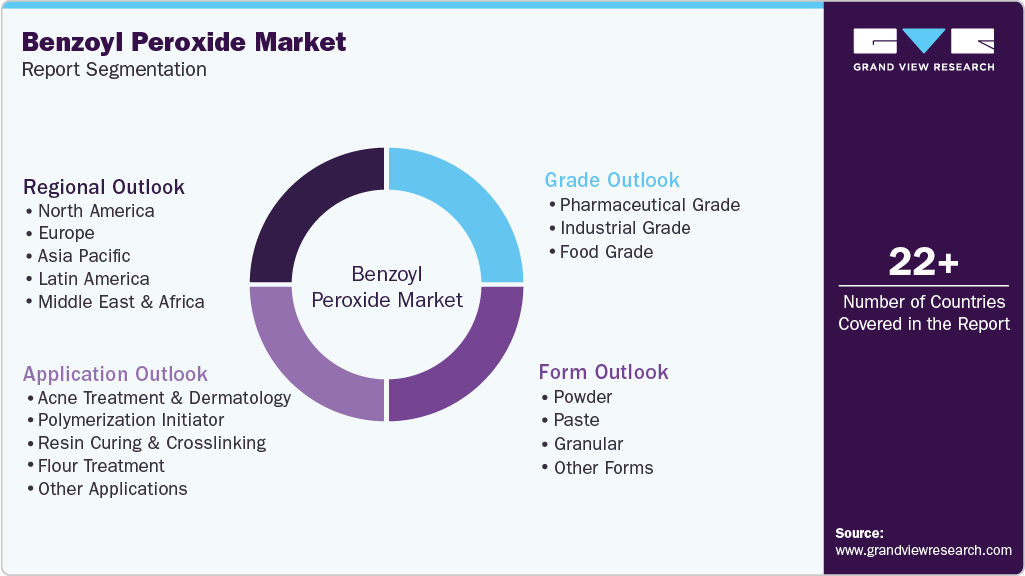
This report forecasts volume & revenue growth at global, regional, and country levels and provides an analysis of the latest industry trends in each of the sub-segments from 2021 to 2033. For this study, Grand View Research has segmented the global benzoyl peroxide market report based on grade, form, application, and region:
 To learn more about this report, Download Free Sample Report
 -
Grade Outlook (Volume, Kilotons; Revenue, USD Million, 2021 - 2033)
-
Pharmaceutical Grade
-
Industrial Grade
-
Food Grade
-
-
Form Outlook (Volume, Kilotons; Revenue, USD Million, 2021 - 2033)
-
Powder
-
Paste
-
Granular
-
Other Forms
-
-
Application Outlook (Volume, Kilotons; Revenue, USD Million, 2021 - 2033)
-
Acne Treatment & Dermatology
-
Polymerization Initiator
-
Resin Curing & Crosslinking
-
Flour Treatment
-
Other Applications
-
-
Regional Outlook (Volume, Kilotons; Revenue, USD Million, 2021 - 2033)
-
North America
-
U.S.
-
Canada
-
Mexico
-
-
Europe
-
UK
-
Germany
-
France
-
Italy
-
Spain
-
-
Asia Pacific
-
China
-
Japan
-
India
-
South Korea
-
-
Latin America
-
Brazil
-
Argentina
-
-
Middle East and Africa (MEA)
-
South Africa
-
Saudi Arabia
-
-
Research Methodology
The benzoyl peroxide marketfigures in this report are based on a proven research process that combines executive interviews with secondary research from proprietary databases, company filings, and recognized regulatory and institutional sources. Market size is built through value-chain sizing-reconciling supply-side and demand-side estimates-and triangulated with bottom-up and top-down approaches. Every estimate passes multiple levels of expert validation before publication, with each benzoyl peroxide segment quantified using the revenue-capture definitions in the table below.
Segment Definition
Segment - Grade
Revenue capture definition
Pharmaceutical Grade
Customer spending covers high-purity material incorporated into prescription and over-the-counter dermatological preparations, particularly those intended for acne management. Premium realization is supported by rigorous purity standards, controlled specifications, regulatory documentation, and consistent batch quality.
Industrial Grade
Value creation arises from supplies used in plastics manufacturing, chemical synthesis, composite production, and resin processing. Purchasing is underpinned by its role in initiating controlled chemical reactions and supporting dependable processing performance.
Food Grade
Commercial returns arise from approved uses of flour treatment and bleaching in food processing. Sales potential is shaped by bakery output, applicable safety legislation, regional authorization, and competition from substitute ingredients.
Segment - Form
Revenue capture definition
Powder
Sales stem from dry formulations suited to applications requiring accurate measurement and straightforward incorporation into downstream preparations or processing operations. Uptake benefits from formulation versatility and compatibility with a range of end uses.
Paste
Income is derived from semi-solid preparations that facilitate controlled addition and help improve handling during manufacturing operations. Their use is particularly relevant where reduced dust exposure and enhanced operational safety are priorities.
Granular
Financial contribution comes from free-flowing grades designed to simplify dosing, transportation, and storage. Adoption is linked to processing environments requiring improved handling characteristics and uniform reaction performance.
Other Forms
Spending encompasses wet, stabilized, and tailor-made variants developed for specialized processing conditions. Differentiated performance, compatibility requirements, and enhanced stability create additional commercial potential.
Segment -Application
Revenue capture definition
Acne Treatment & Dermatology
Expenditure is achieved by incorporating into topical gels, creams, cleansers, lotions, and other skin-treatment preparations. Rising interest in targeted skincare and the availability of non-prescription therapeutic products underpin segment growth.
Polymerization Initiator
Sales are linked to its use in triggering free-radical reactions during plastics and polymer manufacturing. Consumption levels correspond with downstream production volumes, processing technologies, and requirements for material modification.
Resin Curing & Crosslinking
Commercial gains stem from use in thermoset systems, composite materials, adhesives, and related applications that require controlled curing reactions. Demand is influenced by manufacturing standards and the need to achieve specific mechanical properties.
Flour Treatment
Revenue is associated with permitted use in flour processing as a treatment or bleaching agent. Purchasing patterns depend on food-processing activity, regulatory acceptance, and shifts toward alternative processing aids.
Other Applications
Additional earnings arise from niche chemical processes and specialized industrial activities that utilize its oxidizing or reaction-initiating characteristics. Customized grades and emerging material technologies broaden the available opportunity base.
Estimation Model
Layer Name
Key Question
Description
Raw Material & Production Layer
What forms the supply base?
Assess the availability and sourcing of key feedstocks, including benzoic acid derivatives, hydrogen peroxide, caustic agents, solvents, water, and stabilizing or phlegmatizing materials used in commercial formulations. Evaluate supplier networks, chemical synthesis capabilities, reaction and crystallization processes, drying and formulation systems, specialized packaging, storage infrastructure, manufacturing capacity, quality-control procedures, and stringent process-safety and regulatory requirements that support domestic and international supply.
Application Adoption Layer
Where is benzoyl peroxide utilized?
Evaluate adoption across dermatological and pharmaceutical formulations, polymer and resin production, plastics, composites, adhesives, coatings, and other specialty chemical applications. Usage varies according to its function as an antimicrobial active ingredient, oxidizing agent, curing agent, and free-radical initiator. Uptake is influenced by skincare demand, polymer manufacturing activity, downstream processing requirements, product-performance specifications, regulatory standards, and the need for reliable application-specific grades.
Consumption Intensity Layer
How extensively is benzoyl peroxide consumed?
Analyze usage intensity by end-use industry, production scale, formulation requirements, processing conditions, concentration levels, and application frequency. The assessment considers demand for pharmaceutical-grade and industrial-grade material, active-content requirements, batch sizes, polymerization processes, curing cycles, and the relative consumption of powder, paste, wet, and other commercially formulated grades across different applications.
Revenue Layer
How is market revenue generated?
Revenue is generated through the sale of pharmaceutical, cosmetic, industrial, and specialty grades to formulators, polymer manufacturers, chemical processors, distributors, and other downstream users. Growth is supported by higher-value, application-specific products, premium purity grades, customized formulations, technical support services, geographic expansion, capacity investments, portfolio diversification, and rising demand from dermatology and advanced polymer processing.
Delivered Customizations
This report has been delivered with the following In-depth customizations
Client Request
Customization Delivered
Value Adds
Regional segmentation
The assessment provides country-level market sizing and forecasts, supported by analysis of dermatological product demand, pharmaceutical manufacturing activity, polymer and plastics processing, specialty chemical production, healthcare expenditure, regulatory frameworks, manufacturing infrastructure, raw-material accessibility, trade flows, and distribution networks. It evaluates regional consumption patterns across healthcare and industrial applications, considering consumer awareness, industrialization, chemical safety requirements, product-quality standards, and the availability of localized supply in individual countries.
Supports geographic expansion, distributor selection, production-site planning, sourcing decisions, and investment prioritization by identifying countries with strong pharmaceutical and chemical industries, expanding polymer-processing capabilities, established supply networks, favorable manufacturing conditions, and attractive demand prospects.
Opportunity Assessment
Comprehensive evaluation of emerging opportunities across pharmaceutical-grade materials, high-purity formulations, application-specific grades, advanced polymer processing, specialty resins, and differentiated dermatological products. The assessment examines evolving skincare demand, growth in specialty materials, technological developments in polymerization, quality requirements, product safety considerations, regulatory developments, and the increasing need for reliable, high-performance chemical intermediates across major regions.
Helps identify high-potential applications, product categories, customer groups, and geographic markets by assessing changes in downstream manufacturing, consumer healthcare preferences, processing requirements, technological adoption, and purchasing criteria. The findings support portfolio diversification, application development, capacity planning, strategic collaborations, distribution partnerships, and market-entry decisions.
Competitive Benchmarking
Comparative assessment of leading manufacturers based on product portfolios, organic peroxide expertise, production footprint, formulation capabilities, application coverage, geographic reach, regulatory compliance, technical service, research capabilities, strategic alliances, acquisitions, and capacity expansion initiatives. The benchmarking also evaluates product quality, process-safety standards, supply dependability, customer relationships, distribution capabilities, and the ability to develop specialized solutions for pharmaceutical and industrial requirements.
Enables companies to evaluate their competitive standing, technological strengths, portfolio gaps, operational capabilities, and differentiation opportunities against multinational and regional suppliers. The insights support decisions related to product development, formulation enhancement, geographic growth, manufacturing optimization, strategic alliances, acquisitions, customer engagement, and long-term commercial positioning.
Frequently Asked Questions About This Report
The global benzoyl peroxide market is expected to grow at a compound annual growth rate of 5.6% from 2026 to 2033 to reach USD 1389.5 million by 2033.
The global benzoyl peroxide market size was estimated at USD 898.8 million in 2025 and is expected to reach USD 946.3 million in 2026.
Polymerization initiator held the largest share of 50.0% in 2025. The material plays an important role in initiating free-radical reactions required for the manufacture and modification of polymers, plastics, resins, and composite materials.
Asia Pacific represented 43.7% of revenue in 2025, as it represents an important growth center, supported by expanding polymer manufacturing, a large consumer base for skincare products, and the presence of numerous regional chemical producers
Key factors driving the market include the growing use of benzoyl peroxide in dermatological and acne treatment formulations, supported by rising consumer spending on skincare. Expanding polymer, resin, and specialty material production also contributes to demand due to its role as an effective free-radical initiator.
Some of the key players operating in the benzoyl peroxide market include Arkema S.A.; Nouryon; United Initiators GmbH; PERGAN GmbH; AKPA Kimya; Chinasun Specialty Products Co., Ltd.; Jiujiang Qianfa Fine Chemical Co., Ltd.; Jiangsu Peixing Chemical Co., Ltd.; Taian Trendsum Chemicals Co., Ltd.; Anhui Changhe New Material Co., Ltd.; Plasti Pigments Pvt. Ltd.; Ningxia Shunbangda New Materials Co., Ltd.
Powder form dominated with a share of 38.0% in 2025, due to its widespread applicability and established adoption across pharmaceutical and industrial uses.
Industrial grade dominated with a revenue share of 31.2% in 2025, supported by its extensive use across polymer manufacturing, resin processing, composite production, and other specialty chemical operations.
Acne treatment and dermatology is the fastest-growing with a CAGR of 6.9% from 2026 to 2033. Rising awareness of skincare, increasing concern regarding acne and related conditions, and greater accessibility of topical treatment products are supporting segment expansion.
About the Author(s)
Organic Chemicals Research Team
Bulk Chemicals · Organic ChemicalsThis report was authored by the organic chemicals research team at Grand View Research - comprising two research analysts, one senior research analyst, and one industry expert - with specialized expertise in the organic chemicals segment of the bulk chemicals industry. All findings are based on proprietary bulk chemicals databases, executive interviews, and regulatory analysis, subject to internal peer review prior to publication.
Last Updated:
Speak to Analyst

Customize this report to your needs - add regions, segments, or data points, with 20% free customization.
Or view our licence options:


ISO 9001:2015 & 27001:2022 Certified
We are GDPR and CCPA compliant! Your transaction & personal information is safe and secure. For more details, please read our privacy policy.


