
- Home
- »
- Automotive & Transportation
- »
-
Bike & Scooter Rental Market Size, Share Report, 2026-2033GVR Report cover

Bike And Scooter Rental Market (2026 - 2033)
Size, Share & Trends Analysis Report By Propulsion (Pedal, Electric), By Vehicle (Bike, Scooter), By Service (Pay-as-you Go, Subscription Based), By Region (North America, Europe, Asia Pacific), And Segment Forecasts
Market Size, 2025
$7.9BMarket Estimate, 2026
$9.3BMarket Forecast, 2033
$21.0BCAGR, 2026–2033
12.3%Bike and Scooter Rental Market Summary
The global bike and scooter rental market size was valued at USD 7.9 billion in 2025 and is projected to grow from USD 9.3 billion in 2026 to USD 21.0 billion by 2033, growing at a CAGR of 12.3% from 2026 to 2033. North America dominated the global market with the largest revenue share of 36.3% in 2025. The increasing awareness of environmental sustainability and the urgent need to reduce carbon emissions are major drivers for the growth of the market.
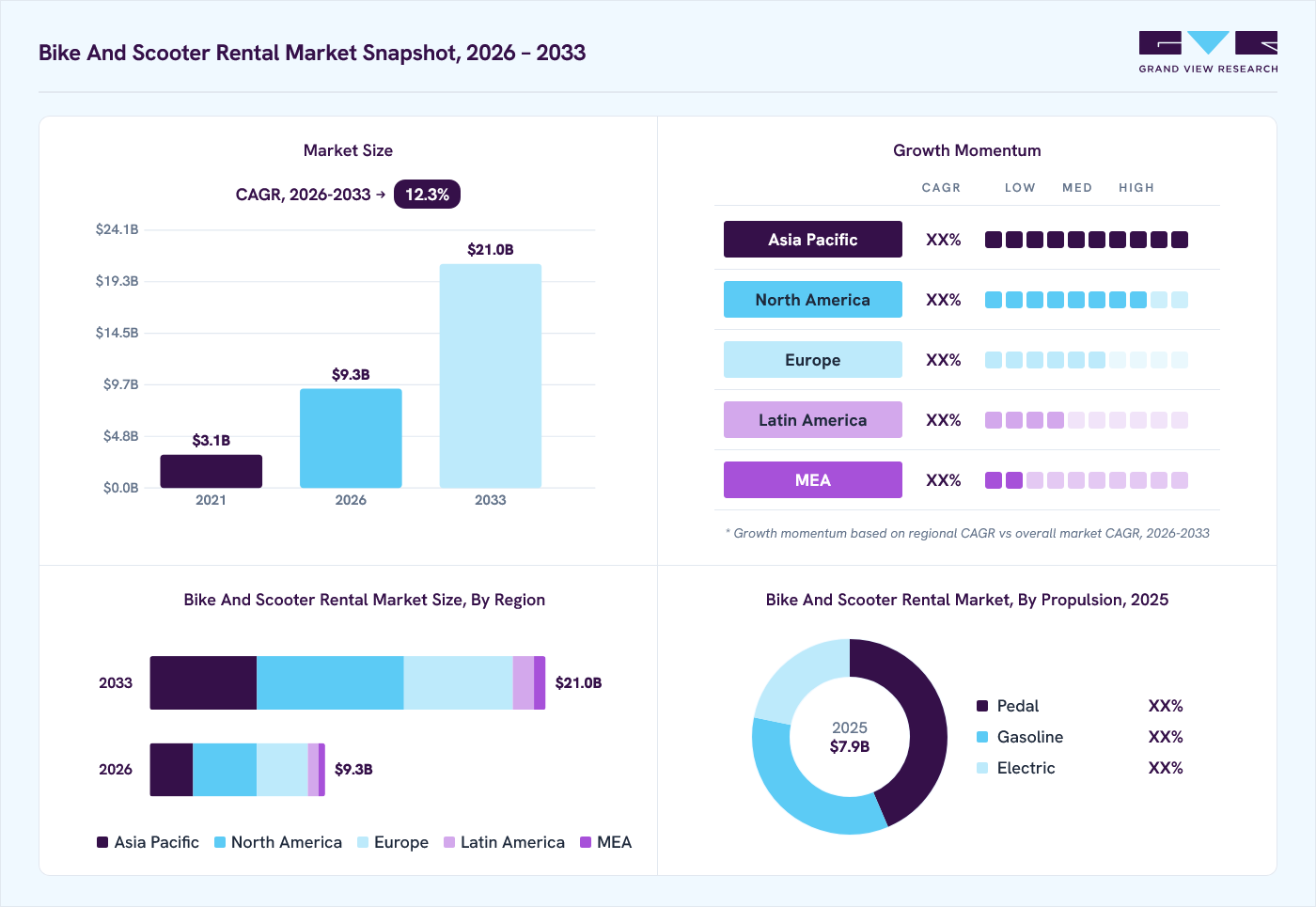 Source: Grand View Research, IR Documents, Primary Interviews, Paid DatabasesTo learn more about this report,
 Download Free Sample Report
Key Market Trends & Insights
- By vehicle: Bike segment dominated the market, with a revenue share of 65.3% in 2025
- By propulsion: Pedal segment held the largest market share of 43.5% in 2025
- By service: Pay-as-you go segment accounted for the largest revenue share in 2025
Regional Highlights
- Largest regional market: North America (36.3% revenue share, 2025)
- Fastest-growing regional market: Asia Pacific (highest CAGR, 2026-2033)
- By country: The U.S. held the largest market share in 2025.
Market Size & Forecast
- Market size in 2025: USD 7.9 Billion
- Estimated market size in 2026: USD 9.3 Billion
- Projected market size by 2033: USD 21.0 Billion
- CAGR (2026-2033): 12.3%
Three ways to get this report
Buy it, customize it, or ask a question.Ask an Analyst
Analyst response in 1 business day
- AccessReport author, directly
- Reply timeWithin 1 working day
- No sales callDirect answer only
- FormatEmail reply
- CostFree, no cost
Get the Full Report
What the study covers
- FormatsPDF · Excel · Dashboard
- Timeline2026–2033 annual, 2025 base
- Coverage20+ countries, 5 regions
- Companies10+ key players profiled
Customize the Report
20% free customization
- IncludeCountries, segments, points
- TailorTo your product definition
- ExtendDeeper competitor detail
- OrA fully bespoke study
- Turnaround5–10 working days
With rising pollution and traffic congestion, e-bikes and scooters offer a green alternative to traditional vehicles, helping cities lower their carbon footprint. This shift towards eco-friendly transportation is being supported by both governmental policies and consumer preferences, creating a robust market for e-bike and scooter rentals.Technological advancements are another significant factor propelling the market growth. Innovations in battery technology, such as longer battery life and faster charging times, have made e-bikes and scooters more reliable and convenient for users. Additionally, the integration of GPS and IoT (Internet of Things) technologies has enhanced the user experience by providing real-time tracking, seamless payments, and improved safety features. These technological improvements have made it easier for rental companies to manage their fleets and for customers to access and use these services efficiently.
 To learn more about this report, Download Free Sample Report
Growing investment and interest from key automakers and startups in the mobility sector are propelling the growth of the market. Bike and scooter rental companies are investing heavily in expanding their fleets, improving infrastructure, and enhancing user experience. This influx of capital is accelerating the growth and adoption of these services, with many companies partnering with cities to create dedicated lanes and parking zones, further integrating e-bikes and scooters into urban transportation networks.
Health and fitness consciousness among consumers is also playing a role in the growth of the bike and scooter rental market. Many people are seeking ways to incorporate physical activity into their daily routines, and e-bikes provide a perfect balance of exercise and convenience. Even though scooters offer less physical exertion, they still promote an active lifestyle by encouraging outdoor mobility. This health-conscious trend is particularly strong in urban areas where sedentary lifestyles are prevalent, making e-bikes and scooters a popular choice for short commutes and recreational use, which is driving the growth of bikes & scooter rentals.
Consumer preferences are shifting towards shared and on-demand services, influenced by the broader trend of the sharing economy. Many urban residents, particularly younger generations, prefer the flexibility and cost savings of renting over owning vehicles. This preference is bolstered by the convenience of app-based rental platforms that allow users to locate, unlock, and pay for bikes and scooters with just a few taps on their smartphones. The convenience and affordability of these rental services make them appealing alternatives to car ownership or public transportation.
Market Dynamics
The bike and scooter rental market is undergoing steady structural expansion, supported by accelerating urbanization, rising congestion in metropolitan areas, and increasing policy focus on low-emission mobility solutions. Advances in IoT-enabled fleet management, GPS tracking, and mobile payment platforms have improved asset utilization and user experience. At the same time, city governments increasingly recognize shared micromobility as a complement to public transit systems. The market trajectory is shaped by the convergence of sustainability mandates, digital platform scalability, and changing urban commuter behavior, favoring flexible, short-distance transportation options.
Urban centers globally continue to experience rising traffic congestion, limited parking availability, and declining average vehicle speeds, creating structural inefficiencies in short-distance commuting. Traditional public transport systems often fail to adequately address last-mile connectivity, particularly in dense business districts, university campuses, and transit-adjacent zones. This gap has intensified demand for compact, flexible, and affordable mobility alternatives that operate efficiently in crowded urban environments.
Bike and scooter rental platforms directly address this challenge by enabling on-demand access to lightweight vehicles optimized for short trips. App-based rentals allow users to bypass congestion, reduce commute times, and integrate seamlessly with metro, bus, and rail networks. As cities increasingly position micromobility as a congestion-mitigation tool, rental solutions benefit from favorable infrastructure planning and higher user adoption, accelerating overall market growth.
The bike and scooter rental market faces significant regulatory constraints driven by safety concerns, sidewalk clutter, and inconsistent municipal policies. Cities often impose caps on fleet size, restrict operating zones, mandate parking compliance, or require costly licensing and data-sharing agreements. Regulatory uncertainty increases operational complexity and raises compliance costs for rental operators.
These constraints disproportionately affect dockless scooter operators and expansion plans in dense urban cores, particularly in parts of Europe and North America. Smaller cities with limited infrastructure readiness also experience slower deployment. As a result, regulatory fragmentation delays fleet scaling, limits geographic penetration, and slows revenue realization, thereby restraining overall market expansion.
Governments and urban planners are increasingly embedding micromobility into broader smart city and climate action frameworks. Investments in cycling lanes, low-emission zones, and digital mobility platforms are creating an enabling ecosystem for bike and scooter rentals. Public-private partnerships and mobility-as-a-service (MaaS) initiatives further enhance the viability of shared micromobility solutions.
This environment presents strong growth potential for operators with advanced fleet analytics, electric vehicle portfolios, and strong municipal collaboration capabilities. The electric scooter and e-bike segments are particularly well positioned, as they align with decarbonization targets and commuter convenience. Vendors with scalable platforms and regulatory alignment strategies are best placed to capture long-term growth.Analyst Perspective
The bike and scooter rental Market is transitioning from early experimentation to structured urban mobility infrastructure. Growth is being reinforced by electrification, improved fleet intelligence, and increasing municipal endorsement of shared mobility. Technology-led operators are focusing on unit economics, regulatory alignment, and subscription-led revenue stability. Investment activity is shifting toward electric fleets, software-driven optimization, and city-level partnerships. Competitive differentiation increasingly depends on operational efficiency and regulatory adaptability rather than fleet scale alone.
Propulsion Insights
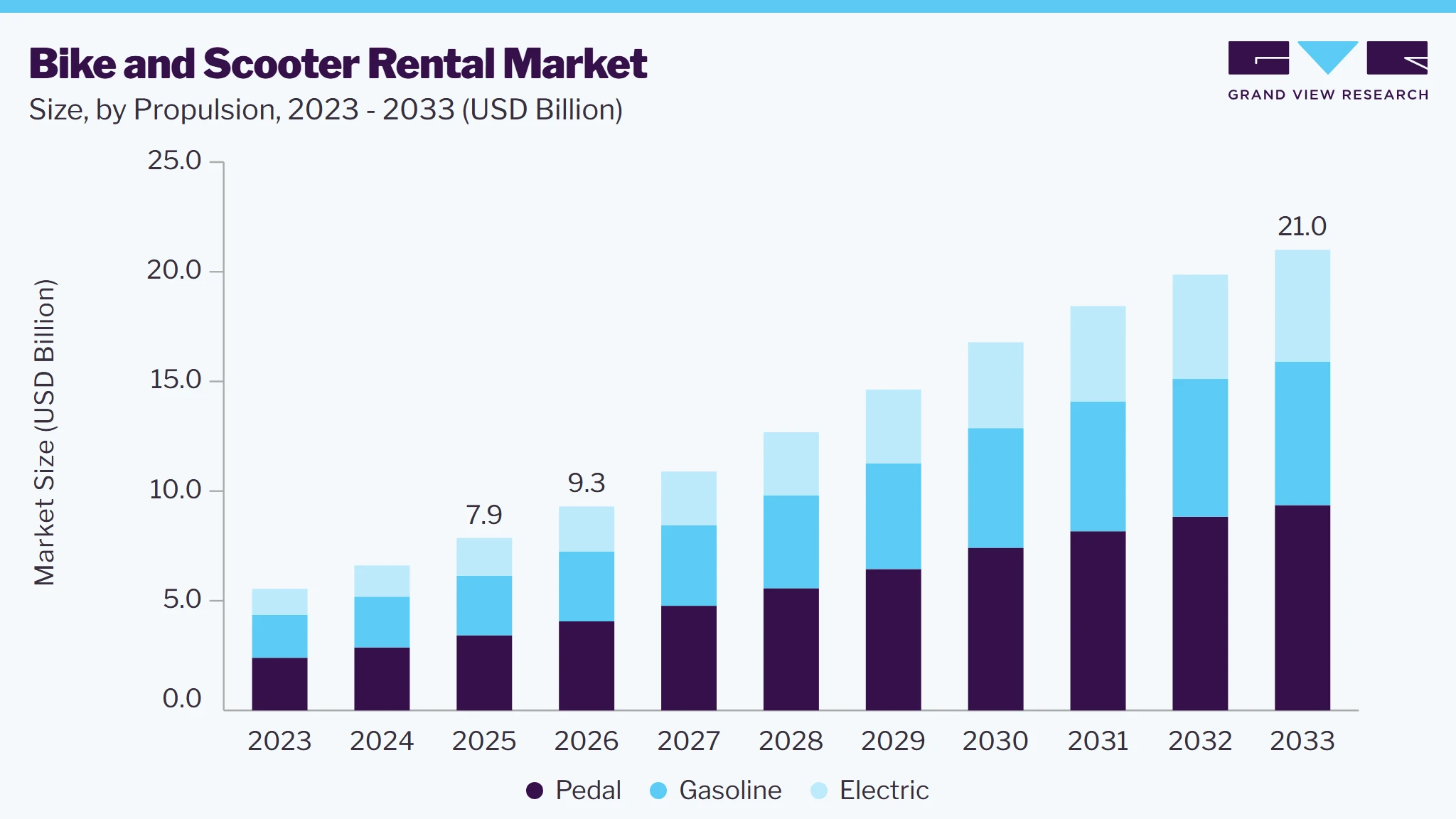
Based on propulsion, the pedal segment led the market with the largest revenue share of 43.5% in 2025. Pedal bikes offer a traditional biking, making them attractive to a broad range of users, including daily commuters, recreational riders, and fitness enthusiasts. Improvements in designs and affordability have also contributed to their rising popularity. Additionally, the infrastructure improvements in many cities, such as bike lanes and parking facilities, have made pedal-assist bikes a more practical and appealing choice for urban travel.
The electric segment is experiencing robust growth due to consumers’ shift towards electric mobility solutions, growing concerns about climate change, rising fuel costs, and the increasing demand for convenient and efficient urban transportation. E-bikes and e-scooters offer an eco-friendly alternative to traditional gas-powered vehicles, reducing carbon footprints and traffic congestion. The technological advancements in battery life, charging infrastructure, and vehicle design have made these electric vehicles more accessible and practical for daily use. Additionally, government incentives and investments in electric mobility infrastructure have further fueled their adoption. As cities worldwide aim to become more sustainable, the high growth of electric bikes and scooters is expected to continue, transforming urban transportation landscapes.
Vehicle Insights
Based on vehicle, the bike segment led the market with the largest revenue share of 65.3% in 2025. The high segmental share of bikes can be attributed to technological advancements that have made bike-sharing more accessible and efficient. The integration of GPS tracking, mobile applications, and digital payment systems has streamlined the rental process, making it convenient for users to locate, unlock, and pay for bikes with ease. This seamless user experience has attracted a broader audience, including those who might not have yet to consider biking as a viable mode of transportation before. Additionally, the ability to collect and analyse data through these technologies allows companies to optimize bike distribution and maintenance, ensuring a reliable service that meets the demand of urban commuters.
Moreover, environmental concerns and the global push towards sustainable living have also played a significant role in the proliferation of rental bikes. As cities worldwide grapple with issues like traffic congestion and air pollution, bike-sharing presents an eco-friendly alternative that reduces carbon emissions and alleviates road congestion. Governments and municipalities have recognized the benefits of promoting cycling and have supported the development of bike-sharing programs through subsidies, infrastructure improvements, and integration with public transit systems. This institutional support has bolstered the expansion of bike-sharing networks, making them a staple in urban transportation strategies aimed at creating greener cities.
Service Insights
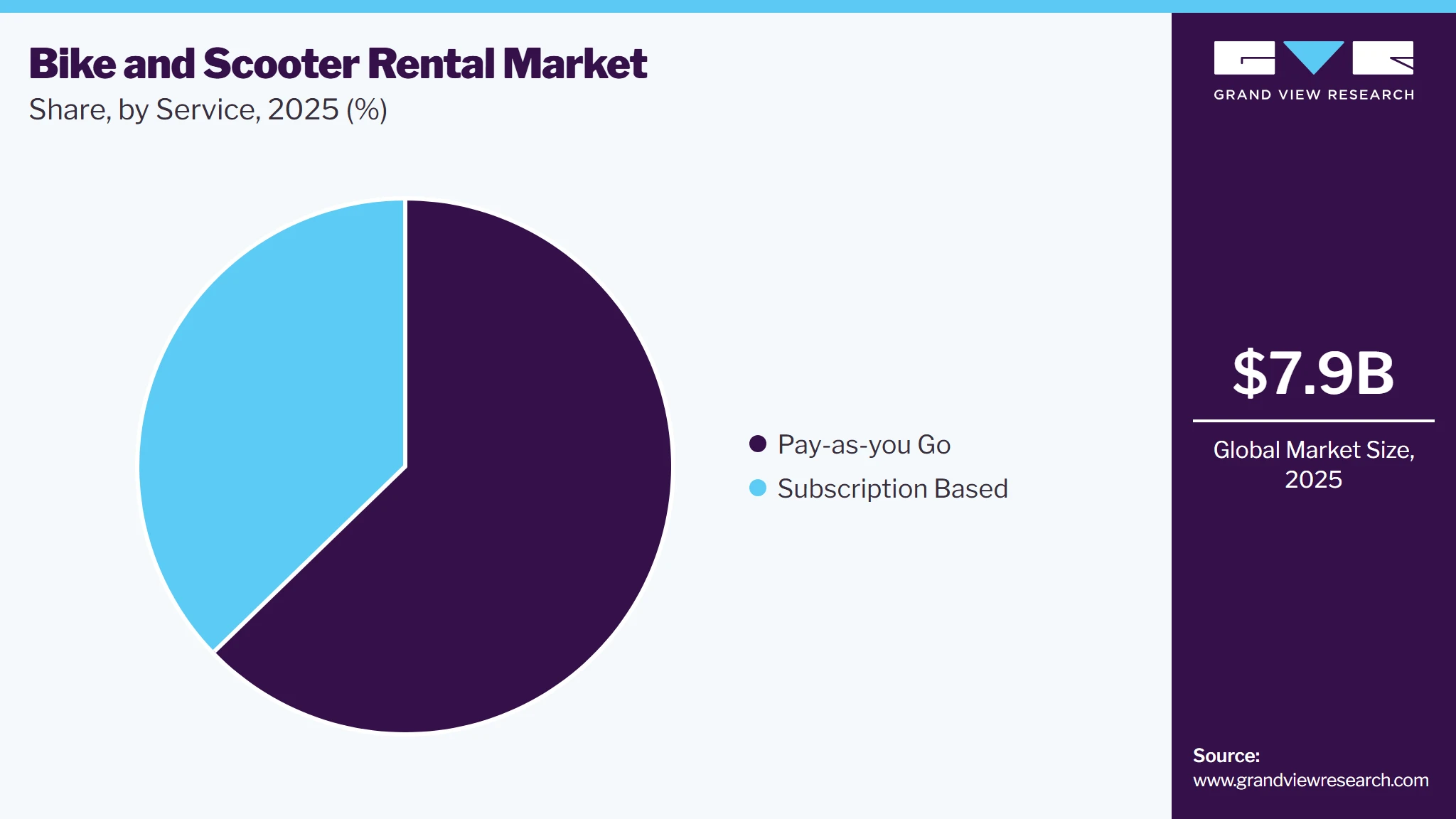
Based on service, the pay-as-you go segment led the market with the largest revenue share of 62.7% in 2025. The high share of the segment is attributed to several factors it offers flexibility and affordability to users who may not require frequent access to vehicles but still need them occasionally. This model appeals to a wide range of customers, including tourists, occasional commuters, and individuals who prefer spontaneous usage without the commitment of ownership or fixed costs. Additionally, advancements in digital payment systems and mobile apps have made it convenient for users to access and pay for rentals on-the-go, further boosting the adoption of pay-as-you-use services. Moreover, the growing awareness and concern for environmental sustainability have prompted more people to opt for shared mobility options like pay-as-you-use bikes and scooters, contributing to their increasing market share.
 To learn more about this report, Download Free Sample Report
Subscription-based bike and scooter rental services are experiencing rapid growth due to several key factors. These services offer a hassle-free experience to users who require regular access to vehicles for commuting or leisure purposes. Subscribers benefit from fixed monthly or annual fees that provide predictable costs and unlimited access within specified terms, appealing to frequent users looking for convenience and cost-effectiveness. Moreover, subscription models often include additional perks such as priority access to vehicles, maintenance services, and insurance coverage, enhancing their value proposition compared to traditional ownership or sporadic pay-as-you-use options.
Regional Insights
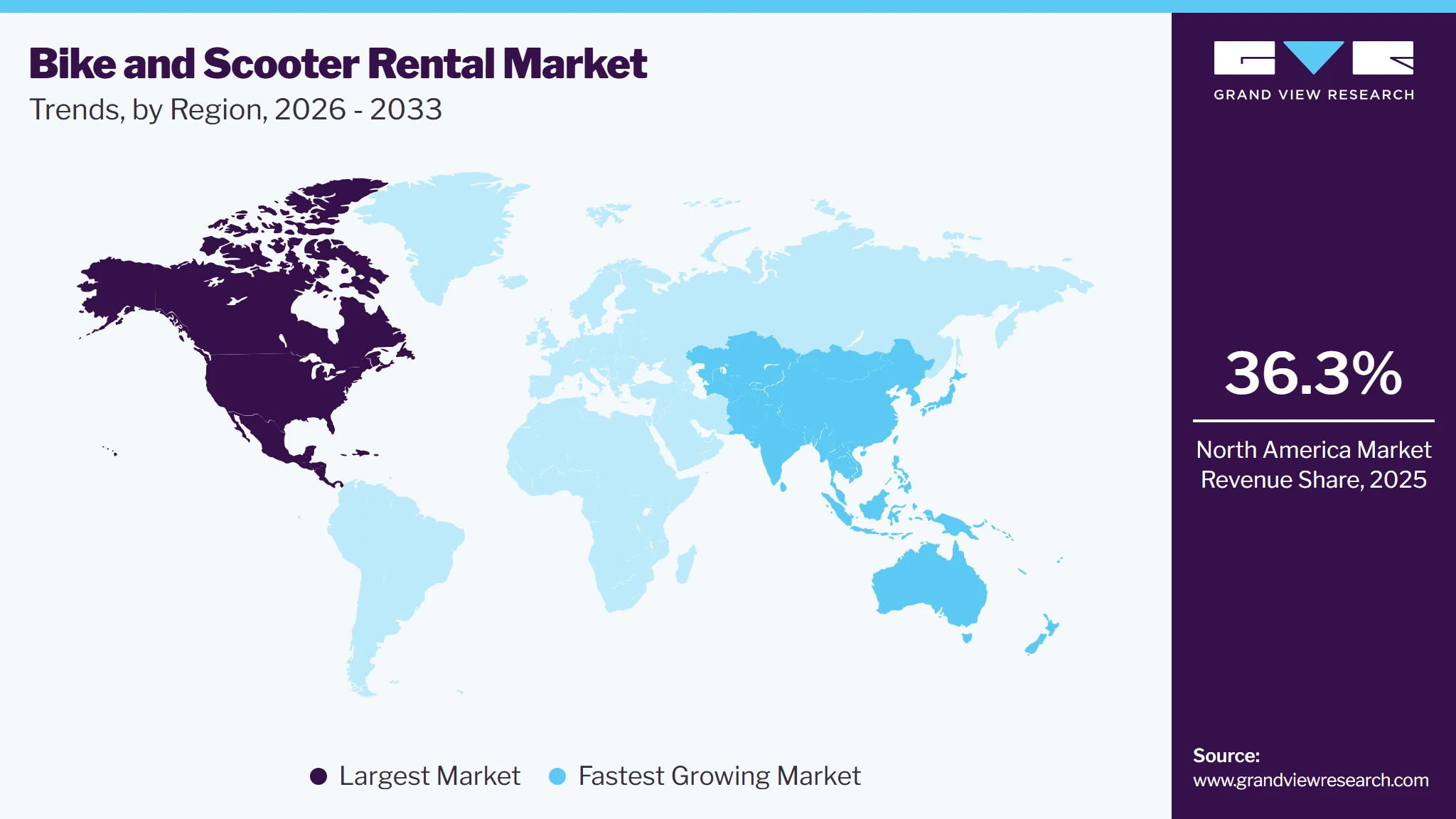
North America dominated the global bike and scooter rental market with the largest revenue share of 36.3% in 2025. The market in North America has experienced robust growth in recent years, driven by increasing urbanization and a growing preference for eco-friendly transportation options. Major cities across the United States and Canada have seen a proliferation of bike-sharing and scooter-sharing services, catering to both commuters and tourists. The adoption of smartphone apps for convenient rental access has further fuelled market expansion. Government initiatives promoting sustainable mobility and reducing traffic congestion have also contributed to the market's growth trajectory.
 To learn more about this report, Download Free Sample Report
U.S. Bike And Scooter Rental Market Trends
The bike and scooter rental market in the U.S. held the largest share in the North America region in 2025. Bikes and scooters have emerged as popular alternatives to traditional transportation modes. Cities like San Francisco, Los Angeles, and New York have witnessed significant investment in bike and scooter-sharing infrastructure. Companies offering dockless bikes and electric scooters have capitalized on the demand for convenient and affordable last-mile transportation solutions. Regulatory challenges regarding safety and operational guidelines have shaped the market dynamics, prompting companies to innovate in fleet management and user safety features.
Asia Pacific Bike And Scooter Rental Market Trends
Asia Pacific region is expected to register fastest CAGR of 13.8% over the forecast period. The market in Asia Pacific has seen explosive growth, driven by densely populated urban areas and increasing awareness of sustainable transportation solutions. Countries like China and India have become hotbeds for bike-sharing and electric scooter rental services. Rapid urbanization, coupled with government support for green mobility initiatives, has accelerated market expansion. Tech-savvy consumers in cities like Beijing, Shanghai, and Bangalore have embraced smartphone-enabled rental platforms, contributing to the market's rapid evolution and competitive landscape.
Europe Bike And Scooter Rental Market Trends
The market in Europe has evolved amidst a push towards reducing carbon emissions and enhancing urban mobility. Cities such as Paris, London, and Berlin have integrated bike-sharing programs into their public transportation networks, promoting seamless multimodal transit options. The popularity of electric scooters has also surged, with companies offering shared fleets across major urban centers. Regulatory frameworks addressing safety, parking, and sustainability have shaped market growth, fostering innovation in mobility solutions tailored to European cities' unique needs.
Key Bike And Scooter Rental Company Insights
Some of the participants operating in the market include Lime, Nextbike, Cityscoot, Mobike, Spin, Scoot, Lyft, Skip, Tier Mobility, Bolt. The companies are focusing on various strategic initiatives, including investments, partnerships & collaborations, and agreements to gain a competitive advantage over their rivals. The following are some instances of such initiatives.
-
In April 2024, Lime a rental electric scooter and bike operator backed by Uber Technologies Inc., announced a plan to invest $55 million to increase its existing fleet size.
-
In January 2024, e-scooter rental companies Tier Mobility and Dott announced their merger, which will create the largest operator in Europe. Their investors are contributing an extra 60 million euros ($66 million) to support the newly combined entity.
-
In March 2022, TIER Mobility (TIER) acquired Spin, a micromobility operator previously owned by Ford, expanding its reach to an additional 106 communities across North America.
Key Bike And Scooter Rental Companies
The following key companies have been profiled for this study on the bike and scooter rental market.
- Lime
- Nextbike
- Cityscoot
- Mobike
- Spin
- Scoot
- Lyft
- Skip
- Tier Mobility
- Bolt
Competitive Benchmarking
Category
Operating Strategies
Competitive Edge
Weakness
Established Players (Lime, Lyft, Mobike, Tier Mobility)
- These players are focused on large-scale fleet deployment, city partnerships, and integrated mobility platforms.
- These players have strong brand recognition, advanced fleet technology, regulatory experience
- High operating costs, dependency on regulatory approvals
Emerging Players (MoneyGram International Inc., C-SAM, Inc.)
- These players are focused on regional expansion, niche city contracts, and selective fleet growth.
- These players have high agile operations, strong local partnerships, targeted service models
- Limited geographic scale, constrained capital availability.
Bike and Scooter Rental Market Report Scope
Report Attribute
Details
Market size value in 2025
USD 7.9 billion
Market size value in 2026
USD 9.3 billion
Revenue forecast in 2033
USD 21.0 billion
Growth rate
CAGR of 12.3% from 2026 to 2033
Base year for estimation
2025
Historical data
2021 - 2024
Forecast period
2026 - 2033
Quantitative units
Revenue in USD billion, and CAGR from 2026 to 2033
Report coverage
Revenue forecast, company market share, competitive landscape, growth factors, and trends
Segments covered
Vehicle, propulsion, service, region
Regional scope
North America; Europe; Asia Pacific; Central & South America; MEA
Country scope
U.S.; Canada; Mexico; Germany; U.K.; France; China; Japan; India; South Korea; Australia; Brazil; Saudi Arabia; UAE; and South Africa
Key companies profiled
Lime, Nextbike, Cityscoot, Mobike, Spin, Scoot, Lyft, Skip, Tier Mobility, Bolt
Customization scope
Free report customization (equivalent up to 8 analysts' working days) with purchase. Addition or alteration to country, regional & segment scope.
Pricing and purchase options
Avail customized purchase options to meet your exact research needs. Explore purchase options
Global Bike and Scooter Rental Market Report Segmentation
The report forecasts revenue growth at global, regional, and country levels and provides an analysis on the latest trends in each of the sub-segments from 2021 to 2033. For this study, Grand View Research has segmented the global bike and scooter rental market report based on propulsion, vehicle, service, and region.
-
Vehicle Outlook (Revenue, USD Million, 2021 - 2033)
-
Bike
-
Scooter
-
-
Propulsion Outlook (Revenue, USD Million, 2021 - 2033)
-
Pedal
-
Electric
-
Gasoline
-
-
Service Outlook (Revenue, USD Million, 2021 - 2033)
-
Pay-as-you go
-
Subscription Based
-
-
Regional Outlook (Revenue, USD Million, 2021 - 2033)
-
North America
-
U.S.
-
Canada
-
Mexico
-
-
Europe
-
UK
-
Germany
-
France
-
-
Asia Pacific
-
China
-
India
-
Japan
-
Australia
-
South Korea
-
-
Latin America
-
Brazil
-
-
MEA
-
KSA
-
UAE
-
South Africa
-
-
Research Methodology
The bike and scooter rental market figures in this report are based on a proven research process that combines executive interviews with secondary research from proprietary databases, company filings, and recognized regulatory and institutional sources. Market size is built through value-chain sizing - reconciling supply-side and demand-side estimates - and triangulated with bottom-up and top-down approaches. Every estimate passes multiple levels of expert validation before publication, with each bike and scooter rental segment quantified using the revenue-capture definitions in the table below.
Segment Definition
Segment - Vehicle
Revenue capture definition
Bike
Bike revenue generated from short-term and long-term rentals of standard bicycles and e-bikes, including per-ride charges, time-based fees, subscription revenues, and ancillary income from advertising placements on bike assets.
Scooter
Scooter revenue is derived from electric and gasoline scooter rentals, including unlock fees, per-minute or per-kilometer usage charges, subscription plans, and penalties related to parking or operational non-compliance.
Segment - Propulsion
Revenue capture definition
Pedal
Pedals are manually powered bikes generating revenue primarily through lower-cost rental fees and subscriptions targeted at short-distance urban commuters.
Electric
Battery-powered bikes and scooters generate premium revenue through higher usage fees, subscription plans, and higher ride frequency.
Gasoline
Internal combustion scooters capturing revenue in select regions where electric infrastructure penetration remains limited.
Segment - End-use
Revenue capture definition
Pay-as-you-go
Revenue earned through transaction-based pricing models including unlock fees and time- or distance-based usage charges.
Subscription Based
Recurring revenue from weekly, monthly, or annual plans offering discounted usage, ride bundles, or priority access.
Estimation Model
Layer Name
Key Question
Description
Urban Mobility Demand
Where is micromobility demand generated?
This layer evaluates urban population density, commuting distances, public transit gaps, and congestion levels to establish the addressable demand for bike and scooter rentals. It identifies high-frequency short-trip corridors and transit-adjacent zones.
Service Adoption
How many users adopt rental services?
Adoption rates are assessed based on smartphone penetration, pricing sensitivity, regulatory openness, and cultural acceptance of shared mobility. This layer estimates active user base across cities.
Fleet Deployment
How many vehicles are economically viable?
This layer determines optimal fleet size based on utilization rates, vehicle lifespan, maintenance costs, and municipal caps. It links physical asset deployment to revenue scalability.
Revenue Realization
How is revenue monetized?
Revenue is calculated through ride frequency, pricing models, subscription uptake, and ancillary income streams, forming the final market size output.
Delivered Customizations
This report has been delivered with the following In-depth customizations
Client Request
Customization Delivered
Value Adds
Regional Bike and Scooter Rental Market Opportunity Assessment
Developed country- and region-level market sizing and growth assessment by urban density and mobility demand
Analyzed regional adoption patterns, city-wise usage intensity, and local regulatory frameworks
Mapped high-growth cities and emerging micromobility investment corridors
Identified region-specific expansion and monetization opportunities
Supported phased market entry and city prioritization strategies
Enabled data-backed regional investment and capacity planning decisions
Cross-Segmentation Analysis for the Bike and Scooter Rental Market
Conducted cross-analysis across vehicle type, propulsion system, and service model
Evaluated demand intensity and usage behavior across key segment intersections
Benchmarked segment-level revenue contribution and scalability potential
Highlighted high-growth and underpenetrated segment combinations
Supported targeted service design and pricing optimization
Improved customer, fleet, and segment prioritization decisions
Competitive Benchmarking and Strategic Positioning in the Bike and Scooter Rental Market
Benchmarked competitors across fleet mix, pricing models, partnerships, and technology adoption
Assessed relative scale, geographic presence, and operational capabilities
Analyzed differentiation levers, strategic gaps, and execution strengths
Identified competitive white spaces and unmet mobility needs
Supported strategic positioning and differentiation planning
Enabled data-driven competitive strategy and ecosystem expansion planning
Frequently Asked Questions About This Report
The global bike & scooter rental market size was values at USD 7.9 billion in 2025 and is estimated at USD 9.3 billion in 2026.
North America dominated the global market with the largest revenue share of 36.3% in 2025.
Asia Pacific is the fastest-growing region over the forecast period.
Pedal segment held the largest market share of 43.5% in 2025, while electric is the fastest growing segment.
Pay-as-you go segment accounted for the largest revenue share in 2025, while subscription based is the fastest growing segment.
Bike segment dominated the market, with a revenue share of 65.3% in 2025. The high segmental share of bikes can be attributed to technological advancements that have made bike-sharing more accessible and efficient. The integration of GPS tracking, mobile applications, and digital payment systems has streamlined the rental process, making it convenient for users to locate, unlock, and pay for bikes with ease.
The increasing awareness of environmental sustainability and the urgent need to reduce carbon emissions are major drivers for the growth of the market.
The global bike & scooter rental market is expected to grow at a compound annual growth rate of 12.3% from 2026 to 2033, reaching USD 21.0 billion by 2033.
Some key players operating in the bike & scooter rental market include Lime, Nextbike, Cityscoot, Mobike, Spin, Scoot, Lyft, Skip, Tier Mobility, Bolt
About the Author(s)
Automotive & Transportation Research Team
Technology · Automotive & TransportationThis report was authored by the automotive & transportation research team at Grand View Research - comprising two research analysts, one senior research analyst, and one industry expert - with specialized expertise in the automotive & transportation segment of the technology industry. All findings are based on proprietary technology databases, executive interviews, and regulatory analysis, subject to internal peer review prior to publication.
Last Updated:
Speak to Analyst

Customize this report to your needs - add regions, segments, or data points, with 20% free customization.
Or view our licence options:


ISO 9001:2015 & 27001:2022 Certified
We are GDPR and CCPA compliant! Your transaction & personal information is safe and secure. For more details, please read our privacy policy.


