
- Home
- »
- Biotechnology
- »
-
Biofilter Market Size, Share And Trends Report, 2026-2033GVR Report cover

Biofilter Market (2026 - 2033)
Size, Share & Trends Analysis Report By Type (Biological Aerated Biofilter System, Fixed Films), By Filter Media, By Application, By End-use, By Region, And Segment Forecasts
Market Size, 2025
$2.6BMarket Estimate, 2026
$2.8BMarket Forecast, 2033
$5.5BCAGR, 2026–2033
10.1%Biofilter Market Size & Trends
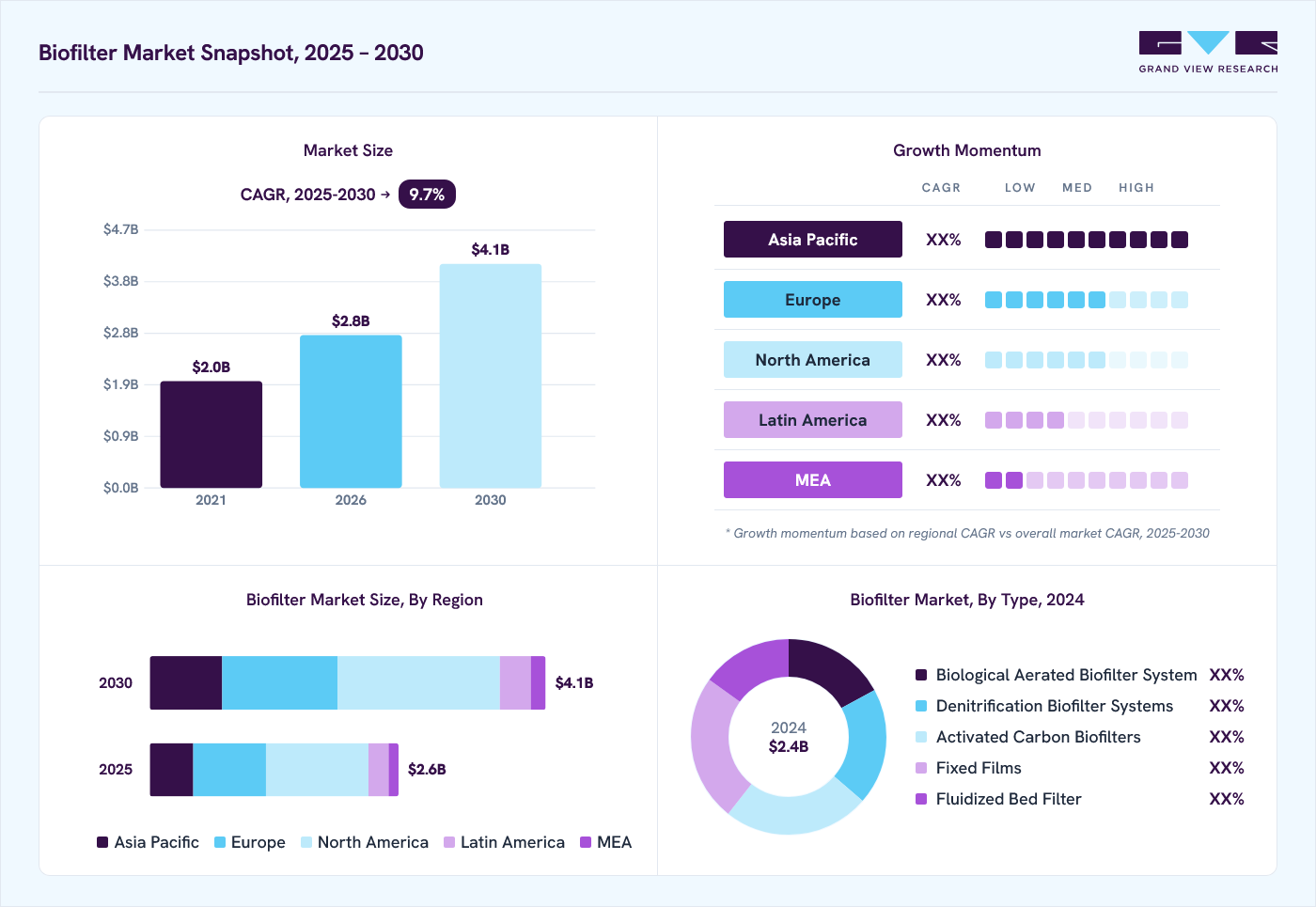
The global biofilter market size was valued at USD 2.6 billion in 2025 and is projected to grow from USD 2.8 billion in 2026 to USD 5.5 billion by 2033, at a CAGR of 10.1% from 2026 to 2033. North America dominated the market, accounting for a revenue share of 43.4% in 2025. The increasing applications for biofiltration are expected to drive the market's growth. Since, biofiltration has a wider application in wastewater treatment, gas and oil plants, petrochemicals, and paint industries, the growth remains promising.
 Source: Grand View Research, IR Documents, Primary Interviews, Paid DatabasesTo learn more about this report,
 Download Free Sample Report
 Key Market Trends & Insights
- By type: Activated carbon biofilters segment dominated the market, with a revenue share of 24.4% in 2025.
- By filter media: Ceramic ring segment held the largest market share of 34.0% in 2025.
- By application: Volatile organic compounds (VOC) treatment segment held the largest revenue share of 30.6% in 2025.
- By end use: Aquaculture segment accounted for the largest revenue share of 23.9% in 2025.
Regional Highlights
- Largest regional market: North America (43.4% revenue share, 2025)
- Fastest-growing regional market: Asia Pacific (highest CAGR, 2026-2033)
- By country: The U.S. held the largest market share in 2025.
Market Size & Forecast
- Market size in 2025: USD 2.6 Billion
- Estimated market size in 2026: USD 2.8 Billion
- Projected market size by 2033: USD 5.5 Billion
- CAGR (2026-2033): 10.1%
Three ways to get this report
Buy it, customize it, or ask a question.Ask an Analyst
A direct answer, usually in 1 working day
- AccessReport author, directly
- Reply timeWithin 1 working day
- No sales callDirect answer only
- FormatEmail reply
- CostFree, no cost
Get the Full Report
What the study covers
- FormatsPDF · Excel · Dashboard
- Timeline2026–2033 annual, 2025 base
- Coverage20+ countries, 5 regions
- Companies10+ key players profiled
Customize the Report
20% free customization
- IncludeCountries, segments, points
- TailorTo your product definition
- ExtendDeeper competitor detail
- OrA fully bespoke study
- Turnaround5–10 working days
Some examples of biofiltration are seaweeds, which filter pollutants released from the gills of fish and other aquaculture animals. According to research on horticulture from Penn State University, plant roots combined with limestone and soil can be used to create a biofilter to filter wastewater. Bacteria present in plant roots can eliminate pollutants and convert wastewater into a usable resource.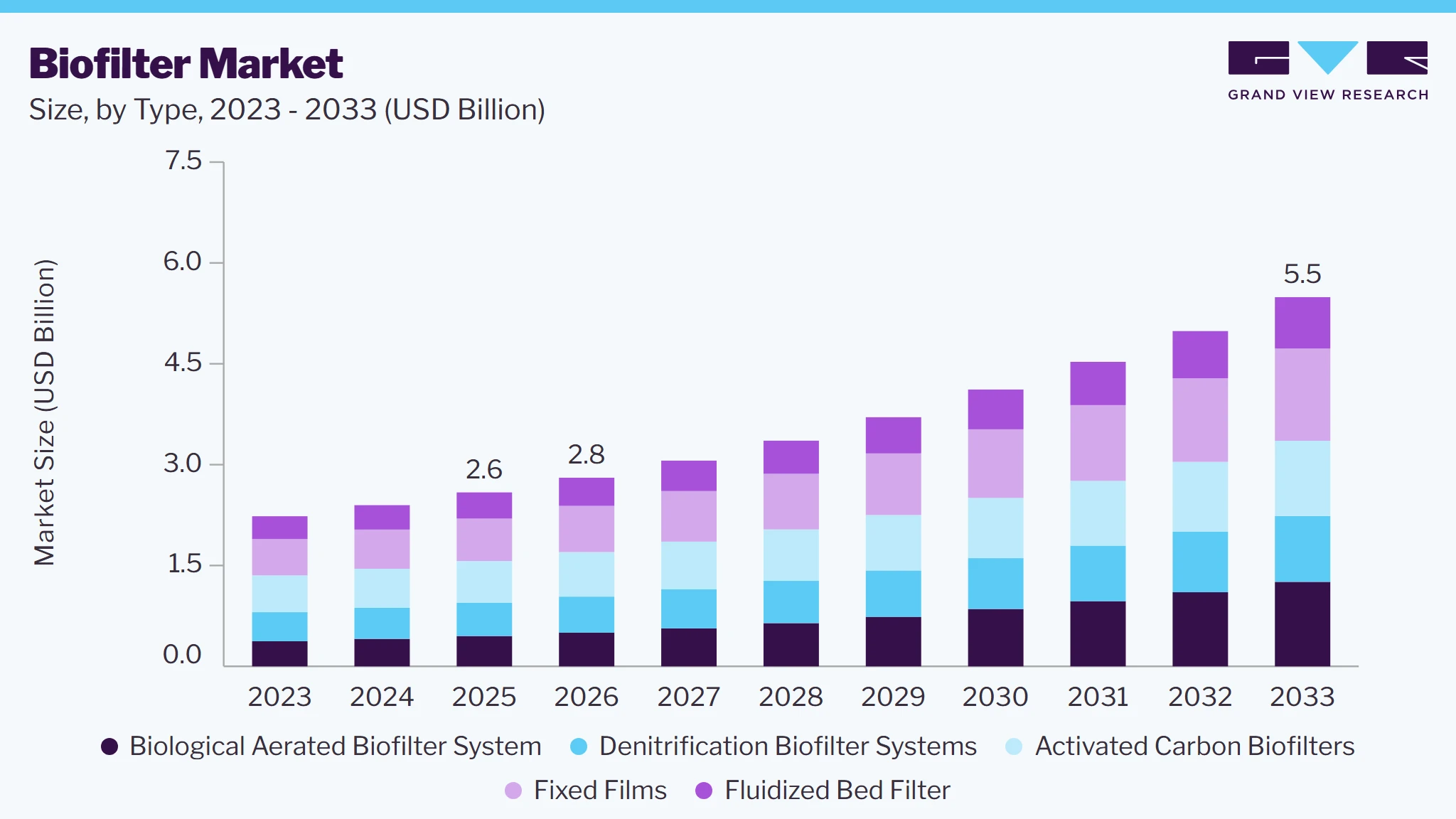 To learn more about this report, Download Free Sample Report
 The increasing initiatives and funding programs by universities to accelerate research in biofiltration are expected to support market growth. For instance, in December 2022, Hawai’i Pacific University received USD 188,000 grant from the National Oceanic and Atmospheric Administration. The funding is to assist in the scientific assessment of the biofiltration capacity of the limu, and its growth rate.
Similarly, in December 2022, the U.S. Department of Energy awarded USD 280,861 to North Carolina Agricultural and Technical State University for developing a system for biofiltration-microalgae symbiotic and microalgae-based biochar-hydrogel-iron composite. The system and composite are intended to enhance microalgal production in wastewater.
Furthermore, the regulatory bodies in developed countries are undertaking stringent actions to implement biofiltration systems for improving water quality. For instance, in November 2022, the New York state Department of Environmental Conservation (DEC) penalized the New England Waste Services of NY, Inc., Ontario Count, and Casella Waste Services of Ontario, LLC, for violating various environmental laws. The operators and facility owners are expected to pay USD 500,000 as a penalty. Around USD 250,000 will be invested by the authorities in setting up a biofiltration system in the Marsh Creek wastewater treatment plant.
Moreover, players in the market are constantly developing novel technologies to support biofiltration systems. At the Tekna aquaculture conference that was held in November 2022, NaturalShrimp, Inc. presented hydrogas and electrocoagulation technologies for the aquaculture industry. The technologies enable a system for zero liquid discharge without requiring water exchange to extract unnecessary nitrate buildup while using traditional methods of biofiltration. The development of novel technologies remains an integral part of the growth strategy in the industry.
Market Dynamics
Governments across regions enforce tighter limits on wastewater discharge, air emissions, and industrial effluents. These regulations require industries and municipalities to reduce pollutants such as biochemical oxygen demand (BOD), nitrogen compounds, volatile organic compounds (VOCs), and suspended solids, making biological treatment solutions increasingly essential. As compliance standards become more stringent and frequently updated, organizations are compelled to adopt advanced biofiltration systems to avoid penalties, ensure permit compliance, and meet environmental quality benchmarks.
In addition, regulatory frameworks are increasingly favoring sustainable and low-impact treatment technologies over chemical-intensive or energy-heavy alternatives. Biofilters align well with these priorities due to their lower operational energy requirements and reduced chemical usage, making them attractive for long-term compliance strategies. This shift is further reinforced by ESG mandates and sustainability reporting requirements, prompting both public and private sector operators to integrate biofiltration into their core environmental management systems.
High installation and maintenance costs act as a key restraint in the biofilter market, as advanced systems often require significant upfront capital investment in infrastructure, specialized media, and system integration. In addition to installation expenses, ongoing operational costs such as media replacement, monitoring systems, and periodic maintenance further increase the total cost of ownership. These financial requirements can be challenging for small and mid-sized municipalities and industries, particularly in cost-sensitive and developing regions, thereby limiting wider adoption despite the long-term environmental and operational benefits of biofiltration systems.
Analyst Perspective
The global biofilter market is entering a phase of sustained growth, supported by the increasing need for efficient and environmentally sustainable water and air treatment solutions across diverse end-use industries. Growing investments in aquaculture, wastewater treatment, and industrial emission control, coupled with tightening environmental regulations, are driving the adoption of biofiltration technologies as a cost-effective and eco-friendly alternative to conventional treatment methods. Market participants are focusing on innovations in biofilter media, modular designs, and smart monitoring capabilities to improve filtration efficiency, reduce operational costs, and extend system lifespan. Emerging applications in recirculating aquaculture systems (RAS), municipal water treatment, odor control, and industrial process filtration are further expanding the market's growth potential. Although challenges such as high capital investment, media replacement requirements, and performance variability under changing operating conditions persist, continuous technological advancements and increasing awareness of sustainable resource management are expected to support long-term market expansion. As industries worldwide prioritize water conservation, regulatory compliance, and operational efficiency, the biofilter market is well positioned for robust growth over the coming decade.
Type Insights
Based on type, the activated carbon biofilter segment led the market with the largest revenue share of 24.4% in 2025. The primary application of activated carbon biofilters is the treatment of municipal wastewater. Increasing environmental regulations, the need for efficient air and water purification, and technological advancements in filtration. Industrial expansion, especially in emerging economies, boosts demand for pollutant control solutions, while the focus on sustainability and green building initiatives further accelerates adoption. Additionally, activated carbon biofilters offer benefits such as cost-effectiveness and low-energy requirements, making them a preferred choice for industries aiming to reduce their environmental impact.
Biological aerated filter (BAFs) is the fastest-growing sub-segment in the market. It is expected to grow at a CAGR of 13.6% between 2025 and 2033. The Biological Aerated Filter (BAF) market is growing rapidly due to its high efficiency in treating wastewater and air pollution with a compact design requiring less space than traditional systems. BAF systems enhance microbial activity through aeration, leading to more effective pollutant removal while being energy-efficient. Their modular nature makes them suitable for both industrial and municipal applications, especially in areas with limited space. The focus on sustainable treatment solutions that reduce chemical usage and operational costs further drives their adoption across various industries
Filter Media Insights
Based on filter media, the ceramic ring segment led the market with the largest revenue share of 34.0% in 2025. It is considered to be significant biological filtration media for applications like filtration systems in aquariums. The ceramic ring filters the uneaten food waste, ammonia released from plant matter, and wastewater in fish tanks. Its advantages such as affordability, denitrifying bacteria, ease-of-use, long-lasting, and ease to clean application are expected to assist the segment to maintain its dominance during the forecast period.
Bio balls are anticipated to witness a significant growth rate of 10.5% from 2025 to 2033. The balls are also known as nitrate factories since it is designed with holes and grooves to accelerate the surface area. This results in the development of various stagnant areas where detritus can be easily captured. Its effectiveness in improving water quality is anticipated to be the key growth determinant of the segment.
Application Insights
Based on application, the Volatile organic compounds (VOC) treatment segment led the market with the largest revenue share of 30.6% in 2025. Various industries such as automobiles are mandated to build VOC treatment plants by regulatory bodies. For instance, in April 2022, the Michigan Department of Environment ordered a motor parts manufacturer, ZF Active Safety U.S. Inc. to install a treatment system forchlorinated volatile organic compounds. Since the presence of VOC posed a threat of contamination to the water supply of Milford village.
Odor abatement is projected to have the fastest growth rate of 12.9% during the forecasted period. Regulatory bodies such as Federal Clean Air Act (CAA), has not specifically designed regulation framework for odors. However, there are around 187 dangerous air pollutants that are required to be under control by the U.S. EPA. Biofiltration is one of the measures for removing gaseous pollutants.
End-use Insights
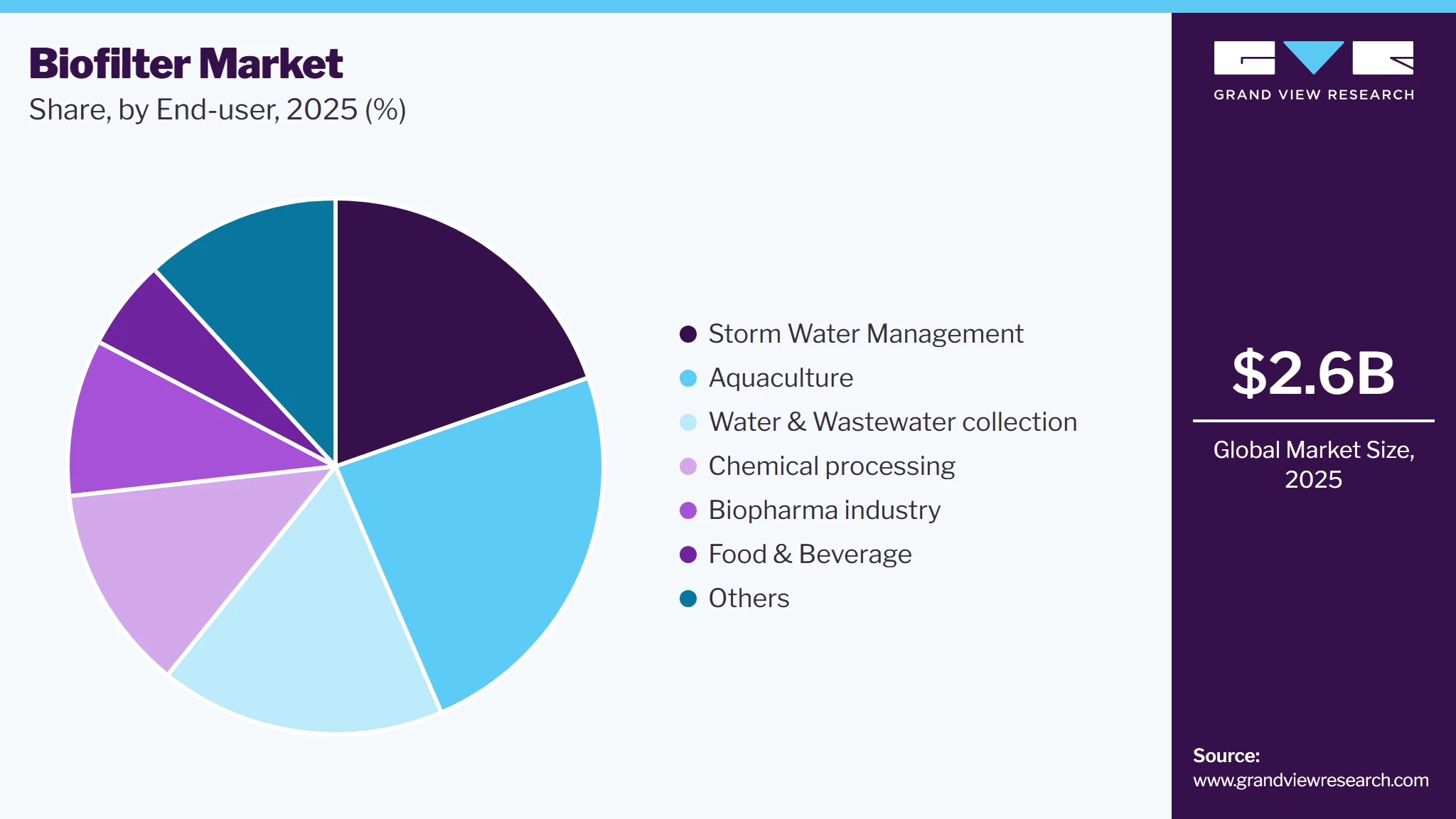
Based on end use, the aquaculture segment led the market with the largest revenue share of 23.9%. The demand for biofilters for aquarium cleaning and filtration is growing which boosts the biofiltration industry. As per recent research, biofilter manufacturers are developing cost-effective recirculating aquaculture systems (RAS) for small capital investment in fish farming. For instance, Aqua Shark Company collaborated with BioFishency company to develop simple operating RAS beneficial for fish farmers. The global biofilter industry is projected to exhibit significant growth in the upcoming years due to increased demand for fish farming. The market companies manufacturing biofilters mainly focus on improving the filtration rate and efficiency of the product and increasing sustainability. These factors enhance the overall productivity of the filters, which boosts the global biofiltration industry.
 To learn more about this report, Download Free Sample Report
 The water & wastewater collection segment is the fastest-growing segment for the biofiltration industry with an expected growth rate of 11.8% from 2025 to 2033. The increasing water scarcity in various parts of the globe is expected to accelerate the adoption of water reuse and the practice of wastewater treatment to make it drinkable. Biofiltration is an innovative technology to treat drinking water.
Regional Insights
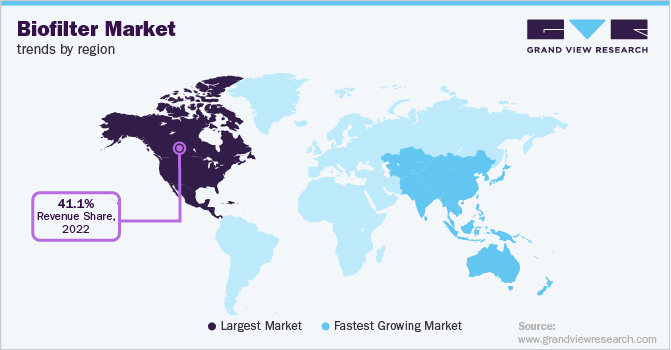
North America dominated the biofilter market with the largest revenue share of 43.4% in 2025, owing to the presence of major companies, extensive government funding, and an increase in research activities in the region. North America is the leading manufacturer of biofilters as the early implementation of biofiltration technique compared to other regions. The concept of self-cleaning aquariums with the application of biofiltration continues to boost market growth.
 To learn more about this report, Download Free Sample Report
 U.S. Biofilter Market Trends
The biofilter market in the U.S. held the largest share in the North America region in 2025. U.S. biofilter market growth is primarily driven by stringent environmental regulations and the need for sustainable water and air treatment solutions, with advanced technologies enhancing efficiency in water purification and industrial processes.
Europe Biofilter Market Trends
The European biofilter market is growing due to strict environmental regulations and a focus on sustainable practices. Countries like Germany and the UK are leading in biofilter adoption for air and water treatment, driven by the need to reduce emissions and enhance water quality. Technological innovations and green initiatives further support market expansion across the region
Biofilter market in Germany is fueled by its technological advancements in biofilter materials and systems, particularly for industrial and municipal applications, backed by strict environmental policies
The UK biofilter market benefits from strong governmental policies aimed at reducing industrial emissions and promoting clean technologies, which are driving innovation in biofiltration for water and air quality management.
Asia Pacific Biofilter Market Trends
Asia Pacific is expected to grow at the highest rate during the forecasted period. Since the region is considered to be a major fishery market globally, contributing to the growth of the market. Moreover, rising environmental concerns and strict wastewater treatment regulations have boosted the growth of biofilter market in this region. Major countries such as China, Japan, and India are driving this growth through investments in sustainable technologies and infrastructure, making biofiltration an essential component for environmental compliance.
Japan biofilter market is expanding due to its focus on integrating biofilters with intelligent environmental control systems and the development of compact, high-capacity solutions for both industrial and household use
Biofilter market in China also has a high focus on wastewater treatment, with water treatment plants for wastewater treatment for about 98.1% of municipalities and around 28% of rural areas. China Biofilter market growth is influenced by its severe air and water pollution issues, leading to increased demand for efficient biofilters as part of large-scale environmental clean-up and industrial regulation initiatives
Middle East & Africa Biofilter Market Trends
Saudi Arabia biofilter market is growing due to the need for water treatment solutions in its arid climate, along with investments in sustainable technologies for industrial wastewater management
Biofilter market in UAE is growing due to the country's emphasis on innovative environmental solutions and sustainable development goals, with a focus on air quality improvement and wastewater treatment.
Key Biofilter Company Insights
The continuous demand for biofiltration solutions by multiple end use has created numerous market opportunities for major players to capitalize on.
Key Biofilter Companies
The following key companies have been profiled for this study on the biofilter market.
-
Pentair Aquatic Eco-systems, Inc
-
Aquaneering, Inc.
-
AZOO BIO CORPORATION
-
EHEIM GmBh & Co. KG
-
Aquael
-
Veolia Water Technologies
-
Aqua Design Amano Co., Ltd.
-
Zoo Med Laboratories, Inc.
-
Waterlife Research Ind. Ltd.
-
ASE GmbH
Competitive Benchmarking
Category
Operating Strategies
Competitive Edge
Weakness
Established Players (Pentair Aquatic Eco-Systems, Inc., Aquaneering, Inc., Veolia Water Technologies,etc)
- Expand biofiltration portfolios by offering integrated water treatment systems for aquaculture, aquariums, and industrial water purification applications.
- Strong engineering expertise, diversified product portfolios, and well-established global distribution networks.
- High dependence on capital-intensive water treatment projects and fluctuating demand from aquaculture and industrial sectors.
Emerging Players (AZOO BIO CORPORATION, Aquael, Aqua Design Amano Co., Ltd., etc)
- Focus on innovative and application-specific biofiltration products for aquarium, ornamental fish, and small-scale aquaculture markets.
- Strong specialization in consumer-oriented filtration solutions with differentiated product designs and niche market expertise.
- Limited presence in large-scale industrial and municipal water treatment markets compared with established industry leaders.
Recent Development
-
In October 2024, Veolia Water Technologies opened a new Life Science center of excellence in Dublin, Ireland. This center is aimed at driving water treatment innovation, training, and growth in industries beyond the pharmaceutical, science, and healthcare industry in Europe.
-
In October 2024, Veolia Water Technology partnered with the University Area Joint Authority in State College, Pennsylvania, to implement its first biological hydrolysis system in North America. This collaboration aims to enhance decarbonized energy production in the region, supporting efforts to reduce carbon emissions and promote sustainable energy solutions.
-
In July 2024, Waterloo Biofilter Systems Inc. announced the acquisition of a specialist in advanced moving bed biofilm reactor technology, RH20, Inc. With this development, Waterloo expanded its technology portfolio.
Biofilter Market Report Scope
Report Attribute
Details
Market size in 2025
USD 2.6 billion
Estimated market size in 2026
USD 2.8 billion
Projected market size by 2033
USD 5.5 billion
Growth rate
CAGR of 10.1% from 2026 to 2033
Base year for estimation
2025
Historical data
2021 - 2024
Forecast period
2026 - 2033
Quantitative units
Revenue in USD million/billion and CAGR from 2026 to 2033
Report coverage
Revenue forecast, company ranking, competitive landscape, growth factors, and trends
Segments covered
Type, filter media, application, end-use, region
Regional scope
North America; Europe; Asia Pacific; Latin America; MEA
Country scope
U.S.; Canada; Mexico; UK; Germany; France; Spain; Italy; Sweden; Norway; Denmark; Russia; Japan; China; India; South Korea; Australia; Thailand; Brazil; Argentina; South Africa; UAE; Saudi Arabia; Kuwait
Key companies profiled
Pentair Aquatic Eco-systems, Inc; Aquaneering, Inc.; AZOO BIO CORPORATION; EHEIM GmBh & Co. KG; Aquael; Veolia Water Technologies; Aqua Design Amano Co., Ltd.; Zoo Med Laboratories, Inc.; Waterlife Research Ind. Ltd.; OASE GmbH
Customization scope
Free report customization (equivalent up to 8 analysts' working days) with purchase. Addition or alteration to country, regional & segment scope.
Pricing and purchase options
Avail customized purchase options to meet your exact research needs. Explore purchase options
Global Biofilter Market Report Segmentation
This report forecasts revenue growth at the global, regional, and country levels and provides an analysis of the latest industry trends in each of the sub-segments from 2021 to 2033. For this study, grand view research has segmented the global biofilter market report based on type, filter media, application, end-use, and region:
-
Type Outlook (Revenue, USD Million, 2021 - 2033)
-
Biological Aerated Biofilter System
-
Denitrification Biofilter Systems
-
Activated Carbon Biofilters
-
Fixed Films
-
Fluidized Bed Filter
-
-
Filter Media Outlook (Revenue, USD Million, 2021 - 2033)
-
Ceramic Rings
-
Bio Balls
-
Moving Bed Filter Media
-
Others
-
-
Application Outlook (Revenue, USD Million, 2021 - 2033)
-
VOC Treatment
-
Nitrification
-
Denitrification
-
Odor Abatement
-
Others
-
-
End-use Outlook (Revenue, USD Million, 2021 - 2033)
-
Storm Water Management
-
Water & Wastewater collection
-
Chemical processing
-
Food & Beverage
-
Aquaculture
-
Biopharma industry
-
Others
-
-
Regional Outlook (Revenue, USD Million, 2021 - 2033)
-
North America
-
U.S.
-
Canada
-
Mexico
-
-
Europe
-
Germany
-
UK
-
France
-
Italy
-
Spain
-
Denmark
-
Sweden
-
Norway
-
-
Asia Pacific
-
China
-
Japan
-
India
-
South Korea
-
Australia
-
Thailand
-
-
Latin America
-
Brazil
-
Mexico
-
Argentina
-
-
Middle East & Africa
-
South Africa
-
Saudi Arabia
-
UAE
-
Kuwait
-
-
Research Methodology
The biofilter market figures in this report are based on a proven research process that combines executive interviews with secondary research from proprietary databases, company filings, and recognized regulatory and institutional sources. Market size is built through value-chain sizing-reconciling supply-side and demand-side estimates-and triangulated with bottom-up and top-down approaches. Every estimate passes multiple levels of expert validation before publication, with each biofilter segment quantified using the revenue-capture definitions in the table below.
Segment Definition
Segment - Type
Revenue capture definition
Biological Aerated Biofilter System
Revenue is generated from biological aerated biofilter systems that utilize aeration and microbial activity to remove organic matter, ammonia, and other contaminants from water and wastewater in municipal and industrial treatment applications.
Denitrification Biofilter Systems
Revenue is generated from biofilter systems designed to biologically convert nitrate into nitrogen gas through microbial denitrification, supporting nutrient removal in wastewater treatment and aquaculture facilities.
Activated Carbon Biofilters
Revenue is generated from activated carbon-based biofilter systems that combine adsorption and biological degradation to remove volatile organic compounds (VOCs), odors, and dissolved contaminants from air and water streams.
Fixed Films
Revenue is generated from fixed-film biofilter systems in which microorganisms grow on stationary media to biologically degrade pollutants in wastewater and industrial effluents, offering stable and efficient treatment performance.
Fluidized Bed Filter
Revenue is generated from fluidized bed biofilter systems that employ suspended filter media to maximize microbial contact and enhance the removal of organic contaminants and nutrients in high-load treatment processes.
Segment - Filter Media
Revenue capture definition
Ceramic Rings
Revenue is generated from ceramic ring filter media that provide high surface area for microbial colonization, enabling efficient biological filtration in water treatment, aquaculture, and wastewater systems.
Bio Balls
Revenue is generated from bio ball filter media used to support beneficial bacterial growth for biological filtration in aquaculture, wastewater treatment, and industrial water recycling systems.
Moving Bed Filter Media
Revenue is generated from moving bed biofilm reactor (MBBR) filter media that facilitate microbial biofilm formation for high-efficiency biological treatment of municipal and industrial wastewater.
Others
Revenue is generated from alternative biofilter media, including plastic carriers, foam cubes, gravel, lava rock, and proprietary substrates used to support biological filtration across various treatment applications.
Segment - Application
Revenue capture definition
VOC Treatment
Revenue is generated from biofilter systems deployed to biologically remove volatile organic compounds (VOCs) from industrial exhaust gases, improving air quality and regulatory compliance.
Nitrification
Revenue is generated from biofilter solutions designed to biologically oxidize ammonia into nitrate, supporting water purification in municipal, industrial, and aquaculture applications.
Denitrification
Revenue is generated from biofilter technologies that biologically reduce nitrate concentrations by converting nitrate into nitrogen gas, improving water quality and meeting discharge standards.
Odor Abatement
Revenue is generated from biofilter systems that eliminate odor-causing compounds such as hydrogen sulfide and ammonia from wastewater plants, industrial facilities, and composting operations through biological treatment.
Others
Revenue is generated from biofilter applications including heavy metal removal, organic pollutant degradation, groundwater remediation, stormwater treatment, and specialty environmental filtration processes.
Segment - End-use
Revenue capture definition
Storm Water Management
Revenue is generated from biofilter systems installed to treat stormwater runoff by removing sediments, nutrients, heavy metals, and other pollutants before discharge into natural water bodies.
Water & Wastewater Collection
Revenue is generated from biofilter solutions used in municipal and industrial water and wastewater collection and treatment infrastructure to improve water quality and meet environmental regulations.
Chemical Processing
Revenue is generated from biofilter systems used in chemical, petrochemical, specialty chemical, and related manufacturing facilities to treat contaminated process water, industrial emissions, and odorous gases through biological filtration.
Food & Beverage
Revenue is generated from biofilter technologies used in food and beverage processing facilities for wastewater treatment, odor control, and process water purification to support regulatory compliance and sustainability.
Aquaculture
Revenue is generated from biofilter systems used in aquaculture and recirculating aquaculture systems (RAS) to maintain optimal water quality by removing ammonia, nitrites, and other harmful contaminants.
Biopharma Industry
Revenue is generated from biofilter solutions used in biopharmaceutical manufacturing facilities for process water treatment, wastewater management, and environmental emission control to ensure regulatory compliance.
Others
Revenue is generated from biofilter applications across additional industries, including mining, pulp & paper, agriculture, pharmaceuticals, oil & gas, and commercial facilities requiring biological air or water treatment solutions.
Delivered Customizations
This report has been delivered with the following In-depth customizations
Client Request
Customization Delivered
Value Adds
Biofilter System Cost Analysis
Delivered breakdown of installation cost, operating expenses, maintenance frequency, media replacement costs, and lifecycle economics across various biofilter systems.
Enables customers to assess total cost of ownership and improve pricing and procurement strategies.
Emerging Application Assessment
Analyzed growth opportunities in recirculating aquaculture systems (RAS), industrial odor control, greenhouse water treatment, urban water reuse, and decentralized wastewater treatment.
Helps clients identify high-growth application areas and diversify their product portfolio.
Innovation & Patent Landscape
Delivered assessment of recent patents, material innovations, smart monitoring integration, and R&D trends shaping next-generation biofilter technologies.
Supports innovation planning and identifies potential technology collaboration opportunities.
Frequently Asked Questions About This Report
The global biofilter market size was valued at USD 2.6 billion in 2025 and is estimated at USD 2.8 billion for 2026.
North America dominated the biofiltration market with a share of 43.4% in 2025.
Some key players operating in the biofilter market include Aquael, Aquaneering, Inc., EHEIM GmBh & Co. KG, Pentair Aquatic Eco-systems, Inc, Aqua Design Amano Co.,Ltd., Veolia Water Technologies, Aqua Design Amano Co.,Ltd., Zoo Med Laboratories, Inc., and others.
The biofiltration market is primarily driven by rising water pollution and the global spread of waterborne diseases. Furthermore, rising fish consumption also benefits biofilter manufacturers in aquaculture & fisheries and further boost the biofiltration market growth.
The global biofilter market is expected to grow at a CAGR of 10.1% from 2026 to 2033, reaching USD 5.5 billion by 2033.
Volatile organic compounds (VOC) treatment segment led the market with the largest revenue share of 30.6% in 2025 while odor abatement segment is expected to be the fastest-growing market.
Asia Pacific is the fastest-growing region over the forecast period.
Activated carbon biofilters segment dominated the market, with a revenue share of 24.4% in 2025 while biological aerated filter (BAFs) is segment is second fastest growing market.
Ceramic ring segment led the market with the largest revenue share of 34.0% in 2025.It is considered to be significant biological filtration media for applications like filtration systems in aquariums.
About the Author(s)
Biotechnology Research Team
Healthcare · BiotechnologyThis report was authored by the biotechnology research team at Grand View Research - comprising two research analysts, one senior research analyst, and one industry expert - with specialized expertise in the biotechnology segment of the healthcare industry. All findings are based on proprietary healthcare databases, executive interviews, and regulatory analysis, subject to internal peer review prior to publication.
Last Updated:
Speak to Analyst

Customize this report to your needs - add regions, segments, or data points, with 20% free customization.
Or view our licence options:


ISO 9001:2015 & 27001:2022 Certified
We are GDPR and CCPA compliant! Your transaction & personal information is safe and secure. For more details, please read our privacy policy.


