
- Home
- »
- Pharmaceuticals
- »
-
Boric Acid Suppository Market Size & Share Report, 2026-2033GVR Report cover

Boric Acid Suppository Market (2026 - 2033)
Size, Share & Trends Analysis Report By Drug Type, (Standard Boric Acid Suppositories, Combination Formulations), By Application (Vaginal Infection Treatment), By Distribution Channel, By Region, And Segment Forecasts
Market Size, 2025
$352.1MMarket Estimate, 2026
$365.0MMarket Forecast, 2033
$485.9MCAGR, 2026–2033
4.2%Boric Acid Suppository Market Summary
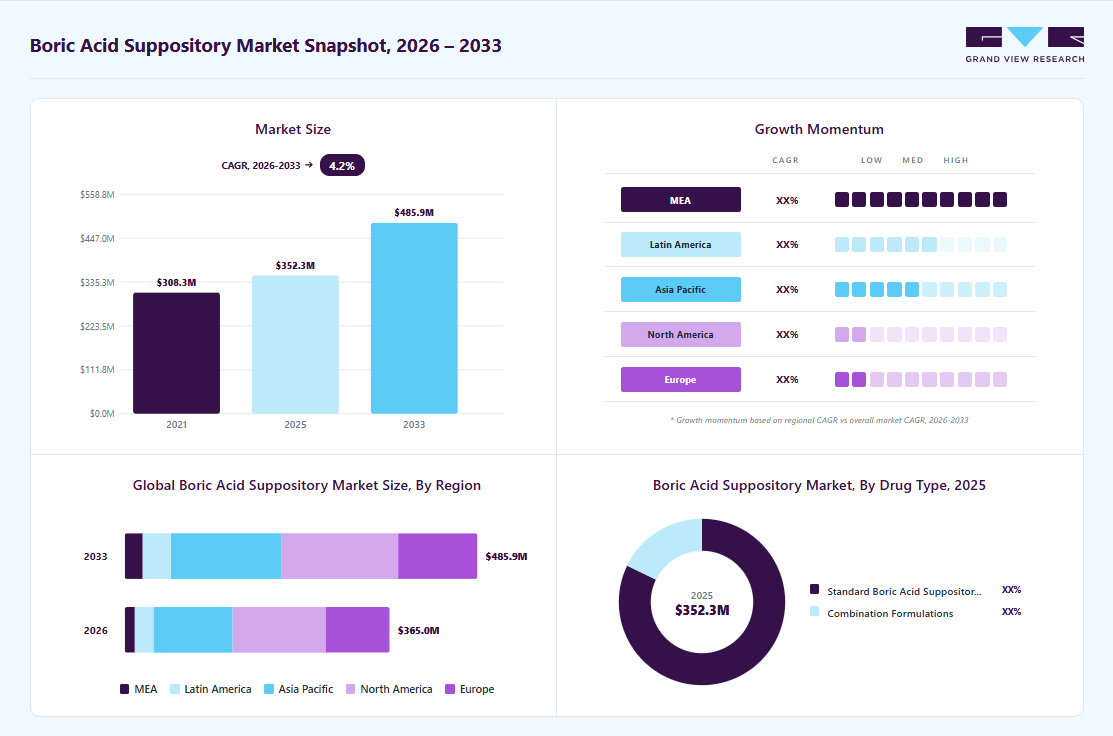
The global boric acid suppository market size was valued at USD 352.1 million in 2025 and is projected to grow from USD 365.0 million in 2026 to USD 485.9 million by 2033, at a CAGR of 4.2% from 2026 to 2033. North America dominated the market with the largest revenue share of 35.4% in the global market in 2025. The market is expanding due to the rising prevalence of vaginal infections, particularly recurrent yeast infections and bacterial vaginosis, which continue to affect a significant portion of the female population worldwide.
 Source: Grand View Research, IR Documents, Primary Interviews, Paid DatabasesTo learn more about this report,
 Download Free Sample Report
 Key Market Trends & Insights
- By drug type: Standard boric acid suppositories segment segment held the largest market share of 82.2% in 2025
- By application: Vaginal infection treatment segment segment held the largest market share of 70.1% in 2025.
- By distribution channel: Retail pharmacies segment held the largest market share of 61.0% in 2025.
Regional Highlights
- Largest regional market: North America (35.4% revenue share, 2025)
- Fastest-growing regional market: Middle East & Africa (highest CAGR, 2026-2033)
- By country: The U.S. held the largest market share in 2025.
Market Size & Forecast
- Market size in 2025: USD 352.1 Million
- Estimated market size in 2026: USD 365.0 Million
- Projected market size by 2033: USD 485.9 Million
- CAGR (2026-2033): 4.2%
Three ways to get this report
Buy it, customize it, or ask a question.Ask an Analyst
A direct answer, usually in 1 working day
- AccessReport author, directly
- Reply timeWithin 1 working day
- No sales callDirect answer only
- FormatEmail reply
- CostFree, no cost
Get the Full Report
What the study covers
- FormatsPDF · Excel · Dashboard
- Timeline2026–2033 annual, 2025 base
- Coverage20+ countries, 5 regions
- Companies10+ key players profiled
Customize the Report
20% free customization
- IncludeCountries, segments, points
- TailorTo your product definition
- ExtendDeeper competitor detail
- OrA fully bespoke study
- Turnaround5–10 working days
Many patients experience resistance or incomplete symptom relief from conventional antifungal therapies, which increases interest in alternative therapeutic options that address persistent conditions. Boric acid suppositories are recognized for restoring vaginal pH balance and supporting microbiome stability, which strengthens their clinical relevance in recurrent infection management. Growing awareness of intimate health and preventive care is encouraging consumers to seek targeted and accessible treatment solutions. Healthcare professionals are increasingly recommending boric acid as an adjunct therapy for recurrent conditions. For instance, February 2026, MDPI AG published a review on Therapeutic Tools for Vulvovaginal Candidiasis in the Journal of Fungi, in which vulvovaginal candidiasis was described as affecting approximately 75 % of women at least once in their lifetime and as being associated with recurrent episodes in defined subsets of patients, with detailed analysis of antifungal strategies and resistance considerations. Rising microbiome focused discussions are further strengthening demand across treatment and self-care segments.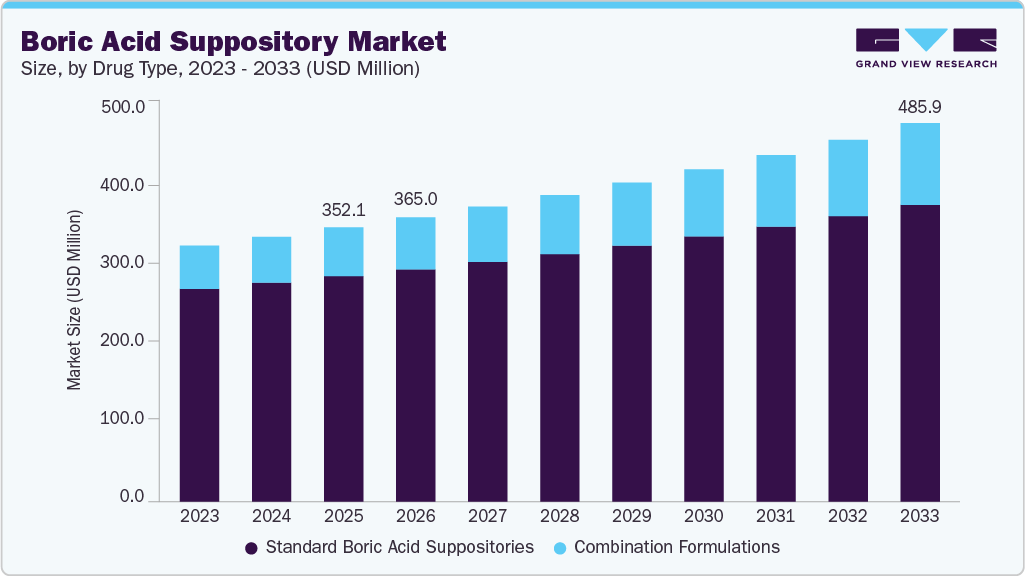 To learn more about this report, Download Free Sample Report
 Consumer behavior is shifting toward self-directed health management, supporting strong demand for over the counter feminine wellness products across developed and emerging economies. E commerce platforms provide discreet purchasing options, wider brand selection, and improved accessibility for consumers seeking privacy when buying intimate health products. Direct to consumer brands are investing in education focused marketing strategies that emphasize ingredient transparency, safety guidance, and microbiome health benefits, improving consumer trust and loyalty. Telehealth services are expanding access to consultations and treatment recommendations for vaginal health concerns, increasing exposure to boric acid based solutions. For instance, August 2025, ClinicalTrials.gov reported that a Phase 3 interventional study evaluating boric acid vaginal inserts had enrolled 201 participants, comparing 600 mg inserts against placebo in females aged 12 years and older, with a study start date of 31 August 2025 and primary and final completion dates of 30 June 2026, involving once daily administration for 7 days or 14 days with monitoring over 28 days. Product innovation and subscription models are further sustaining online revenue growth.
The boric acid suppository industry is further supported by increasing investments from women’s health companies and startups focused on intimate care solutions, driving product development and brand expansion. Companies are introducing diversified portfolios that include probiotics, pH balancing washes, and suppositories within integrated feminine care regimens, strengthening cross selling opportunities. Social media platforms and digital health communities are influencing purchasing decisions through peer driven information sharing, improving awareness and acceptance of boric acid products. Expansion into emerging markets is supported by improving awareness of vaginal health management and growing access to online pharmacies and retail distribution networks. For instance, November 2025, Springer Nature published a study in BMC Women’s Health analyzing intravaginal boric acid treatment in 52 women with three or more episodes within 12 months, where 600 mg daily for 14 days reduced Nugent scores from 7.8 ± 0.8 to 3.1 ± 1.0 with 88.5 % below 4, and improved multiple clinical indices while reporting mild adverse events in 7.7 % and 11.5 %. Retail expansion and telehealth partnerships are supporting sustained growth.
Market Concentration & Characteristics
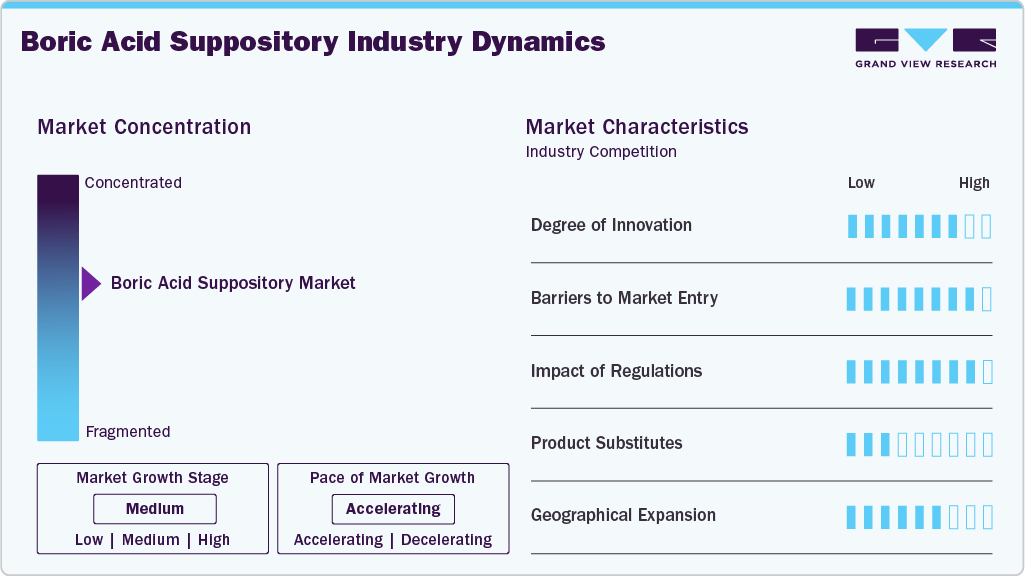
The boric acid suppository market demonstrates moderate innovation, with advancements primarily focused on formulation quality, safety, and user convenience. Companies are introducing vegan capsules, preservative free ingredients, and clean label positioning to appeal to health conscious consumers. Packaging improvements, including applicator based delivery systems and moisture resistant containers, are enhancing usability and product stability. Brands are integrating microbiome focused education and digital health support into their product ecosystems to strengthen differentiation. Innovation is also visible in combination products that include probiotics or soothing botanical ingredients. Overall, innovation remains incremental rather than disruptive, with emphasis on branding, formulation refinement, and consumer experience.
Barriers to entry in the boric acid suppository industry are relatively low to moderate, as boric acid is a widely available raw material and manufacturing processes are straightforward. Contract manufacturing and private label production enable new brands to enter the market with limited capital investment. However, establishing consumer trust in intimate health products requires strong branding, safety assurance, and clinical credibility. Distribution partnerships with pharmacies and major e commerce platforms can pose competitive challenges for new entrants. Regulatory classification differences across regions may create compliance complexities for smaller companies. Brand recognition and customer loyalty among established players can further limit rapid market penetration.
 To learn more about this report, Download Free Sample Report
 Regulatory impact varies significantly across regions, with boric acid suppositories classified as dietary supplements, medical devices, or compounded preparations depending on the jurisdiction. Companies must ensure compliance with labeling standards, ingredient safety requirements, and manufacturing quality guidelines to maintain market access. Safety warnings regarding proper vaginal use and toxicity risks associated with oral consumption are important regulatory considerations. Variability in classification can influence marketing claims, distribution channels, and healthcare provider recommendations. Regulatory scrutiny around women’s health products is gradually increasing, which may require stronger clinical evidence in the future. Compliance requirements can influence product development timelines and operational costs for manufacturers.
Product substitutes in the boric acid suppository market include antifungal medications, probiotic supplements, medicated creams, and prescription oral treatments used for vaginal infections. Conventional antifungal drugs remain the first line therapy for many patients, which creates competitive pressure for boric acid products. Vaginal probiotics and pH balancing gels are gaining popularity as preventive care alternatives among consumers focused on microbiome health. Natural remedies and home based treatments also represent indirect substitutes in certain markets. Physicians may recommend prescription therapies for severe or persistent infections, which can reduce reliance on boric acid products. The availability of multiple treatment options increases consumer choice and influences purchasing decisions.
Geographical expansion opportunities are strong, particularly in Asia Pacific, Latin America, and Middle East regions where awareness of intimate health products is increasing. Rising internet penetration and cross border e commerce are enabling brands to reach consumers beyond traditional retail channels. Companies are adapting packaging, labeling, and educational content to meet regional cultural preferences and language requirements. Urbanization and increasing female workforce participation are contributing to higher spending on personal health products. Partnerships with local distributors and online pharmacies are supporting market entry strategies in emerging economies. Expansion into new regions is expected to play a significant role in long term market growth and revenue diversification.
Drug Type Insights
The standard boric acid suppositories segment dominated the boric acid suppository industry, accounting for the largest revenue share of 82.19% in 2025, driven by strong consumer familiarity and extensive clinical usage for recurrent vaginal infections across global markets. These products are widely distributed through retail pharmacies, drugstores, and online platforms, supporting high purchase volumes and repeat usage trends. Healthcare professionals frequently recommend standard single ingredient formulations for managing recurrent vulvovaginal candidiasis and bacterial vaginosis, strengthening patient trust and sustained adoption. Their relatively lower cost compared to combination or advanced formulations improves accessibility across varied income groups, contributing to broader market penetration. For instance, August 2025, ClinicalTrials.gov reported that a Phase 3 clinical study sponsored by pH-D Feminine Health LLC had been initiated to evaluate 600 mg standard boric acid vaginal inserts in 201 female participants aged 12 years and older, with a study start date of 08 August 2025 and estimated completion on 30 June 2026, involving once daily administration for 14 days with monitoring through Day 28, reinforcing clinical validation and supporting continued segment dominance.
The combination formulations segment is projected to grow at a fastest CAGR of 6.65% over the forecast period, fueled by increasing consumer interest in multifunctional feminine health solutions and premium wellness positioning. Products incorporating probiotics, botanical extracts, soothing agents, or vitamins are gaining traction among health conscious consumers seeking comprehensive vaginal care approaches. Innovation in microbiome supportive ingredients is expanding product differentiation and enabling companies to position offerings within higher value categories. Companies are also introducing integrated wellness regimens that combine suppositories with complementary washes or supplements, strengthening cross selling opportunities and brand loyalty. For instance, November 2025, BioMed Central Ltd published a clinical trial in BMC Women’s Health that evaluated a combination formulation called TOL-463, which consisted of 600 mg boric acid and 0.6 mg ethylenediaminetetraacetic acid (EDTA), enrolling 89 female participants, including 50 with bacterial vaginosis and 39 with vulvovaginal candidiasis, where clinical cure rates reached 83.8 % (31 of 37) at Day 7 and 71.4 % (30 of 42) at Day 14, and Gardnerella vaginalis counts declined from 10⁶-10⁷ colony-forming units per mL to under 10³ per mL, demonstrating measurable therapeutic benefit. Rising awareness of preventive vaginal health management and premium positioning strategies are expected to accelerate long term segment expansion.
Application Insights
The vaginal infection treatment segment dominated the boric acid suppository market, accounting for the largest revenue share of 70.07% in 2025 due to the high prevalence of recurrent yeast infections and bacterial vaginosis among women globally across multiple age groups. Boric acid suppositories are widely used as an alternative or adjunct therapy in cases where conventional antifungal treatments show limited effectiveness or recurrence occurs frequently. Clinical familiarity and healthcare provider recommendations contribute to strong consumer trust in this application area, supporting sustained utilization. Patients experiencing persistent symptoms often seek accessible non prescription options, increasing demand across both developed and emerging markets. For instance, February 2026, MDPI AG published a review on Therapeutic Tools for Vulvovaginal Candidiasis in the Journal of Fungi, noting that vulvovaginal candidiasis affected approximately 75 % of women at some point in their reproductive years and that recurrent vulvovaginal candidiasis occurred in about 5 %-10 % of women with acute episodes, defined as two documented episodes within six months or more than three episodes per year, with an estimated 138 million women affected annually; the review further stated that topical azoles and oral fluconazole achieved clinical and mycological cure rates exceeding 80 %-90 %, and that 150 mg fluconazole administered three times every 72 hours followed by weekly 150 mg for six months maintained disease free status in over 90 % of patients, while newer agents demonstrated improved outcomes in Phase 3 trials. Product positioning emphasizing infection relief and rising awareness of treatment resistant cases continue to reinforce segment dominance.
The odor control / feminine hygiene segment is projected to grow at a CAGR of 6.08% over the forecast period owing to increasing consumer awareness regarding intimate wellness and personal hygiene, along with the rising demand for products that support freshness and comfort. Growing concerns related to vaginal odor, often associated with infections, hormonal changes, or lifestyle factors, are encouraging individuals to adopt preventive care solutions such as boric acid suppositories. Additionally, the shift toward discreet, self administered, and over the counter feminine care products is contributing to segment expansion. Manufacturers are also emphasizing natural, toxin free, and gynecologist recommended formulations, which is attracting health conscious consumers. Furthermore, the influence of social media education, influencer marketing, and improved product accessibility through online platforms and retail pharmacies is expected to support sustained growth in this segment over the forecast period.
Distribution Channel Insights
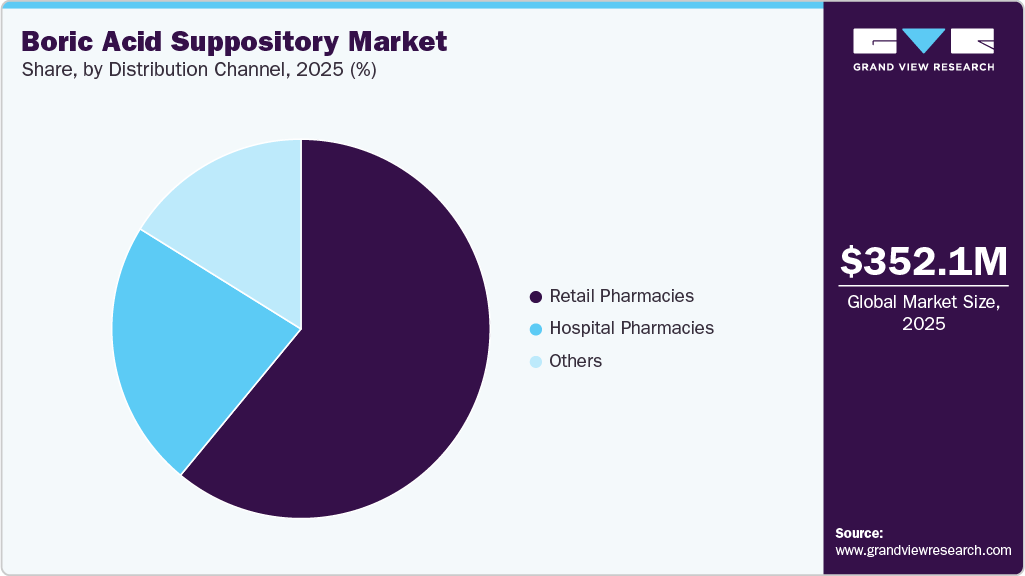
The retail pharmacies segment dominated the market with the largest revenue share of 60.98% in 2025, due to strong consumer trust in pharmacist guidance and convenient product accessibility across urban and suburban locations. Pharmacies provide immediate availability for patients seeking relief from acute symptoms, which supports high purchase frequency and impulse buying behavior. Established distribution relationships between manufacturers and pharmacy chains strengthen product visibility, shelf placement, and promotional opportunities within stores. Pharmacist recommendations influence consumer purchasing decisions, particularly for first time users who seek professional reassurance before using intimate health products. Brick and mortar stores continue to attract consumers who prefer in person consultation and confirmation of product authenticity prior to purchase. Consistent foot traffic, established supply chains, and wide geographic presence contribute to sustained segment leadership across regions. Retail pharmacy expansion into feminine wellness categories further reinforces dominance within the distribution landscape.
 To learn more about this report, Download Free Sample Report
 The others segment is projected to grow at a CAGR of 6.71% over the forecast period due to rapid expansion of e commerce platforms, online pharmacies, and direct to consumer healthcare models globally. Online purchasing offers privacy, convenience, and broader product selection for consumers seeking intimate health products, which encourages adoption across diverse demographics. Telehealth services are integrating consultation, diagnosis support, and home delivery treatment solutions, which improves accessibility and consumer engagement. Subscription programs, personalized treatment plans, and auto replenishment options are supporting repeat purchases through digital channels, which strengthens revenue growth potential. Social media marketing strategies and influencer engagement are increasing brand awareness across online communities and younger consumer groups. Expanding internet penetration, mobile commerce adoption, and digital payment infrastructure are expected to drive strong growth within this segment. Continuous innovation in digital healthcare delivery models will likely sustain the highest growth rate during the forecast period.
Regional Insights
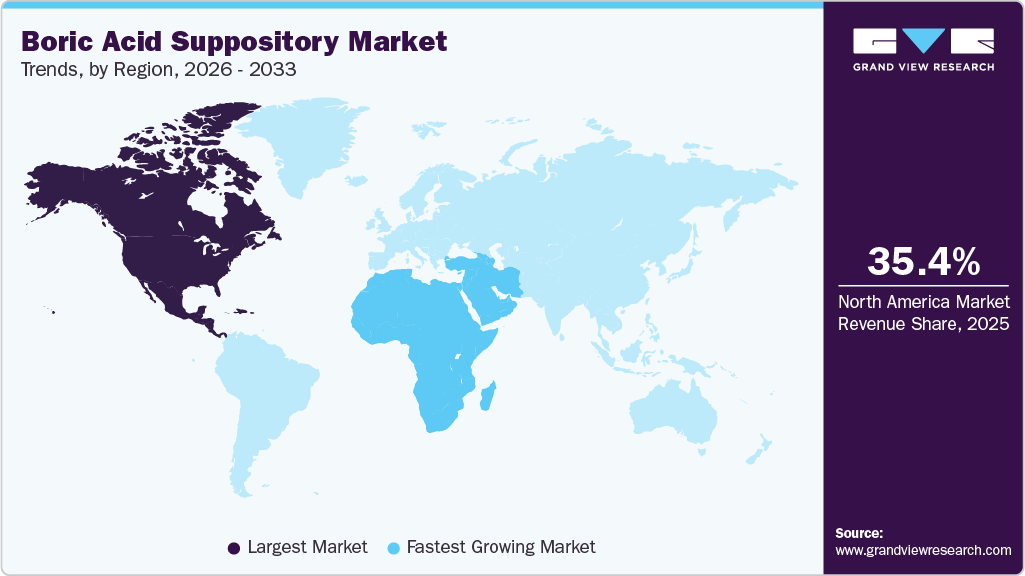
North America held the largest boric acid suppository industry share of 35.43% in 2025 due to high consumer awareness of vaginal health and strong adoption of over-the-counter feminine care products. The region benefits from widespread availability across retail pharmacies, online platforms, and specialty wellness stores. Healthcare providers frequently recommend boric acid for recurrent infections, which supports clinical acceptance and consumer confidence. Digital health platforms and telemedicine services are increasing access to treatment guidance, which expands product utilization. Consumers show strong interest in microbiome focused wellness and preventive care solutions, which strengthens demand. Established brands and advanced distribution networks continue to reinforce regional market leadership.
 To learn more about this report, Download Free Sample Report
 U.S. Boric Acid Suppository Market Trends
The U.S. boric acid suppository industry represents the largest share within North America, driven by high prevalence of recurrent vaginal infections and strong consumer purchasing power. E commerce penetration and direct to consumer marketing strategies are accelerating brand visibility across diverse demographics. Consumers actively seek alternative and adjunct therapies for persistent symptoms, which increases adoption of boric acid suppositories. The presence of leading feminine wellness brands contributes to extensive product availability and innovation. Social media education and influence driven awareness campaigns are shaping purchasing behavior across younger populations. Retail pharmacy expansion of intimate care product categories further supports consistent sales growth.
Europe Boric Acid Suppository Market Trends
Europe holds a significant market share due to increasing awareness of women’s intimate health and expanding demand for nonprescription therapeutic products. Consumers across the region demonstrate growing interest in natural and clinically supported solutions for recurrent infections. Pharmacy distribution channels remain an important access point, supported by professional guidance from healthcare practitioners. Clean label and safety focused formulations align with consumer preferences for transparent health products. Online health retail platforms are expanding product reach across multiple countries within the region. Market growth is supported by steady adoption trends and increasing product visibility.
The UK boric acid suppository market is growing steadily due to rising consumer education around vaginal microbiome health and self-care practices. Women are increasingly seeking accessible treatment options for recurring discomfort, which supports demand for boric acid suppositories. Community pharmacies play a major role in product awareness through pharmacist recommendations and consultations. Digital health resources and online retail platforms are expanding access to specialized feminine care products. Consumer preference for clinically credible yet nonprescription solutions is influencing purchasing behavior. Increasing openness in discussing intimate health concerns is contributing to sustained market expansion.
The boric acid suppository market in Germany demonstrates stable growth supported by strong healthcare awareness and consumer preference for quality certified health products. Pharmacy based distribution remains a primary channel, with consumers valuing professional advice when selecting intimate care treatments. Demand is influenced by increasing recognition of recurrent vaginal infections and interest in microbiome supportive therapies. Product quality standards and safety assurance play an important role in consumer purchasing decisions. E commerce adoption is expanding access to niche feminine wellness brands across urban populations. Market expansion is supported by steady consumer trust in scientifically positioned products.
The France boric acid suppository market is experiencing gradual growth, driven by rising awareness of feminine hygiene and preventive health practices. Consumers are showing increasing interest in natural ingredient based therapeutic solutions for recurring infections. Pharmacy networks remain central to distribution, supported by pharmacist engagement and product recommendations. Digital health content and educational campaigns are improving consumer understanding of vaginal pH balance and microbiome health. Premium wellness positioning and dermatologically tested formulations are appealing to health conscious buyers. Market demand is supported by evolving consumer attitudes toward intimate health management.
Asia Pacific Boric Acid Suppository Market Trends
The Asia Pacific boric acid suppository industry is experiencing significant growth due to the large female population base and increasing awareness of intimate health and hygiene solutions across the region. The rapid expansion of e commerce platforms has substantially improved product accessibility in both urban and semi urban areas, allowing consumers to easily obtain specialized feminine care products that were previously limited to select pharmacies. Rising disposable income levels and the continued growth of middle class populations are also encouraging higher spending on personal health and wellness products. In addition, consumers are becoming more open to preventive care approaches and self-treatment options for managing common vaginal infections. The entry of international brands through online marketplaces and regional distribution partnerships has further expanded availability, while gradual cultural shifts toward more open conversations around women’s health are contributing to increased product acceptance.
The Japan boric acid suppository market shows moderate growth, supported by strong consumer focus on hygiene, product safety, and premium quality healthcare solutions. Women demonstrate high interest in clinically validated products that align with strict quality expectations. Retail pharmacies and drugstores serve as primary distribution channels, supported by trusted brand positioning. Increasing awareness of recurrent infections among aging female populations contributes to steady demand. Packaging innovation and convenience oriented formats are influencing purchasing decisions among working professionals. Market expansion remains stable with emphasis on quality and reliability.
The boric acid suppository market in China represents a high growth market due to increasing urbanization, rising health awareness, and rapid expansion of online retail ecosystems. Younger consumers are engaging with digital health content, which improves awareness of vaginal health management options. Cross border e commerce platforms enable access to international feminine wellness brands, which strengthens product penetration. Rising disposable income supports spending on specialized personal care products across metropolitan areas. Social media driven education and influencer marketing are shaping consumer preferences and brand recognition. Market potential remains significant due to large population size and evolving healthcare awareness.
Latin America Boric Acid Suppository Market Trends
Latin America is experiencing emerging growth supported by increasing awareness of women’s health and improving access to personal care products. Urban populations are showing higher adoption of over the counter therapeutic solutions for common infections. Retail pharmacies and online platforms are expanding product availability across major cities. Consumers are seeking affordable and effective alternatives for recurrent symptoms, which supports interest in boric acid suppositories. Education through digital channels is improving understanding of vaginal health management. Market expansion is gradual with opportunities for further penetration across underserved areas.
The Brazil boric acid suppository market leads the Latin American market due to its large population base and growing consumer focus on personal hygiene and wellness products. Pharmacy chains play a significant role in distribution, supported by strong retail presence across urban centers. Rising awareness of recurrent infections among women is encouraging demand for alternative treatment options. E commerce growth is improving accessibility to niche and imported feminine wellness brands. Consumers demonstrate strong interest in cost effective yet reliable healthcare solutions. Market growth is supported by expanding product visibility and increasing health consciousness.
Middle East & Africa Boric Acid Suppository Market Trends
The Middle East and Africa boric acid suppository industry is expected to register the fastest CAGR of 8.84% over the forecast period due to increasing awareness regarding women’s intimate health, improving access to healthcare products, and the gradual expansion of retail pharmacy and e commerce distribution channels across the region. Rising prevalence of vaginal infections, coupled with limited access to specialized gynecological care in certain areas, is encouraging the adoption of affordable and over the counter treatment alternatives such as boric acid suppositories. Additionally, growing urbanization, changing lifestyle patterns, and increasing disposable income levels are supporting demand for personal care and preventive health products. Market growth is further driven by the entry of international brands, expanding digital health education initiatives, and improving regulatory environments that facilitate the availability of feminine healthcare products across key countries in the region.
The Saudi Arabia boric acid suppository market represents a key space within the Middle East due to increasing awareness of personal health and hygiene among women. Retail pharmacies and hospital linked pharmacies serve as primary distribution channels for intimate care products. Consumers are showing growing interest in discreet and effective solutions for recurrent vaginal discomfort. Online purchasing platforms are gaining popularity, which improves accessibility and privacy for buyers. Premium product positioning and quality assurance influence purchasing decisions across higher income groups. Market growth is supported by changing lifestyle patterns and increasing health awareness among women.
Key Boric Acid Suppository Company Insights
The pH-D Feminine Health and AZO (i-Health / DSM brand) maintain strong market positions through extensive retail pharmacy distribution, brand recognition, and clinically positioned feminine wellness products. Love Wellness and The Honey Pot Company emphasize clean label formulations, plant based positioning, and consumer education focused on vaginal microbiome balance, which strengthens engagement among younger demographics. Vitanica and NewLife Naturals focus on practitioner trusted supplements and women’s health formulations, which supports credibility within integrative and specialty health channels. NutraBlast (NutraBio Labs) competes in the value oriented segment through online marketplaces with broad consumer reach and competitive pricing strategies. Wisp and Evvy are expanding market presence through telehealth driven care models that integrate consultation, diagnosis support, and home delivered treatment solutions, which improves accessibility and convenience. Monistat leverages established brand equity in vaginal health treatments to expand into boric acid based maintenance products, contributing to competitive intensity across both OTC and digital health distribution channels.
Key Boric Acid Suppository Companies:
The following key companies have been profiled for this study on the boric acid suppository market.
- pH-D Feminine Health
- AZO (i-Health / DSM brand)
- Love Wellness
- NutraBlast (NutraBio Labs)
- The Honey Pot Company
- Vitanica
- NewLife Naturals
- Evvy (compounded / telehealth model)
- Wisp (direct-to-consumer telehealth)
- Monistat
Recent Developments
-
In August 2025, BioSpace reported that pH-D Feminine Health had launched the first U.S. Food and Drug Administration cleared Phase 3 clinical trial for boric acid suppositories for yeast infections, structured as a randomized, placebo controlled, double blinded study across nearly 20 sites nationwide, with anticipated completion in June 2026, and referencing clinical guidance supporting 600 mg vaginal boric acid use in non-pregnant women, marking a regulatory milestone toward potential New Drug Application submission.
-
In November 2024, NewLife Naturals published a blog explaining how boric acid vaginal suppositories supported vaginal health during menopause by addressing common symptoms linked to declining estrogen, such as dryness, discomfort, and increased infection risk, highlighting that these suppositories were available in counts of 30, 60, and 90 to meet different needs, and noting that a typical 600 mg suppository was usually inserted vaginally at bedtime for 7 to 14 days to help restore the vagina’s pH to a healthy, slightly acidic level, reduce recurring infections, and relieve itching and irritation in menopausal women.
-
In April 2024, Love Wellness had been completed to evaluate the effects of a boric acid suppository on vaginal health and bacterial vaginosis, enrolling 40 female participants aged 18 years and older, with the study starting on 5 April 2024 and both primary and overall completion on 5 July 2024, in which participants used 600 mg boric acid suppositories once daily for 7 consecutive days when experiencing vaginal imbalance signs and completed questionnaires and vaginal pH tests at baseline, Day 3, Day 7, and Day 8 to assess outcomes.
Boric Acid Suppository Market Report Scope
Report Attribute
Details
Market size in 2025
USD 352.1 million
Estimated Market size in 2026
USD 365.0 million
Projected Market size by 2033
USD 485.9 million
Growth rate
CAGR of 4.2% from 2026 to 2033
Base year for estimation
2025
Historical data
2021 - 2024
Forecast period
2026 - 2033
Quantitative units
Revenue in USD million and CAGR from 2026 to 2033
Report coverage
Revenue forecast, company ranking, competitive landscape, growth factors, trends
Segments covered
Drug type, application, distribution channel, and region
Regional scope
North America; Europe; Asia Pacific; Latin America; Middle East & Africa
Country scope
U.S.; Canada; Mexico; UK; Germany; France; Italy; Spain; Denmark; Sweden; Norway; China; Japan; India; Australia; South Korea; Thailand; Brazil; Argentina; South Africa; Saudi Arabia; UAE; Kuwait
Key company profiled
pH-D Feminine Health; AZO (i-Health / DSM brand); Love Wellness; NutraBlast (NutraBio Labs); The Honey Pot Company; Vitanica; NewLife Naturals; Evvy (compounded / telehealth model); Wisp (direct-to-consumer telehealth);Monistat
Customization scope
Free report customization (equivalent up to 8 analysts working days) with purchase. Addition or alteration to country, regional & segment scope.
Pricing and purchase options
Avail customized purchase options to meet your exact research needs. Explore purchase options
Global Boric Acid Suppository Market Report Segmentation
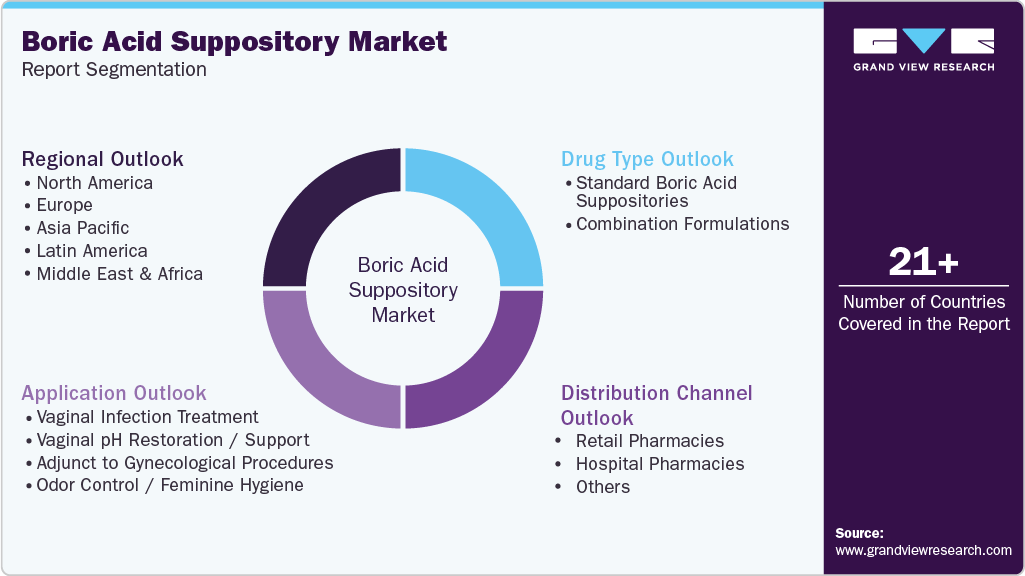
This report forecasts revenue growth at the global, regional, and country levels and provides an analysis of the latest industry trends in each of the sub-segments from 2021 to 2033. For this study, Grand View Research has segmented the global boric acid suppository market report based on drug type, application, distribution channel, and region:
 To learn more about this report, Download Free Sample Report
 -
Drug Type Outlook (Revenue, USD Million, 2021 - 2033)
-
Standard Boric Acid Suppositories
-
Combination Formulations
-
-
Application Outlook (Revenue, USD Million, 2021 - 2033)
-
Vaginal Infection Treatment
-
Vaginal pH Restoration / Support
-
Adjunct to Gynecological Procedures
-
Odor Control / Feminine Hygiene
-
-
Distribution Channel Outlook (Revenue, USD Million, 2021 - 2033)
-
Retail Pharmacies
-
Hospital Pharmacies
-
Others
-
-
Regional Outlook (Revenue, USD Million, 2021 - 2033)
-
North America
-
U.S.
-
Canada
-
Mexico
-
-
Europe
-
UK
-
Germany
-
France
-
Italy
-
Spain
-
Denmark
-
Sweden
-
Norway
-
-
Asia Pacific
-
Japan
-
China
-
India
-
Australia
-
South Korea
-
Thailand
-
-
Latin America
-
Brazil
-
Argentina
-
-
Middle East & Africa
-
South Africa
-
Saudi Arabia
-
UAE
-
Kuwait
-
-
Frequently Asked Questions About This Report
Middle East & Africa is the fastest-growing region over the forecast period.
The standard boric acid suppositories held the market with the largest revenue share of 82.2% in 2025, while combination formulations is the fastest-growing segment.
The vaginal infection treatment segment held the market with the largest revenue share of 70.1% in 2025, while odor control/feminine hygiene is the fastest-growing segment.
The retail pharmacies segment held the market with the largest revenue share of 61.0% in 2025, while others is the fastest-growing segment.
The global boric acid suppository market is expected to grow at a CAGR of 4.2% from 2026 to 2033, reaching USD 485.9 million by 2033.
North America dominated with a revenue share of 35.4% in 2025.
Some of the key players in boric acid suppository market are pH-D Feminine Health, AZO, Love Wellness, NutraBlast (NutraBio Labs), The Honey Pot Company, Vitanica, NewLife Naturals
The boric acid suppository market is expanding due to the rising prevalence of vaginal infections, particularly recurrent yeast infections and bacterial vaginosis, which continue to affect a significant portion of the female population worldwide.
The global boric acid suppository market size was valued at USD 352.13 million in 2025 and is expected to reach USD 365.04 million in 2026.
About the Author(s)
Pharmaceuticals Research Team
Healthcare · PharmaceuticalsThis report was authored by the pharmaceuticals research team at Grand View Research - comprising two research analysts, one senior research analyst, and one industry expert - with specialized expertise in the pharmaceuticals segment of the healthcare industry. All findings are based on proprietary healthcare databases, executive interviews, and regulatory analysis, subject to internal peer review prior to publication.
Last Updated:
Speak to Analyst

Customize this report to your needs - add regions, segments, or data points, with 20% free customization.
Or view our licence options:


ISO 9001:2015 & 27001:2022 Certified
We are GDPR and CCPA compliant! Your transaction & personal information is safe and secure. For more details, please read our privacy policy.


