
- Home
- »
- Clinical Diagnostics
- »
-
Breast Cancer Liquid Biopsy Market Size, Share Report 2033GVR Report cover

Breast Cancer Liquid Biopsy Market (2026 - 2033)
Size, Share & Trends Analysis Report By Circulating Biomarkers (Circulating Tumor Cells, Circulating Cell-free DNA, Extracellular Vesicles), By Application (Early Detection/Screening, Diagnosis, Monitoring), By Region, And Segment Forecasts
Market Size, 2025
$624.2MMarket Estimate, 2026
$770.1MMarket Forecast, 2033
$2,795.5MCAGR, 2026–2033
20.2%Breast Cancer Liquid Biopsy Market Trends
The global breast cancer liquid biopsy market size was valued at USD 624.2 million in 2025 and is projected to grow from USD 770.1 million in 2026 to USD 2,795.5 million by 2033, at a CAGR of 20.2% from 2026 to 2033. North America dominated the market, accounting for a revenue share of 46.7% in 2025. The growth can be attributed to factors such as the increasing prevalence of breast cancer among the population and the need to provide diagnosis solutions at a faster time than other tissue biopsy techniques making treatment decisions easier for doctors.
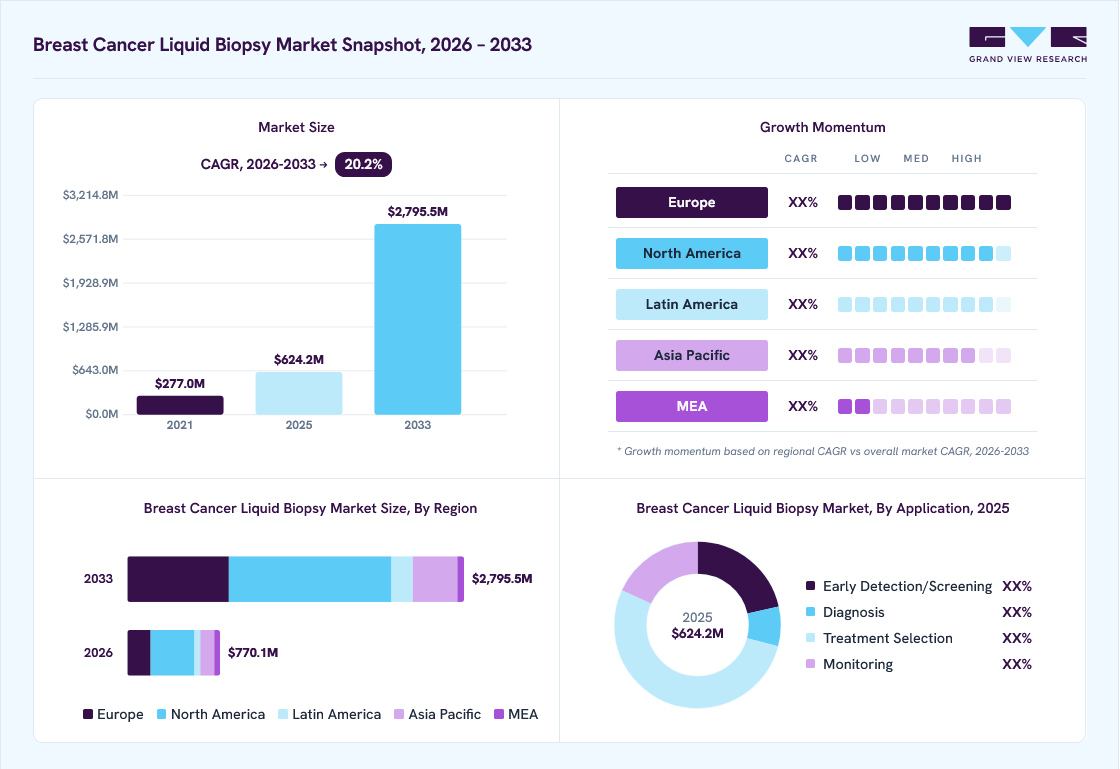 Source: Grand View Research, IR Documents, Primary Interviews, Paid DatabasesTo learn more about this report,
 Download Free Sample Report
Key Market Trends & Insights
- By circulating biomarkers: Circulating cell-free DNA segment led the market with the largest revenue share of 55.9% in 2025.
- By application: Treatment selection segment led the market with the largest revenue share of 52.7 % in 2025.
Regional Highlights
- Largest regional market: North America (46.7% revenue share, 2025)
- Fastest-growing regional market: Europe (highest CAGR, 2026-2033)
- By country: The U.S. held the largest market share in 2025.
Market Size & Forecast
- Market size in 2025: USD 624.2 Million
- Estimated market size in 2026: USD 770.1 Million
- Projected market size by 2033: USD 2,795.5 Million
- CAGR (2026-2033): 20.2%
Three ways to get this report
Buy it, customize it, or ask a question.Ask an Analyst
Analyst response in 1 business day
- AccessReport author, directly
- Reply timeWithin 1 working day
- No sales callDirect answer only
- FormatEmail reply
- CostFree, no cost
Get the Full Report
What the study covers
- FormatsPDF · Excel · Dashboard
- Timeline2026–2033 annual, 2025 base
- Coverage20+ countries, 5 regions
- Companies10+ key players profiled
Customize the Report
20% free customization
- IncludeCountries, segments, points
- TailorTo your product definition
- ExtendDeeper competitor detail
- OrA fully bespoke study
- Turnaround5–10 working days
Moreover, a majority of liquid biopsies used today are for breast and colorectal cancer, which further propels the demand. For instance, in 2022, according to the World Health Organization, breast cancer was one of the most commonly occurring cancers in 157 countries among 185 nations worldwide. Rising screening rates are a priority for many hospitals and community health clinics. Traditional methods of screening have many drawbacks and are also inconvenient for many patients. In such a situation, there is increasing demand for non-invasive breast cancer diagnosis. In the last few years tremendous shift from traditional screening to advanced liquid biopsies has been observed, making it one of the prime factors to increase the market growth.One of the major advantages associated with liquid biopsy is the less time consumption associated with the procedure. Tissue biopsy is derived from localized sources that limit the diagnostic information that the physicians may rely upon for determining and evaluating the patient’s response to treatment. Whereas results from liquid biopsies tend to provide an easier way to understand the recurrence of cancer than tissue biopsies help in determining and providing faster therapy decisions to doctors.
 To learn more about this report, Download Free Sample Report
Breast cancer is one of the most common applications of liquid biopsy, helping in identifying appropriate targeted therapy on the basis of mutational analysis. For instance, determining the next course of treatment for patients with metastatic illness can be aided by testing for the PIK3CA mutation that exists in about 40% of all HR-positive breast tumours. Moreover, the evolving MRD detection through the circulating tumor DNA provides promising and transformative applications within oncology for liquid biopsy.
Technological advancements in breast cancer liquid biopsy and regulatory approvals from the authorities of different countries are making the test more accessible to patients. In March 2023, REVEAL GENOMICS, S.L., a Barcelona-based biotechnology start-up seeking to revolutionize precision oncology through biomarker innovation, announced a new addition to its pipeline consisting of a novel biomarker approach in liquid biopsy for patients with advanced cancer.
Market Dynamics
The breast cancer liquid biopsy market is expanding as healthcare providers increasingly adopt minimally invasive diagnostic approaches to support early detection, treatment selection, and disease monitoring throughout the breast cancer care continuum. Growing use of circulating tumor DNA and other blood based biomarkers is improving the identification of actionable genomic alterations while reducing dependence on repeated tissue biopsies. The market is further supported by advances in companion diagnostics and the expanding use of precision oncology in routine clinical practice. For instance, in May 2026, Guardant Health received FDA approval for the expanded Guardant360 CDx liquid biopsy panel, adding clinically reportable genomic alterations and expanding companion diagnostic capabilities for solid tumors, including advanced breast cancer. The approval reinforced the clinical utility of liquid biopsy testing and encouraged broader adoption of molecular diagnostics in oncology care. Continued expansion of clinically validated assays and increasing integration of liquid biopsy into personalized treatment strategies are expected to sustain market growth over the forecast period.
The growing adoption of precision oncology and increasing focus on monitoring disease recurrence are key drivers of the breast cancer liquid biopsy market. Clinicians are adopting blood based biomarker analysis to detect minimal residual disease, evaluate treatment response, and identify actionable molecular alterations without relying on invasive tissue biopsies. Continuous improvements in circulating tumor DNA assays and expanding clinical evidence are strengthening confidence in liquid biopsy for managing both early stage and metastatic breast cancer. For instance, in 2025, Exact Sciences continued the EXActDNA 003 NSABP B 64 study in collaboration with the NSABP Foundation to evaluate an investigational blood based liquid biopsy assay for predicting recurrence in high risk early stage breast cancer patients receiving neoadjuvant therapy. The ongoing study highlights the expanding clinical utility of liquid biopsy in recurrence monitoring and is expected to accelerate its integration into precision oncology, reinforcing long term market growth.
Limited clinical standardization and inconsistent reimbursement policies continue to restrain the growth of the breast cancer liquid biopsy market. Although liquid biopsy offers a minimally invasive approach for molecular profiling and disease monitoring, variations in assay sensitivity, biomarker interpretation, and laboratory validation protocols affect the consistency of test results across healthcare settings. Many clinicians and payers continue to require stronger evidence demonstrating long term clinical utility and cost effectiveness before incorporating liquid biopsy into routine breast cancer management. These challenges can delay regulatory acceptance, reimbursement decisions, and adoption in community healthcare facilities, particularly in developing markets. For instance, in December 2025, Guardant Health partnered with Trial Library to integrate liquid biopsy results with AI enabled clinical trial matching for oncology patients. The collaboration reflects ongoing industry efforts to strengthen the clinical value of liquid biopsy, while highlighting the continued need for standardized evidence and broader healthcare acceptance to support widespread market adoption.
Strategic investments and consolidation across the molecular diagnostics industry are creating significant growth opportunities for the breast cancer liquid biopsy market. Companies are expanding their precision oncology portfolios through acquisitions and partnerships to strengthen research capabilities, accelerate commercialization, and improve access to advanced liquid biopsy technologies. Increasing investment in biomarker discovery, companion diagnostics, and next generation sequencing platforms is also supporting the development of more comprehensive blood-based testing solutions for breast cancer. These initiatives are expected to enhance product availability and expand the clinical use of liquid biopsy across diverse healthcare settings. For instance, in November 2025, Abbott announced the acquisition of Exact Sciences in a transaction valued at approximately USD 21 million, strengthening its position in molecular diagnostics and expanding investment in liquid biopsy technologies, including breast cancer applications. The acquisition is expected to accelerate innovation, broaden commercialization opportunities, and support the long-term expansion of the breast cancer liquid biopsy market.
Analyst Perspective
The Breast Cancer Liquid Biopsy market is poised for sustained growth as precision oncology increasingly shifts toward minimally invasive diagnostic approaches. Expanding clinical evidence supporting circulating tumor DNA and circulating tumor cell analysis is strengthening the role of liquid biopsy in early detection, treatment selection, and disease monitoring. Ongoing advancements in next generation sequencing, companion diagnostics, and biomarker discovery are enhancing assay accuracy and clinical utility. Market participants are focusing on regulatory approvals, strategic collaborations, and portfolio expansion to strengthen their competitive positions. As reimbursement frameworks evolve and clinical adoption broadens, liquid biopsy is expected to become an integral component of personalized breast cancer management across global healthcare systems.
Circulating Biomarkers Insights
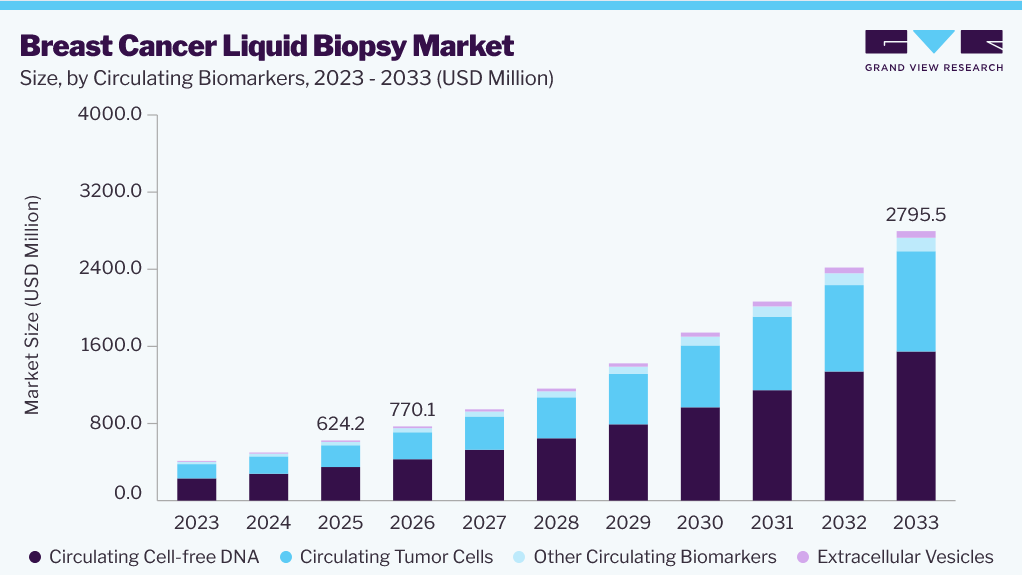
Based on circulating biomarkers, the circulating cell-free DNA segment led the market with the largest revenue share of 55.9% in 2025. This growth is driven by the convenience of the non-invasive approach offered by cfDNA that simplifies prognosis and also diagnoses recurrence or progression of the condition. This technique offers several advantages over traditional tissue biopsies, including the detection of drug resistance, drug response, and real-time monitoring of tumor prognosis at multiple time points. Numerous businesses provide cfDNA-based products for use in scientific research. Consistent research and product launches are under progress to use cfDNA as the means of detecting cancer. For instance, in April 2023, QIAGEN announced the launch of QIAseq targeted cfDNA ultra panels to enable easy and speedy diagnosis of cancers, including breast cancer.
The circulating tumor cells (CTCs) segment is anticipated to grow at the fastest CAGR of 9.4% over the forecast period. There has been ongoing research to specify the utility of CTCs in early-stage breast cancer. In recent years, remarkable improvement has taken place in increasing the efficiency and accuracy of the isolation of CTCs from peripheral blood samples. Many players are actively introducing new kits to detect cancer using ctDNA. For instance, in November 2023, Illumina, Inc. launched version 2 of the TruSight Oncology 500 ctDNA kit to ensure precise genomic profiling of solid tumors. This version of the assay kit provides faster results with great analytical sensitivity.
Application Insights
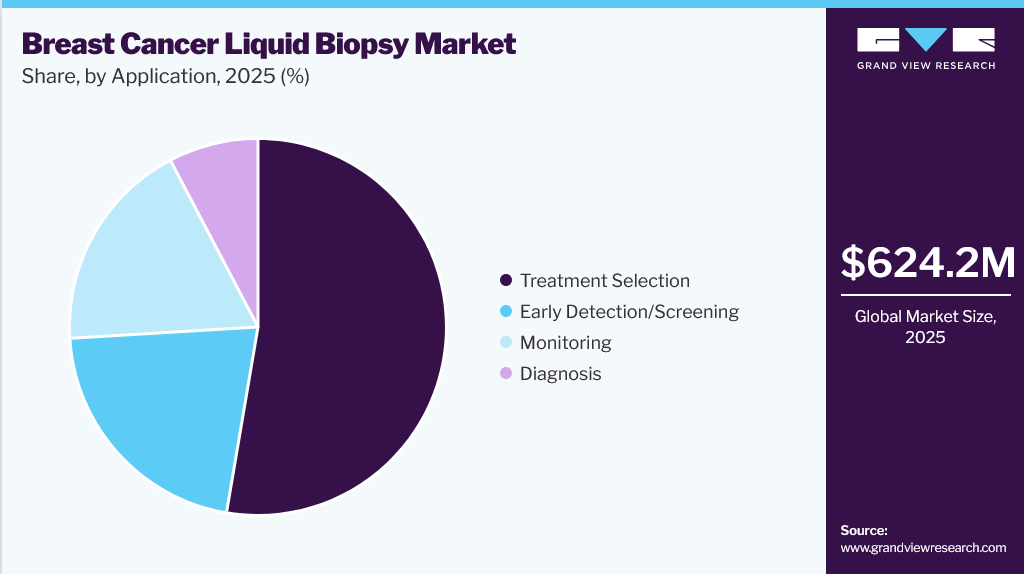
Based on application, the treatment selection segment led the market with the largest revenue share of 52.7 % in 2025, attributed to the need to provide early treatment. Liquid biopsies have proved to be an essential tool for enhancing the importance of early detection, management, and characterization of breast cancer in the early stages. Delay in choosing an appropriate treatment increases the mortality due to breast cancer in several regions. Understanding the importance of time, key players in the industry are collaborating to provide faster diagnosis using liquid biopsy. For instance, in December 2022, Guardant Health, Inc. entered into a partnership with Susan G. Komen to develop clinical studies for identifying early-stage breast cancer patients with the help of Guardant Reveal, a blood-based test.
 To learn more about this report, Download Free Sample Report
The early detection/screening segment is expected to grow at a significant CAGR of 9.7% during the forecast period, due to the increasing application of the use of liquid biopsy in the early detection of cancer. Liquid biopsy has notably changed the field of clinical oncology by providing ease of monitoring that gives a significantly better way to provide early detection of cancer. The growth in the segment is also attributed to the increasing technological advancements in liquid biopsy technology aided by increasing awareness about non-invasive and safer testing procedures. As per the article published by the American Society of Clinical Oncology in January 2024, there are currently five liquid biopsy companion diagnostic assays approved by the U.S. FDA for their clinical application in the diagnosis of cancer.
Regional Insights
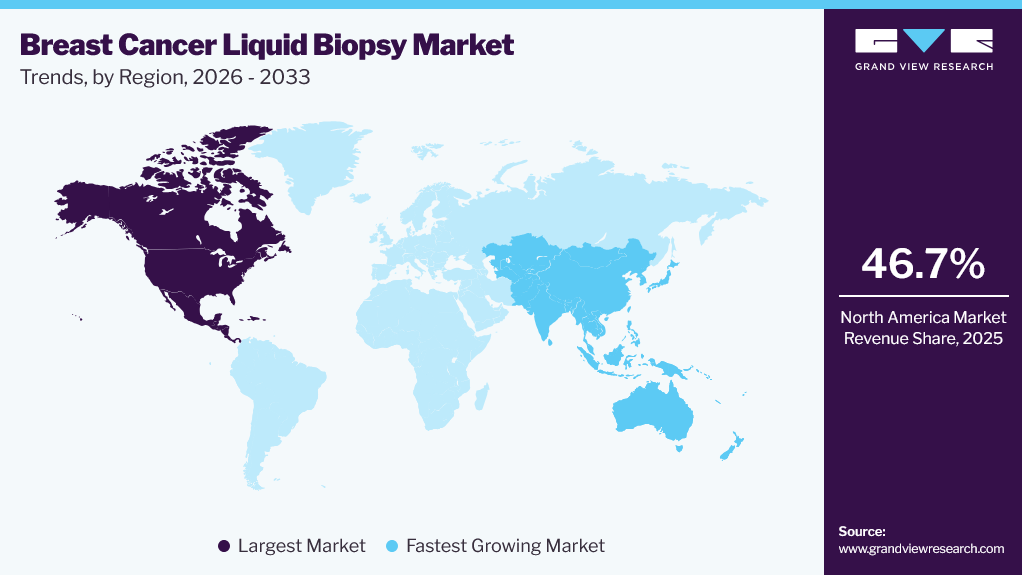
North America dominated the breast cancer liquid biopsy market with the largest revenue share of 46.7% in 2025. This growth is driven by rapid technological advancements, the adoption of liquid biopsies for diagnosis and treatment selection, and favorable government initiatives. Several companies are providing liquid biopsy tests in their oncology portfolio to provide targeted therapies for patients with cancer. In addition, increasing collaborations among manufacturers and growing approvals for new products further enhanced the North America market. For instance, in May 2023, Labcorp introduced Lapcorp Plasma Focus, a novel liquid biopsy test for patients with metastatic solid tumors that enables targeted therapy selection for patients.
 To learn more about this report, Download Free Sample Report
U.S. Breast Cancer Liquid Biopsy Market Trends
The breast cancer liquid biopsy market in the U.S. held the largest share in the North America region in 2025, fueled by the increasing prevalence of breast cancer among women. According to an article published by the National Breast Cancer Foundation, Inc. in August 2024, one in eight women is diagnosed with cancer in a lifetime. It is projected that 310,720 women and 2,800 men will be diagnosed with invasive breast cancer by the end of 2024. The presence of key players in the region and favorable reimbursement policies boost the market growth.
Europe Breast Cancer Liquid Biopsy Market Trends
The breast cancer liquid biopsy market in Europe is anticipated to grow at a significant CAGR during the forecast period, driven by rising demand for effective diagnostic solutions amid the increasing prevalence of cancer. Several market players in the region are focusing on receiving funding from various government or non-governmental organizations to develop advanced liquid biopsy platforms. Moreover, increasing strategic initiatives by the European government to boost cancer screening tests will further strengthen regional growth over the forecast period. For instance, Guardant Health received EU IVDR certification for Guardant360 CDx Liquid Biopsy. This test is for tumor mutation profiling in patients having any solid cancerous tumor. This will expand the adoption of liquid biopsies for optimal therapy selection.
The UK breast cancer liquid biopsy market is anticipated to grow at a significant CAGR during the forecast period, due to healthcare improvements and technological advancements. Enhanced diagnostic technologies, such as more accurate and non-invasive tests, are driving better cancer management. These innovations, coupled with a focus on improving healthcare infrastructure, are significantly boosting the market's expansion in the UK.
The breast cancer liquid biopsy market in Germany is expected to grow at a significant CAGR during the forecast period, driven by increasing awareness and demand for accurate diagnostic tools. The German government is actively involved in funding research and clinical studies to improve cancer detection using liquid biopsy. For instance, the SURVIVE study was funded by the German Federal Ministry of Education and Research to investigate the potential survival benefit of a liquid biopsy-guided follow-up care in moderate as well as high-risk early breast cancer patients.
Asia Pacific Breast Cancer Liquid Biopsy Market Trends
The breast cancer liquid biopsy market in Asia Pacific is expected to grow at the fastest CAGR during the forecast period, driven by significant advancements in healthcare infrastructure and technology. Countries in the region are investing in modern diagnostic facilities, enhancing access to cutting-edge cancer screening tests, Technological innovations, such as more precise and less invasive diagnostic methods, are further propelling market expansion. For instance, as per the news published in June 2024, the CSIR, in collaboration with the clinicians of the Regional Cancer Centre (RCC) in Thiruvananthapuram (Kerala) found a liquid biopsy method for early detection of cancer. Also, a Nashik (India) based laboratory received FDA approval for its liquid biopsy test to detect early-stage breast cancer. Such constant innovations in the field of oncology will contribute to the market growth in the forecast timeframe.
The China breast cancer liquid biopsy market is growing, driven by the increasing prevalence of breast cancer and rising demand for accurate diagnostics. As urbanization and environmental changes contribute to higher cancer rates, more women are seeking reliable diagnostic solutions. This surge in cancer cases is fueling demand for advanced diagnostic tools, leading to significant market expansion in China as healthcare providers strive to meet this growing need.
Latin America Breast Cancer Liquid Biopsy Market Trends
The breast cancer liquid biopsy market in Latin Americais expected to grow at a significant CAGR during the forecast period, due to increasing cancer prevalence and enhanced awareness programs. Government support and initiatives are boosting market development. According to a news published by the International Atomic Energy Agency in July 2022, due to the installation of mammography units in Brazilian navy ships, access to breast cancer screening has increased among women staying in the Amazon River community. Such strategies will increase the adoption of liquid biopsy tests and propel the market in the coming years.
Middle East and Africa Breast Cancer Liquid Biopsy Market Trends
The breast cancer liquid biopsy market in Middle East & Africa is expanding, driven by increasing awareness and rising cases of breast cancer. Due to limited access to healthcare infrastructure, many breast cancer cases go unnoticed without diagnosis. According to the article published by the World Health Organization in July 2022, the survival rate after five years of breast cancer diagnosis.is 40 % in Saharan Africa, whereas it is about 90% in developed countries. This alarming situation in the region increases the necessity and demand for cancer diagnosis tests such as liquid biopsy.
The Saudi Arabia breast cancer liquid biopsy market is expanding due to increased healthcare investment and improved infrastructure. The government is boosting funding for advanced diagnostic technologies and healthcare facilities, enhancing the availability of cancer testing. These investments are driving market growth by addressing the rising prevalence of breast cancer in women.
Key Breast Cancer Liquid Biopsy Company Insights
The competitive scenario in the market is high, with key players undertaking various strategies, such as regional expansion, acquisitions, mergers, collaborations, and new product development, to serve the unmet needs of their customers.
Key Breast Cancer Liquid Biopsy Companies
The following key companies have been profiled for this study on the breast cancer liquid biopsy market.
-
The Menarini Group
-
NeoGenomics Laboratories
-
F. Hoffmann - La Roche Ltd.
-
Myriad Genetics, Inc.
-
Thermo Fisher Scientific, Inc.
-
QIAGEN
-
Biocept, Inc.
-
Sysmex Corporation
-
Fluxion Biosciences, Inc.
-
Epic Sciences, Inc.
Competitive Benchmarking
Category
Operating Strategies
Competitive Edge
Weakness
Well Established Players (F. Hoffmann La Roche Ltd., Thermo Fisher Scientific, Inc., QIAGEN, Sysmex Corporation, NeoGenomics Laboratories, Myriad Genetics, Inc.)
- Expand breast cancer liquid biopsy portfolios through circulating tumor DNA analysis, next generation sequencing, companion diagnostics, molecular profiling, and laboratory developed tests. Focus on regulatory approvals, strategic collaborations with pharmaceutical companies, acquisitions, global laboratory expansion, automation, and bioinformatics integration to strengthen precision oncology offerings and increase clinical adoption.
- Broad molecular diagnostics portfolios, strong global laboratory and distribution networks, extensive regulatory expertise, advanced sequencing capabilities, integrated bioinformatics platforms, and established relationships with hospitals, oncology centers, pharmaceutical companies, and reference laboratories. Ability to deliver comprehensive liquid biopsy solutions supported by clinical validation, technical expertise, and global commercialization capabilities.
- Complex organizational structures may extend product development and commercialization timelines. Premium pricing, high investment requirements for advanced sequencing technologies, and varying reimbursement policies may limit adoption across cost sensitive healthcare systems and emerging markets.
Emerging Players (The Menarini Group, Biocept, Inc., Fluxion Biosciences, Inc., Epic Sciences, Inc.)
- Focus on developing innovative circulating tumor cell and blood based biomarker technologies, expanding clinical validation studies, strengthening partnerships with research institutes and biopharmaceutical companies, and advancing precision oncology applications through specialized liquid biopsy platforms and workflow improvements.
- Specialized expertise in circulating tumor cell technologies, flexible product development, faster innovation cycles, and strong focus on niche liquid biopsy applications. Ability to introduce differentiated platforms for treatment monitoring, recurrence detection, and translational oncology research while addressing evolving clinical needs.
- Comparatively smaller commercial footprint limited global distribution infrastructure, narrower product portfolios, and lower manufacturing scale than multinational diagnostics companies. Dependence on strategic partnerships, external funding, and successful clinical validation may affect long term market expansion and competitive positioning.
Recent Developments
-
In August 2024, Illumina Inc. expanded its oncology portfolio for for NovaSeqX Series customers by offering high-throughput version of TruSight Oncology 500 and the second version of its liquid biopsy research assay, TruSight Oncology 500 ctDNA v2 in order to expand oncology testing
-
In February 2024, Twist Bioscience launched its cfDNA library preparation kit for liquid biopsy applications
Breast Cancer Liquid Biopsy Market Report Scope
Report Attribute
Details
Market size in 2025
USD 624.2 million
Estimated market size in 2026
USD 770.1 million
Projected market size by 2033
USD 2,795.5 million
Growth rate
CAGR of 20.2% from 2026 to 2033
Historical data
2021 - 2024
Forecast period
2026 - 2033
Quantitative units
Revenue in USD Million and CAGR from 2026 to 2033
Report coverage
Revenue forecast, company ranking, competitive landscape, growth factors, and trends
Segments covered
Circulating biomarkers, application, regional
Regional scope
North America; Europe; Asia Pacific; Latin America; MEA
Country scope
U.S.; Canada; Mexico; Germany; UK; France; Italy; Spain; Denmark; Sweden; Norway; Japan; China; India; South Korea; Australia; Thailand; Brazil; Argentina; South Africa; Saudi Arabia; UAE; Kuwait
Key companies profiled
The Menarini Group, NeoGenomics Laboratories, F. Hoffmann La Roche Ltd., Myriad Genetics, Inc., Thermo Fisher Scientific, Inc., QIAGEN, Biocept, Inc., Sysmex Corporation, Fluxion Biosciences, Inc., Epic Sciences, Inc.
Customization scope
Free report customization (equivalent up to 8 analysts' working days) with purchase. Addition or alteration to country, regional & segment scope.
Pricing and purchase options
Avail customized purchase options to meet your exact research needs. Explore purchase options
Global Breast Cancer Liquid Biopsy Market Report Segmentation
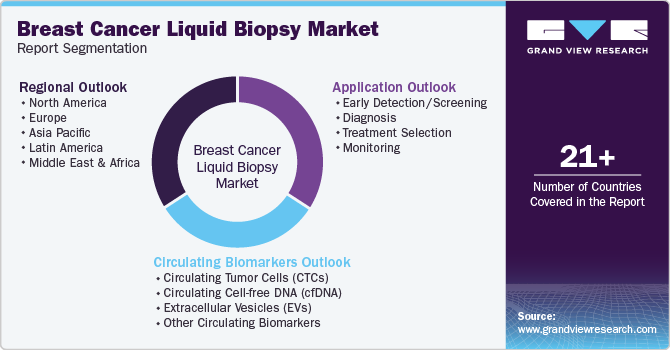
This report forecasts revenue growth at country levels and provides an analysis on the latest industry trends and opportunities in each of the sub-segments from 2021 to 2033. For the purpose of this study, Grand View Research has segmented the global breast cancer liquid biopsy market report based on circulating biomarkers, application, and region.
 To learn more about this report, Download Free Sample Report
-
Circulating Biomarkers Outlook (Revenue, USD Million, 2021 - 2033)
-
Circulating Tumor Cells (CTCs)
-
Circulating Cell-free DNA (cfDNA)
-
Extracellular Vesicles (EVs)
-
Other Circulating Biomarkers
-
-
Application Outlook (Revenue, USD Million, 2021 - 2033)
-
Early Detection/Screening
-
Diagnosis
-
Treatment Selection
-
Monitoring
-
-
Regional Outlook (Revenue, USD Million, 2021 - 2033)
-
North America
-
U.S.
-
Canada
-
Mexico
-
-
Europe
-
UK
-
Germany
-
France
-
Italy
-
Spain
-
Norway
-
Denmark
-
Sweden
-
-
Asia Pacific
-
Japan
-
China
-
India
-
Australia
-
South Korea
-
Thailand
-
-
Latin America
-
Brazil
-
Argentina
-
-
Middle East & Africa
-
South Africa
-
Saudi Arabia
-
UAE
-
Kuwait
-
-
Research Methodology
The breast cancer liquid biopsy market figures in this report are based on a proven research process that combines executive interviews with secondary research from proprietary databases, company filings, and recognized regulatory and institutional sources. Market size is built through value-chain sizing - reconciling supply-side and demand-side estimates - and triangulated with bottom-up and top-down approaches. Every estimate passes multiple levels of expert validation before publication, with each breast cancer liquid biopsy segment quantified using the revenue-capture definitions in the table below.
Segment Definition
Segment - Product
Revenue capture definition
Circulating Tumor Cells (CTCs)
Market value is derived from CTC isolation, enrichment, enumeration, and characterization platforms, including capture devices, imaging systems, detection assays, reagents, and consumables used for breast cancer diagnosis, prognosis, and treatment monitoring.
Circulating Cell free DNA (cfDNA)
Revenue is primarily captured through cfDNA and circulating tumor DNA extraction kits, PCR and next generation sequencing assays, library preparation reagents, bioinformatics software, and related consumables used for genomic profiling and mutation analysis.
Extracellular Vesicles (EVs)
Revenue flows from extracellular vesicle isolation kits, purification systems, characterization instruments, molecular analysis assays, and supporting consumables used for biomarker identification, disease monitoring, and translational breast cancer research.
Other Circulating Biomarkers
Revenue is driven by assays, reagents, analytical platforms, and software supporting detection of circulating RNA, microRNA, proteins, metabolites, tumor educated platelets, and other emerging blood-based biomarkers for breast cancer testing.
Segment - Application
Revenue capture definition
Early Detection/Screening
Revenue is captured through liquid biopsy assays, screening panels, sample collection products, and supporting analytical solutions used to identify breast cancer associated biomarkers in asymptomatic or high risk individuals.
Diagnosis
Market value is derived from liquid biopsy tests, molecular profiling assays, reagents, and analytical platforms used to confirm breast cancer, characterize tumor biology, and identify clinically relevant genomic alterations.
Treatment Selection
Revenue flows from companion diagnostic assays, genomic profiling tests, sequencing workflows, bioinformatics platforms, and associated consumables used to guide personalized therapy selection based on actionable biomarkers.
Monitoring
Revenue is primarily captured through liquid biopsy assays, ctDNA monitoring tests, minimal residual disease assessment solutions, and serial testing services used to evaluate treatment response, detect recurrence, and monitor disease progression.
Estimation Model
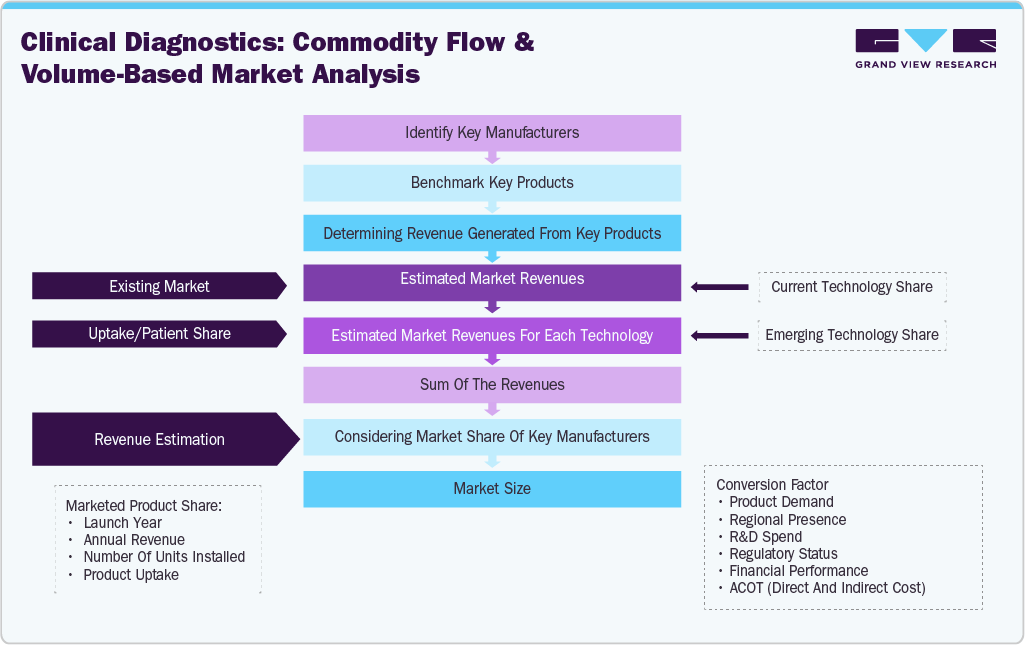
The Breast Cancer Liquid Biopsy Market size was estimated by identifying leading manufacturers and benchmarking their infectious disease diagnostic product portfolios across instruments, reagents, and software. Revenue generated from key products was assessed and mapped to individual technologies and applications using existing market trends and patient uptake data. The revenues were then aggregated and validated by considering the market share of major industry participants to derive the overall market size.
 To learn more about this report, Download Free Sample Report
Delivered Customizations
This report has been delivered with the following In-depth customizations
Client Request
Customization Delivered
Value Adds
Breast Cancer Liquid Biopsy Competitive Landscape & Technology Assessment
Assessed the global breast cancer liquid biopsy market across circulating tumor DNA, circulating tumor cells, extracellular vesicles, and other circulating biomarkers. Evaluated competitive positioning, technology advancements, product portfolios, strategic developments, clinical adoption trends, regulatory progress, and precision oncology innovations across hospitals, reference laboratories, cancer centers, and diagnostic service providers.
Helped the client identify emerging technology adoption trends, benchmark competitive capabilities, evaluate product differentiation, prioritize strategic investments, and assess expansion opportunities across precision oncology and breast cancer liquid biopsy diagnostics.
Breast Cancer Liquid Biopsy Product & Technology Benchmarking Study
Delivered comprehensive benchmarking of breast cancer liquid biopsy platforms across PCR, next generation sequencing, digital PCR, circulating tumor cell technologies, and companion diagnostic solutions. Assessed analytical performance, clinical utility, assay sensitivity, workflow efficiency, automation capabilities, bioinformatics integration, and product differentiation among leading market participants.
Enabled the client to evaluate technology competitiveness, identify innovation opportunities, benchmark product development strategies, prioritize investments in liquid biopsy technologies, and strengthen product positioning across breast cancer diagnostics and precision medicine applications.
Breast Cancer Liquid Biopsy Clinical Adoption & Commercialization Assessment
Assessed clinical adoption trends, precision oncology implementation, reimbursement landscape, regulatory environment, laboratory infrastructure, procurement practices, and commercialization pathways influencing the adoption of breast cancer liquid biopsy solutions across major regional markets. Evaluated demand across hospitals, oncology centers, academic research institutes, and reference laboratories.
Supported commercialization planning by identifying market entry opportunities, evaluating customer adoption patterns, assessing operational and investment considerations, and strengthening long term growth strategies across diagnostic laboratories, healthcare providers, cancer centers, and precision oncology networks.
Frequently Asked Questions About This Report
The global breast cancer liquid biopsy market size was valued at USD 624.2 million in 2025 and is estimated at USD 770.1 million in 2026.
The global breast cancer liquid biopsy market is expected to grow at a CAGR of 20.2% from 2026 to 2033, reaching USD 2,795.5 million by 2033.
Key factors driving the breast cancer liquid biopsy market include increasing demand for minimally invasive cancer testing, rising incidence of breast cancer, growing adoption of precision oncology, increasing use of circulating biomarkers for treatment selection and disease monitoring, advancements in liquid biopsy technologies, and growing clinical interest in early cancer detection.
North America dominated the breast cancer liquid biopsy market with a 46.7% revenue share in 2025, driven by advanced healthcare infrastructure, high adoption of precision oncology, strong investment in cancer research, availability of advanced molecular diagnostic technologies, and the presence of major biotechnology and pharmaceutical companies.
Treatment selection dominated the application segment with a 52.7% revenue share in 2025, driven by the growing role of liquid biopsy in identifying actionable mutations, guiding targeted therapy decisions, supporting personalized treatment strategies, and reducing the need for invasive tissue biopsies.
Europe is expected to grow at the fastest CAGR from 2026 to 2033, driven by increasing adoption of minimally invasive cancer diagnostics, expanding precision medicine initiatives, rising investments in oncology research, and growing use of liquid biopsy for treatment decision-making and disease monitoring.
Circulating cell-free DNA (cfDNA) dominated the circulating biomarker segment with a 55.9% revenue share in 2025, driven by its increasing use for genomic profiling, mutation detection, treatment selection, and monitoring of breast cancer, along with the growing availability of sensitive sequencing and molecular analysis technologies.
About the Author(s)
Clinical Diagnostics Research Team
Healthcare · Clinical DiagnosticsThis report was authored by the clinical diagnostics research team at Grand View Research - comprising two research analysts, one senior research analyst, and one industry expert - with specialized expertise in the clinical diagnostics segment of the healthcare industry. All findings are based on proprietary healthcare databases, executive interviews, and regulatory analysis, subject to internal peer review prior to publication.
Last Updated:
Speak to Analyst

Customize this report to your needs - add regions, segments, or data points, with 20% free customization.
Or view our licence options:


ISO 9001:2015 & 27001:2022 Certified
We are GDPR and CCPA compliant! Your transaction & personal information is safe and secure. For more details, please read our privacy policy.


