
- Home
- »
- Medical Devices
- »
-
Breastfeeding Accessories Market Size Report, 2026-2033GVR Report cover

Breastfeeding Accessories Market (2026 - 2033)
Size, Share & Trends Analysis Report By Product (Breastmilk Storage & Feeding, Postpartum Recovery Accessories), By Region (North America, Europe, APAC, Latin America, MEA), And Segment Forecasts
Market Size, 2025
$2.9BMarket Estimate, 2026
$3.1BMarket Forecast, 2033
$4.9BCAGR, 2026–2033
6.5%Breastfeeding Accessories Market Summary
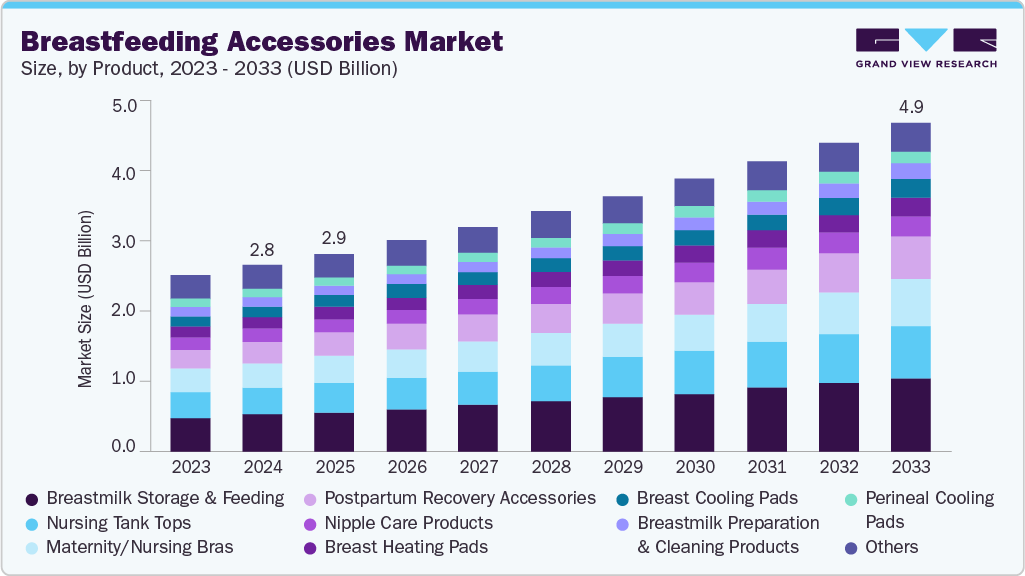
The global breastfeeding accessories market size was valued at USD 2.9 billion in 2025 and is projected to grow from USD 3.1 billion in 2026 to USD 4.9 billion by 2033, at a CAGR of 6.5% from 2026 to 2033. Asia Pacific dominated the market with the largest revenue share of 42.7% in 2025. The market growth is attributed to a rise in the global women’s employment rate.
 Source: Grand View Research, IR Documents, Primary Interviews, Paid DatabasesTo learn more about this report,
 Download Free Sample Report
 Key Market Trends & Insights
- By product: Breastmilk storage and feeding segment dominated the market, with a revenue share of 19.7% in 2025.
Regional Highlights
- Largest regional market: Asia Pacific (42.7% revenue share, 2025)
- By country: India held the largest market share in 2025.
Market Size & Forecast
- Market size in 2025: USD 2.9 Billion
- Estimated market size in 2026: USD 3.1 Billion
- Projected market size by 2033: USD 4.9 Billion
- CAGR (2026-2033): 6.5%
Three ways to get this report
Buy it, customize it, or ask a question.Ask an Analyst
Analyst response in 1 business day
- AccessReport author, directly
- Reply timeWithin 1 working day
- No sales callDirect answer only
- FormatEmail reply
- CostFree, no cost
Get the Full Report
What the study covers
- FormatsPDF · Excel · Dashboard
- Timeline2026–2033 annual, 2025 base
- Coverage20+ countries, 5 regions
- Companies10+ key players profiled
Customize the Report
20% free customization
- IncludeCountries, segments, points
- TailorTo your product definition
- ExtendDeeper competitor detail
- OrA fully bespoke study
- Turnaround5–10 working days
Furthermore, an increase in awareness campaigns by government and market players regarding the availability of breastfeeding accessories is anticipated to impel market growth during the forecast period. For instance, various market players such as Medela LLC, Laura & Co., Newell Brands, and Ameda, along with universities including Washington University and Fudan University, are raising awareness among women regarding breastfeeding and its benefits by arranging campaigns and providing informative magazines.For instance, in July 2025, Go-Lacta, a prominent plant-based lactation support brand crafted from premium organic Moringa, announced its active participation in “World Breastfeeding Week 2025” (WBW2025). The brand is launching a month-long campaign promoting education, fostering collaboration, and providing sustainable support for breastfeeding mothers and their families.
 To learn more about this report, Download Free Sample Report
 The growing number of milk banks worldwide is expected to drive the growth of the breastfeeding accessories industry significantly. As the demand for safe and accessible breast milk storage rises, more milk banks are being established to support mothers and infants in need. These banks play a crucial role in situations where mothers are unable to breastfeed due to medical conditions, risk of disease transmission, or orphaned infants. By providing a reliable source of donor milk, milk banks enhance neonatal nutrition and health outcomes. Consequently, this expansion is boosting the adoption of breastfeeding accessories, such as storage containers and breast pumps, to support milk collection and preservation, thereby propelling market growth.
Moreover, the presence of favorable demographics, such as the growing global birth rate in emerging and underdeveloped nations, provides opportunities for the market players to expand their presence in these countries. For instance, as per the Centers for Disease Control and Prevention, in April 2024, the number of births and the general fertility rate in the U.S. increased in 2024. The report indicates that births rose by 1% compared to 2023, reaching 3,622,673 recorded births for the year. The increase in the number of births is anticipated to increase the use of breastfeeding accessories, thereby boosting the market growth over the forecast period.
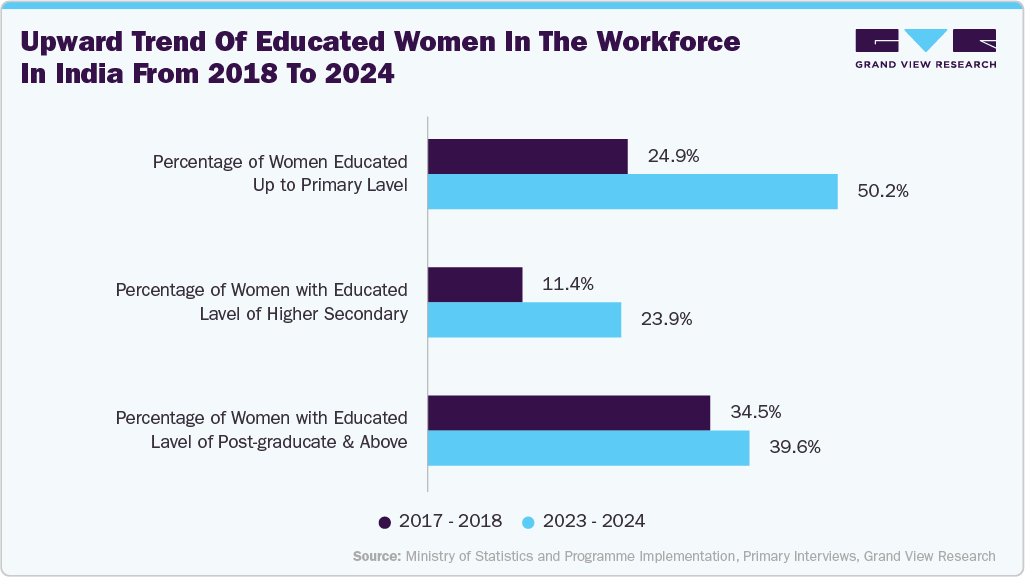
The growing women's employment rates are anticipated to propel the demand for breastfeeding accessories in the coming years. Countries such as Canada and India are witnessing significant growth in women's employment. For instance, according to the data published by the Periodic Labour Force Survey (PLFS) undertaken by the Ministry of Statistics and Programme Implementation in November 2024, the Female Labour Force Participation Rate (LFPR) in India has grown significantly by 23 percentage points between 2017-18 and 2023-24, demonstrating an increasing contribution of females to rural production.
 To learn more about this report, Download Free Sample Report
 Technological advancements and innovation are significantly propelling the breastfeeding accessories industry by introducing innovative, efficient, and user-friendly solutions that cater to the evolving needs of modern mothers. One key innovation is the development of wearable and hands-free breast pumps, which offer greater mobility and discretion, allowing mothers to pump milk while on the go or multitasking. For instance, smart breast pumps with Bluetooth connectivity enable users to track milk output, pumping sessions, and battery life via mobile apps, enhancing convenience and personalized care. In addition, innovations in breast milk storage solutions, such as temperature-sensitive storage bags and UV sterilization containers, ensure hygiene and safety, aligning with growing health-conscious consumer preferences. These technological strides improve user experience and foster greater adoption of breastfeeding accessories worldwide.
Technological Advancements
Company Name
Product Launch
KOLs
Willow Innovations, Inc.
In January 2025, Willow Innovations, Inc. introduced a new line of accessories aimed at enhancing the breastfeeding, pumping, and milk storage experience for new mothers. As part of its ongoing commitment to supporting and empowering the maternal journey, Willow launched its Silicone Wearable Breast Pump, Glass Breast Milk Pitcher, and Breast Milk Storage Bags-innovative solutions designed to offer greater convenience, efficiency, and comfort for modern moms.
"Our mission has always been to build products that are reflective of mom's real life and create tools that are easier to use and more efficient," said Sarah O'Leary, CEO of Willow and mom of two. "Willow pioneered a new approach to breastfeeding by creating the first all-in-one wearable pump, empowering moms to feed on their terms without putting their lives on hold. Expanding our pumping and feeding essentials is an extension of that approach to help more mothers navigate their feeding journeys with even more convenience."
Source: Willow Innovations, Inc., Grand View Research
Market Dynamics
The breastfeeding accessories market is driven by increasing awareness of the health benefits of breastfeeding, which is encouraging mothers to use products that support a comfortable, effective breastfeeding journey. Rising female workforce participation is boosting demand for convenient accessories such as milk storage bags, nursing pads, breast care products, and cleaning solutions that help mothers manage breastfeeding alongside professional commitments. Growing adoption of breast pumps is further increasing the need for complementary accessories to enhance milk storage, hygiene, and feeding convenience. Further, continuous product innovations focused on comfort, safety, portability, and ease of use are improving user experience and supporting market growth.
Working mothers often face challenges in maintaining breastfeeding routines after returning to work, creating a strong demand for products that support convenient milk expression, storage, and feeding. Breast milk storage bags, nursing pads, nipple care products, breast pump accessories, and cleaning supplies help mothers manage breastfeeding while balancing professional responsibilities. Further, supportive workplace policies and growing awareness of the importance of breastfeeding are encouraging mothers to continue breastfeeding for longer periods, thereby increasing the adoption of breastfeeding accessories designed to improve convenience, hygiene, and the overall breastfeeding experience.
The increasing adoption of breast milk substitutes, including infant formula and ready-to-feed products, is a key restraint for the breastfeeding accessories market. Many parents choose these alternatives due to convenience, lifestyle preferences, medical conditions, or challenges associated with breastfeeding. As reliance on formula feeding increases, the need for breastfeeding related products such as nursing pads, milk storage bags, nipple care products, and breast pump accessories declines. In addition, aggressive marketing of infant formula products and the growing availability of specialized nutritional alternatives can reduce breastfeeding rates in certain regions, limiting the demand for breastfeeding accessories and hindering overall market growth.
The rapid expansion of online retail and direct-to-consumer (DTC) channels presents a significant growth opportunity for the breastfeeding accessories market. E-commerce platforms enable manufacturers to reach a broader consumer base, including mothers in underserved and remote areas, while offering a wide range of breastfeeding products in one convenient location. Direct-to-consumer sales channels enable brands to engage customers, offer personalized recommendations, and build brand loyalty. Further, online platforms offer product reviews, educational content, subscription services, and competitive pricing, helping consumers make informed purchasing decisions and increasing the adoption of breastfeeding accessories globally.
Market Concentration & Characteristics
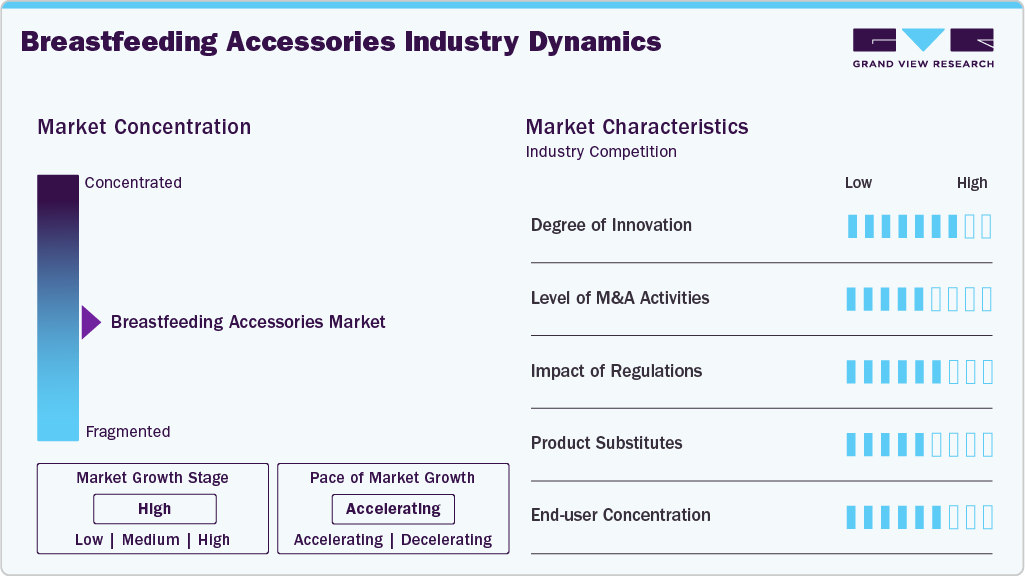
The breastfeeding accessories industry demonstrates a high degree of innovation, driven by evolving consumer needs, increasing maternal employment, and advancements in digital health technologies. Manufacturers continuously develop smarter, more convenient solutions such as wearable, hands-free breast pumps with Bluetooth connectivity, app integration for milk tracking, and quiet motor technology for discreet use. In addition, innovations in materials-like BPA-free plastics, antimicrobial surfaces, and eco-friendly packaging- improve safety and sustainability. Product lines also include multifunctional items that combine storage, feeding, and sterilization. This wave of innovation enhances user experience, encourages breastfeeding continuity, and strengthens market competitiveness.
Regulations significantly influence the global breastfeeding accessories industry by increasing scrutiny on product safety, efficacy, and quality. Governments worldwide are actively formulating and strengthening rules to oversee developing and utilizing products like breast pumps and storage solutions. This push for stricter adherence to standards, often driven by international guidelines like the International Code of Marketing of Breast-milk Substitutes, aims to protect breastfeeding from misleading marketing of breast-milk substitutes and ensure maternal and infant well-being. While these regulations can sometimes increase compliance costs for manufacturers, they also build consumer trust in legitimate breastfeeding accessories, ultimately supporting market growth by promoting safer and more effective products that align with public health goals.
 To learn more about this report, Download Free Sample Report
 The global breastfeeding accessories industry has seen notable consolidation through M&A activity, as established players strategically acquire innovative startups to expand their portfolios, access new technologies, and strengthen competitive positioning. A prominent example is the acquisition of UK-based Elvie, renowned for its smart, hands-free pumps, by California-based Willow in March 2025, following litigation and financial difficulties. This transaction brought together two leaders in femtech, aligning product platforms and enhancing global market reach.
In the breastfeeding accessories industry, product substitutes include infant formula, donor breast milk, and traditional feeding tools such as manual feeding cups or spoons. Infant formula remains the most prominent substitute, offering convenience and nutritional alternatives for mothers who cannot or choose not to breastfeed. In addition, increased accessibility to human milk banks and hospital donor milk programs provides another option, especially for premature or ill infants. Cultural preferences, medical conditions, or workplace limitations can also drive reliance on these substitutes, posing a moderate threat to the breastfeeding accessories industry by influencing product demand and adoption.
The breastfeeding accessories industry exhibits moderate to high end-user concentration, primarily driven by usage among new mothers across various care settings. Hospitals, maternity clinics, and lactation consultants represent key institutional end-users, particularly for hospital-grade pumps and early postpartum support products. However, most market demand is concentrated among individual consumers, especially working mothers, who seek convenient, hygienic, and portable solutions for home or on-the-go use. The increasing prevalence of dual-income households and urban lifestyles has further heightened consumer-centric demand, making retail and e-commerce platforms critical channels for end-user access and engagement.
Analyst Perspective
The breastfeeding accessories market is supported by a steady base of nursing mothers and increasing emphasis on infant nutrition and maternal wellness. Market growth is driven by rising breastfeeding awareness, greater utilization of breastfeeding support products, and expanding access to accessories through online and offline retail channels. Demand is reinforced by the routine consumption of products such as milk storage solutions, nipple care items, and cleaning accessories, which require frequent replenishment throughout the breastfeeding journey. Companies offering diversified product portfolios that address comfort, hygiene, storage, and feeding support are well-positioned to capitalize on market opportunities. Competitive positioning is influenced by brand credibility, product quality, retail visibility, pricing competitiveness, and customer engagement initiatives. As the market evolves, competition is expected to focus on innovation, product differentiation, distribution expansion, and strengthening consumer relationships across multiple sales channels.
Product Insights
Based on product, the breastmilk storage and feeding segment led the market with the largest revenue share of 19.7% in 2025, and nursing tank tops segment is expected to grow at a significant CAGR over the forecast period. Breastmilk storage and feeding products are used to store breastmilk properly to ensure the safety and quality of expressed milk. A major aspect driving the segment is the increase in the number of working women. This is because maternity breaks are short, and new mothers return to work soon after giving birth, thus driving the need for breastfeeding supplies. For instance, as per the latest statistics by the World Bank in January 2022, 52.9% of women globally are employed, and this number is expected to rise in the future. Thus, with an increase in the female employment rate, the breastmilk storage and feeding segment is expected to dominate the market over the forecast period.
 To learn more about this report, Download Free Sample Report
 The postpartum recovery accessories segment is anticipated to expand at the fastest CAGR during the forecast period. Postpartum recovery accessories include disposable gowns, nursing pillows, and others. These products are used postpartum; therefore, the increase in global birth rate and a rise in fertility rate across the globe are expected to boost the segment growth. according to the Pew Research Center, the birth rate in India is 2.0 births per woman in 2023. Thus, an increase in the number of births is anticipated to have a significant impact on the use of postpartum recovery accessories, thereby propelling the market growth.
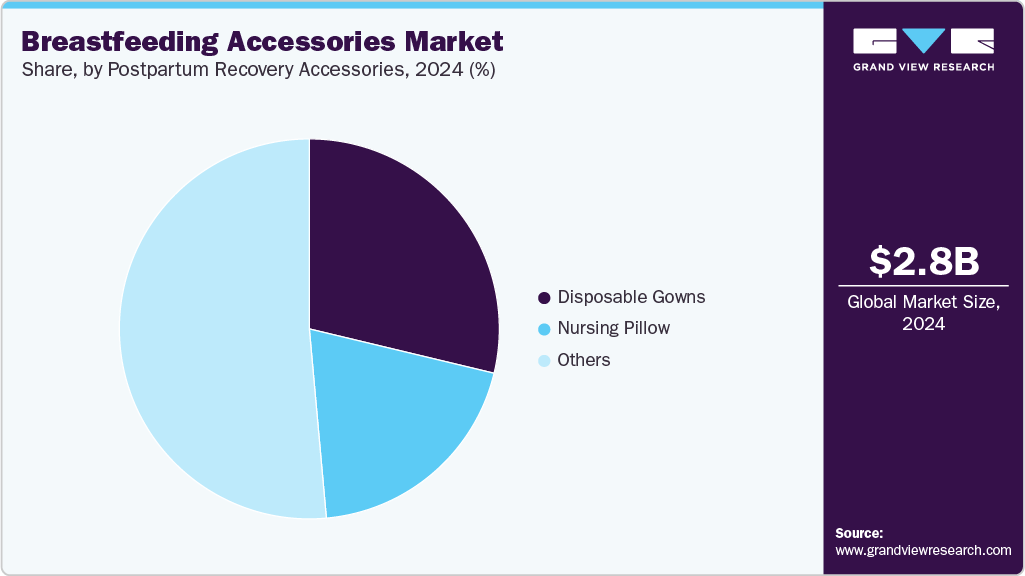
In the postpartum recovery accessories segment, the others segment dominated the market in 2024, and disposable gowns held the second-largest revenue share in the year 2024. Disposable gowns are comfortable during the postpartum hospital stay, and they help to access the chest area for easy breastfeeding. Disposable gowns are used after birth; thus, an increase in the number of birth cases globally may increase the use of disposable gowns. For instance, according to UNICEF, every year, 27.00 million births are recorded in India alone. Similarly, the CDC recorded 3,664,292 births during the year 2023 in the U.S. Thus, with such an increase in the number of births, the use of postpartum accessories such as disposable gowns is expected to increase, thereby propelling the market growth during the forecast period.
Regional Insights
The breastfeeding accessories market in North America accounted for the second-largest market revenue share in 2024. The North American market is driven by heightened awareness and advocacy of breastfeeding advantages, a growing focus on maternal and infant well-being, continuous advancements in breastfeeding technology and product development, increasing disposable income facilitating higher expenditure on baby care items, and government support through initiatives that foster breastfeeding-friendly settings. These factors are expected to drive the demand for breastfeeding accessories in North America.
U.S. Breastfeeding Accessories Market Trends
The breastfeeding accessories market in the U.S. accounted for the largest market revenue share in North America in 2024. The continuous advancements in breastfeeding technology, a high number of working women’s and the presence of key market players in the country are some of the major factors fueling the market. These factors are expected to drive the demand for breastfeeding accessories in the U.S. market.
Europe Breastfeeding Accessories Market Trends
The breastfeeding accessories market in the Europe is witnessing strong growth driven by rising awareness of breastfeeding benefits, increasing maternal employment, and demand for convenient, hygienic solutions. Wearable breast pumps, brilliant, hands-free models, are gaining popularity due to their portability and app-enabled tracking features. Electric and closed-system pumps dominate working mothers' usage for efficiency and safety. Breastmilk storage products such as sterilizable containers and freezer-safe bags are also in high demand. Supportive healthcare policies, parental leave benefits, and digital health integration across countries like Germany, France, and the UK further accelerate market adoption and innovation.
The UK breastfeeding accessories market is propelled by several key drivers: high initiation and duration rates for breastfeeding, growing awareness of its health benefits, and strong government support via NHS programs and public health campaigns. In addition, increasing maternal workforce participation and the rise of e-commerce are enhancing the adoption of efficient, convenient products such as portable and smart pumps, storage solutions, and postpartum recovery tools.
Asia Pacific Breastfeeding Accessories Market Trends
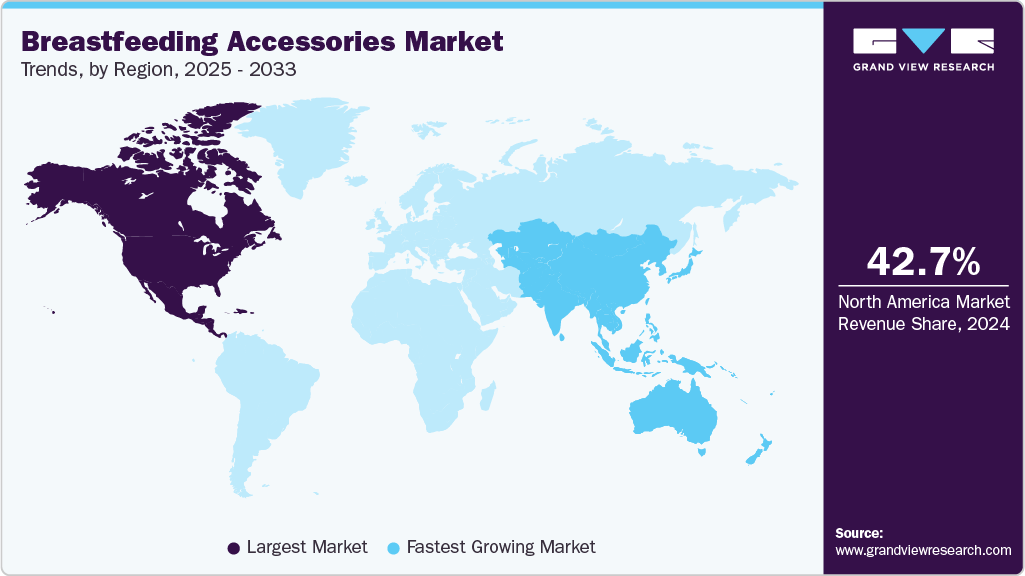
Asia Pacific dominated the breastfeeding accessories market with the largest revenue share of 42.7% in 2025. Fueled by rising maternal employment and urbanization, which fuel demand for convenient and technologically advanced products. Technological innovation, primarily through wearable and app-connected breast pumps, plays a key role, alongside the growing preference for eco-friendly, multifunctional, and home-use products. Market growth is further supported by government initiatives, breastfeeding awareness campaigns, and e-commerce expansion, although cost and cultural barriers remain in some countries.
 To learn more about this report, Download Free Sample Report
 The breastfeeding accessories market in China is driven by increasing awareness of breastfeeding benefits, supported by government-led health initiatives such as the Healthy China 2030 plan and the National Program for Child Development. A growing working mother population, high urbanization rates, and rising disposable incomes fuel demand for convenient and technologically advanced products like portable breast pumps, innovative storage solutions, and eco-friendly accessories. In addition, the rapid expansion of e-commerce platforms makes these products more accessible, while favorable government policies and public health campaigns continue encouraging breastfeeding practices across the country.
India Breastfeeding Accessories Market Trends
The breastfeeding accessories market in India held the largest share in the Asia Pacific region in 2025.
Latin America Breastfeeding Accessories Market Trends
The breastfeeding accessories market in Latin America is propelled by a rising female workforce, urbanization, and enhanced healthcare infrastructure, driving demand for convenient and time-saving products like portable and wearable breast pumps. Government support through public health campaigns (including those by organizations like UNICEF) has improved breastfeeding awareness, especially in urban and rural communities. Meanwhile, surging disposable income and the expansion of e-commerce platforms make advanced accessories, such as app-enabled pumps, eco-friendly storage solutions, and postpartum care products, more accessible across the region.
Middle East Africa Breastfeeding Accessories Market Trends
The breastfeeding accessories market in the Middle East & Africa is anticipated to grow at the fastest CAGR of 6.73% from 2025 to 2033. Driven by a combination of increasing urbanization, rising disposable incomes, and improving healthcare infrastructure. With breastmilk storage and feeding products currently dominating revenue and postpartum recovery accessories emerging as the fastest-growing segment, countries like South Africa, Saudi Arabia, and the UAE are leading regional expansion. These trends are further accelerated by enhanced awareness initiatives and growing demand for convenient, on-the-go solutions, particularly in urban, working-mother demographics seeking modern, hygienic, and tech-enabled products.
Key Breastfeeding Accessories Company Insights
The breastfeeding accessories industry is extremely fragmented, with both major and local market competitors. Due to the fact that the current market players are stepping up their efforts to grab the majority in the breastfeeding accessories industry, fierce competition is anticipated, with the degree of competitiveness perhaps rising even higher. Many market participants are engaging in various strategic activities, such as product launches, mergers and acquisitions, and geographic growth, in an effort to gain a competitive edge over rivals. Thus, with various strategies adopted by the market players, the breastfeeding accessories industry is predicted to grow during the forecast period.
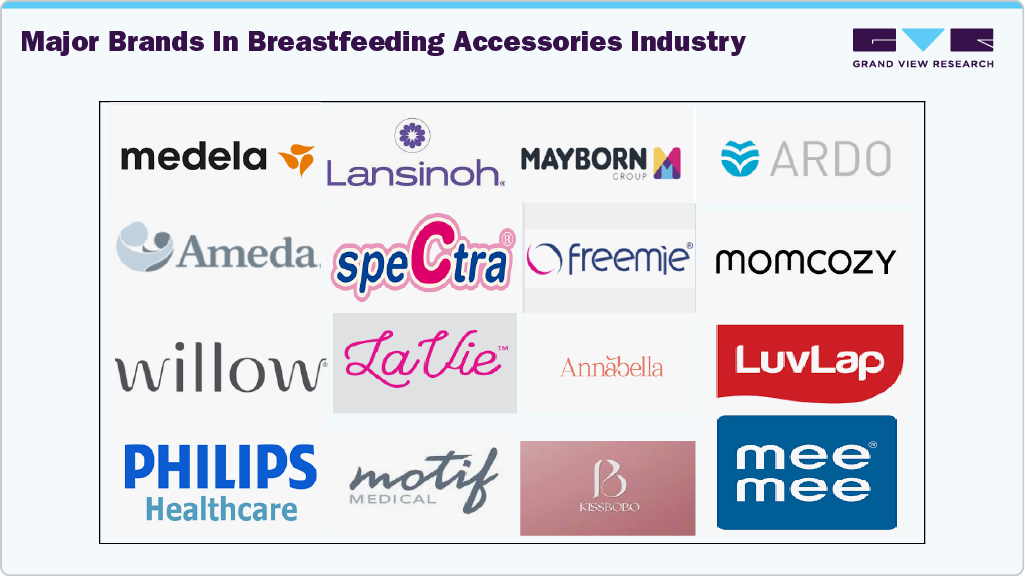
Key Breastfeeding Accessories Companies:
The following are the leading companies in the breastfeeding accessories market. These companies collectively hold the largest market share and dictate industry trends.
- Medela AG
- Ameda, Inc. (International Biomedical, Ltd)
- Willow Innovations, Inc.
- Koninklijke Philips N.V.
- Elvie (Chiaro Technology Limited)
- Lansinoh Laboratories, Inc. (Pigeon Corporation)
- Uzin Medicare (Spectra Baby)
- Lavie Mom
- Motif Medical
- Mayborn Group Limited
- Freemie
- Annabella-Pump
- KISSBOBO
- Ardo Medical AG
- HaakaaTommee Tippee (Shanghai Jahwa United Co., Ltd)
- Momcozy (Shenzhen Lute Jiacheng Network Technology Co., Ltd.)
- LuvLap
- Mee Mee
- Lifelong Online Retail Private Limited.
 To learn more about this report, Download Free Sample Report
 Competitive Benchmarking
Category
Operating Strategies
Competitive Edge
Weakness
Established Players (Medela AG, Koninklijke Philips N.V., Lansinoh Laboratories, Inc. (Pigeon Corporation), Tommee Tippee (Shanghai Jahwa United Co., Ltd.)
- Expand breastfeeding accessory portfolios through continuous innovation in milk storage bags, breast care products, feeding accessories, and pump-related consumables with a focus on safety, comfort, and convenience.
- Strengthening market presence through partnerships with hospitals, maternity clinics, pharmacies, and e-commerce platforms while expanding omnichannel distribution networks globally.
Strong brand recognition, extensive distribution networks, and established relationships with healthcare providers, maternity care professionals, and breastfeeding support organizations.
Broad maternal and infant care product portfolios, significant R&D capabilities, regulatory expertise, and strong financial resources that support product innovation and large-scale commercialization.
- Intense competition from both established and emerging brands creates pricing pressure and challenges in maintaining product differentiation across accessory categories.
- High costs are associated with product development, quality assurance, regulatory compliance, marketing activities, and maintaining broad distribution networks.
Emerging Players (Momcozy, Haakaa, Freemie, Annabella-Pump, KISSBOBO, Lavie Mom, Motif Medical, LuvLap, Mee Mee)
- Focus on developing affordable, user-friendly, and innovative breastfeeding accessories, including wearable collection cups, milk storage solutions, nipple care products, feeding accessories, and breastfeeding support products tailored to modern mothers' needs.
- Leverage online retail channels, parenting communities, social media marketing, influencer partnerships, and direct-to-consumer strategies to increase brand visibility and market penetration.
- Strong focus on niche consumer requirements, innovative product designs, competitive pricing, and the ability to rapidly introduce new products based on consumer feedback and evolving breastfeeding trends.
- Greater flexibility and agility in product development, enabling faster responses to changing customer preferences and market opportunities.
- Limited global presence and smaller distribution networks compared to established multinational companies.
- Higher dependence on online sales channels and narrower product portfolios, creating challenges in scaling operations, building long-term brand trust, and expanding across international markets.
Recent Developments
-
In January 2025, Willow Innovations, Inc. introduced a new line of accessories aimed at enhancing the breastfeeding, pumping, and milk storage experience for new mothers. As part of its ongoing commitment to supporting and empowering the maternal journey, Willow launched its Silicone Wearable Breast Pump, Glass Breast Milk Pitcher, and Breast Milk Storage Bags-innovative solutions designed to offer greater convenience, efficiency, and comfort for modern moms.
-
In July 2025, Go-Lacta, a prominent plant-based lactation support brand crafted from premium organic Moringa, announced its active participation in “World Breastfeeding Week 2025” (WBW2025). The brand is launching a month-long campaign promoting education, fostering collaboration, and providing sustainable support for breastfeeding mothers and their families.
-
In March 2025, Willow Innovations, Inc., a leading FemTech company known for inventing the first fully in-bra wearable breast pump, announced its acquisition of U.K.-based Elvie, a prominent innovator in women’s health and wellness. This strategic move combines Willow’s award-winning medical device technologies with Elvie’s trusted portfolio of products, including breast pumps, smart pelvic floor trainers, and sleep aids. The acquisition forms a comprehensive maternal health platform featuring two iconic brands, a diversified product lineup, global distribution capabilities, and streamlined operations.
Breastfeeding Accessories Market Report Scope
Report Attribute
Details
Market size in 2025
USD 2.9 billion
Estimated market size in 2026
USD 3.1 billion
Projected market size by 2033
USD 4.9 billion
Growth rate
CAGR of 6.5% from 2026 to 2033
Base year for estimation
2025
Historical data
2021 - 2024
Forecast period
2026 - 2033
Quantitative units
Revenue in USD million/billion and CAGR from 2026 to 2033
Report coverage
Revenue forecast, company ranking, competitive landscape, growth factors, and trends
Segments covered
Product, region
Regional scope
North America; Europe; Asia Pacific; Latin America; MEA
Country scope
U.S.; Canada; Mexico; Germany; UK; France; Italy; Spain; Denmark, Sweden, Norway, China; Japan; India; Australia; Thailand; South Korea, Brazil; Argentina; South Africa; Saudi Arabia; UAE; Kuwait
Key companies profiled
Medela AG; Ameda, Inc. (International Biomedical, Ltd); Willow Innovations, Inc.; Koninklijke Philips N.V.; Elvie (Chiaro Technology Limited); Lansinoh Laboratories, Inc. (Pigeon Corporation); Uzin Medicare (Spectra Baby); Lavie Mom; Motif Medical; Mayborn Group Limited; Freemie; Annabella-Pump; KISSBOBO; Ardo medical AG; HaakaaTommee Tippee (Shanghai Jahwa United Co., Ltd); Momcozy (Shenzhen Lute Jiacheng Network Technology Co., Ltd.); LuvLap; Mee Mee; Lifelong Online Retail Private Limited.
Customization scope
Free report customization (equivalent up to 8 analysts' working days) with purchase. Addition or alteration to country, regional & segment scope.
Pricing and purchase options
Avail customized purchase options to meet your exact research needs. Explore purchase options
Global Breastfeeding Accessories Market Report Segmentation
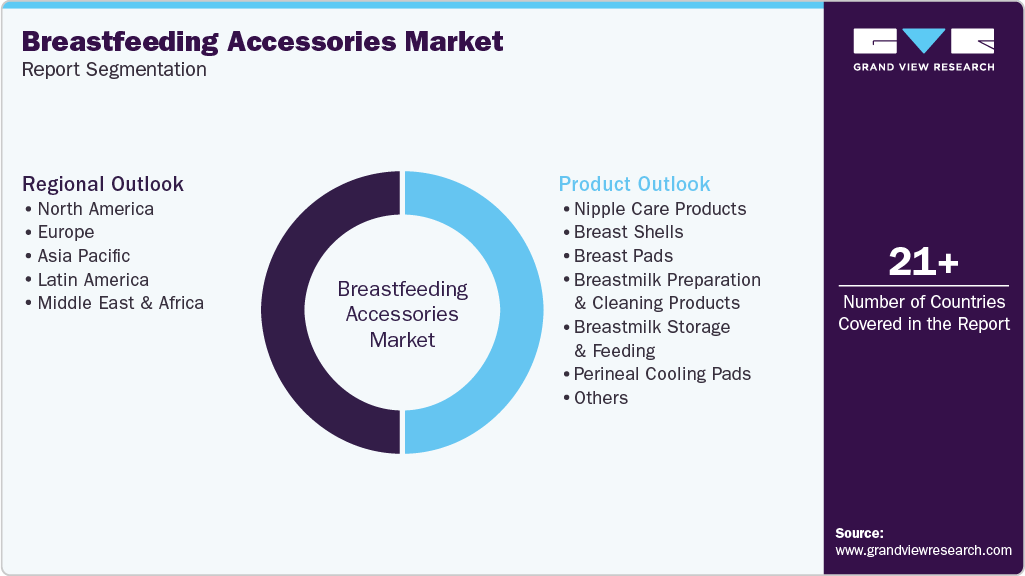
This report forecasts revenue growth at global, regional, and country levels and provides an analysis of the latest industry trends in each of the sub-segments from 2021 to 2033. For this study, Grand View Research has segmented the global breastfeeding accessories market report based on the product and region:
 To learn more about this report, Download Free Sample Report
 -
Product Outlook (Revenue, USD Million, 2021 - 2033)
-
Nipple Care Products
-
Breast Shells
-
Breast Pads
-
Breastmilk Preparation & Cleaning Products
-
Breastmilk Storage & Feeding
-
Coolers
-
Others
-
-
Perineal Cooling Pads
-
Breast Heating Pads
-
Breast Cooling Pads
-
Baby Weighing Scales
-
Maternity/Nursing Bras
-
Nursing Tank Tops
-
Lactation Massager
-
Breast Pump Carry/Tote Bags
-
Postpartum Recovery Accessories
-
Disposable Gowns
-
Nursing Pillow
-
Others
-
-
-
Regional Outlook (Revenue, USD Million, 2021 - 2033)
-
North America
-
U.S.
-
Canada
-
Mexico
-
-
Europe
-
UK
-
Germany
-
France
-
Italy
-
Spain
-
Denmark
-
Sweden
-
Norway
-
-
Asia Pacific
-
Japan
-
China
-
India
-
Australia
-
Thailand
-
South Korea
-
-
Latin America
-
Brazil
-
Argentina
-
-
Middle East & Africa
-
South Africa
-
Saudi Arabia
-
UAE
-
Kuwait
-
-
Research Methodology
The breastfeeding accessories market figures in this report are based on a proven research process that combines executive interviews with secondary research from proprietary databases, company filings, and recognized regulatory and institutional sources. Market size is built through value-chain sizing - reconciling supply-side and demand-side estimates - and triangulated with bottom-up and top-down approaches. Every estimate passes multiple levels of expert validation before publication, with each sreastfeeding accessories segment quantified using the revenue-capture definitions in the table below.
Segment Definition
Segment - Product
Revenue capture definition
Nipple Care Products
Revenue generated from products designed to soothe, protect, and support nipple health during breastfeeding, including nipple creams, balms, shields, and related care solutions.
Breast Shells
Revenue generated from protective breast shells used to prevent friction, collect leaking breast milk, and support nipple healing between feeding sessions.
Breast Pads
Revenue generated from disposable and reusable absorbent pads designed to manage breast milk leakage and maintain comfort and hygiene for nursing mothers.
Breastmilk Preparation and Cleaning Products
Revenue generated from products used for cleaning, sterilizing, and maintaining breastfeeding equipment and feeding accessories, including bottle brushes, sterilizers, detergents, and cleaning wipes.
Breastmilk Storage & Feeding
Revenue generated from products used for storing, transporting, and feeding expressed breast milk, including storage bags, milk containers, bottles, nipples, feeding systems, and related accessories.
Perineal Cooling Pads
Revenue generated from cooling pads designed to provide postpartum comfort and relief from perineal soreness and swelling following childbirth.
Breast Heating Pads
Revenue generated from warming products intended to support milk flow, relieve breast discomfort, and assist mothers before or during breastfeeding and pumping sessions.
Breast Cooling Pads
Revenue generated from cooling products used to relieve breast engorgement, tenderness, inflammation, and discomfort associated with breastfeeding.
Baby weighing scales
Revenue generated from infant weighing devices used by parents to monitor baby growth, feeding progress, and weight gain during the breastfeeding period.
Maternity/Nursing bras
Revenue generated from specialized bras designed to provide support, comfort, and convenient breastfeeding access during pregnancy and lactation.
Nursing Tank Tops
Revenue generated from breastfeeding-friendly apparel featuring easy-access nursing openings that support convenient feeding and pumping activities.
Lactation Massager
Revenue generated from handheld devices designed to assist milk flow, relieve blocked ducts, reduce discomfort, and support effective breastfeeding and pumping.
Breast Pump Carry/Tote Bags
Revenue generated from bags specifically designed to transport breast pumps, milk storage products, cooling accessories, and other breastfeeding essentials.
Postpartum Recovery Accessories
Revenue generated from products that support maternal recovery after childbirth, including recovery kits, support cushions, postpartum care tools, and related comfort accessories commonly used alongside breastfeeding.
Estimation Model
Bottom-Up Estimation
Top-Down Approach
Supply-Side Analysis
Revenue generated from breastfeeding accessories is estimated by analyzing the population of nursing mothers and their usage of products such as breast pads, milk storage bags, nipple care products, nursing apparel, and postpartum recovery accessories. Product utilization rates, replacement frequency, and average selling prices (ASPs) are assessed at the country level and aggregated regionally and globally. The analysis is adjusted for breastfeeding duration, product penetration, and consumer purchasing behavior.
The overall maternal and infant care products market is identified first, and the share attributable to breastfeeding accessories is estimated through secondary research and expert validation. Factors such as live birth rates, breastfeeding prevalence, female workforce participation, and maternal healthcare spending are analyzed to determine market contribution. Category penetration rates and regional adoption trends are then applied to derive the overall market value.
Market size is estimated by evaluating revenues, product sales volumes, manufacturing capacity, and distribution networks of breastfeeding accessory manufacturers. Key participants are assessed using company reports, trade statistics, retail sales data, and industry publications. The analysis considers product portfolio coverage, geographic presence, e-commerce penetration, and competitive positioning to validate market estimates across major regions.
Delivered Customizations
This report has been delivered with the following In-depth customizations
CLIENT REQUEST
CUSTOMIZATION DELIVERED
VALUE ADDS
Breastfeeding Product Category & Adoption Analysis
Conducted a focused assessment of breastfeeding accessory categories including breast pads, milk storage solutions, nipple care products, nursing apparel, lactation support devices, and postpartum recovery accessories. Evaluated product adoption trends, consumer preferences, and category-level demand patterns.
Helps stakeholders identify high-growth product categories, understand purchasing behavior among nursing mothers, and assess commercial opportunities across the breastfeeding support ecosystem.
Distribution Channel & Retail Landscape Analysis
Analyzed sales performance across online marketplaces, direct-to-consumer platforms, pharmacies, supermarkets, baby specialty stores, and healthcare institutions. Assessed channel-specific purchasing trends and product availability.
Enables companies to strengthen distribution strategies, improve market reach, and identify the most effective channels for customer acquisition and revenue growth.
Competitive Benchmarking & Product Innovation Assessment
Evaluated leading manufacturers based on product portfolios, pricing strategies, innovation activities, branding initiatives, and geographic presence. Assessed new product launches and differentiation strategies across breastfeeding accessory categories.
Helps stakeholders benchmark competitive positioning, identify innovation opportunities, and develop strategies to strengthen market share and brand loyalty.
Frequently Asked Questions About This Report
Based on product, the breastmilk storage & feeding segment led with a 19.7% revenue share in 2025, while the nursing tank tops segment is expected to witness significant growth during the forecast period.
Key players operating in the market include Medela AG; Ameda, Inc. (International Biomedical, Ltd); Willow Innovations, Inc.; Koninklijke Philips N.V.; Elvie (Chiaro Technology Limited); Lansinoh Laboratories, Inc. (Pigeon Corporation); Uzin Medicare (Spectra Baby); Lavie Mom; Motif Medical; Mayborn Group Limited; Freemie; Annabella-Pump; KISSBOBO; Ardo medical AG; HaakaaTommee Tippee (Shanghai Jahwa United Co., Ltd); Momcozy (Shenzhen Lute Jiacheng Network Technology Co., Ltd.); LuvLap; Mee Mee; and Lifelong Online Retail Private Limited.
Key factors driving the market include the increasing awareness of the health benefits of breastfeeding for both infants and mothers, supported by recommendations from healthcare organizations and public health initiatives.
The global breastfeeding accessories market size was valued at USD 2.9 billion in 2025 and is estimated at USD 3.1 billion for 2026.
The global breastfeeding accessories market is expected to grow at a CAGR of 6.5% from 2026 to 2033, reaching USD 4.9 billion.
Asia Pacific dominated with a 42.7% revenue share in 2025.
About the Author(s)
Medical Devices Research Team
Healthcare · Medical DevicesThis report was authored by the medical devices research team at Grand View Research - comprising two research analysts, one senior research analyst, and one industry expert - with specialized expertise in the medical devices segment of the healthcare industry. All findings are based on proprietary healthcare databases, executive interviews, and regulatory analysis, subject to internal peer review prior to publication.
Last Updated:
Speak to Analyst

Customize this report to your needs - add regions, segments, or data points, with 20% free customization.
Or view our licence options:


ISO 9001:2015 & 27001:2022 Certified
We are GDPR and CCPA compliant! Your transaction & personal information is safe and secure. For more details, please read our privacy policy.


