
- Home
- »
- Medical Devices
- »
-
Breath Training Devices Market Size Report, 2026-2033GVR Report cover
![Breath Training Devices Market (2026 - 2033)Report]()
Breath Training Devices Market (2026 - 2033)
Size, Share & Trends Analysis Report By Product (Respiratory Muscle Trainer Devices, Airway Clearance & Mucus Removal Devices), By Application (Asthma, Bronchitis, Emphysema, COPD), By Sales Channel, By Region, And Segment Forecasts
Market Size, 2025
$191.1MMarket Estimate, 2026
$208.8MMarket Forecast, 2033
$365.6MCAGR, 2026–2033
8.3%Breath Training Devices Market Summary
The global breath training devices market size was valued at USD 191.1 million in 2025 and is projected to grow from USD 208.8 million in 2026 to USD 365.6 million by 2033, at a CAGR of 8.3% from 2026 to 2033. The North America held the largest share of 40.8% of the global market in 2025. Market growth is driven by the rising prevalence of chronic respiratory diseases, the growing demand for offline solutions, and the increasing adoption in sports & fitness training.

Key Market Trends & Insights
- By product: Respiratory muscle trainer devices segment held the largest market share of 57.3% in 2025.
- By application: Asthma segment accounted for the largest market share of 36.9% in 2025.
- By sales channel: Online segment accounted for the largest market share of 60.8% in 2025.
Regional Highlights
- Largest regional market: North America (40.8% market share, 2025)
- Fastest-growing regional market: Asia Pacific (CAGR of 9.2%, 2026-2033)
- By country: The U.S. held the largest market share in 2025.
Market Size & Forecast
- Market size in 2025: USD 191.1 Million
- Estimated market size in 2026: USD 208.8 Million
- Projected market size by 2033: USD 365.6 Million
- CAGR (2026-2033): 8.3%
The rising prevalence of chronic respiratory diseases such as Chronic Obstructive Pulmonary Disease, asthma, and bronchitis drives demand for breathing training devices. According to World Health Organization data from November 2024, COPD caused nearly 3.5 million deaths in 2021, making it a leading cause of mortality globally. Increasing exposure to air pollution, smoking habits, and occupational hazards, coupled with a rapidly aging global population, has significantly increased the incidence of these conditions. Patients suffering from chronic respiratory disorders often require long-term pulmonary rehabilitation and continuous monitoring of lung function. Breathing training devices provide a non-invasive and cost-effective solution to improve respiratory muscle strength, reduce breathlessness, and enhance overall lung capacity, making them an essential component of disease management.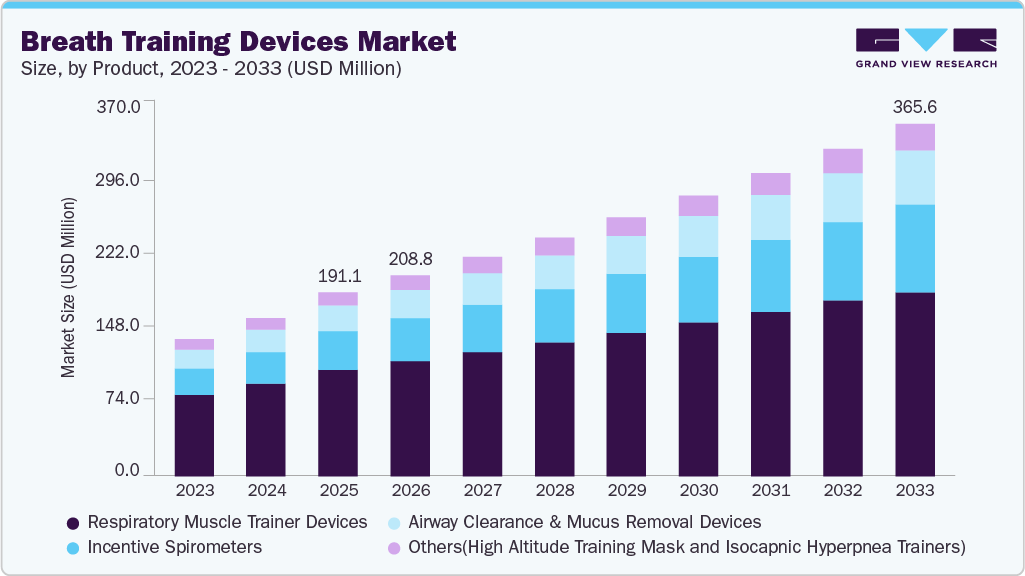
In addition, the adoption of breathing training devices in sports and fitness applications is also the key growth driver. Athletes and fitness enthusiasts are increasingly incorporating respiratory muscle training to improve endurance, stamina, and oxygen efficiency, particularly in high-performance and endurance sports. The convergence of healthcare and wellness trends is expanding the market beyond clinical applications, as consumers adopt breathing training for stress reduction, mindfulness, and general respiratory fitness. Growing health awareness, rising disposable incomes, and a preventive healthcare mindset are further supporting this shift. As a result, breathing training devices are evolving into multifunctional tools used across medical, fitness, and wellness ecosystems, strengthening long-term market growth potential.
Market Concentration & Characteristics
The breath training devices market is characterized by a moderate to high degree of innovation, driven by the growth toward drug-free, portable, and digitally enabled respiratory care solutions. Focusing on improving airway clearance, patient adherence, and home-based respiratory management through advanced device designs and connectivity features. For instance, in February 2026, Zydus Lifesciences Limited launched PEPAIR, India’s Oscillating Positive Expiratory Pressure (OPEP) device. The device uses a patented three-resistance system to enhance mucus clearance and improve breathing in patients with Chronic Obstructive Pulmonary Disease, asthma, and bronchiectasis.
"With PEPAIR, India's first affordable OPEP device, we are introducing a drug-free, handheld solution designed to support better breathing for patients with COPD, asthma and bronchiectasis,"
- Sharvil Patel, Zydus Lifesciences Managing Director
The market is characterized by a low level of mergers and acquisitions (M&A), which is due to the medical device companies aiming to strengthen their respiratory portfolios and digital capabilities. The companies are historically engaged in acquisitions to expand into connected care, monitoring systems, and offline solutions. While the breathing training niche itself sees fewer direct acquisitions, broader respiratory care consolidation remains active, supporting portfolio diversification and geographic expansion.
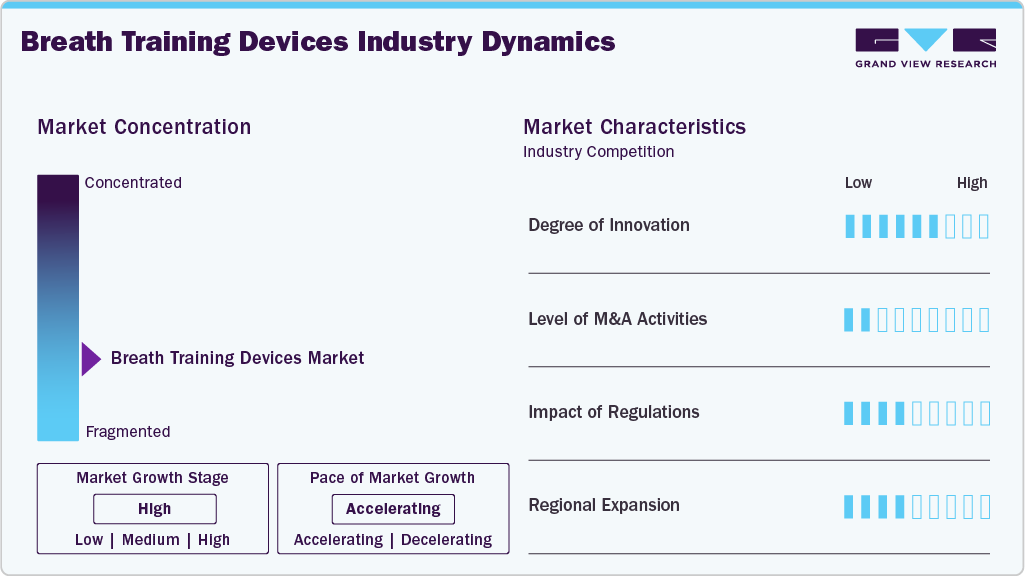
Regulatory frameworks have a relatively low impact on the Breath Training Devices Market, particularly for non-invasive and low-risk devices. Many breathing exercise devices, especially mechanical and wellness-oriented products, fall under lower regulatory classifications, allowing for faster approvals and easier market entry. While devices with digital or therapeutic claims still require clearance from authorities such as the FDA and CE bodies, the overall regulatory burden remains manageable compared to high-risk medical devices. This facilitates continuous product innovation and quicker commercialization, especially in the home healthcare and fitness segments. In addition, supportive regulatory pathways for digital health solutions are further encouraging the adoption of connected and app-based respiratory devices across key markets.
The market is witnessing strong regional expansion, especially in the Asia-Pacific region, driven by rising disease prevalence, pollution levels, and healthcare infrastructure development. Countries such as China and India are experiencing increased demand due to a large patient pool and growing awareness of respiratory health. The region is supported by government initiatives and increased adoption of home-based respiratory devices. Technological innovation and high healthcare spending contribute to growth, while emerging markets offer significant untapped opportunities for global players.
Product Insights
The respiratory muscle trainer devices segment accounted for the largest revenue share of 57.3% in 2025 in the breath training devices market. The dominance is due to their wide clinical and non-clinical applications. These devices are extensively used in the management of respiratory conditions such as Chronic Obstructive Pulmonary Disease, asthma, and neuromuscular disorders, as well as in pulmonary rehabilitation programs. Their ability to improve respiratory muscle strength, reduce breathlessness, and enhance lung efficiency makes them a preferred choice among clinicians and respiratory therapists.
In addition to medical use, breathing exercise devices are increasingly adopted in sports and fitness training to improve endurance and performance. For instance, in October 2024, POWERbreathe International Ltd. introduced the Smart Adaptor and ActiBreathe app. These enable traditional inspiratory muscle trainers to become digitally connected devices with real-time feedback and performance tracking. This innovation boosts user engagement and supports personalized respiratory training. The availability of both low-cost mechanical devices and advanced digital variants supports widespread adoption. In addition, the growing awareness of preventive healthcare and respiratory fitness is driving increased use in home care settings. Continuous innovation, including app-connected and resistance-adjustable devices, strengthens the segment’s dominance in the global market.
The incentive spirometers segment is expected to grow at the fastest CAGR during the forecast period, driven by their critical role in post-operative care and lung recovery therapies. These devices are widely used in hospitals to prevent complications such as atelectasis and to improve lung expansion following surgeries, particularly in thoracic and abdominal procedures. Their low cost, ease of use, and non-invasive nature make them highly suitable for both clinical and home care settings. Increasing global surgical procedures and rising awareness of post-operative respiratory care are key factors driving demand. In addition, healthcare providers are increasingly recommending incentive spirometers for early mobilization and rehabilitation, further boosting adoption. The growing shift toward offline is also contributing to segment growth, as patients continue therapy after hospital discharge.
Application Insights
The asthma segment led the breath training devices market, accounting for the largest share of 36.9% in 2025. This dominance is due to its high global prevalence and the long-term management requirements. The data from the World Health Organization in 2025 reports that asthma affects over 250 million people worldwide, making it one of the most common chronic respiratory diseases globally. This large patient pool creates sustained demand for supportive therapies such as breathing training devices. The condition requires continuous monitoring and respiratory muscle strengthening, making these devices an effective adjunct, non-pharmacological therapy.
In addition, growing awareness regarding preventive care and self-management is supporting demand in home care settings. Healthcare providers are increasingly recommending breathing exercises alongside medication, further strengthening this segment’s dominance. The availability of affordable, easy-to-use devices also contributes to widespread use across both clinical and home settings.
The sports training segment is witnessing significant growth, driven by increasing awareness of respiratory muscle training as a means to enhance athletic performance. Athletes and fitness enthusiasts are adopting breathing training devices to improve endurance, stamina, and oxygen utilization efficiency. These devices are particularly popular in endurance sports such as running, cycling, and swimming. The rise of professional training programs and sports science has further accelerated the adoption of performance-enhancing tools. In addition, the growing fitness culture and demand for non-invasive performance optimization solutions are expanding the consumer base. Technological advancements, including smart and app-connected devices, are also improving training outcomes and user engagement. As a result, this segment is emerging as a key growth area beyond traditional medical applications.
Sales Channel Insights
Based on the sales channel, the online segment accounts for the largest revenue share of 60.8% in 2025. This is driven by the rapid expansion of e-commerce and direct-to-consumer models. Platforms such as Amazon and Flipkart enable easy access to a wide range of breathing devices, along with product comparisons, reviews, and competitive pricing. Consumers increasingly prefer online purchasing for convenience, home delivery, and the availability of multiple brands, particularly for home-use and fitness-oriented devices. In addition, manufacturers are leveraging digital marketing and brand websites to sell directly to customers, improving margins and engagement. The integration of subscription models, online consultations, and telehealth support is further boosting adoption. As awareness of respiratory health grows, online platforms are becoming the primary channel for product discovery and purchase.
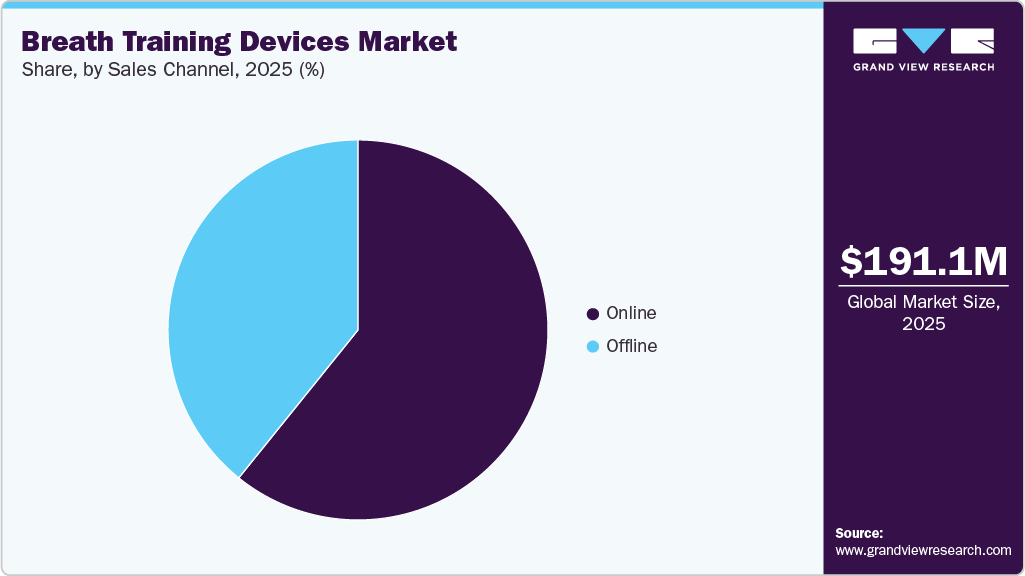
Based on the sales channel, the offline segment is expected to witness significant growth over the forecast period. Channels such as hospitals, pharmacies, and medical equipment stores play a crucial role in the distribution of prescription-based devices and post-operative care products, where healthcare professionals guide product selection and usage. Patients often prefer offline purchases due to trusted recommendations, product demonstrations, and immediate availability, particularly for medical-grade devices. Hospitals and rehabilitation centers play a crucial role in driving device adoption, particularly for the management of chronic respiratory diseases. In addition, retail pharmacies are expanding their respiratory care product portfolios, improving accessibility. While online channels are expanding rapidly, offline channels remain critical for clinical credibility, patient education, and professional supervision, supporting steady growth in this segment.
Regional Insights
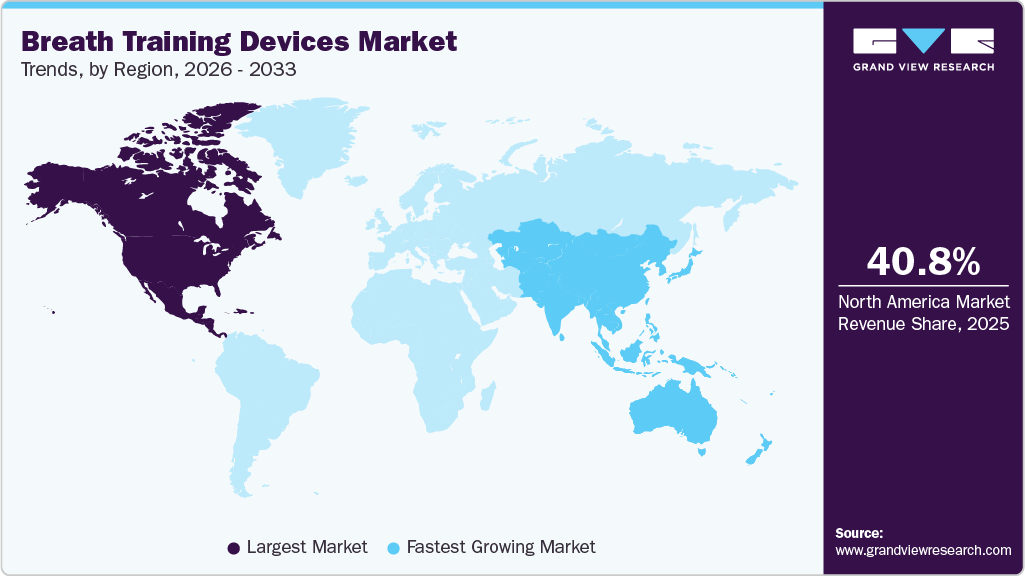
The breath training devices market in North America dominated with a market revenue share of 40.8% in 2025. The growth is driven by the high prevalence of respiratory conditions such as chronic obstructive pulmonary disease and asthma. According to the National Institutes of Health, in May 2023, in the U.S., more than 25 million individuals, including over 4 million children, experience asthma. The increasing adoption of offline is a key trend, supported by rising remote pulmonary rehabilitation enrollment and improved patient outcomes. The region also benefits from high healthcare spending and early adoption of advanced technologies such as AI-enabled and app-connected respiratory devices. The growing use of breathing training devices in sports and wellness applications further expands the market scope.
U.S. Breath Training Devices Market Trends
The breath training devices market in the U.S. is driven by the high prevalence of respiratory diseases such as chronic obstructive pulmonary disease and asthma. According to the Centers for Disease Control and Prevention in June 2024, nearly 16 million people have been diagnosed with COPD, creating substantial demand for respiratory care solutions. Chronic lower respiratory diseases remain among the leading causes of death in the U.S., emphasizing the need for supportive therapies. The market is growing strongly toward offline and self-managed treatment, supported by rising healthcare costs and increased adoption of remote care solutions. The U.S. also shows early adoption of advanced technologies, including AI-enabled and app-connected breathing devices that enhance therapy personalization and patient adherence. The growing geriatric population and high awareness levels further support market growth, as older adults are more susceptible to chronic lung conditions.
Europe Breath Training Devices Market Trends
The breath training devices market in Europe is driven by the high prevalence of respiratory diseases and strong emphasis on pulmonary rehabilitation across the region. For instance, as per the data from the European Federation of Allergy and Airways Diseases Patients’ Associations, May 2025, asthma affects around 6.6% of the adult population in Europe, accounting for approximately 30 million people, with prevalence varying significantly across countries from 6.8% in Spain to 17.6% in the UK. Growth is supported by well-established healthcare systems and favorable reimbursement policies, encouraging the adoption of breathing exercise devices. There is an increasing focus on preventive healthcare and early disease management, boosting demand for non-invasive breathing training solutions. In addition, the region is witnessing rising adoption of offline and digital health technologies, including connected and app-based devices. Overall, continuous innovation and supportive government healthcare initiatives are sustaining steady market growth.
The Germany breathing training devices industry is driven by the high prevalence of respiratory disorders and a rising aging population, which is increasing demand for long-term respiratory care solutions. The country benefits from a well-established healthcare system and a strong reimbursement framework, thereby supporting the adoption of advanced respiratory devices. A key trend is the growing shift toward offline and remote patient monitoring, enabling patients to manage conditions outside hospital settings.
Asia Pacific Breath Training Devices Market Trends
The breath training devices industry in the Asia Pacific is growing at the fastest CAGR of 9.2% over the forecast period from 2026 to 2033. This growth due to the rising prevalence of respiratory diseases such as COPD and asthma, largely due to increasing pollution, smoking rates, and urbanization. The region is witnessing a strong shift toward offline, self-managed respiratory care, with growing adoption of portable, cost-effective devices. Improving healthcare infrastructure and rising disposable incomes in countries such as China and India are further enhancing access to these devices. In addition, the adoption of digital and app-connected breathing devices is increasing, supported by growing awareness of remote monitoring and preventive care. Government initiatives focused on respiratory health and early diagnosis are also contributing to market expansion.
The China breath training devices market is driven by the high prevalence of respiratory diseases, particularly Chronic Obstructive Pulmonary Disease. According to the National Center for Biotechnology Information in 2025, COPD is the third leading cause of death globally, affecting approximately 212.3 million people and causing 3.3 million deaths annually. The overall COPD prevalence is estimated at 8.6%, affecting nearly 100 million adults in China, showing a substantial target population for respiratory care solutions. The country is also facing increasing respiratory health challenges due to high air pollution levels, smoking prevalence, and rapid urbanization. The growing shift toward home-based and self-managed respiratory care is supported by rising healthcare awareness and the accessibility of low-cost devices.
In addition, China is witnessing strong adoption of digital and connected respiratory technologies, driven by advancements in mobile health and government support for digital healthcare. Continuous improvements in healthcare infrastructure and the expansion of domestic manufacturing capabilities are enhancing product availability and affordability.
The breath training devices industry in Japan is gaining traction on the back of the rapidly aging population and the high prevalence of respiratory conditions such as Chronic Obstructive Pulmonary Disease and asthma. The country shows strong demand for offline and rehabilitation devices, supported by advanced healthcare infrastructure and high patient awareness. In addition, Japan is witnessing increased adoption of technologically advanced and compact medical devices, aligned with its focus on innovation and precision healthcare. The market is characterized by steady growth, high-quality standards, and early adoption of smart respiratory solutions.
Latin America Breath Training Devices Market Trends
The breathing training devices industry in Latin America is experiencing significant growth due to the increasing prevalence of chronic diseases such as Chronic Obstructive Pulmonary Disease and asthma. Rising awareness of pulmonary rehabilitation and preventive healthcare is supporting the adoption of breathing training devices. The region is also witnessing a gradual shift toward offline solutions, particularly in urban areas with improved healthcare access.
Middle East & Africa Breath Training Devices Market Trends
The breathing training devices industry in the Middle East & Africa is supported by the growing prevalence of chronic respiratory diseases and increasing healthcare investments. Rising government initiatives to improve healthcare infrastructure, particularly in Gulf countries, are driving demand for respiratory care devices. There is a growing trend toward the adoption of home-based and portable medical devices, especially in urban centers. However, limited awareness, affordability issues, and restricted access to advanced healthcare in several African regions continue to hinder market penetration. Therefore, the market presents untapped growth potential with increasing focus on healthcare modernization.
Key Breath Training Devices Company Insights
Market players utilize innovative product development strategies, partnerships, mergers, and acquisitions to expand their presence in response to the increasing demand for early and accurate disease detection, cost containment, and providing value-based care.
Key Breath Training Devices Companies:
The following key companies have been profiled for this study on the breath training devices market.
- Better Breathing Devices Pty Ltd (AirPhysio)
- POWERbreathe International Ltd
- PN Medical, Inc.
- Airofit A/S
- Koninklijke Philips N.V. (Philips Healthcare)
- Focus Technology Co., Ltd. (Ningbo Jianeng Medical Equipment Co., Ltd.)
- Biegler
- GaleMed Corporation
- Mericonn Technology
- Promed Technology Co.
Recent Developments
-
In February 2026, Zydus Lifesciences launched PEPAIR, India’s Oscillating Positive Expiratory Pressure (OPEP) device, featuring a patented three-resistance system to improve airway clearance and breathing. This device aims to achieve effective mucous clearance and improve breathing in patients with COPD, Asthma, and Bronchiectasis.
-
In September 2024, POWERbreathe International Ltd. launched the Smart Adaptor and ActiBreathe App, enabling its mechanical breathing trainers to be upgraded into connected devices using Bluetooth technology. This innovation provides real-time breathing feedback, personalized training plans, and performance tracking, significantly enhancing user engagement and outcomes.
Breath Training Devices Market Report Scope
Report Attribute
Details
Market size in 2025
USD 191.1 million
Estimated market size in 2026
USD 208.8 million
Projected market size by 2033
USD 365.6 million
Growth rate
CAGR of 8.3% from 2026 to 2033
Actual data
2021 - 2025
Forecast period
2026 - 2033
Quantitative units
Revenue in USD million & CAGR from 2026 to 2033
Report coverage
Revenue forecast, company ranking, competitive landscape, growth factors, and trends
Segments covered
Product, application, sales channel, region
Regions covered
North America; Europe; Asia Pacific; Latin America; MEA
Country Scope
U.S.; Canada; Mexico: UK; Germany; France; Spain; Italy; Norway; Sweden; Denmark; Japan; China; India; Australia; Thailand; South Korea; Brazil; Argentina; South Africa; Saudi Arabia; UAE; Kuwait
Key companies profiled
Better Breathing Devices Pty Ltd (AirPhysio); POWERbreathe International Ltd; PN Medical, Inc.; Airofit A/S; Koninklijke Philips N.V. (Philips Healthcare); Focus Technology Co., Ltd. (Ningbo Jianeng Medical Equipment Co., Ltd.); Biegler GmbH; GaleMed Corporation; Mericonn Technology Co., Ltd.; Promed Technology Co., Ltd.
Customization scope
Free report customization (equivalent up to 8 analysts’ working days) with purchase. Addition or alteration to country, regional & segment scope.
Pricing and purchase options
Avail customized purchase options to meet your exact research needs. Explore purchase options
Global Breath Training Devices Market Report Segmentation
This report forecasts revenue growth at the global, regional & country levels and provides an analysis of the latest trends and opportunities in each of the sub-segments from 2021 to 2033. For this report, Grand View Research has segmented the global breath training devices market report on the basis of product, application, sales channel, and region:
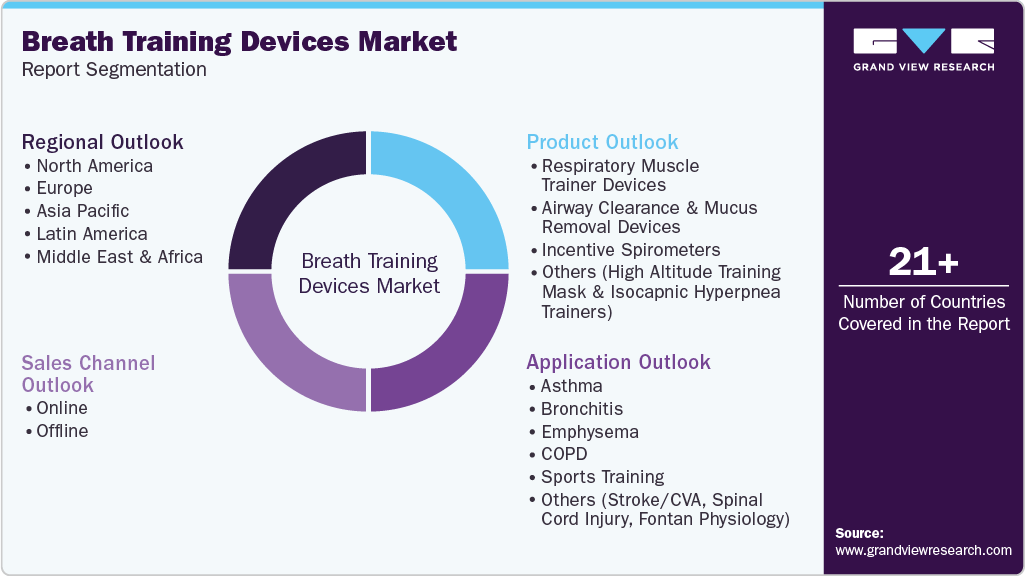
-
Product Outlook (Revenue, USD Million, 2021 - 2033)
-
Respiratory Muscle Trainer Devices
-
Airway Clearance & Mucus Removal Devices
-
Incentive Spirometers
-
Others (High Altitude Training Mask and Isocapnic Hyperpnea Trainers)
-
-
Application Outlook (Revenue, USD Million, 2021 - 2033)
-
Asthma
-
Bronchitis
-
Emphysema
-
COPD
-
Sports Training
-
Others (Stroke/CVA, Spinal cord injury, Fontan Physiology)
-
-
Sales Channel Outlook (Revenue, USD Million, 2021 - 2033)
-
Online
-
Offline
-
-
Regional Outlook (Revenue, USD Million, 2021 - 2033)
-
North America
-
U.S.
-
Canada
-
Mexico
-
-
Europe
-
Germany
-
UK
-
France
-
Spain
-
Italy
-
Norway
-
Denmark
-
Sweden
-
-
Asia Pacific
-
China
-
India
-
Japan
-
Australia
-
South Korea
-
Thailand
-
-
Latin America
-
Brazil
-
Argentina
-
-
MEA
-
South Africa
-
Saudi Arabia
-
UAE
-
Kuwait
-
-
Frequently Asked Questions About This Report
North America dominated the global breath training devices market with a revenue share of 40.8% in 2025, supported by a high prevalence of respiratory diseases, advanced healthcare infrastructure, and early adoption of respiratory care technologies.
The online sales channel accounted for the largest market share of 60.8% in 2025, driven by the expansion of e-commerce platforms, direct-to-consumer sales, and increasing consumer preference for convenient purchasing options.
The asthma segment held the largest market share of 36.9% in 2025 due to the high global prevalence of asthma and the growing adoption of breathing training devices as supportive respiratory therapy.
The respiratory muscle trainer devices segment led the market with a revenue share of 57.3% in 2025, owing to its extensive use in respiratory disease management, pulmonary rehabilitation, and sports training applications.
Key factors driving the market include the rising prevalence of chronic respiratory diseases such as COPD and asthma, growing demand for home-based respiratory care solutions, increasing adoption in sports and fitness training, rising awareness of preventive healthcare, and advancements in digitally connected respiratory training devices.
The global breath training devices market size was valued at USD 191.1 million in 2025 and is estimated at USD 208.8 million in 2026.
The global breath training devices market is expected to grow at a CAGR of 8.3% from 2026 to 2033, reaching USD 365.6 million by 2033.
Asia Pacific is the fastest-growing regional market and is projected to expand at a CAGR of 9.2% during the forecast period.
Some of the key players operating in the breath training devices market include Better Breathing Devices Pty Ltd (AirPhysio), POWERbreathe International Ltd, PN Medical, Inc., Airofit A/S, Koninklijke Philips N.V. (Philips Healthcare), Focus Technology Co., Ltd. (Ningbo Jianeng Medical Equipment Co., Ltd.), Biegler, GaleMed Corporation, Mericonn Technology, and Promed Technology Co.
About the Author(s)
Medical Devices Research Team
Healthcare · Medical DevicesThis report was authored by the medical devices research team at Grand View Research - comprising two research analysts, one senior research analyst, and one industry expert - with specialized expertise in the medical devices segment of the healthcare industry. All findings are based on proprietary healthcare databases, executive interviews, and regulatory analysis, subject to internal peer review prior to publication.
Last Updated:
Speak to Analyst


Customize this report to your needs — add regions, segments, or data points, with 20% free customization.
Or view our licence options:


ISO 9001:2015 & 27001:2022 Certified
We are GDPR and CCPA compliant! Your transaction & personal information is safe and secure. For more details, please read our privacy policy.


